
CHAPTER 40:01 – LOCAL GOVERNMENT: SUBSIDIARY LEGISLATION
[Subsidiary Legislations made under the Repealed Acts (the Local Government (District Councils) Act and the Townships Act) have been saved under section 94(2) of the Local Government Act, 18 of 2012.]
INDEX TO SUBSIDIARY LEGISLATION
Central District (Abattoir) Bye-Laws
Central District (Livestock Control) Bye-Laws
Central District Council (Advertisements and Hoardings) Bye-Laws
Central District Council (Barbers and Braiders) Bye-Laws
Central District Council (Cemetery) Bye-Laws
Central District Council (Day-Care Centre) Bye-Laws
Central District Council (Dogs) Bye-Laws
Central District Council (Hawking and Street Vending) Bye-Laws
Central District Council (Markets) Bye-Laws
Central District Council (Noise and Nuisance) Bye-laws
Central District Council (Operation of Pay Phones) (Control) Bye-laws
Central District Council (Public Sewer) Bye-Laws
Central District Council (Scrap Metal and Scrap-Yard Control) Bye-laws
Chobe District Council (Barbers and Braiders) Bye-Law
Chobe District Council (Border Entry and Exit Fees) Bye-laws
Kgalagadi District Council (Control of Livestock and Other Animals) Bye-laws
Chobe District Council (Control of Livestock and Other Animals) (Model Bye-Laws) (Adoption) Bye-Laws
Chobe District Council (Day Care Centre) Bye-Laws
Chobe District Council (Dogs) (Model Bye-Laws) (Adoption) Bye-Laws
Chobe District Council (Hawking and Street Vending) (Model Bye-Laws) (Adoption) Bye-Laws
Chobe District Council (Noise and Nuisance) (Model Bye-Laws) (Adoption) Bye-Laws
Chobe District Council (Phone Shops, Kiosk, Desktop) Control Bye-Laws
City of Francistown Council (Cemetery) Bye-laws
City of Francistown Council (Dogs) Bye-laws
Control of Boreholes (Model) Bye-Laws
Control of Boreholes (Model) Bye-Laws (Adoption) Order
Declaration of Francistown as a City Order
Declaration of Gaborone as a City Order
Declaration of Sowa Township Order
Declaration of Townships Order
District Councils (Banking Accounts) Regulations
District Councils (Keeping of Bye-Laws) Regulations
District Councils (Miscellaneous Provisions) Regulations
District Councils (Tender) Regulations
Dogs (Model) Bye-Laws (Adoption) Order
Establishment of the Chobe District Council Order
Establishment of the Francistown Town Council Order
Establishment of the Gaborone City Council Order
Establishment of the Ghanzi District Council Order
Establishment of the Jwaneng Town Council Order
Establishment of the Kgatleng District Council Order
Establishment of the Kweneng District Council Order
Establishment of the Lobatse Town Council Order
Establishment of the North East District Council Order
Establishment of the North West District Council Order
Establishment of the Selebi-Phikwe Town Council Order
Establishment of the Sowa Town Council Order
Francistown City Council (Public Sewer) Bye-laws
Francistown Town Council (Abattoir) Bye-laws
Francistown Town Council (Day Care Centre) Bye-Laws
Francistown Town Council (Establishment of Pound) Bye-laws
Francistown Town Council (General) Bye-laws
Francistown Town Council (Hairdressing) Bye-Laws
Francistown Town Council (Local Beer) Bye-laws
Francistown Town Council (Retail Sales of Traditional Beer) Bye-laws
Francistown Town Council (Traffic) Bye-laws
Francistown Town Council Roads and Traffic Bye-Laws
Gaborone City Council (Abattoir) Bye-laws
Gaborone City Council (Cemetery) Bye-laws
Gaborone City Council (Dog Management) Bye-laws
Gaborone City Council (General) Bye-laws
Gaborone City Council (Hairdresser and Barber) Bye-Laws
Gaborone City Council (Local Beer) Regulations
Gaborone City Council (Noise and Nuisance Control) Bye-laws
Gaborone City Council (Operation of Pound) Bye-laws
Gaborone City Council (Parking Grounds) Bye-laws
Gaborone City Council (Public Land Excavation)(Control) Bye-laws
Gaborone City Council (Public Standpipes) Bye-laws
Gaborone City Council (Retail Sales of Traditional Beer) Bye-laws
Gaborone City Council (Smoking in Cinemas) Bye-laws
Gaborone City Council (Traffic) (Scheduled Areas) Bye-laws
Gaborone City Council Day-Care Centre Bye-laws
Ghanzi District Council (Barbers and Braiders) Bye-laws
Ghanzi District Council (Dogs) Bye-laws
Ghanzi District Council (Hawking and Street-Vending) Bye-Laws
Ghanzi District Council (Livestock Control) Bye-laws
Ghanzi District Council (Markets) Bye-Laws
Ghanzi District Council (Noise and Nuisance) Bye-Laws
Ghanzi District Council (Refuse) Bye-Laws
Ghanzi Township (Local Beer) Regulations
Ghanzi Township (Refuse) Bye-laws
Hawking and Street-Vending (Model) Bye-Laws
Hawking and Street-Vending (Model) Bye-Laws (Adoption) Order
Jwaneng Town Council (Abattoir) Bye-Laws
Jwaneng Town Council (Cemetery) Bye-Laws
Jwaneng Town Council (Control of Retail Sales of Traditional Beer) Bye-laws
Jwaneng Town Council (Day Care Centre) Bye-Laws
Jwaneng Town Council (Dogs) Bye-Laws
Jwaneng Town Council (General) Bye-laws
Jwaneng Town Council (Hawking and Street-Vending) Bye-laws
Jwaneng Town Council (Nuisance Control) Bye-Laws
Jwaneng Town Council (Pound) Bye-laws
Kasane Township (Temporary Structures) Bye-Laws
Kgalagadi District Council (Advertisements and Hoardings) Bye-laws
Kgalagadi District Council (Barber) Bye-Laws
Kgalagadi District Council (Day-Care Centre) Bye-Laws
Kgalagadi District Council (Food-Vending) Bye-Laws
Kgalagadi District Council (Hawking and Street-vending) Bye-Laws
Kgalagadi District Council (Markets) Bye-laws
Kgalagadi District Council (Noise and Nuisance Control) Bye-Laws
Kgalagadi District Council (Refuse) Bye-Laws
Kgatleng District Council (Barber) Bye-Laws
Kgatleng District Council (Control of Livestock and other Animals) Bye-Laws
Kgatleng District Council (Cemetery) Bye-laws
Kgatleng District Council (Day Care Centre) Bye-Laws
Kgatleng District Council (Food-Vending) Bye-laws
Kgatleng District Council (Hawking and Street Vending) Bye-laws
Kgatleng District Council (Market) Bye-laws
Kgatleng District Council (Natural Resources Protection) Bye-laws
Kgatleng District Council (Noise and Nuisance) Bye-Laws
Kgatleng District Council (Operation of Pay Phones) (Control) Bye-laws
Kgatleng District Council (Refuse) Bye-Laws
Kweneng District Council (Control of Livestock and Other Animals) Bye-laws
Kweneng District Council (Dogs) Bye-laws
Kweneng District Council (Early Childhood Care and Education) Bye-laws
Kweneng District Council (Food-Vending) Bye-laws
Kweneng District Council (Hawking and Street-Vending) Bye-Laws
Kweneng District Council (Natural Resources Protection) Bye-laws
Kweneng District Council (Noise and Nuisance) Bye-Laws
Kweneng District Council (Public Standpipes) Bye-Laws
Livestock Control (Model) Bye-Laws
Lobatse Bus Terminus (Operation) Bye-laws
Lobatse Town Council (Abattoir) Bye-laws
Lobatse Town Council (Cemetery) Bye-laws
Lobatse Town Council (Dogs) Bye-laws
Lobatse Town Council (Early Childhood Care and Education) Bye-laws
Lobatse Town Council (General) Bye-laws
Lobatse Town Council (Local Beer) Regulations
Lobatse Town Council (Operation of Pound) Bye-Laws
Lobatse Town Council (Public Land Excavation) (Control) Bye-laws
Lobatse Town Council (Public Sewer) Bye-Laws
Lobatse Town Council (Public Standpipes) Bye-laws
Lobatse Town Council (Retail Sales of Traditional Beer) Bye-laws
Local Councils (Conduct of Elections) Regulations
Local Government (Declaration of Certain Areas in Palapye District Council as Rateable Areas) Order
Local Government (Establishment of Bobirwa District Council) Order
Local Government (Establishment of Boteti District Council) Order
Local Government (Establishment of Charleshill District Council) Order
Local Government (Establishment of Goodhope District Council) Order
Local Government (Establishment of Kgalagadi North District Council) Order
Local Government (Establishment of Kanye District Council) Order
Local Government (Establishment of Letlhakeng District Council) Order
Local Government (Establishment of Mabutsane District Council) Order
Local Government (Establishment of Mahalapye District Council) Order
Local Government (Establishment of Mogoditshane-Thamaga District Council) Order
Local Government (Establishment of Moshupa District Council) Order
Local Government (Establishment of Okavango District Council) Order
Local Government (Establishment of Palapye District Council) Order
Local Government (Establishment of Gamalete District Council) Order
Local Government (Establishment of Serowe District Council) Order
Local Government (Establishment of Tlokweng District Council) Order
Local Government (Establishment of Tonota District Council) Order
Local Government (Establishment of Tsabong District Council) Order
Local Government (Establishment of Tutume District Council) Order
Local Government (Valuation and Rating) Regulations
Local Government (Village or Ward Development Committee) Regulations
Natural Resources Protection (Model) Bye-Laws
Noise and Nuisance (Model) Bye-Laws
Noise and Nuisance (Model) Bye-Laws (Adoption) Order
North East District Council (Abattoir) Bye-Laws
North-East District Council (Advertisement and Hoardings Signs) Bye-laws
North East District Council (Control of Livestock and Other Animals) Bye-Laws
North East District Council (Day-Care Centre) Bye-Laws
North East District Council (Dogs) Bye-laws
North East District Council (Hawking and Street Vending) Bye-Laws
North East District Council (Markets) Bye-Laws
North East District Council (Noise and Nuisance) Bye-laws
North East District Council (Public Sewer) Bye-Laws
North East District Council (Public Standpipes) Bye-Laws
North East District Council (Refuse) Bye-laws
North East District Council (Tuck Shop, Kiosk) Bye-laws
North West District Council (Control of Livestock and Other Animals) Bye-Laws
North West District Council (Day-Care Centre) Bye-laws
North West District Council (Hawking and Street-Vending) (Model) Bye-Laws (Adoption) Order
North West District Council (Refuse) Bye-Laws
Ramotswa District Council (Control of Livestock and Other Animals) Bye-laws
Selebi-Phikwe Town Council (Abattoir) Bye-laws
Selebi-Phikwe Town Council (Cemetery) Bye-laws
Selebi-Phikwe Town Council (Dogs) Bye-laws
Selebi-Phikwe Town Council (Early Childhood Care and Education) Bye-law
Selebi-Phikwe Town Council (General) Bye-laws
Selebi-Phikwe Town Council (Pound) Bye-laws
Selebi-Phikwe Town Council (Public Standpipes) Bye-laws
Selebi-Phikwe Town Council (Retail Sales of Traditional Beer) Bye-laws
South East District Council (Early Childhood Care and Education Centre) Bye-laws
South-East District Council (Cemetery) Bye-laws
South-East District Council (Markets) Bye-laws
South East District Council (Noise and Nuisance) Bye-Laws
South East District Council (Public Sewer) Bye-Laws
South East District Council (Refuse) Bye-Laws
Southern District Council (Control of Livestock and other Animals) Bye-laws
Southern District Council (Day Care Centre) Bye-Laws
Southern District Council (Markets) Bye-laws
Southern District Council (Noise and Nuisance) Bye-laws
Southern District Council (Public Standpipes) Bye-Laws
Southern District Council (Refuse) Bye-Laws
Sowa Town Council (Roads and Traffic) Bye-laws
Sowa Township Authority (General) Bye-Laws
Sowa Township (Day-Care Centre) Bye-Laws
Sowa Township (Hawking and Street Vending) Bye-Laws
Town Council (Hawking and Street Vending) Regulations
Town Council (Hawking and Street Vending) Regulations (Application) Regulations
Town Council (Keeping of Bye-laws) Regulations
Town Council (Miscellaneous Provisions) Regulations
Town Council (Public Sewers) Regulations
Traditional Beer (Retail Sales) (Model) Bye-Laws
Traditional Beer (Retail Sales) (Model) Bye-Laws (Adoption) Order
DECLARATION OF TOWNSHIPS ORDER
(under section 2)
(7th March, 1960)
ARRANGEMENT OF PARAGRAPHS
PARAGRAPH
1. Citation
2. Declaration of townships
Schedule
HCN 27, 1960,
HCN 46, 1960,
HCN 82, 1962,
L.N. 31, 1966,
S.I. 65, 1969,
S.I. 126, 1969,
S.I. 26, 1970,
S.I. 70, 1970,
S.I. 18, 1973,
S.I. 115, 1974,
S.I. 43, 1976,
S.I. 56, 1976,
S.I. 58, 1978,
S.I. 51, 1979,
S.I. 5, 1981,
S.I. 25, 1981,
S.I. 38, 1981,
S.I. 137, 1984,
S.I. 99, 1985,
S.I. 32, 1990,
S.I. 60, 1991,
S.I. 23, 1992,
S.I. 38, 1996,
S.I. 25, 2001;
S.I. 79, 2002,
S.I. 18, 2004,
S.I. 5, 2005,
S.I. 53, 2005,
S.I. 76, 2006.
This Order may be cited as the Declaration of Townships Order.
The places specified in the Schedule are declared to be townships.
SCHEDULE
1. FRANCISTOWN TOWNSHIP
The boundary of the township is as follows—
Commencing at a point in the middle of the Tati River being on the prolongation of the boundary “Ez” as shown on diagram SG No. 6551/55, the boundary runs south-eastwards along the said boundary “Ez” to a point in the middle of the Inchwe River being on the prolongation of the said boundary “Ez”; thence in a northerly direction along the median line of the Inchwe River to a point on the prolongation of the boundary “Ba” as shown on diagram SG No. 2134/55 of the Farm 33-NQ (now Lot 1127); thence eastwards along the said boundary “aB” and southwards through the beacon lettered “C” to the beacon lettered “D” on the said diagram SG No. 2134/55 and lettered “B” on diagram 6509/55 of the Farm 34-NQ (now Lot 1128); thence eastwards to the beacon lettered “C” on the said diagram SG No. 6509/55; thence southwards to the beacon lettered “M” on diagram DSL 124/84 of the Farm 88-NQ; thence south-eastwards to the beacon lettered “D” on the diagram SG No. 9389/56 of the Farm 32-NQ and lettered “A” on diagram SG No. 9388/56 of the Farm 36-NQ; thence generally southwards through the beacons lettered “F” and “E” to a point in the middle of the Tati River lettered “e” on the said diagram SG No. 9388/56; thence generally south-westwards along the median-line of the said Tati River to a point “b” being on the prolongation of the boundary “CB” as shown on diagram SG No. 4909/58 of the Farm 78-NQ; thence westwards through the beacons lettered “B” and “C” of the said diagram SG No. 4909/58, the said beacon “C” lying on the boundary “BA” on diagram SG No. 1908/16 of the Farm 42-NQ; thence continuing westwards along the said boundary “BA” to the point where the prolongation of the boundary intersects the western boundary of the Railway Strip No. 9-OQ; thence in a southerly direction to the beacon labelled “B” on diagram DSL 435/93 of Portion 117 of the Farm Gerald Estates 35-NQ; thence westwards along the northern boundary of the said Portion 117 of the Farm Gerald Estates 35-NQ to the beacon labelled “A” on the said diagram DSL 435/93, being a point on the eastern boundary of the Farm 44-NQ; thence northwards along the said boundary to a beacon labelled “A” on diagram SG No. 9426/56 of the said Farm 44-NQ and labelled “B” on diagram SG No. 9425/56 of the Farm 43-NQ: thence continuing northwards along the eastern boundary of the said Farm 43-NQ to a beacon labelled “A” on the said diagram SG No. 9425/56; thence westwards to a beacon labelled “D” on the said diagram SG No. 9425/56, being a beacon on the left bank of the Shashe River; thence generally northwards along the left bank of the said Shashe River to a beacon labelled “k” on diagram DSL. 56/82 of Portion 1 of the Farm 23-NQ; thence generally eastwards to a beacon labelled “J” on the said diagram DSL 56/82 and continuing in an easterly direction to a beacon labelled “D” on diagram SG No. 3753/56 of the Farm 23-NQ; thence in a north-north-westerly direction along the eastern boundary of the said Farm 23-NQ to a beacon labelled “D” on diagram SG No. 3754/56 of the Farm 25-NQ; thence in an easterly direction along the southern boundary of the said Farm 25-NQ through a beacon labelled “C” on the said diagram SG No. 3754/56 to a point in the middle of the Tati River; thence in a southerly direction along the median line of the said Tati River to the point of commencement, as will more fully appear on Plan NQ-113(b) deposited with the Director of Surveys and Mapping in Gaborone.
2. GABORONE CITY
The boundaries of the City are as follows:
Commencing at beacon B, being the most northern beacon of Lot 10091 Gaborone diagram DSL No. 785/89 formerly Portion 139 of the Farm Content No.1 – KO the boundary runs in a southeasterly direction along the north eastern boundary of the said diagram through beacon C of the said diagram and beacon A of the Farm Sowenflat No. 2 – KO diagram A339/1916 being also part of the south eastern boundary of the Bakgatla Tribal Territory, to beacon B of the said diagram; thence along the prolongation of the said boundary to its intersection with the median line of Notwane River; thence in a generally southwestwards direction along the median line of the Notwane River to beacon “a” of Lot 13043 Gaborone diagram DSL No. 148/80; thence in a southeasterly direction along the common boundary with the Farm Notwane No. 14 – KO through beacon F to beacon G of the said Lot 13043 Gaborone, the said beacon G being also beacon A of Lot 16373 Gaborone diagram DSL No. 18/84; thence along the said common boundary to beacon B of the said Lot 16373 Gaborone; thence generally southwestwards through beacons C, D, E, F, G, and H of the said Lot 16373 Gaborone; thence in a generally southwesterly direction through beacons B, C, D, E, F, G, H, J, K, L, M, N, P, Q, and R of Lot 16374 Gaborone, diagram DSL No. 17/84, R being also beacon B of Lot 16375 Gaborone diagram DSL No. 16/83; thence in a generally southwesterly direction through beacons C, D, E, F, G, H, J, K, L, M, N, P, Q, and R of the said Lot 16375, R being also a beacon on the International Boundary between the Republics of Botswana and South Africa; thence westwards along the said International Boundary through beacon S of the said Lot 16375 Gaborone, S being also beacon A of Lot 16385 Gaborone diagram DSL No. 44/85; thence eastwards to a point of intersection with the median line of Notwane River; thence generally in a southerly direction along the median line of the said Notwane River to beacon B of the said Lot 16385; thence generally westwards through beacons B, C, D, E, F, G, H and J of the said Lot 16385, thence in a westerly direction to beacon G of Lot 16845 Gaborone, diagram DSL No. 2/85; thence generally southwestwards through beacons H, J, K, L, M, and N of the said Lot 16845, N being also beacon C of Lot 16850, Gaborone diagram DSL No. 1/85; thence generally northwestwards through beacons D, E, F, G, H and A of the said Lot 16850 Gaborone, diagram DSL No. 1/85 A being also beacon T of Lot 17395 Gaborone, diagram DSL No. 3/85; thence generally in a westerly direction along the boundaries of the said Lot 17395 Gaborone, through beacons U, V, W, X, Y, Z, A’, B’, C’, D’, E’, F’, G’, H’, J’, K’, L’, M’, N’, P’, Q’, R’, A and southeastwards to beacon C of the said Lot 17395, C being also beacon A of Lot 17406 Gaborone, diagram DSL No. 175/86; thence generally northeastwards through beacons B, C, D, E, F, G, F, H, J, L, M, N, P, Q, R, S, T, U, V, W, X, and Y of the said Lot 17406 Gaborone; thence in a northwesterly direction to beacon B and southwesterly to beacon C of Lot 51543 Gaborone, diagram No. DSL 192/92 C being also beacon B of Lot 51542 Gaborone diagram DSL No. 1209/91; thence southwestwards, to beacon C and generally northwestwards through beacons D, E and F of the said Lot 51542 Gaborone; thence northwestwards through beacons C and D and northeastwards to beacon A of Lot 51541 Gaborone, diagram DSL No. 1208/91; thence in a northwesterly direction to beacon B of Forest Hill 9 – KO diagram SG No. 9 of 1970, being also beacon Y of Lot 8928 Gaborone, diagram DSL No. 227/81; thence in a northeasterly direction to beacon A of the said Lot 8928 Gaborone, being also beacon E of Lot 17405 Gaborone, diagram DSL. No. 222/86; thence in a northeasterly direction along the common boundary of the said Lot 17405 Gaborone with the Bakwena Tribal Territory to beacon E of Tribal Grant 2321 – KO, diagram DSM No. 1130/2004; thence northwestwards to beacon F, and northwards through beacons G, H, J, and westwards through K, L, and M; thence northeastwards to beacon A of the said Tribal Grant, A being also beacon E of Lot 17401 Gaborone diagram DSL No. 177/82 (Gaborone International Airport); thence generally in a clockwise direction along the boundary of the said Lot 17401 through beacons F, G, H, J, K, L, M, N, P, Q, R, to beacon A of the said diagram, A being a beacon on the northwestern boundary of Lot 31304 Gaborone diagram DSL No. 208/81, (formally Portion 4 of the Farm Content No. 1 – KO); thence in a northeasterly direction along the said boundary through beacon A of the said diagram to the point of commencement as will more fully appear on Plan No. KO – 113i deposited with the Director of Surveys and Mapping in Gaborone.
3. GHANZI TOWNSHIP
Ghanzi Township comprises the Remainder of the Farm 150-NK as will more fully appear on Plan NK-22 deposited with the Director of Surveys and Lands in Gaborone.
4. JWANENG TOWNSHIP
That piece of land designated Tribal Grant No. 1-KN, situate in the Southern Administrative District, measuring 9972, 5788 hectares in extent, the boundaries of which are delineated on Diagram D.S.L. No. 79/79 approved by the Director of Surveys and Lands on 22nd May, 1979.
5. KASANE TOWNSHIP
The boundary of the Township is as follows—
Commencing at point “A”; being a point on the International Boundary between the Republic of Botswana and the Caprivi Strip, where the northern prolongation of the line between beacon “KRM 14 AS” and beacon “C” of Lot 706, Kasane, meets the said International boundary, the boundary runs southwards through beacon “C” of Lot 706, Kasane, vide diagram D.S.L. No. 149/80 being point “B”, co-ordinates Y=19586.86 X=1966967.96; thence continuing southwards to beacon “KRM 14 AS” at the junction of the Kasane/Kazungula road with the Kazungula/Ngoma Bridge road, being point “C”, co-ordinates Y=19611.86 X=1967468.88; thence in a south-westerly direction along the northern edge of the new Kazungula/Ngoma Bridge road, to a beacon “TS1”, co-ordinates Y=19199.01 X=1967524.08, being point “D”; thence in a southerly direction to a beacon “FR 23” on the northern side of firebreak No. 2, co-ordinates Y=19349.34 X=1968065.96 being point “E”; thence in a westerly direction along the northern edge of firebreak No. 2 to a beacon “TS2” at the intersection of the said firebreak No. 2 with the northern edge of the Kazungula/Ngoma Bridge road, co-ordinates Y=18002.00 X=1968518.54, being point “F”; thence in a general south-westerly direction along the northern edge of the Kazungula/Ngoma Bridge road to a beacon “TS3” on the south-western side of firebreak No. 5 co-ordinates Y=16696.59 X=1969864.10, being point “G”; thence north-westwards in a straight line to beacon “B” of Lot 2 Kasane, vide diagram D.S.L. No. 5667/61, being point “H”; thence in a south-westerly direction along the eastern boundary of the said Lot 2 Kasane, to beacon “C” thereof, being point “I”; thence in a south-westerly direction to beacon “B” of Lease Area 6-RO, vide diagram D.S.L. No. 170, being a point “JK”; thence in a west-northwesterly direction along the northern boundary of the said Lease Area 6-RO, through beacon “A” and thereon until the prolongation of the line “A” meets the International boundary between the Republic of Botswana and the Caprivi Strip, being point “K”; thence in a northerly and easterly direction along the said International boundary to point “A”, being the point of commencement; as will more fully appear on Plan RO-40a, deposited with the Director of Surveys and Lands, Gaborone. Co-ordinates are in metres on Trigonometrical System Lo 25°.
6. LOBATSE TOWNSHIP
The boundary of the Township is as follows:
Commencing at the most northern beacon 8 JOD of Lot 13401 Lobatse (formally farm Woodlands No. 8 – JO), the boundary runs in a southeasterly direction along the common boundary of the farm Sunnyside No. 34 – JO and Lot 13401 Lobatse (formally Woodlands No. 8 – JO) to beacon 34JOC on the International Boundary of the Republics of Botswana and South Africa, the said beacons being identical to the corresponding beacons, A and B of Diagram No. 3253/1927; thence southwards along the eastern boundary of Lot 13401 Lobatse (formally Woodlands No. 8 -JO) and Lot 13402 Lobatse (formally Tsinani No. 9 – JO) to beacon C/Tsinani, and westwards along the southern and northern boundary of Lot 13402 Lobatse (formally Tsinani No. 9 – JO) and Traverston No. 10 – JO, respectively, to beacon D/Tsinani, the said beacons being beacons C and D of Diagram DSL No. 116/86 Lobatse; thence southwards along the common boundary of the farm Traverston No. 10 – JO and Lot 2622 to beacon M/2622 being beacon M of Diagram DSL No. 4229/94 Lobatse; thence northwestwards along the common boundary of Lot 2622 and the Remainder of portion 2 of the farm Readfontein No. 19 – JO to beacon H/SR4/70, thence southwestwards Along the common boundary of Lot 13579 (Formally Portion 1 of the Farm Readfontien No. 19 – JO) and portion 2 of the same farm Readfontein No. 19 – JO, through beaconK/SR4/70 to beacon H/126/83 the said beacons being beacons h, k and m of diagram DSL No. 1848/1919 Lobatse, Thence in a northwesterly direction through beacon C/649/92 to beacon B/649/92, the beacons being identical to the corresponding beacons B and C of Diagram DSL No. 649/92 Lobatse; thence South westerly to beacon Ri, being beacon of General Plan L27a and generally northwesterly through beacons R1 to Le being beacons of General Plan L27a; thence generally southwards along the eastern boundaries of Lots 333, 620, 330, 329 and Lot 13403 Lobatse (Formally farm 15 – JO), through beacon Q/620 being beacon C of Diagram DSL No. 319/61 Lobatse, beacons C/330 and R/330 being beacons c, and a of Diagram DSL No. A4539/1929 Lobatse, beacons S/330 and D/329 being beacons C, and d of Diagram DSL No. 4538/1929, beacon R7 of Diagram DSL No. 8125/59 Lobatse, and beacons C/15JO, D/15JO, E/15JO, F/15JO, G/15JO, H/15JO, J/15JO, K/15JO to L/15JO being beacons C, D, E, F, G, H, J, K and L, of Diagram DSL No. 7459/59 Lobatse; thence generally westwards along the southern boundary of Lot 13403 Lobatse (formally farm 15 – JO), through beacons N/15JO, O/15JO, P/15JO, Q/15JO, R/15JO, S/15JO, S1/15JO, T/15JO, U/15JO to V/15JO being beacons N, O, PQ, R, S, S1, T, U and V of the said Diagram DSL No. 7459/59 Lobatse; thence Northwards along the boundary between Lot 13403 Lobatse (formally farm 15 – JO) and the Bangwaketse Tribal Territory, and eastwards along the boundary between farm Geluk No. 14 – JO and Lot 13403 Lobatse (formally farm 15 – JO) through beacon A/15JO to B/15JO, being beacons A and B of the said Diagram DSL No. 7459/59 Lobatse; thence generally Northwards along the eastern boundary of the farm Nooitgedacht No. 13 – JO through beacon P1/321 being beacon A of Diagram DSL No. 4820/59 Lobatse, beacons F/321, A/321, being beacons F and A of Diagram DSL No. 4821/59 Lobatse, and beacon P2/321 being beacon O of Diagram DSL No. A2647/1927 Lobatse to beacon A2 of Diagram DSL No. A. 216/1929 Lobatse; thence westwards along the common boundary of Lot 1 and the farm Nooitgedacht No. 13 – JO to beacon B/Lot 1 and northwards along the western boundary of Lot 1 through beacon C2 to beacon D/Lot 1 being beacons C2 and d of Diagram DSL No. A216/29 Lobatse; thence eastwards along the common boundary of the farm Knockduff No. 6 – JO and Lot 1 Lobatse through beacon E/Lot 1, to beacon F/Lot 1 being beacons E and F of the said Diagram DSL No. A216/29 Lobatse; thence northwards along the western boundary of Lot 13448 Lobatse (formally the remainder of portion 2 Goed Hoop) through beacons L, M, N, O, P, Q, R, S, T, U, A, being beacons of Diagram DSL No. A 4065/1926 Lobatse, and northwards along the western boundary of Lot 13578 (formally remainder of portion 1 Spitskop) through beacons E9, F9, G9, H9, J9, and A/SPITS; being beacons H, J, K, L, M, N, and A of Diagram DSL No. A4064/1926 Lobatse; thence along the boundary between Lot 13401 Lobatse (formally farm Woodlands No. 8 – JO) and the Railway strip No. 7 – JO through beacons K9, L9, M9, N9, O9, P9, Q9, and R9 being beacons K, L, M, N, O, P, Q, R of Diagram DSL No. A. 3253/27 Lobatse to the point of commencement, and shall exclude Portion 3 (a portion of portion 1 of the farm Readfontein No. 19 – JO) as will more fully appear on Plan No. JO – 109F deposited with the Director of Surveys and Mapping, Gaborone.
7. SELEBI-PHIKWE TOWNSHIP
The boundary of the township is as follows—
Commencing at beacon A of diagram DSL No. 13/70 of Lot 1 Selebi Phikwe, being also beacon Q of diagram DSL No. 12/70 (Mining Lease Area No. 13 -NQ, the boundary runs generally south east wards through beacons B (BPT 492), C, and D of the said Lot 1 Selebi Phikwe, to beacon N of Lot 16001 Selebi Phikwe, diagram DSM No. 1715/04; thence generally northwards and through beacons P, Q, R, S, T, A, and B to its intersection with the eastern boundary of Lot 12700 Selebi Phikwe diagram DSM No. 1486/04 at beacon A of the said Lot; thence south westwards along the said boundary, being also the boundary between Selebi Phikwe township and the Central District through Trigonometrical Station BPT162 to beacon B of Lot 12701 Selebi Phikwe diagram DSM No. 1487/ 04, being also the intersection point of the said boundary and the Selebi Phikwe/Sefophe Road; thence generally north westwards along the western edge of the Selebi Phikwe/Sefophe Road, through beacons C, D, E, F, G, H, J, K, L, M, N, P, Q, R, S, T, U, V, W, of the said Lot to its intersection with the southern boundary of Lot 1 Selebi Phikwe, at beacon X of Lot 12701 Selebi Phikwe; thence west, southwest and north westwards in a clockwise direction through beacons G, H, J and K of Lot 1 Selebi Phikwe to the point of commencement as will more fully appear on Plan No. NQ – 89b deposited with the Director of Surveys and Mapping in Gaborone.
8. SOWA TOWNSHIP
The boundary of the township is as follows—
Commencing at a point “A”, approximate co-ordinates Y = 80 600, X = 69 800, situated to the south east of a settlement called Nxakato and near the eastern edge of a track meeting the Francistown-Nata Road at a place called Semowane, to the north, and crossing the River Mosetse at Tshuane, to the south, the boundary runs in a south-easterly direction for a distance of approximately 3,6 km to a point “B”, approximate co-ordinates Y = 77 200, X = 71 000; thence continues in a south-easterly direction for an approximate distance of 3,5 km to a point “C”, approximate co-ordinates Y = 74 700, X = 73 400, situated to the north of a track from Tutume crossing the Francistown-Nata road near Mhatane; thence southwards for an approximate distance of 10,1 km to a point “D”, approximate co-ordinates Y = 77 400, X = 83 100; thence in a westerly direction for an approximate distance of 14,6 km to a point “E”, approximate co-ordinates Y = 91 800, X = 80 500; thence in a north-easterly direction for a distance of approximately 11,4 km to a point “E”, approximate co-ordinates Y = 85 000, X = 71 400; thence continuing generally in a south-easterly direction for a distance of approximately 4,7 km to the point of commencement, as will more fully appear on Plan OP 3 deposited with the Director of Surveys and Lands. Co-ordinates are in metres based on Trigonometrical System Lo 27°.
DECLARATION OF SOWA TOWNSHIP ORDER
(under section 2)
(11th May, 1990)
ARRANGEMENT OF PARAGRAPHS
PARAGRAPH
1. Citation
2. Declaration of Township
Schedule
S.I. 32, 1990.
This Order may be cited as the Declaration of Sowa Township Order.
The area described in the Schedule hereto is hereby declared to be Sowa Township.
SCHEDULE
SOWA TOWNSHIP
The boundary of the township is as follows—
Commencing at a point “A”, approximate co-ordinates Y = 80 600, X = 69 800, situated to the south east of a settlement called Nxakato and near the eastern edge of a track meeting the Francistown-Nata Road at a place called Semowane, to the north, and crossing the River Mosetse at Tshuane, to the south, the boundary runs in a south-easterly direction for a distance of approximately 3,6 km to a point “B”, approximate co-ordinates Y = 77 200, X = 71 000; thence continues in a south-easterly direction for an approximate distance of 3,5 km to a point “C”, approximate co-ordinates Y = 74 700, X = 73 400, situated to the north of a track from Tutume crossing the Francistown-Nata road near Mhatane; thence southwards for an approximate distance of 10,1 km to a point “D”, approximate co-ordinates Y = 77 400, X = 83 100; thence in a westerly direction for an approximate distance of 14,6 km to a point “E”, approximate co-ordinates Y = 91 800, X = 80 500; thence in a north-easterly direction for a distance of approximately 11,4 km to a point “E”, approximate co-ordinates Y = 85 000, X = 71 400; thence continuing generally in a south-easterly direction for a distance of approximately 4,7 km to the point of commencement, as will more fully appear on Plan OP 3 deposited with the Director of Surveys and Lands. Co-ordinates are in metres based on Trigonometrical System Lo 27°.
DECLARATION OF GABORONE TOWNSHIP AS A CITY ORDER
(under section 3)
(1st July, 1986)
ARRANGEMENT OF PARAGRAPHS
PARAGRAPH
1. Citation
2. Declaration of Gaborone Township as a City
Schedule
G.N. 229, 1986,
S.I. 79, 1987,
S.I. 89, 1990.
This Order may be cited as the Declaration of Gaborone Township as a City Order.
2. Declaration of Gaborone Township as a City
The area defined as the Gaborone Township in the Declaration of Township Order is hereby declared to be a city, the boundaries of which are set out in the Schedule hereto.
SCHEDULE
GABORONE CITY
The boundaries of the City are as follows:
Commencing at beacon “A” of the Farm Sowenflat on diagram A339/1916 the boundary runs in a southeasterly direction in a straight line through beacons “B” of the said diagram A339/1916 to a point in the middle of the Ngotwane River; thence in a generally southwestwards direction along the median-line of the Ngotwane River to beacon “C” of the said diagram A339/1916, being also beacon “B” of Portion 1 of the Farm Glenvalley No. 3-KO vide Diagram No. 609/43; thence in a west-northwesterly direction through beacon “B” of the said diagram No. 609/43 to beacon “A” of the said Portion 1 of the Farm Glenvalley No. 3-KO; thence in a generally southerly direction through beacons “H”, “G” and “F” to beacon “E”, being also beacons defining the eastern boundary of the Railway Strip No. 16-KO; thence in a southwesterly direction along the eastern boundary of the Railway Strip 16-KO to beacon “D” of the Farm Glenvalley No. 3-KO vide diagram 3 222/1912; thence in a southeasterly direction through beacon “C” of the said diagram No. 3 222/1912 to a point in the middle of the Ngotwane River; thence in a generally southwestwards direction along the median line of the Ngotwane River to beacon “A” of Lot 13 043 Gaborone (formerly Lot 6652 Gaborone and earlier Portion 1 of the Farm Kentholme No. 13-KO) as shown on diagram DSL No. 148/80; thence in a straight line in a southeasterly direction through beacon “F” to beacon “G” of the said diagram, which beacon is lettered “A” on diagram DSL No. 18/84 of Portion 2 of the Farm Kentholme No. 13-KO; thence continuing round the boundaries of the said Portion 2 of the Farm Kentholme through “B”, “C”, “D”, “E”, “F”, “G”, and “H” of the said diagram 18/84; thence continuing in a generally southwesterly direction along the boundaries of Portion 2 of the Farm Werribee No. 12-KO through beacons “B”, “C”, “D”, “E”, “F”, “G”, “H”, “J”, “K”, “L”, “M”, “N”, “P”, “Q”, and “R” of diagram DSL No. 17/84; thence continuing in a generally southwesterly direction along the boundaries of Portion 2 of the Farm Atholl Holme No. 11-KO through beacons “B”, “C”, “D”, “E”, “F”, “G”, “H”, “J”, “K”, “L”, “M”, “N”, “P”, “Q”, and “R”, of diagram DSL NO. 16/83, “R” being a beacon of the International Boundary between Botswana and the Republic of South Africa; thence west-northwest for 490.31m along the said International Boundary to beacon “S” of the said diagram DSL No. 16/83; thence to a point in the middle of the Ngotwane River directly on line between the said beacon “S” of diagram DSL No. 16/83 and a beacon lettered “A” on diagram DSL No. 44/85 of Portion 57 of the Farm Crocodile Pools No. 15-KO; thence in a generally southerly direction along the median line of the Ngotwane River to a point lettered “B” on the said diagram 44/85; thence along the boundaries of Portion 57 of Crocodile Pools No. 15-KO, through beacons “B”, “C”, “D”, “E”, “F”, “G”, “H”, and “J” of the said diagram DSL No. 44/85; thence in a westerly direction to a beacon “G” on the eastern boundary of Portion 56 of the Farm Crocodile Pools No. 15-KO as shown on diagram DSL No. 2/85; thence generally southwestwards along the boundaries of the said Portion 56 of the Farm Crocodile Pools No. 15-KO through beacons “H”, “J”, “K”, “L” “M”, and “N” of the said diagram DSL No. 2/85; thence along the boundaries of Portion 25 of the Farm Traquair No. 10-KO through beacons “D”, “E”, “F”, “G”, “H”, “J” and “A” of diagram DSL No. 1/85; thence along the boundaries of Tribal Grant No. 21-KO, through beacons “U”, “V”, “W”, “X”, “Y”, “Z”, “A”, “B”, “C”, “D”, “E”, “F”, “G”, “H”, “J”, “K”, “L”, “M”, “N”, “P”, “Q”, “R”, and “A” of diagram DSL No. 3/85; thence southerly for 130.22 metres to beacon “B” of the said diagram DSL No. 3/85; thence continuing in a straight line to beacon “B” of Portion 8 of the Farm Forest Hill No. 9-KO,(now lot 17406 Gaborone) as shown on diagram DSL No. 175/86; thence along the western boundary of the said Portion 8 of the Farm Forest Hill No. 9-KO through beacons “C”, “D”, “E”, “F”, “G”, “H”, “J”, “K”, “L”, “M”, “N”, “P”, “Q”, “R”, “S”, “T”, “U”, “V”, “W”, “X” and “Y” of the said diagram DSL No. 175/86; thence in a northwesterly direction along the northeastern boundary of the Farm Forest Hill No. 9-KO to a beacon lettered “B” on diagram SG No. 9 of 1970; being also “Y” of diagram DSL No. 227/81 of Lot 8 928 Gaborone; thence in a northeasterly direction along the western boundary of Lot 8 928 Gaborone to beacon “A” of the said diagram DSL No. 227/81, being also beacon “E” of Lot 17405 Gaborone (formerly Remainder of the Farm Broadhurst B No. 4-KO) as shown on diagram DSL No. 222/86; thence in a northeasterly direction along the western boundary of the said Lot 17405 Gaborone through beacon “F” of the said diagram DSL No. 222/86 to beacon “C” of diagram DSL No. 177/82 of Lot 17401 Gaborone (formerly Tribal Grant 8-KO Gaborone International Airport); thence clockwise along the boundaries of the said Lot 17401 through beacons “D”, “E”, “F”, “G”, “H”, “J”, “K”, “L”, “M”, “N”, “P”, “Q”, “R”, “A”, and “B” of the said diagram DSL No. 177/82, “B” being also beacon “A” of diagram DSL No. 221/86 of Lot 17404 Gaborone (formerly the Remainder of the Farm Content No. 1-KO); thence in a southeasterly direction along the northern boundary of the said Lot 17 404 Gaborone to beacon “B”, being also a point on the western boundary of the Railway Strip No. 16-KO; thence along a straight line to beacon “A” of the diagram DSL No. 29/81 of Portion 1 of the Farm Sowenflat No. 2-KO; thence in a straight line in a generally northeasterly direction along the eastern boundary of the Railway Strip to the point of commencement as will more fully appear on Plan KO 113g deposited with the Director of Surveys and Lands in Gaborone.
DECLARATION OF FRANCISTOWN AS A CITY ORDER
(under section 3)
(19th September, 1997)
S.I. 81,1997.
WHEREAS by the High Commissioner’s Notice No. 27 of 1960 (Declaration of Townships), Francistown was declared to be a Township, and a Town Council was established for the governance and administration of the said Township by the Establishment of Francistown Town Council Order (Legal Notice No. 50 of 1966);
AND WHEREAS at all times since then the Mayor and Councillors of the Town Council of Francistown have exercised their powers and functions with outstanding devotion to their duties with benevolent concern for all the residents of Francistown;
AND WHEREAS for divers good causes and considerations it is desired to confer on the Township of Francistown the status of a City;
AND WHEREAS I AM empowered by section 3 of the Townships Act to declare any township in Botswana to be a City;
NOW THEREFORE know ye that in exercise of the said powers I, QUETT KETUMILE JONI MASIRE, President of the Republic of Botswana, do hereby declare Francistown Township to be a City from this 30th day of August, in the year of Our Lord One Thousand Nine Hundred and Ninety Seven, and that henceforth it shall have all rank, liberties, privileges and immunities as are incident to a City;
GIVEN under my hand and the Public Seal this 30th day of August, in the year of Our Lord One Thousand Nine Hundred and Ninety Seven.
SOWA TOWNSHIP (DAY-CARE CENTRE) BYE-LAWS
(section 6A)
(11th September, 2009)
ARRANGEMENT OF BYE-LAWS
BYE-LAW
PART I
Preliminary
1. Citation
2. Interpretation
3. Licensing of day-care centres
4. Duration and renewal of day-care licence
5. Suspension and revocation of licence
6. Licence to be displayed
7. Transfer of licence
8. Closure of day-care centres
PART II
Premises
9. Type of premises used
10. Outdoor play areas
11. Toilets
12. Washing facilities
13. Kitchen
14. Furniture and classroom equipment
15. Fire extinguisher
16. First aid requirements
17. Cleanliness
18. Smoking
19. Pets
20. Transportation
21. Use of premises for other activities
PART III
Operation and Staff of the Centre
22. Hours of operation
23. Resting period
24. Age of admission
25. Staff
26. Staff-child ratio
27. Curriculum
28. Register to be kept
PART IV
Powers of Entry, Offences and Penalties
29. Appeals
30. Powers of entry
31. Offences and penalties
Schedule
S.I. 78, 2009.
PART I
Preliminary (bye-laws 1- 8)
These Bye-Laws may be cited as the Sowa Township (Day-Care Centre) Bye-Laws.
In these Bye-Laws, unless the context otherwise requires—
“authorised officer” means the Township Authority or any employee of the Council duly authorised, in writing, by the Council to perform duties under these Bye-Laws;
“care giver” means a person trained to teach, train, and care for babies and children below the age of six, and registered as such with the Sowa Township Authority;
“Authority” means the Sowa Township Authority;
“day-care centre” means a place for the care, education and supervision of children below the age of six;
“infectious disease” includes diphtheria, cerebrospinal meningitis, whooping cough, measles, mumps, German measles (rubella), chicken pox, scabies, ringworm of scalp or body, and typhoid fever;
“licence” means a licence issued under bye-law 3;
“qualified teacher” means a teacher qualified to the satisfaction of the Ministry of Education, to teach children below the age of six.
3. Licensing of day-care centres
(1) A person shall not operate a day-care centre (hereinafter referred to as a “centre”) without a licence issued by the Authority.
(2) A person under the age of 18 years shall not operate a centre.
(3) Any person who wishes to operate a centre shall make an application for a licence to the Authority, in Form 1 set out in the Schedule hereto, giving details of—
(a) the premises intended to be used for the centre;
(b) the names and qualifications of all the teachers and assistants to be employed at the centre; and
(c) any other information with regard to the proposed centre as the Authority may require.
(4) Upon receipt of the application, the Authority shall cause to be conducted such inspections as it may consider appropriate to ensure that the premises of the centre comply with the relevant health and building control standards.
(5) If the Authority is satisfied that the proposed centre meets all the requirements of these Bye-Laws and any other relevant legislation, it may, on payment of a fee of P100, issue to the applicant a licence in Form 2 set out in the Schedule hereto.
(6) A licence issued under sub-bye-law (5) may be subject to such conditions as the Council considers necessary, which conditions shall be endorsed on the licence.
(7) A person who contravenes sub-bye-law (1) commits an offence and is liable to the penalties prescribed under bye-law 31.
4. Duration and renewal of day-care licence
(1) A licence issued under bye-law (3) shall be valid until the 31st December of the year of issue.
(2) A licence shall be renewable from year to year, on payment of an annual fee of P100.
(3) An application for the renewal of a licence shall be made in Form 3 set out in the Schedule hereto.
5. Suspension and revocation of licence
(1) The Authority may—
(a) suspend a licence issued under bye-law 4 where—
(i) any condition of the licence is not adhered to;
(ii) a centre has failed to comply with these Bye-Laws; or
(iii) an authorised officer, after conducting an inspection, has recommended a suspension of the licence due to a failure of the centre to comply with the relevant health standards.
(b) revoke a licence issued under bye-law 3 where—
(i) a centre has failed to comply with any of the conditions of the licence;
(ii) a centre has contravened or failed to comply with any of the provisions of these bye-laws; or
(iii) an authorised officer, after conducting an inspection, has recommended a revocation of the licence due to any reason.
(2) Any suspension or revocation of a licence under this bye-law shall be published by notice in the Gazette, and two newspapers in circulation in Botswana.
The licence shall be conspicuously displayed in the premises of the centre.
A person, to whom a licence has been issued under these Bye-Laws shall not cede, transfer or lease the licence to any person.
8. Closure of day-care centres
The Authority may cancel the licence of, and require the closure of, any centre which contravenes or does not comply with any of the provisions of these Bye-Laws.
PART II
Premises (bye-laws 9-21)
(1) An occupied residential house shall not be used as a centre unless the portion to be used for the centre can be separated, to the satisfaction of the Authority, from the portion used for residential purposes.
(2) A garage or verandah shall not be used as a classroom for a centre.
(3) Premises used for a centre shall be constructed in accordance with, and from material permitted by the appropriate building regulations, and the floors shall be smooth and tiled or carpeted, and every classroom or rest room shall be adequately lit and ventilated.
(4) The size of rooms to be used as classrooms shall directly relate to the number of children permitted to use them at any one time, so that for each child there shall be the equivalent of 1,5 square metres.
(5) In every centre there shall be a room, equipped with a bed with a mattress and clean linen, in which a sick child can rest and be isolated.
(6) Premises used for a centre shall be adequately and securely fenced in, and shall be adequately set back from busy roads or roads regularly used by heavy traffic.
(1) The outdoor play areas shall provide a minimum area of not less than 2 cubic metres for each child attending the centre, and shall have a flat, generally dry surface, with adequate shade.
(2) The outdoor play areas shall be provided, to the satisfaction of the Authority, with play equipment such as sand pits, swings, slides and climbing frames adequate for the number of children attending at the centre.
(3) The outdoor play areas shall be free from sharp objects or any discarded material, equipment, or any other objects which may pose a danger to children.
(1) Every centre shall be provided with separate toilets for members of staff and for children, which shall be well lit, well ventilated, and have adequate running water.
(2) Toilets for children shall be—
(a) separated according to gender; and
(b) installed with standard junior toilets and hand wash basins, so that there shall be one toilet and one wash hand basin for every 15 children.
(3) The toilets and hand wash basins shall be kept clean, sterile and in a state of good repair.
(4) Storage facilities for towels, face cloths and personal belongings of the members of staff shall be separate from similar facilities for children.
At every centre there shall be maintained on the premises, a facility for washing clothes, towels, blankets and any other linen used at the centre.
(1) A centre which operates for more than five and a half hours shall have a kitchen with adequate hot and cold water.
(2) A centre which operates for more than five and a half hours shall provide each child with at least one cooked meal.
(3) Where food or formula is brought into a centre by the children there shall be provided adequate and hygienic facilities for the storage and refrigeration of the food or formula.
(4) There shall be available for inspection a detailed menu of the food provided, with a suitably balanced diet, stating—
(a) the time for serving the meal; and
(b) the quantities to be served.
(5) Where a centre operates for less than five and a half hours, each child shall be provided with at least one snack.
(6) The utensils, cutlery and crockery used in the kitchen shall be of a shape and size suitable for the children admitted at the centre.
14. Furniture and classroom equipment
(1) At every centre there shall be provided, to the satisfaction of the Authority, an adequate supply of furniture and other equipment suitable for use in a centre, such as reading material, picture books, blackboards, toys, paints, crayons, moulding clay, puzzles and beads.
(2) The Authority may require or approve additional or alternative equipment to that referred to in sub-bye-law (1).
At every centre there shall be maintained, and made readily accessible at all times, a portable fire extinguisher.
(1) At every centre there shall be maintained, and made readily accessible at all times, a first aid box or cupboard containing an adequate supply of dressings, bandages, sterilised cotton wool, adhesive plasters, disinfectant, safety pins, and a tourniquet.
(2) A member of staff shall not administer any medication to a child without the consent of the child’s parent or guardian.
(1) At every centre there shall be, at all times, a high standard of maintenance and cleanliness in the centre.
(2) The owner of a centre shall ensure that any member of staff or child under the care of the centre, suffering from, or suspected to be suffering from, an infectious disease, is immediately isolated from contact with other children or members of staff.
A person shall not smoke anywhere within the premises of a centre, and a notice to this effect shall be displayed prominently at the entrance to the centre.
Animals, whether pets or otherwise, shall not be permitted within any area used as a centre, without the written permission of the Authority.
(1) Where a centre provides for the transportation of children the vehicle used shall be enclosed and with adequate and comfortable sitting space for each child carried in it.
(2) The owner of a centre shall ensure that a vehicle used to transport the children is insured at all times.
21. Use of premises for other activities
Except with the written permission of the Authority, the premises of the centre shall not be used for any activity which is not in the ordinary course of operating a centre.
PART III
Operation and Staff of the Centre (bye-laws 22-28)
A centre shall not, except with the approval of the Authority, operate—
(a) on Saturdays, Sundays or public holidays, or
(b) outside the hours between 7 am and 5 pm.
The owner of a centre shall ensure that all children at the centre shall have a common resting period of not less than one hour each afternoon.
No child shall be admitted to, or be allowed to remain at a centre, without written permission of the Authority, if the child is over the age of six years.
(1) Subject to the provisions of bye-law 26, a centre shall have a minimum of two qualified teachers, and at all times there shall be at least one such teacher on duty.
(2) A centre shall at all times have at least one teacher on duty for every 30 children.
(3) A centre may employ assistants to assist the qualified teachers to supervise and look after children at the centre.
(4) All members of staff employed at the centre shall undergo a medical exam, including an x-ray, before being employed, and thereafter at six monthly intervals.
(5) No person shall be employed, or continue to be employed at a centre if he or she—
(a) is certified under the Mental Disorders Act (Cap. 63:02), to be suffering from a mental disorder;
(b) has been convicted of a sexual offence, or
(c) has been convicted of an offence under the Children’s Act (Cap. 28:04).
(6) All members of staff employed at a centre shall at all times wear clean uniforms or clothing.
(1) A centre shall have a maximum of—
(a) 25 children aged between two and a half and four years old per class;
(b) 30 children aged between four and six years old per classroom; and
(c) 10 babies aged between six weeks and two and a half years per room.
(2) A centre shall have a minimum of—
(a) one qualified teacher per class; and
(b) one care assistant per 10 babies.
The curriculum followed at a centre shall adhere to the standards set by the Ministry of Education.
The owner of a centre shall open and maintain, or cause to be kept and maintained a register in which shall be recorded—
(a) in relation to each child admitted at a centre—
(i) the name and date of birth, and
(ii) the names, addresses and telephone numbers of his or her parent or guardian; and
(b) the names and qualifications of all the members of staff employed at the centre.
PART IV
Miscellaneous (bye-laws 29-31)
A person who is aggrieved by a decision of the Authority may, within 30 days of notification of that decision, appeal to the Minister in writing.
An officer of the Authority so authorised in writing by the council may at any reasonable time enter at a centre for the purpose of inspection, and to ensure compliance with these bye-laws.
Any person who contravenes the provisions of these bye-laws commits an offence and is liable to—
(a) a fine not exceeding P100, or to imprisonment for a term not exceeding a month, or to both; and
(b) for a second or subsequent offence, to a fine not exceeding P200, or to imprisonment for a term not exceeding three months, or to both.
SCHEDULE
FORMS
FORM 1
APPLICATION TO OPERATE A DAY-CARE CENTRE
(bye-law 3(3))
SOWA TOWNSHIP (DAY CARE CENTRE) BYE-LAWS
Applicant’s Particulars
1. Name …………………………………………………………………………………………………………….
2. Postal address …………………………………………………………………………………………………
3. Residential address of applicant ……………………………………………………………………………
4. Location of the premises of the day care centre ………………………………………………………..
……………………………………………………………………………………………………………………..
Staff of the centre (attach extra pages if necessary)
5. Person to be employed at the centre:
(a) Name …………………………………………………………………………………………………….
Position to be held ……………………………………………………………………………………
Qualification(s) …………………………………………………………………………………………
(b) Name …………………………………………………………………………………………………….
Position to be held ……………………………………………………………………………………
Qualification(s) …………………………………………………………………………………………
(c) Name …………………………………………………………………………………………………….
Position to be held ……………………………………………………………………………………
Qualification(s) …………………………………………………………………………………………
(d) Name
Position to be held ……………………………………………………………………………………
Qualification(s) …………………………………………………………………………………………
(e) Name …………………………………………………………………………………………………….
Position to be held ……………………………………………………………………………………
Qualification(s) …………………………………………………………………………………………
(f) Name …………………………………………………………………………………………………….
Position to be held ……………………………………………………………………………………
Qualification(s) …………………………………………………………………………………………
(g) Name …………………………………………………………………………………………………….
Position to be held ……………………………………………………………………………………
Qualification(s) …………………………………………………………………………………………
*Please attach certified copies of the certificates of the persons to be employed by the centre.
Premises and structure
6. What is the material used for building the premises? (e.g. wood, brick or any other material)
……………………………………………………………………………………………………………………….
7. Room types and sizes:
|
Type of room |
Room size |
Numbers |
|
………………………….. |
………………………….. |
………………………….. |
|
………………………….. |
………………………….. |
………………………….. |
|
………………………….. |
………………………….. |
………………………….. |
|
………………………….. |
………………………….. |
………………………….. |
|
………………………….. |
………………………….. |
………………………….. |
|
………………………….. |
………………………….. |
………………………….. |
|
………………………….. |
………………………….. |
………………………….. |
|
………………………….. |
………………………….. |
………………………….. |
|
………………………….. |
………………………….. |
………………………….. |
8. Toilets and washing facilities:
Number children’s toilets …………………………………………………………………………………….
Number of toilets for staff ……………………………………………………………………………………
Number of baths ……………………………………………………………………………………………….
General washing facilities ……………………………………………………………………………………
Is there a laundry room? Yes/No
9. Kitchen:
Does the Kitchen have washable walls? ………………………………………………………………….
Is there any storage space? …………………………………………………………………………………
Type of storage shelves, pantry, cold room/refrigeration, cupboard)
………………………………………………………………………………………………………………………
………………………………………………………………………………………………………………………
………………………………………………………………………………………………………………………
10. Outdoor area:
Size in square metres …………………………………………………………………………………………
Type of fencing ………………………………………………………………………………………………….
Is there a secure gate? Yes ……………………….. No …………………………………
Is there any shade? Yes ……………………….. No …………………………………
11. Numbers of children to be admitted at the centre
(a) 6 weeks – 2½ years ………………………………………………………………………………….
(b) 2½ – 4 years …………………………………………………………………………………………..
(c) 4 – 6 years ……………………………………………………………………………………………..
I …………………………………… (name of applicant) declare that the above information is true and correct.
|
………………………………………. |
………………………………………. |
|
Signature of applicant |
Date |
FOR OFFICIAL USE ONLY
Date of receipt of application ………………………………………………………………………………………
Receipt by ……………………………………………………………………………………………………………..
Signature ……………………………………………………………………………………………………………….
FORM 2
LICENCE TO OPERATE A DAY-CARE CENTRE
(bye-law 3(5))
SOWA TOWNSHIP (DAY-CARE CENTRE) BYE-LAWS
NOT TRANSFERABLE
Licence No. ………………………………………………………………………………………………………..
To ……………………………………………………………………………………………………………………
Having considered your application to operate a Day-Care Centre, the Sowa Township Authority is satisfied that you have fulfilled the necessary requirements of the Sowa Township Day-Care Centre Bye-Laws, you are hereby granted a licence to operate a day care centre in the following area:
…………………………………………………………………………………………………………………………
…………………………………………………………………………………………………………………………
…………………………………………………………………………………………………………………………
This licence is subject to the following conditions:
…………………………………………………………………………………………………………………………
…………………………………………………………………………………………………………………………
…………………………………………………………………………………………………………………………
…………………………………………………………………………………………………………………………
…………………………………………………………………………………………………………………………
…………………………………………………………………………………………………………………………
…………………………………………………………………………………………………………………………
…………………………………………………………………………………………………………………………
…………………………………………………………………………………………………………………………
This licence is valid until …………………………………………………………………., 20……………….
……………………………………….
Chief Executive Officer
Date of issue ………………………………………………………………………………………
FORM 3
RENEWAL APPLICATION
(bye-law 4(3))
SOWA TOWNSHIP (DAY-CARE CENTRE) BYE-LAWS
Particulars of the Applicant:
1. Name of the Applicant ……………………………………………………………………………………………….
2. Address of the Applicant …………………………………………………………………………………………….
3. Nationality of the Applicant ………………………………………………………………………………………….
4. Where the Applicant is a non-citizen, residence permit number and date of expiry of the resident
permit of the Applicant ……………………………………………………………………………………………….
5. Where the Applicant is a company, the registration number of the company ……………………………..
I, the undersigned state that the information given in this application is to the best of my knowledge true and accurate.
|
Applicant’s signature: ……………………………………. |
Date: ………………………………………. |
FOR OFFICIAL USE ONLY
Having considered the application for the renewal of a daycare/nursery/baby care centre
licence of …………………………………………………………………………………………………………………….
dated …………………………….. licence No. ………………………………………………… is hereby renewed in
accordance with bye-law 4(3) of these Bye-Laws.
Conditions (if any) applicable ……………………………………………………………………………………………
This permit expires on the ……………………………………………………………………………………………….
Date of renewal ………………………………. Fee paid ……………………………………………………………….
…………………………………
Licensing officer
GABORONE CITY COUNCIL (LOCAL BEER) REGULATIONS
(section 9)
(21st October, 1963)
ARRANGEMENT OF REGULATIONS
REGULATION
1. Citation
2. Interpretation
3. Manufacture or possession of local beer
4. Permit to manufacture, etc.
5. Penalties
6. Permitted quantities
7. Fee
8. Form of permit
9. Permit not transferable
10. Revenues
Schedule – Permit to Manufacture or be in Possession of Local Beer
G.N. 92, 1963,
G.N. 125, 1963,
L.N. 84, 1966.
These Regulations may be cited as the Gaborone City Council (Local Beer) Regulations.
In these Regulations “local beer” means beer brewed from sorghum-meal or a mixture of sorghum-meal and mealie-meal by the fermentation of malted sorghum, but excluding the liquors commonly known as “ila”, “kabidikamo” or “banyana”, or any beer brewed as described to which sugar, honey or syrup has been added or which is mixed with or fortified or adulterated by any other liquor or substance, or any other of the liquors commonly known as “khadi”.
3. Manufacture or possession of local beer
No person shall manufacture or be in possession of local beer within the limits of the Gaborone City Council area unless he is in possession of a valid permit authorising such manufacture or possession.
4. Permit to manufacture, etc.
Applications for a permit of the type referred to in regulation 3 shall be made to the City Clerk of the Gaborone City Council who may—
(a) issue such a permit;
(b) refuse to issue such a permit;
(c) issue a permit for a lesser quantity of local beer than that applied for; or
(d) impose such conditions to a permit as he may deem fit.
Any person who contravenes the provisions of regulation 3 or who contravenes any condition imposed in a permit in terms of regulation 4 shall be guilty of an offence and liable on conviction to a fine not exceeding P200 or in default of payment thereof to imprisonment for a term not exceeding six months.
The City Clerk shall not issue any permit for a quantity of local beer in excess of 90,92 litres.
Before the issue of a permit a fee of two thebe in respect of each 4,546 litres of local beer authorised in such permit shall be paid to the City Clerk.
A permit shall be in the form specified in the Schedule hereto and shall be valid only for the period specified therein, which period shall not, in the case of a permit to be in possession of local beer, exceed two days, and, in the case of a permit to manufacture local beer, exceed seven days.
A permit issued in terms of these Regulations shall not be transferable.
All moneys received by the City Clerk in terms of these Regulations shall be paid into the funds of the Council.
SCHEDULE
PERMIT TO MANUFACTURE OR BE IN POSSESSION OF LOCAL BEER
(issued under the Gaborone City Council (Local Beer) Bye-laws)
GABORONE CITY COUNCIL
|
Permission is hereby granted to ………………………………………………………………………… (Name) of ………………………………………………………………………………………………………………. (Address) to manufacture and/or be in possession * of ………………………………………………. litres of local beer within the limits of Gaborone City Council area for the period from ………….. a.m./p.m. on the ………. day of ……………………………………………. 20 ….. to ………………….. a.m./p.m. on the ……………………… day of ……………………………………………………… 20 ….. subject to the conditions set out hereunder. Conditions |
|
|
………………………………………………………………………………………………………………………. |
|
|
………………………………………………………………………………………………………………………. |
|
|
………………………………………………….. |
……………………………………………….. |
|
Fee …………………………………………. paid |
*Delete where inapplicable.
GHANZI TOWNSHIP (LOCAL BEER) REGULATIONS
(under section 9)
(21st October, 1963)
ARRANGEMENT OF REGULATIONS
REGULATION
1. Citation
2. Interpretation
3. Manufacture or possession of local beer
4. Permit to manufacture
5. Penalties
6. Permitted quantities
7. Fee
8. Form of permit
9. Permit not transferable
10. Revenues
Schedule – Permit to Manufacture or be in Possession of Local Beer
G.N. 93, 1963,
G.N. 126, 1963.
These Regulations may be cited as the Ghanzi Township (Local Beer) Regulations.
In these Regulations “local beer” means beer brewed from sorghum-meal or a mixture of sorghum-meal and mealie-meal by the fermentation of malted sorghum, but excluding the liquors commonly known as “ila”, “kabidikamo” or “banyana”, or any beer brewed as described to which sugar, honey or syrup has been added or which is mixed with or fortified or adulterated by any other liquor or substance, or any other of the liquors commonly known as “khadi”.
3. Manufacture or possession of local beer
No person shall manufacture or be in possession of local beer within the limits of Ghanzi Township unless he is in possession of a valid permit authorising such manufacture or possession.
Applications for a permit of the type referred to in regulation 3 shall be made to the District Commissioner of the Ghanzi Township who may—
(a) issue such a permit;
(b) refuse to issue such a permit;
(c) issue a permit for a lesser quantity of local beer than that applied for; or
(d) impose such conditions to a permit as he may deem fit.
Any person who contravenes the provisions of regulation 3 or who contravenes any condition imposed in a permit in terms of regulation 4 shall be guilty of an offence and liable on conviction to a fine not exceeding P200 or in default of payment thereof to imprisonment for a term not exceeding six months.
The District Commissioner shall not issue any permit for a quantity of local beer in excess of 90,92 litres.
Before the issue of a permit a fee of two thebe in respect of each 4,546 litres of local beer authorised in such permit shall be paid to the District Commissioner.
A permit shall be in the form specified in the Schedule hereto and shall be valid only for the period specified therein, which period shall not, in the case of a permit to be in possession of local beer, exceed two days, and, in the case of a permit to manufacture local beer, exceed seven days.
A permit issued in terms of these Regulations shall not be transferable.
All moneys received by the District Commissioner in terms of these Regulations shall be paid into the general fund of the township authority.
SCHEDULE
PERMIT TO MANUFACTURE OR BE IN POSSESSION OF LOCAL BEER
(issued under the Ghanzi Township (Local Beer) Bye-laws)
GHANZI TOWNSHIP
|
Permission is hereby granted to ………………………………………………………………………… (Name) of ………………………………………………………………………………………………………………. (Address) to manufacture and/or be in possession * of ………………………………………………. litres of local beer within the limits of Ghanzi Township area for the period from …………………………… a.m./p.m. on the ……………………. day of ……………… 20 ….. to ……………………………. a.m./p.m. on the ……………………… day of ……………….20 ….. subject to the conditions set out hereunder. Conditions |
|
|
……………………………………………………………………………………………………………………….. |
|
|
……………………………………………………………………………………………………………………….. |
|
|
………………………………………………….. |
……………………………………………….. |
|
Fee …………………………………………. paid |
*Delete where inapplicable.
LOBATSE TOWN COUNCIL (LOCAL BEER) REGULATIONS
(under section 9)
(1st October, 1963)
ARRANGEMENT OF REGULATIONS
REGULATION
1. Citation
2. Interpretation
3. Manufacture or possession of local beer
4. Permit to manufacture
5. Penalties
6. Permitted quantities
7. Fee
8. Form of permit
9. Permit not transferable
10. Revenues
Schedule – Permit to Manufacture or be in Possession of Local Beer
G.N. 94, 1963,
G.N. 127, 1963.
These Regulations may be cited as the Lobatse Town Council (Local Beer) Regulations.
In these Regulations “local beer” means beer brewed from sorghum-meal or a mixture of sorghum-meal and mealie-meal by the fermentation of malted sorghum, but excluding the liquors commonly known as “ila”, “kabidikamo” or “banyana”, or any beer brewed as described to which sugar, honey or syrup has been added or which is mixed with or fortified or adulterated by any other liquor or substance, or any other of the liquors commonly known as “khadi”.
3. Manufacture or possession of local beer
No person shall manufacture or be in possession of local beer within the limits of Lobatse Town Council area unless he is in possession of a valid permit authorising such manufacture or possession.
Application for a permit of the type referred to in regulation 3 shall be made to the Town Clerk who may—
(a) issue such a permit;
(b) refuse to issue such a permit;
(c) issue a permit for a lesser quantity of local beer than that applied for; or
(d) impose such conditions to a permit as he may deem fit.
Any person who contravenes the provisions of regulation 3 or who contravenes any condition imposed in a permit in terms of regulation 4 shall be guilty of an offence and liable on conviction to a fine not exceeding P200 or in default of payment thereof to imprisonment for a term not exceeding six months.
The Town Clerk shall not issue any permit for a quantity of local beer in excess of 90,92 litres.
Before the issue of a permit a fee of two thebe in respect of each 4,546 litres of local beer authorised in such permit shall be paid to the Town Clerk.
A permit shall be in the form specified in the Schedule hereto and shall be valid only for the period specified therein, which period shall not in the case of a permit to be in possession of local beer, exceed two days, and, in the case of a permit to manufacture local beer, exceed seven days.
A permit issued in terms of these Regulations shall not be transferable.
All moneys received by the Town Clerk in terms of these Regulations shall be paid into the funds of the Council.
SCHEDULE
PERMIT TO MANUFACTURE OR BE IN POSSESSION OF LOCAL BEER
(issued under the Lobatse Town Council (Local Beer) Bye-laws)
LOBATSE TOWN COUNCIL
|
Permission is hereby granted to ………………………………………………………………………… (Name) of ………………………………………………………………………………………………………………. (Address) to manufacture and/or be in possession * of ………………………………………………. litres of local beer within the limits of Lobatse Town Council area for the period from …………………………… a.m./p.m. on the ……………………. day of ……………… 20 ….. to ……………………………. a.m./p.m. on the ……………………… day of ……………….20 ….. subject to the conditions set out hereunder. Conditions |
|
|
……………………………………………………………………………………………………………………….. |
|
|
……………………………………………………………………………………………………………………….. |
|
|
………………………………………………….. |
……………………………………………….. |
|
Fee …………………………………………. paid |
*Delete where inapplicable.
TOWN COUNCIL REGULATIONS
(section 9)
(1st April, 1966)
ARRANGEMENT OF REGULATIONS
REGULATIONS
PART I
Preliminary
1. Citation
2. Interpretation
3. Application
4. Establishment of councils
5. Councils to be bodies corporate
6. Constitution of councils
7. Qualification for membership of councils
7A. Holding a post in public service
PART II
Establishment and Constitution of Councils
8. Tenure of office
9. Vacation of seats
10. Pecuniary interest of members
11. Mayor of council
12. Deputy Mayor of council
13. Filling vacancies
14. Elections
15. Qualifications of voters
PART III
Proceedings of Councils
16. Chairmanship of meetings
17. Quorum
18. Voting at meetings
19. Meetings of councils
20. Meetings to be public
21. Minutes to be kept
22. When minutes confirmed regularity deemed
23. Minutes open for examination
24. Committees
25. Joint committees of two or more councils
PART IV
Privilege of Immunity
26. Immunity from legal proceedings
27. Freedom from arrest
28. Exercise of process
29. Definition
PART V
Staff
30. Appointment of employees
31. Staff rules
PART VI
Powers and Duties of Councils
32. Functions and general powers of councils
33. General duties of councils
34. to 40. …
41. Manner of entering into certain contracts
42. Exclusion of certain contracts from regulation 41
43. Three quotations or tenders to be considered
44. Notice calling for tenders to be published and posted
45. Content of notice and delivery of tenders
46. Particulars of contract to be supplied
47. Opening of tenders
48. Quotations and tenders to be considered by council or committee
49. Matters to be taken into account
50. Signature of contracts
51. Tenderers to be informed
52. Minister may approve waiver
53. Standing orders and financial rules
PART VII
Valuation and Rating
54. Appointment of valuation officer
55. Valuation officer’s powers of entry
56. Valuation officer may obtain information
57. Establishment and constitution of valuation courts
58. Terms of office of members of valuation courts
59. Meeting, decisions and procedure of valuation courts
60. When member of valuation court may not sit
61. Clerk of valuation court
62. Date and place of sittings of valuation court
63. Rateable property
64. Listing of non-rateable property
65. Valuation of property for rating purposes
66. Interim valuation
67. Objection to interim valuations
68. Refund of excess rates paid
69. Basis of valuation
70. Particulars to be inserted in valuation roll
71. Objections to valuation roll
72. Appearance before court
73. Power of valuation court
74. Appeal
75. Record of proceedings of valuation court
76. Chairman to certify valuation roll
77. Advertisement of valuation roll
78. Correction of valuation roll
79. Pending appeal not to interfere with decision of valuation court
80. Valuation roll may not be set aside
81. Annual assessment and levy of rates
82. Special rates
83. When rates are due and payable
84. To whom rates to be paid
85. Enforcement of payment of rates
86. Rate recoverable by action in magistrate’s court
87. Evidence of rate
88. When owner liable to pay portion only of rate
89. Payment of rate by occupier
90. Refusal by occupier to disclose name of owner
91. Interest on unpaid rates
92. Transfer of ownership of property
93. Abatement of rates
94. Writing off rates
95. Grant of leases of unoccupied property
96. Term and rent
97. Condition precedent
98. Resumption of possession by owner
99. Application of moneys received under leases by the council
PART VIII
Revenues of Councils; Accounts and Audit
100. Revenue of councils
101. General funds
102. Bank account and investments
103. Borrowing powers
104. Accounts and audit
105. Supply of copies of statement and report
106. Disallowance and surcharge
107. Financial year
108. Annual estimates
PART IX
Dissolution of Councils
109. Minister may dissolve a council
110. Suspension of a member of a council
PART X
Miscellaneous
111. Power of entry
112. Authentication of orders
113. Service of notice
114. Penalty for obstruction
115. Recovery of Government expenditure
Schedule – Functions which may be Conferred on Council
L.N. 37, 1966,
L.N. 61,1966,
L.N. 84, 1966,
S.I. 33, 1967,
S.I. 72, 1967,
S.I. 73, 1967,
S.I. 15, 1969,
S.I. 41, 1969,
Act 23, 1969,
S.I. 8, 1970,
S.I. 29, 1970,
S.I. 54, 1970,
S.I. 7, 1971,
S.I. 14, 1971,
S.I. 92, 1971,
S.I. 137, 1971,
S.I. 15, 1972,
S.I. 86, 1973,
Act 13, 1973,
S.I. 18, 1975,
S.I. 85, 1976,
S.I. 12, 1977,
S.I. 107, 1977,
S.I. 6, 1981,
S.I. 12, 1982,
S.I. 19, 1983,
S.I. 60, 1983,
S.I. 61, 1984,
S.I. 104, 1984,
S.I. 5, 1987,
Act 15, 1998,
S.I. 84, 1998,
S.I. 73, 1999,
S.I. 31, 2000,
S.I. 9, 2003,
S.I. 70, 2004,
S.I. 75, 2006,
S.I. 48, 2009.
PART I
Preliminary (regs 1-7)
These Regulations may be cited as the Town Council Regulations.
In these Regulations unless the context otherwise requires—
“appointed member” means a member of a council appointed by the Minister;
“auditor” means a person appointed by the Minister to perform the duties of auditor in terms of Part VII;
“council” means a city or a town council established in pursuance of the provisions of regulation 4;
“council area” means the area for which a council has been established in pursuance of regulation 4;
“district council” means a district council duly established under the Local Government (District Councils) Act (Cap. 40:01);
“elected member” means a member of a council elected in pursuance of the provisions of regulation 6;
“member of council” means an appointed member and an elected member and includes a Mayor or deputy Mayor;
“owner”, in relation to land includes—
(a) the person receiving the rent or profits of any land from the occupier thereof on his own account or as agent for any person entitled thereto;
(b) any person who lawfully occupies or holds land in accordance with an agreement whereunder he is entitled to obtain transfer of such land on the fulfilment by him of the conditions prescribed by such agreement;
“town” includes a city;
“valuation court” means a valuation court established in pursuance of the provisions of regulation 57;
“valuation officer” means a valuation officer appointed as such in pursuance of the provisions of regulation 54.
The provisions of these Regulations shall apply to all council areas.
(1) The Minister may by order published in the Gazette establish councils in respect of such areas as he may think fit.
(2) In any order made in pursuance of subregulation (1) or in any other order, the President may—
(a) dissolve any existing township authority;
(b) provide for the transfer of assets and liabilities of an existing township authority so dissolved to any council established in place thereof and for the vesting of such assets in such council.
(3) Any order referred to in subregulation (2) may provide for the continuance of the duties and functions of any existing township authority by that township authority until a specified date.
(4) Subject to the provisions of subregulation (3) upon dissolution in terms of any order referred to in subregulation (2) all members holding office in an existing township authority shall cease to hold office.
(5) For the purposes of this regulation “existing township authority” means a township authority established under the provisions of Regulations made in pursuance of the Act.
5. Councils to be bodies corporate
A council shall be a body corporate having the name by which it is established and capable of suing and of being sued under the said name.
(1) A council shall be constituted in such manner and shall consist of such number of elected members or appointed members as may be provided by the order establishing it.
(2) The Minister may by subsequent order or orders published in the Gazette vary an order establishing a council.
(3) Notwithstanding anything contained in the order establishing a council, the Minister may appoint a public officer having special responsibilities relating to the development of the area to be an “ex-officio” member of the Council without voting rights but with all other rights enjoyed by members of the Council.
(4) A person appointed as a member of a council under subregulation (3)(b) shall have or enjoy all rights, other than voting rights, of a member of a council.
7. Qualification for membership of councils
A person shall be qualified to become a member of a council if he is qualified, in terms of regulation 15, to vote in any election for members of the council and does not possess the disqualifications for membership of the National Assembly referred to in section 62 of the Constitution:
Provided that the provisions of this regulation relating to qualification or disqualification for membership of a council shall not apply to a person appointed a member of a council under regulation 6(3).
7A. Holding a post in public service
A member of the council, other than an ex-officio member, shall not, during the period that he is a member of the council, also hold any post in the Public Service.
PART II
Establishment and Constitution of Councils (regs 8-15)
(1) Every elected member of a council shall, without prejudice to his re-election, retire from office on the day appointed for the taking of any poll which may become necessary at any general election to the council.
(2) The appointed members of a council shall hold office at the pleasure of the Minister.
The seat of a member of a council shall become vacant—
(a) upon his death;
(b) if, without having obtained leave from the chairman, he absents himself from three consecutive ordinary meetings of the council;
(c) if he is appointed to, or to act in, any office or place of profit in the gift or disposal of the council;
(d) if he has been declared insolvent or adjudged or otherwise declared bankrupt under the law in force in any part of the Commonwealth and has not been discharged or has made a composition with his creditors and has not paid his debt in full;
(e) if he is sentenced by a court in any part of the Commonwealth to death or to imprisonment for a term exceeding six months, or having been under suspended sentence for such a term imposed by such a court, is ordered by the court to serve that sentence:
Provided that the Minister may at the request of the member from time to time extend for a period of 30 days his vacation of office under this paragraph to enable the member to pursue any appeal in respect of his conviction or sentence so however that extensions of time shall not exceed 90 days in the aggregate;
Provided further that if at any time before the member vacates his seat he is granted a free pardon or his conviction is set aside or his sentence is reduced to a term of imprisonment of less than six months, or some lesser punishment is substituted for such imprisonment, his seat shall not become vacant under the provisions of this paragraph;
(f) if he ceases to hold the qualifications required by regulation 7;
(g) if he ceases to reside in the area in respect of which the council has been established; or
(h) if he resigns by giving written notice to the Town Clerk.
10. Pecuniary interest of members
(1) If a member of a council—
(a) has a pecuniary interest, direct or indirect, in a contract or proposed contract or any other matter; and
(b) is present at a meeting of a council at which such contract or other matter is the subject of consideration,
he shall at such meeting disclose such interest and, subject to the provisions of any standing order made under regulation 53, shall not take part in the consideration or discussion of, or vote on, any question relating to such contract or other matter, unless after such disclosure the council by a majority of the members present gives such member leave to take part or to vote.
(2) Any member of the council who contravenes this regulation by failing to disclose his interest or by participating without due leave in the consideration of or decision upon a contract, proposed contract or other matter shall be guilty of an offence and liable to a fine not exceeding P200 or to imprisonment for a term not exceeding six months and the court before which he is convicted may order that he shall account to the council for any profits which may accrue or have accrued to him in respect of such contract or other matter, and that he shall vacate his seat, and his seat shall thereupon become vacant:
Provided that if it be proved by such member that his omission to disclose or his participation was not due to any want of good faith, he shall be deemed not to have contravened this regulation.
(1) There shall be a Mayor for each council who shall be elected by secret ballot from among the members of the council by the members present, and such election shall be the first business transacted at the first meeting of the council and thereafter the election of the Mayor shall be held every two and a half years as may be prescribed in accordance with regulation 14.
(2) The Mayor shall, unless he resigns or ceases to be qualified or becomes disqualified, continue in office until his successor is elected and assumes office.
(3) During his term of office, the Mayor shall continue to be a member of the council notwithstanding the provisions of regulation 8.
(4) A retiring Mayor may be re-elected to the office which he is vacating.
(5) The nomination of a candidate for election to the office of Mayor shall be made on a nomination paper which shall therein specify the names of the candidate, the proposer, the seconder and two supporters, none of whom shall at the same time be the candidate, the proposer, the seconder or other supporter:
Provided that where a council has less than 10 voting members, it shall be sufficient that the nomination of a candidate for the office of Mayor is supported by at least one member who shall not at the same time be the candidate, the proposer or seconder.
(6) On the election of the Mayor the outgoing Mayor shall preside:
Provided that at the first meeting of the council after its constitution, and subsequently if the office of the outgoing Mayor is vacated from any cause or if the outgoing Mayor is a candidate for re-election as Mayor, or if the Mayor is for any reason unable to attend, the members of the council present shall elect a chairman from among themselves (other than a candidate for the office of Mayor) who shall preside for the purposes of such election.
(7) The person presiding at the election of the Mayor shall have a deliberative vote only, and, in the case of equality of votes for two or more candidates, the election shall be determined by lot between those candidates.
(8) Notwithstanding subregulation (1) no person who is a candidate for election to the office of Mayor shall be entitled to speak or vote in the election.
(9) In the event of the office of Mayor becoming vacant from any cause whatsoever during the term of office of such Mayor, a successor shall, at the next meeting of the council after such vacancy occurs, be elected by the members of the council from amongst themselves by secret ballot and the person so elected shall forthwith enter upon his office and shall serve as Mayor for the remainder of the period for which the Mayor whose office became vacant had been elected.
(10) A person who has been elected Mayor shall within seven days after the day of election and before he acts in such office make before and deliver to the Town Clerk a declaration of acceptance of office; if the declaration of acceptance of office is not made as aforesaid the office of Mayor shall thereupon become vacant.
(11) A council may vote out of the revenues of the council as a personal allowance to the Mayor such sum, not exceeding such maximum as the Minister may determine, as it thinks reasonable; the amount of such allowance shall be fixed at the commencement of the Mayor’s term of office and shall not be altered during the said term.
(12) Whenever the duties of the office of the Mayor are performed for any continuous period not being less than one month by the deputy Mayor, the allowance under this regulation shall be paid for such period to the deputy Mayor.
(1) There shall be a deputy Mayor for each council who shall be elected by secret ballot from among the members of the council by the members present; and the nomination of a candidate for election to the office of deputy Mayor shall follow immediately after the election of the Mayor and the nomination shall be made on a nomination paper which shall therein specify the names of the candidate, the proposer, the seconder and two supporters who shall not at the same time be the candidate, the proposer, the seconder or other supporter:
Provided that where a council has less than 10 members, it shall be sufficient that the nomination of the candidate for the office of deputy Mayor is supported by at least one member who shall not at the same time be the candidate, proposer or seconder.
(2) The deputy Mayor shall, unless he resigns or ceases to be qualified or becomes disqualified, continue in office until his successor is elected and assumes office.
(3) During his term of office, the deputy Mayor shall continue to be a member of the council notwithstanding the provisions of regulation 8.
(4) A retiring deputy Mayor may be re-elected to the office which he is vacating.
(5) On the election of the deputy Mayor the newly elected Mayor or, in his absence, a member of the council elected as chairman by the members of the council present, shall preside, but he shall have a deliberative vote only, and in the case of equality of votes for two or more candidates the election shall be determined by lot between those candidates.
(6) Notwithstanding subregulation (1) no person who is a candidate for election to the office of deputy Mayor shall be entitled to speak or vote in the election.
(7) In the event of the office of the deputy Mayor becoming vacant from any cause whatsoever during the term of office of such deputy Mayor, a successor shall, at the next meeting of the town council after such vacancy occurs, be elected by the members of the council from amongst themselves by secret ballot, and the person so elected shall forthwith enter upon office and shall serve as deputy Mayor for the remainder of the period for which the deputy Mayor whose office became vacant, had been elected.
(8) The deputy Mayor shall, whenever it becomes necessary owing to the death, resignation, absence, illness or incapacity of the Mayor, have authority to exercise all the powers and discharge all the duties vested in and imposed upon the Mayor under and by virtue of these Regulations.
(9) A person who has been elected deputy Mayor shall, within seven days after the day of election and before he acts in such office make before and deliver to the Town Clerk a declaration of acceptance of office; and if the declaration of acceptance of office is not made the office of deputy Mayor shall thereupon become vacant.
If the seat of a member of a council becomes vacant by virtue of any provision of these Regulations, the vacancy thus caused shall be filled in such manner as may be prescribed by the Minister in the order establishing the council; and a person who becomes a member of the council by virtue of the provisions of this regulation shall have all the rights and privileges of, and be under the same obligations and liabilities as, the member whom he replaces.
The manner of election of members of a council shall be as prescribed in the order establishing the council, or any later order varying or amending that order.
(1) Subject to the provisions of subregulation (2) any person who is registered as a voter for the purpose of elections of Elected Members of the National Assembly and enrolled in a voters roll prepared and certified in terms of the Electoral Act for the area, or any part of the area, in respect of which a council has been established shall be entitled to vote in any election of members of the council.
(2) No person shall be entitled to vote in more than one area, or part of one area, in respect of which a council has been established.
(3) A person shall be entitled to vote only in the area in which he resides.
(4) A person who has more than one place of residence shall be entitled to vote only in the area where his principal residence is situated.
PART III
Proceedings of Councils (regs 16-25)
The Mayor or in his absence the deputy Mayor of a council shall preside at any meeting of the council; and if both the Mayor and the deputy Mayor are absent from or during any meeting, the members of the council present shall elect one of themselves as temporary chairman during the absence of the Mayor and deputy Mayor.
The presence of more than half of the members of a council shall constitute a quorum.
(1) All matters shall be determined by a majority of the votes of the members present at any meeting.
(2) The member presiding at any meeting shall have an original vote as a member of the council, and a casting vote.
(1) A council shall hold ordinary meetings at intervals of not more than three months, at such place and time as the council may from time to time determine.
(2) The Mayor may at any time, and shall at the request in writing of not less than one-third of the members of the council, call a special meeting; the notice of a special meeting shall specify the objects of such meeting, and no other business may be discussed at such meeting.
(3) The Mayor may adjourn any meeting of the council for any period not exceeding 14 days, and any business of such council conducted after the meeting has been so adjourned shall be of no effect.
Every meeting of a council, other than a meeting appointed by a council, or a committee of the whole council, shall be open to the press and the public:
Provided that the council may by a majority of members present order that the press or the public or any member of the press or the public shall withdraw.
(1) Minutes of the proceedings of every meeting of a council and of every committee thereof shall be kept in English, and shall be regularly entered in a book kept for that purpose and shall be confirmed at the next ordinary meeting.
(2) Such minutes shall record the names of the members, including persons co-opted, present at the meeting, and when signed by the chairman shall, unless the contrary be proved, be deemed to be a correct record of the proceedings of the meeting of which they purport to be the minutes.
22. When minutes confirmed regularity deemed
When the minutes of the proceedings of any meeting of a council, or a committee thereof, have been confirmed, such meeting shall, until the contrary is proved, be deemed to have been duly convened and held, and all the members present at such meeting shall be deemed to have been duly qualified and, where the proceedings so recorded are those of a committee, the committee shall, until the contrary is proved, be deemed to have been duly constituted, and to have had power to deal with the matters referred to in the minutes.
23. Minutes open for examination
The minutes of the proceedings of a council shall be at all reasonable times open for examination by any member of the public, and any such person may obtain a copy thereof, or an extract therefrom, on payment of such fee as may be prescribed by the council.
(1) Every council shall appoint a Finance Committee and an Education Committee, and may from time to time appoint such other committees, either of a general or special nature, consisting of such number of members as the council may think fit, for the purpose of transacting such business or performing any act or duty which in the judgment of the council would more conveniently be performed by means of a committee, and may delegate to any such committee such powers, except the power to make bye-laws and any power to raise money by rate or otherwise, as it may think fit; and unless in appointing any such committee the council has appointed one of the members as chairman thereof the committee shall elect one of the members as chairman thereof.
(2) In appointing members to the various Council Committees, the Council shall make appointments based on a cross sectional representation of all parties represented in the Council, with each member of the Council being appointed to at least one Committee.
(3) A council may revoke or amend any delegation made under the provisions of subregulation (1) and may attach conditions to such delegation, including general or particular directions, as to the manner in which any delegated power is to be exercised.
(4) A committee other than a Finance Committee, may co-opt persons other than members of the committee, and such co-opted persons may take part in the proceedings of the committee, but shall not have the right to vote thereat.
25. Joint committees of two or more councils
A council may concur with any one or more other councils or with a district council in appointing from among their respective members a joint committee of such town or district councils for any purposes in which they are jointly interested, and may delegate to such joint committees, with or without restriction or conditions, any powers or functions of such councils relating to the purpose for which such joint committee was formed, except the power to make bye-laws or the power to raise money by rate or otherwise.
PART IV
Privilege of Immunity (regs 26-29)
26. Immunity from legal proceedings
No civil or criminal proceedings may be instituted against a member of a council for words spoken before, or written in a report to the council or to a committee thereof, or by reason of any matter brought by the member by petition, motion or otherwise.
A member of a council is not liable to arrest—
(a) for any civil debt whilst going to, attending at or returning from a meeting of the council or a committee thereof; or
(b) within the precincts of the council while the council or a committee thereof is sitting, for any criminal offence without the consent of the Mayor.
No process issued by any court in the exercise of its jurisdiction shall be served or executed on a member of a council within the precincts of the council while the council is sitting.
In this Part—
“precincts of the council” means the chamber and offices of a council and any gallery or place provided for the use or accommodation of members of the public, and includes, while the council is sitting, the entire building in which the chamber of the council is situated, and any forecourt, yard, enclosure or open space adjoining or appertaining to such building and used or provided for the purposes of the council.
PART V
Staff (regs 30-31)
(1) Subject to the provisions of the Unified Local Government Service Act (Cap. 40:06), a council shall appoint such employees as it may deem necessary.
(2) A council shall pay to its employees such emoluments as it may determine.
(3) The powers conferred upon a council by subregulations (1) and (2) shall be exercised subject to the general or specific approval of the Minister and in conformity with any rules made under regulation 31.
The Minister may publish in the Gazette such rules as to him may seem proper governing the matters referred to in regulation 26 and all councils shall give effect to any such regulations.
PART VI
Powers and Duties of Councils (regs 32-53)
32. Functions and general powers of councils
(1) The Minister may in the order establishing a council, and subject to such limitations and conditions as he may deem fit, provide that a council either shall be required to perform or may perform any of the functions set out in the First Schedule.
(2) Subject to the provisions of these Regulations, a council shall have power to do anything and enter into any transaction not unlawful which in its opinion is calculated to facilitate the proper discharge of any functions conferred or imposed upon it by or under these Regulations or any other law, or which is incidental or conducive thereto.
33. General duties of councils
It shall be the duty of a council to perform the functions it is required to perform and otherwise exercise its powers so as to secure and promote the health, order and good government of the area for which it has been established.
41. Manner of entering into certain contracts
Subject to regulation 38, if the liability of a council under any contract for the supply of any goods or materials or the execution of any works or the provision of any services, other than professional services, for or to the council—
(a) is not to exceed P25,000, the contract shall be in writing but the council shall not be required, before entering into it, to invite any quotations;
(b) is to exceed P25,000 but not to exceed P100,000, the contract shall be in writing and the council shall not enter into it without inviting quotations; or
(c) is to exceed P100,000, the contract shall be embodied in a formal document approved by the council and the council shall not enter into it without inviting tenders.
42. Exclusion of certain contracts from regulation 41
So much of regulation 41(a) as relates to the requirement that a contract such as is therein referred to shall be in writing and the whole of regulation 41(b) and (c) shall not apply to any contract for the purchase by a council of perishable goods bought on public market or any purchase entered into by council as a result of bidding at a public auction.
43. Three quotations or tenders to be considered
Where under the provisions of these Regulations or any other law a council may not enter into a contract without inviting quotations or tenders as the case may be, it shall not be competent for the council to enter into such a contract except after consideration of at least three quotations or at least three tenders, as the case may be, unless for good and sufficient reasons recorded in the council’s minutes three quotations or tenders cannot be obtained.
44. Notice calling for tenders to be published and posted
(1) Whenever a council is required to invite tenders in terms of regulation 41(c) it shall, in addition to any individual invitation it may issue, call for tenders by notice published in the Gazette and in a newspaper circulating in Botswana, which notice shall also be posted at the council’s offices on a notice board prominently open to public inspection.
(2) Such publication and posting shall be effected 28 clear days before tenders are to be considered on behalf of the council.
45. Content of notice and delivery of tenders
(1) Any notice published and posted as required in regulation 44, and any individual invitation for tenders, shall call for tenders to be delivered to the Town Clerk by a specified time and a specified date, not being less than 14 days after the date when the notice is last published or posted, in plain sealed envelopes marked “Tender for . . .”.
(2) All tenders shall be delivered by the time specified to the Town Clerk in plain sealed envelopes marked as aforesaid.
46. Particulars of contract to be supplied
A council shall not enter into any contract to which regulation 41(c) applies unless full and identical particulars have been supplied to every person who, not later than three days after the notice calling for tenders was last published or posted, applies to the council therefor; such particulars shall be supplied to the applicants by the council within seven days after the said notice was last published or posted.
(1) All tenders for any one contract shall be opened at one time in the presence of the members of the council, or a committee thereof duly appointed by the council, and the Town Clerk.
(2) Notwithstanding anything in regulation 20, any meeting of the council, or a committee thereof duly appointed by the council, at which tenders are opened shall be open to the members of the public.
(3) Not later than seven days before any such meeting is held, written notice thereof shall be posted by the Town Clerk to every person who has informed the council in writing of his wish to receive such notice.
48. Quotations and tenders to be considered by council or committee
(1) Whenever a council is required to invite quotations or tenders, those which have been received shall be placed before the council, or a committee thereof duly appointed by the council, and be considered by it.
(2) For the purpose of considering quotations or tenders the council, or a committee referred to in subregulation (1), shall have power to obtain professional or technical advice.
49. Matters to be taken into account
(1) In considering quotations or tenders a council shall take into account the contractual reliability of the tenderers or the persons submitting quotations as well as the need to achieve economy, efficiency and the development of Botswana industries.
(2) A council is not obliged to accept the lowest or any tender or quotation but in any case where the lowest quotation is not accepted the reasons why it is not accepted shall be recorded in the council’s minutes, and where the lowest tender is not accepted, the council shall report the reasons why it is not accepted to the Minister.
Contracts required by these Regulations to be in writing or to be embodied in a formal document shall be signed on behalf of a council by the Mayor, or by the chairman of the committee concerned (if any), and by the Town Clerk.
When a council has decided upon the question of acceptance of tenders it shall forthwith inform the tenderers, whether successful or unsuccessful, of the result.
52. Minister may approve waiver
Notwithstanding any of the provisions of regulations 41 to 51 inclusive, the Minister may approve any application made by any council to waive anything required to be done under these provisions relating to contracts.
53. Standing orders and financial rules
(1) A council shall make such standing orders as may be necessary for the conduct of its business; and without prejudice to the generality of the foregoing, shall make standing orders for the following purposes—
(a) the regulation of the business and procedure of the council;
(b) to ensure the punctuality of the attendance of the members at meetings, and to prevent meetings being held without adequate notice to members; and
(c) to maintain order and method in the despatch of business and in the conduct of meetings.
(2) Every council shall transmit copies of all standing orders made by it under subregulation (1) to the Minister, who shall have power by notice to such council to amend or revoke any such standing order.
(3) The Minister may frame model standing orders of the same nature as the standing orders prescribed by subregulation (1) and shall communicate all model standing orders so framed to all councils.
(4) The Minister may, by notice to any council, specify any or all model standing orders framed and communicated under subregulation (3) as standing orders of such council, and the standing orders specified in such a notice shall, as soon as a council receives it, have effect as standing orders of such council until amended or revoked by the Minister by notice to such council and, if in conflict with any standing orders made by such council under subregulation (1), shall prevail over them.
(5) A council shall make such financial rules as may be necessary for the general conduct of its financial affairs.
PART VII
Valuation and Rating (regs 54-99)
54. Appointment of valuation officer
(1) Every council shall appoint one or more valuation officers approved by the Minister to make any valuation and valuation rolls provided for in this Part.
(2) No valuation officer shall make a valuation of any land in which he is personally interested, directly or indirectly, or in which his wife, partner or relative within the first degree of consanguinity or affinity is interested, directly or indirectly, without disclosing the nature and extent of such interest.
(3) Every valuation officer shall submit to the Mayor a list of land in which he is so interested, setting out fully the nature and extent of his interest, and the Mayor shall transmit such list to the valuation court.
55. Valuation officer’s powers of entry
(1) Every valuation officer provided with written authority signed by the Mayor shall have power to enter in the daytime into and upon any property within the council area for the purpose of carrying out his duty under this Part, provided that, before so entering into and upon any property the valuation officer shall give the owner or occupier at least 24 hours notice of his intention to visit and enter upon the property.
(2) Any person who obstructs or hinders a valuation officer in the exercise of his duties under subregulation (1) shall be guilty of an offence and liable to a fine not exceeding P100 or, in default of payment thereof, to imprisonment for a term not exceeding three months.
56. Valuation officer may obtain information
(1) A valuation officer may require the owner or occupier or person in charge of any land in the council area to furnish him with written particulars and any information upon such matters as may be necessary to enable him correctly to value such land, including the names of the owner and occupier thereof and any other necessary particulars.
(2) If any person refuses or wilfully omits to give any such written particulars or information or wilfully makes any false statement or wilfully does anything which could reasonably lead to an under-valuation of any land, he shall be guilty of an offence and liable to a fine not exceeding P100, or, in default of payment thereof, to imprisonment for a term not exceeding three months.
(3) No person convicted of an offence under this regulation shall thereby become exempt from liability to permit the entry of the valuation officer, or to supply the written particulars or information required.
57. Establishment and constitution of valuation courts
(1) There shall be established for each council a valuation court which shall have the jurisdiction, powers and authorities conferred upon it by these Regulations.
(2) The members of the valuation court shall be—
(a) a person appointed by the Minister who holds or has held or is qualified to hold judicial office in terms of the Magistrates’ Courts Act (Cap. 04:04), who shall be chairman of the valuation court; and
(b) two assessors to be nominated by the council and approved and appointed by the Minister, who need not be members of the council.
(3) The names of the persons so appointed shall be shown on the front of the valuation roll.
58. Terms of office of members of valuation courts
(1) The members of a valuation court shall hold office at the Minister’s pleasure.
(2) When a member’s office is for any reason vacated or a member is prevented by illness, absence or for any other cause from exercising his functions in the valuation court the Minister shall appoint a person to fill the vacancy or to act temporarily for the member during his absence or period of incapacity.
(3) The chairman and other members of the valuation court shall, except in the case of a member who is a member of the public service of Botswana, be paid out of the funds of the council such remuneration and allowances as the Minister, after consultation with the council, may from time to time determine.
59. Meeting, decisions and procedure of valuation courts
(1) The members of the valuation court appointed as assessors in terms of regulation 57(2)(b) shall give, either in open court or otherwise, such assistance and advice as the chairman may require, but the decision shall be vested exclusively in the chairman; and the agreement or disagreement of such assessors with the decision of the chairman shall be noted on the record.
(2) The Minister may make rules to regulate the procedure of all valuation courts; and if no rules are made or in any case not covered by the rules, the valuation court shall act in such manner and on such principles as it deems best fitted to do substantial justice and to effect and carry out the objects and provisions of this Part.
60. When member of valuation court may not sit
No person shall sit as a member of a valuation court at the hearing of any matter in which he is personally interested, directly or indirectly, or in which his wife, partner or relative within the first degree of consanguinity or affinity is directly or indirectly interested, or in which any company of which he is an officer or a shareholder is directly or indirectly interested.
The council shall appoint a clerk to its valuation court and shall determine the remuneration, if any, and allowances to be paid to such clerk from its funds:
Provided however that if a member of the staff of the council is appointed clerk he shall receive no additional remuneration for this function.
62. Date and place of sittings of valuation court
(1) The valuation court shall sit at such times and places as it may decide upon so as to complete its work in the shortest possible time compatible with effective adjudication.
(2) The clerk of the valuation court shall cause a notice showing the time and place of every meeting of such court to be exhibited on the notice board of the District Commissioner and at such other places as he may determine.
(3) At least six weeks notice shall be given of every meeting of such court.
(1) Subject to the provisions of this regulation, rateable land within the meaning of this Part means land within the council area except land that is—
(a) vested in Government;
(b) vested in the council;
(c) set aside under the provisions of the Tati Concessions Land Act (Cap. 32:05);
(d) occupied for purposes of the provisions of public service:
Provided that this exemption shall apply only with the Minister’s special consent;
(e) subject to the provisions of regulation 81(3), used for any of the following purposes in so far as such land is used for such purposes only—
(i) a public library or public museum of natural history or fine arts;
(ii) public religious worship or public religious purposes;
(iii) a school registered under section 17 of the Education Act (Cap. 58:01) or a hostel attached to such a school;
(iv) a public hospital or public institution for mentally disordered persons;
(v) an orphanage or a charitable institution supported entirely by voluntary contributions or payments made by the inmates towards their maintenance;
(vi) a public cemetery or crematorium;
(vii) recreation or sport other than horse racing or any sport for which an admission charge is made;
(viii) agricultural show purposes;
(ix) church property used for worship;
(x) church owned residences for the clergy;
(xi) hostels for the destitute, handicapped or for the aged;
(f) owned by Botswana Railways other than land occupied by railway employees for residential purposes.
(2) If land is used for any of the purposes specified in subregulation (1)(e) and for some other purpose at the same time or at different times during any year, such land may be regarded as rateable in part and non-rateable in another part or as rateable during a portion of the year, as the case may be, and accordingly the council may apportion the valuation or rates or both valuation and rates.
(3) Nothing in this regulation shall be taken to exempt an owner of land from the payment of rates on land from which he derives a rent or income used for any of the purposes specified in subregulation (1)(e).
(4) It shall be lawful for the President in his discretion to make a grant to the revenue of the council in lieu of an owner’s rate, on property vested in Government or set aside in the circumstances described in subregulation (1)(a) and (c) not exceeding the amount which would have been payable except for the provisions of subregulation (1)(a) and (c).
64. Listing of non-rateable property
(1) The owner of any land who claims that such land is not rateable shall forward such claim to the council and submit to it such particulars concerning the said land as the council may require to enable it to determine whether such land is rateable or not.
(2) If the council determines on the particulars supplied that such land is not rateable, the owner shall be notified in writing accordingly, and thereafter such land shall be listed as non-rateable until such time as the council determines otherwise or until such time as a change takes place in the use of such land.
(3) If any change in the use of land listed as non-rateable takes place, the owner shall forthwith notify the council thereof, and thereupon the council shall again determine whether such land is rateable or not and notify the owner as provided in subregulation (2).
(4) The council may at any time demand from the owner such particulars of any land listed as non-rateable as it may require to determine whether such land is properly listed as non-rateable.
(5) If any owner as aforesaid fails or neglects to make a claim and to submit particulars in terms of subregulations (1) and (4), the said land shall be deemed to be rateable until such time as the said owner complies with the provisions of subregulation (1) or (4), as the case may be.
(6) If any owner of land which is listed as non-rateable, or which he claims should be listed as non-rateable, fails or neglects to notify the council of any change as required by subregulation (3), or submits particulars in terms of subregulation (1) or (4) which are incorrect and the council by reason of such failure or neglect or submission of incorrect particulars does not remove such land from the list of non-rateable property, then such land shall be rateable and the owner thereof shall be liable to pay rates in respect thereof as from the date of such failure or neglect or submission of incorrect particulars.
(7) Any owner who wilfully submits false particulars in any claim in terms of subregulation (1) or any notification in terms of subregulation (3), or any particulars demanded in terms of subregulation (4) shall be guilty of an offence and liable to a fine not exceeding P100 or, in default of payment thereof, to imprisonment for a term not exceeding three months.
(8) Nothing contained in this regulation shall affect—
(a) the auditor’s right to question the correctness in law of a council’s action in placing any such land on the list of non-rateable land; or
(b) the owner’s right to test in a competent court of law a council’s refusal to place any such land on the list of non-rateable land.
(9) Nothing contained in this regulation shall be deemed to impose any duties on the Government in respect of rateable land which is its property, and the provisions of this regulation shall not apply to any such land.
65. Valuation of property for rating purposes
The council shall as soon as possible after it has been established and thereafter from time to time but not less than once in every five years cause to be made a general valuation and valuation roll of all land within the council area.
(1) The council may, and if called upon to do so by an owner of land, shall, cause an interim valuation to be made of—
(a) any land which has become rateable since the completion of the current valuation roll;
(b) land the value of which has been materially depreciated by flood or other disaster;
(c) land discovered to have been omitted from the current valuation roll;
(d) land materially improved or depreciated in value by reason of the operation of any town planning scheme;
(e) land which has been subdivided into lots for building or other purposes:
Provided that where land valued as a whole has been divided amongst two or more owners the valuation of the said land shall, until the council resolves at any time to cause an interim valuation to be made of such land or until the next general valuation, be divided amongst the owners of the subdivided portions or where a portion is retained by the original owner, be divided amongst the original owner and person or persons to whom he has transferred portions of the land in such proportions as may be agreed upon between the persons concerned, and, failing agreement, the valuation officer shall cause an apportionment to be made at the expense of the persons who have failed to agree, which apportionment shall be final until the making of the said interim or general valuation; or
(f) land materially increased or decreased in value from any cause peculiar to such land.
(2) Any such interim valuation shall be based on what the value of the land would have been at the last general valuation and any general increase or decrease in the value of land between the date of the last general valuation and such interim valuation shall be ignored.
(3) Upon the making of any interim valuation the same procedure shall be observed as is set forth in these Regulations with regard to general valuations.
(4) Any interim valuation made in terms of this regulation shall be forthwith added to the valuation role.
(5) Wherever any valuation is made in terms of this regulation, the council—
(a) may, in the case of land which has become rateable, since the completion of the current valuation roll, cause the current rate to be collected in respect thereof and also any rates which would have been payable in respect thereof since the completion of the said valuation roll, had the valuation been made at the date such land became rateable;
(b) may, in the case of land which is discovered to have been omitted from the current valuation roll, cause the current rate to be collected in respect thereof and also any rates which would have been payable in respect thereof since the completion of the said valuation roll, had the omission not been made;
(c) shall, in the case of land materially improved or depreciated, in whole or in part, only be entitled to collect rates on the valuation of the land as determined under this regulation as from the date of such occurrence:
Provided that, where any land valued in terms of this regulation has been transferred to a new owner prior to such valuation being made, such new owner shall not be liable for any rates levied in respect of the period before the date upon which such land was transferred to him, but the owner at the date from which such rate is payable shall be liable for the proportion of such rate up to the date upon which such land was transferred;
(d) may, in the case of land subdivided, cause the current rate to be collected in respect of the subdivisions and also any rates which would have been payable in respect thereof since the date of transfer of the subdivisions, had the valuation thereof been made at that date:
Provided that the council shall refund any rates paid on the whole land in respect of the period for which rates on the subdivisions are paid.
(6) Except as is provided in subregulation (5), the current rate shall be payable only with effect from the date on which the interim valuation comes into force.
67. Objection to interim valuations
(1) Every such interim valuation shall be subject to any objection made thereto at the next valuation court.
(2) The same right of appeal as is provided in regulation 74 shall apply to any interim valuation made in terms of these Regulations.
68. Refund of excess rates paid
In the case of any land which is added to the valuation roll or the valuation of which is increased under the provisions of regulation 66, if at the next succeeding valuation court the value of the said land is fixed at a sum less than that on which the last preceding rate has been levied the owner shall be entitled to a refund of any rate paid by him in excess of that which would have been paid if the rate had been levied on the value as fixed by the said valuation court.
Subject to the provisions of regulation 66(2), where a general or interim valuation is made—
(a) if any land is to be valued with improvements the basis of valuation of such land shall be the capital sum which the land might be expected to realise if offered for sale with all improvements existing thereon at the time of the valuation on such reasonable terms and conditions as a bona fide seller would require; and
(b) if any land is to be valued without improvements the basis of valuation of such land shall be the capital sum which that land might be expected to realise if offered for sale exclusive of the improvements existing thereon at the time of the valuation on such reasonable terms and conditions as a bona fide seller would require,
due regard being had in either case not only to such particular rateable land, but to other rateable land of a similar class, character, value or position, and the land shall be considered subject to any restrictions imposed on it by a council under its bye-laws or by any town planning scheme which may either increase or decrease the value of such land:
Provided that any exceptional circumstance of a temporary nature which is likely to cause an abnormal price to be paid, shall be disregarded in arriving at the estimated price.
70. Particulars to be inserted in valuation roll
The valuation officer shall frame any valuation roll in such manner as to show—
(a) the situation of the land;
(b) the full name of the owner, and his address;
(c) the description of the land; and
(d) the value of the land both with and without improvements.
71. Objections to valuation roll
(1) As soon as a valuation roll has been completed by the valuation officer a copy thereof shall lie at the office of the Town Clerk for inspection by every ratepayer or his duly authorised representative who may at all reasonable times inspect such roll and make copies thereof.
(2) The council shall, by notice published in the Gazette and posted on such notice boards as it may determine, call upon ratepayers to lodge in writing with the Town Clerk and the clerk of the valuation court any objections they may have against the valuation of any land or in respect of any error or omission in relation to such land within 21 days from the first publication in the Gazette of such notice.
(3) No objections to the valuation roll shall be considered by the valuation court unless made within the time prescribed and in the manner aforesaid.
(1) Every objection lodged by or on behalf of any ratepayer shall be brought before the valuation court by such ratepayer personally or by counsel, attorney or any other person duly authorised thereto by such ratepayer in writing.
(2) The council may appear before the valuation court at any of its sittings for the purpose of making any representations or objections on its behalf and shall be represented before the valuation court by such person or persons as the council may appoint.
(3) The representative of the council and the objector or his representative may call evidence and cross-examine any witness giving evidence before the valuation court.
(4) If the council objects to any valuation appearing in the valuation roll, it shall give written notice thereof to the owner of the land concerned and to the clerk of the valuation court at least 28 days before the day upon which the valuation court will sit to consider the valuation roll.
(1) The valuation court shall at each sitting proceed to consider the valuation roll and any objections made and may confirm any valuation or make such alterations or amendments in the valuation roll, whether objected to or not, either by way of reduction, increase, addition or alteration as it may deem just and expedient.
(2) No alteration or amendment shall be made to the valuation of any land to which no objection has been lodged until the owner of the land affected and the council have received 28 days’ notice in writing from the clerk of the valuation court of the meeting of the valuation court at which any such alteration or amendment will be considered and of the nature and extent of the proposed alteration or amendment.
(3) The owner so affected and the council may make such representations to the valuation court as they may think fit.
(4) The valuation court shall not reduce or increase the valuation of land in the whole or any portion of the council area by a percentage.
(5) The valuation court may for the proper adjudication of all matters before it call witnesses and hear and receive and examine witnesses under oath or affirmation which shall be administered by the chairman, and may by notice under the hand of the chairman call upon any person who in its opinion is able to give material information concerning the valuation under investigation or who it suspects or believes has in his possession or custody or under his control any book, document or thing which has bearing on the said investigation to appear before it at a time and place specified in the notice to be interrogated under oath or to produce such book, document or thing.
(6) The valuation officer by whom any valuation under consideration has been made shall attend such valuation court and answer on oath or affirmation all questions which may be put to him or through the court in regard thereto.
(7) Any person who after being called upon to appear before the valuation court to be interrogated or to produce any book, document or thing as aforesaid fails without sufficient excuse to attend at the time and place specified in the notice, shall be guilty of an offence and liable to a fine not exceeding P50 in respect of each offence.
(8) Any such person who fails to remain in attendance until excused by the valuation court or refuses to be sworn or affirmed as a witness or fails to answer fully and satisfactorily to the best of his knowledge and belief all questions lawfully put to him or knowingly makes a false answer to any question put to him or fails to produce any book, document or thing in his possession or custody or under his control when lawfully required to do so, shall be guilty of an offence and liable to a fine not exceeding P50 in respect of each offence.
(1) On the determination by the valuation court of any matter under this Part any party who is dissatisfied may within one month appeal to the High Court whose decision shall be final and without appeal.
(2) Upon the hearing of the appeal the High Court may—
(a) confirm, vary or reverse the determination appealed from;
(b) remit the matter to the valuation court with instructions in regard to the taking of further evidence or the setting out of further information;
(c) order the parties or any of them to produce at some convenient time before it such further proof as shall to it seem necessary or desirable;
(d) take any other course which may lead to the just, speedy and, as much as may be, inexpensive settlement of the matter; and
(e) make such order as to costs as it may deem just.
(3) The Chief Justice may make rules for regulating appeals to the High Court under this regulation and for the procedure on such appeals:
Provided that until rules are so made the Rules of the Magistrates’ Courts governing appeals in civil cases from Magistrates’ Courts to the High Court shall, subject to any necessary modifications, apply and be followed.
(4) The valuation court shall amend the valuation roll in accordance with the decision or directions of the High Court and such amendment shall form part of the valuation roll in force with effect from the commencement of the valuation roll.
75. Record of proceedings of valuation court
(1) The valuation court shall keep a record of its proceedings and a note of the assessment, objection and finding in regard to each objection and shall notify the persons concerned of such finding; and such court shall cause any deposition taken before it to be taken down in writing and signed by the deponent, and shall authenticate it by the signature of the chairman as having been taken before such court.
(2) An objector or his authorised agent shall have the right to examine, without charge, the record of the valuation court proceedings relating to the land, the valuation of which he has objected.
(3) The valuation officer and the council shall at all times have access to the record.
76. Chairman to certify valuation roll
(1) When the valuation court has completed its consideration of the valuation roll and has made such alterations and amendments therein as it may deem necessary, the chairman of the valuation court shall sign and certify the same and the clerk of the valuation court shall thereupon transmit to the council a certified copy of the same showing the original valuation and all alterations made by the valuation court.
(2) Such valuation roll will become the valuation roll in force in the council area and shall supersede any previous valuation roll or assessment in force in the council area:
Provided that notwithstanding the provisions of regulation 73 it shall not be necessary for the valuation court to consider any valuation roll to which no objections have been lodged and any such roll shall be signed and certified by the Mayor.
77. Advertisement of valuation roll
The council shall cause a notice to be inserted in the Gazette informing all persons that the valuation roll has been completed and certified in terms of regulation 76 and that such valuation roll will become finally fixed and binding upon all persons concerned who do not before a date fixed in such notice, not being less than one month from the date of such notice, give notice of appeal from the decision of the valuation court in terms of this Part.
78. Correction of valuation roll
(1) Subject to the provisions of subregulation (2), the council may at any time after the valuation roll has been finally completed and certified by the chairman of the valuation court or signed and certified by the Mayor in terms of the proviso to regulation 76 cause any error on such roll to be corrected and may authorise any such amendments to such roll as may be consequential on the change of ownership of any land.
(2) Before causing any error to be corrected the council shall notify the owner of the land of the proposed corrections.
(3) Such owner may within seven days of such notifications inform the council of his objection to the proposed corrections, in which event the objection shall be referred to the valuation court for determination.
(4) If no such objection is made the proposed corrections may be made, and the current rate may be collected in respect of the land.
79. Pending appeal not to interfere with decision of valuation court
The fact that an appeal is pending shall not in the meantime interfere with or affect the decision of the valuation court which forms the subject matter of the appeal and rates may be made, levied and recovered on the valuation fixed by such decision in like manner as if no appeal were pending:
Provided that in the event of the valuation being altered on appeal a due adjustment shall be made and amounts paid in excess shall be refunded by the council to the ratepayer and the amount short-paid shall be recoverable by the council from the ratepayer.
80. Valuation roll may not be set aside
No valuation contained in any valuation roll framed and certified under these Regulations and no rate based thereon shall be rendered void or be affected by reason of any mistake or variance amounting to a slight deviation not affecting the substance or calculated to mislead in the description of any rateable land or in the name of any owner thereof.
81. Annual assessment and levy of rates
(1) Subject to the provisions of this regulation, a council may, not more than once in every financial year, assess, raise and levy by bye-law, a rate upon all rateable land within the council area and such rate may be collected by the council in such amounts and at such intervals during the year as the council may determine:
Provided that, in the event of any period falling outside a financial year by reason of any change in the financial year of a council, the council may raise and levy a rate in respect of that period.
(2) If the Minister so directs, lower rates or no rates shall be levied under subregulation (1) for different classes of rateable land.
(3) In classifying such rateable land, regard shall be had to—
(a) the situation of the land;
(b) the area of the land;
(c) the use to which the land is put;
(d) the services of the council made available to such land; and
(e) any other factors warranting a lower rate.
(4) Notwithstanding anything to the contrary contained in this regulation, where the council levies rates under the provisions of subregulation (1) which are declared by such council by resolution to include the cost of defraying in whole or in part the expenses incurred in providing, undertaking, executing, maintaining, and extending any scheme of sewerage or drainage and in providing sewerage, sanitary or rubbish removal services, the owner of any land referred to in regulation 63(1)(e) shall pay to the council for such services a proportion of the rates levied, and such proportion shall be calculated on such portion of the land as the council may determine.
(5) If in any financial year a council is required to meet any unforeseen expenditure or any expenditure which is of an unusual nature, and if such expenditure cannot reasonably be met by rates imposed in terms of subregulation (1), the council may, in addition to any such rates, assess, raise, levy by bye-law and collect a supplementary rate upon all rateable land within the council area.
(1) Subject to the provisions of this Part a council may, for the purpose of recovering in whole or in part the expenses incurred by it in executing any works, make and levy by bye-law a special rate upon the owners of rateable land in that portion of the council area which derives special benefit from such works and make and levy by bye-law different special rates in respect of different classes of rateable land in that portion of the council area.
(2) In determining such different special rates, the council shall have regard to the factors mentioned in regulation 81(2).
83. When rates are due and payable
Every rate assessed by a council shall become due and payable by the owner upon a day to be fixed by the council, of which day and the amount of such rate, a council shall give at least 30 days’ notice by publication in the Gazette and in such other manner as the council by resolution directs.
Whenever the council has given such notice as provided in regulation 83 of the day on which any rate will become due and payable, it shall be the duty of the persons liable for such rate to pay the amount thereof to the Town Clerk or any collector duly authorised by the council to collect and receive the same, failing which defaulters shall be liable to legal proceedings for the recovery of the amounts due by them:
Provided that the council may accept payment of any rate by instalments in such equal or varying amounts as may be determined by it and on such conditions as it may specify.
85. Enforcement of payment of rates
(1) A council shall collect rates and may sue for, and recover, any rates which are due and payable to the council.
(2) Where the owner of any property fails to pay the rates or any part thereof owing in respect of such property after the expiration of one month from the time fixed under regulation 83 for the payment of the rates, the council shall cause a written notice of demand to be served on that owner to pay the amount stated in the notice within 14 days after service thereof.
(3) Where a person makes default in payment of rates after the expiration of the time specified in subregulation (2), the council shall cause to be published in the Gazette, or in a newspaper circulating in the area, the name of that person and the amount of the rates owing by him.
(4) The council shall, as soon as is reasonably practicable after the publication of the name of a defaulting rate payer in accordance with subregulation (3), apply to a magistrate or judge or a summary warrant for the recovery from such defaulter, or from any property belonging to him wheresoever situate, of the amount of the rates owing by him and any interest accruing in respect thereof in accordance with regulation 91.
(5) The magistrate shall, after the expiration of 14 days from the date of receipt of the application and verification of such a return, grant the warrant.
(6) A warrant granted in accordance with the provisions of this regulation shall contain every authority and be executed in all respects as if it were a writ of execution against property issued out of the magistrate’s court or the high court, and the bailiff of the court in executing the warrant shall conform to such rules and make such charges as are for the time being applicable to a writ of execution of such court.
86. Rate recoverable by action in magistrate’s court
(1) Notwithstanding the provisions of section 81, any rates assessed in accordance with the preceding provisions of these Regulations and unpaid after the expiration of the notice for the payment of such rates shall be recoverable at the suit of the council in the magistrate’s court for the district in which the council area is situated, whether the person liable for the payment of the rates is resident within the jurisdiction of such court or not.
(2) If the person proceeded against is not resident within the jurisdiction of the magistrate’s court for the district in which the council area is situate the summons directed to him may be served upon him by a messenger of the magistrate’s court of the district in which he is found or upon the person, if any, receiving any rents or profits of the rateable land in regard to which the rate alleged to be due is claimed, or who would receive the same if such rateable land were let or occupied.
In any proceeding to levy or recover rates or consequent on the levying or recovering of any rates under the provisions of these Regulations, the valuation rolls and records of the council, and all entries purporting to be made therein in the manner required by these Regulations, extracts or certified copies thereof signed by the Town Clerk, shall upon the production thereof be prima facie evidence of such rates and the contents thereof without any evidence that the notices required by or other requirements of these Regulations have been complied with:
Provided that it shall be competent for any person proceeded against to offer evidence to prove the contrary.
88. When owner liable to pay portion only of rate
When the owner who is liable to pay any rate ceases to be the owner of the land in respect of which he is assessed to pay rate before the end of the year in which such rate was made such owner shall be liable to pay a portion only of the rate payable proportionate to the time during which he continued to be the owner and any person who is the owner of the land during the remainder of the year shall be liable to pay a portion of such rate in proportion to the time during which he is such owner, and the same shall be recovered from him in the same manner as if he had been originally assessed for such land.
89. Payment of rate by occupier
(1) When the owner of any rateable land has been assessed rate in respect thereof, and the rate remains unpaid for three months, the council or its collector as aforesaid may, at any time within 12 months after imposing the rate, demand the amount of such rate or any part thereof from the occupier for the time being of such rateable land.
(2) No right of action shall lie against such occupier by the council for the amount demanded but such occupier may pay such amount.
(3) Every such occupier shall be entitled, subject to any agreement to the contrary to deduct from any rent payable by him to any such owner, so much as was so paid by him; and the production of the receipts for such rates so paid by the occupier shall, subject as aforesaid, be a good and sufficient discharge for the amount so paid as payment of rent to the owner.
90. Refusal by occupier to disclose name of owner
If, on the request of the council or any collector of rates duly authorised as such, the occupier of any land refuses or wilfully omits to disclose, or wilfully misstates to the council or collector making such request, the name and address of the owner of such land, or of the person receiving or authorised to receive the rents of the same, he shall be guilty of an offence and liable to a fine not exceeding P25.
In case any rates made or levied under the provisions of these Regulations remain unpaid after three months from the date fixed by the council for the payment thereof, interest upon such rates shall be chargeable and recoverable by such council at the rate of 12 per cent per annum, reckoned from the date upon which such period of three months has expired.
92. Transfer of ownership of property
Whenever as a consequence of any change of ownership of any land or for any other reason, liability to pay the rate in respect of such land is transferred, the person whose liability is transferred shall, unless he notifies the Town Clerk in writing of such transfer, continue to be liable for the rate as if such transfer had not occurred:
Provided that nothing in this regulation shall affect the liability of any transferee to pay the rate due after such transfer as aforesaid.
Whenever the council assesses the rate to become due and payable upon a day to be fixed by the council, it shall be lawful for such council by bye-law duly made to allow all persons liable for the payment of such rate such abatement of the amount thereof as it deems fit:
Provided that—
(i) such abatement shall apply pari passu to all persons liable for such rate;
(ii) such bye-law shall direct that no such abatement shall be allowed in whole or in part to any person who does not pay the rate as assessed at the office of the council on or before the date fixed as aforesaid for the payment thereof; and
(iii) the council may refuse an abatement of rates in respect of any land liable for any arrears of rates.
It shall be lawful for the council to write off any rates which have been in arrears and which are deemed by the council to be irrecoverable.
95. Grant of leases of unoccupied property
Where any rateable land in any council area is unoccupied, and the rates accrued thereon under these Regulations have been unpaid for five years, the council may take possession of such land and grant leases of the same subject to the provisions of these Regulations.
Every such lease shall be for such term, not exceeding three years, as the council may deem fit, and shall be granted for the best rent which may reasonably be had for such land and subject to such conditions as the council may determine.
The council shall not take possession of any such land until three months after a notice in writing, setting forth the rates in respect of such land as are unpaid, and demanding payment thereof, and stating that, in default of payment the council will take possession of such land under the provisions of these Regulations, has been served upon the owner of such land, if he is within Botswana and his name and address are known to the council, or if there is no such owner so known until such notice has been affixed to some conspicuous place on such land and published in the Gazette at least once a month during three months; and every such notice shall contain sufficient description of the land to identify the same.
98. Resumption of possession by owner
Within three months after demand by the owner of any land taken possession of by the council as aforesaid, made within 30 years after the date of taking possession, and after payment of all arrears of rates due in respect thereof and interest upon all such arrears at the rate of 10 per cent per annum, such owner shall be entitled to resume possession of such land, subject to the terms of any lease theretofore lawfully granted by such council under the provisions of these Regulations.
99. Application of moneys received under leases by the council
All rent, and all other moneys payable under any such lease, shall, until the payment of all arrears and interest as aforesaid by the owner, or the expiration of 30 years from the date of taking possession of such land by the council, whichever first happens, be received by the council and shall be applicable—
(a) in defraying the expenses of and incidental to the giving of the notices as aforesaid, and the execution of such lease and the collection of the rents;
(b) in payment to the council of all arrears of rates and other payments due in respect of such land, together with interest on all arrears of rates at the rate of 10 per cent per annum, from the time when interest upon such rates accrues respectively, and in payment of all rates and other payments becoming due thereon,
and the residue of such moneys shall belong to such person as would have been entitled to receive the rents or profits of such land if these Regulations had not been brought into operation.
PART VIII
Revenues of Councils; Accounts and Audit (regs 100-108)
The revenues of a council shall consist of—
(a) such tax as the council is authorised by law to collect from the inhabitants of the council area;
(b) such rates as the council is authorised by law to impose;
(c) rents from property owned or administered by the council;
(d) all moneys derived from licences or permits issued by the council and all taxes, dues and fees imposed under lawful authority by the council;
(e) interest on investments;
(f) such royalties as may by law be payable to or receivable by the council;
(g) donations, contributions and endowments;
(h) reimbursements;
(i) such grants as the Government may make to the council;
(j) any other moneys which may by law be paid to or received by the council.
(1) Every council shall establish and maintain a general fund and all moneys received by the council by way of revenue shall be paid into such fund, and all expenses incurred by the council in the execution of the powers and duties conferred upon it by or under the provisions of these Regulations shall be defrayed out of such fund.
(2) The Minister acting in accordance with the advice of the Minister responsible for finance may from time to time issue instructions with regard to the general management, supervision and control of general funds established under the provisions of subregulation (1).
102. Bank account and investments
(1) Every council shall open and maintain an account at a bank, and shall operate such account in such manner as may be prescribed.
(2) A council may obtain overdraft facilities from its bank:
Provided that no overdraft shall at any one time exceed in all an amount equal to one-third of the revenue (excluding grants) received Bank account and investments by the council during the preceding financial year, except with the written approval of the Minister acting in accordance with the advice of the Minister responsible for finance.
(3) A council may invest all or any part of its moneys in such manner as the Minister acting in accordance with the advice of the Minister responsible for finance may approve.
(1) A council may raise loans of such amounts, in such manner, for such purposes, and upon such conditions as the Minister acting in accordance with the advice of the Minister responsible for finance may in each case approve.
(2) Such loans shall be secured on the revenue and assets of the council.
(3) The interest for the time being payable in respect of any moneys borrowed by the council shall be a first charge on the revenue and assets comprising the security for such moneys.
(1) Every council shall cause true accounts to be kept in accordance with such instructions as may from time to time be issued by the Minister.
(2) Within three months from the end of the financial year, every Council shall cause its accounts for the preceding financial year to be balanced and an annual statement or abstract of such accounts to be prepared and presented to the Auditor-General.
(3) Such accounts with all books, vouchers and papers relating thereto, with a copy of such annual statement or abstract shall be audited by the Auditor-General, who shall carry out his duties in accordance with the provisions of section 124(2) of the Constitution of Botswana, and, section 38 of the Finance and Audit Act.
(4) The Auditor-General shall complete the audit of accounts within twelve months of their submission to him.
(5) The Auditor-General’s report and the audited statements shall be submitted to the—
(i) Minister;
(ii) Minister responsible for finance and development planning; and
(iii) Chief Executive Officer, who shall cause the report and the audited statements to be tabled before the Full Council.
(6) The Council shall upon receipt of the report and audited statements submit them to the Finance and General Purposes Committee which shall, together with Council Management and the Auditor-General, examine them in detail and shall report back with any recommendations to the Full Council.
(7) Every council shall permit the Auditor-General to check any cash, and verify the existence of any investments or other assets in its possession and to have access to all its accounts and all books, vouchers and papers relating thereto.
105. Supply of copies of statement and report
A copy of such annual statement or abstract and of the auditors report shall be furnished to any inhabitant of the area upon payment of such fee, if any, not exceeding 20 thebe, as may be fixed by resolution of the council.
106. Disallowance and surcharge
(1) The Chief Executive may make objection in writing to any item of expenditure, and shall report such objection to the Minister.
(2) The Chief Executive shall disallow any such item of expenditure or any part of such item on the ground that the expenditure is wrongful or unreasonable or on any other ground, and the Chief Executive may by order in writing surcharge any person as the person responsible for the payment of any such item having been made.
(3) If it appears to the Chief Executive that any failure to collect money due or any loss of money or damage to the property of a council has occurred through the wilful or negligent or wrongful act of any member or employee of the council, he shall by order in writing surcharge the amount thereof on any member or employee who, in the opinion of the Chief Executive, is so responsible.
(4) On ordering such surcharge, the Chief Executive shall forthwith report in writing to the Permanent Secretary the details thereof, and the Permanent Secretary may confirm the surcharge or remit all or any portion thereof as he may deem fit.
(5) Any sum so surcharged on any person shall be deemed to be a debt due to the council.
The financial year of every council shall be from the first day of April to the 31st day of March in the next succeeding year.
(1) Every council shall, after considering a report from its Finance Committee, at least three months before the beginning of any financial year prepare and approve by resolution detailed estimates of its revenue and expenditure for the forthcoming financial year, and shall submit such estimates together with a copy of such resolution for the approval of the Minister, who may either approve the estimates as submitted, or disallow such estimates in whole or in part, or refer such estimates back to the council for further consideration.
(2) A council may in any financial year prepare and approve by resolution supplementary estimates of revenue and expenditure.
(3) If the supplementary estimates include expenditure in excess of 10 per cent of an approved head under the annual estimates; or include expenditure not contained in the annual estimates or expenditure which cannot be met from revenue available to the council, the supplementary estimates together with a copy of the resolution approving them shall be submitted for the approval of the Minister, who may approve or disallow the supplementary estimates either wholly or in part.
(4) A council shall not, except with the prior approval of the Minister, incur any expenditure which has not been included in the estimates or supplementary estimates of the council, duly approved where necessary by the Minister, but may, after considering a report of its financial committee, and with the approval of the Minister, make reallocations of any sum contained in such approved estimates:
Provided that any person designated for the purpose in writing by the Minister, may, within such limits as the Minister may direct, approve reallocations without reference to the Minister.
PART IX
Dissolution of Councils (regs 109-110)
109. Minister may dissolve a council
Notwithstanding anything contained in these Regulations, the Minister may by order published in the Gazette dissolve any council, and thereupon all members thereof shall cease to hold office; and the Minister may thereupon by further order published in the Gazette appoint other persons to form a Commission, and every such Commission shall have the status of the council which has been dissolved and may exercise all the powers and authorities vested in such council:
Provided that, before exercising the powers conferred by this regulation, the Minister may direct such enquiry to be held as he may think necessary, and at any such enquiry the council in question or any employee of such council, or any member of the public who has been assessed for any tax within the area of the council, or held liable to pay rates to the council shall be entitled to be heard.
110. Suspension of a member of a council
Notwithstanding any other provision contained in these Regulations, the Minister may by order published in the Gazette suspend any member of any council, and thereupon such member shall, during such suspension, cease to hold office; and the Minister may also declare the seat of any such member to be vacant.
PART X
Miscellaneous (regs 111-115)
Any local government officer employed under the provisions of the Unified Local Government Service Act, and any employee of a council duly authorised for the purpose by the council in writing, may at all reasonable times enter into or upon land or premises within the council area or part thereof for the purpose of carrying out any duty imposed by these Regulations and specified in such authorisation.
Every order, notice or other document requiring authentication by the council may be sufficiently authenticated if signed by the Town Clerk and countersigned by the Mayor or any other person duly authorised by the Mayor.
Any notice or order under these Regulations or under any bye-law made hereunder may be wholly or in part in printing or in writing, or both, and where any notice or order is required to be given to the owner or occupier of any land or premises such notice or order, addressed to the owner or occupier thereof, as the case may require, may be served on the occupier of such land or premises, or left with some inmate of his abode, or if there is no occupier, may be put on some conspicuous part of such land or premises, and it shall not be necessary in any such order or notice to name the occupier or owner of such land or premises:
Provided that when the owner of any such land or premises and his residence are known to the council it shall be the duty of the council to cause every notice or order required to be given to the owner to be served on such owner, or to send every such notice or order by registered post, addressed to the residence or postal address of such owner.
Every person who at any time obstructs the council or the Town Clerk or any person employed by the council or acting under the directions of the council in the performance of anything which they are respectively empowered or required to do by these Regulations or by any bye-laws made hereunder or any other law shall be guilty of an offence and liable to a fine not exceeding P100 or in default of payment thereof to imprisonment for a term not exceeding three months.
115. Recovery of Government expenditure
(1) If the Government has expended public funds or incurred any liability as a result of a resolution of a council under which the council has undertaken to pay the Government a capital or recurrent contribution from its funds, the Minister may, if the council fails to make due payment in accordance with the provisions of such resolution, order that such payment be made from the funds of the council, and that any rate or tax necessary to produce the sum required shall be imposed upon and collected from the rateable or taxable inhabitants of the council area, or the part thereof concerned.
(2) If the Minister is satisfied that a judgment for the payment of money has been given by a competent court against a council, or that for good and sufficient reason money is due from and payable by a council, and the council fails to make due payment, he may order that such payment be made from the funds of the council and that any rate or tax necessary to produce the sum required shall be imposed upon and collected from the rateable or taxable inhabitants of the council area or the part thereof concerned.
SCHEDULE
FUNCTIONS WHICH MAY BE CONFERRED ON COUNCIL
(reg. 32)
1. To provide primary school and other educational services in relation to primary education.
2. (1) …
(2) To provide public lavatories.
(3) To prevent the breeding of disease-carrying animals and insects.
3. To make, alter and maintain public roads and streets other than those the maintenance of which has been undertaken by the Government, and to name all roads and streets within the council area.
4. To provide public water supplies outside any area for which a water authority has been appointed by law.
5. (1) To provide for the protection of common property.
(2) To protect common lands and pastures.
(3) To establish and maintain common markets.
(4) To establish and maintain recreation grounds and other public places and to provide for the planting and protection of plants and shrubs.
(5) To establish and maintain stockyards, pens and dipping tanks.
(6) To collect and dispose of stray livestock and other domestic animals.
(7) To establish and maintain cemeteries and burial grounds.
(8) To provide services or assist in the provision of services giving relief from or attempting to avert natural calamity.
(9) To assist associations existing for the promotion of recreation and sport, arts and crafts or for the welfare of children or young persons or for the relief and support of blind, infirm, indigent, aged or destitute persons.
6. To enter into contracts or concessions for the sale of land or premises or of any interest therein.
7. To carry into effect any bye-laws made by the council.
8. To secure the proper working of the council (and any committees thereof) and the welfare of its employees.
9. To provide public electricity supplies in accordance with any law relating to the supply of electricity.
10. With the approval of the Minister on land vested in the council to build, maintain and let out housing.
11. To establish, maintain, and operate abattoirs.
12. With the approval of the Minister to establish, maintain, and operate premises whereon traditional beer is sold or otherwise handled.
13. With the approval of the Minister to acquire land by purchase for development for particular purposes and sell such land in serviced lots.
TOWN COUNCIL (KEEPING OF BYE-LAWS) REGULATIONS
(section 9)
(14th March, 1969)
ARRANGEMENT OF REGULATIONS
REGULATION
1. Citation
2. Keeping of copies of bye-laws
3. Copies of all adopted model bye-laws to be kept
S.I. 33, 1969.
These Regulations may be cited as the Town Council (Keeping of Bye-laws) Regulations*.
2. Keeping of copies of bye-laws
(1) Whenever a bye-law is made by a council, a copy thereof certified by the Town Clerk as a true copy shall be filed and kept by the Town Clerk in his office and in his custody under the direction of the council.
(2) Whenever any such bye-law is approved and published in terms of regulation 31 of the Town Council Regulations, the Town Clerk shall immediately record such approval and publication on the copy of the bye-law kept by him as aforesaid.
(3) Any amendment, suspension, revocation or repeal of a bye-law shall likewise be recorded by the Town Clerk on the copy kept as aforesaid.
3. Copies of all adopted model bye-laws to be kept
Whenever any model bye-law is adopted by a council, a copy of such bye-law in the form in which it is adopted, certified by the Town Clerk as a true copy, shall be filed and kept as provided in regulation 2, and all the remaining provisions of the said regulation shall have effect mutatis mutandis in relation to such copy.
TOWN COUNCIL (MISCELLANEOUS PROVISIONS) REGULATIONS
(section 9)
(8th August, 1969)
ARRANGEMENT OF REGULATIONS
REGULATION
1. Citation
2. Appeal against refusal of issue of licence or permit
3. Operation of banking account by council
4. Period for balancing council’s accounts
S.I. 76, 1969,
S.I. 1, 1978.
These Regulations may be cited as the Town Council (Miscellaneous Provisions) Regulations*.
2. Appeal against refusal of issue of licence or permit
(1) A person aggrieved by the refusal to issue any licence or permit for the use of which any bye-law made under the Town Council Regulations (hereinafter referred to as “the principal Regulations”), provides, may appeal to the Minister by written notice stating—
(a) the description of the licence or permit, the issue of which was applied for;
(b) the full names of the person who made the application;
(c) the designation of the body to which, or person to whom, the application was made;
(d) the date on which it was refused; and
(e) the grounds on which the appellant contends that the issue of the licence or permit was wrongly refused.
(2) Such notice shall be served by the appellant on the Minister within 30 days after the date when the issue of the licence or permit was refused, and a copy of such notice shall be served within the same period on the body which, or person who, refused to issue the licence or permit to enable it or him to submit to the Minister comments on such notice.
3. Operation of banking account by council
(1) Every account at a bank opened by a council in terms of regulation 98(1) of the principal Regulations shall be opened and maintained in the name of the council.
(2) The council shall operate such account by means of instruments signed on its behalf by—
(a) the Town Clerk or a person duly appointed to act temporarily in his place; and
(b) the Town Treasurer or a person duly appointed to act temporarily in his place.
4. Period for balancing council’s accounts
The period within which every council shall cause its accounts for the preceding financial year to be balanced, and an annual statement or abstract of such accounts to be prepared, in terms of regulation 100(2) of the principal Regulations shall be a period of three months reckoned from the end of such financial year.
KASANE TOWNSHIP REGULATIONS
(section 9)
(7th April, 1977)
ARRANGEMENT OF REGULATIONS
REGULATION
1. Citation
2. Interpretation
3. Kasane Township Authority
4. Constitution
5. Power to make bye-laws
S.I. 37, 1977,
G.N. 225, 1977
S.I. 103, 2011.
These Regulations may be cited as the Kasane Township Regulations*.
In these Regulations, unless the context otherwise requires—
“Chobe District Council” means the Chobe District Council established and constituted under the Establishment of Chobe District Council Order.
“Kasane Township” or “township” means the Kasane Township as defined in terms of the Townships Act.
“Township Authority” means the Kasane Township Authority established under regulation 3.
There is hereby established a Township Authority for the Kasane Township, to be known as the Kasane Township Authority.
The Chobe District Council shall be the Township Authority for Kasane Township.
The Township Authority may, subject to the approval of the Minister, make bye-laws for the health, order and good government of the township and to that extent any bye-laws made by the Chobe District Council shall apply mutatis mutandis to the township and shall be deemed to have been made under these Regulations.
GHANZI TOWNSHIP REGULATIONS
(under section 9*)
(7th April, 1977)
ARRANGEMENT OF REGULATIONS
REGULATION
1. Citation
2. Interpretation
3. Ghanzi Township Authority
4. Constitution
5. Power to make bye-laws
S.I. 38, 1977.
These Regulations may be cited as the Ghanzi Township Regulations.
In these Regulations, unless the context otherwise requires—
“Ghanzi District Council” means the Ghanzi District Council established and constituted under the Establishment of the Ghanzi District Council Order (Cap. 40:01 (Sub. Leg.));
“Ghanzi Township” or “township” means the Ghanzi Township as defined in terms of the Townships Act;
“Township Authority” means the Ghanzi Township Authority established under regulation 3.
There is hereby established a Township Authority for the Ghanzi Township, to be known as the Ghanzi Township Authority.
The Ghanzi District Council shall be the Township Authority for the Ghanzi Township.
The Township Authority may, subject to the approval of the Minister, make bye-laws for the health, order and good government of the township and to that extent any bye-laws made by the Ghanzi District Council shall apply mutatis mutandis to the township and shall be deemed to have been made under these Regulations.
TOWN COUNCIL (PUBLIC SEWERS) REGULATIONS
(under section 9)
(8th April, 1982)
ARRANGEMENT OF REGULATIONS
REGULATION
1. Citation
2. Interpretation
3. Duty of council to keep map showing sewers
4. Power of council to alter or close public sewer
5. Power of council to agree to adopt sewer or sewage disposal works
6. Certain matter not to be passed into sewer
7. Storm water not to enter public sewer
8. Sewage not to enter storm water drains
9. Right to connect to public sewer
10. Council to require connection to public sewer in certain circumstances
11. Procedure in respect of connection to public sewer
12. Common sewer or drain
13. Disconnection
14. Discharge of trade effluent into public sewer
15. Control of trade effluent
16. Metering and assessment of trade effluent
17. Grease traps
18. Penalties where not prescribed
S.I. 37, 1982.
These Regulations may be cited as the Town Council (Public Sewers) Regulations.
(1) In these Regulations, unless the context otherwise requires—
“authorised officer” means a person authorised by a council to inspect public sewers or pipes or drains connected therewith;
“council” means a city or town council established under the Act;
“drainage installation” means a system of drains, pipes and sewers used for the sewerage of a building, including any fitting, appliance or equipment connected thereto;
“foul water” means water contaminated by soil water, waste water or trade effluent;
“latrine” includes a privy, a urinal, an earth-closet or a water-closet;
“owner”, in relation to immovable property, means the person or his agent receiving the rent or profits for any land or premises from the occupier thereof or a person who occupies or holds land in accordance with the terms of an agreement;
“public sewer” means any piped sewer, ditch or watercourse for the passage of foul water constructed or maintained by or vested in a local authority or the Minister for the time being responsible for local government and lands;
“sewer” or “drain” means a pipe conveying foul water forming part of the sewerage or drainage installation of a building, including any pipe connecting a drain to a public sewer;
“soil water” means water containing excreted matter, whether human or animal;
“storm water” includes surface water or rain water;
“trade effluent” means liquid, either with or without particles of matter in suspension, which is wholly or in part produced in the course of trade, industry or research;
“waste water” means used water, not being soil water, trade effluent or storm water.
(2) For the purposes of these Regulations a building shall not be deemed to have a public sewer available except where there exists or there is in the course of construction within 30 metres of the site of a building a public sewer or a sewer connecting thereto at a suitable invert level which the owner of the building is entitled to use, and a sufficient supply of water except where such is laid on or a supply can be connected from a point within 30 metres of the site of the building:
Provided that, where the distance of a public sewer or the point from which a supply of water is available exceeds 30 metres and a council agrees to undertake the construction at its expense of a drain to connect to a public sewer or the laying of a pipe to the point of connection to a supply of water, the 30 metres limit shall not apply.
3. Duty of council to keep map showing sewers
Every council shall keep deposited at its office for inspection by any person during normal working hours a map showing and distinguishing each public sewer and any sewer in the course of construction within its area.
4. Power of council to alter or close public sewer
A council may alter the size or course of any public sewer or discontinue and prohibit the use thereof:
Provided that the council shall, at its expense, execute any work necessary to connect to another sewer the drainage installations of the users of the sewer under alteration or discontinued.
5. Power of council to agree to adopt sewer or sewage disposal works
A council may enter into an agreement with any person constructing or proposing to construct a sewer or sewerage disposal works to the effect that upon completion of the work to the satisfaction of the council or on a specified date the sewer or works shall be vested in and thereafter maintained by the council.
6. Certain matter not be passed into sewer
(1) No person shall throw or empty or permit to be thrown or emptied into a public sewer or into any drainage installation or sewer connecting to a public sewer any—
(a) matter which is likely to cause damage to the fabric of the sewer or interfere with the free flow of its contents;
(b) chemical refuse or waste steam, or liquid which, alone or in combination with the contents of the sewer, is dangerous or would cause a nuisance or be prejudicial to health;
(c) petroleum product or carbide or calcium; or
(d) radioactive substance.
(2) Any person who contravenes any provision of this regulation shall be guilty of an offence and liable on conviction to a fine not exceeding P100 and a further fine not exceeding P10 per day for each day on which the offence continues.
7. Storm water not to enter public sewer
No person shall discharge or cause or permit the discharge, directly or indirectly, of storm water into a public sewer.
8. Sewage not to enter storm water drains
No person shall discharge or cause or permit the discharge, directly or indirectly, of any sewage or foul water into a storm water drain, a river, a stream or other watercourse, whether natural or artificial.
9. Right to connect to public sewer
(1) Subject to the provisions of regulation 11, an owner shall, at his expense, be entitled to have the drainage installation of his premises connected to a public sewer.
(2) Notwithstanding the provisions of subregulation (1), no person shall—
(a) discharge, directly or indirectly, into a public sewer, any liquid or other matter—
(i) from a factory or trade premises or a manufacturing process except with the written permission of the council under regulation 14; or
(ii) the discharge of which is prohibited under these Regulations or any enactment;
(b) connect a drainage installation to a public sewer—
(i) unless he satisfies the council that the premises concerned have a sufficient supply of water;
(ii) where the sewer is situated at a distance of more than 30 metres from the boundary of the premises.
10. Council to require connection to public sewer in certain circumstances
Where a public sewer and a sufficient supply of water is available and a council is of the opinion that satisfactory provision has not been made for the hygienic and adequate disposal of foul water or that any cesspool, septic tank, latrine or appliance or equipment provided for the collection or disposal of foul water is defective or insufficient so as to be prejudicial to health or a nuisance, the council may, within a specified time and at his own expense, require the owner to remove any latrine or other non-waterborne system and replace the same with a water closet connected to the council’s sewerage system.
11. Procedure in respect of connection to public sewer
(1) A person who requires the drainage installation of his premises to be connected to a public sewer shall apply in writing to the council in such manner as may be prescribed.
(2) Where a council receives an application under subregulation (1) it shall, within 21 days of the receipt thereof, advise the applicant in writing whether or not the application has been granted or rejected.
(3) A rejection of an application under subregulation (1) shall be given in writing to the applicant and shall state the reason therefor.
(4) Where an application is granted, the council shall advise the applicant whether or not it intends to carry out, on behalf of the applicant, the work required.
(5) Where a council intends to carry out work under subregulation (4) the applicant shall, before work commences, be required to pay the council the cost thereof as estimated by the council.
(6) Where the applicant carries out or causes to be carried out the work required, he shall give to the council reasonable notice thereof in writing and shall accord to an authorised officer reasonable access to inspect the work.
(7) A connecting drain, pipe or sewer constructed under the preceding provisions of this regulation shall vest in the council, and the maintenance, repair or renewal thereof shall, at the expense of the owner of the premises served thereby, be carried out by the council.
(8) Any person who causes a drain, a pipe or a sewer to be connected to a public sewer in contravention of the provisions of these Regulations shall be guilty of an offence and liable on conviction to a fine not exceeding P200, and, whether proceedings have or have not been taken in respect of that offence, the council may close the connection in question and recover from the offender any costs incurred thereby.
(9) Where a payment made under subregulation (5)—
(a) exceeds the cost incurred, the council shall repay the excess; or
(b) is insufficient, the balance shall be recoverable from the person for whom the work was done.
A council may, in its discretion and with the agreement of the owners concerned, permit the drainage installations of two or more buildings to connect with a public sewer by means of a common sewer or drain.
(1) Except with the written permission of the council and on its behalf, a drainage installation connected to a public sewer shall not be disconnected therefrom for the purpose of maintenance or renewal.
(2) Maintenance or renewal work carried out under subregulation (1) shall be at the expense of the owner of the premises.
14. Discharge of trade effluent into public sewer
(1) A council may, subject to the written approval of the Minister and to any condition he may think fit to impose, grant permission for the discharge into a public sewer of trade effluent from any premises or for any alteration in the rate, volume, quality or nature of any such discharge.
(2) An approval under subregulation (1) may incur a charge for the reception and treatment of the trade effluent and for any alteration which may be necessary to a pump, sewer, sewage disposal works or machinery connected therewith.
(3) A person wishing to discharge trade effluent into a public sewer shall make application in writing to the council for permission to do so and shall submit to the council—
(a) the chemical composition, nature and volume of the effluent;
(b) a description of the industrial process or trade giving rise to the effluent;
(c) the number of persons employed on the premises; and
(d) such other information, including the submission of samples, which the council may consider necessary.
(4) A person permitted in terms of subregulation (1) to discharge trade effluent into a public sewer shall, prior to any change in the nature or volume of that effluent, notify the council in writing of the date on which it is proposed the change will take place and the council may impose any additional condition it may deem necessary.
(5) Any person who discharges or causes or permits the discharge, directly or indirectly, of trade effluent into a public sewer without the prior written permission of the council shall be guilty of an offence and liable on conviction to a fine not exceeding P2 000 and to such charge as the council may, with the approval in writing of the Minister, assess for the conveyance and treatment of the effluent so discharged.
(6) Without prejudice to its rights in terms of subregulation (5), a council shall be entitled to recover from any person who discharges, directly or indirectly, trade effluent into a public sewer any costs which may be incurred by it as a result of any damage caused thereby to a public sewer or sewage treatment works.
Notwithstanding any other provision of these Regulations a council may, by notice in writing to the owner of any premises from which trade effluent is discharged, require him to execute, at his expense, any of the following—
(a) before it is discharged into a public sewer, subject the effluent to such treatment as will in the opinion of the council prevent a contravention of regulation 6(1);
(b) restrict the discharge of effluent to specified hours and the rate thereof to a specified maximum and install a tank, appliance or other equipment necessary to comply therewith;
(c) in a drainage installation conveying trade effluent to a public sewer, construct one or more inspection, sampling or metering chambers of a material and dimension and in a position such as the council may determine; or
(d) provide and maintain a meter measuring the total volume of water drawn from a borehole, a spring or other natural source and used on the premises.
16. Metering and assessment of trade effluent
(1) A council may incorporate in a drainage installation conveying trade effluent to a public sewer, in such a position as it shall determine, a meter or gauge or other device for the purpose of ascertaining the volume or composition of the effluent, and it shall be an offence for any person to by-pass, open, break into or otherwise interfere with or damage any such meter, gauge or other device:
Provided that a council may, with the written approval of the Minister, enter into an agreement with any person from whose premises trade effluent is discharged into a public sewer to establish an alternative method of assessing the volume of effluent so discharged.
(2) A council shall be entitled, in terms of subregulation (1), to install and maintain, at the expense of the owner, a meter, gauge or other device.
A council may, by written notice to the owner of a hotel, boarding house, restaurant, eating house, laundry or other premises from which waste water of a fatty or soapy nature is discharged into a drain or sewer, require such owner, within a reasonable time to be specified in the notice to provide and fix, to the satisfaction of the council, a proper and efficient grease trap for the reception thereof prior to the waste water being discharged into the sewer or drain.
18. Penalties where not prescribed
Any person found guilty of an offence against any provision of these Regulations shall, where no penalty is prescribed therefor, be liable to a fine not exceeding P100 and a further fine not exceeding P10 per day for each day on which the offence continues.
TOWN COUNCIL (HAWKING AND STREET-VENDING) REGULATIONS
(section 9)
(26th April, 2002)
ARRANGEMENT OF REGULATIONS
REGULATION
1. Citation
2. Interpretation
3. Prohibition of hawking or street-vending without certificate
4. Application for certificate
5. Period of certificate
6. Renewal of certificate
7. Register of hawkers and street-vendors
8. Issue of duplicate certificate
9. Certificate not transferable
10. Modification, suspension or cancellation of certificate
11. Duties of hawkers and street-vendors
12. Prohibited forms of hawking
13. Prohibited forms of street-vending
14. Appeals
15. Certificate to be produced for inspection
16. Penalties for offences
Schedule
S.I. 27, 2002.
These Regulations may be cited as the Town Council (Hawking and Street-Vending) Regulations.
In these Regulations, unless the context otherwise requires—
“authorised official” means the Town Clerk or City Clerk or any employee of the Council duly authorised as such, in writing, by the Council;
“certificate” means a hawker’s certificate of registration or a street-vendor’s certificate of registration, issued under regulation 4;
“Council” means a city or a town council established under the Town Council Regulations (Cap. 40:02 (Sub. Leg.));
“council area” means the area under the jurisdiction of the Council;
“hawker” means a person, being otherwise unemployed, who carries on the business of selling his goods from place to place within Botswana, which business has an average monthly turnover of no more than P500 per month;
“Police Force” means the Botswana Police Force or the Local Police Force;
“register” means any register which a Council is required to keep under regulation 7;
“Registrar” means a Town Clerk or City Clerk or any employee of the Council duly authorised as such, in writing, by the Council; and
“street-vendor” means a person, being otherwise unemployed, who carries on the business of selling goods from a pitch at which he stations himself, either in a convenient public place or upon land which he has no right to control, which business has an average monthly turnover of no more than P500 per month.
3. Prohibition of hawking or street-vending without certificate
(1) No person shall carry on the business of a hawker or street-vendor within the council area unless such person—
(a) is a citizen of Botswana;
(b) has attained the age of 16 years; and
(c) is the holder of a valid certificate issued in terms of these Regulations.
(2) Notwithstanding the provisions of subregulation (1) any person who is not required to obtain a licence to carry on any business in terms of section 32(3) of the Trade Act (Cap. 43:02) may carry on the business of a hawker or street-vendor and shall not be required to obtain a certificate.
(3) Any person who contravenes the provisions of subregulation (1), as read with subregulation (2), shall be guilty of an offence under these Regulations.
4. Application for certificate
(1) Any person wishing to carry on the business of a hawker or street-vendor shall make an application as set out in Form A of the Schedule, to the Registrar, supplying such information as the Registrar may require and, in particular, specifying the—
(a) class of goods to be traded; and
(b) area in which he wishes to trade.
(2) The application shall be accompanied by—
(a) two photographs, approximately five by four centimetres in size, clearly depicting the face and shoulders of the applicant; and
(b) a copy of the applicant’s identity card (in these Regulations referred to as an “Omang“) issued in accordance with the provisions of the National Registration Act (Cap. 01:02).
(3) The Registrar may refuse to issue a certificate to any person—
(a) if he is satisfied that the issue of such certificate would be contrary to the public interest;
(b) in respect of a particular class of goods, if he is satisfied that the carrying on of business in respect of that class of goods would be contrary to the public interest; or
(c) in respect of a particular area or areas, if he is satisfied that the carrying on of business in such area or areas would be contrary to the public interest.
(4) The Registrar may, if he is satisfied that the requirements of these Regulations have been met, issue a hawker’s or street-vendor’s certificate as set out in Forms B and C of the Schedule respectively, subject to such conditions as he considers necessary or expedient having regard to the provisions of these Regulations.
A certificate issued under regulation 4(4) shall, subject to the provisions of these Regulations, be valid for a period of two years and, unless renewed under regulation 6, shall expire immediately after a period of two years from the date of issue thereof has elapsed.
(1) A certificate may, upon its expiry, be renewed by application made to the Registrar as set out in Form D, for a period of two years and thereafter for further periods of two years.
(2) An application for renewal in terms of subregulation (1), shall be made—
(a) no later than one month before the expiry of that certificate; or
(b) no later than one month before the expiry of any of the subsequent periods for which the certificate has been renewed in terms of subregulation (1).
(3) Subject to the provisions of subregulation (5), the Registrar shall, on application made in terms of subregulations (1) and (2), endorse such renewal on the certificate and may attach such conditions to the renewal thereof as he may determine.
(4) Any certificate which is not renewed pursuant to an application made in accordance with subregulations (1) and (2) shall expire and may be renewed only by applying for a new certificate.
(5) The Registrar may refuse to renew a certificate if he is satisfied that—
(a) the conditions of the certificate have not been complied with;
(b) the conditions of these Regulations have not been complied with; or
(c) it is in the public interest not to renew such licence.
7. Register of hawkers and street-vendors
(1) The Registrar shall keep a register of all registered hawkers and a register of all registered street-vendors.
(2) The Registrar shall cause to be entered in such registers the following particulars in respect of each registered hawker or street-vendor—
(a) his full name;
(b) his registration certificate number;
(c) the date of registration;
(d) the types of goods allowed to be sold (as contained in the certificate);
(e) the area in which such goods may be sold (as contained in the certificate); and
(f) any other particulars which the Registrar may consider necessary.
8. Issue of duplicate certificate
(1) The Registrar, on being satisfied that a certificate issued in terms of these Regulations has been lost or destroyed, shall issue a duplicate certificate to that person.
(2) Where a certificate which has been lost and replaced is recovered, the duplicate certificate shall be returned forthwith to the Registrar.
9. Certificate not transferable
(1) A certificate issued under these Regulations shall not be hired, ceded, transferred or in any way whatsoever made over to any other person.
(2) Any person who contravenes the provisions of subregulation (1) shall be guilty of an offence under these Regulations.
10. Modification, suspension or cancellation of certificate
(1) The Registrar may modify, suspend or cancel a certificate if the conditions of the certificate have not been complied with or if the continuing use of the certificate constitutes a danger to public health.
(2) The Registrar may, at any time, withdraw or cancel a certificate issued under these Regulations if—
(a) the holder thereof purports to hire, cede, transfer or in any way whatsoever make over the certificate to any other person;
(b) the holder thereof is subsequently convicted of an offence under these Regulations; or
(c) in his opinion, it is in the interest of the public to do so:
Provided that the Registrar shall, where practicable, allow the certificate holder such time as he may consider necessary to enable the holder of the certificate to dispose of his existing stock.
11. Duties of hawkers and street-vendors
(1) Every hawker or street-vendor shall—
(a) at all times keep in a clean and sanitary condition all receptacles, instruments and other articles used in the conduct of his trade;
(b) pick and remove any litter or refuse which, in or through the conduct of his trade, has been deposited, dropped or has fallen on any public place or private property;
(c) at all times keep his or her person clean while engaged in the conduct of his trade;
(d) provide a separate storage compartment for the goods to be traded; and
(e) if directly or indirectly obstructing traffic in any public place or obstructing the use of any public place, or causing a nuisance or danger to persons in the vicinity by means of himself, his vehicles or his goods, at the request of any member of the Police Force or authorised officer, remove himself, his vehicles or his goods, as the case may be, to such other place, as may reasonably be required, in order to discontinue such obstruction or danger or to abate such nuisance.
(2) No hawker or street-vendor shall—
(a) agree, undertake or purport to hire, cede, transfer or in any way whatsoever make over his certificate to any other person;
(b) trade in goods other than those specified in his certificate; or
(c) trade in areas other than those allowed by his certificate.
(3) Any person who contravenes the provisions of subregulations (1) or (2) shall be guilty of an offence under these Regulations.
12. Prohibited forms of hawking
(1) No hawker shall—
(a) trade on any private property without the consent of the owner, lessee, manager or occupier of the said property;
(b) erect or expose goods for sale in any tent, booth, stall, stand or similar structure; or
(c) hawk except between the hours of 7 a.m. and 7 p.m.
(2) Any person who contravenes the provisions of subregulation (1) shall be guilty of an offence under these Regulations.
13. Prohibited forms of street-vending
(1) No street-vendor shall—
(a) in any area erect or expose goods for sale in any tent, booth, stall, stand or similar structure, unless approved by the Council to use, in such area, such tent, booth, stall, stand or similar structure and the Registrar has endorsed such permission on the certificate;
(b) refuse, at the request of a member of the Police Force or an authorised official, to move his goods, receptacles and any other objects associated with his trade, so as to permit the Council’ sanitary staff to clear any area in which he is conducting his business;
(c) when departing from the pitch at which he has been carrying on trade, leave behind goods, receptacles or other objects associated with his trade or leave such pitch in an unclean state;
(d) carry on business except in between the hours of 6 a.m. and 10 p.m.
(2) Any person who contravenes the provisions of subregulation (1) shall be guilty of an offence under these Regulations.
Any person aggrieved by the decision of the Registrar, made under these Regulations, may appeal, in writing, to the Minister.
15. Certificate to be produced for inspection
(1) Every holder of a certificate issued under these Regulations shall, on demand by any authorised official or any member of the Police Force, immediately thereon produce it for inspection or otherwise shall, within 48 hours of such demand, produce it for inspection at the office of such authorised official or at the station of such member of the Police Force, as the case may be.
(2) Any person who contravenes the provisions of subregulation (1) shall be guilty of an offence under these Regulations.
(1) Any person who is guilty of an offence under these Regulations shall be liable, on conviction for a first offence, to a fine not exceeding P100 or to imprisonment for a term not exceeding two months, or to both, and for a second and subsequent conviction, to a fine not exceeding P200 or to imprisonment for a term not exceeding six months, or to both.
(2) Any person who is convicted of any offence under these Regulations may, in addition to any penalty to which he may be liable to—
(a) have his certificate cancelled with effect from such date as the court considers necessary taking into account the time needed to enable him to dispose of his existing stock; or
(b) have his goods impounded or confiscated.
SCHEDULE
Form A
APPLICATION FOR A HAWKER’S OR STREET-VENDORS CERTIFICATE
(regulation 4)
(This form is to be completed in block letters. Attach two passport size photographs, approximately 5 cm x 4 cm and a copy of your Omang.)
|
Full name of applicant …………………………………………………………………………………….. |
|
|
(Surname first) |
|
|
Postal address ……………………………………………………………………………………………… |
|
|
Identity No. ………………………………………………………………………………………………….. |
|
|
* I wish to apply for a hawker’s/street-vendor’s certificate as follows: |
|
|
(1) Areas to be covered- ………………………………………………………………………………………………………………….. |
|
|
(2) Trading in the following classes of goods- ………………………………………………………………………………………………………………….. |
|
|
Date …………………………………………… |
……………………………………………. |
|
FOR OFFICIAL USE ONLY |
|
|
Date on which application was received ……………………………………………………………….. |
|
|
* Date of approval/rejection of application ……………………………………………………………… |
|
|
|
…………………………………………….. |
*Delete as necessary.
Form B
HAWKER’S CERTIFICATE
(regulation 4)
|
Photograph of holder |
|
|
Registration number ……………………………………………………………………………………….. |
|
|
Surname ……………………………………………………………………………………………………… |
|
|
Other names ………………………………………………………………………………………………… |
|
|
Identity number ……………………………………………………………………………………………… |
|
|
Place of birth ………………………………………………………………………………………………… |
|
|
Sex ……………………………………………………………………………………………………………. |
|
|
Postal address ……………………………………………………………………………………………… |
|
|
Physical address …………………………………………………………………………………………… |
|
|
District ………………………………………………………………………………………………………… |
|
|
The holder of this certificate is entitled to hawk in the following areas/places- ………………………………………………………………………………………………………………….. ………………………………………………………………………………………………………………….. |
|
|
and to trade in the following classes of goods- ………………………………………………………………………………………………………………….. ………………………………………………………………………………………………………………….. |
|
|
subject to the following conditions- ………………………………………………………………………………………………………………….. ………………………………………………………………………………………………………………….. |
|
|
|
……………………………………………… |
|
Date of issue ……………………………………………… |
|
|
Office of issue ……………………………………………. |
|
|
OFFICIAL STAMP |
|
|
|
…………………………………………….. |
|
RENEWALS |
|
|
Date: ………………………………………………………………………………………………………….. |
|
|
Conditions: …………………………………………………………………………………………………… ………………………………………………………………………………………………………………….. ………………………………………………………………………………………………………………….. |
|
|
|
…………………………………………….. |
|
Date: ………………………………………………………………………………………………………….. |
|
|
Conditions: …………………………………………………………………………………………………… ………………………………………………………………………………………………………………….. ………………………………………………………………………………………………………………….. |
|
|
|
…………………………………………….. |
|
Date: ………………………………………………………………………………………………………….. |
|
|
Conditions: …………………………………………………………………………………………………… ………………………………………………………………………………………………………………….. ………………………………………………………………………………………………………………….. |
|
|
|
…………………………………………….. |
Form C
STREET-VENDOR’S CERTIFICATE
(regulation 4)
|
Photograph of holder |
|
|
Registration number ……………………………………………………………………………………….. |
|
|
Surname ……………………………………………………………………………………………………… |
|
|
Other names ………………………………………………………………………………………………… |
|
|
Identity number ……………………………………………………………………………………………… |
|
|
Place of birth ………………………………………………………………………………………………… |
|
|
Sex ……………………………………………………………………………………………………………. |
|
|
Postal address ……………………………………………………………………………………………… |
|
|
Physical address …………………………………………………………………………………………… |
|
|
District ………………………………………………………………………………………………………… |
|
|
The holder of this certificate is entitled to vend in the following areas/places- ………………………………………………………………………………………………………………….. ………………………………………………………………………………………………………………….. |
|
|
and to trade in the following classes of goods- ………………………………………………………………………………………………………………….. ………………………………………………………………………………………………………………….. |
|
|
subject to the following conditions- ………………………………………………………………………………………………………………….. ………………………………………………………………………………………………………………….. |
|
|
|
……………………………………………… |
|
Date of issue ……………………………………………… |
|
|
Office of issue ……………………………………………. |
|
|
OFFICIAL STAMP |
|
|
|
…………………………………………….. |
|
RENEWALS |
|
|
Date: ………………………………………………………………………………………………………….. |
|
|
Conditions: …………………………………………………………………………………………………… ………………………………………………………………………………………………………………….. ………………………………………………………………………………………………………………….. ………………………………………………………………………………………………………………….. |
|
|
|
…………………………………………….. |
|
Date: ………………………………………………………………………………………………………….. |
|
|
Conditions: …………………………………………………………………………………………………… ………………………………………………………………………………………………………………….. ………………………………………………………………………………………………………………….. ………………………………………………………………………………………………………………….. |
|
|
|
…………………………………………….. |
|
Date: ………………………………………………………………………………………………………….. |
|
|
Conditions: …………………………………………………………………………………………………… ………………………………………………………………………………………………………………….. ………………………………………………………………………………………………………………….. ………………………………………………………………………………………………………………….. |
|
|
|
…………………………………………….. |
|
Date: ………………………………………………………………………………………………………….. |
|
|
Conditions: …………………………………………………………………………………………………… ………………………………………………………………………………………………………………….. ………………………………………………………………………………………………………………….. ………………………………………………………………………………………………………………….. |
|
|
|
…………………………………………….. |
Form D
APPLICATION FOR RENEWAL OF A HAWKER’S OR STREET-VENDOR’S CERTIFICATE
(regulation 4)
|
(This form is to be completed in block letters) |
|
|
Full name of applicant …………………………………………………………………………………….. |
|
|
(Surname first) |
|
|
Registration number ……………………………………………………………………………………….. |
|
|
Place of residence …………………………………………………………………………………………. ………………………………………………………………………………………………………………….. |
|
|
Postal address ……………………………………………………………………………………………… |
|
|
Identity No. ………………………………………………………………………………………………….. |
|
|
* I wish to apply for the renewal of my hawker’s/street vendor’s certificate as follows: |
|
|
(1) Areas to be covered- ………………………………………………………………………………………………………………….. |
|
|
(2) Trading in the following classes of goods- ………………………………………………………………………………………………………………….. |
|
|
Date: ………………………………….. |
……………………………………………… |
|
FOR OFFICIAL USE ONLY |
|
|
Date on which application was received ……………………………………………………………… |
|
|
* Date of approval/rejection of application ……………………………………………………………. |
|
|
|
……………………………………………. |
*Delete as necessary.
TOWN COUNCIL (HAWKING AND STREET-VENDING) REGULATIONS (APPLICATION) REGULATIONS
(section 9)
(19th July, 1985)
ARRANGEMENT OF REGULATIONS
REGULATION
1. Citation
2. Application
Schedule
S.I. 94, 1985.
These Regulations may be cited as the Town Council (Hawking and Street-Vending) Regulations (Application) Regulations.
The Town Council (Hawking and Street-Vending) Regulations shall apply to the council areas specified in the Schedule hereto.
SCHEDULE
Francistown Town Council area
Gaborone City Council area
Jwaneng Town Council area
Lobatse Town Council area
Selebi-Phikwe Town Council area
ESTABLISHMENT OF THE LOBATSE TOWN COUNCIL ORDER
(regulation 4)
(1st July, 1966)
ARRANGEMENT OF PARAGRAPHS
PARAGRAPH
1. Citation
2. Constitution and establishment of the Lobatse Town Council
3. Filling of vacancies
4. Functions to be performed by the council
L.N. 48, 1966,
S.I. 111, 1969,
S.I. 79, 1980,
S.I. 58, 1984,
S.I. 109, 1984,
S.I. 97, 1994,
S.I. 43, 1999,
S.I. 102, 2004,
S.I. 122, 2004,
S.I. 13, 2007,
S.I. 91, 2009,
S.I. 134, 2024,
S.I. 167, 2024.
This Order may be cited as the Establishment of the Lobatse Town Council Order.
2. Constitution and establishment of the Lobatse Town Council
(1) There shall be a town council, to be known as the Lobatse Town Council in respect of the area defined in paragraph 6 of the Schedule to the Declaration of Townships Order.
(2) The Council shall consist of—
(a) 12 elected members;
(b) three nominated members; and
(c) ex-officio members being—
(i) an administrative officer who has special responsibilities relating to the development of the area,
(ii) every land board chairperson within the Administrative District,
(iii) every member of the Ntlo ya Dikgosi designated or selected under subsection (1) or (2) of section 78 of the Constitution, and
(iv) a Kgosi who resides within the headquarters of the Council.
(3) The elected members of the Lobatse Town Council shall be elected in the manner provided by the Electoral Act.
(4) The nominated members of the Lobatse Town Council shall be appointed by the Minister by writing under his hand.
If the seat of a member of the council becomes vacant by virtue of any provision of the Town Council Regulations the vacancy thus caused shall be filled in the case of—
(a) a seat occupied by an elected member, as in paragraph 2(3) of this Order;
(b) a seat occupied by a nominated member, as in paragraph 2(4) of this Order.
4. Functions to be performed by the council
The Lobatse Town Council shall perform the functions set out in paragraph 1 of the First Schedule to the Town Council Regulations and may perform any or all of the remaining functions set out in the said First Schedule.
ESTABLISHMENT OF THE GABORONE CITY COUNCIL ORDER
(regulation 4)
(1st July, 1966)
ARRANGEMENT OF PARAGRAPHS
PARAGRAPH
1. Citation
2. Constitution and establishment of the Gaborone City Council
3. Filling of vacancies
4. Functions to be performed by the council
L.N. 49, 1966,
S.I. 103, 1969,
S.I. 80, 1980,
S.I. 60, 1984,
S.I. 112, 1984,
G.N. 229, 1986,
S.I. 95, 1994,
S.I. 42, 1999,
S.I. 100, 2004,
S.I. 134, 2014,
S.I. 105, 2024,
S.I. 162, 2024.
This Order may be cited as the Establishment of the Gaborone City Council Order*.
2. Constitution and establishment of the Gaborone City Council
(1) There shall be a city council, to be known as the Gaborone City Council, in respect of the area defined in the Schedule to the Declaration of Gaborone as a City Order.
(2) The Council shall consist of—
(a) 34 elected members;
(b) 12 nominated members; and
(c) ex-officio members being—
(i) an administrative officer who has special responsibilities relating to the development of the area,
(ii) every land board chairperson within the Administrative District,
(iii) every member of the Ntlo ya Dikgosi designated or selected under subsection (1) or (2) of section 78 of the Constitution, and
(iv) a Kgosi who resides within the headquarters of the Council.
(3) The elected members of the Gaborone City Council shall be elected in the manner provided by the Electoral Act.
(4) The nominated members of the Gaborone City Council shall be appointed by the Minister by writing under his hand.
If the seat of a member of the council becomes vacant by virtue of any provision of the Town Council Regulations the vacancy thus caused shall be filled in the case of—
(a) a seat occupied by an elected member, as in paragraph 2(3) of this Order;
(b) a seat occupied by a nominated member, as in paragraph 2(4) of this Order.
4. Functions to be performed by the council
The Gaborone City Council shall perform the functions set out in regulation 1 of the First Schedule to the Town Council Regulations and may perform any or all of the remaining functions set out in the said First Schedule.
ESTABLISHMENT OF THE FRANCISTOWN TOWN COUNCIL ORDER
(regulation 4)
(1st July, 1966)
ARRANGEMENT OF PARAGRAPHS
PARAGRAPH
1. Citation
2. Constitution and establishment of the Francistown Town Council
3. Filling of vacancies
4. Functions to be performed by council
L.N. 50, 1966,
S.I. 102, 1969,
S.I. 116, 1974,
S.I. 78, 1980,
S.I. 59, 1984,
S.I. 113, 1984,
S.I. 96, 1994,
S.I. 44, 1999,
S.I. 99, 2004,
S.I. 135, 2014,
S.I. 130, 2024,
S.I. 161, 2024.
This Order may be cited as the Establishment of the Francistown Town Council Order.
2. Constitution and establishment of the Francistown Town Council
(1) There shall be a town council, to be known as the Francistown Town Council, in respect of the area defined in paragraph 1 of the Schedule to the Declaration of Townships Order.
(2) The Council shall consist of—
(a) 22 elected members;
(b) seven nominated members; and
(c) ex-officio members being—
(i) an administrative officer who has special responsibilities relating to the development of the area,
(ii) every land board chairperson within the Administrative District,
(iii) every member of the Ntlo ya Dikgosi designated or selected under subsection (1) or (2) of section 78 of the Constitution, and
(iv) a Kgosi who resides within the headquarters of the Council.
(3) The elected members of the Francistown Town Council shall be elected in the manner provided by the Electoral Act
(4) The nominated members of the Francistown Town Council shall be appointed by the Minister by writing under his hand.
If the seat of a member of the council becomes vacant by virtue of any provision of the Town Council Regulations the vacancy thus caused shall be filled, in the case of—
(a) a seat occupied by an elected member, as in paragraph 2(3) of this Order;
(b) a seat occupied by a nominated member, as in paragraph 2(4) of this Order.
4. Functions to be performed by council
The council shall perform the functions set out in paragraph 1 of the First Schedule to the Town Council Regulations and may perform any or all of the remaining functions set out in the said First Schedule.
ESTABLISHMENT OF THE JWANENG TOWN COUNCIL ORDER
(regulation 4)
(10th August, 1984)
ARRANGEMENT OF PARAGRAPHS
PARAGRAPH
1. Citation
2. Interpretation
3. Establishment of council
4. Filling of vacancies
5. Functions to be performed by council
S.I. 77, 1984,
S.I. 111, 1984,
S.I. 99, 1994,
S.I. 41, 1999,
S.I. 99, 2004,
S.I. 121, 2004,
S.I. 90, 2009,
S.I. 119, 2024,
S.I. 165, 2024.
This Order may be cited as the Establishment of the Jwaneng Town Council Order.
In this Order, unless the context otherwise requires—
“council” means the Jwaneng Town Council established by paragraph 3(1).
(1) There is hereby established a town council to be known as the Jwaneng Town Council in respect of the area defined in paragraph 4 of the Schedule to the Declaration of Townships Order.
(2) The Council shall consist of—
(a) eight elected members;
(b) two nominated members; and
(c) ex-officio members being—
(i) an administrative officer who has special responsibilities relating to the development of the area,
(ii) every land board chairperson within the Administrative District,
(iii) every member of the Ntlo ya Dikgosi designated or selected under subsection (1) or (2) of section 78 of the Constitution, and
(iv) a Kgosi who resides within the headquarters of the Council.
If the seat of a member of the council becomes vacant, the vacancy shall be filled in accordance with the provisions of paragraph 3.
5. Functions to be performed by council
The council shall perform the functions specified in paragraph 1 of the First Schedule to the Town Council Regulations and may perform all or any of the remaining functions specified in the said Schedule.
ESTABLISHMENT OF THE SELEBI-PHIKWE TOWN COUNCIL ORDER
(under regulation 4)
(26th October, 1974)
ARRANGEMENT OF PARAGRAPHS
PARAGRAPH
1. Citation
2. Interpretation
3. Establishment of council
4. Filling of vacancies
5. Functions to be performed by council
S.I. 118, 1974,
S.I. 77, 1980,
S.I. 57, 1984,
S.I. 110, 1984,
S.I. 98, 1994,
S.I. 45, 1999,
S.I. 103, 2004,
S.I. 128, 2024,
S.I. 174, 2024.
This Order may be cited as the Establishment of the Selebi-Phikwe Town Council Order.
In this Order, unless the context otherwise requires—
“council” means the Selebi-Phikwe Town Council established by paragraph 3(1).
(1) There shall be established a town council, to be known as the Selebi-Phikwe Town Council, in respect of the area defined in paragraph 7 of the Schedule to the Declaration of Townships Order.
(2) The Council shall consist of—
(a) 14 elected members;
(b) six nominated members; and
(c) ex-officio members being—
(i) an administrative officer who has special responsibilities relating to the development of the area,
(ii) every land board chairperson within the Administrative District,
(iii) every member of the Ntlo ya Dikgosi designated or selected under subsection (1) or (2) of section 78 of the Constitution, and
(iv) a Kgosi who resides within the headquarters of the Council.
If the seat of a member of the council becomes vacant, the vacancy shall be filled in accordance with the provisions of paragraph 3.
5. Functions to be performed by council
The council shall perform the functions specified in paragraph 1 of the First Schedule to the Town Council Regulations and may perform all or any of the remaining functions specified in the said Schedule.
GHANZI TOWNSHIP (REFUSE) BYE-LAWS
(under regulation 5 of the Ghanzi Township Regulations)
(27th January, 1978)
ARRANGEMENT OF BYE-LAWS
BYE-LAW
1. Citation
2. Interpretation
3. Refuse not to be deposited in public place
4. Accumulation of refuse on private premises
5. Removal of refuse from private premises
6. Refuse dump
7. Maintenance of refuse receptacles
8. Fees for refuse removal services
9. Depositing refuse in water supplies
10. Penalties
Schedule – Charges
S.I. 9, 1978,
S.I. 102, 1999.
These Bye-laws may be cited as the Ghanzi Township (Refuse) Bye-laws.
In these Bye-laws—
“occupier of premises” means any person in actual occupation of premises or entitled by law to occupy those premises;
“premises” includes any yard, field, garden or land, whether enclosed or not;
“public place” includes any public way or square, any tribal kgotla and any public or communal land;
“refuse” includes any filth, trash, garbage, excrement, waste products from any source, rubble, derelict vehicles or tyres, and any matter which is offensive or a nuisance or injurious or dangerous to health or favours the breeding of flies or mosquitoes or the harbouring of rodents;
“township” means the Ghanzi Township as defined in terms of the Townships Act;
“Township Authority” means the Ghanzi Township Authority.
3. Refuse not to be deposited in public place
(1) Subject to sub-bye-law (2), no person shall within the township deposit any refuse in or near a public place.
(2) A person may deposit refuse at a refuse dump designated by the Township Authority or in a receptable provided by the Township Authority for the reception of refuse.
4. Accumulation of refuse on private premises
No owner or occupier of private premises situated within the township shall permit or allow any refuse to accumulate or remain on the premises so as to be offensive or a nuisance or injurious or dangerous to health or to favour the breading of flies or mosquitoes or the harbouring of rodents.
5. Removal of refuse from private premises
(1) The Township Authority may, by notice in writing served on the owner or occupier of private premises situated within the township, require him within three days after the date of service of the notice to remove from the premises any refuse thereon.
(2) Every owner or occupier of private premises on whom a notice has been served under sub-bye-law (1) shall comply with the requirement contained in the notice.
(3) Where an owner or occupier of private premises on whom a notice has been served under sub-bye-law (1) fails to comply with the requirement to remove refuse contained in the notice, the Township Authority may, by its servants or agents, enter upon the premises and remove the refuse and recover from the owner or occupier the cost of so doing.
(4) Where any person is convicted of contravening sub-bye-law (2), the court may, in addition to any penalty it may impose, order that person to reimburse the Township Authority or to pay any expenses the Township Authority may have incurred in removing refuse in consequence of that contravention.
Every owner or occupier who removes refuse in compliance with the requirement contained in a notice served on him under bye-law 5(1) shall deposit the refuse at a place designated or in a receptable provided by the Township Authority for the reception of such refuse.
7. Maintenance of refuse receptacles
Every occupier of premises situated within the township shall ensure that all refuse receptables in use on the premises are regularly emptied and cleaned and that such receptacles, including the covers thereof, are at all times maintained in a sound condition.
8. Fees for refuse removal services
(1) Subject to sub-bye-law (3), every occupier of premises situated within the township for which a refuse removal service is provided by the Township Authority, shall pay on demand to the Township Authority such fee for that service as is set out in the Schedule.
(2) The Township Authority may by resolution make such charges for collecting and emptying dustbin and septic tank situated on institutional or private business premises as it may from time to time determine.
(3) No fees shall be payable under sub-bye-law (1) for the removal by the Township Authority of refuse from the communal receptacles provided by the Township Authority for the reception of refuse within the unsurveyed residential area of the township.
9. Depositing refuse in water supplies
No person shall deposit any refuse in or cause or permit or allow any refuse to enter any river, stream, spring, pool, well, borehole, dam, catchment basin or any channel or source of water supply situated within the township.
(1) Any person who contravenes these Bye-laws, other than bye-law 9, shall be liable to a fine not exceeding P100, or in default of payment to imprisonment for a term not exceeding three months, or, in the event of a second or subsequent conviction for the same offence, to a fine not exceeding P200, or in default of payment to imprisonment for a term not exceeding six months.
(2) Any person who contravenes bye-law 9, shall be liable to a fine not exceeding P150, or in default of payment to imprisonment for a term not exceeding four months, or, in the event of a second or subsequent conviction, to a fine not exceeding P200, or in default of payment to imprisonment for a term not exceeding six months.
SCHEDULE
CHARGES
REFUSE BYE-LAWS
(bye-law 8(2))
|
Households |
|
|
(a) Standard dustbin |
P1 per month |
|
(b) 200 litres drum |
P2 per month |
|
(c) P30 per load |
|
|
Business Premises |
|
|
(a) Small business |
P25 per month |
|
(b) Large business |
P30 per month |
|
(c) Bulk removal |
P20 per month |
|
(d) Desludging |
P30 per month |
SOWA TOWNSHIP (HAWKING AND STREET VENDING) BYE-LAWS
(regs 34 and 35)
(4th March, 1994)
ARRANGEMENT OF BYE-LAWS
BYE-LAW
1. Citation
2. Interpretation
3. Licence required to carry on hawking business
4. Street vendors to be registered
5. Procedure of licensing authority
6. Issue of hawker’s licence and street vendor’s certificate
7. Issue of duplicate hawker’s licence and street vendor’s certificate
8. Cancellation or suspension of licence or certificate
9. Duties of hawkers and street vendors
10. Further duties of street vendors
11. Licence or certificate to be produced for inspection
12. Offences and penalties
13. Appeal
S.I. 20, 1994,
S.I. 30, 2010,
S.I. 56, 2017.
These Bye-laws may be cited as the Sowa Township (Hawking and Street Vending) Bye-laws.
In these Bye-laws, unless the context otherwise requires—
“hawker” means any person who travels from place to place carrying or hawking goods for sale;
“licensing authority” means the Sowa Township Authority or any committee convened by the Township Authority to perform its functions under these Bye-laws;
“street vendor” means any person who carries on the business of selling goods from a pitch at which he stations himself, whether in a public place or on ground over which he has no right of control;
“Township Authority” means the Sowa Township Authority;
“township officer” means the Chief Executive officer, the Treasurer or any other employee of the Township Authority duly authorised by the Chief Executive Officer, in writing, for the purpose of enforcing these Bye-laws.
3. Licence required to carry on hawking business
(1) No person shall carry on the business of a hawker within Sowa Township unless he is the holder of a valid hawker’s licence issued to him by the licensing authority.
(2) Any person wishing to carry on the business of hawking shall apply to the licensing authority for a hawker’s licence on such form and in such manner as the licensing authority may require, specifying the classes of goods in which he wishes to trade and the area in which he wishes to hawk.
(3) If the licensing authority is satisfied that a licence is in order, it may, on payment by the applicant of a fee of P20, issue a licence to the applicant, for such goods and such area, and subject to such conditions or qualifications as may be specified therein.
(4)(a) A hawker’s licence must be renewed annually on application made therefor not later than 31st day of March following the date of issue thereof, after which date the licence shall be invalid.
(b) On application made in terms of paragraph (a) hereof, and on payment of a fee of P5, the licensing authority may endorse such renewal on the licence and may attach such conditions or qualifications to the renewal thereof as he may determine.
(5) Any person who carries on the business of hawking in Sowa Township, or any area thereof, without having a licence therefor in his name, and for the area concerned, or who fails to comply with any condition or qualification attached to his licence, shall be guilty of an offence and liable to a fine of P200 or to imprisonment for a term not exceeding three months, or to both.
(6) Notwithstanding the provisions of sub-bye-law (1), or sub-bye-law (4), a manufacturer or producer of perishable goods who operates on a small scale may carry on the business of a hawker of such goods, without being required to obtain a hawker’s licence in respect thereof.
4. Street vendors to be registered
(1) No person shall carry on the business of a street vendor within Sowa Township unless he is the holder of a certificate of registration as a street vendor issued to him by the licensing authority.
(2) Any person wishing to carry on the business of a street vendor shall make application therefor to the licensing authority in such form and manner and containing such information as the licensing authority may require.
(3) If the licensing authority is satisfied that the application is in order, and that there are no grounds for rejecting the application under these Bye-laws, it may, on payment of a fee of P5, register the applicant and issue a certificate of registration, in respect of such area and for such goods, and subject to such conditions and qualifications as it may determine, and as shall be specified in the certificate.
(4)(a) A certificate of registration must be renewed annually upon application made therefor not later than the 31st day of March following the date of issue thereof.
(b) On application being made therefor in terms of paragraph (a), and on payment of a fee of P5, the licensing authority shall endorse such renewal on the certificate and may attach such conditions or qualifications to such renewal as it may determine.
(5) Any person who carries on the business of a street vendor in Sowa Township or any area thereof, without being registered therefor and being in possession of a certificate of registration in his name for the area concerned, or who fails to comply with any condition or qualification subject to which such certificate is issued, shall be guilty of an offence and liable to a fine of P200 or to imprisonment for a term not exceeding three months, or to both.
(6) Notwithstanding the provisions of sub-bye-laws (1) and (5), a manufacturer of perishable goods who operates on a small scale may carry on the business of a street vendor in respect of such goods, without being registered therefor.
(7) No person shall be registered to carry on the business of a street vendor on any private property unless the owner of such property has notified the licensing authority, in writing that he consents to such property being used by the street vendor for the purpose of carrying on the business.
5. Procedure of licensing authority
(1) Where an application for a hawker’s licence is made in terms of bye-law 6, the licensing authority shall, at least 14 days before the date of the meeting at which such application is to be considered, post a notice of such application at the council’s office and such notice shall be open to public inspection.
(2) In considering any application for a hawker’s licence, the licensing authority may regulate its own procedure.
6. Issue of hawker’s licence and street vendor’s certificate
(1) Subject to the provisions of sub-bye-laws (2) and (3) the licensing authority, after consideration of an application made in terms of bye-law 6, shall issue the applicant with a hawker’s licence on payment of a fee of P5, unless the applicant is otherwise disqualified by law from obtaining such a licence.
(2) The licensing authority may refuse to issue a hawker’s licence or a street vendor’s certificate, as the case may be, to any person who—
(a) is a minor under 16 years of age;
(b) is an unrehabilitated insolvent;
(c) has assigned his estate for the benefit of his creditors;
(d) has, during the five years preceding the application, been convicted of any offence—
(i) under these bye-laws; or
(ii) involving dishonesty; or
(e) is neither a citizen of Botswana nor entitled to reside in Botswana.
(3) The licensing authority may refuse to issue a hawker’s licence or a street vendor’s certificate as the case may be, to any person if it is satisfied that the issue of such licence or certificate, as the case may be, would be contrary to the public interest.
(4) The licensing authority, may refuse to issue a hawker’s licence or a street vendor’s certificate, as the case may be, in respect of a particular class of goods if it is satisfied that the carrying on of business in respect of that class of goods would be contrary to the public interest.
7. Issue of duplicate hawker’s licence and street vendor’s certificate
(1) The licensing authority, on being satisfied that a hawker’s licence issued by it has been lost or destroyed, shall on payment of a fee of P50 and on being supplied with two copies of a clearly recognizable head and shoulders photograph of the person to whom the licence was issued, approximately 5 by 4 centimetres in size, issue a duplicate licence to that person.
(2) The licensing authority shall, on being satisfied that a street vendor’s certificate issued by him has been lost or destroyed, and on payment of a fee of P50, issue a duplicate certificate to that person.
(3) Where a licence or certificate which had been lost and replaced is recovered, the duplicate licence or certificate, as the case may be, shall be returned forthwith to the licensing authority.
8. Cancellation or suspension of licence or certificate
(1) The licensing authority may at any time, modify, or suspend or cancel a licence or a certificate issued under these Bye-laws, if, in its opinion, the continued use of such licence or certificate constitutes a danger to public health.
(2) A licence or certificate which has been suspended under the provision of sub-bye-law (1) shall continue to be so suspended until the holder of such a licence or certificate, as the case may be, has complied, to the satisfaction of the licensing authority, with such requirements designed to remove the danger to public health as the licensing authority may specify.
9. Duties of hawkers and street vendors
(1) No hawker or street vendor shall—
(a) agree, undertake or purport to cede or transfer his licence or certificate of registration, but may hire the services of a hawker or vendor representative to hawk or vend on his behalf during his absence, upon approval, in writing, by the licensing authority;
(b) trade in any goods other than those specified in his licence or certificate of registration;
(c) conduct his business on any private property without the consent of the owner, lessor, manager or occupier of the said property;
(b) for the purpose of conducting his business, erect, or expose goods for sale in, any tent, booth, stall, stand or similar structure:
Provided that the provisions of this paragraph shall not apply to a street vendor to whom the licensing authority has granted permission for the use in such area of such tent, booth, stall, stand, or structure and has endorsed his certificate accordingly.
(2) Every hawker or street vendor shall—
(a) at all times keep in a clean and sanitary condition all receptacles, instruments and other articles used in the conduct of his business;
(b) pick up and remove any paper, litter, refuse, receptacle or other object which, in the conduct of his business has been deposited or dropped, or has fallen in or on any public place or private property;
(c) wear clean clothing while engaged in the conduct of his business;
(d) if, while engaged in the conduct of his business, he directly or indirectly obstructs traffic in any public place, or obstructs the use of any place, or causes a nuisance or danger to persons in the vicinity by the presence of himself, his vehicles or his goods, at the request of any police officer or a township officer, remove himself, his vehicles or his goods, as the case may be, to such a distance as may reasonably be required to discontinue such obstruction or to abate such nuisance;
(c) provide a separate storage compartment for the goods in which he trades.
(3) No hawker shall engage in the business of selling cooked food.
(4) No hawker shall hawk his goods on any day except between the hours of 7 am and 7 pm.
(5) No street vendor shall carry on his business as such on any day except between the hours of 6.00 a.m. and 10.00 p.m.
10. Further duties of street vendor
Every street vendor shall—
(a) at the request of a police officer, or health inspector or any other township vendors officer, move his goods, vehicles, receptacles and any other objects associated with the conduct of his business, so as to permit the Township Authority’s sanitation staff to clean any area in which he is so conducting his business; and
(b) when departing from the pitch at which he has been carrying on business, remove all goods, vehicles, receptacles, or any other objects associated with his business, and leave such pitch in a clean state.
11. Licence or certificate to be produced for inspection
(1) Every holder of a hawker’s licence or a street vendor’s certificate shall produce such licence or certificate for inspection on demand by any police officer or by a township officer, or otherwise shall, within 48 hours of such demand, produce it at the nearest police station or at the office of such township officer, as the case maybe.
(2) Every holder of a hawker’s licence or a street vendor’s certificate shall comply with any instructions properly given by any police officer or by a health inspector or any other township officer for the due enforcement of these Bye-laws, and shall not in any way afford or cause any obstruction to such police officer, inspector or officer in the exercise of his duties.
(1) Any person who contravenes any provision of these Bye-laws, or who fails to comply with any provision with which it is his duty to comply shall be guilty of an offence and liable, where no other penalty is herein provided, to a fine of P100 or to imprisonment for a term not exceeding three months, or to both.
(2) Any person who contravenes any provision of these Bye-laws may, in addition to any penalty to which he may be otherwise liable, have his hawker’s license or his certificate of registration, as the case may be, revoked by the licensing authority, with effect from such date as the licensing authority considers reasonable, in order to enable him to dispose of any existing stock.
Any person aggrieved by any decision of the licensing authority made under these Bye-laws may appeal to the Minister, whose decision shall be final.
GABORONE CITY COUNCIL (PUBLIC STANDPIPES) BYE-LAWS
(under regulations 34 and 35)
(25th February, 1994)
ARRANGEMENT OF BYE-LAWS
BYE-LAW
1. Citation
2. Interpretation
3. Use of water from public standpipe
4. Use of water by persons other than occupiers
5. Use of public standpipes
6. Withholding of supply of public standpipe water
7. Inspection of standpipes
8. Misuse of water
9. Damage to public standpipe
10. Pollution
S.I. 17, 1994.
These Bye-laws may be cited as the Gaborone City Council (Public Standpipes) Bye-laws*.
In these Bye-laws, unless the context otherwise requires—
“authorised officer” means the City Clerk, or any officer of the City Council duly authorised in writing by the City Clerk for the purpose of inspecting standpipes;
“designated area” means an area of the City which has been designated by the City Council as an area for occupation by persons holding certificates of right or temporary occupancy permits;
“occupier” in respect of a designated area means a person residing within that area;
“public standpipe” means a water supply point within a designated area, and intended for use by the occupiers thereof;
“unauthorised connection or attachment” means a connection or attachment which has been made to a standpipe without the written permission of the City Council.
3. Use of water from public standpipe
Subject to the provisions of bye-law 4, water from a public standpipe shall be available for use by occupiers of the designated area in which it is situated, or to persons so authorised in writing by the City Council.
4. Use of water by persons other than occupiers
(1) A person who is not an occupier of the designated area in which a public standpipe is situated, may, without further authorisation, draw water not exceeding five litres in any one day from such standpipe.
(2) An occupier in a designated area shall not supply water from a public standpipe in such area to any person not entitled thereto, except—
(a) for immediate personal consumption;
(b) for the purpose of fire prevention or extinguishing fire; or
(c) as may be permitted in writing by the City Council.
(3) Except with the written permission of the City Council, or in an emergency for the purposes specified in paragraph (2)(b), water shall not be drawn from a public standpipe for use outside the designated area in which it is located.
(1) Public standpipe water shall not be used for any purpose other than for domestic purposes, or in an emergency as specified in paragraph 4(2)(b), or as may be specified, in writing, by the City Council.
(2) The City Council may, from time to time—
(a) limit the quantity of water which may be drawn from a particular standpipe;
(b) by notice in the Gazette, and in a newspaper circulating in the City, prohibit the use of water for any specified purpose, in any specified area within the City;
(c) by written notice to consumers, prohibit the use of public standpipe water for such purpose or purposes as may be specified in the notice.
(3) Any person who uses public standpipe water for any purpose contrary to the provisions of these Bye-laws, or contrary to the provisions of any notice issued by the City Council under subparagraph (2), shall be guilty of an offence and liable to a fine of P100, and in default of payment thereof to imprisonment for three months, and such fine or imprisonment shall be without prejudice to the right of the City Council to recover the charges for water improperly used.
6. Withholding of supply of public standpipe water
Without prejudice to the right of recovery of any money due to it, the City Council may turn off, or curtail, the supply of public standpipe water to any designated area where—
(a) the occupiers, or any of them, have failed to pay any service levy, or failed to comply with any provision of these Bye-laws with which it is their duty to comply;
(b) the repair of, maintenance to or extension of the water system is required; or
(c) a general water supply shortage occurs in the area.
(1) An authorised officer may, from time to time, inspect public standpipes for the purpose of detecting unauthorised connections or attachments, or the waste or misuse of water, and shall generally supervise the proper use of such standpipes.
(2)(a) Where an authorised officer finds an unauthorised connection or attachment to a public standpipe, he shall immediately remove it or order it to be removed.
(b) The unauthorised connection or attachment shall be retained by the City Council for at least five days after which—
(i) it may be released to the owner and upon the owner signing a written acknowledgement that a further transgression will result in prosecution and the confiscation of the connection or attachment in question; or
(ii) the person responsible may be, and shall be for a second or subsequent transgression, prosecuted and liable to a fine of P100 and to imprisonment for 2 months, and the unauthorised connection or attachment shall be confiscated.
(3) Any person who hinders, obstructs or uses abusive or insulting language towards an authorised officer in the performance of his duties under these Bye-laws shall be guilty of an offence and liable to a fine of P200 and to imprisonment for three months.
Any person who wilfully or negligently wastes or misuses water from a public standpipe shall be guilty of an offence and liable to a fine of P150.
(1) Any person who tampers with or wilfully or negligently causes damage to a public standpipe, or to any appliance or equipment connected therewith, shall be guilty of an offence and liable to a fine of P150 and to imprisonment for three months.
(2) The imposition of a fine or imprisonment in terms of subparagraph (1) shall be without prejudice to the right of the City Council to recover from the offender the cost of any repair or replacement arising from the damage to the public standpipe concerned.
Any person who pollutes or causes the pollution of any public standpipe water, or causes or allows any foul liquid, gas or other noxious matter to enter any fitting connected therewith, shall be guilty of an offence and liable to a fine of P200 and to imprisonment for three months.
GABORONE CITY COUNCIL (HAIRDRESSER AND BARBER) BYE-LAWS
(under regulations 34 and 35)
(27th May, 1994)
ARRANGEMENT OF BYE-LAWS
BYE-LAW
1. Citation
2. Interpretation
3. Licences
4. Premises
5. Sanitary conditions
6. Closure of licensed premises
7. Powers of entry
8. Offences and penalties
S.I. 50, 1994.
These Bye-Laws may be cited as the Gaborone City Council (Hairdresser and Barber) Bye-Laws.
In these Bye-Laws, unless the context otherwise requires—
“hairdresser” means a person who, in a fixed place of business or a salon, carries on the business of dressing and cutting hair, particularly the hair of women;
“barber” means a person who, in a fixed place of business or a salon, carries on the business of cutting or trimming men’s hair or beards, or shaving men.
(1) No person shall carry on the business of hairdresser or barber within Gaborone City without being licensed therefor, and on the premises specified in the licence.
(2) Any person wishing to carry on the business of hairdresser or barber shall make application therefor to the City Council, supplying such information in relation thereto as the City Council may require, and the City Council may, if it is satisfied that the requirements of these Bye-Laws are met, and on payment of the fee of P10, issue the appropriate licence valid until the 31st December of the year of issue, which licence may be renewed from year to year on payment of the annual fee of P5.
(3) Licences issued under these Bye-Laws shall not be transferable without the consent of the City Council, and may be revoked by the City Council if the holder thereof is convicted of any offence under these Bye-Laws.
(4) A licence issued under these Regulations or a copy thereof shall be displayed prominently in the premises to which it relates
(1) Premises used for the business of hairdresser or barber shall be constructed of bricks, concrete or other material approved for the purpose by the City Council.
(2) Premises used for the business of hairdresser or barber—
(a) shall be not less than 7,5 square metres in size;
(b) shall have adequate ventilation and lighting;
(c) shall have an adequate constant supply of wholesome water; and
(d) shall be maintained at all times in a clean and sanitary condition, and in good repair.
The holder of a licence issued under these Regulations—
(a) shall ensure that all utensils, vessels, containers, hair-clippers, scissors, linen, towels, cloths, furnishings and other articles used in the conduct of the business are maintained in a clean and sanitary condition by the use of soap and water and approved means of sterilisation and disinfection;
(b) shall take all reasonable steps to ensure that clean, sterilised and disinfected articles are kept separate from those which have not been washed, sterilised or disinfected;
(c) shall ensure that at all times there are sufficient receptacles of galvanised iron, or other non-absorbent materials, with close-fitting covers available for collecting, storing and disposing of all refuse, including hair trimmings; and
(d) shall ensure that adequate toilet facilities are available for all the staff of the premises.
6. Closure of licensed premises
Where in the opinion of the City Council premises licensed under these Bye-Laws, or conditions therein, are such as are likely to constitute or threaten a danger to public health, the Council may direct the closure of such premises until it is satisfied that the danger or threat has been removed or remedied.
An officer of the City Council so authorised in writing by the Council or a police officer may at any reasonable time enter and inspect any premises used for the business of hairdresser or barber for the purpose of ensuring that the condition of the premises and the operation of the business complies with and is not in contravention of any of the provisions of these Bye-Laws or the conditions of the licence in respect thereof.
Any person who contravenes, or who fails to comply with, any of these Bye-Laws with which it is his duty to comply, or who is the owner of a business of hairdresser or barber which operates in a manner which contravenes or fails to comply with the provisions of these Bye-Laws, shall be guilty of an offence and liable to a fine of P200 and to imprisonment for three months.
FRANCISTOWN TOWN COUNCIL (DAY CARE CENTRE) BYE-LAWS
(regs 34 and 35)
(11th April, 1997)
ARRANGEMENT OF BYE-LAWS
BYE-LAW
1. Citation
2. Interpretation
3. Registration of centres
4. Operating hours
5. Kitchen facilities
6. Age of admission
7. Premises of centres
8. Employed staff
9. Transport
10. Classroom equipment
11. Smoking prohibited
12. First aid
13. Infectious diseases and vaccinations
14. Responsibility of owner
15. Powers of entry
16. Offences and penalties
S.I. 21, 1997,
S.I. 112, 2019.
These Bye-Laws may be cited as the Francistown Town Council (Day Care Centre) Bye-Laws.
In these Bye-Laws, unless the context otherwise requires—
“centre” means a day care centre as defined herein;
“day care centre” means a place for the supervision during the day of young children below school age;
“infectious disease” includes diphtheria, cerebrospinal meningitis, whooping cough, measles, mumps, German measles (rubella), chicken pox, scabies, ringworm of scalp or body and typhoid fever.
(1) No person shall operate a centre without the prior approval of and registration by the Council.
(2) Application to operate a centre shall be made to the Council on the prescribed form giving details of the premises intended to be used for the centre, the names and qualifications of all teachers and other assistants to be employed at the centre, and such other information with regard to the proposed centre as the Council may require.
(3) If the Council is satisfied that the proposed centre meets all the requirements of these Bye-Laws it may on payment of P100 register a private centre and upon payment of P20 register a non-profit making centre and thereafter issue a registration certificate of which the renewal thereof shall be applied for annually upon payment of P100 and P20 respectively.
(1) A centre shall not operate outside the hours of 0700 hours and 1700 hours on weekdays, except with the written approval of the Council.
(1) A centre which operates within the hours referred to in bye-law 4 shall have a kitchen with adequate hot and cold water, adequate hygienic storage space for food, adequate cutlery and crockery of a suitably hygienic type and a menu of food which shall be a balanced diet.
(2) Where children bring food into the centre, that centre, shall provide suitable facilities for the storage and refrigeration of the food.
A child who is under the age of two and a half and above six years shall not be admitted at the centre.
(1) An occupied residential house shall not be used as a centre—
Provided that with the written approval of the Council the occupied residential house may be used adequately for the centre and satisfactorily be separable from the portion used for residential purposes.
(2) Premises used for the centre shall be walled or fenced and constructed in accordance with and from material permitted by the appropriate building regulations, floors shall be smooth, tiled or carpeted and every classroom shall be adequately lit and ventilated.
(1) There shall be one teacher for every thirty children who shall possess the necessary skill and knowledge in the field of child care and an assistant who may supervise and look after the children.
(2) All staff employed at the centre shall—
(a) be medically examined including being X-rayed before taking up employment and thereafter at six monthly intervals;
(b) at all times wear clean uniforms or clothing.
A centre that offers transport for use by the children shall transport children in closed motor vehicles only.
There shall be sufficient furniture and enough toys for use by the children enrolled in the centre.
Smoking shall be prohibited anywhere within the area of the centre and a notice to this effect shall be displayed prominently at the entrance of the centre.
In every centre there shall be maintained and readily accessible at all times, a first aid box or cupboard containing an adequate supply of dressings, bandages, sterilised cotton wool, adhesive plasters, disinfectant and safety pins.
13. Infectious diseases and vaccinations
An owner of a centre shall—
(a) regularly inspect the child’s vaccination card;
(b) isolate children suffering from an infectious disease until they are well to be at the centre.
The owner of the centre shall ensure that at all times a high standard of maintenance and cleanliness is established and maintained within the centre.
An officer of the Council so authorised in writing by the Town Clerk may at any reasonable time enter a centre for the purpose of inspection and to ensure compliance with these Bye-Laws.
(2) Any person who refuses the officer of the Council to enter the centre for the purpose of inspection shall be guilty of an offence and liable to a penalty contained in bye-law 16.
Any person who contravenes or fails to comply with any of these Bye-Laws shall be guilty of an offence and liable to a fine not exceeding P200 or to imprisonment for a term not exceeding three months.
FRANCISTOWN TOWN COUNCIL (HAIRDRESSING) BYE-LAWS
(under regulations 34 and 35)
(11th April, 1997)
ARRANGEMENT OF BYE-LAWS
BYE-LAW
1. Citation
2. Interpretation
3. Application for licence
4. Premises of business
5. Duties of a hairdresser
6. Inspection of premises
7. Offence and penalty
S.I. 23, 1997.
These Bye-Laws may be cited as the Francistown Town Council (Hairdressing) Bye-Laws.
In these Bye-Laws, unless the context otherwise requires—
“authorised official” means any person authorised by the Council for the purpose of giving effect to these Bye-Laws;
“Council” means the Town Council of Francistown;
“hairdresser” includes a barber and any person carrying out a manicure or a pedicure;
“licensee” means the holder of a licence issued under regulation 3(2).
(1) No person shall carry on the business of hairdressing without being licensed under these Bye-Laws.
(2) A person who intends to carry on the business of hairdressing shall make an application to the Council, on the such form as may be prescribed giving such information as the Council may require and the Council may, if it is satisfied that the requirements of the Bye-Laws are met and upon payment of a fee of P30, issue the appropriate licence valid for a year.
(3) Subject to bye-law (2), the licensee shall pay to the Council, an annual fee of P30.
(4) A licence issued under these Bye-Laws shall not be transferable without the consent of the Council and may be revoked by Council if the licensee thereof is convicted of an office under these Bye-Laws.
(1) Premises used for the business of hairdressing shall—
(a) be approved by the Council in writing;
(b) be used solely for the business of hairdressing;
(c) not be less than 7,5 square metres in size;
(d) have adequate ventilation and lighting;
(e) be free from insects, rodents or vermin;
(f) be maintained at all times in a clean and sanitary condition.
(2) Where in the opinion of the Council, premises are such that they are likely to constitute or pose a danger to public health, the Council may direct the closure of such premises until it is satisfied that the danger or threat has been remedied.
A hairdresser shall—
(a) ensure that all utensils, vessels, containers, hairclippers, scissors, linen, towel cloths, furnishing and other articles used in the conduct of the business are maintained in a clean and sanitary condition by the use of a soap and water or approved means or sterilisation;
(b) take all reasonable steps to ensure that clean, sterilised and disinfected articles are kept separate from those which have not been washed, sterilised or disinfected;
(c) ensure that at all reasonable times there are sufficient receptacles of galvanised metal or other corrosive metal available for collection, storing and disposing of all refuses;
(d) ensure that adequate toilet facilities are available for all working staff and patrons of the premises;
(e) ensure that cleaning agents which contain potential hazardous or poisonous substances harmful to human beings are not used for cleaning and disinfecting equipment for the business;
(f) provide to the working staff at least two pairs of protective clothing made of light colour and washable material;
(e) employ at least one other qualified hairdresser.
(1) An authorised official may at any reasonable time enter and inspect the premises used for the business of hairdressing for the purpose of ensuring that the condition of the premises and the operation of the business comply with these Bye-Laws or the conditions of the licence.
(2) Any person who refuses an authorised official entry into the premises used for the business of hairdressing shall be guilty of an offence and liable to the penalty contained in bye-law 7.
Any person who contravenes or fails to comply with these Bye-Laws shall be guilty of an offence and liable to a fine not exceeding P200 or to imprisonment for a term not exceeding three months.
FRANCISTOWN TOWN COUNCIL ROADS AND TRAFFIC BYE-LAWS
(under regulations 34 and 35)
(5th September, 1997)
ARRANGEMENT OF BYE-LAWS
BYE-LAW
PART I
Preliminary
1. Citation
2. Application
3. Interpretation
4. Queues
5. Damage to signs
6. Numbering of houses and buildings
PART II
Parking of Vehicles
7. Parking – general
8. Time limit parking
9. Metered parking bays
10. Motor omnibus stopping places
PART III
Municipal Car Parks
11. Presumption
12. Entry to municipal car parks
13. Manner of parking
14. Charges for parking
15. Parking tickets
PART IV
Private Car Parks
16. Establishment of private car parks
17. Control and maintenance of private car parks
18. Contraventions of conditions
19. Penalties
PART V
Defences
20. Defences
S.I. 79, 1997.
PART I
Preliminary (bye-laws 1-6)
These Bye-Laws may be cited as the Francistown Town Council Roads and Traffic Bye-Laws.
These Bye-Laws shall apply to—
(a) the municipal area of Francistown; and
(b) land owned or governed by the municipality but outside the limits of the municipal area of Francistown.
In these Bye-Laws—
“authorised official” means any person authorised by the Council for the purpose of giving effect to these bye-laws;
“bus stop” means a place on an omnibus route intended for the picking up and depositing of passengers, which may be demarcated by yellow lines and indicated by a sign bearing the words “Bus Stop” or the word “Bus” painted in yellow on the road surface within such bus stop;
“carriageway” means that portion of a road formed for the use of vehicular traffic and includes that portion of a road between kerbs or temporary kerbs;
“Council” means the Town Council of Francistown;
“cycle”, “motor vehicle”, “motor cycle”, “heavy commercial vehicle”, “omnibus”, “taxi”, “trailer” and “vehicle” have the meaning assigned to them in the Road Traffic Act (Cap. 69:01);
“forward parking” means driving a motor vehicle forward into a parking bay;
“invalid carriage” means a vehicle propelled by mechanical power and specially designed, constructed or adapted for the use of persons suffering from some physical defect or disability;
“land” includes an improvement or building thereon;
“maintenance” includes repair and renewal, and maintain shall be constructed accordingly;
“metered parking bay” means a parking bay whereon the parking of motor vehicles is controlled and regulated by a parking meter;
“municipal car park” means any land which is provided and maintained by the Council as a place for the parking of motor vehicles, whether or not a charge is levied for parking;
“no parking area” means an area in any road which is designated by means of—
(a) a sign or signs erected or placed so as to indicate the extremities of the area and bearing the words “No Parking”;
(b) visible marking on the surface of the road so as to define the boundaries of the area, and with the words “No parking” painted thereon; or
(c) yellow lines painted on the road, parallel to the kerb;
“parking bay” means a subdivision of a car park or of a parking area intended for the accommodation of a single vehicle;
“parking meter” means a mechanical device for the purpose of controlling and regulating the parking of motor vehicles in parking bays or in parking areas where such meters are installed, and includes the standard to which the meter is affixed;
“parking area”—
(a) in relation to motor vehicles, other than omnibuses, motor cycles having less than three wheels and cycles, means an area which is designated by white boundary lines (whether continuous or broken) on the surface of a road so as to define the boundaries of the area where such vehicles may park;
(b) in relation to omnibuses, taxis, motor cycles having less than three wheels or cycles, means an area which is designated by means of yellow boundary lines (whether continuous or broken) on the surface of the road so as to define the boundaries of the area where such vehicles may park, and with the word or words “buses”, “taxis”, “motor cycles”, or “cycles”, as the case may be, painted on the road surface:
Provided that where the surface of a road has not been covered with a wearing surface, such as an asphalt seal-coat-like preparation, a parking area for the parking of omnibuses, taxis, motor cycles, or cycles may be designated by means of signs bearing the word or words “buses”, “taxis”, “motor cycles”, or “cycles”, as the case may be;
“pavement” means a footway or side-walk besides a road, the surface of which has been provided with a wearing covering of cement, concrete, asphalt or other like material or preparation;
“private car park” means a car park established on private land for use by the public on payment of a fee, but does not include on site parking provided by property owners for the private use of themselves, their tenants or their employees;
“road” means any street, road, highway, lane, service-lane, footway, side-walk, alley, passage, square or bridge, or other place of a like nature, or any portion thereof, and includes all appurtenances thereof, and whether a thoroughfare or not;
“service-lane” means a passage way or service-lane usually situated at the rear of blocks of building and primarily provided for the servicing of such buildings and the loading or unloading of goods;
“side-walk” means the space in the street or road between the kerb or the edge of the carriage-way and the boundary of the stands or plots on the same side of the carriage-way;
“wheel clamp” means a device which, when fitted to the wheel of an unlawfully parked vehicle by an authorised officer, will prevent it from being moved until the clamp is removed by such officer.
(1) When more than two persons are waiting on any sidewalk, road or other public thoroughfare for admission to any dance hall, cinema hall, theatre, sports ground or other place of public entertainment, or for the purpose of booking seats in respect of any of the aforementioned places of entertainment, or for any similar purpose, such persons shall form a queue, not exceeding two persons abreast, parallel with and immediately adjacent to the line of the building or place concerned.
(2) Whether more than two persons are waiting on any sideway, road or other public thoroughfare for the purpose of boarding a public service vehicle such persons shall form a queue, not exceeding two persons abreast, parallel with and immediately adjacent to the edge of such sidewalk, road or thoroughfare.
(3) The first person to arrive shall have precedence in any such queue as is referred to in sub-bye-laws (1) and (2), and, in a queue of two persons abreast, the person on the side nearest to the premises or public service vehicle to which entry is desired shall have precedence.
(4) Every person desirous of taking up position in any such queue shall stand abreast of or behind the last person in the queue already formed.
(5) Any person standing in a queue shall comply with all such directions of a policeman or authorised official as may be necessary for the proper control of such queue, or for the prevention of any obstruction of traffic.
(6) Persons standing in a queue shall not cause any obstruction at the entrance to, or exit from any building or premises in front of which such queue is formed.
(7) Any person who fails to comply with, or who contravenes any of the provisions of this bye-law shall be guilty of an offence.
Any person who interferes with, removes, injures or destroys any traffic sign, road sign, street name plate, house number, direction sign, notice board, post box, erected or installed by the Council, or any other street furniture or thing, or who obliterates or disfigures the same by pasting or affixing in any way thereto or over the same, any bill placard or notice, or by writing, stamping, painting or drawing thereon, without the permission of Council, shall be guilty of an offence.
6. Numbering of houses and buildings
Where the Council, in terms of the Francistown Town Council (General) Bye-Laws, directs any owner or occupier of any house or premises to mark or affix a number to such house or premises, then notwithstanding such Bye-Laws the number shall be—
(a) affixed or painted on a gate-post or building or in other such conspicuous place as to be visible and legible from the centre of the street; and,
(b) of a size not less than forty millimetres in height.
PART II
Parking of Vehicles (bye-laws 7-10)
(1) Any person who parks—
(a) any vehicle other than a motor vehicle in any parking area designated as such and marked by white boundary lines;
(b) any motor vehicle, other than a motor omnibus, a taxi or a motor cycle having less than three wheels, in any parking area designated as such and marked by yellow boundary lines; or
(c) any heavy commercial vehicle, road tanker, explosives vehicle or similar vehicle in any area designated as a residential area, except for the purpose of loading or off-loading furniture or other material at a plot therein;
(d) any vehicle in a no parking area;
shall be guilty of an offence.
(2) Any person who parks any vehicle upon a section of road which has not been designated as a parking area, except at the extreme left of such road, or, where there is a sidewalk, against the edge of the kerb of such sidewalk, and in such a position as not to obstruct other traffic, shall be guilty of an offence.
(3) Any person who parks, or causes or permits to be parked any vehicle on a section of road in which parking areas are designated, otherwise than within such parking areas, shall be guilty of an offence.
(4) Where forward parking areas are provided, any driver of a vehicle who—
(a) enters such a parking area otherwise than by driving such motor vehicle forward: or
(b) vacates such a parking area otherwise than by driving such motor vehicle in reverse,
shall be guilty of an offence.
(5) Any person who stops or parks a vehicle or a trailer attached thereto in any marked parking area or parking bay in such a manner that any part of such vehicle or trailer, or any goods thereon, extends beyond the limits of such parking area or parking bay, shall be guilty of an offence.
(6) Any person who parks a taxi, a motor omnibus, a motor cycle having less than three wheels or a cycle in a section of road other than an area which has been designated for the parking of taxis, motor omnibuses, motor cycles, as the case may be, shall be guilty of an offence.
(1) Any person having control or charge of a vehicle who, between the hours of 8 a.m. and 5 p.m., parks such vehicle in a parking area for longer than the period permitted in accordance with any sign erected by the Council in such parking area, shall be guilty of an offence.
(2) Any person having control or charge of a vehicle which has been parked in a parking bay, other than a metered parking bay, for the maximum period for which such a vehicle may be so parked and having removed or caused to be removed such vehicle therefrom, and who, within 15 minutes after such removal, causes or allows it to be parked again in the same parking bay, shall be guilty of an offence.
(3) The provisions of sub-bye-laws (1) and (2) shall not apply on Sundays or public holidays, or after 1 p.m. on Saturdays.
(1) Motor vehicles shall not be parked in a metered parking bay where the meter relating to such bay bears the word ‘Expired’, unless there is forthwith deposited in the parking meter relating to such parking bay the required coin or coins according to the tariff therefor fixed by the Council and displayed on the meter as payment for the use of the parking bay for the period specified.
(2) Upon the deposit of the required coin or coins referred to in sub-bye-law (1), the metered parking bay may be lawfully occupied by the motor vehicle concerned, but only for the period indicated on the parking meter.
(3) When the meter relating to any such parking once again bears the word ‘Expired’ the motor vehicle shall be removed from the parking bay unless there is again forthwith deposited in the parking meter the required coin or coins according to the prescribed tariff, when the said motor vehicle may lawfully occupy the metered bay for the period thereafter indicated on the parking meter.
(4) Any person who, having control or charge of a vehicle other than a motor vehicle, parks it or causes it to be parked in a metered parking bay shall be guilty of an offence.
(5) Any person having control or charge of a motor vehicle who parks it in a metered parking bay otherwise than in accordance with the provisions of sub-bye-law (1), (2) and (3) shall be guilty of an offence:
Provided that the provisions of this sub-bye-law shall not apply to the holder of an invalid carriage certificate issued by the Council where such certificate is displayed on the motor vehicle to which it applies, and such motor vehicle is at the time in use personally by the incapacitated person to whom the certificate has been issued.
(6) Any vehicle which is parked in contravention of the provisions of this bye-law may by fitted with a wheel clamp, or may be towed away to a Council holding pound to be detained until the required fee or fine determined by the Council has been paid for its release.
(7) Notwithstanding the previous provisions of this bye-law, a motor vehicle may, without payment or further payment be parked in a metered parking bay—
(a) for such time as may be indicated on the parking meter for that parking bay, being unexpired time from its previous use; and
(b) on Sunday and public holidays and on weekdays between the hours of 5 p.m. and 8 a.m., and after 1 p.m. on Saturday.
(8) It shall be sufficient defence for any person charged with contravening any provision of this bye-law to prove that the recording of time by the parking meter was so inaccurate that for every five minutes of actual time it recorded not less than six minutes on the meter.
(9) Any person who operates, or attempts to operate, any parking meter by any means other than the means prescribed in these Bye-Laws shall be guilty of an offence.
(10) Any person who—
(a) damages or misuses or tampers with any parking meter;
(b) interferes with or tampers with the working or operation of any parking meter; or
(c) deposits or causes or permits to be deposited in any parking meter anything other than a coin or coins of the required denomination;
(d) without the prior authority of the Council affixes any placard, advertisement, notice, document or any other thing to a parking meter; or
(e) paints upon, writes upon or otherwise disfigures a parking meter,
shall be guilty of an offence.
10. Motor omnibus stopping places
(1) Any person who—
(a) causes or permits an unattended vehicle other than a motor omnibus to remain stationery at or in any bus stop or lay-by; or
(b) obstructs any bus stop or bus lay-by during any period in which it is or is likely to be, in use by a motor omnibus or by the passengers therefrom,
shall be guilty of an offence.
PART III
Municipal Car Parks (bye-laws 11-15)
For the purposes of this Part, a vehicle to which a trailer is attached shall be deemed to be two vehicles.
12. Entry to municipal car parks
(1) Any person who causes or permits any vehicle, other than a motor vehicle, to enter or be parked in a municipal car park shall be guilty of an offence.
(2) Any person who causes or permits a motor vehicle to enter a municipal car park, if there is displayed at or near the entrance to such car a sign which indicates that the car park is full, shall be guilty of an offence.
(1) Any person who parks a motor vehicle in a municipal car park—
(a) otherwise than in a parking bay; or
(b) in such manner that the motor vehicle, or anything projecting from it, extends beyond the boundary line of the parking bay in which it is parked, shall be guilty of an offence.
(2) Any person who parks a motor vehicle in a parking bay in any municipal car park in which another motor vehicle is already parked, shall be guilty of an offence.
(1) Where a parking charge is prescribed for a municipal car park, any person who, during a period when such charge is payable, parks a motor vehicle in such park without paying the charge prescribed for the period during which such motor vehicle is so parked shall be guilty of an offence.
(2) If a motor vehicle is, or has been, or remains parked in a municipal car park for which charges are prescribed, at a time when such charges are not payable—
(a) the motor vehicle shall be removed from the car park by the owner or person in charge thereof before the start of the next period when charges are payable; or
(b) the owner or person in charge of the motor vehicle shall pay the prescribed charge for such time as the motor vehicle remains in the car park during the period when such charges are payable.
(3) In the event of failure to comply with the provisions of sub-bye-law (2) the owner or person in charge of the vehicle shall be guilty of an offence, and in addition the vehicle may be fitted with a wheel clamp, or towed away to a pound until the resulting fee or fine has been paid for its release.
(1) Where a prescribed charge is made for the use of a municipal car park, any person causing or permitting any motor vehicle to park in the car park during the hours during which such charge is payable, shall, before entering the car park, pay the required charge and obtain a parking ticket indicating that the charge has been paid.
(2) A parking ticket which has been issued or obtained on entry to a municipal car park shall be displayed in a prominent position within the motor vehicle, on the windscreen or above the dashboard, so as to be clearly visible from the outside of the vehicle and any owner or person in charge of such a vehicle who fails to comply with the provisions of this bye-law shall be guilty of an offence.
PART IV
Private Car Parks (bye-laws 16-19)
16. Establishment of private car parks
(1) Any person wishing to establish a private car park for use by the general public shall—
(a) make written application therefor to the Council, stating in such application;
(i) the stand number of the plot, its location and extent of the area to be utilised for the car park;
(ii) the number of parking bays to be provided; and
(iii) evidence to support the need for the establishment of a car park on the site proposed;
(b) submit with the application two copies of a site plan showing—
(i) the location of the site and abutting roads and sidewalks;
(ii) the proposed layout of parking bays to be provided on the site or in the building;
(iii) measures to be taken for the drainage of storm water from the site; and
(iv) measures to be taken for the protection of pedestrians in the event of vehicles crossing the sidewalk; and
(c) supply such further plans, drawings, details, particulars, specifications or other information as the Council may reasonably require.
(2) The Council may reject any application if it considers that sufficient need for such a private car park has not been established, or it may issue a permit granting such application, subject to such conditions as it may reasonably impose.
(3) When issuing a permit for the establishment of a private car park, the Council may attach thereto such conditions as it considers fit, and such conditions may include, but not be limited to the following—
(a) the positioning and size of exits and entrance ways;
(b) the means to be taken for the safety of the public and pedestrians;
(c) the means to be taken for the protection of any drive-way across the sidewalk;
(d) the disposal of storm water;
(e) the nature of any structure proposed to be erected;
(f) the precautions to be taken against fire;
(g) the provisions to be made for the control of noise or any other nuisance likely to affect the public; and
(h) any other matters which it considers will ensure the safety or welfare of members of the public either when in or using the car park, or in or using the surrounding areas.
(4) The Council may require that any of the conditions it may seek to impose shall be complied with prior to the establishment of a private car park.
17. Control and maintenance of private car parks
The owner of any private car park established in terms of these Bye-laws shall—
(a) provide means, to the satisfaction of the Council for the supervision and control of parking in the car park;
(b) assume full responsibility for the safety and proper maintenance of the area and all facilities provided in connection therewith, to the satisfaction of the Council;
(c) indemnify the Council against any cost or liabilities arising from any accident, event or consequence resulting from the use of the area as a car park.
18. Contraventions of conditions
(1) If any person fails to comply with any of the conditions imposed in accordance with bye-law 15, or fails to control and maintain the car park in terms of bye-law 16, the Council may serve a notice in writing on the owner of the car park, requiring him, at his own cost to comply with all or any specified conditions or provisions of these Bye-Laws within a period of seven days from the date of service upon him of the said notice.
(2) If the notice referred to in sub-bye-law (1) is not complied with within seven days from the date of service thereof, or within such further period as the Council may allow, the Council may by notice in writing require the car park to be closed to the public with immediate effect, and may revoke, modify or vary the permit, or any of the conditions of the permit, granted in terms of bye-law 15.
(1) Any person who fails to comply with any of the provisions of these Bye-Laws with which it is his duty to comply, or to comply with any directions issued under or in pursuance thereof shall be guilty of an offence, and any person guilty of an offence under this bye-law, or any other provision of these Bye-laws shall be liable to a fine of P50 for a first offence, and for a second or subsequent offence to a fine of P100 and to imprisonment for three months.
(2) An authorised official, or police officer may affix a wheel clamp on any vehicle, or tow to a Council pound any vehicle, which contravenes, or whose owner or person in charge contravenes or fails to comply with any provision of the bye-laws in Part II of these Bye-Laws, and may decline to release such vehicle until a fee of P50 has been paid for its release.
(3) An authorised official or any police officer may affix to a vehicle contravening any provision of these Bye-Laws, or serve upon the owner or person in charge of any vehicle who is reasonably suspected of having committed an offence under these Bye-Laws, a notification of the offence or offences concerned, in the prescribed form and requesting the owner or person in charge of the vehicle to attend the court specified therein, at such time, being not later than 20 days after service of such notification, to answer such alleged offence or offences:
Provided that the owner or person in charge of the vehicle concerned shall be excused attendance at the specified court if, before the date specified in the notification, he pays an admission of guilty fine of P50 at the revenue office of such court.
PART V
Defences (bye-law 20)
(1) It shall be a sufficient defence to any charge of contravening a provision of these Bye-Laws relating to parking that there were no legible signs or markings displayed in the relative section of the road to indicate that parking was prohibited or that it was restricted to a particular period, purpose or type of vehicle.
(2) It shall be a sufficient defence to any charge of contravening any provision of these Bye-Laws relating to parking in a metered parking place that there was no legible sign affixed to the parking meter indicating the prescribed charges and period of time during which charges are payable.
KASANE TOWNSHIP (TEMPORARY STRUCTURES) BYE-LAWS
(under regulations 34 and 35)
(21st August, 1998)
ARRANGEMENT OF BYE-LAWS
BYE-LAW
1. Citation and application
2. Interpretation
3. Restriction on erection of temporary structure
4. Duty to demolish structure
5. Notice to demolish
6. Power to demolish unauthorised structure
7. Offences and penalties
S.I. 63, 1998.
(1) These Bye-laws may be cited as the Kasane Township (Temporary Structures) Bye-laws.
(2) These Bye-laws shall apply to all plots in the Kasane Township.
In these Bye-laws, unless the context otherwise requires—
“Authority” means the Township Authority for Kasane Township;
“Plot” means a piece of immovable property in a residential area;
“plot holder” means the registered owner, lease holder or occupant of a plot,
“Assistant Council Secretary” means the Assistant Council Secretary for Kasane Township.
3. Restriction on erection of temporary structure
(1) A plot holder shall not erect a temporary structure on the plot he occupies except in accordance with these Bye-laws.
(2) A plot holder may, before building a permanent dwelling house, or while the building is still in progress, erect a temporary structure for use as a dwelling house and or as a store for building material.
(3) The Authority may, upon application permit or require a plot holder to build a temporary structure for such purpose as the Authority may determine.
(1) Subject to sub-bye-law (2) a plot holder shall demolish a structure erected in accordance with bye-law 3 at or before the expiry of a period of six months immediately following the erection thereof.
(2) The Authority may grant authorisation for the continued maintenance of the temporary structure for a further period of six months to a plot holder who gives sufficient grounds in an application made at least 30 days before the temporary structure is required to be demolished under sub-bye-law (1).
(3) The duty to demolish a structure in accordance with sub-bye-law (1) includes the removal of all debris resulting from the demolition of the structure.
(1) A plot holder shall not demolish a temporary structure in accordance with bye-law 4 unless notice of intention to demolish has been given to the Assistant Council Secretary at least twenty four hours before the structure is demolished.
(2) The Assistant Council Secretary shall take all reasonable steps to ensure that every demolition of a temporary structure is carried out under the immediate supervision of an employee of the Township Authority.
6. Power to demolish unauthorised structure
(1) The Authority may serve a notice in writing to a plot holder who has erected a temporary structure in contravention of these Bye-laws or where the six months period for the erection of the temporary structure has elapsed, requiring the plot-holder to demolish the structure within seven days immediately after service of the notice.
(2) Where a plot holder fails to comply with the notice issued under sub-bye-law (1), the Authority may enter the plot and demolish the structure and take such other steps as appear to the authority to be necessary to safeguard the health and safety of the plot holder, other occupants of the plot or members of the public within the township.
(3) Expenses incurred by the authority in demolishing a structure under sub-bye-law (2) shall be deemed to be a civil debt, due and payable to the Township Authority by the plot holder and may be recovered in a Court of law.
A plot holder who contravenes a provision of these Bye-laws commits an offence and is liable on conviction to a fine not exceeding P100, or in default of payment to imprisonment for a term not exceeding three months.
SELEBI-PHIKWE TOWN COUNCIL (EARLY CHILDHOOD CARE AND EDUCATION) BYE-LAWS
(section 6)
(5th April, 2012)
ARRANGEMENT OF BYE-LAWS
BYE-LAW
PART I
Preliminary
1. Citation
2. Interpretation
PART II
Licencing of Centres
3. Licencing of Centres
4. Duration and renewal of licence
5. Conditional licence
6. Display of licence
7. Suspension and revocation
8. Transfer of licence
9. Closure of centre
PART III
Operation of Centres and Premises
10. Hours of operation
11. Age of admission
12. Premises of a centre
13. Resting period
14. Kitchen
15. Meals
16. Toilets
17. Outdoor play area
18. Washing facilities
19. Furniture and classroom equipment
20. First aid requirements
21. Cleanliness
22. Pets
23. Curriculum
24. Records of centre
PART IV
Staff and Children of the Centre
25. Staff
26. Class-child ratio
PART V
General
27. Appeals
28. Powers of entry
29. Offences and penalties
SCHEDULE
S.I. 35, 2012.
PART I
Preliminary (by-laws 1-2)
These Bye-laws may be cited as the Selebi-Phikwe Town Council (Early Childhood Care and Education) Bye-laws.
In these Bye-laws, unless the context otherwise requires—
“authorised officer” means the Township Clerk or any employee of the Council duly authorised, in writing, by the Council to perform duties under these Bye-laws;
“baby care centre” means a place for the care, education and supervision of children below the age of two and half years;
“centre” means a place for the supervision during the day of children below six years;
“conditional early childhood care and education licence” means Early Childhood Care and Education Licence issued by the Council under bye-law 3;
“Council” means the Selebi-Phikwe Town Council;
“infectious disease” includes diphtheria, cerebrospinal meningitis, whooping cough, measles, mumps, german measles (rubella), chicken pox, scabies, ringworm on scalp or body, and typhoid fever, and any other communicable contagious diseases;
“nursing room” means a separate room for a mother to nurse her baby; and
“sick bay” means a separate room equipped with a bed or mattress and clean linen in which a sick child can rest and be isolated.
PART II
Licencing (by-laws 3-9)
(1) A person shall not operate a centre without an Early Childhood Care and Education Licence issued by the Council under these Bye-laws.
(2) An application to operate a centre shall be made to the Council in Form 1 set out in the Schedule to these Bye-laws and shall provide such information as the Council may require and, in particular—
(a) the details of the type of centre to be operated; and
(b) the details of the premises intended to be used for the centre.
(3) The Council may, upon receipt of an application under sub-bye-law (2), cause to be conducted such inspections as it may consider appropriate to ensure that the premises of the centre comply with the relevant health and building control standards.
(4) Where the Council is satisfied that the proposed centre meets all the requirements of these Bye-laws, it shall on receipt of payment of a fee of P100 issue to the applicant an Early Childhood Care and Education Licence in Form 2 set out in the Schedule to these Bye-laws.
(5) A licence issued under these Bye-laws may be subject to such conditions as the Council considers necessary, which conditions shall be endorsed on the licence.
4. Duration and renewal of licence
(1) An Early Childhood Care and Education Licence issued under bye-law 3(4) shall be valid for a period of 12 months.
(2) A licensee may apply to the Council for renewal of an Early Childhood Care and Education Licence in Form 3 set out in the Schedule to these Bye-laws.
(3) The Council may renew an Early Childhood Care and Education Licence upon payment of a fee of P50.
(1) Where the requirements under these Bye-laws are not fully met, the Council may grant a conditional Early Childhood Care and Education Licence in Form 4 set out in the Schedule to these Bye-laws, to allow the applicant to fulfill all the requirements before getting full licence.
(2) The Conditional Early Childhood Care and Education Licence shall be valid for a period not exceeding three months but may be renewed for a period of not more than two months.
(3) A Licence issued under this bye-law may be subject to such conditions as the Council considers necessary, which conditions shall be endorsed on the licence.
A licence issued under these Bye-laws shall be displayed in a conspicuous place in the principals office in the premises of the centre.
The Council may suspend, revoke or impose further conditions on the licence, and shall publish a notice of such suspension, revocation or imposition of conditions in two consecutive issues of the Gazette and two newspapers in wide circulation in Botswana where
(a) the conditions of any licence are not being adhered to;
(b) a centre has failed to comply with these Bye-laws; or
(c) an authorised officer, after conducting an inspection, has recommended a suspension or revocation of the licence or imposition of conditions due to a failure of the centre to comply with the relevant public health standards.
A person to whom a licence has been issued may not cede, transfer, or lease the licence to another person.
A centre that does not provide proper care or puts children at risk shall be informed by the Council, in writing, to take corrective measures within a specified period and where the deficiencies indicated remain uncorrected in the specified time or children are at risk, the Council shall close the centre with immediate effect.
PART III
Operation of Centres and Premises (by-laws 10-24)
A centre shall operate between 0700 hours and 1900 hours on week-days unless otherwise authorised in writing by the Council.
A centre shall not admit or allow to remain at a centre a child over the age of six years without the written permission of the Council.
(1) An occupied residential house shall not be used for operating a centre.
(2) Premises used for a centre shall—
(a) be walled or fenced in accordance with Building Control Regulations (Cap. 65:02 (Sub. Leg.));
(b) be set back at least 25m from busy roads;
(c) be constructed from stable materials that adequately protects its users against all forms of harsh weather;
(d) have floors that are smooth, and tiled or carpeted;
(e) be adequately lit and ventilated; and
(f) not have walls or a roof made of asbestos material.
(3) The size of the rooms to be used as classrooms in a centre shall directly relate to the number of children permitted to use the class, so that for each child there shall be the equivalence of 1.5 m2.
(4) Premises used for a centre shall have the following—
(a) a well equipped first aid kit;
(b) a sick bay;
(c) a nursing room, in case of a baby-care centre; and
(d) an outdoor play area.
(1) A centre that serves children for five hours a day or more shall ensure that all children have a common rest period of not less than an hour each afternoon.
(2) Children who do not wish to sleep during the common rest period under sub-bye-law (1) shall be engaged in restful activities.
(1) A centre shall have a kitchen that is physically separated from the children’s activity areas.
(2) The kitchen shall have hot and cold water and adequate storage space for food and utensils.
(3) Where food or formula is brought into a centre by the children, they shall be provided with adequate and hygienic facilities for the storage and refrigeration of the food or formula.
(4) The utensils, cutlery and crockery used in the kitchen shall be of a shape and size suitable for the children admitted at the centre.
(5) The walls of the kitchen shall be painted or tiled up to one and half metres from the floor in materials that can be easily washed.
(1) A centre that operates for less than five and half hours a day shall provide each child with one nutritional snack or formula.
(2) A centre that operates for more than five and half hours a day shall provide each child with at least one nutritionally cooked meal.
(3) A centre shall have a menu displayed in the kitchen at all times.
(4) A centre shall observe the children’s “religious” or “spiritual” beliefs and shall arrange with parents alternative meals for those children who cannot eat what is offered in the centre.
(1) Every centre shall provide separate toilets for members of staff and for children.
(2) Toilets shall—
(a) be well lit;
(b) be well ventilated; and
(c) have adequate running water.
(3) Toilets for children shall be installed with standard junior toilets and child size hand wash basins, and there shall be—
(a) one toilet and one hand wash basin for every 15 children;
(b) separated according to gender; and
(c) kept clean, sterile and in a state of good repair.
(1) Every centre shall have an outdoor play area which shall have a minimum area of not less than 2m2 for each child attending the centre, and shall play area have a flat, generally dry surface, with adequate shade.
(2) The outdoor play area shall be provided, to the satisfaction of the Council, with play equipment such as sand pits, swings, slides and climbing frames adequate for the number of children attending at the centre.
(3) The outdoor play area shall be free from sharp objects or any discarded material, equipment, or any other objects which pose a danger to children.
The owner of a centre shall maintain on the premises, a facility for washing clothes, towels, blankets and any other linen used at the centre.
19. Furniture and classroom equipment
(1) The owner of a center shall provide adequate furniture and other equipment suitable for use in the centre, including reading material, picture books, blackboards, toys, paints, crayons, moulding clay, puzzles, beads and other equipment necessary for children’s use.
(2) A centre shall have separate storage facilities for towels, face cloths and for personal belongings for staff and for the children.
(1) At every centre there shall be maintained, and made readily accessible at all times, a first aid box or cupboard containing an adequate supply of requirements dressings, bandages, sterilised cotton wool, adhesive plasters, disinfectant, safety pins, gloves and a tourniquet.
(2) A member of staff may not administer any medication to a child without the consent of the child’s parent or guardian, except under emergency circumstances.
(3) A centre shall establish a fire assembly point and keep well maintained portable fire extinguishers within the centre.
(1) At every centre there shall be a high standard of maintenance and cleanliness.
(2) The owner of a centre shall ensure that any member of staff or child suffering from, or suspected to be suffering from, an infectious disease, is immediately isolated from contact with other children or staff members.
(3) A member of staff employed at a centre shall at all times when on duty—
(a) wear clean uniform or clothing; and
(b) clothing appropriate for the job.
A centre may have an animal corner that helps children to develop a sense of responsibility and tolerance towards animals, with written permission of the Council.
The curriculum followed at a centre shall adhere to the standards set by the Ministry responsible for education and the Early Childhood Care and Education Policy.
The owner of a centre shall open and maintain a register in which shall be recorded in relation to each child at the centre—
(a) their names and dates of birth;
(b) their medical history;
(c) the names, addresses and telephone numbers of each child’s parent or guardian;
(d) the names and qualifications of all members of staff employed at the centre; and
(e) a record of the accidents which have occurred at the centre.
PART IV
Staff and Children of the Centre (bye-laws 25-26)
(1) A centre shall have a minimum of two qualified teachers, and at all times there shall be at least one such teacher on duty.
(2) A centre shall at all times have at least one teacher on duty for every 30 children.
(3) Assistants may be employed to assist the qualified teachers to supervise and look after children.
(4) Staff employed at a centre shall undergo a medical examination, including an x-ray, before being employed, and thereafter at six month intervals, their medical examination shall exclude x-ray.
(5) A person shall not be employed, or continue to be employed at a centre if the person—
(a) is certified under the Mental Disorders Act (Cap. 63:02), to be suffering from a mental disorder;
(b) has been convicted of a sexual offence; or
(c) has been convicted of an offence under the Children’s Act (Cap. 28:04).
A centre shall have a maximum of—
(a) 10 babies aged between six weeks and two and half years per classroom;
(b) 25 children aged between two and a half and four years old per classroom;
(c) 30 children aged between four and six years old per classroom.
PART V
General (by-laws 27-29)
A person who is aggrieved by the decision of the Council in terms of these Bye-laws may within 30 days of receipt of notification of that decision appeal to the Minister.
(1) An authorised officer may at any reasonable time, enter a centre for the purpose of inspection, and to ensure compliance with these Bye-laws.
(2) A person who refuses an officer of the Council to enter the centre for purpose of inspection commits an offence and is liable to a fine not exceeding P100, or to imprisonment for a term not exceeding one month, or to both, and for a second or subsequent offence, to a fine not exceeding P200, or to imprisonment for a term not exceeding three months, or to both.
Any person who contravenes the provisions of these Bye-laws commits an offence and is liable to a fine not exceeding P100, or to imprisonment for a term not exceeding one month, or to both, and for a second or subsequent offence, to a fine not exceeding P200, or to imprisonment for a term not exceeding three months, or to both.
SCHEDULE
SELEBI-PHIKWE TOWN COUNCIL
FORM 1
APPLICATION TO OPERATE A BABY CARE, DAY CARE/ NURSERY OR A PRE-PRIMARY UNIT
(bye-law 3(2))
|
Telephone: 2610570/2612266 |
|
Private Bag 001 |
|
|
|
|
|
261222 Fax: 2601280/2614854 |

|
(To be filled in duplicate)* |
|
By Individuals, Companies, Non-Governmental Organisations and |
|
1. Applicant (Representative of above) |
|
Name: …………………………………………………………………………………………………………………… |
|
Address: ………………………………………………………………………………………………………………… |
|
Telephone No.: …………………………. Mobile No.: ……………………………………………………………… |
|
E-mail:……………………………………………………………………………………………………………………. |
|
Nationality (individuals only): ………………………………………………………………………………………… |
|
Residence Permit No./expiry date: (non-citizens): …………………………………………………………….. |
|
For company applicants only |
|
Company name: ………………………………………………………………………………………………………. |
|
Registration No.: ……………………………………………………………………………………………………… |
|
Address: ………………………………………………………………………………………………………………… |
|
Contact person:………………………………………………………………………………………………………… |
|
Telephone No.: ………………………………………………………………………………………………………… |
|
E-mail:……………………………………………………………………………………………………………………. |
|
2. Proposed Centre |
|
Name: ………………………………………………………………………………………………………………….. |
|
Address: ……………………………………………………………………………………………………………….. |
|
Type (Private, School Unit, NGO Community, Council) ………………………………………………………. |
|
3. Premises and Structure |
|
What is the principal construction material of the building (e.g. bricks, wood) |
|
…………………………………………………………………………………………………………………………… |
|
Construction material of floor: ……………………………………………………………………………………… |
|
Net interior floor space of each room to be used as a classroom …………………………………………… |
|
……………………………………………………………………………………………………………………………. |
|
3.1 Type |
|
Room 1………………………………. m2 ………………………………. (e.g. play room 1) |
|
Room 2 ……………………………….m2………………………………. |
|
Room 3 ……………………………….m2………………………………. |
|
Room 4 ……………………………….m2………………………………. |
|
Room 5 ……………………………….m2………………………………. |
|
4. Toilets and Washing Facilities |
|
Total number of toilets for children ………………………………………………………………………………. |
|
Number of toilets for staff ………………………………………………………………………………………… |
|
General washing facilities ………………………………………………………………………………………… |
|
5. Kitchen |
|
Washable walls |
|
Yes/No ……………………………………………………………………………………………………… |
|
Storage space |
|
Yes/No ………………………………………………………………………………………………………. |
|
Type of storage (shelves, pantry, fridge, cupboards) |
|
6. Outdoor Area |
|
Size ………………………………………………………………………………………………………….. |
|
Fenced: |
|
Yes/No ……………………………………………………………………………………………………… |
|
Secure gate: |
|
Yes/No ………………………………………………………………………………………………………. |
|
Shade: |
|
Yes/No ………………………………………………………………………………………………………. |
|
7. Provision |
|
Proposed number of classes ………………………………………………………………………………………. |
|
Proposed number of children per classroom ………………………………………………………………….. |
|
No. of teachers ……………………………………………………………………………………………………… |
|
No. of teaching assistants ………………………………………………………………………………………… |
|
No. of support staff (specify) ……………………………………………………………………………………. |
|
8. Proposed Programme |
|
Attach a short outline of the proposed programme (not more than two pages) how it shall meet the developmental needs of the children, learning principles and basic life skills. |
|
9. Developmental Educational Material and Equipment |
|
Attach list of most basic indoor and outdoor materials and equipment to be used in the centre (Show quantities). |
|
10. Furniture |
|
Attach a list of furniture including number of tables and chairs and their size, cupboards and display facilities that will be used in the centre. |
|
11. Health and Safety |
|
First Aid kit: Yes/No ………………………………………………………………………………………. |
|
Heaters: Yes/No………………………………………………………………………………………. |
|
Fire extinguisher: Yes/No……………………………………………………………………………………….. |
|
No smoking signs: Yes/No………………………………………………………………………………………. |
|
12. Attachments |
|
Zoning approval/land use permit:Yes/No …………………………………………………………………… |
|
Fire inspection report Yes/No…………………………………………………………… |
|
Environmental health inspection report: Yes/No ………………………………………………………….. |
|
I/we declare that the information provided in this form is correct. |
|
Signature ……………………………………………………………………… |
|
Date: ……………………………………………………………………………. |
|
* Original – Ministry of Education |
|
Copy – Council |
SELEBI-PHIKWE TOWN COUNCIL
FORM 2
EARLY CHILDHOOD CARE AND EDUCATION LICENCE
(bye-law 3(4))
|
Telephone: 2610570/2612266 |
|
Private Bag 001 |
|
|
|
|
|
261222 Fax: 2601280/2614854 |
|
THIS LICENCE IS NOT TRANSFERABLE |
|
LICENCE NO.: …………………………………………………………………………………………………….. |
|
The bearer …………………………………………………………………………………………………………has been |
|
permitted in terms of the Selebi-Phikwe Town Council (Early Childhood Care and Education) Bye-laws of 2012 to operate a centre by the name of…………………………. |
|
at |
|
Plot No.: ………………………………………………….. at ………………………………………………………….. |
|
The number of approved children on the premises is…………………………………………………………….. |
|
Hours of operation will be from: ……………………………………………………………………………………….. |
|
This licence expires on…………………………………………………………………………………………………… |
|
Date: ……………………………………………….. Fee paid:…………………………………………………………. |
|
……………………………………………………. |
SELEBI-PHIKWE TOWN COUNCIL
FORM 3
LICENCE RENEWAL APPLICATION FORM
(bye-law 4(2))
|
Telephone: 2610570/2612266 |
|
Private Bag 001 |
|
|
|
|
|
261222 Fax: 2601280/2614854 |
|
Name of applicant: ……………………………………………………………………………………………………………. |
|
|
Address:…………………………………………………………………………………………………………………………. |
|
|
Name of day care centre:…………………………………………………………………………………………………….. |
|
|
Plot No: ………………………………………………………………………………………………………………………….. |
|
|
No. of current licence:…………………………………………………………………………………………………………. |
|
|
Issued at:…………………………………………………………………………………………………………………………. |
|
|
On:…………………………………………………………………………………………………………………………………. |
|
|
Expiry date of current: ………………………………………………………………………………………………………… |
|
|
Is business operating: YES …………………………………… NO………………………. |
|
|
If not, why? ………………………………………………………………………………………………………………………. |
|
|
………………………………………………………………………………………………………………………………………. |
|
|
Land use/Zoning approval permit available: YES …………………………………. NO……………………….. |
|
|
If yes, give the reference number: ……………………………………………………………………………………………. |
|
|
Date of renewal:…………………………………………………………………………………………………………………… |
|
|
If no, state the reasons: ………………………………………………………………………………………………………… |
|
|
……………………………………………………………………………………………………………………………………….. |
|
|
Name of officer: …………………………………………………………………………………………………………………… |
|
|
|
|
|
Stamp and signature (physical planner) |
|
|
Has the owner met all the environmental health requirements for operating a child day care centre |
|
|
YES ……………………………………………………………… NO …………………………………………………………… |
|
|
Name of officer: …………………………………………………………………………………………………………………… |
|
|
|
|
|
Stamp and signature (health inspector) |
|
|
I certify that information given above is true. |
|
|
Signature of applicant ……………………………………………………………. Date: …………………………………….. |
|
|
Not all/All the requirements for running a childcare and development centre have been met by the above mentioned center. Therefore licence of operation will/will not be issued. |
|
|
Name of officer: ……………………………………………………………………………………………………………………. |
|
|
|
|
|
Stamp and signature (S & CD Head of Department) |
SELEBI-PHIKWE TOWN COUNCIL
FORM 4
CONDITIONAL EARLY CHILDHOOD CARE AND EDUCATION LICENCE
(bye-law 5(1))
|
Telephone: 2610570/2612266 |
|
Private Bag 001 |
|
|
|
|
|
261222 Fax: 2601280/2614854 |
|
THIS LICENSE IS NOT TRANSFERABLE |
|
LICENCE NO.: ……………………………………………………………………………………………………………………. |
|
The bearer ……………………………………. has been permitted in terms of the Selebi-Phikwe Town Council (Early Childhood Care and Education) Bye-laws of 2012 to operate a Centre by the name of …………………………… |
|
Plot No.: ………………………………………………………………………. at ………………………………………………. |
|
The number of approved children on the premises is……………………………………………………………………… |
|
Hours of operation will be from: ……………………………………………………………………………………………….. |
|
This licence expires on…………………………………………………………………………………………………………… |
|
Date: ………………………………………………………………………………………………………………………………… |
|
…………………………………………………………… |
GABORONE CITY COUNCIL (GENERAL) BYE-LAWS
(regs 34 and 35)
(27th May, 1966)
ARRANGEMENT OF BYE-LAWS
BYE-LAW
PART I
Preliminary
1. Citation
2. Interpretation
PART II
Health and Sanitation
3. Latrine accommodation to be provided
4. Mosquitoes and pests
5. Prevention of accumulation of refuse
6. Refuse receptacles and removal fees
7. Swimming pools and fish ponds
8. Overcrowding
PART III
Livestock and Other Animals
9. Keeping of livestock
10. Troublesome or dangerous animals
11. Bees, pigeons and poultry
12. Powers of council
13. Disposal of carcasses of dead animals
PART IV
Streets
14. Naming of streets
15. Numbering of houses
16. Hoardings
17. Bills, posters, placards or advertisements
18. Trees
PART V
Fire Control Measures
19. Accumulation of inflammable or combustible materials
20. Grass fences
21. Storing of inflammable, combustible or explosive substances
22. Burning of grass, refuse or rubbish
23. Fire-fighting appliances in public buildings
24. Attendance of fire brigade at fires
PART VI
Food Premises
25. Construction: general
26. Construction: bakeries
27. Construction: butcheries and fishmongers’ shops
28. Operation of bakeries
29. Operation of butcheries and fishmongers’ shops
30. Personal cleanliness
31. Health of employees
32. Conveyance, handling, storage and sale of foodstuffs
33. Canned food
PART VII
Miscellaneous
34. Noise and nuisance
35. Collection for charity
36. Protection of common property
37. Barbed wire fences
38. Offences and penalties
L.N. 58, 1966,
S.I. 24, 1968,
S.I. 74, 1969,
G.N. 197, 1970,
S.I. 1, 1972,
S.I. 15, 1975.
PART I
Preliminary (bye-laws 1-2)
These Bye-laws may be cited as the Gaborone City Council (General) Bye-laws.
In these Bye-laws, unless the context otherwise requires—
“approved” means approved by the City Council or by any duly authorised officer of the City Council;
“baker” means any person who carries on the business of selling whether by wholesale or retail bakery products baked or made by him;
“bakery” means any premises on which is carried on any of the processes of or incidental to baking or the manufacture or storage of bakery products for use by persons other than those residing on the premises;
“bakery products” includes bread, biscuits, rolls, tarts, cakes, pies, confectionery or sweetmeats;
“business premises” means any premises which are used or intended to be used as a place of trade or industry;
“butcher” means any person who sells or exposes for sale or supplies butchers’ meat for human consumption;
“butchery” means any premises used for the purpose of carrying on the business of a butcher;
“butchers’ meat” means the flesh or offal of any animal intended for human consumption or any products manufactured therefrom, but does not include canned or potted meats, biltong, ham, sausages, bacon, salted and other prepared meats, fish, poultry or venison;
“council” means the Gaborone City Council;
“council area” means the area under the jurisdiction of the council;
“dwelling” means any house, room, shed, hut or any other structure or plan whatsoever, any portion whereof is used by any human being for sleeping in or in which any human being dwells;
“food” or “foodstuffs” means any thing whatsoever (other than drugs or water), in any form, state or stage of preparation, which is ordinarily used or intended to be used for human consumption;
“food premises” means any premises which are used or intended to be used as a place for the preparation, manufacture, keeping, storing, depositing, conveying, handling and exposing for sale of food and drink;
“habitable room” means any room used or intended to be used as a sleeping, living or work room;
“latrine” means any building, erection or place adapted or constructed for the use of human beings for the purposes of defecation or urination;
“livestock” means any domestic bovine animal, goat, sheep, swine, horse, donkey or mule;
“occupier” means, in relation to any lot or premises—
(a) any person in actual occupation of such lot or premises and having charge or management thereof; or
(b) in the event of the lot or premises being occupied by anybody other than an employee of the person having charge or management thereof, any person having such charge or management;
“official” means any duly appointed official of the City Council;
“owner” means, in relation to—
(a) any animal, in addition to its ordinary meaning, any person having the charge, custody or control of any animal and the occupier of any premises where any animal is kept or permitted to remain;
(b) any lot or premises, the person in whose name the title to such lot or premises is registered and includes an agent of the owner or any person receiving or entitled to receive rent in respect of such lot or premises;
“poultry” means any fowl, turkey, goose or duck;
“premises” means any building or part thereof, store, shop, tenement or other erection above or below the ground and the land used or occupied in connection therewith;
“slaughter house” includes any abattoir, slaughter pole or place set apart for slaughtering livestock, the meat of which is intended for sale;
“stable” includes a cowshed, stall, pen or sty;
“street” means any street, square, road, lane, footpath, pavement, thoroughfare or public place extending in width from the boundary of any lot or area of land and includes any work or thing forming part of or connected with such street;
“veterinary surgeon” means a person duly registered as such under the provisions of the Veterinary Surgeons Act (Cap. 61:04);
“waste-water” means any discharge of a non-excremental nature from any waste-water fitment, gully trap, grease trap or laundry.
PART II
Health and Sanitation (bye-laws 3-8)
3. Latrine accommodation to be provided
(1) The owner of any premises within the council area shall—
(a) provide proper and sufficient latrine accommodation for all persons residing or employed thereon;
(b) provide a minimum of one latrine for every 15 persons.
(2) No person shall urinate or defecate in the council area elsewhere than in a latrine.
(3) The council may, by notice in writing to the owner or occupier of any premises within the council area, prohibit the use of any latrine which by reason of faulty construction or neglect or from any other cause has, in the opinion of the council, become or is likely to become a nuisance or a danger to public health until such nuisance or danger has been abated to the satisfaction of the council.
Every owner and occupier of any lot or premises within the council area shall, in respect of such lot or premises—
(a) maintain all water receptacles, such as tanks, cisterns, casks, pails and other contrivances for the storage or retention of water for any period in excess of 24 hours covered so as to prevent the ingress of mosquitoes;
(b) keep guttering and drainpipes in good repair and condition and shall not allow such guttering and drainpipe to be in such condition as to collect water and prevent it from readily flowing away;
(c) ensure that no tin, bottle or other refuse, or article capable of holding water is thrown out or allowed to remain on any such lot or premises;
(d) ensure that every receptable for the collection of slop water or household refuse is kept adequately covered;
(e) generally take adequate steps to prevent the breeding of mosquitoes or other pests.
5. Prevention of accumulation of refuse
(1) For the purposes of this bye-law “refuse” means any garbage, excreta, night soil, filth stops, waste water, yard flushing, stable litter, rubbish, garden or kitchen refuse, dirt or crockery or glass, tins, cartons, plastic containers, and includes any derelict machinery or vehicle or part thereof.
(2) No person shall place, pour, throw or leave on any lot or premises or street or other public place, and no person shall permit to remain on any lot or premises under his control or any street or public place adjacent to such lot or premises within 10 metres of the boundary thereof, any refuse in such place or in such manner or for such time as to endanger health, or to favour the breeding or harbouring of flies, mosquitoes or other insect pests, or to encourage rats or other vermin to frequent such lot, premises or street or other public place, or to become an eyesore or to cause any nuisance, or to be likely to interfere with the comfort of the inhabitants of the city.
(3) Any person who contravenes the provisions of sub-bye-law (2) shall be guilty of an offence.
(4) Without prejudice to any prosecution for contravention of this bye-law, and notwithstanding any penalty which may be imposed under these Bye-laws for such contravention, an authorised officer may order any person who contravenes the provisions of sub-bye-law (2) to remove or dispose of any refuse which is the subject to the contravention in such manner as he may specify, and, if that person refuses to obey him, the council may forthwith remove or dispose of the refuse at that person’s expense and such expense shall be a civil debt due to the council recoverable in any court of competent jurisdiction.
6. Refuse receptacles and removal fees
(1) Every occupier of premises in the council area shall, within 14 days of the service upon him of a notice in writing requiring him to do so, provide a sufficient number of suitable refuse receptables, for the reception of refuse upon such premises.
(2) Every occupier shall cause such receptable to be covered at all times except when refuse is being deposited in or discharged therefrom.
(3) Every occupier shall cause all refuse receptacles in use on his premises and covers thereof to be kept as clean as practicable and maintained in good order and condition.
(4) The council shall perform refuse removal services throughout the entire council area as often as circumstances warrant and a fee charged will be that as may be determined from time to time.
7. Swimming pools and fish ponds
Every person occupying premises on which is situated a swimming pool or fish pond shall take such precautions as may be required by the council to prevent the breeding of mosquitoes in such swimming pool or fish pond and shall ensure that the water contained therein is always fresh and free from unpleasant or insanitary matter.
No room in any dwelling shall be used for human habitation unless there is provided for every person over the age of 14 years 11,33 cubic metres of air space and 3,72 square metres of floor space, and for every person below the age of 14 years 8,50 cubic metres of air space and 2,79 square metres of floor space.
PART III
Livestock and Other Animals (bye-laws 9-13)
(1) No person shall without the written consent of the council keep any livestock on any residential plot.
(2) The council may prohibit the use of any stable, cowshed, pen or site which in the opinion of the council is unfit, undesirable or objectionable by reason of its locality, construction, condition or manner of use.
10. Troublesome or dangerous animals
No person shall allow any wild, troublesome, ferocious or dangerous monkey, carnivorous wild animal or reptile to be at large off the premises on which such animal is normally kept.
No person shall keep any bees, pigeons or poultry so as to disturb the comfort of the inhabitants of the council.
The council may order the seizure and detention of any livestock, poultry, monkey, carnivorous wild animal or reptile found at large within the council area, and if such animal is not claimed within seven days the council may order its sale or destruction.
13. Disposal of carcasses of dead animals
(1) Subject to the provisions of sub-bye-law (2), no person shall dispose of the carcass of any dead animal within the council area except in a place approved by the council.
(2) The provisions of sub-bye-law (1) shall not apply to the burial by a person within a lot under his control, of the carcass of any dog, cat, or other small pet animal—
Provided that:
(i) the carcass shall be buried deeply enough to prevent the escape of any offensive odour or the digging up of the carcass by scavenging animals, and prevent any hazard to health,
(ii) in the event of the death of the animal being caused by an infectious disease, the burial shall not take place except with the consent of a medical practitioner or veterinary surgeon,
(iii) if the place where the carcass is buried is marked as a grave, this must be done, or shielded from view, so as not to be offensive to the religious or other susceptibilities of the neighbours,
and if these conditions are not complied with, the council may give such directions as may be necessary to secure compliance, or may order that the carcass be dug up and disposed of in some other place or manner, and failure to comply with such directions or order shall be punishable on conviction by a fine not exceeding P100 or in default of payment by imprisonment for a term not exceeding three months.
PART IV
Streets (bye-laws 14-18)
(1) The council may name or alter the name of any street.
(2) The council may from time to time, at its own expense, paint upon or affix to any building or erect in any street, the name of such street.
(1) The council may from time to time allot numbers to each house or building in any street for the purpose of distinguishing such house or building and may alter such numbers from time to time as it may deem necessary.
(2) The owner of any house or building to which a number has been allotted by the council shall affix or paint the number so allotted in a conspicuous place facing on to the street in which such number has been allotted and shall maintain such number in good order and condition so as to be clearly legible from the other side of the street on to which it faces.
(1) This bye-law shall not apply to hoardings which form a temporary part of any building operation or which can be put up as a temporary measure to shield any works in progress or to protect the public from any hazard arising from work in progress nor to any hoarding erected on privately-owned premises for the purpose of advertising the said premises for sale:
Provided that the council may direct the person erecting such hoarding to remove it or reposition it for the reason set out in sub-bye-law 3(a).
(2) No hoarding shall be erected within the council area except with the written consent of the council.
(3) The council may withhold its consent to the erection of a hoarding if it considers that the proposed hoarding—
(a) will be a distraction or visual obstruction to traffic, or will in any way interfere with the free movement of traffic, including pedestrians;
(b) is objectionable in substance, presentation or scale;
(c) will spoil the appearance of any improved or developed area set aside for industrial development, or any beauty-spot, park or recreational area; or
(d) will be offensive to any occupier of residential premises adjacent to or looking upon the site of the proposed hoarding.
(4) The council may charge fees for permission to erect and maintain hoardings on any street or other public place within the council area.
(5) The council may itself erect hoardings and may permit the use thereof and of any walls or other suitable fixtures being the property of the council by any person to display any bill, poster, placard or advertisement and may charge fees for such use.
(6) The fees mentioned in sub-bye-laws (4) and (5) shall be determined from time to time by resolution of the council and a separate rate may be specified in respect of illuminated hoardings or signs.
(7) Failure to pay any fee charged under this bye-law shall be an offence.
(8) If any person—
(a) erects a hoarding in contravention of this bye-law; or
(b) refuses to remove a hoarding within a reasonable time when required to do so by the council; or
(c) fails to pay any fee chargeable under this bye-law,
the council may, without prejudice to any prosecution for an offence against these Bye-laws, remove the hoarding which is the subject of the contravention at the expense of that person, and such expense shall be a civil debt due to the council recoverable in any court of competent jurisdiction.
17. Bills, posters, placards or advertisements
(1) No bill, poster, placard or advertisement shall be displayed within the council area without the written consent of the council.
(2) The council shall withhold its consent only if it considers the display of the bill, poster, placard or advertisement to be a distraction to motorists or objectionable in substance, presentation or scale.
(3) The council may stipulate the time within which bills, posters, placards or advertisements shall be removed.
(4) Nothing contained in sub-bye-laws (1) and (2) shall prevent any person holding a licence to trade in the council area from erecting any bills, posters, placards or advertisements on or within the building to which his licence applies:
Provided that the council does not object to the nature and substance of such bills, posters, placards or advertisement.
(5) Any bill, poster, placard or advertisement which has been erected in the Council area without the council’s consent or to which the council objects may be removed by the council.
No person shall fell or damage any tree or shrub in any street or public place except with the written consent of the council.
PART V
Fire Control Measures (bye-laws 19-24)
19. Accumulation of inflammable or combustible materials
(1) The owner and occupier of any property shall take all reasonable precautions to prevent the accumulation or deposit of straw, wood, paper or other inflammable or combustible material on the property which could cause damage or danger from fire to any person, animal or building or to any adjacent property.
(2) Where, in the opinion of the council an owner or occupier has allowed the accumulation of deposit of straw, wood, paper or other inflammable or combustible material on his property, the council may, by notice in writing to such owner or occupier, order him to remove such accumulation within a period of not less than three days, which period shall be stipulated in such notice, and it shall thereupon be the duty of the owner or occupier to do so.
If, in the opinion of the council, any fence of grass, rushes or reeds is erected in such a position or is allowed to fall into such a state of disrepair that it gives rise to a danger of fire spreading therefrom to any buildings, the council may, by notice in writing, order the fence to be removed and the owner, or in his absence, the occupier of the premises upon which the fence is situated, shall remove the fence.
21. Storing of inflammable, combustible or explosive substances
(1) Except with the written permission of the council, no person shall store any inflammable, combustible or explosive substance on any property:
Provided that—
(i) it shall be permissible for any person to store, in a closed-top container or other approved receptacle at his place of residence or at his place of business, not more than a total of 22,73 litres of petrol, paraffin, methylated spirits or other such inflammable substance which is used for household purposes, in addition to the fuel contained in the fuel tank of any motor vehicle;
(ii) the provisions of this bye-law shall not apply to—
(a) liquor which a person may store at his place of residence or at his place of business;
(b) petrol, paraffin, methylated spirits, oil or other such inflammable substance which is stored at a garage, service station or petrol filling station.
(2) In granting permission in terms of sub-bye-law (1) the council may impose such conditions as it deems necessary.
22. Burning of grass, refuse or rubbish
(1) No person shall burn or set fire to any grass, refuse, rubbish or other material on any private property unless—
(a) he is the owner or occupier of the property or has the permission of the owner or occupier thereof;
(b) he takes all reasonable precautions to avoid any annoyance to owners or occupiers of adjoining properties and to prevent the fire spreading to such adjoining properties; and
(c) he ensures that no buildings are endangered by the burning of such grass, refuse, rubbish or other material.
(2) No person, other than an employee of the council, shall burn or set fire to any grass, refuse, rubbish or other material on any street, or public open space.
23. Fire-fighting appliances in public buildings
(1) The owner of any hall, shop, offices or other building to which the public has access shall, if required by the council, provide such building with portable fire extinguishers at the rate of one fire extinguisher for every 232,25 square metres or part thereof.
(2) The owner of any such building shall fix any extinguisher which he is required to provide in a conspicuous and easily accessible position and shall maintain the extinguisher in good working order.
24. Attendance of fire brigade at fires
(1) In the event of a fire brigade attending upon any fire the officer in charge of the fire brigade party shall have full control over the property on fire and over such other property as he may consider to be in danger for the purposes of taking such reasonable measures as he may deem necessary to prevent the spread of and to extinguish the fire.
(2) In exercising his powers in terms of sub-bye-law (1), the officer in charge of the fire brigade party—
(a) shall have the right of entry to any property and may by himself or through any person under his control break into, through, take possession of, or pull down buildings, but shall take all reasonable care to do as little damage as possible;
(b) shall have the right of access to any hydrant, pipe, cistern, borehole or other water supply and shall be entitled to draw water from such points of supply;
(c) may himself, or through any person under his control, divert, stop or regulate traffic in the vicinity of the fire; and
(d) may temporarily close any street, passage, thoroughfare or greenway in the vicinity of the fire.
PART VI
Food Premises (bye-laws 25-33)
(1) No person shall erect or occupy any food premises within the council area unless the following provisions have been complied with—
(a) the premises shall be constructed of brick, concrete or other approved material;
(b) the internal faces of the walls shall be tiled, or plastered with a cement plaster and the surface brought to a smooth face and painted with three coats of oil paint, washable distemper or other approved decoration to a height of not less than 1,83 metres;
(c) the floors shall, unless otherwise provided in these Bye-laws, be—
(i) of concrete; or
(ii) of wood ventilated to prevent dryrot and rendered impervious to rodents;
(d) the height of the walls from floor to ceiling shall not be less than 3,05 metres;
(e) the premises shall be provided with a dustproof ceiling;
(f) every room shall be lighted and ventilated by a window or windows of an area not less than one-tenth of the floor area and capable of being opened to at least one-twentieth of the floor area of such room or alternatively an approved system of forced ventilation or air conditioning shall be provided;
(g) the premises shall be provided with a supply of clear hot and cold water and washing facilities to enable employees to keep clean and washing-up facilities to enable all utensils, storage facilities, linen and protecting clothing to be kept clean.
(2) No food premises shall be used for sleeping accommodation and no portion of such premises shall communicate by door, window or otherwise with any sleeping or living room.
No person shall erect or occupy any bakery within the council area unless the following provisions have been complied with in addition to the provisions of bye-law 24—
(a) no portion of any bakery shall be underground, except that with the written consent of the council an underground room may be used as a store provided that no articles other than those specified in such written consent shall be stored therein;
(b) the floors shall be of smooth, impervious material;
(c) no door or window opening which communicates with a bakery shall be less than 3,05 metres from any latrine;
(d) the doors of the bakehouse shall be self-closing and all doors and windows shall be provided with effective fly-screens;
(e) the opening of the oven furnace shall not be situated in any room or at any place where any foodstuffs are handled and shall be situated at least 1,83 metres from the nearest part of any door or window of the bakery;
(f) a dressing room shall be provided in which the overalls of the employees can be kept in a clean and sanitary condition and such room shall be separate from any place where utensils or foodstuffs are handled or stored.
27. Construction: butcheries and fishmongers’ shops
No person shall erect or occupy any butchery or fishmonger’s shop within the council area unless the following provisions have been complied with, in addition to the provisions of bye-law 25—
(a) no door or window opening in any room wherein butcher’s meat or fish is stored, handled or placed for sale shall be so placed as to be less than 3,05 metres from any latrine;
(b) the floors shall be of cement or concrete at least 7,62 centimetres in thickness and topped with granolithic or other impervious material at least 1,90 centimetres in thickness;
(c) the doors shall be self-closing and all doors and windows shall be provided with effective fly-screens;
(d) cold rooms, compartments or cupboards shall be provided for the storage of meat or fish and such cold rooms, compartments or cupboards shall be operated constantly at a temperature of not more than 7,2 degrees centigrade.
(1) Every person carrying on the trade of a baker in the council area shall—
(a) cause all inside walls and ceilings of his bakery to be kept in a clean and sanitary condition with three coats of either oil paint, washable distemper or an approved equivalent—
Provided that—
(i) where oil paint is used it shall be renewed at least once in every five years or as often as required by the council;
(ii) where washable distemper is used it shall be renewed at least once in every 12 months;
(iii) if any portion of the walls is tiled it shall be sufficient to wash such portion with hot water and soap to ensure adequate cleanliness;
(b) keep every part of his bakery and all vessels and utensils, carts and other vehicles, sacks, baskets and other receptacles used in connection with the preparation, conveyance and storage of bakery products in a clean and wholesome state;
(c) ensure that all persons employed in the bakery are clean and dressed in clean overalls while so employed;
(d) maintain a supply of soap and clean towels for the use of all persons employed in the bakery;
(e) take all practical measures to maintain his premises free from rodents, flies, cockroaches and other insects;
(f) provide means of protecting all bakery products, by glazed or fly-screened showcases or cabinets from contamination by dust, dirt or flies, while exposed for sale, or by means of closed or covered containers or vehicles when in the course of conveyance in any public thoroughfare;
(g) cause the floor of the bakehouse to be washed daily.
(2) Every baker shall mix all dough, batter or paste by means of approved mixing machines and shall not himself or by his servants mix such dough, batter or paste by hand or in any other way than in and by such mixing machines:
Provided that a baker may mix by hand any dough, batter or paste in a quantity not exceeding 4,536 kilograms in weight in a suitable mixing utensil for confectionery purposes.
(3) No bakery shall use or permit to be used soiled paper or soiled material of any description for the purpose of covering or wrapping bakery products.
29. Operation of butcheries and fishmongers’ shops
(1) No butcher or fishmonger shall keep or allow to be kept in, or allow to enter into his shop or any premises connected therewith, any live animal or bird:
Provided that poultry intended for slaughter and sale may be kept in such place as may be approved in writing by the council.
(2) Every person carrying on the trade of a butcher or fishmonger in the council area shall—
(a) keep every part of his shop in good order and repair and in a clean and sanitary condition;
(b) keep thoroughly clean all knives and other instruments and appurtenances, machinery and vehicles used in cutting or handling or moving butchers’ meat or fish;
(c) provide receptacles of galvanised iron or other non-absorbent material and with close-fitting covers for collecting and conveying from his shop all refuse;
(d) ensure that all persons employed in the shop or delivering butchers’ meat or fish are clean and dressed in clean overalls while so employed;
(e) maintain a supply of soap and clean towels for the use of all persons employed in the shop.
(1) Every person employed in any premises where food is handled or offered for sale shall wash his hands with soap and water before commencing work.
(2) No person in any food premises shall expectorate or blow his nose except into a handkerchief or a tissue which he uses as a handkerchief and disposes of in a sanitary fashion.
(3) No person shall smoke in the mixing room, kneading room or baking room of any bakery, or in any place where such smoking is likely to defile foodstuffs deposited or exposed for sale.
No employer shall permit any person suffering from any infectious or contagious disease to be employed in or about any food premises and on the occurrence of any such disease amongst any of the persons employed or residing on such premises the employer shall immediately report such occurrence to the council.
32. Conveyance, handling, storage and sale of foodstuffs
(1) No person shall convey or deposit or cause to be conveyed or deposited or exposed for sale any foodstuffs in an unwholesome, unclean or offensive manner or in such a way as to be unnecessarily or improperly exposed to contamination and no person shall stand, sit or recline on any foodstuff which is being conveyed or has been deposited or is exposed for sale.
(2) All bakery products shall be covered in plastic or waxed paper before leaving the bakery premises for any purpose.
(3) No person shall load onto or transport in any vehicle any carcass if such vehicle contains blood, viscera, intestines or offal and no person shall convey any carcass unless it is completely covered with a clean covering.
(4) No person shall sell, expose for sale or deliver any butchers’ meat in the council area unless such meat has been obtained from a slaughterhouse or place approved in writing by the council.
(5) No person shall slaughter any animal for human consumption in the council area except at such slaughterhouse or approved place.
(6) All vehicles used for the conveyance of meat shall be constructed of or lined with an impervious substance and shall be maintained in good repair and provided with covering to protect the meat therein from contamination by dust or flies, and no person shall convey meat in a vehicle which does not comply with this sub-bye-law.
(7) All utensils, including trays, bins and other containers, and all knives, forks and other tools used for handling or storing foodstuffs shall be construed of stainless steel, galvanised sheet iron, plastic or other non-corrosive and non-staining material and no person shall handle or store any foodstuffs with tools or in containers which do not comply with this sub-bye-law.
(8) Any person who sells, exposes for sale or delivers fruit, vegetables, bakery products or other foodstuffs shall protect such foodstuffs from dust and flies.
(9) Persons loading or unloading meat shall wear clean protective clothing including overalls and headgear.
(10) No person shall sell, expose for sale or deliver any bakery products in the council area unless such bakery products have been obtained from a bakery approved in writing by the council.
(11) All foodstuffs shall be completely wrapped and no person who sells any foodstuffs shall deliver the same wrapped in a newspaper or in any soiled or previously used wrapping paper.
No person shall sell, prepare, keep, transmit or expose for sale any meat, fish, fruit, vegetables, jam, condensed milk or any other article of food which is packed in a hermetically sealed tin or other airtight receptacle if such tin or receptable is—
(a) blown so that there is unnatural bulging of the flat or concave side or ends of the container or so that gas escapes on puncturing;
(b) extensively rusted;
(c) damaged so that it leaks or otherwise becomes unsealed or shows evidence of having been punctured and having had the puncture re-sealed.
PART VII
Miscellaneous (bye-laws 34-38)
(1) No person shall—
(a) operate or cause or permit to be operated any wireless, loudspeaker, gramophone, amplifier or similar instrument to the annoyance of the occupants or inmates of any premises in the neighbourhood;
(b) operate any wireless, musical instrument, loudspeaker or other similar device for the purpose of advertising on or adjacent to any street without the prior consent of the council;
(c) continue to make any loud or unseemly noise or disturbance either by shouting, screaming or yelling or by blowing upon any horn or other instrument or by beating upon any drum or other instrument so as to annoy, disturb or interfere with the rest, peace or tranquillity of the inhabitants, after having been requested to desist by any member of the police or by any other person so annoyed, disturbed or inconvenienced;
(d) continue to ring any bell or sound any horn or blow any whistle or use any noisy instrument or shout in any market square, street, park or public place for the purpose of attracting customers, or hawk, sell or distribute any article or thing whatsoever to the annoyance, disturbance or inconvenience of any person who uses such market square, street, park or public place after having been requested to desist by any member of the police or the person so annoyed, disturbed or inconvenienced;
(e) between the hours of 5 p.m. and 7.30 a.m. carry on any business, trade or industry involving the use of machinery which by reason of the noise created by it is offensive or constitutes a nuisance or which disturbs the comfort or peace of the inhabitants of the council area nor shall any person use any such machinery on Sundays or such public holidays as are recognised in the relevant business, trade or industry.
(2) The provisions of paragraph (e) of sub-bye-law (1) shall not apply to the building or construction or to any ancillary operations connected with the erection of or alteration to any hotel or casino.
(1) No collection of moneys or attempts to collect money shall take place within the council area without the prior written consent of the council.
(2) The council may in granting its consent to the collections of money impose such conditions as it deems fit.
36. Protection of common property
(1) No person shall cause any damage to any property to which the inhabitants of the council have a common right.
(2) Anyone convicted of such an offence may, in addition to any penalty imposed under bye-law 38, be ordered to pay compensation for such damage.
No person shall use, or allow to be used, barbed wire for fencing any area or lot without the written permission of the council:
Provided that in the event of the refusal by the council to give permission as aforesaid an appeal shall lie to the Minister in accordance with the provisions of regulation 32(3) of the Town Council Regulations.
(1) Any person who obstructs or hinders the council in the exercise of its duties under the provisions of these Bye-laws or who fails to comply with any of the provisions of bye-law 3(2), 9(1), 11, 16, 17, 19, 20, 22, 34, or 36 shall be guilty of an offence and shall be liable
(a) on first conviction to a fine not exceeding P150 or, in default of payment thereof, to imprisonment for a term not exceeding three months, and
(b) on a second or subsequent conviction to a fine not exceeding P200, or, in default of payment thereof, to imprisonment for a term not exceeding six months.
(2) Any person who fails to comply with any of the provisions of bye-law 4, 5, 7, 10, 18, 21, 23, 28, 29, 30, 31, 32 or 33 shall be guilty of an offence and shall be liable on conviction to a fine not exceeding P100, or, in default of payment thereof, to imprisonment for a term not exceeding three months.
(3) Any person who fails to comply with any of the provisions of bye-law 3(1), 8, 25, 26 or 27 shall be guilty of an offence and shall be liable on conviction to a fine not exceeding P200 or, in default of payment thereof, to imprisonment for a term not exceeding six months.
FRANCISTOWN TOWN COUNCIL (GENERAL) BYE-LAWS
(under regulations 34 and 35)
(18th August, 1967)
ARRANGEMENT OF BYE-LAWS
BYE-LAW
PART I
Preliminary
1. Citation
2. Interpretation
PART II
Health and Sanitation
3. Latrine accommodation to be provided
4. Mosquitoes and pests
5. Prevention of accumulation of refuse
6. Refuse receptacles and removal
7. Swimming pools and fish ponds
8. Overcrowding
PART III
Livestock and Other Animals
9. Keeping of livestock
10. Troublesome or dangerous animals
11. Bees, pigeons and poultry
12. Disposal of carcasses
13. Powers of council
PART IV
Streets
14. Naming of streets
15. Numbering of houses
16. Hoardings
17. Bills, posters, placards or advertisements
18. Trees
PART V
Fire Control Measures
19. Accumulation of inflammable or combustible materials
20. Grass fences
21. Storing of inflammable, combustible or explosive substances
22. Burning of grass, refuse or rubbish
23. Fire-fighting appliances in public buildings
24. Attendance of fire brigade at fires
PART VI
Food Premises
25. Construction: general
26. Construction: bakeries
27. Construction: butcheries and fishmongers’ shops
28. Operation of bakeries
29. Operation of butcheries and fishmongers’ shops
30. Personal cleanliness
31. Health of employees
32. Conveyance, handling, storage and sale of foodstuffs
33. Canned food
PART VII
Miscellaneous
34. Noise and nuisance
35. Collection for charity
36. Protection of common property
37. Control of air guns and catapults
38. Offences and penalties
S.I. 41, 1967,
S.I. 80, 1968,
S.I. 18, 1970,
S.I. 6, 1971,
S.I. 64, 1973,
S.I. 100, 1976,
S.I. 22, 1997.
PART I
Preliminary (bye-laws 1-2)
These Bye-laws may be cited as the Francistown Town Council (General) Bye-Laws.
In these Bye-laws, unless the context otherwise requires—
“approved” means approved by the council or by any duly authorised officer of the council;
“baker” means any person who carries on the business of selling whether by wholesale or retail bakery products baked or made by him;
“bakery” means any premises on which is carried on any of the processes of or incidental to baking or the manufacture or storage of bakery products for use by persons other than those residing on the premises;
“bakery products” includes, bread, biscuits, rolls, tarts, cakes, pies, confectionery or sweetmeats;
“business premises” means any premises which are used or intended to be used as a place of trade or industry;
“butcher” means any person who sells or exposes for sale or supplies butcher’s meat for human consumption;
“butchery” means any premises used for the purpose of carrying on the business of a butcher;
“butchers’ meat” means the flesh or offal of any animal intended for human consumption or any products manufactured therefrom, but does not include canned or potted meats, biltong, ham, sausages, bacon, salted and other prepared meats, fish, poultry or venison;
“council” means the Francistown Town council;
“dwelling” means any house, room, shed, hut or any other structure or plan whatsoever, any portion whereof is used by any human being for sleeping in or in which any human being dwells;
“food” or “foodstuffs” means any thing whatsoever (other than drugs or water), in any form, state or stage of preparation, which is ordinarily used or intended to be used for human consumption;
“food premises” means any premises which are used or intended to be used as a place for the preparation, manufacture, keeping, storing, depositing, conveying, handling and exposing for sale of food and drink;
“habitable room” means any room used or intended to be used as a sleeping, living or work room;
“latrine” means any building, erection or place adapted or constructed for the use of human beings for the purposes of defecation or urination;
“livestock” means any domestic bovine animal, goat, sheep, swine, horse, donkey or mule;
“occupier” means, in relation to any lot or premises—
(a) any person in actual occupation of such lot or premises and having charge or management thereof; or
(b) in the event of the lot or premises being occupied by anybody other than an employee of the person having charge or management thereof, any person having such charge or management;
“official” means any duly appointed official of the council;
“owner” means, in relation to—
(a) any animal, in addition to its ordinary meaning, any person having the charge, custody or control of any animal and the occupier of any premises where any animal is kept or permitted to remain;
(b) any lot or premises, the person in whose name the title to such lot or premises is registered and includes an agent of the owner or any person receiving or entitled to receive rent in respect of such lot or premises;
“poultry” means any fowl, turkey, goose or duck;
“premises” means any building or part thereof, store, shop, tenement or other erection above or below the ground and the land used or occupied in connection therewith;
“slaughter house” includes any abattoir, slaughter pole or place set apart for slaughtering livestock, the meat of which is intended for sale;
“stable” includes a cowshed, stall, pen or sty;
“street” means any street, square, road, lane, footpath, pavement, thoroughfare or public place extending in width from the boundary of any lot or area of land and includes any work or thing forming part of or connected with such street;
“waste-water” means any discharge of a non-excremental nature from any waste-water fitment, gully trap, grease trap or laundry.
PART II
Health and Sanitation (bye-laws 3-8)
3. Latrine accommodation to be provided
(1) The owner of any premises within the council area shall—
(a) provide proper and sufficient latrine accommodation for all persons residing or employed thereon;
(b) provide a minimum of one latrine for every 15 persons.
(2) No person shall urinate or defecate in the council area elsewhere than in a latrine.
(3) The council may, by notice in writing to the owner or occupier of any premises within the council area, prohibit the use of any latrine which by reason of faulty construction or neglect or from any other cause has, in the opinion of the council, become or is likely to become a nuisance or a danger to public health until such nuisance or danger has been abated to the satisfaction of the council.
Every owner and occupier of any lot or premises within the council area shall, in respect of such lot or premises—
(a) maintain all water receptacles, such as tanks, cisterns, casks, pails and other contrivances for the storage or retention of water for any period in excess of 24 hours covered so as to prevent the ingress of mosquitoes;
(b) keep guttering and drainpipes in good repair and condition and shall not allow such guttering and drainpipe to be in such condition as to collect water and prevent it from readily flowing away;
(c) ensure that no tin, bottle or other refuse, or article capable of holding water is thrown out or allowed to remain on any such lot or premises;
(d) ensure that every receptable for the collection of slop water or household refuse is kept adequately covered;
(e) generally take adequate steps to prevent the breeding of mosquitoes or other pests.
5. Prevention of accumulation of refuse
(1) No person shall place, pour, throw or leave on any lot, premises, street or other public place, and no person shall permit to remain on any lot or premises under his control, or on any street or public place adjacent to such lot or premises within 10 metres of the boundary thereof, any refuse in such a place or in such a manner or for such a time as to endanger health, or to favour the breeding or harbouring of flies, mosquitoes or other insect pests, or to encourage rats or other vermin to frequent such lot, premises, street or other public place, or to become unsightly or a nuisance, or to be likely to interfere with the comfort of the inhabitants of the council area.
(2) The council may order any person who contravenes the provisions of sub-bye-law (1) to remove or dispose of any refuse which is the subject of the contravention in such a manner as it may specify and, should that person refuse, the council may remove or dispose of that refuse at that person’s expense and that expense shall be a debt recoverable in a court of law.
6. Refuse receptacles and removal
(1) Every occupier shall, within 21 days of the service upon him of a notice requiring him to do so, provide the required number of refuse receptacles of a nature approved by the council.
(2) Every occupier shall keep his refuse receptacles covered at all times except when refuse is being deposited therein or discharged therefrom.
(3) Every occupier shall keep his refuse receptacles and covers thereof reasonably clean and in good order and condition.
(4) The council shall perform refuse removal services throughout the council area as often as circumstances warrant and the fee charged will be as determined from time to time.
7. Swimming pools and fish ponds
Every person occupying premises on which is situated a swimming pool or fish pond shall take such precautions as may be required by the council to reduce the danger of death by drowning and to prevent the breeding of mosquitoes in such swimming pool or fish pond and shall ensure that the water contained therein is always fresh and free from unpleasant or insanitary matter.
No room in any dwelling shall be used for human habitation unless there is provided for every person over the age of 14 years 11,33 cubic metres of air space and 3,72 square metres of floor space, and for every person below the age of 14 years 8,50 cubic metres of air space and 2,79 square metres of floor space.
PART III
Livestock and Other Animals (bye-laws 9-13)
(1) No person shall keep or graze any livestock within the council area without the written consent of the council.
(2) The council may prohibit the use of any stable, cowshed, pen or site which in the opinion of the council is unfit, undesirable or objectionable by reason of its locality, construction, condition or manner of use.
10. Troublesome or dangerous animals
No person shall allow any wild, troublesome, ferocious or dangerous monkey, carnivorous wild animal or reptile to be at large off the premises on which such animal is normally kept.
11. Bees, pigeons, and poultry
No person shall keep any bees, pigeons or poultry so as to disturb the comfort of the inhabitants of the council area.
(1) Subject to the provisions of sub-bye-law (2), no person shall dispose of a carcass within the council area except in a place approved by the council.
(2) A person may bury within a lot under his control the carcass of any dog, cat or other small pet, provided that—
(a) the carcass shall be buried deep enough to prevent the escape of any offensive odour or the digging up of any carcass by scavengers, and prevent any hazard to health;
(b) if death was caused by an infectious disease, the advice of a medical practitioner or veterinary surgeon shall be obtained as to whether or not burial may take place;
(c) if the place where the carcass is buried is marked as a grave, such mark must be shielded from view so as not to offend such other persons’ religious or other susceptibilities.
(3) The council may give such directions as may be necessary to secure compliance with the provisions of sub-bye-law (2).
The council may order the seizure and detention of any livestock, poultry, monkey, carnivorous wild animal or reptile found at large within the council area, and if such animal is not claimed within seven days the council may order its sale or destruction.
PART IV
Streets (bye-laws 14-18)
(1) The council may name or alter the name of any street.
(2) The council may from time to time, at its own expense, paint upon or affix to any building or erect in any street, the name of such street.
(1) The council may from time to time allot numbers to each house or building in any street for the purpose of distinguishing such house or building and may alter such numbers from time to time as it may deem necessary.
(2) The owner of any house or building to which a number has been allotted by the council shall affix or paint the number so allotted in a conspicuous place facing on to the street in which such number has been allotted and shall maintain such number in good order and condition so as to be clearly legible from the other side of the street on to which it faces.
(1) Subject to the provisions of sub-bye-law (3), this bye-law shall not apply to hoardings which form a temporary part of any building operation or which may be put up as a temporary measure to shield any works in progress or to protect the public from any hazard arising or which may arise from work in progress, or to any hoarding erected on privately-owned premises for the purpose of advertising the said premises for sale.
(2) No hoarding shall be erected within the council area without the written consent of the council.
(3) The council may direct any person erecting or who has erected a hoarding to remove or reposition such hoarding and may withhold its consent to the erection of a hoarding if it considers that the proposed hoarding—
(a) will obstruct the view of road users in a manner inconsistent with the smooth flow of traffic, vehicular or otherwise;
(b) is objectionable in substance, presentation or scale;
(c) will spoil the appearance of any improved or developed area set aside for industrial development, or any beauty-spot, park or recreational area; or
(d) will be offensive to any occupier of residential premises adjacent to or looking upon the site of the proposed hoarding.
(4) The council may charge fees for permission to erect and maintain hoardings on any street or other public place within the council area.
(5) The council may erect hoardings and permit the use thereof and of any walls or other suitable fixtures being the property of the council by any person to display any bill, poster, placard or advertisement and may charge fees for such use.
(6) The fees mentioned in sub-bye-laws (4) and (5) shall be determined from time to time by resolution of the council and a separate rate may be specified in respect of illuminated hoardings or signs.
(7) The council may remove a hoarding, at the expense of the person who erected the hoarding, such expense being recoverable as a civil debt in a court of law, if that person—
(a) erects a hoarding in contravention of this bye-law;
(b) refuses to remove a hoarding within a reasonable time when required to do so by the council; or
(c) fails to pay a fee charged in terms of this bye-law.
17. Bills, posters, placards or advertisements
(1) No bill, poster, placard or advertisement shall be displayed within the council area without the written consent of the council.
(2) The council shall withhold its consent only if it considers the display of the bill, poster, placard or advertisement to be a distraction to motorists or objectionable in substance, presentation or scale.
(3) The council may stipulate the time within which bills, posters, placards or advertisements shall be removed.
(4) Nothing contained in sub-bye-law (1) shall prevent any person holding a licence to trade in the council area from erecting any bills, posters, placards or advertisements on or within the building to which his licence applies, provided that the council does not object to the nature and substance of such bills, posters, placards or advertisement.
(5) Any bill, poster, placard or advertisement which has been erected in the council area without the council’s consent or to which the council objects may be removed by the council.
No person shall fell or damage any tree or shrub in any street or public place except with the written consent of the council.
PART V
Fire Control Measures (bye-laws 19-24)
19. Accumulation of inflammable or combustible materials
(1) The owner and occupier of any property shall take all reasonable precautions to prevent the accumulation or deposit of straw, wood, paper or other inflammable or combustible material on the property which could cause damage or danger from fire to any person, animal or building or to any adjacent property.
(2) Where, in the opinion of the council, an owner or occupier has allowed the accumulation or deposit of straw, wood, paper or other inflammable or combustible material on his property, the council may, by notice in writing to such owner or occupier, order him to remove such accumulation within a period of not less than three days, which period shall be stipulated in such notice, and it shall thereupon be the duty of the owner or occupier to do so.
If, in the opinion of the council, any fence of grass, rushes or reeds is erected in such a position or is allowed to fall into such a state of disrepair that it gives rise to a danger of fire spreading therefrom to any buildings, the council may, by notice in writing, order the fence to be removed and the owner, or in his absence, the occupier of the premises upon which the fence is situated, shall remove the fence.
21. Storing of inflammable, combustible or explosive substances
(1) Except with the written permission of the council, no person shall store any inflammable, combustible or explosive substance on any property:
Provided that—
(i) it shall be permissible for any person to store, in a closed-top container or other approved receptacle at his place of residence or at his place of business, not more than a total of 22,73 litres of petrol, paraffin, methylated spirits or other such inflammable substance which is used for household purposes, in addition to the fuel contained in the fuel tank of any motor vehicle;
(ii) the provisions of this bye-law shall not apply to—
(a) liquor which a person may store at his place of residence or at his place of business;
(b) petrol, paraffin, methylated spirits, oil or other such inflammable substance which is stored at a garage, service station or petrol filling station.
(2) In granting permission in terms of sub-bye-law (1) the council may impose such conditions as it deems necessary.
22. Burning of grass, refuse or rubbish
(1) No person shall burn or set fire to any grass, refuse, rubbish or other material on any private property unless—
(a) he is the owner or occupier of the property or has the permission of the owner or occupier thereof;
(b) he takes all reasonable precautions to avoid any annoyance to owners or occupiers of adjoining properties and to prevent the fire spreading to such adjoining properties; and
(c) he ensures that no buildings are endangered by the burning of such grass, refuse, rubbish or other material.
(2) No person, other than an employee of the council, shall burn or set fire to any grass, refuse, rubbish or other material on any street, or public open space.
23. Fire-fighting appliances in public buildings
(1) The owner of any hall, shop, offices or other building to which the public has access shall, if required by the council, provide such building with portable fire extinguishers at the rate of one extinguisher for every 232,25 square metres or part thereof.
(2) The owner of any such building shall fix any extinguisher which he is required to provide in a conspicuous and easily accessible position and shall maintain the extinguisher in good working order.
24. Attendance of fire brigade at fires
(1) In the event of a fire brigade attending upon any fire the officer in charge of the fire brigade party shall have full control over the property on fire and over such other property as he may consider to be in danger for the purposes of taking such reasonable measures as he may deem necessary to prevent the spread of and to extinguish the fire.
(2) In exercising his powers in terms of sub-bye-law (1), the officer in charge of the fire brigade party—
(a) shall have the right of entry to any property and may by himself or through any person under his control break into, through, take possession of, or pull down buildings, but shall take all reasonable care to do as little damage as possible;
(b) shall have the right of access to any hydrant, pipe, cistern, borehole or other water supply and shall be entitled to draw water from such points of supply;
(c) may himself, or through any person under his control, divert, stop or regulate traffic in the vicinity of the fire; and
(d) may temporarily close any street, passage, thoroughfare or greenway in the vicinity of the fire.
PART VI
Food Premises (bye-laws 25-33)
(1) No person shall erect or occupy any food premises within the council area unless the following provisions have been complied with—
(a) the premises shall be constructed of brick, concrete or other approved material;
(b) the internal faces of the walls shall be tiled, or plastered with a cement plaster and the surface brought to a smooth face and painted with three coats of oil paint, washable distemper or other approved decoration to a height of not less than 1,83 metres;
(c) the floor shall, unless otherwise provided in these Bye-laws, be—
(i) of concrete; or
(ii) of wood ventilated to prevent dryrot and rendered impervious to rodents;
(d) the height of the walls from floor to ceiling shall be not less than 3,05 metres;
(e) the premises shall be provided with a dustproof ceiling;
(f) every room shall be lighted and ventilated by a window or windows of an area not less than one-tenth of the floor area and capable of being opened to at least one-twentieth of the floor area of such room, alternatively an approved system of forced ventilation or air conditioning shall be provided;
(g) the premises shall be provided with a supply of clear hot and cold water and washing facilities to enable employees to keep clean and washing-up facilities to enable all utensils, storage facilities, linen and protective clothing to be kept clean.
(2) No food premises shall be used for sleeping accommodation and no portion of such premises shall communicate by door, window or otherwise with any sleeping or living room.
No person shall erect or occupy any bakery within the council area unless the following provisions have been complied with in addition to the provisions of bye-law 25—
(a) no portion of any bakery shall be underground, except that with the written consent of the council an underground room may be used as a store provided that no articles other than those specified in such written consent shall be stored therein;
(b) the floors shall be of smooth, impervious material;
(c) no door or window opening which communicates with a bakery shall be less than 3,05 metres from any latrine;
(d) the doors of the bakehouse shall be self-closing and all doors and windows shall be provided with effective fly-screens;
(e) the opening of the oven furnace shall not be situated in any room or at any place where any foodstuffs are handled and shall be situated at least 1,83 metres from the nearest part of any door or window of the bakery;
(f) a dressing room shall be provided in which the overalls of the employees can be kept in a clean and sanitary condition and such room shall be separate from any place where utensils or foodstuffs are handled or stored.
27. Construction: butcheries and fishmongers’ shops
No person shall erect or occupy any butchery or fishmonger’s shop within the council area unless the following provisions have been complied with, in addition to the provisions of bye-law 25—
(a) no door or window opening in any room wherein butcher’s meat or fish is stored, handled or placed for sale shall be so placed as to be less than 3,05 metres from any latrine;
(b) the floors shall be of cement or concrete at least 7,62 centimetres in thickness and topped with granolithic or other impervious material at least 1,90 centimetres in thickness;
(c) the doors shall be self-closing and all doors and windows shall be provided with effective fly-screens;
(d) cold rooms, compartments or cupboards shall be provided for the storage of meat or fish and such cold rooms, compartments or cupboards shall be operated constantly at a temperature of not more than 7,2 degrees centigrade.
(1) Every person carrying on the trade of a baker in the council area shall—
(a) cause all inside walls and ceilings of his bakery to be kept in a clean and sanitary condition with three coats of either oil paint, washable distemper or an approved equivalent:
Provided that—
(i) where oil paint is used it shall be renewed at least once in every five years or as often as required by the council;
(ii) where washable distemper is used it shall be renewed at least once in every 12 months;
(iii) if any portion of the walls is tiled it shall be sufficient to wash such portion with hot water and soap to ensure adequate cleanliness;
(b) keep every part of his bakery and all vessels and utensils, carts and other vehicles, sacks, baskets and other receptacles used in connection with the preparation, conveyance and storage of bakery products in a clean and wholesome state;
(c) ensure that all persons employed in the bakery are clean and dressed in clean overalls while so employed;
(d) maintain a supply of soap and clean towels for the use of all persons employed in the bakery;
(e) take all practical measures to maintain his premises free from rodents, flies, cockroaches and other insects;
(f) provide means of protecting all bakery products, by glazed or fly-screened showcases or cabinets from contamination by dust, dirt or flies, while exposed for sale, or by means of closed or covered containers or vehicles when in the course of conveyance in any public thoroughfare;
(g) cause the floor of the bakehouse to be washed daily.
(2) Every baker shall mix all dough, batter or paste by means of approved mixing machines and shall not himself or by his servants mix such dough, batter or paste by hand or in any other way than in and by such mixing machines:
Provided that a baker may mix by hand any dough, batter or paste in a quantity not exceeding 4,56 kilograms in weight in a suitable mixing utensil for confectionery purposes.
(3) No bakery shall use or permit to be used soiled paper or soiled material of any description for the purpose of covering or wrapping bakery products.
29. Operation of butcheries and fishmongers’ shops
(1) No butcher or fishmonger shall keep or allow to be kept in, or allow to enter into his shop or any premises connected therewith, any live animal or bird:
Provided that poultry intended for slaughter and sale may be kept in such place as may be approved in writing by the council.
(2) Every person carrying on the trade of a butcher or fishmonger in the council area shall—
(a) keep every part of his shop in good order and repair and in a clean and sanitary condition;
(b) keep thoroughly clean all knives and other instruments and appurtenances, machinery and vehicles used in cutting or handling or moving butchers’ meat or fish;
(c) provide receptacles of galvanised iron or other non-absorbent material with close-fitting covers for collecting and conveying from his shop all refuse;
(d) ensure that all persons employed in the shop or delivering butchers’ meat or fish are clean and dressed in clean overalls while so employed;
(e) maintain a supply of soap and clean towels for the use of all persons employed in the shop.
(1) Every person employed in any premises where food is handled or offered for sale shall wash his hands with soap and water before commencing work.
(2) No person in any food premises shall expectorate or blow his nose except into a handkerchief or a tissue which he uses as a handkerchief and disposes of in a sanitary fashion.
(3) No person shall smoke in the mixing room, kneading room or baking room of any bakery, or in any place where such smoking is likely to defile foodstuffs deposited or exposed for sale.
No employer shall permit any person suffering from any infectious or contagious disease to be employed in or about any food premises and on the occurrence of any such disease amongst any of the persons employed or residing on such premises the employer shall immediately report such occurrence to the council.
32. Conveyance, handling, storage and sale of foodstuffs
(1) No person shall convey or deposit or cause to be conveyed or deposited or exposed for sale any foodstuffs in an unwholesome, unclear or offensive manner or in such a way as to be unnecessarily or improperly exposed to contamination and no person shall stand, sit or recline on any foodstuff which is being conveyed or has been deposited or is exposed for sale.
(2) No person shall load onto or transport in any vehicle any carcass if such vehicle contains blood, viscera, intestines or offal and no person shall convey any carcass unless it is completely covered with a clean covering.
(3) No person shall sell, expose for sale or deliver any butcher’s meat in the council area unless such meat has been obtained from a slaughter-house or place approved in writing by the council.
(4) No person shall slaughter any animal for human consumption in the council area except at such slaughter-house or approved place.
(5) All vehicles used for the conveyance of meat shall be constructed of or lined with an impervious substance and shall be maintained in good repair and provided with covering to protect the meat therein from contamination by dust or flies, and no person shall convey meat in a vehicle which does not comply with this sub-bye-law.
(6) All utensils, including trays, bins and other containers, and all knives, forks and other tools used for handling or storing foodstuffs shall be constructed of stainless steel, galvanised sheet iron, plastic or other non-corrosive and non-staining material and no person shall handle or store any foodstuffs with tools or in containers which do not comply with this sub-bye-law.
(7) Any person who sells, exposes for sale or delivers fruit, vegetables, bakery products or other foodstuffs shall protect such foodstuffs from dust and flies.
(8) Any person loading or unloading meat shall wear clean protective clothing including overalls and headgear.
(9) No person shall sell, expose for sale or deliver any bakery products in the council area unless such bakery products have been obtained from a bakery approved in writing by the council.
(10) All bakery products shall be covered in plastic or waxed paper before leaving the bakery premises for the purpose of human consumption.
(11) All foodstuffs shall be completely wrapped and no person who sells any foodstuffs shall deliver the same wrapped in a newspaper or in any soiled or previously used wrapping paper.
No person shall sell, prepare, keep, transmit or expose for sale any meat, fish, fruit, vegetable, jam, condensed milk or any other article of food which is packed in a hermetically sealed tin or other airtight receptacle if such tin or receptable is—
(a) blown so that there is unnatural building of the flat or concave side or ends of the container or so that gas escapes on puncturing;
(b) extensively rusted;
(c) damaged so that it leaks or otherwise becomes unsealed or shows evidence of having been punctured and having had the puncture re-sealed.
PART VII
Miscellaneous (bye-laws 34-38)
No person shall—
(a) operate or cause or permit to be operated any wireless, loudspeaker, gramophone, amplifier or similar instrument to the annoyance of the occupants or inmates of any premises in the neighbourhood, or which any authorised council officer or police officer of or above the rank of sergeant considers to be causing annoyance or unnecessary noise in any part of the council area;
(b) operate any wireless, musical instrument, loudspeaker or other similar device for the purpose of advertising on or adjacent to any street without the prior consent of the council in writing and subject to such conditions as the council may impose;
(c) continue to make any loud or unseemly noise or disturbance either by shouting, screaming or yelling or by blowing upon any horn or other instrument or by beating upon any drum or other instrument so as to annoy, disturb or interfere with the rest, peace or tranquillity of the inhabitants, after having been requested to desist by any member of the police force or by any other person so annoyed, disturbed or inconvenienced;
(d) continue to ring any bell or sound any horn or blow any whistle or use any noisy instrument or shout in any market square, street, park or public place for the purpose of attracting customers, or hawk, sell or distribute any article or thing whatsoever to the annoyance, disturbance or inconvenience of any person who uses such market square, street, park or public place after having been requested to desist by any member of the police force or the person so annoyed, disturbed or inconvenienced;
(e) between the hours of 5 p.m. and 7.30 a.m. carry on any business, trade or industry involving the use of machinery which by reason of the noise created by it is offensive or constitutes a nuisance or which disturbs the comfort or peace of the inhabitants of the council area nor shall any person use any such machinery on Sundays or such public holidays as are recognised in the relevant business, trade or industry.
(1) No collection of moneys or attempt to collect money shall take place within the council area without the prior written consent of the council.
(2) The council may in granting its consent to the collection of money impose such conditions as it deems fit.
36. Protection of common property
(1) No person shall cause any damage to any property to which the inhabitants of the council area have a common right.
(2) Anyone convicted of such an offence may, in addition to any penalty imposed under bye-law 38, be ordered to pay compensation for such damage.
37. Control of air guns and catapults
(1) No person shall carry or discharge any air rifle, or pistol or catapult in any street or public place.
(2) No person shall discharge any air rifle, or pistol or catapult otherwise than in a street or public place in a manner whereby the projectile so discharged travels into or across, or would be likely to travel into or across, any street or public place.
(1) Any person who obstructs or hinders the Council in the exercise of its duties under the provisions of these Bye-Laws or who fails to comply with any of the provisions of bye-law 3(2), 9(1), 11, 16, 17, 19, 20, 22, 34 or 36 shall be guilty of an offence and shall be liable—
(a) on first conviction to a fine not exceeding P150 or, in default of payment thereof, to imprisonment for a term not exceeding three months; and
(b) on a second or subsequent conviction to a fine not exceeding P200 or in default of payment thereof for a term not exceeding six months.
(2) Any person who fails to comply with any of the provisions of bye-law 4, 5, 7, 10, 18, 21, 23, 28, 29, 30, 31, 32 or 33 shall be guilty of an offence and shall be liable on conviction to a fine not exceeding P100, or, in default of payment thereof, to imprisonment for a term not exceeding three months.
(3) Any person who fails to comply with any of the provisions of bye-law 3(1), 8, 25, 26 or 27 shall be guilty of an offence and shall be liable on conviction to a fine not exceeding P200, or, in default of payment thereof, to imprisonment for a term not exceeding six months.
LOBATSE TOWN COUNCIL (GENERAL) BYE-LAWS
(under regulations 34 and 35)
(15th September, 1967)
ARRANGEMENT OF BYE-LAWS
BYE-LAW
PART I
Preliminary
1. Citation
2. Interpretation
PART II
Health and Sanitation
3. Latrine accommodation to be provided
4. Mosquitoes and pests
5. Prevention of accumulation of refuse
6. Swimming pools and fish ponds
7. Overcrowding
PART III
Livestock and Other Animals
8. Keeping of livestock
9. Troublesome or dangerous animals
10. Bees, pigeons and poultry
11. Powers of the council
PART IV
Streets
12. Naming of streets
13. Numbering of houses
14. Hoardings
15. Bills, posters, placards or advertisements
16. Trees
PART V
Fire Control Measures
17. Accumulation of inflammable or combustible materials
18. Grass fences
19. Storing of inflammable, combustible or explosive substances
20. Burning of grass, refuse or rubbish
21. Fire-fighting appliances in public buildings
22. Attendance of fire brigade at fires
PART VI
Food Premises
23. Construction: general
24. Construction: bakeries
25. Construction: butcheries and fishmongers’ shops
26. Operation of bakeries
27. Operation of butcheries and fishmongers’ shops
28. Personal cleanliness
29. Health of employees
30. Conveyance, handling, storage and sale of foodstuffs
31. Canned food
PART VII
Miscellaneous
32. Noise and nuisance
33. Collection for charity
34. Protection of common property
35. Control of air guns and catapults
36. Offences and penalties
S.I. 47, 1967,
S.I. 44, 1968,
S.I. 40, 2005,
S.I. 34, 2014.
PART I
Preliminary (bye-laws 1-2)
These Bye-laws may be cited as the Lobatse Town Council (General) Bye-laws.
In these Bye-laws, unless the context otherwise requires—
“approved” means approved by the council or by any duly authorised officer of the council;
“baker” means any person who carries on the business of selling whether by wholesale or retail, bakery products baked or made by him;
“bakery” means any premises on which is carried on any of the processes of or incidental to baking or the manufacture or storage of bakery products for use by persons other than those residing on the premises;
“bakery products” includes bread, biscuits, rolls, tarts, cakes, pies, confectionery or sweetmeats;
“business premises” means any premises which are used or intended to be used as a place of trade or industry;
“butcher” means any person who sells or exposes for sale or supplies butcher’s meat for human consumption;
“butchery” means any premises used for the purpose of carrying on the business of a butcher;
“butchers’ meat” means the flesh or offal of any animal intended for human consumption or any products manufactured therefrom, but does not include canned or potted meats, biltong, ham, sausages, bacon, salted and other prepared meats, fish, poultry or venison;
“council” means the Lobatse Town Council;
“dwelling” means any house, room, shed, hut or any other structure or plan whatsoever, any portion whereof is used by any human being for sleeping in or in which any human being dwells;
“food” or “foodstuffs” means any thing whatsoever (other than drugs or water), in any form, state or stage of preparation, which is ordinarily used or intended to be used for human consumption;
“food premises” means any premises which are used or intended to be used as a place for the preparation, manufacture, keeping, storing, depositing, conveying, handling and exposing for sale of food and drink;
“habitable room” means any room used or intended to be used as a sleeping, living or work room;
“latrine” means any building, erection or place adapted or constructed for the use of human beings for the purposes of defecation or urination;
“livestock” means any domestic bovine animal, goat, sheep, swine, horse, donkey or mule;
“occupier” means, in relation to any lot or premises—
(a) any person in actual occupation of such lot or premises and having charge or management thereof; or
(b) in the event of the lot or premises being occupied by anybody other than an employee of the person having charge or management thereof, any person having such charge or management;
“official” means any duly appointed official of the council;
“owner” means, in relation to—
(a) any animal, in addition to its ordinary meaning, any person having the charge, custody or control of any animal and the occupier of any premises where any animal is kept or permitted to remain;
(b) any lot or premises, the person in whose name the title to such lot or premises is registered and includes an agent of the owner or any person receiving or entitled to receive rent in respect of such lot or premises.
“poultry” means any fowl, turkey, goose or duck;
“premises” means any building or part thereof, store, shop, tenement or other erection above or below the ground and the land used or occupied in connection therewith;
“slaughter house” includes any abattoir, slaughter pole or place set apart for slaughtering livestock, the meat of which is intended for sale;
“stable” includes a cowshed, stall, pen or sty;
“street” means any street, square, road, lane, footpath, pavement, thoroughfare or public place extending in width from the boundary of any lot or area of land and, includes any work or thing forming part of or connected with such street;
“waste-water” means any discharge of a non-excremental nature from any waste-water fitment, gully trap, grease trap or laundry;
PART II
Health and Sanitation (bye-laws 3-7)
3. Latrine accommodation to be provided
(1) The owner of any premises within the council area shall—
(a) provide proper and sufficient latrine accommodation for all persons residing or employed thereon;
(b) provide a minimum of one latrine for every 15 persons.
(2) No person shall defecate or urinate in the council area elsewhere than in a latrine.
(3) The council may, by notice in writing to the owner or occupier of any premises within the council area, prohibit the use of any latrine which by reason of faulty construction or neglect or from any other cause has, in the opinion of the council, become or is likely to become a nuisance or a danger to public health until such nuisance or danger has been abated to the satisfaction of the council.
Every owner and occupier of any lot or premises within the council area shall, in respect of such lot or premises—
(a) maintain all water receptacles, such as tanks, cisterns, casks, pails and other contrivances for the storage or retention of water for any period in excess of 24 hours covered so as to prevent the ingress of mosquitoes;
(b) keep guttering and drainpipes in good repair and condition and shall not allow such guttering and drainpipe to be in such condition as to collect water and prevent it from readily flowing away;
(c) ensure that no tin, bottle or other refuse, or article capable of holding water is thrown out or allowed to remain on any such lot or premises;
(d) ensure that every receptacle for the collection of slop water or household refuse is kept adequately covered;
(e) generally take adequate steps to prevent the breeding of mosquitoes or other pests.
5. Prevention of accumulation of refuse
No person shall place, pour, throw, leave or permit to remain on any lot or premises any refuse, excreta, night soil, filth, slops, exhaust water, waste liquid yard flushing, stable litter, rubbish, garden refuse, dirt or other offensive matter or any dead animal, broken crockery, glass or tins in such place or in such manner or for such time as to endanger health, or to favour the breeding or harbouring of flies or mosquitoes, or to encourage rats or other vermin to frequent such land or premises, or to cause any nuisance or to be likely to interfere with the comfort of the inhabitants of the council area.
6. Swimming pools and fish ponds
Every person occupying premises on which is situated a swimming pool or fish pond shall take such precautions as may be required by the council to prevent the breeding of mosquitoes in such swimming pool or fish pond and shall ensure that the water contained therein is always fresh and free from unpleasant or insanitary matter.
No room in any dwelling shall be used for human habitation unless there is provided for every person over the age of 14 years 11,33 cubic metres of air space and 3,72 square metres of floor space, and for every person below the age of 14 years 8,50 cubic metres of air space and 2,79 square metres of floor space.
PART III
Livestock and Other Animals (bye-laws 8-11)
(1) No person shall keep or graze any livestock in the council area.
(2) Unless authorised to do so by the Council, no person shall use any stable or site in the council area.
(3) Any person who fails to comply with bye-law 8 commits an offence and is liable—
(a) in the case of an offence against sub-bye-law (1), to a fine of P2,000, or in default of payment thereof, to imprisonment for a term not exceeding six months; and
(b) in the case of an offence against sub-bye-law (2), to a fine of P2,000, or in default of payment thereof, to imprisonment for a term not exceeding three months.
9. Troublesome or dangerous animals
No person shall allow any wild, troublesome, ferocious or dangerous monkey, carnivorous wild animal or reptile to be at large off the premises on which such animal is normally kept.
10. Bees, pigeons, and poultry
No person shall keep any bees, pigeons or poultry so as to disturb the comfort of the inhabitants of the council area.
The council may order the seizure and detention of any livestock, poultry, monkey, carnivorous wild animal or reptile found at large within the council area, and if such animal is not claimed within seven days the council may order its sale or destruction.
PART IV
Streets (bye-laws 12-16)
(1) The council may name or alter the name of any street.
(2) The council may from time to time, at its own expense, paint upon or affix to any building or erect in any street, the name of such street.
(1) The council may from time to time allot numbers to each house or building in any street for the purpose of distinguishing such house or building and may alter such numbers from time to time as it may deem necessary.
(2) The owner of any house or building to which a number has been allotted by the council shall affix or paint the number so allotted in a conspicuous place facing on to the street in which such number has been allotted and shall maintain such number in good order and condition so as to be clearly legible from the other side of the street on to which it faces.
(1) No hoardings shall be erected within the council area except with the written consent of the council.
(2) The council shall withhold its consent only if it considers the hoardings to be a distraction to motorists or objectionable in substance, presentation or scale.
15. Bills, posters, placards or advertisements
(1) No bill, poster, placard or advertisement shall be displayed within the council area without the written consent of the council.
(2) The council shall withhold its consent only if it considers the display of the bill, poster, placard or advertisement to be a distraction to motorists, or objectionable in substance, presentation or scale.
(3) The council may stipulate the time within which bills, posters, placards or advertisements shall be removed.
(4) Nothing contained in sub-bye-law (1) shall prevent any person holding a licence to trade in the council area from erecting any bills, posters, placards or advertisements on or within the building to which his licence applies:
Provided that the council does not object to the nature and substance of such bills, posters, placards or advertisement.
(5) Any bill, poster, placard or advertisement which has been erected in the council area without the council’s consent or to which the council objects may be removed by the council.
No person shall fell or damage any tree or shrub in any street or public place except with the written consent of the council.
PART V
Fire Control Measures (bye-laws 17-22)
17. Accumulation of inflammable or combustible materials
(1) The owner and occupier of any property shall take all reasonable precautions to prevent the accumulation or deposit of straw, wood, paper or other inflammable or combustible material on the property which could cause damage or danger from fire to any person, animal or building or to any adjacent property.
(2) Where, in the opinion of the council, an owner or occupier has allowed the accumulation or deposit of straw, wood, paper or other inflammable or combustible material on his property, the council may, by notice in writing to such owner or occupier, order him to remove such accumulation within a period of not less than three days, which period shall be stipulated in such notice, and it shall thereupon be the duty of the owner or occupier to do so.
If, in the opinion of the council, any fence of grass, rushes or reeds is erected in such a position or is allowed to fall into such a state of disrepair that it gives rise to a danger of fire spreading therefrom to any buildings, the council may, by notice in writing, order the fence to be removed and the owner, or in his absence, the occupier of the premises upon which the fence is situated, shall remove the fence.
19. Storing of inflammable, combustible or explosive substances
(1) Except with the written permission of the council, no person shall store any inflammable, combustible or explosive substance on any property:
Provided that—
(i) it shall be permissible for any person to store, in a closed-top container or other approved receptacle at his place of residence or at his place of business, not more than a total of 22,73 litres of petrol, paraffin, methylated spirits or other such inflammable substance which is used for household purposes, in addition to the fuel contained in the fuel tank of any motor vehicle;
(ii) the provisions of this bye-law shall not apply to—
(a) liquor which a person may store at his place of residence or at his place of business;
(b) petrol, paraffin, methylated spirits, oil or other such inflammable substance which is stored at a garage, service station or petrol filling station.
(2) In granting permission in terms of sub-bye-law (1) the council may impose such conditions as it deems necessary.
20. Burning of grass, refuse or rubbish
(1) No person shall burn or set fire to any grass, refuse, rubbish or other material on any private property unless—
(a) he is the owner or occupier of the property or has the permission of the owner or occupier thereof;
(b) he takes all reasonable precautions to avoid any annoyance to owners or occupiers of adjoining properties and to prevent the fire spreading to such adjoining properties; and
(c) he ensures that no buildings are endangered by the burning of such grass, refuse, rubbish or other material.
(2) No person, other than an employee of the council, shall burn or set fire to any grass, refuse, rubbish or other material on any street, or public open space.
21. Fire-fighting appliances in public buildings
(1) The owner of any hall, shop, offices or other building to which the public has access shall, if required by the council, provide such building with portable fire extinguishers at the rate of one extinguisher for every 232,25 square metres or part thereof.
(2) The owner of any such building shall fix any extinguisher which he is required to provide in a conspicuous and easily accessible position and shall maintain the extinguisher in good working order.
22. Attendance of fire brigade at fires
(1) In the event of a fire brigade attending upon any fire the officer in charge of the fire brigade party shall have full control over the property on fire and over such other property as he may consider to be in danger for the purposes of taking such reasonable measures as he may deem necessary to prevent the spread of and to extinguish the fire.
(2) In exercising his powers in terms of sub-bye-law (1), the officer in charge of the fire brigade party—
(a) shall have the right of entry to any property and may by himself or through any person under his control break into, through, take possession of, or pull down buildings, but shall take all reasonable care to do as little damage as possible;
(b) shall have the right of access to any hydrant, pipe, cistern, borehole or other water supply and shall be entitled to draw water from such points of supply;
(c) may himself, or through any person under his control, divert, stop or regulate traffic in the vicinity of the fire; and
(d) may temporarily close any street, passage, thoroughfare or greenway in the vicinity of the fire.
PART VI
Food Premises (bye-laws 23-31)
(1) No person shall erect or occupy any food premises within the council area unless the following provisions have been complied with—
(a) the premises shall be constructed of brick, concrete or other approved material;
(b) the internal faces of the walls shall be tiled, or plastered with a cement plaster and the surface brought to a smooth face and painted with three coats of oil paint, washable distemper or other approved decoration to a height of not less than 1,83 metres;
(c) the floor shall, unless otherwise provided in these Bye-laws, be—
(i) of concrete; or
(ii) of wood ventilated to prevent dryrot and rendered impervious to rodents;
(d) the height of the walls from floor to ceiling shall be not less than 3,05 metres;
(e) the premises shall be provided with a dustproof ceiling;
(f) every room shall be lighted and ventilated by a window or windows of an area not less than one-tenth of the floor area and capable of being opened to at least one-twentieth of the floor area of such room or alternatively an approved system of forced ventilation or air conditioning shall be provided;
(g) the premises shall be provided with a supply of clear hot and cold water and washing facilities to enable employees to keep clean and washing up facilities to enable all utensils, storage facilities, linen and protective clothing to be kept clean.
(2) No food premises shall be used for sleeping accommodation and no portion of such premises shall communicate by door, window or otherwise with any sleeping or living room.
No person shall erect or occupy any bakery within the council area unless the following provisions have been complied with in addition to the provisions of bye-law 23—
(a) no portion of any bakery shall be underground, except that with the written consent of the council an underground room may be used as a store provided that no articles other than those specified in such written consent shall be stored therein;
(b) the floors shall be of smooth, impervious material;
(c) no door or window opening which communicates with a bakery shall be less than 3,05 metres from any latrine;
(d) the doors of the bakehouse shall be self-closing and all doors and windows shall be provided with effective fly-screens;
(e) the opening of the oven furnace shall not be situated in any room or at any place where any foodstuffs are handled and shall be situated at least 1,83 metres from the nearest part of any door or window of the bakery;
(f) a dressing room shall be provided in which the overalls of the employees can be kept in a clean and sanitary condition and such room shall be separate from any place where utensils or foodstuffs are handled or stored.
25. Construction: butcheries and fishmongers’ shops
No person shall erect or occupy any butchery or fishmongers’ shop within the council area unless the following provisions have been complied with, in addition to the provisions of bye-law 23—
(a) no door or window opening in any room wherein butcher’s meat or fish is stored, handled or placed for sale shall be so placed as to be less than 3,05 metres from any latrine;
(b) the floors shall be of cement or concrete at least 7,62 centimetres in thickness and topped with granolithic or other impervious material at least 1,90 centimetres in thickness;
(c) the doors shall be self-closing and all doors and windows shall be provided with effective fly screens;
(d) cold rooms, compartments or cupboards shall be provided for the storage of meat or fish and such cold rooms, compartments or cupboards shall be operated constantly at a temperature of not more than 7,2 degrees centigrade.
(1) Every person carrying on the trade of a baker in the council area shall—
(a) cause all inside walls and ceilings of his bakery to be kept in a clean and sanitary condition with three coats of either oil paint, washable distemper or an approved equivalent:
Provided that—
(i) where oil paint is used it shall be renewed at least once in every five years or as often as required by the council;
(ii) where washable distemper is used it shall be renewed at least once in every 12 months;
(iii) if any portion of the walls is tiled it shall be sufficient to wash such portion with hot water and soap to ensure adequate cleanliness;
(b) keep every part of his bakery and all vessels and utensils carts and other vehicles, sacks, baskets and other receptacles used in connection with the preparation, conveyance and storage of bakery products in a clean and wholesome state;
(c) ensure that all persons employed in the bakery are clean and dressed in clean overalls while so employed;
(d) maintain a supply of soap and clean towels for the use of all persons employed in the bakery;
(e) take all practical measures to maintain his premises free from rodents, flies, cockroaches and other insects;
(f) provide means of protecting all bakery products, by glazed or fly-screened showcases or cabinets from contamination by dust, dirt or flies, while exposed for sale, or by means of closed or covered containers or vehicles when in the course of conveyance in any public thoroughfare;
(g) cause the floor of the bakehouse to be washed daily.
(2) Every baker shall mix all dough, batter or paste by means of approved mixing machines and shall not himself or by his servants mix such dough, batter or paste by hand or in any other way than in and by such mixing machines:
Provided that a baker may mix by hand any dough, batter or paste in a quantity not exceeding 4,536 kilograms in weight in a suitable mixing utensil for confectionery purposes.
(3) No bakery shall use or permit to be used soiled paper or soiled material of any description for the purpose of covering or wrapping bakery products.
27. Operation of butcheries and fishmongers’ shops
(1) No butcher or fishmonger shall keep or allow to be kept in, or allow to enter into his shop or any premises connected therewith, any live animal or bird:
Provided that poultry intended for slaughter and sale may be kept in such place as may be approved in writing by the council.
(2) Every person carrying on the trade of a butcher or fishmonger in the council area shall—
(a) keep every part of his shop in good order and repair and in a clean and sanitary condition;
(b) keep thoroughly clean all knives and other instruments and appurtenances, machinery and vehicles used in cutting or handling or moving butchers’ meat or fish;
(c) provide receptacles of galvanised iron or other non-absorbent material with close-fitting covers for collecting and conveying from his shop all refuse;
(d) ensure that all persons employed in the shop or delivering butchers’ meat or fish are clean and dressed in clean overalls while so employed;
(e) maintain a supply of soap and clean towels for the use of all persons employed in the shop.
(1) Every person employed in any premises where food is handled or offered for sale shall wash his hands with soap and water before commencing work.
(2) No person in any food premises shall expectorate or blow his nose except into a handkerchief or a tissue which he uses as a handkerchief and disposes of in a sanitary fashion.
(3) No person shall smoke in the mixing room, kneading room or baking room of any bakery, or in any place where such smoking is likely to defile foodstuffs deposited or exposed for sale.
No employer shall permit any person suffering from any infectious or contagious disease to be employed in or about any food premises and on the occurrence of any such disease amongst any of the persons employed or residing on such premises the employer shall immediately report such occurrence to the council.
30. Conveyance, handling, storage and sale of foodstuffs
(1) No person shall convey or deposit or cause to be conveyed or deposited or exposed for sale any foodstuffs in an unwholesome, unclean or offensive manner or in such a way as to be unnecessarily or improperly exposed to contamination and no person shall stand, sit or recline on any foodstuff which is being conveyed or has been deposited or is exposed for sale.
(2) No person shall load onto or transport in any vehicle any carcass if such vehicle contains blood, viscera, intestines or offal and no person shall convey any carcass unless it is completely covered with a clean covering.
(3) No person shall sell, expose for sale or deliver any butcher’s meat in the council area unless such meat has been obtained from a slaughter-house or place approved in writing by the council.
(4) No person shall slaughter any animal for human consumption in the council area except at such slaughter-house or approved place.
(5) All vehicles used for the conveyance of meat shall be constructed of or lined with an impervious substance and shall be maintained in good repair and provided with covering to protect the meat therein from contamination by dust or flies, and no person shall convey meat in a vehicle which does not comply with this sub-bye-law.
(6) All utensils, including trays, bins and other containers, and all knives, forks and other tools used for handling or storing foodstuffs shall be constructed of stainless steel, galvanised sheet iron, plastic or other non-corrosive and non-staining material and no person shall handle or store any foodstuffs with tools or in containers which do not comply with this sub-bye-law.
(7) Any person who sells, exposes for sale or delivers fruit, vegetables, bakery products or other foodstuffs shall protect such foodstuffs from dust and flies.
(8) Any person loading or unloading meat shall wear clean protective clothing including overalls and headgear.
(9) No person shall sell, expose for sale or deliver any bakery products in the council area unless such bakery products have been obtained from a bakery approved in writing by the council.
No person shall sell, prepare, keep, transmit or expose for sale any meat, fish, fruit, vegetable, jam, condensed milk or any other article of food which is packed in a hermetically sealed tin or other airtight receptacle if such tin or receptacle is—
(a) blown so that there is unnatural bulging of the flat or concave side or ends of the container or so that gas escapes on puncturing;
(b) extensively rusted;
(c) damaged so that it leaks or otherwise becomes unsealed or shows evidence of having been punctured and having had the puncture re-sealed.
PART VII
Miscellaneous (bye-laws 32-36)
(1) No person shall—
(a) operate or cause or permit to be operated any wireless, loud-speaker, gramophone, amplifier or similar instrument to the annoyance of the occupants or inmates of any premises in the neighbourhood;
(b) operate any wireless, musical instrument, loudspeaker or other similar device for the purpose of advertising on or adjacent to any street without the prior consent of the council;
(c) continue to make any loud or unseemly noise or disturbance either by shouting, screaming or yelling or by blowing upon any horn or other instrument or by beating upon any drum or other instrument so as to annoy, disturb or interfere with the rest, peace or tranquillity of the inhabitants, after having been requested to desist by any member of the police or by any other person so annoyed, disturbed or inconvenienced;
(d) continue to ring any bell or sound any horn or blow any whistle or use any noisy instrument or shout in any market square, street, park or public place for the purpose of attracting customers, or hawk, sell or distribute any article or thing whatsoever to the annoyance, disturbance or inconvenience of any person who uses such market square, street, park or public place after having been requested to desist by any member of the police or the person so annoyed, disturbed or inconvenienced;
(e) between the hours of 5 p.m. and 7.30 a.m. carry on any business, trade or industry involving the use of machinery which by reason of the noise created by it is offensive or constitutes a nuisance or which disturbs the comfort or peace of the inhabitants of the council area nor shall any person use any such machinery on Sundays or such public holidays as are recognised in the relevant business, trade or industry.
(2) Any person who fails to comply with the provisions of bye-law 32 commits an offence and is liable on first conviction to a fine of P150 or, in default of payment thereof, to imprisonment for a term not exceeding four months, and for any subsequent conviction to a fine of P200 or, in default of payment thereof, to imprisonment for a term not exceeding six months.
(1) No collection of moneys or attempt to collect money shall take place within the council area without the prior written consent of the council.
(2) The council may in granting its consent to the collections of money impose such conditions as it deems fit.
34. Protection of common property
(1) No person shall cause any damage to any property to which the inhabitants of the council area have a common right.
(2) Anyone convicted of such an offence may, in addition to any penalty imposed under bye-law 36, be ordered to pay compensation for such damage.
35. Control of air guns and catapults
(1) No person shall carry or discharge any air rifle, air pistol or catapult in any street or public place.
(2) No person shall discharge any air rifle or catapult, otherwise than in a street or public place, in a manner whereby the projectile so discharged would, or would be likely to, travel into any street or public place.
(1) Any person who obstructs or hinders the council in the exercise of its duties under the provisions of these Bye-laws or who fails to comply with any of the provisions of bye-law 3(2), 10, 14, 15, 17, 18, 20 or 34 shall be guilty of an offence and shall be liable on first conviction to a fine not exceeding P10 or, in default of payment thereof, to imprisonment for a term not exceeding 14 days, and on a second or subsequent conviction to a fine not exceeding P50, or, in default of payment thereof, to imprisonment for a term not exceeding two months.
(2) Any person who fails to comply with any of the provisions of bye-law 4, 5, 6, 9, 16, 19, 21, 26, 27, 28, 29, 30, 31 or 35 shall be guilty of an offence and shall be liable on conviction to a fine not exceeding P100, or, in default of payment thereof, to imprisonment for a term not exceeding three months.
(3) Any person who fails to comply with any of the provisions of bye-law 3(1), 7, 23, 24 or 25 shall be guilty of an offence and shall be liable on conviction to a fine not exceeding P200, or, in default of payment thereof, to imprisonment for a term not exceeding six months.
SELEBI-PHIKWE TOWN COUNCIL (GENERAL) BYE-LAWS
(under regulations 34 and 35)
(12th February, 1971)
ARRANGEMENT OF BYE-LAWS
BYE-LAW
PART I
Preliminary
1. Citation
2. Interpretation
PART II
Health and Sanitation
3. Latrine accommodation to be provided
4. Mosquitoes and pests
5. Prevention of accumulation of refuse
6. Refuse receptacles and removal
7. Swimming pools and fish ponds
8. Overcrowding
PART III
Livestock and Other Animals
9. Keeping of livestock
10. Troublesome or dangerous animals
11. Bees, pigeons and poultry
12. Powers of council
13. Disposal of carcasses
PART IV
Streets
14. Naming of streets
15. Numbering of houses
16. Hoardings
17. Bills, posters, placards or advertisements
18. Trees
PART V
Fire Control Measures
19. Accumulation of inflammable or combustible materials
20. Grass fences
21. Storing of inflammable, combustible or explosive substances
22. Burning of grass, refuse or rubbish
22A. Discharge of fireworks
22B. Obstruction or interference with fire escape
23. Fire-fighting appliances in public buildings
24. Attendance of fire brigade at fires
PART VI
Food Premises
25. Construction: general
26. Construction: bakeries
27. Construction: butcheries and fishmongers’ shops
28. Operation of bakeries
29. Operation of butcheries and fishmongers’ shops
30. Food premises: general requirements of cleanliness
31. Health of employees
32. Conveyance, handling, storage and sale of foodstuffs
33. Canned food
PART VII
Miscellaneous
34. Powers of entry and inspection
35. Noise and nuisance
36. Collection for charity
37. Protection of common property
37A. Keeping of birds for commercial purpose
38. Offences and penalties
S.I. 13, 1971,
S.I. 37, 1974,
S.I. 73, 1974,
S.I. 85, 2023.
PART I
Preliminary (bye-laws 1-2)
These Bye-laws may be cited as the Selebi-Phikwe Town Council (General) Bye-laws.
In these Bye-laws, unless the context otherwise requires—
“approved” means approved by the council or by any duly authorised officer of the council;
“authorised officer” means the health inspector and any other officer of the council authorised by the council;
“baker” means any person who carries on the business of selling whether by wholesale or retail, bakery products baked or made by him;
“bakery” means any premises on which is carried on any of the processes of or incidental to baking or the manufacture or storage of bakery products for use by persons other than those residing on the premises;
“bakery products” includes bread, biscuits, rolls, tarts, cakes, pies, confectionery or sweetmeats;
“business premises” means any premises which are used or intended to be used as place of trade or industry;
“butcher” means any person who sells or exposes for sale or supplies butcher’s meat for human consumption;
“butchery” means any premises used for the purpose of carrying on the business of a butcher;
“butchers’ meat” means the flesh or offal of any animal intended for human consumption or any products manufactured therefrom, but does not include canned or potted meats, biltong, ham, sausages, bacon, salted and other prepared meats, fish, poultry or venison;
“council” means the Selebi-Phikwe Town Council;
“dwelling” means any house, room, shed, hut or other structure or plan whatsoever, any portion whereof is used by any human being for sleeping in or in which any human being dwells;
“food” or “foodstuffs” means any thing whatsoever (other than drugs or water) in any form, state or stage of preparation, which is ordinarily used or intended to be used for human consumption;
“food premises” means any premises which are used or intended to be used as a place for the preparation, manufacture, keeping, storing, depositing, conveying, handling and exposing for sale of food and drink;
“habitable room” means any room used or intended to be used as a sleeping, living or work room;
“latrine” means any building, erection or place adapted or constructed for the use of human beings for the purposes of defecation or urination;
“livestock” means any domestic bovine animal, goat, sheep, swine, horse, donkey or mule;
“occupier” means, in relation to any lot or premises—
(a) any person in actual occupation of such lot or premises and having charge or management thereof; or
(b) in the event of the lot or premises being occupied by anybody other than an employee of the person having charge or management thereof, any person having such charge or management;
“owner” means, in relation to—
(a) any animal, in addition to its ordinary meaning, any person having the charge, custody or control of any animal and the occupier of any premises where any animal is kept or permitted to remain;
(b) any lot or premises, the person in whose name the title to such lot or premises is registered and includes an agent of the owner or any person receiving or entitled to receive rent in respect of such lot or premises;
“poultry” means any fowl, turkey, goose or duck;
“premises” means any building or part thereof, store, shop, tenement or other erection above or below the ground and the land used or occupied in connection therewith;
“slaughter house” includes any abattoir, slaughter pole or place set apart for slaughtering livestock, the meat of which is intended for sale;
“stable” includes a cowshed, stall, pen or sty;
“street” means any street, square, road, lane, footpath, pavement, thoroughfare or public place extending in width from the boundary of any lot or area of land and includes any work or thing forming part of or connected with such street;
“waste-water” means any discharge of a non-excremental nature from any waste-water fitment, gully trap, grease trap or laundry.
PART II
Health and Sanitation (bye-laws 3-8)
(1) The owner of any premises within the council area shall—
(a) provide proper and sufficient latrine accommodation with a hand washing basin for all persons residing or employed thereon;
(b) provide a minimum of one latrine for every 15 persons per gender.
(2) No person shall urinate or defecate in the council area elsewhere than in a latrine.
(3) The council may, by notice in writing to the owner or occupier of any premises within the council area, prohibit the use of any latrine which by reason of faulty construction or neglect or from any other cause has, in the opinion of the council, become or is likely to become a nuisance or a danger to public health until such nuisance or danger has been abated to the satisfaction of the council.
Every owner and occupier of any lot or premises within the council area shall, in respect of such lot or premises—
(a) keep all water receptacles, such as tanks, cisterns, casks, pails and other contrivances for the storage or retention of water for any period in excess of 24 hours covered so as to prevent the ingress of mosquitoes;
(b) keep guttering and drainpipes in good repair and condition and shall not allow such guttering and drainpipes to be in such condition as to collect water and prevent it from readily flowing away;
(c) ensure that no tin, bottle or other refuse, or article capable of holding water is thrown out or allowed to remain on any such lot or premises;
(d) ensure that every receptable for the collection of slop water or household refuse is kept adequately covered;
(e) generally take adequate steps to prevent the breeding of mosquitoes or other pests.
5. Prevention of accumulation of refuse
(1) No person shall place, pour, throw or leave on any lot, premises, street, or other public place or permit to remain on any lot or premises under his control or any street or public place adjacent to such lot or premises within 10 metres of the boundary thereof, any refuse in such a place or in such a manner or for such a time as to endanger health, or to favour the breeding or harbouring of flies, mosquitoes or other insect pests or to encourage rats or other vermin to frequent such lot, premises, street or other public place, or to become unsightly or a nuisance, or to be likely to interfere with the comfort of the inhabitants of the council area.
(2) The council may order any person who contravenes the provisions of sub-bye-law (1) to remove or dispose of any refuse which is the subject of the contravention in such a manner as it may specify and should that person refuse, the council may remove or dispose of the refuse, at that person’s expense and that expense shall be a debt recoverable in a court of law.
6. Refuse receptables and removal
(1) Every occupier shall within 21 days of the service upon him of a notice requiring him to do so provide the required number of refuse receptacles of a nature approved of by the council.
(2) Every occupier shall keep his refuse receptables covered at all times except when refuse is being deposited therein or discharged therefrom.
(3) Every occupier shall keep his refuse receptacles and covers thereof reasonably clean and in good order and condition.
(4) The council shall perform refuse removal services throughout the council area as often as circumstances warrant and the fee charged will be determined from time to time.
7. Swimming pools and fish ponds
Every person occupying premises on which is situated a swimming pool or fish pond shall take such precautions as may be required by the council to reduce the danger of death by drowning and to prevent the breeding of mosquitoes in such swimming pool or fish pond and shall ensure that the water contained therein is always free from unpleasant or insanitary matter.
(1) No room in any dwelling shall be used for human habitation unless there is provided for every person over the age of 14 years 19,25 cubic metres of air space and 3,75 square metres of floor space and for every person below the age of 14 years 14,5 cubic metres of air space and 2,80 square metres of floor space.
(2) No dwelling shall be erected except on a surveyed plot nor shall the aggregate floor space of all dwellings on any plot exceed one-third of the area of such plot.
(3) No surveyed plot shall have an area of less than 140 square metres.
PART III
Livestock and Other Animals (bye-laws 9-13)
(1) No person shall without the written consent of the council keep or graze any livestock within the council area except in such fenced areas as may be set aside by the council for that purpose.
(2) The council may prohibit the use of any stable, cowshed, pen or sty which in the opinion of the council is unfit, undesirable or objectionable by reason of its locality, construction, condition or manner of use.
(3) Any person who fails to comply with bye-law 9 commits an offence and is liable—
(a) in the case of an offence against sub-bye-law (1), to a fine of P2,000, or in default of payment thereof, to imprisonment for a term not exceeding six months; and
(b) in the case of an offence against sub-bye-law (2), to a fine of P2,000, or in default of payment thereof, to imprisonment for a term not exceeding three months and for a second or subsequent conviction to a fine of P3,000, or a default of payment thereof, to imprisonment for a term not exceeding four months.
10. Troublesome or dangerous animals
No person shall allow any wild, troublesome, ferocious or dangerous monkey, carnivorous wild animal or reptile to be at large off the premises on which such animal is normally kept.
No person shall keep any bees, pigeons or poultry so as to disturb the comfort of the inhabitants of the council area.
The council may order the seizure and detention of any livestock, poultry, monkey, carnivorous wild animal or reptile found at large within the council area, and if such animal is not claimed within seven days the council may order its sale or destruction.
(1) Subject to the provisions of sub-bye-law (2) no person shall dispose of any carcass within the council area except in a place approved by the council.
(2) A person may bury within a lot under his control the carcass of any dog, cat, or other small pet—
Provided that:
(i) the carcass shall be buried deeply enough to prevent the escape of any offensive odour or the digging up of the carcass by scavengers and prevent any hazard to health;
(ii) if death was caused by an infectious disease, the advice of a medical practitioner or veterinary surgeon shall be obtained against which such burial shall not take place; and
(iii) if the place where the carcass is buried is marked as a grave, such mark must be shielded from view so as not to offend other persons’ religious or other susceptibilities.
(3) The council may give such directions as may be necessary to secure compliance with the provisions of sub-bye-law (2).
PART IV
Streets (bye-laws 14-18)
(1) The council may name or alter the name of any street.
(2) The council may from time to time, at its own expense, paint upon or fix to any building or erect in any street, the name of such street.
(1) The council may from time to time allot numbers to each house or building in any street for the purpose of distinguishing such house or building and may alter such numbers from time to time as it may deem necessary.
(2) The owner of any house or building to which a number has been allotted by the council shall affix or paint the number so allotted in a conspicuous place facing on to the street in which such number has been allotted and shall maintain such number in good order and condition so as to be clearly legible from the other side of the street on to which it faces.
(1) Subject to the provisions of sub-bye-law (3), this bye-law shall not apply to hoardings which form a temporary part of any building operation or which can be put up as a temporary measure to shield any works in progress or to protect the public from any hazard arising or which may arise from work in progress or to any hoarding erected on privately-owned premises for the purpose of advertising the said premises for sale.
(2) No hoardings shall be erected within the council area without the written consent of the council.
(3) The council may direct any person erecting or who has erected a hoarding to remove or re-position such hoarding and may withhold its consent to the erection of a hoarding if it considers that the proposed hoarding—
(a) will obstruct the view of road users in a manner inconsistent with the smooth flow of traffic, vehicular or otherwise;
(b) is objectionable in substance, presentation or scale;
(c) will spoil the appearance of any improved or developed area set aside for industrial development, or any beauty-spot, park or recreational area; or
(d) will be offensive to any occupier of residential premises adjacent to or looking upon the site of the proposed hoarding.
(4) The council may charge fees for permission to erect and maintain hoardings on any street or other public place within the council area.
(5) The council may erect hoardings and permit the use thereof and of any walls or other suitable fixtures being the property of the council by any person to display any bill, poster, placard or advertisement and may charge fees for such use.
(6) The fees mentioned in sub-bye-laws (4) and (5) shall be determined from time to time by resolution of the council and a separate rate may be specified in respect of illuminated hoardings or signs.
(7) The council may remove a hoarding which contravenes the provisions of this bye-law at the expense of the person who erected the hoarding, such expense being recoverable as a civil debt in a court of law if the person—
(a) erects a hoarding in contravention of these Bye-laws;
(b) refuses to remove a hoarding within a reasonable time when required to do so by the council; or
(c) fails to pay a fee charged in terms of these Bye-laws.
17. Bills, posters, placards or advertisements
(1) No bill, poster, placard or advertisement shall be displayed within the council area without the written consent of the council.
(2) The council shall withhold its consent only if it considers the display of the bill, poster, placard or advertisement to be a distraction to motorists, or objectionable in substance, presentation or scale.
(3) The council may stipulate the time within which bills, posters, placards or advertisements shall be removed.
(4) Nothing contained in sub-bye-law (1) shall prevent any person holding a licence to trade in the council area from erecting any bills, posters, placards or advertisements on or within the building to which his licence applies:
Provided that the council does not object to the nature and substance of such bills, posters, placards or advertisements.
(5) Any bill, poster, placard or advertisement which has been erected in the council area without the council’s consent or to which the council objects may be removed by the council.
No person shall fell or damage any tree or shrub in any street or public place except with the written consent of the council.
PART V
Fire Control Measures (bye-laws 19-24)
19. Accumulation of inflammable or combustible materials
(1) The owner and occupier of any property shall take all reasonable precautions to prevent the accumulation or deposit of straw, wood, paper or other inflammable or combustible material on the property which could cause damage or danger from fire to any person, animal or building or to any adjacent property.
(2) Where, in the opinion of the council, an owner or occupier has allowed the accumulation or deposit of straw, wood, paper or other inflammable or combustible material on his property, the council may, by notice in writing to such owner or occupier, order him to remove such accumulation within a period of not less than three days, which period shall be stipulated in such notice, and it shall thereupon be the duty of the owner or occupier to do so.
If, in the opinion of the council, any fence of grass, rushes or reeds is erected in such a position or is allowed to fall into such state of disrepair that it gives rise to a danger of fire spreading therefrom to any buildings the council may, by notice in writing, order the fence to be removed and the owner, or in his absence the occupier, of the premises upon which the fence is situated shall remove the fence.
21. Storing of inflammable, combustible or explosive substances
(1) Except with the written permission of the council, no person shall store any inflammable, combustible or explosive substance on any property:
Provided that—
(i) it shall be permissible for any person to store, in a closed-top container or other approved receptacle at his place of residence or at his place of business, not more than a total of 22,73 litres of petrol, paraffin, methylated spirits or other such inflammable substance as is used for household purposes, in addition to the fuel contained in the fuel tank of any motor vehicle;
(ii) the provisions of this bye-law shall not apply to—
(a) liquor which a person may store at his place of residence or at his place of business;
(b) petrol, paraffin, methylated spirits, oil or such other inflammable substance as is stored at a garage, service station or petrol filling station.
(2) In granting permission in terms of sub-bye-law (1) the council may impose such conditions as it deems necessary.
22. Burning of grass, refuse or rubbish
(1) A person shall not burn or set fire to any grass, refuse, rubbish or other material on any private property.
(2) A person shall not burn or set fire to any grass, refuse, rubbish or other material on any street or public open space.
(1) No person shall discharge any fireworks in the street, stadium, public space or any other open space under the management or control of the Council without the written consent of the Council.
(2) The Council shall have the right to refuse permission in any case in which it considers the discharging of fireworks would endanger life or property.
22B. Obstruction or interference with fire escape
No person shall do, cause to be done or permit to be done any act whereby the free use of fire escape stairs, passage ways or doors in or out of any building or premises are obstructed in the event of fire or in connection with the saving of life or property.
23. Fire-fighting appliances in public buildings
(1) The owner of any hall, shop, offices or other building to which the public has access shall, if required by the council, provide such building with portable fire extinguishers at the rate of one extinguisher for every 240 square metres or part thereof.
(2) The owner of any such building shall fix any extinguisher which he is required to provide in a conspicuous and easily accessible position and shall maintain the extinguisher in good working order.
24. Attendance of fire brigade at fires
(1) In the event of a fire brigade attending upon any fire the officer in charge of the fire brigade party shall have full control over the property on fire and over such other property as he may consider to be in danger for the purposes of taking such reasonable measures as he may deem necessary to prevent the spread of and to extinguish the fire.
(2) In exercising his powers in terms of sub-bye-law (1), the officer in charge of the fire brigade party—
(a) shall have the right of entry to any property and may by himself or through any person under his control break into, through, take possession of, or pull down buildings, but shall take all reasonable care to do as little damage as possible;
(b) shall have the right of access to any hydrant, pipe, cistern, borehole or other water supply and shall be entitled to draw water from such points of supply;
(c) may himself, or through any person under his control, divert, stop or regulate traffic in the vicinity of the fire; and
(d) may temporarily close any street, passage, thoroughfare or greenway in the vicinity of the fire.
PART VI
Food Premises (bye-laws 25-33)
(1) No person shall erect or occupy any food premises within the council area unless the following provisions have been complied with—
(a) the premises shall be constructed of brick, concrete or other approved material;
(b) the internal faces of the walls shall be tiled, or plastered with a cement plaster and the surface brought to a smooth face and painted with three coats of oil paint, washable distemper or other approved decoration to a height of not less than two metres;
(c) the floor shall, unless otherwise provided in these Bye-laws, be—
(i) of concrete; or
(ii) of wood ventilated to prevent dryrot and rendered impervious to rodents;
(d) the height of the walls from floor to ceiling shall be not less than three metres;
(e) the premises shall be provided with a dust-proof ceiling and a sound roof;
(f) every room shall be lighted and ventilated by a window or windows of an area not less than one-tenth of the floor area and capable of being opened to at least one-twentieth of the floor area of such room or alternatively an approved system of forced ventilation or air conditioning shall be provided;
(g) the premises shall be provided with a supply of clear hot and cold water and washing facilities to enable employees to keep clean and washing up facilities to enable all utensils, storage facilities, linen and protective clothing to be kept clean;
(h) all reasonable precautions shall be taken to prevent the ingress or harbouring of rodents;
(i) before any grain is stored in the premises sufficient supports for such grain shall be installed at least 2,5 decimetres above the floor in such manner as to make it possible to sweep underneath;
(j) all food premises shall be provided with showers and change rooms one per 15 persons per gender;
(k) provision of a functional fat or oil trap for all food premises;
(l) all food premises with a kitchen, the kitchen shall have a safety door at the back opening outwards; and
(m) a dressing room shall be provided where the belongings of the employees can be kept in a clean and sanitary and such room shall be seperated from any place where utensils or foodstuffs are handled or stored.
(2) No food premises shall be used for sleeping accommodation and no portion of such premises shall communicate by door, window or otherwise with any sleeping or living room.
No person shall erect or occupy any bakery within the council area unless the following provisions have been complied with in addition to the provisions of bye-law 25—
(a) no portion of any bakery shall be underground, except that with the written consent of the council an underground room may be used as a store provided that no articles other than those specified in such written consent shall be stored therein;
(b) the floors shall be of smooth, impervious material;
(c) no door or window opening which communicates with a bakery shall be less than three metres from any latrine;
(d) the doors of the bakehouse shall be self-closing and all doors and windows shall be provided with effective fly-screens;
(e) the opening of the oven furnace shall not be situated in any room or at any place where any foodstuffs are handled and shall be situated at least two metres from the nearest part of any door or window of the bakery;
(f) a dressing room shall be provided where the belongings of the employees can be kept in a clean and sanitary condition and such room shall be separated from any place where utensils or foodstuffs are handled or stored.
27. Construction: butcheries and fishmongers’ shops
No person shall erect or occupy any butchery or fishmonger’s shop within the council area unless the following provisions have been complied with, in addition to the provisions of bye-law 25—
(a) no door or window opening in any room wherein butchers’ meat or fish is stored, handled or placed for sale shall be so placed as to be less than four metres from any latrine;
(b) the floors shall be of cement or concrete at least eight centimetres in thickness and topped with granolithic or other impervious material at least two centimetres in thickness;
(c) the doors shall be self-closing and all doors and windows shall be provided with effective fly-screens;
(d) cold rooms, compartments or cupboards shall be provided for the storage of meat or fish and such cold rooms, compartments or cupboards shall be operated constantly at a temperature of not more than 7,2 degrees centigrade.
(1) Every person carrying on the trade of a baker in the council area shall—
(a) cause all inside walls and ceilings of his bakery to be kept in a clean and sanitary condition with three coats of either oil paint, washable distemper or an approved equivalent:
Provided that—
(i) where oil paint is used it shall be renewed at least once in every five years or as often as required by the council;
(ii) where washable distemper is used it shall be renewed at least once in every 12 months;
(iii) if any portion of the walls is tiled it shall be sufficient to wash such portion with hot water and soap to ensure adequate cleanliness;
(b) keep every part of his bakery and all vessels and utensils, carts and other receptacles used in connection with the preparation, conveyance and storage of bakery products in a clean and wholesome state and all utensils used should be made of stainless steel;
(c) ensure that all persons employed in the bakery are clean and dressed in clean full light coloured overalls while so employment;
(d) provide means of protecting all bakery products, by glazed or fly-screened showcases or cabinets from contamination by dust, dirt or flies, while exposed for sale, or by means of closed or covered containers or vehicles when in the course of conveyance in any public thoroughfare;
(e) cause the floor of the bakehouse to be washed daily.
(2) Every baker shall mix all dough, batter or paste by means of approved mixing machines and shall not himself or by his servants mix such dough, batter or paste by hand or in any other way than in and by such mixing machines:
Provided that a baker may mix by hand any dough, batter or paste in a quantity not exceeding five kilogrammes in weight in a suitable mixing utensil for confectionery purposes.
(3) No bakery shall use or permit to be used soiled paper or soiled material of any description for the purposes of covering or wrapping bakery products.
29. Operation of butcheries and fishmongers’ shops
Every person carrying on the trade of a butcher or fishmonger in the council area shall—
(a) keep thoroughly clean all knives and other instruments and appurtenances, machinery and vehicles used in cutting or handling or moving butchers’ meat or fish;
(b) provide receptacles of galvanised iron or other non-absorbent material with close-fitting covers for collecting and conveying from his shop all refuse;
(c) ensure that all persons employed in the shop or delivering butchers’ meat or fish are clean and dressed in clean overalls while so employed;
(d) ensure that meat is transported in refrigerated vehicles, which shall be used exclusively for that purpose.
30. Food premises: general requirements of cleanliness
(1) Every person carrying on business in food premises shall—
(a) keep every part of such premises in good order and repair and in a clean and sanitary condition;
(b) take all practical measures to keep such premises free from rodents, flies, cockroaches and other insects;
(c) maintain a supply of soap and clean towels for the use of all persons employed in such premises.
(2) No person carrying on business in food premises shall keep or allow to be kept in, or allow to enter into, such premises any live animal or bird.
(3) Every person employed in any food premises shall wash his hands with soap and water before commencing work, after every visit to the latrine, and whenever his hands become soiled.
(4) No person in any food premises shall expectorate or blow his nose except into a handkerchief or a tissue which he uses as a handkerchief and disposes of in a sanitary fashion.
(5) No person shall smoke in a mixing room, kneading room or baking room in a bakery, or in any trading premises of food and non-foodstuffs, or any place where such smoking is likely to defile food stuffs deposited or exposed for sale.
No employer shall permit any person suffering from any infectious or contagious disease to be employed in or about any food premises and on the occurrence of any such disease amongst any of the persons employed or residing on such premises the employer shall immediately report such occurrence to the council.
32. Conveyance, handling, storage and sale of foodstuffs
(1) No person shall convey or deposit or cause to be conveyed or deposited or exposed for sale any foodstuffs in an unwholesome, unclean of offensive manner or in such a way as to be unnecessarily or improperly exposed to contamination and no person shall stand, sit or recline on any foodstuff which is being conveyed or has been deposited or is exposed for sale.
(2) No person shall load onto or transport in any vehicle any carcass if such vehicle contains blood, viscera, intestines or offal and no person shall convey any carcass unless it is completely covered with a clean covering.
(3) No person shall sell, expose for sale or deliver any butchers’ meat in the council area unless such meat has been obtained from a slaughter-house or place approved in writing by the council.
(4) No person shall slaughter any animal for human consumption in the council area except at such slaughter-house or approved place.
(5) All vehicles used for the conveyance of meat shall be constructed of or lined with an impervious substance and shall be maintained in good repair and provided with covering to protect the meat therein from contamination by dust or flies, and no person shall convey meat in a vehicle which does not comply with this sub-bye-law.
(6) All utensils, including trays, bin and other containers, and all knives, fork and other tools used for handling or storing foodstuffs shall be constructed of stainless steel, plastic or other non-corrosive and non-staining material and no person shall handle or store any foodstuffs with tools or in containers which do not comply with the sub-bye-law.
(7) Any person who sells, exposes for sale or delivers fruit, vegetables, bakery products or other foodstuffs shall protect such foodstuffs from dust and flies.
(8) Persons loading or unloading meat shall wear clean protective clothing including overalls and headgear.
(9) No person shall sell, expose for sale or deliver any bakery products in the council area unless such bakery products have been obtained from a bakery approved in writing by the council.
(10) All bakery products shall be covered in plastic or waxed paper before leaving the bakery premises for the purpose of human consumption.
(11) All foodstuffs shall be completely wrapped up and no person who sells any foodstuffs shall deliver the same wrapped in a newspaper or in any soiled or previously used wrapping paper.
(12) No person shall cook or prepare any kind of food along the street or any open space.
No person shall sell, prepare, keep, transmit or expose for sale any meat, fish, fruit, vegetable, jam, condensed milk or any other article of food which is packed in a hermetically sealed tin or other airtight receptacle if such tin or receptacle is—
(a) blown so that there is unnatural bulging of the flat or concave side or ends of the container or so that gas escapes on puncturing;
(b) …
(c) damaged or becomes unsealed or shows evidence of having been punctured and having had the puncture and having had the puncture re-sealed.
PART VII
Miscellaneous (bye-laws 34-38)
34. Powers of entry and inspection
Any authorised officer may enter and inspect any premises at any reasonable hour and may require to be furnished with such information as will enable him to determine whether or not the provisions of these Bye-laws are being complied with.
No person shall—
(a) operate or cause or permit to be operated any wireless, loudspeaker, gramophone, amplifier or similar instrument to the annoyance of the occupants or inmates of any premises in the neighbourhood, or which any authorised council official or police officer of or above the rank of sergeant considers to be causing annoyance or unnecessary noise in any part of the council area;
(b) operate any wireless, musical instrument, loudspeaker or other similar device for the purpose of advertising on or adjacent to any street without the prior consent of the council in writing and subject to such conditions as the council may impose;
(c) continue to make any loud or unseemly noise or disturbance either by shouting, screaming or yelling or by blowing upon any horn or other instrument or by beating upon any drum or other instrument so as to annoy, disturb or interfere with the rest, peace or tranquillity of the inhabitants, after having been requested to desist by any member of the police force or by any person so annoyed, disturbed or inconvenienced;
(d) continue to ring any bell or sound any horn or blow any whistle or use any noisy instrument or shout in any market square, street, park or public place for the purpose of attracting customers, or hawk, sell or distribute any article or thing whatsoever to the annoyance, disturbance or inconvenience of any person who uses such market square, street, park or public place after having been requested to desist by any member of the police force or the person so annoyed, disturbed or inconvenienced;
(e) between the hours of 5 p.m. and 7.30 a.m. carry on any business, trade or industry involving the use of machinery which by reason of the noise created by it is offensive or constitutes a nuisance or which disturbs the comfort or peace of the inhabitants of the council area nor shall any person use any such machinery on Sundays or such public holidays as are recognised in the relevant business, trade or industry.
(1) No collection of moneys or attempt to collect money shall take place within the council area without the prior written consent of the council.
(2) The council authority may in granting its consent to the collection of money impose such conditions as it deems fit.
37. Protection of common property
(1) No person shall cause any damage to any property to which the inhabitants of the council area have a common right.
(2) Anyone convicted of such an offence may, in addition to any penalty imposed under bye-law 38, be ordered to pay compensation for such damage.
37A. Keeping of birds for commercial purpose
(1) No person shall keep more than 25 live birds.
(2) Every person who keeps any live bird shall, ensure that all poultry cages are kept clean at all times and no foul smell shall emanate from the cage housing the live bird.
(3) Every person who keeps live birds in a residential area shall, ensure that there is no accumulation of poultry manure and that all manure is disposed of at a landfill after cleaning.
(1) Any person who obstructs or hinders the council in the exercise of its duties under the provisions of these Bye-laws or fails to comply with any of the provisions of bye-law 3(2), 11, 16, 17, 19, 20, 22, 22A, 35, 37 or 37A shall be guilty of an offence and shall be liable on the first conviction to a fine not exceeding P200 or, in default of payment thereof, to imprisonment for a term not exceeding 14 days, and on a second or subsequent conviction to a fine not exceeding P400 or, in default of payment thereof, to imprisonment for a term not exceeding two months.
(2) Any person who fails to comply with any of the provisions of bye-law 4, 5, 6, 7, 10, 13, 18, 21, 22B, 23, 28, 29, 30, 31, 32 or 33 shall be liable on conviction to a fine not exceeding P500 or, in default of payment thereof, to imprisonment for a term not exceeding three months.
(3) Any person who fails to comply with any of the provisions of bye-law 3(1), 8, 25, 26 or 27 shall be guilty of an offence and shall be liable on conviction to a fine not exceeding P1 000 or, in default of payment thereof, to imprisonment for a term not exceeding six months.
JWANENG TOWN COUNCIL (GENERAL) BYE-LAWS
(under regulations 34 and 35)
(31st December, 1981)
BYE-LAW
PART I
Preliminary
1. Citation
2. Interpretation
PART II
Health and Sanitation
3. Latrines
4. Mosquitoes and other pests
5. Prevention of accumulation of waste, etc.
6. Swimming pools and fish ponds
7. Prevention of overcrowding
PART III
Livestock and Other Animals
8. Keeping of livestock
9. Troublesome or dangerous animals
10. Bees, pigeons and poultry
11. Powers to seize, detain and dispose of livestock, etc.
PART IV
Naming of Streets and Numbering of Houses
12. Naming of streets
13. Numbering of houses
PART V
Control of Advertising
14. Hoardings
15. Bills, etc.
PART VI
Fire Precautions
16. Prevention of accumulation of inflammable or combustible material
17. Grass, rush or reed fences
18. Storage of inflammable, combustible or explosive substances
19. Burning of grass, refuse or rubbish, etc.
20. Fire-fighting appliances in public buildings
21. Attendance of fire brigade at fires
PART VII
Food Premises, etc.
22. General provisions governing construction and use of food premises
23. Provisions governing construction of bakeries
24. Provisions governing construction of butcheries and fishmongers’ shops
25. General provisions governing cleanliness of food premises
26. Provisions governing operation of bakeries
27. Provisions governing operation of butcheries and fishmongers’ shops
28. Health of persons working on or about food premises
29. Conveyance, handling, storage and sale of foodstuffs
30. Canned food
PART VIII
Miscellaneous
31. Trees
32. Noise and nuisance
33. Public collections
34. Protection of common property
35. Powers of entry, inspection and questioning
S.I. 126, 1981,
S.I. 74, 1984,
S.I. 68, 1999.
PART I
Preliminary (bye-laws 1-2)
These Bye-laws may be cited as the Jwaneng Town Council (General) Bye-laws.
In these Bye-laws, unless the context otherwise requires—
“approved”, wherever it appears in a provision, means approved by the council for the purposes of that provision;
“baker” means a person who carries on the business of selling, by wholesale or retail, bakery products baked or otherwise made by him;
“bakery” means premises on which is carried on the process of or any process incidental to the baking or other making of bakery products or which are used for the storage of bakery products if, in either case, the bakery products are for use by persons other than those residing on premises of which the former premises are part;
“bakery products” includes bread, biscuits, rolls, tarts, cakes, pies, confectionery and sweetmeats;
“butcher” means a person who sells, exposes for sale or supplies butcher’s meat;
“butcher’s meat” means the flesh or offal of any animal, other than a fish, fowl or deer, intended for human consumption or any product thereof other than canned or potted meat, biltong, ham, sausages, bacon or salted, smoked or other prepared meat;
“butchery” means premises used for the purpose of carrying on the business of a butcher;
“council” means the Jwaneng Town Council;
“dwelling” means a structure in which a human being habitually dwells or sleeps or is intended habitually to dwell or sleep;
“food premises” means premises used or intended to be used for the preparation, manufacturing, keeping, storing, conveying, depositing, handling or exposing for sale of foodstuffs;
“foodstuffs” means anything, other than drugs or water, ordinarily used for human consumption;
“livestock” means any domestic bovine animal, goat, sheep, swine, horse, donkey or mule;
“occupier” means, in relation to any lot or premises, the person, other than the owner thereof, who has habitual immediate control or management of the lot or premises;
“premises” means any building or other erection or part thereof, whether above or below the ground, together with its grounds, precincts and appurtenances;
“public” includes any class or section of the public;
“public place” includes any public way and any building, place or conveyance to which, for the time being, the public are entitled or permitted to have access, either without any condition or upon condition of making a payment, and any building or place which is, for the time being, being used for any public or religious meeting or assembly or as an open court;
“township” means the area of jurisdiction of the Jwaneng Town Council;
“street” means any street, road, road reserve, lane, mall, footpath, footbridge, passage, pavement, thoroughfare or way together with the immediate vicinity thereof;
“Town Clerk” means the Town Clerk of Jwaneng Town Council.
PART II
Health and Sanitation (bye-laws 3-7)
(1) The owner of any premises within the township shall provide proper and sufficient latrine accommodation for all persons residing or employed thereon and any such owner who provides less than one latrine for every eight persons residing or employed on those premises shall be deemed to have contravened this sub-bye-law.
(2) The owner of any premises within the township to which the public are habitually entitled or permitted to have access, either without any condition or upon condition of making any payment, for the purpose of recreation, entertainment, refreshment or being accommodated thereon shall provide, for use by the public, adequate separate latrines for men and women.
(3) The council may, by order in writing served on the owner or occupier of any premises within the township, prohibit the use of any latrine on those premises which in the council’s opinion, has become or is likely to become, by reason of faulty construction, neglect or any other cause, a nuisance or danger to public health until the nuisance or danger or the likelihood of becoming such a nuisance or danger has been abated to the council’s satisfaction.
(4) Every owner or occupier on whom an order has been served under sub-bye-law (3) shall take every reasonable step to ensure that the order is at all times complied with.
(5) No person shall defecate within the township in any place other than a latrine.
(6) Any person who contravenes—
(a) sub-bye-law (1), (2) or (4) shall be guilty of an offence and liable to a fine not exceeding P200 or in default of payment to imprisonment for a term not exceeding six months; or
(b) sub-bye-law (5) shall be guilty of an offence and liable to a fine not exceeding P50 or in default of payment to imprisonment for a term not exceeding 21 days or in the case of a second or subsequent offence to a fine not exceeding P100 or in default of payment to imprisonment for a term not exceeding three months.
(1) The owner of any lot or premises within the township shall take every reasonable step to ensure, in respect of the lot or premises, that at all times—
(a) every receptacle for water, such as a tank, cistern, barrel, cask, pail or other contrivance, in which water is to be or has been stored or retained for more than 24 consecutive hours, is covered so as to prevent the ingress of mosquitoes;
(b) every gutter, drainpipe, conduit, channel, ditch or other means by which water is conducted is free of any obstructions which prevents or hinders or may prevent or hinder the ready flow of water therein;
(c) every receptacle for the collection of slop water or household refuse is properly and adequately covered;
(d) every used tin or bottle or other refuse or article capable of holding water is in a properly and adequately covered receptacle for the collection of household refuse; and
(e) the breeding of mosquitoes and other pests is prevented:
Provided that, where there is an occupier of the lot or premises, this sub-bye-law shall be read and construed as if the reference therein to the owner of the lot or premises were a reference to that occupier.
(2) The owner of any premises within the township shall at all times keep every gutter and drainpipe which belongs to the premises in good repair and condition.
(3) Any person who contravenes this bye-law shall be guilty of an offence and liable to a fine not exceeding P200 or in default of payment to imprisonment for a term not exceeding six months.
5. Prevention of accumulation of waste, etc.
(1) No person shall place, pour, throw or leave in any place within the township or permit to remain on any lot or premises within the township any refuse, including garden refuse, excreta, night soil, filth, slops, exhaust water, waste liquid, yard flushing, stable litter, rubbish, dirt or other offensive matter, dead animal, broken crockery, glass or tins so as to encourage rats or other vermin to frequent such place, lot or premises, endanger health, favour the breeding of flies or mosquitoes, cause any nuisance or is likely to interfere with the comfort of the inhabitants or a section of the inhabitants of the township.
(2) Every householder or shopkeeper shall at all times provide for his house or shop a refuse bin with a closely fitting lid.
(3) Where, on or in the immediate vicinity of any lot or premises within the township, any unserviceable vehicle or machinery is exposed to the sight of the public, the council may, by order in writing served on the owner or occupier of that lot or those premises, require him forthwith to remove the vehicle or machinery to an approved place or forthwith to remove the same from the sight of the public and thereafter to keep it at all times so removed.
(4) Every owner or occupier on whom an order has been served under sub-bye-law (3) shall comply with the order.
(5) Where there is, in any place within the township, any apparently abandoned or unclaimed article exposed to the sight of the public, the council may seize and detain that article and thereafter dispose of it in such manner, including sale or destruction, as it shall determine and may, for this purpose, enter any lot or premises without the permission of the owner or occupier thereof.
S.I. 68/1999. (6) Any person who contravenes this bye-law shall be guilty of an offence and liable to a fine not exceeding P200 or in default of payment to imprisonment for a term not exceeding six months.
6. Swimming pools and fish ponds
(1) The council may, by order in writing served on the owner or occupier of any lot or premises within the township on which a swimming pool or fish pond is situated, require him to take such precautions as shall be specified in the order to reduce the danger of death by drowning or to prevent the breeding of mosquitoes in the swimming pool or fish pond.
(2) Every owner or occupier on whom an order has been served under sub-bye-law (1) shall take every reasonable step to ensure that the order is at all times complied with.
(3) The owner of any lot or premises within the township on which a swimming pool or fish pond is situated shall take every reasonable step to ensure that the water contained therein is at all times free from unpleasant or insanitary matter:
Provided that, where there is an occupier of the lot or premises, this sub-bye-law shall be read and construed as if the reference therein to the owner of the lot or premises were a reference to that occupier.
(4) Any person who contravenes this bye-law shall be guilty of an offence and liable to a fine not exceeding P200 or in default of payment to imprisonment for a term not exceeding six months.
(1) No room in any dwelling within the township shall be used for human habitation unless there is provided for every person who has attained the age of 14 years at least 19,25 cubic metres of air space and 3,75 square metres of floor space and for every person who has not attained that age at least 14,50 cubic metres of air space and 2,80 square metres of floor space.
(2) No dwelling shall be erected within the township except on a surveyed lot nor shall the aggregate ground floor space of all dwellings on any such lot exceed one third of the area of the lot.
(3) No surveyed lot within the township shall have an area of less than 140 square metres.
(4) Any person who is knowingly a party to the contravention of this bye-law shall be guilty of an offence and liable to a fine not exceeding P200 or in default of payment to imprisonment for a term not exceeding six months.
PART III
Livestock and Other Animals (bye-laws 8-11)
(1) No person shall, without the written consent of the council, keep or graze any livestock within the township except in a fenced area set aside by the council for that purpose.
(2) The council may, by order in writing served on the owner or occupier of any lot or premises within the township, prohibit the use as such of any stable, cowshed, stall, pen or sty on that lot or those premises the use of which as such is, in the council’s opinion, unfit, undesirable or otherwise objectionable by reason of its location, construction, condition or manner of use.
(3) Every owner or occupier on whom an order has been served under sub-bye-law (2) shall take every reasonable step to ensure that the order is at all times complied with.
(4) Any person who contravenes this bye-law shall be guilty of an offence and liable to a fine not exceeding P50 or in default of payment to imprisonment for a term not exceeding 21 days or in the case of a second or subsequent offence to a fine not exceeding P100 or in default of payment to imprisonment for a term not exceeding three months.
9. Troublesome or dangerous animals
(1) No person shall bring or allow or permit to be brought into the township any wild animal or any troublesome, ferocious or dangerous animal or keep or allow or permit to be kept within the township any such animal.
(2) Any person who contravenes this bye-law shall be guilty of an offence and liable to a fine not exceeding P200 or in default of payment to imprisonment for a term not exceeding six months.
(1) No person shall keep or allow or permit to be kept within the township any bees, pigeons or poultry so as to interfere with the comfort of the inhabitants or a section of the inhabitants of the township.
(2) Any person who contravenes this bye-law shall be guilty of an offence and liable to a fine not exceeding P50 or in default of payment to imprisonment for a term not exceeding 21 days or in the case of a second or subsequent offence to a fine not exceeding P100 or in default of payment to imprisonment for a term not exceeding three months.
11. Powers to seize, detain and dispose of livestock, etc.
(1) The Town Clerk or any other person authorised by him in that behalf may seize and detain any livestock or poultry found at large within the township and, if such livestock or poultry is not claimed by a person entitled to the ownership or possession thereof within seven days immediately after such seizure, the council may order the sale or destruction thereof.
(2) The Town Clerk or any other person authorised by him in that behalf may seize and destroy any wild animal or any troublesome, ferocious or dangerous animal found within the township.
PART IV
Naming of Streets and Numbering of Houses (bye-laws 12-13)
(1) The council may—
(a) name and from time to time alter the name of any street within the township; and
(b) subject to sub-bye-law (2) and (3), from time to time, at its own expense, paint upon or fix to any building, wall or other structure adjacent to or erect in any street within the township a sign bearing the name of that street.
(2) Before exercising a power conferred by sub-bye-law (1)(b) to paint upon or fix to any building, wall or other structure a sign bearing the name of a street, the council shall, where it is reasonably practicable to do so, consult the owner thereof.
(3) Where the council exercises a power conferred by sub-bye-law (1)(b) to paint upon or fix to any building, wall or other structure a sign bearing the name of a street without consulting the owner thereof, it shall take every reasonable step to inform the owner thereof that it has done so.
(1) The council may allot a number to any house or other building within the township for the purpose of distinguishing that house or other building from other houses and other buildings within the township and may from time to time so allot a fresh number in substitution for the existing number if it considers it necessary or expedient to do so.
(2) Where a number has been allotted to a house or other building under sub-bye-law (1), the owner thereof shall forthwith paint upon or fix to the premises the number so allotted in a conspicuous place facing the street on which the house or other building stands and the number shall be and shall at all times be maintained by the owner in such a condition as to be clearly legible from the opposite side of that street.
(3) Any person who contravenes this bye-law shall be guilty of an offence and liable to a fine not exceeding P50 or in default of payment to imprisonment for a term not exceeding 21 days or in the case of a second or subsequent offence to a fine not exceeding P100 or in default of payment to imprisonment for a term not exceeding three months.
PART V
Control of Advertising (bye-laws 14-15)
(1) No person shall, without the written consent of the council, erect within the township any hoarding for the purpose of carrying advertisements.
(2) The council shall consider every application for its consent to the erection of a hoarding for the purpose of carrying advertisements and may grant any such application unless it is of the opinion that the hoarding in question would be likely to distract motorists or would otherwise be objectionable by reason of its size.
(3) Any person who contravenes this bye-law shall be guilty of an offence and liable to a fine not exceeding P50 or in default of payment to imprisonment for a term not exceeding 21 days or in the case of a second or subsequent offence to a fine not exceeding P100 or in default of payment to imprisonment for a term not exceeding three months.
(1) No person shall, without the written consent of the council, publicly display within the township any bill, poster, placard or advertisement.
(2) The council shall consider every application for its consent to the public display of any bill, poster, placard or advertisement and may grant any such application unless it is of the opinion that the bill, poster, placard or advertisement in question would be likely to distract motorists or is or would be otherwise objectionable by reason of its contents, size or the proposed manner of its presentation.
(3) Where the council grants its consent under this bye-law, it may, at the same time, require the person to whom the consent is given to cease publicly to display the bill, poster, placard or advertisement in question by such date as it shall specify and any person of whom such a requirement is made shall comply therewith.
(4) Notwithstanding sub-bye-law (1), any person who holds a licence to trade within the township may publicly display any bill, poster, placard, or advertisement on or inside the premises to which the licence relates:
Provided that the council may, by order in writing served on any such person, prohibit the continued public display by him of any bill, poster, placard or advertisement which, in the council’s opinion, is distracting or likely to distract motorists or is otherwise objectionable by reason of its contents, size or the manner of its presentation.
(5) Every person on whom an order has been served under sub-bye-law (4) shall immediately comply therewith.
(6) The council may remove and destroy any bill, poster, placard or advertisement which is publicly displayed within the township in contravention of this bye-law.
(7) Any person who contravenes this bye-law shall be guilty of an offence and liable to a fine not exceeding P50 or in default of payment to imprisonment for a term not exceeding 21 days or in the case of a second or subsequent offence to a fine not exceeding P100 or in default of payment to imprisonment for a term not exceeding three months.
PART VI
Fire Precautions (bye-laws 16-21)
16. Prevention of accumulation of inflammable or combustible material
(1) The owner of any lot or premises within the township shall take every reasonable step to prevent the accumulation or deposit, on the lot or premises, of straw, wood, paper or other inflammable or combustible material:
Provided that, where there is an occupier of the lot or premises, this sub-bye-law shall be read and construed as if the reference therein to the owner of the lot or premises were a reference to that occupier.
(2) The council may, by order in writing served on the owner or occupier of any lot or premises within the township, require him to remove, within such time as shall be specified in the notice, any straw, wood, paper or other inflammable or combustible material which may have accumulated or been deposited on the lot or premises.
(3) Every owner or occupier on whom an order has been served under sub-bye-law (2) shall comply therewith.
(4) Any person who contravenes this bye-law shall be guilty of an offence and liable to a fine not exceeding P50 or in default of payment to imprisonment for a term not exceeding 21 days or in the case of a second or subsequent offence to a fine not exceeding P100 or in default of payment to imprisonment for a term not exceeding three months.
17. Grass, rush or reed fences
(1) The council may, by order in writing served on the owner or occupier of any lot or premises within the township, require him forthwith to remove any fence of grass, rushes or reeds on the lot or premises which, in the council’s opinion, is so located or in such a state of disrepair as to give rise to the risk of fire spreading therefrom to a building.
(2) Every owner or occupier on whom an order has been served under sub-bye-law (1) shall comply therewith.
(3) Any person who contravenes this bye-law shall be guilty of an offence and liable to a fine not exceeding P50 or in default of payment to imprisonment for a term not exceeding 21 days or in the case of a second or subsequent offence to a fine not exceeding P100 or in default of payment to imprisonment for a term not exceeding three months.
18. Storage of inflammable combustible or explosive substances
(1) No person shall, without the written permission of the council, store any inflammable combustible or explosive substance on any property within the township:
Provided that this sub-bye-law shall not apply—
(i) to the storage, at a place of business or residence, in a closed-up container or other approved receptacle, of not more than 25 litres in aggregate of petrol, oil, paraffin and methylated spirits (in addition to the fuel contained in the fuel tank of any motor vehicle);
(ii) to the storage, at a place of business or residence, of liquor; or
(iii) to the storage, at a garage, service station or petrol filling station, of petrol, oil, paraffin and methylated spirits and of such other inflammable substances as are normally stored at such a place.
(2) Any person who contravenes this bye-law shall be guilty of an offence and liable to a fine not exceeding P200 or in default of payment to imprisonment for a term not exceeding six months.
19. Burning of grass, refuse or rubbish, etc.
(1) No person shall burn or set fire to any grass, refuse, rubbish or other material on any lot or premises within the township unless—
(a) he is the owner or occupier of the lot or premises or has the permission of such owner or occupier to do so;
(b) he takes every reasonable precaution to avoid annoyance to persons living or working nearby and to prevent the fire spreading to adjoining lots or premises; and
(c) he ensures that no buildings are endangered by the burning.
(2) No person, other than an employee of the council in the performance of his functions as such, shall burn or set fire to any grass, refuse, rubbish or other material in any street or public open space.
(3) Any person who contravenes this bye-law shall be guilty of an offence and liable to a fine not exceeding P50 or in default of payment to imprisonment for a term not exceeding 21 days or in the case of a second or subsequent offence to a fine not exceeding P100 or in default of payment to imprisonment for a term not exceeding three months.
20. Fire-fighting appliances in public buildings
(1) The council may, by order in writing served on the owner of any hall, shop, offices or other building within the township to which the public has access, require him forthwith to provide the building with portable fire extinguishers at the rate of one extinguisher for every 240 square metres or part thereof of floor space within the building.
(2) Every owner on whom an order has been served under sub-bye-law (1) shall comply therewith and shall ensure that every extinguisher he provides is fixed in a conspicuous and easily accessible position and is at all times maintained in good working order.
(3) Any person who contravenes this bye-law shall be guilty of an offence and liable to a fine not exceeding P200 or in default of payment to imprisonment for a term not exceeding six months.
21. Attendance of fire brigade at fires
(1) In the event of a fire brigade attending upon any fire within the township, the officer in charge of the fire brigade party shall have full charge and control of the property on fire and over such other property as he considers to be in danger and may take all such reasonable measures as he considers necessary or expedient to prevent the spread of and to extinguish the fire and, without prejudice to the generality of the foregoing, may, either personally or through a person under his control—
(a) enter upon any property and break into, through, take possession of or pull down any building:
Provided that he shall take all reasonable care to do as little damage as is reasonably practicable in the circumstances;
(b) approach any hydrant, pipe, cistern, borehole or other water supply and draw water therefrom;
(c) divert, stop or otherwise regulate traffic in the vicinity of the fire; and
(d) temporarily close any street in the vicinity of the fire.
(2) No person shall hinder or obstruct the officer in charge of a fire brigade party or any person under his control in the exercise of a power conferred on him by this bye-law.
(3) Any person who contravenes this bye-law shall be guilty of an offence and liable to a fine not exceeding P200 or to imprisonment for a term not exceeding six months, or to both.
PART VII
Food Premises, etc. (bye-laws 22-30)
22. General provisions governing construction and use of food premises
(1) No person shall erect or occupy any food premises within the township unless—
(a) the premises are constructed of brick or concrete or other approved material;
(b) the internal faces of the walls are, unless otherwise provided by these Bye-laws, tiled or plastered with a cement plaster, of which the surface has been brought to a smooth face and painted with three coats of oil paint or washable distemper or other approved material, to a height of not less than two metres;
(c) the floors are, unless otherwise provided by these Bye-laws, of concrete or of wood ventilated to prevent dry rot and rendered impervious to rodents;
(d) the height of the walls from floor to ceiling is not less than three metres;
(e) the premises have a dust-proof ceiling and a sound roof;
(f) every room is lighted and ventilated by a window or windows of an area not less than one-tenth of the room’s floor area and capable of being opened to at least one-twentieth of that area or is provided with an approved system of forced ventilation or air conditioning;
(g) the premises have a supply of clear hot and cold water, adequate washing facilities to enable employees to keep clean and adequate washing-up facilities to enable all utensils, storage facilities, linen and protective clothing to be kept clean;
(h) all reasonable precautions are taken to prevent the ingress or harbouring of rodents; and
(i) if grain is or is to be stored therein, there are sufficient supports for the grain at least 25 centimetres above the floor, installed in such a manner as to make it readily possible to sweep underneath the supports.
(2) No food premises shall be used for sleeping accommodation and no part of such premises shall communicate by door, window or other means with any sleeping or living room.
(3) Any person who contravenes or is knowingly a party to a contravention of this bye-law shall be guilty of an offence and liable to a fine not exceeding P200 or in default of payment to imprisonment for a term not exceeding six months.
23. Provisions governing construction of bakeries
(1) Without prejudice to bye-law 22, no person shall erect or occupy any bakery within the township unless—
(a) no part of the bakery is underground:
Provided that an underground room may, with the written consent of the council, be used as a store if no articles other than those specified in such consent are stored therein;
(b) the floors are of a smooth, impervious material;
(c) no door or window opening is less than three metres from any latrine;
(d) the doors of the bakehouse are self-closing and all doors and windows have effective fly-screens;
(e) the opening of the oven furnace is not situated in any room or at any place where foodstuffs are or are to be handled and is situated at least 2,5 metres from the nearest part of any door or window of the bakery; and
(f) the bakery has a dressing room in which the overalls of the employees may be kept in a clean and sanitary condition and such room is separate from any place where utensils or foodstuffs are or are to be stored or handled.
(2) Any person who contravenes this bye-law shall be guilty of an offence and liable to a fine not exceeding P200 or in default of payment to imprisonment for a term not exceeding six months.
24. Provisions governing construction of butcheries and fishmongers’ shops
(1) Without prejudice to bye-law 22, no person shall erect or occupy any butchery or fishmonger’s shop within the township unless—
(a) no door or window opening in any room in which a butcher’s meat or fish is or is to be stored, handled or placed for sale is less than four metres from any latrine;
(b) the floors are of cement or concrete at least eight centimetres thick and topped with granolithic or other impervious material at least two centimetres thick;
(c) the doors are self-closing and all doors and windows have effective fly-screens;
(d) the butchery or fishmonger’s shop has cold rooms, compartments or cupboards for the storage of meat or fish which are operated constantly at a temperature of not more than 7,2 degrees centigrade; and
(e) the internal faces of the walls are tiled to a height of not less than two metres.
(2) Any person who contravenes this bye-law shall be guilty of an offence and liable to a fine not exceeding P200 or in default of payment to imprisonment for a term not exceeding six months.
25. General provisions governing cleanliness of food premises
(1) Every person carrying on business on food premises within the township shall—
(a) keep every part of the premises at all times in good order and repair and in a clean and sanitary condition;
(b) take all practicable measures to keep the premises at all times free from rodents and from flies, cockroaches and other insects; and
(c) maintain a supply of soap and clean towels for the use of all persons employed on the premises.
(2) No person carrying on business on food premises within the township shall keep or permit to be kept on or allow to enter the premises any live animal including any live bird.
(3) Every person employed on any food premises within the township shall wash his hands with soap and water immediately before commencing work, immediately after visiting the latrine and when and as often as his hands become soiled.
(4) No person shall, on any food premises within the township—
(a) expectorate;
(b) blow his nose except into a handkerchief or a tissue which he uses as a handkerchief and thereafter disposes of in a sanitary fashion; or
(c) smoke in any place where smoking is likely to defile foodstuffs deposited there or exposed for sale.
(5) Any person who contravenes this bye-law shall be guilty of an offence and liable to a fine not exceeding P200 or in default of payment to imprisonment for a term not exceeding six months.
26. Provisions governing operation of bakeries
(1) Every person carrying on the trade of a baker within the township shall—
(a) keep the internal faces of the walls (except for any parts thereof which are tiled) and ceilings of his bakery at all times painted with three coats of oil paint or washable distemper or other approved material;
(b) where the internal faces of the walls and ceilings of his bakery—
(i) are painted with oil paint, renew the paint at least once in every five years; or
(ii) are painted with washable distemper, renew the distemper at least once in every 12 months;
(c) keep every vessel, utensil, cart or other vehicle, sack or basket or other receptacle used in connection with the preparation, conveyance or storage of bakery products at all times in a clean and sanitary condition;
(d) take every reasonable step to ensure that all persons employed in his bakery or to deliver bread therefrom are at all times while so employed clean and dressed in clean overalls;
(c) at all times provide sufficient glazed or fly-screened showcases or cabinets to protect all bakery products exposed for sale from contamination by dust, dirt or flies;
(f) cause the floor of the bakehouse to be thoroughly washed at least once every day;
(h) ensure that all dough, butter or paste is at all times mixed in and by approved mixing machines:
Provided that dough, batter or paste may, for confectionery purposes alone, be mixed by hand in a quantity not exceeding five kilograms in a suitable mixing utensil; and
(i) ensure that no soiled paper or other material of any kind is at any time used for the purpose of covering or wrapping any bakery product.
(2) Without prejudice to sub-bye-law (1)(b)(i), where the internal faces of the walls and ceilings of a bakery within the township are painted with oil paint, the council may, by order in writing served on the person carrying on the trade of baker in respect of those premises, require that person forthwith to renew the paint.
(3) Every person on whom an order has been served under bye-law (2) shall comply therewith.
(4) No person shall smoke in the mixing or kneading room or bakehouse of any bakery within the township.
(5) Any person who contravenes this bye-law shall be guilty of an offence and liable to a fine not exceeding P200 or in default of payment to imprisonment for a term not exceeding six months.
27. Provisions governing operation of butcheries and fishmongers’ shops
(1) Every person carrying on the trade of a butcher or fishmonger within the township shall—
(a) keep every knife or other instrument, machine, appurtenance or vehicle used in connection with the cutting, handling or conveyance of butcher’s meat or fish at all times in a clean and sanitary condition;
(b) at all times provide sufficient receptacles of galvanised iron or other non-absorbent material with close fitting covers for collecting and conveying from his butchery or shop all refuse; and
(c) take every reasonable step to ensure that all persons employed in his butchery or shop or to deliver butcher’s meat or fish therefrom are at all times while so employed clean and dressed in clean overalls.
(2) Any person who contravenes this bye-law shall be guilty of an offence and liable to a fine not exceeding P200 or in default of payment to imprisonment for a term not exceeding six months.
28. Health of persons working on or about food premises
(1) Before commencing work on or about any food premises within the township, every person shall be medically examined by an approved medical practitioner.
(2) No person shall knowingly permit another person suffering from an infectious or contagious disease to work on or about any food premises within the township.
(3) Where a person working on or about food premises within the township or resident on premises of which such food premises form part contracts an infectious or contagious disease, the person having immediate control or management of the food premises shall, as soon as he becomes aware of the occurrence of the disease report the same to the Town Clerk.
(4) The Town Clerk, the council’s health inspector or any other member, officer or employee of the council authorised by it in that behalf may, at any reasonable time, enter any food premises within the township and require any person he finds working on or about those premises to submit to a medical examination by an approved medical practitioner.
(5) A person of whom a requirement has been made under sub-bye-law (4) shall forthwith take the necessary steps to comply with that requirement and the person having immediate control or management of the food premises in question shall take every reasonable step to facilitate such compliance.
(6) At the conclusion of a medical examination to which a person has been required to submit under sub-bye-law (4), the medical practitioner in question shall submit a written report thereon to the Town Clerk.
(7) Every medical examination for which provision is made by this bye-law shall be at the expense of the employer or prospective employer, as the case may be, of the person examined.
(8) Any person who contravenes or is knowingly a party to a contravention of this bye-law shall be guilty of an offence and liable to a fine not exceeding P200 or in default of payment to imprisonment for a term not exceeding six months.
29. Conveyance, handling, storage and sale of foodstuffs
(1) No person shall, within the township—
(a) convey, deposit or expose for sale any foodstuffs in an unwholesome, unclean or offensive manner or in such a way as to expose the foodstuff unnecessarily or improperly to contamination;
(b) stand, sit or recline on any foodstuff which is being conveyed, has been deposited or is exposed for sale;
(c) load on or convey in any vehicle any carcass if the vehicle contains any blood, viscera, intestines or offal;
(d) convey any carcass unless it is at all times while being so conveyed completely covered with a clean covering;
(e) sell, expose for sale or deliver any butcher’s meat unless it has been obtained from an approved slaughter-house or other approved place;
(f) slaughter any animal for human consumption except at an approved slaughter-house or other approved place;
(g) convey in any vehicle any butcher’s meat unless the vehicle is constructed of or lined with an impervious substance, is in a state of good repair and has a covering which protects the meat conveyed therein from contamination by dust and flies;
(h) personally load or unload butcher’s meat unless at all times while doing so he wears clean protective clothing including overalls and headgear;
(i) store any foodstuff in a container, including a tray or bin, or handle any foodstuff with a utensil unless the container or utensil is of stainless steel, galvanised sheet iron, plastic or other non-corrosive and non-staining material;
(j) sell, expose for sale or deliver any fruit, vegetables, bakery products or other foodstuffs unless such foodstuffs are at all times protected from contamination by dust and flies; or
(k) sell, expose for sale or deliver any bakery products unless the products originate from an approved bakery.
(2) Any person who contravenes this bye-law shall be guilty of an offence and liable to a fine not exceeding P200 or in default of payment to imprisonment for a term not exceeding six months.
(1) No person shall, within the township, prepare, sell, expose for sale, keep, deliver, convey or transmit any foodstuff packed—
(a) in an hermetically sealed tin or other airtight container if the tin or other container—
(i) is blown so that there is an irregular bulging of any surface or gas escapes on puncturing;
(ii) is extensively rusted; or
(iii) shows evidence of having at some time become unsealed, whether through puncturing or other damage, and of having been subsequently re-sealed; or
(b) in an unsealed tin or other non-airtight container intended or likely to be mistaken for an hermetically sealed tin or other air-tight container.
(2) Any person who contravenes this bye-law shall be guilty of an offence and liable to a fine not exceeding P200 or in default of payment to imprisonment for a term not exceeding six months.
PART VIII
Miscellaneous (bye-laws 31-35)
(1) No person, other than an employee of the council in the performance of his functions as such, shall, without the written permission of the council, fell or damage any tree or shrub in any street or public open space within the township.
(2) Any person who contravenes this bye-law shall be guilty of an offence and liable to a fine not exceeding P200 or in default of payment to imprisonment for a term not exceeding six months.
(1) No person shall, within the township—
(a) operate or cause or permit to be operated any wireless, record player, loudspeaker, amplifier or similar device to the annoyance of the occupants or inmates of any premises in the neighbourhood;
(b) without the written permission of the council, operate any wireless, record player, loudspeaker, amplifier or similar device or play any musical instrument for the purpose of advertising in or adjacent to any street;
(c) continue to make any loud or unseemly noise or disturbance by shouting, screaming, yelling, blowing upon any horn or other instrument or beating upon any drum or other instrument so as to annoy or disturb or interfere with the rest, peace or tranquillity of the inhabitants or a section of the inhabitants of the neighbourhood, after having been requested to desist from so doing by a police officer or by an inhabitant of the neighbourhood so annoyed or whose rest, peace or tranquillity has been so disturbed or interfered with;
(d) in any street or other public place—
(i) continue to ring any bell, sound any horn, blow any whistle, use any noisy instrument or shout; or
(ii) continue to hawk, sell or distribute any article or thing whatsoever,
to the annoyance, disturbance or inconvenience of any person using the street or other public place, after having been requested to desist from so doing by a police officer or by any person so annoyed, disturbed or inconvenienced; or
(e) for the purpose of carrying on any business, trade or industry, use, between 5 p.m. and 7.30 a.m. or on any Sunday or on any public holiday recognised in the business, trade or industry in question, any machinery creating a noise which is offensive, constitutes a nuisance or disturbs the comfort or peace of the inhabitants or a section of the inhabitants of the township.
(2) Any person who contravenes this bye-law shall be guilty of an offence and liable to a fine not exceeding P50 or in default of payment to imprisonment for a term not exceeding 21 days or in the case of a second or subsequent offence to a fine not exceeding P100 or in default of payment to imprisonment for a term not exceeding three months.
(1) No person shall, without the written permission of the council, in any street or other public place or from premises to premises within the township, collect or solicit money for the benefit of any charitable or other purpose.
(2) In giving its permission for the purposes of this bye-law, the council may attach thereto such conditions as it thinks desirable.
(3) Any person who contravenes this bye-law or any condition attached by the council to its permission given for the purposes of this bye-law or is knowingly a party to such a contravention shall be guilty of an offence and liable to a fine not exceeding P200 or in default of payment to imprisonment for a term not exceeding six months.
34. Protection of common property
(1) No person shall cause any damage to any property within the township to which the inhabitants thereof have a common right.
(2) Any person who contravenes this bye-law shall be guilty of an offence and liable to a fine not exceeding P50 or in default of payment to imprisonment for a term not exceeding 21 days or in the case of a second or subsequent offence to a fine not exceeding P100 or in default of payment to imprisonment for a term not exceeding three months.
(3) Where a person is convicted of an offence under this bye-law, the court so convicting him may, in addition to or in substitution for any punishment, order him to pay compensation for the damage caused, which compensation shall be paid to the council and used by it to rectify the damage.
(4) For the purpose of determining the amount of compensation to be awarded under this bye-law or the liability of the convicted person therefor, the court may refer to the proceedings and evidence at the trial or hear further evidence upon affidavit or verbal or the amount of compensation may be awarded by the court in accordance with an agreement reached between the convicted person and the council.
(5) Where a court has made an order under this bye-law for the payment of compensation, the order shall have the effect of a civil judgment of that court against the convicted person in favour of the council.
35. Powers of entry, inspection and questioning
(1) The Town Clerk, the council’s health inspector or any other member, officer or employee of the council authorised by it in that behalf may, at any reasonable time enter any lot or premises within the township on which he has reasonable cause to suspect that a contravention of these Bye-laws has been, is being or is about to be committed and may, for the purpose of ascertaining the true state of affairs in that respect, inspect the lot or premises and require any person he finds thereon immediately to submit to questioning.
(2) A person of whom a requirement has been made under sub-bye-law (1) shall comply with that requirement and answer truthfully and to the best of his knowledge every question put to him by the person who made the requirement for the purpose of ascertaining whether or not a contravention of these Bye-laws has been, is being or is about to be committed on the lot or premises in question:
Provided that no such person shall be obliged to answer any question which might tend to incriminate him or render him liable to any forfeiture or penalty.
(3) Any person who contravenes this bye-law or hinders or obstructs the Town Clerk, the council’s health inspector or any other member, officer or employee of the council in the exercise of a power conferred on him by this bye-law shall be guilty of an offence and liable to a fine not exceeding P200 or to imprisonment for a term not exceeding six months, or to both.
FRANCISTOWN TOWN COUNCIL (ESTABLISHMENT OF POUND) BYE-LAWS
(under regulations 34 and 35)
(25th June, 1965)
ARRANGEMENT OF BYE-LAWS
BYE-LAW
1. Citation
2. Application
3. Establishment of pound
4. Appointment of poundmaster
5. Duties of poundmaster
6. Moneys payable into council’s fund
7. Financing of pound
L.N. 24, 1965
These Bye-laws may be cited as the Francistown Town Council (Establishment of Pound) Bye-laws.
These Bye-laws shall apply within the limits of the Francistown Town Council area.
Francistown Town Council shall establish a pound which shall be situate within the limits of the council area.
Francistown Town Council shall appoint a poundmaster and such other persons as are necessary for the proper running of the pound.
The poundmaster shall comply with those provisions of the Pounds Act (Cap. 36:05) in force within the Francistown Town Council area.
6. Moneys payable into council’s fund
All moneys received by the poundmaster in terms of the Pounds Act shall be paid into the funds of the Francistown Town Council.
The cost of providing the pound and all other moneys lawfully expended by the poundmaster shall be defrayed by the Francistown Town Council.
GABORONE CITY COUNCIL (OPERATION OF POUND) BYE-LAWS
(under regulations 34 and 35)
(12th March, 1971)
ARRANGEMENT OF BYE-LAWS
BYE-LAW
1. Citation
2. Interpretation
3. Application
4. Operation of pound
5. Appointment of poundmaster
6. Financing of pound
S.I. 25, 1971
These Bye-laws may be cited as the Gaborone City Council (Operation of Pound) Bye-laws.
In these Bye-laws—
“city” means Gaborone city;
“council” means the Gaborone City Council.
These Bye-laws shall apply within the limits of the city.
The council shall operate a pound which shall be situated within the limits of the city.
(1) The council shall appoint a poundmaster and such other persons as are necessary for the proper conduct of a pound.
(2) The poundmaster shall comply with those provisions of the Pounds Act (Cap. 36:05) which are in force within the city.
(1) All moneys received by the poundmaster in terms of the Pounds Act shall be paid into the funds of the council.
(2) The cost of providing the pound and all moneys lawfully expended by the poundmaster shall be defrayed by the council.
SELEBI-PHIKWE TOWN COUNCIL (POUND) BYE-LAWS
(under regulations 34 and 35)
(2nd April, 1971)
ARRANGEMENT OF BYE-LAWS
BYE-LAW
1. Citation
2. Interpretation
3. Application
4. Establishment of pound
5. Appointment of poundmaster
6. Duties of poundmaster
7. Funds of township
8. Financing of pound
S.I. 42, 1971.
These Bye-laws may be cited as the Selebi-Phikwe Town Council (Pound) Bye-laws.
In these Bye-laws—
“township” means Selebi-Phikwe Town Council;
These Bye-laws shall apply within the limits of the township.
The township shall establish and operate a pound or pounds which shall be situated within the limits of the township.
The township shall appoint a poundmaster and such other persons as are necessary for the proper conduct of any pound established under bye-law 4.
The poundmaster shall comply with those provisions of the Pounds Act (Cap. 36:05) which are in force within the township.
All moneys received by the poundmaster in terms of the Pounds Act shall be paid into the funds of the township.
The cost of providing the pound or pounds and all moneys lawfully expended by the poundmaster in connection therewith shall be defrayed by the township.
FRANCISTOWN TOWN COUNCIL (TRAFFIC) BYE-LAWS
(under regulations 34 and 35)
(2nd December, 1966)
ARRANGEMENT OF BYE-LAWS
BYE-LAW
1. Citation
2. Interpretation
3. Offences and penalties
Schedule
L.N. 101, 1966.
These Bye-laws may be cited as the Francistown Town Council (Traffic) Bye-laws.
In These Bye-laws, unless the context otherwise requires—
“a street in which the making of a U-turn is prohibited” means a street in which the council has erected signs indicating that the making of a U-turn in the street is prohibited;
“council” means the Francistown Town Council;
“council area” means the area for which the council has been established and in which the council has erected signs indicating the speed limit;
“driver” means driver or rider of a vehicle;
“non-parking area” means an area in which the council has erected signs indicating it is a non-parking area or that parking is prohibited except within the spaces indicated by painted lines;
“omnibus” means a vehicle designed solely or principally for the carriage of persons exceeding seven in number;
“one-way street” means any street or avenue which intersects any other street or avenue at the intersection of which the council has erected a sign indicating that it is a one-way street;
“sign” means a sign made in conformity with the terms of the Convention of Road Traffic (Geneva, 1949);
“park” means to keep a vehicle, whether occupied or not, stationary for a period of time greater than is necessary for the action of loading or unloading of persons or goods; and parking shall be construed accordingly;
“vehicle” includes any engine, wagon, dray, cart, carriage, bicycle or other means of carrying persons or goods by land having two or more wheels, whether driven or propelled by human, animal, steam, electric or other power, but shall not include any baby carriage or perambulator;
“stop street” means any street or avenue at the intersection of which the council has erected a sign indicating that it is a stop street.
Any driver who—
(a) parks a vehicle or an omnibus in a non-parking area in Haskins Street contrary to the provisions of the Schedule;
(b) makes a U-turn in a street in which the making of a U-turn is prohibited and which is specified in the Schedule;
(c) drives a vehicle within the council area in excess of a speed limit of 60 kilometres per hour;
(d) enters the intersection of a stop street without first stopping at the line painted thereat to ensure that the street he is about to enter is clear;
(e) enters or drives along a one-way street in the direction in which such entry or driving is prohibited;
(f) rides a bicycle not fitted with a red rear reflector,
shall be guilty of an offence and liable to a fine of not exceeding P20.
SCHEDULE
1. The parallel parking of vehicles shall not be permitted in the east side of Haskins Street except within the spaces indicated by painted lines, 1,22 metres from the southern corner of the intersection of Selous Avenue and Haskins Street and continuing to the northern corner of the intersection of Tainton Avenue and Haskins Street.
2. The parking of vehicles shall not be permitted on the east side of Haskins Street between the north-east corner of Stand 535 and the northern corner of the intersection of Selous Avenue and Haskins Street.
3. The diagonal parking of vehicles shall not be permitted in Haskins Street except on the west side thereof.
4. The parking of omnibuses shall not be permitted in Haskins Street except within the area indicated by the painted lines on the west side opposite Lobengula Avenue and extending in a southerly direction.
5. Street in which the making of a U-turn is prohibited—
Haskins Street.
GABORONE CITY COUNCIL (TRAFFIC) (SCHEDULED AREAS) BYE-LAWS
(under regulations 34 and 35)
(25th June, 1971)
ARRANGEMENT OF BYE-LAWS
BYE-LAW
1. Citation
2. Interpretation
3. Driving, etc., in scheduled areas prohibited
4. Penalty
S.I. 73, 1971,
S.I. 89, 1971.
These Bye-laws may be cited as the Gaborone City Council (Traffic) (Scheduled Areas) Bye-laws.
In these Bye-laws, unless the context otherwise requires—
“draught animal” includes any horse, donkey or mule, whether used for draught purposes or not;
“vehicle” means any contrivance for carrying persons or goods having two or more wheels but does not include a conveyance designed and used for transporting infants or infirm persons or a porter’s barrow if such conveyance or barrow is propelled or drawn by a human being.
3. Driving, etc., in scheduled areas prohibited
No person shall in any area of Gaborone described in the Schedule drive, ride, move, halt, park or deposit any vehicle, draught animal or beast of burden except in a building or enclosure or on a road or in a place for the parking of vehicles denoted by the provision of parking bays:
Provided that when used for delivering builders’ materials for use in building in any area described in the Schedule vehicles may be driven in such area on ground which is not surfaced with cement or concrete and is not cultivated and may be halted for a period sufficient to enable such materials to be unloaded:
Provided further that nothing in this bye-law shall preclude the wheeling of any bicycle, motor bicycle, tricycle or motor tricycle designed for the carriage of one person.
Any person who contravenes any provision of these Bye-laws shall be guilty of an offence and liable on conviction to a fine not exceeding P50.
SCHEDULE
The Mall, being the quadrilateral area bounded by Queens Road, Independence Avenue, Botswana Road and Khama Crescent.
LOBATSE TOWN COUNCIL (DOGS) BYE-LAWS
(under regulations 34 and 35)
(10th May, 1968)
ARRANGEMENT OF BYE-LAWS
BYE-LAW
1. Citation
2. Interpretation
3. Yapping of dogs and bitches in season
4. Troublesome, dangerous and infected dogs
5. Detention and destruction of abandoned or diseased dogs
6. Licensing of dogs
7. Penalties
S.I. 40, 1968.
These Bye-laws may be cited as the Lobatse Town Council (Dogs) Bye-laws.
In these Bye-laws, unless the context otherwise requires—
“council” means the Town Council of Lobatse;
“dog”, except for the purposes of bye-law 6(2), includes a bitch;
“public place” includes any road, street, thoroughfare, bridge, foot pavement, open space or park and any enclosed space vested in the council;
“rabies certificate” means a certificate signed by a veterinary surgeon within a period of three years prior to its production stating that the dog (being a dog which was six months or more in age at the time of vaccination) has been vaccinated against rabies;
“Town Clerk” means the Town Clerk of Lobatse.
3. Yapping of dogs and bitches in season
(1) No person shall permit the continual yapping, whining or barking of dogs so as to disturb the comfort of any inhabitants of the council area.
(2) No person shall allow any bitch to be at large at such times as she is on heat or in season.
4. Troublesome, dangerous or infected dogs
(1) No person shall allow any troublesome, ferocious or dangerous dog, or any dog which is suffering from a contagious or infectious disease, to be at large off the premises on which such animal is normally kept.
(2) Any person who keeps any dog of the nature described in sub-bye-law (1) shall display at the principal entrance of the property where the dog is kept a clearly legible sign, reading “BEWARE OF THE DOG” or “TSHABA NTSA”.
5. Detention and destruction of abandoned or diseased dogs
(1) A servant of the council authorised thereto by the Town Clerk may detain and remove to kennels or other premises owned by the council any dog which is at large in a public place.
(2) Where any dog detained under the provisions of sub-bye-law (1) is not claimed by or on behalf of its owner within a period of two weeks of such detention, it shall be deemed to be abandoned and in such event the council may destroy or otherwise dispose of such dog:
Provided that the Town Clerk may authorise the destruction of a dog prior to the expiration of the aforesaid period of two weeks where he has reason to believe it is suffering from an infectious or contagious disease of a serious nature and that the destruction of the dog is necessary for the purpose of controlling the spread of such disease.
(3) The owner of any dog detained under the provisions of this bye-law may reclaim such dog, so long as it remains in the custody of the council, on payment of a fee of 20 thebe for each day during which it has been so detained.
(1) No person shall keep a dog over the age of six months unless it is licensed in terms of this bye-law.
(2) In cases of dispute the opinion of a veterinary officer that a dog is in fact over the age of six months shall be final.
(3) A dog licence shall be issued, on application and on production of a rabies certificate, by the Town Clerk and shall be issued in respect of a calendar year and on payment of the following fees—
(a) for a dog, 50 thebe;
(b) for a bitch—
(i) if not spayed, P1;
(ii) if spayed, 50 thebe:
Provided that the fees payable shall be half the amount prescribed in this sub-bye-law where a dog is brought into the council area, or attains the age of six months, on or after the 1st of July in any year.
(4) Notwithstanding the provisions of sub-bye-law (1)—
(a) a dog licence issued in respect of the preceding calendar year shall be deemed to authorise the keeping of the dog to which the licence relates during the month of January of the succeeding year;
(b) a dog brought into the council area during the course of a calendar year shall be licensed within a period of four weeks from the date when it was so brought in;
(c) a dog shall be licensed within four weeks of its attaining the age of six months.
(5) A licence issued under the provisions of this bye-law shall be in the form of a metal badge.
(6) No person shall permit any dog which is required to be licensed under the provisions of this bye-law to be at large unless a current licence issued under the provisions of this bye-law is affixed to it by means of a dog collar.
(7) Where a dog licence issued under the provisions of this bye-law has been lost, the Town Clerk may issue a duplicate licence on payment of a fee of 25 thebe.
Any person contravening the provisions of these Bye-laws shall be guilty of an offence and shall be liable on conviction to a fine not exceeding P15 or, in default of payment, to imprisonment for a term not exceeding two months.
SELEBI-PHIKWE TOWN COUNCIL (DOGS) BYE-LAWS
(under regulations 34 and 35)
(20th July, 1973)
ARRANGEMENT OF BYE-LAWS
BYE-LAW
1. Citation
2. Interpretation
3. Yapping, etc., of dogs and bitches in season
4. Troublesome, dangerous or infected dogs
5. Detention and destruction of abandoned or diseased dogs
6. Licensing of dogs
7. Penalty
S.I. 57, 1973.
These Bye-laws may be cited as the Selebi-Phikwe Town Council (Dogs) Bye-laws.
In these Bye-laws, unless the context otherwise requires—
“council” means the Selebi-Phikwe Town Council;
“dog” includes a bitch;
“public place” includes any road, street, thoroughfare, bridge, foot pavement, open space or park and any enclosed space vested in the council;
“rabies certificate” is a certificate signed by an official within a period of three years prior to its production stating that the dog (being a dog which was six months or more in age at the time of vaccination) has been vaccinated against rabies.
3. Yapping, etc., of dogs and bitches in season
(1) No person shall permit the continual yapping, whining or barking of dogs so as to disturb the comfort of any inhabitants of the town council area.
(2) No person shall allow any bitch to be at large at such times as she is on heat or in season.
4. Troublesome, dangerous or infected dogs
(1) No person shall allow any troublesome, ferocious or dangerous dog, or any dog which is suffering from a contagious or infectious disease, to be at large off the premises on which such animal is normally kept.
(2) Any person who keeps any dog of the nature prescribed in sub-bye-law (1) shall display at the principal entrance of the property where the dog is kept a legible sign reading “BEWARE OF THE DOG” or “TSHABA NTSA”.
5. Detention and destruction of abandoned or diseased dogs
(1) A servant of the council authorised thereto by the Town Clerk may detain and remove to kennels or other premises owned by the council any dog which is at large in a public place.
(2) Where any dog detained under the provisions of sub-bye-law (1) is not claimed by or on behalf of its owner within a period of two weeks of such detention, it shall be deemed to be abandoned and, in such event the council may destroy or otherwise dispose of such dog:
Provided that the Town Clerk may authorise the destruction of a dog prior to the expiration of the aforesaid period of two weeks where he has reason to believe it is suffering from any infectious or contagious disease of a serious nature and that the destruction of the dog is necessary for the purpose of controlling the spread of such disease.
(3) The owner of any dog detained under the provisions of this bye-law may reclaim such dog, so long as it remains in the custody of the council, on payment of a fee of 20 thebe for each day during which it has been so detained.
(1) No person shall keep a dog over the age of six months unless it is licensed in terms of this bye-law.
(2) A dog licence shall be issued, on application and on production of a rabies certificate, by the Town Clerk and shall be issued in respect of the 12 month period commencing on 1st January in any year and terminating on 31st December of that year and on payment of a fee of P1:
Provided that the fee payable shall be half the amount prescribed in the sub-bye-law where a dog is brought into the council area, or attains the age of six months on or after 1st July in any year.
(3) Notwithstanding the provisions of sub-bye-law (1)—
(a) a dog licence issued in respect of the preceding calendar year shall be deemed to authorise the keeping of the dog to which the licence relates up till 31st January of the next succeeding year;
(b) a dog brought into the council area during the course of a calendar year shall be licensed within a period of four weeks from the date when it was so brought in;
(c) a dog shall be licensed within four weeks of it attaining the age of six months.
(4) A licence issued under the provisions of this bye-law shall be in the form of a metal or plastic badge.
(5) No person shall permit any dog which is required to be licensed under the provisions of this bye-law to be at large unless a current licence issued under the provisions of this bye-law is affixed to it by means of a dog collar.
(6) Where a dog licence issued under the provisions of this bye-law has been lost, the Town Clerk may issue a duplicate licence on payment of a fee of 25 thebe.
Any person contravening the provisions of these Bye-laws shall be guilty of an offence and shall be liable to a fine not exceeding P15 or, in default of payment, to imprisonment for a term not exceeding two months.
GABORONE CITY COUNCIL (CEMETERY) BYE-LAWS
(under regulations 34 and 35)
(28th June, 1968)
ARRANGEMENT OF BYE-LAWS
BYE-LAW
1. Citation
2. Interpretation
3. Establishment
4. Burials outside cemetery
5. Permit for burials
6. Burial fees
7. Dimensions of graves
8. Body to be buried in coffin
9. Coffin to be covered
10. Graves to be numbered and burials registered
11. Memorial work
12. Exhumations
13. Restricted number of burials in one grave
14. Hours of opening of cemetery
15. Closing of cemetery
16. Exercise of control by caretaker
17. Offences within a cemetery
18. Penalties
First Schedule
Second Schedule – Burial Permit (Sesupo Sa Phitlho)
S.I. 54, 1968,
S.I. 56, 1997.
These Bye-laws may be cited as the Gaborone City Council (Cemetery) Bye-laws.
In these Bye-laws, unless the context otherwise requires—
“adult”, in relation to a deceased person, means a person other than a child;
“caretaker” means the person designated as such by the council;
“cemetery” means cemetery established under the provisions of bye-law 3;
“child” means a child under the age of 10 years;
“City Clerk” means the City Clerk of Gaborone;
“Council” means the City Council of Gaborone;
“memorial work” includes any gravestone, monument, cenotaph, tablet or monumental inscription and any work ancillary thereto.
The areas of land defined in the First Schedule are established as cemeteries for the purposes of these Bye-laws.
No person shall bury or cause to be buried any body elsewhere than in a cemetery.
(1) No burial shall take place in a cemetery except under, and in accordance with, a permit issued by the City Clerk and on payment of the fees prescribed in bye-law 6.
(2) The permit shall be in the form set out in the Second Schedule.
(3) A person making application for a permit shall state—
(a) the name, age and sex of the deceased;
(b) the religious denomination, if any, of the deceased;
(c) the place of death,
and his application shall be accompanied by a certificate of the cause of death signed by a medical practitioner or a duly certified copy thereof or, in the absence of such certificate, by the written permission of a magistrate authorising the burial.
(4) The City Clerk may refuse the issue of a permit where the deceased died outside the city area and was not, prior to his death, a resident of the city.
(1) There shall be charged for the issue of a permit in accordance with the provisions of bye-law 5 burial fees of—
(a) P10,00 in the case of the burial of an adult;
(b) P6,00 in the case of the burial of a child:
Provided that the City Clerk may waive the payment of such fees in the whole or in part where he is satisfied that the person responsible for the burial is unable to pay the full amount and may, additionally or alternatively, make arrangements for the payment of the fee in instalments; and, in the event of any failure to comply with the terms and conditions of payment imposed by the City Clerk the outstanding balance owing shall forthwith be a debt due to the Council and shall be recoverable in a court of competent jurisdiction.
(2) In the event of a child’s coffin being too large for a child’s grave as prescribed in bye-law 7 and if, as a result, it is placed in an adult’s grave, burial fees shall be paid at the rate prescribed for the burial of an adult.
(1) Graves shall be of the following dimensions—
|
(a) in the case of an adult- |
|
|
length |
2,128 m |
|
width |
0,912 m |
|
depth |
1,824 m |
|
(b) in the case of a child- |
|
|
length |
1,524 m |
|
width |
0,912 m |
|
depth |
1,524 m. |
(2) A person making application for a permit in accordance with the provisions of bye-law 5(3) shall notify the City Clerk in the event of any coffin being of dimensions greater than those prescribed in sub-bye-law (1)(a) and, in such event, an additional burial fee of P1 shall be payable.
8. Body to be buried in coffin
Unless the City Clerk otherwise directs no burial shall take place unless the body of the deceased is enclosed in a coffin of solid and sound construction.
The person who is responsible for the burial shall forthwith upon placing the body in a grave cover it with earth until the grave is full.
10. Graves to be numbered and burials registered
(1) All graves in a cemetery shall be allotted a number and all burials shall be registered in a register book which shall be kept by the City Clerk.
(2) The register kept under the provisions of sub-bye-law (2) may be inspected by members of the public during office hours on payment of a fee of 25 thebe.
(1) No person may erect on any grave any memorial work without the permission in writing of the City Clerk and in accordance with such permission.
(2) Any person making application to the City Clerk for permission to erect any memorial work shall, if required to do so, furnish to the City Clerk plans or diagrams thereof in such degree of detail as he may specify and shall supply such details as the City Clerk may require as to the manner in which the work is to be executed.
(3) The City Clerk may refuse to grant permission for the erection of any other memorial work if he is of the opinion that the memorial work would be unsightly or offensive or if it is not of a permanent and durable nature:
Provided that any person aggrieved by any decision of the City Clerk under the provisions of this sub-bye-law may appeal to the Council.
(4) The Council may take down and remove any memorial work which has been placed or erected within a cemetery without their authority or which is not maintained in an adequate state of repair and any cost incurred by the Council in so doing may be recovered from the person who erected the work.
Subject to the provisions of the Inquests Act (Cap. 07:01), no person shall exhume or cause any body to be exhumed within a cemetery or reopen any grave without the consent of the Council.
13. Restricted number of burials in one grave
Not more than one adult, or two children may be buried in any grave:
Provided that the body of a still-born child may be buried with the body of its mother.
14. Hours of opening of cemetery
A cemetery shall be open to the public between the hours of 10 a.m. and 4 p.m.:
Provided that—
(a) nothing in this section shall authorise members of the public to enter any building or enclosed space within a cemetery;
(b) children, unless accompanied by a responsible adult, may be excluded from a cemetery.
The council may by resolution close any cemetery; but any cemetery so closed shall continue to be a cemetery except that no burial may take place therein except on the authority of the council.
16. Exercise of control by caretaker
(1) Every person within a cemetery shall be subject to the direction and control of the caretaker who may, in addition, give such reasonable directions as he thinks fit for the arrangements of funerals and for the times and manner in which work within the cemetery is to be performed.
(2) No person shall resist or obstruct the caretaker in the execution of his duties or disobey any direction given under the provisions of sub-bye-law (1).
17. Offences within a cemetery
No person shall—
(a) without the consent of the City Clerk or the caretaker be in any cemetery other than during the hours when the cemetery is open under the provisions of bye-law 14;
(b) destroy or injure any building, wall or fence in the cemetery or destroy or injure any tree or plant therein;
(c) put up any bill in any cemetery or any wall thereof;
(d) within a cemetery destroy, injure or deface any memorial work;
(e) within a cemetery play any game or sport;
(f) within a cemetery discharge any firearm except at a military funeral;
(g) disturb or annoy any person attending any funeral within a cemetery;
(h) within a cemetery shout or scream or behave in an indecent or immodest manner;
(i) enter a cemetery which is enclosed by a fence or wall other than through a gate or door; or
(j) allow any dog or livestock within the cemetery.
Any person contravening the provisions of these Bye-laws shall be guilty of an offence and liable on conviction to a fine not exceeding P15,00.
FIRST SCHEDULE
That piece of land known as the old cemetery, being presently Lot 1755.
That piece of land known as the new cemetery, being presently Lot 4688.
SECOND SCHEDULE
BURIAL PERMIT
SESUPO SA PHITLHO
(bye-law 5(2))
|
|
No.: ………………………………………….. Nomore:……………………………………… |
|
GABORONE CITY COUNCIL |
|
|
Name of Applicant: ……………………………………………………………………….. (Full Name) Address of Applicant: ……………………………………………………………………………………. Aterese ya Mokopi: ……………………………………………………………………………………… Name of Deceased: ……………………………………………………………………………………… Leina la Moswi: …………………………………………………………………………………………… Address of Deceased: …………………………………………………………………………………… Aterese ya Moswi: ……………………………………………………………………………………….. Date of Death: ……………………………………………………………………………………………. Letsatsi la Loso: …………………………………………………………………………………………. Place of Death: ………………………………………………………………………………………….. Felo ga Loso: ……………………………………………………………………………………………. Death Certificate: ……………………………………………………………………………………….. Sesupo sa Loso: ……………………………………………………………………………………….. Age: …………………… Dingwaga: ……………. Sex: ………………….. Ke Mong: …………….. * Religious Denomination: ………………………………………………………………………….. ** Wa Kereke Efe: …………………………………………………………………………………….. I certify that the information given above is true in every respect. |
|
|
|
………………………………………… ……………………………………….. |
|
Fee: ………………………. |
Official Receipt No: ………………………………. |
|
Grave Number: …………………………….. |
|
|
|
………………………………………….. Date: …………………………………………….. Letsatsi: |
*The question need not be answered.
**Potso e ga e patelesege go arabiwa.
CITY OF FRANCISTOWN COUNCIL (CEMETERY) BYE-LAWS
(under regulations 34 and 35)
(1st September, 1972)
ARRANGEMENT OF BYE-LAWS
BYE-LAW
1. Citation
2. Interpretation
3. Establishment of cemeteries
4. Burials in cemetery
5. Permit for burials
6. Burial fees
7. Dimensions of graves
8. Body to be buried in coffin
9. Covering of coffin or body
10. Graves to be numbered and burials registered
11. Memorial work
12. Exhumations and reopenings
13. Restricted number of burials in one grave
14. Hours of opening of cemetery
15. Closing of cemetery
16. Exercise of control by caretaker
17. Offences within a cemetery
18. Penalties
First Schedule – List of Cemeteries
Second Schedule – Burial Permit (Sesupo Sa Phitlho)
S.I. 63, 1972,
S.I. 111, 2019.
These Bye-laws may be cited as the City of Francistown Council (Cemetery) Bye-laws.
In these Bye-laws, unless the context otherwise requires—
“adult” means a person other than a child;
“caretaker” means any person so designated by the council;
“cemetery” means a cemetery established under the provisions of bye-law 3;
“child” means a person under the age of 10 years;
“council” means the City of Francistown Council;
“council area” means the area of jurisdiction of the City of Francistown Council;
“memorial work” means any gravestone, monument, cenotaph, tablet or monumental inscription and any work ancillary thereto;
“City Clerk” means the City Clerk of Francistown.
3. Establishment of cemeteries
The areas of land defined in the First Schedule are established as cemeteries for the purposes of these Bye-laws.
No person shall bury or cause to be buried any body elsewhere within the council area than in a cemetery.
(1) No burial shall take place in a cemetery except under and in accordance with a permit issued by the City Clerk and on payment of the fees prescribed in bye-law 6.
(2) The permit shall be in the form set out in the Second Schedule.
(3) A person making application for a permit shall state—
(a) the name, age and sex of the deceased;
(b) the religious denomination, if any, of the deceased;
(c) the place of death,
and his application shall be accompanied by a certificate of the cause of death signed by a medical practitioner or a duly certified copy thereof or, in the absence of such certificate, by the written permission of a magistrate or District Commissioner authorising the burial.
(4) The City Clerk may refuse the issue of a permit where the deceased died outside the council area and was not, prior to his death, a resident of the council area.
There shall be charged for the issue of a permit in accordance with the provisions of bye-law 5 burial fees of—
(a) P120 in the case of burial of an adult;
(b) P95 in the case of a citizen child;
(c) P150 in the case of burial of a non-citizen adult; and
(d) P100 in the case of a non-citizen child:
Provided that the City Clerk may waive the payment of such fees in whole or in part where he is satisfied that the person responsible for the burial is unable to pay the full amount and may, additionally or alternatively, make arrangements for the payment of the fee in instalments, and, in the event of failure to comply with the terms and conditions of payment imposed by the City Clerk the outstanding balance owing shall forthwith be a debt due to the council and shall be recoverable in a court of competent jurisdiction:
Provided further that the City Clerk may waive the payment of such fees in whole or in part when the person responsible for the burial wishes to dig the grave himself and agrees to do so only after receiving authorisation from the City Clerk and undertakes to abide by specified conditions of siting and digging the grave as appear in bye-law 7 and as may be fixed from time to time by the council.
Unless the City Clerk otherwise directs, graves shall be of the following dimensions—
|
Length |
2,134 metres |
|
Width |
0,991 metres |
|
Depth |
1,828 metres. |
8. Body to be buried in coffin
Unless the City Clerk otherwise directs no burial shall take place unless the body of the deceased is enclosed in a coffin of solid and sound construction.
The caretaker responsible for the cemetery shall ensure that forthwith upon the placing of the coffin or body in a grave it is covered with earth until the grave is filled.
10. Graves to be numbered and burials registered
(1) All graves in a cemetery shall be allotted a number and all burials shall be registered in a register which shall be kept by the City Clerk.
(2) The register may be inspected by members of the public during office hours.
(1) No person shall erect on any grave any memorial work without permission in writing from the City Clerk and in accordance with such permission.
(2) Any person making application to the City Clerk for permission to erect any memorial work shall, if required to do so, furnish the City Clerk with plans or diagrams thereof in such degree of detail as he may specify and shall supply such details as the City Clerk may require as to the manner in which the work is to be executed.
(3) The City Clerk may refuse to grant permission for the erection of any memorial work if he is of the opinion that the memorial work would be unsightly or offensive or if it is not of a permanent and durable nature:
Provided that any person aggrieved by any decision of the City Clerk may appeal to the council.
(4) The council may take down and remove any memorial work which has been placed or erected within a cemetery without their authority or which is not maintained in an adequate state of repair and any cost incurred by the council in so doing may be recovered from the person who erected the work.
12. Exhumations and reopenings
Subject to the provisions of the Inquests Act, no person shall exhume or cause any body to be exhumed within a cemetery or reopen any grave without the consent of the council.
13. Restricted number of burials in one grave
Unless the City Clerk otherwise directs, not more than one adult, or two children, may be buried in any grave:
Provided that the body of a still-born child may be buried with the body of its mother.
14. Hours of opening of cemetery
A cemetery shall be open to the public between sunrise and sunset:
Provided that—
(i) the City Clerk or the caretaker may from time to time authorise an earlier opening or a later closing;
(ii) nothing in this bye-law shall authorise members of the public to enter any building or enclosed space within a cemetery; and
(iii) children, unless accompanied by a responsible adult, may be excluded from a cemetery.
The council may close any cemetery, but any cemetery so closed shall continue to be a cemetery except that no burial may take place therein except on the authority of the council.
16. Exercise of control by caretaker
(1) Every person within a cemetery shall be subject to the direction and control of the caretaker who may, in addition, give reasonable directions as he thinks fit for the arrangements of funerals.
(2) No person shall resist or obstruct the caretaker in the execution of his duties or disobey any directions given under the provisions of this bye-law.
17. Offences within a cemetery
No person shall—
(a) without the consent of the City Clerk or the caretaker be in any cemetery other than during the hours when the cemetery is open under the provisions of bye-law 14;
(b) destroy or injure any building, wall or fence in the cemetery or destroy or injure any tree or plant therein;
(c) put up any building in any cemetery or any work thereof;
(d) within a cemetery destroy, injure or deface any memorial work;
(e) within a cemetery play any game or sport;
(f) within a cemetery discharge any firearm except at a military funeral;
(g) disturb or annoy any person attending any funeral within a cemetery;
(h) within a cemetery shout or scream or behave in an indecent or immodest manner;
(i) enter a cemetery which is enclosed by a fence or wall other than through a gate or door; or
(j) allow any dog or livestock within a cemetery.
A person who contravenes the provisions of these Bye-laws commits an offence and shall be liable, on first conviction, to a fine not exceeding P500, and on a second or subsequent conviction, to a fine not exceeding P1000.
FIRST SCHEDULE
LIST OF CEMETERIES
(Bye-law 3)
No. 1 – Cemetery adjacent to the Tati River and west of the Railway Bridge within Riverside South Polling Ward which is shown more fully on Plan No.-108 (Riverside South Cemetery).
No. 2 – Cemetery near the Inchwe River and north of the Monarch Bridge and Road within the Monarch Polling Ward which site is shown more fully on Plan No.-107 (Monarch, Phase 5 Cemetery).
No. 3 – Cemetery northeast of the intersection of the Monarch Road and the Veterinary Offices Road within the Government Camp Polling Ward which site is shown more fully on Plan No.-106 (BDF Cemetery).
No. 4 – Cemetery south of the Maun Road and west of the Railway Reserve near the Nyangabgwe School within the Francistown Central Polling Ward which site is shown more fully on Plan No.-105 (Nyangabgwe Cemetery).
No. 5 – Cemetery north of the Palapye Road and south of the Matsiloje Road within the Francistown East Polling Ward and Known as Stand No. 1012, which site is shown more fully on Plan No.-104 (Matsiloje Cemetery).
No. 6 – Cemetery at Gerald along Shashe Mooke Road (Old and New Gerald Cemeteries).
SECOND SCHEDULE
BURIAL PERMIT
(Sesupo sa Phitlho)
(Bye-law 5(2))
|
|
NUMBER: ………………………… NOMORO: ……………………….. |
|
CITY OF FRANCISTOWN COUNCIL |
|
|
Applicant’s Name Address of Applicant Name of Deceased Date of Death Place of Death Death Certificate (issued where and by whom and when) |
|
|
Age |
Sex |
|
Religious Denomination I certify that the information given above is true in every respect. ………………………………. |
|
|
|
…………………………………….. |
|
Fee: …………………….. |
Official Receipt No. ……………….. |
|
Grave Number: …………………….. |
|
|
|
……………………………….. |
|
|
Date: ………………………… |
LOBATSE TOWN COUNCIL (CEMETERY) BYE-LAWS
(under regulations 34 and 35)
(29th September, 1978)
ARRANGEMENT OF BYE-LAWS
BYE-LAWS
1. Citation
2. Interpretation
3. Establishment
4. Burials outside cemetery
5. Burials without permit
6. Application for burial permits
7. Fees
8. Dimensions of graves
9. Body to be buried in coffin
10. Coffin to be covered
11. Graves to be numbered and burials registered
12. Restriction on erection of memorial work on graves
13. Exhumations
14. Restriction of number of bodies in one grave
15. Hours of opening of cemeteries
16. Closing of cemeteries
17. Exercise of control of cemeteries by caretakers
18. Offences within cemeteries
19. Penalties
First Schedule – Areas Established as Cemeteries
Second Schedule – Burial Permit
Third Schedule – Burial Fees
Fourth Schedule – Grave Dimensions
S.I. 104, 1978.
These Bye-laws may be cited as the Lobatse Town Council (Cemetery) Bye-laws.
In these Bye-laws—
“the caretaker” means the person designated by the Town Council as the caretaker of a particular cemetery;
“cemetery” means an area established as a cemetery by bye-law 3;
“child” means a person under 10 years of age;
“memorial work” means any gravestone, monument, cenotaph, tablet or monumental inscription and any work ancillary thereto;
“Town Clerk” means the Town Clerk of the Lobatse Town Council;
“Town Council” means the Lobatse Town Council.
Each of the areas specified in the First Schedule is hereby established as a cemetery.
No person shall bury or cause to be buried a body in any place other than in a cemetery.
(1) No person shall bury or cause to be buried a body in a cemetery unless a permit for the burial of that body has been issued by the Town Clerk or the caretaker of the cemetery.
(2) Every burial permit issued under this bye-law shall be in the form set out in the Second Schedule.
6. Application for burial permits
Every application for a burial permit to be issued under bye-law 5 shall be in the form set out in the Second Schedule and shall be accompanied by—
(a) a death certificate signed by a medical practitioner or a copy thereof certified to be a true copy by an administrative officer or other responsible person; or
(b) by the written sanction of a magistrate or administrative officer authorising the burial.
(1) Subject to this bye-law, a fee shall be paid for every burial permit issued under bye-law 5 before the permit is issued.
(2) The fee to be paid for a burial permit issued under bye-law 5 shall be as specified in the Third Schedule.
(3) Where the Town Clerk is satisfied that any fee payable under this bye-law cannot, by reason of poverty, be paid, he may—
(a) remit the fee either wholly or in part;
(b) direct that the fee, or so much of the fee as he has not remitted under sub-bye-law (a), shall be paid by instalments of such amounts and at such times as he shall specify.
Except where the Town Clerk otherwise directs, no person shall bury or cause to be buried a body in a cemetery unless the grave has the dimensions specified in the Fourth Schedule.
9. Body to be buried in coffin
Except where the Town Clerk otherwise directs, no person shall bury or cause to be buried a body in a cemetery unless the body is enclosed in a coffin of solid and sound construction:
Provided that this bye-law shall not apply in the case of the burial of a Muslim.
The caretaker of the cemetery in which a body is buried shall ensure that as soon as the coffin or body is placed in a grave it is covered with earth until the grave is filled.
11. Graves to be numbered and burials registered
(1) Every grave in a cemetery shall be allocated a number and the particulars of every burial shall be recorded in a register kept by the Town Clerk.
(2) The register referred to in sub-bye-law (1) may be inspected by members of the public during ordinary office hours.
12. Restriction on erection of memorial work on graves
(1) No person shall erect on any grave any memorial work unless the written permission of the Town Clerk has been granted therefor and the erection is carried out in accordance with that permission.
(2) A person making application to the Town Clerk for his permission to erect any memorial work on a grave shall, if the Town Clerk requires him to do so, furnish the Town Clerk with plans or diagrams thereof in such degree of detail as to the manner in which the work is to be executed as the Town Clerk may require.
(3) The Town Clerk may refuse to grant permission for the erection of any memorial work on a grave if he is of the opinion that the memorial work would be unsightly or offensive or if it would not be of a permanent and durable nature; but any person aggrieved by such a refusal to grant permission may appeal to the Town Council whose decision shall be final.
(4) The Town Council may take down and remove any memorial work erected on a grave without the permission of the Town Clerk or of the Town Council granted on appeal under this bye-law or which is not maintained in an adequate state of repair and may recover from the person who erected the memorial work the cost of so doing.
Subject to the Inquests Act, no person shall exhume or cause to be exhumed a body within a cemetery or reopen any grave except with the written permission of the Town Council.
14. Restriction of number of bodies in one grave
No person shall bury or cause to be buried in a cemetery more than one body of a person who is not a child or more than two bodies of children in one grave unless the written permission of the Town Clerk has been granted therefor:
Provided that the body of a still-born child may be buried with the body of its mother in one grave without permission therefor being granted under this bye-law.
15. Hours of opening of cemeteries
Every cemetery shall be open to the public between sunrise and sunset:
Provided that—
(i) the Town Clerk or the caretaker of the cemetery may from time to time authorise an earlier opening or a later closing of the cemetery;
(ii) nothing in this bye-law shall authorise members of the public to enter any building or enclosed space within the cemetery; and
(iii) children, unless accompanied by a responsible adult, may be excluded from the cemetery.
The Town Council may close any cemetery; but any cemetery so closed shall remain a cemetery except that no person shall bury or cause to be buried a body therein except with the written permission of the Town Council.
17. Exercise of control of cemeteries by caretakers
(1) Every person within a cemetery shall be subject to the directions and control of the caretaker of the cemetery.
(2) A caretaker of a cemetery may give such reasonable directions as he thinks fit for the arrangement of funerals or of a particular funeral.
(3) No person shall resist or obstruct the caretaker of a cemetery in the performance of his functions or disobey any lawful directions given by the caretaker.
18. Offences within cemeteries
No person shall—
(a) enter or remain in any cemetery other than when the cemetery is open to the public in accordance with bye-law 15;
(b) destroy, injure or damage any building, wall, fence, tree or plant within a cemetery;
(c) put up any bill in a cemetery or on any wall or fence thereof;
(d) destroy, injure or damage any memorial work within a cemetery;
(e) play any game or sport in a cemetery;
(f) discharge a firearm in a cemetery, unless he is lawfully ordered to do so as part of a military funeral;
(g) disturb or annoy any person attending a funeral in a cemetery;
(h) shout, scream or behave in a disorderly, indecent, immodest or irreverent manner in or immediately adjacent to a cemetery;
(i) enter a cemetery which is enclosed by a fence or wall other than through a gate or door; or
(j) permit or allow any dog or livestock to enter or remain in any cemetery.
Any person who contravenes these Bye-laws shall be liable to a fine not exceeding P15 or in default of payment to imprisonment for a term not exceeding two months.
FIRST SCHEDULE
AREAS ESTABLISHED AS CEMETERIES
(bye-law 3)
Fenced areas east of Lobatse Township centre used as a cemetery
SECOND SCHEDULE
BURIAL PERMITS
(bye-laws 5 and 6)
PART I
Application for Burial Permit/
Kopo Ya Tetlelelo Ya Phitlho
|
LOBATSE TOWN COUNCIL Applicant’s full name Block letters/Ditlhaka tse ditona Applicant’s address Name of deceased Address of deceased Sex of deceased Age of deceased Religious denomination of deceased * Date of death Place of death Death certificate (place and date of issue and name of issuing person) ……………………………………………………………………………………………………………….. ……………………………………………………………………………………………………………….. I certify that the information given above is true in every respect. ………………………………………… |
*The question need not be answered.
**Potso e gae patelesege go arabiwa.
PART II
|
For Official Use Only |
|
|
Fee Grave number |
Official Receipt No. |
PART III
Burial Permit
|
Tetlelelo ya Phitlho …………………………………………………………. |
|
|
|
Date Letsatsi ………………………………….. |
THIRD SCHEDULE
BURIAL FEES
(bye-law 7)
|
Persons other than children |
P6 per grave |
|
Children |
P4 per grave |
FOURTH SCHEDULE
GRAVE DIMENSIONS
(bye-law 8)
|
Grave of person other than child- |
|
|
length |
2,128 m |
|
width |
0,912 m |
|
depth |
1,824 m |
|
Grave of child- |
|
|
length |
1,524 m |
|
width |
0,912 m |
|
depth |
1,524 m |
|
Grave of two children- |
|
|
length |
1,524 m |
|
width |
1,218 m |
|
depth |
1,524 m |
SELEBI-PHIKWE TOWN COUNCIL (CEMETERY) BYE-LAWS
(under regulations 34 and 35)
(11th January, 1974)
ARRANGEMENT OF BYE-LAWS
BYE-LAWS
1. Citation
2. Interpretation
3. Establishment of cemeteries
4. Burial in cemetery
5. Burial permit
6. Burial fees
7. Dimensions of graves
8. Body to be buried in coffin
9. Covering of coffin or body
10. Graves to be numbered and burials registered
11. Memorial work
12. Exhumations and reopenings
13. Restricted number of burials in one grave
14. Hours of opening of cemetery
15. Closing of cemetery
16. Exercise of control by caretaker
17. Offences within a cemetery
18. Penalty
First Schedule
Second Schedule
S.I. 1, 1974,
S.I. 27, 2004.
These Bye-laws may be cited as the Selebi-Phikwe Town Council (Cemetery) Bye-laws.
In these Bye-laws, unless the context otherwise requires—
“adult” means a person other than a child;
“caretaker” means any person so designated by the council;
“cemetery” means a cemetery established under the provision of bye-law 3;
“child” means a person under the age of 10 years;
“memorial work” means any gravestone, monument, cenotaph, tablet or monumental inscription and any work ancillary thereto.
3. Establishment of cemeteries
The areas of land defined in the First Schedule are established as cemeteries for the purposes of these Bye-laws.
No person shall bury or cause to be buried any body elsewhere within the council area than in a cemetery.
(1) No burial shall take place in a cemetery except under and in accordance with a permit issued by the Town Clerk and on payment of the fees prescribed in bye-law 6.
(2) The permit shall be in the form set out in the Second Schedule.
(3) A person making application for a permit shall state—
(a) the name, age and sex of the deceased;
(b) the religious denomination, if any, of the deceased; and
(c) the place of death,
and his application shall be accompanied by a certificate of death signed by a medical practitioner or a duly certified copy thereof or, in the absence of such certificate, by the written permission of a magistrate or District Officer authorising the burial.
(4) The Town Clerk may refuse the issue of a permit where the deceased died outside the council area and was not prior to his death a resident of the area.
There shall be charged for the issue of a permit in accordance with the provision of bye-law 5 a burial fee of P5:
Provided that—
(i) the Town Clerk may waive the payment of such fees in whole or in part where he is satisfied that the person responsible for the burial is unable to pay the full amount and may, additionally or alternatively, make arrangements for the payment of the fee in instalments, and in event of failure to comply with the terms and conditions of payment imposed by the Town Clerk, the outstanding balance owing shall forthwith be a debt due to the council and shall be recoverable in a court of competent jurisdiction; and
(ii) the Town Clerk may waive the payment of such fees in whole or in part when the person responsible for the burial wishes to dig the grave himself and agrees to do so only after receiving authorisation from the Town Clerk and undertakes to abide by the specified conditions of siting and digging the grave as appear in bye-law 7 and as may be fixed from time to time by the council.
Unless the Town Clerk otherwise directs, graves shall be of the following dimensions—
|
Length |
2,128 metres |
|
Width |
0,912 metres |
|
Depth |
1,824 metres. |
8. Body to be buried in coffin
Unless the Town Clerk otherwise directs, no burial shall take place unless the body of the deceased is enclosed in a coffin of solid and sound construction.
(1) The family of the deceased shall—
(a) immediately upon the placing of the coffin or body in a grave, cover it with earth until the grave is filled; and
(b) be responsible for the maintenance and upkeep of the grave from the date of the burial.
(2) Notwithstanding the provisions of paragraph (1)(b), the Council shall, after satisfying itself that there is no family available to maintain and upkeep a particular grave, be responsible for the maintenance and upkeep of such grave.
10. Graves to be numbered and burials registered
(1) All graves in a cemetery shall be allocated a number and all burials shall be registered in a register which shall be kept by the Town Clerk.
(2) The register may be inspected by members of the public during office hours.
(1) No person shall erect on any grave any memorial work without permission in writing from the Town Clerk and in accordance with such permission.
(2) Any person making application to the Town Clerk for permission to erect any memorial work shall, if required to do so, furnish the Town Clerk with plans or diagrams thereof in such degree of detail as he may specify and shall supply such details as the Town Clerk may require as to the manner in which the work is to be executed.
(3) The Town Clerk may refuse to grant permission for the erection of any memorial work if he is of the opinion that the memorial work would be unsightly or offensive or if it is not of permanent and durable nature:
Provided that any person aggrieved by any decision of the Town Clerk may appeal to the council.
(4) The council may take down and remove any memorial work which has been placed or erected within a cemetery without their authority or which is not maintained in an adequate state of repair and any cost incurred by the council in so doing may be recovered from the person who erected the work.
12. Exhumations and re-openings
Subject to the provisions of the Inquests Act, no person shall exhume or cause any body to be exhumed within a cemetery or re-open any grave except with the consent of the council.
13. Restricted number of burials in one grave
Unless the Town Clerk otherwise directs, not more than one body of an adult or two bodies of children may be buried in one grave:
Provided that the body of a still-born baby may be buried with the body of its mother.
14. Hours of opening of cemetery
A cemetery shall be open to the public between sunrise and sunset provided that—
(a) the Town Clerk or caretaker may from time to time authorise an earlier opening or a later closing;
(b) nothing in this bye-law shall authorise members of the public to enter any building or enclosed space within a cemetery; and
(c) children, unless accompanied by a responsible adult, may be excluded from a cemetery.
The council may close any cemetery, but any cemetery so closed shall continue to be a cemetery except that no burial may take place therein except on the authority of the Council.
16. Exercise of control by caretaker
(1) Every person within a cemetery shall be subject to the direction and control of the caretaker who may, in addition, give reasonable direction as he thinks fit for the arrangement of funerals.
(2) No person shall resist or obstruct the caretaker in the execution of his duties or disobey any directions given under the provisions of this bye-law.
17. Offences within a cemetery
No person shall—
(a) without the consent of the Town Clerk or the caretaker, be in any cemetery other than during the hours when the cemetery is open under the provisions of bye-law 14;
(b) destroy or injure any building, wall or fence in the cemetery or destroy or injure any tree or plant thereof;
(e) put up any bill in any cemetery or any wall thereof;
(d) within a cemetery, destroy, injure or deface any memorial work;
(e) within a cemetery, play any game or sport;
(f) within a cemetery discharge any firearm except at a military funeral;
(g) disturb or annoy any person attending any funeral within a cemetery;
(h) within a cemetery, shout or scream or behave in an indecent or immodest manner;
(i) enter a cemetery which is enclosed by a fence or wall other than through a gate or door; or
(j) allow any dog or livestock within a cemetery.
Any person contravening the provisions of these Bye-laws shall be guilty of an offence and liable to a fine not exceeding P15 or, in default of payment, to imprisonment for a term not exceeding two months.
FIRST SCHEDULE
LIST OF CEMETERIES
(bye-law 3)
1. Fenced area north of the town centre used as a cemetery.
SECOND SCHEDULE
BURIAL PERMIT
SESUPO SA PHITLHO
(bye-law 5(2))
|
|
Number |
|
SELEBI-PHIKWE TOWN COUNCIL |
|
|
Applicant’s Name …………………………………………………………………………… (Full name) (BLOCK LETTERS) |
|
|
Applicant’s Address Name of Deceased Address of Deceased Date of Death. Place of Death Death Certificate (issued where and by whom and when) ……………………………………………………………………………………….. |
|
|
…………………………. |
Sex ……………………………… |
|
Age * Religious Denomination |
…………………………………………………… |
|
I certify that the information given above is true in every respect. |
|
|
|
……………………………………………. ……………………………………………. |
|
FOR OFFICIAL USE ONLY |
|
|
Fee …………………………………………… |
Official Receipt No. |
|
Grave Number |
|
|
APPROVED |
………………………………………… |
|
|
Date |
*This question need not be answered.
**Potso e ga e patelesege go arabiwa.
GABORONE CITY COUNCIL (SMOKING IN CINEMAS) BYE-LAWS
(under regulations 34 and 35)
(16th April, 1971)
ARRANGEMENT OF BYE-LAWS
BYE-LAWS
1. Citation
2. Smoking in cinemas prohibited
3. Penalties
S.I. 54, 1971
These Bye-laws may be cited as the Gaborone City Council (Smoking in Cinemas) Bye-laws.
2. Smoking in cinemas prohibited
(1) No person shall smoke tobacco or any other substance in a pipe or in the form of a cigar, cheroot, cigarillo or cigarette or in any other form or manner in any cinema, theatre, hall or roofed and enclosed place in which a public meeting, service, entertainment, recital or performance is being held, shown or given.
(2) This bye-law shall not apply to any performer while engaged in playing a part in any theatrical performance.
Any person who contravenes bye-law 2 shall be guilty of an offence and shall be liable on a first conviction to a fine not exceeding P10 or, in default of payment, to imprisonment for a term not exceeding 14 days and on a subsequent conviction to a fine not exceeding P50 or, in default of payment, to imprisonment for a term not exceeding two months.
FRANCISTOWN TOWN COUNCIL (RETAIL SALES OF TRADITIONAL BEER) BYE-LAWS
(under regulations 34 and 35)
(12th March, 1971)
ARRANGEMENT OF BYE-LAWS
BYE-LAW
1. Citation
2. Interpretation
3. Traditional beer to be sold or bought only on licensed premises
4. Consumption on licensed premises
5. Applications for licences and renewals
6. Grant and renewal of licences
7. Period and renewal of licences
8. Lapse on change of occupier
9. Duplicate licences
10. Breach of conditions
11. Revocation of licence
12. Fees
13. Appeal and review
14. Permitted hours
15. Sanitary conditions to be maintained
16. Restrictions on sale of traditional beer to young persons, etc.
17. Persons to sell on licensed premises
18. Drunkenness, etc. not to be permitted on licensed premises
19. Rights of licensee to refuse admission, etc.
20. Premises not to be a brothel, etc.
21. Structural alterations to premises
22. Inspection of premises by police, etc.
23. Closing of licensed premises
24. Criminal responsibility of employer and employee
25. Display of licence and bye-laws
26. Penalties
Schedule – Licence to Use Premises for the Retail Sale of Traditional Beer
S.I. 24, 1971,
S.I. 36, 1973
These Bye-laws may be cited as the Francistown Town Council (Retail Sales of Traditional Beer) Bye-laws.
In these Bye-laws, unless the context otherwise requires—
“council” means the Francistown Town Council;
“licensed” means licensed in terms of these Bye-laws;
“licensee” means the occupier of licensed premises;
“lolwapa” means a customary residential precinct;
“township” means the area of jurisdiction of Francistown Town Council;
“traditional beer” means—
(a) beer brewed from sorghum-meal or a mixture of sorghum-meal and mealie-meal by the fermentation of malted sorghum, but excluding the liquors commonly known as “ila”, “kabidikama” or “banyana”, or any beer brewed as described to which sugar, honey or syrup has been added or which is mixed with or fortified or adulterated by any other liquor or substance, or any other of the liquors commonly known as “khadi”; or
(b) any other liquor which the Minister has, by order published in the Gazette, declared to be traditional beer for the purposes of the Liquor Act (Cap. 43:11).
3. Traditional beer to be sold or bought only on licensed premises
(1) No person shall sell or buy any traditional beer by retail within the township except in a beerhall conducted by the council or on premises licensed in terms of these Bye-laws:
Provided that within the boundaries of a lolwapa, traditional beer may be sold by and bought from any person engaging, for the purpose of subsistence or the maintenance and education of children, in the sale of traditional beer.
(2) A licence shall be in the form set out in the Schedule hereto.
4. Consumption on licensed premises
No person shall consume traditional beer, or permit traditional beer to be consumed, on licensed premises unless such premises are licensed for the sale of traditional beer for consumption on the premises.
5. Applications for licences and renewals
(1) An application for the licensing of premises for the sale of traditional beer by retail shall be made by the occupier of such premises to the council and shall specify whether the applicant seeks a licence for—
(a) sale for consumption on the licensed premises;
(b) sale for consumption off the licensed premises; or
(c) sale for consumption both on and off the licensed premises.
(2) An application for the renewal of a licence of premises for the sale of traditional beer by retail shall be made to the council by the occupier of such premises.
(3) No application shall be made unless the applicant has given not less than 21 days’ notice of his intention to apply in a newspaper circulating in the township and in writing to the principal police officer of the township and the Medical Officer of Health.
6. Grant and renewal of licences
(1) Subject as herein, the council on consideration of an application made in terms of the last preceding bye-law shall grant such application in respect of a type of sale covered thereby, and may attach such conditions to the issue or renewal of a licence as it may determine, which shall be endorsed on the licence at the time of its issue or renewal.
(2) Subject as herein, an application for the grant or renewal of a licence in respect of sale both for consumption on the premises and for consumption off the premises may be granted in respect of either or both.
(3) The council shall refuse to grant or renew a licence unless, after giving the applicant an opportunity of being heard, it is satisfied—
(a) that the applicant (or in the case of an applicant company the person responsible for its management and the management of the premises) is of good character and repute and otherwise fit and proper to carry on the sale of traditional beer by retail;
(b) that having regard to their situation, construction, state of repair, accommodation and equipment, the premises are suitable for the type of sale for which the licence is sought;
(c) that the premises are not used or proposed to be used for purposes which are in any way improper or undesirable in relation to their use for the sale of traditional beer; and
(d) that the applicant has complied with these Bye-laws with respect to applications or licences.
(4) The council may refuse to grant a licence if it is of the opinion that sufficient licences under these Bye-laws have been issued in respect of the year the application is made.
(5) Premises may be licensed for the sale of traditional beer for consumption on the premises only if they are used exclusively for the sale of such traditional beer, non-alcoholic liquids and tobacco and of foodstuffs served for consumption on the premises.
(6) No person shall sell goods other than those provided for in sub-bye-law (5) on premises licensed for the sale of traditional beer for consumption on the premises.
(7) The council may approve an application in principle but withhold the granting of a licence or renewal until it is satisfied from an inspection of the premises or otherwise that any condition affecting the structure or equipment of the premises which it is proposed to attach, or which has been attached, to the licence has been fulfilled.
(8) There shall be charged on every licence granted under these Bye-laws and on the renewal of every such licence—
(a) in the case of a licence for sale for consumption on the premises, a fee of P50, or, if the licence is granted after 30th June in any year, a fee of P25 for such grant;
(b) in the case of a licence for sale for consumption off the premises, a fee of P20, or, if the licence is granted after 30th June in any year, a fee of P10 for such grant;
(c) in the case of a licence for both the said purposes, a fee of P70, or, if the licence is granted after 30th June in any year, a fee of P35 for such grant.
7. Period and renewal of licences
Subject to bye-laws 8 and 11, a licence shall remain in force until 31st December following the date upon which it takes effect and shall be capable of being renewed on application made before its expiration.
8. Lapse on change of occupier
(1) If any change of occupier of any licensed premises occurs, the licence shall thereupon lapse:
Provided that in the event of the death of a licensee the council shall, if the right to occupy the premises vests in the estate of the deceased, endorse the licence, on application by the representative of the estate, with his name, but unless so endorsed a licence shall lapse at the expiration of one month after the death of a licensee.
(2) There shall be charged on every such endorsement a fee of P5.
The council, if satisfied that a licence has been lost or destroyed, shall on payment of a fee of 50 thebe authorise the issue of a duplicate to the licensee.
No licensee shall contravene any condition attached to the licence granted in respect of the premises occupied by him.
Upon the conviction of any licensee of any offence under these Bye-laws the council may revoke his licence.
All fees collected in terms of these Bye-laws shall be paid into the General Fund of the council.
(1) Any person aggrieved by any decision of the council under these Bye-Laws may within 30 days thereof give notice of appeal therefrom in writing to the council, and in such notice shall set forth his grounds of appeal.
(2) On receiving any notice of appeal under the preceding sub-bye-law the council shall refer the appeal to the Minister who shall have power to confirm or vary the decision.
(1) Subject to sub-bye-law (4) on premises licensed for the sale of traditional beer for consumption on the premises no traditional beer shall be consumed except between 8 a.m. and 10.30 p.m.
(2) Subject to sub-bye-law (4) no traditional beer shall be sold on licensed premises except between 8 a.m. and 10.30 p.m.:
Provided that on licensed premises to which the Shop and Restaurants Hours Act (Cap. 43:04) applies and which are licensed for consumption off the premises, traditional beer may be sold for consumption off the licensed premises only during such hours as may be applicable under that Act.
(3) No licensed premises shall be open to the public except during the hours when traditional beer may be sold thereon.
(4) On Good Friday no licensed premises shall be open.
15. Sanitary conditions to be maintained
Every licensee shall—
(a) maintain the licensed premises at all times in a clean and sanitary condition and in good repair;
(b) keep all utensils, vessels, containers, linen, towels, cloth, furnishings and other articles used in the conduct of his business in a clean and sanitary condition and in good repair;
(c) sell or cause to be sold no drink which is not sound and wholesome;
(d) provide and maintain suitable means for protecting all foodstuffs and drinks on the premises from contamination by dust, dirt, flies and other causes of contamination; and
(e) provide latrines for the staff of the licensed premises and in addition, in the case of premises licensed for the sale of traditional beer for consumption on the premises, adequate separate latrines for male and female customers.
16. Restrictions on sale of traditional beer to young persons, etc.
(1) No licensee shall sell or supply traditional beer to any person whom he knows or has reason to believe is under 18 years old.
(2) A person under 18 years old shall not consume or buy or attempt to buy traditional beer on licensed premises.
(3) No licensee shall sell to or permit any traditional beer to be consumed on the licensed premises by a person whom he knows or has reason to believe is under 18 years old.
(4) No person shall buy or attempt to buy traditional beer on licensed premises for consumption on those premises by a person whom he knows or has reason to believe is under 18 years old.
(5) No licensee shall employ on licensed premises any person whom he knows or has reason to believe to be under 18 years old, nor, except in such circumstances as the council may specify in the licence, shall he allow any such person to enter the licensed premises.
17. Persons to sell on licensed premises
No person shall sell, and no licensee shall permit any person to sell traditional beer by retail on licensed premises unless such person is an employee of the licensee of those premises or is himself licensed in respect thereof.
18. Drunkenness, etc. not to be permitted on licensed premises
(1) No licensee shall permit drunkenness, violent or riotous conduct to take place on the licensed premises.
(2) No licensee shall sell traditional beer to, or for consumption on the licensed premises by, any person who appears to be drunk or who is violent or riotous.
19. Rights of licensee to refuse admission, etc.
(1) Without prejudice to any other rights to refuse a person admission to any premises or to expel a person from premises, a licensee or his manager, agent or servant may refuse to admit to, or may expel from, the licensed premises any person who is drunk, violent or disorderly, or whose presence on his premises would subject the licensee to a penalty under these Bye-laws or any other written law.
(2) If a person liable to be expelled from licensed premises under these Bye-laws is requested by the licensee, his manager, agent or servant, or by any member of the Botswana Police Force, to leave the premises, that person shall leave the licensed premises forthwith.
20. Premises not to be a brothel, etc.
No licensee shall permit the licensed premises to be a brothel or to be an habitual resort or place of meeting of reputed prostitutes.
21. Structural alterations to premises
No structural alteration or addition to any licensed premises and no material alteration in the internal arrangement of such premises shall be made except with the written approval of the council.
22. Inspection of premises by police, etc.
(1) Any member of the Botswana Police Force and any person duly authorised in writing for the purpose by the council or the Medical Officer of Health may at any time enter and inspect any licensed premises for the purpose of detecting an offence or of observing the state of repair and sanitary condition of such premises or of ensuring that a licensee is complying with any conditions of his licence.
(2) No licensee shall refuse or fail to admit any person referred to in sub-bye-law (1) to such premises.
23. Closing of licensed premises
(1) If any serious breach of the peace occurs or is expected to occur, any District Officer or Senior District Officer or member of the Botswana Police Force of or above the rank of Superintendent may order any licensed premises in or near the place concerned to be closed for such period as he may think fit and any person carrying out such order may use such force as may be reasonably necessary to close such premises.
(2) Where in the opinion of the Minister a danger to public health would be likely to be created thereon, the Minister may order any licensed premises to be closed for such period as he may think fit.
(3) No person shall resist or obstruct an order given under this bye-law.
24. Criminal responsibility of employer and employee
(1) Whenever the manager, agent or servant of a licensee does or omits to do anything which if done or omitted to be done by the licensee would be in contravention of these Bye-laws, then except in the circumstances set out in sub-bye-law (2) that licensee shall be deemed to have contravened these Bye-laws.
(2) Sub-bye-law (1) shall not apply where—
(a) in doing or omitting to do that thing, the manager, agent or servant, was acting without the licensee’s knowledge, consent or connivance; and
(b) all reasonable steps were taken by the licensee to prevent any act or omission of the kind in question:
Provided that the fact that the licensee issued instructions forbidding any act or omission of the kind in question shall not, in itself, be accepted as sufficient proof that he took all reasonable steps to prevent the act or omission.
(3) A manager, agent or servant of a licensee who does or omits to do anything which if done or omitted to be done by the licensee would be in contravention of these Bye-laws shall be deemed himself to have contravened these Bye-laws.
25. Display of licence and bye-laws
Every licensee shall display in a conspicuous place inside the premises a copy of his licence and of these Bye-laws.
(1) Any person who contravenes bye-law 3, 6(6), 18(1) or 20 shall be guilty of an offence and liable to a fine not exceeding P200 or to imprisonment for a term not exceeding six months, or to both.
(2) Any person who contravenes bye-law 4, 14, 15, 16, 17, 18(2), 22(2) or 23(3) shall be guilty of an offence and liable to a fine not exceeding P100 or to imprisonment for a term not exceeding three months, or to both.
(3) Any licensee who contravenes bye-law 10 shall be guilty of an offence and liable to a fine not exceeding P100 and in the case of a continuing offence to an additional fine not exceeding P10 for every day during which the offence continues:
Provided that the court, if it thinks fit, may fix a reasonable period from the date of conviction for compliance with the condition in question; and where the court has fixed such a period the daily penalty shall not be recoverable in respect of any day before the expiration thereof.
(4) Any person who contravenes bye-law 19(2) shall be guilty of an offence and liable to a fine not exceeding P20.
(5) A licensee of any premises which are altered contrary to bye-law 21, or a licensee who contravenes bye-law 25, shall be guilty of an offence and liable to a fine not exceeding P20, and, in the case of a continuing offence, to a further fine not exceeding P10 for every day during which the offence continues.
SCHEDULE
LICENCE TO USE PREMISES FOR THE RETAIL SALE OF
TRADITIONAL BEER
FRANCISTOWN TOWN COUNCIL
|
(Name) ……………………………………………………………….. is hereby licensed, in accordance with the Francistown Town Council (Retail Sales of Traditional Beer) Bye-laws, to use the premises specified below until 31st December, 20…….., for sale by retail of traditional beer for consumption on the premises * /for consumption off the premises * . This licence is subject to the following conditions- …………………………………………………………………………………………………………………. …………………………………………………………………………………………………………………. |
|
|
Premises ……………………………………. Date of issue ……………………………….. Fee paid ……………………………………. |
|
|
|
……………………………………. |
|
Date of Renewal |
Date of Renewal |
|
Fee paid |
Fee paid |
|
Date of Renewal |
Date of Renewal |
|
Fee paid |
Fee paid |
|
Date of Renewal |
Date of Renewal |
|
Fee paid |
Fee paid |
*Delete if inapplicable.
GABORONE CITY COUNCIL (RETAIL SALES OF TRADITIONAL BEER) BYE-LAWS
(regs 34 and 35)
(19th March, 1971)
ARRANGEMENT OF BYE-LAWS
BYE-LAW
1. Citation
2. Interpretation
3. Traditional beer to be sold or bought only on licensed premises
4. Consumption of traditional beer
5. Applications for licences and renewals
6. Grant and renewal of licences
7. Period and renewal of licences
8. Lapse on change of occupier
9. Duplicate licences
10. Breach of conditions of licence
11. Revocation of licence
12. Fees collected
13. Appeal and review
14. Permitted hours
15. Sanitary conditions to be maintained
16. Restrictions on sale of traditional beer to young persons, etc.
17. Persons to sell on licensed premises
18. Drunkenness, etc., not to be permitted on licensed premises
19. Rights of licensee to refuse admission, etc.
20. Premises not to be a brothel, etc.
21. Structural alterations to licensed premises
22. Inspection of premises by police, etc.
23. Closing of licensed premises on serious breach of peace or danger to public health
24. Criminal responsibility of employer and employee
25. Display of licence and bye-laws
26. Penalties
Schedule – Licence to Use Premises for the Retail Sale of Traditional Beer
S.I. 34, 1971,
S.I. 57, 1971,
S.I. 84, 1972
These Bye-laws may be cited as the Gaborone City Council (Retail Sales of Traditional Beer) Bye-laws.
In these Bye-laws, unless the context otherwise requires—
“city” means the area of jurisdiction of Gaborone City Council;
“council” means the Gaborone City Council;
“licensed” means licensed in terms of these Bye-laws;
“licensee” means the occupier of licensed premises;
“lolwapa” means a customary residential precinct;
“traditional beer” means—
(a) beer brewed from sorghum-meal or a mixture of sorghum-meal and mealie-meal by the fermentation of malted sorghum, but excluding the liquors commonly known as “ila”, “kabidikama” or “banyana”, or any beer brewed as described to which sugar, honey or syrup has been added or which is mixed with or fortified or adulterated by any other liquor or substance, or any other of the liquors commonly known as “khadi”; or
(b) any other liquor which the Minister may by order declare to be traditional beer for the purposes of the Liquor Act (Cap. 43:11).
3. Traditional beer to be sold or bought only on licensed premises
(1) No person shall sell or buy any traditional beer by retail within the city except in a beer hall conducted by the council, or on premises licensed in terms of these Bye-laws:
Provided that within the boundaries of a lolwapa traditional beer may be sold by and bought from any person engaging, for the purpose of subsistence or the maintenance and education of children, in the sale of traditional beer.
(2) A licence shall be in the form set out in the Schedule hereto.
4. Consumption of traditional beer
No person shall consume traditional beer, or permit traditional beer to be consumed, on licensed premises unless such premises are licensed for the sale of traditional beer for consumption on the premises.
5. Applications for licences and renewals
(1) An application for the licensing of premises for the sale of traditional beer by retail shall be made by the occupier of such premises to the council and shall specify whether the applicant seeks a licence for—
(a) sale for consumption on the licensed premises;
(b) sale for consumption off the licensed premises; or
(c) sale for consumption both on and off the licensed premises.
(2) An application for the renewal of a licence of premises for the sale of traditional beer by retail shall be made to the council by the occupier of such premises.
(3) No application shall be made unless the applicant has given not less than 21 days’ notice of his intention to apply in a newspaper circulating in the city and in writing to the Commissioner of Police and the Medical Officer of Health.
6. Grant and renewal of licences
(1) Subject as herein, the council on consideration of an application made in terms of the last preceding bye-law shall grant such application in respect of a type of sale covered thereby, and may attach such conditions to the issue or renewal of a licence as it may determine, which shall be endorsed on the licence at the time of its issue or renewal.
(2) Subject as herein, an application for the grant or renewal of a licence in respect of sale both for consumption on the premises and for consumption off the premises may be granted in respect of either or both.
(3) The council shall refuse to grant or renew a licence unless, after giving the applicant an opportunity of being heard, it is satisfied—
(a) that the applicant (or in the case of an applicant company the person responsible for its management and the management of the premises) is of good character and repute and otherwise fit and proper to carry on the sale of traditional beer by retail;
(b) that having regard to their situation, construction, state of repair, accommodation and equipment, the premises are suitable for the type of sale for which the licence is sought;
(c) that the premises are not used or proposed to be used for purposes which are in any way improper or undesirable in relation to their use for the sale of traditional beer; and
(d) that the applicant has complied with these Bye-laws with respect to applications for licences.
(4) The council may refuse to grant a licence if it is of the opinion that sufficient licences under these Bye-laws have been issued in respect of the year for which the application is made.
(5) Premises may be licensed for the sale of traditional beer for consumption on the premises only if they are used exclusively for the sale of such traditional beer, non-alcoholic liquids and tobacco and of foodstuffs served for consumption on the premises.
(6) No person shall sell goods other than those provided for in sub-bye-law (5) on premises licensed for the sale of traditional beer for consumption on the premises.
(7) The council may approve an application in principle but withhold the granting of a licence or renewal until it is satisfied from an inspection of the premises or otherwise that any condition affecting the structure or equipment of the premises which it is proposed to attach, or which has been attached, to the licence has been fulfilled.
(8) There shall be charged on every licence granted under these Bye-laws and on the renewal of every such licence—
(a) in the case of a licence for sale for consumption on the premises, a fee of P50, or, if the licence is granted after 30th June in any year, a fee of P25 for such grant;
(b) in the case of a licence for sale for consumption off the premises, a fee of P20, or, if the licence is granted after 30th June in any year, a fee of P10 for such grant;
(c) in the case of a licence for both the said purposes, a fee of P70, or, if the licence is granted after 30th June in any year, a fee of P35 for such grant.
7. Period and renewal of licences
Subject to bye-laws 8 and 11, a licence shall remain in force until 31st December following the date upon which it takes effect and shall be capable of being renewed on application made before its expiration.
8. Lapse on change of occupier
(1) If any change of occupier of any licensed premises occurs, the licence shall thereupon lapse:
Provided that in the event of the death of a licensee the council shall, if the right to occupy the premises vests in the estate of the deceased, endorse the licence, on application by the representative of the estate, with his name, but unless so endorsed a licence shall lapse at the expiration of one month after the death of the licensee.
(2) There shall be charged on every such endorsement a fee of P5.
The council, if satisfied that a licence has been lost or destroyed, shall on payment of a fee of 50 thebe authorise the issue of a duplicate to the licensee.
10. Breach of conditions of licence
No licensee shall contravene any condition attached to the licence granted in respect of the premises occupied by him.
Upon the conviction of any licensee of any offence under these Bye-laws the council may revoke his licence.
All fees collected in terms of these Bye-laws shall be paid into the General Fund of the council.
(1) Any person aggrieved by any decision of the council under these Bye-laws may within 30 days thereof give notice of appeal therefrom in writing to the council, and in such notice shall set forth his grounds of appeal.
(2) On receiving any notice of appeal under the preceding sub-bye-law the council shall refer the appeal to the Minister who shall have power to confirm or vary the decision.
(1) Subject to sub-bye-law (4) on premises licensed for the sale of traditional beer for consumption on the premises no traditional beer shall be consumed except between 8 a.m. and 10.30 p.m.
(2) Subject to sub-bye-law (4) no traditional beer shall be sold on licensed premises except between 8 a.m. and 10.30 p.m.:
Provided that on licensed premises to which the Shop and Restaurant Hours Act (Cap. 43:04) applies and which are licensed for consumption off the premises, traditional beer may be sold for consumption off the licensed premises only during such hours as may be applicable under that Act.
(3) No licensed premises shall be open to the public except during the hours when traditional beer may be sold thereon.
(4) On Good Friday no licensed premises shall be open.
15. Sanitary conditions to be maintained
Every licensee shall—
(a) maintain the licensed premises at all times in a clean and sanitary condition and in good repair;
(b) keep all utensils, vessels, containers, linen, towels, cloth, furnishings and other articles used in the conduct of his business in a clean and sanitary condition and in good repair;
(c) sell or cause to be sold no drink which is not sound and wholesome;
(d) provide and maintain suitable means for protecting all foodstuffs and drinks on the premises from contamination by dust, dirt, flies and other causes of contamination; and
(e) provide latrines for the staff of the licensed premises and in addition, in the case of premises licensed for the sale of traditional beer for consumption on the premises, adequate separate latrines for male and female customers.
16. Restrictions on sale of traditional beer to young persons, etc.
(1) No licensee shall sell or supply traditional beer to any person whom he knows or has reason to believe is under 18 years old.
(2) A person under 18 years old shall not consume or buy or attempt to buy traditional beer on licensed premises.
(3) No licensee shall sell to or permit any traditional beer to be consumed on the licensed premises by a person whom he knows or has reason to believe is under 18 years old.
(4) No person shall buy or attempt to buy traditional beer on licensed premises for consumption on those premises by a person whom he knows or has reason to believe is under 18 years old.
(5) No licensee shall employ on licensed premises any person whom he knows or has reason to believe to be under 18 years old, nor, except in such circumstances as the council may specify in the licence, shall he allow any such person to enter the licensed premises.
17. Persons to sell on licensed premises
No person shall sell, and no licensee shall permit any person to sell traditional beer by retail on licensed premises unless such person is an employee of the licensee of those premises or is himself licensed in respect thereof.
18. Drunkenness, etc., not to be permitted on licensed premises
(1) No licensee shall permit drunkenness, violent or riotous conduct to take place on the licensed premises.
(2) No licensee shall sell traditional beer to, or for consumption on the licensed premises by, any person who appears to be drunk or who is violent or riotous.
19. Rights of licensee to refuse admission, etc.
(1) Without prejudice to any other rights to refuse a person admission to any premises or to expel a person from premises, a licensee or his manager, agent or servant, may refuse to admit to, or may expel from, the licensed premises any person who is drunk, violent or disorderly, or whose presence on his premises would subject the licensee to a penalty under these Bye-laws or any other written law.
(2) If a person liable to be expelled from licensed premises under these Bye-laws is requested by the licensee, his manager, agent or servant, or by any member of the Botswana Police Force, to leave the premises, that person shall leave the licensed premises forthwith.
20. Premises not to be a brothel, etc.
No licensee shall permit the licensed premises to be a brothel or to be an habitual resort or place of meeting of reputed prostitutes.
21. Structural alterations to licensed premises
No structural alteration or addition to any licensed premises and no material alteration in the internal arrangement of such premises shall be made except with the written approval of the council.
22. Inspection of premises by police, etc.
(1) Any member of the Botswana Police Force and any person duly authorised in writing for the purpose by the council or the Medical Officer of Health may at any time enter and inspect any licensed premises for the purpose of detecting an offence or of observing the state of repair and sanitary condition of such premises or of ensuring that a licensee is complying with any conditions of his licence.
(2) No licensee shall refuse or fail to admit any person referred to in sub-bye-law (1) to such premises.
23. Closing of licensed premises on serious breach of peace or danger to public health
(1) If any serious breach of the peace occurs or is expected to occur, any District Officer or Senior District Officer or member of the Botswana Police Force of or above the rank of Superintendent may order any licensed premises in or near the place concerned to be closed for such period as he may think fit and any person carrying out such order may use such force as may be reasonably necessary to close such premises.
(2) Where in the opinion of the Minister a danger to public health would be likely to be created thereon, the Minister may order any licensed premises to be closed for such period as he may think fit.
(3) No person shall resist or obstruct an order given under this bye-law.
24. Criminal responsibility of employer and employee
(1) Whenever the manager, agent or servant of a licensee does or omits to do anything which if done or omitted to be done by the licensee would be in contravention of these Bye-laws, then except in the circumstances set out in sub-bye-law (2) that licensee shall be deemed to have contravened these Bye-laws.
(2) Sub-bye-law (1) shall not apply where—
(a) in doing or omitting to do that thing, the manager, agent or servant, was acting without the licensee’s knowledge, consent or connivance; and
(b) all reasonable steps were taken by the licensee to prevent any act or omission of the kind in question:
Provided that the fact that the licensee issued instructions forbidding any act or omission of the kind in question shall not, in itself, be accepted as sufficient proof that he took all reasonable steps to prevent the act or omission.
(3) A manager, agent or servant of a licensee who does or omits to do anything which if done or omitted to be done by the licensee would be in contravention of these Bye-laws shall be deemed himself to have contravened these Bye-laws.
25. Display of licence and bye-laws
Every licensee shall display in a conspicuous place inside the premises a copy of his licence and of these Bye-laws.
(1) Any person who contravenes bye-law 3, 6(6), 18(1) or 20 shall be guilty of an offence and liable to a fine not exceeding P200 or to imprisonment for a term not exceeding six months, or to both.
(2) Any person who contravenes bye-law 4, 14, 15, 16, 17, 18(2), 22(2) or 23(3) shall be guilty of an offence and liable to a fine not exceeding P100 or to imprisonment for a term not exceeding three months, or to both.
(3) Any licensee who contravenes bye-law 10 shall be guilty of an offence and liable to a fine not exceeding P100 and in the case of a continuing offence to an additional fine not exceeding P10 for every day during which the offence continues:
Provided that the court, if it thinks fit, may fix a reasonable period from the date of conviction for compliance with the condition in question; and where the court has fixed such a period the daily penalty shall not be recoverable in respect of any day before the expiration thereof.
(4) Any person who contravenes bye-law 19(2) shall be guilty of an offence and liable to a fine not exceeding P20.
(5) A licensee of any premises which are altered contrary to bye-law 21, or a licensee who contravenes bye-law 25, shall be guilty of an offence and liable to a fine not exceeding P20, and, in the case of a continuing offence, to a further fine not exceeding P10 for every day during which the offence continues.
SCHEDULE
LICENCE TO USE PREMISES FOR THE RETAIL SALE OF
TRADITIONAL BEER
GABORONE CITY COUNCIL
|
(Name) ……………………………………………………………….. is hereby licensed, in accordance with the Gaborone City Council (Retail Sales of Traditional Beer) Bye-laws, to use the premises specified below until 31st December, 20 …….., for sale by retail of traditional beer for consumption on the premises* /for consumption off the premises*. This licence is subject to the following conditions- …………………………………………………………………………………………………………………. …………………………………………………………………………………………………………………. |
|
|
Premises ……………………………………. Date of issue ……………………………….. Fee paid ……………………………………. |
|
|
|
……………………………………….. |
|
Date of Renewal |
Date of Renewal |
|
Fee paid |
Fee paid |
|
Date of Renewal |
Date of Renewal |
|
Fee paid |
Fee paid |
|
Date of Renewal |
Date of Renewal |
|
Fee paid |
Fee paid |
*Delete if inapplicable.
LOBATSE TOWN COUNCIL (RETAIL SALES OF TRADITIONAL BEER) BYE-LAWS
(regs. 34 and 35)
(2nd April, 1971)
ARRANGEMENT OF BYE-LAWS
BYE-LAW
1. Citation
2. Interpretation
3. Traditional beer to be sold or bought only on licensed premises
4. Consumption on licensed premises
5. Application for licences and renewals
6. Grant and renewal of licences
7. Period and renewal of licences
8. Lapse on change of occupier
9. Duplicate licences
10. Breach of conditions
11. Revocation of licence
12. Fees
13. Appeal and review
14. Permitted hours
15. Sanitary conditions to be maintained
16. Restrictions on sale of traditional beer to young persons, etc.
17. Persons to sell on licensed premises
18. Drunkenness, etc., not to be permitted on licensed premises
19. Rights of licensee to refuse admission, etc.
20. Premises not to be a brothel, etc.
21. Structural alterations to premises
22. Inspection of premises by police, etc.
23. Closing of licensed premises on serious breach of peace on danger to public health
24. Criminal responsibility of employer and employee
25. Display of licence and bye-laws
26. Penalties
Schedule – Licence to Use Premises for the Retail Sale of Traditional Beer
S.I. 41, 1971.
These Bye-laws may be cited as the Lobatse Town Council (Retail Sales of Traditional Beer) Bye-laws.
In these Bye-laws, unless the context otherwise requires—
“council” means the Lobatse Town Council;
“licensed” means licensed in terms of these Bye-laws;
“licensee” means the occupier of licensed premises;
“lolwapa” means a customary residential precinct;
“township” means the area of jurisdiction of Lobatse Town Council;
“traditional beer” means—
(a) beer brewed from sorghum-meal or a mixture of sorghum-meal and mealie-meal by the fermentation of malted sorghum, but excluding the liquors commonly known as “ila”, “kabidikama” or “banyana”, or any beer brewed as described to which sugar, honey or syrup has been added or which is mixed with or fortified or adulterated by any other liquor or substance, or any other of the liquors commonly known as “khadi”; or
(b) any other liquor which the Minister may by order published in the Gazette, declare to be traditional beer for the purposes of the Liquor Act (Cap. 43:11).
3. Traditional beer to be sold or bought only on licensed premises
(1) No person shall sell or buy any traditional beer by retail within the township except in a beer hall conducted by the council, or on premises on which the sale of intoxicating liquor is permitted under the Liquor Act, or on premises licensed in terms of these Bye-laws:
Provided that within the boundaries of a lolwapa traditional beer may be sold by and bought from any person engaging, for the purpose of subsistence or the maintenance and education of children, in the sale of traditional beer.
(2) A licence shall be in the form set out in the Schedule hereto.
4. Consumption on licensed premises
No person shall consume traditional beer, or permit traditional beer to be consumed, on licensed premises unless such premises are licensed for the sale of traditional beer for consumption on the premises.
5. Applications for licences and renewals
(1) An application for the licensing of premises for the sale of traditional beer by retail shall be made by the occupier of such premises to the council and shall specify whether the applicant seeks a licence for—
(a) sale for consumption on the licensed premises;
(b) sale for consumption off the licensed premises; or
(c) sale for consumption both on and off the licensed premises.
(2) An application for the renewal of a licence of premises for the sale of traditional beer by retail shall be made to the council by the occupier of such premises.
(3) No application shall be made unless the applicant has given not less than 21 days’ notice of his intention to apply in a newspaper circulating in the township and in writing to the principal police officer of the township and the Medical Officer of Health.
6. Grant and renewal of licences
(1) Subject as herein, the council on consideration of an application made in terms of the last preceding bye-law shall grant such application in respect of a type of sale covered thereby, and may attach such conditions to the issue or renewal of a licence as it may determine, which shall be endorsed on the licence at the time of its issue or renewal.
(2) Subject as herein, an application for the grant or renewal of a licence in respect of sale both for consumption on the premises and for consumption off the premises may be granted in respect of either or both.
(3) The council shall refuse to grant or renew a licence unless, after giving the applicant an opportunity of being heard, it is satisfied—
(a) that the applicant (or in the case of an applicant company the person responsible for its management and the management of the premises) is of good character and repute and otherwise fit and proper to carry on the sale of traditional beer by retail;
(b) that having regard to their situation, construction, state of repair, accommodation and equipment, the premises are suitable for the type of sale for which the licence is sought;
(c) that the premises are not used or proposed to be used for purposes which are in any way improper or undesirable in relation to their use for the sale of traditional beer; and
(d) that the applicant has complied with these Bye-laws with respect to applications for licences.
(4) The council may refuse to grant a licence if it is of the opinion that sufficient licences under these Bye-laws have been issued in respect of the year for which the application is made.
(5) Premises may be licensed for the sale of traditional beer for consumption on the premises only if they are used exclusively for the sale of such traditional beer, non-alcoholic liquids and tobacco and of foodstuffs served for consumption on the premises.
(6) No person shall sell goods other than those provided for in sub-bye-law (5) on premises licensed for the sale of traditional beer for consumption on the premises.
(7) The council may approve an application in principle but withhold the granting of a licence or renewal until it is satisfied from an inspection of the premises or otherwise that any condition affecting the structure or equipment of the premises which it is proposed to attach, or which has been attached, to the licence has been fulfilled.
(8) There shall be charged on every licence granted under these Bye-laws and on the renewal of every such licence—
(a) in the case of a licence for sale for consumption on the premises, a fee of P50, or, if the licence is granted after 30th June in any year, a fee of P25 for such grant;
(b) in the case of a licence for sale for consumption off the premises, a fee of P20, or, if the licence is granted after 30th June in any year, a fee of P10 for such grant;
(c) in the case of a licence for both the said purposes, a fee of P70, or, if the licence is granted after 30th June in any year, a fee of P35 for such grant.
7. Period and renewal of licences
Subject to bye-laws 8 and 11, a licence shall remain in force until 31st December following the date upon which it takes effect and be capable of being renewed on application made before its expiration.
8. Lapse on change of occupier
(1) If any change of occupier of any licensed premises occurs, the licence shall thereupon lapse:
Provided that in the event of the death of a licensee the council shall, if the right to occupy the premises vests in the estate of the deceased, endorse the licence, on application by the representative of the estate, with his name, but unless so endorsed a licence shall lapse at the expiration of one month after the death of a licensee.
(2) There shall be charged on every such endorsement a fee of P5.
The council, if satisfied that a licence has been lost or destroyed, shall on payment of a fee of 50 thebe authorise the issue of a duplicate to the licensee.
No licensee shall contravene any condition attached to the licence granted in respect of the premises occupied by him.
Upon the conviction of any licensee of any offence under these Bye-laws the council may revoke his licence.
All fees collected in terms of these Bye-Laws shall be paid into the General Fund of the council.
(1) Any person aggrieved by any decision of the council under these Bye-laws may within 30 days thereof give notice of appeal therefrom in writing to the council, and in such notice shall set forth his grounds of appeal.
(2) On receiving any notice of appeal under the preceding sub-bye-law, the council shall refer the appeal to the Minister who shall have power to confirm or vary the decision.
(1) Subject to sub-bye-law (4) on premises licensed for the sale of traditional beer for consumption on the premises no traditional beer shall be consumed except between 8 a.m. and 10.30 p.m. on any day other than Good Friday.
(2) Subject to sub-bye-law (4) no traditional beer shall be sold on licensed premises except between 8 a.m. and 10.30 p.m.:
Provided that on licensed premises to which the Shop and Restaurant Hours Act (Cap. 43:04) applies and which are licensed for consumption off the premises, traditional beer may be sold for consumption off the licensed premises only during such hours as may be applicable under that Act.
(3) No licensed premises shall be open to the public except during the hours when traditional beer may be sold thereon.
(4) On Good Friday no licensed premises shall be open.
15. Sanitary conditions to be maintained
Every licensee shall—
(a) maintain the licensed premises at all times in a clean and sanitary condition and in good repair;
(b) keep all utensils, vessels, containers, linen, towels, cloth, furnishings and other articles used in the conduct of his business in a clean and sanitary condition and in good repair;
(c) sell or cause to be sold no drink which is not sound and wholesome;
(d) provide and maintain suitable means for protecting all foodstuffs and drinks on the premises from contamination by dust, dirt, flies and other causes of contamination; and
(e) provide latrines for the staff of the licensed premises and in addition, in the case of premises licensed for the sale of traditional beer for consumption on the premises, adequate separate latrines for male and female customers.
16. Restrictions on sale of traditional beer to young persons, etc.
(1) No licensee shall sell or supply traditional beer to any person whom he knows or has reason to believe is under 18 years old.
(2) A person under 18 years old shall not consume or buy or attempt to buy traditional beer on licensed premises.
(3) No licensee shall sell to or permit any traditional beer to be consumed on the licensed premises by a person whom he knows or has reason to believe is under 18 years old.
(4) No person shall buy or attempt to buy traditional beer on licensed premises for consumption on those premises by a person whom he knows or has reason to believe is under 18 years old.
(5) No licensee shall employ on licensed premises any person whom he knows or has reason to believe to be under 18 years old, nor, except in such circumstances as the council may specify in the licence, shall he allow any such person to enter the licensed premises.
17. Persons to sell on licensed premises
No person shall sell, and no licensee shall permit any person to sell, traditional beer by retail on licensed premises unless such person is an employee of the licensee of those premises or is himself licensed in respect thereof.
18. Drunkenness, etc. not to be permitted on licensed premises
(1) No licensee shall permit drunkenness, violent or riotous conduct to take place on the licensed premises.
(2) No licensee shall sell traditional beer to, or for consumption on the licensed premises by, any person who appears to be drunk or who is violent or riotous.
19. Rights of licensee to refuse admission, etc.
(1) Without prejudice to any other rights to refuse a person admission to any premises or to expel a person from premises, a licensee or his manager, agent or servant, may refuse to admit to, or may expel from, the licensed premises any person who is drunk, violent or disorderly, or whose presence on his premises would subject the licensee to a penalty under these Bye-laws or any other written law.
(2) If a person liable to be expelled from licensed premises under these Bye-laws is required by the licensee, his manager, agent or servant, or by any member of the Botswana Police Force, to leave the premises, that person shall leave the licensed premises forthwith.
20. Premises not to be a brothel, etc.
No licensee shall permit the licensed premises to be a brothel or to be an habitual resort or place of meeting of reputed prostitutes.
21. Structural alterations to premises
No structural alteration or addition to any licensed premises and no material alteration in the internal arrangement of such premises shall be made except with the written approval of the council.
22. Inspection of premises by police, etc.
(1) Any member of the Botswana Police Force and any person duly authorised in writing for the purpose by the council or the Medical Officer of Health may at any time enter and inspect any licensed premises for the purpose of detecting an offence or of observing the state of repair and sanitary condition of such premises or of ensuring that a licensee is complying with any conditions of his licence.
(2) No licensee shall refuse or fail to admit any person referred to in sub-bye-law (1) to such premises.
23. Closing of licensed premises on serious breach of peace or danger to public health
(1) If any serious breach of the peace occurs or is expected to occur, any District Officer or Senior District Officer or member of the Botswana Police Force of or above the rank of Superintendent may order any licensed premises in or near the place concerned to be closed for such period as he may think fit and any person carrying out such order may use such force as may be reasonably necessary to close such premises.
(2) Where in the opinion of the Minister a danger to public health would be likely to be created thereon, the Minister may order any licensed premises to be closed for such period as he may think fit.
(3) No person shall resist or obstruct an order given under this bye-law.
24. Criminal responsibility of employer and employee
(1) Whenever the manager, agent or servant of a licensee does or omits to do anything which if done or omitted to be done by the licensee would be in contravention of these Bye-laws, then except in the circumstances set out in sub-bye-law (2) that licensee shall be deemed to have contravened these Bye-laws.
(2) Sub-bye-law (1) shall not apply where—
(a) in doing or omitting to do that thing, the manager, agent or servant, was acting without the licensee’s knowledge, consent or connivance; and
(b) all reasonable steps were taken by the licensee to prevent any act or omission of the kind in question:
Provided that the fact that the licensee issued instructions forbidding any act or omission of the kind in question shall not, in itself, be accepted as sufficient proof that he took all reasonable steps to prevent the act or omission.
(3) A manager, agent or servant of a licensee who does or omits to do anything which if done or omitted to be done by the licensee would be in contravention of these Bye-laws shall be deemed himself to have contravened these Bye-laws.
25. Display of licence and bye-laws
Every licensee shall display in a conspicuous place inside the premises a copy of his licence and of these Bye-laws.
(1) Any person who contravenes bye-law 3, 6(6), 18(1) or 20 shall be guilty of an offence and liable to a fine not exceeding P200 or to imprisonment for a term not exceeding six months, or to both.
(2) Any person who contravenes bye-law 4, 14, 15, 16, 17, 18(2), 22(2) or 23(3) shall be guilty of an offence and liable to a fine not exceeding P100 or to imprisonment for a term not exceeding three months, or to both.
(3) Any licensee who contravenes bye-law 10 shall be guilty of an offence and liable to a fine not exceeding P100 and in the case of a continuing offence to an additional fine not exceeding P10 for every day during which the offence continues:
Provided that the court, if it thinks fit, may fix a reasonable period from the date of conviction for compliance with the condition in question; and where the court has fixed such a period the daily penalty shall not be recoverable in respect of any day before the expiration thereof.
(4) Any person who contravenes bye-law 19(2) shall be guilty of an offence and liable to a fine not exceeding P20.
(5) A licensee of any premises which are altered contrary to bye-law 21, or a licensee who contravenes bye-law 25, shall be guilty of an offence and liable to a fine not exceeding P20, and, in the case of a continuing offence, to a further fine not exceeding P10 for every day during which the offence continues.
SCHEDULE
LICENCE TO USE PREMISES FOR THE RETAIL SALE OF TRADITIONAL BEER
LOBATSE TOWN COUNCIL
|
(Name) …………………………………………………………….. is hereby licensed, in accordance with the Lobatse Town Council (Retail Sales of Traditional Beer) Bye-laws, to use the premises specified below until 31st December, 20 …….., for sale by retail of traditional beer for consumption on the premises* /for consumption off the premises*. This licence is subject to the following conditions— …………………………………………………………………………………………………………………. …………………………………………………………………………………………………………………. |
|
|
Premises ……………………………………. Date of issue ……………………………….. Fee paid ……………………………………. |
|
|
|
……………………………………….. |
|
Date of Renewal |
Date of Renewal |
|
Fee paid |
Fee paid |
|
Date of Renewal |
Date of Renewal |
|
Fee paid |
Fee paid |
|
Date of Renewal |
Date of Renewal |
|
Fee paid |
Fee paid |
*Delete if inapplicable.
JWANENG TOWN COUNCIL (CONTROL OF RETAIL SALES OF TRADITIONAL BEER) BYE-LAWS
(under regulations 34 and 35)
(19th September, 1980)
ARRANGEMENT OF BYE-LAWS
BYE-LAW
1. Citation
2. Interpretation
3. General restriction on sale of traditional beer by retail
4. Application for issue, renewal or transfer of traditional beer licence
5. Issue or renewal of traditional beer licence
6. Transfer of traditional beer licence
7. Appeal to Minister against decision of council
8. Issue of duplicate of traditional beer licence
9. Fees in connection with traditional beer licence
10. Period of validity of traditional beer licence
11. Consumption on licensed premises
12. Permitted hours
13. Penalties for breach of condition attached to traditional beer licence
14. Duties of licensee
15. Restriction on sale or supply of traditional beer on licensed premises to person under 18
16. Persons to sell on licensed premises
17. Drunkenness, etc., not to be permitted on licensed premises
18. Power of licensee to refuse admission to or to expel from licensed premises
19. Licensed premises not to be used as brothel
20. Structural alteration to licensed premises
21. Display of licence and of bye-laws
22. Power to inspect licensed premises
23. Closure of licensed premises
24. Imputed criminal liability of licensee and licensee’s servant
25. Revocation of licence on conviction of licensee
Schedule – Traditional Beer Licence Fees
S.I. 115, 1980.
These Bye-laws may be cited as the Jwaneng Town Council (Control of Retail Sales of Traditional Beer) Bye-laws.
In these Bye-laws—
“council” means Jwaneng Town Council;
“licensed premises” means premises in respect of which a traditional beer licence is in force;
“licensee” means the holder of a traditional beer licence;
“Town Clerk” means the Town Clerk of Jwaneng Town Council;
“township” means the area of jurisdiction of the Jwaneng Town Council;
“traditional beer” means—
(a) beer brewed from sorghum-meal or a mixture of sorghum-meal and mealie-meal by the fermentation of malted sorghum (but excluding the liquors commonly known as “ila”, “kabidikama” or “banyana”) or any beer brewed as described to which sugar, honey or syrup has been added or which is mixed with or fortified or adulterated by any other liquor or substance, or any other of the liquors commonly known as “khadi”; or
(b) any other liquor which the Minister may, by order published in the Gazette, declare to be traditional beer for the purposes of the Liquor Act (Cap. 43:11).
3. General restriction on sale of traditional beer by retail
(1) No person shall sell or buy traditional beer by retail within the township except—
(a) in a beer hall conducted by the council;
(b) on premises in respect of which a licence issued under the Liquor Act (other than a provisional licence) is in force; or
(c) on premises in respect of which a licence issued under these Bye-laws (hereinafter referred to as a “traditional beer licence”) is in force.
(2) Any person who contravenes this bye-law shall be guilty of an offence and liable to a fine not exceeding P200 or to imprisonment for a term not exceeding six months, or to both.
4. Application for issue, renewal or transfer of traditional beer licence
(1) In order to make an application for the issue or renewal of a traditional beer licence or for the transfer of such a licence to another person the occupier of the premises in respect of which the licence is sought or is in force, as the case may be, shall lodge an application in writing, in such form as the council may require, with the Town Clerk.
(2) Every application for the issue of a traditional beer licence shall state whether a licence is sought authorising the sale of traditional beer for consumption—
(a) on the premises in question;
(b) off the premises in question; or
(c) both on and off the premises in question.
(3) No application for the issue or renewal of a traditional beer licence shall be made unless the applicant, not less than 21 days immediately before the application is made, has given notice of his intention to make the application and of the particulars thereof in a newspaper circulating within the township and in writing served on the principal police officer and the Government Medical Officer of Health stationed within the township.
(4) No application for the renewal of a traditional beer licence shall be made after the licence has expired.
(5) Where an application is made in accordance with this bye-law, the Town Clerk shall place the application before the council at its meeting next after the date on which the application was made.
5. Issue or renewal of traditional beer licence
(1) Subject to the other provisions of this bye-law, the council shall—
(a) grant every application for the issue of a traditional beer licence, and the Town Clerk shall issue a licence authorising the kind of sale for which authorisation was sought; and
(b) grant every application for the renewal of a traditional beer licence, and the Town Clerk shall endorse the licence to the effect that it has been renewed:
Provided that the council may—
(i) attach to the licence such conditions as it thinks appropriate, which conditions shall be clearly written in the licence by the Town Clerk, and
(ii) where an application is for the issue of a licence authorising the sale of traditional beer for consumption both on and off the premises in question or for the renewal of a licence already authorising both kinds of sale, direct the Town Clerk to issue a licence authorising one kind of sale alone or to alter the existing licence to authorise one kind of sale alone.
(2) The council shall not grant an application for the issue or renewal of a traditional beer licence unless it is satisfied—
(a) that the person to whom the licence is to be issued or the holder of the existing licence, as the case may be, is or remains of good character and repute and otherwise a fit and proper person to sell traditional beer by retail;
(b) that, having regard to their situation, construction, state of repair, accommodation and equipment, the premises in question are or remain suitable for the kind of sale to be authorised by the licence;
(c) that the premises in question are not used or likely to be used for a purpose which is in any way improper or undesirable in connection with the use of those premises for the sale of traditional beer; and
(d) that the application has been made in accordance with these Bye-laws.
(3) The council may refuse to grant an application for the issue of a traditional beer licence if it is of the opinion that a sufficient type of such licences are already or are likely to be in force in respect of the period for which such licence would otherwise have been in force unless renewed.
(4) The council may approve in principle an application for the issue or renewal of a traditional beer licence but withhold granting the application until it is satisfied (by inspection or otherwise) that any condition in relation to the construction, state of repair, accommodation or equipment of the premises in question, which it proposes to attach or has already attached to the licence, is being observed.
(5) No traditional beer licence shall be issued to any company, society, partnership or other association of persons; but this sub-bye-law shall not prohibit the issue of such a licence to the nominee of a company, society, partnership or other association of persons.
6. Transfer of traditional beer licence
(1) Subject to the other provisions of this bye-law, the council shall grant every application for the transfer of a traditional beer licence to another person, and the Town Clerk shall endorse the licence to the effect that it has been transferred to the other person concerned.
(2) The council shall not grant an application for the transfer of a traditional beer licence to another person unless it is satisfied—
(a) that the person to whom the licence is to be transferred is of good character and repute and otherwise a fit and proper person to sell traditional beer by retail; and
(b) that the application has been made in accordance with these Bye-laws.
(3) No traditional beer licence shall be transferred to any company, society, partnership or other association of persons; but, where the person holding such a licence has been but ceases to be the nominee of a company, society, partnership or other association of persons, steps may be taken in accordance with these Bye-laws to have the licence transferred to a new nominee of that company, society, partnership or other association of persons.
(4) No traditional beer licence shall be transferable in respect of the premises to which it relates.
7. Appeal to Minister against decision of council
(1) Any applicant for the issue, renewal or transfer of a traditional beer licence who is aggrieved by the council’s decision not to grant his application or as to any term of or condition attached to the licence may appeal against that decision to the Minister by written notice.
(2) Every notice of appeal under this bye-law shall be lodged in duplicate with the Town Clerk within 30 days immediately after the date on which the application was refused or the licence issued or endorsed to the effect that it had been renewed, as the case may be, and the Town Clerk shall forthwith transmit one copy of the notice of appeal to the Minister.
(3) Every notice of appeal under this bye-law shall clearly state—
(a) the appellant’s full name, residential address and postal address (if any);
(b) the date on which the application was refused or the licence issued or endorsed to the effect that it had been renewed, as the case may be;
(c) where the appeal is against a decision as to any term of or condition attached to the licence, the full terms and conditions of the licence; and
(d) the grounds on which the appellant contends that his application was wrongly refused or the term or condition in question should be rescinded or altered.
(4) The Minister shall consider every appeal made to him under this bye-law and shall—
(a) in the case of an appeal against a decision of the council not to grant an application for the issue, renewal or transfer of a traditional beer licence, either dismiss the appeal or allow it, in which last case the Town Clerk shall forthwith issue a licence authorising the kind of sale for which authorisation was sought (unless the Minister otherwise directs under sub-bye-law (5)(b)) or endorse the licence to the effect that it has been renewed or transferred to the other person concerned, as is appropriate; or
(b) in the case of an appeal against a decision of the council as to any term of or condition attached to a traditional beer licence, either dismiss the appeal or allow it, wholly or in part, and rescind or alter the term or condition, in which last case the Town Clerk shall forthwith ensure that the terms and conditions set out in the licence accord with the Minister’s decision.
(5) Where the Minister allows an appeal under this bye-law against a decision of the council not to grant an application for the issue or renewal of a traditional beer licence, the Minister may—
(a) attach to the licence such conditions as he thinks appropriate, which conditions shall be clearly written in the licence by the Town Clerk; and
(b) where the application was for the issue of a licence authorising the sale of traditional beer for consumption both on and off the premises in question or for the renewal of a licence already authorising both kinds of sale, direct the Town Clerk to issue a licence authorising one kind of sale alone or to alter the existing licence to authorise one kind of sale alone.
8. Issue of duplicate of traditional beer licence
(1) In order to replace a traditional beer licence which has been lost or destroyed, the holder thereof shall apply in writing to the Town Clerk for a duplicate of the same.
(2) Where the Town Clerk is satisfied that the original licence has been lost or destroyed, he shall grant every application under this bye-law and issue to the applicant a duplicate of the original traditional beer licence.
9. Fees in connection with traditional beer licence
(1) For the issue, renewal or transfer of a traditional beer licence or for the issue of a duplicate thereof, a fee shall be payable to the council as provided in the Schedule and the fee shall be paid before the licence is issued, renewed or transferred or the duplicate thereof is issued, as the case may be.
(2) All fees paid in accordance with this bye-law shall be paid into the general fund of the council.
10. Period of validity of traditional beer licence
Every traditional beer licence shall remain in force until 31st December next following the date specified in the licence by the Town Clerk from which it takes effect on issue or renewal unless earlier renewed in accordance with these Bye-laws.
11. Consumption on licensed premises
(1) No person shall consume traditional beer or permit traditional beer to be consumed on licensed premises unless the traditional beer licence in respect of those premises authorises the sale of traditional beer for consumption on those premises.
(2) Any person who contravenes this bye-law shall be guilty of an offence and liable to a fine not exceeding P100 or to imprisonment for a term not exceeding three months, or to both.
(1) No person shall sell traditional beer on licensed premises except between 8 a.m. and 10.30 p.m.
Provided that, where the traditional beer licence in question authorises the sale of traditional beer for consumption off the premises and the Shop and Restaurants Hours Act (Cap. 43:04) applies to those premises, no person shall sell traditional beer on those premises except during the hours permitted by that Act.
(2) No person shall consume traditional beer or permit traditional beer to be consumed on licensed premises in respect of which the sale of traditional beer for consumption on those premises is authorised except between 8 a.m. and 10.30 p.m. on any day other than Good Friday.
(3) Every licensee shall ensure that the licensed premises are closed to the public except during the hours during which traditional beer may be sold on those premises.
(4) Every licensee shall ensure that the licensed premises are closed to the public on Good Friday.
(5) Any person who contravenes this bye-law shall be guilty of an offence and liable to a fine not exceeding P100 or to imprisonment for a term not exceeding three months, or to both.
13. Penalties for breach of condition attached to traditional beer licence
Any licensee who contravenes a condition attached to his traditional beer licence by the council or by the Minister shall be guilty of an offence and liable to a fine not exceeding P100 and, in the case of a continuing offence, to an additional fine not exceeding P10 for each day during which the offence continues:
Provided that the court may fix a reasonable period from the date of conviction within which the licensee is to observe the condition in question and, where the court does so, the daily penalty shall not be recoverable in respect of any day before the expiry of that period.
(1) Every licensee shall at all times ensure—
(a) that the licensed premises (including any latrines provided in accordance with this bye-law) and all utensils, containers, linen, towels, cloths, furnishings and all other articles used therein are in a clean and sanitary condition and in good repair;
(b) that no drink is sold on the licensed premises which is not wholesome;
(c) that effective means are available for protecting all foodstuffs and drink on the licensed premises from contamination by dust, dirt or flies or by any other agency whatsoever;
(d) that adequate latrines are provided for the staff of the licensed premises and, in the case of licensed premises in respect of which the sale of traditional beer for consumption on those premises is authorised, that adequate separate latrines are provided for men and women customers; and
(e) in the case of licensed premises in respect of which the sale of traditional beer for consumption on those premises is authorised, that the premises are used, in addition to the sale of traditional beer, for the sale only of non-alcoholic drinks and tobacco and of food to be consumed on the premises.
(2) Any licensee who contravenes this bye-law shall be guilty of an offence and liable to a fine not exceeding P100 or to imprisonment for a term not exceeding three months, or to both.
15. Restriction on sale or supply of traditional beer on licensed premises to person under 18
(1) No person shall sell or supply traditional beer on licensed premises to a person whom he knows or has reasonable cause to believe is under 18 years of age.
(2) No person shall permit traditional beer to be consumed on licensed premises by a person whom he knows or has reasonable cause to believe is under 18 years of age.
(3) No person shall buy or otherwise obtain traditional beer on licensed premises for consumption on those premises by a person whom he knows or has reasonable cause to believe is under 18 years of age.
(4) No person under 18 years of age shall buy or otherwise obtain or consume traditional beer on licensed premises.
(5) No licensee shall employ on the licensed premises any person whom he knows or has reasonable cause to believe is under 18 years of age and no licensee shall permit such a person to enter or remain on the licensed premises except to the extent that his licence may authorise him to do so.
(6) Any person who contravenes this bye-law shall be guilty of an offence and liable to a fine not exceeding P100 or to imprisonment for a term not exceeding three months, or to both.
16. Persons to sell on licensed premises
(1) No person shall sell traditional beer on licensed premises unless he is the licensee of those premises or the servant of the licensee.
(2) No licensee shall permit another person to sell traditional beer on the licensed premises unless that other person is his servant.
(3) Any person who contravenes this bye-law shall be guilty of an offence and liable to a fine not exceeding P100 or to imprisonment for a term not exceeding three months, or to both.
17. Drunkenness, etc. not to be permitted on licensed premises
(1) A licensee shall not—
(a) permit drunkenness or violent or disorderly conduct on the licensed premises; or
(b) sell traditional beer on the licensed premises to or for consumption on the licensed premises by any person who he has reasonable cause to believe is drunk or whose conduct is violent or disorderly.
(2) Any licensee who contravenes this bye-law shall be guilty of an offence and liable—
(a) in the case of a contravention of sub-bye-law (1)(a), to a fine not exceeding P200 or to imprisonment for a term not exceeding six months, or to both; or
(b) in the case of a contravention of sub-bye-law (1)(b), to a fine not exceeding P100 or to imprisonment for a term not exceeding three months, or to both.
18. Power of licensee to refuse admission to or to expel from licensed premises
(1) Without prejudice to his rights under any other law, a licensee or his servant may refuse to admit to, or, expel from the licensed premises, any person who appears to him to be drunk or whose conduct is violent or disorderly or whose presence or continued presence on the licensed premises might, in the opinion of the licensee or his servant, as the case may be, expose the licensee or his servant to a penalty under these Bye-laws or any other written law.
(2) Any person liable to be expelled from licensed premises under this bye-law shall, on being required to leave the premises by the licensee or his servant or by a police officer, immediately leave the licensed premises.
(3) No person shall hinder or obstruct a licensee or his servant in the exercise of the powers conferred on him by this bye-law.
(4) Any person who contravenes this bye-law shall be guilty of an offence and liable—
(a) in the case of a contravention of sub-bye-law (2), to a fine not exceeding P20; or
(b) in the case of a contravention of sub-bye-law (3) to a fine not exceeding P100 or to imprisonment for a term not exceeding three months, or to both.
19. Licensed premises not to be used as brothel
(1) Every licensee shall ensure that the licensed premises are not used as a brothel or as an habitual resort or place of meeting of reputed prostitutes.
(2) Any licensee who contravenes this bye-law shall be guilty of an offence and liable to a fine not exceeding P200 or to imprisonment for a term not exceeding six months, or to both.
20. Structural alteration to licensed premises
(1) No person shall make any structural alteration or addition to licensed premises or any material alteration to the internal arrangement of licensed premises unless the council has approved the alteration or addition in writing signed by the Town Clerk.
(2) Any person who contravenes this bye-law shall be guilty of an offence and liable to a fine not exceeding P200 and, in the case of a continuing offence, to an additional fine not exceeding P10 for every day the offence continues.
21. Display of licence and of bye-laws
(1) Every licensee shall ensure that a copy of his licence and a copy of these Bye-laws are displayed in a conspicuous place within the licensed premises, where the same may readily be read by members of the public, at all times when the licensed premises are open to the public.
(2) Any licensee who contravenes this bye-law shall be guilty of an offence and liable to a fine not exceeding P200 and, in the case of a continuing offence, to an additional fine not exceeding P10 for every day the offence continues.
22. Power to inspect licensed premises
(1) The Town Clerk, any person authorised by the Town Clerk in writing in that behalf or any police officer or Government Medical Officer of Health may, at any time, enter and inspect licensed premises for the purpose of ensuring that these Bye-laws and the terms of any conditions attached to the traditional beer licence in question are being complied with and of observing the construction, state of repair, accommodation, equipment and sanitary condition of the premises.
(2) Any person who hinders or obstructs any person such as is referred to in this bye-law in the exercise of the powers conferred on him by this bye-law shall be guilty of an offence and liable to a fine not exceeding P100 or to imprisonment for a term not exceeding three months, or to both.
23. Closure of licensed premises
(1) Where any serious breach of the peace takes place or there are reasonable grounds to suppose that a serious breach of the peace is imminent in any place in or near which licensed premises are situated, a Senior District Officer, District Officer or the principal police officer stationed within the township may order the licensee of those premises or, in his absence, any servant of the licensee immediately to close the premises to the public if they are then open, or to refrain from opening the premises to the public, if they are then closed, and thereafter the licensee shall ensure that the premises are kept closed to the public for such period as the person giving the order may require.
(2) Where an order to close licensed premises is given under sub-bye-law (1), the licensee and his servant may use such force as is both necessary and reasonable to comply with the order and the person giving the order and any public officer (including a police officer) subordinate to him and acting under his direction may use such force as is both necessary and reasonable to ensure compliance with the order.
(3) Where, in the opinion of a Government Medical Officer of Health, a danger to public health is likely to be caused by any licensed premises being open to the public, he may in writing order the licensee of those premises or, in his absence, any servant of the licensee immediately to close the premises to the public, if they are then open, or to refrain from opening the premises to the public, if they are then closed, and thereafter the licensee shall ensure that the premises are kept closed to the public for such period as the Government Medical Officer of Health may require.
(4) Any licensee or his servant who fails immediately to take every reasonable step to close the licensed premises to the public on being ordered to do so under this bye-law or opens the licensed premises to the public having been ordered to refrain from doing so under this bye-law and any licensee who fails to ensure that the licensed premises are kept closed for the period required under this bye-law and any person who hinders, obstructs or delays compliance with an order under this bye-law shall be guilty of an offence and liable to a fine not exceeding P100 or to imprisonment for a term not exceeding three months, or to both.
24. Imputed criminal liability of licensee and of licensee’s servant
(1) Where the servant of a licensee does or omits to do anything which would constitute an offence under these Bye-laws if the licensee had done or omitted to do that thing, the servant shall be deemed, for the purposes of these Bye-laws, to commit that offence.
(2) Where the servant of a licensee commits or is deemed, by virtue of sub-bye-law (1), to commit an offence under these Bye-laws, the licensee shall be deemed, for the purposes of these Bye-laws, also to commit that offence unless he proves—
(a) that the servant acted without the licensee’s knowledge, consent and connivance; and
(b) that the licensee has taken every reasonable step to prevent any commission, act or omission of the kind in question.
(3) A licensee shall be deemed, for the purposes of sub-bye-law (2), not to have taken every reasonable step to prevent any commission, act or omission of the kind in question if the only step he has taken is to issue instructions forbidding such commission, act or omission by his servant.
(4) Where a licensee is deemed, by virtue of sub-bye-law (2), to commit an offence under these Bye-laws, he and the servant in question may be prosecuted for that offence either separately or together.
25. Revocation of licence on conviction of licensee
(1) Where the council is satisfied that a licensee has been convicted of an offence under these Bye-laws, it may, notwithstanding bye-law 10, forthwith cancel the licensee’s traditional beer licence and thereupon the Town Clerk shall serve notice in writing of the cancellation on the licensee.
(2) Where a court convicts a licensee of an offence under these Bye-laws, it shall forthwith inform the council in writing of the conviction.
(3) Where a traditional beer licence has been cancelled under this bye-law and the conviction in question is subsequently quashed, the council shall forthwith restore the licence unless it would otherwise have expired.
(4) Any person who has been served with notice under this bye-law of the cancellation of his traditional beer licence and who fails forthwith to return the licence form to the Town Clerk shall be guilty of an offence and liable to a fine not exceeding P100 and, in the case of a continuing offence, to an additional fine not exceeding P5 for each day during which the offence continues:
Provided that a person shall not be liable to be convicted under this sub-bye-law if he proves he was unable to return the licence form to the Town Clerk by reason of its having been lost or destroyed through no fault of his.
(5) Where a traditional beer licence is cancelled under this bye-law, no fee paid in respect of the licence shall be refunded.
SCHEDULE
TRADITIONAL BEER LICENCE FEES
(bye-law 9)
1. For the issue or renewal of a traditional beer licence authorising the sale of traditional beer for consumption—
(a) on the premises, a fee of P50 shall be payable:
Provided that, where the licence is to take effect on issue after 30th June in any year, a fee of P25 shall be payable;
(b) off the premises, a fee of P20 shall be payable:
Provided that, where the licence is to take effect on issue after 30th June in any year, a fee of P10 shall be payable; or
(c) both on and off the premises, a fee of P70 shall be payable:
Provided that, where the licence is to take effect on issue after 30th June in any year, a fee of P35 shall be payable.
2. For the transfer of a traditional beer licence, a fee of P5 shall be payable.
3. For the issue of a duplicate of a traditional beer licence, a fee of 50 thebe shall be payable.
SELEBI-PHIKWE TOWN COUNCIL (RETAIL SALES OF
TRADITIONAL BEER) BYE-LAWS
(under regulations 34 and 35)
(17th September, 1971)
ARRANGEMENT OF BYE-LAWS
BYE-LAW
1. Citation
2. Interpretation
3. Beer to be sold on licensed premises
4. Consumption on licensed premises
5. Applications for licences and renewals
6. Grant and renewal of licences
7. Period and renewal of licences
8. Lapse on change of occupier
9. Duplicate licences
10. Breach of conditions
11. Revocation of licence
12. Fees
13. Appeal and review
14. Permitted hours
15. Sanitary conditions to be maintained
16. Restrictions on sale of traditional beer to young persons, etc.
17. Persons to sell on licensed premises
18. Drunkenness, etc. not permitted on licensed premises
19. Rights of licensee to refuse admission, etc.
20. Premises not to be a brothel, etc.
21. Structural alterations to licensed premises
22. Inspection of premises by police, etc.
23. Closing of licensed premises
24. Criminal responsibility of employer and employee
25. Display of licence and bye-laws
26. Penalties
Schedule – Licence to Use Premises for the Retail Sale of Traditional Beer
S.I. 108, 1971,
S.I. 37, 1973.
These Bye-laws may be cited as the Selebi-Phikwe Town Council (Retail Sales of Traditional Beer) Bye-laws.
In these Bye-laws, unless the context otherwise requires—
“council” means the Selebi-Phikwe Town Council;
“licensed” means licensed in terms of these Bye-laws;
“licensee” means the occupier of licensed premises;
“lolwapa” means a customary residential precinct;
“township” means the area of jurisdiction of Selebi-Phikwe Town Council;
“traditional beer” means—
(a) beer brewed from sorghum-meal or a mixture of sorghum-meal and mealie-meal by the fermentation of malted sorghum, but excluding the liquors commonly known as “ila”, “kabidikama” or “banyana”, or any beer brewed as described to which sugar, honey or syrup has been added or which is mixed with or fortified or adulterated by any other liquor or substance, or any other of the liquors commonly known as “khadi”; or
(b) any other liquor which the Minister may by order published in the Gazette, declare to be traditional beer for the purposes of the Liquor Act (Cap. 43:11).
3. Beer to be sold on licensed premises
(1) No person shall sell or buy any traditional beer by retail within the township except in a beerhall conducted by the council, or on premises licensed in terms of these Bye-laws:
Provided that within the boundaries of a lolwapa traditional beer may be sold by and bought from any person engaging, for the purpose of subsistence or the maintenance and education of children, in the sale of traditional beer.
(2) A licence shall be in the form set out in the Schedule hereto.
4. Consumption on licensed premises
No person shall consume traditional beer, or permit traditional beer to be consumed, on licensed premises unless such premises are licensed for the sale of traditional beer for consumption on the premises.
5. Applications for licences and renewals
(1) An application for the licensing of premises for the sale of traditional beer by retail shall be made by the occupier of such premises to the council and shall specify whether the applicant seeks a licence for—
(a) sale for consumption on the licensed premises;
(b) sale for consumption off the licensed premises; or
(c) sale for consumption both on and off the licensed premises.
(2) An application for the renewal of a licence of premises for the sale of traditional beer by retail shall be made to the council by the occupier of such premises.
(3) No application shall be made unless the applicant has given not less than 21 days’ notice of his intention to apply in a newspaper circulating in the township and in writing to the principal police officer of the township and the Medical Officer of Health.
6. Grant and renewal of licences
(1) Subject as herein, the council on consideration of an application made in terms of the last preceding bye-law shall grant such application in respect of a type of sale covered thereby, and may attach such conditions to the issue or renewal of a licence as it may determine, which shall be endorsed on the licence at the time of its issue or renewal.
(2) Subject as herein, an application for the grant or renewal of a licence in respect of sale both for consumption on the premises and for consumption off the premises may be granted in respect of either or both.
(3) The council shall refuse to grant or renew a licence unless, after giving the applicant an opportunity of being heard, it is satisfied—
(a) that the applicant (or in the case of an applicant company the person responsible for its management and the management of the premises) is of good character and repute and otherwise fit and proper to carry on the sale of traditional beer by retail;
(b) that having regard to their situation, construction, state of repair, accommodation and equipment, the premises are suitable for the type of sale for which the licence is sought;
(c) that the premises are not used or proposed to be used for purposes which are in any way improper or undesirable in relation to their use for the sale of traditional beer; and
(d) that the applicant has complied with these Bye-laws with respect to applications for licences.
(4) The council may refuse to grant a licence if it is of the opinion that sufficient licences under these Bye-laws have been issued in respect of the year for which the application is made.
(5) Premises may be licensed for the sale of traditional beer for consumption on the premises only if they are used exclusively for the sale of such traditional beer, non-alcoholic liquids and tobacco and of foodstuffs served for consumption on the premises.
(6) No person shall sell goods other than those provided for in sub-bye-law (5) on premises licensed for the sale of traditional beer for consumption on the premises.
(7) The council may approve an application in principle but withhold the granting of a licence or renewal until it is satisfied from an inspection of the premises or otherwise that any condition affecting the structure or equipment of the premises which it is proposed to attach, or which has been attached, to the licence has been fulfilled.
(8) There shall be charged on every licence granted under these Bye-laws and on the renewal of every such licence—
(a) in the case of a licence for sale for consumption on the premises, a fee of P50, or, if the licence is granted after 30th June in any year, a fee of P25 for such grant;
(b) in the case of a licence for sale for consumption off the premises, a fee of P20, or, if the licence is granted after 30th June in any year, a fee of P10 for such grant;
(c) in the case of a licence for both the said purposes, a fee of P70, or, if the licence is granted after 30th June in any year, a fee of P35 for such grant.
7. Period and renewal of licences
Subject to bye-laws 8 and 11, a licence shall remain in force until 31st December following the date upon which it takes effect and be capable of being renewed on application made before its expiration.
8. Lapse on change of occupier
(1) If any change of occupier of any licensed premises occurs, the licence shall thereupon lapse:
Provided that in the event of the death of a licensee the council shall, if the right to occupy the premises vests in the estate of the deceased, endorse the licence, on application by the representative of the estate, with his name, but unless so endorsed a licence shall lapse at the expiration of one month after the death of the licensee.
(2) There shall be charged on every such endorsement a fee of P5.
The council, if satisfied that a licence has been lost or destroyed, shall on payment of a fee of 50 thebe authorise the issue of a duplicate to the licensee.
No licensee shall contravene any condition attached to the licence granted in respect of the premises occupied by him.
Upon the conviction of any licensee of any offence under these Bye-laws the council may revoke his licence.
All fees collected in terms of these Bye-laws shall be paid into the General Fund of the council.
(1) Any person aggrieved by any decision of the council under these Bye-Laws may within 30 days thereof give notice of appeal therefrom in writing to the council, and in such notice shall set forth his grounds of appeal.
(2) On receiving any notice of appeal under the preceding sub-bye-law, the council shall refer the appeal to the Minister who shall have power to confirm or vary the decision.
(1) Subject to sub-bye-law (4) on premises licensed for the sale of traditional beer for consumption on the premises no traditional beer shall be consumed except between 8 a.m. and 10.30 p.m. on any day other than Good Friday.
(2) Subject to sub-bye-law (4) no traditional beer shall be sold on licensed premises except between 8 a.m. and 10:30 p.m:
Provided that on licensed premises to which the Shop and Restaurants Hours Act (Cap. 43:04) applies and which are licensed for consumption off the premises, traditional beer may be sold for consumption off the licensed premises only during such hours as may be applicable under that Act.
(3) No licensed premises shall be open to the public except during the hours when traditional beer may be sold thereon.
(4) On Good Friday no licensed premises shall be open.
15. Sanitary conditions to be maintained
Every licensee shall—
(a) maintain the licensed premises at all times in a clean and sanitary condition and in good repair;
(b) keep all utensils, vessels, containers, linen, towels, cloth, furnishings and other articles used in the conduct of his business in a clean and sanitary condition and in good repair;
(c) sell or cause to be sold no drink which is not sound and wholesome;
(d) provide and maintain suitable means for protecting all foodstuffs and drinks on the premises from contamination by dust, dirt, flies and other causes of contamination; and
(e) provide latrines for the staff of the licensed premises and in addition, in the case of premises licensed for the sale of traditional beer for consumption on the premises, adequate separate latrines for male and female customers.
16. Restrictions on sale of traditional beer to young persons, etc.
(1) No licensee shall sell or supply traditional beer to any person whom he knows or has reason to believe is under 18 years old.
(2) A person under 18 years old shall not consume or buy or attempt to buy traditional beer on licensed premises.
(3) No licensee shall sell to or permit any traditional beer to be consumed on the licensed premises by a person whom he knows or has reason to believe is under 18 years old.
(4) No person shall buy or attempt to buy traditional beer on licensed premises for consumption on those premises by a person whom he knows or has reason to believe is under 18 years old.
(5) No licensee shall employ on licensed premises any person whom he knows or has reason to believe to be under 18 years old, nor, except in such circumstances as the council may specify in the licence, shall he allow any such person to enter the licensed premises.
17. Persons to sell on licensed premises
No person shall sell, and no licensee shall permit any person to sell traditional beer by retail on licensed premises unless such person is an employee of the licensee of those premises or is himself licensed in respect thereof.
18. Drunkenness, etc., not permitted on licensed premises
(1) No licensee shall permit drunkenness, violent or riotous conduct to take place on the licensed premises.
(2) No licensee shall sell traditional beer to, or for consumption on the licensed premises by, any person who appears to be drunk or who is violent or riotous.
19. Rights of licensee to refuse admission, etc.
(1) Without prejudice to any other rights to refuse a person admission to any premises or to expel a person from premises, a licensee or his manager, agent or servant, may refuse to admit to, or may expel from, the licensed premises any person who is drunk, violent or disorderly, or whose presence on his premises would subject the licensee to a penalty under these Bye-laws or any other written law.
(2) If a person liable to be expelled from licensed premises under these Bye-laws is requested by the licensee, his manager, agent or servant, or by any member of the Botswana Police Force, to leave the premises, that person shall leave the licensed premises forthwith.
20. Premises not to be a brothel, etc.
No licensee shall permit the licensed premises to be a brothel or to be an habitual resort or place of meeting of reputed prostitutes.
21. Structural alterations to licensed premises
No structural alteration or addition to any licensed premises and no material alteration in the internal arrangement of such premises shall be made except with the written approval of the council.
22. Inspection of premises by police, etc.
(1) Any member of the Botswana Police Force and any person duly authorised in writing for the purpose by the council or the Medical Officer of Health may at any time enter and inspect any licensed premises for the purpose of detecting an offence or of observing the state of repair and sanitary condition of such premises or of ensuring that a licensee is complying with any conditions of his licence.
(2) No licensee shall refuse or fail to admit any person referred to in sub-bye-law (1) to such premises.
23. Closing of licensed premises
(1) If any serious breach of the peace occurs or is expected to occur, any District Officer or Senior District Officer or member of the Botswana Police Force of or above the rank of Superintendent may order any licensed premises in or near the place concerned to be closed for such period as he may think fit and any person carrying out such order may use such force as may be reasonably necessary to close such premises.
(2) Where in the opinion of the Minister a danger to public health would be likely to be created thereon, the Minister may order any licensed premises to be closed for such period as he may think fit.
(3) No person shall resist or obstruct an order given under this bye-law.
24. Criminal responsibility of employer and employee
(1) Whenever the manager, agent or servant of a licensee does or omits to do anything which if done or omitted to be done by the licensee would be in contravention of these Bye-laws, then except in the circumstances set out in sub-bye-law (2) that licensee shall be deemed to have contravened the Bye-laws.
(2) Sub-bye-law (1) shall not apply where—
(a) in doing or omitting to do that thing, the manager, agent or servant was acting without the licensee’s knowledge, consent or connivance; and
(b) all reasonable steps were taken by the licensee to prevent any act or omission of the kind in question:
Provided that the fact that the licensee issued instructions forbidding any act or omission of the kind in question shall not, in itself, be accepted as sufficient proof that he took all reasonable steps to prevent the act or omission.
(3) A manager, agent or servant of a licensee who does or omits to do anything which if done or omitted to be done by the licensee would be in contravention of these Bye-laws shall be deemed himself to have contravened these Bye-laws.
25. Display of licence and bye-laws
Every licensee shall display in a conspicuous place inside the premises a copy of his licence and of these Bye-laws.
(1) Any person who contravenes bye-law 3, 6(6), 18(1) or 20 shall be guilty of an offence and liable to a fine not exceeding P200 or to imprisonment for a term not exceeding six months, or to both.
(2) Any person who contravenes bye-law 4, 14, 15, 16, 17, 18(2), 22(2) or 23(3) shall be guilty of an offence and liable to a fine not exceeding P100 or to imprisonment for a term not exceeding three months, or to both.
(3) Any licensee who contravenes bye-law 10 shall be guilty of an offence and liable to a fine not exceeding P100 and in the case of a continuing offence to an additional fine not exceeding P10 for every day during which the offence continues:
Provided that the court, if it thinks fit, may fix a reasonable period from the date of conviction for compliance with the condition in question; and where the court has fixed such a period the daily penalty shall not be recoverable in respect of any day before the expiration thereof.
(4) Any person who contravenes bye-law 19(2) shall be guilty of an offence and liable to a fine not exceeding P20.
(5) A licensee of any premises which are altered contrary to bye-law 21, or a licensee who contravenes bye-law 25, shall be guilty of an offence and liable to a fine not exceeding P20, and, in the case of a continuing offence, to a further fine not exceeding P10 for every day during which the offence continues.
SCHEDULE
LICENCE TO USE PREMISES FOR THE RETAIL SALE OF
TRADITIONAL BEER
SELEBI-PHIKWE TOWN COUNCIL
|
(Name) ……………………………………………………………….. is hereby licensed, in accordance with the Selebi-Phikwe Town Council (Retail Sales of Traditional Beer) Bye-laws, to use the premises specified below until 31st December, 20…….., for sale by retail of traditional beer for consumption on the premises * /for consumption off the premises * . This licence is subject to the following conditions- …………………………………………………………………………………………………………………. …………………………………………………………………………………………………………………. |
|
|
Premises ……………………………………. Date of issue ……………………………….. Fee paid ……………………………………. |
|
|
|
……………………………………….. |
|
Date of Renewal |
Date of Renewal |
|
Fee paid |
Fee paid |
|
Date of Renewal |
Date of Renewal |
|
Fee paid |
Fee paid |
|
Date of Renewal |
Date of Renewal |
|
Fee paid |
Fee paid |
*Delete if inapplicable.
GABORONE CITY COUNCIL (ABATTOIR) BYE-LAWS
(under regulations 34 and 35)
(30th July, 1971)
ARRANGEMENT OF BYE-LAWS
BYE-LAW
1. Citation
2. Interpretation
3. Tariff of charges
4. Hours of entry
5. Delivery of animals
6. Penning, care, feeding and treatment of animals
7. Diseased animals
8. Unpenning restricted
9. Condemnation of carcasses of certain animals
10. Slaughtering
11. Authority of manager
12. Cleanliness and hygiene
13. Restrictions on slaughter
14. Place for slaughter, etc.
15. Manner of slaughtering
16. Time for flaying and dressing
17. Carcasses to be marked after slaughter
18. Deceptive dressing
19. Soiled meat to be condemned
20. Examination of animals, carcasses, etc.
21. Diseased or injured animals
22. Marking of healthy carcasses, etc.
23. Removal of meat, etc., from abattoir restricted
24. Introduction of meat into city restricted
25. Condemnation of meat
26. Appropriation of meat, etc.
27. Human diseases or injuries
28. Disposal of animals of unclaimed or disputed ownership
29. Exclusion of dogs, cats, birds, etc.
30. Placing of vehicles
31. Exclusion of children
32. Spitting, smoking, etc. prohibited
33. Exclusion of intoxicating liquor, etc.
34. Restriction on removal of animals or carcasses
35. Offences and penalties
S.I. 88, 1971,
S.I. 43, 1978,
S.I. 42, 1986,
S.I. 58, 1997.
These Bye-laws may be cited as the Gaborone City Council (Abattoir) Bye-laws.
In these Bye-laws, unless the context otherwise requires—
“abattoir” means the municipal abattoir, and includes the area set aside by the council for such purpose and demarcated as such, together with any building, space, pen, enclosure and lairage therein;
“animals” means any bull, ox, cow, heifer, steer, calf, sheep, lamb, goat, kid, pig or other quadruped used for human consumption;
“authorised veterinary surgeon” means a veterinary surgeon approved by the Director of Veterinary Services;
“council” means the Gaborone City Council;
“meat” means the flesh and bone of any slaughtered animal whether in its natural state or subjected to any freezing, chilling or other preservative process, and also includes sausages, polonies, chopped or minced meat or any other meat similarly prepared;
“meat inspector” means any person appointed by the council after consultation with the Director of Veterinary Services for the purposes of examining any slaughtered animal intended for human consumption;
“Medical Officer” means a medical practitioner appointed by the Director of Medical Services to act as medical officer in respect of Gaborone;
“offal” means the stomach, intestines and other internal organs of any slaughtered animal not being red offal;
“red offal” means the head, horns, feet, tail, heart, lungs, liver, kidneys, spleen of any slaughtered animal;
“slaughterman” means a person appointed as such by the council.
(1) The following fees shall be paid to the council for services rendered or facilities provided at the abattoir—
(a) use of abattoir for slaughtering including lairage and water, inspection and stamping of meat, shall be as follows—
| p t | |
| Bull, ox, cow, heifer, steer or calf | 40,00 |
| Sheep, lamb, goat or kid | 10,00 |
| Pig | 20,00 |
(b) charges per day for use of freezer—
| p t | |
| Bull, ox, cow, heifer, steer, or calf | 2,50 |
| sheep, lamb, goat or kid | 0,50 |
| Pig | 1,00 |
(2) The council shall not be responsible for the safe custody or feeding of any animal placed in the abattoir lairages or for the safe keeping or preservation of any meat left in the abattoir after slaughter, and all contracts for the use of the abattoir or facilities thereat, whether in writing or not, shall be deemed to be entered into on that basis unless specific provision to the contrary is made therein.
(1) The abattoir shall be open for the receiving and slaughtering of animals during the following hours:
(a) Receiving:
Between 3 p.m. and 8 p.m. except on Fridays, Saturdays and days prior to public holidays;
(b) Slaughtering:
Between 6 a.m. and 12 noon except on Saturdays, Sundays and public holidays.
(2) Meat may be removed from the abattoir between the hours of 10 a.m. and 3 p.m. except on Saturdays, Sundays and public holidays.
(3) No person shall without first obtaining permission from the manager enter the abattoir premises or any part thereof before the prescribed hours of opening or remain on such premises after the prescribed closing hour or after being requested by the manager to leave.
(4) Without the permission of the manager no person shall enter the abattoir premises or any part thereof unless on lawful business connected therewith.
(1) Every person who delivers any animals to the abattoir shall, on entering, hand to the manager or other duly authorised official a correct written statement of the number and description of the animals and of the name of the owner thereof and shall, if so requested by such official, furnish such further information as may be reasonably required to facilitate identification.
(2) The owner or person in charge of any animal so delivered shall have it marked with a distinguishing mark approved by the manager so that it can be easily and quickly identified.
(3) The same identification mark shall always be used by or on behalf of each owner, and such mark shall be registered in a register provided for the purpose.
(4) The owner, or person in charge of, any bull or other dangerous animal shall, when bringing such animal to the abattoir, either have it conveyed in a suitable vehicle in which it shall be securely bound and tied up or led by means of a chain or rope of sufficient strength.
6. Penning, care, feeding and treatment of animals
(1) The owner or person in charge of any animals brought into the abattoir, except draught animals, shall pen them as and where provided by the manager.
(2) Every owner or person in charge of any animal within the abattoir shall ensure that such animal is properly cared for and is provided with sufficient suitable food and water:
Provided that no person shall overfeed or give salt to any animal while in the abattoir.
(3) If the manager discovers that any animal within the abattoir has been without food and water for a period exceeding 48 hours, or if he is requested to do so by the owner or person in charge of any animal within the abattoir, he may cause such animal to be fed and watered and the council may recover the cost thereof from the owner or person in charge.
(4) Any animal in the abattoir, whether awaiting slaughter or in the process of slaughter, shall be treated with the utmost care and shall not be subjected to any cruel or unnecessary suffering.
(5) The manager may, in his discretion, take summary measures to prevent any unnecessary suffering of or cruelty to animals.
(1) No person shall knowingly bring, or cause or permit to be brought, into the abattoir any animal suffering from any infectious or contagious disease unless with the special permission of an authorised veterinary surgeon.
(2) No person found guilty of contravening this bye-law shall, by virtue of having paid the penalty prescribed for such contravention, be absolved from any liability to make good to the council any expenses incurred in cleaning and disinfecting the abattoir premises and for any losses occasioned by his action.
(3) The manager may refuse to admit into the abattoir any animal suffering from any infectious or contagious disease and, if he has reasonable grounds for suspecting that any animal already admitted or for which admission is sought is suffering from any such disease, he may require or cause such animal to be examined by an authorised veterinary surgeon.
(4) The manager may, after obtaining the opinion of an authorised veterinary surgeon, cause or order that any animal which is found to be diseased, or which has been in contact with an infected or suspected animal, be slaughtered at a place set apart for the slaughtering of diseased animals.
(5) If after slaughter the carcass is found to be fit for human consumption, the carcass shall be returned to the owner or person in charge thereof but, if it is found to be diseased and unfit for human consumption, it shall be seized and condemned.
No person shall without the permission of the manager or any authorised official unpen any animal, unless for the purpose of removing it to the waiting pen or slaughter chamber.
9. Condemnation of carcasses of certain animals
(1) The carcass of any animal dying within the abattoir otherwise than by slaughter, or arriving dead at the abattoir, or of animals less than 14 days old, shall be condemned, seized and destroyed, as unfit for human consumption.
(2) Skins of animals condemned under this bye-law may be released to the owner at the discretion of an authorised veterinary surgeon.
(1) No person shall slaughter or cause to be slaughtered at the abattoir any animal without the prior consent of the manager.
(2) No person shall without the written consent of an authorised veterinary surgeon, the Medical Officer or the manager slaughter any animal intended for human consumption at any place within the council’s area of jurisdiction other than the abattoir.
(3) Slaughtering in accordance with a written consent referred to in sub-bye-law (2) shall take place only at such hours and in such manner as are prescribed in these Bye-laws.
(4) An authorised veterinary surgeon may, if he deems fit, authorise in writing the slaughter of any animal or animals at any place outside the abattoir in cases where, on account of religious requirements or of injuries received by any animal or for any other cause, it is considered impracticable, inadvisable or undesirable to have the animal removed to the abattoir.
(5) In every such case the owner of the animal or other person or persons responsible shall comply with any conditions imposed by the authorised veterinary surgeon and shall also conform with the requirements of these Bye-laws.
(1) Every person employed at, or making use of any facilities provided in, the abattoir shall comply with all lawful instructions given by the manager, and any person failing to comply with such instructions may, in addition to being liable to prosecution for a contravention of this bye-law, be required by the manager to leave the abattoir premises forthwith.
(2) No person shall interfere with or obstruct the manager or any of his staff or cause any disturbance within the abattoir, and any person who interferes or obstructs or causes any disturbance may, in addition to being liable to prosecution for a contravention of this bye-law, be removed from the premises.
(1) Every person engaged on any duties at the abattoir or making use of any facilities therein shall observe strict cleanliness in his person and attire and shall at all times wear a clean butchering coat or overall of a design approved by the Medical Officer and made of a washable material.
(2) Every slaughterman shall keep a special suit of clothes made of washable material and shall wear such suit while engaged in slaughtering any animal or dressing any carcass and for no other purpose, and shall wash such suit daily to ensure its cleanliness.
(3) No person shall hang up or deposit or cause or permit to be hung up or deposited any article of wearing apparel in any room or enclosure in which meat is slaughtered, dressed or prepared for use as food for human consumption.
(1) No bull, bullock, cow, heifer, steer, pig, sheep, lamb or goat shall be slaughtered on the day it enters the abattoir:
Provided that the owner or person in charge of any animal which, on arrival at the abattoir, is found to be suffering from any serious injury shall cause such animal to be slaughtered as soon as possible after arrival after having notified the manager and obtained his consent.
(2) No person shall slaughter for human consumption any calf, lamb, kid, pig or other animal unless it is at least 14 days old, is fully developed and is in a well nourished condition.
(3) No person shall, without the consent of the manager, slaughter or cause to be slaughtered any animal which appears to be pregnant or which is on the point of giving birth.
No person shall slaughter or dress any animal in any part of the abattoir premises except in the place specially appointed and set apart for such purpose.
(1) Every person engaged in the slaughtering of animals shall, before proceeding to slaughter, cause the head of the animal to be securely held or fastened to ensure that such animal is slaughtered as quickly and with as little pain as possible.
(2) No person shall slaughter or permit or suffer to be slaughtered in the abattoir any animal, the flesh of which is intended to be used as human food, except by shooting with a humane killer:
Provided that the requirement of this sub-bye-law shall not be enforced in the case of animals slaughtered for the use of Mohammedans or Jews.
(3) Slaughtering under Jewish or Mohammedan rites shall be executed and superintended by members of the Jewish or Mohammedan faith respectively, approved by the manager; and every such person shall in every respect comply with the requirements of the manager under these Bye-laws:
Provided that nothing in these Bye-laws shall interfere with the ceremonies or killing under Jewish or Mohammedan rites, but all unnecessary cruelty shall be avoided.
(4) Every person shall in the process of slaughtering any animal use only such instruments, appliances and methods as may be approved by the manager with the object of ensuring the infliction of as little pain or suffering as practicable.
16. Time for flaying and dressing
No person shall commence to flay or dress any slaughtered animal unless the flow of blood has ceased and all signs of life are extinct and thereafter, however, the flaying or dressing shall be completed without delay.
17. Carcasses to be marked after slaughter
As soon as possible after an animal has been slaughtered and flayed, the slaughterman shall clearly brand or mark the carcass with the registered mark of the owner of the animal.
No person shall inflate, stuff or dress any carcass or any portion thereof with the object of giving it a deceptive appearance.
19. Soiled meat to be condemned
All meat, fat and red offal which becomes soiled by the contents of the alimentary tract shall be condemned as unfit for human consumption:
Provided that if, in the opinion of an authorised veterinary surgeon or any meat inspector, the above-mentioned soiling may be removed by cutting away the soiled portions, the said surgeon or inspector may authorise this to be done and any meat, fat or red offal so treated shall if not otherwise unfit, be deemed to be fit for human consumption.
20. Examination of animals, carcasses, etc.
(1) No person shall remove from the immediate vicinity of the carcass of any animal slaughtered at the abattoir any portion of the hide, flesh, bone, fat or feet or of the internal organs or entrails until they have been duly examined and dealt with by a meat inspector.
(2) Immediately after an animal has been slaughtered and dressed, it shall be examined and stamped as hereinafter provided and the slaughterman and his assistants shall then remove the stamped carcass and deposit it in the part of the abattoir set aside for such purpose:
Provided that no person shall deposit any carcass or portion thereof in such part of the abattoir unless it has been stamped.
(3) An authorised veterinary surgeon or any meat inspector may inspect and examine any animal brought into the abattoir premises for slaughter for human consumption for the purpose of ascertaining whether it is diseased, unsound or in any way unfit for human consumption.
(4) A meat inspector shall examine, handle and cut into the carcass, offal and red offal of every animal which has been slaughtered at the abattoir, immediately after it has been dressed, for the purpose of ascertaining whether it is diseased, unsound, unwholesome or in any way unfit for human consumption.
(5) In no case shall any examination of carcass, meat, offal or red offal be made except by daylight.
(6) Any animal found to be diseased, unsound or in any way unfit for human consumption upon inspection or examination under sub-bye-law (3) shall be dealt with in accordance with bye-law 7(4).
(7) The carcass of every animal condemned under bye-law 7(4) and any part of the carcass, offal or red offal of a slaughtered animal which has been found under sub-bye-law (4) to be diseased, unsound, unwholesome or in any way unfit for human consumption shall be destroyed at the abattoir by the manager or under his direction.
21. Diseased or injured animals
No person shall cut away, remove or otherwise attempt to conceal any diseased or injured part of any slaughtered animal, whether slaughtered at the abattoir or not, unless he has obtained the permission of a meat inspector to do so.
22. Marking of healthy carcasses, etc.
(1) The meat inspector shall brand or stamp with the official mark of the council in such places and in such ways as he may deem advisable or necessary all carcasses, meat, offal and red offal submitted for examination and passed as healthy, sound, wholesome and fit for human consumption.
(2) No person, other than an official duly authorised thereto, shall stamp or brand or mark or attach to or impress on any meat, offal or red offal any official brand or mark or any similar marking; and no person shall attach to or impress on any meat or offal any forged brand or mark or any brand or mark intended or liable to deceive the public or induce the belief that such meat or offal has been inspected and approved under these Bye-laws or slaughtered at the abattoir.
23. Removal of meat, etc., from abattoir restricted
(1) No person shall, without the permission of the manager, remove or cause to be removed from the abattoir any meat, offal or red offal unless it has been examined, approved and stamped in accordance with these Bye-laws.
(2) No person shall remove from the abattoir, without the express permission of the manager, any fat or offal unless it has been washed and cleaned to the satisfaction of a meat inspector.
24. Introduction of meat into city restricted
No person shall introduce into the city for sale any carcass or any butchers’ meat of animals (other than game) slaughtered outside the city unless such animals have been slaughtered at an abattoir approved by the council.
(1) An authorised veterinary surgeon or a meat inspector shall seize and condemn any carcass, meat, fat, offal or red offal which, as a result of examination is found to be diseased, unsound, unwholesome or unfit for human consumption.
(2) Any carcass, meat, fat, offal or red offal seized and condemned shall, upon a certificate by an authorised veterinary surgeon, be destroyed or alternatively, it may, at the owner’s risk, be treated in such manner as the authorised veterinary surgeon may decide to render it fit for human consumption.
(3) Nothing contained in these Bye-laws shall preclude any person mentioned in sub-bye-law (1) from taking action in terms of this bye-law in respect of any meat, offal or red offal which, although marked or branded as approved under these Bye-laws, is subsequently found to be diseased, unsound, unwholesome or otherwise unfit for human consumption.
(4) No compensation shall be paid for any meat, carcass or animal which has been condemned, seized and destroyed.
26. Appropriation of meat, etc.
(1) All meat (except such carcasses as may be held in the freezer unit) which is not removed from the abattoir premises before closing time on the day on which the animal from which it was taken was slaughtered, may be taken possession of by the manager and destroyed or treated on behalf of the council and sold to defray expenses.
(2) All blood, manure, refuse, condemned carcasses or portions of condemned carcasses shall become the property of the council.
27. Human diseases or injuries
(1) No person knowingly suffering from any notifiable infectious or contagious disease or who has within 12 hours previously been knowingly exposed to infection from any such disease shall engage in the slaughter of animals, dressing of carcasses or handling or conveyance of meat intended for human consumption, nor shall any employer permit any person in his employment who is so suffering or who has been so exposed to infection to be so engaged unless he has obtained the prior written permission of the Medical Officer.
(2) The Medical Officer shall have the power to examine (which may include examination of the blood) any person engaged in the slaughtering of animals, the dressing of carcasses or handling or conveyance of meat whenever he deems it necessary to do so for the purpose of ascertaining whether such person is suffering from any disease or condition liable to contaminate the meat, as a result of which serious consequences to the health of others may occur, and may prohibit any such person found to be so suffering from being so engaged until he has been again examined and certified by a medical practitioner to be free from such disease or condition.
(3) Any person engaged in work within the abattoir having any cuts, grazes or abrasions shall have such injuries covered by a clean, waterproof dressing.
28. Disposal of animals of unclaimed or disputed ownership
(1) The manager may slaughter or cause to be slaughtered any animal in the abattoir which may be unclaimed or as to the ownership of which there is a dispute, and shall, in the case of any such slaughter, dispose of the carcass thereof on behalf of the council.
(2) On ascertaining the rightful owner, the council shall pay to him the proceeds of such sale less the amount of any and all expenses and charges incurred in respect of such animal.
29. Exclusion of dogs, cats, birds, etc.
No person shall bring on to the abattoir premises, or permit to enter or remain thereon, any dog, cat or other animal or any birds which feed on offal, and the manager may remove or cause to be removed from the abattoir any such animal or bird found thereon.
All vans, lorries, wagons, carts and other vehicles brought into the abattoir shall stand in such places as the manager shall appoint.
No child under the age of 14 years shall at any time be admitted to any part of the abattoir where slaughtering or dressing is taking place, except with the prior permission of the manager and accompanied by an adult.
32. Spitting, smoking, etc., prohibited
No person shall expectorate, smoke tobacco or commit any nuisance in any part of the abattoir premises where animals are slaughtered, inspected or kept.
33. Exclusion of intoxicating liquor, etc.
No person shall bring, or cause, or permit to be brought any malt liquor, traditional beer, whether manufactured or home brewed, or any intoxicating liquor of any kind on to any part of the abattoir premises and no intoxicated person shall enter or remain or be permitted to enter or remain on such premises.
34. Restriction on removal of animals or carcasses
No person shall remove from the abattoir any animal, alive or dead, or the carcass of any animal or any meat, offal or red offal or any other thing pertaining to any animal without the prior permission of the manager.
Any person who contravenes any of these Bye-laws or any direction or prohibition duly given in terms thereof shall be guilty of an offence and liable on first conviction to a fine not exceeding P50 and on any subsequent conviction to a fine not exceeding P100.
FRANCISTOWN TOWN COUNCIL (ABATTOIR) BYE-LAWS
(regs. 34 and 35)
(26th May, 1972)
ARRANGEMENT OF BYE-LAWS
BYE-LAW
1. Citation
2. Interpretation
3. Tariff of charges
4. Hours of entry
5. Delivery of animals
6. Penning, care, feeding and treatment of animals
7. Diseased animals
8. Unpenning restricted
9. Condemnation of carcasses of certain animals
10. Slaughtering
11. Authority of manager
12. Cleanliness and hygiene
13. Restrictions on slaughter
14. Place for slaughter, etc.
15. Manner of slaughtering
16. Time for flaying and dressing
17. Carcasses to be marked after slaughter
18. Deceptive dressing
19. Soiled meat to be condemned
20. Examination of animals, carcasses, etc.
21. Diseased or injured animals
22. Marking of healthy carcasses, etc.
23. Removal of meat, etc. from abattoir restricted
24. Introduction of meat into township restricted
25. Condemnation of meat
26. Appropriation of meat, etc.
27. Human diseases or injuries
28. Disposal of animals of unclaimed or disputed ownership
29. Exclusion of dogs, cats, birds, etc.
30. Placing of vehicles
31. Exclusion of children
32. Spitting, smoking, etc., prohibited
33. Exclusion of intoxicating liquor, etc.
34. Restriction on removal of animals or carcasses
35. Offences and penalties
S.I. 47, 1972,
S.I. 42, 1978,
S.I. 40, 1986,
S.I. 54, 2010.
These Bye-laws may be cited as the Francistown Town Council (Abattoir) Bye-laws.
In these Bye-laws, unless the context otherwise requires—
“abattoir” means the municipal abattoir, and includes the area set aside by the council for such purpose and demarcated as such, together with any building, space, pen, enclosure and lairage therein;
“animal” means and bull, ox, cow, heifer, steer, calf, sheep, lamb, goat, kid, pig or other quadruped used for human consumption;
“authorised veterinary surgeon” means a veterinary surgeon approved by the Director of Veterinary Services;
“council” means the Francistown Town Council;
“manager” means the person appointed by the council to perform the functions of manager of the abattoir or any person appointed by the council to act in his stead;
“meat” means the flesh and bone of any slaughtered animal whether in its natural state or subjected to any freezing, chilling or other preservative process, and also includes sausages, polonies, chopped or minced meat or any other meat similarly prepared;
“meat inspector” means any person appointed by the council after consultation with the Director of Veterinary Services for the purposes of examining any slaughtered animal intended for human consumption;
“Medical Officer” means a medical practitioner appointed by the Director of Medical Services to act as medical officer in respect of Francistown;
“offal” means the stomach, intestines and other internal organs of any slaughtered animal not being red offal;
“red offal” means the head, horns, feet, tail, heart, lungs, liver, kidneys and spleen of any slaughtered animal;
“slaughterman” means a person appointed as such by the council.
(1) The following fees shall be paid to the council for services rendered or facilities provided at the abattoir—
|
(a) use of abattoir for slaughtering, lairage water, inspection and stamping of meat shall be as follows- |
||
|
|
P | t |
|
bull, ox, cow, heifer, steer or calf |
100 | 00 |
|
sheep, lamb, goat or kid |
50 | 00 |
|
pig |
>75 | 00 |
|
(b) charges for use of the freezer per day- |
||
|
bull, ox, cow, heifer, steer or calf |
P10 | 00 |
|
sheep, lamb, goat or kid |
P3 | 00 |
|
pig |
P5 | 00 |
(2) The council shall not be responsible for the safe custody or feeding of any animal placed in the abattoir lairages or for the safe keeping or preservation of any meat left in the abattoir after slaughter, and all contracts for the use of the abattoir or facilities thereat, whether in writing or not, shall be deemed to be entered into on that basis unless specific provision to the contrary is made therein.
(1) The abattoir shall be open for the receiving and slaughtering of animals during the following hours—
(a) Receiving:
Between 12 noon and 5 p.m. except on Fridays, Saturdays and days prior to public holidays;
(b) Slaughtering:
Between 6.30 a.m. and 12 noon except on Saturdays, Sundays and public holidays.
(2) Meat may be removed from the abattoir between the hours of 8 a.m. and 2 p.m. except on Saturdays, Sundays and public holidays.
(3) No person shall without first obtaining permission from the manager enter the abattoir premises or any part thereof before the prescribed hours of opening or remain on such premises after the prescribed closing hour or after being requested by the manager to leave.
(4) Without the permission of the manager no person shall enter the abattoir premises or any part thereof unless on lawful business connected therewith.
(1) Every person who delivers any animals to the abattoir shall, on entering, hand to the manager or other duly authorised official a correct written statement of the number and description of the animals and of the name of the owner thereof and shall, if so requested by such official, furnish such further information as may be reasonably required to facilitate identification.
(2) The owner or person in charge of any animal so delivered shall have it marked with a distinguishing mark approved by the manager so that it can be easily and quickly identified.
(3) The same identification mark shall always be used by or on behalf of each owner, and such mark shall be registered in a register provided for the purpose.
(4) The owner, or person in charge of, any bull or other dangerous animal shall, when bringing such animal to the abattoir, either have it conveyed in a suitable vehicle in which it shall be securely bound and tied up, or led by means of a chain or rope of sufficient strength.
6. Penning care, feeding and treatment of animals
(1) The owner or person in charge of any animals brought into the abattoir, except draught animals, shall pen them as and where provided by the manager.
(2) Every owner or person in charge of any animal within the abattoir shall ensure that such animal is properly cared for and is provided with sufficient suitable food and water:
Provided that no person shall overfeed or give salt to any animal while in the abattoir.
(3) If the manager discovers that any animal within the abattoir has been without food and water for a period exceeding 48 hours, or if he is requested to do so by the owner or person in charge of any animal within the abattoir, he may cause such animal to be fed and watered and the council may recover the cost thereof from the owner or person in charge.
(4) Any animal in the abattoir, whether awaiting slaughter or in the process of slaughter shall be treated with the utmost care, and shall not be subjected to any cruel or unnecessary suffering.
(5) The manager may, in his discretion, take summary measures to prevent any unnecessary suffering of or cruelty to animals.
(1) No person shall knowingly bring, or cause or permit to be brought, into the abattoir any animal suffering from any infectious or contagious disease unless with special permission of an authorised veterinary surgeon.
(2) No person found guilty of contravening this bye-law shall, by virtue of having paid the penalty prescribed for such contravention, be absolved from any liability to make good to the council any expenses incurred in cleaning and disinfecting the abattoir premises and for any losses occasioned by his action.
(3) The manager may refuse to admit into the abattoir any animal suffering from any infectious or contagious disease and, if he has reasonable grounds for suspecting that any animal already admitted or for which admission is sought is suffering from any such disease, he may require or cause such animal to be examined by an authorised veterinary surgeon.
(4) The manager may, after obtaining the opinion of an authorised veterinary surgeon, cause or order any animal which is found to be diseased, or which has been in contact with an infected or suspected animal, to be slaughtered at a place set apart for the slaughtering of diseased animals.
(5) If after slaughter the carcass is found to be fit for human consumption, the carcass shall be returned to the owner or person in charge thereof but, if it is found to be diseased and unfit for human consumption, it shall be seized and condemned.
No person shall without the permission of the manager or any authorised official unpen any animal, unless for the purpose of removing it to the waiting pen or slaughter chamber.
9. Condemnation of carcasses of certain animals
(1) The carcass of any animal dying within the abattoir otherwise than by slaughter, or arriving dead at the abattoir, or of animals less than 14 days old, shall be condemned, seized and destroyed as unfit for human consumption.
(2) Skins of animals condemned under this bye-law may be released to the owner at the discretion of an authorised veterinary surgeon.
(1) No person shall slaughter or cause to be slaughtered at the abattoir any animal without the prior consent of the manager.
(2) No person shall without the written consent of an authorised veterinary surgeon, the Medical Officer or the manager, slaughter any animal intended for human consumption at any place within the council’s area of jurisdiction other than the abattoir.
(3) Slaughtering in accordance with a written consent referred to in sub-bye-law (2) shall take place only at such hours and in such manner as are prescribed in these Bye-laws.
(4) An authorised veterinary surgeon may, if he deems fit, authorise in writing the slaughter of any animal or animals at any place outside the abattoir in cases where, on account of religious requirements or injuries received by any animal or for any other cause it is considered impracticable, inadvisable or undesirable to have the animal removed to the abattoir.
(5) In every such case the owner of the animal or other person or persons responsible shall comply with any conditions imposed by the authorised veterinary surgeon and shall also conform with the requirements of these Bye-laws.
(1) Every person employed at, or making use of any facilities provided in, the abattoir shall comply with all lawful instructions given by the manager, and any person failing to comply with such instructions may, in addition to being liable to prosecution for a contravention of this bye-law, be required by the manager to leave the abattoir premises forthwith.
(2) No person shall interfere with or obstruct the manager or any of his staff or cause any disturbance within the abattoir, and any person who interferes or obstructs or causes any disturbance may, in addition to being liable to prosecution for a contravention of this bye-law, be removed from the premises.
(1) Every person engaged on any duties at the abattoir or making use of any facilities therein shall observe strict cleanliness in his person and attire and shall at all times wear a clean butchering coat or overall of a design approved by the Medical Officer and made of a washable material.
(2) Every slaughterman shall keep a special suit of clothes made of washable material and shall wear such suit while engaged in slaughtering any animal or dressing any carcass and for no other purpose, and shall wash such suit daily to ensure its cleanliness.
(3) No person shall hang up or deposit or cause or permit to be hung up or deposited any article of wearing apparel in any room or enclosure in which meat is slaughtered, dressed or prepared for use as food for human consumption.
(1) No bull, bullock, cow, heifer, steer, pig, sheep, lamb or goat shall be slaughtered on the day it enters the abattoir:
Provided that the owner or person in charge of any animal which, on arrival at the abattoir, is found to be suffering from any serious injury shall cause such animal to be slaughtered as soon as possible after arrival after having notified the manager and obtained his consent.
(2) No person shall slaughter for human consumption any calf, lamb, kid, pig or other animal unless it is at least 14 days old, is fully developed and is in a well nourished condition.
(3) No person shall, without the consent of the manager, slaughter or cause to be slaughtered any animal which appears to be pregnant or which is on the point of giving birth.
No person shall slaughter or dress any animal in any part of the abattoir premises except in the place specially appointed and set apart for such purpose.
(1) Every person engaged in the slaughtering of animals shall, before proceeding to slaughter, cause the head of the animal to be securely held or fastened to ensure that such animal is slaughtered as quickly and with as little pain as possible.
(2) No person shall slaughter or permit or suffer to be slaughtered in the abattoir any animal, the flesh of which is intended to be used as human food, except by shooting with a humane killer:
Provided that the requirement of this sub-bye-law shall not be enforced in the case of animals slaughtered for the use of Mohammedans or Jews.
(3) Slaughtering under Jewish or Mohammedan rites shall be executed and superintended by members of the Jewish or Mohammedan faith respectively, approved by the manager, and every such person shall in every respect comply with the requirements of the manager under these Bye-laws:
Provided that nothing in these Bye-laws shall interfere with the ceremonies or killing under Jewish or Mohammedan rites, but all unnecessary cruelty shall be avoided.
(4) Every person shall in the process of slaughtering any animal use only such instruments, appliances and methods as may be approved by the manager with the object of ensuring the infliction of as little pain or suffering as practicable.
16. Time for flaying and dressing
No person shall commence to flay or dress any slaughtered animal unless the flow of blood has ceased and all signs of life are extinct and thereafter, however, the flaying or dressing shall be completed without delay.
17. Carcasses to be marked after slaughter
As soon as possible after an animal has been slaughtered and flayed, the slaughterman shall clearly brand or mark the carcass with the registered mark of the owner of the animal.
No person shall inflate, stuff or dress any carcass or any portion thereof with the object of giving it a deceptive appearance.
19. Soiled meat to be condemned
All meat, fat and red offal which becomes soiled by the contents of the alimentary tract shall be condemned as unfit for human consumption:
Provided that if, in the opinion of an authorised veterinary surgeon or any meat inspector, the above-mentioned soiling may be removed by cutting away the soiled portions, the said surgeon or inspector may authorise this to be done and any meat, fat or red offal so treated shall if not otherwise unfit, be deemed to be fit for human consumption.
20. Examination of animals, carcasses, etc.
(1) No person shall remove from the immediate vicinity of the carcass of any animal slaughtered at the abattoir any portion of the hide, flesh, bone, fat or feet or of the internal organs or entrails until they have been duly examined and dealt with by a meat inspector.
(2) Immediately after an animal has been slaughtered and dressed, it shall be examined and stamped as hereinafter provided and the slaughterman and his assistant shall then remove the stamped carcass and deposit it in the part of the abattoir set aside for such purpose:
Provided that no person shall deposit any carcass or portion thereof in such part of the abattoir unless it has been stamped.
(3) An authorised veterinary surgeon or any meat inspector may inspect and examine any animal brought into the abattoir premises for slaughter for human consumption for the purpose of ascertaining whether it is diseased, unsound or in any way unfit for human consumption.
(4) A meat inspector shall examine, handle and cut into the carcass, offal and red offal of every animal which has been slaughtered at the abattoir, immediately after it has been dressed, for the purpose of ascertaining whether it is diseased, unsound, unwholesome or in any way unfit for human consumption.
(5) In no case shall examination of carcass, meat, offal or red offal be made except by daylight.
(6) Any animal found to be diseased, unsound or in any way unfit for human consumption upon inspection or examination under sub-bye-law (3) shall be dealt with in accordance with bye-law 7(4).
(7) The carcass of every animal condemned under bye-law 7(4) and any part of the carcass, offal or red offal of a slaughtered animal which has been found under sub-bye-law (4) to be diseased, unsound, unwholesome or, in any way unfit for human consumption shall be destroyed at the abattoir by the manager or under his direction.
21. Diseased or injured animals
No person shall cut away, remove or otherwise attempt to conceal any diseased or injured part of any slaughtered animal, whether slaughtered at the abattoir or not, unless he has obtained the permission of a meat inspector to do so.
22. Marking of healthy carcasses, etc.
(1) The meat inspector shall brand or stamp with the official mark of the council in such places and in such ways as he may deem advisable or necessary all carcasses, meat, offal and red offal submitted for examination and passed as healthy, sound, wholesome and fit for human consumption.
(2) No person, other than an official duly authorised thereto, shall stamp or brand or mark or attach to or impress on any meat, offal or red offal any official brand or mark or any similar marking; and no person shall attach to or impress on any meat or offal any forged brand or mark or any brand or mark intended or liable to deceive the public or induce the belief that such meat or offal has been inspected and approved under these Bye-laws or slaughtered at the abattoir.
23. Removal of meat, etc., from abattoir restricted
(1) No person shall, without the permission of the manager, remove or cause to be removed from the abattoir any meat, offal or red offal unless it has been examined, approved and stamped in accordance with these Bye-laws.
(2) No person shall remove from the abattoir, without the express permission of the manager, any fat or offal unless it has been washed and cleaned to the satisfaction of a meat inspector.
24. Introduction of meat into township restricted
No person shall introduce into the township for sale any carcass or any butchers’ meat of animals (other than game) slaughtered outside the township unless such animals have been slaughtered at an abattoir approved by the council.
(1) An authorised veterinary surgeon or a meat inspector shall seize and condemn any carcass, meat, fat, offal or red offal which, as a result of examination is found to be diseased, unsound, unwholesome or unfit for human consumption.
(2) Any carcass, meat, fat, offal or red offal seized and condemned shall, upon a certificate by an authorised veterinary surgeon, be destroyed or, alternatively, it may, at the owner’s risk, be treated in such manner as the authorised veterinary surgeon may decide to render it fit for human consumption.
(3) Nothing contained in these Bye-laws shall preclude any person mentioned in sub-bye-law (1) from taking action in terms of this bye-law in respect of any meat, offal or red offal which, although marked or branded as approved under these Bye-laws, is subsequently found to be diseased, unsound unwholesome or otherwise unfit for human consumption.
(4) No compensation shall be paid for any meat, carcass or animal which has been condemned, seized and destroyed.
26. Appropriation of meat, etc.
(1) All meat (except such carcasses as may be held in the freezer unit) which is not removed from the abattoir premises before closing time on the day on which the animal from which it was taken was slaughtered, may be taken possession of by the manager and destroyed or treated on behalf of the council and sold to defray expenses.
(2) All blood, manure, refuse, condemned carcasses or portions of condemned carcasses shall become the property of the council.
27. Human diseases or injuries
(1) No person knowingly suffering from any notifiable infectious or contagious disease, or who has within 12 hours previously been knowingly exposed to infection from any such disease shall engage in the slaughter of animals, dressing of carcasses or handling or conveyance of meat intended for human consumption, nor shall any employer permit any person in his employment who is so suffering or who has been so exposed to infection to be so engaged unless he has obtained the prior written permission of the Medical Officer.
(2) The Medical Officer shall have the power to examine (which may include examination of the blood) any person engaged in the slaughtering of animals, the dressing of carcasses or handling or conveyance of meat whenever he deems it necessary to do so for the purpose of ascertaining whether such person is suffering from any disease or condition liable to contaminate the meat, as a result of which serious consequences to the health of others may occur, and may prohibit any such person found to be so suffering from being so engaged until he has been again examined and certified by a medical practitioner to be free from such disease or condition.
(3) Any person engaged in work within the abattoir having any cuts, grazes or abrasions shall have such injuries covered by a clean, waterproof dressing.
28. Disposal of animals of unclaimed or disputed ownership
(1) The manager may slaughter or cause to be slaughtered any animal in the abattoir which may be unclaimed or as to the ownership of which there is a dispute, and shall, in the case of any such slaughter, dispose of the carcass thereof on behalf of the council.
(2) On ascertaining the rightful owner, the council shall pay to him the proceeds of such sale less the amount of any and all expenses and charges incurred in respect of such animal.
29. Exclusion of dogs, cats, birds, etc.
No person shall bring on to the abattoir premises, or permit to enter or remain thereon, any dog, cat or other animal or any birds which feed on offal, and the manager may remove or cause to be removed from the abattoir any such animal or bird found thereon by such means as he deems advisable.
All vans, lorries, wagons, carts and other vehicles brought into the abattoir shall stand in such places as the manager shall appoint.
No child under the age of 14 years shall at any time be admitted to any part of the abattoir where slaughtering or dressing is taking place:
Provided that such child can be admitted with the prior permission of the manager and when under the supervision of an adult.
32. Spitting, smoking, etc. prohibited
No person shall expectorate, smoke or commit any nuisance in any part of the abattoir premises where animals are slaughtered, inspected or kept.
33. Exclusion of intoxicating liquor, etc.
No person shall bring, or cause, or permit to be brought any malt liquor, traditional beer, whether manufactured or home brewed, or any intoxicating liquor of any kind on to any part of the abattoir premises and no intoxicated person shall enter or remain or be permitted to enter or remain on such premises.
34. Restriction on removal of animals or carcasses
No person shall remove from the abattoir any animal, alive or dead, or the carcass of any animal or any meat, offal or red offal or any other thing pertaining to an animal without the prior permission of the manager.
Any person who contravenes any of these Bye-laws or any direction or prohibition duly given in terms thereof shall be guilty of an offence and liable on first conviction to a fine not exceeding P50 and on any subsequent conviction to a fine not exceeding P100.
LOBATSE TOWN COUNCIL (ABATTOIR) BYE-LAWS
(under regulations 34 and 35)
(10th September, 1976)
ARRANGEMENT OF BYE-LAWS
BYE-LAW
1. Citation
2. Interpretation
3. Tariff of charges
4. Hours of entry
5. Delivery of animals
6. Penning, care, feeding and treatment of animals
7. Diseased animals
8. Unpenning restricted
9. Condemnation of carcasses of certain animals
10. Slaughtering
11. Authority of manager
12. Cleanliness and hygiene
13. Restrictions on slaughter
14. Place for slaughter, etc.
15. Manner of slaughtering
16. Time for flaying and dressing
17. Carcass to be marked after slaughter
18. Deceptive dressing
19. Soiled meat to be condemned
20. Examination of animals, carcasses, etc.
21. Diseased or injured animals
22. Marking of healthy carcasses, etc.
23. Removal of meat, etc., from abattoir
24. Introduction of meat into township restricted
25. Condemnation of meat
26. Appropriation of meat, etc.
27. Human diseases or injuries
28. Disposal of animals of unclaimed or disputed ownership
29. Exclusion of dogs, cats, birds, etc.
30. Placing of vehicles
31. Exclusion of children
32. Spitting, smoking, etc., prohibited
33. Exclusion of intoxicating liquor, etc.
34. Restriction on removal of animals
35. Offences and penalties
Schedule
S.I. 135, 1976,
S.I. 91, 1977,
S.I. 43, 1986.
These Bye-laws may be cited as the Lobatse Town Council (Abattoir) Bye-laws.
In these Bye-laws, unless the context otherwise requires—
“abattoir” means the council abattoir, and includes the area set aside by the council for such purpose and demarcated as such, together with any building, space, pen, enclosure and lairage therein;
“animal” means any bull, ox, cow, heifer, steer, calf, sheep, lamb, goat, kid, pig or other quadruped used for human consumption;
“authorised veterinary surgeon” means a veterinary surgeon registered under the Veterinary Surgeons Act (Cap. 61:04);
“council” means the Lobatse Town Council;
“manager” means the person appointed by the council to perform the functions of manager of the abattoir;
“meat” means the flesh and bone of any slaughtered animal whether in its natural state or subjected to any freezing, chilling or other preservative process, and includes sausages, polonies, chopped or minced meat or any other meat similarly prepared;
“meat inspector” means any person appointed by the council, after consultation with the Director of Veterinary Services, for the purposes of examining any slaughtered animals intended for human consumption;
“medical officer” means a medical practitioner appointed by the Director of Medical Services to act as medical officer in respect of Lobatse;
“offal” means the stomach, intestines and other internal organs of any slaughtered animal not being red offal;
“red offal” means the head, horns, feet, tail, heart, lungs, liver, kidneys and spleen of any slaughtered animal;
“slaughterman” means a person appointed or recognised as such by the council.
(1) Fees prescribed in the Schedule are payable to the council for services rendered or facilities provided at the abattoir.
(2) The council shall not be responsible for the safe custody or feeding of any animal placed in the abattoir lairages or for the safe keeping or preservation of any meat left in the abattoir after slaughter.
(1) The abattoir shall be open for the receiving and slaughtering of animals during the following hours—
(a) Receiving:
Between 8.00 a.m. and 5 p.m. except on Fridays, Saturdays and days prior to public holidays.
(b) Slaughtering:
Between 6.30 a.m. and 12 noon except on Saturdays, Sundays and public holidays.
(2) Meat may be removed from the abattoir between 8 a.m. and 2 p.m. except on Saturdays, Sundays and public holidays.
(3) No person shall, without permission from the manager, enter or remain in the abattoir premises or any part thereof outside the permitted hours in paragraphs (1) and (2).
(4) No person shall, without the permission of the manager, enter the abattoir premises or any part thereof unless on lawful business connected therewith.
(1) Every person who delivers any animals to the abattoir shall, on entering, hand to the manager or other duly authorised official a correct written statement of the number and description of the animals and of the name of the owner thereof and shall, if so requested by such official, furnish such other information as may be reasonably required to facilitate identification.
(2) The owner or person in charge of any animal so delivered shall have it marked with a distinguishing mark approved by the manager so that it can be easily and quickly identified.
(3) The same identification mark shall always be used by or on behalf of each owner, and such mark shall be registered in a register provided for the purpose.
(4) The owner or person in charge of any bull or other dangerous animal shall, when bringing such animal to the abattoir, either have it conveyed in a suitable vehicle in which it shall be securely bound and tied up, or led by means of chain or rope of sufficient strength.
6. Penning, care, feeding and treatment of animals
(1) The owner or person in charge of any animals brought into the abattoir, except draught animals, shall pen them as and where provided by the manager.
(2) Every owner or person in charge of any animal within the abattoir shall ensure that such animal is properly cared for and is provided with sufficient suitable food and water.
(3) No person shall overfeed or give salt to any animal while in the abattoir.
(4) If the manager discovers that any animal within the abattoir has been without food and water for a period exceeding 48 hours, or if he is requested to do so by the owner or person in charge of any animal within the abattoir, he may cause such animal to be fed and watered and the council may recover the cost thereof from the owner or person in charge.
(5) Any animal in the abattoir, whether awaiting slaughter or in the process of slaughter, shall be treated with utmost care and shall not be subjected to any cruel or unnecessary suffering.
(6) The manager may take summary measures to prevent any unnecessary suffering of or cruelty to animals.
(1) No person shall knowingly bring, or cause or permit to be brought, into the abattoir any animal suffering from any infectious or contagious disease unless with special permission of an authorised veterinary surgeon.
(2) Any person found guilty of contravening this bye-law shall not, by virtue of having paid the penalty prescribed for such contravention, be absolved from any liability to make good to the council any expenses incurred in cleaning and disinfecting the abattoir premises and for any losses occasioned by his action.
(3) The manager may refuse to admit into the abattoir any animal suffering from any infectious or contagious disease and, if he has reasonable grounds for suspecting that any animal already admitted or for which admission is sought is suffering from any such disease, he may require or cause such animal to be examined by an authorised veterinary surgeon.
(4) The manager may after obtaining the opinion of an authorised veterinary surgeon, cause or order any animal which is found to be diseased, or which has been in contact with an infected or suspected animal, to be slaughtered at a place set apart from the slaughtering of diseased animals.
(5) If after slaughter the carcass is found to be fit for human consumption, the carcass shall be returned to the owner or person in charge thereof but, if it is found to be diseased and unfit for human consumption, it shall be seized and condemned.
No person shall, without the permission of the manager or any authorised official, unpen any animal unless for the purpose of removing it to the waiting pen or slaughter chamber.
9. Condemnation of carcasses of certain animals
(1) The carcass of any animal dying within the abattoir otherwise than by slaughter, or arriving dead at the abattoir, or of animals less than 14 days old, shall be condemned, seized and destroyed as unfit for human consumption.
(2) Skins of animals condemned under this bye-law may be released to the owner at the discretion of an authorised veterinary surgeon.
(1) No person shall slaughter or cause to be slaughtered at the abattoir any animal without the prior consent of the manager.
(2) No person shall, without the written consent of an authorised veterinary surgeon or the medical officer or the manager, slaughter any animal intended for human consumption at any place within the council area other than at the abattoir.
(3) Slaughtering in accordance with a written consent referred to in sub-bye-law (2) shall take place only at such hours and in such manner as required by these Bye-laws.
(4) An authorised veterinary surgeon may, if he deems fit, authorise in writing the slaughter of any animal or animals at any place outside the abattoir in cases where, on account of religious requirement or of injuries received by any animal or for any other cause it is considered impracticable, inadvisable or undesirable to have the animal removed to the abattoir and in every such case the owner of the animal or other person or persons responsible shall comply with any conditions imposed by the authorised veterinary surgeon and shall also conform with the requirements of these Bye-laws.
(1) Every person employed at, or making use of any facilities provided in, the abattoir shall comply with all lawful instructions given by the manager, and any person failing to comply with such instructions may, in addition to being liable to prosecution for contravening this bye-law, be required by the manager to leave the abattoir premises forthwith.
(2) No person shall interfere or obstruct the manager or any of his staff or cause any disturbance within the abattoir, and any person who interferes or obstructs or causes any disturbance may, in addition to being liable to prosecution for a contravention of this bye-law, be removed from the premises.
(1) Every person engaged on any duties at the abattoir or making use of any facilities therein shall observe strict cleanliness in his person and attire and shall at all times wear a clean butchering coat or overall of a design approved by the medical officer and made of a washable material.
(2) Every slaughterman shall keep a special suit of clothes made of washable material and shall wear such while engaged in slaughtering any animal or dressing any carcass and for no other purpose, and shall wash such suit daily to ensure its cleanliness.
(3) No person shall hang up or deposit or cause or permit to be hung up or deposited any article of wearing apparel in any room or enclosure in which meat is slaughtered, dressed or prepared for use as food for human consumption.
(1) No animal shall be slaughtered on the day it enters the abattoir but the owner or person in charge of any animal which, on arrival at the abattoir, is found to be suffering from any serious injury shall cause such animal to be slaughtered as soon as possible after arrival after having notified the manager and obtained his consent.
(2) No person shall slaughter for human consumption any animal unless it is at least 14 days old, is fully developed and is in a well nourished condition.
(3) No person shall, without the consent of the manager, slaughter or cause to be slaughtered any animal which appears to be pregnant or which is on the point of giving birth.
No person shall slaughter or dress any animal in any part of the abattoir premises except in the place specially designated and set apart for such purpose.
(1) Every person engaged in the slaughtering of animals shall, before proceeding to slaughter, cause the head of the animal to be securely held or fastened to ensure that such animal is slaughtered as quickly and with as little pain as possible.
(2) No person shall slaughter or permit or suffer to be slaughtered in the abattoir any animal except by shooting with a humane killer.
(3) The requirement of sub-bye-law (2) shall not be enforced in the case of animals slaughtered for the use of persons of the Muslim or Jewish faiths.
(4) Slaughtering under Jewish or Muslim rites shall be executed and superintended by members of the Jewish or Muslim faith respectively, approved by the manager, and every such person shall in every respect comply with the requirements of the manager under these Bye-laws.
(5) Subject to the provisions of these Bye-Laws, no person may interfere with the ceremonies or killing under Jewish or Muslim rites, except that all unnecessary cruelty shall be avoided.
(6) Every person shall in the process of slaughtering any animal use only such instruments, appliances and methods as may be approved by the manager with the object of ensuring the infliction of as little pain or suffering as practicable.
16. Time for flaying and dressing
No person shall commence to flay or dress any slaughtered animal unless the flow of blood has ceased and all signs of life are extinct and thereafter the flaying or dressing shall be completed without delay.
17. Carcass to be marked after slaughter
As soon as possible after an animal has been slaughtered and flayed, the slaughterman shall clearly brand or mark the carcass with the registered mark of the owner of the animal.
No person shall inflate, stuff or dress any carcass or any portion thereof with the object of giving it a deceptive appearance.
19. Soiled meat to be condemned
All meat, fat and red offal which becomes soiled by the contents of the alimentary tract shall be condemned as unfit for human consumption but if, in the opinion of an authorised veterinary surgeon or any meat inspector, the soiling may be removed by cutting away the soiled portions, the veterinary surgeon or meat inspector may authorise this to be done and any meat, fat or red offal so treated shall, if not otherwise unfit, be deemed to be fit for human consumption.
20. Examination of animals, carcasses, etc.
(1) No person shall remove from the immediate vicinity of the carcass of any animal slaughtered at the abattoir any portion of the hide, flesh, bone, fat or feet or of the internal organs or entrails until they have been duly examined and dealt with by a meat inspector.
(2) Immediately after an animal has been slaughtered and dressed it shall be examined and stamped and the slaughterman and his assistants shall then remove the stamped carcass and deposit it in the part of the abattoir set aside for such purpose.
(3) No person shall deposit any carcass or portion thereof in such part of the abattoir unless it has been stamped.
(4) An authorised veterinary surgeon or any meat inspector may inspect and examine any animal brought into the abattoir premises for slaughter for human consumption for the purpose of ascertaining whether it is diseased, unsound or in any way unfit for human consumption.
(5) A meat inspector shall examine, handle and cut into the carcass, offal and red offal of every animal which has been slaughtered at the abattoir, immediately after it has been dressed, for the purpose of ascertaining whether it is diseased, unsound, unwholesome or in any way unfit for human consumption.
(6) In no case shall any examination of carcass, meat, offal or red offal be made except by daylight.
(7) Any animal found to be diseased, unsound or in any way unfit for human consumption upon inspection or examination under sub-bye-law (4) shall be dealt with in accordance with bye-law 7(4) and (5).
(8) The carcass of every animal condemned under bye-law 7(4) and (5) and any part of the carcass, offal or red offal of a slaughtered animal which has been found under sub-bye-laws (4) and (5) to be diseased, unsound, unwholesome or in any way unfit for human consumption shall be destroyed at the abattoir by the manager or by any person acting under his direction.
21. Diseased or injured animals
No person shall cut away, remove or otherwise attempt to conceal any diseased or injured part of any slaughtered animal, whether slaughtered at the abattoir or not, unless he has obtained the permission of a meat inspector to do so.
22. Marking of healthy carcasses, etc.
(1) The meat inspector shall brand or stamp with the official mark of the council in such places and in such ways as he may deem advisable or necessary all carcasses, meat, offal and red offal submitted for examination and passed as healthy, sound, wholesome and fit for human consumption.
(2) No person, other than an official duly authorised thereto, shall stamp or brand or mark or attach to or impress on any meat, offal or red offal any official brand or mark or any similar marking, nor shall any person attach to or impress on any meat or offal any forged brand or mark or any brand or mark intended or liable to deceive the public or induce the belief that such meat or offal has been inspected and approved under these Bye-laws or slaughtered at the abattoir.
23. Removal of meat, etc., from abattoir restricted
(1) No person shall, without the permission of the manager, remove or cause to be removed from the abattoir any meat, offal or red offal unless it has been examined, approved and stamped in accordance with these Bye-laws.
(2) No person shall remove from the abattoir, without the express permission of the manager, any fat or offal unless it has been washed and cleaned to the satisfaction of a meat inspector.
24. Introduction of meat into township restricted
No person shall introduce into the township for sale any carcass or any butchers’ meat of animals (other than game) slaughtered outside the township unless such animals have been slaughtered at an abattoir approved by the council.
(1) An authorised veterinary surgeon or meat inspector shall seize and condemn any carcass, meat, fat, offal or red offal which, as a result of examination is found to be diseased, unsound, unwholesome or unfit for human consumption, even if it had been marked or branded as approved if subsequently found to be diseased, unsound, unwholesome or otherwise unfit for human consumption.
(2) Any carcass, meat, fat, offal or red offal seized and condemned shall, upon a certificate by an authorised veterinary surgeon or meat inspector, be destroyed or, alternatively, it may, at the owner’s risk, be treated in such manner as the authorised veterinary surgeon or meat inspector may decide to render it fit for human consumption.
(3) No compensation shall be paid for any meat, carcass or animal which has been condemned seized and destroyed.
26. Appropriation of meat, etc.
(1) All meat (except such carcasses as may be held in the freezer unit) which is not removed from the abattoir premises before closing time on the day on which the animal from which it was taken was slaughtered, may be taken possession of by the manager and destroyed or treated on behalf of the council and sold to defray expenses.
(2) All blood, manure, refuse, condemned carcasses or portions of condemned carcasses shall become the property of the council.
27. Human diseases or injuries
(1) No person knowingly suffering from any notifiable infectious or contagious disease or who has within 12 hours previously been knowingly exposed to infection from any such disease shall engage in the slaughter of animals, dressing of carcasses or handling or conveyance of meat intended for human consumption, nor shall any employer permit any person in his employment who is so suffering or who has been so exposed to infection to be so engaged unless he has obtained the prior written permission of the medical officer.
(2) The medical officer may examine any person engaged in the slaughtering of animals, the dressing of carcasses or handling or conveyance of meat whenever he deems it necessary to do so for the purpose of ascertaining whether such person is suffering from any disease or condition liable to contaminate the meat, as a result of which serious consequences to the health of others may occur, and may prohibit any such person found to be so suffering from being so engaged until he has been again examined and certified by a medical practitioner to be free from such disease or condition.
(3) Any person engaged in work within the abattoir having any cuts, grazes or abrasions shall have such injuries covered by a clean, waterproof dressing.
28. Disposal of animals of unclaimed or disputed ownership
The manager may slaughter or cause to be slaughtered any animal in the abattoir which may be unclaimed or as to the ownership of which there is a dispute and shall, in the case of any such slaughter, dispose of the carcass thereof on behalf of the council and, on ascertaining the rightful owner, the council shall pay him the proceeds of such sale less the amount of any and all expenses and charges incurred in respect of such animal.
29. Exclusion of dogs, cats, birds, etc.
No person shall bring on to the abattoir premises, or permit to enter or remain therein, any dog, cat or other animal or any bird which feeds on offal, and the manager may remove or cause to be removed from the abattoir any such animal or bird found thereon by such means as he deems advisable.
All vans, lorries, wagons, carts and other vehicles brought into the abattoir shall stand in such places as the manager appoints.
No child under the age of 14 years shall at any time be admitted to any part of the abattoir where slaughtering or dressing is taking place except with the prior permission of the manager and accompanied by an adult.
32. Spitting, smoking, etc. prohibited
No person shall spit, smoke, or commit any nuisance in any part of the abattoir premises where animals are slaughtered, inspected or kept.
33. Exclusion of intoxicating liquor, etc.
No person shall bring, or cause, or permit to be brought any malt liquor, traditional beer, whether manufactured or home brewed, or any intoxicating liquor of any kind on to any part of the abattoir premises, and no intoxicated person shall enter or remain or be permitted to enter or remain on such premises.
34. Restriction on removal of animals
No person shall remove from the abattoir any animal alive or dead, or the carcass of any animal or any meat, offal or red offal or any other thing pertaining to an animal without the prior permission of the manager.
Any person who contravenes any of these Bye-laws or any direction or prohibition duly given in terms thereof shall be guilty of an offence and liable on first conviction to a fine not exceeding P50 and on any subsequent conviction to a fine not exceeding P100.
SCHEDULE
(bye-law 3(1))
|
Use of abattoir for slaughtering, including lairage water, inspection and stamping of meat shall be as follows— |
|
|
|
P t |
|
Bull, ox, cow, heifer, steer or calf |
2,00 |
|
Sheep, lamb, goat or kid |
3,00 |
|
Pig |
6,00 |
SELEBI-PHIKWE TOWN COUNCIL (ABATTOIR) BYE-LAWS
(under regulations 34 and 35)
(10th November, 1978)
ARRANGEMENT OF BYE-LAWS
BYE-LAW
1. Citation
2. Interpretation
3. Tariff of charges
4. Hours of entry
5. Delivery of animals
6. Penning, care, feeding and treatment of animals
7. Diseased animals
8. Unpenning restricted
9. Condemnation of carcasses of certain animals
10. Slaughtering
11. Authority of manager
12. Cleanliness and hygiene
13. Restrictions on slaughter
14. Place for slaughter, etc.
15. Manner of slaughtering
16. Time for flaying and dressing
17. Carcass to be marked after slaughter
18. Deceptive dressing
19. Soiled meat to be condemned
20. Examination of animals, carcasses, etc.
21. Diseased or injured animals
22. Marking of healthy carcasses, etc.
23. Removal of meat, etc., from abattoir restricted
24. Introduction of meat into township restricted
25. Condemnation of meat
26. Appropriation of meat, etc.
27. Human diseases or injuries
28. Disposal of animals of unclaimed or disputed ownership
29. Exclusion of dogs, cats, birds, etc.
30. Placing of vehicles
31. Exclusion of children
32. Spitting, smoking, etc., prohibited
33. Exclusion of intoxicating liquor
34. Restriction on removal of animals or carcasses
35. Offences and penalties
Schedule
S.I. 137, 1978,
S.I. 41, 1986,
S.I. 35, 2005.
These Bye-laws may be cited as the Selebi-Phikwe Town Council (Abattoir) Bye-laws.
In these Bye-laws, unless the context otherwise requires—
“abattoir” means the council abattoir, and shall include the area set aside by the council for such purpose and demarcated as such, together with any building, space, pen, enclosure and lairage therein;
“animal” means any bull, ox, cow, heifer, steer, calf, sheep, lamb, goat, kid, pig, or other quadruped used for human consumption;
“authorised veterinary surgeon” means a veterinary surgeon registered under the Veterinary Surgeons Act (Cap. 61:04);
“council” means Selebi-Phikwe Town Council;
“manager” means the person appointed by the council to perform the functions of the manager of the abattoir or any person appointed by the council to act in his stead;
“meat” means the flesh and bone of any slaughtered animal whether in its natural state or subjected to any freezing, chilling, or other preservative process, and includes sausages, polonies, chopped or minced meat or any other meat similarly prepared;
“meat inspector” means any person appointed by the council, after consultation with the Director of Veterinary Services, for the purpose of examining any slaughtered animal intended for human consumption;
“medical officer” means a medical practitioner appointed by the Permanent Secretary, Ministry of Health, to act as medical officer in respect of Selebi-Phikwe;
“offal” means the stomach, intestines and other internal organs of any slaughtered animal not being red offal;
“red offal” means the head, horns, feet, tail, heart, lungs, liver, kidneys and spleen of any slaughtered animal;
“slaughterman” means a person appointed or recognised as such by the council.
(1) The fees prescribed in the Schedule are payable to the council for services rendered or provided at the abattoir.
(2) The council shall not be responsible for the safe custody or feeding of any animal placed in the abattoir lairages or for the safe keeping or preservation of any meat left in the abattoir after slaughter.
(1) The abattoir shall be open for the receiving and slaughtering of animals during the following hours—
(a) Receiving:
between 10.00 a.m. and 6.30 p.m. except on Fridays, Saturdays and days prior to public holidays;
(b) Slaughtering:
between 6.30 a.m. and 12.00 noon except on Saturdays, Sundays and public holidays.
(2) Meat may be removed from the abattoir between 8 a.m. and 2 p.m. except on Saturdays, Sundays and public holidays.
(3) No person shall, without the permission of the manager, enter or remain in the abattoir premises or any part thereof outside the permitted hours prescribed in sub-bye-laws (1) and (2).
(4) No person shall, without the permission of the manager, enter the abattoir premises or any part thereof unless on lawful business connected therewith.
(1) Every person who delivers animals to the abattoir shall on entering hand to the manager or other duly authorised official a correct written statement of the number and description of the animals and the name of the owner thereof and shall, if so requested by such official, furnish such other information as may be reasonably required to facilitate identification.
(2) The owner or person in charge of any animal so delivered shall have it marked with a distinguishing mark approved by the manager so that it can be easily and quickly identified.
(3) The same identification mark shall always be used by or on behalf of each owner, and such mark shall be registered in a register provided for the purpose.
(4) The owner or person in charge of any bull or other dangerous animal shall, when bringing such animal to the abattoir, either have it conveyed in a suitable vehicle in which it shall be securely bound and tied up, or led by means of a chain or rope of sufficient strength.
6. Penning, care, feeding and treatment of animals
(1) The owner or person in charge of any animals brought into the abattoir, except draught animals, shall pen them as and where provided by the manager.
(2) Every owner or person in charge of any animal within the abattoir shall ensure that such animal is properly cared for and is provided with sufficient suitable food and water.
(3) No person shall overfeed or give salt to any animal while in the abattoir.
(4) If the manager discovers that any animal within the abattoir has been without food and water for a period exceeding 48 hours, or if he is required to do so by the owner or person in charge of any animal within the abattoir, he may cause such animal to be fed and watered and the council may recover the cost thereof from the owner or person in charge.
(5) Any animal in the abattoir, whether awaiting slaughter or in the process of slaughter, shall be treated with the utmost care and shall not be subjected to any cruel or unnecessary suffering.
(6) The manager may, in his discretion, take summary measures to prevent any unnecessary suffering of or cruelty to animals.
(1) No person shall knowingly bring, or cause or permit to be brought, into the abattoir any animal suffering from any infectious or contagious disease unless with special permission of an authorised veterinary surgeon.
(2) No person found guilty of contravening this bye-law shall, by virtue of having paid the penalty prescribed for such contravention, be absolved from any expenses incurred in cleaning and disinfecting the abattoir premises and for any losses occasioned by his action.
(3) The manager may refuse to admit into the abattoir any animal suffering from any infectious or contagious disease and, if he has reasonable grounds for suspecting that any animal already admitted or for which admission is sought is suffering from any such disease, he may require or cause such animal to be examined by an authorised veterinary surgeon.
(4) The manager may, after obtaining the opinion of an authorised veterinary surgeon, cause or order any animal which is found to be diseased, or which has been in contact with an infected or suspected animal, to be slaughtered at a place set apart for the slaughtering of diseased animals. If after slaughter the carcass is found to be fit for human consumption, the carcass shall be returned to the owner or person in charge thereof but, if it is found to be diseased and unfit for human consumption, it shall be seized and condemned.
No person shall without the permission of the manager or any authorised official unpen any animals, unless for the purpose of removing it to the waiting pen or slaughter chamber.
9. Condemnation of carcasses of certain animals
(1) The carcass of any animal dying within the abattoir otherwise than by slaughter, or arriving dead at the abattoir or of animals less than 14 days old, shall be condemned, seized and destroyed as unfit for human consumption.
(2) Skins of animals condemned under this bye-law may be released to the owner at the discretion of an authorised veterinary surgeon.
(1) No person shall slaughter or cause to be slaughtered at the abattoir any animal without the prior consent of the manager.
(2) No person shall, without the written consent of an authorised veterinary surgeon, Council Health Inspector or the medical officer or the manager, slaughter any animal intended for human consumption at any place within the council’s area other than the abattoir.
(3) Slaughtering in accordance with a written consent referred to in sub-bye-law (2) shall take place only at such hours and in such manner as are prescribed in these Bye-laws.
(4) An authorised veterinary surgeon may, if he deems fit, authorise in writing the slaughter of any animal at any place outside the abattoir in cases where, on account of religious requirements or of injuries received by the animal or for any other cause, it is considered impracticable, inadvisable or undesirable to have the animal removed to the abattoir; and in every such case the owner of the animal or other person responsible shall comply with any conditions imposed by the authorised veterinary surgeon and shall also conform with the requirements of these Bye-laws.
(1) Every person employed at, or making use of any facilities provided in the abattoir shall comply with all lawful instructions given by the manager, and any person failing to comply with such instructions may, in addition to being liable to prosecution for a contravention of this bye-law, be required by the manager to leave the abattoir premises forthwith.
(2) No person shall interfere with or obstruct the manager or any of his staff or cause any disturbance within the abattoir, and any person who interferes or obstructs or causes any disturbance may, in addition to being liable to prosecution for a contravention of this bye-law, be removed from the premises.
(1) Every person engaged on any duties at the abattoir or making use of any facilities therein shall observe strict cleanliness in his person and attire and shall at all times wear a clean butchering coat or overall of a design approved by the medical officer and made of a washable material.
(2) Every slaughterman shall keep a special suit of clothes of washable material and shall wear such suit while engaged in slaughtering any animal or dressing any carcass and for no other purpose and shall wash such suit daily to ensure its cleanliness.
(3) No person shall hang up or deposit or cause or permit to be hung up or deposited any article of wearing apparel in any room or enclosure in which meat is slaughtered, dressed or prepared for use as food for human consumption.
(4) All meat conveyed within the council area shall be conveyed in suitable vehicles and completely and sufficiently protected from dust and from the access of insects and the said vehicles shall on each occasion be thoroughly cleansed before and immediately after use.
(5) If the veterinary surgeon, Council Health Inspector or meat inspector is of the opinion that a vehicle used or intended to be used for the conveyance of meat constitutes a health hazard he shall prevent such vehicle from conveying such meat.
(1) No animal shall be slaughtered on the day it enters the abattoir but the owner or person in charge of any animal which on arrival at the abattoir is found to be suffering from any serious injury shall cause such animal to be slaughtered as soon as possible after having notified the manager and obtained his consent.
(2) No person shall slaughter for human consumption any animal unless it is at least 14 days old, is fully developed and is in a well nourished condition.
(3) No person shall, without the consent of the manager, slaughter or cause to be slaughtered any animal which appears to be pregnant or which is on the point of giving birth.
No person shall slaughter or dress any animal in any part of the abattoir premises except in the place specially appointed and set apart for such purpose.
(1) Every person engaged in the slaughtering of animals shall, before proceeding to slaughter, cause the head of the animal to be securely held or fastened to ensure that such animal is slaughtered as quickly and with as little pain as possible.
(2) No person shall slaughter or permit or suffer to be slaughtered in the abattoir any animal except by shooting with a humane killer:
Provided that the requirement of the sub-bye-law (2) shall not be enforced in the case of animals slaughtered for the use of persons of the Muslim or Jewish faith.
(3) Slaughtering under Muslim or Jewish rites shall be executed and superintended by members of the Muslim or Jewish faith respectively, approved by the manager; and every such person shall in every respect comply with the requirements of the manager under these Bye-laws.
(4) Subject to the provisions of these Bye-laws, no person may interfere with the ceremonies or killing under Muslim or Jewish rites, except that all unnecessary cruelty shall be avoided.
(5) Every person shall in the process of slaughtering any animal use only such instruments, appliances and methods as may be approved by the manager with the object of ensuring the infliction of as little pain or suffering as practicable.
16. Time for flaying and dressing
No person shall commence to flay or dress any slaughtered animal unless the flow of blood has ceased and all signs of life are extinct and thereafter the flaying or dressing shall be completed without delay.
17. Carcasses to be marked after slaughter
As soon as possible after an animal has been slaughtered and flayed, the slaughterman shall clearly brand or mark the carcass with the registered mark of the owner of the animal.
No person shall inflate, stuff or dress any carcass or any portion thereof with the object of giving it a deceptive appearance.
19. Soiled meat to be condemned
All meat, fat and red offal which become soiled by the contents of the alimentary tract shall be condemned as unfit for human consumption:
Provided that if, in the opinion of an authorised veterinary surgeon or a meat inspector, the above-mentioned soiling may be removed by cutting away the soiled portions, the said surgeon or meat inspector may authorise this to be done and any meat, fat and red offal so treated shall, if not otherwise unfit, be deemed to be fit for human consumption.
20. Examination of animals, carcasses, etc.
(1) No person shall remove from the immediate vicinity of the carcass of any animal slaughtered at the abattoir any portion of the hide, flesh, bone, fat or feet or of the internal organs or entrails until they have been duly examined and dealt with by a meat inspector.
(2) Immediately after an animal has been slaughtered and dressed, it shall be examined and stamped as hereinafter provided and the slaughterman and his assistants shall then remove the stamped carcass and deposit it in the part of the abattoir set aside for such purpose:
Provided that no person shall deposit any carcass or portion thereof in such part of the abattoir unless it has been stamped.
(3) An authorised veterinary surgeon or a meat inspector may inspect and examine any animal brought into the abattoir premises for slaughter for human consumption for the purpose of ascertaining whether it be diseased, unsound, or in any way unfit for human consumption.
(4) A meat inspector shall examine, handle and cut into carcass, offal and red offal of every animal which has been slaughtered at the abattoir, immediately after it has been dressed, for the purpose of ascertaining whether it is diseased, unsound, unwholesome or in any way unfit for human consumption.
(5) In no case shall any examination of carcass, meat, offal or red offal be made except by daylight.
(6) Any animal found to be diseased, unsound or in any way unfit for human consumption upon inspection or examination under sub-bye-law (3) shall be dealt with in accordance with bye-law 7(4).
(7) The carcass of every animal condemned under bye-law 7(4) and any part of the carcass, offal or red offal or a slaughtered animal which has been found under sub-bye-law (4) to be diseased, unsound, unwholesome or in any way unfit for human consumption shall be destroyed at the abattoir by the manager or under his direction.
21. Diseased or injured animals
No person shall cut away, remove or otherwise attempt to conceal any diseased or injured part of any slaughtered animal, whether slaughtered at the abattoir or not, unless he has obtained the permission of a meat inspector to do so.
22. Marking of healthy carcasses, etc.
(1) The meat inspector shall brand or stamp with the official mark of the council in such places and in such ways as he may deem advisable or necessary all carcasses, meat offal and red offal submitted for examination and passed as healthy, sound, wholesome and fit for human consumption.
(2) No person, other than an official duly authorised thereto, shall stamp or brand or mark or attach to or impress on any meat, or offal or red offal any official brand or mark or any similar marking, and no person shall attach to or impress on any meat or offal any forged brand or mark or any branch or mark intended or liable to deceive the public or induce the belief that such meat or offal has been inspected and approved under these Bye-laws or slaughtered at the abattoir.
23. Removal of meat, etc., from abattoir restricted
(1) No person shall, without the permission of the manager remove or cause to be removed from the abattoir any meat, offal or red offal unless it has been examined, approved and stamped in accordance with these Bye-laws.
(2) No person shall remove from the abattoir, without the express permission of the manager, any fat or offal unless it has been washed and cleaned to the satisfaction of the meat inspector.
24. Introduction of meat into township restricted
No person shall introduce into the township for sale any carcass or any butchers’ meat of animals (other than game) slaughtered outside the township unless such animals have been slaughtered at an abattoir approved by the council.
(1) An authorised veterinary surgeon or meat inspector shall seize and condemn any carcass, meat, fat, offal or red offal which as a result of examination is found to be diseased, unsound, unwholesome or unfit for human consumption, even if it has been marked or branded as approved if subsequently found to be diseased, unsound, unwholesome or otherwise unfit for human consumption.
(2) Any carcass, meat, fat, offal or red offal seized and condemned shall, upon a certificate by an authorised veterinary surgeon, be destroyed, or alternatively it may, at the owners risk, be treated in such manner as the authorised veterinary surgeon or meat inspector may decide to render it fit for human consumption.
(3) No compensation shall be paid for any meat, carcass or animal which has been condemned, seized and destroyed.
26. Appropriation of meat, etc.
(1) All meat (except such carcass as may be held in the freezer unit) which is not removed from the abattoir premises before closing time on the day on which the animal from which it was taken was slaughtered, may be taken possession of by the manager and destroyed or treated on behalf of the council and sold to defray expenses.
(2) All blood, manure, refuse, condemned carcass or portion of condemned carcass shall become the property of the council.
27. Human diseases or injuries
(1) No person knowingly suffering from any notifiable infectious or contagious disease or who has within 12 hours previously been knowingly exposed to infection from any such disease shall engage in the slaughter of animals, dressing of carcasses or handling or conveyance of meat intended for human consumption, nor shall any employer permit any person in his employment who is so suffering or who has been so exposed to infection to be so engaged unless he has obtained the prior written permission of the medical officer.
(2) The medical officer may examine any person engaged in the slaughtering of animals, the dressing of carcasses or handling or conveyance of meat whenever he deems it necessary to do so for the purpose of ascertaining whether such person is suffering from any disease or condition liable to contaminate the meat, as a result of which serious consequences to the health of others may occur, and may prohibit any such person found to be suffering from being so engaged until he has been again examined and certified by a medical practitioner to be free from such disease or condition.
(3) Any person engaged in work within the abattoir having any cuts, grazes or abrasions shall have such injuries covered by a clean, water-proof dressing.
28. Disposal of animals of unclaimed or disputed ownership
The manager may slaughter or cause to be slaughtered any animal in the abattoir which may be unclaimed or as to the ownership of which there is a dispute and shall, in the case of any such slaughter, dispose of the carcass thereof on behalf of the council and, on ascertaining the rightful owner, the council shall pay him the proceeds of such sale less the amount of any and all expenses and charges incurred in respect of such animal.
29. Exclusion of dogs, cats, birds, etc.
No person shall bring on the abattoir premises, or permit to enter or remain therein, any dog, cat or other animal or any bird which feeds on offal, and the manager may remove or cause to be removed from the abattoir any such animal or bird found thereon.
All vans, lorries, wagons, carts and other vehicles brought into the abattoir shall stand in such places as the manager shall appoint.
No child under the age of 14 years shall at any time be admitted to any part of the abattoir where slaughtering or dressing is taking place, except with the prior permission of the manager and accompanied by an adult.
32. Spitting, smoking, etc. prohibited
No person shall expectorate, smoke tobacco or commit any nuisance in any part of the abattoir premises where animals are slaughtered, inspected or kept.
33. Exclusion of intoxicating liquor
No person shall bring or cause or permit to be brought any malt liquor, traditional beer, whether manufactured or home brewed, or any intoxicating liquor of any kind on to any part of the abattoir premises and no intoxicated person shall enter or remain or be permitted to enter or remain on such premises.
34. Restriction on removal of animals or carcasses
No person shall remove from the abattoir any animal alive or dead, or the carcass of any animal or any meat, offal or red offal or any other thing pertaining to an animal, without the prior permission of the manager.
Any person who contravenes any of these Bye-laws or any direction or prohibition duly given in terms thereof shall be guilty of an offence and liable on first conviction to a fine not exceeding P50 or to imprisonment for a term not exceeding one month, and on any subsequent conviction to a fine not exceeding P100 or to imprisonment for a term not exceeding three months.
SCHEDULE
|
1. Use of abattoir for slaughtering including lairage water, inspection and stamping of meat shall be as follows— |
|
|
(a) beast |
P40 |
|
(b) goat |
P12 |
|
(c) sheep |
P12 |
|
(d) pig |
P20 |
|
2. Charges per day for use of freezer |
|
|
(a) beast |
P15 |
|
(b) pig |
P9 |
|
(c) goat |
P6 |
|
(d) sheep |
P6 |
|
3. Other charges |
|
|
(a) detention |
P15 |
|
(b) delivery |
P20 per trip |
GABORONE CITY COUNCIL (PUBLIC LAND EXCAVATION)(CONTROL) BYE-LAWS
(under regulations 34 and 35)
(22nd October, 1976)
ARRANGEMENT OF BYE-LAWS
BYE-LAWS
1. Citation
2. Interpretation
3. Excavation on public land
4. Penalty
S.I. 148, 1976.
These Bye-laws may be cited as the Gaborone City Council (Public Land Excavation)(Control) Bye-laws.
In these Bye-laws, unless the context otherwise requires—
“council” means the Gaborone City Council;
“excavation” means the hollow cavity formed on land by cutting or removal of soil or gravel;
“public land” means land within the council area which is not private land.
(1) No person shall, without the written permission of the council, construct or dig or cause to be constructed or dug on any public land within the council area any hole, trench or other excavation for the purpose of removing soil, sand, gravel or any vegetation or for the purpose of any private construction or drainage or for any other purpose.
(2) Any person who constructs or digs or causes to be constructed or dug any hole, trench or other excavation within public land in the council area shall take adequate precautions to ensure the safety of the public.
(3) Without prejudice to any prosecution for contravention of this bye-law and notwithstanding any penalty which may be imposed under these Bye-laws for such contravention, the council may take such measures as it deems necessary to ensure safety to the public, if, in the opinion of the council, measures required under sub-bye-law (2) are inadequate, and any expense incurred by the council shall be borne by the person responsible for the excavation and shall be a civil debt to the council recoverable in any court of competent jurisdiction.
Any person who contravenes the provisions of bye-law 3(1) and (2) shall be guilty of an offence and liable on conviction to a fine not exceeding P200 and, in default of payment, to imprisonment for a term not exceeding six months.
FRANCISTOWN TOWN COUNCIL (LOCAL BEER) BYE-LAWS
(under regulations 34 and 35)
(21st October, 1963)
ARRANGEMENT OF BYE-LAWS
BYE-LAW
1. Citation
2. Interpretation
3. Manufacture or possession of local beer
4. Permit to manufacture, etc.
5. Penalties
6. Permitted quantities
7. Fee
8. Form of permit
9. Permit not transferable
10. Appeal
11. Funds of the Council
Schedule – Permit to Manufacture or be in Possession of Local Beer
Bye-Law 1, 1963,
G.N. 124, 1963.
These Bye-laws may be cited as the Francistown Town Council (Local Beer) Bye-laws.
In these Bye-laws “local beer” means beer brewed from sorghum-meal or a mixture of sorghum-meal and mealie-meal by the fermentation of malted sorghum, but excluding the liquors commonly known as “ila”, “kabidikamo” or “banyana”, or any beer brewed as described to which sugar, honey or syrup has been added or which is mixed with or fortified or adulterated by any other liquor or substance, or any other of the liquors commonly known as “khadi”.
3. Manufacture or possession of local beer
No person shall manufacture or be in possession of local beer within the limits of the Francistown Town Council area unless he is in possession of a valid permit authorising such manufacture or possession.
4. Permit to manufacture, etc.
Application for a permit of the type referred to in bye-law 3 shall be made to the Town Clerk of the Francistown Town Council who may—
(a) issue such a permit;
(b) refuse to issue such a permit;
(c) issue a permit for a lesser quantity of local beer than that applied for; or
(d) impose such conditions to a permit as he may deem fit.
Any person who contravenes the provisions of bye-law 3 or who contravenes any condition imposed in a permit in terms of bye-law 4 shall be guilty of an offence and liable on conviction to a fine not exceeding P200 or in default of payment thereof to imprisonment for a term not exceeding six months.
The Town Clerk shall not issue any permit for a quantity of local beer in excess of 90,92 litres.
Before the issue of a permit a fee of two thebe in respect of each 4,546 litres of local beer authorised in such permit shall be paid to the Town Clerk.
A permit shall be in the form specified in the Schedule hereto and shall be valid only for the period specified therein, which period shall not, in the case of a permit to be in possession of local beer, exceed two days, and, in the case of a permit to manufacture local beer, exceed seven days.
A permit issued in terms of these Bye-laws shall not be transferable.
Any person aggrieved by any decision of the Town Clerk relating to the issue of or conditions imposed in a permit may, on payment to the Town Clerk of a deposit of 20 thebe, appeal in writing to the Francistown Town Council within seven days of such decision and the decision of the Council on such appeal shall be final; in any successful appeal the said deposit shall be refunded to the appellant.
All moneys received by the Town Clerk in terms of these Bye-laws shall be paid into the funds of the Council.
SCHEDULE
PERMIT TO MANUFACTURE OR BE IN POSSESSION OF LOCAL BEER
FRANCISTOWN TOWN COUNCIL
|
(issued under the Francistown Town Council (Local Beer) Bye-laws) Permission is hereby granted to ………………………………………………………………………… (Name) of ………………………………………………………………………………………………………………. (Address) to manufacture and/or be in possession * of ………………………………………………. litres of local beer within the limits of Francistown Council area for the period from …………………………… a.m./p.m. on the ……………………. day of ……………… 20 ….. to ……………………………. a.m./p.m. on the ……………………… day of ………………. 20 ….. subject to the conditions set out hereunder. Conditions |
|
|
……………………………………………………………………………………………………………………….. |
|
|
………………………………………………….. |
……………………………………………….. |
|
Fee …………………………………………. paid |
*Delete where inapplicable.
SELEBI-PHIKWE TOWN COUNCIL (PUBLIC STANDPIPES)
BYE-LAWS
(under regulations 34 and 35)
(16th April, 1981)
ARRANGEMENT OF BYE-LAWS
BYE-LAW
1. Citation
2. Interpretation
3. Supply of standpipe water to occupier, etc.
4. Supply of water to other persons
5. Use of public standpipe water
6. Power to withhold supply of public standpipe water
7. Inspection of public standpipes
8. Misuse of water
9. Damage to public standpipe
10. Pollution
S.I. 31, 1981.
These Bye-laws may be cited as the Selebi-Phikwe Town Council (Public Standpipes) Bye-laws.
In these Bye-laws, unless the context otherwise requires—
“authorised officer” means the Town Clerk or an officer of the local authority duly authorised in writing by the Town Clerk to inspect public standpipes;
“designated area” means an area within the township which has been allocated to persons for occupation and in respect of which a certificate of rights or a temporary occupancy permit has been issued;
“local authority” means the Selebi-Phikwe Town Council;
“occupier” means any person who is residing in a designated area;
“public standpipe” means a water supply point in a designated area intended for use by the occupants;
“unauthorised connection or attachment” means a connection or attachment to a public standpipe without the written permission of the local authority.
3. Supply of standpipe water to occupier, etc.
Subject to the provisions of bye-law 4, a public standpipe water shall be available only to an occupier or any person authorised in writing by the local authority to draw water from a public standpipe.
4. Supply of water to other persons
(1) Any person, who is not an occupier in the area in which the standpipe is located or a person authorised in writing to do so, may draw water to a quantity not exceeding five litres from a public standpipe.
(2) An occupier shall not supply to any person not entitled thereto water from a public standpipe or permit a person to take water therefrom except—
(a) for consumption;
(b) for the purpose of extinguishing fire; or
(c) with the written permission of the local authority.
(3) Except with the written permission of the local authority, water shall not be drawn from a public standpipe for use outside the designated area in which the standpipe is located.
(4) Any person who contravenes any provision of this bye-law shall be guilty of an offence and liable to a fine not exceeding P50 or in default of payment to imprisonment for a term not exceeding one month.
5. Use of public standpipe water
(1) No person shall use public standpipe water for any purpose other than domestic or for a purpose specified in writing by the local authority.
(2) The local authority may from time to time—
(a) limit the quantity of water which may be drawn from a particular public standpipe;
(b) by notice published in the Gazette, prohibit the use of a particular public standpipe in a particular area for any purpose specified in the notice; or
(c) by written notice to a consumer, prohibit the use of public standpipe water for the purpose specified in the notice.
(3) Any person who uses public standpipe water for any purpose other than that for which it is supplied shall be guilty of an offence and liable to a fine not exceeding P10 or in default of payment to imprisonment for a term not exceeding one week, and such fine or term of imprisonment shall not prejudice the right of the local authority to recover the charge for the water improperly used.
6. Power to withhold supply of public standpipe water
Without prejudice to the right of recovery of any amount due to it, the local authority may turn off or curtail the supply of public standpipe water to any designated area where—
(a) the occupiers, as a whole or in part have failed to pay any service levy or to comply with any provisions of these Bye-laws;
(b) a repair or maintenance to or extension of the water system is required; or
(c) a general water supply shortage occurs in the area of the local authority.
7. Inspection of public standpipes
(1) An authorised officer shall from time to time inspect public standpipes for—
(a) unauthorised connections or attachments;
(b) any waste or misuse of water,
and supervise the proper use thereof.
(2) Where an unauthorised connection or attachment to a public standpipe is found by an authorised officer he shall, where it is—
(a) a first offence, remove the connection or attachment and return it forthwith to the owner together with a warning in writing;
(b) a second offence—
(i) remove the connection or attachment and cause it to be placed in the temporary custody of the local authority;
(ii) within three days thereafter issue a warning in writing and permit the connection or attachment to be released; and
(iii) require the person concerned to sign an acknowledgement to the effect that a further offence shall warrant confiscation of the connection or attachment; and
(c) a third offence, confiscate the connection or attachment and the person concerned shall be liable to a fine not exceeding P50 or in default of payment to imprisonment for a term not exceeding one month, or to both.
(3) Any person who hinders or obstructs or uses abusive or insulting language towards an authorised officer in the performance of his duties under this bye-law shall be guilty of an offence and liable to a fine not exceeding P100 or in default of payment to imprisonment for a term not exceeding three months.
Any person who wilfully or negligently wastes or misuses or causes or allows to be wasted or misused any public standpipe water shall be guilty of an offence and liable to a fine not exceeding P10.
(1) Any person who tampers with or wilfully or negligently causes damage to a public standpipe or to any appliance or equipment in connection therewith shall be guilty of an offence and liable to a fine not exceeding P100 or in default of payment to imprisonment for a term not exceeding three months.
(2) A fine or term of imprisonment shall not prejudice the right of the local authority to recover the cost of effecting any repair or replacement arising from damage to a public standpipe.
Any person who pollutes or causes the pollution of public standpipe water or allows any foul liquid, gas or other noxious matter to enter any pipe or fitting connected therewith shall be guilty of an offence and liable to a fine not exceeding P50 or in default of payment to imprisonment for a term not exceeding one month, or to both.
LOBATSE TOWN COUNCIL (OPERATION OF POUND) BYE-LAWS
(section 6)
(20th June, 2008)
ARRANGEMENT OF BYE-LAWS
BYE-LAW
1. Citation
2. Interpretation
3. Application
4. Operation of pound
5. Appointment of pound master
6. Financing of pound
S.I. 52, 2008.
These Bye-Laws may be cited as the Lobatse Town Council (Operation of Pound) Bye-Laws.
In these Bye-Laws, unless the context otherwise requires—
“Council” means the Lobatse Town Council; and
“Township” means Lobatse Township.
These Bye-Laws shall apply within the limits of the township.
The Council shall operate a pound which shall be situated within the limits of the township.
5. Appointment of pound master
(1) The Council shall appoint a pound master and such other persons as are necessary for the proper conduct of a pound.
(2) The pound master shall comply with those provisions of the Pounds Act (Cap. 36:05) which are in force within the township.
(1) All moneys received by the pound master in terms of the Pounds Act shall be paid into the funds of the Council.
(2) All costs incurred in operating the pound and all moneys lawfully expended by the pound master shall be defrayed by the Council.
LOBATSE TOWN COUNCIL (PUBLIC SEWER) BYE-LAWS
(section 6)
(11th September, 2009)
ARRANGEMENT OF BYE-LAWS
BYE-LAW
1. Citation
2. Interpretation
3. Duty of Council to keep map showing sewers
4. Power of Council to alter or close public sewer
5. Power of Council to agree to adopt sewer or sewage disposal works
6. Prohibited discharges into public sewer system
7. Storm water not to enter public sewer
8. Sewage not to enter storm water drains
9. Right to connect to public sewer
10. Council to require connection to public sewer in certain circumstances
11. Procedure in respect of connection to public sewer
12. Common sewer or drain
13. Fees
14. Maintenance
15. Disconnection and re-connection
16. Legal action
17. Discharge of industrial or commercial trade effluent into public sewers
18. Alteration in discharge limits of trade effluent
19. Control of trade effluent
20. Metering and assessment of trade effluent
21. Installation of grease or oil interceptors
22. Monitoring facilities
23. Pre-treatment requirements
24. Protection against accidental discharges
25. Trade effluent agreements
26. Power of Council to revoke permits issued
27. Power of Council to take action against prohibited discharges
28. Power of Council to obtain information
29. Power of authorised officer to enter premises
30. Notice of contravention and penalties
31. Non-application of Town Council (Public Sewers) Regulations
Schedules
S.I. 79, 2009.
These Bye-Laws may be cited as the Lobatse Town Council (Public Sewer) Bye-Laws.
(1) In these Bye-Laws, unless the context otherwise requires—
“authorised officer” means a person authorised by the Council to inspect public sewers or pipes or drains connected therewith;
“Council” means the Lobatse Town Council established under the Act;
“drainage installation” means a system of drains, pipes and sewers used for the sewerage of a building, including any fitting, appliance or equipment connected thereto;
“foul water” means water contaminated by soil water, waste water or trade effluent;
“latrine” includes a privy, a urinal, an earth-closet or a water-closet;
“owner” in relation to immovable property, means the person or his agent receiving the rent or profits for any land or premises from the occupier thereof or a person who occupies or holds land in accordance with the terms of an agreement;
“public sewer” means any piped sewer, ditch, or water course for the passage of foul water constructed or maintained by or vested in the Council;
“sewer” or “drain” means a pipe conveying foul water forming part of the sewerage or drainage installation of a building, including any pipe connecting to a drain or to a public sewer;
“soil water” means water containing excreted matter, whether human or animal;
“storm water” includes surface water or rain water;
“sludge” means a compound of solids with entrained water resulting from the processing of waste water by any combination of physical, chemical or biological processes;
“trade effluent” means liquid, either with or without particles of matter in suspension, which is wholly or in part produced in the course of trade, industrial, manufacturing, mining or by chemical processes or any laboratory, research or agricultural activity, and includes any liquid other than standard domestic effluent or storm water;
“toxic pollutant” means a concentration of any pollutants which upon exposure to or assimilation into any organism will cause adverse effects;
“waste water” means used water, not being soil water, trade effluent or storm water; and
“waste water treatment works” means an arrangement of any device, facility, structure, equipment or processes used for the purpose of the transmission, storage, treatment and disposal of waste water.
(2) For the purposes of these Bye-Laws, a building shall not be deemed to have a public sewer available except where there exists or there is in the course of construction within 30 metres of the site of a building, a public sewer or a sewer connecting thereto at a suitable invert level which the owner of the building is entitled to use and a sufficient supply of water except where such is laid on or where a supply can be connected from a point within 30 metres of the site of the building:
Provided that, where the distance of a public sewer or a point from which a supply of water is available exceeds 30 metres and the Council agrees to undertake the construction, at its expense, of a drain to connect to a public sewer or the laying of a pipe to a point of connection to a supply of water, the 30 metres limit shall not apply.
3. Duty of Council to keep map showing sewers
The Council shall keep deposited at its office for inspection by any person during normal working hours, a map showing and distinguishing each public sewer and any sewer in the course of construction within its area.
4. Power of Council to alter or close public sewer
The Council may alter the size or course of any public sewer or discontinue and prohibit the use thereof by giving one month’s notice:
Provided that the Council shall, at its expense, execute any work necessary to connect to another sewer the drainage installation of the users of the sewer under alteration or discontinued.
5. Power of Council to agree to adopt sewer or sewage disposal works
The Council may enter into an agreement with any person constructing or proposing to construct a sewer or sewerage disposal works to the effect that upon completion of the work to the satisfaction of the Council or on a specified date the sewer or works shall be vested in and thereafter maintained by the Council.
6. Prohibited discharges into public sewer system
(1) A person shall not throw or empty or permit to be thrown or emptied into a public sewer or into any drainage installation connecting to a public sewer, any material which causes, threatens to cause or is capable of causing, either alone or by interaction with other substances—
(a) an obstruction of flow in, or damage to the sewer system or any portion thereof;
(b) a threat to the life or safety of persons,
(c) a fire or explosion;
(d) strong or offensive odours, air pollution, or any noxious, toxic or malodorous gas or substance, or a gas producing substance;
(e) conditions inhibiting or preventing the effective maintenance and operation of the sewer system;
(f) interference with any waste water reclamation, or sludge re-use process which does or may operate in conjunction with the public sewer system, or which renders such reclamation or sludge re-use process impracticable or not feasible under normal operating conditions; or
(g) discolouration, or any adverse conditions in the quality of the effluent from the sewer such that receiving water quality requirements established by any statute, rule, regulation or permit conditions cannot be met.
(2) A person shall not discharge or cause or permit to be discharged, directly or indirectly into any sewer system or any part thereof, any toxic or poisonous substances or any other pollutant, which, in sufficient quantity, may—
(a) constitute a hazard to human or animal life;
(b) injure or cause an interference with the waste water treatment process;
(c) create a hazard to human, animal life or fish in any waters receiving effluent from the public sewer system; or
(d) create a hazard in the use or disposal of waste water sludge or reclaimed water.
(3) A person shall not discharge or permit to be discharged into the public sewer system or any part thereof, any industrial waste water containing any of the toxic substances exceeding the concentrations set out in the First Schedule.
(4) Any person who contravenes any provisions of this bye-law shall be guilty of an offence and liable to a fine not exceeding P2 000 and a further fine not exceeding P100 per day for each day on which the offence continues.
(5) Any person convicted of a second or subsequent offence shall be liable to a fine not exceeding P5 000 or imprisonment for a period not exceeding 24 months or to both.
7. Storm water not to enter public sewer
A person shall not discharge or cause or permit the discharge, directly or indirectly, into the sewer system or any part thereof, any storm water, surface water, ground water, roof runoff or sub-surface drainage.
8. Sewage not to enter storm water drains
A person shall not discharge or cause or permit to be discharged, directly or indirectly, any sewage or foul water into a storm water drain, river, stream or other water course, whether natural or artificial.
9. Right to connect to public sewer
(1) Subject to the provisions of bye-law 11, an owner shall, at his or her own expense, be entitled to have the drainage installation of his or her premises connected to a public sewer.
(2) Notwithstanding the provisions of sub-bye-law (1), no person shall—
(a) discharge, directly or indirectly, into the public sewer, any liquid or other matter—
(i) from a factory or trade premises or a manufacturing process except with the written permission of the Council under bye-law 17; or
(ii) the discharge of which is prohibited under these bye-laws or any other enactment; or
(b) connect a drainage installation to a public sewer—
(i) unless he or she satisfies the Council that the premises concerned have a sufficient supply of water; or
(ii) where the sewer is situated at a distance of more than 30 metres from the boundary of the premises.
10. Council to require connection to public sewer in certain circumstances
Where a public sewer and a sufficient supply of water is available and the Council is of the opinion that—
(a) satisfactory provision has not been made for the hygienic and adequate disposal of foul water; or
(b) any cesspool, septic tank, latrine or appliance or equipment provided for the collection or disposal of foul water is defective or insufficient so as to be prejudicial to health or a nuisance, the Council may, within a specified time and at the owner’s expense, require the owner to remove any latrine or non-waterborne system and replace the same with a water closet connected to the Council’s sewerage system.
11. Procedure in respect of connection to public sewer
(1) A person who requires the drainage installation of his or her premises to be connected to a public sewer shall make an application, in writing, to the Council in the prescribed form as set out in the Third Schedule.
(2) Where the Council receives an application under sub-bye-law (1) it shall, within 21 days of the receipt thereof, advise the applicant in writing whether or not the application has been granted or rejected.
(3) A rejection of an application under sub-bye-law (1) shall be given in writing and shall state the reason therefor.
(4) Where an application is granted, the Council shall advise whether or not it intends to carry out, on behalf of the applicant, the work required.
(5) Where the Council intends to carry out the work under sub-bye-law (4) the applicant shall, before work commences, be required to pay the Council the cost thereof as estimated by the Council.
(6) Where the applicant carries out or causes to be carried out the work required, he or she shall give to the Council reasonable notice thereof in writing and shall accord to an authorised officer reasonable access to inspect the work.
(7) Every person connecting to the public sewer system shall construct the connection according to such requirements as may be made under the provisions of the Building Control Act (Cap. 65:02).
(8) The Council may order the owner of a building that has been connected to the sewer system or a building for which an order for connection to the sewer has been made to remove any latrine that has been installed on the premises on which the building is located or to destroy or fill septic tank(s) that have been previously used.
(9) A connecting drain, pipe or sewer constructed under the preceding provisions of this bye-law shall vest in the Council, and the maintenance, repair or renewal thereof shall, at the expense of the owner of the premises, be carried out by the Council.
(10) Any person who causes a drain, pipe or a sewer to be connected to a public sewer in contravention of the provisions of these bye-laws shall be guilty of an offence and liable to a fine of P200, and whether proceedings have or have not been taken in respect of that offence, the Council may close the connection in question and recover from the offender any costs incurred thereby.
(11) Where a payment made under sub-bye-law (5)—
(a) exceeds the costs incurred, the Council shall repay the excess to the applicant; or
(b) is insufficient, the balance shall be recoverable from the person for whom the work was done.
The Council may, in its discretion and with the agreement of the owners concerned, permit the drainage installations of two or more buildings to connect with a public sewer by means of a common sewer or drain.
(1) The owner shall pay a sewerage connection fee at the rates set in the Second Schedule and shall enter into a sewerage service agreement with the Council after connection of the premises to the sewerage system.
(2) The owner shall pay annual sewerage service fees at the rates set out in the Second Schedule.
(3) The due date for the payment of any fees shall be 30 calender days from the date reflected on any statement sent by the Council.
(4) If the due date under sub-bye-law (3) lapses, a period of 90 calender days shall be allowed for the payment of any fees without interest, thereafter all arrears shall be subject to an interest rate of 12 per cent per month.
(5) The interest accrued on any arrears shall be calculated from the date on which the fee becomes overdue until the date of payment of the fee.
(6) In the case of change of ownership of the premises or of the postal address of any owner, the person who appears, from the Council records, to be the owner of the premises shall continue to be liable to pay the fees under these Bye-Laws unless he or she notifies the Council, in writing, of such change.
(7) The fees set out under these Bye-Laws may be reviewed at any time, at the discretion of the Council.
(1) The Council shall be responsible for the operation and maintenance of any sewer mains within the streets and public easements.
(2) The owner shall be responsible for the maintenance of the sewer line from the final inspection chamber within his or her property to any house on the property.
(3) Any maintenance or work carried out under sub-bye-law (2) shall be at the expense of the owner.
(4) In the event that any blockage exists between a Council manhole and an inspection chamber, the Council shall be responsible for clearing the blockage at no expense to the owner.
(5) Any work carried out on the Council sewer system shall take place with the approval of the Council.
15. Disconnection and re-connection
(1) The sewer line of the owner shall be disconnected and legal action shall commence against such owner if the period of 90 calender days referred to in bye-law 13(4) has lapsed without the owner having paid the fees under bye-law 13(1) and (2).
(2) A re-connection fee of P50 in respect of residential property and P100 in respect of commercial or industrial property shall be payable by the owner of the premises upon his or her request for the re-connection of his or her sewer line.
(3) A person shall not re-connect a sewer unless that person has paid in full all amounts due to the Council, including any re-connection fees.
(4) A person shall not obstruct any authorised person executing their duties in accordance with this bye-law.
Where legal action has been taken against the owner to recover any outstanding amounts due to the Council, a court of competent jurisdiction shall accept the presentation of documents reproduced by electronic or other means, in lieu of the original documents.
17. Discharge of industrial or commercial trade effluent into public sewers
(1) A person wishing to discharge industrial or commercial trade effluent into a public sewer shall make an application, to the Council in the form prescribed in the Fourth Schedule and shall include the following details—
(a) the chemical composition, nature and volume of the effluent;
(b) a description of the industrial process or trade giving rise to the effluent;
(c) the number of persons employed on the premises; and
(d) such other information, including the submission of samples, which the Council may consider necessary.
(2) The discharge limits of trade effluent in public sewers shall be as prescribed in the First Schedule.
(3) Permission granted under sub-bye-law (1) shall not be reassigned or transferred or sold to a new owner, new user, different premises or changed operation.
18. Alteration in discharge limits of trade effluent
(1) The Council may, subject to the written approval of the Minister and to any condition which the Minister may think fit to impose, grant permission for the discharge into a public sewer, trade effluent from any premises or for any alteration in the rate, volume, quality or nature of any such discharge.
(2) A person permitted in terms of sub-bye-law (1) to discharge trade effluent into a public sewer shall, prior to any change in the nature or volume of that effluent, notify the Council in writing of the date on which it is proposed the change will take place and the Council may impose any additional conditions it may deem necessary.
(3) The Council may approve any change in volume of discharge or pollutant type or concentration, prior to discharge, where such discharges meet applicable pre-treatment standards and requirements or where such discharges would not cause a contravention of the wastewater treatment plant limitations and restrictions.
(4) Any person who discharges or causes or permits the discharge, directly or indirectly, of trade effluent into a public sewer without the prior written permission of the Council shall be guilty of an offence and liable to a fine not exceeding P5 000 and to such charge as the Council may, with the approval in writing of the Minister, assess the conveyance and treatment of the effluent so discharged.
Notwithstanding any other provision of these Bye-Laws, the Council may, by notice in writing to the owner of any premises from which trade effluent is discharged, require him or her to execute, at his or her expense, any of the following—
(a) before it is discharged into a public sewer, subject the effluent to such treatment as will in the opinion of the Council prevent a contravention of bye-law 6(1);
(b) restrict the discharge of effluent to specified hours and the rate thereof to a specified maximum and install a tank, appliance or other equipment necessary to comply therewith;
(c) in a drainage installation conveying trade effluent to a public sewer, construct one or more inspection, sampling or metering chambers of a material and dimension and in such a position as the Council may determine; or
(d) provide and maintain a meter which measures the total volume of water drawn from a borehole, a spring or other natural source which is used on the premises.
20. Metering and assessment of trade effluent
(1) The Council may incorporate in a drainage installation conveying trade effluent to a public sewer, in such a position as it shall determine, a meter or gauge or other device for the purpose of ascertaining the volume or composition of the effluent, and it shall be an offence for any person to by-pass, open, break into or otherwise interfere with or damage any such meter, gauge or device.
(2) The Council shall be entitled, in terms of sub-bye-law (1), to install and maintain, at the expense of the owner, a meter, gauge or other device.
21. Installation of grease or oil interceptors
(1) The Council may, by written notice to the owner of any business or establishment such as a restaurant, hospital, school, business cafeteria, a car wash or motor vehicle repair garage where there is a risk that wastewater of a greasy or oily nature may be discharged into a public sewer system, require such owner to have a grease or oil interceptor or trap of a size and design approved by the Council, to prevent oil or grease entering the public sewer.
(2) A grease or oil interceptor shall be installed and connected so that it is at all times easily accessible for inspection, cleaning and removal of intercepted grease or oil.
(3) Wastewater containing grease or oil, discharged from fixtures and equipment including scullery sinks, pot and pan sinks, dishwashers, food waste disposals, soup kettles and floor drains, shall be drained into the public sewer system through an approved interceptor.
(4) The owner shall ensure that the interceptors are maintained and operated in an efficient manner by—
(a) the periodic removal of the accumulated grease or oil as specified by the Council; and
(b) preventing toilets, urinals, wash basins and other fixtures containing faecal material to flow through the interceptors
(5) Flushing a trap with hot water, or the use of chemicals or any agent to dissolve grease or oil, is specifically prohibited and under no circumstances shall, grease or oil removed in accordance with sub-bye-law 4(a) be re-introduced into any public sewer system.
(6) The Council shall—
(a) require proof of pumping or cleaning of the grease or oil interceptors to be submitted to it upon request; and
(b) inspect, annually, all such installations provided for under sub-bye-law (1).
(7) Any business or establishment for which a determination by the Council has been made that a grease or oil interceptor or trap is required, shall have four weeks from the date of notice by the Council to install an approved interceptor or trap.
(8) New facilities proposing to discharge into the public sewer system shall have an approved interceptor or trap installed prior to the installation to the public sewer system.
(1) The Council shall require the owner of any building used for trade or commercial purposes to install a suitable sampling manhole to facilitate observation, sampling and measurement of water.
(2) The sampling manhole and monitoring equipment shall be located and maintained on the premises where the building used for trade or commercial purposes is situated.
(3) Where there is a significant difference in wastewater constituents and characteristics produced by operation of a single user, the Council may require that separate sampling manholes be installed for each separate discharge.
(4) The sampling manholes shall be constructed in accordance with the Council’s requirements and all applicable construction standards and specifications.
(5) All sampling manholes and monitoring equipment shall be installed at the owner’s expense, and shall be maintained so as to be safe and accessible at all times.
(6) Construction of any required sampling manholes and installation of monitoring equipment shall be completed within 90 days following written notification of the Council, unless the Council grants a time extension.
(7) Any owner discharging industrial effluent into a Council sewer, shall be required within three months of the coming into force of these Bye-Laws, to comply with bye-law 21.
23. Pre-treatment requirements
(1) An owner may, for the purpose of producing a discharge which will meet the requirements of any permission granted pursuant to these Bye-Laws, cause wastewater on the premises to undergo pre-treatment.
(2) Such pre-treatment facilities shall be constructed, operated and maintained at the expense of the owner.
(3) Plans and specifications for such pre-treatment facilities shall be submitted to the Council for approval.
24. Protection against accidental discharges
(1) The owner of the premises discharging industrial effluent shall provide protective measures against accidental discharges of prohibited substances into the public sewer pursuant to the provisions of these Bye-Laws, or as set forth in any permit issued thereof.
(2) Such measures shall consist of operational or other procedures and facilities as determined necessary or appropriate by the Council.
(3) Floor drains connected to the public sewer in any manufacturing, service or production area are prohibited.
(4) Any residue or by-product of pre-treatment, or any wastes subject to control or regulation under any other Act, shall be disposed of in accordance with the provisions of such Act.
(5) All costs of such measures undertaken under this bye-law shall be borne by the owner of the premises.
(1) Subject to the provisions of these Bye-Laws, any person producing trade effluent of a volume exceeding 50 cubic metres per week or with an effluent quality that exceeds any prescribed parameter shall, before the discharge of such effluent into the public sewer system, apply to the Council for a trade effluent agreement to be concluded between such person and the Council.
(2) A person with an existing trade effluent discharge at the time of commencement of these Bye-Laws for which a trade effluent agreement has not been applied for, shall have a period of 12 months to comply with sub-bye-law (1).
(3) An application for a trade effluent agreement shall be in the prescribed form as set out in the Fourth Schedule and shall be accompanied by the prescribed application fee.
(4) An application made under sub-bye-law (3) shall be accompanied by the required documentation, including—
(a) name and address of the applicant;
(b) volume of trade effluent to be discharged;
(c) prescribed trade effluent constituents and characteristics;
(d) time and duration of discharge;
(e) average daily and 15 minute peak effluent flow rates;
(f) site plans, floor plans, mechanical and plumbing plans and details to show all sewers and appurtenances by size, location and elevation;
(g) description of activities, facilities and plant processes on the premises including all materials and type of materials which are, or could be, discharged;
(h) each product produced by type, amount and rate of production;
(i) number and type of employees and hours of work;
(j) all necessary permits and licences legally required for conducting the business resulting in the discharge of the trade effluent;
(k) site plans showing buildings and infrastructure;
(l) plan of proposed or existing treatment systems prior to waste entering the public sewer system;
(m) a technical specification of the manufacturing system;
(n) a list of hazardous chemicals being used or to be used; and
(o) any other information the Council may require.
(5) The terms and conditions of a trade effluent agreement shall include the fees and charges payable by the party in the agreement producing the trade effluent.
(6) The Council and an applicant for a trade effluent agreement shall agree and set dates for the periodic reviews of the agreement so as to determine—
(a) the need for an update of the terms of the agreement where any advance in industrial technology is required by the Council; or
(b) the requirement for changes in the composition of the trade effluent.
(7) An emergency review of the agreement may be made at any other time by the giving of 24 hours notice by either party where the probability of environmental damage is assessed to exist, due to the unforeseen effects of—
(a) the trade effluent or operations or equipment producing trade effluent; or
(b) an undertaking made or to be made by the Council with some other person, which undertaking affects the terms of the agreement.
(8) No person who is a party to a trade effluent agreement shall introduce an effluent quality, different from the agreed quality, into the trade effluent being discharged into the public sewer system without making an application to the Council for approval in terms sub-bye-law (1).
(9) The approval of the Council granted under sub-bye-law (8) shall be given on such conditions as the Council may determine.
(10) A monitoring officer shall, for the purpose of carrying out inspections, at any time make a site visitation to—
(a) take samples to verify the quality of the waste discharged;
(b) ensure that treatment processes and equipment are properly maintained and are operating well; and
(c) ensure that the site is in general compliance with the terms and conditions of the trade effluent agreement.
(11) A person shall not alter any of the terms and conditions of a trade effluent agreement or deal with waste in any manner contrary to the agreement concluded or interfere with or change the equipment and other devices agreed upon without the prior consent of the Council.
(12) The Council may, for the purpose of public safety, suspend the discharge of trade effluent for such time as it is necessary to put in place the required measures for public safety.
(13) A trade effluent agreement may be terminated by the giving of 14 days notice, by either party of any outstanding obligations thereof.
26. Power of Council to revoke permits issued
The Council may suspend or revoke any permit issued under these Bye-Laws, where the Council determines that the permit holder—
(a) has given false information in connection with the application for a permit;
(b) is incompetent in relation to the requirements of the permit;
(c) has contravened any of the provisions of these Bye-Laws or any condition or regulation pertaining to such permit;
(d) has failed to accurately report the wastewater constituents and characteristics of his or her discharge;
(e) has failed to report, in advance, increases in volume of wastewater discharged or the concentration of any pollutant discharged;
(f) has failed to report, in advance, the introduction of a new pollutant into the wastewater discharged;
(g) is refusing access to his or her premises for the purpose of inspection or monitoring;
(h) has failed to make full payment of fees and charges; or
(i) has failed to report accidental discharges.
27. Power of Council to take action against prohibited discharges
(1) The Council may, if any wastewater is discharged or proposed to be discharged into the public sewer system which contains prohibited substances or characteristics, or in the judgement of the Council may, have a damaging effect upon the wastewater treatment facilities, processes, equipment or the soil, vegetation, or ground water or could cause a hazard to life or constitute a public nuisance, take the following actions—
(a) reject the wastewater;
(b) require the pre-treatment to an acceptable condition for discharge to the public sewers;
(c) require control over the quantities and rates of discharge; or
(d) require payment to cover the added costs of handling, treating and disposing of substances not covered by an existing fee, sewer service charges or in a trade effluent agreement.
(2) Where the Council requires the pre-treatment or equalisation of the waste flow under sub-bye-law (1)(b), the design installation and maintenance of the facilities shall be made at the owner’s expense.
28. Power of Council to obtain information
(1) An authorised officer may obtain information concerning industrial processes which have a direct bearing on the type and source of trade effluent discharged into the public sewer system.
(2) An industry may withhold any information which it considers to be confidential:
Provided that such industry proves that if the information is released to the public, it may result in granting its competitors an unfair advantage over it.
29. Power of authorised officer to enter premises
An authorised officer may, at all times, enter property from which trade effluent is discharged into the public sewer system for the purposes of, but not limited to—
(a) inspection;
(b) observation;
(c) sampling;
(d) repair; or
(e) maintenance of any portion of the wastewater facilities lying within such property.
30. Notice of contravention and penalties
(1) The Council shall issue, to any person who discharges or causes or permits the discharge, directly or indirectly, of a trade effluent into the public sewer system, contrary to the provisions of these Bye-Laws, a written notice stating the nature of the contravention and requiring a remedial action to be taken thereof within a stated time limit not exceeding 30 days.
(2) Any person who continues any contravention beyond the time limit provided under sub-bye-law (1), shall be guilty of an offence and liable to a penalty not exceeding P5 000 or to imprisonment for a term not exceeding two years or to both.
31. Non-application of Town Council (Public Sewers) Regulations (Cap. 40:02 Sub. Leg.)
The provisions of the Town Council (Public Sewers) Regulations shall cease to apply to Lobatse Town Council.
FIRST SCHEDULE
(bye-law 17(2))
ACCEPTABLE DISCHARGE LIMITS TO COUNCIL SEWER
|
Category |
Parameter |
Unit |
Acceptable |
Maxim |
|
|
Physical |
1 |
Temperature at point of entry |
°C |
0 — 43 |
43 |
|
|
2 |
Electrical Conductivity |
mSm |
— |
500 |
|
|
3 |
pH (at 25°C) |
— |
6.0 — 9.5 |
9.5 |
|
|
4 |
Suspended Solids |
mg/l |
500 |
1000 |
|
|
5 |
Settleable Solids (60 minutes) |
mg/l |
— |
50 |
|
|
6 |
Fats, Oils and Grease (FOG) |
mg/l |
100 |
250 |
|
|
7 |
Caustic alkalinity (as CaCO3) |
mg/ |
— |
2000 |
|
Chemical |
1 |
Chemical Oxygen Demand (COD) |
mg/l |
500 |
5000 |
|
|
2 |
Phosphate (as P) |
mg/ |
— |
30 |
|
|
3 |
Ammonia (as N) |
mg/ |
— |
100 |
|
|
4 |
Chloride (as Cl) |
mg/l |
— |
500 |
|
|
5 |
Sodium (as Na) |
mg/ |
— |
500 |
|
|
6 |
Fluoride (as F) |
mg/l |
— |
5.0 |
|
|
7 |
Sulphates (as SO4 ) |
mg/ |
500 |
1500 |
|
|
8 |
Sulphide (as S) |
mg/l |
— |
50 |
|
|
9 |
Cyanide (as CN) |
mg/l |
— |
20 |
|
|
10 |
Phenols (as C6H50H) |
mg/ |
— |
50 |
|
|
11 |
Sugar Starch |
mg/ |
— |
1500 |
|
|
12 |
Total Dissolved Solids (at 105 °C) |
mg/l |
— |
4000 |
|
|
13 |
Volatile Solvents |
mg/l |
— |
Nil |
|
Metals Gr 1 |
1 |
Iron (as Fe) |
mg/ |
— |
20 |
|
|
2 |
Manganese (as Mn) |
mg/ |
— |
20 |
|
|
3 |
Total Chrome (as Cr) |
mg/l |
— |
10 |
|
|
4 |
Silver (as Ag) |
mg/l |
— |
20 |
|
|
5 |
Zinc (as Zn) |
mg/ |
— |
20 |
|
|
6 |
Nickel (as Ni) |
mg/l |
— |
20 |
|
|
7 |
Cobalt (as Co) |
mg/l |
— |
20 |
|
|
8 |
Titan (as Ti) |
mg/ |
— |
20 |
|
|
9 |
Tungsten (as W) |
mg/ |
— |
20 |
|
|
10 |
Aluminum (as Al) |
|
— |
20 |
|
Metals Gr 2 |
1 |
Arsenic (as As) |
mg/l |
|
|
|
|
2 |
Lead (as Pb) |
mg/l |
|
|
|
|
3 |
Copper (as Cu) |
mg/l |
|
|
|
|
4 |
Selenium (as Se) |
mg/l |
|
|
|
|
5 |
Cadmium (as Cd) |
mg/l |
|
|
|
|
6 |
Boron (as B) |
mg/l |
|
|
|
|
7 |
Molybdenum (as Mo) |
mg/l |
|
Total collective concentration of all metals in Group 1 shall not exceed 50mg/l
Total collective concentration of all metals in Group 2 shall not exceed 20mg/l
SECOND SCHEDULE
SEWERAGE FEES
(bye-law 13)
|
CATEGORY AND TYPE OF |
CHARGES IN PULA |
UNIT |
REMARKS |
|
1. SEWER CONNECTIONS CHARGES |
|||
|
CATEGORY |
AMOUNT |
||
|
(a) Serviced and un-serviced SHHA Plots |
P500 |
Per Plot |
Charged Once |
|
(b) Small size plots (area up to 450m2) |
P750 |
Per Plot |
Charged Once |
|
(c) Medium size plots (area 451 – 700m2) |
P1000 |
Per Plot |
Charged Once |
|
(d) Multi-development (more than one Town House/Flat in one plot |
P750 |
Per Plot |
Charged Once |
|
(e) Large size plots area (area 701m2 and above) |
P1200 |
Per Plot |
Charged Once |
|
(f) Civic and community plots (Church, school community centre, Day care centre, clinics etc |
P2 000 |
Per Plot |
Charged Once |
|
(g) Commercial plots (Shops, Bars, Restaurants, Laundry, Filling Stations, Garages, Schools, Office etc) |
P2 000 |
Per Plot |
Charged Once |
|
(h) Industrial (any type of industry including Hotels and Hospitals) |
P3 000 |
Per Plot |
Charged Once |
|
2. COUNCIL VACUUM TANKER SERVICE |
|||
|
(a) Septic Tank at Non-SHHA Plots in Non-SHHA areas |
P100 |
Per 6m3 tanker load |
Paidat Council Revenue Office in advance |
|
(b) Septic Tank at Non-SHHA Plots in Non-SHHA areas |
P40 |
Per 2.5m3 tanker load |
Paid at Council Revenue Office in advance |
|
(c) Septic Tank at SHHA Plots and Non-SHHA Plot in areas |
P50 |
Per 6m3 tanker load |
Paid at Council Revenue Office in advance |
|
(d) Septic Tank at Non-SHHA Plots in Non-SHHA areas |
P20 |
Per 2.5m3 tanker load |
Paid at Council Revenue Office in advance |
|
(e) Pit Latrines |
P20 |
Per 6m3 tanker load |
Paid at Council Revenue Office in advance |
|
(f) Pit Latrines |
P8 |
Per 2.5m3 tanker load |
Paid at Council Revenue Office in advance |
|
3. PRIVATE VACUUM TANKER SERVICE |
|||
|
(a) Registration fee per tanker per year |
P500 |
Each |
Per annum |
|
(b) Discharge fee at the treatment plant |
P10 |
Perm3 |
Monthly invoice to Owner |
|
4.YEARLY SEWERAGE SERVICE FEE |
|||
|
(a) Serviced and un-serviced SHHA Plots |
P100 |
Per Plot |
Plot Owners/occupier invoiced yearly |
|
(b) Small size plots (area up to 450m2) |
P150 |
Per Plot |
As above |
|
(c) Medium size plots (area 451-700m2) |
P1000 |
Per Plot |
Yearly invoice to owner |
|
(d) Multi-development (more than one Town House/Flat in one plot |
P750 |
Per Plot |
Yearly invoice to owner |
|
(e) Large size plots (area 701m2 and above) |
P1500 |
Per Plot |
Yearly invoice to owner |
|
(f) Civic and community centre, Day care centre, clinics etc) |
P1000 |
Per Plot |
Yearly invoice to owner |
|
(g) Commercial plots (Shops, Bars, Restaurants) |
P1000 |
Per plot |
Yearly invoice to owner |
|
(h) Shopping Malls |
P200 |
Per Unit |
Invoiced yearly |
|
i. Any type of shop |
|
|
|
|
ii. Restaurant, shop with butchery, shop with cooking facility, and take away |
|
|
|
|
(i) Lodge |
P1000 |
Per plot |
Yearly invoiced to plot owner/ occupier |
|
(j) Hotel |
|
|
|
|
i. Up to 50 rooms |
P2500 |
Per hotel |
Yearly invoice to plot owner/ |
|
ii. More than 50 rooms |
P5 000 |
Per hotel |
occupier |
|
(k) Industrial Plot |
|
|
|
|
A. With non-production activity/facility |
P600 |
|
Owner invoiced yearly |
|
B. With production activity/facility |
|
|
|
| > i. Discharge up to 3000m3 per month |
P0.75 |
|
Quarterly metered invoice |
| > ii. Discharge between 3001-15,000m3 per month |
P1 |
|
Quarterly metered invoice |
| > iii. Discharge above 15,000m3 per month |
P60011.25 |
|
Quarterly metered invoice |
|
5. REUSE OF TREATED EFFLUENT |
|||
|
(a) Bulk consumers with own conveyances |
P0.6 |
Per m3 |
to be sent |
|
(b) Consumers taping from Council facilities |
P1.5 |
Per m3 |
to the consumer |
THIRD SCHEDULE
(bye-law 11)
APPLICATION FOR SEWER CONNECTION
LOBATSE TOWN COUNCIL
SEWERAGE DEPARTMENT TOWNSHIP SERVICE
|
(To be filled in triplicate and forwarded to the Town Clerk, Lobatse Town Council, Private Bag 28, Lobatse )> |
|
|
I/we wish to apply for a sewer connection to my/our plot. Details are as stated below:> |
|
|
Date: ……………………………………. |
………………………………………………………. |
PART A
|
NAME: ……………………………………………… |
Receipt No: …………………………………… |
|
ADDRESS: ………………………………………. |
(Attach photocopy) |
|
……………………………………………. |
Date: ……………………………………………. |
|
PLOT NO: …………………………………………. |
CONNECTION FEE: P ……………………… |
|
EXT/BLOCK NO: ………………………………… |
|
|
LOCATION: ………………………………………. |
|
|
CATEGORY OF PLOT: ……………………….. |
|
|
………………………………………………………. |
|
|
AREA: ………………………………………. Sqm |
|
|
TELEPHONE NO. :HOUSE: …………….. |
|
|
OFFICE ……………… |
PART B
Existing sanitary facility (if any) septic tank, pit latrine, aqua privy etc. (delete where necessary)
…………………………………………………………………………………………………………………………..
Distance of plot boundary to the nearest Council sewer …………………………………………………..
Inspection chamber invert level …………………………………………………………………………………..
Council manhole invert level ………………………………………………………………………………………
Distance in elevation between Council sewer and plot connection ………………………………………
PART C
Sewer connection fees for different sizes and categories of plots:
|
CATEGORY AND TYPE OF |
CHARGES IN PULA |
UNIT |
REMARKS |
|
SEWER CONNECTION CHARGES |
|||
|
CATEGORY |
AMOUNT |
|
|
|
(a) Serviced and un-serviced SHHA Plots |
P500 |
Per plot |
Charged Once |
|
(b) Small size plots (area up to 450m2) |
P750 |
Per plot |
Charged Once |
|
(c) Medium size plots (area 451-700m2) |
P1 000 |
Per plot |
Charged Once |
|
(d) Multi-development (more than one Town House/Flat in one plot |
P750 |
Per plot |
Charged Once |
|
(e) Large size plots (area 701m2 and above) |
P1 200 |
Per plot |
Charged Once |
|
(f) Civic and community plots (Church, school, community centre, Day care centre, clinics etc) |
P2 000 |
Per plot |
Charged Once |
|
(g) Commercial plots (Shops, Bars, Restaurants, Laundry, Filling Stations, Garages, Schools, Office etc) |
P2 000 |
Per plot |
Charged Once |
|
(h) Industrial (any type of industry including Hotels and Hospitals) |
P3 000 |
Per plot |
Charged Once |
NOTE:
1. Connections shall be subject to the following:
(a) Sewer connection will be made only after payment of the prescribed fees and obtaining a written approval from the Council.
(b) Provision of sewer connection is subject to the Statutory Instrument No 37 of 1982, Town Council (Public Sewer) Regulations 1982 and Lobatse Town Council Public Sewer Bye-Laws.
(c) The suitability of effluent to be discharged into council sewerage system.
2. Cost of all works (excavation, materials, laying of pipes etc) will be borne by the applicant and should be done by a registered contractor under the supervision of the Council. Sketch of drainage installation and proposed connection to council sewer:
3. Yearly sewerage maintenance/service fees will be payable as follows:
|
CATEGORY AND TYPE OF |
CHARGES IN PULA |
UNIT |
REMARKS |
|
YEARLY SEWERAGE SERVICE FEE |
|||
|
a. Serviced and un-serviced SHHA Plots invoiced yearly |
P100 |
Per plot |
Plot Owners/occupier |
|
b. Small size plots (area up to 450m2) |
P150 |
Per plot |
Yearly invoice to owner |
|
c. Medium size plots (area 451-700m2) |
P1 000 |
Per plot |
Yearly invoice to owner |
|
d. Multi-development (more than one Town House/Flat in one plot |
P750 |
Per plot |
Yearly invoice to owner |
|
e. Large size plots (area 701m2 and above) |
P1 500 |
Per plot |
Yearly invoice to owner |
|
f. Civic and community plots (Church, school, community centre, Day care centre, clinics etc) |
P1 000 |
Per plot |
Yearly invoice to owner |
|
g. Commercial plots (Shops, Bars, Restaurants) |
P1 000 |
Per plot |
Yearly invoice to owner |
|
h. Shopping Malls |
|
|
|
|
i. Any type of shop |
P200 |
Per unit |
Invoiced yearly |
|
ii. Restaurants, shop with butchery, shop with cooking facility, and take away |
|
|
|
|
i. Lodge |
P1 000 |
Per plot |
Yearly invoiced to plot owner/ occupier |
|
j. Hotel |
|
|
|
|
i. Up to 50 rooms |
P2 500 |
Per hotel |
Yearly invoice to plot |
|
ii. More than 50 rooms |
P5 000 |
Per hotel |
owner/occupier |
|
k. Industrial Plot |
|
|
|
|
A. With non-production activity/facility |
P600 |
|
Owner invoiced yearly |
|
B. With production activity/facility |
|
|
|
| > i. Discharge up to 3000m3 per month |
P0.75 |
|
Quarterly metered invoice |
| > ii. Discharge between 3001-15,000m3 |
per month |
1.00 |
Quarterly metered invoice |
| > iii. Discharge above 15,000m3 |
per month |
1.25 |
Quarterly metered invoice |
4. All the above tariffs are subject to review.
5. I/we have read the above and I/we agree to be bound by the conditions above
Signature of Applicant: …………………………………………………………
Date: ……………………………………………………………………………….
|
For official use only Comments from the Council: …………………………………………………………………………………………………………………….. …………………………………………………………………………………………………………………….. |
|
|
Received in Council by: …………………………… |
Date: …………………………………………… |
|
Approved/Rejected: …………………………………… For/TOWN CLERK |
Date: …………………………………………… |
FOURTH SCHEDULE
INDUSTRIAL EFFLUENT DISCHARGE APPLICATION
(bye-law 17)
1. Name of Company: …………………………………………………………………………………………….
2. Postal Address: …………………………………………………………………………………………………
………………………………………………………………………………………………………………………
Plot No: …………………………………………………………………………………………………………….
Physical Location: ……………………………………………………………………………………………….
Telephone number ……………………………………………………………………………………………….
3. Contacts
Managing Director: ……………………………………………………………………………………………….
Production Manager: ……………………………………………………………………………………………..
Effluent Management Contact Person:
………………………………………………………………………………………………………………………..
4. Type of manufacturing or processing and the short description of the industry and the layout of sewerage facilities including proposed location of discharge of industrial effluent to sewer.
………………………………………………………………………………………………………………………..
………………………………………………………………………………………………………………………..
………………………………………………………………………………………………………………………..
5. Production volumes of the product ……………………………………………………………………………
Weights or volumes (state units) ……………………………………………………………………………..
per year: ……………………………………………………………………………………………………………
Waste production per year ……………………………………………………………………………………..
Weights or volume (state units) ………………………………………………………………………………..
6. Water supply
(a) Estimated water to be purchased: …………………………………………………. m3 per month
(b) Water to be obtained from other sources-boreholes: …………………………… m3 per month
(c) Water entering with raw product …………………………………………………….. m3 per month
TOTAL A ……………………. m3 per month
7. Water consumption
(a) Industrial
(i) Quantity of water in the end product ………………………………………….. m3 per month
(ii) Quantity of water lost by evaporation …………………………………………. m3 per month
(iii) Quantity of water used as boiler make up …………………………………… m3 per month
(iv) Water used for other applications (e.g. cooling, cleaning, washing, gardens, etc)
………………………………………………………………………………………… m3 per month
TOTAL B ……………………. m3 per month
(b) Domestic
(i) total number of employees (Allow 1m3/person/month) ……………………. m3 per month
TOTAL C ……………………. m3 per month
8. Effluent discharge to sewer:
(a) Metered volume (if known) …………………………………………………………….. m3 per month
(b) Estimate unmetered volume (see * below) …………………………………………. m3 per month
(c) Discharge factor [(A – (B+C))/A x 100] ……………………………………………….%
(d) Estimate average rate of discharge …………………………………………………. m3 per month
(e) Estimate maximum rate of discharge ……………………………………………. m3 per month
(f) Periods of maximum discharge (e.g. 07:00 to 09:00)
…………………………………………………………………………………………………………………
*In the event that no effluent meter is installed on the premises, the estimated volume of unmetered effluent discharged to sewer is calculated as follows:
A – (B+C) = m3 per month
9. Location of public sewer into which it is/will be discharged ……………………………………………..
State name of street/area): ……………………………………………………………………………………….
10. If wastes are not discharged to public sewer
to where are they discharged or treated? ……………………………………………………………………..
11. Indicate period of shut-downs for annual maintenance …………………………………………………….
12. Furnish a flow diagram indicating the different streams of wastewater.
(Please attach detailed diagrams on an A4 page)
13. Details/Drawings of the existing/proposed wastewater pre-treatment, storage/recycling and discharge:
(Please attach detailed diagram)
14. State the loading of the effluent (and attach Certificate of Analysis)
|
COD |
___________________ mg/1 as O2 |
|
Total Suspended Solids |
___________________ mg/1 |
|
Settleable solids (60 minutes) |
___________________ mg/1 |
|
Total Dissolved Solids |
___________________ mg/1 |
|
PH |
___________________ mg/1 |
|
Temperature |
___________________ °C |
|
Sulphate |
___________________ mg/1 as SO4 |
|
Ammonia |
___________________ mg/1 as N |
|
Cyanide |
___________________ mg/1 as CN |
|
Total Phosphates |
___________________ mg/1 as P |
|
Chloride |
___________________ mg/1 as C1 |
|
Nitrate |
___________________ mg/1 as N |
|
Oil, fats and grease |
___________________ mg/1 |
|
Sulphide |
___________________ mg/1 as S |
|
Chromium |
___________________ mg/1 as Cr |
|
Cadmium |
___________________ mg/1 as Cd |
|
Mercury |
___________________ mg/1 as Hg |
|
Phenols |
___________________ mg/1 |
|
Arsenic |
___________________ mg/1 as As |
|
Boron |
___________________ mg/1 as B |
|
Copper |
___________________ mg/1 as Cu |
|
Zinc |
___________________ mg/1 as Zn |
|
Lead |
___________________ mg/1 as Pb |
|
Selenium |
___________________ mg/1 as Se |
|
Manganese |
___________________ mg/1 as Mn |
|
Nickel |
___________________ mg/1 as Ni |
|
Iron |
___________________ mg/1 as Fe |
|
Sodium |
___________________ mg/1 as Na |
|
Cobalt |
___________________ mg/1 as Co |
|
Other industry specific analysis |
|
|
|
…………………………………………………. |
|
|
…………………………………………………. |
|
|
…………………………………………………. |
|
|
…………………………………………………. |
|
|
…………………………………………………. |
|
|
…………………………………………………. |
|
15. Description for methods of handling any solid waste and/or sludge from industrial processes |
…………………………………………………. …………………………………………………. |
|
16. State the safety precautions for the storage of the oil and chemicals such kerb walls |
…………………………………………………. |
|
17. Describe precautions taken to prevent storm water, surface wash water entering sewers |
…………………………………………………. …………………………………………………. |
|
18. Is the expansion of the industry planned or seen? If so, when? To what extent will the expansion increase the volume or change the quality of the industrial effluent discharge? |
…………………………………………………. |
19. Any other information
……………………………………………………………………………………………………………………….
……………………………………………………………………………………………………………………….
……………………………………………………………………………………………………………………….
……………………………………………………………………………………………………………………….
20. Conditions of acceptance of industrial effluent:
This application shall only be granted on the applicant’s undertaking to observe the following terms and the conditions and any other further special reasonable conditions which the Council may deem fit to impose:
(a) The applicant shall annex hereto descriptions and a statement of the dimensions of grease and oil traps, screens, neutralising tanks and any other provisions made for the pretreatment of effluent before it s discharged to the sewer.
(b) The applicant submits plans showing the reticulation systems on his premises for domestic wastewater and industrial effluent.
(c) The applicant shall comply with the provisions of the Council’s drainage and Plumbing by-laws concerned with the protection of its and the Council’s employees from injury and its sewers and wastewater treatment plants from damage.
(d) The applicant shall notify the Council as soon as possible of any material alterations in the nature of the quality and quantity of the effluent specified in this application or to any information supplied herein.
(e) The applicant shall within 14 days from the day of this application procure a representative sample (two litres) of the industrial effluent to be discharged in to the sewer. This sample shall be free from domestic sewage. One half of this sample shall be submitted to the Council for analysis. Said sample shall be accompanied by a report of analysis made on the other half of the sample by a quality assured laboratory approved by the council.
(f) In case of a newly established industry, the period specified above may, at the discretion of the Council, be extended for a period considered reasonable.
(g) The applicant hereby agrees that industrial effluent standards and tariffs will be adhered to, and will enter in industrial Trade Effluent Agreement with the Council.
(h) The applicant hereby declares and warrants that the information supplied by him in this application is, to the best of his knowledge and belief, correct.
(i) The applicant agrees that the information contained in this application shall form the basis on which the council grants this application.
Applicant Name: ……………………………………………………………………………
Position: ……………………………………………………………………………
Date: ……………………………………………………………………………
NOTE: Drawings/information to include with application
• General layout of the factory
• Water supply and sewer reticulation systems
• Storm water drainage
• Effluent quality analysis
• Effluent Quality Management Plans
• Other safety precautions
Name of Respondent ………………………………… Signature ……………………………………………..
Title/Position …………………………………………………………………………………………………….
Date: ………………………………………………………………………………………………………………
This is done and signed at …………………….. this ……………… day of …………………………….
|
…………………………………… |
………………………………………………… |
|
Printed Name: ……………………………….. |
Printed Name: ……………………………….. |
|
Position/Post: ………………………………… |
Position/Post: ………………………………… |
|
Postal address: …………………………….. |
Postal address: …………………………….. |
|
……………………………… |
……………………………… |
|
……………………………… |
|
|
Physical address: ……………………………. |
Physical address: ……………………………. |
|
……………………………… |
……………………………… |
|
…………………………………… |
…………………………………… |
|
Witnesses
First Witness |
|
|
……………………………………….. |
……………………………………….. |
|
……………………………………….. |
……………………………………….. |
|
……………………………………….. |
……………………………………….. |
ESTABLISHMENT OF THE SOWA TOWN COUNCIL ORDER
(reg. 4)
(14th October, 2009)
ARRANGEMENT OF PARAGRAPHS
PARAGRAPH
1. Citation
2. Constitution and establishment of the Sowa Town Council
3. Filling of vacancies
4. Functions to be performed by council
S.I. 26, 1991.
S.I. 92, 2009,
S.I. 136, 2014,
S.I. 114, 2024,
S.I. 175, 2024.
This Order may be cited as the Establishment of the Sowa Town Council Order.
2. Constitution and establishment of the Sowa Town Council
(1) There is hereby established a town council, to be known as as the Sowa Town Council, in respect of the area defined in the Schedule to the Declaration of Sowa Township Order.
(2) The Council shall consist of—
(a) one elected member;
(b) eight nominated members; and
(c) ex-officio members being—
(i) an administrative officer who has special responsibilities relating to the development of the area,
(ii) every land board chairperson within the Administrative District,
(iii) every member of the Ntlo ya Dikgosi designated or selected under subsection (1) or (2) of section 78 of the Constitution, and
(iv) a Kgosi who resides within the headquarters of the Council.
(3)The nominated members of the Sowa Town Council shall be appointed by the Minister by writing under his hand.
If a seat of a member of the council becomes vacant, the vacancy shall be filled in accordance with the provisions of paragraph 2(3).
4. Functions to be performed by council
The Sowa Town Council shall perform the functions set out in regulation 1 of the First Schedule to the Town Councils Regulations and may perform any or all of the remaining functions set out in the said First Schedule.
LOBATSE TOWN COUNCIL (PUBLIC STANDPIPES) BYE-LAWS
(under regulations 34 and 35)
(3rd June, 1983)
ARRANGEMENT OF BYE-LAWS
BYE-LAW
1. Citation
2. Interpretation
3. Supervision of public standpipes
4. Supply of public standpipe water to residents, etc.
5. Supply of public standpipe water to other persons
6. Restrictions on use of public standpipe water
7. Extinguishing fires
8. Power to withhold supply of public standpipe water
9. Inspection of public standpipes
10. Waste or misuse of public standpipe water
11. Damage to public standpipes
12. Prohibition of pollution
S.I. 67, 1983.
These Bye-laws may be cited as the Lobatse Town Council (Public Standpipes) Bye-laws.
In these Bye-laws—
“authorised officer” means the Town Clerk or a person authorised by him under bye-law 3;
“designated area” means an area within the township which has been allocated to persons for occupation in respect of which a certificate of rights or a temporary occupancy permit has been issued;
“public standpipe” means a water supply point in a designated area intended for use by persons residing in that area;
“Town Clerk” means the Town Clerk of the town council;
“town council” means the Lobatse Town Council;
“unauthorised connection or attachment” means a connection or attachment made without the written permission of the town council.
3. Supervision of public standpipes
The Town Clerk may, in writing, from time to time authorise any officer or employee of the town council to inspect and supervise the use of public standpipes.
4. Supply of public standpipe water to residents, etc.
(1) No person shall draw water or cause water to be drawn from a public standpipe unless he resides within the designated area in which the standpipe is located or has the written authority of the Town Clerk to draw from the standpipe.
(2) Any person who contravenes this bye-law shall be guilty of an offence and liable to a fine not exceeding P50 or in default of payment to imprisonment for a term not exceeding one month.
5. Supply of public standpipe water to other persons
(1) Notwithstanding bye-law 4, a person who is not resident or authorised as therein provided may draw water or cause water to be drawn from a public standpipe but shall not, within any one period of 24 hours, draw water or cause water to be drawn—
(a) more than once from the same standpipe; or
(b) from more than one standpipe located in the same designated area.
(2) No person shall supply water drawn from a public standpipe to another person who is forbidden by bye-law 4 from himself drawing water from that standpipe except—
(a) for consumption by that other person; or
(b) with the written permission of the Town Clerk.
(3) Any person who contravenes this bye-law shall be guilty of an offence and liable to a fine not exceeding P50 or in default of payment to imprisonment for a term not exceeding one month.
6. Restrictions on use of public standpipe water
(1) No person shall, without the written permission of the Town Clerk, draw water or cause water to be drawn from a public standpipe or supply water so drawn to another person for use or use water so drawn outside the designated area in which the standpipe is located.
(2) No person shall use water drawn from a public standpipe for any purpose other than a domestic purpose or for a purpose specified in a written permit issued to him by the Town Clerk.
(3) The town council may from time to time—
(a) limit the quantity of water which may be drawn from a particular public standpipe;
(b) by notice published by public exhibition at its principal office and at the principal post office within the township, prohibit the drawing of water from a particular public standpipe for any purpose specified in the notice; or
(c) by written notice served on any person, prohibit the use by that person and by any other persons subject to his control of water drawn from a public standpipe for any purpose specified in the notice.
(4) No person shall draw water or cause water to be drawn from a public standpipe or use water so drawn in contravention of the terms of any prohibition imposed by the town council under this bye-law.
(5) Any person who contravenes this bye-law shall be guilty of an offence and liable to a fine not exceeding P10 or in default of payment to imprisonment for a term not exceeding one week.
(6) No fine or sentence of imprisonment imposed in respect of an offence under this bye-law shall prejudice the right of the town council to recover the appropriate charge for any water unlawfully drawn from a public standpipe.
Notwithstanding the other provisions of these Bye-laws, any person may draw water or cause water to be drawn from any public standpipe or supply water so drawn to any other person or use water so drawn anywhere for the purpose of extinguishing a fire.
8. Power to withhold supply of public standpipe water
Without prejudice to its right to recover any amount due to it, the town council may turn off or curtail the supply of public standpipe water to any designated area where—
(a) the persons resident therein or some of them have failed to pay any service levy or to comply with these Bye-laws,
(b) any repair, maintenance or extension of the water system is required; or
(c) a general water shortage occurs in the township.
9. Inspection of public standpipes
(1) The Town Clerk shall ensure that every public standpipe is regularly inspected by an authorised officer for—
(a) unauthorised connections of attachments thereto; and
(b) any waste or misuse of water.
(2) It shall be the duty of authorised officers generally to supervise the proper use of public standpipes.
(3) No person shall make any unauthorised connection or attachment to a public standpipe, an authorised officer shall, if it is—
(a) a first transgression, remove the connection or attachment and return it forthwith to the person responsible therefor together with a written warning;
(b) a second transgression—
(i) remove the connection or attachment and cause it to be placed in the temporary custody of the town council;
(ii) issue a written warning to the person responsible for the connection or attachment within three days of its removal and permit it to be released to him; and
(iii) require the person responsible for the connection or attachment to sign a written acknowledgement to the effect that a further transgression will constitute an offence and require confiscation of the connection or attachment in question; or
(c) a third transgression, confiscate the connection or attachment and the person responsible therefor shall be guilty of an offence and liable to a fine not exceeding P50 or in default of payment to imprisonment for a term not exceeding one month.
(4) Any person who hinders or obstructs or uses abusive or insulting language to an authorised officer in the performance of his duties under this bye-law shall be guilty of an offence and liable to a fine not exceeding P100 or in default of payment to imprisonment for a term not exceeding three months.
10. Waste or misuse of public standpipe water
Any person who wilfully or negligently wastes or misuses or causes or allows to be wasted or misused any water drawn from a public standpipe shall be guilty of an offence and liable to a fine not exceeding P10 or in default of payment to imprisonment for a term not exceeding one week.
11. Damage to public standpipes
(1) Any person who tampers with or wilfully or negligently causes damage to a public standpipe or to any appliance or equipment in connection therewith shall be guilty of an offence and liable to a fine not exceeding P100 or in default of payment to imprisonment for a term not exceeding three months.
(2) No fine or sentence of imprisonment imposed in respect of an offence under this bye-law shall prejudice the right of the town council to recover the cost of effecting any repair or replacement arising from damage to a public standpipe.
Any person who pollutes or causes the pollution of public standpipe water or allows any foul liquid, gas or other noxious matter to enter any pipe or fitting connected with a public standpipe shall be guilty of an offence and liable to a fine not exceeding P50 or in default of payment to imprisonment for a term not exceeding one month.
LOBATSE BUS TERMINUS (OPERATION) BYE-LAWS
(under regulations 34 and 35)
(22nd May, 1987)
ARRANGEMENT OF BYE-LAWS
BYE-LAW
1. Citation
2. Interpretation
3. Registration of buses
4. Parking
5. Buses not to park continuously for 12 hours
6. Repairs at bus terminus
7. Failure to comply with bye-law 6
8. Non-liability for loss
9. Sale of unclaimed vehicles
10. Obligation to comply with directions
11. Penalties
S.I. 60, 1987.
These Bye-laws may be cited as the Lobatse Bus Terminus (Operation) Bye-laws.
In these Bye-laws, unless the context otherwise requires—
“council” means the Lobatse Town Council;
“bus” means any omnibus used for the transportation of members of the general public for payment.
No bus owner shall operate in Lobatse without having registered his bus and provided the council with his time schedule showing arrival and departure times.
(1) No bus shall be parked at any place other than at the bus terminus or at designated halts.
(2) Parking fees of P1 00 for each entry into the bus terminus shall be payable in advance and non-payment of such fees shall be sufficient reason for not admitting a bus into the terminus.
5. Buses not to park continuously for 12 hours
An owner of a bus parked at the terminus for a longer period than 12 hours shall be liable to a charge of P1 per hour until the bus is removed either by the owner or the council authorities.
No repairs shall be conducted at the bus terminus and any broken down bus must be removed within 24 hours of the vehicle’s arrival.
7. Failure to comply with bye-law 6
Failure to comply with bye-law 6 shall empower the council to tow the vehicle to the council yard, from whence it shall only be released to the owner upon payment of all costs incurred by the council and a charge of P2 per day for the period it was kept in the yard.
The council shall not be liable for any loss or damage to any vehicle detained in accordance with bye-law 7.
Any bus not claimed from the council yard within a period of three months from the date of its detention shall be sold by public auction to defray expenses.
10. Obligation to comply with directions
All bus owners and drivers shall comply with such directions as may be given by the council employees empowered in that behalf.
Any person contravening the provisions of these Bye-laws shall be liable on first conviction to a fine not exceeding P10 or 14 days imprisonment in default of payment, and on a second or subsequent conviction to a fine not exceeding P20 or 30 days’ imprisonment in default of payment.
JWANENG TOWN COUNCIL (ABATTOIR) BYE-LAWS
(under regulations 34 and 35)
(19th October, 1990)
ARRANGEMENT OF BYE-LAWS
BYE-LAWS
1. Citation
2. Interpretation
3. Tariff of charges
4. Hours of entry
5. Delivery of animals
6. Penning, care, feeding and treatment of animals
7. Diseased animals
8. Unpenning restricted
9. Condemnation of carcasses of certain animals
10. Slaughtering
11. Authority of manager
12. Cleanliness and hygiene
13. Restrictions on slaughter
14. Place for slaughter and dressing of animals
15. Manner of slaughtering
16. Time for flaying and dressing
17. Carcasses to be marked after slaughter
18. Deceptive dressing prohibited
19. Soiled meat to be condemned
20. Examination of animals, carcasses, etc.
21. Concealment of diseased or injured parts prohibited
22. Marking of healthy carcasses, etc.
23. Removal of meat, etc., from abattoir restricted
24. Introduction of meat into Council area restricted
25. Condemnation of meat
26. Appropriation of meat, etc.
27. Human diseases or injuries
28. Disposal of animals of unclaimed or disputed ownership
29. Exclusion of dogs, cats, birds, etc.
30. Placing of vehicles
31. Exclusion of children from slaughtering, etc.
32. Spitting, smoking, etc., prohibited
33. Exclusion of intoxicating liquor and intoxicated persons
34. Removal of animals or carcasses without permission prohibited
35. Offence and penalties
S.I. 103, 1990,
S.I. 41, 1992,
S.I. 88, 1999.
These Bye-Laws may be cited as the Jwaneng Town Council (Abattoir) Bye-Laws.
In these Bye-Laws, unless the context otherwise requires:
“abattoir” means the Council abattoir, and shall include the area set aside by the Council for such purpose and demarcated as such, together with any building, space, pen, enclosure and lairage therein;
“animals” means and includes any bull, ox, cow, heifer, steer, calf, sheep, lamb, goat, kid, pig or other quadruped used for the food of man;
“authorised veterinary surgeon” means a veterinary surgeon approved by the Director of Veterinary Services;
“Council” means the Jwaneng Town Council;
“Council Area” means the area as defined in the Schedule to Statutory Instrument 51 of 1979;
“manager” means the person appointed by the Council to perform the functions of manager of the abattoir or any person appointed by the Council to act in his stead;
“meat” means the flesh and bone of any slaughtered animal whether in its natural state or subjected to any freezing, chilling or other preservative process, and shall also include sausages, chopped or minced meat or any other meat similarly prepared;
“meat inspector” means a person appointed by the Council after consultation with the Director of Veterinary Services for the purposes of examining any slaughtered animal intended for human consumption;
“Medical Officer” means a medical practitioner appointed by the Director of Medical Services to act as medical officer in respect of the Jwaneng Town Council;
“offal” means and includes the head, horns, feet, tail, heart, lungs, liver, kidneys, spleen, stomach, intestines and other internal organs of any slaughtered animal;
“slaughterman” means a person appointed as such by the Council.
(1) The following fees shall be paid to the Council for services rendered or facilities provided at the abattoir—
(a) Use of abattoir for slaughtering, including lairage and water, inspection and stamping of meat, use of hanging hall and power saw—
|
P |
t |
|
|
Ox |
23 |
00 |
|
Sheep, lamb or goat |
6 |
00 |
|
Pig |
12 |
00 |
(b) charges per day for use of freezer—
|
P |
t |
|
|
Ox |
5 |
00 |
|
Sheep, lamb or goat |
1 |
00 |
|
Pig |
2 |
00 |
(c) cutting charges—
|
P |
t |
|
|
Ox |
60 |
00 |
|
Sheep, lamb or goat |
10 |
00 |
|
Pig |
10 |
00 |
(2) The Council shall not be responsible for the safe custody or feeding of any animal placed in the abattoir lairages or for the safe keeping or preservation of any meat left in the abattoir after slaughter, and all contracts for the use of the abattoir or facilities thereat, whether in writing or not, shall be deemed to be entered into on that basis unless specific provision to the contrary is made therein.
(1) The abattoir shall be open for the receiving of and slaughtering of animals during the hours prescribed by resolution of the Council.
(2) No person shall, without first obtaining permission from the manager, enter the abattoir premises or any part thereof before the prescribed hours of opening, or remain on such premises after the prescribed closing hours, or after being requested by the manager to leave.
(3) Without the permission of the manager, no person shall enter the abattoir premises or any part thereof unless on lawful business connected therewith.
(1) Every person who delivers any animal to the abattoir shall, on entering, hand to the manager or other duly authorised official a correct written statement of the number and description of the animals and of the name of the owner thereof and shall, if so requested by such official, furnish such further information as may be reasonably required to facilitate identification.
(2) The owner or person in charge of any animal so delivered shall have it marked with a distinguishing mark approved by the manager so that it can be easily and quickly identified.
(3) The same identification mark shall always be used by or on behalf of each owner, and such mark shall be registered in a register provided for the purpose.
(4) The owner, or person in charge, of any bull or other dangerous animal shall, when bringing such animals to the abattoir, either have it conveyed in a suitable vehicle in which it shall be securely bound and tied up, or led by means of a chain or rope of sufficient strength.
6. Penning, care, feeding and treatment of animals
(1) The owner or person in charge of any animal brought into the abattoir, except draught animals, shall pen it as and where provided by the manager.
(2) Every owner or person in charge of any animal within the abattoir shall ensure that such animal is properly cared for and is provided with sufficient suitable food and water:
Provided that no person shall overfeed or give salt to any animal while in the abattoir.
(3) If the manager discovers that any animal within the abattoir has been without food and water for a period exceeding 48 hours, or if he is requested so to do by the owner or person in charge of any animal within the abattoir, he may cause such animal to be fed and watered and the Council may recover the cost thereof from the owner or person in charge.
(4) No person shall permit any animal in the abattoir, whether awaiting slaughter or in the process of slaughter, to be treated with any but the utmost care, or permit any cruelty or any unnecessary suffering to any animal. The manager may, in his discretion, take summary measures to prevent any unnecessary suffering or cruelty to animals.
(1) No person shall knowingly bring, or cause or permit to be brought, into the abattoir any animal suffering from any infectious or contagious disease unless with special permission of an authorised veterinary surgeon.
(2) No person found guilty of contravening this bye-law shall, by virtue of having paid the penalty prescribed for such contravention, be absolved from any liability to make good to the Council any expenses incurred in cleaning and disinfecting the abattoir premises and for any losses occasioned by his action.
(3) The manager may refuse to admit into the abattoir any animal suffering from any infectious or contagious disease and, if he has reasonable grounds for suspecting that any animal already admitted or for which admission is sought is suffering from any such disease, he may require or cause such animal to be examined by an authorised veterinary surgeon.
(4) The manager, may, after obtaining the opinion of an authorised veterinary surgeon, cause or order any animal which is found to be diseased, or which has been in contact with an infected or suspected animal, to be slaughtered at a place set apart for the slaughtering of diseased animals. If after slaughter the carcase is found to be fit for human consumption, the carcase shall be returned to the owner or person in charge thereof but, if it is found to be diseased and unfit for human consumption, it shall be seized and condemned.
No person shall without the permission of the manager or any authorised official unpen any animal, unless for the purpose of removing to the waiting pen or slaughter chamber.
9. Condemnation of carcasses of certain animals
The carcass of any animal dying within the abattoir otherwise than by slaughter, or arriving dead at the abattoir, or of any animal less than 14 days old, shall be condemned, seized and destroyed as unfit for human consumption. Skins of animals condemned under this bye-law may be released to the owner at the discretion of an authorised veterinary surgeon.
(1) No person shall slaughter or cause to be slaughtered at the abattoir any animal without the prior consent of the manager.
(2) No person shall, without the written consent of an authorised veterinary surgeon, a Medical Officer or the manager, slaughter any animal intended for human consumption at any place within the Council area other than the abattoir.
(3) Slaughtering in accordance with a written consent referred to in paragraph (2) shall take place only at such hours and in such manner as are prescribed in these Bye-laws.
(4) An authorised veterinary surgeon may, if he deems fit, authorise in writing the slaughter of any animal or animals at any place outside the abattoir in cases where, on account of religious requirements or of injuries received by any animal or for any other cause, it is considered impracticable, inadvisable or undesirable to have the animal removed to the abattoir. In every such case the owner of the animal or other person or persons responsible shall comply with any condition imposed by the authorised veterinary surgeon and shall also conform with the requirements of these Bye-laws.
(1) Every person employed at, or making use of any facilities provided in, the abattoir shall comply with all lawful instructions given by the manager, and any person failing to comply with such instructions may, in addition to being liable to prosecution for a contravention of this bye-law, be required by the manager to leave the abattoir premises forthwith.
(2) No person shall interfere with or obstruct the manager or any of his staff or cause any disturbance within the abattoir, and any person who so interferes or obstructs or causes any disturbance may, in addition to being liable to prosecution for a contravention of this bye-law, be removed from the premises.
(1) Every person engaged in any duties at the abattoir, or making use of any facilities therein shall observe strict cleanliness in his person and attire and shall at all times wear a clean butchering coat or overall of a design approved by Medical Officer and made of a washable material.
(2) Every slaughterman shall keep a special suit of clothes made of washable material and shall wear such suit while engaged in slaughtering any animal or dressing any carcass and for no other purpose, and shall wash such suit daily to ensure its cleanliness.
(3) No person shall hang up or deposit or cause or permit to be hung up or deposited any article of wearing apparel in any room or enclosure in which meat is slaughtered, dressed or prepared for use as food for human consumption.
(1) No bull, bullock, cow, heifer, steer, pig, sheep, lamb or goat shall be slaughtered on the day it enters the abattoir:
Provided that the owner or person in charge of any animal which, on arrival at the abattoir, is found to be suffering from any serious injury, shall cause such animal to be slaughtered as soon as possible after arrival after having notified the manager and obtained his consent.
(2) No person shall slaughter for human consumption any calf, lamb, kid, pig or other animal unless it is at least 14 days old, is fully developed and is in a well nourished condition.
(3) No person shall without the consent of the manager, slaughter or cause to be slaughtered any animal which appears to be heavy in young or which is on the point of giving birth to young.
14. Place for slaughter and dressing of animals
No person shall slaughter or dress any animal in any part of the abattoir premises except in the place specially appointed and set apart for such purpose.
(1) Every person engaged in the slaughtering of animals shall, before proceeding to slaughter, cause the head of the animal to be securely held or fastened to ensure that such animal shall be slaughtered as quickly and with as little pain as possible.
(2) No person shall slaughter or permit or suffer to be slaughtered in the abattoir any animal, the flesh which is intended to be used as human food, except by shooting with the humane killer:
Provided that the requirement of this paragraph shall not be enforced in the case of animals slaughtered for the use of Mohammedans or Jews.
(3) Slaughtering under Jewish or Mohammedan rites shall be executed and superintended by members of the Jewish or Mohammedan faith respectively approved by the manager, and every such person shall in every respect comply with the requirements of the manager under these Bye-laws:
Provided that nothing in these Bye-laws shall interfere with the ceremonies or killing under Jewish or Mohammedan rites, and so long as all unnecessary cruelty is avoided.
(4) Every person shall in the process of slaughtering any animal use only such instruments, appliances and methods as may be approved by the manager with the object of ensuring the infliction of as little pain or suffering as practicable.
16. Time for flaying and dressing
No person shall commence to flay or dress any slaughtered animal unless the flow of blood has ceased and all signs of life are extinct. Thereafter, however, the flaying or dressing shall be completed without delay.
17. Carcasses to be marked after slaughter
As soon as possible after an animal has been slaughtered and flayed, the slaughterman shall clearly brand or mark the carcass with the registered mark of the owner of the animal.
18. Deceptive dressing prohibited
No person shall inflate, stuff or dress any carcass or any portion thereof with the object of giving it a deceptive appearance.
19. Soiled meat to be condemned
All meat, fat and offal which becomes soiled by the contents of the alimentary tract shall be condemned as unfit for human consumption:
Provided that if, in the opinion of an authorised veterinary surgeon or any meat inspector, the above-mentioned soiling may be removed by cutting away the soiled portions, the said surgeon or inspector may authorise this to be done and any meat, fat or offal so treated shall if not otherwise unfit, be deemed to be fit for human consumption.
20. Examination of animals, carcasses, etc.
(1) No person shall remove from the immediate vicinity of the carcass of any animal slaughtered at the abattoir any portion of the hide, flesh, bone, fat or feet or of the internal organs or entrails until they have been duly examined and dealt with by a meat inspector.
(2) Immediately after an animal has been slaughtered and dressed, it shall be examined and stamped as hereinafter provided and the slaughterman and his assistants shall then remove the stamped carcass and deposit it in the part of the abattoir set aside for such purpose:
Provided that no person shall deposit any carcass or portion thereof in such part of the abattoir unless and until it has been stamped.
(3) An authorised veterinary surgeon or any meat inspector may inspect and examine any animal brought into the abattoir premises for slaughter for human consumption for the purpose of ascertaining whether it be diseased, unsound or in any way unfit for human consumption.
(4) A meat inspector shall examine, handle and cut into the carcass and offal of every animal which has been slaughtered at the abattoir immediately after it has been dressed, for the purpose if ascertaining whether it is diseased, unsound, unwholesome or in any way unfit for human consumption.
(5) In no case shall any examination of carcass, meat or offal be made except by daylight.
(6) Any animal found to be diseased, unsound or in any way unfit for human consumption upon inspection or examination under paragraph (3) shall be dealt with in accordance with bye-law 7(4).
(7) The carcass of every animal condemned under bye-law 7(4) and any part of the carcass or offal of a slaughtered animal which has been found under paragraph (4) to be diseased, unsound, unwholesome or in any way unfit for human consumption shall be destroyed at the abattoir by the manager or under his direction.
21. Concealment of diseased or injured parts prohibited
No person shall cut away remove or otherwise attempt to conceal any diseased or injured part of any slaughtered animal, whether slaughtered at the abattoir or not, unless he shall have obtained the permission of a meat inspector so to do.
22. Marking of healthy carcasses, etc.
(1) The meat inspector shall brand or stamp with the official mark of the Council in such places and in such ways as he may deem advisable or necessary all carcasses, meat and offal submitted for examination and passed as healthy, wholesome, sound, and fit for human consumption.
(2) No person other than an official duly authorised thereto, shall stamp or mark or attach to or impress on any meat or offal any official brand or mark or any similar marking, and no person shall attach to or impress on any meat or offal any forged brand or mark or any brand or mark intended or liable to deceive the public or to induce the belief that such meat or offal has been inspected and approved under these Bye-laws or slaughtered at the abattoir.
23. Removal of meat, etc., from abattoir restricted
(1) No person shall, without the permission of the manager, remove or cause to be removed from the abattoir any meat or offal unless and until it has been examined, approved and stamped in accordance with these Bye-laws.
(2) No person shall remove from the abattoir, without the express permission of the manager, any fat or offal unless and until it has been washed and cleaned to the satisfaction of a meat inspector.
24. Introduction of meat into Council area restricted
No person shall introduce into the Council area for sale any carcass or any butcher’s meat of animals (other than game) slaughtered outside the Council area unless such animals have been slaughtered at an abattoir approved by the Council.
(1) An authorised veterinary surgeon or a meat inspector shall seize and condemn any carcass, meat, fat or offal which, as a result of examination is found to be diseased, unsound, unwholesome or unfit for human consumption.
(2) Any carcass, meat, fat or offal seized and condemned shall upon a certificate by an authorised veterinary surgeon, be destroyed, or alternatively it may, at the owner’s risk, be treated, in such manner as the authorised veterinary surgeon may decide, to render it fit for human consumption.
(3) Nothing contained in these Bye-laws shall preclude any person mentioned in paragraph (1) from taking action in terms of this bye-law in respect of any meat or offal which, although marked or branded as approved under these Bye-laws, is subsequently found to be diseased, unsound, unwholesome or otherwise unfit for human consumption.
(4) No compensation shall be paid for any meat, carcass or animal which has been condemned, seized and destroyed.
26. Appropriation of meat, etc.
(1) All meat (except such carcasses as may be held in the freezer unit) which is not removed from the abattoir premises before closing time on the day on which the animal from which it was taken was slaughtered, may be taken possession of by the manager and destroyed or treated on behalf of the Council and sold to defray expenses.
(2) All blood, refuse, condemned carcasses or portions of condemned carcasses shall become the property of the Council.
27. Human diseases or injuries
(1) No person knowingly suffering from any notifiable infectious or contagious disease, who has within twelve hours previously been knowingly exposed to infection from any such disease, shall engage in the slaughter of animals, dressing of carcasses or handling or conveyance of meat intended for human consumption, nor shall any employer permit any person in his employment who is so suffering or who has been so exposed to infection to be so engaged unless he has obtained the prior written permission of the Medical Officer.
(2) The Medical Officer shall have the power to examine (which may include examination of the blood) any person engaged in the slaughtering of animals, the dressing of carcasses or handling or conveyance of meat whenever he deems it necessary to do so for the purpose of ascertaining whether such person is suffering from any disease or condition liable to contaminate the meat, as a result of which serious consequences to the health of others may occur, and may prohibit any such person found to be so suffering from being so engaged until he has been again examined and certified by a medical practitioner to be free from such disease or condition.
(3) Any person engaged in work within the abattoir having any cuts, grazes or abrasions shall have such injuries covered by a clean, waterproof dressing.
28. Disposal of animals of unclaimed or disputed ownership
The manager may slaughter or cause to be slaughtered any animal in the abattoir which may be unclaimed or as to the ownership of which there is a dispute, and shall, in the case of any such slaughter, dispose of the carcass thereof on behalf of the Council. On ascertaining the rightful owner, the Council shall pay to him the full proceeds of such sale less the amount of any and all expenses and charges incurred in respect of such animal.
29. Exclusion of dogs, cats, birds, etc.
No person shall bring onto the abattoir premises, or permit to enter or remain thereon, any dog, cat or other animal or any birds which feed on offal, and the manager may remove or cause to be removed from the abattoir any such animal or bird found thereon by such means as he deems advisable.
All vans, lorries, wagons, carts and other vehicles brought into the abattoir shall stand in such places as the manager shall appoint.
31. Exclusion of children from slaughtering, etc.
No child under the age of 14 years shall at any time be admitted to any part of the abattoir where slaughtering or dressing is taking place:
Provided that such child can be admitted with the prior permission of the manager and when under the supervision of an adult.
32. Spitting, smoking, etc., prohibited
No person shall expectorate, smoke, or commit any nuisance in any part of the abattoir premises where carcasses are slaughtered, inspected or kept.
33. Exclusion of intoxicating liquor and intoxicated persons
No person shall bring, or cause, or permit to be brought any malt liquor, traditional beer, whether manufactured or home brewed, or any intoxicating liquor of any kind on to any part of the abattoir premises and no intoxicated person shall enter or be permitted to enter or remain on such premises.
34. Removal of animals or carcasses without permission prohibited
No person shall remove from the abattoir any animal, alive or dead, or the carcass of any animal or meat or offal or any thing pertaining to an animal without the prior permission of the manager.
(1) Any person who contravenes any of these Bye-laws, or any direction or prohibition duly given in terms thereof, shall be guilty of an offence and liable on first conviction to a fine of P50 and on any subsequent conviction to a fine of P100.
(2) Any person who, being the holder of a butchery or restaurant licence and who is convicted under this bye-law, shall forfeit the right to make use of the abattoir for a period of 2 months.
JWANENG TOWN COUNCIL (POUND) BYE-LAWS
(under regulations 34 and 35)
(13th September, 1991)
ARRANGEMENT OF BYE-LAWS
BYE-LAW
1. Citation
2. Establishment of pound
3. Appointment of poundmaster
4. Financing of pound
S.I. 110, 1991.
These Bye-laws may be cited as the Jwaneng Town Council (Pound) Bye-laws.
The Jwaneng Town Council shall establish a pound to be situated and operated within the limits of the township.
3. Appointment of pound master
The Jwaneng Town Council shall appoint a pound master, and such other persons as may be necessary for the proper conduct of the pound in accordance with the provisions of the Pounds Act (Cap. 36:05).
All moneys received by the poundmaster in terms of the Pounds Act shall be paid into the funds of the Jwaneng Town Council, and all costs incurred in operating the pound, and all moneys lawfully expended by the poundmaster shall be paid by the Council.
SOWA TOWNSHIP (DOGS) BYE-LAWS
(regs. 34 and 35)
(19th February, 1993)
ARRANGEMENT OF BYE-LAWS
BYE-LAW
1. Citation
2. Interpretation
3. Barking, etc., of dogs and bitches in season
4. Troublesome, dangerous or infected dogs
5. Detention and destruction of abandoned or diseased dogs
6. Licensing of dogs
7. Offences and penalties
S.I. 10, 1993,
S.I. 29, 2010.
These Bye-laws may be cited as the Sowa Township (Dogs) Bye-laws.
In these Bye-laws, unless the context otherwise requires—
“authority” means the township authority for Sowa Township;
“dog” includes a bitch;
“public place” includes any road, street, thoroughfare, bridge, foot pavement, open space or park and any enclosed space to which the public is admitted within Sowa Township;
“rabies certificate” means a certificate signed by a veterinary officer within a period of three years prior to its production, stating that the dog has been vaccinated against rabies and that it was six months or more in age at the time of vaccination.
3. Barking, etc., of dogs, and bitches in season
(1) No person shall permit the continual barking or whining of a dog owned by him or in his custody, so as to disturb the comfort of any inhabitants of Sowa Township.
(2) No person shall allow any bitch owned by him or in his custody to be at large at such times as she is on heat or in season.
4. Troublesome, dangerous or infected dogs
(1) No person shall allow any troublesome, ferocious or dangerous dog owned by him or in his custody, or any dog owned by him or in his custody which is suffering from a contagious or infectious disease, to be at large off the premises on which such animal is normally kept.
(2) Any person who keeps any dog of the nature described in sub-bye-law (1) shall display at the principal entrance of the property where the dog is kept, a legible sign reading “BEWARE OF THE DOG” or “TSHABA NTSA”.
5. Detention and destruction of abandoned or diseased dogs
(1) An employee of the authority authorised thereto by the Chief Executive Officer may detain and remove to kennels or other premises owned by the authority any dog which is at large, or not under the control of any person in a public place.
(2) Where any dog detained under the provisions of sub-bye-law (1) is not claimed by or on behalf of its owner within a period of two weeks of such detention, it shall be deemed to be abandoned and, in such event it may be destroyed or otherwise disposed of as the authority may decide:
Provided that the authority may authorise the destruction of a dog before the expiration of the aforesaid period of two weeks where it has reason to believe it is suffering from any infectious or contagious disease of a serious nature and that the destruction of the dog is necessary for the purpose of controlling the spread of such disease.
(3) Subject to the provisions of sub-bye-law (2), the owner of any dog detained under the provisions of this bye-law, may claim such dog on payment of a fee of P10 for each day during which the dog has been detained.
(1) No person shall keep a dog over the age of six months in Sowa Township unless it is licensed in terms of this bye-law:
Provided that:
(a) a dog shall be required to be licensed within four weeks of its attaining the age of six months;
(b) a dog brought into Sowa Township during the course of a calendar year shall be required to be licensed within a period of four weeks from the date when it was so brought in.
(2) The licensing officer of the authority shall—
(a) upon application for a dog licence by the owner of the dog;
(b) on production of a rabies certificate relating to the dog; and
(c) on payment of a fee of P20,
issue a licence which shall be valid for 12 months.
(3) A licence issued under the provisions of this bye-law shall be in the form of a metal or plastic badge.
(4) No person shall permit any dog which is required to be licensed under the provisions of this bye-law to be at large unless it is wearing a dog collar to which a current licence issued under the provisions of this bye-law is affixed, and any dog at large in the township which is not wearing such a collar or licence may be detained and dealt with under and in accordance with the provisions of bye-law 5.
(5) Where a dog licence issued under the provisions of this bye-law has been lost, the licensing officer may issue a duplicate thereof on payment of a fee of P1.
Any person contravening any provision of these Bye-laws shall be guilty of an offence and shall be liable to a fine of P100 or, in default of payment, to imprisonment for two months.
SOWA TOWNSHIP AUTHORITY (GENERAL) BYE-LAWS
(sections 6 and 6A)
(26th March 2010)
ARRANGEMENT OF BYE-LAWS
BYE-LAW
PART I
Preliminary
1. Citation
2. Interpretation
PART II
Health and Sanitation
3. Latrines
4. Mosquitoes and pests
5. Prevention of accumulation of refuse
6. Refuse receptacle and removal fees
7. Swimming pools and fish ponds
8. Overcrowding
PART III
Livestock and Other Animals
9. Keeping of livestock
10. Troublesome or dangerous animals
11. Bees, pigeons and poultry
12. Powers of Authority
13. Disposal of carcasses of dead animals
PART IV
Streets
14. Naming of streets
15. Numbering of houses
16. Hoardings
17. Bills, posters, placards or advertisements
18. Trees
PART V
Fire Control Measures
19. Accumulation of inflammable or combustible materials
20. Grass, rushes or reed fences
21. Storing of inflammable, combustible or explosive substances
22. Burning of grass, refuse or rubbish
23. Fire-fighting appliances in public buildings
24. Attendance of fire brigade at fires
PART VI
Food Premises
25. Construction and use of food premises
26. Construction of bakeries
27. Construction of butcheries and fishmongers’ shops
28. Operation of bakeries
29. Operation of butcheries and fishmongers’ shops
30. Personal cleanliness
31. Health of employees
32. Conveyance, handling, storage and sale of foodstuffs
33. Canned food
PART VII
Miscellaneous
34. Noise and nuisance
35. Collection for charity
36. Protection of common property
37. Barbed wire fences
S.I. 95, 1996,
S.I. 32, 2010.
PART I
Preliminary (bye-laws 1-2)
These Bye-laws may be cited as Sowa Township Authority (General) Bye-laws.
In these Bye-laws, unless the context otherwise requires—
“approved” means approved by duly authorised officer of the Authority;
“Authorised officer” means an employee of the Authority duly authorised in writing, by the Authority to perform the duties under these Bye-laws;
“Authority” means the Sowa Township Authority;
“baker”means any person who carries on the business of selling whether by wholesale or retail, bakery products baked or made by such person;
“bakery” means any premises on which is carried on any of the processes of or incidental to baking or the manufacture or storage of bakery products for use by persons other than those residing on the premises;
“bakery products” includes bread, biscuits, rolls, tarts, cakes, pies, confectionery or sweet meats;
“business premises” means any premises which are used or intended to be used as a place of trade or industry;
“butcher” means any person who sells or exposes for sale or supplies butcher’s meat for human consumption;
“butchery” means any premises used for the purpose of carrying on the business of a butcher;
“butchers’ meat” means the flesh or offal of any animal intended for human consumption or any products manufactured therefrom, but does not include canned or potted meats, biltong, ham, sausages, bacon, salted and other prepared meats, fish, poultry or venison;
“dwelling” means any house, room, shed, hut or any other structure, plan or any portion which is used by any human being for sleeping in or in which any human being dwells;
“food” means any thing than drugs or water, which is ordinarily used or intended to be used for human consumption;
“food premises” means any premises which are used or intended to be used as a place for the preparation, manufacture, keeping, storing, depositing, conveying, handling and exposing for sale of food;
“latrine” means any building, erection or place adapted or constructed for the use of human beings for the purposes of defecation or urination;
“livestock” means any domestic bovine animal, goat, sheep, swine, horse, donkey or mule;
“occupier” means, in relation to any lot or premises—
(a) any person in actual occupation of such lot or premises and having charge or management thereof; or
(b) in the event of the lot or premises being occupied by anybody other than an employee of the person having charge or management thereof, any person having such charge or management;
“owner” means, in relation to—
(a) any animal, in addition to its ordinary meaning, any person having the charge, custody or control of any animal and the occupier of any premises where any animal is kept or permitted to remain; or
(b) any lot or premises, the person in whose name the title to such lot or premises is registered and includes an agent of the owner or any person receiving or entitled to receive rent in respect of such lot or premises;
“poultry” means any fowl, turkey, goose or duck;
“premises” means any building or part thereof, store, shop tenement or other erection above or below the ground and the land used or occupied in connection therewith;
“stable” includes a cowshed, stall, pen or sty;
“street” means any road, lane, footpath, pavement, thoroughfare or public place extending in width from the boundary of any lot or area of land and includes any work or thing forming part of or connected with such street;
“Township area” means the area under the jurisdiction of the Sowa Township Authority;
“veterinary surgeon” means a person duly registered as such under the provisions of the Veterinary Surgeons Act (Cap. 61:04);
“waste-water” means any discharge of a non-excremental nature from any waste-water fitment, gully trap, grease trap or laundry.
PART II
Health and Sanitation (bye-laws 3-8)
(1) The owner of any premises within the Township shall—
(a) provide proper and sufficient latrine accommodation for all persons residing or employed in the premises;
(b) provide a minimum of one latrine for every 15 persons residing or employed in the premises.
(2) A person shall not defecate within the township area other than in a latrine.
(3) The Authority may, by notice in writing served on the owner or occupier of any premises within the Township area, prohibit the use of any latrine on those premises which by reason of faulty construction or neglect or from any other cause has, in the opinion of the Authority, become or is likely to become a nuisance or a danger to public health until such nuisance or danger has been abated to the satisfaction of the Authority.
(4) An owner or occupier on whom notice has been served under sub-bye-law (3) shall take every reasonable step to ensure that the notice is complied with all the time.
(5) A person who contravenes—
(a) sub-bye-law (1) commits an offence and is liable to a fine of P500 or in default of payment to imprisonment for a term not exceeding six months;
(b) sub-bye-law (2) commits an offence and is liable to a fine of P200 or in default of payment to imprisonment for a term not exceeding two months.
(1) An owner or occupier of any lot or premises within the Township area shall, in respect of such lot or premises—
(a) maintain every water receptacle, such as a tank, cistern, cask, pail and other contrivance in which water is stored or retained for any period in excess of 24 hours covered so as to prevent the ingress and breeding of mosquitoes or other pests;
(b) keep guttering and drainpipes in good repair and condition and shall not allow such guttering and drainpipes to be in such condition as to collect water and prevent it from readily flowing away;
(c) ensure that no tin, bottle or other refuse, or article capable of holding water is thrown out or allowed to remain on any such lot or premises;
(d) ensure that every receptacle for the collection of slop water or household refuse is kept adequately covered.
(2) A person who contravenes this bye-law commits an offence and is liable to a fine of P250 or in default of payment to imprisonment for a term not exceeding three months.
5. Prevention of accumulation of refuse
(1) For the purposes of this bye-law “refuse” means any garbage, excreta, night soil, filth stops, waste water, yard flushing, stable litter, rubbish, garden or kitchen refuse, dirt or crockery or glass, tins, cartons, plastic containers, and includes any derelict machinery or vehicle or part thereof.
(2) A person shall not place, pour, throw or leave on any lot or premises or street or other public place any refuse that could endanger the health or interfere with the comfort of the inhabitants of the Township.
(3) A person who contravenes the provisions of sub-bye-law (2) commits an offence and is liable to a fine of P500 or in default of payment to imprisonment for a term not exceeding six months.
(4) Without prejudice to any prosecution for contravention of this bye-law, and notwithstanding any penalty which may be imposed under these bye-laws for such contravention, an authorised officer may order any person who contravenes the provisions of sub-bye-law (2) to remove or dispose of any refuse which is the subject of the contravention in such manner as the authorised officer may specify, and, if that person refuses to obey the authorised officer, the Authority may forthwith remove or dispose of the refuse at that person’s expense and such expense shall be a civil debt due to the Authority recoverable in any court of competent jurisdiction.
6. Refuse receptacle and removal fees
(1) An occupier of premises in the Township Authority area shall, within 14 days of the service upon him or her of a notice in writing requiring him or her to do so, provide a sufficient number of suitable refuse receptacles, for the reception of refuse upon such premises.
(2) An occupier shall cause such receptacle to be covered at all times except when refuse is being deposited in or discharged from such receptacle.
(3) An occupier shall cause all refuse receptacles in use on his or her premises and covers thereof to be kept as clean as practicable and maintained in good order and condition.
(4) The Authority shall perform refuse removal services throughout the entire Township Authority area as often as circumstances warrant and the fee charged shall be such as may be determined from time to time by resolution of the Authority.
7. Swimming pools and fish ponds
(1) A person occupying premises on which is situated at swimming pool or fish pond shall take such precautions as may be required by the Authority to prevent the breeding of mosquitoes in such swimming pool or fish pond and shall ensure that the water contained therein is always fresh and free from unpleasant or insanitary matter.
(2) A person who contravenes sub-bye-law (1) commits an offence and is liable to a fine of P250 or in default of payment to imprisonment for a term not exceeding three months.
A room in any dwelling shall not be used for human habitation unless there is provided for every person over the age of 14 years 11.33 cubic metres of air space and 3.7 square metres of floor space, and for every person below the age of 14 years 8.50 cubic metres of air space and 2.79 square metres of floor space.
PART III
Livestock and Other Animals (bye-laws 9-13)
(1) A person who keeps any livestock on any residential plot without the written consent of the Authority commits an offence and is liable to a fine of P200 or in default of payment to imprisonment for a term not exceeding two months.
(2) The Authority may prohibit the use of any stable, cowshed, pen or site which in the opinion of the Authority is unfit, undesirable or objectionable by reason of its locality, construction, condition or manner of use.
10. Troublesome or dangerous animals
(1) A person shall not allow any wild, troublesome, ferocious or dangerous animal or reptile to be at large off the premises on which such animal is normally kept.
(2) A person who contravenes sub-bye-law (1) commits an offence and is liable to a fine of P500 or in default of payment to imprisonment for a term not exceeding six months.
(1) A person shall not keep any bees, pigeons or poultry so as to disturb the comfort of the inhabitants of the Township.
(2) A person who contravenes this bye-law commits an offence and is liable to a fine of P100 or in default of payment to imprisonment for a term not exceeding one month.
The Authority may order the seizure and detention of any livestock, poultry, monkey, carnivorous wild animal or reptile found at large within the Township area, and if such animal is not claimed within seven days after seizure, the Authority may order its sale or destruction.
13. Disposal of carcasses of dead animals
(1) Subject to the provisions of sub-bye-law (2), a person shall not dispose of the carcass of any dead animal within the Township area except in a place approved by the Authority.
(2) The provisions of sub-bye-law (1) shall not apply to the burial by a person within a lot under his or her control, of the carcass of any dog, cat, or other small pet animal.
(3) Except that—
(a) the carcass shall be buried deeply enough to prevent the escape of any offensive odour or the digging up of the carcass by scavenging animals, and to prevent any hazard to health;
(b) in the event of the death of the animal being caused by an infectious disease, the burial shall not take place except with the consent of a medical practitioner or veterinary surgeon;
(c) if the place where the carcass is buried is marked as a grave, this must be done, or shielded from view, so as not to be offensive to the religious or other susceptibilities of the neighbours, and if these conditions are not complied with, the Authority may give such directions as may be necessary to secure compliance, or may order that the carcass be dug up and disposed of in some other place or manner.
(4) A person who contravenes sub-bye-law (1) commits an offence and is liable to a fine of P100 or in default of payment to imprisonment for a term not exceeding one month.
PART IV
Streets (bye-laws 14-18)
(1) The Authority may name or alter the name of any street.
(2) The Authority may from time to time, at its own expense, paint upon or affix to any building or erect in any street, within the township, a sign bearing the name of that street.
(1) The Authority may from time to time allot a number to a house or building in any street for the purpose of distinguishing such house or building and may from time to time alter such number as it may consider necessary to do so.
(2) The owner of any house or building to which a number has been allotted by the Authority shall affix or paint the number so allotted in a conspicuous place facing onto the street in which such number has been allotted and shall maintain such number in good order and condition so as to be clearly legible from the other side of the street onto which it faces.
(1) Subject to the provisions of sub-bye-law (3) this bye-law shall not apply to hoardings which form a temporary part of any building operation or which can be put up as a temporary measure to shield any works in progress or to protect the public from any hazard arising from work in progress nor to any hoarding erected on privately-owned premises for the purpose of advertising the said premises for sale.
(2) A person shall not, without the written consent of the Authority, erect within the township any hoarding.
(3) A person who erects any hoarding within the Township without the written consent of the Authority commits an offence and is liable to a fine of P100 or in default of payment to imprisonment for a term not exceeding one month.
(4) The Authority may withhold its consent to the erection of a hoarding if it considers that the proposed hoarding—
(a) will be a distraction or visual obstruction to traffic, or will in any way interfere with free movement of traffic, including pedestrians;
(b) is objectionable in substance, presentation or scale;
(c) will spoil the appearance of any improved or developed area set aside for industrial development, or any beauty-spot, park or recreational area; or
(d) will be offensive to any occupier of residential premises adjacent to or looking upon the site of the proposed hoarding.
(5) The Authority may charge fees for permission to erect and maintain hoardings on any street or other public place within the Township area.
(6) The Authority may itself erect hoardings and may permit the use thereof and of any walls or other suitable fixtures being the property of the Authority by any person to display any bill, poster, placard or advertisement and may charge fees for such use.
(7) The fees mentioned in sub-bye-laws (5) and (6) shall be determined from time to time by resolution of the Authority and a separate rate may be specified in respect of illuminated hoardings or signs.
(8) A person who fails to pay any fee charged under this bye-law commits an offence and is liable to a fine of P200 or in default of payment to imprisonment for a term not exceeding two months.
(9) If any person—
(a) erects a hoarding in contravention of this bye-law;
(b) refuses to remove any hoarding within a reasonable time when required to do so by the Authority; or
(c) fails to pay any fee chargeable under this bye-law, the Authority may, without prejudice to any prosecution of an offence against these bye-laws, remove the hoarding which is the subject of the contravention at the expense of that person, and such expense shall be a civil debt due to the Authority recoverable in any court of competent jurisdiction.
17. Bills, posters, placards or advertisements
(1) A person shall not, without the written consent of the Authority, display within the Township area any bill, poster, placard or advertisement.
(2) The Authority shall withhold its consent only if it considers the display of the bill, poster, placard or advertisement to be a distraction to motorists or objectionable in substance, presentation or scale.
(3) Where the Authority grants its consent, a person granted such consent shall pay a refundable fee of P300 which shall be refunded upon the removal of the bill, poster, placard or advertisement by such person on a date that the Authority shall specify in the consent.
(4) Notwithstanding the provision of sub-bye-law (1), a person who holds a licence to trade within the Township may display any bill, poster, placard or advertisement inside the premises to which the licence applies.
(5) Any bill, poster, placard or advertisement which has been erected in the Township area without the Authority’s consent or to which the Authority objects may be removed by the Authority.
(6) A person who displays any bill, poster, placard or advertisement within the Township without the written consent of the Authority commits an offence and is liable to a fine of P100.
(1) A person shall not fell or damage any tree or shrub in any street or public place except with the written consent of the Authority.
(2) A person who contravenes this bye-law commits an offence and is liable to a fine of P100 or in default of payment to imprisonment for a term not exceeding one month.
PART V
Fire Control Measures (bye-laws 19-24)
19. Accumulation of inflammable or combustible materials
(1) The owner or occupier of any lot or premises shall take every reasonable precaution to prevent the accumulation or deposit of straw, wood, paper or other inflammable or combustible material on the lot or premises which could cause damage or danger from fire to any person, animal or building or to any adjacent property.
(2) Where, in the opinion of the Authority an owner or occupier has allowed the accumulation of deposit of straw, wood, paper or other inflammable or combustible material on his or her lot or premises, the Authority may, by notice in writing to such owner or occupier, order the occupier or owner to remove such accumulation within a period of not less than three days, which period shall be stipulated in such notice, and it shall thereupon be the duty of the owner or occupier to do so.
(3) A person who accumulates inflammable or combustible materials on his or her property commits an offence and is liable to a fine of P500 or in default of payment to imprisonment for a term not exceeding six months.
20. Grass, rushes or reed fences
(1) If, in the opinion of the Authority, any fence of grass, rushes or reeds is erected in such a position or is allowed to fall into such a state of disrepair that it gives rise to a danger of fire spreading therefrom to any buildings, the Authority may, by notice in writing, order the fence to be removed and the owner, or in his or her absence, the occupier of the premises upon which the fence is situated, shall remove the fence.
(2) A person who contravenes this bye-law commits an offence and is liable to a fine of P100 or in default of payment to imprisonment for a term not exceeding two weeks.
21. Storing of inflammable, combustible or explosive substances
(1) A person shall not, without the written permission of the Authority, store any inflammable, combustible or explosive substance on any premises.
(2) Sub-bye-law (1) shall not apply to—
(a) petrol, paraffin, methylated spirits or other such inflammable substance which is used for household purposes of not more than a total of 22.73 litres stored in a closed-top container or other approved receptacle at a person’s place of residence or place of business;
(b) fuel contained in the fuel tank of any motor vehicle;
(c) liquor which a person may store at his or her place of residence or business;
(d) petrol, paraffin, methylated spirits, oil, or other such inflammable substance which is stored at a garage, service station or petrol filling station.
(3) In granting permission in terms of sub-bye-law (1) the Authority may impose such conditions as it considers necessary.
(4) A person who contravenes sub-bye-law (1) commits an offence and is liable to a fine of P250 or in default of payment to imprisonment for a term not exceeding three months.
22. Burning of grass, refuse or rubbish
(1) A person shall not burn or set fire to any grass, refuse, rubbish or other material on any private property unless the person—
(a) is the owner of the property or has the permission of the owner or occupier of the property;
(b) takes every reasonable precaution to avoid any annoyance to owners or occupiers of adjoining properties; and
(c) ensures that no buildings are endangered by the burning of such grass, refuse, rubbish or other material.
(2) A person who contravenes this bye-law commits an offence and is liable to a fine of P500 or in default of payment to imprisonment for a term not exceeding six months.
23. Fire-fighting appliances in public buildings
(1) The owner of any hall, shop, offices or other building to which the public has access shall, if required by the Authority, provide such building with portable fire extinguishers at the rate of one fire extinguisher for every 232.25 square metres or part thereof.
(2) The owner of any such building shall fix any extinguisher which he or she is required to provide in a conspicuous and easily accessible position and shall maintain the extinguisher in good working order.
(3) A person who contravenes this bye-law commits an offence and is liable to a fine of P500 or in default of payment to imprisonment for a term not exceeding six months.
24. Attendance of fire brigade at fires
(1) In the event of a fire brigade attending upon any fire within the township, the officer in charge of the fire brigade party shall have full control over the property on fire and over such other property as he or she may consider to be in danger for the purposes of taking such reasonable measures as he or she may consider necessary to prevent the spread of and to extinguish the fire.
(2) In exercising his or her powers under sub-bye-law (1), the officer in charge of the fire brigade—
(a) shall have the right of entry to any property and may by himself or herself or through any person under his or her control break into, through, take possession of, or pull down buildings, but shall take every reasonable care to do as little damage as possible;
(b) shall have the right of access to any hydrant, pipe, cistern, borehole or other water supply and shall be entitled to other water supply and to draw water from such points of supply;
(c) may himself or herself, or through any person under his or her control, divert, stop or regulate traffic in the vicinity of the fire; and
(d) may temporarily close any street, passage, thoroughfare or greenway in the vicinity of the fire.
PART VI
Food Premises (bye-laws 25-33)
25. Construction and use of food premises
(1) A person shall not erect or occupy any food premises within the Township area unless—
(a) the premises are constructed of brick, concrete or other approved material;
(b) the internal faces of the walls are tiled, or plastered with a cement plaster and the surface is brought to a smooth face and painted with three coats of oil paint or washable distemper or other approved decoration to a height of not less than 1.83 metres;
(c) the floors are, unless otherwise provided in these Bye-laws, of concrete; or of wood ventilated to prevent dryrot and rendered impervious to rodents;
(d) the height of walls from floor to ceiling are not less than 3.05 metres;
(e) the premises are provided with a dustproof ceiling;
(f) every room is lighted and ventilated by a window or windows of an area not less than one-tenth of the floor area and capable of being opened to at least one-twentieth of the floor area of such room or alternatively an approved system of forced ventilation or air conditioning is provided;
(g) the premises are provided with a supply of clear hot and cold water and washing facilities to enable employees to keep clean and washing- up facilities to enable every utensil, storage facility, linen and protective clothing to be kept clean.
(2) Food premises shall not be used for sleeping accommodation and no portion of such premises shall communicate by door, window or otherwise with any sleeping or living room.
(3) A person who contravenes this bye-law commits an offence and is liable to a fine of P500 or in default of payment to imprisonment for a term not exceeding six months.
(1) Without prejudice to bye-law 25, a person shall not erect or occupy any bakery within the Township area unless—
(a) a portion of the bakery is underground, except that with the written consent of the Authority an underground room may be used as a store provided that no articles other than those specified in such written consent shall be stored in the underground room;
(b) the floors are of smooth, impervious material;
(c) no door or window opening which communicates with a bakery is less than 3.05 metres from any latrine;
(d) the doors of the bakehouse are self-closing and all doors and windows are provided with effective fly-screens;
(e) the opening of the oven furnace is not situated in any room or any place where any foodstuffs are handled and is situated at least 1.83 metres from the nearest part of any door or window of the bakery;
(f) a dressing room is provided in which the overalls of the employees can be kept in a clean and sanitary condition and such a room shall be separate from any place where utensils or foodstuffs are handled or stored.
(2) A person who contravenes this bye-law commits an offence and is liable to a fine of P500 or in default of payment to imprisonment for a term not exceeding six months.
27. Construction of butcheries and fishmongers’ shops
(1) Without prejudice to bye-law 25 a person shall not erect or occupy any butchery or fishmonger’s shop within the Township area unless—
(a) no door or window opening in any room in which butcher’s meat or fish is stored, handled or placed for sale is less than 3.05 metres from any latrine;
(b) the floor is of cement or concrete at least 7.62 centimetres in thickness and topped with granolithic or other impervious material at least 1.90 centimetres in thickness;
(c) the doors are self-closing and every door and window is provided with effective fly-screens;
(d) cold rooms, compartments or cupboards are provided for the storage of meat or fish and such cold rooms, compartments or cupboards are operated constantly at a temperature of not more than 7.2 degrees centigrade.
(1) A person carrying on the trade of a baker in the Township area shall—
(a) cause every inside wall and ceiling of the bakery to be kept in a clean and sanitary condition with three coats of oil paint, or washable distemper or other approved equivalent—
Provided that—
(i) where oil paint is used it shall be renewed at least once in every five years or as often as required by the Authority,
(ii) where washable distemper is used it shall be renewed at least once in every 12 months,
(iii) if any of the portion of the walls is tiled, it shall be sufficient to wash such portion with hot water and soap to ensure adequate cleanliness,
(b) keep every part of his or her bakery and every vessel and utensil, cart and other vehicle, sack, basket and other receptacle used in connection with the preparation, conveyance and storage of bakery products in a clean and wholesome state;
(c) ensure that all persons employed in the bakery are clean and dressed in clean overalls while so employed;
(d) maintain a supply of soap and clean towels for the use by every person employed in the bakery;
(e) take all practical measures to maintain his or her premises from rodents, flies, cockroaches and other insects;
(f) provide means of protecting every bakery product by glazed or flyscreened show cases or cabinets from contamination by dust, dirt or flies, while exposed for sale, or by means of closed or covered containers or vehicles when in the course of conveyance in any public thoroughfare;
(g) cause the floor of the bakehouse to be washed daily.
(2) A baker shall mix all dough, batter or paste by means of approved mixing machine except that a baker may mix by hand any dough, batter or paste in a quality not exceeding 4.536 kilograms in weight in a suitable mixing utensil for confectionery purposes.
(3) A bakery shall not use or permit to be used soiled paper or soiled material of any description for the purpose of covering or wrapping bakery products.
(4) A person who contravenes this bye-law commits an offence and is liable to a fine of P500 or in default of payment to imprisonment for a term not exceeding six months.
29. Operation of butcheries and fishmongers’ shops
(1) A butcher or fishmonger shall not keep or allow to be kept in, or allow to enter into his or her shop or the premises, any live animal or bird except that poultry intended for slaughter and sale may be kept in such place as may be approved in writing by the Authority.
(2) A person carrying on the trade of a butcher or fishmonger in the Township area shall—
(a) keep every part of his or her shop in good order and repair and in a clean and sanitary condition;
(b) keep thoroughly clean every knife and other instrument and appurtenance, machinery and vehicle used in cutting or handling or moving butchers’ meat or fish;
(c) provide receptacles of galvanised iron or other non-absorbent material and with close-fitting covers for collecting and conveying from the shop refuse;
(d) ensure that every person employed in the shop or delivering the butchers’ meat or fish are clean and dressed in clean overalls while performing his or her duties;
(e) maintain a supply of soap and clean towels for the use of by every person employed in the shop.
(1) A person employed in any premises where food is handled or offered for sale shall wash his or her hands with soap and water before commencing work.
(2) A person in any food premises shall expectorate or blow his or her nose into a handkerchief or a tissue and dispose of it in a sanitary way.
(3) A person shall not smoke in the mixing room, kneading room or baking room of any bakery, or in any place where such smoking is likely to defile foodstuffs deposited or exposed for sale.
(4) A person who contravenes this bye-law commits an offence and is liable to a fine of P300 or in default of payment to imprisonment for a term not exceeding two months.
(1) An employer shall not permit any person suffering from any infectious or contagious disease tobe employed in or about any food premises and on the occurrence of any such disease amongst any of the persons employed or residing on such premises the employer shall immediately report such occurrence to the Authority.
(2) A person who contravenes this bye-law commits an offence and is liable to a fine of P300 or in default of payment to imprisonment for a term not exceeding two months.
32. Conveyance, handling, storage and sale of foodstuffs
(1) A person shall not convey or deposit or cause to be conveyed or deposited or exposed for sale any foodstuffs in an unwholesome, unclean or offensive manner or in such a way as to be unnecessarily or improperly exposed to contamination and no person shall stand, sit or recline on any foodstuff which is being conveyed or has been deposited or is exposed for sale.
(2) All bakery products shall be covered in plastic or waxed paper before leaving the bakery premises for any purpose.
(3) A person shall not load onto or transport in any vehicle any carcass if such vehicle contains blood, viscera, intestines or offal and no person shall convey any carcass unless it is completely covered with a clean covering.
(4) A person shall not sell, expose for sale or deliver any butchers’ meat in the Township area unless such meat has been obtained from a slaughterhouse or place approved in writing by the Authority.
(5) A person shall not slaughter any animal for human consumption in the Township area except at such slaughterhouse or approved place.
(6) Every vehicle used for the conveyance of meat shall be constructed of or lined with an impervious substance and shall be maintained in good repair and provided with covering to protect the meat therein from contamination by dust or flies, and no person shall convey meat in a vehicle which does not comply with this sub-bye-law.
(7) Every utensil, including a tray, bin and other container, and knife, forks and other tools used for handling or storing foodstuffs shall be constructed of stainless steel, galvanised sheet iron, plastic or other non-corrosive and non-staining material and a person shall not handle or store any foodstuffs with tools or in containers which do not comply with this sub-bye-law.
(8) A person who sells, exposes for sale or delivers fruit, vegetables, bakery products or other foodstuffs shall protect such foodstuffs from dust and flies.
(9) A person who loads or unloads meat shall wear clean protective clothing including overalls and headgear.
(10) A person shall not sell, expose for sale or deliver any bakery products in the Township area unless such bakery products have been obtained from a bakery approved in writing by the Authority.
(11) All foodstuffs shall be completely wrapped and a person who sells any foodstuffs shall not deliver the same wrapped in a newspaper or in any soiled or previously used wrapping paper.
(12) A person who contravenes this bye-law commits an offence and is liable to a fine of P1 000 or in default of payment to imprisonment for a term not exceeding eight months.
(1) A person shall not sell, prepare, keep, transmit or expose for sale any meat, fish, fruit, vegetables, jam, condensed milk or any other article of food which is packed in a hermetically sealed tin or other airtight receptacle if such tin or receptacle is—
(a) blown so that there is unnatural bulging of the flat or concave side or ends of the container or so that gas escapes on puncturing;
(b) extensively rusted;
(c) damaged so that it leaks or otherwise becomes unsealed or shows evidence of having been punctured and having had the puncture resealed.
(2) A person who contravenes this bye-law commits an offence and is liable to a fine of P500 or in default of payment to imprisonment for a term not exceeding six months.
PART VII
Miscellaneous (bye-laws 34-37)
(1) A person shall not—
(a) operate or cause or permit to be operated any wireless, musical instrument, loudspeaker, record player, amplifier or similar device to the annoyance of the occupants or inmates of any premises in the neighbourhood;
(b) operate any wireless, musical, loudspeaker, record player, amplifier or other similar devices for the purpose of advertising in any street, place or premises without the prior consent of the Authority;
(c) continue to make any loud or unseemingly noise or disturbance either by shouting, screaming or yelling, or by blowing a horn or any instrument or by beating any drum or other instrument so as to annoy, disturb or interfere with the rest, peace or tranquility of the inhabitants of the neighbourhood, after having been requested to desist by any member of the Botswana Police Service, any person authorised by the Authority or any person so annoyed, disturbed or inconvenienced;
(d) continue to ring any bell or sound any horn or blow any whistle or use any noisy instrument or shout in any market square, street, park or public place for the purpose of attracting customers, or hawk, sell or distribute any article or thing whatsoever to the annoyance, disturbance, or inconvenience of any person who uses such market square, street, park or public place, after having been requested to desist by any member of the Botswana Police Service, any person authorised by the Authority or any person so annoyed, disturbed or inconvenienced;
(e) between the hours of 0000 and 0730 carry on any business, trade or industry involving the use of machinery which by reason of the noise created by it is offensive or constitutes a nuisance or which disturbs the peace or tranquility of the inhabitants of the neighbourhood; or
(f) between the hours of 1700 and 0730 sing in any public place, or on any property in such manner as to be heard outside the confines of such property, and thereby disturb the peace or tranquility of the neighbourhood.
(2) A person who contravenes this bye-law commits an offence and is liable to a fine of P500 or in default of payment to imprisonment for a term not exceeding six months.
(1) A person shall not collect money or attempt to collect money within the Township area without the prior written consent of the Authority.
(2) The Authority may in granting its consent to the collection of money impose such conditions as it considers fit.
(3) A person who contravenes this bye-law commits an offence and is liable to a fine of P500 or in default of payment to imprisonment for a term not exceeding six months.
36. Protection of common property
(1) A person shall not cause any damage to any property to which the inhabitants of the Authority have a common right.
(2) A person who contravenes this bye-law commits an offence and is liable—
(a) to a fine of P300;
(b) to pay compensation for such damage.
(1) A person shall not use, or allow to be used, barbed wire for fencing any area or lot without the written permission of the Authority.
(2) Where the Authority refuses to give permission, the applicant may appeal to the Minister.
JWANENG TOWN COUNCIL (CEMETERY) BYE-LAWS
(regs. 34 and 35)
(11th April, 1997)
ARRANGEMENT OF BYE-LAWS
BYE-LAW
1. Citation
2. Interpretation
3. Establishment of cemeteries
4. Permission for burial
5. Burials
6. Register of burials
7. Memorial work
8. Exhumations
9. Opening and closing of cemeteries
10. Powers of caretakers
11. Offences and penalties
Schedule – Burial Permit
S.I. 24, 1997.
These Bye-Laws may be cited as the Jwaneng Town Council (Cemetery) Bye-Laws.
In these Regulations, unless the context otherwise requires—
“adult” means a person of or above the age of 10 years;
“caretaker” means a person so designated by the Council;
“cemetery” means a cemetery established in accordance with bye-law 3;
“child” means a person under the age of 10 years;
“Council” means the Jwaneng Town Council;
“memorial work” means any gravestone, monument, cenotaph, tablet or monumental inscription erected over a grave, or any work ancillary thereto;
“Town Clerk” means the Town Clerk of Jwaneng.
3. Establishment of cemeteries
(1) The Council shall establish, designate and identify areas within the Township as cemeteries.
(2) No person shall bury or cause to be buried any body within the Township elsewhere than in a cemetery established and designated in accordance with this bye-law.
(1) No burial shall take place except under and in accordance with a permit issued by the Town Clerk, and on payment of the fee of P5;
Provided that the Town Clerk may—
(i) waive the payment of such fee, in whole or in part, where—
(a) he is satisfied that the person responsible for the burial is unable to pay the full amount;
(b) where the person responsible for the burial, at his own request, and in accordance with any conditions with regard to the sitting and digging of graves as may be prescribed or required by or under these Bye-Laws, is authorised by the Town Clerk to dig the grave himself;
(ii) additionally or alternatively, permit and make arrangements for the payment of the fee by instalments, the non-compliance with which arrangements, or the non-payment of such instalments resulting in the whole of the fee, or any outstanding amount thereof, becoming a debt due to the Council, recoverable in a court of competent jurisdiction.
(2) An application for a permit under this bye-law shall state the name, age and sex of the deceased, his religious denomination, if any, and his place of birth, and shall be accompanied by a certificate, signed by a medical practitioner, or a duly certified copy thereof, showing the cause of death, or, in the absence of such a certificate, by the written permission of a magistrate or a district officer authorising the burial.
(3) A permit issued under this bye-law shall be in the form indicated in the Schedule.
(4) The Town Clerk may refuse to issue a permit under this bye-law where the deceased died outside the Township, and was not, prior to his death, a resident of the Township.
(1) Unless the Town Clerk otherwise directs, graves shall conform with the following dimensions—
Length 7 feet
Width 3 feet
Depth 6 feet
(2) Unless the Town Clerk otherwise directs, no burial shall take place unless the body is enclosed in a coffin of solid and sound construction.
(3) Unless the Town Clerk otherwise directs, not more than one adult, or two children, may be buried in the same grave:
Provided that the body of a still-born child may be buried with the body of its mother.
(4) The caretaker responsible for a cemetery shall ensure that forthwith upon the placing of the coffin or body in a grave it is covered with earth and the grave is filled in.
(1) All graves in a cemetery shall be allotted a number, and all burials shall be recorded in a register to be kept by the Town Clerk.
(2) The register required under sub-bye-law (1) shall be kept open for inspection by members of the public during office hours.
(1) Memorial work shall not be erected on or in relation to any grave without the written permission of the Town Clerk, and otherwise than in accordance with any conditions subject to which such permission is given.
(2) Any person wishing to erect memorial work in a cemetery shall make application to the Town Clerk, and if required to do so shall furnish to the Town Clerk plans and diagrams thereof, and as to the manner in which the work is to be executed, in such detail as he may require.
(3) The Town Clerk may refuse to grant permission for the erection of any memorial work if he is of the opinion that it would be unsightly or offensive, or if it is not of a permanent and durable nature:
Provided that a person aggrieved by a decision of the Town Clerk may appeal therefrom directly to the Council.
(4) The Council may take down, or cause to be taken down, and removed any memorial work which has been placed or erected in a cemetery without permission, or which is not maintained in an adequate state of repair, and any costs incurred thereby may be recovered from the person who erected the works.
Subject to the provisions of the Inquests Act (Cap. 07:01), and without the permission of the Council, no person shall exhume any body, or cause any body to be exhumed, within a cemetery, or reopen any grave, without the written permission of the Council.
9. Opening and closing of cemeteries
(1) A cemetery shall be open to the public between the hours of sunrise and sunset:
Provided that—
(i) the Town Clerk, or the caretaker of the cemetery concerned may, from time to time, authorise an earlier opening or a later closing thereof;
(ii) children, unless accompanied by a responsible adult, may be excluded from a cemetery.
(2) The Council may close any cemetery, but any cemetery so closed shall continue to be a cemetery, save that no burial may take place therein except on the authority of the Council.
(3) Nothing in this bye-law shall authorise members of the public to enter any building or enclosed space within a cemetery.
(1) Every person within a cemetery shall be subject to the direction and control of the caretaker of that cemetery, who may also, as he consider necessary, give reasonable directions with regard to the arrangement of funerals.
(2) Any person who resists or obstructs a caretaker in the exercise of his duties under these Bye-Laws, or who disobeys a reasonable direction given by him in accordance with his duties and responsibilities under these Bye-Laws, shall be guilty of an offence and liable to a fine of P15.
Any person who—
(a) without the consent of the Town Clerk, or the caretaker, enters or is found within a cemetery other than during the hours when the cemetery is open to the public in accordance with the provisions of bye-law 9;
(b) destroys or damages any building, wall, fence, tree or plant in a cemetery;
(c) puts up any poster or advertisement in a cemetery or on any wall thereof;
(d) destroys, damages or defaces any memorial within a cemetery;
(e) plays any game or sport within a cemetery;
(f) discharges any firearm within a cemetery, except at a military funeral;
(g) disturbs or annoys any person in a cemetery to attend a funeral;
(h) shouts or screams, or otherwise behaves in an indecent or offensive manner in a cemetery;
(i) enters a cemetery enclosed by a wall or a fence otherwise than through a door or gate provided for entry thereto; or
(j) takes any dog or livestock into, or permits any dog or livestock to enter, a cemetery,
shall be guilty of an offence against these Bye-Laws and liable to a fine of P15.
SCHEDULE
BURIAL PERMIT
SESUPO SA PHITLHO
|
|
No. ………………………. |
|
JWANENG TOWN COUNCIL |
|
|
Name of Applicant:………………………………………………………………………………..(Full name) |
|
|
Address of Applicant:…………………………………………………………………………………………….. |
|
|
Name of Deceased:………………………………………………………………………………………………. |
|
|
Address of Deceased:……………………………………………………………………………………………. |
|
|
Date of Death:……………………………………………………………………………………………………… |
|
|
Place of Death:……………………………………………………………………………………………………. |
|
|
Death Certificate:…………………………………………………………………………………………………. |
|
|
Age:…………………………………………………………………………………………………………………. |
|
|
Sex:…………………………………………………………………………………………………………………. |
|
|
* Religious Denomination:………………………………………………………………………………………. |
|
|
I certify that the information given above is true in every respect. |
|
|
…………………………………………………… |
|
……………………………………………………………………………………………………………………….. FOR OFFICIAL USE ONLY/GA TIRISO YA BABEREKI FELA |
|
|
Fee:………………………………………………….. |
Official Receipt No:……………………………….. |
|
Grave Number:…………………………………………………………………………………………………….. |
|
|
Date:……………………………………………………………………………………………………………….. |
|
|
|
………………………………………………… |
*The question need not be answered/Potso e ga e patelesege go arabiwa.
GABORONE CITY COUNCIL DAY-CARE CENTRE BYE-LAWS
(under regulations 34 and 35)
(31st March, 1995)
ARRANGEMENT OF BYE-LAWS
BYE-LAW
1. Citation
2. Interpretation
3. Registration of day-care centres
4. Closure of day-care centres
5. Hours of operation
6. Age of admission
7. Premises
8. First aid requirements
9. Toilets
10. Classroom equipment
11. Outdoor play areas
12. Pets
13. Kitchens
14. Staff
15. Smoking prohibited
16. Responsibilities of owner
17. Powers of entry
18. Offences and penalties
S.I. 21, 1995.
These Bye-laws may be cited as the Gaborone City Council Day-Care Centre Bye-laws.
In these Bye-laws—
“day-care centre” means a place for the supervision during the day of young children below normal school age and before they attend a normal school;
“infectious disease” includes diphtheria, cerebro-spinal meningitis, whooping cough, measles, mumps, German measles (rubella), chicken pox, scabies, ringworm of scalp or body, and typhoid fever.
3. Registration of day-care centres
(1) No person shall operate a day-care centre without the prior approval of, and registration by, the City Council.
(2) Any person intending to operate a day-care centre shall make application to the City Council therefor, on the appropriate form, giving details of the premises intended to be used for the centre, the names and qualifications of all the teachers and other assistants to be employed at the centre, and such other information with regard to the proposed centre as the Council may require.
(3) If the City Council is satisfied that the proposed centre meets all the requirements of these Bye-Laws and any other relevant legislation, it may, on payment of a fee of P100, register the centre, and issue to the applicant a registration certificate, valid until the 31st. December of the year of issue, but thereafter renewable from year to year, on payment of the annual fee of P10.
(4) The current registration certificate shall be displayed on the wall of the principal office of the centre.
4. Closure of day-care centres
The City Council may cancel the registration of, and require the closure of, any day-care centre that contravenes or fails to comply with any of the provisions of these Bye-Laws with which it is its duty to comply.
A day-care centre shall not operate outside the hours between 7.00 am and 17.00 pm on week-days, except with the written approval of the City Council.
Children shall not be admitted to, or be allowed to remain at, a day-care centre, without the written permission of the City Council, if under the age of two and a half years or over the age of six years.
(1) Occupied residential houses shall not be used as day-care centres, and garages and verandahs shall not be used or extended as classrooms for day-care centres:
Provided that, with the written consent of the City Council, an occupied residential house may be permitted to be used as a day-care centre if the portion to be used for the centre can be adequately and satisfactorily separated from the portion used for residential purposes.
(2) Premises used for day-care centres shall be constructed in accordance with and from material permitted by the appropriate building regulations, floors shall be smooth and tiled or carpeted, and every classroom or rest room must be adequately lit and ventilated.
(3) The size of rooms to be used as classrooms shall directly relate to the number of children permitted to use them at any one time, so that for each child there shall be the equivalent of 1,5 square metres.
(4) In every day-care centre there shall be a room, equipped with a bed with mattress and clean linen, in which a sick child can rest and be isolated.
(5) Premises used for day-care centres shall be adequately and securely fenced in, and shall be adequately set back from busy roads or roads regularly used by heavy traffic.
In every day-care centre there shall be maintained, and readily accessible at all times, a first aid box or cupboard containing an adequate supply of dressings, bandages, sterilised cotton wool, adhesive plasters, disinfectant, safety pins, and a tourniquet.
(1) Every day-care centre shall be provided with separate toilets for staff and for children, which shall be well lit, well ventilated, and have adequate running water.
(2) Toilets for children shall be provided with standard junior toilets and wash hand basins, so that there shall be one toilet and one wash hand basin for every 15 children.
(3) Storage facilities for towels, face cloths and personal belongings of staff shall be separate from similar facilities for children.
(1) Every day-care centre shall, bearing in mind the number of children attending the centre, provide an adequate supply of equipment suitable for use in a day-care centre, such as reading material, picture books, blackboards, toys, paints, crayons, moulding clay, puzzles and beads.
(2) The City Council may require or approve additional, or alternative equipment to that referred to in sub-bye-law (1).
(1) Outdoor play areas shall be adequate in size, providing a minimum area equivalent to not less than 2 cubic metres for each child attending the day-care centre, shall have a flat, generally dry surface, with adequate shade.
(2) Outdoor play areas shall be provided with play equipment such as sand pits, swings, slides and climbing frames, to the satisfaction of the City Council, and adequate for the number of children attending the day-care centre.
Animals, whether pets or otherwise, shall not be permitted within any area used for the purposes of a day-care centre, without the written permission of the City Council.
(1) Where food is provided by a day-care centre, there shall be available in the kitchen adequate hot and cold water, adequate and hygienic storage space for food, adequate cutlery and crockery of a suitably hygienic type, and there shall be available for inspection a detailed menu of food provided, with a suitably balanced diet.
(2) Where food is brought into a day-care centre by the children there shall be provided suitable facilities for the storage and refrigeration of the food.
(1) A day-care centre shall have a minimum of two qualified teachers, and at all material times there shall be at least one such teacher on duty:
Provided that there shall always be at least one teacher on duty for every 30 children at the centre.
(2) Assistants may be employed to assist the qualified teachers to supervise and look after children at the centre.
(3) All staff employed at a day-care centre shall be medically examined, including being x-rayed, before taking up employment, and thereafter at six monthly intervals.
(4) All staff employed at a day-care centre shall at all times wear clean uniforms or clothing.
Smoking shall be prohibited anywhere within the area of a day-care centre, and a notice to this effect shall be displayed prominently at the entrance to the centre.
(1) The owner of a day-care centre shall ensure that at all times a high standard of maintenance and cleanliness is established and maintained within the centre.
(2) The owner of a day-care centre shall ensure that any child or member of the staff suffering from, or suspected to be suffering from, an infectious disease is immediately isolated from contact with other children or staff members.
(3) The owner of a day-care centre shall ensure that all children at the centre shall have a common resting period of not less than an hour each afternoon.
An officer of the City Council so authorised in writing by the Town Clerk may at any reasonable time enter a day-care centre for the purpose of inspection, and to ensure compliance with these Bye-Laws.
Any person who contravenes, or fails to comply with any of these Bye-Laws with which it is his duty to comply, and the owner of any day-care centre which operates in breach of the provisions of any of these Bye-Laws, shall be guilty of an offence and liable to a fine of P200 and to imprisonment for three months.
FRANCISTOWN CITY COUNCIL (PUBLIC SEWER) BYE-LAWS
(section 6)
(27th August, 2010)
ARRANGEMENT OF BYE-LAWS
BYE-LAW
1. Citation
2. Interpretation
3. Duty of Council to keep map showing sewers
4. Power of Council to alter or close public sewer
5. Power of Council to agree to adopt sewer or sewerage disposal works
6. Certain matter not to be passed into sewer
7. Storm water not to enter public sewer
8. Sewerage not to enter storm water drain
9. Right to connect to public sewer
10. Council to require connection to public sewer in certain circumstances
11. Procedure in respect of connection to public sewer
12. Common sewer or drain
13. Fees
14. Maintenance
15. Disconnection and re-connection
16. Discharge of trade effluent into public sewer
17. Control of trade effluent
18. Sampling and analysis of trade effluent
19. Installation off at, oil and grease interceptors
20. Penalties
SCHEDULE I – Sewerage Connection Fees
SCHEDULE II – Annual Sewerage Services Fee Rates
SCHEDULE III – Trade Effluent Agreement
SCHEDULE IV – Acceptable/Maximum Discharge Limits into Public Sewer
S.I. 82, 2010
These Bye-laws may be cited as the Francistown City Council (Public Sewer) Bye-laws.
(1) In these Bye-laws, unless the context otherwise requires—
“authorised officer” means a person authorised by the Council to inspect public sewers pipes or drains connected to the sewer pipes;
“Council” means the Francistown City Council;
“drainage installation” means a system of drains, pipes and sewers used for the sewerage of a building, including any fitting, appliance or equipment connected to the drains, pipes and sewers;
“foul water” means water contaminated by soil water, waste water or trade effluent;
“latrine” includes a privy, urinal, earth-closet or water-closet;
“owner”, in relation to immovable property, means the person or his or her agent receiving the rent or profits for land or premises from the occupier, or a person who occupies or holds land in accordance with terms of an agreement;
“public sewer” means any piped sewer, ditch or water course for the passage of foul water, constructed or maintained by or vested in the Council;
“sewer” means a pipe conveying foul water, forming part of the sewerage or drainage installation of a building, including any pipe connecting a drain to a public sewer;
“soil water” means water containing excreted matter, whether human or animal;
“storm water” means surface water or rain water;
“trade effluent” means liquid, either with or without particles of matter in suspension, which is wholly or in part produced in the course of trade, industry or research;
“unit” means a latrine with regards to payment of annual services fees for commercial and industrial plots; and
“waste water” means used water, not being soil water, trade effluent or storm water.
(2) For the purposes of these Bye-laws, a building shall not be deemed to have a public sewer available except where there exists or there is, in the course of construction within 30 metres of the site of the building, a public sewer or a sewer connecting to a sewer at a suitable invert level which the owner of the building is entitled to use and a sufficient supply of water, except where such is laid on or where a supply can be connected from a point within 30 metres of the site of the building.
Provided that, where the distance of a public sewer or the point from which a supply of water is available exceeds 30 metres, and the Council agrees to undertake the construction, at its expense, of a drain to connect to a public sewer or the laying of a pipe to the point of connection to a supply of water, the 30 metres limit shall not apply.
3. Duty of Council to keep map showing sewers
The Council shall keep deposited at its office for inspection by any person during normal working hours, a map showing and distinguishing each public sewer and any sewer in the course of construction within its area.
4. Power of Council to alter or close public sewer
(1) The Council may alter the size or course of any public sewer or discontinue and prohibit the use of the public sewer.
(2) Subject to sub-bye-law (1), the Council shall, at its expense, execute any work necessary to connect to another sewer, the drainage installations of the users of the sewer under alteration or discontinued.
5. Power of Council to agree to adopt sewer or sewerage disposal works
The Council may enter into an agreement with any person constructing or proposing to construct a sewer or sewerage disposal works, to the effect that upon completion of the work to the satisfaction of the Council or on a specified date, the sewer or works shall be vested in and be maintained by the Council.
6. Certain matter not to be passed into sewer
(1) A person shall not throw, empty or permit to be thrown or emptied into a public sewer or into any drainage, installation or sewer connecting to a public sewer, any—
(a) matter which is likely to cause damage to the fabric of the sewer or interfere with the free flow of its contents;
(b) chemicals, refuse or waste stream, or liquid which alone or in combination with the contents of the sewer, is dangerous or would cause a nuisance or be prejudicial to health;
(c) petroleum product, carbide or calcium; or
(d) radioactive substance.
(2) A person who contravenes any provision of this bye-law commits an offence and is liable to fine not exceeding P100 for each day on which the offence continues.
7. Storm water not to enter public sewer
A person shall not discharge or cause or permit the discharge, directly or indirectly, of storm water into a public sewer.
8. Sewerage not to enter storm water drain
A person shall not discharge, cause or permit the discharge, directly or indirectly, of any sewerage or foul water into a storm water drain, a river, a stream or other water course, whether natural or artificial.
9. Right to connect to public sewer
(1) Subject to the provisions of bye-law 11, an owner shall, at his or her expense, be entitled to have the drainage installation of his or her premises connected to a public sewer.
(2) Notwithstanding the provisions of sub-bye-law (1), a person shall not discharge, directly or indirectly, into a public sewer, any liquid or other matter—
(a) from a factory or trade premises or a manufacturing process except with the written permission of the Council under bye-law 16; or
(b) the discharge of which is prohibited under these Bye-laws or any enactment.
10. Council to require connection to public sewer in certain circumstances
Where a public sewer and sufficient supply of water is available and the Council is of the opinion that—
(a) satisfactory provision has not been made for hygiene and adequate disposal of foul water; or
(b) any cesspool, septic tank, latrine or appliance or equipment provided for the collection or disposal of foul water is defective or insufficient and likely to be prejudicial to health or a nuisance, the Council may, within a specified time and at the owner’s expense, require the owner to remove any latrine or other non-waterborne system and replace it with a water closet connected to the Council’s sewerage system.
11. Procedure in respect of connection to public sewer
(1) A person who requires the drainage installation on his or her premises to be connected to a public sewer shall apply in writing to the Council.
(2) Where the Council receives an application under sub-bye-law (1) the Council shall, within 21 days of the receipt, advise the applicant in writing whether or not the application has been granted.
(3) A rejection of an application under sub-bye-law(1) shall be in writing to the applicant and shall state the reason for rejection.
(4) Where an application is granted, the Council shall advise the applicant whether or not it intends to carry out the work required on behalf of the applicant.
(5) Where the Council intends to carry out the work under sub-bye-law (4) the Council shall, before work commences, require the applicant to pay the cost for the drainage installation estimated by the Council.
(6) Where the applicant carries out or causes to be carried out the work required, he or she shall give to the Council reasonable notice in writing, and shall accord to an authorised officer reasonable access to inspect the work.
(7) A connecting drain, pipe or sewer constructed under the preceding provisions of this bye-law shall vest in the Council, and the maintenance, repair or renewal shall, at the expense of the owner of the premises served, be carried out by the Council.
(8) A person who causes a drain, pipe or sewer to be connected to a public sewer in contravention of the provisions of these Bye-laws commits an offence and is liable to a fine not exceeding P5 000, and, whether proceedings have or have not been taken in respect of that offence, the Council may close the connection in question and recover from the offender any costs incurred.
(9) Where payment made under sub-bye-law (5)—
(a) exceeds the cost incurred, the Council shall repay the excess to the applicant; or
(b) is insufficient, the balance shall be recoverable from the person for whom the work is done.
The Council may, in its discretion and with the agreement of the owners concerned, permit the drainage installation of two or more buildings to connect with public sewer by means of a common sewer or drain.
(1) A person intending to connect a drainage installation on his or her premises to a public sewer shall pay a sewerage connection fee at the rates set out in Schedule I, and shall enter into a sewerage service agreement with the Council after connection of the premises to the sewerage system.
(2) A person connected to a public sewer shall pay an annual sewerage service fee at the rates set out in Schedule II.
(3) The due date for the payment of any fees shall be 30 calendar days from the date reflected on any statement sent to the owner by the Council.
(4) Where the due date under sub-bye-law (3) lapses, a period of 90 calendar days shall be allowed for the payment of any fees without interest, thereafter all arrears shall be subject to an interest rate of 12 per cent per annum.
(5) The interest rate accrued on any arrears shall be calculated from the date on which fee becomes overdue until the date of payment of the fee.
(6) In the case of change of ownership of the premises or of the postal address of any owner, the person who appears, from the Council records, to be the owner of the premises shall continue to be liable to pay the fees under these Bye-laws unless he or she notifies the Council, in writing, of the change.
(7) The fees set out under these Bye-laws may be revised at any time, at the discretion of the Council.
(1) The Council shall be responsible for the operation and maintenance of any sewer mains within the streets and public easements.
(2) The owner shall be responsible for the maintenance of the sewer line within his or her property.
(3) Any maintenance or work carried out under sub-bye-law (2) shall be at the expense of the owner.
(4) In the event that any blockage exists between a Council manhole and an inspection chamber, the Council shall be responsible for clearing the blockage at no expense to the owner.
(5) Any work carried out on the Council sewer system shall take place with the approval of the Council.
15. Disconnection and reconnection
(1) The sewer line of the owner shall be disconnected and legal action shall commence against that owner if the period of 90 calendar days referred to in bye-law 13(4) has elapsed without the owner paying the fees due under bye-law 13(1) and (2).
(2) A re-connection fee of P100 in respect of residential property and P200 in respect of commercial or industrial property shall be payable by the owner of the premises upon his or her request for the re-connection of the sewer line.
(3) The Council shall not re-connect any sewer line unless all amounts due to the Council have been paid in full, including any re-connection fees.
(4) A person shall not obstruct any authorised person executing his or her duties in accordance with this bye-law.
16. Discharge of trade effluent into public sewer
(1) The Council may, subject to the written approval of the Minister and to any condition the Minister may consider appropriate to impose, grant permission in writing for the discharge into a public sewer of trade effluent from any premises or for any alteration in rate, volume, quality or nature of the discharge.
(2) An approval under sub-bye-law (1) may incur a charge for the reception and treatment of the trade effluent and for any alteration which may be necessary to a pump, sewer, sewage disposal works or machinery connected to the public sewer.
(3) A person wishing to discharge trade effluent into a public sewer shall—
(a) make an application, in writing, to the Council for permission to do so;
(b) sign trade effluent agreement set out in Schedule III; and
(c) submit to the Council—
(i) the chemical composition, nature and volume of the effluent;
(ii) a description of the industrial process or trade giving rise to the effluent;
(iii) the number of persons employed on the premises; and
(iv) such other information, including the submission of samples, which the Council may consider necessary.
(4) A person permitted in terms of sub-bye-law (1) to discharge trade effluent into a public sewer shall, prior to any change in the nature or volume of that effluent, notify the Council in writing of the date on which the proposed change will take place and the Council may impose any condition the Council may consider appropriate.
(5) A person who discharges or causes or permits the discharge, directly or indirectly, of trade effluent into a public sewer without prior written permission of the Council commits an offence and is liable to a fine not exceeding P5 000.
(6) Without prejudice to its rights in terms of sub-bye-law (5), the Council may recover from any person who discharges, directly or indirectly, trade effluent into a public sewer, any costs which may be incurred by the Council as a result of any damage caused to a public sewer or sewerage treatment works.
The responsibility for the control of individual discharges to public sewers, to ensure compliance with the agreement shall lie with the Council which shall formulate the necessary mechanisms and regulations.
18. Sampling and analysis of trade effluent
The Council shall conduct regular sampling and analysis of trade effluent from the industries to ensure compliance with the discharge limits set out in Schedule IV.
19. Installation of fat, oil and grease interceptors
(1) The Council may, by written notice to the owner of a hotel, boarding house, restaurant, eating house, hair salon, bakery, food processing company, laundry or other premises from which waste water of a fatty, oily, greasy or soapy nature is discharged into a drain or sewer, require that owner, within a reasonable time to be specified in the notice, to install, to the satisfaction of the Council, a proper and efficient fat, oil and grease interceptor for the reception of fat, oil and grease prior to the waste water being discharged into the sewer or drain.
(2) A fat, oil and grease interceptor shall be equipped with a sampling port for periodical inspection purposes by an authorised officer from the Council.
(1) A person who commits an offence under these Bye-laws where no penalty is prescribed is liable to a fine not exceeding P5 000 and a further fine not exceeding P100 for each day on which the offence continues.
(2) A person who contravenes any provision of these Bye-laws on second or subsequent conviction commits an offence and is liable to a fine not exceeding P500 or to imprisonment not exceeding six months or to both.
(3) Subject to bye-law 18, each time the industry discharges into a sewer trade effluent that exceeds the maximum allowable concentrations of the substances included in the formula in Schedule II, the industry commits an offence and is liable to a penalty calculated using the formula set out in Schedule II.
SCHEDULE I
(bye-law 13(1))
SEWERAGE CONNECTION FEES
|
TYPE OF SERVICE |
CHARGES (P) |
REMARKS |
|
Connection to residential premises: |
|
|
|
Low income (Self Help Housing Agency) SHHA |
100 |
Perusal fee |
|
Middle income SHHA |
150 |
Plot owner bears the full cost of all works |
|
Small plot less than 450 square metre |
200 |
|
|
Large plot up to 700 square metre |
400 |
|
|
Large plot more than 700 square metre |
1 000 |
|
|
Multi units for example flats or town houses |
2 500 |
|
|
Civic and community plots |
2 500 |
|
|
Commercial plots |
2 500 |
|
|
Industrial plots |
5 000 |
|
|
Clearing or removal of blockage within plots |
30 |
Flat rate |
|
Vacuum tank (registration) |
500 |
April to March of subsequent year |
|
Vacuum tank (sewage dumping) from other Councils |
0.5 per cubic metre |
Coupons of different denominations according to vacuum tank capacity available from Council Revenue Office |
|
Vacuum tanker services (Septic tanks) SHHA area |
30 per load |
|
|
Vacuum tanker services (Pit latrines) |
50 per load |
|
|
Vacuum tanker services Non SHHA areas |
100 per load |
SCHEDULE II
(bye-law 13(2) and 20(3))
ANNUAL SEWERAGE SERVICES FEE RATES
TABLE 1: UNIT RATES
|
TYPE OF PREMISES |
CHARGES INPULA |
REMARKS |
|
Residential |
60 |
Annual sewerage fees |
|
Commercial |
60 |
Annual sewerage fees |
TABLE 2: VOLUME UNIT RATES’EFFLUENT RE-USE
|
EFFLUENT RE-USE |
CHARGES |
|
Industrial up to 100 cubic metres per day |
0.75 |
|
Industrial 100 cubic metres – 500 cubic metres per day |
1.00 |
|
Industrial 500 cubic metres and above per day |
1.25 |
|
Final treated effluent |
1.00 |
TABLE 3: DAMAGE TO SEWER PIPES
|
REPAIR TO DAMAGED SEWER PIPES |
CHARGES PER METRE (Pula) |
|
Damage to pipes per meter |
500 |
TABLE 4: ILLEGAL CONNECTION
|
ILLEGAL CONNECTION |
CHARGES (Pula) |
|
Connecting to Council sewer illegally |
500 |
CALCULATION OF PENALTY FOR NON-COMPLIANT TRADE EFFLUENT
F=B + 1.5S +1.3N
In the formula:
F = Waste water penalty in Pula per cubic metre/day
B = Biological oxygen demand in excess of 5 00mg/1
S = Suspended solids in excess of 4 00mg/1
N = Fats, oil and grease in excess of 1 00mg/1
*Note: The above rates may be subject to an annual increment at the prevailing inflation rate.
Additional concentrations of substances to be used in the formula to calculate the penalty may be added according to observed trends in the quality of effluent received from different industries.
SCHEDULE III
(bye-law 16(3))
TRADE EFFLUENT AGREEMENT
This Agreement is made and entered into by and between Francistown City Council (hereinafter referred to as the Council) and ……………………………. (hereinafter referred to as the Company).
WHEREAS:
The Council is responsible for the control and maintenance of sewers, pumping stations and sewage treatment plant. The Company is the occupier of trade premises situate at plot number ……………………………. The Company intend to operate a ……………………………….. and have requested the Council to consent to the discharge of the trade effluent by the Company from the said trade premises into the sewer shown on the plan …………….dated …………… annexed to the agreement. The Council is willing to grant the consent subject to the terms and conditions stated in this Agreement.
It is hereby agreed as follows:
(1) The trade effluent shall consist solely of wastewater from ………………….. and the Company shall not cause the trade effluent or any surface or storm water to be discharged into the said sewer.
(2) The Company shall cause the trade effluent to be discharged into the said sewer only in accordance with the following special conditions—
(a) The pH value of the trade effluent shall not be less than 6.0 and not more than 9.5 subject to the water received by the company from the public water supply having a maximum pH value 8.0.
(b) The solids in suspension (SS) in the trade effluent shall not exceed 1000 milligrams per litre.
(c) The biological oxygen demand (BODs) of the trade effluent shall not exceed 500 milligrams per litre.
(d) The temperature of the trade effluent at the point of entry into the sewer shall not exceed 43 degrees Celsius.
(e) The rate of the discharge of the trade effluent into the sewer (flow) shall not be onerous to the existing flow and shall not exceed . …………..M3/hr.
(f) Free layer of liquid fats, grease or oils shall not be permitted in the trade effluent.
(g) Solid fats shall not be permitted into the trade effluent.
(h) Maximum size of solids in the trade effluent shall not be larger than passing through a 15 millimetres sieve.
(i) Solids that are able to settle in the trade effluent shall not exceed 20 milligrams per litre allowed to settle in the 1mhoff cone for 15 minutes.
(j) Total dissolved inorganic solids shall not exceed 3000 milligrams per litre.
(k) Concentration of specific substances in the trade effluent shall comply with standards issued by the Botswana Bureaus of Standards.
(l) Visible signs of tar or associated products or distillates bitumen or asphalt shall not be allowed.
(m) Pesticides, herbicide or any chlorinated hydrocarbons or their derivatives shall not be allowed into the trade effluent to be discharged into the sewer.
(3) The trade effluent shall not contain any substances which either alone or in combination with any other matter in any sewer or the pumping station or the treatment plant would give rise to poisonous inflammable gases or obnoxious gases.
(4) For the purposes of effectively complying with paragraph (1), (2) and (5), the Company shall at their own expenses provide and maintain to the satisfaction of the Council—
(a) an inspection chamber constructed so as to enable a sample of the trade effluent to be collected at any time before discharging onto the sewer;
(b) a buffer tank for the purposes of adjusting the pH of the trade effluent; and
(c) a continuous chart recording apparatus to measure the flow and the pH of trade effluent being discharged into the sewer.
(5) The Company shall at all times furnish the Council with the records made by the recording apparatus for purposes of verifying compliance to the conditions of this Agreement.
(6) The Company shall permit the Town Clerk or authorised representative to inspect and test any works and equipment installed in connection with the trade effluent.
(7) The Council shall conduct routine sampling of the trade effluent to ensure compliance to this Agreement.
(8) The Council shall charge an annual maintenance fee of P ………………………….. to the Company as may be reviewed from time to time. This payment shall become due and payable on the first day of January of each year.
(9) The Company shall pay to the Council on demand expenses incurred in connection with special cleansing of the sewer or repair of sewers or pumping machinery necessitated by discharging trade effluent in contravention to paragraph (1), (2) and (3) of this Agreement.
(10) Failure to comply with any conditions under this Agreement will lead to the termination of this Agreement. The Company will be given 30 days notice, after which the Council will stop the flow of the trade effluent into the sewerage system.
(11) The special conditions contained in paragraph (2) of this Agreement shall be reviewed from time to time according to the advice from the Botswana Bureau of Standards and the Department of WaterAffairs.
Signed at ……………………………. this ……………………… day of. ………………….. 20………
SCHEDULE IV
(bye-law 18)
ACCEPTABLE/MAXIMUM DISCHARGE LIMITS INTO PUBLIC SEWER
Subject to the provision of paragraph (1) of the Trade Effluent Agreement in Schedule III, the following are the maximum permissible concentration limits of substances contained in any trade effluent to be discharged into any public sewer in the Francistown City Council administrative area.
|
Sulphates (expressed as SO4) |
-1500.0 mg/1 |
|
Ammonia (expressed as N) |
-100.0 mg/1 |
|
Sulphides (expressed as S) |
-50.0 mg/1 |
|
Cyanide (expressed as CN) |
-20.0 mg/1 |
|
Arsenic (expressed as As) |
-5.0 mg/1 |
|
Boron (expressed as B) |
-5.0 mg/1 |
|
Zinc (expressed as Zn) |
-20.0 mg/1 |
|
Copper (expressed as Cu) |
-5.0 mg/1 |
|
Lead (expressed as Pb) |
-5.0 mg/1 |
|
Cadmium (expressed as Cd) |
-5.0 mg/1 |
|
Selenium (expressed as Se) |
-5.0 mg/1 |
|
Total Chrome (expressed as Cr) |
-10.0 mg/1 |
|
Iron (expressed as Fe) |
-20.0 mg/1 |
|
Manganese (expressed as Mn) |
-20.0 mg/1 |
|
Sodium (expressed as Na) |
-500.0 mg/1 |
|
Chloride (expressed as CI) |
-500.0 mg/1 |
|
Fluoride (expressed as F) |
-5.0 mg/1 |
|
Cobalt (expressed as Co) |
-20.0 mg/1 |
|
Nickel (expressed as Ni) |
-20.0 mg/1 |
|
Molybdenum (expressed as Mo) |
-5.0 mg/1 |
|
Fats, Oil and Grease (FOG) |
-100.0 mg/1 |
|
Suspended Solids |
-1000.0 mg/1 |
|
Settled Solids (60 min) |
-50.0 mg/1 |
|
Temperature at point of entry |
-43 Degrees Celsius |
|
Electric Conductivity |
-500 mSm |
|
Caustic Alkalinity |
-2000 mg/1. |
LOBATSE TOWN COUNCIL (PUBLIC LAND EXCAVATION) (CONTROL) BYE-LAWS
(section 6)
(10th December, 2010)
ARRANGEMENT OF BYE-LAWS
BYE-LAWS
1. Citation
2. Interpretation
3. Excavation of public land
4. Penalty
S.I. 119, 2010
These Bye-laws may be cited as the Lobatse Town Council (Public Land Excavation) (Control) Bye-laws.
In these Bye-laws, unless the context otherwise requires—
“adequate precautions” means the refilling, fencing or putting warning signs along the edges of the hollow cavity of an excavated land;
“Council” means the Lobatse Town Council;
“Excavation” means the hollow cavity formed on the land by cutting or removal of vegetation, soil, sand or gravel; and
“public land” means land within the Council area which is not private land.
(1) A person shall not, without written permission of the Council construct, dig, cause to be constructed or dug, on any public land, any hole, trench or other excavation for the purpose of cutting or removing vegetation, soil, sand or gravel for the purpose of any private construction or drainage or for any other purpose.
(2) A person who with permission of the Council issued under sub-bye-law (1) constructs, dig, causes to be constructed or dug any hole, trench or other excavation on public land shall take adequate precautions to ensure the safety of the public, and shall be required to refill the hole, trench or other excavation done immediately on completion of the works.
(3) Without prejudice to any prosecution for a contravention of this bye-law and notwithstanding any penalty which may be imposed under these Bye-laws for such contravention, the Council may take such measure as it considers necessary to ensure safety to the public.
(4) Where, in the opinion of the Council, measures required under sub-bye-law (2) are inadequate, and where any expenses have been incurred by the Council to refill the hole, trench or other excavation done by that person, the expenses incurred by the Council shall be borne by the person responsible for the excavation and shall be a civil debt to the Council recoverable in any court of competent jurisdiction.
A person who contravenes the provisions of bye-law 3 commits an offence and shall be liable on conviction to a fine not exceeding P500 for a first offence, or to a fine of P1 000 or to imprisonment for a term not exceeding 12 months or both on subsequent offence.
ESTABLISHMENT OF THE NORTH EAST DISTRICT COUNCIL ORDER
(section 4)
(1st July, 1966)
ARRANGEMENT OF PARAGRAPHS
PARAGRAPH
1. Citation
2. Constitution and establishment of the North East District Council
3. Persons not disqualified for membership of Council
4. Filling of vacancies
5. Functions to be performed by the Council
First Schedule
Second Schedule
L.N. 38, 1966,
S.I. 110, 1969,
S.I. 68, 1980,
S.I. 114, 1984,
S.I. 94, 1994,
S.I. 63, 1999,
S.I. 109, 2004,
S.I. 131, 2024,
S.I. 171, 2024.
This Order may be cited as the Establishment of the North East District Council Order.
2. Constitution and establishment of the North East District Council
(1) There shall be a district council, to be known as the North East District Council, in respect of the area specified in the First Schedule.
(2) The Council shall consist of—
(a) 22 elected members;
(b) six nominated members; and
(c) ex-officio members being—
(i) an administrative officer who has special responsibilities relating to the development of the area,
(ii) every land board chairperson within the Administrative District,
(iii) every member of the Ntlo ya Dikgosi designated or selected under subsection (1) or (2) of section 78 of the Constitution, and
(iv) a Kgosi who resides within the headquarters of the Council.
(3) The elected members of the North East District Council shall be elected in the manner provided by the Electoral Act (Cap. 02:09), each polling district within the Council area returning one member.
(4) The nominated members of the North East District Council shall be appointed by the Minister by writing under his hand.
(5) For the purposes of this Order “polling district” means a polling district established under the Electoral Act (Cap. 02:09).
3. Persons not disqualified for membership of Council
No person shall be deemed to possess the disqualifications for membership of the Council referred to in section 7 of the Act merely because he has applied for and been granted a passport issued by or under the authority of the Government of any of the countries specified in the Second Schedule.
If the seat of a member of the Council becomes vacant by virtue of any of the provisions of the Act the vacancy thus caused shall be filled in the case of—
(a) a seat occupied by an elected member, as in paragraph 2(3) of this Order;
(b) a seat occupied by a nominated member, as in paragraph 2(4) of this Order.
5. Functions to be performed by the Council
The Council shall perform the functions set out in paragraph 1 of the Schedule to the Act and may perform any or all of the remaining functions set out in the said Schedule to that Act.
FIRST SCHEDULE
(paragraph 2(1))
The area of the North East District Council shall be the area defined as the North East District under the Administrative Districts Act (Cap. 03:02).
SECOND SCHEDULE
(paragraph 3)
The Federal Republic of Germany
The French Republic
The Kingdom of Belgium
The Kingdom of Denmark
The Republic of Greece
The Kingdom of Norway
The Kingdom of Sweden
The Republic of Ireland
The Republic of Italy
The Republic of South Africa
The State of Israel
The State of Spain
The United States of America
ESTABLISHMENT OF THE KGATLENG DISTRICT COUNCIL ORDER
(under section 4)
(1st July, 1966)
ARRANGEMENT OF PARAGRAPHS
PARAGRAPH
1. Citation
2. Constitution and establishment of the Kgatleng District Council
3. Persons not disqualified for membership of Council
4. Filling of vacancies
5. Functions to be performed by the Council
First Schedule
Second Schedule
L.N. 40, 1966,
S.I. 32, 1969,
S.I. 105, 1969,
S.I. 66, 1980,
S.I. 120, 1984,
S.I. 87, 1994,
S.I. 65, 1999,
S.I. 107, 2004,
S.I. 108, 2024,
S.I. 166, 2024.
This Order may be cited as the Establishment of the Kgatleng District Council Order.
2. Constitution and establishment of the Kgatleng District Council
(1) There shall be a district council, to be known as the Kgatleng District Council, in respect of the area specified in the First Schedule.
(2) The Council shall consist of—
(a) 28 elected members;
(b) seven nominated members; and
(c) ex-officio members being—
(i) an administrative officer who has special responsibilities relating to the development of the area,
(ii) every land board chairperson within the Administrative District,
(iii) every member of the Ntlo ya Dikgosi designated or selected under subsection (1) or (2) of section 78 of the Constitution, and
(iv) a Kgosi who resides within the headquarters of the Council.
(3) The elected members of the Kgatleng District Council shall be elected in the manner provided by the Electoral Act (Cap. 02:09), each polling district within the Council area returning one member.
(4) The nominated members of the Kgatleng District Council shall be appointed by the Minister by writing under his hand.
(5) For the purposes of this Order “polling district” means a polling district established under the Electoral Act (Cap. 02:09).
3. Persons not disqualified for membership of Council
No person shall be deemed to possess the disqualifications for membership of the Council referred to in section 7 of the Act merely because he has applied for and been granted a passport issued by or under the authority of the Government of any of the countries specified in the Second Schedule.
If the seat of a member of the Council becomes vacant by virtue of any of the provisions of the Act the vacancy thus caused shall be filled in the case of—
(a) a seat occupied by an elected member, as in paragraph 2(3) of this Order;
(b) a seat occupied by a nominated member, as in paragraph 2(4) of this Order.
5. Functions to be performed by the Council
The Council shall perform the functions set out in paragraph 1 of the Schedule to the Act and may perform any or all of the remaining functions set out in the said Schedule to that Act.
FIRST SCHEDULE
(paragraph 2(1))
The area of the Kgatleng District shall be the area defined as the Kgatleng District under the Administrative Districts Act (Cap. 03:02).
SECOND SCHEDULE
(paragraph 3)
The Federal Republic of Germany
The French Republic
The Kingdom of Belgium
The Kingdom of Denmark
The Republic of Greece
The Kingdom of Norway
The Kingdom of Sweden
The Republic of Ireland
The Republic of Italy
The Republic of South Africa
The State of Israel
The State of Spain
The United States of America
ESTABLISHMENT OF THE NORTH WEST DISTRICT COUNCIL ORDER
(under section 4)
(1st July, 1966)
ARRANGEMENT OF PARAGRAPHS
PARAGRAPH
1. Citation
2. Constitution and establishment of the North West District Council
3. Persons not disqualified for membership of Council
4. Filling of vacancies
5. Functions to be performed by the Council
First Schedule
Second Schedule
L.N. 42, 1966,
S.I. 107, 1969,
S.I. 69, 1980,
S.I. 117, 1984,
S.I. 84, 1994,
S.I. 61, 1999,
S.I. 110, 2004,
S.I. 9, 2006,
S.I. 167, 2022,
S.I. 115, 2024,
S.I. 172, 2024.
This Order may be cited as the Establishment of the North West District Council Order.
2. Constitution and establishment of the North West District Council
(1) There shall be a district council, to be known as the North West District Council, in respect to the area specified in the First Schedule.
(2) The Council shall consist of—
(a) 26 elected members;
(b) seven nominated members; and
(c) ex-officio members being—
(i) an administrative officer who has special responsibilities relating to the development of the area,
(ii) every land board chairperson within the Administrative District,
(iii) every member of the Ntlo ya Dikgosi designated or selected under subsection (1) or (2) of section 78 of the Constitution, and
(iv) a Kgosi who resides within the headquarters of the Council.
(3) The elected members of the North West District Council shall be elected in the manner provided by the Electoral Act (Cap. 02:09), each polling district within the Council area returning one member.
(4) The nominated members of the North West District Council shall be appointed by the Minister by writing under his hand.
(5) For the purposes of this Order “polling district” means a polling district established under the Electoral Act (Cap. 02:09).
3. Persons not disqualified for membership of Council
No person shall be deemed to possess the disqualifications for membership of the Council referred to in section 7 of the Act merely because he has applied for and been granted a passport issued by or under the authority of the Government of any of the countries specified in the Second Schedule.
If the seat of a member of the Council becomes vacant by virtue of any of the provisions of the Act the vacancy thus caused shall be filled in the case of—
(a) a seat occupied by an elected member, as in paragraph 2(3) of this Order;
(b) a seat occupied by a nominated member, as in paragraph 2(4) of this Order.
5. Functions to be performed by the Council
The Council shall perform the functions set out in paragraph 1 of the Schedule to the Act and may perform any or all of the remaining functions set out in the said Schedule to that Act.
FIRST SCHEDULE
(paragraph 2(1))
The area of the North West District shall be the area defined as the North West District under the Administrative Districts Act (Cap. 03:02).
SECOND SCHEDULE
(paragraph 3)
The Federal Republic of Germany
The French Republic
The Kingdom of Belgium
The Kingdom of Denmark
The Republic of Greece
The Kingdom of Norway
The Kingdom of Sweden
The Republic of Ireland
The Republic of Italy
The Republic of South Africa
The State of Israel
The State of Spain
The United States of America
ESTABLISHMENT OF THE KWENENG DISTRICT COUNCIL ORDER
(section 4)
(1st July, 1966)
ARRANGEMENT OF PARAGRAPHS
PARAGRAPH
1. Citation
2. Constitution and establishment of the Kweneng District Council
3. Persons not disqualified for membership of Council
4. Filling of vacancies
5. Functions to be performed by the Council
First Schedule
Second Schedule
L.N. 45, 1966,
S.I. 108, 1969,
S.I. 113, 1969,
S.I. 117, 1974,
S.I. 67, 1980,
S.I. 115, 1984,
S.I. 86, 1994,
S.I. 57, 1999,
S.I. 108, 2004,
S.I. 88, 2009,
S.I. 172, 2022,
S.I. 110, 2024.
This Order may be cited as the Establishment of the Kweneng District Council Order.
2. Constitution and establishment of the Kweneng District Council
(1) There shall be a district council, to be known as the Kweneng District Council, in respect of the area specified in the First Schedule.
(2) The Council shall consist of—
(a) 29 elected members;
(b) six nominated members; and
(c) ex-officio members being—
(i) an administrative officer who has special responsibilities relating to the development of the area,
(ii) every land board chairperson within the Administrative District,
(iii) every member of the Ntlo ya Dikgosi designated or selected under subsection (1) or (2) of section 78 of the Constitution, and
(iv) a Kgosi who resides within the headquarters of the Council.
(3) The elected members of the Kweneng District Council shall be elected in the manner provided by the Electoral Act (Cap. 02:09), each polling district within the Council area returning one member.
(4) The nominated members of the Kweneng District Council shall be appointed by the Minister by writing under his hand.
(5) For the purposes of this Order “polling district” means a polling district established under the Electoral Act (Cap. 02:09).
3. Persons not disqualified for membership of Council
No person shall be deemed to possess the disqualifications for membership of the Council referred to in section 7 of the Act merely because he has applied for and been granted a passport issued by or under the authority of the Government of any of the countries specified in the Second Schedule.
If the seat of a member of the Council becomes vacant by virtue of any of the provisions of the Act the vacancy thus caused shall be filled in the case of—
(a) a seat occupied by an elected member, as in paragraph 2(3) of this Order;
(b) a seat occupied by a nominated member, as in paragraph 2(4) of this Order.
5. Functions to be performed by the Council
The Council shall perform the functions set out in paragraph 1 of the Schedule to the Act and may perform any or all of the remaining functions set out in the said Schedule to that Act.
FIRST SCHEDULE
(paragraph 2(1))
The area of the Kweneng District Council shall be the Kweneng District as defined under the Administrative Districts Act (Cap. 03:02).
SECOND SCHEDULE
(paragraph 3)
The Federal Republic of Germany
The French Republic
The Kingdom of Belgium
The Kingdom of Denmark
The Republic of Greece
The Kingdom of Norway
The Kingdom of Sweden
The Republic of Ireland
The Republic of Italy
The Republic of South Africa
The State of Israel
The State of Spain
The United States of America
ESTABLISHMENT OF THE GHANZI DISTRICT COUNCIL ORDER
(under section 4)
(1st July, 1966)
ARRANGEMENT OF PARAGRAPHS
PARAGRAPH
1. Citation
2. Constitution and establishment of the Ghanzi District Council
3. Persons not disqualified for membership of Council
4. Filling of vacancies
5. Functions to be performed by the Council
First Schedule
Second Schedule
L.N. 46, 1966,
S.I. 64, 1980,
S.I. 122, 1984,
S.I. 90, 1994,
S.I. 62, 1999,
S.I. 105, 2004,
S.I. 137, 2014,
S.I. 183, 2022,
S.I. 123, 2024,
S.I. 163, 2024.
This Order may be cited as the Establishment of the Ghanzi District Council Order.
2. Constitution and establishment of the Ghanzi District Council
(1) There shall be a district council, to be known as the Ghanzi District Council, in respect of the area specified in the First Schedule.
(2) The Council shall consist of—
(a) 19 elected members;
(b) three nominated members; and
(c) ex-officio members being—
(i) an administrative officer who has special responsibilities relating to the development of the area,
(ii) every land board chairperson within the Administrative District,
(iii) every member of the Ntlo ya Dikgosi designated or selected under subsection (1) or (2) of section 78 of the Constitution, and
(iv) a Kgosi who resides within the headquarters of the Council.
(3) The elected members of the Ghanzi District Council shall be elected in the manner provided by the Electoral Act (Cap. 02:09), each polling district within the Council area returning one member.
(4) The nominated members of the Ghanzi District Council shall be appointed by the Minister by writing under his hand.
(5) For the purposes of this Order “polling district” means a polling district established under the Electoral Act (Cap. 02:09).
3. Persons not disqualified for membership of Council
No person shall be deemed to possess the disqualifications for membership of the Council referred to in section 7 of the Act merely because he has applied for and been granted a passport issued by or under the authority of the Government of any of the countries specified in the Second Schedule.
If the seat of a member of the Council becomes vacant by virtue of any of the provisions of the Act the vacancy thus caused shall be filled in the case of—
(a) a seat occupied by an elected member, as in paragraph 2(3) of this Order;
(b) a seat occupied by a nominated member, as in paragraph 2(4) of this Order.
5. Functions to be performed by the Council
The Council shall perform the functions set out in paragraph 1 of the Schedule to the Act and may perform any or all of the remaining functions set out in the said Schedule to that Act.
FIRST SCHEDULE
(para 2(1))
The area of the Ghanzi District Council shall be the Ghanzi District as defined under the Administrative Districts Act (Cap. 03:02).
SECOND SCHEDULE
(para 3)
The Federal Republic of Germany
The French Republic
The Kingdom of Belgium
The Kingdom of Denmark
The Republic of Greece
The Kingdom of Norway
The Kingdom of Sweden
The Republic of Ireland
The Republic of Italy
The Republic of South Africa
The State of Israel
The State of Spain
The United States of America
KGATLENG DISTRICT COUNCIL (CONTROL OF LIVESTOCK AND OTHER ANIMALS) BYE-LAWS
(sections 33 and 34)
(22nd February, 1980)
ARRANGEMENT OF BYE-LAWS
BYE-LAW
1. Citation
2. Interpretation
3. Power to detain wandering livestock
4. Power to destroy certain animals
4A. Period of detention of livestock
5. Power to prohibit the use of certain stables
6. Dangerous animals
7. Causing nuisance
8. Claiming of livestock
8A. Protection from personal liability
9. Penalties
First Schedule – Village Area
Second Schedule – Council Stable and Kraal Fees
S.I. 23, 1980,
S.I. 114, 2010,
S.I. 14, 2018.
These Bye-laws may be cited as the Kgatleng District Council (Control of Livestock and Other Animals) Bye-laws.
In these Bye-laws, unless the context otherwise requires—
“authorised official” means a person authorised by the Council Secretary, in writing, to give effect to or enforce these Bye-laws;
“Council” means the Kgatleng District Council or any committee appointed by the Council for the purposes of controlling livestock and other animals;
“Council Officer” means the Council Secretary, the Council Treasurer, Bye-law Enforcement Officer and any other authorised official;
“Council stable” means a stable established by the Council for the purposes of these Bye-laws;
“herd boy” means a council employee so authorised to drive astray, wandering or reported animals or detain them into council kraals;
“livestock” means cattle, sheep, camels, goats, horses, mules, asses, pigs, canines, felines, monkeys, other carnivora and all domesticated birds or poultry;
“police officer” means any member of the Botswana Police Service;
“stable” means any cowshed, stall, pen, kraal, sty, paddock or other fenced or enclosed area established by the Council for keeping animals;
“village area” means any village within the Kgatleng District Council.
3. Power to detain wandering livestock
(1) Any person authorised by the Council in writing in that behalf may seize and detain in a Council stable or kraal any untended livestock found wandering at large within a village area.
(2) Any person who wilfully obstructs another in the exercise of the powers conferred by sub-bye-law (1) shall be guilty of an offence.
4. Power to destroy certain animals
(1) Any person authorised by the Council in writing in that behalf may destroy any animal, other than livestock, found wandering within a village area if—
(a) the animal in his presence causes injury or damage to any person or property; or
(b) he has reasonable grounds to believe that the animal has recently caused or is about to cause such injury or damage.
(2) Any person who wilfully obstructs another in the exercise of the powers conferred by sub-bye-law (1) shall be guilty of an offence.
4A. Period of detention of livestock
Any livestock detained under these Bye-laws shall, if not claimed within seven days, be handed over to a matimela kraal in terms of the Matimela Act (Cap. 36:06).
5. Power to prohibit the use of certain stables
(1) Where the Council is of the opinion that any stable ought not to be used for the keeping of livestock by reason of its situation, construction, condition or the habitual manner of its use, the Council may, by notice in writing served on the owner or occupier of the stable, prohibit such use until such time as the notice is cancelled by the Council in writing.
(2) Any person who uses a stable for the keeping of livestock after a notice under sub-bye-law (1) has been served on the owner or occupier of the stable and before the notice is cancelled in accordance with sub-bye-law (1) shall be guilty of an offence and liable to a fine not exceeding P20 or in default of payment to imprisonment for a term not exceeding one month.
Any person who permits or allows any troublesome or ferocious dog or monkey or any carnivorous wild animal to be at large off the premises on which such animal is normally kept shall be guilty of an offence.
Any person who keeps any livestock or bees so as to disturb the comfort of the inhabitants of a village area shall be guilty of an offence.
(1) Any person entitled to take possession of livestock detained under these Bye-laws in a Council stable or kraal may remove the livestock upon production of certified identity documents on payment of the appropriate fee specified in the Second Schedule.
(2) Any person who removes or attempts to remove from a Council stable or kraal livestock therein detained under these Bye-laws without payment of the appropriate fee shall be guilty of an offence.
8A. Protection from personal liability
No matter or thing done or omitted to be done by a member or staff of the Council shall, if the matter or thing is done or omitted to be done in good faith in the course of the performance of the functions of the Council, render that member or staff liable to an action, claim or demand.
Any person guilty of an offence under these Bye-laws for which no penalty is provided shall be liable on first conviction to a fine not exceeding P2 000 or in default of payment to imprisonment for a term not exceeding six months days or in the event of a second or subsequent conviction to a fine not exceeding P5 000 or in default of payment to imprisonment for a term not exceeding one year.
FIRST SCHEDULE
VILLAGE AREA
(bye-law 2)
The area within a radius of eight kilometres from Mochudi Post Office.
SECOND SCHEDULE
COUNCIL STABLE AND KRAAL FEES
(bye-law 8)
|
Animals |
Fee |
|
Sheep, goat and pig |
P5 per head per day |
|
Cattle, donkey, mule and horse |
P10 per head per day |
|
Other animals |
P2 per head per day |
SOUTH EAST DISTRICT COUNCIL (NOISE AND NUISANCE) BYE-LAWS
(sections 33 and 34)
(11th August, 1978)
ARRANGEMENT OF BYE-LAWS
BYE-LAW
1. Citation
2. Interpretation
3. Condition of operating any sound system
4. Restriction on advertising by sound system
5. Prohibition of continuing certain loud or unseemly noises and disturbances
6. Prohibition of continuing certain noises and activities in market squares, etc.
7. Playing of any sound system on Sundays, etc.
8. Singing during certain hours
9. Confiscation of instruments, etc.
10. Penalties
S.I. 31, 1969,
S.I. 85, 1978,
S.I. 107, 1992
S.I. 28, 2002,
S.I. 88, 2015.
These Bye-laws may be cited as the South East District Council (Noise and Nuisance) Bye-laws.
In these Bye-laws “Council” means the South East District Council.
3. Condition of operating any sound system
No person shall operate or cause or permit to be operated any wireless, record player, loudspeaker, amplifier or similar device to the annoyance of the occupants or inmates of any premises in the neighbourhood.
4. Restriction on advertising by sound system
No person shall operate any wireless, record player, loudspeaker, amplifier or similar device or play any musical instrument for the purpose of advertising on or adjacent to any street without the consent in writing of the Council.
5. Prohibition of continuing certain loud or unseemly noises and disturbances
No person shall continue to make any loud or unseemly noise or disturbance by shouting, screaming or yelling or by blowing upon any horn or other instrument or by beating upon any drum or other instrument so as to annoy or to disturb or interfere with the rest, peace or tranquillity of the inhabitants of the neighbourhood after having been required to desist from so doing by a police officer or by any inhabitant of the neighbourhood so annoyed or whose rest, peace or tranquillity has been so disturbed or interfered with.
6. Prohibition of continuing certain noises and activities in market squares, etc.
No person shall in any market square, street, park or public place—
(a) continue to ring any bell, sound any horn, blow any whistle, use any noisy instrument or shout; or
(b) continue to hawk, sell or distribute any article or thing whatsoever, to the annoyance, disturbance or inconvenience of any person using the market square, street, park or public place, after having been required to desist from so doing by a police officer or by any person so annoyed, disturbed or inconvenienced:
Provided that this bye-law shall not apply in the case of a person acting under and in accordance with a written permit issued to him by the Council for the purposes of this bye-law.
7. Playing of any sound system on Sundays, etc.
No person shall at any time on a Sunday or before 8 a.m. or after 4 p.m. on other days play any instrument which, by reason of the noise created thereby, is offensive or constitutes a nuisance or disturbs the comfort or peace of the inhabitants of the neighbourhood.
8. Singing during certain hours
No person shall between 4 p.m. and 8 a.m. the following day sing in such a manner as to disturb the peace and tranquillity of the neighbourhood.
9. Confiscation of instruments, etc.
Any member of the Police Force or any person authorised by the Council may confiscate any instrument, bell, horn, record player, amplifier or similar device used for contravening the Bye-laws.
Any person who fails to comply with these Bye-laws commits an offence and shall be liable to a fine not exceeding P500 or, in default thereof, to imprisonment for a term not exceeding 21 days, and on a second or subsequent conviction, to a fine not exceeding P2 000 or, in default thereof, to imprisonment for a term not exceeding four months.
NORTH WEST DISTRICT COUNCIL (REFUSE) BYE-LAWS
(under sections 33 and 34)
(12th December, 1969)
ARRANGEMENT OF BYE-LAWS
BYE-LAW
1. Citation
2. Application
3. Interpretation
4. Refuse not to be deposited in public places
5. Refuse not to be accumulated on private premises
6. Refuse to be removed from private premises
7. Refuse to be removed to receptacle or place designated
8. Refuse not to be deposited in water supplies
9. Offences
S.I. 118, 1969.
These Bye-laws may be cited as the North West District Council (Refuse) Bye-laws.
These Bye-laws shall apply to the village of Maun, and bye-law 8 shall apply throughout the North West District.
In these Bye-laws, unless the context otherwise requires—
“Council” means the North West District Council;
“occupier” means any person in actual occupation of premises, or legally entitled to occupy them;
“premises” includes any yard, field, garden or land, whether enclosed or open;
“public place” means any public street, square, road or thoroughfare, any tribal kgotla and any public or communal land;
“refuse” includes any filth, rubbish, trash, garbage, excrement, waste products from any source, rubble, derelict vehicles or tyres, and any matter which may be offensive, or a nuisance, or injurious or dangerous to health, or favour the breeding of flies or mosquitoes or favour the harbouring of rodents.
4. Refuse not to be deposited in public places
No person shall deposit any refuse in or near any public place:
Provided that refuse may be deposited at a refuse dump designated by the Council or in receptacles provided by the Council.
5. Refuse not to be accumulated on private premises
No person who is the owner or occupier of any private premises shall permit any refuse to accumulate or remain thereon so as to be offensive or a nuisance or injurious or dangerous to health or to favour the breeding of flies or mosquitoes or to favour the harbouring of rodents.
6. Refuse to be removed from private premises
(1) The owner or occupier of any private premises shall, within three days after having been given notice to do so by the Council, remove or cause to be removed from such premises any refuse thereon.
(2) If any owner or occupier of premises fails after due notice to comply with sub-bye-law (1) by removing or causing to be removed from such premises any refuse thereon, the Council shall have power to enter by its agents or servants upon such premises and remove such refuse and to recover from such owner or occupier the cost of such removal.
(3) Where any Court convicts an owner or occupier of premises of failure to comply with sub-bye-law (1), such Court may, in addition to imposing any penalty prescribed therefor, order that any expense incurred by the Council in removing refuse in consequence of the offender’s failure to comply shall be paid by him.
7. Refuse to be removed to receptacle or place designated
No person shall remove or cause to be removed any refuse to any place other than a receptacle provided, or a place designated, by the Council for the reception of such refuse.
8. Refuse not to be deposited in water supplies
No person shall deposit any refuse in, or cause or permit any refuse to enter, any river, stream, spring, pool, well, borehole, dam, catchment basin or any channel or source of water supply.
(1) Any person who contravenes bye-law 4, 5, 6(1) or 7 shall be guilty of an offence and liable on a first conviction to a fine not exceeding P10 or in default of payment, to imprisonment for a term not exceeding one month, and on any subsequent conviction for the same offence to a fine not exceeding P25 or to imprisonment for a term not exceeding three months, or to both.
(2) Any person who contravenes bye-law 8 shall be guilty of an offence and liable on a first conviction to a fine not exceeding P15 or in default of payment to imprisonment for a term not exceeding six weeks, and on any subsequent conviction to a fine not exceeding P60 or to imprisonment for a term not exceeding six months, or to both.
GHANZI DISTRICT COUNCIL (REFUSE) BYE-LAWS
(under sections 33 and 34)
(7th April, 1978)
ARRANGEMENT OF BYE-LAWS
BYE-LAW
1. Citation
2. Refuse not to be deposited in water supplies
3. Penalties
S.I. 38, 1978.
These Bye-laws may be cited as the Ghanzi District Council (Refuse) Bye-laws.
2. Refuse not to be deposited in water supplies
(1) No person shall deposit any refuse in or cause or permit or allow any refuse to enter any river, stream, spring, pool, well, borehole, dam, catchment basin or any channel or source of water supply.
(2) In sub-bye-law (1) “refuse” includes any filth, rubbish, trash, garbage, excrement, waste products from any source, rubble, derelict vehicles or tyres, and any matter which is offensive or a nuisance or injurious or dangerous to health or favours the breeding of flies or mosquitoes or the harbouring of rodents.
Any person who contravenes bye-law 2(1) shall be guilty of an offence and liable to a fine not exceeding P15, or in default of payment, to imprisonment for a term not exceeding six weeks, or, in the event of a second or subsequent conviction, to a fine not exceeding P60, or in default of payment to imprisonment for a term not exceeding three months.
KANYE (WATER FEES) BYE-LAWS
(under sections 33 and 34)
(15th September, 1972)
ARRANGEMENT OF BYE-LAWS
BYE-LAW
1. Citation
2. Application
3. Interpretation
4. Annual water fees
5. Liability for water fees
6. Exemption from liability for water fees
7. Collection of water fees and issue of receipts
8. Drawing of water from public taps for use in business
9. Drawing of water from public taps into drums or containers restricted
10. Application for installation of private taps
11. Drawing of water at private taps restricted
12. Livestock not to be watered at public taps
13. Attachment of hosepipes or other conduits to public taps prohibited
14. Interference with pipelines, etc. prohibited
15. Production of water fees receipts
16. Penalty
First Schedule
Second Schedule – Water (Business Use) Permit
Third Schedule – Fees for Water (Business Use) Permits
Fourth Schedule
Fifth Schedule
Sixth Schedule – Price of Water Tickets
S.I. 69, 1972,
S.I. 113, 1975.
These Bye-laws may be cited as the Kanye (Water Fees) Bye-laws.
These Bye-laws shall apply to the villages of Kanye, Moshupa, Mabutsane, Mmathethe, Moshaneng and Good Hope.
In these bye-laws, unless the context otherwise requires—
“business” means an undertaking carried on for profit or reward from fixed premises within the villages where these Bye-laws apply, and where such an undertaking is carried on for more than one set of premises the undertaking as carried on in each such set shall be deemed to be a separate business;
“collector” means a collector or assistant collector appointed by the Council to collect any tax on behalf of the Council;
“consumer” means a person entitled by virtue of payments made in accordance with bye-law 4, to draw water from public taps provided by the Council;
“Council” means the Southern District Council;
“head”, in relation to a lolwapa, means the senior male person over the age of 21 years residing in such lolwapa or, if no such person resides therein, the senior female person over the age of 21 years residing therein;
“livestock” means cattle, goats, sheep, horses, donkeys and mules;
“lolwapa” means a customary residential precinct.
“private tap” means a water drawing point located within the confines of a lolwapa or any private property;
“public tap” means a water drawing point located in a public place and available for public use;
“village of Kanye” means the area described in the First Schedule;
“village of Moshupa” means the area defined in the Fifth Schedule;
“villages of Mabutsane, Mmathethe, Moshaneng and Good Hope” means the area within one kilometre of any public stand-pipe in these villages;
“Water Authority” means the authority appointed for the villages of Kanye and Moshupa under section 4 of the Waterworks Act (Cap. 34:03).
(1) There shall be payable to the Council in respect of every lolwapa, every private dwelling-house and every set of premises of a business or of any religious, educational or other institution an annual water fee of P2 or as prescribed from time to time by the Council.
(2) Such fee shall become due and payable on 1st January in every year.
(3) Payment of such fee shall, subject to bye-laws 9 and 10, entitle persons residing or employed in the lolwapa, private dwelling-house or premises in respect of which it is paid, to draw water when available, from public taps provided by the Council during 12 months from the date on which it became payable.
(4) Any person who contravenes sub-bye-law (1) shall be guilty of an offence.
(1) The water fees due and payable in respect of any lolwapa shall be paid by, and may be collected or recovered by legal process from, the head of such lolwapa.
(2) The water fees due and payable in respect of any private dwelling-house, not being a lolwapa, shall be paid by, and may be collected or recovered by legal process from, the occupier, failing whom the owner, of such dwelling-place.
(3) The water fees due and payable in respect of any other premises shall be paid by, and may be collected or recovered by legal process from, the occupier, failing whom the owner, of such premises.
(4) Any person living outside the areas defined as the villages of Kanye, Moshupa, Mabutsane, Mmathethe, Moshaneng and Good Hope who is found to be using water from these villages shall be subject to the provisions of bye-law 4(1).
6. Exemption from liability for water fees
Any person who would in terms of bye-law 5 be liable to pay water fees shall be exempt from such liability if the Finance and General Purposes Committee of the Council declares itself satisfied that he can reasonably be considered destitute.
7. Collection of water fees and issue of receipts
(1) Water fees due and payable under these bye-laws may be collected from persons obliged to pay such fees by collectors.
(2) Every collector who receives a water fee shall immediately deliver to the person paying such a fee an official receipt therefor.
(3) Whenever the Council receives a water fee otherwise than through a collector who has delivered a receipt therefor in terms of sub-bye-law (2), it shall immediately deliver to the person paying such fee an official receipt therefor.
8. Drawing of water from public taps for use in business
(1) No person shall draw water from any public tap for use in a business unless he is employed in or by the business and the person carrying on such business has obtained from the Council on payment of the prescribed fee a permit in the form set out in the Second Schedule authorising persons employed in or by such business to draw water from public taps.
(2) The fees to be charged for permits referred to in sub-bye-law (1) shall depend on the type of business carried on and shall be as specified in the Third Schedule.
(3) The period of a permit shall extend from 1st January to the following 31st December.
(4) In the event of a contravention of sub-bye-law (1), if the person drawing water is not employed in or by the business for use in which the water is drawn he shall be guilty of an offence, and if such person is so employed the person carrying on such business shall, unless he proves that he took all reasonable steps to prevent the contravention, be guilty of an offence.
9. Drawing of water from public taps into drums or containers restricted
(1) No person shall draw water from any public tap into a drum or container of 200 litres (44 gallons) capacity or more except at a water point named in the Fourth Schedule and after presenting to an attendant at such water point, being a person apparently in the service of the Council, a water ticket purchased from the revenue department of the Council authorising the drawing of a quantity of water not less than the capacity of such drum or container.
(2) The price of water tickets shall be as specified in the Sixth Schedule.
(3) Any person who contravenes sub-bye-law (1) shall be guilty of an offence.
10. Application for installation of private taps
(1) Any person may apply to the Water Authority or Council, as the case may be, in the villages where these Bye-laws apply to have a private tap installed in a lolwapa, private dwelling-house, premises of a business, religious, educational or other character upon such terms and conditions as may be agreed by the applicant and the Water Authority or Council.
(2) There shall be payable to the Council in respect of every private tap in the villages of Mabutsane, Mmathethe, Moshaneng and Good Hope a water fee of 11 thebe for 1000 litres (50 thebe per 1000 gallons) used or as prescribed from time to time by the Council.
11. Drawing of water at private taps restricted
(1) No person shall draw water at a private tap without the consent of the head of the lolwapa or the occupier or owner of the private dwelling-house or premises within the confines of which it is located.
(2) Any person who contravenes sub-bye-law (1) shall be guilty of an offence.
12. Livestock not to be watered at public taps
(1) No person shall water livestock at a public tap.
(2) Any person who contravenes sub-bye-law (1) shall be guilty of an offence.
13. Attachment of hosepipes or other conduits to public taps prohibited
(1) No person shall attach to a public tap a hosepipe or other such device for conducting water other than to fill a drum or container at water points specified in the Fourth Schedule.
(2) Any person who contravenes sub-bye-law (1) shall be guilty of an offence.
14. Interference with pipelines, etc. prohibited
(1) No person shall in any way alter or tamper with any pipeline or other installation for the supply of water without—
(a) in the case of a pipeline or installation owned by the Council, the express consent of the Council; or
(b) in the case of a pipeline or installation owned by a person other than the Council, the express consent of such other person.
(2) Any person who contravenes sub-bye-law (1) shall be guilty of an offence.
15. Production of water fees receipts
(1) Any collector may require the head of any lolwapa and the occupier of any private dwelling-place or other premises to produce on demand, or at the Council’s offices within 24 hours, a water fee receipt in respect of such lolwapa, private dwelling-place or premises issued in terms of bye-law 7 not earlier than 1st January preceding the date of demand.
(2) Any head of a lolwapa or occupier to whom a receipt such as is referred to in sub-bye-law (1) has been issued who fails to produce such receipt or who produces a falsified receipt shall be guilty of an offence and liable on conviction to a fine not exceeding P20 or to a term of imprisonment not exceeding one month, or to both.
Any person found guilty of an offence under bye-law 4(1), 8(1), 9(1), 10(2), 11(1), 12(1), 13(1) or 14(1) shall be liable to a fine not exceeding P50 and to imprisonment for a term not exceeding two years.
FIRST SCHEDULE
(bye-law 3)
The area contained within the boundary described as follows—
Commencing at a point A the co-ordinates of which are y-115000 x+9055000 the boundary runs in a straight line in a southerly direction to point B the co-ordinates of which are y-115000 x+9063000; thence in a straight line in an easterly direction to point C the co-ordinates of which are y-121000 x+9063000; thence in a straight line in a southerly direction to point D the co-ordinates of which are y-121000 x+9071000; thence in a straight line in a south-westerly direction to point E the co-ordinates of which are y-118000 x+9076000; thence in a straight line in a westerly direction to point F the co-ordinates of which are y-112000 x+9076000; thence in a straight line in a north-westerly direction to point G the co-ordinates of which are y-104000 x+9076000; thence in a straight line in a northerly direction to point H the co-ordinates of which are y-104000 x+9065000; thence in a straight line in a north-easterly direction to point J the co-ordinates of which are y-107000 x+9055000; thence in a straight line in an easterly direction to the point of commencement, as will more fully appear from Plan KO-140/1, filed in the Department of Surveys and Lands, the co-ordinates of points A, B, C, D, E, F, G, H and J being expressed in English feet on the Trigonometrical system Lo 25°.
SECOND SCHEDULE
WATER (BUSINESS USE) PERMIT
(bye-law 8(1))
KANYE (WATER FEES) BYE-LAWS
|
Name of Permit-holder: ……………………………………………………………………………….. Name of Business, if different from above: ………………………………………………………… Type of Business: ………………………………………………………………………………………. Fee Paid: …………………………………………………………………………………………………. Date of Expiration of Permit: 31st December, 20 ………………………………………………… This is to certify that the permit-holder named above has paid a fee in terms of bye-law 8 of the Kanye (Water Fees) Bye-Laws, and that persons employed in or by the business named above are permitted to draw water from public taps within the village of Kanye for use in the same business. |
|
|
Date: ………………………………………… |
………………………………………………. |
THIRD SCHEDULE
FEES FOR WATER (BUSINESS USE) PERMITS
(bye-law 8(2))
|
Business requiring General Trading Licence …………………… |
P10 per annum |
|
Business requiring small General Trading Licence …………… |
P10 per annum |
|
Business requiring Restaurant Licence …………………………. |
P10 per annum |
|
Business requiring Fresh Produce Licence ……………………. |
P10 per annum |
|
Business requiring Petrol Filling Station Licence …………….. |
P10 per annum |
|
Brickmaker’s Business …………………………………………….. |
P10 per annum |
|
Any other business …………………………………………………. |
As determined in each case by the Council. |
FOURTH SCHEDULE
(bye-laws 9(1) and 13(1))
Goo Bome Borehole Pumphouse tap, Kanye
Mmasekou Borehole Pumphouse tap, Kanye
Mmatshitswane Borehole Pumphouse tap, Kanye
Moshupa Dam
No. 1102 Borehole Pumphouse tap, Mabutsane
No. 31 Borehole Pumphouse tap, Mmathethe
No. BH 2358 Borehole Pumphouse tap, Moshaneng
No. BH 110 Borehole Pumphouse tap, Good Hope.
FIFTH SCHEDULE
(bye-law 3)
|
Starting from the Spillway of Moshupa dam |
X 8998000 Y-134700 |
|
Following the Spillway and then southeastwards to |
X 9000000 Y-138000 |
|
East of Hatsalatladi River |
X 9000000 Y-138650 |
|
Following the river to |
X 8998300 Y-144000 |
|
North to |
X 8990000 Y-144000 |
|
Northwest to |
X 8989000 Y-143000 |
|
West to |
X 8989000 Y-137000 |
|
South West to |
X 8990000 Y-136000 |
|
West to |
X 8990000 Y-134000 |
|
South Southwest to |
X 8994000 Y-132000 |
|
South to |
X 8995000 Y-132000 |
|
East to |
X 8995000 Y-133000 |
|
East Southeast to |
X 8995900 Y-134900 |
|
South East to |
X 8996530 Y-135470 |
|
Following the dam wall to |
X 8996840 Y-134870 |
|
Following the riverbed back to |
X 8998000 Y-134700 |
SIXTH SCHEDULE
PRICE OF WATER TICKETS
(bye-law 9(2))
|
Tickets authorising the drawing of not more than 200 litres (44 gallons): |
5 thebe |
KGATLENG DISTRICT COUNCIL (NOISE AND NUISANCE) BYE-LAWS
(sections 33 and 34)
(27th March, 1992)
ARRANGEMENT OF BYE-LAWS
BYE-LAW
1. Citation
2. Interpretation
3. Restriction on operating sound systems
4. Restriction on certain loud noises, disturbances and activities
5. Playing of instruments or singing at certain times
6. Penalties
S.I. 31, 1992,
S.I. 118, 2010.
These Bye-laws may be cited as the Kgatleng District Council (Noise and Nuisance) Bye-laws.
In these Bye-laws “Council” means the Kgatleng District Council.
3. Restriction on operating sound systems
(1) No person shall operate, or cause or permit to be operated, any wireless, record player, loudspeaker, amplifier or similar device to the annoyance of the occupants or inmates of any premises in the neighbourhood.
(2) No person shall operate any wireless, record player, loudspeaker, amplifier or similar device, or play any musical instrument for the purpose of advertising on or adjacent to any street, without the consent in writing of the Council.
4. Restriction on certain loud noises, disturbances and activities
(1) No person shall continue to make any loud or unseemly noise or disturbance by shouting, screaming or yelling, or blowing upon any horn or other instrument, or by beating upon any drum or other instrument so as to annoy, or to disturb or interfere with the rest, peace or tranquillity of the inhabitants of the neighbourhood, after having been required to desist from so doing by a police officer or by any of such inhabitants.
(2) No person shall, in any market place, street, park or public place—
(a) continue to ring any bell, sound any horn, blow any whistle, use any noisy instrument or shout; or
(b) continue to hawk, sell or distribute any article or thing whatsoever, to the annoyance, disturbance or inconvenience of any person using the market place, street, park or public place, after having been required to desist from so doing by a police officer, or by any person so annoyed, disturbed or inconvenienced:
Provided that this sub-bye-law shall not apply in respect of a person acting under and in accordance with a written permit issued to him by the Council for the purposes of this sub-bye-law.
5. Playing of instruments or singing at certain times
(1) No person shall at any time on a Sunday, or before 8 a.m. or after 4 p.m. on any other day of the week, play any instrument which, by reason of the noise created thereby, is offensive or constitutes a nuisance, or disturbs the peace or tranquillity of the inhabitants of the neighbourhood.
(2) No person shall, between 4 p.m. and 8 a.m. the following day, sing in such a manner as to disturb the peace and tranquillity of the neighbourhood.
Any person who contravenes or fails to comply with any provision of these Bye-laws shall be guilty of an offence and liable, for a first offence, to a fine of P350 or in default of payment to imprisonment for 14 days, or for a second or subsequent offence to a fine of P700 or in default of payment to imprisonment for three months.
GHANZI DISTRICT COUNCIL (NOISE AND NUISANCE) BYE-LAWS
(sections 33 and 34)
(16th August, 2002)
ARRANGEMENT OF BYE-LAWS
BYE-LAW
1. Citation
2. Interpretation
3. Noises and nuisances prohibited
4. Penalties
5. Power to confiscate
S.I. 63, 2002,
S.I. 28, 2010.
These Bye-laws may be cited as the Ghanzi District Council (Noise and Nuisance) Bye-laws.
In these Bye-laws “Council” means the Ghanzi District Council.
3. Noises and nuisances prohibited
(1) No person shall—
(a) operate or cause to be operated any wireless, loudspeaker, record player, amplifier or similar instrument to the annoyance of the occupants or inmates of any premises in the neighbourhood;
(b) operate any wireless, musical instrument, loudspeaker or other similar device for the purposes of advertising on, or adjacent to, any street without the prior consent of the District Council;
(c) continue to make any loud or unseemly noise or disturbance either by shouting, screaming or yelling, or by blowing upon any horn or any instrument or by beating upon any drum or other instrument so as to annoy, disturb or interfere with the rest, peace or tranquillity of the inhabitants of the neighbourhood, after having been requested to desist by any member of the Police Force, any person authorised by the Council or any person so annoyed, disturbed or inconvenienced;
(d) continue to ring any bell or sound any horn or blow any whistle or use any noisy instrument or shout in any market square, street, park or public place, after having been requested to desist by any member of the Police Force, any person authorised by the Council or any person so annoyed, disturbed or inconvenienced;
(e) between the hours of 12 midnight and 7.30 a.m. carry on any business, trade or industry involving the use of machinery which by reason of the noise created by it is offensive or constitutes a nuisance or which disturbs the comfort or peace of the inhabitants of the neighbourhood;
(f) between the hours of 10 p.m. and 7.30 a.m. sing in any public place, or on any property in such a manner as to be heard outside the confines of such property, and thereby disturb the peace or tranquillity of the neighbourhood;
(g) make or cause to be made any noise by any instrument before 4 p.m. on Mondays to Fridays and before 12 noon during weekends and public holidays, and thereby disturb the peace or tranquillity of the neighbourhood:
Provided that a person may make or cause to be made any noise by any instrument before 4 p.m. on Mondays to Fridays and before 12 noon during weekends and public holidays, if such noise is made for the purposes of announcing to the public; or
(h) between the hours of 12 midnight and 6 a.m. make any noise by any instrument in a place designated as a picnic area or entertainment area unless such person had upon written application been granted permission by the council.
4. Restriction on certain loud noises, disturbances and activities
Any person who fails to comply with these Bye-laws shall be guilty of an offence and liable to a fine not exceeding P500 or to imprisonment for a term not exceeding 14 days, and on a second or subsequent conviction, to a fine not exceeding P2 000 or to imprisonment for a term not exceeding two months.
5. Playing of instruments or singing at certain times
Upon any subsequent convictions under these Bye-laws, a magistrate may, in addition to any penalties imposed by him and on application by the Prosecutor, by warrant authorise any police officer of the rank of inspector or above to confiscate and dispose of any instrument, bell, horn, record player, amplifier or similar device used in the commission of the subsequent offence.
SOUTH EAST DISTRICT COUNCIL (REFUSE) BYE-LAWS
(under sections 33 and 34)
(11th December, 1992)
ARRANGEMENT OF BYE-LAWS
BYE-LAW
1. Citation
2. Application
3. Interpretation
4. Charges for collection of refuse etc.
5. Removal of refuse from private premises
6. Accumulation of refuse
7. Deposit of refuse
8. Penalties
S.I. 122, 1992.
These Bye-laws may be cited as the South East District Council (Refuse) Bye-laws.
These Bye-laws shall apply to the village areas specified in the Schedule to these Bye-laws, and to such village areas as the Council may, by resolution, from time to time, determine:
Provided that no such resolution of the Council shall have force and effect unless 14 days prior notice of such resolution and the terms thereof has been communicated to the inhabitants of any village area affected or likely to be affected by the operation of such resolution.
In these Bye-laws, unless the context otherwise requires—
“Council” means the South East District Council;
“refuse” includes any filth, rubbish, trash, rubble, garbage, excrement, waste product from any source, derelict vehicles or tyres, and any matter which may be offensive, or a nuisance, or injurious or dangerous to health, or favours the breeding of flies or mosquitoes, or the harbouring of rodents;
“refuse dump” means any piece of land designated by the Council, in consultation with the land board concerned, for the disposal of refuse.
4. Charges for collection of refuse etc.
The Council may, by resolution, impose such charges in respect of the collection by it of refuse and the emptying of dustbins and septic tanks from or on institutional or private premises as it may, from time to time, determine.
5. Removal of refuse from private premises
(1) The Council may, by notice in writing served on the owner or occupier of private premises, require him to remove from such premises, within three days after service of such notice, any refuse thereon.
(2) If any owner or occupier of private premises on whom a written notice has been served in accordance with the provisions of sub-bye-law (1) fails to comply with the requirement to remove refuse stated in such notice, the Council may, by its employees or agents, enter upon the premises and remove the refuse therefrom, and may recover from such owner or occupier any expenses incurred in carrying out such removal.
No tenant or occupier of premises shall allow or permit any refuse to accumulate or remain on such premises so as to be offensive or constitute a nuisance to the public, or be or likely to be injurious or dangerous to health, or favour the breeding of flies or mosquitoes, or harbour rodents.
(1) Any person who removes refuse from a village area as specified in accordance with the provisions of bye-law 2, shall deposit such refuse at a rubbish dump and at no other place.
(2) No person shall deposit any refuse in or near a public place:
Provided that the provisions of this sub-bye-law shall not apply to the deposit of refuse at a refuse dump, or in a receptacle for the deposit of refuse provided by the Council, or provided by the owner or occupier of private premises and approved by the Council.
(3) No person shall deposit any refuse in, or cause or permit any refuse to enter any river, stream, pool, spring, well, borehole, dam, catchment basin, canal or any source of water supply.
(1) Any person who contravenes or fails to comply with any provision of these Bye-laws shall be guilty of an offence and shall be liable to a fine of P200, or in default of payment to imprisonment for six months:
Provided that where the offence is in respect of a contravention of the provisions of sub-bye-law (3) of bye-law 7, the penalty for a first offence shall be a fine of P15 or in default of payment imprisonment for six weeks, and for a second or subsequent offence shall be a fine of P60 and imprisonment for six months.
(2) Where any person is convicted of an offence under bye-law 5, the court convicting him may, in addition to any penalty imposed, order such person to pay to the Council such expenses incurred by the Council in removing the refuse as may be assessed by the court.
SCHEDULE
(Bye-law 2)
|
|
Ramotswa Tlokweng Taung Otse Mogobane |
KGALAGADI DISTRICT COUNCIL (REFUSE) BYE-LAWS
(under sections 33 and 34)
(21st March, 1997)
ARRANGEMENT OF BYE-LAWS
BYE-LAW
1. Citation
2. Application
3. Interpretation
4. Charges for collection of refuse
5. Removal of refuse from private premises
6. Accumulation of refuse
7. Deposit of refuse
8. Penalties
S.I. 17, 1997.
These Bye-Laws may be cited as the Kgalagadi District Council (Refuse) Bye-Laws.
These Bye-Laws shall apply to the whole area of the Kgalagadi District Council as defined under the Administrative Districts Act (Cap. 03:02).
In these Bye-Laws, unless the context otherwise requires—
“Council” means the Kgalagadi District Council;
“refuse” includes any filth, rubbish, trash, rubble, garbage, excrement, waste product from any source, derelict vehicles or tyres and any matter which may be offensive, or a nuisance, or injurious or dangerous to health, or favours the breeding of flies or mosquitoes, or the harbouring of rodents;
“refuse dump” means any piece of land designated by the Council, in consultation with the land board concerned, for the disposal of refuse.
4. Charges for collection of refuse
The Council may, by resolution, impose such charges in respect of the collection by it of refuse and the emptying of dustbins and septic tanks from or on institutional or private premises as it may, from time to time, determine.
5. Removal of refuse from private premises
(1) The Council may, by notice in writing served on the owner or occupier of private premises, require him to remove from such premises, within three days after service of such notice, any refuse thereon.
(2) If any owner or occupier of private premises on whom a written notice has been served in accordance with the provisions of sub-bye-law (1) fails to comply with the requirement to remove refuse stated in such notice, the Council may, by its employees or agents, enter upon the premises and remove the refuse therefrom, and may recover from such owner or occupier any expenses incurred in carrying out such removal.
No tenant or occupier of premises shall allow or permit any refuse to accumulate or remain on such premises so as to be offensive or constitute a nuisance to the public or be likely to be injurious or dangerous to health, or favour the breeding of flies or mosquitoes, or harbour rodents.
(1) Any person who removes refuse from a village area as specified in accordance with the provisions of bye-law 2, shall deposit such refuse at a rubbish dump.
(2) No person shall deposit any refuse—
(a) in or near a public place:
Provided that the provisions of this sub-bye-law shall not apply to the deposit of refuse at a refuse dump or in a receptacle for the deposit of refuse provided by the Council, or provided by the owner or occupier of private premises and approved by the Council;
(b) in, or cause or permit any refuse to enter any river, stream, pool, spring, well, borehole, dam, catchment basin, canal or any source of water supply.
(1) Any person who contravenes or fails to comply with any provisions of these Bye-Laws shall be guilty of an offence, and shall be liable to a fine not exceeding P10 or, in default of payment, to imprisonment for a term not exceeding one month, and for a second or subsequent offence to a fine of P25 and to imprisonment for three months.
(2) Where any person is convicted of an offence under bye-law 5, the court convicting him may, in addition to any penalty imposed, order such person to pay to the Council such expenses incurred by the Council in removing the refuse as may be assessed by the court.
GHANZI DISTRICT COUNCIL (MARKETS) BYE-LAWS
(section 33)
(8th February, 2008)
ARRANGEMENT OF BYE-LAWS
BYE-LAW
1. Citation
2. Interpretation
3. Establishment and control of market
4. Application to hire stall
5. Issue of permit
6. Hire fees and rent
7. Hours and days of operation
8. Subletting of stall
9. Revocation of permit
10. Cleanliness of stall
11. Order in market
12. Animals not allowed in market
13. Inspection in market
14. Condition of stall at end of hire
15. Appeal
16. Penalties
Schedule
S.I. 20, 1997,
S.I. 70, 2007,
S.I. 4, 2008.
These Bye-Laws may be cited as the Ghanzi District Council (Markets) Bye-Laws.
In these Bye-Laws, unless the context otherwise requires—
“Council” means the Ghanzi District Council;
“health inspector” means a health inspector employed by the Government or by the Council;
“market” means a market established under bye-law 3;
“Council Officer” means the Council Secretary or any Council employee authorised by the Council Secretary in writing for the purpose of these Bye-Laws;
“Licensing Officer” means the Council Secretary or any Council employee authorised by the Council Secretary in writing for the purpose of these Bye-Laws;
“stall” includes a building, stand, shelter and table used for the provision of a service to the public; and
“stall holder” means a person hiring a stall under these Bye-Laws.
3. Establishment and control of market
(1) The Council may establish a market.
(2) The Council shall control and supervise any market established under sub-bye-law (1).
(3) No person may erect a building, tent, booth, shelter or other structure within a market without the written permission of the Council.
(1) A person who wishes to hire a stall shall apply to the Licensing Officer in Form 1 set out in the First Schedule.
(2) The Licensing Officer shall reject an application made to him or her under sub-bye-law (1) where—
(a) every stall of the type for which the application is made is already hired;
(b) the applicant is under 16 years of age; or
(c) in the opinion of the Licensing Officer, to grant the application would not be in the public interest.
(3) A Licensing Officer shall, where he or she rejects an application under this bye-law, notify the applicant in writing, stating the reasons for the rejection.
(4) A Memorandum of Agreement of Lease, as set out in Form 3 in the First Schedule, shall be signed by the Ghanzi District Council as the “Lessor” and the permit holder as the “Lessee”.
Where an application under bye-law 4 is approved, the Licensing Officer shall issue a permit in Form 2 set out in the First Schedule.
Monthly payments for rent or hire of a stall shall be made in advance at the Ghanzi District Council Revenue Office.
7. Hours and days of operation
The hours and days of operation of a stall shall be as set out in the Second Schedule.
(1) A stall holder shall not sublet a stall.
(2) A stall holder who contravenes sub-bye-law (1) commits an offence.
(3) A stall holder who contravenes the provisions of sub-bye-law (1) shall forfeit, to the Council, the monthly payment for rent or hire of a stall.
(1) The Council shall revoke a permit of a stall holder where the stall holder—
(a) does not pay fees in accordance with bye-law 7; or
(b) contravenes bye-laws 8, 11, or 14.
(2) The Council shall, where it revokes a permit under sub-bye-law (1), cancel the permit and Memorandum of Agreement of Lease.
(1) A permit holder shall take all reasonable steps to ensure that his or her stall and all utensils, machinery and equipment used therein and all goods sold or displayed for sale therein are at all times in a clean and hygienic condition, and that he or she and every other person engaged in business at the stall are at all times while so engaged, in a proper state of cleanliness.
(2) Any stall holder who contravenes sub-bye-law (1) commits an offence and—
(a) is liable to have his or her licence revoked by the Council.
(b) shall forfeit, to the Council, the monthly payment for rent or hire of a stall.
(3) A person—
(a) whose permit and Memorandum of Agreement of Lease have been cancelled; or
(b) who has forfeited monthly payments for rent or hire of a stall to the Council under sub-bye-law (2),
may appeal to the Minister, in writing, against the cancellation or forfeiture, or both, within 14 days after being so informed.
(1) No person may beg, gamble, loiter, scream, shout, sing in a loud or unseemly manner, make any loud noise or create any disturbance or conduct himself in an offensive or objectionable manner within a market.
(2) A Council Officer may require a person who misbehaves in his or her presence or whom he or she has reasonable grounds to believe has recently so misbehaved in terms of sub-bye-law (1), to leave the market.
(3) A Council Officer may refuse entry into a market to any person who misbehaves in terms of sub-bye-law (1).
(4) A person who on being required forthwith to leave a market under sub-bye-law (1) refuses to do so or who having left a market on being required to do so under that sub-bye-law or having been refused entry to a market, under sub-bye-law (2) enters a market or attempts to enter the market without the permission of the Council Officer shall be guilty of an offence and shall be liable to punishment under bye-law 12.
12. Animals not allowed in market
(1) No person may cause or permit any animal to enter or remain within a market.
(2) Notwithstanding the provisions of sub-bye-law (1), a stall holder may cause or permit the entry into a market of poultry intended for sale or slaughter within the market.
(1) A Council Officer or health inspector may require a stall holder to remove from a market, produce which in the opinion of the Council Officer or health inspector is unfit for human consumption.
(2) A stall holder who contravenes sub-bye-law (1) commits an offence.
14. Condition of stall at end of hire
(1) At the expiration, or on the cancellation of a permit issued under bye-law 5, and within 21 days before handing over the stall keys to the Council, the permit holder shall—
(a) leave the stall in a clean, tidy and sanitary condition;
(b) remove from the stall all property which does not belong to the Council;
(c) replace to its original position, all furniture and other fittings in the stall belonging to the Council;
(d) remove any item displayed by him or her other than the Council during the period the permit was in force;
(e) repair damage to the stall, its fixtures, furniture, fittings and fences caused during the period the permit was in force and arising out of the hire of the stall, except for fair wear and tear.
A person aggrieved by a decision of the Council to—
(a) refuse to hire him or her a stall; or
(b) suspend or revoke his or her permit may,
after giving notice of his or her intention to appeal in writing to the Council, and within 30 days of the date on which notice is given to him or her by the Council of the rejection, suspension or revocation, appeal to the Minister.
A person who contravenes a provision of these Bye-Laws commits an offence and is liable, for a first offence, to a fine not exceeding P100, or, in default thereof to imprisonment for a term not exceeding 14 days, and for a subsequent offence, to a fine not exceeding P200 or, in default thereof, to imprisonment for a term not exceeding two months.
FIRST SCHEDULE
Form 1
APPLICATION FOR PERMIT TO HIRE STALL
(bye-law 4(1))
GHANZI DISTRICT COUNCIL (MARKETS) BYE-LAWS
|
Full name and address of applicant …………………………………………………………………………………….. |
|
Residential address……………………………………………………………………………………………………………… |
|
Nationality ………………………………. National Identity Card number…………………………………………… |
|
Stall location/number ……………………………………………………………………………………………………………. |
|
Period for which the stall is hired………………………………………………………………………………………….. |
|
Goods to be sold or service(s) to be provided……………………………………………………………………….. |
|
Do you have any other market stall ?. yes/no (tick whichever is applicable to you) |
|
If yes, give particulars of its location ……………………………………………………………………………………….. |
|
Date ………………………………. Signature of applicant ………………………………………………………………….. |
Form 2
PERMIT TO HIRE STALL
(bye-law 5)
GHANZI DISTRICT COUNCIL (MARKETS) BYE-LAWS
NOT TRANSFERABLE
|
Issued to……………………………………………………………………………………………………………………….. |
|
Residential address and postal address …………………………………………………………………….. |
|
To trade in the following goods or to provide the following services ……………………………. |
|
………………………………………………………………………………………………………………………………………. |
|
At stall number ……………………………………… situated at ……………………………………….. Market |
|
From…………………………………………. to……………………………………………… |
|
At a monthly rental of P…………………………………………………………………. |
|
|
|
Date ………………………………………. Signature of Licensing Officer …………………………………….. |
|
Renewals |
|
From ………………………………………… to ………………………………………… |
|
From ………………………………………… to ………………………………………… |
|
From ………………………………………… to ………………………………………… |
|
From ………………………………………… to ………………………………………… |
Form 3
MEMORANDUM OF AGREEMENT OF LEASE
(bye-law 4(4))
GHANZI DISTRICT COUNCIL (MARKETS ) BYE-LAWS
Made and entered into by and between
(Hereinafter referred to as (the LESSOR))
and
(Hereinafter referred to as (the LESSEE))
INTERPRETATION
Unless such meaning is inconsistent with the context, the following terms shall have the meaning assigned to them hereunder, namely:
(a) The Premises: …………………………………………………………………………………………………………
(b) The Lessor: ……………………………………………………………………………………………………………..
(c) The Lessee: ……………………………………………………………………………………………………………..
1. LEASE PERIOD
The Lessor hereby lets and the Lessee hereby hires the premises on the terms and conditions set out below for a period of ONE (1) YEAR commencing on ………………………………………………………. and terminating on …………………………………………………………………………. .
2. RENTAL
2.1. The Lessee shall pay the Lessor a rental of P ………………. per month. The Lessee shall pay one month rent in advance plus a security deposit equivalent to the rent. Deposit is returnable at the end of the contract if there are no damages caused by Lessee. Rental shall be paid on or before the first day of each month.
3. OPTION TO RENEW
The Lessor hereby grants to the Lessee an option to renew this lease for a further period of 12 months on the same terms and conditions save as to the rental which shall be re-negotiated and agreed to by the Parties provided the Lessee shall then not be in breach of any of the terms and/or conditions of this lease. The Lessee shall give notice of its intention to exercise the option herein by giving not less than three months’ written notice of such intention to the Lessor.
4. USE OF PREMISES
The premises shall be used for business purposes only and shall not be used for any other purposes without the written consent of the Lessor.
4.1 The Lessee shall not contravene nor permit the contravention of any of the conditions of title under which the Lessor owns the premises and shall comply and secure the compliance with any laws, ordinance, proclamations or regulations which the Lessor is required to observe by reason of its ownership and shall furthermore not use nor permit the use of the premises in such a manner as to become a nuisance.
4.2. The Lessee indemnifies and holds the Lessor harmless against all actions, proceedings, costs, damages, losses, claims and demands, against the Lessor as a consequence of the Lessee’s failure to comply with all the provisions of this clause provided, however, that in the event of such actions, proceedings, claims and demands the Lessor shall within fourteen (14) days of acquiring knowledge hereof and before taking any steps as may be necessary to prevent any of the Lessor’s rights from being prejudiced, give notice in writing hereof to the Lessee and the Lessee shall then be entitled to be joined as a co-defendant or co-respondent in so far as that may be allowed in law.
5. UTILITIES AND OTHER CHARGES
The Lessee shall with effect from the commencement date pay to the local authority all deposits required in respect of services to be provided by such authority and shall pay all charges and rates for such services.
6. CESSIONS AND SUB-LETTING
The Lessee shall not sublet the premises or any of its rights hereunder without the Lessor’s prior written consent which consent shall not be unreasonably withheld.
7. REPAIRS AND MAINTENANCE
7.1 The Lessee shall keep, maintain and repair at its sole cost the inside of the premises, including glass fronts, windows, door entrances, panes, locks, keys, fasteners and fittings of the same, plumbing and electrical fixtures including internal drain, in a good state of repair, condition and cleanliness, and shall not injure or in any way damage any of the Lessor’s fixtures and fittings on the premises, nor make any alteration in the construction or outside appearance of the premises. The Lessee shall also be responsible for unblocking and repair of any drain which, because of negligence on the part of, or damage which is caused by the Lessee, are rendered blocked or completely unfunctional. On the expiration or earlier termination of this lease the Lessee shall return the premises and the appurtenance to the Lessor in good order and condition, fair wear and tear excepted.
7.2. If the Lessee fails to carry out any of its obligations in terms of the provisions of 7.1 within fourteen (14) days after being called upon so to do the Lessor or within any longer period as is reasonably necessary, the Lessor may carry out any such obligations at the Lessee’s cost without prejudice to its rights under this lease.
7.3 If the Lessor on re-taking possession of the premises on the expiration or earlier determination of this lease, finds that any obligations of the Lessee in terms of 7.1have not been carried out by the Lessee, the Lessor shall be entitled to carry out those obligations necessary in order to place the premises in good order and condition and to recover the cost thereof from the lessee notwithstanding the expiration or earlier determination of the lease.
7.4 Any obligations of the Lessee in terms of 7.1 carried out on the premises by the Lessee shall be carried out to the reasonable satisfaction of the Lessor by competent and experienced workmen employed by the Lessee for such purposes who shall not use any materials which are inferior to those materials built into or on the premises at the commencement date.
7.5 The Lessee shall at all times keep the premises in a clean, tidy and sanitary condition.
7.6 The Lessee shall not fell, cut or deface any trees on the premises.
7.7 The Lessee shall store refuse in an approved container.
8. RIGHT OF ACCESS
8.1 The Lessor shall have right of entry on the premises at all reasonable times during the currency of this lease, either personally or through a caretaker, workmen, agents or other representatives, for the purposes of inspection.
8.2 The Lessor undertakes that it will not unduly or unreasonably interfere with the conduct of the Lessee’s business during the progress of the matter above referred to and the said inspection will be carried out as expeditiously as possible. The Lessee shall not have any claims for remission of rent, compensation or damage in connection with any of the rights granted in terms of this clause.
9. EXCLUSION OF LESSOR’S LIABILITY
Neither the Lessor nor its agents or employees shall be liable for any damage or injury which may be caused to any of the assets of the Lessor in the premises, for any injury or loss of life of the Lessee’s employees, invitees, agents or licensees as a result of any cause whatsoever nor shall the Lessor be responsible to the Lessee for any interruption of the supply of electric current.
10. BREACH
10.1 If the Lessee fails to pay the agreed rental or other amount payable by him or her in terms of this lease on due date and persists with such failure for seven (7) days after written notice from the Lessor requiring him or her to make such payment; or
10.2 If the Lessee commits any breach of any of the other terms and conditions of this lease and fails to remedy that breach within seven (7) days after written notice from the Lessor to the Lessee, provided that should that breach be one which is not reasonably capable of being remedied within seven (7) days then the Lessee shall be allowed such additional period as is reasonably required therefor; or
10.3 If the Lessee be sequestrated (whether provisionally or finally); or
10.4 If the Lessee fails to satisfy or rescind a default judgment against it within fourteen (14) days of receiving knowledge of judgment then in any of such events the Lessor shall be entitled to cancel this lease immediately by written notice to that effect to the Lessee without prejudice to any other claim of any nature whatever which it may have against the Lessee as a result thereof.
10.5 If the Lessor gives the Lessee notice to quit and the Lessee disputes the Lessor’s right to do so and remains in occupation of the premises pending the determination of that dispute, then the Lessee shall be obliged to continue to carry out his or her obligations under this lease.
10.6 Provided the Lessor continues to carry out its obligation under the lease, the Lessee shall continue to pay all amounts on due dates thereof and the Lessor shall be entitled to recover and/or accept these payments.
10.7 The acceptance by the Lessor of these payments shall be without prejudice to and shall not in any manner prejudice any of its rights under this lease.
10.8 Should any such dispute between the Lessor and the Lessee referred to in 10.5 be determined in favour of the Lessor then the payments made to the terms of 10.6 shall be regarded as amounts paid by the Lessee on account of the loss sustained by the Lessor as a result of the holding over by the Lessee of the premises.
11. TERMINATION
This agreement may be terminated by either party upon giving the other one month’s notice in writing of the intention to do so.
12. NOTICES
The parties choose the following addresses as their domicilium citandi et executandi for all purposes pursuant to this lease at which all notices may be effectively served.
12.1 The Lessor:………………………………………………………………………..
12.2 The Lessee:………………………………………………………………………..
Provided that either party shall be entitled to change its above mentioned address to any other address in Botswana by giving the other party written notice of the change of that effect.
12.3 All notice in terms of this lease shall be in writing.
12.4 Shall either be delivered by hand or sent by prepared registered post to the address in sub-bye-law (1).
12.5 Be deemed to have served on the date of delivery if delivered by hand or on the fifth day after posting if sent by prepaid registered post.
13. IMPLEMENTATION
All parties undertake to do all such things, take all steps as may be necessary to give effect to this lease.
14. WAIVER
No failure, relaxation or indulgence on the part of the Lessor exercising the powers or rights conferred upon it in terms of this lease shall operate as a waiver of such power or right nor shall any single or partial exercise of any such power or right under this lease operate as a waiver.
15. VARIATION
No variation of any provision of this lease shall be of any force or effect unless the same shall be confirmed in writing and signed by the parties.
16. WHOLE AGREEMENT
This lease constitutes the whole agreement between the parties and no undertaking or representation of any nature whatsoever other than as set out in this lease has been given by any of the parties.
THUS DONE AND SIGNED AT …………………………………… THIS ……………………… DAY OF …………………….. 20 …….
IN THE PRESENCE OF THE UNDERSIGNED WITNESSES.
AS WITNESSES:
1. …………………………………………
………………………………………………
THE LESSOR
2. …………………………………………
THUS DONE AND SIGNED AT …………………………………… THIS ……………………… DAY OF …………………….. 20 …….
IN THE PRESENCE OF THE UNDERSIGNED WITNESSES.
AS WITNESSES:
1. …………………………………………
………………………………………………
THE LESSEE
2. …………………………………………
SECOND SCHEDULE
(bye-law 7)
Business days and hours of operation
Monday to Sunday
5.30 am to 9.00 pm
NORTH EAST DISTRICT COUNCIL (NOISE AND NUISANCE) BYE-LAWS
(section 33)
(6th August, 2010)
ARRANGEMENT OF BYE-LAWS
BYE-LAW
1. Citation
2. Interpretation
3. Prohibition of noises and nuisances
4. Application for permit
5. Penalties
SCHEDULE I
SCHEDULE II
S. I. 33, 1998,
S.I. 72, 2010.
These Bye-laws may be cited as the North East District Council (Noise and Nuisance) Bye-laws.
In these Bye-laws, unless the context otherwise requires—
“District Council” means the North East District Council.
3. Prohibition of noises and nuisances
A person shall not—
(a) operate or cause to be operated any wireless, musical instrument, loudspeaker, record player, amplifier or similar device to the annoyance of the occupants of any premises in the neighbourhood;
(b) continue to make any loud noise or disturbance either by shouting, screaming or yelling, or by blowing a horn or any device or by beating any drum or other device so as to annoy, disturb or interfere with the rest or peace of the inhabitants of the neighbourhood, after having been requested to desist by any member of the Botswana Police Service, any person authorised by the District Council or any person so annoyed, disturbed or inconvenienced;
(c) continue to ring any bell or sound any horn or blow any whistle or use any noisy device or shout in any market square, street, park or public place for the purpose of attracting customers, or hawk, sell or distribute any article or thing whatsoever, to the annoyance, disturbance, or inconvenience of any person who uses such market square, street, park or public place, after having been requested to desist by any member of the Botswana Police Service, any person authorised by the District Council or any person so annoyed, disturbed or inconvenienced;
(d) between the hours of 0000 and 0730 carry on any business, trade or industry involving the use of machinery which by reason of the noise created by it, is offensive or constitutes a nuisance or which disturbs the peace or tranquillity of the inhabitants of the neighbourhood; or
(e) between the hours of 0000 and 0730 sing in any public place, or on any property in such manner as to be heard outside the confines of such property, and thereby disturb the peace of the neighbourhood.
(1) A person shall not operate or cause to be operated any wireless, musical instrument, loudspeaker, record player, amplifier or similar device for the purposes of—
(a) advertising in any street;
(b) carrying out any festival, talent show, concert; or
(c) carrying any business promotion within the council area,
unless such person is issued with a permit in terms of these Bye-laws.
(2) A person who wishes to operate or cause to be operated any wireless, musical instrument, loudspeaker, record player, amplifier or similar device in accordance with sub-bye-law (1) shall make an application in Form 1 set out in Schedule I.
(3) The District Council may, upon payment of a fee set out in Schedule II, subject to such conditions as it considers necessary, issue a permit in Form 2 set out in Schedule I.
A person who contravenes the provisions of these Bye-laws commits an offence and is liable to a fine not exceeding P500, or to imprisonment for a term not exceeding one month and on a second or subsequent offence is liable to a fine not exceeding P1 000, or to imprisonment for a term not exceeding two months.
SCHEDULE I
Form 1
(bye-law 4(2))
APPLICATION FOR A PERMIT
NORTH EAST DISTRICT COUNCIL (NOISE AND NUISANCE) BYE-LAWS
|
Applicant’s Particulars |
|
1. Name ………………………………………………………………………………………………… |
|
2. Postal Address ……………………………………………………………………………………. |
|
……………………………………………………………………………………………………….. |
|
3. Physical Address………………………………………………………………………………… |
|
……………………………………………………………………………………………………….. |
|
4. Telephone Numbers …………………………………………………………………………….. |
|
5. Identity Number ………………………………………………………………………………….. |
|
6. Age …………………………………………………………………………………………………. |
|
Details of the Activity |
|
1. Type of Activity …………………………………………………………………………………. |
|
2. Venue or Place of Activity ……………………………………………………………………. |
|
3. Date and Time of the Activity …………………………………………………………………. |
|
4. Does the venue have adequate refuse storage or receptacles ? YES/NO |
|
5. Does the venue have sanitary facility? YES/NO |
|
I, ………………………………………………………………… (Name of Applicant) declare that information given in this application form is true and correct. |
|
………………………………………………. |
|
Date …………………………………….. |
|
FOR OFFICIAL USE ONLY |
|
Date of receipt of application ……………………………………………………………………….. |
|
Received by ……………………………………………………………………………………………. |
|
Signature ………………………………………………………………………………………………… |
Form 2
(bye-law 4(3))
PERMIT TO OPERATE A …………………………………..
NORTH EAST DISTRICT COUNCIL (NOISE AND NUISANCE) BYE-LAWS
NOT TRANSFERABLE
Permit No. ……………………. Issued under bye-law 4(3)
To …………………………………………………………….
Having considered your application, the North East District Council is satisfied that you have fulfilled the necessary requirements of the North East District Council (Noise and Nuisance) Bye-laws, you are hereby granted a permit to operate a …………………………………………………….. in the following area
……………………………………………………………………………………………………….
……………………………………………………………………………………………………….
……………………………………………………………………………………………………….
This permit is subject to the following conditions:
1. The host shall be present at the place until the end of the activity.
2. The host shall be responsible for any trouble that may arise from the activity.
3. The host shall adhere to the time and date stipulated in the permit.
4. The host shall be required to stop any type of noise when requested by the neighbours if such noise is disturbing their peace.
5. There shall be no sale of alcohol without a temporary liquor licence.
6. The host shall provide adequate refuse bins for any type of litter that may be as a result of the activity.
This permit is valid until …………………………………………….., 20……………
……………………………………………………….
Authorising Officer.
SCHEDULE II
FEES
(bye-law 4(3))
NORTH EAST DISTRICT COUNCIL (NOISE AND NUISANCE) BYE-LAWS
|
Activity |
Fee |
|
Festival |
P100 |
|
Talent show |
P20 |
|
Music or album promotion |
P20 |
|
Concert |
P10 |
SOUTHERN DISTRICT COUNCIL (PUBLIC STANDPIPES) BYE-LAWS
(sections 33 and 34)
(19th June, 1998)
ARRANGEMENT OF BYE-LAWS
BYE-LAW
1. Citation
2. Application
3. Interpretation
4. Supervision of public standpipe
5. Use of water from public standpipe
6. Use of water by persons other than occupiers
7. Use of public standpipes
8. Withholding of supply of public standpipe water
9. Inspection of standpipes
10. Misuse of water
11. Damage to public standpipe
12. Prohibition of pollution
S.I. 40, 1998.
These Bye-Laws may be cited as the Southern District Council (Public Standpipes) Bye-Laws.
These Bye-Laws shall apply to the whole area of the Southern District Council as defined under the Administrative Districts Act (Cap. 03:02).
In these Bye-Laws, unless the context otherwise requires—
“authorised officer” means the Council Secretary, or any officer of the Southern District Council duly authorised in writing by the Council Secretary for the purpose of inspecting standpipes;
“Council” means the Southern District Council;
“designated area” means an area of the District which has been designated by the Council as an area for occupation by persons holding certificates of right or temporary occupancy permits;
“emergency” means any situation giving rise to the possible loss of life or property caused by fire or other means;
“occupier” in respect of a designated area means a person residing within that area;
“public standpipe” means a water supply point within a designated area, and intended for use by the occupiers thereof;
“unauthorised connection or attachment” means a connection or attachment which has been made to a standpipe without the written permission of the Council.
4. Supervision of public standpipe
The Council Secretary may, in writing, from time to time authorise any officer or employee of the District Council to inspect and supervise the use of public standpipes.
5. Use of water from public standpipe
Subject to the provisions of bye-law 6, water from a public standpipe shall be available for use by occupiers of the designated area in which it is situated, or to persons so authorised in writing by the Council.
6. Use of water by persons other than occupiers
(1) Except with the written permission of the Council, or in an emergency, water shall not be drawn from a public standpipe for use outside the designated area in which it is located.
(2) An occupier in a designated area shall not supply water from a public standpipe in such area to any person not entitled thereto, for use outside the designated area, except—
(a) for immediate personal consumption within the limits as may be specified by the Council;
(b) in an emergency; or
(c) as may be permitted in writing by the Council.
(3) A person who is not an occupier of the designated area, may, without further authorisation draw water not exceeding 800 litres in any one day, for immediate personal consumption within the designated area, and such water shall only be drawn from an over head standpipe.
(4) Any person who contravenes the provisions of this bye-law shall be guilty of an offence and liable to a fine not exceeding P100 or in default of payment thereof to imprisonment for a term not exceeding one month.
(1) Public standpipe water shall not be used for any purpose other than for domestic purposes, or in an emergency, or as may be specified, in writing, by the Council.
(2) The Council may, from time to time—
(a) limit the quantity of water which may be drawn from a particular standpipe;
(b) by notice in the Gazette and in a newspaper circulating in the country, prohibit the use of water for any specific purpose, in any specified area within the District Council; or
(c) by written notice to occupiers, prohibit the use of public standpipe water for such purpose or purposes as may be specified in the notice.
(3) Any person who uses public standpipe water for any purpose contrary to the provisions of any notice issued by the District Council under sub-Bye-Law (2), shall be guilty of an offence and liable to a fine not exceeding P200, and in default of payment thereof to imprisonment for a term not exceeding two months, and such fine or imprisonment shall be without prejudice to the right of the District Council to recover the charges for water improperly used.
8. Withholding of supply of public standpipe water
Without prejudice to the right of recovery of any money due to it, the Council may turn off, or curtail, the supply of public standpipe water to any designated area where—
(a) the occupiers, or any of them, have failed to pay any service levy, or failed to comply with any provision of these Bye-Laws with which it is their duty to comply:
(b) the repair of, maintenance to or extension of the water system is required; or
(c) a general water supply shortage occurs in the area.
(1) An authorised officer may, from time to time, inspect public standpipes for the purpose of detecting unauthorised connections or attachments, or the waste or misuse of water, and shall generally supervise the proper use of such standpipes.
(2) Where an authorised officer finds an unauthorised connection or attachment to a public standpipe he—
(a) shall immediately remove it or cause it to be removed; and
(b) may either return the unauthorised connection or attachment to the owner together with a stern written warning, or proceed to have the owner prosecuted under sub-Bye-Law (3).
(3) Any person found to have made an unauthorised connection or attachment may be, and shall be for a second or subsequent transgression, prosecuted and upon conviction shall be liable to have the unauthorised connection confiscated and to a fine not exceeding P200 or in default of payment thereof to imprisonment for a term not exceeding two months.
(4) Any person who hinders, obstructs or uses abusive or insulting language towards an authorised officer in the performance of his duties under these Bye-Laws shall be guilty of an offence and liable to a fine not exceeding P200 and in default of payment thereof to imprisonment for a term not exceeding two months.
Any person who wilfully or negligently wastes or misuses water from a public standpipe shall be guilty of an offence and liable to a fine of P150.
11. Damage to public standpipe
(1) Any person who tampers with or wilfully or negligently causes damage to a public standpipe, or to any appliance or equipment connected therewith, shall be guilty of an offence and liable to a fine not exceeding P300 or in default of payment thereof to imprisonment for a term not exceeding three months.
(2) The imposition of a fine or imprisonment in terms of sub-Bye-Law (1) shall be without prejudice to the right of the District Council to recover from the offender the cost of any repair or replacement arising from the damage to the public standpipe concerned.
Any person who pollutes or causes the pollution of any public standpipe water, or causes or allows any liquid, gas or other matter to enter any fitting connected therewith, shall be guilty of an offence and liable to a fine not exceeding P200 or in default of payment thereof to imprisonment for a term not exceeding two months.
KGATLENG DISTRICT COUNCIL (BARBER) BYE-LAWS
(under sections 33 and 34)
(21st August, 1998)
ARRANGEMENT OF BYE-LAWS
BYE-LAW
1. Citation
2. Interpretation
3. Application for licence
4. Licence required to carry on business of barber
5. Premises
6. Licence to be produced for inspection
7. Sanitary conditions
8. Powers of entry
9. Closure of licensed premises
10. Offences and penalties
First Schedule – Application for a Barber Licence
Second Schedule – Barber Licence
Third Schedule – Renewal of Application
S.I. 65, 1998.
These Bye-Laws may be cited as the Kgatleng District Council (Barber) Bye-Laws.
In these Bye-Laws, unless the context otherwise requires—
“authorised official” means any person authorised by the Council for the purpose of giving effect to these Bye-Laws;
“barber” means a person who, in a fixed place of business carries on the business of cutting, trimming or shaving hair particularly men’s hair or beards;
“Council” means the Kgatleng District Council.
(1) No person shall carry on a business of a barber within the Council area unless—
(a) such person is duly licensed; and
(b) the premises upon which the business is being carried on are licensed.
4. Licence required to carry on business of barber
(1) Any person wishing to operate a business as a barber shall make an application as set out in the First Schedule, to the Council, supplying such information in relation thereto as the Council may require, which information shall include—
(a) the number, identity and qualifications (or experience) of the barbers to be employed; and
(b) the number of apprentices to be employed.
(2) The Council may, if it is satisfied that the requirements of these Bye-Laws are met, and on payment of a fee of P20, issue a barber licence as set out in the Second Schedule, which shall be valid until 31st December of the year of issue.
(3) On application made in terms of sub-Bye-Law (1) and upon payment of a fee of P10, the Council may endorse such renewal on the form set out in the Third Schedule and may attach such conditions to the renewal as it may determine:
Provided the application for renewal is in respect to the premises in the original licence issued.
Premises used for the business of a barber shall—
(a) be approved by the Council in writing;
(b) be of a temporary structure erected using iron sheets, wooden planks or any other material approved by the Council;
(c) be used solely for the business of a barber;
(d) be within a radius of not less than 30 metres from the nearest residential and or commercial plots as may be approved by the Council;
(e) have adequate lighting and ventilation;
(f) have constant supply of wholesome water;
(g) be maintained at all times in clean and sanitary conditions, both inside and outside;
(h) be at all times maintained in good repair; and
(i) be not less than 7.5 square metres in size.
6. Licence to be produced for inspection
(1) Licences issued under these Bye-Laws shall be produced on demand to any authorised official or to any member of the Police Force for inspection.
(2) Licences issued under these Bye-Laws shall not be transferable without the consent of the Council, and may be revoked by the Council if the holder thereof is convicted of any offence under these Bye-Laws.
The holder of a licence issued under these Bye-Laws shall—
(a) ensure that all utensils, vessels, containers, hair clippers, scissors, linen, towels, cloths and other articles used in the conduct of the business are maintained in clean and sanitary conditions by washing them with soap and water and the use of approved means of disinfection or sterilisation as the Council may direct;
(b) use disposable hand gloves and masks where necessary;
(c) take all reasonable steps to ensure that clean, disinfected or sterilised articles are kept separated from those which have not been washed, disinfected or sterilised;
(d) ensure that at all times there are sufficient receptacles of galvanised iron or other non-absorbent material, with close fitting covers available for collecting, storing and disposing of all refuse;
(e) remove and dispose of any hair trimmings within the premises and the surroundings at the close of each working day; and
(f) ensure that adequate toilet facilities are available for all working staff and patrons of the premises.
An authorised official or a police officer may at any reasonable time enter and inspect the premises used for the business of a barber for the purpose of ensuring that the condition of the premises and the operation of the business complies with the provisions of these Bye-Laws and the conditions of the licence in respect thereof.
9. Closure of licensed premises
Where in the opinion of the Council, premises licensed under these Bye-Laws, are such as are likely to constitute a threat or pose a danger to public health, the Council may direct the closure of such premises until it is satisfied that the threat or danger has been remedied.
(1) Any person who contravenes the provisions of these Bye-Laws is guilty of an offence and shall be liable, for a first offence, to a fine not exceeding P200.00 and for a second or subsequent offence to a fine not exceeding P100 00 for every day that the offence is committed.
(2) Any person who is convicted of an offence under these Bye-Laws may, in addition to any penalty to which he may be liable, have his licence cancelled with effect from such date as the court may consider necessary.
FIRST SCHEDULE
APPLICATION FOR A BARBER LICENCE
|
(Bye-Law 4(1)). |
||
|
KGATLENG DISTRICT COUNCIL (BARBER) BYE-LAWS, 1998 |
||
|
(S.I. No. 65 of 1998) |
||
|
|
||
|
(Attach two copies of a passport size photograph, approximately 5 cm x 14 cm) |
||
|
Full name of applicant …………………………………………………………………………………………… |
||
|
(Surname first ) IN BLOCK LETTERS)) |
||
|
Place of abode and postal |
|
|
|
address |
……………………………………………………………………………… |
|
|
|
……………………………………………………………………………… |
|
|
Nationality …………………………………………………………. National identity No. ………………….. |
||
|
I wish to apply for a barber licence as follows: |
||
|
(1) location of premises: ……………………………………………………………………………….. |
||
|
…………………………………………………………………………………….. |
||
|
(2) number and identity of barbers and their qualifications (or experience): ……………….. |
||
|
(3) number of apprentices: ……………………………….. |
||
|
Date ………………………………………… |
………………………………………………… |
|
|
|
|
Signature of applicant |
|
FOR OFFICIAL USE ONLY |
||
|
Date on which application was received by Licensing Officer ………………………………………….. |
||
|
Proposed hearing of application ………………………………………………………………………………. |
||
|
Date of approval/rejection of application …………………………………………………………………….. |
||
|
|
……………………………………………. |
SECOND SCHEDULE
BARBER LICENCE
|
(Bye-Law 4(2)). |
|
|
KGATLENG DISTRICT COUNCIL (BARBER) BYE-LAWS, 1998. |
|
|
NOT TRANSFERABLE |
|
|
Licence No. ……………………………………………. |
|
|
Name ……………………………………………………… is hereby licensed in accordance with the Kgatleng District Council (Barber) Bye-Laws to carry on the business of a barber in the following area/s: |
|
|
…………………………………………………………………………. |
|
|
…………………………………………………………………………. |
|
|
|
………………………………………… |
|
|
or |
|
|
………………………………………… |
|
Date of issue: ……………………………………… Fee paid …………………… O/R No. ………………. |
|
|
Date on which application was received by Licensing Officer ………………………………………….. |
|
|
|
……………………………………….. |
THIRD SCHEDULE
RENEWAL OF APPLICATION
|
(Bye-Law 4(3)). |
|
KGATLENG DISTRICT COUNCIL (BARBER) BYE-LAWS, 1998 |
|
1. Applicants for renewal to complete the following: |
|
(a) Name: ………………………………………………………………………………………………….. |
|
(b) Identity (Omang) Number: ………………………………………………………………………… |
|
(c) Location of premises: ……………………………………………………………………………… |
|
(d) Employees or Barber: ……………………………………………………………………………… |
|
2. Conditions (if any) applicable: ……………………………………………………………………………… |
KGALAGADI DISTRICT COUNCIL (BARBER) BYE-LAWS
(under sections 33 and 34)
(4th December, 1998)
ARRANGEMENT OF BYE-LAWS
BYE-LAW
1. Citation
2. Interpretation
3. Licence required to carry on business of barber
4. Application for licence
5. Renewal of licence
6. Premises
7. Licence to be produced for inspection
8. Licence not transferable
9. Sanitary conditions
10. Powers of entry
11. Closure of licensed premises
12. Offences and penalties
S.I. 88, 1998.
These Bye-Laws may be cited as the Kgalagadi District Council (Barber) Bye-Laws.
In these Bye-Laws, unless the context otherwise requires—
“authorised official” means any person authorised by the Council for the purpose of giving effect to these Bye-Laws;
“barber” means any person who carries on or assists in carrying on the business of trimming, or cutting the hair or beard of people, as well as carry out manicure, pedicure or other similar beauty treatments;
“Council” means the Kgalagadi District Council;
“council area” means the area within the jurisdiction of the Council;
“premises” means the place of business of a barber and shall include tent, booth, shed, stall or similar structure as the Council may approve.
3. Licence required to carry on business of barber
(1) No person shall carry on a business of a barber within the Council area, unless—
(a) such person is a citizen of Botswana;
(b) such person has attained the age of 16 years;
(c) such person is duly licensed; and
(d) the premises upon which the business is being carried on are licensed.
(1) Any person wishing to carry on a business as a barber shall make an application on the form set out in the First Schedule, to the Council, supplying such information in relation thereto as the Council may require, which information shall include the—
(a) number, identity and qualifications (or experience) of barbers to be employed;
(b) number of apprentices to be employed, if any; and
(c) number and type of scissors, clippers and other hair equipment available for use.
(2) The Council may, if it is satisfied that the requirements of these Bye-Laws are met, and on payment of a fee of P20, issue a barber licence as set out in the Second Schedule, valid until 31st December of the year of issue.
On application made in terms of Bye-Law 4 and upon payment of a fee of P10, the Council may endorse such renewal on the form set out in the Third Schedule and may attach such conditions to the renewal as it may determine:
Provided that the application for renewal is in respect of the premises in the original licence.
(1) Premises used for the business of a barber shall—
(a) be approved by the Council in writing;
(b) be of a temporary structure erected using iron sheets, wooden planks or any other material approved by the Council.
(c) be used solely for the business of a barber;
(d) be within a radius of not less than 30 metres from the nearest residential or commercial plots as may be approved by the Council;
(e) have adequate lighting and ventilation;
(f) have constant supply of wholesome water;
(g) be maintained at all times in clean and sanitary conditions both inside and the surroundings;
(h) be at all times maintained in good repair;
(i) be not less than 7.5 square metres in size; and
(j) be not located near food premises unless circumstances are such that it would not pose any threat or danger to public health.
7. Licence to be produced for inspection
A licence issued under these Bye-Laws shall be produced on demand to any authorised official or to any member of the Police Force for inspection.
(1) A licence issued under these Bye-Laws shall not be transferable without the consent of the Council, and may be revoked by the Council if—
(a) the holder thereof transfers it without the consent of the Council;
(b) the holder thereof is convicted of an offence under these Bye-Laws; and
(c) it is in the interest of the public to do so.
(1) The holder of a licence issued under these Bye-Laws shall—
(a) ensure that all utensils, vessels, containers, hair clippers, scissors, linen, towels, cloths and other articles used in the conduct of the business are maintained in clean and sanitary conditions by washing them with soap and clean water and the use of approved means of disinfection or sterilisation, as the Council may direct;
(b) use disposable hand gloves and masks where necessary;
(c) take all reasonable steps to ensure that clean, disinfected or sterilised articles are kept separate from those which have not been washed, disinfected or sterilised;
(d) ensure that at all times there are sufficient receptacles of galvanised iron or other non-absorbent material, with close fitting covers available for collecting, storing and disposing of all refuse;
(e) remove and dispose of any hair trimmings within the premises and the surroundings at the close of each working day; and
(f) ensure that adequate toilet facilities are available for all working staff and patrons.
An authorised official or a police officer may at any reasonable time enter and inspect the premises used for the business of a barber for the purpose of ensuring that the condition of the premises and the operation of the business complies with the provisions of these Bye-Laws and the conditions of the licence in respect thereof.
11. Closure of licensed premises
Where in the opinion of the Council, premises licensed under these Bye-Laws, are such as are likely to constitute a threat or pose a danger to public health, the Council may direct the closure of such premises until it is satisfied that the threat or danger has been remedied.
Any person who contravenes the provisions of these Bye-Laws commits an offence and shall be liable upon conviction, for a first offence, to a fine not exceeding P200 00 and for a second or subsequent offence to a fine not exceeding P30 00 for every day that the offence is being committed.
FIRST SCHEDULE
APPLICATION FOR A BARBER LICENCE
|
(Bye-Law 4(1)) |
|
|
(Attach two copies of a passport size photograph, approximately 5 cm x 4 cm) |
|
|
Full name of applicant: ……………………………………………………………………………………… |
|
|
|
(Surname first (in block letters)) |
|
Place of abode and postal address: ………………………………………………………………………… |
|
|
………………………………………………………………………… |
|
|
|
|
|
Nationality …………………………………………………. National Identity No. ……………………….. |
|
|
I wish to apply for a barber licence as follows: |
|
|
(1) Location of premises: ………………………………………………………………………………. |
|
|
(2) Number of barbers (if any) and their qualifications (or experience): ……………………… |
|
|
……………………………………………………………………………………………………………. |
|
|
(3) Number of apprentices: ……………………………………………………………………………. |
|
|
Date ………………………………………………… |
………………………………………………………… |
|
|
|
|
FOR OFFICIAL USE ONLY |
|
|
Date on which application was received by Licensing Officer …………………………………………… |
|
|
Proposed hearing of application ………………………………………………………………………………. |
|
|
Date of approval/rejection of application …………………………………………………………………….. |
|
|
|
………………………………………………….. |
SECOND SCHEDULE
BARBER LICENCE
|
(Bye-Law 4(2)) |
|
|
NOT TRANSFERABLE |
|
|
Licence No. ………………………………………………………………………………………………………. |
|
|
Name …………………………………………………………. is hereby licensed in accordance with the Kgalagadi District Council (Barber) Bye-Laws to carry on the business of a barber in the following area(s): |
|
|
……………………………………………………………………………………………………………………….. |
|
|
……………………………………………………………………………………………………………………….. |
|
|
Conditions applicable: ………………………………………………………………………………………….. |
|
|
|
……………………………………. |
|
|
or |
|
|
………………………………… |
|
Date of issue: ……………………………………. Fee paid …………………………..O/R No. …………. |
|
|
Date on which application was received by Licensing Officer ………………………………………….. |
|
|
|
……………………………………. |
THIRD SCHEDULE
RENEWAL OF APPLICATION
|
(Bye-Law 4(3)) |
|
|
(1) Applicant for renewal to complete the following: |
|
|
(a) location of premises: ……………………………………………………………………………… |
|
|
(b) employees or barbers: ……………………………………………………………………………… |
|
|
(2) Conditions applicable: ………………………………………………………………………………….. |
|
|
Date ……………………………….. |
…………………………………………………….. |
KGALAGADI DISTRICT COUNCIL (FOOD-VENDING) BYE-LAWS
(under sections 33 and 34)
(4th December, 1998)
ARRANGEMENTS OF BYE-LAWS
BYE-LAW
1. Citation
2. Interpretation
3. Application for licence
4. Licence required to carry on food-vending business
5. Renewal of licence
6. Inspection of premises
7. Licence to be produced for inspection
8. Licence not transferable
9. Health status of food-vendors
10. Personal hygiene of food-vendors
11. Location
12. Structure
13. Sanitary conditions
14. Appliances
15. Pest control
16. Powers of entry
17. Closure of stalls or business premises
18. Cooking and serving of food
19. Transportation of food
20. Food advisory services
21. Offences and penalties
S.I. 89, 1998.
These Bye-Laws may be cited as the Kgalagadi District Council (Food-Vending) Bye-Laws.
In these Bye-Laws, unless the context otherwise requires—
“appliances” means any utensil, machinery, instrument, apparatus, crockery, article or part thereof, used or intended for use in processing, preparation, handling and serving of food;
“authorised official” means any person authorised by the Council Secretary in writing for purposes of giving effect to these Bye-Laws;
“Council” means the Kgalagadi District Council;
“Council area” means the area within the jurisdiction of the Council;
“crockery” means glasses, plates, dishes, cups, saucers, spoons, forks, ladles, chopsticks, and shall include any disposable articles used or intended for use in or for the making, preparing, keeping, selling, supplying or the serving of food;
“disposable articles” means any appliances, containers, gargets, implements, crockery, utensils or wrappers intended for a single use in the storage, preparation, display, sale or serving of food;
“food-vendor” means a person who prepares, packs, stores, displays and sells ready-to-eat-food or beverages either from a stall, business premises or from place to place;
“food-handler” means a person who assists in the preparation, cooking, handling and the serving of food;
“medical practitioner” means any Government medical doctor;
“micro-organism” shall include any macroscopic living organisms that can cause disease or food spoilage;
“mobile food-vendor” means a food-vendor who moves from place to place for the purpose of processing, preparing, delivering, displaying and serving of ready to eat food;
“perishable food” means food that consists wholly or partly of milk, milk products, eggs, meat, poultry, fish or other ingredients capable of supporting progressive growth of micro-organisms that cause food spoilage, food-poisoning and food borne diseases;
“pests” means any animal or insect, domestic or otherwise, capable of directly or indirectly contaminating food, and shall include rodents, roaches, flies or other insects or vermin infestation;
“ready-to-eat-food” means any food (including beverages other than alcoholic beverages) which is normally consumed in its raw state, or any food handled, processed, mixed, cooked or otherwise prepared into a form in which it is normally consumed without further processing;
“stall” shall include a cart, caravan or motor-vehicle with or without wheels, or any fixed place equipped with chairs, tables, benches, baskets, or any other structure approved by the Council for food-vending business;
“utensils” shall include appliances, containers, gargets and equipment, including traditional ones, used in the processing, preparation, handling and serving of food;
“waste water” means sullage water arising as a result of the activities of food-vending business.
(1) No person shall carry on the business of a food-vendor within the Council area, unless such a person—
(a) has attained the age of 16 years;
(b) is the holder of a food-vending licence; and
(c) is free from any communicable or infectious disease.
4. Licence required to carry on food-vending business
(1) Any person wishing to carry on the business of a food-vendor shall make an application on the form set out in the First Schedule to the Council, supplying such information in relation thereto as the Council may require, in particular, specifying the following—
(a) types of food to be traded;
(b) the stall or premises upon which the business is to be carried;
(c) the area within which business is to be carried on; and
(d) the health status of every food vendor and of any food handler to be employed.
(2) The Council may, if it is satisfied that the conditions of these Bye-Laws are met, and on payment of a fee of P20, issue a food-vendor’s licence on the form set out in the Second Schedule, valid until 31st December of the year of issue.
(3) The Council may attach such conditions to the licence issued under sub-Bye-Law (2), as it may deem necessary.
On application made in terms of bye-law 4 and on payment of a fee of P15, the Council may endorse a renewal of the licence on the form set out in the Third Schedule, and may attach such conditions to the renewal as it may deem necessary.
An authorised official shall inspect the stall or business premises before any licence can be issued under these Bye-Laws.
7. Licence to be produced for inspection
A licensed food-vendor shall display a licence issued under these Bye-Laws within the stall or business premises and where not displayed shall be produced, on demand, by the food-vendor to any authorised official or to any member of the Police Force for inspection.
(1) The food-vendor shall not transfer a licence issued under these Bye-Laws without the consent of the Council, and the licence may be revoked by the Council if—
(a) the food-vendor transfers the licence without the consent of the Council;
(b) the food-vendor refuses to submit his medical certificate or that of his food handlers from a medical practitioner;
(c) the food-vendor suffers from a communicable or infectious disease; or
(d) the food-vendor is convicted of an offence under these Bye-Laws.
9. Health Status of food-vendors
(1) Any food-vendor, or food handler, whether suspected or suffering from an incurable or infectious disease, or is otherwise a carrier of such disease or organism, who is likely to transmit any disease producing organism to food or water, shall not conduct business until he furnishes a certificate from a medical practitioner that he is free from the infection.
(2) Any food-vendor, helper, or food handler who suffers from diarrhoea or vomiting shall cease to handle food in any capacity and shall seek medical treatment.
(3) Any food-vendor, or handler who is, or has been a carrier of food or water borne disease or organism, shall not be involved in food handling activities until he furnishes a certificate from a medical practitioner that he is no longer a carrier of the organism or disease.
(4) Any person who fails to comply with the provisions of this bye-law, shall be guilty of an offence.
10. Personal hygiene of food-vendors
(1) Every food-vendor, or handler shall, during the conduct of the business—
(a) wear an identification tag or card issued by Council;
(b) wear clean light coloured overalls, aprons and other appropriate outer wear, head gear and shoes;
(d) wash hands thoroughly with soap and clean water before and after handling food, visiting the toilet, handling insanitary articles, toxic and dangerous materials and when necessary;
(e) keep nails short and clean at all times;
(f) keep hair clean and tidy and covered during business hours;
(g) cover sores, wounds and other skin eruptions with a water proof dressing which is firmly secured and routinely changed;
(h) not eat, drink, smoke or chew tobacco, gum or other materials while preparing or serving food;
(i) refrain from any unhygienic practices such as spitting picking or cleaning nose, ears or any bodily orifice;
(j) not sneeze or cough on to the food or blow into food bags;
(k) not allow visitors or customers into the food preparation and serving areas to avoid food contamination;
(l) not use the stall or business premises for anything other than food-vending; and
(m) not lick fingers during the preparation, handling and the serving of food.
(1) The stall or business premises shall be located in a place which will not encourage contamination of food during its preparation and serving.
(2) Stalls and business premises shall not be located in restricted areas such as solid waste disposal areas, rubbish dumps, sewage treatment or oxidation lagoons, animal habitats or husbandry centres.
(3) Mobile food-vendors shall operate in areas which are reasonably free from objectionable odours, smoke, dust or toxic fumes.
(4) Stalls and business premises shall be located in areas readily accessible to toilet facilities.
(5) The space in and around the stalls and business premises shall be free from unnecessary stored goods or articles, discarded articles and obstruction in order to enable the food vendor and handlers to carry out their duties efficiently and to allow easy access during cleaning and other business activities.
(6) The location of stalls and business premises shall allow easy disposal of waste.
(1) A food-vendor’s stall and business premises shall not be approved by the Council unless—
(a) constructed from easily cleanable material such as stainless steel, aluminium, glazed tiles or any other material as may be approved by the Council;
(b) maintained in a state of good repair at all times;
(c) it has preparation areas and working surfaces made of smooth and impermeable food grade materials;
(d) all cooking areas, washing equipment, working tables, shelves and food cupboards are placed at least 45 c. m., above ground; and
(e) it has sufficient light at all times.
(2) A food vendor’s stall and business premises shall be approved in writing by an authorised official before a licence can be issued under these Bye-Laws.
(1) A food-vendor shall—
(a) ensure that all appliances, crockery and other articles used in the conduct of the business are kept in clean and sanitary conditions by washing them with clean water and detergent, and the use of approved means of disinfection or sterilisation, where necessary;
(b) take all reasonable steps to ensure that clean, disinfected or sterilised utensils are kept separate from those which have not been washed, disinfected or sterilised;
(c) ensure that towels and dish cloths used for the purpose of wiping appliances and crockery are kept clean and handled in a sanitary manner, and are not be used for any other purpose;
(d) ensure, at all times, that there is sufficient wholesome water available for use including drinking water;
(e) ensure that there is an efficient waste water disposal system in the form of a soakaway, as the Council may direct;
(f) avoid contamination of food and water by waste;
(g) remove and dispose of any food left overs, waste, discarded articles from working surfaces, tables, floors and the surrounding area as often as necessary and at the close of each day;
(h) ensure that solid waste is disposed into suitable containers which are then secured with tight fitting lids or placed in rubbish bins or a pit which is then covered after disposal to avoid attracting flies;
(i) clean waste receptacles after disposal of waste; and
(j) ensure that adequate toilet facilities, hygienically maintained, are available for the food vendor, handlers and patrons.
(1) All appliances used in the conduct of the food-vending business shall—
(a) be made of non-absorbent and non-toxic material;
(b) not be capable of producing any odour or taste;
(c) be free from cracks, crevices, chips, except as a result of reasonable wear and tear;
(d) have cleanable surfaces on all sides;
(e) be maintained in a state of good repair at all times;
(f) be cleaned thoroughly and regularly with clean water and detergent and approved means of disinfection where necessary, and in the case of a mobile food-vendor, with clean portable water;
(g) be kept clean and washed separate from unwashed ones; and
(h) be kept clean and washed separate from unwashed ones during transportation.
(2) It shall be the duty of any food-vendor to remove any cracked, chipped and any unsuitable appliance and crockery from use in the serving of food, and ensure that where disposable crockery is used in the conduct of the business, it shall be disposed off after a single use.
(1) A food-vendor shall, at all times, ensure that his stall or business premises are free from roaches and other pests, as well as other food contaminants.
(2) On becoming aware of pest infestation in the stall or business premises, the food-vendor shall, as soon as reasonably practicable, take steps to eliminate pests and to prevent re-infestation.
(3) An authorised official shall, at any reasonable time, inspect any stall or business premises, and upon being aware that perishable food and any food which is ready for consumption has been contaminated, take the perishable food or any contaminated food for examination, together with the food-vendor, and if food is found to be contaminated or decayed, it shall be destroyed and the licence of such vendor may be suspended by the Council.
An authorised official or a police officer may at any reasonable time enter and inspect the stall or business premises of a food-vendor for the purpose of ensuring that the conditions of the stall or business premises, and the operation of the business complies with the provisions of these Bye-Laws, and the conditions of the licence in respect thereof, if any.
17. Closure of stalls or business premises
Where in the opinion of the Council, stalls or business premises licensed under these Bye-Laws are such as are likely to constitute a threat or pose a danger to public health, the Council may direct the closure of such stall or business premises until it is satisfied that the threat or danger has been remedied.
18. Cooking and serving of food
(1) A food-vendor shall ensure that vegetables and fruits shall be thoroughly washed with clean water before being served to clients.
(2) All ingredients, including meat, poultry, fish, eggs, fruit or an perishable ingredients used during the processing, preparation and cooking of food, shall be fresh and wholesome.
(3) Ready-to-eat-food shall be bought from a licensed reliable source.
(4) Ready-to-eat food shall be served with clean tongs, forks, spoons or gloved hands.
(5) A food-vendor shall ensure that ready-to-eat food, where not served in disposable crockery, shall be served in proper disposable material meant for serving food, which shall include—
(a) grade aluminium foil;
(b) waxed paper;
(c) food grade plastic; or
(d) any other suitable material as may be approved by the Council.
(1) It shall be the duty of the food-vendor to ensure that food is kept clean and free from toxic material, pests and other contaminants at all times, and shall be stored at proper temperatures during transportation.
(2) Non-perishable food shall be kept in clean containers with tight fitting lids, and shall be kept separate from perishable and raw food to prevent contamination.
(3) Perishable food shall be stored in clean refrigerated or frozen containers which shall not be overloaded to prevent spoilage.
(4) Any motor-vehicle or other means of transport used for the transportation of food shall be in a clean and good condition.
(1) The Council shall take all necessary steps to make the provisions of these Bye-Laws known to food-vendors and patrons.
(2) The Council may, offer basic training in food hygiene to food-vendors and may, through an authorised official, offer on-site advise and guidance on food hygiene, either before the issuance of a licence under these Bye-Laws or as the Council may deem necessary.
(3) An authorised official shall educate consumers through publicity campaigns, or any suitable method on food hygiene.
Any person who contravenes the provisions of these Bye-Laws commits an offence and shall be liable, on conviction, to a fine not exceeding P200.00, or in default of payment to imprisonment for a term not exceeding three months or to both.
FIRST SCHEDULE
APPLICATION FOR A FOOD-VENDOR’S LICENCE
|
(Bye-Law 4) |
|
|
(Attach two copies of a passport size photograph, approximately 5 cm x 4 cm) |
|
|
Full name of applicant ………………………………………………………. |
|
|
(Surname first (in block letters)) |
|
|
Place of abode and postal address: …………………………………………………………………………. |
|
|
………………………………………………………………………….. |
|
|
Nationality …………………………………………………… National Identity No. ……………………….. |
|
|
I wish to apply for a food-vendor’s licence as follows: |
|
|
(1) Location of premises: ……………………………………………………………………………… |
|
|
(2) Number of food-venders (if any) and their qualifications (or experience): ………………. |
|
|
Date …………………………………….. ……………………………………………………….. |
|
|
|
Signature of applicant |
|
FOR OFFICIAL USE ONLY |
|
|
Date on which application was received by Licensing Officer …………………………………………. |
|
|
Proposed hearing of application ………………………………………………………………………………. |
|
|
Date of approval/rejection of application …………………………………………………………………….. |
|
|
|
………………………………………… |
SECOND SCHEDULE
FOOD-VENDING LICENCE
|
(Bye-Law 4(2)) |
|
|
NOT TRANSFERABLE |
|
|
Licence No. ……………………………………………………………………………………………………….. |
|
|
Name …………………………………………………………………………………………………… is hereby licensed in accordance with the Kgalagadi District Council (Food-vending) Bye-Laws to carry on the business of a food-vendor in the following area(s): |
|
|
……………………………………………………………………………………………………………………….. |
|
|
……………………………………………………………………………………………………………………….. |
|
|
Conditions (if any) applicable: ………………………………………………………………………………… |
|
|
……………………………………………………………………………………………………………………….. |
|
|
|
…………………………………… |
|
|
or |
|
|
…………………………………… |
|
Date of issue: ……………………………. Fee paid …………………..O/R No. …………………………. |
|
|
Date on which application was received by licensing officer ……………………………………………. |
|
|
|
…………………………………… |
THIRD SCHEDULE
RENEWAL OF APPLICATION
|
(Bye-Law 5) |
|
|
(1) Applicant for renewal to complete the following: |
|
|
(a) location of premises: ………………………………………………………………………………. |
|
|
(b) number of food-handlers: ………………………………………………………………………….. |
|
|
(2) Conditions (if any) applicable: ……………………………………………………………………….. |
|
|
Date ……………………………………………………….. |
…………………………………… |
CENTRAL DISTRICT (LIVESTOCK CONTROL) BYE-LAWS
(under sections 33 and 34)
(23rd January, 1970)
ARRANGEMENT OF BYE-LAWS
BYE-LAW
1. Citation and application
2. Interpretation
3. Power to detain stray livestock
3A. Power to detain stray poultry
4. Yapping, etc., of dogs and bitches in season
5. Troublesome or dangerous animals
6. Bees and poultry
7. Establishment of livestock kraal, chicken run or enclosure
8. Claiming of livestock
8A. Claiming of poultry
8B. Records to be kept
9. Enforcement
10. Penalties
11. Period of detention of livestock
Schedule
S.I. 5, 1970,
S.I. 31, 2006,
S.I. 33, 2016.
These Bye-Laws may be cited as the Central District (Livestock Control) Bye-Laws, and shall apply to any village area in the area under the jurisdiction of the Central District Council.
In these Bye-Laws unless the context otherwise requires—
“authorised officer” means a person authorised by the Council, in writing, for the purpose of giving effect to, or enforcing these Bye-Laws;
“livestock” includes any domestic bovine animal, goat, sheep, swine, horse, donkey, mule, monkey or any canine, feline or carnivore;
“owner” means, in relation to any animal, in addition to its ordinary meaning, any person having the charge, custody or control of any animal and the occupier of any premises where any animal is kept or permitted to remain;
“poultry” means any fowl, turkey, goose, duck, chicken, peacock, pigeon or other domestic or captive bird under human control;
“stable” includes a cowshed, stall, pen and sty;
“Council” means the Central District Council and includes any Committee of the Central District Council set up to deal with livestock control;
“village area” means any village within the jurisdiction of the Council.
3. Power to detain stray livestock
(1) An authorised officer may seize and detain in any Council kraal or any other stable, any livestock found astray, at large or reported in a village.
(2) Any person who wilfully obstructs an authorised officer in the exercise of powers conferred by sub-bye-law (1) commits an offence.
3A. Power to detain stray poultry
An authorised officer may seize and detain in any Council chicken run or enclosure, any poultry found astray or at large in a village.
4. Yapping, etc., of dogs and bitches in season
(1) No person shall permit the yapping, whining or barking of dogs so as to disturb the comfort of any inhabitants of the village area.
(2) No person shall allow any bitch to be at large at such times as she is on heat or in season.
5. Troublesome or dangerous animals
No person shall allow any wild, troublesome, ferocious dog, monkey, carnivorous wild animal or reptile to be at large off the premises on which such animal is normally kept.
A person shall not keep any bees or poultry so as to disturb the comfort of the inhabitants of the village area.
7. Establishment of livestock kraal, chicken run or enclosure
The Council may by resolution establish a livestock Kraal, chicken run or enclosure for the purposes of these Bye-Laws.
(1) A person entitled to take possession of any livestock detained under these Bye-Laws in a kraal or enclosure established in accordance with these Bye-Laws may, upon production of certified documents and payment of the prescribed fee, claim and take possession of such livestock.
(2) Any person who removes or attempts to remove any livestock detained under this bye-law without payment of the prescribed fee commits an offence.
(1) A person entitled to take possession of any poultry placed in a chicken run or enclosure established in accordance with these Bye-Laws may, within seven days of being notified in writing by the Council, claim such poultry on payment of a fee set out in the Schedule.
(2) Any poultry placed in a chicken run or enclosure that remains uncollected under sub-bye-law (1) may be sold by the Council by public auction.
(3) Any person who removes or attempts to remove any poultry detained under this bye-law without payment of the prescribed fee commits an offence.
(1) An authorised officer shall keep a record of death, injury and cause of death or injury of animals in his or her care.
(2) Where an authorised officer fails to keep a record in accordance with sub-bye-law (1), or there is falsity in the material aspect of the record, it shall be prima facie proof that the death or injury of the animal was due to the fault of the authorised officer.
The Council may by resolution request the assistance of any person or organisation for the better carrying out of the provisions of these Bye-Laws.
Any person who contravenes the provisions of these Bye-Laws commits an offence and is liable—
(a) to a fine not exceeding P 2000, or in default of payment thereof, to imprisonment for a term not exceeding six months, or to both; and
(b) on a second or subsequent conviction to a fine not exceeding P 5000, or in default of payment thereof, to imprisonment for a term not exceeding two years, or to both.
11. Period of detention of livestock
Any livestock detained under these Bye-Laws shall, if not claimed within a period of seven days be handed over to a matimela kraal as defined under the Matimela Act (Cap. 36:06).
SCHEDULE
(Bye-laws 8 and 8A)
|
(a) Sheep, goats and pigs |
P20 per head per day |
|
(b) Cattle, donkeys, mules and horses |
P30 per head per day |
|
(c) Poultry |
P10 per head per day |
|
(d) Other animals |
P5 per head per day |
CENTRAL DISTRICT COUNCIL (DOGS) BYE-LAWS
(section 33)
(9th September, 2005)
ARRANGEMENT OF BYE-LAWS
BYE-LAW
1. Citation
2. Interpretation
3. Licensing of dogs
4. Yapping, etc., of dogs and bitches in season
5. Troublesome, dangerous or infected dogs
6. Detention and destruction of abandoned or diseased dogs
7. Diseased dogs to be presented for treatment
8. Dogs to be vaccinated against rabies
8A. Appeals
9. Penalties
First Schedule
Second Schedule
S.I. 52, 2005,
S.I. 55, 2012.
These Bye-laws may be cited as the Central District Council (Dogs) Bye-Laws.
In these Bye-laws, unless the context otherwise requires—
“authorised officer” means the Council Secretary or any officer of the Council duly authorised in writing by the Council Secretary to perform duties under these Bye-laws;
“Council” means the Central District Council;
“public place” means any road, street, thoroughfare, bridge, foot pavement, open space or park, within the area of jurisdiction of the Council and any enclosed space controlled by the Council;
“rabies certificate” means a certificate signed by a veterinary officer stating that the dog, being a dog which was over the age of six months at the time of vaccination has been vaccinated against rabies; and
“veterinary official” means a veterinary officer, livestock officer or stock inspector employed in the service of the Government and includes a veterinary surgeon as defined under the Veterinary Surgeons Act (Cap. 61:04).
(1) No person shall keep a dog that is over the age of six months unless it is licensed under these Bye-laws within a period of four weeks after attaining the age of six months.
(2) In case of a dispute as to whether a dog is over the age of six months, the opinion of a veterinary official shall be final.
(3) A dog licence shall be issued by an authorised officer, on written application by the owner of the dog and on production of a rabies certificate.
(4) A licence issued under sub-bye-law (3) shall be valid for 12 months and shall be renewable for further periods of 12 months each upon application by the owner of the dog.
(5) A licence issued under sub-bye-law (3) shall be issued on payment of a fee set out in the First Schedule.
Provided that where a dog is brought into the council area, or attains the age of six months, on or after the 1st July in any year the fees payable under this sub-bye-law shall be half the amount prescribed in this sub-bye-law.
(6) An authorised officer may at anytime withdraw or cancel a licence issued under sub-bye-law (3) if in his or her opinion it is necessary to do so.
(7) A licence issued under sub-bye-law (3) shall be a metal tag in the form set out in the Second Schedule.
(8) A person in charge of a dog shall not permit the dog which is required to be licensed under the provisions of this bye-law to be at large unless a current licence issued under sub-bye-law (3) is affixed to the dogs neck by means of a dog collar.
(9) Where a dog licence issued under sub-bye-law (3) has been lost, an authorised officer may issue a duplicate licence on payment by the owner of a dog of the fee set out in the First Schedule.
4. Yapping, etc., of dogs and bitches in season
A person in charge of a dog shall—
(a) take all such steps as are necessary to ensure that the yapping, whining or barking of that dog does not unduly disturb other people or create a nuisance; or
(b) not, in the case of a female dog, allow the dog to be at large at such time as the dog is on heat or in season.
5. Troublesome, dangerous or infected dogs
(1) A person in charge of a dog shall not allow any troublesome, ferocious or dangerous dog, or any dog which is suffering from a contagious or infectious disease, to be at large outside the premises on which such dog is normally kept.
(2) Any person who keeps a dog of the nature described in sub-bye-law (1) shall display, at the principal entrance of the property where the dog is kept, a clearly legible sign reading “BEWARE OF THE DOG” or “TSHABA NTSA”.
6. Detention and destruction of abandoned or diseased dogs
(1) An authorised officer may detain and remove to kennels or other premises owned by the council, any dog which is at large in a public place.
(2) If a dog referred to in sub-bye-law (1) is wearing a dog collar with a current licence tag affixed to it, the authorised officer shall, forthwith, notify in writing the person to whom the licence was issued that the dog has been detained and shall also notify him or her of the place where it is detained.
(3) If a dog detained under the provisions of sub-bye-law (1) is not claimed by or on behalf of its owner within seven days of such detention or, where notification has been given in terms of sub-bye-law (2), within seven days of such notification, the Council Secretary may cause such dog to be destroyed or otherwise disposed of:
Provided that the Council Secretary may authorise the destruction of the dog prior to the expiration of the period of seven days referred to in this sub-bye-law where he has reason to believe that it is genuinely abandoned or is without an owner, or that it is suffering from an infectious or contagious disease of a serious nature, and that the destruction of the dog is necessary for the purpose of controlling the spread of such disease.
(4) The owner of any dog detained under the provisions of this bye-law may reclaim such dog on payment of the fee set out in the First Schedule.
7. Diseased dogs to be presented for treatment
Any person who keeps a dog shall, where that dog shows signs of suffering from an infectious or contagious disease, immediately present such dog for treatment to a veterinary official.
8. Dogs to be vaccinated against rabies
(1) No person shall keep a dog that is over the age of six months unless the dog has been vaccinated against rabies and the person keeping the dog is in possession of a rabies certificate relating to the dog.
(2) The Council Secretary may authorise the destruction of a dog if the person who keeps the dog is unable to produce a rabies certificate relating to that dog.
(3) For the purposes of this bye-law, a dog licence tag in respect of a particular dog shall be deemed to be equivalent to a rabies certificate.
Any person aggrieved by the decision of the Council, made under these Bye-laws may appeal to the Minister within 30 days of notification of that decision.
Any person who contravenes the provisions of these Bye-laws commits an offence and is liable
(a) to a fine not exceeding P2 000, or in default of payment thereof, to imprisonment for a term not exceeding one year, or to both; and
(b) on a second or subsequent conviction to a fine not exceeding P5 000, or to imprisonment for a term not exceeding two years, or to both.
FIRST SCHEDULE
(bye-laws 3(5) and (10) and 6(4))
|
Detention |
Fees |
SECOND SCHEDULE
Dog Licence
(bye-law 3(3))
|
This is to certify that……………………………………………………………(name of applicant) |
|
of P. O. Box/Private Bag……………………………………………….is licensed to keep a dog |
|
over the age of six (6) months in accordance with the provisions of bye-law 3(8) from the |
|
……………………………………………………….. (date) to the…………………………………….. |
|
Date of issue:……………………………………… |
|
Official receipt No…………………………………. |
|
……………………………………. |
|
NB: This licence is issued subject to the production of a rabies certificate required under bye-law 8(1). |
CENTRAL DISTRICT COUNCIL (HAWKING AND STREET VENDING) BYE-LAWS
(section 33)
(7th November, 2008)
ARRANGEMENT OF BYE-LAWS
BYE-LAW
1. Citation
2. Interpretation
3. Prohibition of hawking or street vending without certificate
4. Application for certificate
5. Issue of certificate
6. Period of certificate
7. Renewal of certificate
8. Register of hawkers and street vendors
9. Issue of duplicate certificate
10. Certificate not transferable
11. Modification, suspension, etc.
12. Duties of hawkers and street vendors
13. Prohibited forms of hawking
14. Prohibited forms of street vending
15. Appeals
16. Certificate to be produced for inspection
17. Offences and penalties
Schedule
S.I. 92, 2008.
These Bye-Laws may be cited as the Central District Council (Hawking and Street Vending) Bye-Laws.
In these Bye-Laws, unless the context otherwise requires—
“authorised official” means the Council Secretary or any employee of the Council duly authorised as such, in writing, by the Council;
“certificate” means a hawker’s certificate of registration or a street vendor’s certificate of registration, issued under bye-law 5;
“Council” means the Central District Council;
“council area” means the area under the jurisdiction of the Council;
“hawker” means a person, under section 3, who carries on the business of selling goods from place to place within the Central District;
“Police Service” means the Botswana Police Service and the Local Police Force;
“register” means any register which the Council is required to keep under bye-law 8;
“Registrar” means the Council Secretary or any employee of the Council duly authorised as such, in writing, by the Council; and
“street vendor” means a person, under section 3, who carries on the business of selling goods from a pitch at which he stations himself, either in a convenient public place or upon land on which he has no right to control.
3. Prohibition of hawking or street vending without certificate
(1) A person shall not carry on the business of a hawker or street vendor within the council area unless such person—
(a) is otherwise unemployed or an employee covered by the minimum wages;
(b) is not forbidden by the conditions of his employment;
(c) is a citizen of Botswana;
(d) has attained the age of 16 years; and
(e) is the holder of a valid certificate issued in terms of these Bye-Laws.
(2) Notwithstanding the provisions of sub-bye-law (1), a person who is not required to obtain a licence to carry on any business in terms of section 32(3) of the Trade Act (Cap. 43:02), may carry on the business of a hawker or street vendor and shall not be required to obtain a certificate.
(3) A person who contravenes the provisions of sub-bye-law (2), shall be guilty of an offence.
4. Application for certificate
(1) A person wishing to carry on the business of a hawker or street vendor may make an application to the Registrar in Form A set out in the Schedule, supplying such information as the Registrar may require and, in particular, specifying—
(a) the class of goods to be traded; and
(b) the area at which he intends to trade at.
(2) The application shall be accompanied by—
(a) two photographs, approximately five by four centimetres in size, clearly depicting the face and shoulders of the applicant;
(b) copy of the applicant’s identity card (in these Bye-Laws referred to as an “Omang”) issued in accordance with the provisions of the National Registration Act (Cap. 01:02); and
(c) a non-refundable application fee as shall be determined by the Council from time to time.
(1) The Registrar may refuse to issue a certificate—
(a) if he is satisfied that the issue of such certificate would be contrary to the public interest;
(b) in respect of a particular class of goods, if he is satisfied that the carrying on of business in respect of that class of goods would be contrary to the public interest; or
(c) in respect of a particular area or areas, if he is satisfied that the carrying on of business in such area or areas would be contrary to the public interest.
(2) The Registrar may, if he is satisfied that the applicant meets the requirements of bye-law 4, issue a hawker’s or street vendor’s certificate in Forms B and C set out in the Schedule respectively, subject to such conditions as he considers necessary or expedient, having regard to the provisions of these Bye-Laws.
A certificate issued under bye-law 5(2) shall, subject to the provisions of these Bye-Laws, be valid for a period of two years and, unless renewed under bye-law 7, shall expire immediately after the lapse of two years from the date of issue.
(1) A certificate may, upon expiry, be renewed by application made to the Registrar in Form D set out in the Schedule, for a period of two years and thereafter, for further periods of two years.
(2) An application for renewal in terms of sub-bye-law (1), shall be made—
(a) not later than one month before the expiry of the certificate; or
(b) not later than one month before the expiry of any of the subsequent periods for which the certificate has been renewed in terms of sub-bye-law (1).
(3) Subject to the provisions of sub-bye-law (5), the Registrar shall, on application made in terms of sub-bye-laws (1) and (2), endorse such renewal on the certificate and may attach such conditions to the renewal, as he may determine.
(4) A certificate which is not renewed under sub-bye-law (1) shall expire and the holder thereof may apply for a new certificate.
(5) The Registrar may refuse to renew a certificate if he is satisfied that—
(a) the conditions of the certificate have not been complied with;
(b) the conditions of these Bye-Laws have not been complied with; or
(c) it is in the public interest not to renew such certificate.
8. Register of hawkers and street vendors
(1) The Registrar shall keep a register of hawkers and of street vendors.
(2) The Registrar shall cause to be entered into such registers the following particulars in respect of each hawker or street vendor—
(a) his full name;
(b) his certificate number;
(c) his date of registration;
(d) the types of goods allowed to be sold, as contained in the certificate;
(e) the area in which such goods may be sold, as contained in the certificate; and
(f) any other particulars which the Registrar may consider necessary.
9. Issue of duplicate certificate
(1) The Registrar, on being satisfied that a certificate issued in terms of these Bye-Laws has been lost or destroyed, shall issue a duplicate certificate.
(2) Where a person recovers a certificate which has been lost and replaced, such duplicate certificate shall be returned without delay to the Registrar.
10. Certificate not transferable
(1) A certificate issued under these Bye-Laws shall not be hired, ceded or transferred:
Provided that—
(a) a certificate may be transferred upon the death of the holder to his legal representative, upon application; and
(b) an application for a transfer under paragraph (a) shall be treated as if it were an application for a new certificate and accordingly, the provisions relating to the conditions and procedures to be complied with in applying for a new certificate shall apply.
11. Modification, suspension, etc.
(1) The Registrar may modify, suspend or cancel a certificate if the conditions of the certificate have not been complied with or if the continued use of the certificate constitutes a danger to public health.
(2) The Registrar may, at any time, withdraw or cancel a certificate issued under these Bye-Laws if—
(a) the holder purports to hire, cede, transfer or in any way make over the certificate to another person;
(b) the holder is convicted of an offence under these Bye-Laws; or
(c) in his opinion, it is in the interest of the public to do so:
Provided that the Registrar shall, where practicable, allow the certificate holder such time as he may consider necessary to enable the holder of the certificate to dispose of his existing stock.
12. Duties of hawkers and street vendors
(1) A hawker or street vendor shall—
(a) at all times keep in a clean and sanitary condition all receptacles, instruments and other articles used in the conduct of his trade;
(b) pick and remove any litter or refuse which, through the conduct of his trade, has been deposited, dropped or has fallen on any public place or private property;
(c) at all times keep himself clean while engaged in the conduct of his trade; and
(d) if directly or indirectly obstructing traffic in any public place or obstructing the use of any public place, or causing a nuisance or danger to persons in the vicinity by means of himself, his vehicles or his goods, remove himself, such vehicles or goods, as the case may be, at the request of a member of the Police Service or an authorised official, in order to discontinue obstruction or danger or to abate nuisance.
(2) A hawker or street vendor shall not—
(a) trade in goods other than those specified in his certificate; or
(b) trade in areas other than those allowed by his certificate.
(3) A person who contravenes the provisions of sub-bye-law (1) or (2) shall be guilty of an offence.
13. Prohibited forms of hawking
(1) A hawker shall not—
(a) hawk on any private property without the consent of the owner, lessee, manager or occupier of the said property;
(b) erect or expose goods for sale in any tent, booth, stall, stand or similar structure; or
(c) hawk except between the hours of 7 a.m. and 7 p.m.
(2) A person who contravenes the provisions of sub-bye-law (1) shall be guilty of an offence.
14. Prohibited forms of street vending
(1) A street vendor shall not—
(a) within a council area, erect or expose goods for sale in a tent, booth, stall, stand or similar structure, unless approved by the Council to use, in such area, such tent, booth, stall, stand or similar structure and the Registrar has endorsed such approval on the certificate;
(b) refuse, at the request of a member of the Police Service or an authorised official, to move his goods, receptacles and any other objects associated with his trade, so as to permit the Council’s sanitary staff to clear an area in which he is conducting his business;
(c) when departing from the pitch at which he has been carrying on trade, leave behind goods, receptacles or other objects associated with his trade or leave such pitch in an unclean state; and
(d) carry on business except between the hours of 6 a.m. and 10 p.m.
(2) A person who contravenes the provisions of sub-bye-law (1) shall be guilty of an offence.
A person aggrieved by the decision of the Registrar, made under these Bye-Laws, may appeal in writing to the Minister within 20 days of notification of the decision.
16. Certificate to be produced for inspection
(1) A holder of a certificate issued under these Bye-Laws shall, on demand by a member of the Police Service or an authorised official, immediately produce the certificate for inspection or otherwise shall, within 48 hours of such demand, produce such certificate for inspection at the station of such member of the Police Service or the office of such authorised official, as the case may be.
(2) A person who contravenes the provisions of sub-bye-law (1) shall be guilty of an offence.
(1) A person who contravenes any of these Bye-Laws or any direction or prohibition duly given in terms thereof shall be guilty of an offence and liable—
(a) on first conviction, to a fine not exceeding P2,000, or in default of payment thereof, to imprisonment for a term not exceeding nine months, or to both; and
(b) on a second or subsequent conviction, to a fine not exceeding P5,000, or in default of payment thereof, to imprisonment for a term not exceeding two years, or to both.
(2) Where a person fails to pay a fine within the stipulated period, the Council may recover the fine in a court of law as a civil debt.
SCHEDULE
Form A
APPLICATION FOR HAWKER’S OR STREET-VENDOR’S CERTIFICATE
(bye-law 4)
|
(This form is to be completed in block letters. Attach two passport size photographs, approximately 5 cm x 4 cm and a copy of applicant’s Omang.) |
|
Full names of applicant ……………………………………………………………………………………………… |
|
(Surname first) |
|
Place of residence …………………………………………………………………………………………………. |
|
Postal address ……………………………………………………………………………………………………… |
|
………………………………………………………………………………………………………………………………… |
|
………………………………………………………………………………………………………………………………… |
|
Identity No …………………………………………………………………………………………………………….. |
|
* I wish to apply for a hawker’s/street vendor’s certificate as follows: |
|
(1) Areas to be covered– |
|
……………………………………………………………………………………………………………………………….. |
|
………………………………………………………………………………………………………………………………… |
|
(2) Trading in the following classes of goods– |
|
………………………………………………………………………………………………………………………………… |
|
………………………………………………………………………………………………………………………………… |
|
Date ……………………………………….. …………………………………………………………………… |
|
FOR OFFICIAL USE ONLY |
|
Date on which application was received ……………………………………………………….. |
|
* Date of approval/rejection of application …………………………………………………….. |
|
…………………………………………………………. |
*Delete as necessary.
Form B
HAWKER’S CERTIFICATE
(bye-law 5)
|
Photograph |
|
Registration number …………………………………………………………………………………………… |
|
Surname …………………………………………………………………………………………………………….. |
|
Other names ………………………………………………………………………………………………………. |
|
Identity number …………………………………………………………………………………………………… |
|
Place of birth ……………………………………………………………………………………………………….. |
|
Gender …………………………………………………………………………………………………………………. |
|
Postal address ……………………………………………………………………………………………………. |
|
Physical address ………………………………………………………………………………………………… |
|
District …………………………………………………………………………………………………………………. |
|
The holder of this certificate is entitled to hawk in the following areas/ places – |
|
……………………………………………………………………………………………………………………………… |
|
……………………………………………………………………………………………………………………………… |
|
……………………………………………………………………………………………………………………………… |
|
and to trade in the following classes of goods– |
|
……………………………………………………………………………………………………………………………… |
|
……………………………………………………………………………………………………………………………… |
|
……………………………………………………………………………………………………………………………… |
|
subject to the following conditions– |
|
……………………………………………………………………………………………………………………………… |
|
……………………………………………………………………………………………………………………………… |
|
……………………………………………………………………………………………………………………………… |
|
……………………………………………………………………… |
|
Date of issue ………………………………………. |
|
Office of issue …………………………………….. |
|
OFFICIAL STAMP |
|
………………………………………………………… |
|
RENEWALS |
|
Date: ………………………………………………………………………………………………………………………… |
|
Conditions: ………………………………………………………………………………………………………………. |
|
………………………………………………………………………………………………………………………………… |
|
………………………………………………………………………………………………………………………………… |
|
Date: ………………………………………. …………………………………………………. |
|
Conditions: ……………………………………………………………………………………………………………. |
|
……………………………………………………………………………………………………………………………….. |
|
……………………………………………………………………………………………………………………………….. |
|
………………………………………………………………………………………………………………………………. |
|
Date: ………………………………………. …………………………………………………. |
|
Date: ………………………………………………………………………………………………………………………. |
|
Conditions: ……………………………………………………………………………………………………………. |
|
……………………………………………………………………………………………………………………………….. |
|
……………………………………………………………………………………………………………………………….. |
|
……………………………………………………………………………………………………………………………….. |
|
……………………………………………………… |
Form C
STREET VENDOR’S CERTIFICATE
(bye-law 5)
|
Photograph |
|
Registration number ………………………………………………………………………………………………… |
|
Surname ………………………………………………………………………………………………………………….. |
|
Other names ……………………………………………………………………………………………………………. |
|
Identity number…………………………………………………………………………………………………………. |
|
Place of birth……………………………………………………………………………………………………………… |
|
Gender …………………………………………………………………………………………………………………….. |
|
Postal address ……………………………………………………………………………………………………….. |
|
Physical address …………………………………………………………………………………………………….. |
|
District ……………………………………………………………………………………………………………………… |
|
The holder of this certificate is entitled to vend in the following areas/ places – |
|
…………………………………………………………………………………………………………………………………. |
|
…………………………………………………………………………………………………………………………………. |
|
…………………………………………………………………………………………………………………………………. |
|
and to trade in the following classes of goods– |
|
………………………………………………………………………………………………………………………………… |
|
………………………………………………………………………………………………………………………………… |
|
………………………………………………………………………………………………………………………………… |
|
subject to the following conditions– |
|
………………………………………………………………………………………………………………………………… |
|
………………………………………………………………………………………………………………………………… |
|
………………………………………………………………………………………………………………………………… |
|
…………………………………………………………… |
|
Date of issue ………………………………………………………………………………. |
|
Office of issue …………………………………………………………………………….. |
|
OFFICIAL STAMP |
|
……………………………………………… |
|
RENEWALS |
|
Date: ……………………………………………………………………………………………………………………… |
|
Conditions: …………………………………………………………………………………………………………… |
|
………………………………………………………………………………………………………………………………. |
|
………………………………………………………………………………………………………………………………. |
|
………………………………………………………………………………………………………………………………. |
|
Date: ……………………………………….. |
|
………………………………………….. |
|
Conditions:…………………………………………………………………………………………………………….. |
|
………………………………………………………………………………………………………………………………. |
|
………………………………………………………………………………………………………………………………. |
|
………………………………………………………………………………………………………………………………. |
|
Date: ……………………………………….. |
|
…………………………………………. |
|
Date: ……………………………………………………………………………………………………………………… |
|
Conditions:…………………………………………………………………………………………………………….. |
|
………………………………………………………………………………………………………………………………. |
|
………………………………………………………………………………………………………………………………. |
|
………………………………………………………………………………………………………………………………. |
|
Date: ……………………………………….. |
|
……………………………………….. |
|
Date: ……………………………………………………………………………………………………………………… |
|
Conditions:…………………………………………………………………………………………………………….. |
|
………………………………………………………………………………………………………………………………. |
|
………………………………………………………………………………………………………………………………. |
|
………………………………………………………………………………………………………………………………. |
|
……………………………………………… |
Form D
APPLICATION FOR RENEWAL OF A HAWKER’S OR STREET VENDOR’S CERTIFICATE
(bye-law 7)
|
(This form is to be completed in block letters.) |
|
Full names of applicant …………………………………………………………………………………………….. |
|
(Surname first) |
|
Registration number ………………………………………………………………………………………………….. |
|
Place of residence ……………………………………………………………………………………………………… |
|
…………………………………………………………………………………………………………………………………… |
|
Postal address ………………………………………………………………………………………………………….. |
|
Identity No………………………………………………………………………………………………………………….. |
|
* I wish to apply for the renewal of my hawker’s/street vendor’s certificate as follows: |
|
(1) Areas to be covered– |
|
…………………………………………………………………………………………………………………………………… |
|
………………………………………………………………………………………………………………………………….. |
|
(2) Trading in the following classes of goods– |
|
………………………………………………………………………………………………………………………………….. |
|
………………………………………………………………………………………………………………………………….. |
|
Date: ………………………………………. |
|
……………………………………………… |
|
FOR OFFICIAL USE ONLY |
|
Date on which application was received ……………………………………….. |
|
* Date of approval/rejection of application …………………………………….. |
|
……………………………………………… |
|
……………………………………………… |
*Delete as necessary.
NORTH EAST DISTRICT COUNCIL (PUBLIC STANDPIPES) BYE-LAWS
(under section 33)
(28th October, 2005)
ARRANGEMENT OF BYE-LAWS
BYE-LAW
1. Citation
2. Interpretation
3. Supervision of use of public standpipes
4. Use of water from public standpipes
5. Use of water by persons other than residents
6. Restriction on use of public standpipe water
7. Use of water to extinguish fire
8. Withholding of supply of public standpipe water
9. Inspection of public standpipes
10. Misuse of water
11. Damage to public standpipes
12. Prohibition of pollution
S.I. 64, 2005.
These Bye-Laws may be cited as the North East District Council (Public Standpipes) Bye-Laws.
In these Bye-Laws, unless the context otherwise requires—
“authorised officer” means the Council Secretary, or any person authorised by him under bye-law 3;
“Council” means the North East District Council;
“designated area” means a settlement or village within the Council allocated to persons for occupation;
“public standpipe” means a Council water supply point within a designated area, intended for use by persons residing in that area; and
“unauthorised connection or attachment” means a connection or attachment made to a public standpipe without the written permission of the Council.
3. Supervision of use of public standpipes
The Council Secretary may, in writing, from time to time, authorise any officer or employee of the Council to inspect and supervise the use of public standpipes.
4. Use of water from public standpipes
(1) No person shall draw water or cause water to be drawn from a public standpipe unless he resides within the designated area in which the standpipe is located or has the written authority of the Council to draw water from the standpipe.
(2) A person who contravenes the provisions of sub-bye-law (1) is guilty of an offence and is liable to a fine not exceeding P100 or to imprisonment for a term not exceeding one month.
5. Use of water by persons other than residents
(1) Notwithstanding the provisions of bye-law 4, a person who is not resident or authorised as therein provided may draw water or cause water to be drawn from a public standpipe, but shall not, within any one period of 24 hours, draw water or cause water to be drawn more than once from—
(a) the same public standpipe; or
(b) more than one public standpipe located in the same designated area.
(2) No person shall supply water drawn from a public standpipe to another person who is forbidden by sub-bye-law (1) from drawing water from that standpipe except—
(a) for domestic use by that other person; or
(b) as may be authorised, in writing, by the Council.
(3) A person who contravenes this bye-law is guilty of an offence and is liable to a fine not exceeding P100, or to imprisonment for a term not exceeding one month.
6. Restriction on use of public standpipe water
(1) No person shall, without the written authorisation of the Council, supply water drawn from a public standpipe to another person who is forbidden by bye-law 5(1) from drawing water from that standpipe unless there is a water shortage in that other persons designated area.
(2) Water from a public standpipe shall not be used for any purpose other than for domestic purposes, or as may be specified, in writing, by the Council Secretary.
(3) The Council may from time to time—
(a) limit the quantity of water which may be drawn from a particular public standpipe;
(b) by notice published at its principal office, its health facilities, kgotla or any other place that the Council may consider appropriate, prohibit the drawing of water from a particular public standpipe for the purposes specified in the notice; or
(c) by written notice served on any person, prohibit the use of water drawn from a public standpipe, by that person and by any other person under his authority, for any purpose specified in the notice.
(4) A person who uses water from a public standpipe for any purpose other than a domestic purpose, or contrary to the provisions of any notice issued by the Council is guilty of an offence and is liable to a fine not exceeding P200 or to imprisonment for a term not exceeding two months.
(5) A fine or a term of imprisonment imposed in terms of sub-bye-law (4) shall be without prejudice to the rights of the Council to recover the charges for any water improperly drawn or used.
7. Use of water to extinguish fire
Notwithstanding the provisions of these bye-Laws, a person may draw water or cause water to be drawn from any public standpipe, or supply water so drawn to another person, for the purposes of extinguishing a fire.
8. Withholding of supply of public standpipe water
Without prejudice to the right of recovery of any money due to it, the Council may turn off or curtail the supply of public standpipe water to any designated area where—
(a) a person resident therein, fails to comply with these bye-laws;
(b) the water system is damaged or requires repair, maintenance or extension, or where such works are being carried out on that system;
(c) a general water supply shortage occurs in the area; or
(d) the public standpipe is no longer needed.
9. Inspection of public standpipes
(1) An authorised officer shall—
(a) inspect public standpipes for the purpose of detecting unauthorised connections or attachments, or the waste or misuse of water; and
(b) supervise the proper use of public standpipes.
(2) Where an authorised officer finds an unauthorised connection or attachment to a public standpipe he or she shall immediately—
(a) remove it or cause it to be removed; and
(b) confiscate it.
(3) A person who makes an unauthorised connection or attachment to a public standpipe is guilty of an offence and is liable to a fine not exceeding P100 or to imprisonment for a term not exceeding one month.
(4) A person who hinders, obstructs or uses abusive or insulting language towards an authorised officer in the performance of his or her duties under these bye-laws is guilty of an offence and is liable to a fine not exceeding P200 or to imprisonment for a term not exceeding two months.
A person who wilfully or negligently wastes or misuses water, or causes or allows to be wasted or misused, any water drawn from a public standpipe is guilty of an offence and is liable to a fine not exceeding P50, or to imprisonment for a term not exceeding one month.
11. Damage to public standpipes
(1) A person who tampers with or wilfully or negligently causes damage to a public standpipe, or to any appliance or equipment connected thereto, is guilty of an offence and is liable to a fine not exceeding P200 or to imprisonment for a term not exceeding two months.
(2) A fine or term of imprisonment imposed in terms of sub-bye-law (1) is without prejudice to the rights of the Council to recover, from the offender, the cost of any repair or replacement arising from the damage to the public standpipe concerned.
A person who pollutes or causes the pollution of any public standpipe water, or causes or allows any foul liquid, gas or other noxious matter to enter any fitting connected to a standpipe is guilty of an offence and is liable to a fine not exceeding P200 or to imprisonment for a term not exceeding two months, or to both.
NORTH WEST DISTRICT COUNCIL (HAWKING AND STREET-VENDING) (MODEL) BYE-LAWS (ADOPTION) ORDER
(under section 38(2))
(16th December, 2005)
ARRANGEMENT OF PARAGRAPHS
PARAGRAPH
1. Citation
2. Adoption of Bye-Laws S.I. 38 of 2001
S.I. 81, 2005.
This Order may be cited as the North West District Council (Hawking and Street-Vending) (Model) Bye-Laws (Adoption) Order.
2. Adoption of Bye-Laws S.I. 38 of 2001
The North West District Council has adopted the Hawking and Street-Vending (Model) Bye-Laws in whole and without variations as bye-laws for the District Council with effect from 23rd February, 2005.
KGATLENG DISTRICT COUNCIL (DAY CARE CENTRE) BYE-LAWS
(under section 33)
(30th December, 2005)
ARRANGEMENT OF BYE-LAWS
BYE-LAW
1. Citation
2. Interpretation
3. Registration of day care centres
4. Registration licence to be displayed
5. Transfer of licence
6. Age of admission
7. Hours of operation
8. Premises of day care centres
9. Toilets
10. First aid requirements
11. Classroom equipment
12. Curriculum
13. Outdoor play areas
14. Kitchens
15. Staff
16. Pets
17. Smoking prohibited
18. Responsibilities of owner
19. Powers of entry
Schedule
S.I. 89, 2005.
These Bye-Laws may be cited as the Kgatleng District Council (Day Care Centre) Bye-Laws.
In these Bye-Laws—
“Council” means the Kgatleng District Council;
“day care centre” means a place for the care, education and supervision of children below the age of 6;
“infectious diseases” includes diphtheria, cerebrospinal meningitis, whooping cough, measles, mumps, German measles (rubella), chicken pox, scabies, ringworm of scalp or body and typhoid fever.
3. Registration of day care centres
(1) No person shall operate a day care centre without a registration licence issued by the Council, authorising him or her to operate a day care centre.
(2) An application to operate a day care centre shall be made to the Council on Form 1 as set out in the Schedule.
(3) The Council may require the applicant to provide any such information as is necessary to determine the application for the day care centre.
(4) Upon receipt of the application, the Council shall cause to be conducted such inspection as it may consider appropriate to ensure that the premises of the day care centre comply with the relevant health and building control standards.
(5) Where the Council is satisfied that the proposed day care centre meets all the requirements of these Bye-Laws, it may on payment of P150 register the day care centre and issue to the applicant a registration licence on Form 2 as set out in the Schedule.
(6) A registration licence shall be valid for 12 months from the date of issue.
(7) An application to renew a registration licence shall be made on Form 3 as set out in the Schedule and the registration licence may be renewed on payment of P150.
4. Registration licence to be displayed
A registration licence shall be displayed in a conspicuous place in the principal office in the premises of the day care centre.
No person, to whom a licence has been issued may cede, transfer or lease the licence to another person.
A child who is above six years old shall not be enrolled at a day care centre.
A day care centre shall operate between 7.00 hours and 17.00 hours on week days unless otherwise authorised by the Council.
8. Premises of day care centres
(1) Subject to sub-bye-law (2), an occupied residential house or a garage shall not be used as a day care centre.
(2) An occupied residential house may, with the written approval of the Council, be used as a day care centre where the part for the day care centre can be adequately and satisfactorily partitioned or separated from the part used for residential purposes.
(3) The size of the rooms to be used as classrooms shall be directly related to the number of children permitted to use them at one time, so that for each child there shall be equivalent of 1,5 square metres space.
(4) A day care centre shall have a room, equipped with a bed which has a mattress and clean linen, in which a sick child can rest and be isolated for the day.
(5) Premises used for day care centre shall be adequately and securely fenced in, and shall be adequately set back from busy roads.
(1) A day care centre shall be provided with separate toilets for staff and for children, which shall be well lit, well ventilated, and have adequate running water.
(2) Toilets for children shall be provided with standard junior toilets and handwash basins, so that there shall be one toilet and one handwash basin for every 15 children.
(3) Storage facilities for towels, face cloths and personal belongings of staff shall be separate from those of children.
In a day care centre there shall be maintained, and readily accessible a first aid box or a cupboard containing an adequate supply of dressings, bandages, sterilised cotton wool, adhesive plasters, disinfectant, safety pins and a tourniquet.
(1) A day care centre shall, considering the number of children attending the day care centre, provide adequate supply of equipment suitable for use in the day care centre, such as reading material, picture books, blackboard, toys, paints, crayons, moulding clay, puzzles and beads.
(2) The Council may require and approve additional equipment not referred to in sub-bye-law (1).
The curriculum followed at a centre shall adhere to the standards set by the Ministry of Education.
(1) Outdoor play areas shall be adequate in size, providing a minimum area equivalent to not less than 1.5 cubic metres for each child attending the day care centre.
(2) Outdoor play areas shall have a flat, generally dry surface, with adequate shade; and shall be provided with play equipment such as sand pits, swings, slides and climbing frames, which are to the satisfaction of the Council, and adequate for the number of children attending the day care centre.
(1) Where food is provided by a day care centre, there shall be available in the kitchen
(a) adequate hot and cold water;
(b) adequate hygienic storage space for food;
(c) adequate cutlery and crockery of a suitably hygienic type; and
(d) a detailed menu of food and provision of a balanced diet.
(2) Where food is brought into a day care centre by the children there shall be provided suitable facilities for the storage and refrigeration of the food.
(1) A day care centre shall have a minimum of two qualified teachers to supervise and look after children at the centre.
(2) There shall always be at least one teacher on duty for every 30 children at the day care centre.
(3) Assistants may be employed to assist the qualified teachers to supervise and look after the children.
(4) All staff employed at a day care centre shall be
(a) medically examined, including being x-rayed, before taking up employment, and thereafter at six monthly intervals; and
(b) at all times wear clean uniform or clothing.
Pets shall not be permitted within the day care centre without the written permission of the Council.
(1) Smoking is prohibited within the premises of a day care centre.
(2) A notice shall be displayed in a conspicuous place at the entrance of the day care centre, on which it shall be written in English and Setswana, words to the effect that smoking is prohibited within the premises of the day care centre.
(3) A person who contravenes sub-bye-law (1) commits an offence and is liable to a fine of P200 or to imprisonment for three months.
(1) The owner of a day care centre shall ensure that any child or member of staff suffering from, or suspected to be suffering from an infectious disease is immediately isolated from contact with other children or staff members.
(2) The owner of a day care centre shall ensure that at all times a high standard of maintenance and cleanliness is established and maintained within the day care centre.
(1) An officer of the Council so authorised in writing by the Council secretary may at any reasonable time enter a day care centre for the purpose of inspection, and to ensure compliance with these Bye-Laws.
(2) Where an officer of the Council who has inspected a day care centre reports in writing to the Council secretary that the day care centre has contravened any provision of these Bye-Laws, such day care centre may be closed.
SCHEDULE
(FORMS)
Form 1
APPLICATION TO REGISTER A DAY CARE CENTRE (KGATLENG DISTRICT COUNCIL)
(Bye-Law 3)
|
(A) Particulars of the Applicant: |
|
1. Name of the Applicant …………………………………………………………………………………. |
|
2. Postal address of the Applicant ……………………………………………………………………… |
|
3. Residential address of the Applicant ……………………………………………………………….. |
|
4. Nationality of the Applicant …………………………………………………………………………… |
|
5. Where the Applicant is a non-citizen, resident permit number and date of expiry of the resident permit of the Applicant …………………………………………………………………….. |
|
6. Where the Applicant is a company, the registration number of the company |
|
(B) Proposed Centre: |
|
1. Type of day care centre: baby care, day care centre, nursery, or pre primary school |
|
2. Location of the day care centre: |
|
(a) Village …………………………………………………………………………………………… |
|
(b) Ward …………………………………………………………………………………………….. |
|
(Please attach a copy of a sketch map showing the location of the school in relation to main routes or busy roads) |
|
3. Premises: |
|
(a) Area of school plot …………………………………………………………………………. |
|
(b) Number of classrooms or rooms…………………………………………………………. |
|
(c) Number of Children per classrooms ……………………………………………………. |
|
(d) State the number of toilets for children and number of toilets for Staff |
|
(Also attach a list of all equipments at the school) |
|
4. Staff: |
|
(a) Number of teachers: ……………………………………………………………………….. |
|
(b) Qualifications and experience of the teachers:………………………………………… |
|
(c) Number of assistant teachers:…………………………………………………………….. |
|
(d) Number of support staff:…………………………………………………………………….. |
|
* (Attach the following documents to the application): |
|
(a) Zoning approval or land use permit, (b) Fire inspection report, (c) Environmental health report, (d) certificate of incorporation where the applicant is a company. |
|
I, the undersigned state that the information given in this application is to the best of my knowledge true and accurate. |
|
Applicants signature……………………………………… |
|
Date………………………………………………………….. |
|
FOR OFFICIAL USE ONLY |
|
The Health Works and Development Committee of Kgatleng District Council, meeting at |
|
A. The Health Works and Development Committee is of the opinion that the proposed |
|
B. The Health Works and Development Committee does not recommend registration of the day care centre for the following reasons: |
|
……………………………………………………………………………………………………….. ……………………………………………………………………………………………………….. ……………………………………………………………………………………………………….. ……………………………………………………………………………………………………….. ……………………………………………………………………………………………………….. |
|
Date: ……………………………………………………. |
|
Signed: |
|
Chairman………………………………………………. Council Secretary……………………….. |
FORM 2
REGISTRATION LICENCE
(Not Transferable)
(Bye-Law 3(5))
|
Licence No. ………………………………………………………………………………………………….. |
|
(Name) ………………………………………………………………………………. is hereby licensed in |
|
Conditions (if any) applicable ………………………………………………………………………….. |
|
This permit expires on the ………………………………………. |
|
Date of issue ……………………………………………….. Fee paid ……………………………….. |
|
………………………………………… |
FORM 3
RENEWAL APPLICATION
(KGATLENG DISTRICT COUNCIL)
(Bye-Law 3(7))
|
(A) Particulars of the Applicant: |
|
1. Name of the Applicant ………………………………………………………………………………… |
|
2. Address of the Applicant ……………………………………………………………………………… |
|
3. Nationality of the Applicant …………………………………………………………………………… |
|
4. Where the Applicant is a non-citizen, resident permit number and date of expiry of the resident permit of the Applicant ……………………………………………………………………… |
|
5. Where the Applicant is a company, the registration number of the company |
|
I, the undersigned state that the information given in this application is to the best of my knowledge true and accurate. |
|
Applicants signature: ………………………………………………. |
|
Date: …………………………………………………………………… |
|
FOR OFFICIAL USE ONLY |
|
Having considered the application for the renewal of a day care centre licence of ………………………………………………………………………………………………………………… dated………………………………………… licence No. ……………………. is hereby renewed in accordance with bye-law 3(7) of these Bye-Laws. |
|
Conditions (if any) applicable ………………………………………………………………………….. |
|
This permit expires on the ……………………………………………………………………………… |
|
Date of renewal ………………………………………………… Fee paid ……………………………. |
|
………………………………… |
CENTRAL DISTRICT COUNCIL (OPERATION OF PAY PHONES) (CONTROL) BYE-LAWS
(section 33)
(28th May, 2010)
ARRANGEMENT OF BYE-LAWS
BYE-LAW
1. Citation
2. Interpretation
3. Application
4. Application for certificate
5. Issue of certificate
6. Period of certificate
7. Renewal of certificate
8. Issue of duplicate certificate
9. Display of certificate
10. Suspension, cancellation, etc.
11. Modification
12. Prohibited forms of use of desk public pay phone or meter pay phone
13. Structures used for business
14. Sanitary conditions
15. Certificate to be produced for inspection
16. Appeals
17. Penalties
SCHEDULE
S.I. 1, 2006,
S.I. 52, 2010.
These Bye-laws may be cited as the Central District Council (Operation of Pay Phones) (Control) Bye-laws.
In these Bye-laws, unless the context otherwise requires—
“authorised official” means the Council Secretary or any employee of the Council duly authorised as such by the Council;
“Council” means the Central District Council;
“certificate” means a desk public pay phone or meter pay phone certificate issued under bye-law 5;
“desk public pay phone” means a desk placed phone commonly placed at the entrance of shops or any designated place which is mostly coin operated;
“meter pay phone” means a phone which has a meter that determines the bill of the caller immediately after the call; and
“telephone attendant” means a person who operates any type of phone specified in these Bye-laws.
These Bye-laws shall apply to the whole of the Central District Council area as prescribed under the Administrative Districts Act (Cap. 03:02).
4. Application for certificate
(1) Any person who wishes to carry on the business of operating a desk public pay phone or a meter pay phone may make an application in writing to the Council, supplying such information as the Council may require and, in particular—
(a) specify the type of phone to be used;
(b) provide a sketch plan of the location in which he intends to trade at;
(c) provide a certified copy of his identity card; and
(d) provide, in case of a sublet, a lease agreement.
(2) Any person who wishes to conduct the business of operating a desk public pay phone or a meter pay phone on unallocated land shall apply to the relevant land authority for temporary rights to use the land before applying for a certificate.
(1) The Council may, if it is satisfied that the requirements of bye-law 4 have been met, and on payment of a fee of P20, issue a certificate to operate a desk public phone or meter pay phone as set out in Form A of the Schedule, subject to such conditions as it considers necessary or expedient, having regard to these Bye-laws.
(2) The Council may refuse to issue a certificate to a person if—
(a) the person has not complied with the provisions of bye-law 4;
(b) the person is not a citizen of Botswana;
(c) the Council is satisfied that the issue of a certificate would be contrary to public interest; or
(d) the Council is satisfied that the carrying on of business in a particular area would conflict with the Town and Country Planning Act (Cap. 32:09) or the Tribal Land Act (Cap. 32:02).
A certificate issued under bye-law 5 shall be valid for a period of two years and, unless renewed under bye-law 7, shall expire immediately after the lapse of the two years from the date of issue.
A certificate may, upon expiry, be renewed by application made to the Council in Form B as set out in the Schedule, and on payment of a fee of P20, for a further period of two years.
8. Issue of duplicate certificate
Any person whose certificate is lost or damaged may make an application to the Council for a duplicate certificate and shall on payment of a fee of P5, be issued with such a duplicate certificate.
(1) A certificate holder shall display a valid certificate at the premises or location where the business is being conducted.
(2) Any person who contravenes the provisions of sub-bye-law (1) commits an offence and is liable to a penalty specified in bye-law 17.
10. Suspension, cancellation, etc.
(1) The Council may suspend a certificate issued under bye-law 5 if—
(a) there is non-compliance with any condition of the certificate; or
(b) the holder purports to hire, cede or transfer the certificate in any way to another person without permission from the Council.
(2) The Council may cancel a certificate where—
(a) it reasonably believes that it is in the interest of the public to do so;
(b) the continuing use of the certificate will constitute a danger to public health;
(c) the holder is convicted of an offence under these Bye-laws; or
(d) the certificate holder has failed to comply with a request to renovate or replace a structure under bye-law 12(2).
(1) Any person who wishes to have his certificate modified or varied may make an application in writing to the Council giving reasons why a modification or variation is required.
(2) The Council may, if it considers it necessary or expedient having regard to these Bye-laws, modify or vary conditions attached to a certificate.
12. Prohibited forms of use of desk public pay phone or meter pay phone
(1) A person shall not—
(a) in any area operate a desk public pay phone or meter pay phone unless granted permission by the Council to do so;
(b) in any area erect or install a booth stall or similar structure unless granted planning permission by the Council;
(c) refuse at the request of a Police Officer or authorised council official to move a desk public pay phone or meter pay phone and any object associated with his trade, so as to allow the Council to clear an area in which such business is conducted;
(d) conduct the business of a desk public pay phone or meter pay phone in any undesignated area unless permission of the Council has been granted; or
(e) conduct the business of a desk public pay phone or meter pay phone in a way that is likely to hinder or obstruct the vision and free movement of traffic.
13. Structures used for business
(1) A person who carries on the business of a desk public pay phone or meter pay phone shall use structures which—
(a) are constructed with material that is fire resistant and well ventilated to ensure health and safety of the telephone attendant and customers;
(b) are in conformity with its surrounding environment; and
(c) provide enough cover for the telephone attendant and customers against rain, wind and the sun.
(2) The Council may request for the renovation or replacement of a structure used for operating the business of a desk public phone or meter pay phone.
(3) The Council may, where possible, provide a model or sample of a preferred booth stall and may consider other booth stall models submitted to it if such models meet the required standard.
(4) The booth stall shall only be used for the phone business applied for.
The telephone attendant shall have the responsibility to keep the surroundings of a desk public pay phone or meter pay phone business clean by providing a rubbish bin next to such desk public pay phone or meter pay phone.
15. Certificate to be produced for inspection
(1) A certificate holder shall on demand by a Police Officer or authorised official, produce the certificate for inspection or otherwise shall, within a specified period of time as will be stipulated, produce such certificate for inspection at the station of such Police Officer or the office of such authorised official.
(2) Any person who contravenes the provisions of sub-bye-law (1) commits an offence and is liable to a penalty specified in bye-law 17.
Any person aggrieved by any decision of the Council under these Bye-laws may appeal to the Minister within 30 days of notification of that decision.
(1) Any person who commits an offence under these Bye-laws shall be liable—
(a) for a first offence, to a fine not exceeding P1 000, or to imprisonment for a term not exceeding three months, or to both; and
(b) for a second or subsequent offence, to a fine not exceeding P2 000, or to imprisonment for a term not exceeding six months, or to both.
(2) A person convicted of an offence under these Bye-laws may in addition to any penalty to which he may be liable to have his certificate cancelled with effect from a date as the court may determine or have goods associated with his desk public pay phone or meter pay phone business impounded or confiscated.
SCHEDULE
FORM A
DESK PUBLIC PAY PHONE/METER PAY PHONE CERTIFICATE
(bye-law 5(1))
CENTRAL DISTRICT COUNCIL (OPERATION OF PAY PHONES)(CONTROL) BYE-LAWS
|
Certificate number: |
|
Surname: …………………………………………………………………………………………………………… |
|
Other names: ……………………………………………………………………………………………………… |
|
Identity number: ………………………………………………………………………………………………….. |
|
Place of birth: …………………………………………………………………………………………………….. |
|
Gender: ……………………………………………………………………………………………………………. |
|
Physical address: ……………………………………………………………………………………………… |
|
Contact number: ………………………………………………………………………………………………… |
|
Plot No./Ward: ………………………………………………………………………………………………….. |
|
The holder of this certificate is hereby granted permission in accordance with the Central District Council (Operation of Pay Phones)(Control) Bye-laws to carry on the business of a ……………………………………………………………………………………………………………………… |
|
in the following location- |
|
……………………………………………………………………………………………………………………… |
|
……………………………………………………………………………………………………………………… |
|
……………………………………………………………………………………………………………………… |
|
space measuring- |
|
……………………………………………………………………………………………………………………… |
|
Subject to the following conditions- |
|
……………………………………………………………………………………………………………………… |
|
……………………………………………………………………………………………………………………… |
|
……………………………………………………………………………………………………………………… |
|
FOR OFFICIAL USE ONLY |
|
Date on which the application was considered: ………………………………………………………….. |
|
Date of issue: ……………………………………………………………………………… |
|
Fee paid: …………………………………………………………………………………… |
|
OFFICIAL STAMP |
|
……………………………………………… |
FORM B
APPLICATION FOR RENEWAL OF A DESK PUBLIC PHONE/METER PAY PHONE CERTIFICATE
(bye-law 7)
CENTRAL DISTRICT COUNCIL (OPERATION OF PAY PHONES)(CONTROL) BYE-LAWS
|
Full names of applicant: …………………………………………………………………………………….. |
|
Postal Address: ………………………………………………………………………………………………. |
|
Identity number: ……………………………………………………………………………………………… |
|
Gender: ………………………………………………………………………………………………………… |
|
Physical address: …………………………………………………………………………………………… |
|
Hereby makes an application for the renewal of- |
|
Certificate Number: ………………………………………………………………………………………….. |
|
Issued on the: ……………………………………………………………………………………………….. |
|
(Date of issue) |
|
At: …………………………………………………………………………………………………………….. |
|
(Place of issue) |
|
In respect of operating a phone shop business at the following location- |
|
Location: …………………………………………………………………………………………………….. |
|
Space measuring: …………………………………………………………………………………………. |
|
Date: ……………………………………………………………………………………….. |
|
………………………………………………………………… |
|
FOR OFFICIAL USE ONLY |
|
Comments from Building Control Unit- |
|
…………………………………………………………………………………………………………………… |
|
…………………………………………………………………………………………………………………… |
|
…………………………………………………………………………………………………………………… |
|
Conditions of renewal- |
|
…………………………………………………………………………………………………………………… |
|
…………………………………………………………………………………………………………………… |
|
…………………………………………………………………………………………………………………… |
|
Approved or rejected |
|
……………………………………………… |
CHOBE DISTRICT COUNCIL (BARBERS AND BRAIDERS) BYE-LAWS
(section 33)
(19th December, 2008)
ARRANGEMENT OF BYE-LAWS
BYE-LAW
1. Citation
2. Interpretation
3. Register of barbers and braiders
4. Licence required to carry on business of barber or braider
5. Application for licence
6. Period of licence
7. Renewal of licence
8. Issue of duplicate licence
9. Licence not transferable
10. Modification, suspension or revocation of licence
11. Licence to be displayed
12. Licence to be produced for inspection
13. Premises
14. Sanitary conditions
15. Closure of licensed premises
16. Powers of entry
17. Appeals
18. Penalties for offences
Schedule
S.I. 106, 2008
These Bye-Laws may be cited as the Chobe District Council (Barbers and Braiders) Bye-Laws.
In these Bye-Laws, unless the context otherwise requires—
“authorised official” means a person authorised by the Council Secretary, in writing, for the purpose of giving effect to, or enforcing, these Bye-Laws;
“barber” means a person who, in a fixed place of business, carries on the business of shaving and cutting a person’s hair or beard;
“braider” means a person who, in a fixed place of business, carries on the business of braiding, styling and cutting a person’s hair;
“Bye-law enforcement officer” means a local government officer serving in the Council, who has been appointed under the Unified Local Government Service Act (Cap. 40:06), and whose main duties include giving effect to and enforcing the Council’s Bye-Laws;
“Council” means the Chobe District Council;
“council area” means the area under the jurisdiction of the Council;
“licensing authority” means the licensing authority appointed under bye-law 5(1);
“licensing officer” means the Council Secretary or an employee of the Council, duly appointed as such by the Council Secretary, in writing;
“Omang” means an identity card issued in accordance with the provisions of the National Registration Act (Cap. 01:02);
“police officer” means any member of the Botswana Police Service or the Local Police Force;
“premises” means the place of business of a barber or braider and includes a tent, booth, shed, stall or similar structure which is duly approved by the licensing authority; and
“Registrar” means the Council Secretary or an employee of the Council, duly authorised as such, in writing, by the Council Secretary.
3. Register of barbers and braiders
(1) There shall be a Registrar who shall keep a register of all licensed barbers and another register of all licensed braiders.
(2) The Registrar shall cause to be entered in such registers the following particulars in respect of each licensed barber and each licensed braider—
(a) full names;
(b) licence number;
(c) the date of issue and expiration of the licence;
(d) details of all licence renewals; and
(e) such other details as the Registrar believes to be reasonably necessary.
4. Licence required to carry on business of barber or braider
(1) No person shall carry on the business of a barber or braider within the council area unless—
(a) such person is a citizen of Botswana;
(b) such person has attained the age of 16 years;
(c) such person is duly licensed under these Bye-Laws; and
(d) the premises on which the business is being carried on are approved by the licensing authority in writing.
(2) Any person who contravenes the provisions of sub-bye-law (1) shall be guilty of an offence.
(1) The Council shall, from amongst its members, appoint a licensing authority to perform the Council’s functions under these Bye-Laws.
(2) A person who wishes to carry on the business of a barber or braider shall apply to the licensing authority, in the form set out in Form A of the Schedule which shall contain—
(a) the name, sex, place of residence, nationality, Omang number and qualifications, or experience, of the applicant;
(b) the place at which the business is to be conducted;
(c) the number and type of scissors, clippers and other equipment to be used; and
(d) such other information as the licensing authority may, on reasonable grounds, require.
(3) The application shall be accompanied by—
(a) two photographs, approximately five by four centimetres in size, clearly depicting the face and shoulders of the applicant; and
(b) a copy of the applicant’s Omang.
(4) The licensing authority may refuse to issue a licence to any person if it is satisfied that the issue of a licence would be contrary to—
(a) the interests of health; or
(b) the public interest.
(5) The licensing authority shall, if it is satisfied that the requirements of these Bye-Laws have been met, and on payment of an application fee of P50, issue a barber’s or braider’s licence, as the case may be, in the form set out in Form B of the Schedule.
A licence issued under sub-bye-law (5) of bye-law 5 shall, subject to the provisions of these Bye-Laws, be valid for a period of 12 months and, unless renewed under bye-law 7, shall expire immediately after a period of 12 months from the date of issue thereof has elapsed.
(1) A licence may be renewed by application, in the form set out in Form C of the Schedule, delivered to the licensing authority, for a period of 12 months from the date of its expiry and thereafter for further periods of 12 months from the date of each subsequent expiry.
(2) An application for renewal in terms of sub-bye-law (1) shall be—
(a) in respect of the same premises; and
(b) subject to paragraph (c), made no later than the expiry of the licence, together with the application fee of P10; or
(c) if made after the expiry of the licence, made no later than 12 months after the expiry of the licence, together with the application fee of P50 and a late renewal fee of P20.
(3) No person shall carry on business as a barber or braider after such person’s licence has expired, unless such person has already applied for a renewal under sub-bye-law (1).
(4) The licensing authority may refuse to renew a licence if it is satisfied that—
(a) the conditions of the licence have not been complied with;
(b) the provisions of these Bye-Laws have not been complied with;
(c) the holder of the licence has been convicted of an offence under these Bye-Laws; or
(d) it is in the public interest not to renew the licence.
(5) Subject to the provisions of sub-bye-law (6), the licensing authority shall, on application made under this bye-law, endorse such renewal on the licence and may attach such conditions to the renewal thereof as it may determine.
(6) If a licence expires and an application for renewal is not delivered to the licensing authority within 12 months of such expiry, the licence shall not be renewed, but the applicant may apply for a new licence.
(1) The licensing authority, on being satisfied that a licence issued in terms of these Bye-Laws has been lost or destroyed, may issue a duplicate licence to a person, on payment of a fee of P5.
(2) Where a licence which had been lost is recovered, the duplicate licence shall be returned forthwith to the licensing authority.
(1) A licence issued under these Bye-Laws shall not be hired, ceded, transferred or in any way whatsoever made over to any other person.
(2) Any person who contravenes the provisions of sub-bye-law (1) shall be guilty of an offence.
10. Modification, suspension or revocation of licence
The licensing authority may modify, suspend or revoke a licence issued under these Bye-Laws if—
(a) the holder thereof purports to hire, cede, transfer or in any way whatsoever make over the licence to any other person;
(b) the holder is convicted of an offence under these Bye-Laws;
(c) the conditions of the licence have not been complied with;
(d) the licensing authority reasonably believes that the continuing use of the licence constitutes a danger to public health; or
(e) the licensing authority reasonably believes that it is in the interest of the public to do so.
(1) A licence issued under these Bye-Laws, or a copy thereof, shall be displayed prominently in the premises.
(2) Any person who contravenes the provisions of sub-bye-law (1) shall be guilty of an offence.
12. Licence to be produced for inspection
(1) Every holder of a licence issued under these Bye-Laws shall, on demand by a council officer or a police officer, immediately thereon produce it for inspection or otherwise shall, within 48 hours of such demand, produce it for inspection, at the office of such council officer, or at the station of such police officer, as the case may be.
(2) Any person who contravenes the provisions of sub-bye-law (1) shall be guilty of an offence.
(1) Premises used for the business of a barber or braider shall—
(a) be constructed of materials and in a manner approved by the licensing authority, having regard to public health and safety;
(b) be used solely for the business of a barber or braider;
(c) not be within a radius of 30 metres from the nearest residential or commercial plots;
(d) have adequate lighting and ventilation;
(e) have a constant supply of clean water;
(f) be maintained at all times in a clean and sanitary condition;
(g) be at all times maintained in good repair;
(h) be free of insects, rodents or other vermin;
(i) be not less than 7.5 square metres in size; and
(j) not be within a radius of 30 metres from food premises, unless circumstances are such that it would not pose any threat or danger to public health.
(2) Any person who contravenes the provisions of sub-bye-law (1) shall be guilty of an offence.
(1) The holder of a licence under these Bye-Laws shall—
(a) ensure that all utensils, vessels, containers, hair clippers, scissors, linen, towels, cloths and other articles used in the conduct of the business are maintained in a sanitary condition, and disinfected or sterilised in such manner as the licensing authority may direct;
(b) at all times keep the premises and surrounding area clean while engaged in the conduct of his or her trade;
(c) at all times keep his or her person clean while engaged in the conduct of his or her trade;
(d) use disposable hand gloves and masks where necessary;
(e) take all reasonable steps to ensure that clean, disinfected or sterilised articles are kept separate from those which have not been washed, disinfected or sterilised;
(f) ensure that at all times there are sufficient receptacles of galvanised iron or other non-absorbent material, with close fitting covers available for collecting, storing and disposing of all refuse;
(g) remove and dispose of any hair trimmings, litter or refuse which has been deposited in or through the conduct of his or her business, within the premises and the surrounding area, at the close of each working day; and
(h) ensure that adequate toilet facilities are available within a minimum walking distance of 400 metres for all working staff and patrons.
(2) Any person who contravenes the provisions of sub-bye-law (1) shall be guilty of an offence.
15. Closure of licensed premises
Where in the opinion of the licensing authority, premises licensed under these Bye-Laws are such as are likely to constitute a threat or pose a danger to public health, the licensing authority may direct the closure of such premises until it is satisfied that the threat or danger has been remedied.
(1) A council officer or a police officer may at any reasonable time enter and inspect the premises used for the business of a barber or braider for the purposes of ensuring that the condition of the premises and the operation of the business complies with the provisions of these Bye-Laws and the conditions of the licence in respect thereof.
(2) Any person who refuses a council officer or a police officer entry into the premises shall be guilty of an offence.
(1) Any person aggrieved by the decision of the licensing authority, made under these Bye-Laws, may appeal to the Council.
(2) Any person aggrieved by the decision of the Council, under sub-bye-law (1), may appeal to the Minister.
(1) Any person who is guilty of an offence under these Bye-Laws shall be liable, on conviction for a first offence, to a fine not exceeding P500 or to imprisonment for a term not exceeding two months, or to both, and for a second and subsequent conviction, to a fine not exceeding P1 000 or to imprisonment for a term not exceeding six months, or to both.
(2) Any person who is convicted of any offence under these Bye-Laws may, in addition to any penalty to which he or she may be liable, be liable to have his or her licence revoked.
SCHEDULE
FORM A
APPLICATION FOR A BARBER’S*/BRAIDER’S* LICENCE
(bye-law 5(2))
|
(This form is to be completed in block letters. Attach two passport size photographs, approximately 5 cm x 4 cm and a copy of the applicant’s Omang.) |
|
Full names of the applicant: ……………………………………………………………………………………… |
|
Place of Residence: …………………………………………………………………………………………………. |
|
Sex: Male*/Female* |
|
Postal Address: ……………………………………………………………………………………………………….. |
|
Nationality: ……………………………………………………………………………………………………………….. |
|
Omang No.: ……………………………………………………………………………………………………………… |
|
I wish to apply for a barber’s* /braider’s* licence as follows: |
|
(a) Location of premises: …………………………………………………………………………………….. |
|
………………………………………………………………………………………………………………………… |
|
………………………………………………………………………………………………………………………… |
|
(b) Number and type of scissors, clippers and other equipment to be used: |
|
………………………………………………………………………………………………………………………… |
|
………………………………………………………………………………………………………………………… |
|
(c) I have the following qualifications/experience: . |
|
………………………………………………………………………………………………………………………… |
|
………………………………………………………………………………………………………………………… |
|
…………………………………. |
|
………………………………………………………………………… |
|
FOR OFFICIAL USE ONLY |
|
Date on which application was received:…………………………………………………………… |
|
Proposed date of hearing of application: ………………………………………………………….. |
|
Date of approval* / rejection* of application: . |
|
…………………………………………………….. |
*Delete as necessary.
FORM B
BARBER’S*/BRAIDER’S* LICENCE
(bye-law 5(5))
|
Photograph |
NOT TRANSFERABLE
|
Licence Number: ……………………………………………………………………………………………………. |
|
Surname: ……………………………………………………………………………………………………………….. |
|
Other Names: …………………………………………………………………………………………………………. |
|
Omang No.: ……………………………………………………………………………………………………………… |
|
Place of birth: …………………………………………………………………………………………………………… |
|
Sex: ………………………………………………………………………………………………………………………….. |
|
Postal address: ……………………………………………………………………………………………………….. |
|
…………………………………………………………………………………………………………………………………. |
|
Physical address:…………………………………………………………………………………………………….. |
|
…………………………………………………………………………………………………………………………………. |
|
The holder of this licence is hereby licensed in accordance with the Chobe District Council (Barbers and Braiders) Bye-Laws to carry on the business of a barber*/braider*: |
|
(a) in the following place: |
|
…………………………………………………………………………………………………………………. |
|
………………………………………………………………………………………………………………… |
|
(b) with no less than the following equipment: |
|
………………………………………………………………………………………………………………… |
|
………………………………………………………………………………………………………………… |
|
(c) subject to the following conditions: |
|
………………………………………………………………………………………………………………… |
|
………………………………………………………………………………………………………………… |
|
………………………………………………………………………………………………………………… |
|
……………………………………………………………………… |
|
FOR OFFICIAL USE ONLY |
|
Date on which application was received: ………………………………………………………………. |
|
Date of issue: …………………………………………………………………. |
|
Fee paid: …………………………………………………………………. |
|
OFFICIAL STAMP |
|
……………………………………………………… |
*Delete as necessary.
FORM C
APPLICATION FOR RENEWAL OF A BARBER’S*/BRAIDER’S* LICENCE
(bye-law 7(1))
|
(This form is to be completed in block letters.) |
|
|
Applicants for renewal of licence to complete the following: |
|
|
(a) Full names of the applicant: |
………………………………………………………….. |
|
(b) Licence Number: |
……………………………………………………………… |
|
(c) Place of residence: |
……………………………………………………………… |
|
|
……………………………………………………………… |
|
(d) Postal address: |
……………………………………………………………… |
|
|
……………………………………………………………… |
|
(e) Omang No.: |
……………………………………………………………… |
|
|
|
|
…………………………………………… |
……………………………………………………………. |
|
FOR OFFICIAL USE ONLY |
|
|
Date on which application was received: |
……………………………………………………………… |
|
Date of approval*/rejection* of application: |
……………………………………………………………… |
|
Conditions of renewal (if any) : |
……………………………………………………………… |
|
……………………………………………………………………………………………………………………………… |
|
|
……………………………………………………………………………………………………………………………… |
|
|
|
……………………………………………………………… |
*Delete as necessary.
CHOBE DISTRICT COUNCIL (CONTROL OF LIVESTOCK AND OTHER ANIMALS) (MODEL BYE-LAWS) (ADOPTION) BYE-LAWS
(section 38(2))
(19th December, 2008)
ARRANGEMENT OF BYE-LAWS
BYE-LAW
1. Citation
2. Interpretation
3. Keeping of livestock
4. Troublesome, dangerous or infected animals
5. Bees, pigeons and poultry
6. Establishment of livestock stables
7. Claiming of livestock, animals, etc.
8. Enforcement
9. Offences and penalties
10. Period of detention of livestock
11. Destruction of certain animals
Schedule
S.I. 107, 2008.
These Bye-Laws may be cited as the Chobe District Council (Control of Livestock and Other Animals) (Model Bye-Laws) (Adoption) Bye-Laws.
In these Bye-Laws, unless the context otherwise requires—
“authorised officer” means a person authorised by the Council, in writing, for the purpose of giving effect to or enforcing these Bye-Laws;
“Council” means the Chobe District Council or any committee appointed by the Council for the purposes of controlling livestock and other animals;
“herdsman” means an employee of the Council so authorised to drive stray or reported animals and detain them into the Council kraals;
“livestock” means any domestic bovine animal, goat, sheep, swine, horse, donkey, or mule;
“other animals” includes canines, felines, monkeys and other carnivores;
“owner” means, in relation to any animal, in addition to its ordinary meaning, any person having the charge, custody or control of any animal and the occupier of any premises where any animal is kept or permitted to remain;
“poultry” means any fowl, turkey, goose or duck;
“stable” includes a kraal, cowshed, stall, pen and sty and shall include any site or enclosure which is used for the purposes of keeping domestic animals or poultry;
“veterinary official” means a veterinary officer, livestock officer, or stock inspector employed in the service of the Government, and includes a veterinary surgeon as defined under the Veterinary Surgeons Act (Cap. 61:04); and
“village area” means any village within the jurisdiction of the Council.
The Council may prohibit the use, for the keeping of livestock, of any stable which in the opinion of the Council is unfit, undesirable or objectionable by reason of its locality, construction, condition or manner of use.
4. Troublesome, dangerous or infected animals
No person shall allow any troublesome, wild, ferocious or dangerous animal to be out of the confines of the premises on which such animal is normally kept unless under the proper control of its owner.
No person shall keep any bees, pigeons or poultry in such a manner that will disturb the comfort and peace of the inhabitants of the village area.
6. Establishment of livestock stables
The Council may by resolution establish a stable as a holding ground for any domestic animal, livestock or poultry found at large or otherwise in contravention of these Bye-Laws.
7. Claiming of livestock, animals, etc.
(1) The owner of any animal or livestock placed in any stable established in accordance with these Bye-Laws may, upon production of certified documents and payment of a fine prescribed under the Schedule, claim and take possession of such animal or livestock.
(2) Any person who removes or attempts to remove any animal or livestock detained without payment of the prescribed fine in accordance with sub-bye-law (1) commits an offence.
The Council may by resolution request the assistance of any person or organisation for the better carrying out of the provisions of these Bye-Laws.
(1) Any person who—
(a) obstructs or hinders an authorised officer in the exercise of such officer’s functions under the provisions of these Bye-Laws; or
(b) fails to comply with bye-laws 4, 5, or 6 commits an offence and shall be liable on conviction to a fine not exceeding P50 or in default of payment thereof, to a term of imprisonment not exceeding one month, and on a second or subsequent conviction to a fine not exceeding P1 00 or in default of payment thereof, to a term of imprisonment not exceeding two months.
(2) Any person who commits an offence under these Bye-Laws for which no specific penalty is prescribed, shall be liable on conviction to a fine not exceeding P5 00, or to a term of imprisonment not exceeding two months, or to both, and for a second or subsequent conviction to a fine not exceeding P1 000, or to a term not exceeding six months, or to both.
10. Period of detention of livestock
Any livestock detained under these Bye-Laws shall, if not claimed within a period of seven days be handed over to a matimela kraal as defined under the Matimela Act (Cap. 36:06).
11. Destruction of certain animals
It shall be lawful for the Council to destroy any impounded animal suffering from a contagious disease or likely to prove dangerous to human life or destructive to other animals, on detention, without any compensation to the owner:
Provided that the Council may only destroy such animal upon the written report of a veterinary officer to the effect that such animal has a contagious disease, or may be dangerous to human life or destructive to other animals.
SCHEDULE
FEES
(bye-law 7(1))
|
LIVE STOCK AND OTHER ANIMALS |
AMOUNT (per day) |
|
(a) Sheep, goats and pigs |
P5 per head |
|
(b) Cattle, donkeys, mules and horses |
P10 per head |
|
(c) Other animals |
P2 per head |
CHOBE DISTRICT COUNCIL (PHONE SHOPS, KIOSK, DESKTOP) CONTROL BYE-LAWS
(section 33)
(19th December, 2008)
ARRANGEMENT OF BYE-LAWS
BYE-LAW
1. Citation
2. Application
3. Interpretation
4. Application for certificate
5. Issue of certificate
6. Period of certificate
7. Prohibited forms of phone shop, kiosk or desktop phones
8. Structures used for business
9. Sanitary conditions
10. Display of certificate
11. Modification, suspension or revocation of certificate
12. Certificate to be produced for inspection
13. Appeals
14. Penalties
15. Revision and adoption of levies
Schedule
S.I. 108, 2008
These Bye-Laws may be cited as the Chobe District Council (Phone Shops, Kiosk, Desktop) Control Bye-Laws.
These Bye-Laws shall apply to the whole of the Chobe District Council area as prescribed under the Administrative Districts Act (Cap. 03:02).
In these Bye-Laws, unless the context otherwise requires—
“authorised official” means the Council Secretary or any employee of the Council duly authorised as such, in writing, by the Council;
“Council” means the Chobe District Council;
“council area” means the area under the jurisdiction of the Council;
“certificate” means a phone shop, kiosk and desktop certificate issued under bye-law 5;
“desktop public pay phones” means desk placed phones commonly placed at the entrance of shops or any other designated place and are mostly coin operated and measuring at most 0.12 square metres;
“meter pay phones” means phones which have meters that determine the bill of the caller; and
“telephone attendant” means the owner of the phone or a person employed to operate any type of phone specified in these Bye-Laws.
4. Application for certificate
(1) Any person wishing to carry on the business of a phone shop, kiosk or desktop shall make a written application to the Council, supplying such information as the Council may require and in particular—
(a) specifying the type of phone; and
(b) providing a sketch plan of the location in which such person wishes to trade.
(2) The application shall be accompanied by—
(a) a certified copy of the applicant’s identity document (Omang); and
(b) in case of subletting, a lease agreement.
(3) The Council may refuse to issue a certificate to any person—
(a) if the applicant is not a citizen of Botswana;
(b) if it is satisfied that the issue of such certificate would be contrary to public interest; or
(c) in respect of a particular area or areas, if it is satisfied that the carrying on of the business in such area would conflict with the Town and Country Planning Act (Cap. 32:09) and the Tribal Land Act (Cap. 32:02).
Subject to the provisions of sub-bye-law 4, the Council may, if satisfied that the requirements of these Bye-Laws have been complied with, and on payment of a fee of P50, issue a phone shop, kiosk or desktop certificate as set out in Form A of the Schedule, subject to such conditions as it considers necessary or expedient having regard to the provisions of these Bye-Laws.
(1) A certificate issued under bye-law 5 shall, subject to the provisions of these Bye-Laws, be valid for a period of two years and, unless renewed under sub-bye-law (2), shall expire immediately after a period of two years from the date of issue thereof.
(2) A certificate may, upon its expiry, be renewed by application made to the Council in the form set out in Form B of the Schedule, for a further period of two years subject to the payment of a fee of P50.
7. Prohibited forms of phone shop, kiosk or desktop phones
(1) No person shall—
(a) in any area erect, install or operate a phone shop, kiosk or desktop phone in any booth, stall, stand or similar structure unless granted planning permission by the Council to use, in such area;
(b) refuse, at the request of a police officer or an authorised official to move a phone shop, kiosk or desktop phone and any other object associated with such person’s trade, so as to permit the Council to clear any area in which such business is conducted;
(c) conduct the business of a phone shop, kiosk or desktop in any of the undesignated areas unless permission of the Council is sought;
(d) conduct the business of a phone shop, kiosk or desktop from a residential house; or
(e) conduct the business of a phone shop, kiosk or desktop in a way that is likely to hinder or obstruct the vision and free movement of motorised and non-motorised traffic.
(2) Where a person conducts the business of a phone shop, kiosk or desktop on unallocated land, such person shall apply to the relevant land authority for the temporary rights to use the land and then apply for a phone shop, kiosk or desktop certificate in accordance with bye-law 4.
8. Structures used for business
(1) Structures used for the business of a phone shop, kiosk or desktop shall—
(a) be constructed in a material that is fire resistant and well ventilated to ensure health and safety of the telephone attendant and customers;
(b) be in conformity with its surrounding environment so as to ensure that the structure does not become an eyesore or cause injury to the amenity of such surrounding environment; or
(c) provide enough shade for the telephone attendant and customers from rain, wind and the sun.
(2) The Council shall have powers to request for any structure to be renovated or replaced and failure to do so may result in the certificate being revoked.
(3) The Council shall, where possible, provide a model or sample of preferred telephone structures and may consider other submitted structures if they meet the required standard.
(4) The structure shall only be used for the phone business applied for and not for any other business or purpose.
(5) A phone shop may operate on a commercial, industrial or community plot or building and its structures shall be approved for that purpose by the Council.
It shall be the responsibility of the telephone attendant to keep the surroundings of the phone shop, kiosk or desktop business clean by providing a rubbish bin next to such phone shop, kiosk or desktop.
(1) A telephone attendant shall display a valid certificate at the premises or location where the business is being conducted.
(2) Any person who contravenes the provisions of sub-bye-law (1) shall be guilty of an offence.
11. Modification, suspension or revocation of certificate
The Council may modify, suspend or revoke a certificate issued under these Bye-Laws if—
(a) the holder purports to hire, cede or transfer in any other way the certificate to another person, without first obtaining permission from the Council;
(b) the Council reasonably believes that it is in the interest of the public to do so, or that the continuing use of the certificate will constitute a danger to public health or interest; or
(c) the holder thereof is convicted of an offence under these Bye-Laws.
12. Certificate to be produced for inspection
(1) Every holder of a certificate issued under these Bye-Laws shall, on demand by a Council officer or a police officer, immediately produce such certificate for inspection, or otherwise shall, produce it at the office of such Council officer or at the station of such police officer, as the case may be, within such specified period of time as will be stipulated by the Council officer or police officer.
(2) Any person who contravenes the provisions of sub-bye-law (1) shall be guilty of an offence.
Any person aggrieved by the decision of the Council, made under these Bye-Laws, may appeal to the Minister within a period of 14 days from the notification of the decision of the Council.
(1) Any person who is guilty of an offence under these Bye-Laws shall be liable, on conviction for a first offence, to a fine not exceeding P500 or imprisonment for a term not exceeding two months, or to both, and for a second and subsequent conviction, to a fine not exceeding P1 000 or to imprisonment for a term not exceeding six months, or to both.
(2) Any person who is convicted of an offence under these Bye-Laws may, in addition to any penalty to which he or she is liable—
(a) have his or her certificate cancelled with effect from such date as the court may determine; or
(b) have his or her associated goods impounded or confiscated.
15. Revision and adoption of levies
The Council reserves the right to review, propose and adopt levies from time to time as it deems fit.
SCHEDULE
FORM A
PHONE SHOP, KIOSK AND DESKTOP CERTIFICATE
(bye-law 5)
|
Certificate Number: |
……………………………………………………………………………. |
|
Surname: |
……………………………………………………………………………. |
|
Other Names: |
……………………………………………………………………………. |
|
Identity No.: |
……………………………………………………………………………. |
|
Place of Birth: |
……………………………………………………………………………. |
|
Sex: |
……………………………………………………………………………. |
|
Postal Address: |
……………………………………………………………………………. |
|
|
……………………………………………………………………………. |
|
Contact Numbers: |
……………………………………………………………………………. |
|
Plot No./Ward: |
……………………………………………………………………………. |
|
The holder of this certificate is hereby granted permission in accordance with the Chobe District Council (Phone Shops, Kiosk and Desktop) Control Bye-Laws to carry on the business of a: |
|
………………………………………………………………………………………………………………………………. |
|
(a) in the following location: ……………………………………………………………………….. |
|
(b) space measuring: ………………………………………………………………………………… |
|
(c) subject to the following conditions: ………………………………………………………. |
|
………………………………………………………………………………………………………………………………. |
|
………………………………………………………………………………………………………………………………. |
|
…………………………………………………………………… |
|
FOR OFFICIAL USE ONLY |
|
|
Date on which application was considered: |
……………………………………………………. |
|
Date of issue: |
……………………………………………………. |
|
Fee paid: |
……………………………………………………. |
|
OFFICIAL STAMP |
|
|
|
……………………………………………………. |
FORM B
APPLICATION FOR RENEWAL
(bye-law 6(2))
|
Full name of Applicant: |
………………………………………………………………… |
|
Licence Number: |
………………………………………………………………… |
|
Identity No.: |
………………………………………………………………… |
|
Sex: |
………………………………………………………………… |
|
Physical Address: |
………………………………………………………………… |
|
|
………………………………………………………………… |
|
Date: |
|
|
|
………………………………………………………………………………… |
|
FOR OFFICIAL USE ONLY |
|
Comments from the Building Control Unit: ……………………………………………………………… |
|
…………………………………………………………………………………………………………………………………. |
|
…………………………………………………………………………………………………………………………………. |
|
Conditions for renewal: …………………………………………………………………………………………….. |
|
…………………………………………………………………………………………………………………………………… |
|
…………………………………………………………………………………………………………………………………… |
|
Approved or rejected: ………………………………………………………………………………………………… |
|
…………………………………………………………… |
CHOBE DISTRICT COUNCIL (HAWKING AND STREET VENDING)(MODEL BYE-LAWS)(ADOPTION) BYE-LAWS
(section 38(2))
(19th December, 2008)
ARRANGEMENT OF BYE-LAWS
BYE-LAW
1. Citation
2. Interpretation
3. Prohibition of hawking or street vending without certificate
4. Application for certificate
5. Period of certificate
6. Renewal of certificate
7. Register of hawkers and street vendors
8. Issue of duplicate certificate
9. Certificate not transferable
10. Modification, suspension or cancellation of certificate
11. Duties of hawkers and street vendors
12. Prohibited forms of hawking
13. Prohibited forms of street vending
14. Appeals
15. Certificate to be produced for inspection
16. Penalties for offences
Schedule
S.I. 109, 2008.
These Bye-Laws may be cited as the Chobe District Council (Hawking and Street Vending) (Model Bye-Laws) (Adoption) Bye-Laws.
In these Bye-Laws, unless the context otherwise requires—
“authorised official” means the Council Secretary or any employee of the Council duly authorised as such, in writing, by the Council;
“certificate” means a hawker’s certificate of registration or a street vendor’s certificate of registration, issued under bye-law 4;
“Council” means the Chobe District Council;
“council area” means the area under the jurisdiction of the Council;
“hawker” means a person, being otherwise unemployed, who carries on the business of selling his or her goods from place to place within Botswana, which business has an average monthly turnover of no more than P500 per month;
“Police Service” means the Botswana Police Service or the Local Police Force;
“register” means any register which the council is required to keep under bye-law 7;
“Registrar” means the Council Secretary or any employee of the Council duly authorised as such, in writing, by the Council; and
“street vendor” means a person, being otherwise unemployed, who carries on the business of selling goods from a pitch at which he or she stations himself or herself, either in a convenient public place or upon land which he or she has no right to control, which business has an average monthly turnover of no more than P500 per month.
3. Prohibition of hawking or street vending without certificate
No person shall carry on the business of a hawker or street vendor within the council area unless such person—
(a) is a citizen of Botswana;
(b) has attained the age of 16 years; and
(c) is the holder of a valid certificate issued in terms of these Bye-Laws.
4. Application for certificate
(1) Any person wishing to carry on the business of a hawker or street vendor shall make an application as set out in Form A of the Schedule, to the Registrar, supplying such information as the Registrar may require and, in particular, specifying the—
(a) class of goods to be traded; and
(b) area in which he or she wishes to trade.
(2) The application shall be accompanied by—
(a) two photographs, approximately five by four centimetres in size, clearly depicting the face and shoulders of the applicant; and
(b) a copy of the applicant’s identity card (in these Bye-Laws referred to as an “Omang”) issued in accordance with the provisions of the National Registration Act (Cap. 01:02).
(3) The Registrar may refuse to issue a certificate to any persons—
(a) if he is satisfied that the issue of such certificate would be contrary to the public interest;
(b) in respect of a particular class of goods, if he is satisfied that the carrying on of business in respect of that class of goods would be contrary to the public interest; or
(c) in respect of a particular area or areas, if he or she is satisfied that the carrying on of business in such area or areas would be contrary to the public interest.
(4) The Registrar may, if he or she is satisfied that the requirements of these Bye-Laws have been met, issue a hawker’s or street vendor’s certificate as set out in Forms B and C of the Schedule respectively, subject to such conditions as he or she considers necessary or expedient having regard to the provisions of these Bye-Laws.
A certificate issued under bye-law 4(4) shall, subject to the provisions of these Bye-Laws, be valid for a period of two years and, unless renewed under bye-law 6, shall expire immediately after a period of two years from the date of issue thereof has elapsed.
(1) A certificate may, upon its expiry, be renewed by application made to the Registrar as set out in Form D, for a period of two years and thereafter for further periods of two years.
(2) An application for renewal in terms of sub-bye-law (1), shall be made—
(a) no later than one month before the expiry of that certificate; or
(b) no later than one month before the expiry of any of the subsequent periods for which the certificate has been renewed in terms of sub-bye-law (1).
(3) Subject to the provisions of sub-bye-law (5), the Registrar shall, on application made in terms of sub-bye-laws (1) and (2), endorse such renewal on the certificate and may attach such conditions to the renewal thereof as he may determine.
(4) Any certificate which is not renewed pursuant to an application made in accordance with sub-bye-laws (1) and (2) shall expire and may be renewed only by applying for a new certificate.
(5) The Registrar may refuse to renew a certificate if he is satisfied that—
(a) the conditions of the certificate have not been complied with;
(b) the conditions of these Bye-Laws have not been complied with; or
(c) it is in the public interest not to renew such licence.
7. Register of hawkers and street vendors
(1) The Registrar shall keep a register of all hawkers and another of all registered street vendors.
(2) The Registrar shall cause to be entered in such registers the following particulars in respect of each registered hawker or street vendor—
(a) his or her full names;
(b) his or her registration certificate number;
(c) the date of registration;
(d) the types of goods allowed to be sold (as contained in the certificate);
(e) the area in which such goods may be sold (as contained in the certificate); and
(f) any other particulars which the Registrar may consider necessary.
8. Issue of duplicate certificate
(1) The Registrar, on being satisfied that a certificate issued in terms of these Bye-Laws has been lost or destroyed, shall issue a duplicate certificate to that person.
(2) Where a certificate which has been lost and replaced is recovered, the duplicate certificate shall be returned forthwith to the Registrar.
9. Certificate not transferable
(1) A certificate issued under these Bye-Laws shall not be hired, ceded, transferred or in any way whatsoever made over to any other person.
(2) Any person who contravenes the provision of sub-bye-law (1) shall be guilty of an offence under these Bye-Laws.
10. Modification, suspension or cancellation of certificate
(1) The Registrar may modify, or suspend or cancel a certificate if the conditions of the certificate have not been complied with or if the continuing use of the certificate constitutes a danger to public health.
(2) The Registrar may, at any time, withdraw or cancel a certificate issued under these Bye-Laws if—
(a) the holder thereof purports to hire, cede, transfer or in any way whatsoever make over the certificate to any other person;
(b) the holder thereof is subsequently convicted of an offence under these Bye-Laws; or
(c) in his or her opinion, it is in the interest of the public to do so:
Provided that the Registrar shall, where practicable, allow the certificate holder such time as he or she may consider necessary to enable the holder of the certificate to dispose of his existing stock.
11. Duties of hawkers and street vendors
(1) Every hawker or street vendor shall—
(a) at all times keep in a clean and sanitary condition all receptacles, instruments and other articles used in the conduct of his or her trade;
(b) pick and remove any litter or refuse which, in or through the conduct of his or her trade, has been deposited, dropped or has fallen on any public place or private property;
(c) at all times keep his or her person clean while engaged in the conduct of his trade;
(d) provide a separate storage compartment for the goods to be traded; and
(e) if directly or indirectly obstructing traffic in any public place or obstructing the use of any public place, or causing a nuisance or danger to persons in the vicinity by means of himself or herself, his or her vehicles or his or her goods, at the request of any member of the Police Service or authorised officer, remove himself or herself, his or her vehicles or his or her goods, as the case may be, to such other place, as may reasonably be required, in order to discontinue such obstruction or danger or to abate such nuisance.
(2) No hawker or street vendor shall—
(a) agree, undertake or purport to hire, cede, transfer or in any way whatsoever make over his certificate to any other person;
(b) trade in goods other than those specified in his certificate; or
(c) trade in areas other than those allowed by his certificate.
(3) Any person who contravenes the provisions of sub-bye-laws (1) or (2) shall be guilty of an offence under these Bye-Laws.
12. Prohibited forms of hawking
(1) No hawker shall—
(a) trade on any private property without the consent of the owner, lessee, manager or occupier of the said property;
(b) erect or expose goods for sale in any tent, booth, stall, stand or similar structure; or
(c) hawk except between the hours of 7 a.m. and 7 p.m.
(2) Any person who contravenes the provisions of sub-bye-law (1) shall be guilty of an offence under these Bye-Laws.
13. Prohibited forms of street vending
(1) No street vendor shall—
(a) in any area erect or expose goods for sale in any tent, booth, stall, stand or similar structure, unless approved by the Council to use, in such area, such tent, booth, stall, stand or similar structure and the Registrar has endorsed such permission on the certificate;
(b) refuse, at the request of a member of the Police Service or an authorised official, to move his or her goods, receptacles and any other objects associated with his trade, so as to permit the Council’s sanitary staff to clear any area in which he is conducting his business;
(c) when departing from the pitch at which he or she has been carrying on trade, leave behind goods, receptacles or other objects associated with his or her trade or leave such pitch in an unclean state;
(d) carry on business except in between the hours of 6 a.m. and 10 p.m.
(2) Any person who contravenes the provisions of sub-bye-law (1) shall be guilty of an offence under these Bye-Laws.
Any person aggrieved by the decision of the Registrar, made under these Bye-Laws, may appeal to the Minister.
15. Certificate to be produced for inspection
(1) Every holder of a certificate issued under these Bye-Laws shall, on demand by any authorised official or any member of the Police Service, immediately thereon produce it for inspection or otherwise shall, within 48 hours of such demand, produce it for inspection at the office of such authorised official or at the station of such member of the Police Service, as the case may be.
(2) Any person who contravenes the provisions of sub-bye-law (1) shall be guilty of an offence under these Bye-Laws.
(1) Any person who is guilty of an offence under these Bye-Laws shall be liable, on conviction for a first offence, to a fine not exceeding P500 or to imprisonment for a term not exceeding two months, or to both, and for a second and subsequent conviction, to a fine not exceeding P1 000 or to imprisonment for a term not exceeding six months, or to both.
(2) Any person who is convicted of any offence under these Bye-Laws may, in addition to any penalty to which he may be liable—
(a) have his certificate cancelled with effect from such date as the court considers necessary taking into account the time needed to enable him or her to dispose of his or her existing stock; or
(b) have his or her goods impounded or confiscated.
SCHEDULE
Form A
APPLICATION FOR HAWKER’S OR STREET VENDOR’S CERTIFICATE
(bye-law 4)
|
(This form is to be completed in block letters. Attach two passport size photographs, approximately 5 cm x 4 cm and a copy of applicant’s Omang.) |
|
Full names of applicant ……………………………………………………………………………………………… |
|
Place of residence …………………………………………………………………………………………………… |
|
…………………………………………………………………………………………………………………………………. |
|
Postal address ………………………………………………………………………………………………………… |
|
Identity No. ……………………………………………………………………………………………………………….. |
|
* I wish to apply for a hawker’s/street vendor’s certificate as follows: |
|
(1) Areas to be covered– |
|
…………………………………………………………………………………………………………………………………. |
|
…………………………………………………………………………………………………………………………………. |
|
(2) Trading in the following classes of goods– |
|
…………………………………………………………………………………………………………………………………. |
|
…………………………………………………………………………………………………………………………………. |
|
Date ……………………………………….. ………………………………………………. |
|
|
|
FOR OFFICIAL USE ONLY |
|
Date on which application was received ……………………………………………. |
|
* Date of approval/rejection of application ……………………………………….. |
|
……………………………………………… |
*Delete as necessary.
Form B
HAWKER’S CERTIFICATE
(bye-law 4(4))
|
Photograph |
|
Registration number: |
…………………………………………………………………… |
|
Surname: |
………………………………………………………………….. |
|
Other names: |
………………………………………………………………….. |
|
Identity number: |
………………………………………………………………….. |
|
Place of birth: |
………………………………………………………………….. |
|
Sex: |
………………………………………………………………….. |
|
Postal address: |
………………………………………………………………….. |
|
Physical address: |
………………………………………………………………….. |
|
District: |
………………………………………………………………….. |
|
The holder of this certificate is entitled to hawk in the following areas/places – |
|
………………………………………………………………………………………………………………………………… |
|
…………………………………………………………………………………………………………………………………. |
|
and to trade in the following classes of goods– |
|
…………………………………………………………………………………………………………………………………. |
|
…………………………………………………………………………………………………………………………………. |
|
subject to the following conditions– |
|
…………………………………………………………………………………………………………………………………. |
|
…………………………………………………………………………………………………………………………………. |
|
…………………………………………………………………………………………………………………………………. |
|
…………………………………………………………….. |
|
Date of issue ……………………………………………….. |
|
Office of issue ……………………………………………… |
|
|
|
OFFICIAL STAMP |
|
……………………………………………… |
|
|
RENEWALS |
|
Date: |
……………………………………. |
|
Conditions: |
……………………………………………………………………………………………… |
|
|
……………………………………………………………………………………………… |
|
|
……………………………………………………………………………………………… |
|
Date: |
……………………………………. ………………………………………….. |
|
Conditions: |
……………………………………………………………………………………………… |
|
|
……………………………………………………………………………………………… |
|
|
……………………………………………………………………………………………… |
|
|
……………………………………………………………………………………………… |
|
Date: |
……………………………………. ………………………………………….. |
|
Date: |
……………………………………. |
|
Conditions: |
……………………………………………………………………………………………… |
|
|
……………………………………………………………………………………………… |
|
|
……………………………………………………………………………………………… |
|
|
……………………………………………………………………………………………… |
|
|
……………………………………………… |
Form C
STREET VENDOR’S CERTIFICATE
(bye-law 4(4))
|
Photograph |
|
Registration number: |
…………………………………………………………………… |
|
Surname: |
………………………………………………………………….. |
|
Other names: |
………………………………………………………………….. |
|
Identity number: |
………………………………………………………………….. |
|
Place of birth: |
………………………………………………………………….. |
|
Sex: |
………………………………………………………………….. |
|
Postal address: |
………………………………………………………………….. |
|
Physical address: |
………………………………………………………………….. |
|
District: |
………………………………………………………………….. |
|
The holder of this certificate is entitled to vend in the following areas/places– |
|
………………………………………………………………………………………………………………………… |
|
………………………………………………………………………………………………………………………… |
|
………………………………………………………………………………………………………………………… |
|
and to trade in the following classes of goods– |
|
………………………………………………………………………………………………………………………… |
|
………………………………………………………………………………………………………………………… |
|
………………………………………………………………………………………………………………………… |
|
subject to the following conditions– |
|
………………………………………………………………………………………………………………………… |
|
………………………………………………………………………………………………………………………… |
|
………………………………………………………………………………………………………………………… |
|
………………………………………………………….. |
|
|
|
Date of issue ……………………………………………. |
|
Office of issue ………………………………………….. |
|
|
|
OFFICIAL STAMP |
|
……………………………………………… |
|
|
RENEWALS |
|
Date: |
……………………………………. |
|
Conditions: |
……………………………………………………………………………………………… |
|
|
……………………………………………………………………………………………… |
|
|
……………………………………………………………………………………………… |
|
Date: |
……………………………………. ………………………………………….. |
|
Conditions: |
……………………………………………………………………………………………… |
|
|
……………………………………………………………………………………………… |
|
|
……………………………………………………………………………………………… |
|
|
……………………………………………………………………………………………… |
|
Date: |
……………………………………. ………………………………………….. |
|
Date: |
……………………………………. |
|
Conditions: |
……………………………………………………………………………………………… |
|
|
……………………………………………………………………………………………… |
|
|
……………………………………………………………………………………….. |
|
|
……………………………………………………………………………………………… |
|
Date: |
……………………………………. ……………………………………………… |
Form D
APPLICATION FOR RENEWAL OF A HAWKER’S OR STREET VENDOR’S CERTIFICATE
(bye-law 6(1))
|
(This form is to be completed in block letters.) |
|
Full names of applicant: ………………………………………………………………………………………. |
|
Registration number: …………………………………………………………………………………………. |
|
Place of residence: …………………………………………………………………………………………….. |
|
…………………………………………………………………………………………………………………………….. |
|
Postal address: ………………………………………………………………………………………………….. |
|
Identity No. …………………………………………………………………………………………………………. |
|
* I wish to apply for the renewal of my hawker’s/street-vendor’s certificate as follows: |
|
(1) Areas to be covered– |
|
……………………………………………………………………………………………………………………………. |
|
……………………………………………………………………………………………………………………………. |
|
(2) Trading in the following classes of goods– |
|
……………………………………………………………………………………………………………………………. |
|
……………………………………………………………………………………………………………………………. |
|
Date: ………………………………………. ……………………………………….. |
|
|
|
FOR OFFICIAL USE ONLY |
|
Date on which application was received:……………………………………………. |
|
* Date of approval/rejection of application: ……………………………………….. |
|
……………………………………………… |
*Delete as necessary.
CHOBE DISTRICT COUNCIL (DAY CARE CENTRE) BYE-LAWS
(section 33)
(24th December, 2008)
ARRANGEMENT OF BYE-LAWS
BYE-LAW
1. Citation
2. Interpretation
3. Registration of day care centres
4. Registration licence to be displayed
5. Transfer of licence
6. Age of admission
7. Hours of operation
8. Premises of day care centres
9. Toilets
10. First aid requirements
11. Classroom equipment
12. Curriculum
13. Outdoor play areas
14. Kitchens
15. Staff
16. Pets
17. Smoking prohibited
18. Responsibilities of owner
19. Powers of entry
20. Penalties
Schedule
S.I. 110, 2008
These Bye-Laws may be cited as the Chobe District Council (Day Care Centre) Bye-Laws.
In these Bye-Laws, unless the context otherwise requires—
“Council” means the Chobe District Council;
“day care centre” means an institution for the care, education and supervision of children below the age of 6; and
“infectious disease” includes diphtheria, cerebrospinal meningitis, whooping cough, measles, mumps, German measles (rubella), chicken pox, scabies, ringworm of scalp or body and typhoid fever.
3. Registration of day care centres
(1) No person shall operate a day care centre without a registration licence issued by the Council, authorising such person to operate a day care centre.
(2) An application to operate a day care centre shall be made to the Council on Form 1 as set out in the Schedule.
(3) The Council may require the applicant to provide any such information as is necessary to determine the application for the day care centre license.
(4) Upon receipt of the application, the Council shall cause to be conducted such inspection as it may consider appropriate to ensure that the premises of the day care centre comply with the relevant health and building control standards.
(5) Where the Council is satisfied that the proposed day care centre meets all the requirements of these Bye-Laws, it may on payment of a fee of P150, register the day care centre and issue the applicant a registration license as set out in Form 2 of the Schedule.
(6) A registration licence shall be valid for a period of 12 months from the date of issue.
(7) An application to renew a registration license shall be made on Form 3 as set out in the Schedule and the registration license may be renewed on payment of P150.
4. Registration licence to be displayed
A registration licence shall be displayed in a conspicuous place in the principal office in the premises of the day care centre.
No person, to whom a licence has been issued may cede, transfer or lease the licence to another person.
A child who is above six years old shall not be enrolled at a day care centre.
A day care centre shall operate between 0700 hours and 1700 hours on week days unless otherwise authorised by the Council.
8. Premises of day care centres
(1) Subject to sub-bye-law (2), an occupied residential house or a garage shall not be used as a day care centre.
(2) An occupied residential house may, with the written approval of the Council, be used as a day care centre where the part for the day care centre can be adequately and satisfactorily partitioned or separated from the part used for residential purposes.
(3) The size of the rooms to be used as classrooms shall be directly related to the number of children permitted to use them at one time, so that for each child there shall be equivalent of 1,5 square metres space to occupy.
(4) A day care centre shall have a room, equipped with a bed which has a mattress and clean linen, in which a sick child can rest and be isolated for the day.
(5) Premises used for a day care centre shall be adequately and securely fenced in, and shall be adequately set back from busy roads.
(1) A day care centre shall be provided with separate toilets for staff and for children, which shall be well lit, well ventilated and have adequate running water.
(2) Toilets for children shall be provided with standard junior toilets and handwash basins, so that there shall be one toilet and one handwash basin for every 15 children.
(3) Storage facilities for towels, face cloths and personal belongings of staff shall be separate from those of children.
In a day care centre there shall be maintained, and readily accessible a first aid box or a cupboard containing an adequate supply of dressings, bandages, sterilised cotton wool, adhesive plasters, disinfectant, safety pins and a tourniquet.
(1) A day care centre shall, considering the number of children attending the day care centre, provide adequate supply of equipment suitable for use in the day care centre, such as reading material, picture books, blackboard, toys, paints, crayons, moulding clay, puzzles and beads.
(2) The Council may require and approve additional equipment not referred to in sub-bye-law (1).
The curriculum followed at a day care centre shall adhere to the standards set by the Ministry of Education and Skills Development.
(1) Outdoor play areas shall be adequate in size, providing a minimum area equivalent to not less than 1.5 square metres for each child attending the day care centre.
(2) Outdoor play areas should have a flat, generally dry surface, with adequate shade; and shall be provided with play equipment such as sand pits, swings, slides and climbing frames, which are to the satisfaction of the Council, and adequate for the number of children attending the day care centre.
(1) Where food is provided by a day care centre, there shall be available in the kitchen—
(a) adequate hot and cold water;
(b) adequate storage space for food;
(c) adequate cutlery and crockery of a suitably hygienic type; and
(d) a detailed menu of food and provision of a detailed balanced diet.
(2) Where food is brought into a day care centre by the children, there shall be provided suitable facilities for the storage and refrigeration of the food.
(1) A day care centre shall have a minimum of two qualified teachers to supervise and look after the children at the centre.
(2) There shall always be at least one teacher on duty for every 30 children at the day care centre.
(3) Assistants may be employed to assist the qualified teachers to supervise and look after the children.
(4) All staff employed at a day care centre shall—
(a) be medically examined, including being X-rayed, before taking up employment, and thereafter at six monthly intervals; and
(b) at all times wear clean uniforms or clothing.
Pets shall not be permitted within the day care centre without the written permission of the Council.
(1) Smoking is prohibited within the premises of a day care centre.
(2) A notice shall be displayed in a conspicuous place at the entrance of the day care centre, on which it shall be written in English and Setswana, words to the effect that smoking is prohibited within the premises of the day care centre.
(3) A person who contravenes the provisions of sub-bye-law (1) commits an offence and is liable to a fine of P200, or to imprisonment for a term of three months, or to both, upon conviction.
(1) The owner of a day care centre shall ensure that any child or member of staff suffering from, or suspected to be suffering from an infectious disease is immediately isolated from contact with other children or staff members.
(2) The owner of a day care centre shall ensure that at all times high standard of maintenance and cleanliness is established within the day care centre.
(1) An officer of the Council so authorised in writing by the Council Secretary may at any reasonable time enter a day care centre for the purpose of inspection, and to ensure compliance with these Bye-Laws.
(2) Where an officer of the Council who has inspected a day care centre reports in writing to the Council Secretary that the day care centre has contravened any provision of these Bye-Laws, such day care centre may be closed.
Any person who commits an offence under these Bye-Laws shall be liable, on conviction, to a fine not exceeding P500, and in default of payment thereof, to a term of imprisonment not exceeding two months, and for a second and subsequent conviction, to a fine not exceeding P1 000, or to imprisonment for a term not exceeding six months, or to both.
SCHEDULE
FORM 1
APPLICATION TO REGISTER A DAY CARE CENTRE
(bye-law 3(2))
|
(A) |
PARTICULARS OF THE APPLICANT |
|
1. |
Name of the Applicant: ………………………………………………………………………………… |
|
2. |
Postal Address of the Applicant: …………………………………………………………………. |
|
|
…………………………………………………………………………………………………………………….. |
|
3. |
Residential Address of the Applicant: ………………………………………………………… |
|
|
…………………………………………………………………………………………………………………….. |
|
|
…………………………………………………………………………………………………………………….. |
|
4. |
(i) Nationality of the Applicant: …………………………………………………………………….. |
|
|
(ii) Identity (Omang): …………………………………………………………………………………… |
|
5. |
Where the Applicant is a non-citizen, residence permit number and date of expiry of the residence permit of the Applicant:………………………………………………………….. |
|
6. |
Where the Applicant is a company, the registration number of the company: |
|
|
…………………………………………………………………………………………………………………….. |
|
|
…………………………………………………………………………………………………………………….. |
|
(B) |
PROPOSED DAYCARE CENTRE |
|
1. |
Type of day care centre: (baby care, day care centre, nursery or preprimary) |
|
|
(Tick where applicable) |
|
2. |
Location of the day care centre: |
|
|
(a) Village/Town/Township: ………………………………………………………………. |
|
|
(b) Ward/Suburb: ……………………………………………………………….. |
|
|
(Please attach a copy of the sketch map showing the location of the school in relation to main routes or busy roads) |
|
3. |
Premises: |
|
|
(a) Area of the school plot (m2): ……………………………………………………. |
|
|
(b) Number of classrooms or rooms: ……………………………………………………. |
|
|
(c) Number of children per classroom: ……………………………………………………. |
|
|
(d) Number of toilets for children: ……………………………………………………. |
|
|
(e) Number of toilets for staff: …………………………………………………….. |
|
|
(Attach a list of all equipments at the school) |
|
4. |
Staff: |
|
|
(a) Number of teachers: ……………………………………………………. |
|
|
(b) Number of assistant teachers: …………………………………………………… |
|
|
(c) Number of support staff: …………………………………………………… |
|
|
(d) Buildings inspection report: ………………………………………………….. |
|
|
……………………………………………………………………………………………………………… |
|
|
……………………………………………………………………………………………………………… |
|
|
*(Please attach the following documents to the application) : |
|
|
(a) Zoning approval or land use permit |
|
|
(b) Fire inspection report |
|
|
(c) Environmental health report |
|
|
(d) Certificate of incorporation where the applicant is a company |
|
|
(e) Qualifications and experience of teachers |
|
|
I, the undersigned state that the information given in this application is to the best of my knowledge true and accurate. |
|
|
………………………………………….. …………………………………. |
|
FOR OFFICIAL USE ONLY |
|
The Education, Health and Social Services Committee of the Chobe District Council, |
|
having studied the foregoing application: |
|
(a) is of the opinion that the proposed…………………………………………………………. meet the requirements as provided by these Bye-Laws. |
|
(b) does not recommend registration of the day care centre for the following reasons: |
|
………………………………………………………………………………………………………………………………. |
|
………………………………………………………………………………………………………………………………. |
|
………………………………………………………………………………………………………………………………. |
|
………………………………………….. ………………………………………… |
|
……………………………………………… |
FORM 2
REGISTRATION LICENCE
(bye-law 3(5))
(Not Transferable)
|
License No.: ………………………………………………………………………….. |
|
(Name) ……………………………………………………………… is hereby licensed in accordance with bye-law 3(5) of the Chobe District Council (Day Care Centre) Bye-Laws to operate a day care centre/baby care centre/nursery/pre-primary school (tick where applicable) known as ………………………….. at (village and ward) ……………………………………………………………………. |
|
Conditions (if any) applicable: ………………………………………………………………………………… |
|
This permit expires on the ………………………………………………………………………………………. |
|
Date of issue: ……………………………. Fee paid: ………………………… |
|
……………………………………………… |
FORM 3
RENEWAL APPLICATION
(bye-law 3(7))
|
Particulars of the Applicant: |
|
1. Name: ……………………………………………………………………………………………………… |
|
2. Address: …………………………………………………………………………………………………….. |
|
3. Nationality: ……………………………………………………………………………………………………. |
|
4. Where the Applicant is a non-citizen, residence permit number and date of expiry of the residence permit of the Applicant: ………………………………………………………………. |
|
5. Where the Applicant is a company, the registration number of the company: |
|
………………………………………………………………………………………………………………………. |
|
I, the undersigned state that the information given in this application is to the best of my knowledge true and accurate. |
|
………………………………………….. …………………………………………. |
|
FOR OFFICIAL USE ONLY |
|
Having considered the application for the renewal of a day care centre licence of: |
|
……………………………………………………………………………………………………………………………….. |
|
dated …………………………………… Licence No. …………………………………………………… |
|
is hereby renewed in accordance with bye-law 3(7) of these Bye-Laws. |
|
Conditions (if any applicable) : ……………………………………………………………………. |
|
……………………………………………………………………………………………………………………………….. |
|
……………………………………………………………………………………………………………………………….. |
|
This permit expires on ………………………………………………………………………………………. |
|
Date of renewal …………………………… Fee paid …………………………………. |
|
……………………………………………… |
NORTH EAST DISTRICT COUNCIL (PUBLIC SEWER) BYE-LAWS
(section 33)
(24th April, 2009)
ARRANGEMENT OF BYE-LAWS
BYE-LAW
1. Citation
2. Interpretation
3. Existence of public sewer
4. Map showing sewers
5. Alteration or closure of public sewer
6. Adoption of sewer or sewerage disposal works
7. Certain matter not to be passed into sewer
8. Storm water not to enter public sewer
9. Sewage not to enter storm water drains
10. Right to connect to public sewer
11. Connection to public sewer
12. Procedure for connection to public sewer
13. Common sewer or drain
14. Fees
15. Maintenance
16. Disconnection and re-connection
17. Discharge of trade effluent into public sewer
18. Control of trade effluent
19. Metering and assessment of trade effluent
20. Installation of interceptors
21. Penalties
Schedules
S.I. 30, 2009.
These Bye-Laws may be cited as the North East District Council (Public Sewer) Bye-Laws.
In these Bye-Laws, unless the context otherwise requires—
“authorised officer” means a person authorised by the Council to inspect public sewers or pipes or drains connected to public sewers;
“Council” means the North East District Council;
“drainage installation” means a system of drains, pipes and sewers used for the sewerage of a building, including any fitting, appliance or equipment connected to public sewers;
“foul water” means water contaminated by soil water, waste water or trade effluent;
“latrine” includes a privy, urinal, earth-closet or water-closet;
“owner” in relation to immovable property, means the person or the person’s agent receiving the rent or profits for land or premises from the occupier of the land or premises, or a person who occupies or holds land in accordance with terms of a lease agreement;
“public sewer” means any piped sewer, ditch or water course for the passage of foul water, constructed or maintained by or vested in the Council;
“sewer” means a pipe conveying foul water, forming part of the sewerage or drainage installation of a building, including any pipe connecting a drain to a public sewer;
“soil water” means water containing excreted matter, of human or animal origin;
“storm water” means surface water or rain water;
“trade effluent” means liquid, either with or without particles of matter in suspension, which is wholly or in part produced in the course of trade, industry or research; and
“waste water” means used water, not being soil water, trade effluent or storm water.
A building shall be deemed to have—
(a) a public sewer available where there exists or there is, in the course of construction within 30 metres of the site of the building, a public sewer or a sewer connecting thereto at a suitable invert level which the owner of the building is entitled to use; or
(b) a sufficient supply of water, where such is laid on or where a supply can be connected from a point within 30 metres of the site of the building:
Provided that, where the distance of a public sewer or the point from which a supply of water available exceeds 30 metres, and the Council agrees to undertake the construction, at its expense, of a drain to connect a public sewer or the laying of a pipe to the point of connection to a supply of water, the 30 metres limit shall not apply.
The Council shall keep deposited at its office for inspection by any person during normal working hours, a map showing and distinguishing each public sewer and any sewer in the course of construction within its area.
5. Alteration or closure of public sewer
The Council may alter the size or course of any public sewer or discontinue and prohibit the use thereof:
Provided that the Council shall, at its expense, execute any work necessary to connect to another sewer, the drainage installations of the users of the sewer under alteration or discontinued.
6. Adoption of sewer or sewerage disposal works
The Council may enter into an agreement with any person constructing or proposing to construct a sewer or sewerage disposal works, to the effect that upon completion of the work to the satisfaction of the Council or on a specified date, the sewer or works shall be vested in and thereafter be maintained by the Council.
7. Certain matter not to be passed into sewer
(1) No person shall throw or empty or permit to be thrown or emptied into a public sewer or into any drainage, installation or sewer connecting to a public sewer, any—
(a) matter which is likely to cause damage to the fabric of the sewer or interfere with the free flow of its contents;
(b) chemicals, refuse or waste stream, or liquid which alone or in combination with the contents of the sewer, is dangerous or would cause a nuisance or be prejudicial to health;
(c) petroleum product, carbide or calcium; or
(d) radioactive substance.
(2) Any person who contravenes sub-bye-law (1) commits an offence and is liable to a fine not exceeding P100 for each day on which the offence continues.
8. Storm water not to enter public sewer
No person shall discharge or cause or permit the discharge, directly or indirectly, of storm water into a public sewer.
9. Sewage not to enter storm water drains
No person shall discharge or cause or permit the discharge, directly or indirectly, of any sewage or foul water into a storm water drain, a river, a stream or other watercourse, whether natural or artificial.
10. Right to connect to public sewer
(1) Subject to the provisions of bye-law 12, an owner shall, at the owner’s expense, be entitled to have the drainage installation of his or her premises connected to a public sewer.
(2) Notwithstanding the provisions of sub-bye-law (1), no person shall discharge, directly or indirectly, into a public sewer, any liquid or other matter—
(a) from a factory or trade premises or a manufacturing process except with the written permission of the Council under bye-law 18; or
(b) the discharge of which is prohibited under these Bye-Laws or any enactment.
11. Connection to public sewer
Where a public sewer and sufficient supply of water is available and the Council is of the opinion that—
(a) satisfactory provision has not been made for the hygienic and adequate disposal of foul water; or
(b) any cesspool, septic tank, latrine or appliance or equipment provided for the collection or disposal of foul water is defective or insufficient and likely to be prejudicial to health or a nuisance, the Council may, within a specified time and the owner’s expense, require the owner to remove any latrine or other non-waterborne system and replace it with a water closet connected to the Council’s sewerage system.
12. Procedure for connection to public sewer
(1) A person who requires the drainage installation on that person’s premises to be connected to a public sewer shall apply in writing to the Council.
(2) Where the Council receives an application under sub-bye-law (1) it shall, within 21 days of receipt of the application, advise the applicant in writing whether or not the application has been granted.
(3) A rejection of an application under sub-bye-law (1) shall be in writing to the applicant and shall state the reason for the rejection.
(4) Where an application is granted, the Council shall advise the applicant whether or not it intends to carry out the work required on behalf of the applicant.
(5) Where the Council intends to carry out the work under sub-bye-law (4) it shall, before work commences, require the applicant to pay the cost of such work to the Council.
(6) Where the applicant carries out or causes to be carried out the work required, the applicant shall give the Council reasonable notice of his intention in writing, and shall accord to an authorised officer reasonable access to inspect the work.
(7) A connecting drain, pipe or sewer constructed under the preceding provisions of this bye-law shall vest in the Council, and the maintenance, repair or renewal of the connecting drain, pipe or sewer shall, at the expense of the owner of the premises served, be carried out by the Council.
(8) Any person who causes a drain, pipe or sewer to be connected to a public sewer in contravention of the provisions of these Bye-Laws commits an offence and is liable to a fine not exceeding P500, and the Council may close the connection in question and recover from the offender any costs incurred thereby.
(9) Where a payment made under sub-bye-law (5)—
(a) exceeds the cost incurred, the Council shall repay the excess to the applicant; or
(b) is insufficient, the balance shall be recoverable from the person for whom the work was done.
The Council may, in its discretion and with the agreement of the owners concerned, permit the drainage installation of two or more buildings to connect with a public sewer by means of a common sewer or drain.
(1) A person who intends to connect the sewage drains on the person’s premises to the public sewer shall pay a sewerage connection fee at the rates set out in the First Schedule, and shall enter into a sewerage service agreement with the Council after connection of the premises to the sewerage system.
(2) A person whose premises are connected to a public sewer shall pay an annual sewerage service fee at the rates set out in the Second Schedule.
(3) The due date for the payment of any fees shall be 30 calendar days from the date reflected on any statement sent by the Council.
(4) Where the due date under sub-bye-law (3) lapses, a period of 90 calendar days shall be allowed for the payment of any fees without interest, thereafter, all arrears shall be subject to an interest rate of 12 per cent per annum.
(5) The interest accrued on any arrears shall be calculated from the date on which any fee becomes overdue until the date of payment.
(6) In the case of change of ownership of the premises or of the postal address of any owner, the person who appears, from the Council records to be the owner of the premises shall continue to be liable to pay the fees under these Bye-Laws unless the person notifies the Council, in writing, of such change.
(1) The Council shall be responsible for the operation and maintenance of any sewer mains within the streets and public easements.
(2) An owner shall be responsible for the maintenance of the sewer line within his or her property.
(3) Any maintenance or work carried out under sub-bye-law (2) shall be at the expense of the owner.
(4) In the event that any blockage exists between a Council manhole and an inspection chamber, the Council shall be responsible for clearing the blockage at no expense to the owner.
(5) Any work carried out on the Council sewer system shall take place with the approval of the Council.
16. Disconnection and re-connection
(1) The sewer line of an owner shall be disconnected and legal action shall commence against such owner if the period of 90 calendar days referred to in bye-law 14(4) has lapsed without the owner paying the fees due under bye-law 14(1) and (2).
(2) A re-connection fee of P150 in respect of residential property and P400 in respect of commercial or industrial property shall be payable by the owner of premises upon his or her request for the re-connection of the sewer line.
(3) The Council shall not re-connect any sewer line unless all amounts due to the Council have been paid in full.
(4) No person shall obstruct any authorised person executing his or her duties in accordance with this bye-law.
17. Discharge of trade effluent into public sewer
(1) The Council may, subject to the written approval of the Minister and to any condition the Minister may think fit to impose, grant permission in writing for the discharge into a public sewer of trade effluent from any premises.
(2) An approval under sub-bye-law (1) may incur a charge for alteration which may be necessary to a pump, sewer, sewage disposal works or machinery connected therewith as set out in the Second Schedule.
(3) A person who wishes to discharge trade effluent into a public sewer shall make an application, in writing, to the Council for permission to do so, and shall sign a Trade Effluent Agreement as set out in the Third Schedule, and shall submit to the Council—
(a) the chemical composition, nature and volume of the effluent;
(b) a description of the industrial process or trade giving rise to the effluent;
(c) the number of persons employed on the premises; and
(d) such other information, including the submission of samples, which the Council may consider necessary.
(4) A person permitted in terms of sub-bye-law (1) to discharge trade effluent into a public sewer shall, prior to any discharge in the nature or volume of that effluent, notify the Council in writing of the date on which the proposed change will take place and the Council may impose any other conditions it considers necessary.
(5) A person who discharges or causes or permits the discharge, directly or indirectly, of trade effluent into a public sewer without the prior written permission of the Council commits an offence and is liable to a fine not exceeding P500 and to such charge as the Council may, with the approval in writing of the Minister, incur for the conveyance and treatment of the effluent so discharged.
(6) Without prejudice to its rights in terms of sub-bye-law (5), the Council may recover from any person who discharges, directly or indirectly, trade effluent into a public sewer, any costs which may be incurred by it as a result of any damage caused thereby to a public sewer or sewage treatment works.
The Council shall—
(a) be responsible for the control of individual discharges into public sewers to ensure compliance with the Trade Effluent Agreement; and
(b) formulate the necessary mechanisms and regulations for the control of trade effluent.
19. Metering and assessment of trade effluent
The Council shall conduct regular sampling and analysis of discharges from the industries to ensure compliance with the discharge limits set out in the Fourth Schedule.
20. Installation of interceptors
(1) The Council may, by written notice to the owner of a hotel, boarding house, restaurant, eating house, hair salon, bakery, food-processing company, laundry, or other premises from which waste water of a fatty, oily, greasy or soapy nature is discharged into a drain or sewer, require such owner, within a reasonable time to be specified in the notice, to install, to the satisfaction of the Council, a proper and efficient fat, oil and grease interceptor for the reception of the waste water prior to the waste water being discharged into the sewer or drain.
(2) A fat, oil and grease interceptor shall be equipped with a sampling port for periodical inspection purposes by an authorised official from the Council.
(1) A person found guilty of an offence against any provision of these Bye-Laws shall, where no penalty is prescribed therefor, be liable to a fine not exceeding P500 and a further fine not exceeding P100 for each day on which the offence continues.
(2) Any person who contravenes any provision of these Bye-Laws on second or subsequent conviction commits an offence and is liable to a fine not exceeding P500 or to imprisonment not exceeding six months or to both.
FIRST SCHEDULE
SEWERAGE CONNECTION FEES
(bye-law 14(1))
|
TYPE OF SERVICE |
CHARGES (P) |
REMARKS |
|
Connection to residential premises: |
|
Perusal fee |
|
Low cost |
P100 |
|
|
Medium cost |
P150 |
|
|
High cost |
P200 |
|
|
Multi-unit developments (more than one town-house or flat on a plot) |
P300 |
|
|
Connection to commercial premises |
P300 |
Perusal fee |
|
Connection to industrial premises (all types) |
P500 |
Perusal fee |
|
Clearing or removal of Blockage within plots |
P55 |
Flat rate |
|
Vacuum tank (registration)(Private operators) |
P200 |
April to March of subsequent year |
|
Vacuum tank (sewage dumping) |
P5 per cubic metre |
Per service |
|
OPTION 1 |
P0.60 per cubic metre |
Council to provide transport and labour |
|
OPTION II |
P0.40 per cubic metre |
Owner/purchaser to provide transport and labour |
SECOND SCHEDULE
ANNUAL SEWERAGE SERVICES FEE RATES
(bye-law 14(2))
TABLE 1: SERVICE CHARGES
|
TYPE OF PREMISES |
CHARGES (PULA PER SERVICE) |
|
Residential |
P100 |
|
Commercial (a): |
P300 |
|
Commercial (b): |
P250 |
|
Commercial (c): |
P150 |
|
Institutional (a): |
P400 |
|
Institutional (b): |
P150 |
|
Institutional (c): |
P500 |
|
Manufacturers |
P600 |
|
Industrial (a): |
P250 |
TABLE 2: MONTHLY RATES – RESIDENTIAL USER CHARGES
|
WASTE WATER QUANTITY |
CHARGES |
|
Monthly residential user charge |
P10 |
TABLE 3: MONTHLY RATES – COMMERCIAL (C) AND INSTITUTIONAL (B)
Flat rates: P20
|
WASTE WATER QUALITY |
CHARGES |
Basic fee |
|
Commercial and Institutional |
|
P20 |
TABLE 4: INDUSTRIES AND COMMERCIAL (A) – MONTHLY RATE
|
WASTE WATER CONCENTRATION (F) |
CHARGES |
Basic fee |
|
Industrial and Commercial |
|
P50 Per Month |
THIRD SCHEDULE
TRADE EFFLUENT AGREEMENT
(bye-law 17(3))
This agreement is made and entered into by and between North East District Council (hereinafter referred to as the Council) and ………………………………………………………………………………………………. (hereinafter referred to as the Company)
Whereas:
The Council is responsible for the control and maintenance of sewers, pumping stations and sewage treatment plant. The Company is the occupier of trade premises situated at
plot number …………………………………… Wherein they intend to operate a …………………………………………
and have requested the Council to consent to the discharge of the trade effluent by them from
the said trade premises into the sewer shown on the plan ………………………………………………………… dated
…………………………………………….. annexed hereto. The Council is willing to grant such consent subject
to the terms and conditions stated hereunder.
It is hereby agreed as follows:
(1) The trade effluent shall consist solely of wastewater from the ……………………………………………………
manufacturing and the Company shall not cause the effluent or any surface or storm water to be discharged into the said sewer.
(2) The Company shall cause the effluent to be discharged into the said sewer only in accordance with the following special conditions—
(a) The pH value of the effluent shall not be less than 6.0 and not more than 9.5 subject to the water received by the company from the public water supply having a maximum pH value of 8.0;
(b) The solids in suspension (SS) in the effluent shall not exceed 100 milligrams per litre.
(c) The biological oxygen demand (BODs) of the effluent shall not exceed 500 milligrams per litre;
(d) The temperature of the effluent at the point of entry into the sewer shall not exceed 43 degrees Celsius;
(e) The rate of discharge of the effluent into the sewer (flow) shall not be onerous to the existing flow and shall not exceed ……………………………… m3/hr;
(f) No free layer of liquid fats or oils shall be permitted in the effluent;
(g) No solid fats shall be permitted into the effluent;
(h) Maximum size of solids in the effluent should not be larger than passing through a 15 minutes;
(i) Settleable solids in the effluent should not exceed 20 milligrams per litre allowed to settle in the 1mhoff cone for 15 minutes;
(j) Total dissolved inorganic solids should not exceed 3000 milligrams per litre;
(k) Concentration of specific substances in the effluent should comply with standards issued by the Botswana Bureau of Standards;
(l) No visible signs of tar or associated products or distillates bitumen or asphalt shall be allowed; or
(m) No pesticides, herbicide or any chlorinated hydrocarbons or their derivatives shall be allowed into the effluent to be discharged into the sewer.
(3) The effluent shall not contain any substance or substances which either alone or in combination with any other matter in any sewer or the pumping station or the treatment plant would give rise to poisonous inflammable gases or obnoxious gases process in use at the treatment plant.
(4) For the purposes of effectively complying with clauses 1, 2 and 5, the Company shall, at its own expenses provide and maintain to the satisfaction of the Council:
(a) An inspection chamber constructed so as to enable a sample of the effluent to be collected at any time before discharging onto the sewer;
(b) A buffer tank for the purposes of adjusting the pH of the effluent;
(c) A continuous chart recording apparatus to measure the flow and the pH of the effluent being discharged into the sewer.
(5) The company shall, at all times, furnish the Council with the records made by the recording apparatus for purposes of verifying compliance to the conditions of this agreement.
(6) The company shall permit the Council Secretary or his authorised representative to inspect and test any works and equipment installed in connection with the effluent.
(7) The Council shall conduct routine sampling of the effluent to ensure compliance to this agreement.
(8) The Council shall charge an annual maintenance fee of P …………………. to the Council as may be reviewed from time to time. This payment shall become due and payable on the first day of January of each year.
(9) The Company shall pay to the Council on demand expenses incurred in connection with special cleansing of the sewer or repair of sewers or pumping machinery necessitated by discharging effluent in contravention to clauses 1, 2 and 3 of this agreement.
(10) Failure to comply with any conditions under this Agreement will lead to the termination of this Agreement. The Company will be given 30 days notice, after which the Council will stop the flow of the effluent into the sewerage system.
(11) The special conditions contained in clause 2 hereof shall be reviewed from time to time according to advice from the Botswana Bureau of Standards and the Department of Water Affairs.
Signed at ………………………………………
This …………………….. day of ………………………. 20 ………
FOURTH SCHEDULE
ACCEPTABLE/MAXIMUM DISCHARGE LIMITS INTO A PUBLIC SEWER
(bye-law 19)
Subject to the provision of Paragraph (1) of the Trade Effluent Agreement, the following are the maximum permissible concentration limits of substances contained in any effluent to be discharged into any public sewer in the North East District Council administrative area—
|
Sulphates (expressed as SO4) |
-1500.0 mg/l |
|
Ammonia (expressed as N) |
-100.0 mg/l |
|
Sulphides (expressed as S) |
-50.0 mg/l |
|
Cyanide (expressed as CN) |
-20.0 mg/l |
|
Arsenic (expressed as As) |
-5.0 mg/l |
|
Boron (expressed as B) |
-5.0 mg/l |
|
Zinc (expressed as Zn) |
-20.0 mg/l |
|
Copper (expressed Cu) |
-5.0 mg/l |
|
Lead (expressed Pb) |
-5.0 mg/l |
|
Cadmium (expressed as Cd) |
-5.0 mg/l |
|
Selenium (expressed as Se) |
-5.0 mg/l |
|
Total Chrome (expressed as Cr) |
-10.0 mg/l |
|
Iron (expressed as Fe) |
-20.0 mg/l |
|
Manganese (expressed as Mn) |
-20.0 mg/l |
|
Sodium (expressed as Na) |
-500.0 mg/l |
|
Chloride (expressed as Cl) |
-500.0 mg/l |
|
Fluoride (expressed as F) |
-5.0 mg/l |
|
Cobalt (expressed as Co) |
-20.0 mg/l |
|
Nickel (expressed as Ni) |
-20.0 mg/l |
|
Molybdenum (expressed as Mo) |
-5.0 mg/l |
|
Fats, Oil & Grease (FOG) |
-250.0 mg/l |
|
Suspended Solids |
-1000.0 mg/l |
|
Settleable Solids (60 min) |
-50.0 mg/l |
|
Temperature at point of entry |
-43 Degrees Celsius |
|
Electric Conductivity |
-500 mSm |
|
Caustic Alkalinity |
-2000 mg/l |
CHOBE DISTRICT COUNCIL (DOGS) (MODEL BYE-LAWS) (ADOPTION) BYE-LAWS
(section 38(2))
(24th April, 2009)
ARRANGEMENT OF BYE-LAWS
BYE-LAW
1. Citation
2. Interpretation
3. Licensing of dogs
4. Yapping, etc., of dogs and bitches in season
5. Troublesome, dangerous or infected dogs
6. Detention and destruction of abandoned or diseased dogs
7. Diseased dogs to be presented for treatment
8. Dogs to be vaccinated
9. Penalties
Schedules
S.I. 31, 2009.
These Bye-Laws may be cited as the Chobe District Council (Dogs) (Model Bye-Laws) (Adoption) Bye-Laws.
In these Bye-Laws, unless the context otherwise requires—
“authorised officer” means the Council Secretary or any officer of the Council duly authorised by the Council Secretary to perform duties under these Bye-Laws;
“Council” means the Chobe District Council;
“public place” means any road, street, thoroughfare, bridge, foot pavement, open space or park within the area of jurisdiction of the Council and any enclosed space controlled by the Council;
“rabies certificate” means a certificate signed by a veterinary official stating that the dog (being a dog which was over the age of six months at the time of vaccination) has been vaccinated against rabies; and
“veterinary official” means a veterinary officer, livestock officer, or stock inspector employed in the service of the Government, and includes a veterinary surgeon as defined under the Veterinary Surgeons Act (Cap. 61:04).
(1) No person shall keep a dog that is over the age of six months unless it is licensed in terms of this bye-law, within a period of four weeks after attaining the age of six months.
(2) Where there is a dispute as to whether a dog is over the age of six months, the opinion of a veterinary official shall be final.
(3) A licence for a dog shall be issued by an authorised officer on application and production of a rabies certificate relating to that dog.
(4) A licence issued under bye-law (3) shall be valid for a period of 12 months and shall be renewable for further periods of 12 months each upon application by the owner of the dog.
(5) A licence issued under bye-law (3) shall be issued upon payment of a fee as set out under Part A in the First Schedule:
Provided that the fee payable shall be half the amount prescribed in this sub-bye-law where a dog is brought into the Council area, or attains the age of six months, on or after 1st July in any year.
(6) An authorised officer may, at any time, withdraw or cancel a licence issued under sub-bye-law (3) where there has been a contravention of the provisions of these Bye-Laws.
(7) A licence issued under sub-bye-law (3) shall be a metal tag and shall be in the form set out in the Second Schedule and on payment of a fee set out in Part B of the First Schedule.
(8) A person in charge of a dog which is required to be licensed under the provisions of this bye-law, shall not allow the dog to be at large unless a current licence issued under sub-bye-law (3) is affixed to the dog’s neck by means of a dog’s collar.
(9) Where a dog licence issued under sub-bye-law (3) has been lost, an authorised official may issue a duplicate licence on payment by the owner of the dog of a fee as set out under Part C in the First Schedule.
4. Yapping, etc., of dogs and bitches in season
(1) A person in charge of a dog shall take all such steps as are necessary to ensure that the yapping, whining or barking of that dog does not unduly disturb other inhabitants of the area of the jurisdiction of the Council or create a nuisance.
(2) No person shall allow a bitch to be at large at such time as the bitch is on heat or in season.
5. Troublesome, dangerous or infected dogs
(1) No person shall allow any troublesome, ferocious or dangerous dog, or any dog which is suffering from a contagious or infectious disease, to be at large outside the premises on which such dog is normally kept.
(2) Any person who keeps any dog of the nature described in sub-bye-law (1) shall, display at the principal entrance of the property where the dog is kept, a clearly legible sign reading “BEWARE OF THE DOG” or “TSHABA NTSA”.
6. Detention and destruction of abandoned or diseased dogs
(1) An authorised officer may detain and remove to kennels or other premises owned by the Council, any dog which is at large in a public place.
(2) If a dog referred to under sub-bye-law (1) is wearing a dog collar with a current licence badge tag affixed to it, the authorised officer shall forthwith notify, in writing, the person to whom the licence was issued that the dog has been detained, and shall also notify such person where the dog is detained.
(3) If a dog detained under the provisions of sub-bye-law (1) is not claimed by or on behalf of its owner within seven days of such detention or, where notification has been given in terms of sub-bye-law (2), within seven days of such notification, it shall be deemed to be abandoned and in such event the Council Secretary may cause such dog to be destroyed or otherwise disposed of:
Provided that the Council Secretary may authorise the destruction of the dog prior to the expiration of the period of seven days referred to in this bye-law where he or she has reason to believe that it is genuinely abandoned or is without an owner or that it is suffering from an infectious or contagious disease of a serious nature and that the destruction of the dog is necessary for the purpose of controlling the spread of such disease.
(4) The owner of any dog detained under the provisions of this bye-law may reclaim such dog on payment of a fee as set out in Part D of the First Schedule.
7. Diseased dogs to be presented for treatment
Any person who keeps a dog which shows signs of suffering from an infectious or contagious disease shall immediately present such dog for treatment to a veterinary official.
(1) No person shall keep a dog that is over the age of six months unless the dog has been vaccinated against rabies and the person keeping the dog is in possession of a rabies certificate relating to the dog.
(2) The Council Secretary may authorise the destruction of any dog if the person keeping the dog is unable to produce a rabies certificate relating to that dog:
Provided that for the purpose of this bye-law a current dog licence badge shall be deemed to be equivalent to a rabies certificate.
(1) Any person who contravenes any of the provisions of these Bye-Laws shall be guilty of an offence and liable to a fine not exceeding P500 or to imprisonment for a term not exceeding two months, or to both.
(2) For a second or subsequent offence, such person shall be liable to a fine not exceeding P1 000, or to imprisonment for a term not exceeding six months, or to both.
FIRST SCHEDULE
FEES
(bye-laws 3(5), (8), (9) and 6(4))
|
Part |
Fees |
Amount |
|
A |
Dog Licence |
P10 |
|
B |
Dog Collar and Tag |
P15 |
|
C |
Duplicate Licence |
P5 |
|
D |
Detention |
P5 per day |
SECOND SCHEDULE
DOG LICENCE
(bye-law 3(7))
This is to certify that _______________________________________________ (name of applicant) of
___________________________ (address) _____________________________ is keeping a dog over
the age of six months in accordance with the provisions of bye-law 3 from _______________________
(date) to the _____________________________________
Date of issue: ____________________________________
Official Receipt No.: ______________________________
_______________________
Authorised officer
CHOBE DISTRICT COUNCIL (NOISE AND NUISANCE)(MODEL BYE-LAWS)(ADOPTION) BYE-LAWS
(section 38)
(24th April, 2009)
ARRANGEMENT OF BYE-LAWS
BYE-LAW
1. Citation
2. Interpretation
3. Noises and nuisances prohibited
4. Power to confiscate
5. Penalties
S.I. 32, 2009
These Bye-Laws may be cited as the Chobe District Council (Noise and Nuisance)(Model Bye-Laws)(Adoption) Bye-Laws.
In these Bye-Laws, unless the context otherwise requires—
“Council” means the Chobe District Council.
3. Noises and nuisances prohibited
(1) No person shall—
(a) operate or cause or permit to be operated any wireless, loudspeaker, record player, amplifier or similar instrument to the annoyance of the occupants or inmates of any premises in the neighbourhood;
(b) operate any wireless, musical instrument, loudspeaker, record player, amplifier or similar instrument for the purposes of advertising on or adjacent to any street without the prior consent of the Council;
(c) continue to make any loud noise or disturbance either by shouting or screaming or yelling, or by blowing upon any horn or instrument or by beating upon any drum or other instrument so as to annoy, disturb or interfere with the rest, peace or tranquillity of the inhabitants of the neighbourhood, after having been requested to desist by any member of the police force, any person authorised by the Council or any person so annoyed, disturbed or inconvenienced;
(d) continue to ring any bell or sound any horn or blow any whistle or use any noisy instrument or shout in any market square, street, park or public place for the purpose of attracting customers, or hawk, sell or distribute any article or thing whatsoever to the annoyance, disturbance, or inconvenience of any person who uses such market square, street, park or public place, after having been requested to desist by any member of the police force, any person authorised by the Council or any person so annoyed, disturbed or inconvenienced;
(e) between the hours of 10 pm and 7.30 am carry on any business, trade or industry involving the use of machinery which by reason of the noise created by it is offensive or constitutes a nuisance or which disturbs the comfort or peace of the inhabitants of the neighbourhood, nor shall any person use any such machinery on Sundays or public holidays; or
(f) between the hours of 10 pm and 7.30 am sing in any public place, or on any property in such manner as to be heard outside the confines of such property, and thereby disturb the peace and tranquillity of the neighbourhood.
Any police officer or any person authorised by the Council may confiscate any instrument, bell, horn, juke box, musical instrument, drum, record or CD player, amplifier or similar device used in contravention of the provisions of these Bye-Laws.
Any person who fails to comply with these Bye-Laws shall be guilty of an offence and on conviction be liable to a fine not exceeding P500 or, in default thereof, to imprisonment for a term not exceeding 14 days and on a second or subsequent conviction to a fine not exceeding P1 000 or, in default thereof, to imprisonment for a term not exceeding two months.
NORTH EAST DISTRICT COUNCIL (DAY-CARE CENTRE) BYE-LAWS
(section 33)
(8th May, 2009)
ARRANGEMENT OF BYE-LAWS
BYE-LAW
PART I
Preliminary
1. Citation
2. Interpretation
3. Licensing of day-care centres
4. Transfer of licence
5. Closure of day-care centres
PART II
Premises
6. Type of premises used
7. Outdoor play areas
8. Toilets
9. Washing facilities
10. Kitchen
11. Furniture and classroom equipment
12. Fire extinguisher
13. First aid requirements
14. Cleanliness
15. Smoking
16. Pets
17. Transportation
18. Use of premises for other activities
19. Responsibility of owner
PART III
Operation and Staff of the Centre
20. Hours of operation
21. Resting period
22. Age of admission
23. Staff
24. Staff-child ratio
25. Curriculum
26. Records of centre
PART V
Appeals, Powers of Entry, Offences
27. Appeals
28. Powers of entry
29. Offences
Schedule
S.I. 39, 2009
PART I
Preliminary (bye-laws 1-5)
These Bye-Laws may be cited as the North East District Council (Day-Care Centre) Bye-Laws.
In these Bye-Laws, unless the context otherwise requires—
“authorised officer” means the Council Secretary or any employee of the Council duly authorised, in writing, by the Council to perform duties under these Bye-Laws;
“care giver” means a person trained to teach, train, and care for babies and children below the age of six and registered as such with the Council;
“Council” means the North East District Council;
“day-care centre” means a place for the care, education and supervision of children below the age of six;
“infectious disease” includes diphtheria, cerebrospinal meningitis, TB, whooping cough, measles, mumps, German measles (rubella), chicken pox, scabies, ringworm of scalp or body, and typhoid fever;
“licence” means a licence issued under bye-law 3;
“owner” means a person or company which has responsibility of the centre; and
“qualified teacher” means a teacher qualified to the satisfaction of the Ministry responsible for Education, to teach children below the age of six.
3. Licensing of day-care centres
(1) No person shall operate a day-care centre, hereinafter referred to as a “centre”, without a licence issued by the Council.
(2) No person under the age of 18 years may operate a centre.
(3) Any person who wishes to operate a centre shall make an application for a licence to the Council, in Form 1 set out in the Schedule, giving details of—
(a) the premises intended to be used for the centre;
(b) the names and qualifications of all the teachers and other assistants to be employed at the centre; and
(c) any other information with regard to the proposed centre as the Council may require.
(4) Upon receipt of the application, the Council shall cause to be conducted such inspections as it may consider appropriate to ensure that the premises of the centre comply with the relevant health and building control standards.
(5) If the Council is satisfied that the proposed centre meets all the requirements of these Bye-Laws and any other relevant legislation, it may, on payment of a fee of P100, issue to the applicant, a licence in Form 2 set out in the Schedule.
(6) A licence issued under these Bye-Laws may be subject to such conditions as the Council considers necessary, which conditions shall be endorsed on the licence.
(7) The Council may revoke, suspend or impose further conditions on the licence, and shall publish a notice of such revocation, suspension or imposition of conditions in two consecutive issues of the Gazette and two newspapers in circulation in Botswana where—
(a) the conditions of any licence are not being adhered to;
(b) a centre has failed to comply with these Bye-Laws; or
(c) an authorised officer, after conducting an inspection, has recommended a suspension or revocation of the licence or imposition of conditions due to a failure of the centre to comply with the relevant health standards.
(8) A licence issued under sub-bye-law (3) shall be valid until the 31st December of the year of issue, and shall thereafter be renewable annually, on payment of the annual fee of P10.
(9) An application for the renewal of a licence shall be made in Form 1 set out in the Schedule.
(10) The licence shall be conspicuously displayed in the premises of the centre.
No person to whom a licence has been issued may cede, transfer or lease the licence to another person.
5. Closure of day-care centres
The Council may cancel the licence after giving 14 days’ notice to the owner of the centre to comply with conditions, should the owner fail to do so the Council will require the closure of any centre which contravenes or does not comply with any of the provisions of these Bye-Laws.
PART II
Premises (bye-laws 6-19)
(1) An occupied residential house shall not be used as a centre except with the written approval of the Council and provided that the residential house shall be used adequately for the centre and satisfactorily be separable from the portion used for the centre.
(2) A garage or verandah shall not be used as a classroom for a centre.
(3) Premises used for a centre shall be constructed in accordance with, and from material permitted by, the appropriate building regulations, and the floors shall be smooth and tiled or carpeted, and every classroom or restroom shall be adequately lit and ventilated.
(4) The size of a room to be used as a classroom shall directly relate to the number of children permitted to use them at any one time, so that for each child there shall be the equivalent of 1,5 square metres.
(5) In every centre there shall be a room equipped with a bed with mattress and clean linen, in which a sick child can rest and be isolated.
(6) Premises used for a centre shall be adequately and securely fenced or walled in, and shall be adequately set back from busy roads or roads regularly used by heavy traffic.
(7) The centre shall be made accessible with ramps to children with disability who are able to attend normal schools.
(1) Every centre shall have an outdoor play area.
(2) Outdoor play areas shall provide a minimum area of not less than 2 cubic metres for each child attending the centre and shall have a flat, generally dry surface, with adequate shade.
(3) The outdoor play areas shall be provided, to the satisfaction of the Council, with play equipment such as sand pits, swings, slides and climbing frames adequate for the number of children attending at the centre.
(4) The outdoor play areas shall be free from sharp objects or any discarded material, equipment or any other objects which pose a danger to children.
(1) Every centre shall be provided with separate toilets for members of staff and for children.
(2) Toilets shall—
(a) be well lit;
(b) be well ventilated; and
(c) have adequate running water.
(3) Toilets for children shall be—
(a) separated according to gender; and
(b) installed with standard junior toilets and hand washbasin and there shall be one toilet and one hand washbasin for every 15 children.
(4) The toilets and hand wash basins shall be kept clean, sterile and in a state of good repair.
(5) Storage facilities for towels, face cloths and personal belongings of the members of staff shall be separated from similar facilities for children.
The owner of a centre shall maintain on the premises, a facility for washing clothes, towels, blankets and any other linen used at the centre.
(1) A centre which operates for more than five and a half hours a day shall—
(a) have a kitchen with adequate hot and cold water; and
(b) provide each child with at least one cooked meal a day.
(2) Where food or formula is brought into a centre by the children, there shall be provided adequate and hygienic facilities for the storage and refrigeration of the food or formula.
(3) There shall be available for inspection by the Council, a detailed menu of the food provided, with a suitably balanced diet, stating—
(a) the time for serving the meal; and
(b) the quantities to be served.
(4) Where a centre operates for less than five and a half hours, each child shall be provided with at least one snack.
(5) The utensils, cutlery and crockery used in the kitchen shall be of a shape and size suitable for the children admitted at the centre.
11. Furniture and classroom equipment
(1) At every centre there shall be an adequate supply of furniture and other equipment suitable for use in a centre, such as reading material, picture books, blackboards, toys, paints, crayons, moulding clay, puzzles and beads.
(2) The Council may require or approve additional or alternative equipment to that referred to in sub-bye-law (1).
At every centre, a portable fire extinguisher shall be maintained and made readily accessible at all times.
(1) At every centre there shall be maintained, and made readily accessible at all times, a first aid box or cupboard containing an adequate supply of dressings, bandages, sterilised cotton wool, adhesive plasters, disinfectant, safety pins, gloves and a tourniquet.
(2) No member of staff may administer any medication to a child without the consent of the child’s parent or guardian, except under emergency circumstances.
(1) At every centre there shall be, at all times, a high standard of maintenance and cleanliness.
(2) The owner of a centre shall ensure that any member of staff or child suffering from, or suspected to be suffering from an infectious disease is immediately isolated from contact with other children or staff members.
No person shall smoke anywhere within the premises of a centre, and notice to this effect shall be displayed prominently at the entrance to the centre.
No animals are permitted within any area used for the purpose of a centre, without the written permission of the Council.
(1) Where a centre provides for the transportation of children, the motor vehicle used shall be enclosed and with adequate and comfortable sitting space for each child carried in it.
(2) The owner of a centre shall ensure that a vehicle used to transport the children is insured at all times.
18. Use of premises for other activities
Except with the written permission of the Council, the premises of the centre shall not be used for any activity which is not in the ordinary course of operating a centre.
The owner of the centre shall ensure that at all times a high standard of maintenance and cleanliness is established and maintained within the centre.
PART III
Operation and Staff of the Centre (bye-laws 20-26)
A centre shall not, except with the approval of the Council, operate—
(a) on Saturdays, Sundays or public holidays, or
(b) outside the hours between 7 am and 5 pm.
The owner of the centre shall ensure that all children at the centre shall have a common resting period of not less than one hour each afternoon.
No child shall be admitted to, or be allowed to remain at a centre, without the written permission of the Council, if the child is over the age of six years.
(1) Subject to the provision of bye-law 24, a centre shall have a minimum of two qualified teachers, and at all times there shall be at least one such teacher on duty.
(2) A centre shall at all times have at least one teacher on duty for every 30 children.
(3) A centre may employ assistants to assist the qualified teachers to supervise and look after children at the centre.
(4) All the members of staff employed at a centre shall undergo a medical examination, including an x-ray, before being employed, and thereafter at six month intervals, their medical examination shall exclude x-ray.
(5) No person shall be employed, or continue to be employed at a centre if the person—
(a) is certified under the Mental Disorders Act (Cap. 63:02), to be suffering from a mental disorder;
(b) has been convicted of a sexual offence, or
(c) has been convicted of an offence under Part IV of the Children’s Act (Cap. 28:04).
(6) A member of staff employed at a centre shall at all times wear clean uniform or clothing.
(1) A centre shall have a minimum of—
(a) 25 children aged between two and a half and four years old per classroom.
(b) 30 children aged between four and six years old per classroom.
(c) 10 babies aged between six weeks and two and a half years per room.
(2) A centre shall have a minimum of—
(a) one qualified teacher per class; and
(b) one care giver per 10 babies.
The curriculum followed at a centre shall adhere to the standards set by the Ministry responsible for Education and the Early Childhood Care and Education Policy.
The owner of a centre shall open and maintain a register in which shall be recorded—
(a) in relation to each child admitted at a centre—
(i) the names and dates of birth, and
(ii) the names, addresses and telephone numbers of the child’s parent or guardian; and
(iii) medical history of the child.
(b) the names and qualifications of all the staff members employed at the centre.
PART IV
Appeals, Powers of Entry, Offences (bye-laws 27-29)
A person who is aggrieved by a decision of the Council in terms of these Bye-Laws may within 30 days of receipt of notification of that decision appeal to the Minister.
(1) A bye-law enforcement officer or an officer of the Council so authorised in writing by the Council Secretary may, at any reasonable time, enter a centre for the purpose of inspection and to ensure compliance with these Bye-Laws.
(2) A person who refuses an officer of the Council to enter the centre for the purpose of inspection commits an offence and is liable to a fine not exceeding P100 or to imprisonment for a term not exceeding one month or to both and for a second or subsequent offence, to a fine not exceeding P200 or to imprisonment for a term not exceeding three months or to both.
Any person who contravenes the provisions of these Bye-Laws commits an offence and is liable to a fine not exceeding P100 or to imprisonment for a term not exceeding one month or to both and for a second or subsequent offence, to a fine not exceeding P200 or to imprisonment for a term not exceeding three months or to both.
SCHEDULE
FORM 1
APPLICATION TO OPERATE A DAY-CARE CENTRE
(bye-law 3(3), (9))
NORTH EAST DISTRICT COUNCIL (DAY-CARE CENTRE) BYE-LAWS
Applicant’s Particulars
1. Name …………………………………………………………………………………………………………….
Nationality ……………………………………………… I.D…………………………………………..
2. Postal address …………………………………………………………………………………………………
……………………………………………………………………………………………………………………..
3. Residential address of applicant ……………………………………………………………………………
4. Location of the premises of the day-care centre ………………………………………………………..
……………………………………………………………………………………………………………………..
Staff of the centre (attach extra pages if necessary)
5. Person to be employed at the centre:
(a) Name …………………………………………………………………………………………………….
Position to be held ……………………………………………………………………………………
Qualification(s) …………………………………………………………………………………………
(b) Name …………………………………………………………………………………………………….
Position to be held ……………………………………………………………………………………
Qualification(s) …………………………………………………………………………………………
(c) Name …………………………………………………………………………………………………….
Position to be held ……………………………………………………………………………………
Qualification(s) …………………………………………………………………………………………
(d) Name
Position to be held ……………………………………………………………………………………
Qualification(s) …………………………………………………………………………………………
(e) Name …………………………………………………………………………………………………….
Position to be held ……………………………………………………………………………………
Qualification(s) …………………………………………………………………………………………
(f) Name …………………………………………………………………………………………………….
Position to be held ……………………………………………………………………………………
Qualification(s) …………………………………………………………………………………………
(g) Name …………………………………………………………………………………………………….
Position to be held ……………………………………………………………………………………
Qualification(s) …………………………………………………………………………………………
*Please attach certified copies of the certificates of the persons to be employed by the centre.
Premises and structure
6. What is the material used for building the premises? (e.g. wood, brick or any other material)
……………………………………………………………………………………………………………………….
7. Room types and sizes:
|
Type of room |
Room size |
Numbers |
|
………………………….. |
………………………….. |
………………………….. |
|
………………………….. |
………………………….. |
………………………….. |
|
………………………….. |
………………………….. |
………………………….. |
|
………………………….. |
………………………….. |
………………………….. |
|
………………………….. |
………………………….. |
………………………….. |
|
………………………….. |
………………………….. |
………………………….. |
|
………………………….. |
………………………….. |
………………………….. |
|
………………………….. |
………………………….. |
………………………….. |
|
………………………….. |
………………………….. |
………………………….. |
8. Toilets and washing facilities:
Number children’s toilets …………………………………………………………………………………….
Number of toilets for staff ……………………………………………………………………………………
Number of baths ……………………………………………………………………………………………….
General washing facilities ……………………………………………………………………………………
Is there a laundry room? *Yes/No
9. Kitchen:
Does the Kitchen have washable walls? ………………………………………………………………….
Is there any storage space? …………………………………………………………………………………
Type of storage shelves, pantry, cold room/refrigeration, cupboard)
………………………………………………………………………………………………………………………
10. Outdoor area:
Size in square metres …………………………………………………………………………………………
Type of fencing ………………………………………………………………………………………………….
Is there a secure gate? *Yes ……………………….. No …………………………………
Is there any shade? *Yes ……………………….. No …………………………………
Numbers of children to be admitted at the centre
11. (a) 6 weeks – 2½ years ………………………………………………………………………………….
(b) 2½ – 4 years …………………………………………………………………………………………..
(c) 4 – 6 years ……………………………………………………………………………………………..
I …………………………………… (name of applicant) declare that the above information is true and correct.
|
………………………………………. |
………………………………………. |
|
Signature of applicant |
Date |
FOR OFFICIAL USE ONLY
Date of receipt of application ………………………………………………………………………………………
Receipt by ……………………………………………………………………………………………………………..
Signature ……………………………………………………………………………………………………………….
*delete whichever is not applicable.
FORM 2
LICENCE TO OPERATE A DAY-CARE CENTRE
(bye-law 3(5))
NORTH EAST DISTRICT COUNCIL (DAY-CARE CENTRE) BYE-LAWS
NOT TRANSFERABLE
Licence No. ………………………………………………………………………… Issued under bye-law 3
To ……………………………………………………………………………………………………………………
Having considered your application to operate a Day-Care Centre, the North East District Council is satisfied that you have fulfilled the necessary requirements of the North East District Day-Care Centre Bye-Laws, you are hereby granted a licence to operate a day-care centre in the following area
…………………………………………………………………………………………………………………………
This licence is subject to the following conditions:
…………………………………………………………………………………………………………………………
This licence is valid until ……………………………………., 20……………….
……………………………………….
Licensing Officer.
KGALAGADI DISTRICT COUNCIL (DAY-CARE CENTRE) BYE-LAWS
(section 38)
(26th March, 2010)
ARRANGEMENT OF BYE-LAWS
BYE-LAW
PART I
Preliminary
1. Citation
2. Interpretation
3. Licensing of day-care centres
4. Issue of day-care licence
5. Duration and renewal of day-care licence
6. Suspension and revocation of day-care licence
7. Licence to be displayed
8. Transfer of licence
9. Closure of day-care centres
PART II
Premises
10. Type of premises used
11. Outdoor play areas
12. Toilets
13. Washing facilities
14. Kitchen
15. Furniture and classroom equipment
16. Fire extinguisher
17. First aid requirements
18. Cleanliness
19. Smoking
20. Pets
21. Transportation
22. Use of premises for other activities
PART III
Operation and staff of the centre
23. Hours of operation
24. Resting period
25. Age of admission
26. Staff
27. Staff-child ratio
28. Curriculum
29. Register to be kept
PART IV
Miscellaneous
30. Appeals
31. Powers of entry
32. Offences and penalties
SCHEDULE
S.I. 47, 2009,
S.I. 31, 2010.
PART I
Preliminary (bye-laws 1-9)
These Bye-Laws may be cited as the Kgalagadi District Council (Day-Care Centre) Bye-Laws.
In these Bye-Laws, unless the context otherwise requires—
“authorised officer” means the Council Secretary or any employee of the Council duly authorised, in writing, by the Council to perform duties under these Bye-Laws;
“Care giver” means a person trained to teach, train, and care for babies and children below the age of six, and registered as such with the Kgalagadi District Council;
“Council” means the Kgalagadi District Council;
“day-care centre” means a place for the care, education and supervision of children below the age of six;
“infectious disease” includes diphtheria, cerebrospinal meningitis, whooping cough, measles, mumps, German measles (rubella), chicken pox, scabies, ringworm of scalp or body, and typhoid fever;
“licence” means a licence issued under bye-law 3;
“qualified teacher” means a teacher qualified to the satisfaction of the Ministry responsible for education, to teach children below the age of six.
3. Licensing of day-care centres
(1) A person shall not operate a day-care centre (hereinafter referred to as a “centre”) without a licence issued by the Council.
(2) A person under the age of 18 years may not operate a centre.
(3) Any person who wishes to operate a centre shall make an application for a licence to the Council, in Form I set out in the Schedule to these Bye-laws, giving details of—
(a) the premises intended to be used for the centre;
(b) the names and qualifications of all the teachers and assistants to be employed at the centre; and
(c) any other information with regard to the proposed centre as the Council may require.
(4) Upon receipt of the application, the Council shall cause to be conducted such inspections as it may consider appropriate to ensure that the premises of the centre comply with the relevant health and building control standards.
(1) If the Council is satisfied that the proposed centre meets all the requirements of these Bye-Laws and any other relevant legislation, it may, on payment of a fee of P100, issue to the applicant a licence in Form 2 set out in the Schedule hereto.
(2) A licence issued under sub-bye-law (1) may be subject to such conditions as the Council considers necessary, which conditions shall be endorsed on the licence.
(3) Subject to sub-bye-law (2), the Council may impose further conditions on the licence where it considers it necessary to do so.
5. Duration and renewal of day-care licence
(1) A licence issued under bye-law 4 shall be valid until the 31st December of the year of issue.
(2) A licence shall be renewable from year to year, on payment of the annual fee of P100.
(3) An application for the renewal of a licence shall be made in Form 3 set out in the Schedule hereto.
6. Suspension and revocation of day-care licence
(1) The Council may—
(a) suspend a licence issued under bye-law 4 where—
(i) any conditions of the licence are not being adhered to,
(ii) a centre has failed to comply with these Bye-laws, or
(iii) an authorised officer, after conducting an inspection, has recommended a suspension of the licence due to a failure of the centre to comply with the relevant health standards;
(b) revoke a licence issued under bye-law 4 where—
(i) a centre has failed to comply with any of the conditions of the licence,
(ii) a centre has contravened or failed to comply with any of the provisions of these Bye-laws, or
(iii) an authorised officer, after conducting an inspection, has recommended a revocation of the licence.
(2) Any suspension or revocation of a licence done under this bye-law shall be published by a notice in the Gazette, and two newspapers in circulation in Botswana.
The licence shall be conspicuously displayed in the premises of the centre.
A person to whom a licence has been issued under these Bye-Laws shall not cede, transfer or lease the licence to any person.
9. Closure of day-care centres
The Council may require the closure of any centre which contravenes or does not comply with any of the provisions of these Bye-laws.
PART II
Premises (bye-laws 10-22)
(1) An occupied residential house shall not be used as a centre unless the portion to be used for the centre can be separated, to the satisfaction of the Council, from the portion used for residential purposes.
(2) A garage or verandah shall not be used as a classroom for a centre.
(3) Premises used for a centre shall be constructed in accordance with, and from material permitted by the appropriate building regulations, and the floors shall be smooth and tiled or carpeted, and every classroom or restroom shall be adequately lit and ventilated.
(4) The size of rooms to be used as classrooms shall directly relate to the number of children permitted to use them at any one time, so that for each child there shall be the equivalent of 1.5 square metres.
(5) In every centre there shall be a room, equipped with a bed with mattress and clean linen, in which a sick child can rest and be isolated.
(6) Premises used for a centre shall be adequately and securely fenced in, and shall be adequately set back from busy roads or roads regularly used by heavy traffic.
(1) The outdoor play areas shall provide a minimum area of not less than 2 cubic metres for each child attending the centre, and shall have a flat, generally dry surface, with adequate shade.
(2) The outdoor play areas shall be provided, to the satisfaction of the Council, with play equipment such as sand pits, swings, slides and climbing frames adequate for the number of children attending at the centre.
(3) The outdoor play areas shall be free from sharp objects or any discarded material, equipment or any other objects which may pose a danger to children.
(1) Every centre shall be provided with separate toilets for members of staff and for children, which shall be well lit, well ventilated, and have adequate running water.
(2) Toilets for children shall be—
(a) separated according to gender; and
(b) installed with standard junior toilets and handwash basins, so that there shall be one toilet and one handwash basin for every 15 children.
(3) The toilets and handwash basins shall be kept clean, sterile and in a state of good repair.
(4) Storage facilities for towels, face cloths and personal belongings of the members of staff shall be separate from similar facilities for children.
At every centre there shall be maintained on the premises, a facility for washing clothes, towels, blankets and any other linen used at the centre.
(1) A centre which operates for more than five and a half hours shall have a kitchen with adequate hot and cold water.
(2) A centre which operates for more than five and a half hours shall provide each child with at least one cooked meal.
(3) Where food or formula is brought into a centre by the children, there shall be provided adequate and hygienic facilities for the storage and refrigeration of the food or formula.
(4) There shall be available for inspection a detailed menu of the food provided, with a suitably balanced diet, stating—
(a) the time for serving the meal; and
(b) the quantities to be served.
(5) Where a centre operates for less than five and a half hours, each child shall be provided with at least one snack.
(6) The utensils, cutlery and crockery used in the kitchen shall be of a shape and size suitable for the children admitted at the centre.
15. Furniture and classroom equipment
(1) At every centre there shall be provided, to the satisfaction of the Council, an adequate supply of furniture and other equipment suitable for use in a centre, such as reading material, picture books, blackboards, toys, paints, crayons, moulding clay, puzzles and beads.
(2) The Council may require or approve additional or alternative equipment to that referred to in sub-bye-law (1).
At every centre there shall be maintained, and made readily accessible at all times, a portable fire extinguisher.
(1) At every centre there shall be maintained, and made readily accessible at all times, a first aid box or cupboard containing an adequate supply of dressings, bandages, sterilised cotton wool, adhesive plasters, disinfectant, safety pins, and a tourniquet.
(2) A member of staff shall not administer any medication to a child without the consent of the child’s parent or guardian.
(1) At every centre there shall be, at all times, a high standard of maintenance and cleanliness in the centre.
(2) The owner of a centre shall ensure that any member of staff or a child under the care of the centre, suffering from, or suspected to be suffering from an infectious disease, is immediately isolated from contact with other children or members of staff.
A person shall not smoke anywhere within the premises of a centre, and a notice to this effect shall be displayed prominently at the entrance to the centre.
Animals, whether pets or otherwise, shall not be permitted within any area used as a centre, without the written permission of the Council.
(1) Where a centre provides for the transportation of children, the vehicle used shall be enclosed and with adequate and comfortable sitting space for each child carried in it.
(2) The owner of a centre shall ensure that a vehicle used to transport the children is insured at all times.
22. Use of premises for other activities
Except with the written permission of the Council, the premises of the centre shall not be used for any activity which is not in the ordinary course of operating a centre.
PART III
Operation and staff of the centre (bye-laws 23-29)
A centre shall not, except with the approval of the Council, operate—
(a) on Saturdays, Sundays or public holidays, or
(b) outside the hours between 0700 and 1700.
The owner of a centre shall ensure that all children at the centre shall have a common resting period of not less than one hour each afternoon.
A child shall not be admitted to, or be allowed to remain at a centre, without written permission of the Council, if the child is over the age of six years.
(1) Subject to the provisions of bye-law 27, a centre shall have a minimum of two qualified teachers, and at all times there shall be at least one such teacher on duty.
(2) A centre may employ assistants to assist the qualified teachers to supervise and look after children at the centre.
(3) All members of staff employed at the centre shall undergo a medical examination, including an x-ray, before being employed, and thereafter at six monthly intervals.
(4) A person shall not be employed, or continue to be employed at a centre if he or she—
(a) is certified under the Mental Disorders Act (Cap. 63:02), to be suffering from a mental disorder;
(b) has been convicted of a sexual offence; or
(c) has been convicted of an offence under the Children’s Act (Cap. 28:04).
(5) All members of staff employed at a centre shall at all times wear clean uniforms or clothing.
(1) A centre shall have a maximum of—
(a) 25 children aged between two and a half and four years old per class;
(b) 30 children aged between four and six years old per classroom; and
(c) 10 babies aged between six weeks and two and a half years per classroom.
(2) A centre shall have a minimum of—
(a) one qualified teacher per classroom; and
(b) one care giver per 10 babies.
The curriculum followed at a centre shall adhere to the standards set by the Ministry responsible for education.
The owner of a centre shall open and maintain, or cause to be kept and maintained a register in which shall be recorded—
(a) in relation to each child admitted at a centre—
(i) the name and date of birth, and
(ii) the names, addresses and telephone numbers of his or her parent or guardian, and
(b) the names and qualifications of all the members of staff employed at the centre.
PART IV
Miscellaneous (bye-laws 30-32)
A person who is aggrieved by a decision of the Council may, within 30 days of notification of that decision, appeal to the Minister in writing.
An officer of the Council so authorised in writing by the Council may, at any reasonable time, enter at a centre for the purpose of inspection, and to ensure compliance with these Bye-laws.
Any person who contravenes the provisions of these Bye-Laws commits an offence and is liable to a fine not exceeding P100, or to imprisonment for a term not exceeding one month, or to both, and upon conviction for a second or subsequent offence, to a fine not exceeding P200, or to imprisonment for a term not exceeding three months, or to both.
SCHEDULE
FORM 1
APPLICATION TO OPERATE A DAY-CARE CENTRE
(bye-law 3(3))
KGALAGADI DISTRICT COUNCIL (DAY-CARE CENTRE) BYE-LAWS
Applicant’s Particulars
1. Name …………………………………………………………………………………………………………….
2. Postal address …………………………………………………………………………………………………
……………………………………………………………………………………………………………………..
3. Residential address of applicant ……………………………………………………………………………
4. Location of the premises of the day-care centre ………………………………………………………..
……………………………………………………………………………………………………………………..
5. Nationality of the applicant …………………………………………………………………………………..
6. Where the applicant is a non-citizen, residence permit number and date of expiry of the
residence permit of the applicant …………………………………………………………………………..
7. Where the applicant is a company, the registration number of the company ………………………………………………………………………………………………………………………
Staff of the centre (attach extra pages if necessary)
8. Person to be employed at the centre:
(a) Name …………………………………………………………………………………………………….
Position to be held ……………………………………………………………………………………
Qualification(s) …………………………………………………………………………………………
(b) Name …………………………………………………………………………………………………….
Position to be held ……………………………………………………………………………………
Qualification(s) …………………………………………………………………………………………
(c) Name …………………………………………………………………………………………………….
Position to be held ……………………………………………………………………………………
Qualification(s) …………………………………………………………………………………………
(d) Name
Position to be held ……………………………………………………………………………………
Qualification(s) …………………………………………………………………………………………
(e) Name …………………………………………………………………………………………………….
Position to be held ……………………………………………………………………………………
Qualification(s) …………………………………………………………………………………………
(f) Name …………………………………………………………………………………………………….
Position to be held ……………………………………………………………………………………
Qualification(s) …………………………………………………………………………………………
(g) Name …………………………………………………………………………………………………….
Position to be held ……………………………………………………………………………………
Qualification(s) …………………………………………………………………………………………
Premises and structure
9. What is the material used for building the premises? (e.g. wood, brick or any other material)
……………………………………………………………………………………………………………………….
10. Room types and sizes:
|
Type of room |
Room size in square metres |
Numbers |
|
………………………….. |
………………………….. |
………………………….. |
|
………………………….. |
………………………….. |
………………………….. |
|
………………………….. |
………………………….. |
………………………….. |
|
………………………….. |
………………………….. |
………………………….. |
|
………………………….. |
………………………….. |
………………………….. |
|
………………………….. |
………………………….. |
………………………….. |
|
………………………….. |
………………………….. |
………………………….. |
|
………………………….. |
………………………….. |
………………………….. |
|
………………………….. |
………………………….. |
………………………….. |
11. Toilets and washing facilities:
Number children’s toilets …………………………………………………………………………………….
Number of toilets for staff ……………………………………………………………………………………
Number of baths ……………………………………………………………………………………………….
General washing facilities ……………………………………………………………………………………
Is there a laundry room?
12. Kitchen:
Does the Kitchen have washable walls? ………………………………………………………………….
Is there any storage space? …………………………………………………………………………………
Type of storage (shelves, pantry, cold room/refrigeration, cupboards)
………………………………………………………………………………………………………………………
………………………………………………………………………………………………………………………
………………………………………………………………………………………………………………………
13. Outdoor area:
Size in square metres …………………………………………………………………………………………
Type of fencing ………………………………………………………………………………………………….
Is there a secure gate?
Is there any shade?
14. Numbers of children to be admitted at the centre:
(a) 6 weeks – 2½ years ………………………………………………………………………………….
(b) 2½ – 4 years …………………………………………………………………………………………..
(c) 4 – 6 years ……………………………………………………………………………………………..
I …………………………………… (name of applicant) declare that the above information is true and correct.
……………………………………….
Signature of applicant
……………………………………….
Date
FOR OFFICIAL USE ONLY
Date of receipt of application ………………………………………………………………………………………
Receipt by ……………………………………………………………………………………………………………..
Signature ……………………………………………………………………………………………………………….
FORM 2
LICENCE TO OPERATE A DAY-CARE CENTRE
(bye-law 4(1))
KGALAGADI DISTRICT COUNCIL (DAY-CARE CENTRE) BYE-LAWS
NOT TRANSFERABLE
Licence No. ………………………………………………………………………………………………………..
To ……………………………………………………………………………………………………………………
Having considered your application to operate a day-care centre, the Kgalagadi District Council is satisfied that you have fulfilled the necessary requirements of the Kgalagadi District Council (Day-Care Centre) Bye-laws, you are hereby granted a licence to operate a day-care centre in the following area:
…………………………………………………………………………………………………………………………
…………………………………………………………………………………………………………………………
…………………………………………………………………………………………………………………………
This licence is subject to the following conditions:
…………………………………………………………………………………………………………………………
…………………………………………………………………………………………………………………………
…………………………………………………………………………………………………………………………
…………………………………………………………………………………………………………………………
…………………………………………………………………………………………………………………………
…………………………………………………………………………………………………………………………
…………………………………………………………………………………………………………………………
…………………………………………………………………………………………………………………………
…………………………………………………………………………………………………………………………
This licence is valid until …………………………………………………………………., 20……………….
……………………………………….
Council Secretary
Date of issue ………………………………………………………………………………………
FORM 3
RENEWAL APPLICATION
(bye-law 5(3))
KGALAGADI DISTRICT COUNCIL (DAY-CARE CENTRE) BYE-LAWS
Particulars of the applicant:
1. Name of the applicant ……………………………………………………………………………………………….
2. Address of the applicant …………………………………………………………………………………………….
3. Nationality of the applicant ………………………………………………………………………………………….
4. Where the applicant is a non-citizen, residence permit number and date of expiry of the residence permit of the applicant ……………………………………………………………………………………………….
5. Where the applicant is a company, the registration number of the company
……………………………………………………………………………………………………………………………..
6. Location of the premises of the day-care centre …………………………………………………………………
I, the undersigned state that the information given in this application is to the best of my knowledge true and accurate.
Applicant’s signature: ……………………………………………………….
Date: ……………………………………………………………………………
FOR OFFICIAL USE ONLY
Having considered the application for the renewal of a day-care/nursery/baby care centre
licence of …………………………………………………………………………………………………………………….
dated …………………………….. licence no ………………………………………………… is hereby renewed in
accordance with bye-law 5(3) of these Bye-laws.
Conditions (if any) applicable ……………………………………………………………………………………………
This permit expires on the ……………………………………………………………………………………………….
Date of renewal ………………………………. Fee paid ……………………………………………………………….
…………………………………
Council Secretary
ESTABLISHMENT OF THE CHOBE DISTRICT COUNCIL ORDER
(section 4)
(10th February, 2006)
ARRANGEMENT OF PARAGRAPHS
PARAGRAPH
1. Citation
2. Constitution and establishment of the Chobe District Council
3. Persons not disqualified for membership of Council
4. Filling of vacancies
5. Functions to be performed by the Council
First Schedule
Second Schedule
S.I. 7, 2006,
S.I. 86, 2009,
S.I. 117, 2024.
This Order may be cited as the Establishment of the Chobe District Council Order.
2. Constitution and establishment of the Chobe District Council
(1) There shall be a district council, to be known as the Chobe District Council, in respect of the area specified in the First Schedule.
(2) The Council shall consist of—
(a) nine elected members;
(b) two nominated members; and
(c) ex-officio members being—
(i) an administrative officer who has special responsibilities relating to the development of the area,
(ii) every land board chairperson within the Administrative District,
(iii) every member of the Ntlo ya Dikgosi designated or selected under subsection (1) or (2) of section 78 of the Constitution, and
(iv) a Kgosi who resides within the headquarters of the Council.
(3) The elected members of the Chobe District Council shall be elected in the manner provided by the Electoral Act (Cap. 02:09), each polling district within the Council area returning one member.
(4) The nominated member of the Chobe District Council shall be appointed by the Minister under his hand.
(5) For the purposes of this Order “polling district” means a polling district established under the Electoral Act.
3. Persons not disqualified for membership of Council
No person shall be deemed to possess the disqualification for membership of the Council referred to in section 7 of the Act merely because he has applied for and been granted a passport issued by or under the authority of the Government of any of the countries specified in the Second Schedule.
If the seat of a member of the Council becomes vacant by virtue of any of the provisions of the Act the vacancy thus caused shall be filled in the case of—
(a) a seat occupied by an elected member, as in paragraph 2(3) of this Order; or
(b) a seat occupied by a nominated member, as in paragraph 2(4) of this Order.
5. Functions to be performed by the Council
The Council shall perform the functions set out in paragraph 1 of the Schedule to the Act and may perform any or all of the remaining functions set out in the said Schedule to that Act.
FIRST SCHEDULE
(paragraph 2(1))
The area of the Chobe District Council shall be Chobe District as defined under the Administrative Districts Act (Cap. 03:02).
SECOND SCHEDULE
(paragraph 3)
The Federal Republic of Germany
The French Republic
The Kingdom of Belgium
The Kingdom of Denmark
The Kingdom of Greece
The Kingdom of Norway
The Republic of Sweden
The Republic of Ireland
The Republic of Italy
The Republic of South Africa
The State of Israel
The State of Spain
The United States of America.
CENTRAL DISTRICT COUNCIL (PUBLIC SEWER) BYE-LAWS
(under section 33)
(19th May, 2006)
ARRANGEMENT OF BYE-LAWS
BYE-LAW
1. Citation
2. Interpretation
3. Duty of Council to keep map showing sewers
4. Power of Council to alter or close public sewer
5. Power of Council to agree to adopt sewer or sewage disposal works
6. Certain matter not to be passed into sewer
7. Storm water not to enter public sewer
8. Sewage not to enter storm water drains
9. Right to connect to public sewer
10. Council to require connection to public sewer in certain circumstances
11. Procedure in respect of connection to public sewer
12. Common sewer or drain
13. Fees
14. Maintenance
15. Disconnection and re-connection
16. Discharge of trade effluent into public sewer
17. Control of trade effluent
18. Metering and assessment of trade effluent
19. Installation of fat, oil and grease interceptors
20. Penalties
Schedules
S.I. 32, 2006.
These Bye-Laws may be cited as the Central District Council (Public Sewer) Bye-Laws.
(1) In these Bye-Laws, unless the context otherwise requires—
“authorised officer” means a person authorised by the Council to inspect public sewers or pipes or drains connected therewith;
“Council” means the Central District Council;
“drainage installation” means a system of drains, pipes and sewers used for the sewerage of a building, including any fitting, appliance or equipment connected thereto;
“foul water” means water contaminated by soil water, wastewater or trade effluent;
“latrine” includes a privy, urinal, earth-closet or water-closet;
“owner” in relation to immovable property, means the person or his or her agent receiving the rent or profits for land or premises from the occupier thereof, or a person who occupies or holds land in accordance with terms of an agreement;
“public sewer” means any piped sewer, ditch or water course for the passage of foul water, constructed or maintained by or vested in the Council;
“sewer” means a pipe conveying foul water, forming part of the sewerage or drainage installation of a building, including any pipe connecting a drain to a public sewer;
“soil water” means water containing excreted matter, whether human or animal;
“storm water” means surface water or rain water;
“trade effluent” means liquid, either with or without particles of matter in suspension, which is wholly or in part produced in the course of trade, industry or research; and
“waste water” means used water, not being soil water, trade effluent or storm water.
(2) For the purposes of these Bye-Laws, a building shall not be deemed to have—
(a) a public sewer available except where there exists or there is, in the course of construction within 30 metres of the site of the building, a public sewer or a sewer connecting thereto at a suitable invert level which the owner of the building is entitled to use; or
(b) a sufficient supply of water, except where such is laid on or where a supply can be connected from a point within 30 metres of the site of the building:
Provided that, where the distance of a public sewer or the point from which a supply of water available exceeds 30 metres, and the Council agrees to undertake the construction, at its expense, of a drain to connect to a public sewer or the laying of a pipe to the point of connection to a supply of water, the 30 metres limit shall not apply.
3. Duty of Council to keep map showing sewers
The council shall keep deposited at its office for inspection by any person during normal working hours, a map showing and distinguishing each public sewer and any sewer in the course of construction within its area.
4. Power of Council to alter or close public sewer
The Council may alter the size or course of any public sewer or discontinue and prohibit the use thereof:
Provided that the Council shall, at its expense, execute any work necessary to connect to another sewer, the drainage installations of the users of the sewer under alteration or discontinued.
5. Power of Council to agree to adopt sewer or sewage disposal works
The Council may enter into an agreement with any person constructing or proposing to construct a sewer or sewerage disposal works, to the effect that works upon completion of the work to the satisfaction of the Council or on a specified date, the sewer or works shall be vested in and thereafter be maintained by the Council.
6. Certain matter not to be passed into sewer
(1) No person shall throw or empty or permit to be thrown or emptied into a public sewer or into any drainage, installation or sewer connecting to a public sewer, any—
(a) matter which is likely to cause damage to the fabric of the sewer or interfere with the free flow of its contents;
(b) chemical, refuse or waste stream, or liquid which alone or in combination with the contents of the sewer, is dangerous or would cause a nuisance or be prejudicial to health;
(c) petroleum product, carbide or calcium; or
(d) radioactive substance.
(2) Any person who contravenes any provision of this bye-law shall be guilty of an offence and liable on conviction to a fine not exceeding P500 and a further fine not exceeding P100 for each day on which the offence continues.
7. Storm water not to enter public sewer
No person shall discharge or cause or permit the discharge, directly or indirectly, of storm water into a public sewer.
8. Sewage not to enter storm water drains
No person shall discharge or cause or permit the discharge, directly or indirectly, of any sewage or foul water into a storm water drain, river, stream or other watercourse, whether natural or artificial.
9. Right to connect to public sewer
(1) Subject to the provisions of bye-law 11, an owner shall, at his or her expense, be entitled to have the drainage installation of his or her premises connected to a public sewer.
(2) Notwithstanding the provisions of sub-bye-law (1), no person shall discharge, directly or indirectly, into a public sewer, any liquid or other matter—
(a) from a factory or trade premises or a manufacturing process except with the written permission of the Council under bye-law 17; or
(b) the discharge of which is prohibited under these Bye-Laws or any enactment.
10. Council to require connection to public sewer in certain circumstances
Where a public sewer and a sufficient supply of water is available and the Council is of the opinion that—
(a) satisfactory provision has not been made for the hygienic and adequate disposal of foul water; or
(b) any cesspool, septic tank, latrine or appliance or equipment provided for the collection or disposal of foul water is defective or insufficient and likely to be prejudicial to health or a nuisance, the Council may, within a specified time and at the owner’s expense, require the owner to remove any latrine or other non-waterborne system and replace it with a water closet connected to the Council’s sewerage system.
11. Procedure in respect of connection to public sewer
(1) A person who requires the drainage installation on his or her premises to be connected to a public sewer shall apply in writing to the Council.
(2) Where the Council receives an application under sub-bye-law (1) it shall, within 21 days of the receipt thereof, advise the applicant in writing whether or not the application has been granted.
(3) A rejection of an application under sub-bye-law (1) shall be in writing to the applicant and shall state the reason therefor.
(4) Where an application is granted, the Council shall advise the applicant whether or not it intends to carry out the work required on behalf of the applicant.
(5) Where the Council intends to carry out work under sub-bye-law (4) it shall, before work commences, require the applicant to pay the cost thereof estimated by the Council.
(6) Where the applicant carries out or causes to be carried out the work required, he or she shall give to the Council reasonable notice thereof in writing, and shall accord to an authorised officer reasonable access to inspect the work.
(7) A connecting drain, pipe or sewer constructed under the preceding provisions of this bye-law shall vest in the Council, and the maintenance, repair or renewal thereof shall, at the expense of the owner of the premises served thereby, be carried out by the Council.
(8) Any person who causes a drain, pipe or sewer to be connected to a public sewer in contravention of the provisions of these Bye-Laws shall be guilty of an offence and liable on conviction to a fine not exceeding P500, and, whether proceedings have or have not been taken in respect of that offence, the Council may close the connection in question and recover from the offender any costs incurred thereby.
(9) Where a payment made under sub-bye-law (5)—
(a) exceeds the cost incurred, the Council shall repay the excess to the applicant; and
(b) is insufficient, the balance shall be recoverable from the person for whom the work was done.
The Council may, in its discretion and with the agreement of the owners concerned, permit the drainage installation of two or more buildings to connect with a public sewer by means of a common sewer or drain.
(1) A person intending to connect shall pay a sewerage connection fee at the rates set out in the First Schedule, and shall enter into a sewerage service agreement with the Council after connection of the premises to the sewerage system.
(2) Every person connected to a public sewer shall pay an annual sewerage service fee at the rates set out in the Second Schedule.
(3) The due date for the payment of any fees shall be 30 calendar days from the date reflected on any statement sent by the Council.
(4) If the due date under sub-bye-law (3) lapses, a period of 90 calendar days shall be allowed for the payment of any fees without interest, thereafter all arrears shall be subject to an interest rate of 12 per cent per annum.
(5) The interest accrued on any arrears shall be calculated from the date on which any fee becomes overdue until the date of payment.
(6) In the case of change of ownership of the premises or of the postal address of any owner, the person who appears, from Council records to be the owner of the premises shall continue to be liable to pay the fees under these Bye-Laws unless he or she notifies the Council, in writing, of such change.
(7) The fees set out under these Bye-Laws may be revised at any time, at the discretion of the Council.
(1) The Council shall be responsible for the operation and maintenance of any sewer mains within the streets and public easements.
(2) The owner shall be responsible for the maintenance of the sewer line within his or her property.
(3) Any maintenance or work carried out under sub-bye-law (2) shall be at the expense of the owner.
(4) In the event that any blockage exists between a Council manhole and an inspection chamber, the Council shall be responsible for clearing the blockage at no expense to the owner.
(5) Any work carried out on the Council sewer system shall take place with the approval of the Council.
15. Disconnection and re-connection
(1) The sewer line of the owner shall be disconnected and legal action shall commence against such owner if the period of 90 calendar days referred to in bye-law 13(4) has lapsed without the owner paying the fees due under bye-law 13(1) and (2).
(2) A re-connection fee of P50 in respect of residential property and P100 in respect of commercial or industrial property shall be payable by the owner of premises upon his or her request for the re-connection of the sewer line.
(3) The Council shall not re-connect any sewer line unless all amounts due to the Council have been paid in full, including any re-connection fees.
(4) No person shall obstruct any authorised person executing his or her duties in accordance with this bye-law.
16. Discharge of trade effluent into public sewer
(1) The Council may, subject to the written approval of the Minister and to any condition he or she may think fit to impose, grant permission in writing for the discharge into a public sewer of trade effluent from any premises or for any alteration in rate, volume, quality or nature of any such discharge.
(2) An approval under sub-bye-law (1) may incur a charge for the reception and treatment of the trade effluent and for any alteration which may be necessary to a pump, sewer, sewage disposal works or machinery connected therewith.
(3) A person wishing to discharge trade effluent into a public sewer shall make an application, in writing, to the Council for permission to do so, shall sign a trade effluent agreement set out in the Third Schedule, and shall submit to the Council—
(a) the chemical composition, nature and volume of the effluent;
(b) a description of the industrial process or trade giving rise to the effluent;
(c) the number of persons employed on the premises; and
(d) such other information, including the submission of samples, which the Council may consider necessary.
(4) A person permitted in terms of sub-bye-law (1) to discharge trade effluent into a public sewer shall, prior to any change in the nature or volume of that effluent, notify the Council in writing of the date on which the proposed change will take place and the Council may impose any additional condition it may deem necessary.
(5) Any person who discharges or causes or permits the discharge, directly or indirectly, of trade effluent into a public sewer without the prior written permission of the Council shall be guilty of an offence and liable on conviction to a fine not exceeding P500 and to such charge as the Council may, with the approval in writing of the Minister, assess for the conveyance and treatment of the effluent so discharged.
(6) Without prejudice to its rights in terms of sub-bye-law (5), the Council may recover from any person who discharges, directly or indirectly, trade effluent into a public sewer, any costs which may be incurred by it as a result of any damage caused thereby to a public sewer or sewage treatment works.
The responsibility for the control of individual discharges to public sewers to ensure compliance with the Agreement shall lie with the Council which shall formulate the necessary mechanisms and regulations therefor.
18. Metering and assessment of trade effluent
The Council shall conduct regular sampling and analysis of discharges from the industries to ensure compliance with the discharge limits set out in the Fourth Schedule.
19. Installation of fat, oil and grease interceptors
(1) The Council may, by written notice to the owner of a hotel, boarding house, restaurant, eating house, hair salon, bakery food-processing company, laundry or other premises from which waste-water of a fatty, oily, greasy or soapy nature is discharged into a drain or sewer, require such owner, within a reasonable time to be specified in the notice, to install, to the satisfaction of the Council, a proper and efficient fat, oil and grease interceptor for the reception thereof prior to the waste water being discharged into the sewer or drain.
(2) A fat, oil and grease interceptor shall be equipped with a sampling port for periodical inspection purposes by an authorised official from the Council.
(1) Any person found guilty of an offence against any provision of these Bye-Laws shall, where no penalty is prescribed therefor, be liable to a fine not exceeding P500 and a further fine not exceeding P100 for each day on which the offence continues.
(2) Any person who contravenes any provision of these Bye-Laws on second or subsequent conviction shall be guilty of an offence and shall be liable to a fine not exceeding P500 or to imprisonment not exceeding six months or both.
FIRST SCHEDULE
(bye-law 13(1))
|
TYPE OF SERVICE |
CHARGES (P) |
REMARKS |
|
Connection to residential Premises: |
|
Perusal fee |
|
Low cost |
100 |
Plot owner bears the full cost of all works |
|
Medium cost |
150 |
|
|
High cost |
200 |
|
|
Multi-unit developments (more than one town-house or flat on a plot) |
300 |
|
|
Connection to commercial Premises |
300 |
Perusal fee Plot owner bears the full cost of all works |
|
Connection to industrial Premises (all types) |
500 |
Perusal fee Plot owner bears the full cost of all works |
|
Clearing or removal of Blockage within plots |
55 |
Flat rate |
|
Vacuum tank (registration) |
200 |
April to March of Subsequent year |
|
Vacuum tank (sewage dumping) |
5 per cubic metre |
Coupons of different denominations according to vacuum tank capacity available from Council revenue office |
SECOND SCHEDULE
(bye-law 13(2))
ANNUAL SEWERAGE SERVICES FEE RATES
TABLE 1: VOLUME UNIT RATES
|
TYPE OF PREMISES |
CHARGES (PULA PER CUBIC METRE) |
REMARKS |
|
Residential |
0.62 per cubic metre |
Annual fee will be calculated based on volume of waste water discharged, plus a basic fee of P1.05 per month |
|
Commercial (a): Laundries, hair salons, bakeries, restaurants and garages |
2.50 per cubic metre |
Annual fee will be calculated based on volume and quality of waste water discharged, plus a basic fee of P2.50 per month |
|
Commercial (b): Hotels and motels |
2.00 per cubic metre |
Annual fee will be calculated based on volume and quality of waste water discharged, plus a basic fee of P5.00 per month |
|
Commercial (c): Small general dealers, bars and bottle-stores |
0.85 per cubic metre |
Annual fee will be calculated based on volume of waste water discharged, plus a basic fee of P1.50 per month |
|
Institutional (a): Schools with hostel facilities and hospitals |
1.20 per cubic metre |
Annual fee will be calculated based on volume of waste water discharged, plus a basic fee of P2.50 per month |
|
Institutional (b): Offices, clinics, day schools and churches |
0.85 per cubic metre |
Annual fee will be calculated based on volume of waste water discharged, plus a basic fee of P1.50 per month |
|
Institution (c): Abattoirs, meat-processing industries and textile manufacturers |
3.50 per cubic metre |
Annual fee will be calculated based on volume and quality of trade effluent discharged, plus a basic fee of P10.00 per month. In addition, they will be required to enter into a trade effluent agreement with the Council and install a pretreatment facility on their premises, where applicable. |
|
Industrial (a): Dry manufacturing |
2.00 per cubic metre |
Annual fee will be calculated based on volume of effluent discharged, plus a basic fee of P10.00 per month. |
TABLE 2: VOLUME UNIT RATES – MONTHLY RESIDENTIAL USER CHARGES
|
WASTE WATER QUANTITY |
CHARGES |
Basic fee |
|
0-10 |
6.62 |
10.05 |
|
11-20 |
0.85 |
|
|
21-30 |
1.11 |
|
|
|
|
|
|
31-50 |
1.26 |
|
|
51-100 |
1.44 |
2.00 |
|
101-200 |
1.67 |
|
|
|
|
|
|
201-500 |
1.93 |
5.00 |
|
501-1000 |
2.07 |
|
|
1000 |
2.19 |
TABLE 3: VOLUME UNIT RATES – COMMERCIAL (C) AND INSTITUTIONAL (B)
|
WASTE WATER QUANTITY |
CHARGES |
Basic fee |
|
0-10 |
1.85 |
5.00 per month |
|
11-20 |
1.11 |
|
|
21-30 |
1.26 |
|
|
31-50 |
1.44 |
|
|
51-100 |
1.67 |
|
|
101-200 |
1.93 |
|
|
200 |
2.07 |
TABLE 4: VOLUME UNIT RATES – INDUSTRIES AND COMMERCIAL (A)
|
WASTE WATER |
CHARGES |
Basic fee |
|
Less than 500 |
1.50 |
10.00 per month |
|
500-1000 |
0.81 |
|
|
1001-1500 |
1.41 |
|
|
1501-2000 |
1.93 |
|
|
2001-2500 |
2.44 |
|
|
2501-3000 |
3.04 |
|
|
3001-3500 |
3.70 |
|
|
3501-4000 |
4.30 |
|
|
4001-4500 |
4.96 |
|
|
4501-5000 |
5.56 |
|
|
5000 |
6.22 |
F = B + 1.5S + 1.3N
In the formula
F = Waste water concentration (Per cubic metre)
B = Biological oxygen demand in excess of 500mg/l
S = Suspended solids in excess of 400mg/l
N = Fats, oil and grease in excess of 100mg/l
*Note: The above rates may be subject to an annual increment at the prevailing inflation rate.
THIRD SCHEDULE
(bye-law 16(3))
TRADE EFFLUENT AGREEMENT
This Agreement is made and entered into by and between the Central District Council (hereinafter referred to as the Council) and ………………. (hereinafter referred to as the Company)
Whereas:
The Council is responsible for the control and maintenance of the sewers, pumping stations and sewage treatment plant. The Company are the occupiers of trade premises situated at plot number …………………… wherein they intend to operate a ……………………….. and have requested the Council to consent to the discharge of the trade effluent by them from the said trade premises into the sewer shown on the plan …………………………… dated ………………….. annexed hereto. The Council is willing to grant such consent subject to the terms and conditions stated hereunder.
It is hereby agreed as follows:
(1) The trade effluent shall consist solely of wastewater from the ……….. Manufacturing and the Company shall not cause the effluent or any surface or storm water to be discharged into the said sewer.
(2) The company shall cause the effluent to be discharged into the said sewer only in accordance with the following special conditions:
(a) The pH value of the effluent shall not be less than 6.0 and not more than 9.5 subject to the water received by the Company from the public water supply having a maximum pH value of 8.0;
(b) The solids in suspension (SS) in the effluent shall not exceed 100 milligrams per litre;
(c) The biological oxygen demand (BODs) of the effluent shall not exceed 500 milligrams per litre;
(d) The temperature of the effluent at the point of entry into the sewer shall not exceed 43 degrees Celsius;
(e) The rate of discharge of the effluent into the sewer (flow) shall not be onerous to the existing flow and shall not exceed ………..m3/hr;
(f) No free layer of liquid fats or oils shall be permitted in the effluent;
(g) No solid fats shall be permitted into the effluent;
(h) Maximum size of solids in the effluent should not be larger than passing through a 15mm screen;
(i) Settleable solids in the effluent should not exceed 20 milligrams per litre allowed to settle in the imhoff cone for 15 minutes;
(j) Total dissolved inorganic solids should not exceed 3000 milligrams per litre;
(k) Concentration of specific substances in the effluent should comply with standards issued by the Botswana Bureau of Standards;
(l) No visible signs of tar or associated products or distillates bitumen or asphalt shall be allowed;
(m) No pesticide, herbicide or any chlorinated hydrocarbons or their derivatives shall be allowed into the effluent to be discharged into the sewer.
(3) The effluent shall not contain any substance or substances which either alone or in combination with any other matter in any sewer or the pumping station or the treatment plant would give rise to poisonous inflammable gases or obnoxious gases in such sewers or pump stations or would be deleterious either to them or to the process in use at the treatment plant.
(4) For the purposes of effectively complying with clauses 1, 2, and 5, the Company shall at their own expenses provide and maintain to the satisfaction of the Council:
(a) An inspection chamber constructed so as to enable a sample of the effluent to be collected at any time before discharging into the sewer;
(b) A buffer tank for the purposes of adjusting the pH of the effluent;
(c) A continuous chart recording apparatus to measure the flow and the pH of the effluent being discharged into the sewer;
(5) The company shall at all times furnish the Council the records made by the recording apparatus for purposes of verifying compliance to the conditions of this agreement.
(6) The company shall permit the Council Secretary or his authorised representative to inspect and test any works and equipment installed in connection with the effluent.
(7) The Council shall conduct routine sampling of the effluent to ensure compliance to this agreement.
(8) The Council shall charge an annual maintenance fee of P… to the Council as may be reviewed from time to time. This payment shall become due and payable on the first day of January of each year.
(9) The Company shall pay to the Council on demand expenses incurred in connection with special cleansing of the sewer or repair of sewers or pumping machinery necessitated by discharging effluent in contravention to clauses 1, 2, and 3 of this agreement.
(10) Failure to comply with any conditions under this Agreement will lead to termination of this Agreement. The Company will be given 30 days notice, after which the Council will stop the flow of the effluent into the sewerage system.
(11) The special conditions contained in clause 2 hereof shall be reviewed from time to time according to advice from the Botswana Bureau of Standards and the Department of Water Affairs.
Signed at ………………………………………..
This ……………………….. day of ………………………. 20 ……………………….
FOURTH SCHEDULE
(bye-law 18)
ACCEPTABLE /MAXIMUM DISCHARGE LIMITS INTO A PUBLIC SEWER
Subject to the provisions of paragraph (1), the following are the maximum permissible concentration limits of substances contained in any effluent to be discharged into any public sewer in the Central District Council administrative area.
|
Sulphates (expressed as SO4) |
-1500.0 mg/l |
|
Ammonia (expressed as N) |
-100.0 mg/l |
|
Sulphides (expressed as S) |
-50.0 mg/l |
|
Cyanide (expressed as CN) |
-20.0 mg/l |
|
Arsenic (expressed as As) |
-5.0 mg/l |
|
Boron (expressed as B) |
-5.0 mg/l |
|
Zinc (expressed as Zn) |
-20.0 mg/l |
|
Copper (expressed Cu) |
-5.0 mg/l |
|
Lead (expressed Pb) |
-5.0 mg/l |
|
Cadmium (expressed Cd) |
-5.0 mg/l |
|
Selenium (expressed as Se) |
-5.0 mg/l |
|
Total Chrome (expressed as Cr) |
-10.0 mg/l |
|
Iron (expressed Fe) |
-20.0 mg/l |
|
Manganese (expressed as Mn) |
-20.0 mg/l |
|
Sodium (expressed as Na) |
-500.0 mg/l |
|
Chloride (expressed as Cl) |
-500.0 mg/l |
|
Fluoride (expressed as F) |
-5.0 mg/l |
|
Cobalt (expressed as Co) |
-20.0 mg/l |
|
Nickel (expressed as Ni) |
-20.0 mg/l |
|
Molybdenum (expressed as Mo) |
-5.0 mg/1 |
|
Fats, Oils & Grease (FOG) |
-250.0 mg/l |
|
Suspended Solids |
-1000.0mg/l |
|
Settleble Solids (60 min) |
-50.0 mg/l |
|
Temperature at point of entry |
-43 Degrees Celsius |
|
Electric Conductivity |
-500 mSm |
|
Caustic Alkalinity |
-2000 mg/l |
CENTRAL DISTRICT COUNCIL (DAY-CARE CENTRE) BYE-LAWS
(under section 33)
(9th June, 2006)
ARRANGEMENT OF BYE-LAWS
BYE-LAW
PART I
Preliminary
1. Citation
2. Interpretation
3. Licensing of day-care centres
4. Transfer of Licence
5. Closure of day-care centres
PART II
Premises
6. Type of premises used
7. Outdoor play areas
8. Toilets
9. Washing facilities
10. Kitchen
11. Furniture and classroom equipment
12. Fire extinguisher
13. First aid requirements
14. Cleanliness
15. Smoking
16. Pets
17. Transportation
18. Use of premises for other activities
PART III
Operation and staff of the centre
19. Hours of operation
20. Resting period
21. Age of admission
22. Staff
23. Staff-child ratio
24. Curriculum
25. Records of the centre
PART IV
Powers of entry, offences and penalties
26. Appeals
27. Powers of entry
28. Offences and penalties
Schedule
S. I. 38, 2006.
PART I
Preliminary (bye-laws 1-5)
These Bye-Laws may be cited as the Central District Council (Day-Care Centre) Bye-Laws.
In these Bye-Laws, unless the context otherwise requires—
“authorised officer” means the Council Secretary or any employee of the Council duly authorised, in writing, by the Council to perform duties under these Bye-Laws;
“care giver” means a person trained to teach, train, and care for babies and children below the age of six, and registered as such with the Central District Council;
“Council” means the Central District Council;
“day care centre” means a place for the care, education and supervision of children below the age of six;
“infectious disease” includes diphtheria, cerebrospinal meningitis, whooping cough, measles, mumps, German measles (rubella), chicken pox, scabies, ringworm of scalp or body, and typhoid fever;
“licence” means a licence issued under bye-law 3;
“qualified teacher” means a teacher qualified to the satisfaction of the Ministry of Education, to teach children below the age of six.
3. Licensing of day-care centres
(1) No person shall operate a day-care centre (hereinafter referred to as a “centre”) without a licence issued by the Council.
(2) No person under the age of 18 years may operate a centre.
(3) Any person who wishes to operate a centre shall make application for a licence to the Council, in Form 1 set out in the Schedule hereto, giving details of—
(a) the premises intended to be used for the centre;
(b) the names and qualifications of all the teachers and other assistants to be employed at the centre; and
(c) any other information with regard to the proposed centre as the Council may require.
(4) Upon receipt of the application, the Council shall cause to be conducted such inspections as it may consider appropriate to ensure that the premises of the center comply with the relevant health and building control standards.
(5) If the Council is satisfied that the proposed centre meets all the requirements of these Bye-Laws and any other relevant legislation, it may, on payment of a fee of P100, issue to the applicant a licence in Form 2 set out in the Schedule hereto.
(6) A licence issued under these Bye-Laws may be subject to such conditions as the Council considers necessary, which conditions shall be endorsed on the licence.
(7) The Council may revoke, suspend or impose further conditions on the licence, and shall publish a notice of such revocation, suspension or imposition in two consecutive issues of the Gazette and two newspapers in circulation in Botswana where—
(a) the conditions of any licence are not being adhered to;
(b) a centre has failed to comply with these Bye-Laws; or
(c) an authorised officer, after conducting an inspection, has recommended a suspension of the licence due to a failure of the centre to comply with the relevant health standards.
(8) A licence issued under sub-bye-law (3) shall be valid until the 31st December of the year of issue, and shall thereafter be renewable from year to year, on payment of the annual fee of P10.
(9) An application for the renewal of a licence shall be made in Form 1 set out in the Schedule hereto.
(10) The licence shall be conspicuously displayed in the premises of the centre.
No person, to whom a licence has been issued may cede, transfer or lease the licence to another person.
5. Closure of day-care centres
The Council may cancel the licence of, and require the closure of, any centre which contravenes or does not comply with any of the provisions of these Bye-Laws.
PART II
Premises (bye-laws 6-18)
(1) An occupied residential house shall not be used as a centre, unless, the portion to be used for the centre can be separated, to the satisfaction of the Council, from the portion used for residential purposes.
(2) A garage or verandah shall not be used as a classroom for a centre.
(3) Premises used for a centre shall be constructed in accordance with, and from material permitted by, the appropriate building regulations, and the floors shall be smooth and tiled or carpeted, and every classroom or rest room shall be adequately lit and ventilated.
(4) The size of rooms to be used as classrooms shall directly relate to the number of children permitted to use them at any one time, so that for each child there shall be the equivalent of 1,5 square metres.
(5) In every centre there shall be a room, equipped with a bed with mattress and clean linen, in which a sick child can rest and be isolated.
(6) Premises used for a centre shall be adequately and securely fenced in, and shall be adequately set back from busy roads or roads regularly used by heavy traffic.
(1) The outdoor play areas shall provide a minimum area of not less than 2 cubic metres for each child attending the centre, and shall have a flat, generally dry surface, with adequate shade.
(2) The outdoor play areas shall be provided, to the satisfaction of the Council, with play equipment such as sand pits, swings, slides and climbing frames adequate for the number of children attending at the centre.
(3) The outdoor play areas shall be free from sharp objects or any discarded material, equipment, or any or other objects which pose a danger to children.
(1) Every centre shall be provided with separate toilets for members of staff and for children, which shall be well lit, well ventilated, and have adequate running water.
(2) Toilets for children shall be—
(a) separated according to gender; and
(b) installed with standard junior toilets and hand wash basins, so that there shall be one toilet and one wash hand basin for every 15 children.
(3) The toilets and hand wash basins shall be kept clean, sterile and in a state of good repair.
(4) Storage facilities for towels, face cloths and personal belongings of the members of staff shall be separate from similar facilities for children.
At every centre there shall be maintained on the premises, a facility for washing clothes, towels, blankets and any other linen used at the centre.
(1) A centre which operates for more than five and a half hours shall have a kitchen with adequate hot and cold water.
(2) A centre which operates for more than five and a half hours shall provide each child with at least one cooked meal.
(3) Where food or formula is brought into a centre by the children there shall be provided adequate and hygienic facilities for the storage and refrigeration of the food or formula.
(4) There shall be available for inspection a detailed menu of the food provided, with a suitably balanced diet, stating—
(a) the time for serving the meal; and
(b) the quantities to be served.
(5) Where a centre operates for less than five and a half hours, each child shall be provided with at least one snack.
(6) The utensils, cutlery and crockery used in the kitchen shall be of a shape and size suitable for the children admitted at the centre.
11. Furniture and classroom equipment
(1) At every centre there shall be provided, to the satisfaction of the Council, an adequate supply of furniture and other equipment suitable for use in a centre, such as reading material, picture books, blackboards, toys, paints, crayons, moulding clay, puzzles and beads.
(2) The Council may require or approve additional or alternative equipment to that referred to in sub-bye-law (1).
At every centre there shall be maintained, and made readily accessible at all times, a portable fire extinguisher.
(1) At every centre there shall be maintained, and made readily accessible at all times, a first aid box or cupboard containing an adequate supply of dressings, bandages, sterilised cotton wool, adhesive plasters, disinfectant, safety pins, and a tourniquet.
(2) No member of staff may administer any medication to a child without the consent of the child’s parent or guardian.
(1) At every centre there shall be, at all times, a high standard of maintenance and cleanliness in the centre.
(2) The owner of a centre shall ensure that any member of staff or child under the care of the centre, suffering from, or suspected to be suffering from, an infectious disease, is immediately isolated from contact with other children or members of staff.
No person shall smoke anywhere within the premises of a centre, and a notice to this effect shall be displayed prominently at the entrance to the centre.
Animals, whether pets or otherwise, shall not be permitted within any area used for the purposes of a centre, without the written permission of the Council.
(1) Where a centre provides for the transportation of children the vehicle used shall be enclosed and with adequate and comfortable sitting space for each child carried in it.
(2) The owner of a centre shall ensure that a vehicle used to transport the children is insured at all times.
18. Use of premises for other activities
Except with the written permission of the Council, the premises of the Council shall not be used for any activity which is not in the ordinary course of operating a centre.
PART III
Operation and staff of the centre (bye-laws 19-25)
A centre shall not, except with the approval of the Council, operate—
(a) on Saturdays, Sundays or public holidays, or
(b) outside the hours between 7.00 am and 5.00 pm.
The owner of a centre shall ensure that all children at the centre shall have a common resting period of not less than one hour each afternoon.
No child shall be admitted to, or be allowed to remain at a centre, without the written permission of the Council, if the child is over the age of six years.
(1) Subject to the provisions of bye-law 23, a centre shall have a minimum of two qualified teachers, and at all times there shall be at least one such teacher on duty.
(2) A centre shall at all times have at least one teacher on duty for every 30 children.
(3) A centre may employ assistants to assist the qualified teachers to supervise and look after children at the centre.
(4) All the members of staff employed at a centre shall undergo a medical exam, including an x-ray, before being employed, and thereafter at six monthly intervals.
(5) No person shall be employed, or continue to be employed at a centre if he or she—
(a) is certified under the Mental Disorders Act (Cap. 63:02), to be suffering from a mental disorder;
(b) has been convicted of a sexual offence, or
(c) has been convicted of an offence under Part IV of the Children’s Act (Cap. 28:04).
(6) All the members of staff employed at a centre shall at all times wear clean uniforms or clothing.
(1) A centre shall have a maximum of—
(a) 25 children aged between two and a half and four years old per classroom;
(b) 30 children aged between four and six years old per classroom; and
(c) 10 babies aged between six weeks and two and a half years per room.
(2) A centre shall have a minimum of—
(a) one qualified teacher per class; and
(b) one care giver per 10 babies.
The curriculum followed at a centre shall adhere to the standards set by the Ministry of Education.
The owner of a centre shall open and maintain, or cause to be kept and maintained a register in which shall be recorded—
(a) in relation to each child admitted at a centre—
(i) the names and date of birth, and
(ii) the names, addresses and telephone numbers of his or her parent or guardian; and
(b) the names and qualifications of all the members of staff employed at the centre.
PART IV
Appeals, powers of entry, offences and penalties (bye-laws 26-28)
Any person who is aggrieved by the decision made by the Council in terms of these Bye-Laws may within 30 days of receipt of notification of that decision appeal to the Minister.
An officer of the Council so authorised in writing by the Council Secretary may at any reasonable time enter a centre for the purpose of inspection, and to ensure compliance with these Bye-Laws.
Any person who contravenes the provisions of these Bye-Laws commits an offence and is liable to a fine not exceeding P100, or to imprisonment for a term not exceeding one month, or to both, and upon conviction, for a second or subsequent offence, to a fine not exceeding P200, or to imprisonment for a term not exceeding three months, or to both.
SCHEDULE
(FORMS)
(bye-law 3)
FORM 1
CENTRAL DISTRICT (DAY CARE CENTRE) BYE-LAWS
(S. I. No. 38 of 2006)
APPLICATION TO OPERATE A DAY-CARE CENTRE
|
Applicant’s Particulars |
|
1. Name ………………………………………………………………………………. |
|
2. Postal address ……………………………………………………………………. |
|
3. Residential address of applicant ……………………………………………… |
|
4. Location of the premises of the day care centre ………………………….. |
|
5. Persons to be employed at the centre: (a) Name …………………………………………………………………………. |
|
(b) Name …………………………………………………………………………. |
|
(c) Name …………………………………………………………………………. |
|
(d) Name …………………………………………………………………………. |
|
(e) Name …………………………………………………………………………. |
|
(f) Name …………………………………………………………………………. |
|
(g) Name …………………………………………………………………………. * Please attach certified copies of the licences of the persons to be employed by |
|
Premises and structure |
||
|
6. What is the material used for building the premises? (e.g. wood, brick, or any other material) …………………………………………………………. |
||
|
7. Room types and sizes: |
||
|
Type of room |
Room size |
Number |
|
…………………………. |
…………………………. |
…………………………. |
|
…………………………. |
…………………………. |
…………………………. |
|
…………………………. |
…………………………. |
…………………………. |
|
…………………………. |
…………………………. |
…………………………. |
|
…………………………. |
…………………………. |
…………………………. |
|
…………………………. |
…………………………. |
…………………………. |
|
…………………………. |
…………………………. |
…………………………. |
|
…………………………. |
…………………………. |
…………………………. |
|
…………………………. |
…………………………. |
…………………………. |
|
…………………………. |
…………………………. |
…………………………. |
|
8. Toilets and washing facilities: |
||
|
Number of children’s toilets |
…………………………. |
|
|
Number of toilets for staff |
…………………………. |
|
|
Number of baths |
…………………………. |
|
|
General washing facilities |
…………………………. |
|
|
Is there a laundry room? |
*Yes/No |
|
|
9. Kitchen: |
||
|
Does the Kitchen have washable walls? ……………………………………. |
||
|
10. Outdoor area: |
||
|
Size in square metres |
……………………………………………………………. |
|
|
Type of fencing |
……………………………………………………………. |
|
|
Is there a secure gate? |
*Yes ……………………… No ……………………….. |
|
|
Is there any shade? |
*Yes ……………………….. No ……………………… |
|
|
Numbers of children to be admitted at the centre |
||
|
11. (a) 6 weeks – 2½ years …………. |
||
|
(b) 2½ – 4 years ……………… |
||
|
(c) 4 – 6 years ……………. |
||
|
I ……………………… (name of applicant) declare that the above information is true and correct. |
||
|
……………………………… |
|
……………………………… |
|
FOR OFFICIAL USE ONLY |
||
|
Date of receipt of application …………………………………………………………. |
||
|
Received by ………………………………………………………………………………. |
||
|
Signature ………………………………………………………………………………….. |
*Delete whichever is not applicable.
FORM 2
CENTRAL DISTRICT (DAY CARE CENTRE) BYE-LAWS
(S. I. No. 38 of 2006)
LICENCE TO OPERATE A DAY-CARE CENTRE
NOT TRANSFERABLE
|
Licence No. ……………………………………………………………………………….. |
|
|
To …………………………………………………………………………………………… |
|
|
Having considered your application to operate Day Care Centre, the Central District Council is satisfied that you have fulfilled the necessary requirements of the Central District Day-Care Centre Bye-Laws, you are hereby granted a licence to operate a day care centre in the following area ……………………………………………………………………………………………….. |
|
|
This licence is subject to the following conditions: ……………………………………………………………………………………………….. |
|
|
This licence is valid until ……………………………., 20 …………………………… |
|
|
|
……………………………………………… |
|
Date of issue ………………………… |
GHANZI DISTRICT COUNCIL (HAWKING AND STREET-VENDING) BYE-LAWS
(under section 33)
(27th October, 2006)
ARRANGEMENT OF BYE-LAWS
BYE-LAW
1. Citation
2. Interpretation
3. Prohibition of hawking or street-vending without certificate
4. Application for Certificate
5. Validity of Certificate
6. Renewal of Certificate
7. Register of hawkers and street-vendors
8. Issue of duplicate certificate
9. Certificate not transferable
10. Modification, suspension or cancellation of certificate
11. Duties of hawkers and street-vendors
12. Prohibited forms of hawking
13. Prohibited forms of street-vending
14. Appeals
15. Certificate to be produced for inspection
16. Penalties for offences
Schedule
S.I. 79, 2006.
These Bye-Laws may be cited as the Ghanzi District Council (Hawking and Street-Vending) Bye-Laws.
In these Bye-Laws, unless the context otherwise requires—
“authorised official” means the Council Secretary or any employee of the Council duly authorised as such, in writing, by the Council;
“certificate” means a hawker’s certificate of registration or a street-vendor’s certificate of registration, issued under bye-law 4;
“council” means the Ghanzi District Council;
“council area” means the area under the jurisdiction of the council;
“hawker” means a person who carries on the business of selling his goods from place to place within the Ghanzi District Council area;
“Police Service” means the Botswana Police Service or the Local Police Service;
“Register” means any register which a Council is required to keep under bye-law 7;
“Registrar” means the Council Secretary or any employee of the Council duly authorised as such, in writing, by the Council; and
“street-vendor” means a person who carries on the business of selling goods from a pitch at which he stations himself, either in a convenient public place or upon land which he has no right to control.
3. Prohibition of hawking or street-vending without certificate
(1) No person shall carry on the business of a hawker or street-vendor within the council area unless such person—
(a) is a citizen of Botswana;
(b) has attained the age of 16 years; and
(c) is the holder of a valid certificate issued in terms of these Bye-Laws.
(2) Notwithstanding the provisions of sub-bye-law (1), any person who is not required to obtain a licence to carry on any business in terms of section 32(3) of the Trade Act (Cap. 43:02) may carry on the business of a hawker or street-vendor and shall not be required to obtain a certificate.
(3) Any person who contravenes the provisions of sub-bye-law (1), as read with sub-bye-law (2), shall be guilty of an offence under these Bye-Laws.
4. Application for Certificate
(1) Any person wishing to carry on the business of a hawker or street vendor shall make an application as set out in Form A of the Schedule, to the Registrar supplying such information as the Registrar may require and, in particular, specifying the—
(a) class of goods to be traded; and
(b) area in which he wishes to trade.
(2) The application shall be accompanied by—
(a) two photographs, approximately five by four centimetres in size, clearly depicting the face and shoulders of the applicant; and
(b) a certified copy of the applicant’s identity card (in these Bye-Laws referred to as an Omang) issued in accordance with the provisions of the National Registration Act (Cap. 01:02).
(3) The Registrar may refuse to issue a certificate to any person—
(a) if he is satisfied that the issue of such certificate would be contrary to the public interest;
(b) in respect of a particular class of goods, if he is satisfied that the carrying on of the business in respect of that class of goods would be contrary to the public interest; or
(c) in respect of a particular area or areas, if he is satisfied that the carrying on of the business in such area or areas would be contrary to the public interest.
(4) The Registrar may, if he is satisfied that the requirements of these Bye-Laws have been met, issue a hawker’s or street-vendor’s certificate as set out in forms B and C of the Schedule respectively subject to such conditions as he considers necessary or expedient having regard to the provisions of these Bye-Laws.
A certificate issued under bye-law 4(4) shall, subject to the provisions of these Bye-Laws, be valid for a period of two years and, unless renewed under bye-law 6, shall expire immediately after a period of one year from the date of issue thereof has elapsed.
(1) A certificate may, upon its expiry, be renewed by application made to the Registrar as set out in Form D set out in the Schedule, for a period of two years and thereafter for further periods of two years.
(2) An application for renewal in terms of sub-bye-law (1), shall be made—
(a) no later than one month before the expiry of that certificate; or
(b) no later than one month before the expiry of any of the subsequent periods for which the certificate has been renewed in terms of sub-bye-law (1).
(3) Subject to the provisions of sub-bye-law (5), the Registrar shall, on application made in terms of sub-bye-laws (1) and (2), endorse such renewal on the certificate and may attach such conditions to the renewal thereof as he may determine.
(4) Any certificate which is not renewed pursuant to an application made in accordance with sub-bye-laws (1) and (2) shall expire and the holder thereof may apply for a new certificate under bye-law 4 of these Bye-Laws.
(5) The Registrar may refuse to renew a certificate if he is satisfied that—
(a) the conditions of the certificate have not been complied with;
(b) the conditions of these Bye-Laws have not been complied with; or
(c) it is in the public interest not to renew such licence.
7. Register of hawkers and street-vendors
(1) The Registrar shall keep a register of all registered hawkers and a register of all registered street-vendors—
(2) The Registrar shall cause to be entered in such registers the following particulars in respect of each registered hawker or street-vendor—
(a) his full name;
(b) his registration certificate number;
(c) the date of registration;
(d) the types of goods allowed to be sold (as contained in the certificate);
(e) the area in which such goods may be sold (as contained in the certificate); and
(f) any other particulars which the Registrar may consider necessary.
8. Issue of duplicate certificate
(1) The Registrar, on being satisfied that a certificate issued in terms of these Bye-Laws has been lost or destroyed, shall issue a duplicate certificate to the person concerned.
(2) A holder of a certificate shall, where he recovers his original certificate, return the duplicate certificate issued under sub-bye-law (1) to the Registrar.
(3) An application for a duplicate certificate shall be accompanied by a non-refundable fee of P50.
9. Certificate not transferable
(1) A certificate issued under these Bye-Laws shall not be hired, ceded, transferred or in any way whatsoever made over to any other person.
(2) Any person who contravenes the provisions of sub-bye-law (1) shall be guilty of an offence under these Bye-Laws.
10. Modification, suspension or cancellation of certificate
(1) The Registrar may modify, suspend or cancel a certificate if the conditions of the certificate have not been complied with or if the continuing use of the certificate constitutes a danger to the public health.
(2) The Registrar may, at any time, withdraw or cancel a certificate issued under these Bye-Laws if—
(a) the holder thereof purports to hire, cede, transfer or in any way whatsoever make over the certificate to any other person;
(b) the holder thereof is subsequently convicted of an offence under these Bye-Laws; or
(c) in his opinion, it is in the interest of the public to do so:
Provided that the Registrar shall, where practicable, allow the holder of the certificate such time as he may consider necessary to enable the holder of the certificate to dispose of his existing stock.
11. Duties of hawkers and street-vendors
(1) Every hawker or street-vendor shall—
(a) at all times keep in a clean and sanitary condition all receptacles, instruments and other articles used in the conduct of his trade;
(b) pick and remove any litter or refuse which in or through the conduct of his trade, has been deposited, dropped or has fallen on any public place or private property;
(c) at all times keep his or her person clean while engaged in the conduct of his trade; and
(d) if directly or indirectly obstructing traffic in any public place or obstructing the use of any public place, or causing a nuisance or danger to persons in the vicinity by means of himself, his vehicles or his goods, at the request of any member of the Police Force or authorised officer, remove himself, his vehicles or his goods, as the case may be, to such other place, as may reasonably be required, in order to discontinue such obstruction or danger or to abate such nuisance.
(2) No hawker or street-vendor shall—
(a) agree, undertake or purport to hire, cede, transfer or in any way whatsoever make over his certificate to any other person;
(b) trade in goods other than those specified in his certificate; or
(c) trade in areas other than those allowed by his certificate.
(3) A hawker or street-vendor who contravenes the provisions of sub-bye-laws (1) or (2) shall be guilty of an offence under these Bye-Laws.
12. Prohibited forms of hawking
(1) No hawker shall—
(a) trade on any private property without the consent of the owner, lessee, manager or occupier of the said property;
(b) erect or expose goods for sale in any tent, booth, stall, stand or similar structure; or
(c) hawk except between the hours of 5:30 am and 8:00 pm.
(2) A hawker who contravenes the provisions of sub-bye-law (1) shall be guilty of an offence under these Bye-Laws.
13. Prohibited forms of street-vending
(1) No street-vendor shall—
(a) in any area erect or expose goods for sale in any tent, booth, stall, stand or similar structure, unless approved by the Council to use, in such area, such tent, booth stall, stand or similar structure and the Registrar has endorsed such permission on the certificate;
(b) refuse, at the request of a member of the Police Force or an authorised official, to move his goods, receptacle and any other objects associated with his trade, so as to permit the Council’s sanitary staff to clear any area in which he is conducting his business;
(c) when departing from the pitch at which he has been carrying on trade, leave behind goods, receptacles or other objects associated with his trade or leave such pitch in an unclean state; or
(d) carry on business except in between the hours of 5:30 am and 10 pm.
(2) A street-vendor who contravenes the provisions of sub-bye-law (1) shall be guilty of an offence under these Bye-Laws.
Any person aggrieved by the decision of the Registrar, made under these Bye-Laws, may appeal to the Minister.
15. Certificate to be produced for inspection
(1) Every holder of a certificate issued under these Bye-Laws shall, on demand by any authorised official or any member of the Police Force, immediately thereon produce the certificate for inspection or otherwise shall, within 48 hours of such demand, produce such certificate for inspection at the office of such authorised official or at the station of such member of the Police Force, as the case may be.
(2) A holder of a certificate who contravenes the provisions of sub-bye-law (1) shall be guilty of an offence under these Bye-Laws.
(1) Any person who is guilty of an offence under these Bye-Laws shall be liable, on conviction for a first offence, to a fine not exceeding P100 or to imprisonment for a term not exceeding two months, or to both, and for a second and subsequent conviction, to a fine not exceeding P200 or to imprisonment for a term not exceeding six months, or to both.
(2) Any person who is convicted of any offence under these Bye-Laws may, in addition to any penalty to which he may be liable—
(a) have his certificate cancelled with effect from such date as the court considers necessary taking into account the time needed to enable him to dispose of his stock; or
(b) have his goods impounded or confiscated.
(3) Goods impounded or confiscated under these Bye-Laws shall be forfeited to the council and dealt with as the Council Secretary may direct, which may include their sale by public auction.
SCHEDULE
FORM A
APPLICATION FOR HAWKER’S OR STREET-VENDOR’S CERTIFICATE
(bye-law 4(1))
|
(This form to be completed in block letters. Attach two passport size photographs, approximately 5cm x 4cm and a copy of applicant’s Omang) |
|
|
Full names of applicant ……………………………………………………………….. |
|
|
(Surname first) |
|
|
Place of residence ……………………………………………………………………… |
|
|
Postal address ………………………………………………………………………….. |
|
|
Identity number………………………………………………………………………….. |
|
|
I wish to apply for a hawker’s/street-vendor’s certificate as follows: |
|
|
(delete as necessary) |
|
|
(1) Areas to be covered: ………………………………………………………………. |
|
|
(2) Trading in the following classes of goods:……………………………………… |
|
|
Date …………………………… |
…………………………… |
|
FOR OFFICIAL USE ONLY |
|
|
Date on which application was received…………………………………………….. |
|
|
Date of approval / rejection of application ………………………………………… |
|
|
(delete as necessary) |
|
|
|
…………………………. |
FORM B
HAWKER’S CERTIFICATE
(bye-law 4(4))
|
Photograph of holder |
|
|
Registration number …………………………………………………………………… |
|
|
Surname …………………………………………………………………………………. |
|
|
Other names…………………………………………………………………………….. |
|
|
Identity number………………………………………………………………………….. |
|
|
Place of birth…………………………………………………………………………….. |
|
|
Sex ……………………………………………………………………………………….. |
|
|
Postal address …………………………………………………………………………. |
|
|
Physical address ………………………………………………………………………. |
|
|
District ……………………………………………………………………………………. |
|
|
The holder of this certificate is entitled to hawk in the following areas/places: |
|
|
………………………………………………………………………………………………. |
|
|
and to trade in the following classes of goods:……………………………………. |
|
|
Subject to the following conditions:…………………………………………………. |
|
|
|
……………………………………………… |
|
Date of issue ……………………………………… |
|
|
Office of issue……………………………………… |
|
|
OFFICIAL STAMP |
|
|
|
……………………………… |
RENEWALS
|
Date: ……………………………………………………………………………………….. |
|
|
Conditions: ……………………………………………………………………………….. |
|
|
Date: ………………………………………….. |
|
|
|
……………………………… |
|
Conditions: ……………………………………………………………………………….. |
|
|
Date: ………………………………………….. |
|
|
|
……………………………… |
|
Date: ………………………………………….. |
|
|
Conditions: ……………………………………………………………………………….. |
|
|
Date: ………………………………………….. |
|
|
|
……………………………… |
FORM C
(bye-law 4(4))
STREET-VENDOR’S CERTIFICATE
|
Photograph of holder |
|
|
Registration number ……………………………………………………………………. |
|
|
Surname …………………………………………………………………………………… |
|
|
Other names………………………………………………………………………………. |
|
|
Identity number………………………………………………………………………….. |
|
|
Place of birth……………………………………………………………………………… |
|
|
Sex ……………………………. |
|
|
Postal address …………………………………………………………………………….. |
|
|
Physical address ………………………………………………………………………….. |
|
|
District …………………………………………………………………………………….. |
|
|
The holder of this certificate is entitled to vend in the following areas/places: |
|
|
……………………………………………………………………………………………….. |
|
|
and to trade in the following classes of goods:……………………………………… |
|
|
Subject to the following conditions:………………………………………………….. |
|
|
|
……………………………………………… |
|
Date of issue ………………………… |
|
|
Office of issue……………………….. |
|
|
OFFICIAL STAMP |
|
|
|
……………………………… |
RENEWALS
|
Date: ……………………………………………………………………………………….. |
|
|
Conditions: ……………………………………………………………………………….. |
|
|
Date: ………………………………………….. |
|
|
|
……………………………… |
|
Conditions: ……………………………………………………………………………….. |
|
|
Date: ………………………………………….. |
|
|
|
……………………………… |
|
Date: ………………………………………….. |
|
|
Conditions: ……………………………………………………………………………….. |
|
|
Date: ………………………………………….. |
|
|
|
……………………………… |
FORM D
(bye-law 6(1))
APPLICATION FOR RENEWAL OF A HAWKER’S OR STREET-VENDOR’S CERTIFICATE
|
(This form to be completed in block letters) |
|
|
Full names of applicant ………………………………………………………………. |
|
|
(Surname first) |
|
|
Place of residence …………………………………………………………………….. |
|
|
Postal address …………………………………………………………………………. |
|
|
Identity number………………………………………………………………………….. |
|
|
I wish to apply for a hawker’s/street-vendor’s certificate as follows: |
|
|
(delete as necessary) |
|
|
(1) Areas to be covered: ……………………………………………………………… |
|
|
(2) Trading in the following classes of goods:…………………………………….. |
|
|
Date …………………………… |
|
|
|
……………………………… |
|
FOR OFFICIAL USE ONLY |
|
|
Date on which application was received……………………………………………. |
|
|
Date of approval/rejection of application……………………………………………. |
|
|
(delete as necessary) |
……………………………… |
CENTRAL DISTRICT (ABATTOIR) BYE-LAWS
(sections 33 and 34)
(8th September, 1972)
ARRANGEMENT OF BYE-LAWS
BYE-LAW
1. Citation
2. Interpretation
3. Tariff of charges
4. Dead animals
5. Hours of entry
6. Delivery of animals
7. Penning, care, feeding and treatment of animals
8. Diseased animals
9. Unpenning restricted
10. Condemnation of carcasses of certain animals
11. Slaughtering
12. Authority of manager
13. Cleanliness and hygiene
14. Restrictions on slaughter
15. Place for slaughter and dressing of animals
16. Manner of slaughtering
17. Time for flaying and dressing
18. Carcasses to be marked after slaughter
19. Deceptive dressing prohibited
20. Soiled meat to be condemned
21. Examination of animals, carcasses etc.
22. Concealment of diseased or injured parts prohibited
23. Marking of healthy carcasses, etc.
24. Removal of meat, etc., from abattoir restricted
25. Introduction of meat into Council area restricted
26. Condemnation of meat
27. Appropriation of meat, etc.
28. Human diseases or injuries
29. Disposal of animals of unclaimed or disputed ownership
30. Exclusion of dogs, cats, birds, etc.
31. Placing of vehicles
32. Exclusion of children from slaughtering, etc.
33. Spitting, smoking, etc., prohibited
34. Exclusion of intoxicating liquor and intoxicated persons
35. Restriction of removal of animals, etc.
36. Offences and penalties
S.I. 66, 1972,
S.I. 117, 1977,
S.I. 60, 2001,
S.I. 59, 2007.
These Bye-laws may be cited as the Central District (Abattoir) Bye-laws.
In these Bye-laws, unless the context otherwise requires—
“abattoir” means the Council abattoir, and includes the area set aside by the Council for such purpose and demarcated as such, together with any building, space, pen, enclosure and lairage therein;
“animal” means any bull, ox, cow, heifer, steer, calf, sheep, lamb, goat, kid, pig or other quadruped used for human consumption;
“authorised veterinary surgeon” means a veterinary surgeon approved by the Director of Veterinary Services;
“Council” means the Central District Council;
“manager” means the person appointed by the Council to perform the functions of manager of the abattoir or any person appointed by the Council to act in his stead;
“meat” means the flesh and bone of any slaughtered animal whether in its natural state or subjected to any freezing, chilling or other preservative process, and shall also include sausages, polonies, chopped or minced meat or any other meat similarly prepared;
“meat inspector” means any person appointed by the Council after consultation with the Director of Veterinary Services for the purpose of examining any slaughtered animal intended for human consumption;
“medical officer” means a medical practitioner appointed by the Director of Medical Services to act as medical officer in respect of the Central District;
“offal” includes the head, horns, feet, tail, heart, lungs, liver, kidneys, spleen, stomach, intestines and other internal organs of any slaughtered animal;
“slaughterman” means a person appointed as such by the Council.
(1) The Council shall charge a fee for services rendered and facilities provided at an abattoir for the following-
(a) the use of the abattoir for slaughtering, including lairage and water;
(b) the inspection and stamping of meat;
(c) the use of hanging hall and power saw; and
(d) the use of cold room.
(2) Notwithstanding the provisions of sub-bye-law (1), a fee charged by the Council for the services rendered to a private abattoir or slaughter house shall be for inspections and stamping of meat.
(3) The fees referred to under sub-bye-laws (1) and (2)are as follows-
Council Abattoirs
(a) Abattoir use for slaughtering, including lairage and water—
|
(i) Ox, cow or bull |
P60 |
|
(ii) Sheep, lamb or goat |
P30 |
|
(iii) Pig |
>>P40 |
(b) Meat inspection and stamping of meat—
|
>(i) >Ox, cow or bull |
P10 |
|
>(ii) >Sheep, lamb or goat |
P10 |
|
>(iii) >Pig |
>P10 |
(c) Use of cold room—
|
(i) Cow, ox or bull> |
P7 per day |
|
(ii) Sheep or goat> |
P5 per day |
|
(iii) Pig> |
P5 per day |
Private abattoirs or slaughter houses
(d) Meat inspection and stamping of meat—
|
(i) Ox, cow or bull |
P15 |
|
(ii) Sheep, lamb and goat |
P10 |
|
(iii) Pig |
P10 |
The Council shall not, at the abattoir, or abattoir lairage, accept from any person, any animal which is dead.
(1) An abattoir shall be open for receiving and slaughtering animals between the hours of 6.00 a.m. and 6.00 p.m. every day of the week.
(2) No person shall without first obtaining permission from the manager enter the abattoir premises or any part thereof before the prescribed hours of opening or remain on such premises after the prescribed closing hours or after being requested by the manager to leave.
(3) No person shall, without the permission of the manager, enter the abattoir premises or any part thereof unless on lawful business connected therewith.
(1) Every person who delivers any animals to the abattoir shall, on entering, hand to the manager or other duly authorised official a correct written statement of the number and description of the animals and of the name of the owner thereof and shall, if so requested by such official, furnish such further information as may be reasonably required to facilitate identification.
(2) The owner or person in charge of any animal so delivered shall have it marked with a distinguishing mark approved by the manager so that it can be easily and quickly identified.
(3) The same identification mark shall always be used by or on behalf of each owner, and such mark shall be registered in a register provided for that purpose.
(4) The owner, or person in charge of, any bull or other dangerous animal shall, when bringing such animal to the abattoir, either have it conveyed in a suitable vehicle in which it shall be securely bound and tied up, or led by means of a chain or rope of sufficient strength.
7. Penning, care, feeding and treatment of animals
(1) The owner or person in charge of any animals brought into the abattoir, except draught animals, shall pen them as and where provided by the manager.
(2) Every owner or person in charge of any animal within the abattoir shall ensure that such animal is properly cared for and is provided with sufficient suitable food and water:
Provided that no person shall overfeed or give salt to any animal while in the abattoir.
(3) If the manager discovers that any animal within the abattoir has been without food and water for a period exceeding 48 hours, or if he is requested to do so by the owner or person in charge of any animal within the abattoir, he may cause such animal to be fed and watered and the Council may recover the cost thereof from the owner or person in charge.
(4) Any animal in the abattoir, whether awaiting slaughter or in the process of slaughter, shall be treated with the utmost care, and shall not be subjected to any cruel or unnecessary suffering.
(5) The manager may, in his discretion, take summary measures to prevent any unnecessary suffering of or cruelty to animals.
(1) No person shall knowingly bring, or cause or permit to be brought, into the abattoir any animal suffering from any infectious or contagious disease unless with special permission of an authorised veterinary surgeon.
(2) No person found guilty of contravening this bye-law shall, by virtue of having paid the penalty prescribed for such contravention, be absolved from any liability to make good to the Council any expenses incurred in cleaning and disinfecting the abattoir premises and for any losses occasioned by his action.
(3) The manager may refuse to admit into the abattoir any animal suffering from any infectious or contagious disease and, if he has reasonable grounds for suspecting that any animal already admitted or for which admission is sought is suffering from any such disease, he may require or cause such animal to be examined by an authorised veterinary surgeon.
(4) The manager may, after obtaining the opinion of an authorised veterinary surgeon, cause or order any animal which is found to be diseased, or which has been in contact with an infected or suspected animal, to be slaughtered at a place set apart for the slaughtering of diseased animals.
If after slaughter the carcass is found to be fit for human consumption, the carcass shall be returned to the owner or person in charge thereof but, if it is found to be diseased and unfit for human consumption, it shall be seized and condemned.
No person shall without the permission of the manager or any authorised official unpen any animal, unless for the purpose of removing it to the waiting pen or slaughter chamber.
10. Condemnation of carcasses of certain animals
(1) The carcass of any animal dying within the abattoir otherwise than by slaughter, or arriving dead at the abattoir, or of animals less than 14 days old, shall be condemned, seized and destroyed as unfit for human consumption.
(2) Skins of animals condemned under this bye-law may be released to the owner at the discretion of an authorised veterinary surgeon.
(1) No person shall slaughter or cause to be slaughtered at the abattoir any animal without the prior consent of the manager.
(2) No person shall without the written consent of an authorised veterinary surgeon, the medical officer or the manager, slaughter any animal intended for human consumption at any place within the Council area other than the abattoir.
(3) Slaughtering in accordance with a written consent referred to in sub-bye-law (2) shall take place only at such hours and in such manner as are prescribed in these Bye-laws.
(4) An authorised veterinary surgeon may, if he deems fit, authorise in writing the slaughter of any animal or animals at any place outside the abattoir in cases where, on account of religious requirements or of injuries received by any animal or for any other cause it is considered impracticable, inadvisable or undesirable to have the animal removed to the abattoir.
(5) In every such case the owner of the animal or other person or persons responsible shall comply with any conditions imposed by the authorised veterinary surgeon and shall also conform with the requirements of these Bye-laws.
(1) Every person employed at, or making use of any facilities provided in, the abattoir shall comply with all lawful instructions given by the manager, and any person failing to comply with such instructions may, in addition to being liable to prosecution for a contravention of this bye-law, be required by the manager to leave the abattoir premises forthwith.
(2) No person shall interfere with or obstruct the manager or any of his staff or cause any disturbance within the abattoir, and any person who so interferes or obstructs or causes any disturbance may, in addition to being liable to prosecution for a contravention of this bye-law, be removed from the premises.
(1) Every person engaged on any duties at the abattoir or making use of any facilities therein shall observe strict cleanliness in his person and attire and shall at all times wear a clean butchering coat or overall of a design approved by the medical officer and made of a washable material.
(2) Every slaughterman shall keep a special suit of clothes made of washable material and shall wear such suit while engaged in slaughtering any animal or dressing any carcass and for no other purpose, and shall wash such suit daily to ensure its cleanliness.
(3) No person shall hang up or deposit or cause or permit to be hung up or deposited any article of wearing apparel in any room or enclosure in which meat is slaughtered, dressed or prepared for use as food for human consumption.
(1) No bull, bullock, cow, heifer, steer, pig, sheep, lamb or goat shall be slaughtered on the day it enters the abattoir:
Provided that the owner or person in charge of any animal which, on arrival at the abattoir, is found to be suffering from any serious injury shall cause such animal to be slaughtered as soon as possible after arrival after having notified the manager and obtained his consent.
(2) No person shall slaughter for human consumption any calf, lamb, kid, pig or other animal unless it is at least 14 days old, is fully developed and is in a well nourished condition.
(3) No person shall, without the consent of the manager, slaughter or cause to be slaughtered any animal which appears to be pregnant or which is on the point of giving birth.
15. Place for slaughter and dressing of animals
No person shall slaughter or dress any animal in any part of the abattoir premises except in the place specially appointed and set apart for such purpose.
(1) Every person engaged in the slaughtering of animals shall, before proceeding to slaughter, cause the head of the animal to be securely held or fastened to ensure that such animal is slaughtered as quickly and with as little pain as possible.
(2) No person shall slaughter or permit or cause to be slaughtered in the abattoir any animal, the flesh of which is intended to be used as human food, except by shooting with the humane killer:
Provided that the requirement of this paragraph shall not be enforced in the case of animals slaughtered for the use of Mohammedans or Jews.
(3) Slaughtering under Jewish or Mohammedan rites shall be executed and superintended by members of the Jewish or Mohammedan faith respectively, approved by the manager; and every such person shall in every respect comply with the requirements of the manager under these Bye-laws:
Provided that nothing in these Bye-laws shall interfere with the ceremonies or killing under Jewish or Mohammedan rites, but all unnecessary cruelty shall be avoided.
(4) Every person shall in the process of slaughtering any animal use only such instruments, appliances and methods as may be approved by the manager with the object of ensuring the infliction of as little pain or suffering as practicable.
17. Time for flaying and dressing
No person shall commence to flay or dress any slaughtered animal unless the flow of blood has ceased and all signs of life are extinct and thereafter the flaying or dressing shall be completed without delay.
18. Carcasses to be marked after slaughter
As soon as possible after an animal has been slaughtered and flayed, the slaughterman shall clearly brand or mark the carcass with the registered mark of the owner of the animal.
19. Deceptive dressing prohibited
No person shall inflate, stuff or dress any carcass or any portion thereof with the object of giving it a deceptive appearance.
20. Soiled meat to be condemned
All meat, fat and offal which become soiled by the contents of the alimentary tract shall be condemned as unfit for human consumption:
Provided that if, in the opinion of an authorised veterinary surgeon or any meat inspector, the above-mentioned soiling may be removed by cutting away the soiled portions, the said surgeon or inspector may authorise this to be done and any meat, fat or offal so treated shall, if not otherwise unfit, be deemed to be fit for human consumption.
21. Examination of animals, carcasses, etc.
(1) No person shall remove from the immediate vicinity of the carcass of any animal slaughtered at the abattoir any portion of the hide, flesh, bone, fat or feet or of the internal organs or entrails until they have been duly examined and dealt with by a meat inspector.
(2) Immediately after an animal has been slaughtered and dressed, it shall be examined and stamped as hereinafter provided and the slaughterman and his assistants shall then remove the stamped carcass and deposit it in the part of the abattoir set aside for such purpose:
Provided that no person shall deposit any carcass or portion thereof in such part of the abattoir unless it has been stamped.
(3) An authorised veterinary surgeon or any meat inspector may inspect and examine any animal brought into the abattoir premises for slaughter for human consumption for the purpose of ascertaining whether it be diseased, unsound or in any way unfit for human consumption.
(4) A meat inspector shall examine, handle and cut into the carcass and offal of every animal which has been slaughtered at the abattoir, immediately after it has been dressed, for the purpose of ascertaining whether it is diseased, unsound, unwholesome or in any way unfit for human consumption.
(5) In no case shall any examination of carcass, meat or offal be made except by daylight.
(6) Any animal found to be diseased, unsound or in any way unfit for human consumption upon inspection or examination under sub-bye-law (3) shall be dealt with in accordance with bye-law 7(4).
(7) The carcass of every animal condemned under bye-law 7(4) and any part of the carcass or offal of a slaughtered animal which has been found under paragraph (4) to be diseased, unsound, unwholesome or in any way unfit for human consumption shall be destroyed at the abattoir by the manager or under his direction.
22. Conceal of diseased or injured parts prohibited
No person shall cut away, remove or otherwise attempt to conceal any diseased or injured part of any slaughtered animal, whether slaughtered at the abattoir or not, unless he has obtained the permission of a meat inspector to do so.
23. Marking of healthy carcasses, etc.
(1) The meat inspector shall brand or stamp with the official mark of the Council in such places and in such ways as he may deem advisable or necessary all carcasses, meat and offal submitted for examination and passed as healthy, sound, wholesome and fit for human consumption.
(2) No person, other than an official duly authorised thereto, shall stamp or brand or mark or attach to or impress on any meat or offal any official brand or mark or any similar marking; and no person shall attach to or impress on any meat or offal any forged brand or mark or any brand or mark intended or liable to deceive the public or induce the belief that such meat or offal has been inspected and approved under these Bye-laws or slaughtered at the abattoir.
24. Removal of meat, etc., from abattoir restricted
(1) No person shall, without the permission of the manager, remove or cause to be removed from the abattoir any meat or offal unless it has been examined, approved and stamped in accordance with these Bye-laws.
(2) No person shall remove from the abattoir, without the express permission of the manager, any fat or offal unless it has been washed and cleaned to the satisfaction of a meat inspector.
25. Introduction of meat into Council area restricted
No person shall introduce into the Council area for sale any carcass or any butcher’s meat of animals (other than game) slaughtered outside the Council area unless such animals have been slaughtered at an abattoir approved by the Council.
(1) An authorised veterinary surgeon or a meat inspector shall seize and condemn any carcass, meat, fat or offal which, as a result of examination is found to be diseased, unsound, unwholesome or unfit for human consumption.
(2) Any carcass, meat, fat or offal seized and condemned shall, upon a certificate by an authorised veterinary surgeon, be destroyed or, alternatively, it may, at the owner’s risk, be treated in such manner as the authorised veterinary surgeon may decide to render it fit for human consumption.
(3) Nothing contained in these Bye-laws shall preclude any person mentioned in sub-bye-law 1 from taking action in terms of this bye-law in respect of any meat or offal which, although marked or branded as approved under these Bye-laws, is subsequently found to be diseased, unsound, unwholesome or otherwise unfit for human consumption.
(4) No compensation shall be paid for any meat, carcass or animal which has been condemned, seized and destroyed.
27. Appropriation of meat, etc.
(1) All meat (except such carcasses as may be held in the freezer unit) which is not removed from the abattoir premises before closing time on the day on which the animal from which it was taken was slaughtered, may be taken possession of by the manager and destroyed or treated on behalf of the Council and sold to defray expenses.
(2) All blood, manure, refuse, condemned carcasses or portions of condemned carcasses shall become the property of the Council.
28. Human diseases or injuries
(1) No person knowingly suffering from any notifiable infectious or contagious disease or who has within 12 hours previously been knowingly exposed to infection from any such disease shall engage in the slaughter of animals, dressing of carcasses or handling or conveyance of meat intended for human consumption, nor shall any employer permit any person in his employment who is suffering or who has been so exposed to infection to be so engaged unless he has obtained the prior written permission of the medical officer.
(2) The medical officer shall have the power to examine (which may include examination of the blood) any person engaged in the slaughtering of animals, the dressing of carcasses or handling or conveyance of meat whenever he deems it necessary to do so for the purpose of ascertaining whether such person is suffering from any disease or condition liable to contaminate the meat, as a result of which serious consequences to the health of others may occur, and may prohibit any such person found to be so suffering from being so engaged until he has been again examined and certified by a medical practitioner to be free from such disease or condition.
(3) Any person engaged in work within the abattoir having any cuts, grazes or abrasions shall have such injuries covered by a clean, waterproof dressing.
29. Disposal of animals of unclaimed or disputed ownership
(1) The manager may slaughter or cause to be slaughtered any animal in the abattoir which may be unclaimed or as to the ownership of which there is a dispute, and shall, in the case of any such slaughter, dispose of the carcass thereof on behalf of the Council.
(2) On ascertaining the rightful owner, the Council shall pay to him the full proceeds of such sale less the amount of any and all expenses and charges incurred in respect of such animal.
30. Exclusion of dogs, cats, birds, etc.
No person shall bring on to the abattoir premises, or permit to enter or remain thereon, any dog, cat or other animal or any birds which feed on offal, and the manager may remove or cause to be removed from the abattoir any such animal or bird found thereon by such means as he deems advisable.
All vans, lorries, wagons, carts and other vehicles brought into the abattoir shall stand in such places as the manager shall appoint.
32. Exclusion of children from slaughtering, etc.
No child under the age of 14 years shall at any time be admitted to any part of the abattoir where slaughtering or dressing is taking place:
Provided that such child can be admitted with the prior permission of the manager and when under the supervision of an adult.
33. Spitting, smoking, etc., prohibited
No person shall expectorate, smoke, or commit any nuisance in any part of the abattoir premises where carcasses are slaughtered, inspected or kept.
34. Exclusion of intoxicating liquor and intoxicated persons
No person shall bring, or cause, or permit to be brought any malt liquor, traditional beer, whether manufactured or home brewed, or any intoxicating liquor of any kind on to any part of the abattoir premises and no intoxicated person shall enter or remain or be permitted to enter or remain on such premises.
35. Restriction of removal of animals, etc.
No person shall remove from the abattoir any animal, alive or dead, or the carcass of any animal or any meat or offal or any other thing pertaining to an animal without the prior permission of the manager.
(1) A person who contravenes any provision of these Bye-Laws or any direction or prohibition duly given in terms thereof shall be guilty of an offence and liable—
(a) on first conviction to a fine not exceeding P2,000 or in default of payment thereof, to imprisonment for a term not exceeding nine months, or to both; and
(b) on a second or subsequent conviction, to a fine not exceeding P5,000, or in default of payment thereof, to imprisonment for a term not exceeding two years, or to both.
(2) Where a person fails to pay a fine within the stipulated period, the Council may recover the fine in a court of law as a civil debt.
CENTRAL DISTRICT COUNCIL (MARKETS) BYE-LAWS
(under sections 33 and 34)
(7th April, 1989)
ARRANGEMENT OF BYE-LAWS
BYE-LAW
1. Citation
2. Interpretation
3. Control of markets
4. Hiring of stalls in markets
5. Subletting of stalls prohibited
6. Condition of stalls at end of hire
7. Cleanliness of stalls, etc.
8. Erection of buildings, etc., within markets prohibited
9. Order in markets
10. Animals not allowed in markets
11. Business days and hours of markets
12. Inspection of scales, weights and measures in markets
13. Inspection of merchandise in markets
14. Penalties
First Schedule
Second Schedule – Rental for Stalls
Third Schedule – Hours within which Markets to be Opened and Closed
S.I. 30, 1989.
These Bye-laws may be cited as the Central District Council (Markets) Bye-laws.
In these Bye-laws, unless the context otherwise requires—
“Council” means the Central District Council;
“health inspector” means a health inspector employed by the Government or by the Council;
“market” means a market established by the Council;
“market master” means a person appointed by the Council to be market master for the purpose of these Bye-laws;
“stall” includes any building, stand, shelter, table, place or plot within a market set aside for the sale of merchandise or the provision of a service to the public;
“stall holder” means a person by whom a stall in hired under these Bye-laws.
Every market shall be under the control and supervision of a market master.
4. Hiring of stalls in markets
(1) A person wishing to hire a stall shall make written application therefor to the Council in the form set out in Part I of the First Schedule.
(2) The Council may grant any application made to it under sub-bye-law (1) unless—
(a) every stall of the type for which application is made is already hired;
(b) in its opinion the applicant is under 16 years of age; or
(c) in its opinion to grant the application would not be in the public interest, in which case it shall reject the application.
(3) Any person whose application has been rejected under sub-bye-law (2) may appeal in writing against that decision to the Minister.
(4) Where an application under sub-bye-law (1) is granted, the market master shall issue a permit substantially in the form set out in Part II of the First Schedule and the permit shall specify—
(a) the full name, place of abode and postal address, if any, of the person to whom the permit is issued;
(b) the nature of the merchandise to be sold or of the service to be provided;
(c) the period during which the permit shall be in force;
(d) the number of the stall to be hired; and
(e) the rent to be paid for the stall.
(5) The rent to be paid for a stall hired under these Bye-laws shall be as specified in the Second Schedule.
(6) Every market master shall at all times exhibit at his office, in a conspicuous place where the public may readily read the same, a copy of the Second Schedule; and any market master who fails, without reasonable excuse, to comply with this sub-bye-law shall be guilty of an offence.
(7) All payments of rent for the hire of a stall under these Bye-laws shall be made in advance at the office of the market master.
(8) Any person who uses a stall without a permit issued under this bye-law or for a purpose not authorised by the permit or before the current rent has been paid for the hire of the stall shall be guilty of an offence.
5. Subletting of stalls prohibited
(1) Any stall holder who sublets the stall hired to him under these Bye-laws shall be guilty of an offence.
(2) Without prejudice to sub-bye-law (1), the Council may cancel the permit of any stall holder who contravenes that sub-bye-law, in which case any rent paid for the hire of the stall shall be forfeited to the Council.
6. Condition of stalls at end of hire
(1) At the expiration or on the cancellation of a permit issued under bye-law 4, the stall holder shall—
(a) leave the stall in a clean, tidy and sanitary condition;
(b) remove from the stall all property which does not belong to the Council;
(c) replace in its original position all furniture and other fittings belonging to the Council removed or displayed by any person other than the Council during the period the permit was in force; and
(d) make good all damage to the stall, its fixtures, furniture, fittings and fences caused during the period the permit was in force and arising out of the hire of the stall.
(2) The duties imposed by sub-bye-laws (1)(a), (b) and (c) shall be fully carried out before the market closes on the day the permit expires or is cancelled; and—
(a) if the permit expires on a day on which the market is closed for business those duties shall be fully carried out before the market closes on the first day it is next open for business; and
(b) if the permit is cancelled on a day on which the market is closed for business those duties shall be fully carried out before the market closes on the first day it is next open for business.
(3) Any person who contravenes sub-bye-law (1) or (2) shall be guilty of an offence.
7. Cleanliness of stalls, etc.
(1) Every stall holder shall take all reasonable steps to ensure that his stall and all utensils, machinery and equipment used therein and all merchandise sold or displayed for sale therein or therefrom are at all times in a clean and hygienic condition, and that he and every other person engaged in the business of the stall are at all times while so engaged in a proper state of cleanliness.
(2) Any stall holder who contravenes sub-bye-law (1) shall be guilty of an offence.
(3) Without prejudice to sub-bye-law (2), the Council may cancel the permit of any stall holder who contravenes that sub-bye-law, in which case any rent paid for the hire of the stall shall be forfeited to the Council.
(4) Any person whose permit has been cancelled or who has paid rent which has been forfeited to the Council under sub-bye-law (3) may appeal in writing against the cancellation or forfeiture or both, within 14 days after being so informed, to the Minister.
(5) Where the Minister allows an appeal made to him under sub-bye-law (4), the cancellation or forfeiture or both, as the Minister may direct, shall be void.
8. Erection of buildings etc. within markets prohibited
Any person who erects any building, tent, booth, shelter or other structure within a market without the written permission of the Council shall be guilty of an offence.
(1) Any person who begs, gambles, loiters, screams, shouts, sings in a loud or unseemly manner, makes any loud or unseemly noise, creates a disturbance or conducts himself in an offensive or objectionable manner within a market shall be guilty of an offence and, without prejudice to the foregoing, the market master may require any person who so behaves in his presence, or whom he has reasonable grounds to believe has recently so behaved, forthwith to leave the market.
(2) The market master may refuse entry to a market to any person whom he suspects on reasonable grounds to have or to be the carrier of a communicable disease or to be under the influence of drink or drugs or to any person who in his presence does in the immediate vicinity of the market any act prescribed by sub-bye-law (1).
(3) Any person who, on being required forthwith to leave a market under sub-bye-law (1) refuses to do so or who, having left a market on being required to do so under that sub-bye-law or having been refused entry to a market under sub-bye-law (2), enters or attempts to enter the market without the permission of the market master shall be guilty of an offence.
10. Animals not allowed in markets
Any person who causes or permits any animal to enter or remain within a market shall be guilty of an offence:
Provided that this bye-law shall not apply to poultry intended for sale within a market by a stall holder.
11. Business days and hours of markets
(1) Every market may be opened for business on any day except Sunday; and shall be opened and closed at such times as the Council shall determine, which times shall be within the hours specified in the Third Schedule.
(2) Every market master shall exhibit, in a conspicuous place within and outside the market, where the public may readily read the same, notices clearly stating the times at which the market shall be opened and closed.
(3) Any person who, without the permission of the market master, enters or remains within a market when it is closed for business shall be guilty of an offence.
12. Inspection of scales, weights and measures in markets
(1) The market master shall, from time to time, inspect every scale, weight or measure used in a market and shall require the removal forthwith from the market of any such scale, weight or measure which he has reasonable grounds to believe is faulty.
(2) Any stall holder who refuses to comply with a requirement under sub-bye-law (1) or who, having removed a scale, weight or measure from the market on being required to do so under that sub-bye-law, brings or attempts to bring the scale, weight or measure back into the market without the permission of the market master shall be guilty of an offence.
13. Inspection of merchandise in markets
(1) The market master or a health inspector may require a stall holder forthwith to remove from a market any merchandise of the stall holder in the nature of produce which in the opinion of the market master or health inspector is noxious, putrefactive or unfit for human consumption.
(2) Any stall holder who refuses to comply with a requirement under sub-bye-law (1) or who, having removed merchandise from the market on being required to do so under that sub-bye-law, brings or attempts to bring the merchandise back into the market without the permission of the market master shall be guilty of an offence.
Any person who is guilty of an offence under these Bye-laws shall be liable on conviction to a fine of P5 or in default of payment to imprisonment for 14 days.
FIRST SCHEDULE
(Bye-laws 4(1) and (4))
PART I
Application for Permit to Hire Stall
|
CENTRAL DISTRICT COUNCIL (MARKETS) BYE-LAWS, 1989 (S.I. No. 30 of 1989) APPLICATION FOR PERMIT TO HIRE STALL |
|
Full name of applicant …………………………………………………………………………………….. |
|
Place of abode and postal address (if any) ………………………………………………………………… ……………………………………………………………………………………………………………………….. |
|
Type of stall applied for (Stall, stand, plot, table or other) ………………………………………………. ……………………………………………………………………………………………………………………….. |
|
Period for which you wish to hire stall- |
|
(a) indefinitely |
|
(b) for ……………………… days/weeks/months |
|
Give particulars of the merchandise or service you intend to sell or provide at your stall ……………………………………………………………………………………………………………………….. ……………………………………………………………………………………………………………………….. |
|
Give the number of any other stall you have in the market ……………………………………………………………………………………………………………………….. ……………………………………………………………………………………………………………………….. |
|
Date: ………………………………………………… Signature of applicant ……………………………….. |
PART II
Permit to Hire Stall
|
CENTRAL DISTRICT COUNCIL (MARKETS) BYE-LAWS, 1989 (S.I. No. 30 of 1989) PERMIT TO HIRE STALL (Bye-Law 4(4)) NOT TRANSFERABLE |
|
Issued to …………………………………………………………………………………………………………… |
|
whose place of abode and postal address (if any) are …………………………………………………… |
|
at stall No. ………………………………………………… at ……………………………………….. market indefinitely, |
|
or from …………………………………………………….. to …………………………………………… (both dates inclusive) |
|
at the inclusive rental of P……………………………………… per day/week/month |
|
Date: ………………………………………………. Signature of Market Master ………………………….. |
SECOND SCHEDULE
RENTAL FOR STALLS
(Bye-law 4(5))
|
Type of stalls |
|
Rent |
|
|
|
Daily |
Weekly |
Monthly |
|
1. Brigade shop |
1,00 |
5,00 |
20,00 |
|
2. Lockup stall |
0,20 |
1,00 |
4,00 |
|
3. Every other stall (other than a plot) |
0,05 |
0,25 |
1,00 |
|
4. Plot |
0,01 |
per sq. ft per week |
THIRD SCHEDULE
HOURS WITHIN WHICH MARKETS TO BE OPENED AND CLOSED
(Bye-law 11(1))
|
|
Opening |
Closing |
|
Morning |
0600 hrs. to 0800 hrs. |
1100 hrs. to 1300 hrs. |
DISTRICT COUNCILS (KEEPING OF BYE-LAWS) REGULATIONS
(under section 38)
(3rd April, 1969)
ARRANGEMENT OF REGULATIONS
REGULATION
1. Citation
2. Keeping of copies of bye-laws
3. Copies of all adopted model bye-laws to be kept
S.I. 49, 1969.
These Regulations may be cited as the District Councils (Keeping of Bye-laws) Regulations.
2. Keeping of copies of bye-laws
(1) Whenever a bye-law is made by a District Council, a copy thereof certified by the District Council Secretary as a true copy shall be filed and kept by the District Council Secretary in his office and in his custody under the direction of the Council.
(2) Whenever any such bye-law is approved and published in terms of section 34 of the Act, the District Council Secretary shall immediately record such approval and publication on the copy of the bye-law kept by him as aforesaid.
(3) Any amendment, suspension or revocation of a bye-law shall likewise be recorded by the District Council Secretary on a copy kept as aforesaid.
3. Copies of all adopted model bye-laws to be kept
Whenever any model bye-law is adopted by a Council, a copy of such bye-law in the form in which it is adopted, certified by the District Council Secretary as a true copy, shall be filed and kept as provided in the last preceding regulation, and all the remaining provisions of the said regulation shall have effect mutatis mutandis in relation to such copy.
DISTRICT COUNCILS (MISCELLANEOUS PROVISIONS) REGULATIONS
(under sections 35(3) and 48(2))
(7th August, 1970)
ARRANGEMENT OF REGULATIONS
REGULATION
1. Citation
2. Appeal against refusal of issue of licence or permit
3. Period for balancing Council’s accounts
S.I. 67, 1970.
These Regulations may be cited as the District Councils (Miscellaneous Provisions) Regulations.
2. Appeal against refusal of issue of licence or permit
(1) A person aggrieved by the refusal to issue any licence or permit for the issue of which any bye-law made under the Act provides may appeal to the Minister by written notice stating—
(a) the description of the licence or permit, the issue of which was applied for;
(b) the full names of the person who made the application;
(c) the designation of the body to which, or person to whom, the application was made;
(d) the date on which it was refused;
(e) the grounds on which the appellant contends that the issue of the licence or permit was wrongly refused.
(2) Such notice shall be served by the appellant on the Minister within 30 days after the date when the issue of the licence or permit was refused, and a copy of such notice shall be served within the same period on the body which, or person who, refused to issue the licence or permit to enable it or him to submit to the Minister comments on such notice.
3. Period for balancing Council’s accounts
The period within which every Council shall cause its accounts for the preceding financial year to be balanced, and an annual statement or abstract of such accounts to be prepared, in terms of section 44(2) of the Act, shall be a period of three months reckoned from the end of such financial year.
LIVESTOCK CONTROL (MODEL) BYE-LAWS
(under section 38)
(30th July, 1971)
ARRANGEMENT OF BYE-LAWS
BYE-LAW
1. Citation
2. Interpretation
3. Keeping of livestock
4. Troublesome or dangerous animals
5. Bees, pigeons and poultry
6. Enforcement
7. Penalties
S.I. 90, 1971.
These Bye-laws may be cited as the Livestock Control (Model) Bye-laws.
In these Bye-laws, unless the context otherwise requires—
“District Council” means any district council which has adopted these Bye-laws;
“livestock” means any domestic bovine animal, goat, sheep, swine, horse, donkey or mule;
“owner” means, in relation to any animal, in addition to its ordinary meaning, any person having the charge, custody or control of any animal and the occupier of any premises where any animal is kept or permitted to remain;
“poultry” means any fowl, turkey, goose or duck;
“stable” includes a cowshed, stall, pen and sty.
(1) The District Council may prohibit the use for the keeping of livestock of any stable, cowshed, pen or site which in the opinion of the District Council is unfit, undesirable or objectionable by reason of its locality, construction, condition or manner of use.
(2) This bye-law shall not apply to any animal subject to the provisions of the Matimela Act (Cap. 36:06), or any regulations made thereunder.
4. Troublesome or dangerous animals
No person shall allow any wild, troublesome, ferocious or dangerous dog, monkey, carnivorous wild animal or reptile to be at large off the premises on which such animal is normally kept.
No person shall keep any bees, pigeons or poultry so as to disturb the comfort of the inhabitants of the area of jurisdiction of the District Council.
The District Council may by resolution request the assistance of any person or organisation for the better carrying out of the provisions of these Bye-laws.
Any person who fails to comply with these Bye-laws or hinders any employee of the District Council performing his duties under these Bye-laws shall be guilty of an offence and liable to a fine not exceeding P10 or, in default thereof, to imprisonment for a term not exceeding seven days and shall in the case of a second or subsequent conviction be liable to a fine not exceeding P25 or, in default thereof, to imprisonment for a term not exceeding 25 days.
NOISE AND NUISANCE (MODEL) BYE-LAWS
(under section 38)
(26th February, 1971)
ARRANGEMENT OF BYE-LAWS
BYE-LAW
1. Citation
2. Interpretation
3. Noises and nuisances prohibited
4. Penalties
S.I. 21, 1971,
S.I. 76, 1997.
These Bye-laws may be cited as the Noise and Nuisance (Model) Bye-laws.
In these Bye-laws, unless the context otherwise requires—
“District Council” means any district council which has adopted these Bye-laws.
3. Noises and nuisances prohibited
No person shall—
(a) operate or cause or permit to be operated any wireless, loudspeaker, record player, amplifier or similar instrument to the annoyance of the occupants or inmates of any premises in the neighbourhood;
(b) operate any wireless, musical instrument, loudspeaker or other similar device for the purpose of advertising on or adjacent to any street without the prior consent of the District Council;
(c) continue to make any loud or unseemingly noise or disturbance either by shouting, screaming or yelling, or by blowing upon any horn or any instrument or by beating upon any drum or other instrument so as to annoy, disturb or interfere with the rest, peace or tranquillity of the inhabitants of the neighbourhood, after having been requested to desist by any member of the Police Force, any person authorised by a District Council or any person so annoyed, disturbed or inconvenienced;
(d) continue to ring any bell or sound any horn or blow any whistle or use any noisy instrument or shout in any market square, street, park or public place for the purpose of attracting customers, or hawk, sell or distribute any article or thing whatsoever to the annoyance, disturbance, or inconvenience of any person who uses such market square, street, park or public place, after having been requested to desist by any member of the Police Force or any person so annoyed, disturbed or inconvenienced;
(e) between the hours of 10 p.m. and 7.30 a.m. carry on any business, trade or industry involving the use of machinery which by reason of the noise created by it is offensive or constitutes a nuisance or which disturbs the comfort or peace of the inhabitants of the neighbourhood, nor shall any person use any such machinery on Sundays or public holidays; or
(f) between the hours of 10 p.m. and 7.30 a.m. sing in any public place, or on any property in such manner as to be heard outside the confines of such property, and thereby disturb the peace or tranquillity of the neighbourhood.
Any person who fails to comply with these Bye-laws shall be guilty of an offence and liable to a fine not exceeding P100 or, in default thereof, to imprisonment for a term not exceeding 14 days and on a second or subsequent conviction to a fine not exceeding P200 or, in default thereof, to imprisonment for a term not exceeding two months.
TRADITIONAL BEER (RETAIL SALES) (MODEL) BYE-LAWS
(section 38)
(27th February, 1970)
ARRANGEMENT OF BYE-LAWS
BYE-LAW
1. Citation
2. Interpretation
3. Traditional beer to be sold or bought only on licensed premises
4. Beer to be consumed on licensed premises only if licensed for on-consumption
5. Applications for licences and renewals
6. Grant and renewal of licences
7. Period and renewal of licences
8. Lapse on change of occupier
9. Duplicate licences
10. Non-contravention
11. Revocation of licence
12. Fees to be paid into General Fund
13. Appeal and review
14. Permitted hours
15. Sanitary conditions to be maintained
16. Restrictions on sale of beer to young persons, etc.
17. Only licensees and employees to sell on licensed premises
18. Drunkenness, etc. not to be permitted on licensed premises
19. Rights of licensee to refuse admission, etc.
20. Penalty for permitting the licensed premises to be a brothel, etc.
21. Prohibition of making structural alterations to licensed premises
22. Inspection of premises by police, etc.
23. Closing of licensed premises on serious breach of peace or danger to public health
24. Criminal responsibility of employer and employee
25. Licence and Bye-laws to be displayed
26. Penalties
Schedule – Licence to Use Premises for the Retail Sale of Traditional Beer
S.I. 13, 1970,
S.I. 37, 1970,
S.I. 73, 1972.
These Bye-laws may be cited as the Traditional Beer (Retail Sales) (Model) Bye-laws.
In these Bye-laws—
“beer” means traditional beer;
“district” means the area in respect of which the District Council is established;
“District Council” means any district council which has adopted these Bye-laws, or the committee thereof duly appointed and charged with the administration of these Bye-laws;
“licensed” means licensed in terms of these Bye-laws;
“licensee” means the occupier of licensed premises;
“lolwapa” means a customary residential precinct;
“traditional beer” means traditional beer as defined in the Liquor Act (Cap. 43:11), which has been made by a manufacturer.
3. Traditional beer to be sold or bought only on licensed premises
(1) No person shall sell or buy any traditional beer by retail within the district except in a beer hall conducted by the District Council or on premises licensed in terms of these Bye-laws:
Provided that within the boundaries of a lolwapa traditional beer may be sold by and bought from persons engaging, for the purpose of subsistence or the maintenance and education of children, in the sale of traditional beer.
(2) A licence shall be in the form set out in the Schedule.
4. Beer to be consumed on licensed premises only if licensed for on-consumption
No person shall consume traditional beer, or permit traditional beer to be consumed, on premises licensed under these Bye-laws unless such premises are licensed for the sale of traditional beer for consumption on the premises.
5. Applications for licences and renewals
(1) An application for the licensing of premises for the sale of traditional beer by retail shall be made by the occupier of such premises to the District Council and shall specify whether the applicant seeks a licence for—
(a) sale for consumption on the premises;
(b) sale for consumption off the premises; or
(c) sale for both the said purposes.
(2) An application for the renewal of a licence of premises for the sale of traditional beer by retail shall be made to the District Council by the occupier of such premises.
(3) No application shall be made unless the applicant has given not less than 21 days notice of his intention to apply in a newspaper circulating in the district and in writing to the principal police officer of the district and the Medical Officer of Health.
6. Grant and renewal of licences
(1) Subject to the provisions of this bye-law, the District Council on consideration of an application made in terms of the last preceding bye-law shall grant such application in respect of a type of sale covered thereby, and may attach such conditions to the issue or renewal of a licence as it may determine, which shall be endorsed on the licence at the time of its issue or renewal.
(2) Subject to the provisions of this bye-law, an application for the grant or renewal of a licence in respect of sale both for consumption on the premises and for consumption off the premises may be granted in respect of either type of sale or of both types.
(3) The District Council shall refuse to grant or renew a licence unless, after giving the applicant an opportunity of being heard it is satisfied—
(a) that the applicant or applicants, or in the case of an applicant company the person responsible for its management and the management of the premises, is or are of good character and repute and otherwise fit and proper to carry on the sale of traditional beer by retail;
(b) that having regard to the situation, construction, state of repair, accommodation and equipment, the premises and any premises used in connection therewith are suitable for the type of sale for which the licence is sought;
(c) that the premises are not used or proposed to be used for purposes which are in any way improper or undesirable in relation to their use for the sale of traditional beer;
(d) that the applicant has complied with the provisions of these Bye-laws with respect to applications for licences.
(4) Premises may be licensed for the sale of traditional beer for consumption on the premises only if they are used exclusively for the sale of such beer, non-alcoholic liquids and tobacco and of foodstuffs served for consumption on the premises.
(5) No person shall sell goods other than those provided for in paragraph (4) on premises licensed for the sale of traditional beer for consumption on the premises.
(6) The District Council may approve an application in principle but withhold the granting of a licence or renewal until it is satisfied from an inspection of the premises or by such other evidence as it may require that any condition affecting the structure or equipment of the premises which it is proposed to attach, or which has been attached, to the licence has been complied with.
(7) There shall be charged on every licence granted under these Bye-laws and on the renewal of every such licence—
(a) in the case of a licence for sale for consumption on the premises, a fee of P50, or, if the licence is granted after 30th June in any year, a fee of P25 for such grant;
(b) in the case of a licence for sale for consumption off the premises, a fee of P20, or, if the licence is granted after 30th June in any year, a fee of P10 for such grant;
(c) in the case of a licence for both the said purposes, a fee of P70, or, if the licence is granted after 30th June in any year, a fee of P35 for such grant.
7. Period and renewal of licences
A licence, unless it lapses in terms of bye-law 8 or is revoked in terms of bye-law 11, shall remain in force until 31st December following the date upon which it takes effect and be capable of being renewed on application made before its expiration.
8. Lapse on change of occupier
(1) If any change of occupier of any licensed premises occurs, the licence shall thereupon lapse:
Provided that in the event of the death of a licensee the District Council shall, if the right to occupy the premises vests in the estate of the deceased, endorse the licence, on application by the representative of the estate, with his name, but unless so endorsed a licence shall lapse at the expiration of one month after the death of a licensee.
(2) There shall be charged on every such endorsement a fee of P5.
The District Council, if satisfied that a licence has been lost or destroyed, shall on payment of a fee of 50 thebe authorise the issue of a duplicate to the licensee.
No licensee shall contravene any condition attached to his licence.
Upon the conviction of any licensee of any offence under these Bye-laws the District Council may revoke his licence.
12. Fees to be paid into General Fund
All fees collected in terms of these Bye-laws shall be paid into the General Fund of the District Council.
(1) Any person aggrieved by any decision of the District Council under these Bye-laws may within 30 days thereof give notice of appeal therefrom in writing to the District Council, and in such notice shall set forth his grounds of appeal.
(2) On receiving any notice of appeal under the preceding sub-bye-law, the District Council shall refer the appeal to the Minister who shall have power to confirm or vary the decision.
(1) On premises licensed for the sale of traditional beer for consumption on the premises no beer shall be consumed except between the hours of 8 o’clock in the forenoon and 10.30 o’clock in the evening on any day other than Good Friday.
(2) No beer shall be sold on licensed premises except between the hours referred to in the preceding sub-bye-law:
Provided that on premises to which the Shop Hours Act (Cap. 43:04) applies, beer may be sold for consumption off the premises during such hours as may be applicable under that Act.
(3) No licensed premises shall be open to the public except during the hours when beer may be sold thereon.
15. Sanitary conditions to be maintained
Every licensee shall—
(a) maintain the premises at all times in a clean and sanitary condition and in good repair;
(b) keep all utensils, vessels, containers, linen, towels, cloth, furnishings and other articles used in the conduct of his business in a clean and sanitary condition and in good repair;
(c) not sell or cause to be sold any drink which is not sound or wholesome;
(d) provide and maintain suitable means for protecting from contamination by dust, dirt, flies and other causes of contamination all foodstuffs and drinks on the premises;
(e) provide latrines for the staff of the premises and in addition, in the case of premises licensed for the sale of traditional beer for consumption on the premises, separate latrines for male and female customers.
16. Restrictions on sale of beer to young persons, etc.
(1) No licensee shall sell or supply beer to any person whom he knows or has reason to believe to be under the age of 18 years.
(2) A person under the age of 18 years shall not consume or buy or attempt to buy beer on licensed premises.
(3) No licensee shall sell beer to any person to be consumed on the licensed premises by a person whom he knows or has reason to believe to be under the age of 18 years.
(4) No person shall buy or attempt to buy beer on licensed premises for consumption on those premises by a person whom he knows or has reason to believe to be under the age of 18 years.
(5) No licensee shall employ on licensed premises any person whom he knows or has reason to believe to be under the age of 18 years, nor, except in such circumstances as the District Council may specify in the licence, shall he allow any such person to enter the licensed premises.
17. Only licensees and employees to sell on licensed premises
No person shall sell, and no licensee shall permit any person to sell, traditional beer by retail on licensed premises unless such person is an employee of the licensee of those premises or is himself licensed in respect thereof.
18. Drunkenness, etc. not to be permitted on licensed premises
(1) No licensee shall permit drunkenness or violent or riotous conduct to take place on the licensed premises.
(2) No licensee shall sell beer to, or for consumption on the licensed premises by, any person who appears to be in a state of intoxication.
19. Rights of licensee to refuse admission, etc.
(1) Without prejudice to any other rights to refuse a person admission to any premises or to expel a person from premises, a licensee or his manager, agent or servant, may refuse to admit to, or may expel from, the licensed premises any person who is drunk, violent or disorderly, or whose presence on his premises would subject the licensee to a penalty under these Bye-laws or any other written law.
(2) If a person liable to be expelled from licensed premises under the provisions of these Bye-laws is requested by the licensee, his manager, agent or servant, or by any member of the Botswana Police Force, to leave the premises, that person shall leave the premises forthwith.
20. Penalty for permitting the licensed premises to be a brothel, etc.
No licensee shall permit the licensed premises to be a brothel or to be an habitual resort or place of meeting of reputed prostitutes.
21. Prohibition of making structural alterations to licensed premises
No structural alteration or addition to any licensed premises and no material alteration in the internal arrangement of such premises shall be made except with the written approval of the District Council.
22. Inspection of premises by police, etc.
(1) Any member of the Botswana Police Force and any person duly authorised in writing for the purpose by the District Council or the Medical Officer of Health may at any time enter and inspect any licensed premises for the purpose of detecting an offence or of observing the state of repair and sanitary condition of such premises or of ensuring that a licensee is complying with any conditions of his licence.
(2) No licensee shall refuse or fail to admit any person referred to in sub-bye-law (1) to such premises.
23. Closing of licensed premises on serious breach of peace or danger to public health
(1) If any serious breach of the peace occurs or is expected to occur, any District Officer or Senior District Officer or member of the Botswana Police Force of or above the rank of Superintendent may order any licensed premises in or near the place concerned to be closed for such period as he may think fit and any person carrying out such order may use such force as may be reasonably necessary for closing such premises.
(2) Where in the opinion of the Minister a danger to public health would be likely to be created thereon, the Minister may order any licensed premises to be closed for such period as he may think fit.
(3) No person shall resist or obstruct an order given under this bye-law.
24. Criminal responsibility of employer and employee
(1) Whenever the manager, agent or servant of a licensee does or omits to do anything which if done or omitted to be done by the licensee would be in contravention of some provision of these Bye-laws, then except in the circumstances set out in sub-bye-law (2) that licensee shall be deemed to have contravened that provision and shall be liable on conviction to the penalties therefor.
(2) The provisions of the preceding sub-bye-law shall not apply where—
(a) in doing or omitting to do that thing, the manager, agent or servant, was acting without the licensee’s knowledge, consent or connivance; and
(b) all reasonable steps were taken by the licensee to prevent any act or omission of the kind in question:
Provided that the fact that the licensee issued instructions forbidding any act or omission of the kind in question shall not, in itself, be accepted as sufficient proof that he took all reasonable steps to prevent the act or omission.
(3) A manager, agent or servant of a licensee who does or omits to do anything which if done or omitted to be done by the licensee would be in contravention of some provision of these Bye-laws shall be deemed himself to have contravened the provision and shall be liable on conviction to the penalties therefor.
25. Licence and Bye-laws to be displayed
Every licensee shall display in a conspicuous place inside the premises a copy of his licence and of these Bye-laws.
(1) Any person who contravenes the provisions of bye-law 3, 6(5), 18(1) or 20, shall be guilty of an offence and liable to a fine not exceeding P200 or to imprisonment for a term not exceeding six months, or to both.
(2) Any person who contravenes the provisions of bye-law 4, 14, 15, 16, 17, 18(2), 22(2) or 23(3), shall be guilty of an offence and liable to a fine not exceeding P100 or to imprisonment for a term not exceeding three months, or to both.
(3) Any licensee who contravenes the provisions of bye-law 10 shall be guilty of an offence and liable to a fine not exceeding P100 and in the case of a continuing offence to an additional fine not exceeding P10 for every day during which the offence continues:
Provided that the court, if it thinks fit, may fix a reasonable period from the date of conviction for compliance with the condition in question; and where the court has fixed such a period the daily penalty shall not be recoverable in respect of any day before the expiration thereof.
(4) Any person who contravenes the provisions of bye-law 19(2) shall be guilty of an offence and liable to a fine not exceeding P20 or, in default of payment thereof, to imprisonment for a term not exceeding 14 days.
(5) A licensee of any premises which are altered contrary to the provisions of bye-law 21, or a licensee who contravenes the provisions of bye-law 25, shall be guilty of an offence and liable to a fine not exceeding P20, and, in the case of a continuing offence, to a further fine not exceeding P10 for every day during which the offence continues.
SCHEDULE
LICENCE TO USE PREMISES FOR THE RETAIL SALE OF
TRADITIONAL BEER
|
District Council ………………………………………….. (Name) …………………………………………………………….. is hereby licensed, in accordance with the Traditional Beer (Retail Sales)(Model) Bye-laws, as adopted by the ……………………………………………………… District Council on the …………….. 20 ……….., to use the premises specified below until 31st December, 20 ……………., for sale by retail of traditional beer for consumption on the premises * /for consumption off the premises. * This licence is subject to the following conditions- …………………………………………………………………………………………………………………. …………………………………………………………………………………………………………………. Premises ………………………………. Date of Issue ………………………….. Fee paid ……………………………….. |
|
|
District Council |
District Council Secretary |
|
Date of Renewal ……………………………… Fee paid ………………………………………. Date of Renewal …………………………….. Fee paid ………………………………………. Date of Renewal …………………………….. Fee paid ………………………………………. |
Date of Renewal ………………………………. Fee paid ………………………………………… Date of Renewal ………………………………. Fee paid ………………………………………… Date of Renewal ……………………………… Fee paid ……………………………………….. |
*Delete which ever is not applicable.
DOGS (MODEL) BYE-LAWS
(under section 38)
(26th February, 1971)
ARRANGEMENT OF BYE-LAWS
BYE-LAWS
1. Citation
2. Interpretation
3. Yapping, etc., of dogs and bitches in season
4. Troublesome, dangerous or infected dogs
5. Detention and destruction of abandoned or diseased dogs
6. Diseased dogs to be presented for treatment
7. Dogs to be vaccinated against rabies
8. Licensing of dogs
9. Penalties
S.I. 17, 1971.
These Bye-laws may be cited as the Dogs (Model) Bye-laws.
In these Bye-laws, unless the context otherwise requires—
“District Council” means any district council which has adopted these Bye-laws;
“dog” includes a bitch;
“public place” means any road, street, thoroughfare, bridge, foot pavement, open space or park within the area of jurisdiction of the District Council and any enclosed space controlled by the District Council;
“rabies certificate” means a certificate signed by a veterinary official within a period of three years prior to its production stating that the dog (being a dog which was six months old or older at the time of the vaccination) has been vaccinated against rabies;
“veterinary official” means a veterinary officer, livestock officer, or stock inspector employed in the service of the Government.
3. Yapping, etc., of dogs and bitches in season
(1) No person shall permit the yapping, whining or barking of dogs so as to disturb the comfort of any inhabitants of the area of jurisdiction of the District Council.
(2) No person shall allow any bitch to be at large at such time as she is on heat or in season.
4. Troublesome, dangerous or infected dogs
(1) No person shall allow any troublesome, ferocious or dangerous dog, or any dog which is suffering from a contagious or infectious disease, to be at large off the premises on which such dog is normally kept.
(2) Any person who keeps any dog of the nature described in paragraph (1) shall display at the principal entrance of the property where the dog is kept a clearly legible sign reading “BEWARE OF THE DOG” or “TSHABA NTSA”.
5. Detention and destruction of abandoned or diseased dogs
(1) An employee of the Council authorised thereto by the District Council Secretary may detain and remove to kennels or other premises owned by the Council any dog which is at large in a public place.
(2) If such dog is wearing a dog collar with a current licence badge affixed to it the District Council Secretary shall forthwith notify the person to whom the licence was issued that the dog has been detained, and shall also notify him where it is detained.
(3) If a dog detained under the provisions of sub-bye-law (1) is not claimed by or on behalf of its owner within seven days after such detention or, where notification has been given in terms of sub-bye-law (2), within seven days of such notification, it shall be deemed to be abandoned and in such event the District Council Secretary may cause such dog to be destroyed or otherwise disposed of:
Provided that the District Council Secretary may authorise the destruction of the dog prior to the expiration of the period of seven days referred to in this bye-law where he has reason to believe that it is genuinely abandoned or is without an owner or that it is suffering from an infectious or contagious disease of a serious nature and that the destruction of the dog is necessary for the purpose of controlling the spread of such disease.
(4) The owner of any dog detained under the provisions of this bye-law may reclaim such dog, so long as it remains in the custody of the Council, on payment of a fee of 20 thebe for each day during which it has been so detained.
6. Diseased dogs to be presented for treatment
Any person who keeps a dog which shows signs of suffering from an infectious or contagious disease shall immediately present such dog for treatment to a veterinary official.
7. Dogs to be vaccinated against rabies
(1) No person shall keep a dog over the apparent age of six months unless the dog has been vaccinated against rabies and the person keeping the dog is in possession of a rabies certificate relating to the dog.
(2) The District Council Secretary may authorise the destruction of any dog if the person keeping the dog is unable to produce a rabies certificate relating to that dog:
Provided that for the purposes of this bye-law a current licence badge in respect of the particular dog shall be deemed equivalent to a rabies certificate.
(1) No person shall keep a dog over the age of six months unless it is licensed in terms of this bye-law.
(2) A licence for a dog shall be issued by the Council on application and on production of a rabies certificate relating to that dog, and shall be issued for a twelve-month period commencing on 1st January and terminating on 31st December in any year, on payment of a fee of 60 thebe:
Provided that the fee payable shall be half the amount prescribed in this sub-bye-law where a dog is brought into the Council area, or attains the age of six months, on or after 1st July in any year.
Any person who fails to comply with these Bye-laws shall be guilty of an offence and liable to a fine not exceeding P20 or, in default thereof, to imprisonment for a term not exceeding two months.
HAWKING AND STREET-VENDING (MODEL) BYE-LAWS
(section 38)
(24th August, 2001)
ARRANGEMENT OF BYE-LAWS
BYE-LAW
1. Citation
2. Interpretation
3. Prohibition of hawking or street-vending without certificate
4. Application for certificate
5. Period of certificate
6. Renewal of certificate
7. Register of hawkers and street-vendors
8. Issue of duplicate certificate
9. Certificate not transferable
10. Modification, suspension or cancellation of certificate
11. Duties of hawkers and street-vendors
12. Prohibited forms of hawking
13. Prohibited forms of street-vending
14. Appeals
15. Certificate to be produced for inspection
16. Penalties for offences
Schedule
S.I. 38, 2001.
These Bye-laws may be cited as the Hawking and Street-Vending (Model) Bye-laws.
In these Bye-laws, unless the context otherwise requires—
“authorised official” means the Council Secretary or any employee of the Council duly authorised as such, in writing, by the Council;
“certificate” means a hawker’s certificate of registration or a street-vendor’s certificate of registration, issued under bye-law 4;
“council” means the District Council which has adopted these Bye-laws;
“council area” means the area under the jurisdiction of the council;
“hawker” means a person, being otherwise unemployed, who carries on the business of selling his goods from place to place within Botswana, which business has an average monthly turnover of no more than P500 per month;
“Police Force” means the Botswana Police Force or the Local Police Force;
“register” means any register which a council is required to keep under bye-law 7;
“Registrar” means the Council Secretary or any employee of the Council duly authorised as such, in writing, by the Council; and
“street-vendor” means a person, being otherwise unemployed, who carries on the business of selling goods from a pitch at which he stations himself, either in a convenient public place or upon land which he has no right to control, which business has an average monthly turnover of no more than P500 per month.
3. Prohibition of hawking or street-vending without certificate
(1) No person shall carry on the business of a hawker or street-vendor within the council area unless such person—
(a) is a citizen of Botswana;
(b) has attained the age of 16 years; and
(c) is the holder of a valid certificate issued in terms of these Bye-laws.
(2) Notwithstanding the provisions of sub-bye-law (1), any person who is not required to obtain a licence to carry on any business in terms of section 32(3) of the Trade Act (Cap. 43:02), may carry on the business of a hawker or street-vendor and shall not be required to obtain a certificate.
(3) Any person who contravenes the provisions of sub-bye-law (1), as read with sub-bye-law (2), shall be guilty of an offence under these Bye-laws.
4. Application for certificate
(1) Any person wishing to carry on the business of a hawker or street-vendor shall make an application as set out in Form A of the Schedule, to the Registrar, supplying such information as the Registrar may require and, in particular, specifying the—
(a) class of goods to be traded; and
(b) area in which he wishes to trade.
(2) The application shall be accompanied by—
(a) two photographs, approximately five by four centimetres in size, clearly depicting the face and shoulders of the applicant; and
(b) a copy of the applicant’s identity card (in these Bye-laws referred to as an “Omang“) issued in accordance with the provisions of the National Registration Act (Cap. 01:02).
(3) The Registrar may refuse to issue a certificate to any person—
(a) if he is satisfied that the issue of such certificate would be contrary to the public interest;
(b) in respect of a particular class of goods, if he is satisfied that the carrying on of business in respect of that class of goods would be contrary to the public interest; or
(c) in respect of a particular area or areas, if he is satisfied that the carrying on of business in such area or areas would be contrary to the public interest.
(4) The Registrar may, if he is satisfied that the requirements of these Bye-laws have been met, issue a hawker’s or street-vendor’s certificate as set out in Forms B and C of the Schedule respectively, subject to such conditions as he considers necessary or expedient having regard to the provisions of these Bye-laws.
A certificate issued under bye-law 4(4) shall, subject to the provisions of these Bye-laws, be valid for a period of two years and, unless renewed under bye-law 6, shall expire immediately after a period of two years from the date of issue thereof has elapsed.
(1) A certificate may, upon its expiry, be renewed by application made to the Registrar as set out in Form D, for a period of two years and thereafter for further periods of two years.
(2) An application for renewal in terms of sub-bye-law (1), shall be made—
(a) no later than one month before the expiry of that certificate; or
(b) no later than one month before the expiry of any of the subsequent periods for which the certificate has been renewed in terms of sub-bye-law (1).
(3) Subject to the provisions of sub-bye-law (5), the Registrar shall, on application made in terms of sub-bye-laws (1) and (2), endorse such renewal on the certificate and may attach such conditions to the renewal thereof as he may determine.
(4) Any certificate which is not renewed pursuant to an application made in accordance with sub-bye-laws (1) and (2) shall expire and may be renewed only by applying for a new certificate.
(5) The Registrar may refuse to renew a certificate if he is satisfied that—
(a) the conditions of the certificate have not been complied with;
(b) the conditions of these Bye-laws have not been complied with; or
(c) it is in the public interest not to renew such licence.
7. Register of hawkers and street-vendors
(1) The Registrar shall keep a register of all registered hawkers and another of all registered street-vendors.
(2) The Registrar shall cause to be entered in such registers the following particulars in respect of each registered hawker or street-vendor—
(a) his full names;
(b) his registration certificate number;
(c) the date of registration;
(d) the types of goods allowed to be sold (as contained in the certificate);
(e) the area in which such goods may be sold (as contained in the certificate); and
(f) any other particulars which the Registrar may consider necessary.
8. Issue of duplicate certificate
(1) The Registrar, on being satisfied that a certificate issued in terms of these Bye-laws has been lost or destroyed, shall issue a duplicate certificate to that person.
(2) Where a certificate which has been lost and replaced is recovered, the duplicate certificate shall be returned forthwith to the Registrar.
9. Certificate not transferable
(1) A certificate issued under these Bye-laws shall not be hired, ceded, transferred or in any way whatsoever made over to any other person.
(2) Any person who contravenes the provision of sub-bye-law (1) shall be guilty of an offence under these Bye-laws.
10. Modification, suspension or cancellation of certificate
(1) The Registrar may modify, suspend or cancel a certificate if the conditions of the certificate have not been complied with or if the continuing use of the certificate constitutes a danger to public health.
(2) The Registrar may, at any time, withdraw or cancel a certificate issued under these Bye-laws if—
(a) the holder thereof purports to hire, cede, transfer or in any way whatsoever make over the certificate to any other person;
(b) the holder thereof is subsequently convicted of an offence under these Bye-laws; or
(c) in his opinion, it is in the interest of the public to do so:
Provided that the Registrar shall, where practicable, allow the certificate holder such time as he may consider necessary to enable the holder of the certificate to dispose of his existing stock.
11. Duties of hawkers and street-vendors
(1) Every hawker or street-vendor shall—
(a) at all times keep in a clean and sanitary condition all receptacles, instruments and other articles used in the conduct of his trade;
(b) pick and remove any litter or refuse which, in or through the conduct of his trade, has been deposited, dropped or has fallen on any public place or private property;
(c) at all times keep his or her person clean while engaged in the conduct of his trade;
(d) provide a separate storage compartment for the goods to be traded; and
(e) if directly or indirectly obstructing traffic in any public place or obstructing the use of any public place, or causing a nuisance or danger to persons in the vicinity by means of himself, his vehicles or his goods, at the request of any member of the Police Force or authorised officer, remove himself, his vehicles or his goods, as the case may be, to such other place, as may reasonably be required, in order to discontinue such obstruction or danger or to abate such nuisance.
(2) No hawker or street-vendor shall—
(a) agree, undertake or purport to hire, cede, transfer or in any way whatsoever make over his certificate to any other person;
(b) trade in goods other than those specified in his certificate; or
(c) trade in areas other than those allowed by his certificate.
(3) Any person who contravenes the provisions of sub-bye-laws (1) or (2) shall be guilty of an offence under these Bye-laws.
12. Prohibited forms of hawking
(1) No hawker shall—
(a) trade on any private property without the consent of the owner, lessee, manager or occupier of the said property;
(b) erect or expose goods for sale in any tent, booth, stall, stand or similar structure; or
(c) hawk except between the hours of 7 a.m. and 7 p.m.
(2) Any person who contravenes the provisions of sub-bye-law (1) shall be guilty of an offence under these Bye-laws.
13. Prohibited forms of street-vending
(1) No street-vendor shall—
(a) in any area erect or expose goods for sale in any tent, booth, stall, stand or similar structure, unless approved by the Council to use, in such area, such tent, booth, stall, stand or similar structure and the Registrar has endorsed such permission on the certificate;
(b) refuse, at the request of a member of the Police Force or an authorised official, to move his goods, receptacles and any other objects associated with his trade, so as to permit the Council’s sanitary staff to clear any area in which he is conducting his business;
(c) when departing from the pitch at which he has been carrying on trade, leave behind goods, receptacles or other objects associated with his trade or leave such pitch in an unclean state;
(d) carry on business except in between the hours of 6 a.m. and 10 p.m.
(2) Any person who contravenes the provisions of sub-bye-law (1) shall be guilty of an offence under these Bye-laws.
Any person aggrieved by the decision of the Registrar, made under these Bye-laws, may appeal to the Minister.
15. Certificate to be produced for inspection
(1) Every holder of a certificate issued under these Bye-laws shall, on demand by any authorised official or any member of the Police Force, immediately thereon produce it for inspection or otherwise shall, within 48 hours of such demand, produce it for inspection at the office of such authorised official or at the station of such member of the Police Force, as the case may be.
(2) Any person who contravenes the provisions of sub-bye-law (1) shall be guilty of an offence under these Bye-laws.
(1) Any person who is guilty of an offence under these Bye-laws shall be liable, on conviction for a first offence, to a fine not exceeding P100 or to imprisonment for a term not exceeding two months, or to both, and for a second and subsequent conviction, to a fine not exceeding P200 or to imprisonment for a term not exceeding six months, or to both.
(2) Any person who is convicted of any offence under these Bye-laws may, in addition to any penalty to which he may be liable—
(a) to have his certificate cancelled with effect from such date as the court considers necessary taking into account the time needed to enable him to dispose of his existing stock; or
(b) to have his goods impounded or confiscated.
SCHEDULE
Form A
APPLICATION FOR HAWKER’S OR STREET-VENDOR’S CERTIFICATE
(Bye-law 4)
|
(This form is to be completed in block letters. Attach two passport size photographs, approximately 5 cm x 4 cm and a copy of applicant’s Omang.) |
|
|
Full names of applicant ………………………………………………………………………………………… |
|
|
Place of residence ……………………………………………………………………………………………….. |
|
|
……………………………………………………………………………………………………………………….. |
|
|
Postal address ……………………………………………………………………………………………. |
|
|
Identity No. ……………………………………………………………………………………………. |
|
|
* I wish to apply for a hawker’s/street-vendor’s certificate as follows: |
|
|
(1) Areas to be covered- |
|
|
……………………………………………………………………………………………………………………….. |
|
|
……………………………………………………………………………………………………………………….. |
|
|
(2) Trading in the following classes of goods- |
|
|
……………………………………………………………………………………………………………………….. |
|
|
……………………………………………………………………………………………………………………….. |
|
|
Date ………………………………………. |
|
|
|
…………………………. |
|
FOR OFFICIAL USE ONLY |
|
|
Date on which application was received …………………………………………………………………….. |
|
|
* Date of approval/rejection of application …………………………………………………………………. |
|
|
|
……………………….. |
*Delete as necessary.
Form B
HAWKER’S CERTIFICATE
(Bye-law 4)
|
Photograph of holder |
|
|
Registration number …………………………………………………………………………………………….. |
|
|
Surname …………………………………………………………………………………………………………… |
|
|
Other names ……………………………………………………………………………………………………… |
|
|
Identity number …………………………………………………………………………………………………… |
|
|
Place of birth ……………………………………………………………………………………………………… |
|
|
Sex …………………………………………………………………………………………………………………. |
|
|
Postal address …………………………………………………………………………………………………… |
|
|
Physical address ………………………………………………………………………………………………… |
|
|
District …………………………………………………………………………………………………………….. |
|
|
The holder of this certificate is entitled to hawk in the following areas/places- |
|
|
……………………………………………………………………………………………………………………….. |
|
|
……………………………………………………………………………………………………………………….. |
|
|
……………………………………………………………………………………………………………………….. |
|
|
and to trade in the following classes of goods- |
|
|
……………………………………………………………………………………………………………………….. |
|
|
……………………………………………………………………………………………………………………….. |
|
|
……………………………………………………………………………………………………………………….. |
|
|
subject to the following conditions- |
|
|
……………………………………………………………………………………………………………………….. |
|
|
……………………………………………………………………………………………………………………….. |
|
|
……………………………………………………………………………………………………………………….. |
|
|
|
…………………………………………………………. |
|
Date of issue ………………………………………. |
|
|
Office of issue …………………………………….. |
|
|
OFFICIAL STAMP |
|
|
|
…………………………………………………….. |
|
RENEWALS |
|
|
Date: ………………………………………………………………………………………………………………. |
|
|
Conditions: ……………………………………………………………………………………………………….. |
|
|
………………………………………………………………………………………………………………………. |
|
|
………………………………………………………………………………………………………………………. |
|
|
Date:…………………………………………………. |
|
|
|
…………………………………………………… |
|
Conditions: ………………………………………………………………………………………………………… |
|
|
……………………………………………………………………………………………………………………….. |
|
|
……………………………………………………………………………………………………………………….. |
|
|
……………………………………………………………………………………………………………………….. |
|
|
Date:………………………………………………. |
|
|
|
…………………………………………………… |
|
Date:………………………………………………………………………………………………………………… |
|
|
Conditions: ………………………………………………………………………………………………………… |
|
|
……………………………………………………………………………………………………………………….. |
|
|
……………………………………………………………………………………………………………………….. |
|
|
……………………………………………………………………………………………………………………….. |
|
|
|
…………………………………………………… |
Form C
STREET-VENDOR’S CERTIFICATE
(Bye-law 4)
|
|
Photograph of holder |
|
|
Registration number …………………………………………………………………………………………….. |
||
|
Surname …………………………………………………………………………………………………………… |
||
|
Other names ……………………………………………………………………………………………………… |
||
|
Identity number …………………………………………………………………………………………………… |
||
|
Place of birth ……………………………………………………………………………………………………… |
||
|
Sex ………………………………………………………………………………………………………………….. |
||
|
Postal address …………………………………………………………………………………………………… |
||
|
Physical address…………………………………………………………………………………………………. |
||
|
District ……………………………………………………………………………………………………………… |
||
|
The holder of this certificate is entitled to vend in the following areas/places- |
||
|
……………………………………………………………………………………………………………………….. |
||
|
……………………………………………………………………………………………………………………….. |
||
|
……………………………………………………………………………………………………………………….. |
||
|
and to trade in the following classes of goods- |
||
|
……………………………………………………………………………………………………………………….. |
||
|
……………………………………………………………………………………………………………………….. |
||
|
……………………………………………………………………………………………………………………….. |
||
|
subject to the following conditions- |
||
|
……………………………………………………………………………………………………………………….. |
||
|
……………………………………………………………………………………………………………………….. |
||
|
……………………………………………………………………………………………………………………….. |
||
|
|
………………………………………………………… |
|
|
Date of issue ………………………………………. |
|
|
|
Office of issue …………………………………….. |
|
|
|
OFFICIAL STAMP |
|
|
|
|
|
…………………………….. |
|
RENEWALS |
|
|
Date: ……………………………………………………………………………………………………………….. |
|
|
Conditions: ………………………………………………………………………………………………………… |
|
|
……………………………………………………………………………………………………………………….. |
|
|
……………………………………………………………………………………………………………………….. |
|
|
……………………………………………………………………………………………………………………….. |
|
|
Date: ………………………………………….. |
|
|
|
…………………………………………………… |
|
Conditions: ………………………………………………………………………………………………………… |
|
|
……………………………………………………………………………………………………………………….. |
|
|
……………………………………………………………………………………………………………………….. |
|
|
……………………………………………………………………………………………………………………….. |
|
|
Date: ………………………………………….. |
|
|
|
…………………………………………………… |
|
Conditions: ………………………………………………………………………………………………………… |
|
|
……………………………………………………………………………………………………………………….. |
|
|
……………………………………………………………………………………………………………………….. |
|
|
……………………………………………………………………………………………………………………….. |
|
|
Date: ………………………………………….. |
|
|
|
…………………………………………………… |
|
Conditions: ………………………………………………………………………………………………………… |
|
|
……………………………………………………………………………………………………………………….. |
|
|
……………………………………………………………………………………………………………………….. |
|
|
……………………………………………………………………………………………………………………….. |
|
|
|
…………………………………………………… |
Form D
APPLICATION FOR RENEWAL OF A HAWKER’S OR STREET-VENDOR’S CERTIFICATE
(Bye-law 4)
|
(This form is to be completed in block letters.) |
|
|
Full names of applicant ………………………………………………………………………………………… |
|
|
Registration number …………………………………………………………………………………………….. |
|
|
Place of residence ………………………………………………………………………………………………. |
|
|
……………………………………………………………………………………………………………………….. |
|
|
Postal address ……………………………………………………………………………………………………. |
|
|
Identity No. ……………………………………………………………………………………………………….. |
|
|
* I wish to apply for the renewal of my hawker’s/street-vendor’s certificate as follows: |
|
|
(1) Areas to be covered- |
|
|
……………………………………………………………………………………………………………………….. |
|
|
……………………………………………………………………………………………………………………….. |
|
|
(2) Trading in the following classes of goods- |
|
|
……………………………………………………………………………………………………………………….. |
|
|
……………………………………………………………………………………………………………………….. |
|
|
Date:……………………………………………… |
|
|
|
……………………………………………… |
|
FOR OFFICIAL USE ONLY |
|
|
Date on which application was received ……………………………………………………………………. |
|
|
* Date of approval/rejection of application …………………………………………………………………. |
|
|
|
…………………………………….. |
*Delete as necessary.
CONTROL OF BOREHOLES (MODEL) BYE-LAWS
(under section 38(1))
(26th April, 1968)
ARRANGEMENT OF BYE-LAWS
BYE-LAW
1. Citation and application
2. Interpretation
3. Taking of water for domestic purposes
4. Registration of stock
5. Fees
6. Number of stock which may be registered at any borehole
7. Watering of stock in an emergency
8. Cancellation of registration
9. Duties of officer
10. Area surrounding pumping station
11. Control of stock
12. False or misleading statements
13. Registers
14. Penalties
Schedule
S.I. 36, 1968.
(1) These Bye-laws may be cited as the Control of Boreholes (Model) Bye-laws.
(2) These Bye-laws shall apply in relation to boreholes from which the District Council provides public water supplies in accordance with the provisions of paragraph 4 of the Schedule to the Act.
(3) In adopting these Bye-laws under the provisions of paragraph (1), the District Council shall specify to which boreholes the Bye-laws shall apply.
In these Bye-laws, unless the context otherwise requires—
“area” means the area of a District Council as defined by the order establishing the council under section 4 of the Act;
“borehole” means a borehole to which these Bye-laws apply by reason of the provisions of bye-law 1(2) and (3).
“District Council” means any council which has adopted these Bye-laws;
“domestic purposes” excludes the watering of stock;
“officer” means the officer of the council appointed by the council to be in charge of a borehole;
“stock” means any domestic or domesticated animals.
3. Taking of water for domestic purposes
(1) A person may, with the permission of the officer, and on payment of the fee prescribed by the Council adopting these Bye-laws in relation to the matters referred to in the Schedule, take water from a borehole for domestic purposes.
(2) The fee prescribed under sub-bye-law (1) shall be payable annually in advance.
(3) Permission given under sub-bye-law (1) shall authorise the taking of water for domestic purposes by the person to whom permission has been granted and by such of his immediate family as are resident with him.
(4) Nothing in this bye-law shall apply to the casual taking of water for drinking purposes or to the supply of water from a borehole to a consumer by means of pipes.
(1) Subject to the provisions of bye-law 7, no person shall water any stock at any borehole unless the owner thereof has registered such stock with the officer who may refuse such registration if—
(a) there is insufficient water and grazing available for such stock;
(b) any fee payable by the owner under these Bye-laws in respect of any borehole is outstanding;
(c) the owner of the stock has previously watered his stock at some other place and insufficient reason exists for changing the place at which such stock is watered;
(d) the owner of the stock has registered such stock at another borehole,
and who shall refuse registration if the effect of registration would be to authorise the watering of stock in excess of the number determined by the council under bye-law 6:
Provided that no such registration shall be refused if application for registration is made within six months of the commencement of these Bye-laws and relates to stock which is watered at the borehole upon the commencement hereof.
(2) There shall be an appeal to the council against any refusal by an officer to register any stock under the provisions of paragraph (1) and, in the event of such appeal, the council may give such direction in the matter as it may think fit.
(3) Any person watering any stock at a borehole in contravention of the provisions of paragraph (1) shall be guilty of an offence and shall be liable to the penalties prescribed in bye-law 14.
(1) Upon registration of any stock under the provisions of bye-law 4, the fees prescribed in relation to the matters referred to in the Schedule shall be payable by the owner thereof.
(2) Such fees shall be payable monthly in advance.
6. Number of stock which may be registered at any borehole
The council may by resolution determine the maximum number of stock which may be registered at any borehole under the provisions of bye-law 4(1) and, subject to the provisions of the proviso to that bye-law, the officer shall comply with any such resolution.
7. Watering of stock in an emergency
(1) Notwithstanding the provisions of bye-law 4, in an emergency the officer may permit any stock to be watered at a borehole without registration.
(2) The presence of such stock at the borehole shall be reported by the officer as soon as practicable to the council.
(3) Any person watering stock under the provisions of paragraph (1) shall be liable for the payment of the fees prescribed in relation to the matters referred to in the Schedule.
8. Cancellation of registration
(1) The officer may cancel the registration of any stock—
(a) if any fee owing under the provisions of bye-law 5 is not paid within 30 days of due date;
(b) if there is insufficient water to supply all the stock registered at the borehole.
(2) There shall be an appeal to the council against any such cancellation and, in the event of such appeal, the council may give such direction in the matter as it may think fit.
(1) In registering or cancelling the registration of stock under the provisions of these Bye-laws the officer shall act in accordance with such instructions as may be given him by the council.
(2) In exercising his powers under these Bye-laws to refuse to register any stock or to cancel the registration of any stock because of an insufficiency of water, the officer shall endeavour to ensure that the available water is apportioned as fairly as possible among persons requiring such water for their stock.
10. Area surrounding pumping station
(1) Where the council has fenced the pumping station of any borehole, no person shall permit any stock to enter the area demarcated by that fence.
(2) Any person who contravenes the provisions of paragraph (1) shall be guilty of an offence and liable to the penalties prescribed in bye-law 14.
(1) No stock may be watered at any borehole unless they are in the charge of their owner or some responsible person appointed by their owner.
(2) The person in charge of such stock shall comply with any instructions which may be given by the officer as to the manner in which such stock are to be watered.
(3) Any person who fails to comply with any instruction given under the provisions of paragraph (2) shall be guilty of an offence and liable to the penalties prescribed in bye-law 14.
12. False or misleading statements
Any person who knowingly makes to any officer any statement for the purpose of obtaining the registration of his stock at any borehole which is false or misleading in any material particular shall be guilty of an offence and liable to the penalties prescribed in bye-law 14.
The register kept for the purposes of bye-law 4 shall be in such form as the council may determine.
Any person contravening the provisions of bye-law 4(3), 10(2), 11(3) or 12 shall be liable to a fine not exceeding P10 or, in default of payment, to imprisonment for a term not exceeding one month, and, in the case of a second or subsequent offence, to a fine not exceeding P50 or, in default of payment, to imprisonment for a term not exceeding six months.
SCHEDULE
(a) Water for domestic purposes under bye-law 3;
(b) Stock registered under bye-law 4—
(i) cattle, per head, per month;
(ii) other stock, per head, per month;
(c) Stock watering under the provisions of bye-law 7 per head, per day.
CONTROL OF BOREHOLES (MODEL) BYE-LAWS (ADOPTION) ORDER
(under section 38(2))
(28th August, 1970)
ARRANGEMENT OF PARAGRAPHS
PARAGRAPH
1. Citation
2. Adoption of bye-laws
3. Fees
First Schedule – North West District Council
Second Schedule – Southern District Council
S.I. 74, 1970,
S.I. 65, 1975.
This Order may be cited as the Control of Boreholes (Model) Bye-laws (Adoption) Order.
The following District Councils have each adopted in whole and without variation the Control of Boreholes (Model) Bye-laws (S.I. 36 of 1968) (in this Order referred to as “the Model Bye-laws”), namely—
(a) North West District Council;
(b) Southern District Council.
The fees in relation to the matters referred to in the Schedule to the said Model Bye-laws are—
(a) in the case of the North West District Council, specified in the First Schedule hereto; and
(b) in the case of the Southern District Council, specified in the Second Schedule hereto.
FIRST SCHEDULE
NORTH WEST DISTRICT COUNCIL
PART I
Fees
|
The fees payable under bye-laws 3, 4 and 7 of the Model Bye-Laws are as specified herein in respect of the boreholes listed and numbered in Part II- |
|
|
(a) Water for domestic purposes under bye-law 3- |
P1 per year payable in advance or 10 thebe per month payable in advance, |
|
(b) Stock registered under bye-law 4- |
10 thebe per month- |
|
(c) Stock watered under bye-law 7- |
No fee payable. |
PART II
Boreholes
|
Borehole at |
Official Number |
|
Nokaneng |
1,590 |
|
Tsau |
1,606 |
|
Sehitwa |
1,912 |
|
Tsau |
1,922 |
|
Tsau |
1,264 |
|
Patikwe |
1,299 |
|
Nokaneng |
1,360 |
|
Haina Veldt |
1,924 |
|
Shorobe Village |
1,952 |
|
Tsau Village |
1,961 |
SECOND SCHEDULE
SOUTHERN DISTRICT COUNCIL
PART I
Fees
|
The fees payable shall be as specified herein in respect of the boreholes listed and numbered in Part II- |
|
|
(a) Water for domestic purposes under bye-law 3 |
P1 per year per Lolwapa or 10 thebe per month per Lolwapa; |
|
(b) Stock registered under bye-law 4 |
(i) Cattle per head per month 10 thebe; (ii) Donkey per head per month 10 thebe; (iii) Seven goats/sheep per month 10 thebe; |
|
(c) Stock watering under the provisions of bye-law 7 |
no fee payable. |
PART II
Boreholes
|
(a) Borehole where domestic water fees will apply |
|
|
Borehole at |
Official Number |
|
Khonkhwa |
1174 |
|
Majwana |
1447 |
|
Khakhea |
281 |
|
Ghia |
1542 |
|
Thatswe |
1140 |
|
Morwamosu |
858 |
|
Kutuku |
1483 |
|
Lekalana K.18 |
1117 |
|
(b) Boreholes where stock watering fees will apply- |
|
|
Khonkhwa |
1174 |
|
Mabutsane |
1102 |
|
Majwana |
1447 |
|
Khakhea |
281 |
|
Ghia |
1542 |
|
Thatswe |
1140 |
|
Goodhope |
110 |
|
Morwamosu |
858 |
|
Kutuku |
1483 |
|
Mmathethe No. 1 |
317 |
|
Moshaneng |
119 |
|
Lokalana L.18 |
1117 |
NOISE AND NUISANCE (MODEL) BYE-LAWS (ADOPTION) ORDER
(section 38(2))
(25th June, 1971)
ARRANGEMENT OF PARAGRAPHS
PARAGRAPH
1. Citation
2. Adoption of Bye-laws
SCHEDULE
S.I. 76, 1971,
S.I. 111, 1971,
S.I. 32, 1972,
S.I. 90, 2010,
S.I. 77, 2017.
This Order may be cited as the Noise and Nuisance (Model) Bye-laws Adoption Order.
The District Councils specified in the first column of the Schedule hereto have each adopted the Noise and Nuisance (Model) Bye-laws (S.I. 21 of 1971) in whole and without variation as bye-laws of each respective District Council with effect from the date referred to in the corresponding entry in the second column of the Schedule in relation to each District Council.
SCHEDULE
|
Column I |
Column II |
|
North West District |
8th October, 1971, |
|
Southern District |
25th June, 1971. |
TRADITIONAL BEER (RETAIL SALES)(MODEL) BYE-LAWS
(ADOPTION) ORDER
(section 38(2))
(18th September, 1970)
ARRANGEMENT OF PARAGRAPHS
PARAGRAPH
1. Citation
2. Adoption of Bye-laws
SCHEDULE
S.I. 79, 1970,
S.I. 77, 1971,
S.I. 118, 1978,
S.I. 119, 1978,
S.I. 2, 1979,
S.I. 52, 1980.
This Order may be cited as the Traditional Beer (Retail Sales)(Model) Bye-laws Adoption Order.
The District Councils specified in the first column of the Schedule hereto have each adopted the Traditional Beer (Retail Sales)(Model) Bye-laws in whole and without variation as bye-laws of each respective District Council with effect from the date set out in the corresponding entry in the second column of the Schedule in relation to each District Council.
SCHEDULE
|
Column I |
Column II |
|
Central District |
25th June, 1971, |
|
Kweneng District |
25th April, 1980, |
|
North East District |
5th January, 1979, |
|
North West District |
27th October, 1978, |
|
South East District |
18th September, 1970, |
|
Southern District |
27th October, 1978. |
DOGS (MODEL) BYE-LAWS (ADOPTION) ORDER
(section 38(2))
(14th April, 1972)
ARRANGEMENT OF PARAGRAPHS
PARAGRAPH
1. Citation
2. Adoption of Bye-laws
S.I. 30, 1972,
S.I. 31, 1972.
This Order may be cited as the Dogs (Model) Bye-laws Adoption Order.
The Dogs (Model) Bye-laws have been adopted with effect from 14th April, 1972 by the following District Councils, namely—
(a) Kgatleng District Council in whole and without variation; and
(b) North West District Council subject to the variation, which has been approved by the Minister, of bye-law 9 to read as follows—
“9. Any person who fails to comply with these Bye-laws shall be guilty of an offence and liable to a fine not exceeding P10 or, in default thereof, to imprisonment for a term not exceeding one month.”
HAWKING AND STREET-VENDING (MODEL) BYE-LAWS (ADOPTION) ORDER
(section 38(2))
(1st November, 1985)
ARRANGEMENT OF PARAGRAPHS
PARAGRAPH
1. Citation
2. Adoption of Bye-laws
Schedule
S.I. 149, 1985,
S.I. 150, 1985,
S.I. 156, 1985,
S.I. 80, 2005,
S.I. 60, 2007,
S.I. 78, 2017,
S.I. 22, 2018.
This Order may be cited as the Hawking and Street-Vending (Model) Bye-laws Adoption Order.
The District Councils specified in the Schedule hereto have each adopted the Hawking and Street-Vending (Model) Bye-laws (S.I. 59 of 1985) in whole and without variation as Bye-laws of each respective District Council with effect from the date referred to in the corresponding entry in the second column of the Schedule in relation to each District Council.
SCHEDULE
|
Column 1 |
Column 2 |
|
Ghanzi District Council |
22nd November, 1985 |
|
Kgalagadi District Council |
22nd November, 1985 |
|
Kgatleng District Council |
22nd November, 1985 |
|
North East District Council |
22nd November, 1985 |
|
South East District Council |
22nd November, 1985 |
|
Southern District Council |
1st November, 1985 |
NATURAL RESOURCES PROTECTION (MODEL) BYE-LAWS
(section 40)
(27th March, 1992)
ARRANGEMENT OF BYE-LAWS
BYE-LAW
1. Citation
2. Interpretation
3. Application for removal permit
4. Removal permit required
5. Issue of removal permit
6. Refused application to be laid before Council
7. Period of validity of permit
8. Permit not transferable
9. Offences and penalties
10. Exceptions
S.I. 30, 1992.
These Bye-laws may be cited as the Natural Resources Protection (Model) Bye-laws.
In these Bye-laws, unless the context otherwise requires—
“Council” means the District Council adopting these model Bye-laws;
“Council area” means the area under the jurisdiction of the Council concerned;
“firewood” includes any tree or any bush, or any part thereof, tree-pole, charcoal, or any solid natural substance commonly used as fuel;
“natural resource” includes any firewood, gravel, sand, soil, stones, thatching grass, veld product and river reeds;
“veld product” means any plant, root, fruit or tuber used either for consumption by humans or domestic animals or for medicinal or veterinary purposes.
3. Application for removal permit
No person shall remove any natural resource from the Council area except under and in accordance with the terms and conditions of a removal permit.
(1) Any person who wishes to obtain a removal permit shall lodge a written application therefor with the Council Secretary in his capacity as Secretary of the Land Board, in such form as the Council Secretary may require.
(2) Every application under this bye-law shall clearly specify—
(a) the kind of natural resource in respect of which the application is being made, and the quantity thereof that the applicant wishes to remove;
(b) whether or not the applicant is resident in the Council area, and whether or not the natural resource is for use within the council area; and
(c) the purpose for which the natural resource is required.
(3) An application under this bye-law shall be in respect of one kind of natural resource only:
Provided that other applications for different natural resources may be lodged at the same time.
(1) Subject to the provisions of this bye-law, and after due consideration of an application made under bye-law 4, the Council Secretary shall issue a removal permit to the applicant on payment of such fee as shall be determined by the Council, with the approval of the Minister:
Provided that different fees may be determined in respect of different natural resources, and according to whether the natural resource is to be used within or without the Council area, whether the applicant is a contractor, or whether the natural resource is for the applicant’s own use or for use by some other person, and whether or not such use by another person is for hire or reward.
(2) The Council Secretary shall not issue a removal permit in respect of any natural resource if the location of the place where it is to be used is not in Botswana.
(3) The Council Secretary shall not issue a removal permit which permits, or has the effect of permitting the removal of a quantity of firewood which exceeds 5 tons, or such other quantity that the Council, with the approval of the Minister, determines, or of any quantity of a natural resource which is in excess of that reasonably required for the purpose stated in the application.
(4) A removal permit may be issued subject to such terms and conditions as the Council Secretary may, in each case, determine, and which shall be clearly stated in the permit.
6. Refused application to be laid before council
(1) Where a Council Secretary has refused to issue a removal permit in accordance with the provisions of bye-law 5, he shall lay such application, together with his reasons for refusing to issue a removal permit, before the next meeting of the Council following the date of such refusal.
(2) Where an application is laid before the Council in accordance with the provisions of this bye-law, the Council may, after due consideration, grant the application and direct the Council Secretary to issue a removal permit subject to such terms and conditions as the Council may determine, and which shall be clearly stated in the permit.
7. Period of validity of permit
A removal permit shall be valid for such period as the Council or the Council Secretary, as the case may be, shall in each case determine, and which shall be clearly stated in the permit.
A removal permit shall not be hired, ceded, transferred or made over to any other person in any way whatsoever.
Any person who contravenes or fails to comply with any provision of these Bye-laws, or with any of the terms and conditions subject to which a removal permit is issued, shall be guilty of an offence and liable to a fine of P50 or in default thereof to imprisonment for three months, and in addition to any such penalty imposed or to which he is liable, may have any removal permit issued to him cancelled.
(1) The provisions of these Bye-Laws shall not apply to Departments of the Government, or to contractors employed by the Government on public works projects to whom the Permanent Secretary of the Ministry concerned has issued an authorisation in writing which is produced to the Council Secretary:
Provided that such contractor shall not thereby be entitled to remove any natural resource for any purpose other than the fulfilment of his contract with the Government.
(2) Where any contractor to whom such written authorisation is issued removes any natural resource for any purpose other than the fulfilment of his contract with the Government, such contractor shall be guilty of an offence and liable to a fine equal to five times the market value of the natural resource so removed.
DISTRICT COUNCILS (TENDER) REGULATIONS
(under section 64)
(28th March, 1969)
ARRANGEMENT OF REGULATIONS
REGULATION
1. Citation
2. Award of certain contracts
3. Manner of entering into certain contracts
4. Exclusion of certain contracts from application of regulation 3
5. Three quotations or tenders to be considered
6. Notice calling for tenders to be published and posted
7. Contents of notice and delivery of tenders
8. Particulars of contract to be supplied
9. Opening of tenders
10. Quotations and tenders to be considered by Council or committee
11. Matters to be taken into account
12. Signature of contracts
13. Tenderers to be informed
14. Minister may approve waiver
S.I. 45, 1969,
S.I. 86, 1974,
S.I. 151, 1983,
S.I. 51, 2006.
These Regulations may be cited as the District Councils (Tender) Regulations.
The Minister may, in respect of any contract, direct the manner of inviting tenders, the manner of tendering, and the award of the contract.
3. Manner of entering into certain contracts
Subject to regulation 4, if the liability of a Council under any contract for the supply of any goods or materials or the execution of any works or the provision of any services, other than professional services, for or to the Council—
(a) is not to exceed P25,000, the contract shall be in writing but the Council shall not be required, before entering into it, to invite any quotations;
(b) is to exceed P25,000 but not to exceed P100,000, the contract shall be in writing and the Council shall not enter into it without inviting quotations; or
(c) is to exceed P100,000, the contract shall be embodied in a formal document approved by the Council and the Council shall not enter into it without inviting tenders.
4. Exclusion of certain contracts from application of regulation 3
So much of regulation 3(a) as relates to the requirement that a contract such as is therein referred to shall be in writing and the whole of regulation 3(b) and (c) shall not apply to any contract for the purchase by a Council of perishable goods bought on a public market or any purchase entered into by a Council as a result of bidding at a public auction.
5. Three quotations or tenders to be considered
Where under the provisions of these Regulations or any other law a Council may not enter into a contract without inviting quotations or tenders, as the case may be, it shall not be competent for the Council to enter into such a contract except after consideration of at least three quotations or at least three tenders, as the case may be, unless for good and sufficient reasons recorded in the Council’s minutes three quotations or three tenders cannot be obtained.
6. Notice calling for tenders to be published and posted
(1) Whenever a Council is required to invite tenders in terms of regulation 3(c), it shall, in addition to any individual invitation it may make, call for tenders by notice published in the Gazette and in a newspaper circulating in Botswana, which notice shall also be posted at the Council’s offices on a notice board prominently open to public inspection.
(2) Such publication and posting shall be effected 28 clear days before tenders are to be considered on behalf of the Council.
7. Contents of notice and delivery of tenders
(1) Any notice published and posted as required in regulation 6, and any individual invitation for tenders, shall call for tenders to be delivered to the District Council Secretary by a specified time and a specified date, not being less than 14 days after the date when the notice is last published or posted, in plain sealed envelopes marked “Tender ………………………………………………………………………. “.
(2) All tenders shall be delivered by the time specified to the District Council Secretary in plain sealed envelopes marked as aforesaid.
8. Particulars of contract to be supplied
A Council shall not enter into any contract to which regulation 3(c) applies unless full and identical particulars have been supplied to every person who not later than three days after the notice calling for tenders was last published or posted applies to the Council therefor; such particulars shall be supplied to the applicants by the Council within seven days after the said notice was last published or posted.
(1) All tenders for any one contract shall be opened at one time in the presence of the Council or a committee thereof duly appointed by the Council, and the District Council Secretary.
(2) Subject to section 20 of the Act, any meeting of the Council, or a committee thereof duly appointed by the Council, at which tenders are opened shall be open to the members of the public.
(3) Not later than seven days before any such meeting is held, written notice thereof shall be posted by the District Council Secretary to every person who has informed the Council in writing of his wish to receive such notice.
10. Quotations and tenders to be considered by Council or committee
(1) Whenever a Council is required to invite quotations or tenders, those which have been received shall be placed before the Council, or a committee thereof duly appointed by the Council, and be considered by it.
(2) For the purpose of considering tenders or quotations the Council, or a committee as aforementioned, shall have power to obtain professional or technical advice.
11. Matters to be taken into account
(1) In considering quotations or tenders a Council shall take into account the contractual reliability of the tenderers or the persons submitting quotations as well as the need to achieve economy, efficiency and the development of Botswana industries.
(2) A council is not obliged to accept the lowest or any tender or quotation, but in any case where the lowest quotation is not accepted the reasons why it is not accepted shall be recorded in the Council’s minutes, and where the lowest tender is not accepted the Council shall report the reasons why it is not accepted to the Minister.
Contracts required by these Regulations to be in writing or to be embodied in a formal document shall be signed on behalf of a Council by the Chairman, or by the Chairman of the committee concerned (if any), and by the District Council Secretary.
As soon as a Council has decided upon the question of acceptance of tenders, it shall forthwith inform the tenderers, whether successful or unsuccessful, of the result.
14. Minister may approve waiver
Notwithstanding any of the provisions of the preceding regulations, the Minister may approve any application made by any Council to waive anything required to be done under those provisions.
DISTRICT COUNCILS (BANKING ACCOUNTS) REGULATIONS
(under section 64)
(21st August, 1970)
ARRANGEMENT OF REGULATIONS
REGULATION
1. Citation
2. Operation of banking account by Council
S.I. 72, 1970,
S.I. 2, 1978.
These Regulations may be cited as the District Councils (Banking Accounts) Regulations.
2. Operation of banking account by Council
(1) Every account at a Bank opened by a Council in terms of section 46(1) of the Act shall be opened and maintained in the name of the Council.
(2) The Council shall operate such account by means of instruments signed on its behalf by—
(a) the Council Secretary or a person duly appointed to act temporarily in his place; and
(b) the Council Treasurer or a person duly appointed to act temporarily in his place.
LOCAL COUNCILS (CONDUCT OF ELECTIONS) REGULATIONS
(under section 64)
(31st August, 1999)
S.I. 105, 1999.
1. Citation
These Regulations may be cited as the Local Councils (Conduct of Elections) Regulations.
2. Election instrument
(1) For the purposes of an election to a council or of a by-election to fill a vacancy therein caused by death, resignation or otherwise the Minister shall under his hand issue an instrument, addressed to the returning officer of each polling district for which a member is to be returned, fixing—
(a) the place and day at and on which, and the hours between which, the returning officer will receive nominations of candidates for election; and
(b) the day for the taking of any poll which may become necessary.
(2) The day fixed under subregulation (1)(a) shall not be earlier than 14 days after the day on which the instrument is issued.
(3) The day fixed under subregulation (1)(b) shall not be earlier than 21 days after the day fixed under paragraph (a) of the said subregulation (1).
(4) Every instrument shall be in Form A in the Schedule and shall be forwarded to the Secretary to the Electoral Commission for transmission to the returning officer to whom it is addressed.
(5) As soon as practicable after an instrument has been issued, the Secretary to the Electoral Commission shall give notice thereof in the Gazette, specifying in such notice the various matters fixed in pursuance of subregulation (1)(a) and (b).
(6) Upon receipt of an instrument, the returning officer shall proceed to hold an election in the manner provided in the Electoral Act (Cap. 02:09), and shall give and publish notice thereof throughout the polling district in such manner as he thinks fit and shall cause a notice in Form B in the Schedule to be posted in such places as he considers desirable.
SCHEDULE
Form A
ELECTION INSTRUMENT
|
LOCAL COUNCILS (CONDUCT OF ELECTIONS) REGULATIONS (Regulation 2) |
|
|
ELECTION INSTRUMENT |
|
|
The Minister of Local Government, Lands and Housing |
|
|
To: The Returning Officer |
|
|
……………………………………………………………………………………………………..Polling District |
|
|
WHEREAS by regulation 2 of the Local Councils (Conduct of Elections) Regulations it is provided that for the purpose of an election to a District Council, a City or a Town Council or of a by-election to fill a vacancy therein caused by death, resignation or otherwise, the Minister of Local Government, Lands and Housing shall issue an election instrument under his hand, addressed to the returning officer of each polling district for which a member is to be returned; |
|
|
AND WHEREAS it is desirable that an election instrument should be issued for an election; |
|
|
NOW THEREFORE, I, …………………………………………………………………………………….., |
|
|
at ………………………………………………………………………; and that any poll that may become |
|
|
necessary shall be taken on the ……………………………. day of ………………………. 20 ………..; |
|
|
GIVEN under my hand at …………………………………………………………………………………… |
|
|
this ……………………….. day of …………………………………………………………………. 20 ………. |
|
|
|
……………………………………………. |
|
………………………………………………………………………………………………………………………… |
|
|
has been duly elected as member for the ……………………………………………….. polling district. |
|
|
Date:………………………………………………… |
……………………………………………. |
Form B
NOTICE OF ISSUE OF ELECTION INSTRUMENT
|
LOCAL COUNCILS (CONDUCT OF ELECTIONS) REGULATIONS |
|
|
(Regulation 2) |
|
|
NOTICE OF ISSUE OF ELECTION INSTRUMENT |
|
|
…………………………………………………………………………………………………….. Polling District |
|
|
Notice is hereby given that the Minister of Local Government, Lands and Housing having issued an instrument for the election of a member for the……………………………………………….. |
|
|
polling district, I will on the …………… day of ………………………………… 20 ………. between the hours 9.00 a.m. to 1.00 p.m. and 2.30 p.m. to 5.00 p.m. proceed to the nomination of candidates and, if there is no contest, to the election of a member for the polling district. |
|
|
2. Each candidate must be nominated on a separate nomination paper. Forms of nomination may be obtained free of charge during office hours at the office of ……………………. |
|
|
3. Every nomination must be proposed and seconded and supported by seven other persons and the names of such proposer, seconder and supporters must appear on the election roll of the polling district for which the candidate seeks election. |
|
|
4. The consent of the candidate to stand for election must be endorsed on the nomination paper. |
|
|
5. Every candidate must, either before his nomination paper is delivered to me, deposit or cause to be deposited in any convenient Government revenue office the sum of P20 in cash, and must at time of delivery of his nomination paper produce or cause to be produced to me the receipt for such sum or, at the time of delivery of his nomination paper deposit or cause to be deposited with me the sum of P20 in cash, and no nomination shall be valid unless the said deposit has been made and, in the case of a deposit made at a Government revenue office, the receipt therefor produced to me. |
|
|
6. Nomination paper must be delivered to me between the hours of 9.00 a.m. to 1.00 p.m. and 2.30 p.m. to 5.00 p.m. on the ………….. day of …………………………………… 20 ………… |
|
|
at …………………………………………………………………………………………………………………….. |
|
|
7. If more than one candidate is validly nominated polls will be taken between the hours of ………….. and ………………….. on the ……………. day of ………………………………. 20 ……….. |
|
|
Date: …………………………………………………. |
|
|
|
……………………………………………. |
|
|
……………………………………………. |
CENTRAL DISTRICT COUNCIL (BARBERS AND BRAIDERS) BYE-LAWS
(under sections 33 and 34)
(14th June, 2002)
ARRANGEMENT OF BYE-LAWS
BYE-LAW
1. Citation
2. Interpretation
3. Register of barbers and braiders
4. Licence required to carry on business of barber or braider
5. Application for licence
6. Period of licence
7. Renewal of licence
8. Issue of duplicate licence
9. Licence not transferable
10. Modification, suspension or revocation of licence
11. Licence to be displayed
12. Licence to be produced for inspection
13. Premises
14. Sanitary conditions
15. Closure of licenced premises
16. Powers of entry
17. Appeals
18. Penalties for offences
Schedule
S.I. 43, 2002.
These Bye-laws may be cited as the Central District Council (Barbers and Braiders) Bye-laws.
In these Bye-laws, unless the context otherwise requires—
“authorised official” means a person authorised by the Council Secretary, in writing, for the purpose of giving effect to, or enforcing, these Bye-laws;
“barber” means a person who, in a fixed place of business, carries on the business of shaving and cutting a person’s hair or beard;
“braider” means a person who, in a fixed place of business, carries on the business of braiding, styling and cutting a person’s hair;
“Bye-law Enforcement Officer” means a local government officer serving in the council, who has been appointed under the Unified Local Government Service Act (Cap. 40:06), and whose main duties include giving effect to and enforcing the council’s Bye-laws;
“council” means the Central District Council;
“council area” means the area under the jurisdiction of the council;
“council officer” means the Council Secretary, the Council Treasurer, a Bye-law Enforcement Officer and an authorised official;
“licensing authority” means the licensing authority appointed under bye-law 5(1);
“licensing office” means the Council Secretary or an employee of the council, duly authorised as such by the Council Secretary in writing;
“Omang” means an identity card issued in accordance with the provisions of the National Registration Act (Cap: 01:02);
“police officer” means any member of the Botswana Police Force or the Local Police Force;
“premises” means the place of business of a barber or braider and includes a tent, booth, shed, stall or similar structure which is duly approved by the licensing authority;
“Registrar” means the Council Secretary or an employee of the council, duly authorised as such, in writing, by the Council Secretary.
3. Register of barbers and braiders
(1) There shall be a Registrar who shall keep a register of all licenced barbers and another register of all licenced braiders.
(2) The Registrar shall cause to be entered in such registers the following particulars in respect of each licenced barber and each licenced braider—
(a) his full names;
(b) his licence number;
(c) the date of issue and expiration of the licence;
(d) details of all licence renewals; and
(e) such other details as the Registrar believes to be reasonably necessary.
4. Licence required to carry on business of barber or braider
(1) No person shall carry on the business of a barber or braider within the council area unless—
(a) such person is a citizen of Botswana;
(b) such person has attained the age of 16 years;
(c) such person is duly licenced under these Bye-laws; and
(d) the premises on which the business is being carried on are approved by the licensing authority in writing.
(2) Any person who contravenes the provisions of sub-bye-law (1) shall be guilty of an offence.
(1) The council shall, from amongst its members, appoint a licensing authority to perform the council’s functions under these Bye-laws.
(2) A person who wishes to carry on the business of a barber or braider shall apply to the licensing authority, in the form set out in Form A of the Schedule which shall contain—
(a) the name, sex, place of residence, nationality, national identity number and qualifications, or experience, of the applicant;
(b) the place at which the business is to be conducted;
(c) the number and type of scissors, clippers and other equipment to be used; and
(d) such other information as the licensing authority may, on reasonable grounds, require.
(3) The application shall be accompanied by—
(a) two photographs, approximately five by four centimetres in size, clearly depicting the face and shoulders of the applicant; and
(b) a copy of the applicant’s Omang.
(4) The licensing authority may refuse to issue a licence to any person if it is satisfied that the issue of a licence would be contrary to—
(a) the interests of health; or
(b) the public interest.
(5) The licensing authority shall, if it is satisfied that the requirements of these Bye-laws have been met, and on payment of an application fee of P5, issue a barber’s or braider’s licence, as the case might be, in the form set out in Form B of the Schedule.
A licence issued under bye-law 5(5) shall, subject to the provisions of these Bye-laws, be valid for a period of 12 months and, unless renewed under bye-law 7, shall expire immediately after a period of 12 months from the date of issue thereof has elapsed.
(1) A licence may be renewed by application, in the form set out in Form C of the Schedule, delivered to the licensing authority, for a period of 12 months from the date of its expiry and thereafter for further periods of 12 months from the date of each subsequent expiry.
(2) An application for renewal in terms of sub-bye-law (1) shall be—
(a) in respect of the same premises; and
(b) subject to paragraph (c), made no later than the expiry of the licence, together with the application fee of P5; or
(c) if made after the expiry of the licence, made no later than one year after the expiry of the licence, together with the application fee of P5 and a late renewal fee of P10.
(3) No person shall carry on business as a barber or braider after his licence has expired, unless he has already applied for a renewal under sub-bye-law (1).
(4) The licensing authority may refuse to renew a licence if it is satisfied that—
(a) the conditions of the licence have not been complied with;
(b) the conditions of these Bye-laws have not been complied with;
(c) the holder of the licence is convicted of an offence under these Bye-laws; or
(d) it is in the public interest not to renew the licence.
(5) Subject to the provisions of sub-bye-law (6), the licensing authority shall, on application made under this bye-law, endorse such renewal on the licence and may attach such conditions to the renewal thereof as it may determine.
(6) If a licence expires and an application for renewal is not delivered to the licensing authority within 12 months of such expiry, the licence shall not be renewed, but the applicant may apply for a new licence.
(7) Any person who contravenes the provisions of sub-bye-law (3) shall be guilty of an offence.
(1) The licensing authority, on being satisfied that a licence issued in terms of these Bye-laws has been lost or destroyed, may issue a duplicate licence to that person, on payment of a fee of P2.50.
(2) Where a licence which has been lost and replaced is recovered, the duplicate licence shall be returned forthwith to the licensing authority.
(1) A licence issued under these Bye-laws shall not be hired, ceded, transferred or in any way whatsoever made over to any other person.
(2) Any person who contravenes the provisions of sub-bye-law (1) shall be guilty of an offence.
10. Modification, suspension or revocation of licence
The licensing authority may modify, suspend or revoke a licence issued under these Bye-laws if—
(a) the holder thereof purports to hire, cede, transfer or in any way whatsoever make over the licence to any other person;
(b) the holder thereof is convicted of an offence under these Bye-laws;
(c) the conditions of the licence have not been complied with;
(d) the licensing authority reasonably believes that the continuing use of the licence constitutes a danger to public health; or
(e) the licensing authority reasonably believes that it is in the interest of the public to do so.
(1) A licence issued under these Bye-laws, or a copy thereof, shall be displayed prominently in the premises.
(2) Any person who contravenes the provisions of sub-bye-law (1) shall be guilty of an offence.
12. Licence to be produced for inspection
(1) Every holder of a licence issued under these Bye-laws shall, on demand by a council officer or a police officer, immediately thereon produce it for inspection or otherwise shall, within 48 hours of such demand, produce it for inspection, at the office of such council officer, or at the station of such police officer, as the case may be.
(2) Any person who contravenes the provisions of sub-bye-law (1) shall be guilty of an offence.
(1) Premises used for the business of a barber or braider shall—
(a) be constructed of materials approved by the licensing authority, having regard to public health and safety;
(b) be constructed in a manner approved by the licensing authority, having regard to public health and safety;
(c) be used solely for the business of a barber or braider;
(d) not be within a radius of 30 metres from the nearest residential or commercial plots;
(e) have adequate lighting and ventilation;
(f) have a constant supply of wholesome water;
(g) be maintained at all times in a clean and sanitary condition;
(h) be at all times maintained in good repair;
(i) be free of insects, rodents or other vermin;
(j) be not less than 7.5 square metres in size; and
(k) not be within a radius of 30 metres from food premises, unless circumstances are such that it would not pose any threat or danger to public health.
(2) Any person who contravenes the provisions of sub-bye-law (1) shall be guilty of an offence.
(1) The holder of a licence issued under these Bye-laws shall—
(a) ensure that all utensils, vessels, containers, hair clippers, scissors, linen, towels, cloths and other articles used in the conduct of the business are maintained in a sanitary condition, and disinfected or sterilised in such manner as the licensing authority may direct;
(b) at all times keep the premises and surrounding area clean while engaged in the conduct of his trade;
(c) at all times keep his person clean while engaged in the conduct of his trade;
(d) use disposable hand gloves and masks where necessary;
(e) take all reasonable steps to ensure that clean, disinfected or sterilised articles are kept separate from those which have not been washed, disinfected or sterilised;
(f) ensure that at all times there are sufficient receptacles of galvanised iron or other non-absorbent material, with close fitting covers available for collecting, storing and disposing of all refuse;
(g) remove and dispose of any hair trimmings, litter or refuse which has been deposited in or through the conduct of his business, within the premises and the surrounding area, at the close of each working day; and
(h) ensure that adequate toilet facilities are available for all working staff and patrons.
(2) Any person who contravenes the provisions of sub-bye-law (1) shall be guilty of an offence.
15. Closure of licenced premises
Where in the opinion of the licensing authority, premises licenced under these Bye-laws are such as are likely to constitute a threat or pose a danger to public health, the licensing authority may direct the closure of such premises until it is satisfied that the threat or danger has been remedied.
(1) A council officer or a police officer may at any reasonable time enter and inspect the premises for the purpose of ensuring that the condition of the premises and the operation of the business complies with the provisions of these Bye-laws and the conditions of the licence in respect thereof.
(2) Any person who refuses a council officer or a police officer entry into the premises shall be guilty of an offence;
(1) Any person aggrieved by the decision of the licensing authority, made under these Bye-laws, may appeal to the council.
(2) Any person aggrieved by the decision of the council, under sub-Bye-law (1), may appeal to the Minister.
(1) Any person who is guilty of an offence under these Bye-laws shall be liable, on conviction for a first offence, to a fine not exceeding P100 or to imprisonment for a term not exceeding two months, or to both, and for a second and subsequent conviction, to a fine not exceeding P200 or to imprisonment for a term not exceeding six months, or to both.
(2) Any person who is convicted of any offence under these Bye-laws may, in addition to any penalty to which he may be liable, be liable to have his licence revoked.
SCHEDULE
FORM A
APPLICATION FOR A BARBER’S*/BRAIDER’S* LICENCE
(Bye-law 5(2))
(This form is to be completed in block letters. Attach two passport size photographs, approximately 5 cm x 4 cm and a copy of applicant’s Omang.)
|
Full names of applicant: |
…………………………………………………………………………… |
|
Place of residence: |
………………………………………………………………………….. |
|
Sex: |
Male*/Female* |
|
Postal address: |
………………………………………………………………………….. |
|
Nationality: |
………………………………………………………………………….. |
|
National Identity No.: |
………………………………………………………………………….. |
|
I wish to apply for a barber’s*/braider’s* licence as follows: |
|
|
(a) Location of premises: |
|
|
(b) Number and type of scissors, clippers and other equipment to be used: |
|
|
(c) I have the following qualifications/experience: |
|
|
Date: ………………………….. |
……………………………………………………… |
|
FOR OFFICIAL USE ONLY |
|
|
Date on which application was received: ………………………………………………….. |
|
|
Proposed date of hearing of application: ………………………………………………….. |
|
|
Date of approval*/rejection* of application: …………………………………………………… |
|
|
|
………………………………………………….. |
*Delete as necessary.
FORM B
BARBER’S*/BRAIDER’S* LICENCE
(Bye-law 5(5))
|
Photograph of holder |
|
|
NOT TRANSFERABLE |
|
|
Licence number ……………………………………………………………………………………………… |
|
|
Surname ………………………………………………………………………………………………………. |
|
|
Other names …………………………………………………………………………………………………. |
|
|
Identity number ………………………………………………………………………………………………. |
|
|
Place of birth …………………………………………………………………………………………………. |
|
|
Sex …………………………………………………………………………………………………………….. |
|
|
Postal address ………………………………………………………………………………………………. |
|
|
Physical address ……………………………………………………………………………………………. |
|
|
The holder of this licence in accordance with the Central District Council (Barbers and Braiders) Bye-laws to carry on the business of a barber*/braider*: |
|
|
(a) in the following place: |
|
|
(b) with no less than the following equipment: |
|
|
(c) subject to the following conditions: |
|
|
|
……………………………………………………… |
|
|
|
|
|
|
|
|
|
|
|
………………………………………………….. |
|
Date on which application was received: |
……………………………………………….. |
|
Date of issue: |
……………………………………………….. |
|
Fee Paid: |
……………………………………………….. |
|
OFFICIAL STAMP |
|
|
|
………………………………………………. |
|
RENEWALS |
|
|
Date: …………………………………………………………………………………………………………… |
|
|
Conditions: |
|
|
|
………………………………………………. |
|
Date: …………………………………………………………………………………………………………… |
|
|
Conditions: |
|
|
|
………………………………………………. |
|
Date: …………………………………………………………………………………………………………… |
|
|
Conditions: |
|
|
|
………………………………………………. |
|
Date: …………………………………………………………………………………………………………… |
|
|
Conditions: |
|
|
|
………………………………………………. |
*Delete as necessary.
FORM C
APPLICATION FOR RENEWAL OF A BARBER’S*/BRAIDER’S* LICENCE
(Bye-law 7(1))
(This form is to be completed in block letters)
|
Applicants for renewal to complete the following: |
|
|
(a) Full names of applicant: |
………………………………………………………………… |
|
(b) Licence number: |
………………………………………………………………… |
|
(c) Place of residence: |
………………………………………………………………… |
|
(d) Postal address: |
………………………………………………………………… |
|
(e) Identity (Omang) no.: |
………………………………………………………………… |
|
Date: ………………………………… |
…………………………………………………….. |
|
FOR OFFICIAL USE ONLY |
|
|
Date on which application was received: …………………………………………………… |
|
|
Date of approval*/rejection* of application: …………………………………………………… |
|
|
Conditions of renewal (if any): |
|
|
…………………………………………………………………………………………………………………… |
|
|
|
…………………………………………………….. |
|
|
MADE this 3rd day of May, 2002. |
|
|
|
|
Chairperson, |
|
|
Approved this 22nd day of May, 2002. |
|
|
|
|
M.N. NASHA, |
*Delete as necessary.
CENTRAL DISTRICT COUNCIL (CEMETERY) BYE-LAWS
(section 33)
(26th September, 2008)
ARRANGEMENT OF BYE-LAWS
BYE-LAW
1. Citation
2. Interpretation
3. Establishment
4. Application
5. Burials in cemetery
6. Permits for burials
7. Application for burial permits
8. Fees
9. Dimensions of grave
10. Body to be buried in coffin
11. Coffin to be covered
12. Graves to be numbered and burials registered
13. Digging of graves
14. Restrictions on erection of memorial works on graves
15. Exhumations and re-opening of graves
16. Restricted number of bodies in one grave
17. Hours of opening of cemetery
18. Closing of cemetery
19. Exercise of control by caretaker
20. Offences within cemetery
21. Penalties
Schedules
S.I. 83, 2008.
These Bye-Laws may be cited as the Central District Council (Cemetery) Bye-Laws.
In these Bye-Laws, unless the context otherwise requires—
“authorised official” means the Council Secretary or any employee of the Council duly authorised;
“caretaker” means the person designated as such by the Council and employed under the Unified Local Government Service Act (Cap. 40:06);
“cemetery” means any designated area established as a cemetery under bye-law 3;
“child” means a person below the age of 10 years;
“Council” means the Central District Council;
“council area” means the area of jurisdiction of the Central District Council;
“memorial work” means any gravestone, monument, epitaph, tablet or monumental inscription and any work ancillary thereto; and
“village areas” means any village area under the Central District Council.
The Council shall establish, designate and identify areas within the jurisdiction of the Council as cemeteries.
These Bye-Laws are applicable to all village areas under the jurisdiction of the Council.
No person shall bury or cause to be buried, a body in a place other than in a cemetery.
(1) No person shall bury or cause to be buried, a body in a cemetery unless a permit for the burial of that body has been issued by the Council or the caretaker of the cemetery and upon payment of the fees prescribed under bye-law 8.
(2) The permit shall be in the form set out in the First Schedule.
(3) A person making an application for a permit shall state—
(a) the name, age and sex of the deceased;
(b) the religious denomination, if any, of the deceased;
(c) the place of death; and
(d) the relationship of the applicant to the deceased.
7. Application for burial permits
(1) Every application for a burial permit under this bye-law, shall be accompanied by a—
(a) death certificate signed by a medical practitioner or a copy thereof, certified to be a true copy by an administrative officer or other responsible person, or a letter certifying the deceased’s death from the Chief, Headman or senior tribesman of the tribal territory; or
(b) written sanction of a magistrate or administrative officer authorising the burial.
(1) Subject to this bye-law, the fees specified in the Second Schedule, shall be paid for every burial permit issued.
(2) Where the Council or authorised official is satisfied that any fee payable under these bye-laws cannot, by any reason, be paid he or she may—
(a) waive the fee either wholly or in part;
(b) direct that the fee, or so much of the fee that he or she has not waived under paragraph (a), shall be paid in instalments of such amounts and at such times as he or she shall specify; or
(c) direct that the payment be cancelled by exempting such transaction.
Unless where the Council otherwise directs, no person shall bury or cause to be buried a body in a cemetery unless the grave has the dimensions specified in the Third Schedule.
10. Body to be buried in coffin
No person shall bury or cause to be buried a body in a cemetery unless the body is enclosed in a coffin of solid and sound construction:
Provided that the burial of a body is in accordance with well-known and accepted religious rites or traditions of the deceased’s religion and faith.
The caretaker responsible for the cemetery shall ensure that forthwith upon the placing of the coffin or body in a grave it is covered with earth until the grave is filled.
12. Graves to be numbered and burials registered
(1) Every grave in a cemetery shall be allocated a number and the particulars of every burial shall be recorded in a register kept by the Council Secretary or an authorised official.
(2) The register referred to in sub-bye-law (1), may be inspected by members of the public during office hours.
It shall be the responsibility of the Council in designated cemetery areas, to dig graves, upon receipt of payment of fees in accordance with the provisions of bye-law 8:
Provided that the Council Secretary may waive the payment of such fees in whole or in part, where a person responsible for a burial wishes to dig the grave himself and such person can only do so after receiving authorisation from the Council Secretary and making an undertaking to abide by the specified conditions of the digging of graves as provided under bye-law 8 and as may be fixed from time to time by the Council.
14. Restrictions on erection of memorial works on graves
(1) No person shall erect on any grave, any memorial work without the written permission of the Council Secretary and the erection shall be carried out in accordance with the permission and the provisions of bye-law 9.
(2) Any person making an application to the Council Secretary for permission to erect any memorial work shall, if required to do so, furnish the Council Secretary with plans or diagrams thereof in such degree of detail as to the manner in which the work is to be executed, as may be required by the Council Secretary.
(3) The Council Secretary may refuse to grant permission for the erection of any memorial work if he or she is of the opinion that the memorial work would be unsightly or offensive or if it would not be of a permanent and durable nature:
Provided that any person aggrieved by any decision of the Council Secretary may appeal to the Minister.
(4) The Council may take down and remove any memorial work erected on a grave within a cemetery without authorisation or which is not maintained in an adequate state of repair and any costs incurred by the Council in so doing, may be recovered from the person who erected the work.
15. Exhumations and re-opening of graves
Subject to the provisions of the Inquests Act (Cap. 07:01), no person shall exhume or cause any body to be exhumed within a cemetery or re-open any grave without the consent of the Council.
16. Restricted number of bodies in one grave
No person shall bury or cause to be buried in one grave, more than one body of a person who is not a child or more than two bodies of children, unless the written permission of the Council Secretary has been granted:
Provided that the body of a still-born child may be buried with the body of its mother in one grave without permission being sought as provided under this bye-law.
17. Hours of opening of cemetery
(1) A cemetery shall be open to the public between 5.30 am and 6.30 pm:
Provided that—
(i) the Council Secretary or an authorised official or the caretaker of the cemetery may from time to time authorise an earlier opening or a later closing of the cemetery;
(ii) nothing in this bye-law shall authorise members of the public to enter any building or enclosed space within the cemetery; and
(iii) children, unless accompanied by a responsible adult may be excluded from the cemetery.
The Council may close any cemetery, but any cemetery so closed shall continue to be a cemetery except that no burial may take place therein unless authorisation from the Council is sought.
19. Exercise of control by caretaker
(1) Every person within a cemetery shall be subject to the directions and control of the caretaker of the cemetery.
(2) The caretaker of a cemetery may give such reasonable directions as he or she thinks fit for the arrangement of funerals.
(3) No person shall resist or obstruct the caretaker of a cemetery in the execution of his or her duties or disobey any lawful directions given by the caretaker.
No person shall—
(a) without the consent of the Council Secretary or the caretaker be in any cemetery other than during the hours when the cemetery is open under the provisions of bye-law 17;
(b) destroy or damage any building, wall, fence, tree or plant within a cemetery;
(c) put up any billboard in any cemetery or any wall or fence thereof;
(d) destroy or damage any memorial work within the cemetery;
(e) within a cemetery, play any game or sport;
(f) within a cemetery, discharge any firearm except at a military funeral;
(g) disturb or annoy any person attending any funeral in a cemetery;
(h) shout, scream or behave in a disorderly, indecent, immodest or irreverent manner in or immediately adjacent to a cemetery;
(i) enter a cemetery which is enclosed by a fence or wall other than through a gate or door;
(j) permit or allow any dog or livestock to enter or remain in any cemetery;
(k) smoke tobacco or any unauthorised or prohibited drugs in a cemetery;
(l) drink alcoholic beverages in a cemetery; or
(m) litter in the cemetery.
(1) Any person contravening the provisions of these Bye-Laws shall be guilty of an offence and liable on conviction to a fine not exceeding P1 000 or in default of payment to imprisonment for a term not exceeding six months or to both.
(2) In the event of a second or subsequent conviction, a person shall be liable to a fine not exceeding P2,000 or in default of payment, to a term of imprisonment not exceeding one year or to both.
FIRST SCHEDULE
(bye-law 6(2))
PART I
|
BURIAL PERMIT |
|
Burial Permit Number …………………………………………………………………………………………………. |
|
PARTICULARS OF APPLICANT |
|
Name of Applicant …………………………………………. Identity/Omang…………………………………… |
|
Address of Applicant ……………………………………….. Location ………………………………………….. |
|
PARTICULARS OF DECEASED |
|
Name of Deceased……………………………………………………………………………………………………… |
|
Place of death ………………………………………………………..Date of death……………………………….. |
|
National Identity of the Deceased ………………………………………………………………………………. |
|
Death Certificate or letter (issued where and by whom and when ……………………………… |
|
Location of burial ……………………………………………………………………………………………………….. |
|
Relationship to the deceased person by the applicant ……………………………………………… |
|
Age………………………………. Sex………………………………………………….. |
|
* Religious Denomination ………………………………………………………………………………………….. |
|
I certify that the information given is true in every respect. |
|
……………………………………………………….. |
* The question need not be answered
* (Ga o patelesege go araba potso e)
PART II
|
FOR OFFICIAL USE ONLY. |
|
Death Registration Number …………………………………………………….. Fee…………………………. |
|
Official Receipt Number……………………………………………………………………………………………… |
|
Grave Number…………………………………………………………………………………………………………….. |
PART III
BURIAL PERMIT
(TESELETSO YA PHITHO)
|
Burial is hereby permitted |
|
………………………………………………. |
|
Date ………………………………………….. |
SECOND SCHEDULE
(bye-law 8)
BURIAL FEES
(a) P10 in the case of the burial of an adult.
(b) P5 in the case of the burial of a child.
THIRD SCHEDULE
(bye-law 9)
DIMENSIONS OF GRAVES
(a) In the case of an adult—
Length 2.128m
Width 0.912m
Depth 1.824m
(b) In the case of a child—
Length 1.524m
Width 0.912m
Depth 1.524m
SOUTH EAST DISTRICT COUNCIL (PUBLIC SEWER) BYE-LAWS
(under sections 33 and 34)
(16th July, 2002)
ARRANGEMENT OF BYE-LAWS
BYE-LAW
1. Citation
2. Interpretation
3. Duty of Council to keep map showing sewers
4. Power of Council to alter or close public sewer
5. Power of Council to agree to adopt sewer or sewage disposal works
6. Certain matter not to be passed into sewer
7. Storm water not to enter public sewer
8. Sewage not to enter storm water drains
9. Right to connect to public sewer
10. Council to require connection to public sewer in certain circumstances
11. Procedure in respect of connection to public sewer
12. Common sewer or drain
13. Fees
14. Maintenance
15. Disconnection and re-connection
16. Legal action
17. Discharge of trade effluent into public sewers
18. Control of trade effluent
19. Metering and assessment of trade effluent
20. Installation of fat, oil and grease interceptors
21. Penalties where not prescribed
Schedules
S.I. 65, 2002.
These Bye-laws may be cited as the South East District Council (Public Sewer) Bye-laws.
(1) In these Bye-laws, unless the context otherwise requires—
“authorised officer” means a person authorised by the council to inspect public sewers or pipes or drains connected therewith;
“Council” means the South East District Council established under the Act;
“drainage installation” means a system of drains, pipes and sewers used for the sewerage of a building, including any fitting, appliance or equipment connected thereto;
“foul water” means water contaminated by soil water, waste water or trade effluent;
“latrine” includes a privy, a urinal, an earth-closet or a water-closet;
“owner” in relation to immovable property, means the person or his agent receiving the rent or profits for any land or premises from the occupier thereof or a person who occupies or holds land in accordance with the terms of an agreement;
“public sewer” means any piped sewer, ditch or watercourse for the passage of foul water constructed or maintained by or vested in the Council;
“sewer” or “drain” means a pipe conveying foul water forming part of the sewerage or drainage installation of a building, including any pipe connecting a drain to a public sewer;
“soil water” means water containing excreted matter, whether human or animal;
“storm water” includes surface water or rain water;
“trade effluent” means liquid, either with or without particles of matter in suspension, which is wholly or in part produced in the course of trade, industry or research; and
“waste water” means used water, not being soil water, trade effluent or storm water.
(2) For the purposes of these Bye-laws, a building shall not be deemed to have a—
(a) public sewer available except where there exists or there is, in the course of construction within 30 metres of the site of a building, a public sewer or a sewer connecting thereto at a suitable invert level which the owner of the building is entitled to use; and
(b) sufficient supply of water except where such is laid on or where a supply can be connected from a point within 30 metres of the site of the building:
Provided that, where the distance of a public sewer or the point from which a supply of water is available exceeds 30 metres and the Council agrees to undertake the construction at its expense of a drain to connect to a public sewer or the laying of a pipe to the point of connexion to a supply of water, the 30 metres limit shall not apply.
3. Duty of Council to keep map showing sewers
The Council shall keep deposited at its office for inspection by any person during normal working hours, a map showing and distinguishing each public sewer and any sewer in the course of construction within its area.
4. Power of Council to alter or close public sewer
The Council may alter the size or course of any public sewer or discontinue and prohibit the use thereof:
Provided that the Council shall, at its expense, execute any work necessary to connect to another sewer the drainage installations of the users of the sewer under alteration or discontinued.
5. Power of Council to agree to adopt sewer or sewage disposal works
The Council may enter into an agreement with any person constructing or proposing to construct a sewer or sewerage disposal works to the effect that upon completion of the work to the satisfaction of the Council or on a specified date the sewer or works shall be vested in and thereafter maintained by the Council.
6. Certain matter not to be passed into sewer
(1) No person shall throw or empty or permit to be thrown or emptied into a public sewer or into any drainage installation or sewer connecting to a public sewer any—
(a) matter which is likely to cause damage to the fabric of the sewer or interfere with the free flow of its contents;
(b) chemical refuse or waste stream, or liquid which, alone or in combination with the contents of the sewer, is dangerous or would cause a nuisance or be prejudicial to health;
(c) petroleum product or carbide or calcium; or
(d) radioactive substance.
(2) Any person who contravenes any provision of this bye-law shall be guilty of an offence and liable on conviction to a fine not exceeding P200 and a further fine not exceeding P50 per day for each day on which the offence continues.
7. Storm water not to enter public sewer
No person shall discharge or cause or permit the discharge, directly or indirectly, of storm water into a public sewer.
8. Sewerage not to enter storm water drain
No person shall discharge or cause or permit the discharge, directly or indirectly, of any sewage or foul water into a storm water drain, a river, a stream or other watercourse, whether natural or artificial.
9. Right to connect to a public sewer
(1) Subject to the provisions of bye-law 11, an owner shall, at his expense, be entitled to have the drainage installation of his premises connected to a public sewer.
(2) Notwithstanding the provisions of sub-bye-law (1), no person shall—
(a) discharge, directly or indirectly, into a public sewer, any liquid or other matter—
(i) from a factory or trade premises or a manufacturing process except with the written permission of the Council under bye-law 17, or
(ii) the discharge of which is prohibited under these Bye-laws or any enactment; or
(b) connect a drainage installation to a public sewer—
(i) unless he satisfies the Council that the premises concerned have a sufficient supply of water, or
(ii) where the sewer is situated at a distance of more than 30 metres from the boundary of the premises.
10. Council to require connection to public sewer in certain circumstances
Where a public sewer and a sufficient supply of water is available and the Council is of the opinion that—
(a) satisfactory provision has not been made for the hygienic and adequate disposal of foul water; or
(b) any cesspool, septic tank, latrine or appliance or equipment provided for the collection or disposal of foul water is defective or insufficient so as to be prejudicial to health or a nuisance,
the Council may, within a specified time and at the owner’s expense, require the owner to remove any latrine or other non-waterborne system and replace the same with a water closet connected to the Council’s sewerage system.
11. Procedure in respect of connection to public sewer
(1) A person who requires the drainage installation on his premises to be connected to a public sewer shall apply in writing to the Council.
(2) Where the Council receives an application under sub-bye-law (1) it shall, within 21 days of the receipt thereof, advise the applicant in writing whether or not the application has been granted.
(3) A rejection of an application under sub-bye-law (1) shall be given in writing to the applicant and shall state the reason therefor.
(4) Where an application is granted, the Council shall advise the applicant whether or not it intends to carry out, on behalf of the applicant, the work required.
(5) Where a Council intends to carry out work under sub-bye-law (4) it shall, before work commences, require the applicant to pay it the cost thereof estimated by it.
(6) Where the applicant carries out or causes to be carried out the work required, he shall give to the Council reasonable notice thereof in writing and shall accord to an authorised officer reasonable access to inspect the work.
(7) A connecting drain, pipe or sewer constructed under the preceding provisions of this bye-law shall vest in the Council, and the maintenance, repair or renewal thereof shall, at the expense of the owner of the premises served thereby, be carried out by the Council.
(8) Any person who causes a drain, a pipe or a sewer to be connected to a public sewer in contravention of the provisions of these Bye-laws shall be guilty of an offence and liable on conviction to a fine not exceeding P200, and, whether proceedings have or have not been taken in respect of that offence, the Council may close the connection in question and recover from the offender any costs incurred thereby.
(9) Where a payment made under sub-bye-law (5)—
(a) exceeds the cost incurred, the Council shall repay the excess to the applicant; or
(b) is insufficient, the balance shall be recoverable from the person for whom the work was done.
The Council may, in its discretion and with the agreement of the owners concerned, permit the drainage installation of two or more buildings to connect with a public sewer by means of a common sewer or drain.
(1) The owner shall pay a sewerage connection fee at the rates set out in the First Schedule and shall enter into a sewerage service agreement with the Council after connection of the premises to the sewerage system.
(2) The owner shall pay an annual sewerage service fee at the rates set out in the Second Schedule.
(3) The due date for the payment of any fees shall be 30 calendar days from the date reflected on any statement sent by the Council.
(4) If the due date under sub-bye-law (3) lapses, a period of 90 calendar days shall be allowed for the payment of any fees without interest, thereafter all arrears shall be subject to an interest rate of 12% per annum.
(5) The interest accrued on any arrears shall be calculated from the date on which any fee becomes overdue until the date of payment of the fee.
(6) In the case of change of ownership of the premises or of the postal address of any owner, the person who appears, from Council records, to be the owner of the premises shall continue to be liable to pay the fees under these Bye-laws unless he notifies the Council, in writing, of such change.
(7) The fees set out under these Bye-laws may be renewed at any time, at the discretion of the Council.
(1) The Council shall be responsible for the operation and maintenance of any sewer mains within the streets and public easements.
(2) The owner shall be responsible for the maintenance of the sewer line from the final inspection chamber within his property to any house on the property.
(3) Any maintenance or work carried out under sub-bye-law (2) shall be at the expense of the owner.
(4) In the event that any blockage exists between a Council manhole and an inspection chamber, the Council shall be responsible for clearing the blockage at no expense to the owner.
(5) Any work carried out on the Council sewer system shall take place with the approval of the Council.
15. Disconnection and re-connection
(1) The sewer line of the owner shall be disconnected and legal action shall commence against such owner if the period of 90 calendar days referred to in bye-law 13(4) has lapsed without the owner having paid the fees due under bye-law 13(1) and (2).
(2) A re-connection fee of P50 in respect of residential property and P100 in respect of commercial or industrial property shall be payable by the owner of the premises upon his request for the re-connection of his sewer line.
(3) No sewer line shall be re-connected unless all amounts due to the Council have been paid in full, including any re-connection fees.
Where legal action has been taken against the owner to recover any outstanding amounts due to the Council a court of competent jurisdiction shall accept the presentation of documents reproduced by electronic or other means, in lieu of the original documents.
17. Discharge of trade effluent into public sewers
(1) The Council may, subject to the written approval of the Minister and to any condition he may think fit to impose, grant permission in writing for the discharge into a public sewer of trade effluent from any premises or for any alteration in the rate, volume, quality or nature of any such discharge.
(2) An approval under sub-bye-law (1) may incur a charge for the reception and treatment of the trade effluent and for any alteration which may be necessary to a pump, sewer, sewage disposal works or machinery connected therewith.
(3) A person wishing to discharge trade effluent into a public sewer shall make an application, in writing, to the Council for permission to do so, shall complete a commercial and industrial trade effluent questionnaire and shall submit to the Council—
(a) the chemical composition, nature and volume of the effluent;
(b) a description of the industrial process or trade giving rise to the effluent;
(c) the number of persons employed on the premises; and
(d) such other information, including the submission of samples, which the Council may consider necessary.
(4) A person permitted in terms of sub-bye-law (1) to discharge trade effluent into a public sewer shall, prior to any change in the nature or volume of that effluent, notify the Council in writing of the date on which it is proposed the change will take place and the Council may impose any additional condition it may deem necessary.
(5) Any person who discharges or causes or permits the discharge, directly or indirectly, of trade effluent into a public sewer without the prior written permission of the Council shall be guilty of an offence and liable on conviction to a fine not exceeding P200 and to such charge as the Council may, with the approval in writing of the Minister, assess for the conveyance and treatment of the effluent so discharged.
(6) Without prejudice to its rights in terms of sub-bye-law (5), the Council may recover from any person who discharges, directly or indirectly, trade effluent into a public sewer any costs which may be incurred by it as a result of any damage caused thereby to a public sewer or sewage treatment works.
Notwithstanding any other provision of these Bye-laws the Council may, by notice in writing to the owner of any premises from which trade effluent is discharged, require him to execute, at his expense, any of the following—
(a) before it is discharged into a public sewer, subject the effluent to such treatment as will in the opinion of the Council prevent a contravention of bye-law 6(1);
(b) restrict the discharge of effluent to specified hours and the rate thereof to a specified maximum and install a tank, appliance or other equipment necessary to comply therewith;
(c) in a drainage installation conveying trade effluent to a public sewer, construct one or more inspection, sampling or metering chambers of a material and dimension and in such a position as the Council may determine; or
(d) provide and maintain a metre which measures the total volume of water drawn from a borehole, a spring or other natural source which is used on the premises.
19. Metering and assessment of trade effluent
(1) The Council may incorporate in a drainage installation conveying trade effluent to a public sewer, in such a position as it shall determine, a metre or gauge or other device for the purposes of ascertaining the volume or composition of the effluent, and it shall be an offence for any person to by-pass, open, break into or otherwise interfere with or damage any such metre, gauge or other device:
Provided that the Council may, with the written approval of the Minister, enter into an agreement with any person from whose premises trade effluent is discharged into public sewer to establish an alternative method of assessing the volume of effluent so discharged.
(2) The Council may, in terms of sub-bye-law (1), install and maintain, at the expense of the owner, a metre, gauge or other device.
20. Installation of fat, oil and grease interceptors
(1) The Council may, by written notice to the owner of a hotel, boarding house, restaurant, eating house, hair salon, bakery, food-processing company, laundry or other premises from which waste-water of a fatty, oily, greasy or soapy nature is discharged into a drain or sewer, require such owner, within a reasonable time to be specified in the notice, to install, to the satisfaction of the Council, a proper and efficient fat, oil and grease interceptor for the reception thereof prior to the waste water being discharged into the sewer or drain.
(2) A fat, oil and grease interceptor shall be equipped with a sampling port for periodical inspection purposes by an authorised official from the Council.
21. Penalties where not prescribed
Any person found guilty of an offence against any provision of these Bye-laws shall, where no penalty is prescribed therefor, be liable to a fine not exceeding P200 and a further fine not exceeding P50 per day for each day on which the offence continues.
FIRST SCHEDULE
SEWAGE CONNECTION FEES
(Bye-law 13(1))
|
TYPE OF SERVICE |
CHARGES (P) |
REMARKS |
|
Connection to residential premises: |
|
|
|
Low cost |
100 |
Perusal fee |
|
Medium cost |
150 |
Plot owner bears the full cost of all works |
|
High cost |
200 |
|
|
Multi-unit developments (more than one town-house or flat on a plot) |
300 |
|
|
Connection to commercial premises |
300 |
Perusal fee |
|
|
|
Plot owner bears the full cost of all works |
|
Connection to industrial premises (all types) |
500 |
Perusal fee |
|
|
|
Plot owner bears the full cost of all works |
|
Clearing or removal of blockage within plots |
55 |
Flat rate |
|
Vacuum tank (registration) |
200 |
April to March of subsequent year |
|
Vacuum tank (sewage dumping) |
5 per cubic metre |
Coupons of different denominations according to vacuum tank capacity available from Council revenue office |
SECOND SCHEDULE
ANNUAL SEWERAGE SERVICE FEE RATES
(Bye-law 13(2))
TABLE 1: VOLUME UNIT RATES
|
TYPE OF PREMISES |
CHARGES (PULA PER CUBIC METRE) |
REMARKS |
|
Residential |
0.62 per cubic metre |
Annual fee will be calculated based on volume of waste water discharged, plus a basic fee of P1.05 per month |
|
Commercial (a) |
2.50 per cubic metre |
Annual fee will be calculated based on volume and quality of waste water discharged, plus a basic fee of P2.50 per month |
|
Commercial (b) |
2.00 per cubic metre |
Annual fee will be calculated based on volume and quality of waste water discharged, and a basic fee of P5.00 per month |
|
Commercial (c) |
0.85 per cubic metre |
Annual fee will be calculated based on volume of waste water discharged, plus a basic fee of P1.50 per month |
|
Institutional (a) |
1.20 per cubic metre |
Annual fee will be calculated based on volume of waste water discharged, plus a basic fee of P2.50 per month |
|
Institutional (b) |
0.85 per cubic metre |
Annual fee will be calculated based on volume of waste water discharged, plus a basic fee of P1.50 per month |
|
Institutional (c) |
3.50 per cubic metre |
Annual fee will be calculated based on volume and quality of trade effluent discharged, plus a basic fee of P10.00 per month. In addition, they will be required to enter into a trade effluent agreement with the Council and install a pre-treatment facility on their premises, where applicable. |
|
Industrial (a) |
2.00 per cubic metre |
Annual fee will be calculated based on volume of effluent discharged, plus a basic fee of P10.00 per month |
TABLE 2: VOLUME UNIT RATES – MONTHLY RESIDENTIAL USER CHARGES
|
WASTE WATER QUANTITY |
CHARGES |
|
|
|
Usage |
Basic fee |
|
0-10 |
0.62 |
1.05 |
|
11-20 |
0.85 |
|
|
21-30 |
1.11 |
|
|
|
|
|
|
31-50 |
1.26 |
2.00 |
|
51-100 |
1.44 |
|
|
101-200 |
1.67 |
|
|
|
|
|
|
201-500 |
1.93 |
5.00 |
|
501-1000 |
2.07 |
|
|
1000 |
2.19 |
TABLE 3: VOLUME UNIT RATES – COMMERCIAL (C) AND INSTITUTIONAL (B)
|
WASTE WATER QUANTITY |
CHARGES |
|
|
|
Usage |
Basic fee |
|
0-10 |
0.85 |
5.00 per month |
|
11-20 |
1.11 |
|
|
21-30 |
1.26 |
|
|
31-50 |
1.44 |
|
|
51-100 |
1.67 |
|
|
101-200 |
1.93 |
|
|
200 |
2.07 |
TABLE 4: VOLUME UNIT RATES – INDUSTRIES AND COMMERCIAL (A)
|
WASTE WATER |
CHARGES |
|
|
|
Usage |
Basic fee |
|
Less than 500 |
0.50 |
10.00 per month |
|
500-1000 |
0.81 |
|
|
1001-1500 |
1.41 |
|
|
1501-2000 |
1.93 |
|
|
2001-2500 |
2.44 |
|
|
2501-3000 |
3.04 |
|
|
3001-3500 |
3.70 |
|
|
3501-4000 |
4.30 |
|
|
4001-4500 |
4.96 |
|
|
4501-5000 |
5.56 |
|
|
5000 |
6.22 |
F = B = 1.5S + 1.3N
In the formula:
F = Waste water concentration (per cubic metre)
B = Biological oxygen demand in excess of 500mg/l
S = Suspended solids in excess of 400mg/l
N = Fats, oils and grease in excess of 100mg/l
*Note: The above rates may be subject to an annual increment at the prevailing inflation rate.
KWENENG DISTRICT COUNCIL (PUBLIC STANDPIPES) BYE-LAWS
(under section 33)
(15th October, 2004)
ARRANGEMENT OF BYE-LAWS
BYE-LAW
1. Citation
2. Interpretation
3. Supervision of use of public standpipes
4. Use of water from public standpipes
5. Use of water by persons other than residents
6. Extinguishing fires
7. Withholding of supply of public standpipe water
8. Inspection of public standpipes
9. Misuse of water
10. Damage to public standpipe
11. Prohibition of pollution
S.I. 91, 2004.
These Bye-Laws may be cited as the Kweneng District Council (Public Standpipes) Bye-Laws.
In these Bye-laws, unless the context otherwise requires—
“Authorised officer” means the Council Secretary, or any person authorised by him under bye-law 3;
“Council” means the Kweneng District Council;
“designated area” means a settlement within the Council allocated to persons for occupation;
“public standpipe” means a Council water supply point within a designated area, intended for use by persons residing in that area; and
“unauthorised connection or attachment” means a connection or attachment which has been made to a standpipe without the written permission of the Council.
3. Supervision of use of public standpipes
The Council Secretary may, in writing, from time to time, authorise any officer or employee of the Council to inspect and supervise the use of public standpipes.
4. Use of water from public standpipes
(1) No person shall draw water or cause water to be drawn from a public standpipe unless he resides within the designated area in which the standpipe is located or has the written authority of the Council to draw water from the standpipe.
(2) Water from a public standpipe shall not be used for any purpose other than for domestic purposes, or as may be specified, in writing, by the Council.
(3) Any person who contravenes the provisions of sub-bye-law (1) and (2) shall be guilty of an offence and shall be liable to a fine not exceeding P100 or to imprisonment for a term not exceeding one month or to both.
(4) The Council may from time to time;
(a) limit the quantity of water which may be drawn from a particular public standpipe;
(b) by notice published at its principal office, its health facilities, Customary Courts or any other place that the Council may consider appropriate, prohibit the drawing of water from a particular public standpipe for the purposes specified in the notice; or
(c) by written notice served on any person, prohibit the use of water drawn from a public standpipe, by that person and by any other person under his authority, for any purpose specified in the notice.
(5) Any person who uses water from a public standpipe for any purpose other than a domestic purpose, or contrary to the provisions of any notice issued by the Council under sub-bye-law (3) shall be guilty of an offence and shall be liable to a fine not exceeding P200 or to imprisonment for a term not exceeding two months, or to both, and such fine or imprisonment shall be without prejudice to the right of the Council to recover the charges for water improperly used.
5. Use of water by persons other than residents
(1) Notwithstanding the provisions of bye-law 4, a person who is not resident or authorised as therein provided may draw water or cause water to be drawn from a public standpipe, but shall not, within any one period of 24 hours, draw water or cause water to be drawn more than once from;
(a) the same standpipe; or
(b) more than one standpipe located in the same designated area.
(2) No person shall supply water drawn from a public standpipe to another person who is forbidden by sub-bye-law (1) from drawing water from that standpipe except;
(a) for immediate personal consumption by that person;
(b) as may be authorised, in writing, by the Council; or
(c) where there is a shortage of water in that other person’s designated area.
(3) Any person who contravenes this bye-law shall be guilty of an offence and shall be liable to a fine not exceeding P100, or, in default of payment, to imprisonment for a term not exceeding one month.
6. Use of water to extinguish fire
Notwithstanding the provisions of these Bye-Laws, a person may draw water or cause water to be drawn from any public standpipe, or supply water so drawn to another other person, for the purposes of extinguishing a fire.
7. Withholding of supply of public standpipe water
Without prejudice to the right of recovery of any money due to it, the Council may turn off or curtail the supply of public standpipe water to any designated area where;
(a) the persons resident therein, or some of them, have failed to comply with these bye-laws;
(b) the water system is damaged or requires repair, maintenance or extension, or where such works are being carried out on that system;
(c) a general water supply shortage occurs in the area; or
(d) the public standpipe is no longer needed.
8. Inspection of public standpipes
(1) An officer or employee authorised under bye-law 3 shall inspect public standpipes for the purpose of detecting unauthorised connections or attachments, or the waste or misuse of water.
(2) Where an authorised officer finds an unauthorised connection or attachment to a public standpipe he;
(a) shall immediately remove it or cause it to be removed; and
(b) confiscate it.
(3) A person who makes an unauthorised connection or attachment to a public standpipe shall be guilty of an offence and shall be liable to a fine not exceeding P200 or to imprisonment for a term not exceeding two months, or to both.
(4) Any person who hinders, obstructs or uses abusive or insulting language towards an authorised officer in the performance of his duties under these Bye-Laws shall be guilty of an offence and shall be liable to a fine not exceeding P200 or to imprisonment for a term not exceeding two months, or to both.
Any person who wilfully or negligently wastes or misuses water or causes or allows to be wasted or misused any water drawn from a public standpipe shall be guilty of an offence and liable to a fine not exceeding P200, or to imprisonment for a term not exceeding two months, or to both.
10. Damage to public standpipe
(1) Any person who tampers with or wilfully or negligently causes damage to a public standpipe, or to any appliance or equipment connected thereto, shall be guilty of an offence and shall be liable to a fine not exceeding P200 or to imprisonment for a term not exceeding two months, or to both.
(2) The imposition of a fine or imprisonment in terms of sub-bye-law (1) shall be without prejudice to the rights of the Council to recover, from the offender, the cost of any repair or replacement arising from the damage to the public standpipe concerned.
Any person who pollutes or causes the pollution of any public standpipe water, or causes or allows any foul liquid, gas or other noxious matter to enter any fitting connected to a standpipe shall be guilty of an offence and shall be liable to a fine not exceeding P200 or to imprisonment for a term not exceeding two months, or to both.
CENTRAL DISTRICT COUNCIL (SCRAP METAL AND SCRAP-YARD CONTROL) BYE-LAWS
(section 33)
(5th February, 2010)
ARRANGEMENT OF BYE-LAW
BYE-LAW
1. Citation
2. Application
3. Interpretation
4. Application for licence
5. Issue of licence
6. Renewal of licence
7. Issuance of duplicate licence
8. Licence not transferable
9. Display, inspection of licence
10. Suspension of licence
11. Revocation of licence
12. Notice board to be erected by licenced scrap metal dealer
13. Register to be kept by licenced scrap metal dealer
14. Restriction on dealing in scrap metal by licenced scrap metal dealer
15. Restriction on disposing or changing form of scrap metal
16. Powers of entry
17. Liability of officer of corporate body, etc
18. Offences
19. Appeals
SCHEDULE
S.I. 7, 2010.
These Bye-laws may be cited as the Central District Council (Scrap Metal and Scrap-yard Control) Bye-laws.
These Bye-laws shall apply to the whole area of the Central District Council as defined under the Administrative Districts Act (Cap. 03:02).
(1) In these Bye-laws, unless the context otherwise requires—
“bye-law enforcement officer” means a local Government officer serving in the Council, appointed under the Unified Local Government Service Act (Cap. 40:06), whose duties include giving effect to and enforcing these Bye-laws;
“Council” means the Central District Council;
“deal”, in relation to scrap metal, includes the buying or selling of scrap metal by way of business, whether as a principal or agent, but does not include an isolated transaction which involves the buying or selling of scrap metal;
“licence” means a license issued under bye-law 5;
“Licencing Authority” means the Council or any authorised officer, designated by the Council to issue licences in terms of these Bye-laws;
“scrap metal dealer” means a person who deals in scrap metal as a way of business and has been issued a licence in terms of bye-law 5;
“scrap metal” includes any old metal, second-hand metal, broken metal, defaced or old metal goods, such as plant machinery, whether ferrous or non- ferrous, or ferro-alloyed, but does not include gold, silver or metals of the platinoid group; and
“scrap-yard” means any premises at which scrap metal is assembled, sold, bought, stored, baled, reshaped, or otherwise altered in accordance with these bye-laws but does not include the storage of scrap metal under bye-law 14(2).
A person wishing to carry on the business of a scrap metal dealer shall make an application to the Licencing Authority in Form A1 set out in the Schedule, accompanied by—
(a) certified copies of the applicant’s national identity card (Omang) or passport if the applicant is a non-citizen; and
(b) two identical passport size photographs of the applicant, (taken at the time of the application), on which his or her features are clearly and correctly depicted;
(c) a title deed of the applicant’s plot; or
(d) if the applicant intends to operate from leased premises, a certified copy of the lease agreement.
(1) The Licencing Authority may, if satisfied that requirements of these Bye-laws are met, and on payment of a fee of P200, issue a scrapmetal dealer’s licence in Form A2 set out in the Schedule.
(2) A licence issued under sub-bye-law (1) shall specify—
(a) the person licenced to deal in scrap metal;
(b) the situation of all the scrap-yards at which the licenced scrapmetal dealer is authorised to deal in scrap metal;
(c) any particular scrap metal which the licenced scrap metal dealer may or may not deal in; and
(d) any other condition that the Licencing Authority may determine.
(3) Notwithstanding the provisions of sub-bye-law (1), the Licencing Authority may refuse to issue a scrap dealer’s licence to an applicant if—
(a) the applicant has been convicted of an offence under these Bye-laws, at any time in the three years immediately preceding the application; or
(b) the scrap-yard is, in the opinion of the Council, unsuitable for dealing in sc rapmetal.
(4) A licence issued under sub-bye-law (1) shall expire at the end of a period of 12 months from the date of issue.
(1) A licenced scrap metal dealer may, within six months before the expiration of the licence, make an application to the Licencing Authority, for the renewal of the licence.
(2) An application under sub-bye-law (1) shall be made in Form A3 set out in the Schedule and shall be accompanied by a fee of P200.
(3) The Licencing Authority may grant the renewal of the licence subject to such conditions that the Licencing Authority may determine.
(4) Notwithstanding the provisions of sub-bye-law (3), the Licencing Authority may refuse to renew a licence to any person, where the Licencing Authority is satisfied that the renewal of the licence would not be in the public interest.
7. Issuance of duplicate licence
(1) The Licencing Authority may, upon being satisfied that a licence issued in terms of these Bye-laws has been lost or destroyed, issue a duplicate licence on payment of a fee of P10.
(2) Where a licence which had been lost and replaced is recovered, the licenced scrap metal dealer may return the duplicate licence to the Licencing Authority.
(1) A licence issued under these Bye-laws shall not be transferable without the consent of the Council.
(2) A licenced scrap metal dealer who attempts to transfer his or her licence to another person, without the consent of the Council, commits an offence and upon conviction, shall be liable to a fine not exceeding P2 000, or to imprisonment to a term not exceeding two months, or to both.
9. Display, inspectionof licence
(1) A licenced scrap metal dealer shall exhibit, and keep exhibited, in a prominent place at the scrap-yard, the licence.
(2)A licenced scrapmetal dealer shall, on demand by a bye-law enforcement officer, immediately produce such licence for inspection at the Council offices.
(1) The Licencing Authority may suspend a licence issued under bye-law 5, if the conditions of the licence have not been complied with, or the continued use of the licence constitutes a danger to public health.
(2) A licence which has been suspended under sub-bye-law (1) shall continue for such period as the Licencing Authority may determine to enable the scrap metal dealer to take remedial action so as to comply with such conditions of the licence, and with such requirements designed to remove the danger to public health as the Licencing Authority may specify.
A licence issued under these Bye-laws may be revoked where—
(a) the holder transfers the licence without the consent of the Council;
(b) the holder is convicted of an offence under these Bye-laws;
(c) in the opinion of the Council, the scrap-yard has become unsuitable for dealing in scrap metal; or
(d) the licence or application for renewal of the licence was obtained by fraud or misrepresentation or non-disclosure of any material fact.
12. Notice board to be erected by licenced scrap metal dealer
(1) Every licenced scrap metal dealer shall display, in front of the scrap-yard, and legible from a distance of 200 metres from the scrap-yard, a notice board—
(a) reading, “Licenced ScrapMetal Dealer”; and
(b) measuring 4 metres by 4 metres.
(2) A licenced scrapmetal dealer who fails to comply with the provisions of sub-bye-law (1), commits an offence and is liable, to a fine not exceeding P2 000, or to a term of imprisonment not exceeding two months, or to both.
13. Register to be kept by licenced scrap metal dealer
(1) A licenced scrap metal dealer shall, within one month of being issued a licence, prepare in duplicate, a detailed register in Form A4 set out in the Schedule.
(2) The details in the register shall be entered in either English or Setswana and must describe—
(a) each variety of scrap metal, including the weight or dimensions as well as the general descriptions of the scrap metal;
(b) the names and addresses of persons who purchased or received scrap metal from the licensed scrap metal dealer;
(c) the date and time of such purchase or receipt of the scrapmetal; and
(d) the price paid for the purchase of such scrap metal.
(3) Every entry required to be made in the register kept under sub-bye-law (1), shall be made within 24 hours from the time the transaction took place and the licenced scrap metal dealer shall require every party to such transaction to sign or affix his or her thumbprint.
(4) The licenced scrap metal dealer shall sign the duplicate of the register and send it to the Council, within one month of entering the details into the register, through the post or by hand.
(5) A licenced scrap metal dealer who fails to comply with the requirements of this bye-law, commits an offence and is liable—
(a) to a fine not exceeding P2 000 or to imprisonment for a term not exceeding two months, or to both; and
(b) where such offence continues after conviction, to a fine not exceeding P100 for each day on which the offence continues, but the fine shall not exceed P2 000.
14. Restriction on dealing in scrap metal by licenced scrap metal dealer
(1) A licenced scrap metal dealer shall not deal in scrap metal—
(a) except between the hours of 0730 and 1700;
(b) with any person under the age of 18 years; or
(c) with any person who fails to show proper identity documents to the scrap metal dealer.
(2) A licenced scrap metal dealer shall not deal in or store any scrap metal elsewhere than in the scrap-yard specified in the licence, unless written permission is obtained from the Council to deal in or store scrap metal on any other premises.
(3) A licenced scrap metal dealer who contravenes any of the provisions of this bye-laws, commits an offence.
15. Restriction on disposing or changing form of scap metal
(1) A licenced scrap metal dealer shall not dispose of or disfigure, or in anyway change the form or shape of any scrapmetal within 15 days, or in the case of ferrous scrapmetal, within seven days of acquiring or taking possession of the scrap metal, without the written consent of the Council.
(2) A licenced scrapmetal dealer who contravenes the provisions of sub-bye-law (1), commits an offence.
(1) A bye-law enforcement officer may, at any reasonable time, enter and inspect any scrap-yard for the purpose of ensuring that the condition of the scrap-yard and the operation of the business complies with the provisions of these Bye-laws and the conditions of the licence issued under bye-law 5.
(2) The bye-law enforcement officer may—
(a) inspect any record, register and books of accounts kept by the licenced scrap metal dealer; and
(b) request any person employed at the scrap-yard to furnish information or verify information regarding the running of the scrap-yard.
(3) Where a bye-law enforcement officer reasonably believes that a crime has been or is about to be committed at any scrap-yard, such bye-law enforcement officer may enter the scrap-yard without a warrant to search for any offending items and may seize such items immediately.
(4) A person who obstructs or hinders a bye-law enforcement officer in the exercise of his or her powers under this bye-law, or who fails to furnish information requested by such bye-law enforcement officer, commits an offence.
17. Liability of officer of corporate body, etc.
Where an offence under these Bye-laws is committed by a company, co-operative society or other body of persons, corporate or incorporate, is proven to have been committed with the consent or knowledge of, or to have been facilitated by any neglect on the part of any director, chairperson, manager, company secretary or other officer of the company, co-operative society or body of persons, such director, chairperson, manager, company secretary or other officer, shall be deemed to have committed the offence and shall be liable to be tried for such offence.
(1) A person who contravenes the provisions of these Bye-laws, commits an offence and is liable, where no penalty has been provided for such offence—
(a) for a first offence, to a fine not exceeding P2 000, or to a term of imprisonment not exceeding two months, or to both; and
(b) where such offence continues after conviction, to a fine not exceeding P100 for each day on which the offence continues, but the fine shall not exceed P2 000.
(2) A person who is convicted of an offence under these Bye-laws may, in addition to any penalty to which he or she may be liable, have his or her licence cancelled with effect from such date as the Council may consider necessary.
(1) A person aggrieved by any decision of the Council under these Bye-laws, may within 30 days of such decision, give notice of appeal, in writing, to the Council, and shall set out the grounds of the appeal in such notice.
(2) On receipt of the notice of appeal under sub-bye-law (1), the Council shall, within 10 days, refer the appeal to the Minister, who shall confirm, set aside or vary the decision.
SCHEDULE
FORM A1
APPLICATION FOR SCRAP METAL DEALER’S LICENCE
(bye-law 4)
CENTRAL DISTRICT COUNCIL (SCRAP METAL AND SCRAP-YARD CONTROL) BYE-LAWS
|
1. SCRAP-YARD (i) Location of the scrap-yard: ……………………………………………………….. 2. PARTICULARS OF APPLICANT (i) Business names |
|
|
Name and Address |
Business name |
|
(ii) For companies (a) Registered name of company ……………………………………………………………….. (b) Trading name of company if different from (a) 3. PARTICULARS OF SCRAP-YARD (i) Plot number or Land Board certificate number ……………………………………… (ii) Date of plot allocation:……………………………………………………………………. (iii) Is the plot zoned commercial/industrial- ……………………………………………… (iv) If the plot is leased, state the name of the owner and date of lease agreement (certified copy required): ………………………………………………………………….. 4. GENERAL INFORMATION (i) Have you been convicted in the last three years of any offence involving dishonesty- (ii) If so, give particulars of each conviction: ……………………………………………………………………………………………………………………….. ……………………………………………………………………………………………………………………….. ……………………………………………………………………………………………………………………….. I certify that the information supplied in my application is true to the best of my knowledge and belief. |
|
|
Date: …………………………… |
Applicant’s Name: ………………………….. |
|
|
………………………………………………. |
|
For official use only: Application received by: (Name): ……………………………………………………………………………………. (Designation): ……………………………………………………………………………. OFFICIAL STAMP: |
FORM A2
SCRAP METAL DEALER’S LICENCE
(bye-law 5)
CENTRAL DISTRICT COUNCIL (SCRAP METAL AND SCRAP-YARD CONTROL) BYE-LAWS
NOT TRANSFERABLE
|
Licence No ………………………………………………………………………….issued on…………………………………………..under the provisions of bye-law 5 of the Central District Council (Scrap Metal and Scrap-yard Control) Bye-laws. To : …………………………………..(name and company) the said licence holder is hereby licenced to carry on the business of scrap metal dealer trading at (location of scrap-yard) ……………………………………………………………….. for the period from ……………………… to ……………………… unless renewed. |
|
|
Applicant’s Signature: …………………………. |
Licencing officer (signature): ……………………… |
|
Applicant’s Name: …………………………….. |
Licencing officer’s name: …………………………… |
|
Date: …………………………………… |
Date: …………………………………… |
|
OFFICIAL STAMP |
FORM A3
RENEWAL OF LICENCE
(bye-law 6(2))
APPLICATION FOR RENEWAL OF SCRAPMETAL DEALER’S LICENCE
CENTRAL DISTRICT COUNCIL (SCRAP METAL AND SCRAP-YARD CONTROL) BYE-LAWS
|
(1) Applicant for renewal of licence to complete the following: (a) Name: …………………………………………………………………………… (b) Address: ………………………………………………………………………… (c) Location of scrap-yard: …………………………………………………….. (2) Conditions applicable: ……………………………………………………………. ……………………………………………………………………………………………….. ……………………………………………………………………………………………….. |
|
|
Date: ………………………. |
Licencing officer (signature): ………………………. |
|
|
Licencing officer’s name: ……………………………. |
|
OFFICIAL STAMP: |
FORMA A4
REGISTER OF SCRAPMETAL DEALER
(bye-law 13(1))
PARTICULARS OF SCRAP METAL
CENTRAL DISTRICT COUNCIL (SCRAP METAL AND SCRAP-YARD CONTROL) BYE-LAWS
|
Type & description of metal |
Date acquired |
Weight/measurements |
Purchased/acquired from |
Purchased/received by |
Price |
|
|
|
|
|
|
|
|
|
|
|
|
|
|
|
|
|
|
|
|
|
|
|
|
|
|
|
|
|
|
|
|
|
|
|
|
|
|
|
|
|
|
|
|
|
|
|
|
|
|
|
|
|
|
|
|
|
|
|
|
|
|
|
|
|
|
|
|
|
|
|
|
|
|
|
|
|
|
|
|
|
|
|
|
|
|
|
|
|
|
|
|
|
|
|
|
|
|
|
|
|
|
|
|
|
|
|
|
|
|
|
|
|
|
|
|
|
|
|
|
|
|
|
|
|
|
|
|
|
|
|
|
|
|
|
|
|
|
|
|
|
|
|
|
|
|
|
|
|
|
|
|
|
|
|
|
|
|
|
|
|
|
|
|
|
|
|
|
|
|
|
|
|
|
|
|
|
|
|
|
|
|
|
|
|
|
|
|
|
|
|
|
|
|
|
|
|
|
|
|
|
|
Licenced scrap metal dealer’s signature: …………………………………………………………..
Date: ……………………………………
SOUTH EAST DISTRICT COUNCIL (EARLY CHILDHOOD CARE AND EDUCATION CENTRE) BYE-LAWS
(section 33)
(4th June, 2010)
ARRANGEMENT OF BYE-LAWS
BYE-LAW
PART I
Preliminary
1. Citation
2. Interpretation
3. Registration of a centre
4. Validity of a licence
5. Display of licence
6. Premises of a centre
7. Facilities to be maintained
8. First Aid
9. Pets
10. Smoking prohibited
PART II
Premises
11. Operation hours
12. Age of admission
13. Staff
PART III
Operation and staff of the centre
14. Responsibilities of owners
PART IV
Powers of entry, offences and penalties
15. Powers of entry
16. Closure of a centre
17. Offences and penalties
SCHEDULE
S.I. 53, 2010,
S.I. 68, 2015.
PART I
Preliminary (bye-laws 1-5)
These Bye-laws may be cited as the South East District Council (Early Childhood Care and Education Centre) Bye-laws.
In these Bye-laws, unless the context otherwise requires—
“Authorised persons” means officers from the Departments of Social and Community Development, Bye-law and Physical Planning and Health;
“centre” means a place for the supervision of young children below school age licensed under bye-law 3(3);
“Council” means the South East District Council;
“communicable disease” includes diphtheria, cerebrospinal meningitis, whooping cough, measles, mumps, German measles (rubella) chicken pox, scabies, ringworm on scalp or body and typhoid fever.
(1) A person shall not operate a centre without prior approval and registration by the Council.
(2) A person who wishes to operate a centre shall make an application for a licence to the Council, in Form 1 set out in the Schedule, giving details of—
(a) the premises intended to be used;
(b) the names and qualifications of all the teachers and other assistants to be employed at the centre; and
(c) any other information with regard to the proposed centre as the Council may require.
(3) Where the Council is satisfied that the proposed centre meets all the requirements of these Bye-laws and any other relevant legislation, it may, on payment of a fee of P100, register the centre, and issue to the applicant a registration licence in accordance with Form 2 set out in the Schedule.
(1) A registration licence issued in terms of bye-law 3(3) shall be valid for 12 months from the date of issue, but thereafter renewable from year to year, on payment of an annual fee of P100.
(2) A person wishing to renew a registration licence shall make an application to the Council 21 days before the expiry date of the licence, in Form 3 set out in the Schedule and, upon payment of a fee of P100, the Council may renew the licence and make an endorsement of conditions it considers necessary.
A licence holder shall conspicuously display the licence on the wall of the principal’s office of the centre.
PART II
Premises (bye-laws 6-10)
The Council shall not issue a licence to an applicant where the proposed premises are in a residential area.
7. Facilities to be maintained
(1) Premises used as a centre shall—
(a) be walled or fenced;
(b) be set back at least 25 metres from busy roads;
(c) be constructed in accordance with and from material permitted by the appropriate building regulations;
(d) have floors that are smooth and are either tiled or carpeted;
(e) be adequately lit and ventilated in every classroom; and
(f) be able to meet the needs of children with special educational needs.
(2) The size of rooms to be used as classrooms for the centre shall directly relate to the number of children permitted to use them, so that for each child there shall be 1.5 square metres of floor space.
(3) In every centre there shall be a room equipped with a bed with mattress and clean bed linen, in which a sick child can rest and be isolated.
(4) The outdoor play areas shall—
(a) provide a minimum area of not less than 2 square metres for each child attending the centre and, shall have a flat generally dry surface, with adequate shade;
(b) be provided with play equipment such as sand pits, swings, slides and climbing frames to the satisfaction of the Council and adequate for the number of children attending at the centre; and
(c) be free from sharp objects or any discarded material, equipment, or any other objects that may pose a danger to the children.
(5) A centre shall have separate toilets for staff and for children which toilets shall be well lit and well ventilated and have running water.
(6) Toilets for children shall be—
(a) separated according to gender; and
(b) installed with at least one standard junior toilet per 15 children, and with adjacent junior wash facilities.
(7) A centre shall have at least one general facility for washing clothes, blankets and towels and any other linen used in the centre.
(8) Storage facilities for towels, face cloths and personal belongings of staff shall be separate from similar facilities for children.
(9) A centre that provides food to the children shall have in the kitchen—
(a) adequate hot and cold water;
(b) adequate and clean storage space for food;
(c) adequate cutlery and crockery; and
(d) a detailed menu of a balanced diet accessible for inspection.
(10) Where food or formula is brought into a centre by the children, there shall be provided suitable and hygienic facilities for the storage and refrigeration of the food or formula.
(11) A centre shall provide, to the satisfaction of the Council, age appropriate furniture and other equipment suitable for use in the centre including adequate supply of reading materials, picture books, blackboards, and toys for use by the children enrolled in the centre.
(12) The Council may require or approve additional or alternative equipment to that referred to in sub-bye-law (11).
(1) A centre shall be maintained and have readily accessible first aid box containing adequate supply of dressings, bandages, sterilised cotton wool, adhesive plasters, disinfectant, safety pins and tourniquet.
(2) At least one staff member should have First Aid training.
Animals, whether pets or otherwise, shall not be brought within any area used for the purposes of a centre, without the written permission of the Council.
A person shall not smoke cigarette or any form of tobacco anywhere within the area of a centre and a notice to this effect shall be displayed prominently at the entrance to the centre.
PART III
Operation and staff of the centre (bye-laws 11-14)
A centre shall not operate—
(a) on Saturday, Sunday or public holiday; or
(b) outside the hours between 0600 and 1800.
(1) A centre shall not admit a child who is older than six years of age.
(2) Where a child who is to be admitted to a centre is over the age of six years, written permission must be obtained from the Council.
(1) There shall be at least one qualified teacher and an assistant per class of 25 children aged between two and a half and four and a half years.
(2) Assistants must be employed to assist the qualified teachers to supervise and look after children at the centre.
(3) All staff employed at a centre shall, at all times while on duty, wear clean uniforms or clothing.
(4) Food handlers shall undergo medical examinations at least twice a year.
14. Responsibilities of owners
(1) The owner of a centre shall ensure that at all times, a high standard of maintenance and cleanliness is maintained within the centre.
(2) The owner of a centre shall ensure that any child or member of staff suffering from or suspected to be suffering from a communicable disease is immediately isolated from contact with other children or staff members.
(3) The owner of a centre shall ensure that all children at a centre shall have a common resting period of not less than an hour each afternoon.
PART IV
General provisions (bye-laws 15-17)
An authorised officer of the Council may at any reasonable time enter a centre for the purpose of inspection and to ensure compliance with these Bye-laws.
The Council may suspend or withdraw the licence of and require the closure of any centre that fails to comply with any of the provisions of these Bye-laws.
Any person who contravenes the provisions penalties of these Bye-laws and the owner of any centre which operates in contravention of these Bye-laws, commits an offence and is liable—
(a) to a fine not exceeding P500 or in default of payment thereof, to imprisonment for a term not exceeding 21 days, or to both; and
(b) on a second or subsequent conviction, to a fine not exceeding P2 000, or in default of payment thereof, to imprisonment for a term not exceeding four months, or to both.
SCHEDULE
FORM 1
APPLICATION TO REGISTER A CENTRE
(bye-law 3(2))
SOUTH EAST DISTRICT COUNCIL (EARLY CHILDHOOD CARE AND EDUCATION CENTRE) BYE-LAWS
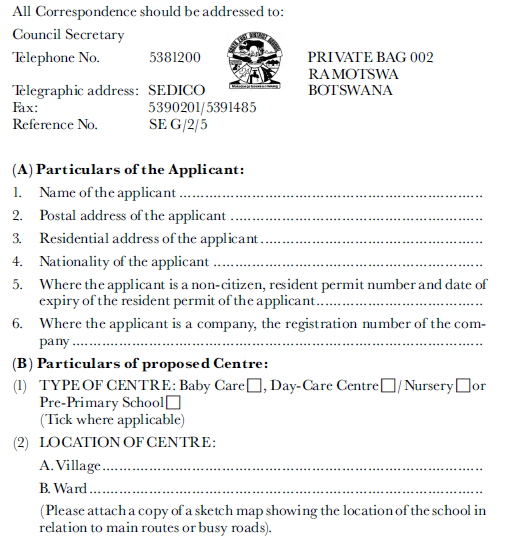
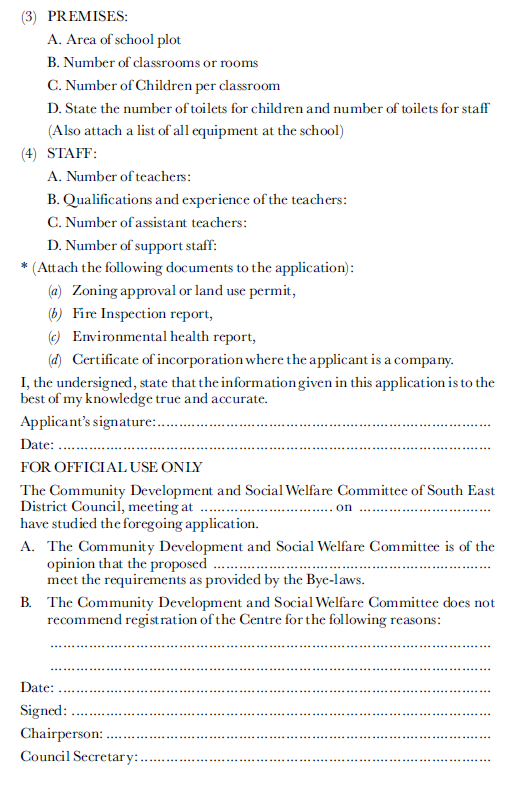
FORM 2
REGISTRATION LICENCE
(bye-law 3(3))
SOUTH EAST DISTRICT COUNCIL (EARLY CHILDHOOD CARE AND EDUCATION CENTRE) BYE-LAWS
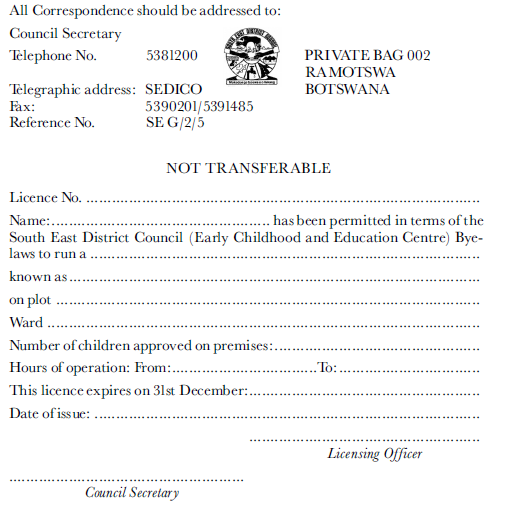
FORM 3
RENEWAL OF AN EARLY CHILDHOOD CARE AND EDUCATION CENTRE LICENCE
(bye-law 4(2))
SOUTH EAST DISTRICT COUNCIL (EARLY CHILDHOOD CARE AND EDUCATION CENTRE) BYE-LAWS
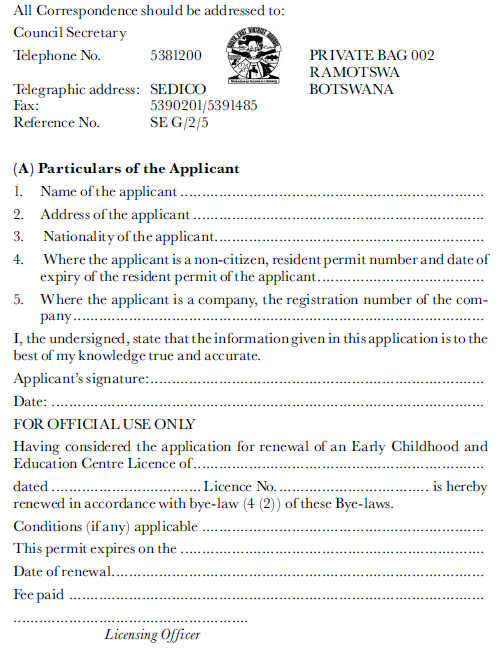
NORTH WEST DISTRICT COUNCIL (DAY-CARE CENTRE) BYE-LAWS
(section 33)
(6th August, 2010)
ARRANGEMENT OF BYE-LAWS
BYE-LAW
PART I
Preliminary
1. Citation
2. Interpretation
PART II
Licensing and registration of day-care centres
3. Licensing of day-care centres
4. Issue of day-care licence
5. Duration and renewal of day-care licence
6. Suspension and revocation of licence
7. Licence to be displayed
8. Transfer of licence
9. Closure of day-care centres
PART III
Premises
10. Type of premises used
11. Outdoor play areas
12. Toilets
13. Washing facilities
14. Kitchen
15. Furniture and classroom equipment
16. Fire extinguisher
17. First aid requirements
18. Cleanliness
19. Smoking
20. Pets
21. Transportation
22. Use of premises for other activities
PART IV
Operation and staff of the centre
23. Hours of operation
24. Resting period
25. Age of admission
26. Staff
27. Staff-child ratio
28. Curriculum
29. Register to be kept
PART V
Miscellaneous
30. Appeals
31. Powers of entry
32. Offences and penalties
Schedule
S.I. 71, 2010,
S.I. 68, 2011.
PART I
Preliminary (bye-laws 1-2)
These Bye-laws may be cited as the North West District Council (Day-Care Centre) Bye-laws.
In these Bye-laws, unless the context otherwise requires—
“authorised officer” means the Council Secretary or any employee of the Council duly authorised, in writing, by the Council to perform duties under these Bye-laws;
“care giver” means a person trained to the satisfaction of the Ministry of Education to teach, train, and care for children below the age of six years;
“Council” means the North West District Council;
“day-care centre” means a place for the care, education and supervision of children below the age of six;
“infectious diseases” include diphtheria, cerebrospinal meningitis, whooping cough, measles, mumps, German measles (rubella), chicken pox, scabies, ringworm of scalp or body, and typhoid fever;
“licence” means a licence issued under bye-law 3;
“qualified teacher” means a teacher qualified to the satisfaction of the Ministry of Education, to teach children below the age of six.
PART II
Licensing and registration of day-care centres (bye-laws 3-9)
3. Licensing of day-care centres
(1) A person shall not operate a day-care centre (in these Bye-laws referred to as “centre”) without a licence issued by the Council.
(2) A person under the age of 18 years may not operate a centre.
(3) Any person who wishes to operate a centre shall make an application for a licence to the Council, in Form 1 set out in the Schedule to these Bye-laws, giving details of—
(a) the premises intended to be used for the centre;
(b) the names and qualifications of all the teachers and assistants to be employed at the centre; and
(c) any other information with regard to the proposed centre as the Council may require.
(4) Upon receipt of the application, the Council shall cause to be conducted such inspections as it may consider appropriate to ensure that the premises of the centre comply with the relevant health and building control standards.
(1) Where the Council is satisfied that the proposed centre meets all the requirements of these Bye-laws and any other relevant legislation, it may, on payment of a fee of P200, issue to the applicant a licence in Form 2 set out in the Schedule to these Bye-laws.
(2) A licence issued under this bye-law may be subject to such conditions as the Council considers necessary, which conditions shall be endorsed on the licence.
(3) Subject to this bye-law, the Council may impose further conditions on the licence where it considers it necessary to do so.
5. Duration and renewal of day-care licence
(1) A licence issued under bye-law 4 shall be valid for a period of 12 months from the date of issue.
(2) A licence shall be renewable from year to year, on payment of the annual fee of P100.
(3) An application for the renewal of a licence shall be made in Form 3 set out in the Schedule to these Bye-laws.
6. Suspension and revocation of licence
(1) The Council may revoke, suspend or impose further conditions on a licence issued under these Bye-laws where—
(i) any conditions of the licence are not being adhered to;
(ii) a centre has failed to comply with these Bye-laws; or
(iii) an authorised officer, after conducting an inspection, has recommended a suspension of the licence due to a failure of the centre to comply with the relevant health standards.
(2) The revocation or suspension of a licence or imposition of further conditions on a licence done under this bye-law shall be published by notice in the Gazette.
The licence shall be conspicuously displayed in the premises of the centre.
A person, to whom a licence has been issued under these Bye-laws shall not cede, transfer or lease the licence to any person.
9. Closure of day-care centres
Where an officer of the Council who has inspected the centre reports in writing to the Council Secretary that the centre has contravened any provision of these Bye-laws, the Council may, subject to bye-law 6, order closure of the centre.
PART III
Premises (bye-laws 10-22)
(1) An occupied residential house shall not be used as a centre unless the portion to be used for the centre can be separated, to the satisfaction of the Council, from the portion used for residential purposes.
(2) A garage or verandah shall not be used as a classroom for a centre.
(3) Premises used for a centre shall be constructed in accordance with, and from material permitted by the appropriate building regulations, and the floors shall be smooth and tiled or carpeted, and every classroom or re- stroom shall be adequately lit and ventilated.
(4) The size of rooms to be used as classrooms shall directly relate to the number of children permitted to use them at any one time, so that for each child there shall be the equivalent of 1.5 square metres.
(5) In every centre there shall be a room, equipped with a bed with mattress and clean linen, in which a sick child can rest and be isolated.
(6) Premises used for a centre shall be adequately and securely fenced in, and shall be adequately set back at 25 metres from busy roads or roads regularly used by heavy traffic.
(1) The outdoor play areas shall provide a minimum area of not less than 2 cubic metres for each child attending the centre, and shall have a flat, generally dry surface, with adequate shade.
(2) The outdoor play areas shall be provided, to the satisfaction of the Council, with play equipment such as sand pits, swings, slides and climbing frames adequate for the number of children attending at the centre.
(3) The outdoor play areas shall be free from sharp objects or any discarded material, equipment, or any other objects which may pose a danger to children.
(4) The equipment shall be age appropriate and safe for use by children.
(1) Every centre shall be provided with separate toilets for members of staff and for children, which shall be well lit, well ventilated, and have adequate running water.
(2) Toilets for children shall be—
(a) separated according to gender; and
(b) installed with standard junior toilets and hand wash basins, so that there shall be one toilet and one hand wash basin for every 15 children.
(3) The toilets and handwash basins shall be kept clean, sterile and in a state of good repair.
(4) Storage facilities for towels, face cloths and personal belongings of the members of staff shall be separate from similar facilities for children.
There shall be maintained at every centre, a facility for washing clothes, towels, blankets and any other linen used at the centre.
(1) A centre which operates for less than five and a half hours shall have a kitchen with adequate hot and cold water.
(2) A centre which operates for more than five and a halfhours shall provide each child with at least one cooked meal.
(3) Where food or formula is brought into a centre by the children there shall be provided adequate and hygienic facilities for the storage and refrigeration of the food or formula.
(4) There shall be available for inspection a detailed menu of the food provided, with a suitably balanced diet, stating—
(a) the time for serving the meal; and
(b) the quantities to be served.
(5) Where a centre operates for less than five and a halfhours, each child shall be provided with at least one snack.
(6) The utensils, cutlery and crockery used in the kitchen shall be of a shape and size suitable for the children admitted at the centre.
15. Furniture and classroom equipment
(1) At every centre there shall be provided, to the satisfaction of the Council, an adequate supply of furniture and other equipment suitable for use in a centre, such as reading material, picture books, blackboards, toys, paints, crayons, moulding clay, puzzles and beads at every centre.
(2) The Council may require or approve additional or alternative equipment to that referred to in sub-bye-law (1).
There shall be maintained, and made readily accessible at all times, a portable fire extinguisher at every centre.
(1) There shall be maintained at every centre, and made readily accessible at all times, a first aid box or cupboard containing an adequate supply of dressings, bandages, sterilised cotton wool, adhesive plasters, disinfectant, safety pins, and a tourniquet.
(2) A member of staff shall not administer any medication to a child without the consent of the child’s parent or guardian.
(1) There shall be, at every centre, at all times, a high standard of maintenance and cleanliness in the centre.
(2) The owner of a centre shall ensure that any member of staff or child under the care of the centre, suffering from, or suspected to be suffering from an infectious disease, is immediately isolated from contact with other children or members of staff.
A person shall not smoke anywhere within the premises of a centre, and a notice to this effect shall be displayed prominently at the entrance to the centre.
Animals, whether pets or otherwise, shall not be permitted within any area used as a centre, without the written permission of the Council.
(1) Where a centre provides for the transportation of children, the vehicle used shall be enclosed and with adequate and comfortable sitting space for each child carried in it.
(2) The owner of a centre shall ensure that a vehicle used to transport the children is insured at all times.
22. Use of premises for other activities
Except with the written permission of the Council, the premises of the centre shall not be used for any activity which is not in the ordinary course of operating a centre.
PART IV
Operation and staff of the centre (bye-laws 23-29)
A centre shall not, except with the approval of the Council, operate—
(a) on Saturdays, Sundays or public holidays, or
(b) outside the hours between 7.00 a.m. and 6.00 p.m..
The owner of a centre shall ensure that all children at the centre shall have a common resting period of not less than one hour each afternoon.
A child shall not be admitted to, or be allowed to remain at a centre, without written permission of the Council, if the child is over the age of six years.
(1) Subject to the provisions of bye-law 27, a centre shall have a minimum of two qualified teachers, and at all times there shall be at least one such teacher on duty.
(2) A centre may employ care givers to assist the qualified teachers to supervise and look after children at the centre.
(3) All members of staff employed at the centre shall undergo a medical exam, including an X-ray, before being employed, and thereafter at six monthly intervals.
(4) A person shall not be employed, or continue to be employed at a centre if he or she—
(a) is certified under the Mental Disorders Act (Cap. 63:02), to be suffering from a mental disorder;
(b) has been convicted of a sexual offence; or
(c) has been convicted of an offence under the Children’s Act (Cap. 28:04).
(5) All members of staff employed at a centre shall at all times wear clean uniforms or clothing.
(1) A centre shall have a maximum of—
(a) 25 children aged between two and a half and four years old per class;
(b) 30 children aged between four and six years old per classroom; and
(c) 10 babies aged between six weeks and two and a half years per room.
(2) A centre shall have a minimum of—
(a) one qualified teacher and one assistant teacher per class; and
(b) two care givers per 10 babies.
The curriculum followed at a centre shall adhere to the standards set by the Ministry of Education.
The owner of a centre shall open and maintain, or cause to be kepi and maintained a register in which shall be recorded—
(a) in relation to each child admitted at a centre—
(i) the name and date of birth, and
(ii) the names, addresses and telephone numbers of his or her parent or guardian; and
(b) the names and qualifications of all the members of staff employed a1 the centre.
PART V
Miscellaneous (bye-laws 30-32)
A person who is aggrieved by a decision of the Council may, within 30 days of notification of that decision, appeal to the Minister in writing.
An officer of the Council, authorised in writing by the Council, may at any reasonable time enter at a centre for the purpose of inspection, and to ensure compliance with these Bye-laws.
Any person who contravenes the provisions of these Bye-laws commits an offence and is liable to a fine not exceeding P500, or to imprisonment for a term not exceeding one month, or to both, and upon conviction, for a second or subsequent offence, to a fine not exceeding P1 000, or to imprisonment for a term not exceeding three months, or to both.
SCHEDULE
FORM 1
APPLICATION TO OPERATE A DAY-CARE CENTRE
(bye-law 3(3))
NORTH WEST DISTRICT (DAY-CARE CENTRE) BYE-LAWS
|
Applicant’s Particulars |
|
1. Name ………………………………………………………………………………………………………… |
|
2. Postal address …………………………………………………………………………………………….. |
|
…………………………………………………………………………………………………………………. |
|
3. Residential address of the applicant …………………………………………………………………… |
|
4. Location of the premises of the day-care centre …………………………………………………….. |
|
………………………………………………………………………………………………………………….. |
|
5. Nationality of the applicant ……………………………………………………………………………….. |
|
6 Where the applicant is a non-citizen, resident permit number and date of expiry of the resident permit of the applicant ……………………………………………………………………………………. |
|
7. Where the applicant is a company, the registration number of the company …………………. |
|
Staff of the centre (attach extra pages if necessary) …………………………………………………… |
|
8. Persons to be employed at the centre: |
|
(a) Name …………………………………………………………………………………………………. |
|
Position to be held ………………………………………………………………………………… |
|
Qualification(s) …………………………………………………………………………………….. |
|
(b) Name …………………………………………………………………………………………………. |
|
Position to be held ………………………………………………………………………………… |
|
Qualification(s)………………………………………………………………………………………. |
|
(c) Name …………………………………………………………………………………………………. |
|
Position to be held ………………………………………………………………………………… |
|
Qualification(s) ……………………………………………………………………………………… |
|
(d) Name …………………………………………………………………………………………………. |
|
Position to be held ………………………………………………………………………………… |
|
Qualification(s) ……………………………………………………………………………………… |
|
(e) Name …………………………………………………………………………………………………. |
|
Position to be held ………………………………………………………………………………… |
|
Qualification(s) ……………………………………………………………………………………… |
|
(f) Name …………………………………………………………………………………………………. |
|
Position to be held ………………………………………………………………………………… |
|
Qualification(s) ……………………………………………………………………………………… |
|
(g) Name …………………………………………………………………………………………………. |
|
Position to be held ………………………………………………………………………………… |
|
Qualification(s) ……………………………………………………………………………………… |
|
* Please attach certified copies of the following persons employed by the centre- |
|
(a) educational certificates; |
|
(b) national identity card or a residence permit in the case of non-citizens; and |
|
(c) permission to teach issued by the Ministry of Education and Skills Development. |
|
Premises and structure |
|
9. What is the material used for building the premises? (e.g. wood, brick, or any other material) |
|
………………………………………………………………………………………………………………… |
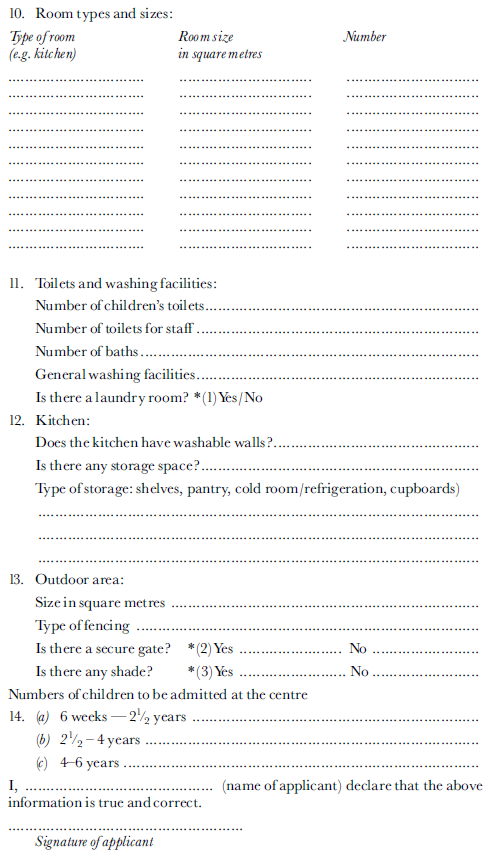
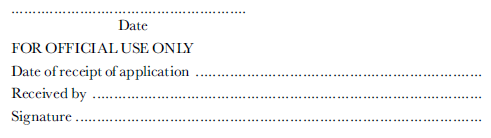
FORM 2
LICENCE TO OPERATE A DAY-CARE CENTRE
(bye-law 4(1))
NORTHWEST DISTRICT (DAY-CARE CENTRE) BYE-LAWS
NOT TRANSFERABLE
|
Licence No. …………………………………………………………………………………………………………. To ………………………………………………………………………………………………………………………. Having considered your application to operate a day-care centre, the North West District Council is satisfied that you have fulfilled the necessary requirements of the NorthWest District (Day-Care Centre) Bye-laws, you are hereby granted a licence to operate a day-care centre in the following area ………………………………………………………………………………………………………………………….. ………………………………………………………………………………………………………………………….. ………………………………………………………………………………………………………………………….. This licence is subject to the following conditions: ………………………………………………………………………………………………………………………….. ………………………………………………………………………………………………………………………….. ………………………………………………………………………………………………………………………….. ………………………………………………………………………………………………………………………….. ………………………………………………………………………………………………………………………….. ………………………………………………………………………………………………………………………….. ………………………………………………………………………………………………………………………….. ………………………………………………………………………………………………………………………….. This licence is valid until ………………………………………………………………, 20 ……………………. ………………………………………………………… Date of issue ……………………………………………… |
FORM 3
RENEWAL APPLICATION
(bye-law 5(3))
NORTHWEST DISTRICT COUNCIL (DAY-CARE CENTRE) BYE-LAWS
|
(A) Particulars of the applicant: 1. Name of the applicant ……………………………………………………………………………………….. 2. Address of the applicant ……………………………………………………………………………………. 3. Nationality of the applicant …………………………………………………………………………………. 4. Where the applicant is a non-citizen, resident permit number and date of expiry of the resident permit of the applicant …………………………………………………………………………………………. 5. Where the applicant is a company, the registration number of the company ……………………………………………………………………………………………………………………. 6. Location of the premises of the day-care centre ………………………………………………………. ……………………………………………………………………………………………………………………. I, the undersigned state that the information given in this application is to the best of my knowledge true and accurate. Applicant’s signature: …………………………………………………………………………………………… Date: ……………………………………………………………………………………………………………….. FOR OFFICIAL USE ONLY Having considered the application for the renewal of a day-care/nursery/ baby care centre licence of ……………………………………………………………………………………………………………………….. Conditions (if any) applicable …………………………………………………………………………………. This permit expires on the …………………………………………………………………………………….. Date of renewal ……………………………………….. Fee paid ……………………………………………. ……………………………………………… |
GHANZI DISTRICT COUNCIL (LIVESTOCK CONTROL) BYE-LAWS
(section 33)
(11th February, 2011)
ARRANGEMENT OF BYE-LAWS
BYE-LAW
1. Citation
2. Interpretation
3. Keeping of livestock
4. Troublesome or dangerous animals
5. Keeping of bees or poultry
6. Establishment of stables
7. Power to detain wandering livestock
8. Claiming of livestock
9. Enforcement
10. Notification and period of detention of livestock
11. Destroying of certain animals
12. Offences and penalties
Schedule
S.I. 7, 2011.
These Bye-laws may be cited as the Ghanzi District Council (Livestock Control) Bye-laws.
In these Bye-laws, unless the context otherwise requires—
“Council” means Ghanzi District Council;
“Council area” means the area within the jurisdiction of the Council;
“livestock” means any domestic bovine animal, goat, sheep, swine, horse, donkey or mule;
“owner” includes any person having the charge, custody or control of any animal and the occupier of any premises where any animal is kept or permitted to remain;
“poultry” includes any fowl, turkey, goose or duck;
“stable” includes a cowshed, stall, pen, kraal and sty;
“township” means Ghanzi Township as defined in the Township Act (Cap. 40.02); and
“veterinary officer” includes a veterinary officer, livestock officer or stock inspector employed in the Government service or a veterinary surgeon defined under the Veterinary Surgeons Act (Cap. 61.04).
(1) The Council may prohibit the use for keeping of livestock of any stable which in the opinion of the Council is unfit, undesirable or objectionable by reason of its locality, construction, condition or manner of use.
(2) The Council may prohibit livestock at landfills, health facilities, roads, township areas, schools and water resources such as boreholes, water pipes and standpipes.
4. Troublesome or dangerous animals
A person shall not allow any wild, troublesome, dangerous, ferocious dog, monkey, carnivorous wild animals or reptile to be at large off the premises on which such animal is normally kept.
A person shall not keep bees or poultry so as to disturb the comfort of the inhabitants of the Council area.
The Council may by resolution establish any stable for the purpose of these Bye-laws.
7. Power to detain wandering livestock
Any person authorised by the Council in writing may seize and detain in a stable any unattended livestock found wandering within the Council area.
(1) Any person entitled to take possession of any livestock detained under these Bye-laws in any stable in accordance with these Bye-laws may upon production of certified documents of ownership claim such animals on payment of the fees set out in the Schedule.
(2) Any person who removes or attempts to remove from stable any live-stock detained under these Bye-laws without payment of the fees set out in the Schedule commits an offence.
The Council may by resolution request the assistance of any person or organisation for the better carrying out of the provisions of these Bye-laws.
10. Notification and period of detention of livestock
(1) The Council Secretary shall, within 14 days after detaining any livestock, notify the Matimela officer of the presence of such livestock.
(2) Any livestock detained by the Council under these Bye-laws shall, if not claimed within a period of seven days, be disposed off to a Matimela kraal where notification has been given in terms of these Bye-laws by the Council Secretary to a Matimela kraal as defined under section 2 of the Matimela Act (Cap. 36.06).
11. Destroying of certain animals
The Council shall destroy without offering compensation any detained livestock suffering from a contagious disease or which is likely to prove dangerous to human life or destructive to other animals on detention on satisfactory receipt of a report from the veterinary officer.
Any person who contravenes the provisions of Bye-laws 3, 4, 5 and 8(2), commits an offence and is liable to a fine not exceeding P50, or to imprisonment for a term not exceeding one month and on a second or subsequent conviction to a fine not exceeding P100 or to imprisonment for a term not exceeding two months, or to both.
SCHEDULE
(bye-law 8(1))
|
Animals |
Fees |
|
Sheep, goats, pigs |
P5 per head per day |
|
Cattle, donkeys, mules, horses |
P10 per head per day |
|
Other domestic animals |
P2 per head per day |
NORTH EAST DISTRICT COUNCIL (DOGS) BYE-LAWS
(section 33)
(11th March, 2011)
ARRANGEMENT OF BYE-LAWS
BYE-LAW
1. Citation
2. Interpretation
3. Licensing of dogs
4. Duration of licence
5. Renewal of licence
6. Transfer of licence
7. Duplicate licence
8. Revocation or cancellation of licence
9. Dog to have metal tag
10. Yapping, etc. of dogs
11. Female dogs in season
12. Troublesome, dangerous or infected dogs
13. Detention and destruction of abandoned or diseased dogs
14. Diseased dogs to be presented for treatment
15. Dogs to be vaccinated
16. Penalties
Schedule 1
Schedule 2
S.I. 14, 2011
These Bye-laws may be cited as the North East District Council (Dogs) Bye-laws.
In these Bye-laws, unless the context otherwise requires—
“authorised officer” means the Council Secretary or any other officer of the Council authorised in writing by the Council Secretary to perform the duties under these Bye-laws;
“Council” means the North East District Council;
“licence” means a licence issued under bye-law 3;
“public place” means any public way, and any building, place or conveyance to which the public are entitled without any conditions within the Council’s area of jurisdiction and the enclosed space within its control;
“rabies certificate” means a certificate signed by a veterinary officer stating that a dog has been vaccinated against rabies; and
“veterinary officer” includes a livestock officer or stock inspector employed in the Government service and a veterinary surgeon defined under the Veterinary Surgeons Act (Cap. 61:04).
(1) A person shall not keep a dog which is over six months old without a licence to keep that dog, issued under these Bye-laws.
(2) The owner of a dog shall, within four weeks of the dog attaining the age of six months, apply to an authorised officer for a licence to keep that dog in Form A set out in Schedule 1.
(3) The authorised officer shall, on receipt of a written application, upon the payment of the fee set out in the Schedule 2 and after the production of a rabies certificate by the applicant, issue a dog licence in Form B1.
A licence issued under bye-law 3 shall be valid for 12 months.
(1) A holder of a dog licence may, upon its expiry, apply for a renewal of the licence to the authorised officer, in Form C set out in the Schedule 1.
(2) An application for renewal in terms of sub-bye-law (1) shall be made not later than one month before the expiry of that licence.
(3) Subject to the provisions of sub-bye-law (4), the authorised officer may, on receipt of an application, renew the licence by endorsing on the licence and upon payment of a fee set out in Schedule 2, and may attach such conditions to the renewal thereof as he or she may determine.
(4) The authorised officer may refuse to renew a licence if he or she is satisfied that—
(a) the conditions of the licence have not been complied with;
(b) the conditions of these Bye-laws have not been complied with; or
(c) it is in the public interest not to renew such licence.
(1) A person who acquires a dog for which a licence has been issued under these Bye-laws may apply to the authorised officer, in Form D set out in Schedule 1, for the licence to be transferred to him or her.
(2) The authorised officer shall, if satisfied of the validity of the licence and upon payment of a fee set out in the Schedule 2, cause the transfer to be effected by endorsing the particulars of the applicant on the licence.
(1) Where a licence is lost or destroyed, the owner of the dog may apply to the authorised officer for a duplicate licence in Form E set out in the Schedule 1.
The authorised officer shall, on being satisfied that a licence issued in terms of these Bye-laws has been lost or destroyed, and upon payment of the fee set out in Schedule 2, issue a duplicate licence to that person.
Where a licence which has been lost and replaced is recovered, the duplicate licence shall be returned forthwith to the authorised officer.
8. Revocation or cancellation of licence
An authorised officer may, at any time, withdraw or cancel a licence if, in his or her opinion, it is in public interest to do so.
A dog for which a licence has been issued under these Bye-laws shall, at all times have a metal tag fixed to its neck by means of a dog collar.
A person in charge of a dog shall take all steps necessary to ensure that the yapping, whining or barking of his or her dog does not unduly disturb other people or create a nuisance.
A person in charge of a female dog shall not allow it to be at large at the time when that dog is on heat or in season.
12. Troublesome, dangerous or infected dogs
(1) A person in charge of a dog shall not allow—
(a) any troublesome, ferocious or dangerous dog; or
(b) any dog suffering from a contagious or infectious disease,
to be at large outside the premises on which such dog is normally kept.
(2) Any person keeping a dog referred to under sub-bye-law (1)(a) shall display, at the principal entrance of the property where the dog is kept, a legible sign clearly reading “BEWARE OF THE DOG” or “TSHABA NTSA”.
13. Detention and destruction of abandoned or diseased dogs
(1) An authorised officer may detain and remove to the kennels or other premises owned by the Council, any dog at large in a public place.
(2) If a dog detained under sub-bye-law (1) is a dog for which a licence has been issued under bye-law 3, wearing a dog collar with a current metal tag, the authorised officer shall, in writing, notify the person to whom the licence was issued of the detention of the dog and the place where it is detained.
(3) If a dog detained under this bye-law is not claimed by or on behalf of the owner within 7 days after the detention of that dog, or of the notice under sub-bye-law (2), the authorised officer may cause the destruction of the dog or may otherwise dispose of that dog.
(4) The authorised officer may destroy or otherwise dispose of a dog before the expiry of the 7 days if he or she has reason to believe that the dog is abandoned or is without an owner or that it is suffering from a contagious disease.
(5) The owner of a dog detained under this bye-law may receive his or her dog on payment of the fee set out in Schedule 2.
14. Diseased dogs to be presented for treatment
A person who keeps a dog shall, where the dog shows any sign of suffering from an infectious disease, present that dog to a veterinary officer for treatment as soon as any sign of infectious disease is noticed.
(1) A person shall not keep a dog which is more than six months old unless the dog has been vaccinated against rabies and the person keeping it is in possession of a rabies certificate in relation to that dog.
(2) The authorised officer may cause the destruction of a dog which is not vaccinated or in relation to which the owner fails to produce a rabies certificate.
(3) Notwithstanding the provisions of sub-bye-law (2), a metal tag shall be enough proof of the existence of a rabies certificate.
(1) Any person who contravenes any provision of these Bye-laws commits an offence and is liable to a fine not exceeding P50, or to imprisonment for a term not exceeding two months, or to both.
(2) For a subsequent offence, such person is liable to a fine not exceeding P100, or to imprisonment for a term not exceeding six months, or to both.
SCHEDULE 1
FORM A
Application for Dog Licence
(bye-law 3(2))
|
Name …………………………………………………………………………………………………………………….. Surname …………………………………………………………………………………………………………………. Sex ……………………………………………………………………………………………………………………….. Ward ……………………………………………………………………………………………………………………… Identity number …………………………………………………………………………………………………………. Address plot number ………………………………………………………………………………………………….. Physical address ………………………………………………………………………………………………………. Telephone No …………………………………………………………………………………………………………… Name of a Dog …………………………………………………………………………………………………………. Sex ………………………………………………………………………………………………………………………. Age ………………………………………………………………………………………………………………………. Colour ……………………………………………………………………………………………………………………. Application (New/Duplicate) ………………………………………………………………………………………… Date of application …………………………………………………………………………………………………… Date of last vaccination …………………………………………………………………………………………….. Number of dogs in your possession ……………………………………………………………………………… Place(s) ………………………………………………………………………………………………………………… Have you ever been convicted of any offence in relation to these bye-laws for the past two years.Yes /No (If yes please the reasons) ………………………………………………………………………………….. Signature of applicant ……………………………………………………………………………………………….. Date ……………………………………………………………………………………………………………………….. FOR OFFICIAL USE Recommendation (Approved/Not approved) _________________________________________________________________________________ Recommended by ……………………………………………………………………………………………………. Designation ……………………………………………………………………………………………………………. Licence Fee …………………………………………………………………………………………………………… Signature of Issuing Officer ………………………………………………………………………………………… Date …………………………………………………………………………………………………………………….. Fee Paid ……………………………………………………………………………………………………………….. Official Receipt Number …………………………………………………………………………………………….. Official Stamp …………………………………………………………………………………………………………. |
FORM B
Dog Licence
(bye-law 3(3))
|
This is to certify that ……………………………………………………………………….. (name of applicant) of P.O. Box/Private Bag/Plot No …………………………………………………………………………. is licensed to keep a dog over the age of six months in accordance with the provisions of bye-law 3(1) from the ………………………………………. (date) to …………………………………………………………………………… Date of issue ………………………………………………………………………………………………………………. Official receipt No…………………………………………………………………………………………………………. ……………………………………………… |
FORM C
Application for renewal of Dog Licence
(bye-law 5(1))
|
Name …………………………………………………………………………………………………………………….. Address ………………………………………………………………………………………………………………….. Renewal date ……………………………………………………………………………………………………………. Dog Licence number …………………………………………………………………………………………………… Date of last Renewal …………………………………………………………………………………………………… Issued at ………………………………………………………………………………………………………………….. No. of current dog licence …………………………………………………………………………………………….. Plot number ………………………………………………………………………………………………………………. Street/Ward/Kgotla ………………………………………………………………………………………………………. Dog name …………………………………………………………………………………………………………………. Colour of dog ……………………………………………………………………………………………………………… Tag Number of Dog …………………………………………………………………………………………………….. Vaccination report number …………………………………………………………………………………………… Issued at …………………………………………………………………………………………………………………. Date of last vaccination ………………………………………………………………………………………………. Signature of applicant ………………………………………………………………………………………………… Date ………………………………………………………………………………………………………………………. Recommendation ……………………………………………………………………………………………………… Date ……………………………………………………………………………………………………………………… Signature ……………………………………………………………………………………………………………….. Revenue official receipt number ……………………………………………………………………………………. Stamp …………………………………………………………………………………………………………………… Date of Approval ………………………………………………………………………………………………………. Registrar ………………………………………………………………………………………………………………… Place …………………………………………………………………………………………………………………… |
FORM D
Application for transfer of Dog Licence
(bye-law 6(1))
|
Name ……………………………………………………………………………………………………………………. Address …………………………………………………………………………………………………………………. Transfer date …………………………………………………………………………………………………………… Dog Licence number …………………………………………………………………………………………………. Previous owner ………………………………………………………………………………………………………… Issued at ……………………………………………………………………………………………………………….. Purpose of transfer (tick) gift, sold, auctioned, others ………………………………………………………… No. of current dog licence …………………………………………………………………………………………… Plot number ……………………………………………………………………………………………………………. Street/Ward/Kgotla …………………………………………………………………………………………………… Dog name ……………………………………………………………………………………………………………… Colour of dog ………………………………………………………………………………………………………….. Tag Number of Dog ………………………………………………………………………………………………….. Vaccination report number …………………………………………………………………………………………. Issued at ……………………………………………………………………………………………………………….. Date of last vaccination ……………………………………………………………………………………………… Signature of applicant ………………………………………………………………………………………………… Date ……………………………………………………………………………………………………………………… Recommendation ……………………………………………………………………………………………………… Date ……………………………………………………………………………………………………………………… Signature ……………………………………………………………………………………………………………….. Revenue official receipt number …………………………………………………………………………………….. Stamp ……………………………………………………………………………………………………………………. Date Approval……………………………………………………………………………………………………………. Place ……………………………………………………………………………………………………………………. Recommendation ……………………………………………………………………………………………………… |
FORM E
(DUPLICATE LICENCE)
Dog Licence
(bye-law 7(1))
|
This is to certify that …………………………………………………………………………….. (name of applicant) Date of issue ……………………………………………………………………………………………………………… Official receipt No ………………………………………………………………………………………………………… ……………………………………………… |
SCHEDULE 2
FEES
(bye-laws 3(3), 5(3), 6(2), 7(2) and 13(5))
|
FEES |
AMOUNT |
|
Dog Licence |
P20 |
|
Renewal |
P10 |
|
Transfer of licence |
P10 |
|
Duplicate licence |
P5 |
|
Dog collar and tag |
P15 |
|
Detention per day |
P10 |
NORTH EAST DISTRICT COUNCIL (ABATTOIR) BYE-LAWS
(section 33)
(1st April, 2011)
ARRANGEMENT OF BYE-LAWS
BYE-LAW
1. Citation
2. Interpretation
3. Appointment of officers
4. Functions of manager
5. Authorisation to use abattoir
6. Hours of operation
7. Delivery of animals
8. Abattoir register
9. Care of animals, etc.
10. Diseased animals
11. Removal of animal from pen
12. Carcasses of dead animals
13. Personal hygiene
14. Restrictions on slaughter
15. Place for slaughtering
16. Manner of slaughtering
17. Marking of carcass
18. Deceptive dressing prohibited
19. Condemnation of soiled meat
20. Examination of carcass, etc.
21. Duties of meat inspector
22. Removal of meat, etc.
23. Human diseases
24. Obstructing manager
25. Disposal of unclaimed animals, etc.
26. Parking of vehicles
27. Dogs, etc. prohibited
28. Exclusion of children
29. Smoking prohibited
30. Liquor prohibited
31. Restrictions of removal of animal
32. Penalties
Schedule 1
Schedule 2
S.I. 28, 2011
These Bye-laws may be cited as the North East District (Abattoir) Bye-laws.
In these Bye-laws, unless the context otherwise requires—
“abattoir” means any premises in which animals are slaughtered or confined while awaiting slaughter, licenced under the Livestock and Meat Industries Act (Cap. 36:03) and operated by the Council;
“animal” means any bull, calf, cow, heifer, goat, ox, pig, or sheep;
“Council” means the North East District Council;
“manager” means the person appointed by the Council under bye-law 3;
“meat” means any part of an animal which is fit for human consumption;
“meat inspector” means any person appointed by the Council under bye-law 3;
“medical officer” means a medical practitioner appointed by the Director
of Medical Services to act as medical officer for the Council;
“offal” includes the head, horns, feet, tail, heart, lungs, liver, kidneys, spleen, stomach, intestines and other internal organs of any slaughtered animal;
“slaughter man” means a person appointed as such by the Council under bye-law 3;
“veterinary surgeon” means a person who is registered as a veterinary surgeon under the Veterinary Surgeons Act (Cap. 61:04).
The Council may appoint the following officers in writing, to perform any function assigned to such officers under these Bye-laws—
(a) a manager;
(b) a meat inspector, after consultations with the Director of Veterinary Services;
(c) a slaughter man; or
(d) any other person necessary to perform any function under these Bye-laws.
(1) A manager shall be responsible for managing and controlling an abattoir and for performing any other functions that is conferred by these Bye-laws.
(2) A person employed at, or making use of any facilities provided in the abattoir shall comply with any lawful instructions given by the manager.
(3) A person who fails to comply with any instruction given under sub-bye-law (2) may, in addition to being liable to prosecution for contravening this bye-law, be required by the manager to leave the abattoir immediately.
5. Authorisation to use abattoir
(1) A person shall not use an abattoir unless he is authorised by the manager on the payment of a fee prescribed in Schedule 2, to use the abattoir.
(2) A person who contravenes this bye-law commits an offence and is liable to the penalty prescribed under bye-law 32.
(1) An abattoir shall be open for receiving animals between the hours of 12 noon and 6.00 p.m except on Friday, Saturday, a public holiday or any day occurring immediately before a public holiday.
(2) An abattoir shall be open for slaughtering animals between the hours of 7.30 a.m. and 16.30 p.m. except on Friday, Saturday, or on a public holiday.
(3) A person shall not enter the abattoir before the hours of 7.30 a.m. or remain in the abattoir after the hours of 6.00 p.m unless such person is authorised to do so by the manager.
(4) A person who contravenes this bye-law commits an offence and is liable to the penalty prescribed under bye-law 32.
(1) A person who delivers an animal to the abattoir shall, on entering the abattoir, submit to the manager or an authorised officer—
(a) a written description of the animal to be slaughtered;
(b) a statement on the number of animals to be slaughtered;
(c) proof of ownership of the animal to be slaughtered; and
(d) any other document as may be required.
(2) A person in charge of any animal so delivered under sub-bye-law (1) shall have it marked with a distinguishing mark approved by the manager so that it can be easily and quickly identified.
(3) The same identification mark shall always be used by or on behalf of each owner, and such mark shall be registered by the manager in the register provided for under bye-law 8.
(4) An owner or a person in charge of any bull or any dangerous animal shall, when bringing such animal to the abattoir, either have it conveyed in a suitable vehicle in which it shall be securely bound or led by means of a chain or rope of sufficient strength and length.
(1) A manager shall keep a register in Form A set out in Schedule 1 of all the animals that are authorised to be slaughtered in the abattoir.
(2) The register shall contain—
(a) the name, identity card number and address of the owner of the animal;
(b) a description of the animal; and
(c) any other particulars that the manager considers necessary.
(1) A person in charge of any animal brought into an abattoir for slaughter, shall ensure that such an animal is properly cared for and provided with sufficient suitable food and water.
(2) Notwithstanding the provision of sub-bye-law (1), a person shall not overfeed or give salt to any animal which is in the abattoir.
(3) The manager may provide suitable food and water to an animal in the abattoir and the Council shall recover the cost of the food and water from the owner or a person in charge of the animal if the manager—
(a) discovers that such an animal, has been without food and water for a period exceeding 48 hours; or
(b) is requested to feed the animal by the owner or person in charge of the animal.
(4) Any animal in the abattoir, whether awaiting slaughter or in the process of slaughter, shall be treated with care, and shall not be subjected to any cruel or unnecessary suffering.
(5) A manager may, in his discretion, take sufficient measures to prevent any unnecessary suffering of or cruelty to an animal.
(1) A person shall not knowingly bring, or permit to be brought, into an abattoir an animal suffering from any infectious or contagious disease unless he is permitted in writing by a veterinary surgeon.
(2) A person who brings an animal to the abattoir shall provide the health status of the animal in a declaration in Form B set out in Schedule 1.
(3) A person who contravenes sub-bye-law (1) shall, by virtue of having paid the penalty prescribed under bye-law 32 for such contravention, be absolved from any liability to pay the Council any expenses incurred in cleaning and disinfecting the abattoir and for any other loss occasioned by such action.
(4) A manager may refuse to admit into the abattoir any animal suffering from any infectious or contagious disease.
(5) Where a manager has reasonable grounds for suspecting that any animal already admitted into the abattoir, or for which admission is sought is suffering from any infectious or contagious disease, the manager may require or cause such animal to be examined by an authorised veterinary surgeon.
(6) The manager may, after obtaining the opinion of a veterinary surgeon, cause or order any animal which is found to be diseased, or which has been in contact with an infected animal, to be slaughtered at a place set apart for the slaughtering of diseased animals.
(7) A carcass of a diseased animal which is found to be fit for human consumption after slaughter shall be returned to the owner or person in charge of such animal.
(8) A carcass of a diseased animal which is found to be unfit for human consumption shall be seized and destroyed by the manager or an authorised officer.
(9) A person who contravenes this bye-law is liable to the penalty prescribed under bye-law 32.
11. Removal of animal from pen
A person shall not, without the permission of the manager or any authorised officer, remove an animal from a pen, unless it is for the purpose of removing it to another pen or slaughter place.
The carcass and offal of any animal which died within the abattoir otherwise than by slaughter, or any animal which arrives dead at the abattoir, shall be condemned, seized and destroyed by the manager or an authorised officer.
(1) A person who performs any duty in the abattoir shall observe strict cleanliness in his person and attire and shall at all times wear a clean butchering coat or protective clothing, protective footwear and a cap, made of a washable material and light in colour whilst within the slaughter place or any other place within the abattoir where it is necessary to wear such clothes.
(2) A person who is authorised to visit the abattoir shall wear protective clothing, protective footwear and a cap made of a washable material and light in colour whilst within the slaughter place or any other place within the abattoir where it is necessary to wear such clothes.
(3) A person shall not hang up or deposit or permit to be hung up or deposited any clothes in any room or enclosure in which meat is slaughtered, dressed or prepared for human consumption.
(1) A person shall not slaughter any animal on the day it enters the abattoir.
(2) Sub-bye-law (1) shall not apply where a veterinary surgeon, or meat inspector inspects and examines an animal when it enters the abattoir and finds it to be suffering from serious injuries received during transportation and authorises that it be slaughtered to avoid any unnecessary suffering.
A person shall not slaughter or dress any animal in any part of the abattoir premises except in the place specially appointed and set apart for such purpose.
The manner of slaughtering of an animal shall be in accordance with the provisions of the Livestock and Meat Industries Act (Cap. 36:03).
The slaughter man shall clearly brand or mark the carcass with the registered mark of the owner of the animal immediately after an animal has been slaughtered and flayed.
18. Deceptive dressing prohibited
A person shall not dress any carcass or any portion of the carcass with the object of giving it a deceptive appearance.
19. Condemnation of soiled meat
(1) All meat, fat or offal which becomes soiled by the contents of the alimentary tract shall be condemned as unfit for human consumption.
(2) Notwithstanding the provisions of sub-bye-law (1) where, in the opinion of an authorised veterinary surgeon or any meat inspector, the soiling may be removed by cutting away the soiled portions, the authorised veterinary surgeon or inspector may authorise this to be done and any remaining meat, fat or offal shall be deemed to be fit for human consumption.
(3) A person shall not cut, remove or attempt to conceal any diseased or injured part of any slaughtered animal.
20. Examination of carcass, etc.
(1) A person shall not remove from the immediate vicinity of the carcass of any animal slaughtered at the abattoir any portion of the flesh, bone or offal until they have been duly examined and dealt with by a meat inspector.
(2) The meat inspector shall immediately after an animal has been slaughtered and dressed, examine and stamp a carcass, or offal, submitted for examination and passed as healthy and fit for human consumption with the official stamp mark of the Council in such places as the meat inspector may deem necessary.
(3) A meat inspector shall examine, handle and cut into the carcass, and offal of every animal which has been slaughtered at the abattoir, immediately after it has been dressed, for the purpose of ascertaining whether it is unfit for human consumption.
(4) Examination of carcass, meat, or offal shall be made during daylight.
(5) The carcass of every animal condemned or any part of the carcass or offal of a slaughtered animal which has been found under sub-bye-law (3) to be unfit for human consumption shall be destroyed under the supervision of the authorised veterinary surgeon or meat inspector, or manager.
(1) The meat inspector shall brand or stamp with the official stamp mark of the Council in such places and in such ways as he may deem advisable or necessary all carcasses, meat, offal submitted for examination and passed as healthy and fit for human consumption.
(2) A person shall not, other than an authorised officer, stamp, brand or mark or attach to or impress on any meat, or offal with any official stamp or mark or any similar marking.
(3) A person shall not attach to or impress on any meat or offal any forged stamp or mark or any stamp or mark intended or liable to deceive the public or induce the belief that such meat or offal has been inspected and approved under these Bye-laws or slaughtered at the abattoir.
(1) A person shall not, without the permission of the manager, remove or cause to be removed from the abattoir any meat, or offal unless it has been examined, approved and stamped in accordance with these Bye-laws.
(2) A person shall not remove from an abattoir, without the express permission of the manager, any meat or offal unless it has been washed and cleaned to the satisfaction of a meat inspector.
(1) A person who knowingly suffers from any notifiable infectious or contagious disease, or is knowingly exposed to infection from any such disease within 12 hours immediately before assuming duty shall not engage in the slaughter of animals, dressing of carcasses or handling or conveyance of meat intended for human consumption, nor shall any employer permit any person in his employment who suffers from or who has been exposed to infection to be so engaged unless he has obtained the prior written permission of medical officer.
(2) The medical officer shall have the power to examine, which may include the examination of blood of any person engaged in the slaughtering of animals, the dressing of carcasses or handling or conveyance of meat whenever he deems it necessary to do so for the purpose of ascertaining whether such person suffers from any disease or condition liable to contaminate the meat, as a result of which serious consequences to the health of others may occur, and may prohibit any such person found to be so suffering from being so engaged until he has been again examined and certified by a medical officer to be free from such disease or condition.
(3) Any person engaged in work within the abattoir having any cuts, grazes or abrasions shall have such injuries covered by a clean waterproof dressing.
A person shall not interfere with or obstruct the manager or any authorised officer or cause any disturbance within the abattoir, and any person who interferes or obstructs or causes any disturbance may, in addition to being liable to prosecution for a contravention of this bye-law, be removed from the abattoir.
25. Disposal of unclaimed animals, etc.
(1) The manager may slaughter or cause to be slaughtered any animal in an abattoir which may be unclaimed or as to the ownership of which there is a dispute, and shall, in the case of any such slaughter, dispose of the carcass on behalf of the Council.
(2) On ascertaining the rightful owner of an animal under sub-bye-law (1), the Council shall pay to the owner the proceeds from such sale less the amount of any expenses incurred in respect of such animal.
All vans, lorries, wagons, carts and other vehicles brought into the abattoir shall park in such places as the manager shall appoint.
A person shall not bring into the abattoir, or permit to enter or remain there, any dog, cat, bird or other animal which feeds on offal, and the manager may remove or cause to be removed from the abattoir any such animal or bird found in the premises.
A person under the age of 14 years shall not at any time be admitted to any part of the abattoir where slaughtering or dressing is taking place, unless the manager authorises that such a person can enter when under the supervision of an adult.
A person who smokes in any part of the abattoir where animals are slaughtered, inspected or kept commits an offence and is liable to the penalty prescribed under bye-law 32.
A person commits an offence and is liable to the penalty prescribed under bye-law 32 if he—
(a) enters or remains in an abattoir while intoxicated; or
(b) brings any liquor into an abattoir.
31. Restrictions of removal of animal
A person shall not remove from the abattoir any animal, alive or dead, or the carcass of any animal or any meat, or offal or any other thing pertaining to any animal without the prior permission of the manager.
A person who contravenes any provision of these Bye-laws commits an offence and is liable on first conviction to a fine not exceeding P200, or to imprisonment for a term not exceeding one month, and on subsequent conviction to a fine not exceeding P300 or to imprisonment for a term not exceeding three months.
SCHEDULE 1
FORM A
Register of animals
(bye-law 8(1))
|
1. |
Name of owner/person in charge: ______________________________________________ |
|
|
2. |
Identity card number/Passport Number: ________________________________________ |
|
|
3. |
Postal address: ____________________________________________________________ |
|
|
4. |
Physical address: ________________________________________________________ |
|
|
5. |
Telephone Number: _______________________________________________________ |
|
|
6. |
Description of the animal: |
|
|
|
(a) |
Animal species: ____________________________________________________ |
|
|
(b) |
Breed: ____________________________________________________________ |
|
|
(c) |
Age of animal: ____________________ Sex of animal: _____________________ |
|
|
(d) |
Bolus: _______________________ and ear tag number: ____________________ |
|
|
(e) |
Identification mark approved by the manager under bye-law 7(2): |
|
|
|
__________________________________________________________________ |
|
|
(f) |
Describe any other mark on the animal which can identify it: |
|
|
|
__________________________________________________________________ |
|
|
|
__________________________________________________________________ |
|
7. |
Declaration: |
|
|
|
I declare that the information given above is true and correct. |
|
|
|
Signature _____________________ Date ___________________ Time _______________ |
FORM B
Declaration on the health status of the animal
(bye-law 10(2))
|
1. |
Name of owner/person in charge: ____________________________________________ |
|
|
2. |
National Identity Number/ Passport Number: ___________________________________ |
|
|
3. |
Postal address: ___________________________________________________________ |
|
|
4. |
Physical address: ________________________________________________________ |
|
|
5. |
Telephone Number: (if any) _________________________________________________ |
|
|
6. |
Name and address of owner’s veterinary surgeon: ________________________________ |
|
|
7. |
Description of animal: |
|
|
|
(a) |
Animal species: _____________________________________________________ |
|
|
(b) |
Breed: ____________________________________________________________ |
|
|
(c) |
Age of animal:Sex of animal: _________________________________________ |
|
|
(d) |
Bolus: and ear tag number: ___________________________________________ |
|
|
(e) |
Describe any other mark on the animal which can identify it: ________________ |
|
|
|
__________________________________________________________________ |
|
8. |
Declaration: |
|
|
|
(a) |
the above animal has received no treatment within the last 28 days. |
|
|
(b) |
the withdrawal period for any treatment administered to this animal has been observed. |
|
|
(c) |
I declare that the information given above is true and correct. |
|
|
Signature _____________________ Date ___________________ Time _______________ |
SCHEDULE 2
Abattoir Fees
(bye-law 5(1))
|
1. |
Use of Abattoir for slaughtering, lairage, water, inspection and stamping of meat; |
||
|
|
(a) |
Bull, ox, cow, heifer steer or calf |
P70 |
|
|
(b) |
Sheep, lamb, goat or kid |
P35 |
|
|
(c) |
Pig |
P50 |
|
2. |
Charge per day for the use of freezer; |
|
|
|
|
(a) |
Bull, ox, cow, heifer steer or calf |
P50 |
|
|
(b) |
Sheep, lamb, goat or kid |
P20 |
|
|
(c) |
Pig |
P30. |
NORTH EAST DISTRICT COUNCIL (REFUSE) BYE-LAWS
(section 33)
(13th May, 2011)
ARRANGEMENT OF BYE-LAWS
BYE-LAW
1. Citation
2. Application
3. Interpretation
4. Removal of refuse from premises
5. Accumulation of refuse
6. Deposit of refuse
7. Prohibition to litter
8. Fees for collection of refuse
9. Penalties
Schedule
S.I. 37, 2011
These Bye-laws may be cited as the North East District Council (Refuse) Bye-laws.
These Bye-laws shall apply to all villages within the jurisdiction of the North East District Council.
In these Bye-laws, unless the context otherwise requires—
“authorised officer” means the Council Secretary or any other officer of the Council authorised in writing by the Council Secretary to perform the duties under the Bye-laws;
“bye-law enforcement officer” means an officer from the Bye-law Enforcement Unit at the Council established in accordance with section 40A of Local Government (District Councils) Act;
“clinical waste” means—
(a) waste which, unless rendered safe, may prove hazardous to any person, animal or plant coming into contact with it, arising from human or animal tissue, blood or other body fluids, excretions, drugs or other pharmaceutical products, radioactive materials, swabs or dressings, microbiological cultures and potentially infected waste from pathology departments or syringes, or other sharp instruments; or
(b) any other waste which may cause infection to any person, animal or plant coming into contact with it arising from—
(i) medical, nursing, dental, veterinary, pharmaceutical, or similar practice;
(ii) investigation, treatment, care, teaching or research; or
(iii) the collection of blood transfusion.
“Council” means the North East District Council;
“landfill” means any piece of land designated by the Council for the disposal of refuse;
“occupier” means any person in occupation of premises and legally entitled to occupy such premise;
“premises” includes any building, yard, field, garden or land whether enclosed or open;
“public place” means any public street, square, road, path or thoroughfare, bus rank, tribal kgotla and any public institution or communal or public; and
“refuse” includes any waste, filth, rubbish, trash, rubble, garbage, excrement, waste product from any source, derelict vehicles or tyres, and any matters which may be offensive, or a nuisance or injurious or dangerous to health or favours the breeding of flies or mosquitoes or harbouring of rodents or substances and any combination thereof which are discarded or accumulated by any person.
4. Removal of refuse from premises
(1) The Council may, by notice in writing, serve on an owner or occupier of any premises a requirement, to remove refuse from such premises within three days after service of such notice.
(2) If any owner or occupier of such land or premises on whom a written notice has been served in accordance with provisions of sub-bye-law (1) fails to comply with the requirement to remove refuse stated in such notice, the Council may, by its employee or agents, enter upon such premises and remove the refuse thereafter recover from such owner or occupier any expenses it may have incurred in carrying out such removal.
(3) A person who fails to comply with sub-bye-law 5(1) commits an offence and is liable to a fine not exceeding P500, and a further fine not exceeding P100 for every day during which the offence continues.
An occupier of premises shall not allow or permit any refuse to accumulate or remain on the premises so as to be offensive or a nuisance.
(1) Any person who removes refuse from any place within the Council area shall deposit such refuse at a landfill or a place designated by the Council.
(2) Notwithstanding the provisions of sub-bye-law (1) refuse may be deposited in an approved refuse receptacle provided by the Council, owner or occupier of any premises.
(3) A person shall not deposit any refuse or cause or permit any refuse to enter any stream, pool, spring, well, borehole, dam, catchments basin, canal or any other sources of water supply.
(4) Any bye-law enforcement officer may enter and remove refuse from any premises to prevent pollution of the environment or danger to human, animal or plant life where it is necessary to remove the refuse immediately or that there is no occupier or owner of the premises in question.
(5) The Council shall be entitled to recover the costs of disposing any refuse as provided for under sub-bye-law (4).
(1) A person shall not throw or deposit in any public place refuse which can contribute to the defacement of any place, except as authorised by law or done with the consent of the Council.
(2) Any person who contravenes this bye-law commits an offence and is liable to a fine not exceeding P300, or imprisonment to a term not exceeding two months, or both.
8. Fees for collection of refuse
(1) The fees prescribed in the Schedule shall be payable to the Council in respect of the collection and disposal by it of refuse and the emptying of dustbins or receptacles from any households, institution or premises.
(2) The Council shall review such fees from time to time, as it may deem fit to do so.
(1) A person who contravenes or fails to comply with any provision of these Bye-laws where the penalty is not stipulated commits an offence and is liable, for a first offence to a fine of P100, or to imprisonment for a term not exceeding one month, and for a second or subsequent offence, to a fine of P250, or to imprisonment for a term not exceeding three months.
(2) Notwithstanding sub-bye-law (1), where the offence is in respect of bye-law 6(4) the penalty for a first offence shall be a fine of P200, or to imprisonment for one month and for a second or subsequent offence, to a fine of P300, or to imprisonment for a term not exceeding six months.
(3) Any person who obstructs any bye-law enforcement officer or any authorised officer in the discharge of their functions under these Bye-laws commits an offence and is liable to a fine not exceeding P100, or to imprisonment for a term not exceeding three months or, to both.
SCHEDULE
Fees
(bye-law 8)
|
NO. |
SERVICE |
FEE |
|
|
A |
REFUSE COLLECTION |
|
|
|
|
• |
Household |
P10 per month |
|
|
• |
Commercial- e.g. General Dealer, shops |
P50 per month |
|
|
• |
Wholesale, Industrial and Institutions |
P75 per month |
|
|
• |
Bars |
P50 |
|
B |
GARDEN WASTE |
P20 per load |
|
|
C |
CONSTRUCTION WASTE |
|
|
|
|
• |
Residential |
P100 per load |
|
|
• |
Commercial |
P150 per load |
|
|
• |
Institution |
P100 per load |
|
|
• |
Industrial |
P180 per load |
|
D |
CLINICAL INCINERATION |
P10 per kg |
|
|
E |
CLINICAL WASTE COLLECTION (Private Clinics) |
P50 per month |
GHANZI DISTRICT COUNCIL (BARBERS AND BRAIDERS) BYE-LAWS
(section 33)
(26th August, 2011)
ARRANGEMENT OF BYE-LAWS
BYE-LAW
1. Citation
2. Interpretation
3. Register of barbers and braiders
4. Licence required to carry on business of barber or braider
5. Appointment of licensing authority
6. Application for licence
7. Validity of licence
8. Renewal of licence
9. Issue of duplicate licence
10. Licence not transferable
11. Suspension, revocation, etc.
12. Modification of licence
13. Display of licence
14. Licence to be produced for inspection
15. Premises
16. Sanitary conditions
17. Closure of licenced premises
18. Powers of entry
19. Appeals
20. Penalties
Schedule
S.I. 67, 2011
These Bye-laws may be cited as the Ghanzi District Council (Barbers and Braiders) Bye-laws.
In these Bye-laws, unless the context otherwise requires—
“authorised official” means a person authorised by the Council Secretary, in writing, for the purpose of giving effect to these Bye-laws;
“barber” means a person who, in a fixed place of business, carries on the business of shaving and cutting a person’s hair or beard;
“braider” means a person who, in a fixed place of business, carries on the business of braiding, styling and cutting a person’s hair;
“Council” means the Ghanzi District Council;
“council area” means the area under the jurisdiction of the Council;
“council officer” means the Council Secretary, the Council Treasurer, a bye-law enforcement officer or an authorised official;
“licensing authority” means the licensing authority appointed under bye-law 5;
“licensing office” means the Council Secretary or an employee of the Council, duly authorised as such by the Council Secretary in writing;
“premises” means the place of business of a barber or braider and includes a tent, booth, shed, stall or similar structure which is duly approved by the licensing authority; and
“Registrar” means the Council Secretary or an employee of the Council, duly authorised as such, in writing, by the Council Secretary.
3. Register of barbers and braiders
(1) The Registrar shall keep a register of licenced barbers and another register of licenced braiders.
(2) The Registrar shall cause to be entered in the registers the following particulars in respect of each licenced barber and each licenced braider—
(a) his full names;
(b) his licence number;
(c) the date of issue and expiration of the licence;
(d) details of licence renewals; and
(e) such other details as the Registrar believes to be reasonably necessary.
4. Licence required to carry on business of barber or braider
(1) No person shall carry on the business of a barber or braider within the council area unless the—
(a) person is a citizen of Botswana;
(b) person has attained the age of 16 years;
(c) person is duly licenced under these Bye-laws; and
(d) the premises on which the business is being carried on are approved by the licensing authority in writing.
(2) Any person who contravenes the provisions of sub-bye-law (1) shall be guilty of an offence and is liable to a penalty specified under bye-law 20.
5. Appointment of licensing authority
The Council shall, from amongst its members, appoint a licensing authority to perform the Council’s functions under these Bye-laws.
(1) A person who wishes to carry on the business of a barber or braider shall apply to the licensing authority, in Form A set out in the Schedule.
(2) The application shall be accompanied by—
(a) two photographs, approximately five by four centimetres in size, clearly depicting the face and shoulders of the applicant; and
(b) a copy of the applicant’s Omang.
(3) The licensing authority may refuse to issue a licence to any person if it is satisfied that the issue of a licence would be contrary to the interests of health or to the public interest.
(4) The licensing authority shall, if it is satisfied that the requirements of these Bye-laws have been met, and on payment of an application fee of P5, issue a barber’s or braider’s licence, as the case may be, in Form B set out in the Schedule.
A licence issued under bye-law 6(4) shall be valid for a period of 12 months and, unless renewed under bye-law 8, shall expire immediately after a period of 12 months from the date of issue.
(1) No person shall carry on business as a barber or braider after his licence has expired, unless he has already applied for a renewal under sub-bye-law (2).
(2) A licence may be renewed by application made to the licensing authority in Form C set out in the Schedule for a period of 12 months from the date of its expiry and thereafter for further periods of 12 months from the date of each subsequent expiry.
(3) An application for renewal in terms of sub-bye-law (2) shall be—
(a) in respect of the same premises;
(b) subject to bye-law (4), made not later than the date of the expiry of the licence; and
(c) accompanied by the application fee of P5.
(4) An application for renewal, if made after the expiry of the licence, shall be made no later than one year after the expiry of the licence, and accompanied by the application fee of P5 and a late renewal fee of P10.
(5) Any application for renewal made to the licensing authority after 12 months of the expiry of the licence shall be treated as a new application.
(6) Where an application complies with sub-bye-law (3), the licensing authority shall, endorse such renewal on the licence and may attach any conditions to the renewal as it may determine.
(7) The licensing authority may refuse to renew a licence if it is satisfied that—
(a) the conditions of the licence have not been complied with;
(b) the provisions of these Bye-laws have not been complied with;
(c) the holder of the licence is convicted of an offence under these Bye-laws; or
(d) it is in the public interest not to renew the licence.
(8) Any person who contravenes the provisions of sub-bye-law (1) shall be guilty of an offence and liable to the penalty specified in bye-law 20.
(1) The licensing authority may, on being satisfied that a licence issued in terms of these Bye-laws has been lost or destroyed, issue a duplicate licence to the licensee, on payment of a fee of P2,50.
(2) Where a licence which has been lost and replaced is recovered, the duplicate licence shall be returned forthwith to the licensing authority.
(1) A licence issued under these Bye-laws shall not be hired, ceded, transferred or in any way whatsoever made over to any other person.
(2) Any person who contravenes the provisions of sub-bye-law (1) shall be guilty of an offence and liable to the penalty specified under bye-law 20.
11. Suspension, revocation, etc.
(1) The licensing authority may suspend a licence issued under these Bye-laws if—
(a) there is non-compliance with any condition of the licence; or
(b) the holder purports to hire, cede or transfer or in any way whatsoever make over the licence to any other person.
(2) The Council may revoke a licence where—
(a) it reasonably believes that it is in the interest of the public to do so;
(b) the continuing use of the licence will constitute a danger to public health; or
(c) the holder is convicted of an offence under these Bye-laws.
Any person who wishes to have his licence modified or varied may make an application in writing to the licensing authority giving reasons why a modification or variation is required.
(1) A licence issued under these Bye-laws, or a copy thereof, shall be displayed prominently in the premises used for the business of a barber or braider.
(2) Any person who contravenes the provisions of sub-bye-law (1) shall be guilty of an offence and liable to the penalty specified under bye-law 20.
14. Licence to be produced for inspection
(1) A holder of a licence issued under these Bye-laws shall, on demand by a council officer or a police officer, produce the licence for inspection or otherwise shall, within 48 hours of such demand, produce the licence for inspection, at the office of such council officer, or at the station of such police officer, as the case may be.
(2) Any person who contravenes the provisions of sub-bye-law (1) shall be guilty of an offence and liable to the penalty specified under bye-law 20.
(1) Premises used for the business of a barber or braider shall—
(a) be constructed of materials approved by the licensing authority, having regard to public health and safety;
(b) be constructed in a manner approved by the licensing authority, having regard to public health and safety;
(c) be used solely for the business of a barber or braider;
(d) not be within a radius of 30 metres from the nearest residential or commercial plots;
(e) have adequate lighting and ventilation;
(f) have a constant supply of wholesome water;
(g) be maintained at all times in a clean and sanitary condition;
(h) be at all times maintained in good repair;
(i) be free of insects, rodents or other vermin;
(j) be not less than 7.5 square metres in size; and
(k) not be within a radius of 30 metres from food premises, unless circumstances are such that it would not pose any threat or danger to public health.
(2) Any person who contravenes the provisions of sub-bye-law (1) shall be guilty of an offence and liable to the penalty specified under bye-law 20.
(1) The holder of a licence issued under these Bye-laws shall—
(a) ensure that all utensils, vessels, containers, hair clippers, scissors, linen, towels, cloths and other articles used in the conduct of the business are maintained in a sanitary condition, and disinfected or sterilised in such manner as the licensing authority may direct;
(b) at all times keep the premises and surrounding area clean while engaged in the conduct of the business of a barber or braider;
(c) at all times keep his person clean while engaged in the conduct of business of a barber or braider;
(d) use disposable hand gloves and masks where necessary;
(e) take all reasonable steps to ensure that clean, disinfected or sterilised articles are kept separate from those which have not been washed, disinfected or sterilised;
(f) ensure that at all times there are sufficient receptacles of galvanised iron or other non-absorbent material, with close fitting covers available for collecting, storing and disposing of all refuse;
(g) remove and dispose of any hair trimmings, litter or refuse which has been deposited in or through the conduct of his business, within the premises and the surrounding area, at the close of each working day; and
(h) ensure that adequate toilet facilities are available for all working staff and patrons.
(2) Any person who contravenes the provisions of sub-bye-law (1) shall be guilty of an offence and liable to the penalty specified under bye-law 20.
17. Closure of licenced premises
Where in the opinion of the licensing authority, premises licenced under these Bye-laws are such as are likely to constitute a threat or pose a danger to public health, the licensing authority may direct the closure of such premises until the licensing authority is satisfied that the threat or danger has been remedied.
(1) A council officer or a police officer may at any reasonable time enter and inspect the premises for the purpose of ensuring that the condition of the premises and the operation of the business complies with the provisions of these Bye-laws and the conditions of the licence in respect thereof.
(2) Any person who refuses to allow a council officer or a police officer entry into the premises shall be guilty of an offence and liable to the penalty specified under bye-law 20.
(1) Any person aggrieved by the decision of the licensing authority made under these Bye-laws, may appeal to the Council within 30 days of notification of that decision.
(2) Any person aggrieved by the decision of the Council, under sub-bye-law (1), may appeal to the Minister within 30 days of notification of that decision.
(1) Any person who is guilty of an offence under these Bye-laws shall be liable—
(a) for a first offence, to a fine not exceeding P500, or to imprisonment for a term not exceeding two months, or to both; and
(b) for a second or subsequent offence, to a fine not exceeding P2 000, or to imprisonment for a term not exceeding six months, or to both.
(2) A person convicted of an offence under these Bye-laws may, in addition to any penalty to which he may be liable, have his licence revoked with effect from a date as the court may determine or have goods associated with his barber or braider business impounded or confiscated.
SCHEDULE
FORM A
APPLICATION FOR A BARBER’S/BRAIDER’S LICENCE
(bye-law 6(1))
(GHANZI DISTRICT COUNCIL)
|
(This form is to be completed in block letters. Attach two passport size photographs, approximately 5cm x 4cm and a copy of applicant’s Omang.) |
|
|
Full names of applicant (surname first): ……………………………………………………………. |
|
|
Place of residence: ………………………………………………………………………………………. |
|
|
Sex: Male/Female: ……………………………………………………………………………………….. |
|
|
Postal address: …………………………………………………………………………………………….. |
|
|
Nationality: |
|
|
National Identity No.: ……………………………………………………………………………………… |
|
|
I wish to apply for a barber’s/braider’s licence as follows: |
|
|
(a) |
Location of premises: |
|
|
……………………………………………………………………………………………………….. |
|
|
……………………………………………………………………………………………………….. |
|
|
……………………………………………………………………………………………………….. |
|
(b) |
Number and type of scissors, clippers and other equipment to be used: |
|
|
……………………………………………………………………………………………………….. |
|
|
……………………………………………………………………………………………………….. |
|
|
……………………………………………………………………………………………………….. |
|
(c) |
Other information: |
|
|
……………………………………………………………………………………………………….. |
|
|
……………………………………………………………………………………………………….. |
|
|
……………………………………………………………………………………………………….. |
|
(d) |
I have the following qualifications/experience: |
|
|
……………………………………………………………………………………………………….. |
|
|
……………………………………………………………………………………………………….. |
|
|
……………………………………………………………………………………………………….. |
|
Date: ………………………………………….. |
|
|
……………………………………………… |
|
|
FOR OFFICIAL USE ONLY |
|
|
Date on which the application was received: …………………………………………………….. |
|
|
Proposed date of hearing: …………………………………………………………………………… |
|
|
Date of approval/rejection of application: ………………………………………………………. |
|
|
OFFICIAL STAMP
……………………………. |
FORM B
BARBER’S/BRAIDER’S LICENCE
(bye-law 6(4))
(GHANZI DISTRICT COUNCIL)
Photograph of holder
NOT TRANSFERABLE
|
Licence number: ………………………………………………………………………………………. |
|
Surname: ………………………………………………………………………………………………… |
|
Other names: …………………………………………………………………………………………… |
|
Identity number: ………………………………………………………………………………………… |
|
Place of birth: …………………………………………………………………………………………… |
|
Sex: ………………………………………………………………………………………………………… |
|
Postal address: ………………………………………………………………………………………….. |
|
Physical address: |
|
The holder of this licence in accordance with the Central District Council (Barbers and Braiders) Bye-laws to carry on the business of a barber/braider: |
|
(a) in the following place: ……………………………………………………………………… |
|
…………………………………………………………………………………………………… |
|
…………………………………………………………………………………………………… |
|
(b) with no less than the following equipment: ……………………………………………… |
|
…………………………………………………………………………………………………… |
|
…………………………………………………………………………………………………… |
|
(c) subject to the following conditions: ………………………………………………………… |
|
…………………………………………………………………………………………………… |
|
…………………………………………………………………………………………………… |
|
………………………………………………………… |
|
…………………………………………. |
|
Date on which application was received: …………………………………………………………… |
|
Date of issue: ……………………………………………………………………………………………… |
|
Fee Paid: …………………………………………………………………………………………………… |
|
OFFICIAL STAMP |
|
RENEWALS |
|
Date: ………………………………………………………………………………………………………… |
|
Conditions: ………………………………………………………………………………………………….. |
|
…………………………………………………………………………………………………………………… |
|
…………………………………………………………………………………………………………………… |
|
…………………………………………………………………………………………………………………… |
|
…………………………………………. |
|
Date: …………………………………………………………………………………………………………. |
|
Conditions: |
|
…………………………………………………………………………………………………………………… |
|
…………………………………………………………………………………………………………………… |
|
…………………………………………………………………………………………………………………… |
|
…………………………………………. |
|
Date: ………………………………………………………………………………………………………….. |
|
Conditions: |
|
…………………………………………………………………………………………………………………… |
|
…………………………………………………………………………………………………………………… |
|
…………………………………………………………………………………………………………………… |
|
…………………………………………. |
|
Date: …………………………………………………………………………………………………………… |
|
Conditions: |
|
…………………………………………………………………………………………………………………… |
|
…………………………………………………………………………………………………………………… |
|
…………………………………………………………………………………………………………………… |
|
…………………………………………… |
FORM C
APPLICATION FOR RENEWAL OF A BARBER’S/BRAIDER’S LICENCE
(bye-law 8(2))
(GHANZI DISTRICT COUNCIL)
(This form is to be completed in block letters)
Applicants for renewal to complete the following:
|
(a) |
Full names of applicant: ……………………………………………………………………….. |
|
(b) |
Licence number: ………………………………………………………………………………….. |
|
(c) |
Place of residence: ……………………………………………………………………………….. |
|
(d) |
Postal address: ……………………………………………………………………………………. |
|
|
…………………………………………………………………………………………………………. |
|
|
…………………………………………………………………………………………………………. |
|
(e) |
Identity (Omang) No.: …………………………………………………………………………….. |
|
Date: ………………………………………………………………………………………………………….. |
|
|
…………………………………………………………… |
|
|
FOR OFFICIAL USE ONLY |
|
|
Date on which application was received: …………………………………………………………….. |
|
|
Date of approval/rejection of application: …………………………………………………………….. |
|
|
………………………………………………………………………………………………………………… |
|
|
Conditions of renewal (if any): |
|
|
………………………………………………………………………………………………………………… |
|
|
………………………………………………………………………………………………………………… |
|
|
|
|
|
…………………………………………………………… |
CENTRAL DISTRICT COUNCIL (ADVERTISEMENTS AND HOARDINGS) BY-LAWS
(sections 33)
(13th April, 2012)
ARRANGEMENT OF BYE-LAWS
BYE-LAW
1. Citation
2. Interpretation
3. Application
4. Exemption
5. Erection of hoardings
6. Consideration of application
7. Erection of hoarding in gazetted area of road reserve
8. Maintenance of hoardings
9. Name and address of owner
10. Permit to advertise
11. Issue of permit to advertise
12. Advertisement to be secure
13. Removal of advertisement
14. Furnishing name and address
15. Obstructing view of traffic
16. Appeals
17. Offences and penalties
SCHEDULES
S.I. 37, 2012,
S.I. 101, 2014.
These Bye-laws may be cited as the Central District Council (Advertisements and Hoardings) Bye-laws.
In these Bye-laws, unless the context otherwise requires Interpretation—
“advertisement” includes any notice, bill, placard, poster and similar publication;
“authorised officer” means the Council Secretary, a bye-law enforcement officer or any other employee of the Council duly authorised as such, in writing, by the Council Secretary;
“Council” means the Central District Council;
“council area” means a designated area within the Central District;
“hoarding” means any structure used as an advertisement or used for exhibiting any advertisement;
“owner” means, in relation to any lot or premise, the person in whose name the title to such lot or premise is registered and includes an agent of the owner or any person receiving or entitled to receive rent in respect of such lot or premise;
“premises” means any building or part of the building, store, shop, tenement or other erection on or above the ground and the land occupied by the building, store, shop, tenement or other erection;
“public place” includes any public way or square or any public or communal land; and
“street” means any highway, public bridge, road, lane, footway, square, recreation ground, court, alley or passage, whether a thoroughfare or not, and includes any works or thing forming part of or connected with such street.
These Bye-laws shall apply to all planning areas of the Central District Council as set out in the Administrative Districts Act (Cap. 03:02).
(1) These Bye-laws shall not apply to any advertisement on any board, support or framework carried by any person or to hoardings which form a temporary part of any building operation shielding any work in progress for the purpose of advertising the said premises for sale.
(2) The Council may direct the person erecting such hoarding to remove it or reposition it for any reason set out in these Bye-laws.
(1) A person shall not erect a hoarding in any place within the council area without a permit issued by the Council.
(2) Any person who wishes to erect a hoarding may make an application to the Council for a permit in Form 1 set out in Schedule 1, accompanied by the fees specified in Form 1 set out in Schedule 2.
(3) A person who contravenes this bye-law commits an offence and is liable—
(a) for a first offence, to a fine not exceeding P3 000, or to imprisonment for a term not exceeding one year, or to both; and
(b) for second and subsequent offences, to a fine not exceeding P5 000, or to imprisonment for a term not exceeding two years, or to both.
6. Consideration of application
(1) The Council may, where the applicant meets all the requirements, issue a permit for the erection of a hoarding.
(2) The Council may reject an application for the erection of a hoarding if it considers that the proposed hoarding—
(a) will be a distraction or visual obstruction to traffic, or will in any way interfere with the free movement of traffic, including pedestrians;
(b) is objectionable in substance, presentation or scale;
(c) will spoil the appearance of any improved or developed area set aside for industrial development, park or other recreational purpose; or
(d) will be offensive to any occupier or residential premises adjacent to, facing or abutting the site of the proposed hoarding.
(3) A permit obtained under this bye-law shall be valid for 12 months from the date of issue.
7. Erection of hoarding in gazetted area of road reserve
(1) A person shall not erect a hoarding on either side of a road reserve in any gazetted area within the council area without a permit issued by the Council.
(2) Any person who wishes to erect a hoarding within a road reserve may make an application to the Council in Form 3 set out in Schedule 1.
(3) An application made under this bye-law shall be treated in the same manner as an application made under bye-law 6.
(4) A person who contravenes this bye-law commits an offence and is liable to the penalty specified under bye-law 17.
(1) The owner or any person in receipt of any rent or profits from the use of any hoarding, shall maintain such hoarding in a proper state of repair and security to the satisfaction of the Council, failing which the Council may remove such hoarding at the expense of the owner, and in his default, of any person in receipt of any rent or profit from the use of the hoarding.
(2) The removal of the hoarding by the Council as referred to in sub-bye-law (1) shall not relieve the owner from any penalty provided for under these Bye-laws.
(1) The owner of a hoarding shall exhibit and keep his name and address in a conspicuous position on the front of the hoarding and in such character as to be clearly legible.
(2) In case of change of ownership of a hoarding, any person acquiring ownership of the hoarding shall give written notice of such change to the Council within 30 days.
(1) A person shall not exhibit or cause to be exhibited any advertisement on any wall, fence, gate or any place visible from a street without a permit from the Council.
(2) Any person who wishes to exhibit or cause to be exhibited any advertisement on any wall, fence, gate or any place visible from a street shall make an application to the Council for a permit in Form 2 set out in Schedule 1 accompanied by the fees specified in Form 2 set out in Schedule 2.
(3) A person who contravenes this bye-law commits an offence and is liable—
(a) for a first offence, to a fine not exceeding P3 000, or to imprisonment for a term not exceeding one year, or to both; and
(b) for second and subsequent offences, to a fine not exceeding P5 000, or to imprisonment for a term not exceeding two years, or to both.
11. Issue of permit to advertise
(1) The Council may, upon receipt of an application under bye-law 10, issue a permit in Form 2 set out in Schedule 1.
(2) The Council may reject an application for a permit to advertise where the advert—
(a) will be a distraction or visual obstruction to traffic, or will in any way interfere with the free movement of traffic, including pedestrians;
(b) is objectionable in substance, presentation or scale;
(c) will spoil the appearance of any improved or developed area set aside for industrial development, park or other recreational purpose; or
(d) will be offensive to any occupier or residential premises adjacent to, facing or abutting the site of the proposed hoarding.
(3) A permit obtained under this bye-law shall be valid for 12 months from the date of issue.
12. Advertisement to be secure
A person shall not exhibit or cause to be exhibited on any hoarding or on any wall, fence, gate or other place any advertisement that is not placed on or attached or affixed to such hoarding, wall, fence, gate or place in a secure, neat and orderly manner.
(1) Where an advertisement exhibited on any hoarding or on any wall, fence, gate or other place is defaced or is in an unsightly, torn or detached condition, the owner of the hoarding, wall, fence, gate, or place and in the owners default, the person on whose behalf the advertisement is exhibited, and in his default, any person in receipt of rent or profit from the use of the hoarding, wall, fence, gate or place, shall on receiving notice in writing to that effect from the Council, remove the advertisement within the time specified in the notice.
(2) Where the advertisement is not removed as required under sub-bye-law (1), the Council may remove the advertisement at the expense of the owner, and in his default, the person on whose behalf the advertisement is exhibited, and in his default, any person in receipt of rent or profit from the use of the hoarding.
14. Furnishing name and address
The owner, and in his default, any person in receipt of any rent or profit from the use of any hoarding, shall, when required by the Council, furnish the name and address of a person on whose behalf any advertisement on the hoarding is exhibited.
15. Obstructing view of traffic
(1) A person shall not erect any hoarding or cause to be exhibited any advertisement near any road in such manner or place as to obstruct the view of traffic.
(2) A person who contravenes this bye-law commits an offence and is liable to the penalty specified under bye-law 17.
Any person aggrieved by the decision of the Council under these Bye-laws may appeal to the Minister.
A person who contravenes any of these Bye-laws where no penalty is provided commits an offence and is liable—
(a) for a first offence, to a fine not exceeding P2 000, or to imprisonment for a term not exceeding one year, or to both; and
(b) for a second and subsequent offence, to a fine not exceeding P5 000, or to imprisonment for a term not exceeding two years, or to both.
SCHEDULE 1
Form 1
APPLICATION FORM FOR PERMIT TO ERECT A HOARDING
(bye-law 5(1))

|
Name of Applicant ………………………………………………………………………………………………………………………………… |
|
Postal and Physical Address ……………………………………………………………………………………………………………….. |
|
…………………………………………………………………… Telephone …………………………………………………………….. |
|
Plot No ………………………………………………………… Ward …………………………………………………………………….. |
|
Type of activity/Business ………………………………………………………………………………………………………… |
|
Description of Hoarding …………………………………………………………………………………………………………… |
|
………………………………………………………………………………………………………………………………………….. |
|
Illuminated Non-illuminated |
|
Board size: Length ……………………… Width ………………………. Sign area ……………………………….. |
|
Clearance height from the ground …………………… metres. Total height ………………….. metres. |
|
Distance from road centre ……………………………………… metres |
|
Duration of Permit ……………………………………………………………………………………………………………….. |
|
………………………………………………. |
|
Signature of the Applicant |
|
………………………………………………. |
|
Date |
|
|
|
OFFICIAL |
|
PERMIT |
|
Permit is hereby granted to erect a hoarding per application made as above |
|
Amount paid in fees ………………………………………………………………………….. Pula (P…………………….). |
|
Name of issuing Officer …………………………………………………… Designation…………………………………. |
|
Date …………………………………………………….. |
|
|
|
REVENUE OFFICE |
|
Amount paid ………………………………… O/R No. ……………………………… Date ………………………………. |
|
Signature of Revenue Officer ………………………………………………………………………………………………….. |
|
|
|
OFFICIAL STAMP |
Form 2
APPLICATION FORM FOR PERMIT TO USE A WALL, FENCE, GATE OR OTHER PLACE FOR EXHIBITION OF ADVERTISEMENTS
(bye-law 10(2))
|
Name of owner of wall, fence, gate or other place ………………………………………………………………………… |
|
Name of Applicant ……………………………………………………………………………………………………………….. |
|
Postal and Physical Address ………………………………………………………………………………………………….. |
|
……………………………………………………………………. Telephone ………………………………………………….. |
|
Plot No ………………………………………………………… Ward ……………………………………………………………. |
|
Description of advertisement ……………………………………………………………………………………………………. |
|
………………………………………………………………………………………………………………………………………….. |
|
Illuminated Non-illuminated |
|
Situation …………………………………………………………………………………… |
|
Type of activity/Business ………………………………………………………………. |
|
Duration of Permit ……………………………………………………………………………………………………………….. |
|
………………………………………………. |
|
Signature of the Applicant |
|
………………………………………………. |
|
Date |
|
|
|
OFFICIAL |
|
PERMIT |
|
Permit is hereby granted to advertise per application made as stated above. |
|
Amount paid in fees ………………………………………………………………………….. Pula (P…………………….). |
|
Name of issuing Officer …………………………………………………… Designation…………………………………. |
|
Date …………………………………………………….. |
|
|
|
REVENUE OFFICE |
|
Amount paid ………………………………… O/R No. ……………………………… Date ………………………………. |
|
Signature of Revenue Officer ………………………………………………………………………………………………….. |
|
|
|
OFFICIAL STAMP |
Form 3
APPLICATION FORM FOR PERMIT TO ERECT A HOARDING IN A ROAD RESERVE
(bye-law 7(2))
|
Name of Applicant ………………………………………………………………………………………………………………. |
|
Postal and Physical Address …………………………………………………………………………………………………. |
|
…………………………………………………………………… Telephone …………………………………………………. |
|
Plot No ………………………………………………………… Ward ………………………………………………………….. |
|
Type of activity/Business ………………………………………………………………………………………………………… |
|
Description of Hoarding …………………………………………………………………………………………………………… |
|
Illuminated Non-illuminated |
|
Board size: Length ……………………… Width ………………………. Sign area …………………………………… |
|
Clearance height from the ground …………………… metres. Total height ………………….. metres. |
|
Distance from road centre ……………………………………… metres |
|
Duration of Permit ……………………………………………………………………………………………………………….. |
|
………………………………………………. |
|
Signature of the Applicant |
|
………………………………………………. |
|
Date |
|
|
|
OFFICIAL |
|
Council Roads Department |
|
Date received……………………………………….. |
|
Remarks: Application is |
|
Recommended |
|
Not recommended |
|
Reasons if not recommended……………………………………………………………………………………… |
|
PERMIT |
|
Permit is hereby granted to erect a hoarding per application made as above. |
|
Amount paid in fees ……………………………………………………………… Pula (P……………………………). |
|
Name of issuing Officer ……………………………………………. Designation……………………………………….. |
|
Date ……………………………………………………………………………….. |
|
REVENUE OFFICE |
|
Amount paid ………………… O/R No. …………………. Date …………………… |
|
Signature of Revenue Officer …………………………………………………………. |
|
|
|
OFFICIAL STAMP |
SCHEDULE 2
Form 1
HOARDINGS AND PERUSAL FEES
(bye-law 5(1))
|
1. |
Each hoarding/m2/year/site P500 |
|
|
2. |
Perusal fee ………………………………………………………………………………… |
P200/site |
Form 2
ADVERTISEMENT AND PERUSAL FEES
(bye-law 10(1))
|
1. |
Electronic advertisement……………………………………………………………………………. |
P6000.00/year/site. |
|
2. |
Advertisement on dustbin, bus shelter or other structure……………………………………. |
P500.00/year/advertisement. |
|
3. |
Mobile or trailer advertisement……………………………………………………………………… |
P25.00/day/panel. |
|
4. |
Temporary advertisement less than 1m2 ……………………………………………………….. |
P150.00 for the first 50 sheets/boards and P7.00 for every additional sheet/board |
|
5. |
Perusal fee……………………………………………………………………………………………… |
P200.00/site. |
CHOBE DISTRICT COUNCIL (BORDER ENTRY AND EXIT FEES) BYE-LAWS
(sections 33)
(21st September, 2012)
ARRANGEMENT OF BYE-LAWS
BYE-LAW
1. Citation
2. Interpretation
3. Application
4. Persons in charge of foreign registered vehicles to complete and deliver vehicle entry and exit form
5. Issue and validity of permits
6. Application for regular user permit
7. Power of authorised officer to demand entry or exit permit
8. Power to exempt certain foreign registered vehicles
9. Power of Council to review Levy
10. Offences
SCHEDULE
S.I. 76, 2012.
These Bye-laws may be cited as the Chobe District Council (Border Entry and Exit Fees) Bye-laws.
In these Bye-laws, unless the context otherwise requires—
“authorised officer” means the Council Secretary or any public officer authorised by him in writing;
“border” means the Kazungula Ferry Border, Kazungula Road Border, Ngoma Border post and Pandamatenga Border post;
“council area” means the Chobe District Council; and
“vehicle” means motor cycles, motor tricycles, motor quadrucycle, caravans and light trailers, bakkies, kombis, microbuses, minibuses, light goods vehicles, delivery vehicles, buses, trucks, trailers, tyre dozer, grader motor, front-end loader, excavators, self-propelled vibratory rollers and any other vehicle.
These Bye-laws shall apply to the whole of Chobe District Council area as prescribed under the Administrative Districts Act.
4. Persons in charge of foreign registered vehicle to complete and deliver vehicle entry and exit form
(1) Every foreign registered vehicle that enters or exit any border in the council area shall pay an entry and exit fee specified in Part A of the Schedule.
(2) A person in charge of a foreign registered vehicle shall—
(a) upon entry into the border, or
(b) upon exit from the border,
complete the entry and exit form set out in Part B of the Schedule and submit it to an authorised officer together with the fee required under sub-bye-law (1).
5. Issue and validity of permits
An authorised officer shall, upon receipt of the completed form and payment of the border entry or exit fee issue a permit which shall be valid for the period stipulated in the permit.
6. Application for regular user permit
(1) A person in charge of a foreign registered vehicle may apply in writing to an authorised officer to be classified as a regular border user in relation to a particular foreign registered vehicle or vehicles.
(2) Where an authorised officer approves an application under sub-bye-law (1), the person in charge of a foreign registered vehicle shall pay the fee in Part A of the Schedule and the authorised officer shall issue a regular user permit.
(3) Where an authorised officer rejects an application under sub-bye-law (1) he shall inform the applicant accordingly.
(4) A regular border user permit issued under these Bye-laws shall be valid for a period of three months.
7. Power of authorised officer to demand entry or exit permit
An authorised officer or any officer authorised by him shall have the power to stop a foreign registered vehicle and demand border entry or exit permits.
8. Power to exempt certain foreign registered vehicles
The Council Secretary may, and subject to conditions he may impose, exempt any person in charge of a foreign registered vehicle from the provisions of these Bye-laws.
9. Power of Council to review Levy
The Council may by resolution from time to time determine border entry and exit fees payable.
Any person who contravenes these Bye-laws commits an offence and is liable to a fine not exceeding P5 000 or to imprisonment for a term not exceeding two years, or to both.
SCHEDULE
(bye-law 4)
PART A – FEES
|
TYPE |
DESCRIPTION |
FEE |
MONTHLY |
YEARLY |
|
|
(Petrol and Diesel Driven) |
|
|
|
|
Type 1 |
Motor cycles, motor tricycles and |
P15 |
|
|
|
Type 2 |
All passenger cars, station wagons, |
P20 |
|
|
|
|
S/C and D/C bakkies, 2*4 and |
P30 |
|
|
|
|
4*4 bakkies |
P35 |
|
|
|
|
Kombis and microbus |
P40 |
|
|
|
|
Minibus (less than 25 passengers) |
|
|
|
|
Type 3 |
Light goods vehicles/delivery |
P50 |
|
|
|
Heavy vehicles: (single units) |
|
|
||
|
Type 4 |
Bus with 2 axles (carrying capacity |
P70 |
|
|
|
Type 5 |
Bus with 3 axles (carrying capacity |
P90 |
|
|
|
Type 6 |
Single unit truck with 2 axles |
P70 |
|
|
|
Type 7 |
Single unit truck with 3 axles |
P90 |
|
|
|
Heavy vehicles: (Traction unit as part of a combination vehicle) |
||||
|
Type 8 |
Truck tractor with 2 axles |
P70 |
|
|
|
Type 9 |
Truck tractor with 3 axles |
P90 |
|
|
|
Type 10 |
Truck tractor with 4 or more axles |
P150 |
|
|
|
Heavy trailers as part of a combination vehicle |
|
|||
|
Type 11 |
Trailer with 1 axle |
P70 |
|
|
|
Type 12 |
Trailer with 2 axles |
P100 |
|
|
|
Type 13 |
Trailer with 3 axles |
P130 |
|
|
|
Type 14 |
Trailer with 4 axles |
P150 |
|
|
|
Type 15 |
Trailer with 5 or more axles |
P180 |
|
|
|
Construction vehicles |
|
|||
|
Type 16 |
Tyre dozer, grader motor, |
P150 |
|
|
|
Type 17 |
Any other vehicle not listed |
P150 |
|
|
|
|
REGULAR USER PERMIT |
P250 |
|
PART B
ENTRY OR EXIT FORM
|
Name: ………………………………… Surname:……………………………………………….. |
|
Nationality: ………………………… Vehicle/Trailer Registration No.: …………………….. |
|
Vehicle type: ………………………. Entry or exit fee: ………………………………………. |
|
Date of entry: ………………………….. Date of exit: ……………………………………….. |
|
DECLARATION |
|
I, the undersigned do hereby confirm and state that the information herein |
|
Signature: ………………………………………….. Date: ………………………………….. |
|
|
|
OFFICE USE ONLY |
|
BORDER: ……………………………. VALID PERIOD: ……………………………….. |
|
OFFICER: ………………………….. SIGNATURE: ……………………………………. |
|
DATE: ……………………………….. DATE STAMP:…………………………………… |
KGATLENG DISTRICT COUNCIL (FOOD-VENDING) BYE-LAWS
(section 33)
(27th August, 2010)
ARRANGEMENT OF BYE-LAWS
BYE-LAW
1. Citation
2. Interpretation
3. Qualification for carrying on food-vending business
4. Application for licence
5. Renewal of licence
6. Inspection of premises
7. Licence to be produced for inspection
8. Licence not transferable
9. Revocation of licence
10. Health status of food-vendors
11. Personal hygiene of food-vendors
12. Location of business
13. Structure of business premises
14. Sanitary conditions
15. Appliances used in business
16. Pest control
17. Powers of entry
18. Closure of stalls or business premises
19. Cooking and serving of food
20. Transportation of food
21. Food advisory services
22. Offences and penalties
SCHEDULES
S.I. 83, 2010.
These Bye-laws may be cited as the Kgatleng District Council (Food-Vending) Bye-laws.
In these Bye-laws, unless the context otherwise requires—
“appliances” includes any utensil, machinery, instrument, apparatus, crockery, article or part thereof, used or intended for use in processing, preparation, handling and serving of food;
“authorised officer” means any person authorised by the Council Secretary in writing for purposes of giving effect to these Bye-laws;
“Council” means the Kgatleng District Council;
“Council area” means the area within the jurisdiction of the Council;
“crockery” includes glasses, plates, dishes, cups, saucers, spoons, forks, ladles, chopsticks, and any disposable articles used or intended for use in or for the making, preparing, keeping, selling, supplying or the serving of food;
“disposable articles” means any appliances, containers, gargets, implements, crockery, utensils or wrappers intended for a single use in the storage, preparation, display, sale or serving of food;
“food-vendor” means a person who prepares, packs, stores, displays and sells ready-to-eat-food or beverages either from a stall, business premises or from place to place;
“food-handler” means a person who assists in the preparation, cooking, handling and the serving of food;
“medical practitioner” means a person registered as a medical practitioner in terms of section 9 of the Botswana Health Professions Act (Cap. 61:02), entitling him to practice as such in Botswana;
“micro-organism” includes any macroscopic living organisms that can cause disease or food spoilage;
“mobile food-vendor”means a food-vendor who moves from place to place for the purpose of processing, preparing, delivering, displaying and serving of ready to eat food;
“perishable food” means food that consist wholly or partly of milk, milk products, eggs, meat, poultry, fish or other ingredients capable of supporting progressive growth of micro-organisms that cause food spoilage, food-poisoning and food borne diseases;
“pests” means any animals or insect, domestic or otherwise, capable of directly or indirectly contaminating food, and shall include rodents, roaches, flies or other insects or vermin infestation;
“ready-to-eat-food” means any food (including beverages other than alcoholic beverages) which is normally consumed in its raw state, or any food handled, processed, mixed, cooked or otherwise prepared into a form in which it is normally consumed without further processing;
“stall” includes a cart, caravan or motor-vehicle with or without wheels, or any fixed place equipped with chairs, tables, benches, baskets, or any other structure approved by the Council for food-vending business;
“utensils” includes appliances, containers, gargets and equipment, including traditional ones, used in the processing, preparation, handling and serving of food; and
“waste water” means sullage water arising as a result of the activities of food-vending business.
3. Qualification for carrying on food-vending business
(1) No person shall carry on the business of a food-vendor within the Council area unless such a person—
(a) is a citizen of Botswana;
(b) has attained the age of 16 years;
(c) is the holder of a food-vending licence, and
(d) is free from any communicable or infectious disease.
(1) Any person wishing to carry on the business of a food-vendor shall make an application in the form set out in Schedule I to the Council, supplying such information in relation thereto as the Council may require and in particular, specifying the following—
(a) types of food to be traded in;
(b) the stall or premises upon which the business is to be carried;
(c) the area within which the business is to be carried on; and
(d) the health status of every food-vendor and of any handler to be employed.
(2) The Council may, if it is satisfied that the conditions of these Bye-laws are met, and on the payment of a fee of P50, issue a food-vendor’s licence in the form set out in Schedule II.
(3) A licence issued under sub-bye-law (2) shall be valid for 12 months from the date of issue.
(4) The Council may attach such conditions to the licence issued under sub-bye-law (2), as it may deem necessary.
On application for renewal made in the form set out in Schedule III and on payment of a fee of P50 the Council may endorse a renewal of the licence, and may attach such conditions to the renewal as it may deem necessary.
An authorised official shall inspect the stall or business premises before any licence can be issued under these Bye-laws.
7. Licence to be produced for inspection
A licensed food-vendor shall display the licence issued under these Bye-laws within the stall or business premises and if not displayed, shall be produced on demand, by the food-vendor to any authorised official or to any member of the Police Force for inspection.
The food-vendor shall not transfer a licence issued under these Bye-laws without the authorisation of the Council.
The Council may revoke a licence where—
(a) the food-vendor transfers the licence without the authorisation of the Council;
(b) the food-vendor refuses to submit his medical certificate or that of his food handlers from a medical practitioner;
(c) the food-vendor suffers from a communicable or infectious disease; or
(d) the food-vendor is convicted of an offence under these Bye-laws.
10. Health status of food-vendors
(1) Any food-vendor, or food handler, whether suspected or suffering, from a communicable disease, or is otherwise a carrier of such disease or organism, who is likely to transmit any disease producing organism to food or water, shall not conduct business until he furnishes a certificate from a medical practitioner that he is free from the infection.
(2) Any food-vendor, helper, or food handler who suffers from diarrhea or vomiting shall cease to handle food in any capacity and shall seek medical treatment.
(3) Any food-vendor, or handler who is, or has been a carrier of food or water borne disease or organism, shall not be involved in food handling activities until he furnishers a certificate from a medical practitioner that he is no longer a carrier of the organism or disease.
(4) Any person who fails to comply with the provisions of this bye-law commits an offence.
11. Personal hygiene of food vendors
(1) Every food-vendor, or handler shall, during the conduct of the business—
(a) wear an identification tag or card issued by the Council;
(b) wear clean light coloured overalls, aprons and other appropriate outer wear, head gear and shoes;
(c) wash hands thoroughly with soap and clean water before and after handling food and after visiting the toilet, handling insanitary articles or handling toxic and dangerous materials;
(d) keep nails short and clean at all times;
(e) keep hair clean and tidy and covered during business hours;
(f) cover sores, wounds and other skin eruptions with a water proof dressing which is firmly secured and routinely changed;
(g) not eat, drink, smoke or chew tobacco, gum or other materials while preparing or serving food;
(h) refrain from any unhygienic practices such as spitting, picking or cleaning nose, ears or any bodily orifice;
(i) not sneeze or cough on to the food or blow into food bags;
(j) not allow visitors or customers into the food preparation and serving areas to avoid food contamination;
(k) not use the stall or business premises for anything other than foodvending; and
(l) not lick fingers during the preparation, handling and the serving of food.
(1) The stall or business premises shall be located in a place which will not encourage contamination of food during its preparation and serving.
(2) Stalls and business premises shall not be located in restricted areas such as solid water disposal areas, rubbish dumps, sewage treatment or oxidation lagoons, animals’ habitats or husbandry centres.
(3) Mobile food-vendors shall operate in areas which are reasonably free from objectionable odours, smoke, dust or toxic fumes.
(4) Stalls and business premises shall be located in areas readily accessible to toilet facilities.
(5) The space in and around the stalls and business premises shall be free from unnecessary stored goods or articles, discarded articles and obstruction in order to enable the food-vendor and handlers to carry out their duties efficiently and to allow easy access during cleaning and other business activities.
(6) The location of stalls and business premises shall allow easy disposal of waste.
13. Structure of business premises
(1) A food-vendor’s stall and business premises shall not be approved by the Council unless—
(a) constructed from easily cleanable material such as stainless steel, aluminum, glazed tiles or any other material as may be approved by the Council;
(b) maintained in state of good repair at all times;
(c) it has preparation areas and working surfaces made of smooth and impermeable food grade materials;
(d) all cooking areas, washing equipment, working tables, shelves and food cupboards are placed at least 45 cm above ground; and
(e) it has sufficient light at all times.
(2) A food-vendor’s stall and business premises shall be approved in writing by an authorised official before a licence can be issued under these Bye-Laws.
(1) A food-vendor shall—
(a) ensure that all appliances, crockery and other articles used in the conduct of the business are kept in clean and sanitary conditions by washing them with clean water and detergent, and the use of approved means of disinfection or sterilisation, where necessary;
(b) take all reasonable steps to ensure that clean, disinfected or sterilised utensils are kept separate from those which have not been washed, disinfected or sterilised;
(c) ensure that towels and dish cloths used for the purpose of wiping appliances and crockery are kept clean and handled in a sanitary manner, and are not used for any other purpose;
(d) ensure, at all times, that there is sufficient wholesome water available for use including drinking water;
(e) ensure that there is an efficient waste water disposal system in the form of a soakway, as the Council may direct;
(f) avoid contamination of food and water by waste;
(g) remove and dispose of any food left-overs, waste, discarded articles from working surfaces, tables, floors and the surrounding area as often as necessary and at the close of each day;
(h) ensure that solid waste is disposed into suitable containers which are secured with tight fitting lids or placed in rubbish bins or a pit which is covered after disposal to avoid attracting flies;
(i) ensure clean waste receptacles after disposal of waste; and
(j) ensure that adequate toilet facilities, hygienically maintained, are available for food-vendors, handlers and patrons.
15. Appliances used in business
(1) All appliances used in the conduct of the food-vending business shall—
(a) be made of non-absorbent and non-toxic material;
(b) not be capable of producing any odour or taste;
(c) be free from cracks, crevices, chips, except as a result of reasonable wear and tear;
(d) have cleanable surfaces on all sides;
(e) be maintained in a state of good repair at all times;
(f) be cleaned thoroughly and regularly with clean water and detergent and approved means of disinfection where necessary, and in the case of a mobile food-vendor, with clean portable water; and
(g) be kept clean and separate from unwashed ones during storage and transportation.
(2) It shall be the duty of any food-vendor to remove any cracked, chipped and any unsuitable appliance and crockery from use in the serving of food, and ensure that where disposable crockery is used in the conduct of the business, it is disposed of after a single use.
(1) A food-vendor shall, at all times, ensure that his/her stall or business premises are free from roaches and other pests, as well as other food contaminates.
(2) On becoming aware of pest infestation in the stall or business premise, the food-vendor shall, as soon as is reasonably practicable, take steps to eliminate pests and to prevent re-infestation.
(3) An authorised official shall, at any reasonable time, inspect any stall or business premises, and upon being aware that perishable food or any food which is ready for consumption has been contaminated, take the perishable or contaminated food for examination, together with the food-vendor; and if the food is found to be contaminated or decayed, it shall be destroyed and the licence of such vendor may be suspended by the Council.
An authorised official or a police officer may at any reasonable time enter and inspect the stall or business premises of a food-vendor for the purpose of ensuring that the conditions of the stall or business premises, and the operation of the business complies with the provisions of these Bye-laws, and the conditions of the licence in respect thereof, if any.
18. Closure of stalls or business premises
Where in the opinion of the Council, stalls or business premises licence under these Bye-laws are likely to constitute a threat or pose a danger to public health, the Council may direct the closure of such stall or business premises until it is satisfied that the threat or danger has been remedied.
19. Cooking and serving of food
(1) A food-vendor shall ensure that vegetables and fruits are thoroughly washed with clean water before being served to customers.
(2) All ingredients, including meat, poultry, fish, eggs, fruit or perishable ingredients used during the processing, preparation and cooking of food, shall be fresh and wholesome.
(3) Ready-to-eat food shall be bought from a licensed source.
(4) Ready-to-eat food shall be served with clean tongs, forks, spoons or gloved hands.
(5) A food-vendor shall ensure that ready-to-eat-food, where not served in disposable crockery shall be served in proper disposable material meant for serving food, which shall include—
(a) grade aluminium foil;
(b) waxed paper;
(c) food grade plastic, or
(d) any other suitable material as may be approved by the Council.
(1) It shall be the duty of the food-vendor to ensure that food is kept clean and free from toxic material, pests, and other contaminants at all times, and shall be stored at proper temperatures during transportation.
(2) Non-perishable food shall be stored in clean containers with tight fitting lids, and shall be kept separate from perishable and raw food to prevent contamination during transportation.
(3) Perishable food shall be stored in clean refrigerated or frozen containers which shall not be overloaded to prevent spoilage during transportation.
(4) Any motor vehicle or other means of transport used for the transportation of food shall be in a clean and good condition.
(1) The Council shall take all necessary steps to make the provisions of these Bye-laws known to food-vendors and patrons.
(2) The Council may, offer basic training in food hygiene to food-vendors and may, through an authorised officer, offer on-site advice and guidance on food hygiene, either before the issuance of a licence under these Bye-laws or as the Council may deem necessary.
(3) All authorised officers shall educate consumers through publicity campaigns, or any suitable method on food hygiene.
Any person who contravenes the provisions of these Bye-laws commits an offence and is liable to a fine not exceeding P500 or in default of payment, to imprisonment for a term not exceeding nine months, or to both.
SCHEDULE I
APPLICATION FOR A FOOD-VENDOR’S LICENCE
(bye-law 4)
KGATLENG DISTRICT COUNCIL (FOOD-VENDING) BYE-LAWS
|
(Attach two passport size photographs) 1. Full name of applicant: …………………………………………………………………………………………………………………… (Surname first in block letters) 2. Residential address: …………………………………………………………………………………………………………………… 3. Postal address: …………………………………………………………………………………………………………………… 4. Nationality ………………………………………………………………………….. Identity number ……………………………………………………………………. I wish to apply for a food-vendor’s licence as follows: Location of premises: ……………………………………………………………………………………………………………………….. Number of food-vendors (if any) and their qualifications (or experience): ……………………………………………………………………………………………………………………….. Type of food to be traded in: ……………………………………………………………………………………………………………………….. Date ……………………………………….. ……………………………………….. FOR OFFICIAL USE ONLY Date on which the application was received by Licensing Officer ……………………………………. Date of hearing …………………………………………………………………………………………………. Date of approval/rejection of application ………………………………………………………………….. ……………………………………………… |
SCHEDULE II
FOOD-VENDING LICENCE
(bye-laws 4(2) and 5)
KGATLENG DISTRICT COUNCIL (FOOD-VENDING) BYE-LAWS
NOT TRANSFERABLE
|
Licence No. …………………………………………………………………………………………………….. Name …………………………………… is hereby licensed in accordance with the Kgatleng District Council (Food-Vending) Bye-laws to carry on the business of a food-vendor in the following area/s: …………………………………………………………………………………………………………………….. …………………………………………………………………………………………………………………….. Conditions (if any) applicable: ………………………………………………………………………………. ……………………………………………………………………………………………………………………… ………………………………………………. or ……………………………………………… Date on which application was received by Licensing Officer ………………………………………… Date of issue: ………………………. Fee paid …………………… O/R No. ………………………….. ……………………………………………… |
SCHEDULE III
RENEWAL OF APPLICATION
(bye-law 5)
KGATLENG DISTRICT COUNCIL (FOOD-VENDING) BYE-LAWS
|
1. Full name of applicant: ……………………………………………………………………………………. (Surname first in block letters) 2. Residential address: ………………………………………………………………………………………. 3. Postal address: ……………………………………………………………………………………………. I wish to apply for a renewal of food-vendor’s licence number: ……………………………………….. Location of premises: …………………………………………………………………………………………. Number of food-vendors (if any) and their qualifications (or experience): …………………………………………………………………………………………………………………….. Type of food traded in: ……………………………………………………………………………………….. Date ……………………………………….. ………………………………………… FOR OFFICIAL USE ONLY Date on which the application was received by Licensing Officer ………………………………….. . Date of hearing ………………………………………………………………………………………………… Date of approval/rejection of application ………………………………………………………………….. ……………………………………………… |
KGATLENG DISTRICT COUNCIL (NATURAL RESOURCES PROTECTION) BYE-LAWS
(section 33)
(27th August, 2010)
ARRANGEMENT OF BYE-LAWS
BYE-LAW
1. Citation
2. Interpretation
3. Removal permit required
4. Application for removal permit
5. Issue of removal permit
6. Denied application to be laid before Council
7. Period of validity of removal permit
8. Renewal of removal permit
9. Permit not transferable
10. Offences and penalties
11. Exceptions
SCHEDULE
S.I. 84, 2010.
These Bye-laws may be cited as the Kgatleng District Council (Natural Resources Protection) Bye-laws.
In these Bye-laws, unless the context otherwise requires—
“Council” means the Kgatleng District Council;
“Council area” means the area under the jurisdiction of the Kgatleng District Council;
“firewood” includes any tree or bush, or a part of a tree or bush, or a treepole, charcoal, or any solid natural substance commonly used as fuel;
“natural resource” includes firewood, gravel, sand, soil, stones, thatching grass, veld product and river reeds; and
“veld product” means any plant, root, fruit or tuber used either for consumption by humans or domestic animals or for medicinal or veterinary purposes.
A person shall not remove firewood, any natural resource or veld product from the Council area for any purpose, except in accordance with the terms and conditions set out in a removal permit.
4. Application for removal permit
(1) A person who wishes to remove firewood, any natural resource or veld product from the Council area shall make an application, in writing, to the Council Secretary in Form 1 set out in the Schedule.
(2) An application for a removal permit shall specify—
(a) the type of firewood, natural resource or veld product and the quantity of firewood, natural resource or veld product that the applicant wishes to remove;
(b) whether or not the applicant is resident in the Council area, and whether or not the firewood, natural resource or veld product is for use within the Council area; and
(c) the purpose for which the firewood, natural resource or veld product is required.
(3) An application made under this bye-law shall be in respect of one type of firewood, natural resource or veld product, but other applications for different types of firewood, natural resources or veld products may be lodged at the same time.
(1) The Council Secretary may, where satisfied that the requirements for these Bye-laws are met, and on payment of a fee to be determined by the Council, with the approval of the Minister, issue a removal permit in Form 2 set out in the Schedule.
(2) The fees to be paid for a removal permit under sub-bye-law (1) shall be determined in respect of—
(a) different types of firewood, natural resources or veld products;
(b) whether the firewood, natural resource or veld product is to be used within or outside the Council area;
(c) whether the firewood, natural resource or veld product is for the applicant’s personal use or whether the applicant has been contracted by another person to apply for the removal permit;
(d) whether the firewood, natural resource or veld product is for domestic or commercial purposes; and
(e) the quantity of the firewood, natural resource or veld product.
(3) The Council Secretary shall not issue a removal permit—
(a) in respect of any firewood, natural resource or veld product where the firewood, natural resource or veld product is to be used outside Botswana; or
(b) where the applicant intends to remove firewood of a quantity in excess of 5 tonnes, or any quantity of natural resource or veld product which is in excess of that reasonably required for the purpose stated in the application.
6. Denied application to be laid before Council
(1) Where the Council Secretary has denied to issue a removal permit in accordance with the provisions of bye-law 5, the Council Secretary shall lay the application, together with the reasons for the refusal, at a meeting of the Council, following the date of the refusal.
(2) Where an application is laid before the Council in accordance with sub-bye-law (1), the Council may, after due consideration, confirm the decision of the Council Secretary to refuse the application, or grant the application and direct that the Council Secretary issue a removal permit subject to the terms and conditions as stated in the permit.
7. Period of validity of removal permit
A removal permit issued under bye-law 5 shall expire at the end of a period of 12 months from the date of issue.
(1) A person who has been issued a removal permit under bye-law 5, may within six months before the expiration of the removal permit, make an application to the Council Secretary for the renewal of the permit.
(2) An application under sub-bye-law (1) shall be in Form 3 set out in the Schedule and shall be accompanied by a fee to be determined by the Council, with the approval of the Minister.
(3) The Council Secretary may grant the renewal of the removal permit subject to such conditions as may be set out in the removal permit.
(4) Notwithstanding the provisions of sub-bye-law (3), the Council Secretary may refuse to renew a removal permit to any person, where the Council Secretary is satisfied that the renewal of the permit would not be in the public interest.
(5) Where the Council Secretary has denied to renew the removal permit of an applicant, the Council Secretary shall lay the application, together with the reasons for the refusal, at a meeting of the Council following the date of the refusal.
(6) Where an application is laid before the Council in accordance with sub-bye-law (5), the Council may, after due consideration, confirm the decision of the Council Secretary to deny renewing the removal permit of the applicant, or granting the application and directing that the Council Secretary renew the removal permit subject to the terms and conditions as stated in the removal permit.
(1) A permit issued under these Bye-laws shall not be transferable without the consent of the Council.
(2) A person issued with a removal permit who attempts to transfer his or her permit to another person, without the consent of the Council, commits an offence and is liable to a fine not exceeding P2 000, or to imprisonment for a term not exceeding two months, or to both.
A person who contravenes or fails to comply with any provision of these Bye-laws, commits an offence and is liable to a fine not exceeding P2 000, or to imprisonment for a term not exceeding nine months, and in addition to any penalty imposed, the person may have the removal permit issued to him or her cancelled.
(1) The provisions of these Bye-laws shall not apply to departments of Government, or to contractors employed by the Government on public works projects to whom the Permanent Secretary of the Ministry concerned has issued an authorisation, in writing, which has to be produced to the Council Secretary.
(2) Subject to sub-bye-law (1), a contractor employed by the Government on public works projects, shall not be entitled to remove any firewood, natural resource or veld product for any purpose other than for the fulfilment of his or her contract with the Government.
(3) Where a contractor to whom written authorisation is issued by the Permanent Secretary of the Ministry concerned, removes any firewood, natural resource or veld product for any purpose other than for the fulfilment of his or her contract with the Government, the contractor commits an offence and is liable to a fine equal to five times the market value of the firewood, natural resource or veld product so removed.
SCHEDULE
FORM 1
APPLICATION FOR REMOVAL PERMIT
(bye-law 4)
KGATLENG DISTRICT COUNCIL (NATURAL RESOURCES PROTECTION) BYE-LAWS
|
(A) Particulars of the applicant: 1. Name of the applicant ……………………………………………………………………………….. 2. Postal address of the applicant ……………………………………………………………………. 3. Nationality of the applicant …………………………………………………………………………. 4. Residential address of the applicant ……………………………………………………………… 5. Where the applicant is a non-citizen, the number of the valid resident or work permits and expiry date of the permit ……………………………………………………………………………… 6. Where the applicant is a company, the registration number of the company …………………………………………………………………………………………………………….. (B) Proposed firewood, natural resource, or veld product to be removed 7. Type or name of proposed firewood, natural resource or veld product: ……………………………………………………………………………………………………………. 8. Location of the proposed firewood, natural resource or veld product: (a) Village …………………………………………………………………………………………. (b) Ward …………………………………………………………………………………………… (Please attach a copy of a sketchmap showing the location of resource in relation to distinguishing landmarks) 9. Quantity of the proposed firewood, natural resource or veld product: …………………………………………………………………………………………………………. 10. The purpose for which the firewood, natural resource or veld product is required: …………………………………………………………………………………………………………. …………………………………………………………………………………………………………. 11. The location to which the firewood, natural resource or veld product is intended to be used: (a) Village ………………………………………………………………………………………. (b) Ward ………………………………………………………………………………………… Documents to be attached to the application: (c) Valid Resident and Work Permits (d) Certificate of Incorporation (where applicant is a company) I, the undersigned hereby state that the information supplied in this Form is to the best of my knowledge true and accurate. Applicant’s signature: …………………………………. Date: ……………………………………………………… FOR OFFICIAL USE ONLY Date on which application was received: ……………………………………………………………. Date of approval/rejection of application: ………………………………………………………….. Reasons for rejection: ………………………………………………………………………………… ……………………………………………… |
FORM 2
REMOVAL PERMIT
(bye-law 5)
KGATLENG DISTRICT COUNCIL (NATURAL RESOURCES PROTECTION) BYE-LAWS
NOT TRANSFERABLE
|
Name of permit-holder: ………………………………………………………………………………… Name of company, (where different from above): ……………………………………………………………… Type of company: ………………………………………………………………………………………………………………. Fee paid ………………………………………………………………………………………………….. Date of expiry of the permit ………………………………………………………………………….. Location of the firewood, natural resource or veld product to be removed: ……………………………………………………………………………………………………………… Type of firewood, natural resource or veld product: ………………………………………………………………………………………………………………. This is to certify that the permit-holder named above has paid a fee in terms of the Kgatleng District Council (Natural Resources Protection) Bye-laws, and that person(s) employed in or by the company named above is/are permitted to remove the firewood, natural resources or veld products described above for his or her personal use, subject to the conditions below: Terms and conditions applicable: ……………………………………………………………………………………………………………… ……………………………………………………………………………………………………………… ……………………………………………. ……………………………………………. OFFICIAL STAMP: |
FORM 3
RENEWAL OF REMOVAL PERMIT
(bye-law 8)
KGATLENG DISTRICT COUNCIL (NATURAL RESOURCES PROTECTION) BYE-LAWS
|
(1) Applicant for renewal of removal permit to complete the following: (a) Name of applicant: …………………………………………………………………….. (b) Address of applicant: ………………………………………………………………….. (c) Where the applicant is a company, the registration number of the company: ………………………………………………………………………………………………………. (2) Terms and conditions applicable: ……………………………………………………………………………………………………….. ……………………………………………………………………………………………………….. …………………………………………. …………………………………………. |
KGATLENG DISTRICT COUNCIL (OPERATION OF PAY PHONES) (CONTROL) BYE-LAWS
(section 33)
(3rd September, 2010)
ARRANGEMENT OF BYE-LAWS
BYE-LAW
1. Citation
2. Interpretation
3. Application
4. Application for certificate
5. Issue of certificate
6. Period of certificate
7. Renewal of certificate
8. Issue of duplicate certificate
9. Display of certificate
10. Suspension, cancellation, etc.
11. Modification of certificate
12. Prohibited forms of use of desk publicpay phone or meter pay phone
13. Structures used for business
14. Sanitary conditions
15. Inspection of certificate
16. Appeals
17. Penalties
SCHEDULE
S.I. 85, 2010.
These Bye-laws may be cited as the Kgatleng District Council (Operation of Pay Phones) (Control) Bye-laws.
In these Bye-laws, unless the context otherwise requires—
“authorised official” means the Council Secretary or any employee of the Council duly authorised as such, in writing by the Council;
“Council” means the Kgatleng District Council;
“certificate”means a desk public pay phone or meter pay phone certificate issued under bye-law 5;
“desk top public pay phone” means a desk placed phone commonly placed at the entrance of shops or any designated place which is mostly coin operated and of a very small space of 0.12m;
“meter pay phone” means a phone which has a meter that determines the bill of the caller immediately after the call; and
“telephone attendant” means the owner of the phone or a person who operates any type of phone specified in these Bye-laws.
These Bye-laws shall apply to the whole of the Kgatleng District Council area as prescribed under the Administrative Districts Act.
4. Application for certificate
(1) Any person who wishes to carry on the business of operating a desk publicpay phone or a meter pay phone may make an application in writing to the Council, supplying such information as the Council may require and, in particular—
(a) specifying the type of phone to be used;
(b) providing a sketch plan of the location in which he intends to trade at;
(c) providing a certified copy of his identity card; and
(d) providing, in case of a sublet, a lease agreement.
(2) Any person who wishes to conduct the business of operating a desk publicpay phone or a meter pay phone on unallocated land shall apply to the relevant land authority for temporary rights to use the land before applying for a certificate.
(1) The Council may, if it is satisfied that the requirements of bye-law 4 have been met, and on payment of a fee of P5, issue a certificate to operate a desk publicpay phone or meter pay phone as set out in Form A of the Schedule, subject to such conditions as it considers necessary or expedient, having regard to these Bye-laws.
(2) The Council may refuse to issue a certificate to a person if—
(a) the person has not complied with the provisions of bye-law 4;
(b) the person is not a citizen of Botswana;
(c) the Council is satisfied that the issue of a certificate would be contrary to public interest; or
(d) the Council is satisfied that the carrying on of such business in a particular area would conflict with the Town and Country Planning Act (Cap. 32:09) or the Tribal Land Act (Cap. 32:02).
A certificate issued under bye-law 5 shall be valid for a period of two years and, unless renewed under bye-law 7, shall expire immediately after the lapse of the two years from the date of issue.
A certificate may, upon expiry, be renewed by an application made to the Council in Form B as set out in the Schedule, and on payment of a fee of P5, for a further period of two years.
8. Issue of duplicate certificate
Any person whose certificate is lost or damaged may make an application to the Council for a duplicate certificate and shall on payment of a fee of P5, be issued with such a duplicate certificate.
(1) A certificate holder shall display a valid certificate at the premises or location where the business is being conducted.
(2) Any person who contravenes the provisions of sub-bye-law (1) commits an offence and is liable to a penalty specified in bye-law 17.
10. Suspension, cancellation, etc.
(1) The Council may suspend a certificate issued under bye-law 5 if—
(a) there is non-compliance with any condition of the certificate; or
(b) the holder purports to hire, cede or transfer the certificate in any way to another person without permission from the Council.
(2) The Council may cancel a certificate where—
(a) it reasonably believes that it is in the interest of the public to do so;
(b) the continuing use of the certificate will constitute a danger to public health;
(c) the holder is convicted of an offence under these Bye-laws; or
(d) the certificate holder has failed to comply with a request to renovate or replace a structure under bye-law 13(2).
11. Modification of certificate
(1) Any person who wishes to have his or her certificate modified or varied may make an application in writing to the Council giving reasons why a modification or variation is required.
(2) The Council may, if it considers it necessary or expedient having regard to these Bye-laws, modify or vary the conditions attached to a certificate.
12. Prohibited forms of use of desk publicpay phone or meter pay phone
(1) A person shall not—
(a) in any area operate a desk public pay phone or meter pay phone unless he is granted permission by the Council to do so;
(b) in any area erect or install a booth stall or similar structure unless he is granted planning permission by the Council to do so;
(c) refuse, at the request of a police officer or an authorised official, to move a desk publicpay phone or meter pay phone or any other object associated with his trade, so as to allow the Council to clear an area in which such business is conducted;
(d) conduct the business of a desk public pay phone or meter pay phone in any undesignated area unless the permission of the Council has been granted; or
(e) conduct the business of a desk public pay phone or meter pay phone in a way that is likely to hinder or obstruct the vision and free movement of traffic.
13. Structures used for business
(1) A person who carries on the business of a desk public pay phone or meter pay phone shall use structures which—
(a) are constructed with material that is fire resistant and well ventilated to ensure health and safety of the telephone attendant and customers;
(b) are in conformity with its surrounding environment so as to ensure that the structure does not become an eyesore or cause injury to the amenity of such surrounding environment;
(c) provide enough cover for the telephone attendant and customers against rain, wind and the sun.
(2) The Council may request for the renovation or replacement of a structure used for operating the business of a desk public pay phone or meter pay phone.
(3) The Council may, where possible, provide a model or sample of a preferred booth or stall and may consider other booth or stall models submitted to them if they meet the required standard.
(4) The booth or stall shall only be used for the phone business applied for.
A telephone attendant shall have the responsibility of keeping the surroundings of a desk publicpay phone or meter pay phone business clean by providing a rubbish bin next to such desk public pay phone or meter pay phone.
(1) A certificate holder shall, on demand by a police officer or an authorised official, produce the certificate for inspection or otherwise shall, within a specified period of time as will be stipulated, produce such certificate for inspection at the station of such police officer or the office of such authorised official.
(2) Any person who contravenes the provisions of sub-bye-law (1) commits an offence and is liable to a penalty specified in bye-law 17.
Any person aggrieved by any decision of the Council under these Bye-laws may appeal to the Minister within 30 days of notification of that decision.
(1) Any person who commits an offence under these Bye-laws shall be liable—
(a) for a first offence, to a fine not exceeding P300, or to imprisonment for a term not exceeding two months, or to both; and
(b) for a second or subsequent offence, to a fine not exceeding P500, or to imprisonment for a term not exceeding six months, or to both.
(2) A person convicted of an offence under these Bye-laws may, in addition to any penalty to which he may be liable, have his certificate cancelled with effect from a date as the court may determine or have goods associated with his desk publicpay phone or meter pay phone business impounded or confiscated.
SCHEDULE
FORM A
DESK PUBLIC PAY PHONE/METER PAY PHONE CERTIFICATE
(bye-law 5(1))
KGATLENG DISTRICT COUNCIL (OPERATION OF PAY PHONES)(CONTROL) BYE-LAWS
|
Certificate number: …………………………………………………………………………………………… Surname: ………………………………………………………………………………………………………. Other names: …………………………………………………………………………………………………. Identity number:………………………………………………………………………………………………. Place of birth: ………………………………………………………………………………………………… Gender: ………………………………………………………………………………………………………… Physical address: …………………………………………………………………………………………… Contact number: …………………………………………………………………………………………….. Plot No./Ward: ……………………………………………………………………………………………….. The holder of this certificate is hereby granted permission in accordance with the Kgatleng District Council (Operation of Pay Phones)(Control) Bye-laws to carry on the business of a ………………………………………………………………………………………………………………….. in the following location- …………………………………………………………………………………………………………………… …………………………………………………………………………………………………………………… …………………………………………………………………………………………………………………… space measuring- …………………………………………………………………………………………………………………… Subject to the following conditions- ……………………………………………………………………………………………………………………. …………………………………………………………………………………………………………………… …………………………………………………………………………………………………………………… ……………………………………………………….. FOR OFFICIAL USE ONLY Date on which the application was considered: …………………………………………………….. Date of issue: ……………………………………….. Fee paid: …………………………………………….. OFFICIAL STAMP ……………………………………………… |
FORM B
APPLICATION FOR RENEWAL OF A DESK PUBLIC PHONE/METER PAY PHONE CERTIFICATE
(bye-law 7)
KGATLENG DISTRICT COUNCIL (OPERATION OF PAY PHONES)(CONTROL) BYE-LAWS
|
Full names of applicant: …………………………………………………………………………………… Postal Address: …………………………………………………………………………………………….. Identity number: ……………………………………………………………………………………………… Gender: ………………………………………………………………………………………………………… Physical address: ……………………………………………………………………………………………. Hereby makes an application for the renewal of- Certificate Number: …………………………………………………………………………………………. Issued on the…………………………………………………………………………………………………. (Date of issue) At: ………………………………………………………………………………………………………………. (Place of issue) In respect of operating a phone shop business at the following location- Location: ………………………………………………………………………………………………………. Space measuring: …………………………………………………………………………………………… Date: …………………………………………………. ………………………………………………….. FOR OFFICIAL USE ONLY Comments from Building Control Unit- ………………………………………………………………………………………………………………….. ………………………………………………………………………………………………………………….. ………………………………………………………………………………………………………………….. Conditions of renewal- …………………………………………………………………………………………………………………. …………………………………………………………………………………………………………………. …………………………………………………………………………………………………………………. Approved or rejected. ……………………………………………… |
CENTRAL DISTRICT COUNCIL (NOISE AND NUISANCE) BYE-LAWS
(section 33)
(17th September, 2010)
ARRANGEMENT OF BYE-LAWS
BYE-LAW
1. Citation
2. Interpretation
3. Noises and nuisances prohibited
4. Application for permit
5. Appeal
6. Penalties
SCHEDULE
S.I. 90, 2010.
These Bye-laws may be cited as the Central District Council (Noise and Nuisance) Bye-laws.
In these Bye-laws, unless the context otherwise requires—
“Council” means the Central District Council;
“musical instrument” includes a wireless, loudspeaker, record player, amplifier or any similar device.
3. Noises and nuisances prohibited
(1) A person shall not—
(a) operate, cause or permit to be operated in any area or place, any musical instrument to the annoyance of the inhabitants of the neighbourhood;
(b) operate, cause or permit to be operated any musical instrument, for the purpose of advertising in any street, place, premises or in an area where consumption of liquor is prohibited under the Liquor Act (Cap. 43:11) without the prior consent of the Council;
(c) after being requested to stop by a police officer, a bye-law enforcement officer, a person authorised by the Council or a person affected by the act, continue to make any loud or unseemly noise or disturbance, by—
(i) shouting, screaming or yelling, or
(ii) blowing a horn or any similar device, so as to annoy, disturb or interfere with the rest, peace or tranquillity of the inhabitants of the neighbourhood;
(d) after being requested to stop by a police officer, a bye-law enforcement officer, a person authorised by the Council or a person affected by the act, continue to ring a bell, sound a horn, blow a whistle, shout or use any similar device in a market square, street, park, public place or any area where consumption of liquor is prohibited under the Liquor Act (Cap. 43:11) for the purpose of hawking, selling, distributing or attracting customers to buy any article, thing or goods;
(e) carry on any business, trade or industry involving the use of machinery which by reason of the noise created by it, is offensive or constitutes a nuisance or which disturbs the peace or tranquillity of the inhabitants of the neighbourhood between the hours of 0000 and 0730; or
(f) sing in any public place, or on any property in such manner as to be heard outside the confines of such property, and thereby disturb the peace or tranquillity of the inhabitants of the neighbourhood between the hours of 0000 and 0730.
(2) Notwithstanding the provisions of sub-bye-law (1)(a), (b) and (f), the Council may, upon application in Form A as set out in the Schedule, exempt any person from the provisions of these bye-laws where a musical instrument is played within the scope of official government or political functions.
(3) A fee shall not be payable in respect of an application for an exemption under sub-bye-law (2).
(1) Where it is deemed expedient, necessary and not against the public interest, a person may on application to the Council and upon payment of the prescribed fee, be issued with a permit authorising activities that would otherwise be an offence under bye-law 3(1)(c), (d) or (e) were it not for this bye-law.
(2) A person who wishes to engage in an activity under sub-bye-law 3(c), (d) or (e) shall—
(a) apply in Form A as set out in the Schedule for a permit to engage in such activity; and
(b) pay an application fee of P10.
(3) The Council may, upon receipt of an application under sub-bye-law (1)—
(a) issue a permit on such conditions as may be provided in the permit; or
(b) reject the application.
(4) The permit issued by the Council under sub-bye-law (1) shall be in Form B as set out in the Schedule and shall be issued upon payment of a fee of P40.
Any person who is aggrieved by the decision of the Council under bye-law 4 may appeal to the Minister within 30 days of receipt of communication of the decision.
A person who contravenes the provisions of these Bye-laws commits an offence and is liable for a first offence to a fine not exceeding P2 000 or to imprisonment for a term not exceeding two months, or to both and for a second or subsequent offence to a fine not exceeding P5 000 or to imprisonment for a term not exceeding two years.
SCHEDULE
FORM A
APPLICATION FOR NOISE AND NUISANCE PERMIT
(bye-law 4(1))
CENTRAL DISTRICT COUNCIL (NOISE AND NUISANCE) BYE-LAWS
|
Particulars: Name of the company/applicant …………………………………………………………………………… Omang No. ………………………………………… Passport …………………………………………….. Postal address ………………………………………………………………………………………………… Tel: …………………………………………………..Cell …………………………………………………….. Type of activity to be held …………………………………………………………………………………… Place ……………………………………………………………………………………………………………. Date: from………………………………………. to …………………………………………………………. Time: from………………………………………. to …………………………………………………………. I certify that the information supplied in my application is true to the best of my knowledge and belief. Signature of applicant …………………………………….. Date: ……………………………………….. For official use only Application No. ………………………………………received by: ……………………………………….. Recommendation-: approve/ reject/ exempt (tick as appropriate) Reasons ………………………………………………………………………………………………………….. Date: …………………………………………………. signature ………………………………………………. Decision ……………………………………….. to pay…………………………………………………………. Date: …………………………………………… ……………………………………………… |
FORM B
APPLICATION FOR NOISE AND NUISANCE PERMIT
(bye-law 4(4))
CENTRAL DISTRICT COUNCIL (NOISE AND NUISANCE) BYE-LAWS
(Ref. application No. ……………….. Dated………………… 20 ……………….. )
|
Name of company/applicant …………………………………………………………………………………. Postal address …………………………………………………………………………………………………. Tel ……………………………………………………… Cell …………………………………………………… Permission is hereby granted to …………………………………………………………………………….. At (venue) …………………………………………………………………………………………………………. Date: from ……………………………………………… to ……………………………………………………. Between the hours of ……………………………….. to …………………………………. unless renewed Endorsements ……………………………………………………………………………………………………. Paid ………………………………………………. Receipt No. ………………………………………………. ……………………………………………… |
KGATLENG DISTRICT COUNCIL (HAWKING AND STREET VENDING) BYE-LAWS
(section 33)
(3rd December, 2010)
ARRANGEMENT OF BYE-LAWS
BYE-LAW
1. Citation
2. Interpretation
3. Prohibition of hawking or street vending without certificate
4. Application for certificate
5. Issue of certificate
6. Validity of certificate
7. Renewal of certificate
8. Issue of duplicate certificate
9. Certificate not transferable
10. Modification, suspension or cancellation of certificate
11. Register of hawkers and street vendors
12. Appeals
13. Duties of hawkers and street vendors
14. Prohibited forms of hawking
15. Prohibited forms of street vending
16. Certificate to be produced for inspection
17. Penalties for offences
SCHEDULES
S.I. 115, 2010
These Bye-laws may be cited as theKgatleng District Council (Hawking and Street Vending) Bye-laws.
In these Bye-laws, unless the context otherwise requires—
“authorised officer” means the Council Secretary or any employee of the Council duly authorised as such, in writing, by the Council;
“certificate” means a hawker’s certificate of registration or a street vendor’s certificate of registration, issued under bye-law 4;
“Council” means the Kgatleng District Council;
“council area” means the area under the jurisdiction of the Council;
“hawker” means a person who carries on the business of selling goods from place to place within Botswana, which business has an average monthly turnover of not more than P2 000;
“register” means a register to be kept by the Registrar under bye-law 11;
“Registrar” means the Council Secretary or any employee of the Council duly authorised as such, in writing, by the Council; and
“street vendor” means a person who carries on the business of selling goods in a pitch in a public place or upon land to which he has no right or control, which business has an average monthly turnover of not more than P2 000.
3. Prohibition of hawking or street vending without certificate
No person shall carry on the business of a hawker or street vendor within the council area unless that person—
(a) is a citizen of Botswana;
(b) has attained the age of 16 years; and
(c) is the holder of a valid certificate issued in terms of these Bye-laws.
4. Application for certificate
(1) Any person wishing to carry on the business of a hawker or street vendor shall apply for a certificate to the Registrar in Form A set out in Schedule I to these Bye-laws.
(2) The application under sub-bye-law (1) shall be accompanied by—
(a) two photographs, approximately five by four centimetres in size, clearly depicting the face and shoulders of the applicant; and
(b) a copy of the applicant’s identity card (in these Bye-laws referred to as an Omang) issued in accordance with the provisions of the National Registration Act (Cap. 01:02).
(1) The Registrar may, if satisfied that the requirements of these Bye-laws have been met, and upon payment of a fee set out in Schedule II, issue a hawker’s or street vendor’s certificate in Form B or C set out in Schedule I respectively, subject to such conditions as he may consider necessary or expedient having regard to the provisions of these Bye-laws.
(2) The Registrar may refuse to issue a certificate to any person—
(a) if he is satisfied that the issue of such certificate would be contrary to the public interest;
(b) in respect of a particular class of goods, if he is satisfied that the carrying on of business in respect of that class of goods would be contrary to the public interest; or
(c) in respect of a particular area or areas, if he is satisfied that the carrying on of business in that area or areas would be contrary to the public interest.
A certificate issued under bye-law 5(1) shall be valid for a period of two years.
(1) A holder of a hawker’s or street vendor’s certificate may, upon its expiry, apply to the Registrar for a renewal of the certificate, in Form D set out in Schedule I, for a period of two successive years and thereafter for further periods of two years.
(2) An application for renewal in terms of sub-bye-law (1) shall be made not later than—
(a) one month before the expiry of that certificate, or
(b) one month before the expiry of any of the subsequent periods for which the certificate has been renewed.
(3) Subject to the provisions of sub-bye-law (4), the Registrar may, on receipt of an application, renew the certificate by endorsing on the certificate upon payment of a fee set out in Schedule II, and may attach such conditions to the renewal thereof as he may determine.
(4) The Registrar may refuse to renew a certificate if he is satisfied that—
(a) the conditions of the certificate have not been complied with;
(b) the conditions of these Bye-laws have not been complied with; or
(c) it is in the public interest not to renew such licence.
8. Issue of duplicate certificate
(1) The Registrar may, on being satisfied that a certificate issued in terms of these Bye-laws has been lost or destroyed, and upon payment of a fee set out in Schedule II, issue a duplicate certificate to that person.
(2) Where a person who has been issued with a duplicate certificate under sub-bye-law (1) subsequently recovers the certificate that was lost, that person shall return the duplicate certificate to the Registrar.
9. Certificate not transferable
(1) A certificate issued under these Bye-laws shall not be hired, ceded, transferred or in anyway made over to any other person.
(2) Any person who contravenes the provisions of sub-bye-law (1) commits an offence and is liable to a penalty under bye-law 17.
10. Modification, suspension or cancellation of certificate
(1) The Registrar may modify or suspend a certificate if the conditions of the certificate have not been complied with or if the continuing use of the certificate constitutes a danger to public health.
(2) The Registrar may, at any time, withdraw or cancel a certificate issued under these Bye-laws if—
(a) the holder thereof purports to hire, cede, transfer or in any way whatsoever make over the certificate to any other person;
(b) the holder thereof is subsequently convicted of an offence under these Bye-laws; or
(c) in his opinion, it is in the public interest to do so.
(3) The Registrar shall, in exercising the power in sub-bye-law (2), where practicable, allow the certificate holder such time as necessary to enable the holder of the certificate to dispose of existing stock.
11. Register of hawkers and street vendors
(1) The Registrar shall keep a register of all registered hawkers and another of all registered street vendors.
(2) The Registrar shall cause to be entered in such registers the following particulars in respect of each registered hawker or street vendor—
(a) full names;
(b) registration certificate number;
(c) date of registration;
(d) types of goods allowed to be sold (as contained in the certificate);
(e) area in which such goods may be sold (as contained in the certificate); and
(f) any other particulars which the Registrar may consider necessary.
(3) The Registrar may de-register a hawker or street vendor where—
(a) the hawker or street vendor’s licence has expired and an application for renewal has not been made;
(b) the hawker or street vendor has not complied with the conditions of the licence;
(c) the hawker or street vendor has been found guilty of an offence under these Bye-laws and that offence necessitating cancellation of the licence; or
(d) it is in the public interest to remove that hawker or street vendor from the register.
Any person aggrieved by the decision of the Registrar, made under these Bye-laws, may appeal to the Minister.
13. Duties of hawkers and street vendors
(1) A hawker or street vendor shall—
(a) keep in a clean and sanitary conditions all receptacles, instruments and other articles used in the conduct of his trade;
(b) pick and remove any litter or refuse which, in or through the conduct of trade, has been deposited, dropped or has fallen on any public place or private property;
(c) keep his or her person clean while engaged in the conduct of the trade; and
(d) provide a separate storage compartment for the goods to be traded.
(2) A hawker or street vendor shall not—
(a) agree, undertake or purport to hire, cede, transfer or in any way whatsoever make over his certificate to any other person;
(b) trade in goods other than those specified in his certificate;
(c) trade in area other than those allowed by his certificate; or
(d) if directly or indirectly obstructing traffic in any public place or obstructing the use of any public place, or causing a nuisance or danger to persons in the vicinity by means of himself, his vehicles or his goods, at the request of a police officer or authorised officer, remove himself, his vehicles or his goods, as the case may be, to such other place, as may reasonably be required, in order to discontinue such obstruction or danger or to abate such nuisance.
(3) Any person who contravenes the provisions of this bye-law commits an offence and is liable to a penalty under bye-law 17.
14. Prohibited forms of hawking
(1) A hawker shall not—
(a) trade on any private property without the consent of the owner, lessee, manager or occupier of the said property;
(b) erect or expose goods for sale in any tent, booth, stall, stand or similar structure; or
(c) trade, except between the hours of 0600 and 2200.
(2) Any person who contravenes the provisions of sub-bye-law (1) commits an offence and is liable to a penalty under bye-law 17.
15. Prohibited forms of street vending
(1) A street vendor shall not—
(a) erect or expose goods for sale in any area in a tent, booth, stall, stand or similar structure without the approval of the Registrar;
(b) if requested by a police officer or an authorised officer, refuse to move his goods, receptacles and any other objects associated with his trade, so as to permit the Council’s sanitary staff to clear any area in which he is conducting his business;
(c) when departing from the pitch at which he has been carrying on trade, leave behind goods, receptacles or other objects associated with his trade or leave such pitch in an unclean state; or
(d) carry on business except between the hours of 0600 and 2200.
(2) Any person who contravenes the provisions of sub-bye-law (1) commits an offence and is liable to a penalty under bye-law 17.
16. Certificate to be produced for inspection
(1) A holder of a certificate issued under these Bye-laws shall, on demand by any police officer or authorised officer, produce it for inspection or, within 48 hours of such demand, produce it for inspection at the office of the authorised officer or at the station of the police officer, as the case may be.
(2) Any person who contravenes the provisions of sub-bye-law (1) commits an offence and is liable to a penalty under these Bye-laws.
(1) Any person who commits an offence under these Bye-laws shall be liable to a fine not exceeding P100, or to imprisonment for a term not exceeding one month, or to both, and for a second or subsequent offence, to a fine not exceeding P500, or to imprisonment for a term not exceeding three months, or to both.
(2) Any person who is convicted of any offence under these Bye-laws may, in addition to any penalty under sub-bye-law (1) have his—
(a) certificate cancelled with effect from a date that the court considers necessary taking into account the time needed to enable the person to dispose of his existing stock; or
(b) his goods impounded or confiscated by the Council.
SCHEDULE I
FORM A
APPLICATION FOR HAWKER’S OR STREET VENDOR’S CERTIFICATE
(bye-law 4)
KGATLENG DISTRICT COUNCIL (HAWKING AND STREET VENDING) BYE-LAWS
|
(This form is to be completed in block letters. Attach two passport size photographs, approximately 5cm x 4cm and a copy of applicant’s Omang). Full names of applicant: ……………………………………………………………………………………………… (Surname first) Place of residence: ……………………………………………………………………………………………………. Postal address: ………………………………………………………………………………………………………… ……………………………………………………………………………………………………………………………… Identity No.: ……………………………………………………………………………………………………………. Delete as necessary: I wish to apply for a hawker’s/street vendor’s certificate as follows: (1) Areas to be covered: ……………………………………………………………………………………………….. ……………………………………………………………………………………………….. ……………………………………………………………………………………………….. ……………………………………………………………………………………………….. (2) Trading in the following classes of goods: ………………………………………………………………………………………………………………………….. ………………………………………………………………………………………………………………………….. (3) Any other information required by Registrar …………………………………………………………………………………………………………………………. …………………………………………………………………………………………………………………………. Date : ……………………………………. ………………………………………….. FOR OFFICIAL USE ONLY Date on which application was received: ………………………………………………………………………………………………………………………… Date of approval/rejection of application: ……………………………………………………………………………………………………………………….. ………………………………………………. |
FORM B
HAWKER’S CERTIFICATE
(bye-law 5)
KGATLENG DISTRICT COUNCIL (HAWKING AND STREET VENDING) BYE-LAWS
|
(photograph of holder) |
|
Registration number …………………………………………………………………………………………….. Surname: ………………………………………………………………………………………………………….. Other names ………………………………………………………………………………………………………. Identity number ……………………………………………………………………………………………………. Place of birth ………………………………………………………………………………………………………. Sex ………………………………………………………………………………………………………………….. Postal address ……………………………………………………………………………………………………. Physical address ………………………………………………………………………………………………….. District ………………………………………………………………………………………………………………. The holder of this certificate is entitled to hawk in the following areas/places: …………………………………………………………………………………………………………………………. …………………………………………………………………………………………………………………………. And to trade in the following classes of goods: …………………………………………………………………………………………………………………………. …………………………………………………………………………………………………………………………. Subject to the following conditions: ………………………………………………………………………………………………………………………… ………………………………………………………………………………………………………………………… ………………………………………………. Signature or thumb-print of holder Date of issue ……………………………………… Office of issue …………………………………….. OFFICIAL STAMP ……………………………………………… RENEWALS Date: ……………………………………………………………………………………….. Conditions: ………………………………………………………………………………………………………………………….. ………………………………………………………………………………………………………………………….. Date: ………………………………………….. ………………………………………………. Conditions: ………………………………………………………………………………………………………………………… …………………………………………………………………………………………………………………………. Date: ………………………………………….. ………………………………………………. Date: ………………………………………….. Conditions: ………………………………………………………………………………………………………………………….. ………………………………………………………………………………………………………………………….. ………………………………………………. |
FORM C
STREET VENDOR’S CERTIFICATE
(bye-law 5)
KGATLENG DISTRICT COUNCIL (HAWKING AND STREET VENDING) BYE-LAWS
|
(photograph of holder) |
|
Registration number …………………………………………………………………………………………….. Surname: ………………………………………………………………………………………………………….. Other names ………………………………………………………………………………………………………. Identity number ……………………………………………………………………………………………………. Place of birth ………………………………………………………………………………………………………. Sex ………………………………………………………………………………………………………………….. Postal address ……………………………………………………………………………………………………. Physical address ………………………………………………………………………………………………….. District ………………………………………………………………………………………………………………. The holder of this certificate is entitled to vend in the following areas/places: …………………………………………………………………………………………………………………………. …………………………………………………………………………………………………………………………. And to trade in the following classes of goods: …………………………………………………………………………………………………………………………. …………………………………………………………………………………………………………………………. Subject to the following conditions: ………………………………………………………………………………………………………………………… ………………………………………………………………………………………………………………………… ………………………………………………. Signature or thumb-print of holder Date of issue ……………………………………… Office of issue …………………………………….. OFFICIAL STAMP ……………………………………………… RENEWALS Date: ……………………………………………………………………………………….. Conditions: ………………………………………………………………………………………………………………………….. ………………………………………………………………………………………………………………………….. ………………………………………………………………………………………………………………………….. ………………………………………………………………………………………………………………………….. Date: ………………………………………….. ………………………………………………. Conditions: ………………………………………………………………………………………………………………………… …………………………………………………………………………………………………………………………. ………………………………………………………………………………………………………………………….. ………………………………………………………………………………………………………………………….. Date: ………………………………………….. ………………………………………………. Date: ………………………………………….. Conditions: ………………………………………………………………………………………………………………………….. ………………………………………………………………………………………………………………………….. ………………………………………………………………………………………………………………………….. ………………………………………………………………………………………………………………………….. ………………………………………………. |
FORM D
APPLICATION FOR RENEWAL OF A HAWKER’S OR STREET VENDOR’S CERTIFICATE
(bye-law 7)
KGATLENG DISTRICT COUNCIL (HAWKING AND STREET VENDING) BYE-LAWS
|
(This form is to be completed in block letters) Full names of applicant …………………………………………………………………………………………… (Surname first) Place of residence …………………………………………………………………………………………………. Postal address: …………………………………………………………………………………………………….. Identity No. ………………………………………………………………………………………………………….. Identity No. ………………………………………………………………………………………………………….. Delete as necessary I wish to apply for a hawker’s/street vendor’s certificate as follows: (1) Areas to be covered: ……………………………………………………………………………………………… ……………………………………………………………………………………………… ……………………………………………………………………………………………… ……………………………………………………………………………………………… (2) Trading in the following classes of goods: ……………………………………………………………………………………………… ……………………………………………………………………………………………… ……………………………………………………………………………………………… ……………………………………………………………………………………………… Date …………………………………………… ………………………………………………. FOR OFFICIAL USE ONLY Date on which application was received ………………………………………………………………………. Date of approval/rejection of application ………………………………………………………………………. ………………………………………………. |
SCHEDULE II
FEES
(bye-laws 5, 7 and 8)
KGATLENG DISTRICT COUNCIL (HAWKING AND STREET VENDING) BYE-LAWS
|
Hawker or street vendor certificate |
P50 |
|
Renewal of certificate |
P50 |
|
Duplicate certificate |
P50 |
GHANZI DISTRICT COUNCIL (DOGS) BYE-LAWS
(section 33)
(3rd December, 2010)
ARRANGEMENT OF BYE-LAWS
BYE-LAW
1. Citation
2. Application of Bye-laws
3. Interpretation
4. Licensing of dogs
5. Duration of licence
6. Renewal of licence
7. Transfer of licence
8. Duplicate licence
9. Revocation or cancellation of licence
10. Dog to have metal tag
11. Yapping, etc. of dogs and bitches in season
12. Troublesome, dangerous or infected dogs
13. Detention and destruction of abandoned or diseased dogs
14. Diseased dogs to be presented for treatment
15. Dogs to be vaccinated
16. Penalties
SCHEDULE I
SCHEDULE II
S.I. 116, 2010
These Bye-laws may be cited as the Ghanzi District Council (Dogs) Bye-laws.
These Bye-laws shall apply to Ghanzi township area.
In these Bye-laws, unless the context otherwise requires—
“authorised officer” means the Council Secretary or any other officer of the Council authorised in writing by the Council Secretary to perform the duties under these Bye-laws;
“Council” means the Ghanzi District Council;
“licence” means a licence issued under bye-law 4;
“public place” means any road, street, thoroughfare, bridge, foot pavement, open space or park within the Council’s area of jurisdiction and the enclosed space within its control;
“rabies certificate”means a certificate signed by a veterinary officer stating that a dog has been vaccinated against rabies; and
“veterinary officer” includes a veterinary officer, livestock officer or stock inspector employed in the Government service and a veterinary surgeon defined under the Veterinary Surgeons Act (Cap. 61:04).
(1) A person shall not keep a dog which is over six months old without a licence to keep that dog, issued under these Bye-laws.
(2) The owner of a dog shall, within four weeks of the dog attaining the age of six months, apply to an authorised officer for a licence to keep that dog in Form A set out in Schedule I.
(3) The authorised officer shall, on receipt of a written application, upon the payment of the fee set out in Schedule II and after the production of a rabies certificate by the applicant, issue a dog licence in Form B set out in Schedule I.
(4) In the case of any dispute as to whether a dog is six months old or not, the opinion of a veterinary officer shall be final.
A licence issued under bye-law 4 shall be—
(a) valid for 12 months and shall be renewable for a further period of 12 months upon application by the owner of the dog; and
(b) symbolised by issuing of a metal tag to the licensee.
(1) A holder of a dog licence may, upon its expiry, apply for a renewal to the authorised officer, in Form C set out in Schedule I, for a period of 12 months.
(2) An application for renewal in terms of sub-bye-law (1) shall be made not later than one month before the expiry of that licence.
(3) Subject to the provisions of sub-bye-law (4), the authorised officer may, on receipt of an application, renew the licence by endorsing on the licence and upon payment of a fee set out in Schedule II to these Bye-laws, and may attach such conditions to the renewal thereof as he or she may determine.
(4) The Registrar may refuse to renew a licence if satisfied that—
(a) the conditions of the licence have not been complied with;
(b) the conditions of these Bye-laws have not been complied with; or
(c) it is in the public interest not to renew such licence.
(1) A person who acquires a dog for which a licence has been issued under these Bye-laws may apply to the authorised officer, in Form D set out in Schedule I, for the licence to be transferred to him or her.
(2) The authorised officer shall, upon being satisfied of the validity of the licence and upon payment of a fee set out in Schedule II, cause the transfer to be effected by endorsing the particulars of the applicant on the licence.
(1) Where a licence is lost or destroyed, the owner of the dog may apply to the authorised officer for a duplicate licence in Form E set out in Schedule I.
(2) The authorised officer shall, on being satisfied that a licence issued in terms of these Bye-laws has been lost or destroyed, and upon payment of the fee set out in Schedule II, issue a duplicate licence to that person.
(3) Where a licence which has been lost and replaced is recovered, the duplicate licence shall be returned forthwith to the authorised officer.
9. Revocation or cancellation of licence
An authorised officer may, at any time, withdraw or cancel a licence if, in his or her opinion, it is in public interest and necessary to do so.
A dog for which a licence has been issued under these Bye-laws shall, at all times have a metal tag fixed to its neck by means of a dog collar.
11. Yapping, etc. of dogs and bitches in season
A person in charge of a dog shall—
(a) take all steps necessary to ensure that the yapping, whining or barking of his or her dog does not unduly disturb other people or create a nuisance; or
(b) not allow a female dog to be at large at the time when that dog is on heat or in season.
12. Troublesome, dangerous or infected dogs
(1) A person in charge of a dog shall not allow—
(a) any troublesome, ferocious or dangerous dog; or
(b) any dog suffering from a contagious or infectious disease,
to be at large outside the premises on which such dog is normally kept.
(2) Any person keeping a dog referred to under sub-bye-law (1)(a) shall display, at the principal entrance of the property where the dog is kept, a legible sign clearly reading “BEWARE OF THE DOG” or “TSHABA NTSA”.
13. Detention and destruction of abandoned or diseased dogs
(1) An authorised officer may detain and remove to the kennels or other premises owned by the Council, any dog at large in a public place.
(2) If a dog detained under sub-bye-law (1) is a dog for which a licence has been issued under bye-law 4, wearing a dog collar with a current metal tag, the authorised officer shall, in writing, notify the person to whom the licence was issued of the detention of the dog and the place where it is detained.
(3) If a dog detained under this bye-law is not claimed by or on behalf of the owner within seven days after the detention of that dog, or of the notice under sub-bye-law (2), the authorised officer may cause the destruction of the dog or may otherwise dispose of that dog.
(4) The authorised officer may destroy or otherwise dispose of a dog before the expiry of the seven days if he or she has reason to believe that the dog is abandoned or is without an owner or that it is suffering from a contagious disease.
(5) The owner of a dog detained under this bye-law may receive his or her dog on payment of the fee specified in Form B of Schedule I.
14. Diseased dogs to be presented for treatment
A person who keeps a dog shall, where the dog shows any signs of suffering from an infectious disease, present that dog to a veterinary officer for treatment as soon as the sign is noticed.
(1) A person shall not keep a dog which is more than six months old unless the dog has been vaccinated against rabies and the person keeping it is in possession of a rabies certificate in relation to that dog.
(2) The authorised officer may cause the destruction of a dog which is not vaccinated or in relation to which the owner fails to produce a rabies certificate.
(3) Notwithstanding the provisions of sub-bye-law (2), a metal tag shall be enough proof of the existence of a rabies certificate.
(1) Any person who contravenes any provision of these Bye-laws commits an offence and is liable to a fine not exceeding P500, or to imprisonment for a term not exceeding two months, or to both.
(2) For a subsequent offence, such person is liable to a fine not exceeding P1 000, or to imprisonment for a term not exceeding six months, or to both.
SCHEDULE I
FORM A
APPLICATION FOR DOG LICENCE
(bye-law 4(2))
GHANZI DISTRICT COUNCIL (DOGS) BYE-LAWS
|
Name …………………………………………………………………………………………………………………….. Surname …………………………………………………………………………………………………………………. Sex ……………………………………………………………………………………………………………………….. Ward ……………………………………………………………………………………………………………………… Identity number …………………………………………………………………………………………………………. Address plot number ………………………………………………………………………………………………….. Physical address ………………………………………………………………………………………………………. Telephone No …………………………………………………………………………………………………………… Name of a Dog …………………………………………………………………………………………………………. Sex ………………………………………………………………………………………………………………………. Age ………………………………………………………………………………………………………………………. Colour ……………………………………………………………………………………………………………………. Application (New/Duplicate) ………………………………………………………………………………………… Date of application …………………………………………………………………………………………………… Date of last vaccination …………………………………………………………………………………………….. Number of dogs in your possession ……………………………………………………………………………… Place(s) ………………………………………………………………………………………………………………… Have you ever been convicted of any offence in relation to these Bye-laws for the past two years.Yes /No (If yes, please state the reasons) ………………………………………………………………………………….. Signature of applicant ………………………………………….. Date …………………………………………… FOR OFFICIAL USE Recommendation (Approved/Not approved) _________________________________________________________________________________ Recommended by ……………………………………………………………………………………………………. Designation ……………………………………………………………………………………………………………. Licence Fee …………………………………………………………………………………………………………… Signature of Issuing Officer ………………………………………………………………………………………… Date …………………………………………………………………………………………………………………….. Fee Paid ……………………………………………………………………………………………………………….. Official Receipt Number …………………………………………………………………………………………….. Official Stamp …………………………………………………………………………………………………………. |
FORM B
DOG LICENCE
(bye-law 4(3))
GHANZI DISTRICT COUNCIL (DOGS) BYE-LAWS
|
This is to certify that ……………………………………………………………………….. (name of applicant) of P.O. Box/Private Bag/Plot No …………………………………………………………………………. is licensed to keep a dog over the age of six months in accordance with the provisions of bye-law 4 from the ………………………………………. (date) to …………………………………………………………………………… Date of issue ………………………………………………………………………………………………………………. Official receipt No…………………………………………………………………………………………………………. ……………………………………………… |
FORM C
APPLICATION FOR RENEWAL OF DOG LICENCE
(bye-law 6(1))
GHANZI DISTRICT COUNCIL (DOGS) BYE-LAWS
|
Name …………………………………………………………………………………………………………………….. Address ………………………………………………………………………………………………………………….. Renewal date ……………………………………………………………………………………………………………. Dog Licence number …………………………………………………………………………………………………… Date of last Renewal …………………………………………………………………………………………………… Issued at ………………………………………………………………………………………………………………….. No. of current dog licence …………………………………………………………………………………………….. Plot number ………………………………………………………………………………………………………………. Street/ward/Kgotla ………………………………………………………………………………………………………. Dog name …………………………………………………………………………………………………………………. Colour of dog ……………………………………………………………………………………………………………… Tag Number of Dog …………………………………………………………………………………………………….. Vaccination report number …………………………………………………………………………………………… Issued at …………………………………………………………………………………………………………………. Date of last vaccination ………………………………………………………………………………………………. Signature of applicant ………………………………………………………………………………………………… Date ………………………………………………………………………………………………………………………. Recommendation ……………………………………………………………………………………………………… Date ……………………………………………………………………………………………………………………… Signature ……………………………………………………………………………………………………………….. Revenue official receipt number ……………………………………………………………………………………. Stamp …………………………………………………………………………………………………………………… Date of Approval ………………………………………………………………………………………………………. Registrar ………………………………………………………………………………………………………………… Place …………………………………………………………………………………………………………………… |
FORM D
APPLICATION FOR TRANSFER OF DOG LICENCE
(bye-law 7(1))
GHANZI DISTRICT COUNCIL (DOGS) BYE-LAWS
|
Name ……………………………………………………………………………………………………………………. Address …………………………………………………………………………………………………………………. Transfer date …………………………………………………………………………………………………………… Dog Licence number …………………………………………………………………………………………………. Previous owner ………………………………………………………………………………………………………… Issued at ……………………………………………………………………………………………………………….. Purpose of transfer (tick) gift, sold, auctioned, others ………………………………………………………… No. of current dog licence …………………………………………………………………………………………… Plot number ……………………………………………………………………………………………………………. Street/ward/Kgotla …………………………………………………………………………………………………… Dog name ……………………………………………………………………………………………………………… Colour of dog ………………………………………………………………………………………………………….. Place ……………………………………………………………………………………………………………………. Recommendation ……………………………………………………………………………………………………… |
FORM E
DUPLICATE LICENCE
Dog Licence
(bye-law 8(1))
GHANZI DISTRICT COUNCIL (DOGS) BYE-LAWS
|
This is to certify that …………………………………………………………………………….. (name of applicant) Date of issue ……………………………………………………………………………………………………………… Official receipt No ………………………………………………………………………………………………………… ……………………………………………… |
SCHEDULE II
FEES
(bye-laws 4(6, 7 and 8))
GHANZI DISTRICT COUNCIL (DOGS) BYE-LAWS
|
FEES |
AMOUNT |
|
Dog Licence |
P10 |
|
Renewal |
P10 |
|
Transfer of licence |
P10 |
|
Duplicate licence |
P5 |
|
Dog collar and tag |
P15 |
|
Detention per day |
P5 |
KGATLENG DISTRICT COUNCIL (MARKET) BYE-LAWS
(section 33)
(3rd December, 2010)
ARRANGEMENT OF BYE-LAWS
BYE-LAW
1. Citation
2. Application
3. Interpretation
4. Control of market
5. Hiring of stalls in market
6. Subletting of stalls prohibited
7. Condition of stalls at the end of hire
8. Cleanliness of stalls, etc.
9. Erection of buildings, etc., within market prohibited
10. Order in Market
11. Animals not allowed in market
12. Operation time of market
13. Inspection of scales, weights and measures in market
14. Inspection of merchandise in market
15. Penalties
SCHEDULE I
SCHEDULE II
SCHEDULE III
S.I. 117, 2010.
These Bye-laws may be cited as the Kgatleng District Council (Market) Bye-laws.
These Bye-laws shall apply to the villages within the Kgatleng District Council area.
In these Bye-laws, unless the context otherwise requires—
“Council” means the Kgatleng District Council;
“health inspector” means a health inspector employed by the Government or by the Council;
“market” means a market established by the Council;
“market master” means a person appointed by the Council to be market master for the purpose of these Bye-laws;
“stall” includes any building, stand, shelter, table, place or plot within a market set aside for the sale of merchandise or the provision of a service to the public;
“stall holder” means a person by whom a stall is hired under these Bye-laws.
Every market shall be under the control and supervision of a market master.
(1) Any person wishing to hire a stall shall make a written application to the Council for a permit in Form A as set out in Schedule I.
(2) The Council may grant any application made to it under sub-bye-law (1) unless—
(a) every stall of the type for which application is made is already hired;
(b) the applicant is under 16 years of age; or
(c) the granting of the application would not be in the public interest, in which case it shall reject the application.
(3) Any person whose application has been rejected under sub-bye-law (2) may appeal in writing against the decision to the Minister.
(4) Where an application under sub-bye-law (1) is granted, the market master shall issue a permit in Form B as set out in Schedule I.
(5) The permit under sub-bye-law (4) shall specify—
(a) the full name, place of abode and postal address, if any, of the person to whom the permit is issued;
(b) the nature of the merchandise to be sold or of the service to be provided;
(c) the period during which the permit shall be in force;
(d) the number of the stall to be hired; and
(e) the rental to be paid for the stall.
(6) The rent to be paid for a stall hired shall be as specified in Schedule II.
(7) A market master shall at all times exhibit at his office, in a conspicuous place, where the public may read the same, a copy of Schedule II; and any market master who fails, without reasonable excuse, to comply with this sub-bye-law commits an offence.
6. Subletting of stalls prohibited
(1) A stall holder who sublets the stall hired to him under these Bye-laws commits an offence.
(2) The Council may cancel the permit of any stall holder who contravenes sub-bye-law (1), in which case any rent paid for the hire of the stall shall be forfeited to the Council.
7. Condition of stalls at the end of hire
(1) At the expiration or on the cancellation of a permit issued under bye-law 5, the stall holder shall—
(a) leave the stall in a clean and tidy condition;
(b) remove from the stall all property that does not belong to the Council;
(c) replace in its original position all furniture and other fittings belonging to the Council removed or displayed by any person other than the Council during the period the permit was in force; and
(d) make good all damage to the stall, its fixtures, furniture, fittings, and fences caused during the period the permit was in force and arising out of the hire of the stall.
(2) The duties imposed by sub-bye-laws (1)(a), (b) and (c) shall be fully carried out before the market closes on the day the permit expires or is cancelled.
(3) If the permit expires or is cancelled on a day on which the market is closed for business, the duties under this bye-law shall be fully carried out before the market c loses on the first day it opens for business.
(4) Any person who contravenes sub-bye-law (1) and (2) commits an offence.
8. Cleanliness of stalls, etc.
(1) A stall holder shall take all reasonable steps to ensure that his stall and all utensils, machinery and equipment used therein and all merchandise sold or displayed for sale are at all times in a clean and hygienic condition, and that each and every person engaged in the business of the stall are at all times while so engaged, in a proper state of cleanliness.
(2) Any stall holder who contravenes sub-bye-law (1) commits an offence.
(3) Without prejudice to sub-bye-law (2), the Council may cancel the permit of any stall holder who contravenes the provisions of this bye-law, in which case any rent paid for hire of the stall shall be forfeited to the Council.
(4) Any person whose permit has been cancelled or who has paid rent which has been forfeited to the Council under sub-bye-law (3) may appeal in writing against the cancellation or forfeiture or both, within 14 days after being so informed, to the Minister.
(5)Where the Minister allows an appeal made to him under sub-bye-law (4), the cancellation or forfeiture or both, as the Minister may direct, shall be void.
9. Erection of buildings, etc., within market prohibited
Any person who erects any building, tent, booth, shelter or any other structure within a market without a written permission of the Council commits an offence.
(1) Any person who begs, gambles, loiters, screams, shouts, sings in a loud or unseemly manner, creates a disturbance or conducts himself in an offensive or objectionable manner within a market commits an offence.
(2) Notwithstanding the provisions of sub-bye-law (1), the market master may require any person who so behaves in his presence, or whom he believes has recently so behaved, forthwith to leave the market.
(3) The market master may refuse entry to the market to any person whom he suspects to have or to be the carrier of a communicable disease or to be under the influence of drink or drugs or to any person who in his presence, does in the immediate vicinity of the market, any act prescribed by sub-bye-law (1).
(4) Any person who, on being required forthwith to leave a market under sub-bye-law (1) refuses to do so or who, having left a market on being required to do so, under sub-bye-law (2), attempts to enter or enters the market without the permission of the market master commits an offence.
11. Animals not allowed in market
Any person who causes or permits any animal to enter or remain within a market commits an offence:
Provided that this provision shall not apply to poultry intended for sale within a market by a stall holder.
(1) Every market may be opened for business on any day except Sunday, and shall be opened and closed at such times as the Council shall determine, which times shall be within the hours specified in Schedule III.
(2) Every market master shall exhibit, in a conspicuous place within and outside the market, where the public may readily read the same, notices clearly stating the times at which the market shall be opened and closed.
(3) Any person who, without the permission of the market master enters or remains within a market when it is closed for business commits an offence.
13. Inspection of scales, weights and measures in market
(1) The market master shall, from time to time, inspect every scale, weight or measure used in a market and shall require the removal forthwith from the market of any such scale, weight or measure which he has reasonable grounds to believe is faulty.
(2) Any stall holder who refuses to comply with the requirement under sub-bye-law (1) or, having removed a scale, weight or measure from the market in being required to do so under that sub-bye-law, brings or attempts to bring the scale, weight or measure back into the market without the permission of the market master commits an offence.
14. Inspection of merchandise in market
(1) The market master or a health inspector may require a stall holder forthwith to remove from a market any merchandise of a stall holder in the nature of produce which in the opinion of the market master or health inspector is noxious, putrefactive or unfit for human consumption.
(2) Any stall holder who refuses to comply with the requirement under sub-bye-law (1) or who, having removed merchandise from the market on being required to do so under that sub-bye-law, brings or attempts to bring the merchandise back into the market without the permission of the market master commits an offence.
Any person who commits an offence under these Bye-laws is liable to a fine of P350, or to imprisonment for one month, or to both.
SCHEDULE I
FORM A
APPLICATION FOR PERMITS TO HIRE STALL
(bye-law 5(1))
KGATLENG DISTRICT COUNCIL (MARKET) BYE-LAWS
|
Full name of Applicant ……………………………………………………………………………………………….. (Surname first in BLOCK LETTERS) Places of abode and postal address (if any) ……………………………………………………………………. Type of stall applied for (Stall, Plot, table or other) ……………………………………………………………. Period for which you wish to hire stall; (a) Indefinitely (b) For ………………………………………………………………………………. days/weeks/months Give particulars of merchandise or service you intend to sell or provide at your stall …………………………………………………………………………………………………………………………….. Date ……………………………………….. ……………………………………….. |
FORM B
PERMIT TO HIRE STALL
(bye-law 5(4))
KGATLENG DISTRICT COUNCIL (MARKET) BYE-LAWS
NOT TRANSFERABLE
|
Issued to ……………………………………………………………………………………………………………….. Whose place of abode and postal address (if any) are ………………………………………………………. ……………………………………………………………………………………………………………………………. To trade in or to provide the following service ………………………………………………………………….. ……………………………………………………………………………………………………………………………. at stall No ………………………………………………….. at ……………………………………………. market Indefinitely, or from …………………………………….. to ……………………………….. (both dates inclusive) at the inclusive rental of P …………………………………. per day/week/month Date ……………………………………….. ……………………………………….. |
SCHEDULE II
RENTAL FOR STALLS
(bye-law 5(6))
KGATLENG DISTRICT COUNCIL (MARKET) BYE-LAWS
|
|
|
Rent |
|
|
Type of stall |
Daily |
Weekly |
Monthly |
|
|
P |
P |
P |
|
1. Brigade Shop |
20 |
80 |
150 |
|
2. Lock up stall |
10 |
40 |
75 |
|
3. Every other stall (other than a plot) |
5 |
20 |
35 |
|
4. Plot |
0.50 |
|
Per sq.ft/week |
SCHEDULE III
HOURS WITHIN WHICH MARKETS ARE TO BE OPENED AND CLOSED
(bye-law 12(1))
KGATLENG DISTRICT COUNCIL (MARKET) BYE-LAWS
|
Opening |
Closing |
|
0600 hours |
1800 hours |
SOUTHERN DISTRICT COUNCIL (DAY CARE CENTRE) BYE-LAWS
(under section 44)
(8th May, 2015)
ARRANGEMENT OF BYE-LAWS
BYE-LAW
PART I
Preliminary
1. Citation
2. Interpretation
PART II
Registration of Day Care Centres
3. Registration of day care centres
4. Duration and renewal of registration licence
5. Suspension and revocation of day care centre licence
6. Registration licence to be displayed
7. Closure of day care centres
PART III
Premises
8. Premises of day care centres
9. Furniture and classroom equipment
10. Sick rooms
11. Toilets and washing facilities
12. Kitchens
13. Outdoor play areas
14. Animals and pets
15. Smoking prohibited
PART IV
Operation of Day Care Centres
16. Hours of operation
17. Age of admission
18. First aid requirements
19. Accidents
20. Staff
21. Staff-child ratio
22. Responsibilities of owner
23. Curriculum
24. Register to be kept
25. Health care
PART V
Miscellaneous
26. Powers of entry
27. Offences and penalties
SCHEDULES
S.I. 56, 2015.
PART I
Preliminary (bye-laws 1-2)
These Bye-laws may be cited as the Southern District Council (Day Care Centre) Bye-laws.
In these Bye-laws, unless the context otherwise requires—
“assistant teacher” means a citizen of Botswana qualified in junior secondary school or senior secondary school certificate;
“care giver” means a person trained to teach, train and care for children below the age of six years, and registered with the Council as such;
“Council” means the Southern District Council;
“day care centre” means a place for the care, education and supervision of children below the age of six years, which includes a baby care centre, nursery centre and pre-primary centre;
“infectious diseases” includes diphtheria, cerebrospinal meningitis, whooping cough, measles, mumps, German measles (rubella), chicken pox, scabies, ringworm of scalp or body and typhoid fever;
“nursery care” means the supervision of young children between the ages of two and a half, and four years;
“pre-primary care” means the supervision of young children between the ages of four and six years; and
“qualified teacher” means a teacher qualified in early childhood and education.
PART II
Registration of Day Care Centres (bye-laws 2-7)
3. Registration of day care centres
(1) A person shall not operate a day care centre without the prior approval and registration of the day care centre, by the Council.
(2) A person who wishes to operate a day care centre shall make an application to the Council in Form A set out in Schedule 1 and shall provide such information as the Council may require and, in particular—
(a) details of the premises intended to be used; and
(b) the names and qualifications of all teachers and assistants to be employed at the day care centre.
(3) Where the Council is satisfied that the proposed day care centre meets all the requirements of these Bye-laws, it may, on payment of a fee set out in Schedule 2, register the centre and issue the applicant with a licence in Form B set out in Schedule 1.
(4) A licence shall not be transferable.
4. Duration and renewal of registration licence
(1) A licence shall be valid for a period of 12 months from the date of issue.
(2) The owner of a day care centre may make an application to renew a licence to the Council in Form C set out in Schedule 1, and upon payment of a fee set out in Schedule 2.
(3) Where the owner fails to renew a licence upon its expiry, a penalty fee per day as set out in Schedule 2 shall be charged by the Council until such time when the applicant applies for a renewal of a registration licence.
(4) A renewal of a licence made after a period of six months shall be treated as a new application.
5. Suspension and revocation of day care centre licence
(1) The Council may—
(a) suspend a licence issued under bye-law 3 where—
(i) the owner has failed to comply with any of the conditions of the licence,
(ii) the owner has contravened or failed to comply with the provisions of these Bye-laws, or
(iii) a law enforcement officer, after conducting an inspection, has recommended a suspension of the licence due to failure of the day care centre to comply with the relevant health standards; or
(b) revoke a licence issued under bye-law 3 where—
(i) the owner has failed to comply with any of the conditions of the licence,
(ii) the owner has contravened or failed to comply with the provisions of these Bye-laws, or
(iii) a law enforcement officer, after conducting an inspection, has recommended a revocation of the licence.
(2) The revocation or suspension of a licence or imposition of further conditions on a licence done under this bye-law shall be published by notice in the Gazette, and two newspapers in circulation in Botswana.
6. Registration licence to be displayed
A licence shall be displayed in a conspicuous place in the premises of the day care centre.
7. Closure of day care centres
The Council may order the closure of any day care centre that contravenes or fails to comply with any of the provisions of these Bye-laws.
PART III
Premises (bye-laws 8-15)
8. Premises of day care centres
(1) The Council shall not grant a licence to an occupied residential house, veranda or garage to be used as a day care centre.
(2) Notwithstanding the provisions of sub-bye-law (1), an occupied residential house may, with the written approval of the Council, be used as a day care centre where the residential part of the house can be adequately and satisfactorily partitioned or separated from the portion used to operate a day care centre.
(3) Premises used for operating a day care centre shall be constructed in accordance with and from material permitted by the appropriate building regulations, floors shall be smooth and tiled or carpeted, and classrooms or restrooms adequately lit and ventilated.
(4) The Council shall ensure that the size of the rooms to be used as classrooms of a day care centre directly relate to the number of children permitted to use them at one time, so that for each child there shall be an equivalent of 1.5 square metres space to occupy.
(5) Premises used for a day care centre shall—
(a) be adequately and securely fenced;
(b) be adequately set back from busy roads and roads regularly used by heavy traffic; and
(c) have an adequate supply of running cold and hot water.
(6) The owner of a day care centre shall not be permitted to relocate the day care centre without the prior approval of the Council.
9. Furniture and classrooms equipment
(1) The owner of a day care centre shall, considering the number of children attending the day care centre, provide an adequate supply of equipment suitable for use in such day care centre, such as computers, reading material, picture books, chalk boards, toys, paints, crayons, moulding clay, puzzles and beads.
(2) The Council may require and approve additional or alternative equipment not referred to in sub-bye-law (1).
(3) The owner of a day care centre shall ensure that the day care centre has all the necessary furniture fittings and equipment and that such equipment is kept—
(a) clean and in good condition; and
(b) appropriate in size and age of the children in the day care centre.
The owner of a day care centre shall ensure that the day care centre has a room equipped with a bed which has a mattress and clean linen, in which a sick child can rest and be isolated for a day.
11. Toilets and washing facilities
(1) The owner of a day care centre shall ensure that the day care centre provides separate toilets for staff and children, including staff and children with disability, which shall be well lit, well ventilated and have adequate running water.
(2) The owner of a day care centre shall ensure that the day care centre toilets for children are—
(a) provided with one standard junior toilet and one hand wash basin for every 15 children; and
(b) separated according to gender.
(3) The owner of a day care centre shall ensure that the day care centre has storage facilities for towels, face cloths and personal belongings of staff shall be kept separate from those of the children.
(4) The owner of a day care centre shall ensure that the day care centre has at least one general facility to be used for washing clothes, blankets, towels and any other linen used in the day care centre.
(1) Where a day care centre provides food, the owner of the day care centre shall ensure that there is available in the kitchen—
(a) adequate hot and cold safe and clean water;
(b) adequate and clean storage space for food;
(c) adequate cutlery and crockery which shall be clean at all times; and
(d) a detailed menu of food with a detailed suitable balanced diet.
(2) Where food is brought into the day care centre by the children, the owner of the day care centre shall provide suitable facilities for the storage and refrigeration of the food.
(3) The owner of a day care centre which operates—
(a) up to five hours a day shall give a child one snack or formula at an appropriate time; or
(b) more than five hours a day shall give a child at least one cooked meal.
(1) The owner of a day care centre shall ensure that outdoor play areas of the day care centre are adequate in size, providing a minimum area equivalent to not less than 1.5 square metres for each child attending the day care centre.
(2) Outdoor play areas referred to in sub-bye-law (1) shall have a flat, generally dry surface, with adequate shade, and shall be provided with play equipment such as sand pits, swings, slides and climbing frames, which are to the satisfaction of the Council, and adequate for the number of children attending such day care centre.
The owner of a day care centre shall not permit animals, whether pets or otherwise, within the day care centre without the written permission of the Council.
A person shall not smoke within the premises of a day care centre and a notice to that effect shall be displayed in a conspicuous place at the entrance of the day care centre.
PART IV
Operation of Day Care Centres (bye-laws 16-25)
The owner of a day care centre shall not operate the day care centre outside the hours between 7am and 6pm on weekdays unless otherwise authorised in writing by the Council.
(1) Subject to sub-bye-law (2), the owner of a day care centre shall not admit at the day care centre, children below the age of six years.
(2) The owner of a day care centre shall not enrol a child who is above the age of six at the day care centre without the written permission of the Council.
(1) The owner of a day care centre shall ensure that in the day care centre, there is maintained and made readily accessible a first aid box or cupboard containing an adequate supply of dressings, bandages, sterilised cotton wool, adhesive plasters, disinfectant, safety pins and a tourniquet.
(2) The owner of a day care centre shall establish a fire assembly point and keep well maintained portable fire extinguishers within the day care centre.
(1) The owner of a day care centre shall keep, for each child, records for inspection that include particulars of every accident or illness occurring to each child while at the day care centre, and of the action taken on behalf of the child.
(2) The owner of a day care centre shall display emergency telephone numbers for ambulances, fire officers and the police prominently in the school premises.
(1) Subject to bye-law 21, the owner of a day care centre shall ensure that the day care centre has a minimum of two qualified teachers at all material times, and there shall be at least one such teacher on duty.
(2) Notwithstanding sub-bye-law (1), a day care centre may employ assistants to assist qualified teachers to supervise and look after the children.
(3) Any staff employed at a day care centre shall—
(a) be medically examined, including being X-rayed, before taking up employment, and thereafter at six months intervals to determine whether such staff is suffering from—
(i) any chronic or terminal illness which would render such staff unable to carry out his or her duties, or
(ii) any communicable or contagious disease that may pose a risk to a child; and
(b) at all times wear clean protective clothing or a clean uniform.
(4) A person shall not be employed, or continue to be employed at a day care centre if such person—
(a) is certified under the Medical Disorders Act (Cap. 63:02) to be suffering from a mental disorder;
(b) has been convicted of a sexual offence;
(c) has been convicted of an offence under the Children’s Act (Cap. 28:04); or
(d) is medically unfit or suffers from any disease referred to under sub-bye-law (3)(a).
The owner of a day care centre shall ensure that the day care centre has—
(a) one qualified teacher and one assistant teacher to teach not more than 30 children eligible for pre-primary care per class, or one qualified teacher to teach not more than 15 children eligible for pre-primary care per class;
(b) one qualified teacher and one assistant teacher to teach not more than 25 children eligible for nursery care per class, or one qualified teacher to teach not more than 10 children eligible for nursery care per class; and
(c) two care givers and an assistant care giver to care for not more than 10 babies per room, or one care giver and an assistant care giver to care for not more than five babies per room.
(1) The owner of a day care centre shall ensure that any child or a member of staff suffering from, or is suspected of suffering from an infectious or contagious disease is immediately isolated from contact with other children or members of staff, or is temporarily excluded from the day care centre.
(2) The owner of a day care centre shall ensure that high standards of maintenance and cleanliness are established within the day care centre.
(3) The owner of a day care centre that operates for more than five hours a day shall ensure that the day care centre provides for a resting period of not less than an hour each afternoon.
(4) The owner of a day care centre shall ensure that any other requirements under these Bye-laws are complied with.
(1) The owner of a day care centre shall provide resources to ensure high quality childhood care and education service.
(2) The curriculum followed at a day care centre shall adhere to the standards set by the Ministry responsible for education.
The owner of a day care centre shall open and maintain, or cause to be kept and maintained, a register in which shall be recorded—
(a) in relation to each child admitted at a day care centre—
(i) the name and date of birth, and
(ii) the names, addresses and telephone numbers of each child’s parent or guardian; and
(b) the names and qualifications of all members of staff employed at the day care centre.
Where there is a threat of an outbreak of an epidemic infectious or contagious disease, the owner of a day care centre shall ensure that the day care centre is closed and a report concerning the effects of the outbreak on the day care centre shall be immediately made to the Council.
PART V
Miscellaneous (bye-laws 26-27)
(1) A law enforcement officer may at any reasonable time enter a day care centre for the purposes of inspection, and to ensure compliance with these Bye-laws.
(2) Any person who hinders or obstructs a law enforcement officer from inspecting a day care centre commits an offence and is liable to a fine not exceeding P500 or to imprisonment for a term not exceeding two months, or to both.
Any person who contravenes or fails to comply with the provisions of these Bye-laws for which no other penalty is provided for commits an offence and is liable, for first offence, to a fine not exceeding P2 000 or to imprisonment for a term not exceeding one year, or to both, and for a second and subsequent offence, to a fine not exceeding P5 000, or to imprisonment for a term not exceeding two years, or to both.
SCHEDULE 1
Form A
APPLICATION TO OPERATE A DAY CARE CENTRE
(bye-law 3(2))
(Attach two passport size photographs)
(A) PARTICULARS OF THE APPLICANT
1. Name of the Applicant………………………………………………………………………………………………
(Surname first)
2. Postal Address……………………………………………………………………………………………………….
3. Residential Address…………………………………………………………………………………………………
4. Nationality……………………………………………………………………………………………………………..
5. Identity number……………………………………………………………………………………………………….
6. Where Applicant is a non-citizen, residence permit number and date of expiry of the residence permit…………………………………………………………………………………………………………………..
7. Where Applicant is a company, the registration number of the company………………………………..
…………………………………………………………………………………………………………………………..
(B) PROPOSED DAY CARE CENTRE
1. Type of day care centre…………………………………………………………………………………………….
2. Location of day care centre………………………………………………………………………………………..
(Please attach a copy of the sketch map showing the location of the school in relation to main roads or busy roads)
3. Premises:
(a) Area of the school (m2)…………………………………………………………………………………….
(b) Number of classrooms……………………………………………………………………………………..
(c) Number of children per classroom……………………………………………………………………….
(d) Number of toilets for children……………………………………………………………………………..
(a) Number of toilets for staff………………………………………………………………………………….
(Attach a list of all equipment at the school)
4. Staff:
(a) Number of qualified teachers……………………………………………………………………………..
(b) Number of assistant teachers…………………………………………………………………………….
(c) Number of support staff…………………………………………………………………………………….
(Please attach the following documents to the application):
(a) Zoning approval or land use permit (including parking requirements and children’s play area)
(b) Fire inspection report
(c) Environmental health report
(d) Building Control Inspection report
(e) Registration number of the company (where applicable)
(f) Qualifications and experience of teachers
|
……………………………………………… |
…………………………………………… |
FOR OFFICIAL USE ONLY
Date on which the application was received by Licensing Officer………………………………………………
Date of hearing…………………………………………………………………………………………………………………….
Date of approval/rejection of application…………………………………………………………………………………..
|
………………………………………………. |
………………………………………………. |
Form B
REGISTRATION LICENCE
(bye-law 3(3))
(Not transferable)
Licence number……………………………………….issued at………………………………………………
Name…………………………………….is hereby licensed in accordance with the Southern District Council (Day Care Centre) Bye-laws to operate a day care centre/baby care centre (tick where applicable) known as…………………………………………………………………………………….. at the following area…………………………………………………………………………………………Conditions (if any) applicable…………………………………………………………………..
Date of issue……………………………………………………………………………………………………….
Date of expiry………………………………………………………………………………………………………
Fee paid……………………………………………………………………………………………………………..
………………………………………………
Licensing Officer
Form C
APPLICATION FOR RENEWAL OF A LICENCE
(bye-law 4(2))
1. Name of the Applicant…………………………………………………………………………………………………
(Surname first)
2. Postal Address………………………………………………………………………………………………………….
3. Residential Address……………………………………………………………………………………………………
4. Nationality………………………………………………………………………………………………………………..
5. Identity Number………………………………………………………………………………………………………….
6. Where Applicant is a non-citizen, residence permit number and date of expiry of the residence permit ………………………………………………………………………………………………………………………………
7. Where Applicant is a company, the registration number of the company…………………………………..
8. Licence number………………………………………………………………………………………………………….
9. Fee paid……………………………………………………………………………………………………………………
10. Changes (if any) made regarding the day care centre…………………………………………………………..
………………………………………………………………………………………………………………………………….
………………………………………………………………………………………………………………………………….
|
………………………………………………… |
………………………………….. |
|
Applicant’s signature |
Date |
SCHEDULE 2
(bye-law 3(3) and 4(2) and (3))
|
|
Amount |
|
Application for registration of a licence |
P500.00 |
|
Application for renewal of a licence |
P500.00 |
|
Penalty for failure to renew a licence |
P250.00 per day |
JWANENG TOWN COUNCIL (NUISANCE CONTROL) BYE-LAWS
(under sections 44 and 45)
(19th June, 2015)
ARRANGEMENT OF BYE-LAWS
BYE-LAW
1. Citation
2. Interpretation
3. Nuisance prohibited
4. Restriction on operating sound systems
5. Restriction on certain loud noise, disturbance and other activities
6. Application for noise licence
7. Issue of licence
8. Odour and smoke control
9. Abatement notice
10. Power to confiscate
11. Appeals
12. Offences and Penalties
SCHEDULE
S.I. 66, 2015.
These Bye-laws may be cited as the Jwaneng Town Council (Nuisance Control) Bye-Laws.
In these Bye-laws, unless the context otherwise requires—
“Abatement notice” means a written legal communication to a violator requiring the stoppage of a nuisance with immediate effect or placing restrictions on when and how long an activity can occur or place other restrictions as necessary;
“musical instrument” includes a wireless, loudspeaker, record player, amplifier or any similar device;
“noise licence” means the written permission issued by the Council, with or without conditions;
“nuisance” means any disturbance that materially interferes with another person’s enjoyment of his or her own home or habitation and it may be experienced by one person or group of persons in a neighbourhood; and
“undesignated area” means an area designated by the Council as an area where the issue of a noise licence is likely to cause disturbance or nuisance to the premises in the neighbourhood.
(1) A person shall not make, cause or allow to be made any disturbance which causes nuisance in the enjoyment of another’s premises or neighbourhood.
(2) In determining whether an activity causes nuisance the following factors may be considered—
(a) the time of day;
(b) duration;
(c) location;
(d) frequency;
(e) loudness; and
(f) type of noise or disturbance.
(3) The following activities may constitute a nuisance—
(a) noise;
(b) odour;
(c) smoke from bonfires; or
(d) any other activity which may be deemed by the Council to be falling within sub-bye-law (1).
4. Restriction on operating sound systems
(1) A person shall not in the township—
(a) operate, cause or permit to be operated any musical instrument to the annoyance of the inhabitants of any premises in the neighbourhood; or
(b) operate, cause or permit to be operated any musical instrument for the purpose of advertising on or adjacent street,
without the written permission of the Council or any authority delegated so by the Council for the purpose.
(2) Any person who contravenes the provisions of this bye-law commits an offence.
5. Restriction on certain loud noise, disturbances and other activities
(1) A person shall not—
(a) operate or cause or allow the continuous hooting of a vehicle horn, or use of a siren from the person’s vehicle or his or her visitor vehicle parked next to their premises to the annoyance of other occupants adjacent thereto or nearby;
(b) after being requested to stop the noise by a law enforcement officer by a way of an abatement notice, or police officer or by an inhabitant of the neighbourhood so annoyed or whose rest, peace or tranquillity has been disturbed or interfered with, continue to make any loud or unseemly noise or disturbance by—
(i) shouting, screaming or yelling, or
(ii) blowing upon a horn, or other instrument or beating upon any drum,
so as to annoy or disturb or interfere with the rest, peace and tranquillity of the inhabitants of the neighbourhood;
(c) in a street or other public place—
(i) continue to ring any bell, sound any horn, blow any whistle, use any noisy instrument or shout, or play loud music or loud speaker in his or her motor vehicle, or
(ii) continue to hawk, sell or distribute any article or thing,
to the disturbance or inconvenience of any person using the street or other public place after having been requested to desist by a law enforcement officer by way of abatement notice, or by a police officer or by the person so annoyed, disturbed or inconvenienced; or
(d) for the purpose of carrying on any business, trade or industry involving the use of machinery which by the noise created by the machine constitutes a nuisance or disturbs the comfort or peace of the inhabitants or a section of the inhabitants of the township between the hours of 6pm and 8am, or on a Sunday or on any public holiday.
(2) Any person who contravenes the provisions of this bye-law commits an offence.
6. Application for noise licence
(1) A person may make an application to the Council, seeking authorisation to carry out activities under bye-laws 3, 4 and 5.
(2) The Council may, where it considers expedient, necessary and not against public interest, issue the applicant under sub-bye-law with a noise licence.
(3) An application under sub-bye-law (1), shall be made in Form A set out in the Schedule and be accompanied by an application fee of P40.
(4) The Council may, upon receipt of an application form under sub-bye-law (1)—
(a) issue a licence on such conditions as may be provided in the licence; or
(b) refuse an application.
(5) The Council may refuse to issue a licence where it is satisfied that—
(a) the applicant has been convicted of an offence under these Bye-laws;
(b) the conditions of the licence have not been complied with;
(c) the issue of a licence is likely to cause nuisance; or
(d) the information provided in the application form is insufficient.
(6) A noise licence shall not be issued to a person who intends to make or cause making of noise in an undesignated area.
(7) Where a person violates the conditions of a noise licence, he or she shall not be eligible for issuance of a new and subsequent noise Licence within 72 hours.
(1) Where an application under bye-law 6 is approved, the Council shall issue a noise licence in Form B set out in the Schedule.
(2) A noise licence shall be issued in accordance with the following times—
(a) 8am to 6pm; or
(b) 6pm to 12 midnight only.
(3) The Council shall extend hours of the noise licence under sub-bye-law (2) upon application by the applicant.
(1) A person shall not operate, cause or harbour any material substance or waste that emits a foul or strong or noxious odour or smoke from a bonfire in their premises to the disturbance of other inhabitants of the neighbourhood.
(2) Any person who contravenes this bye-law shall be issued with an abatement notice by a law enforcement officer and required to remove the material, substance or waste so complained of or to stop the smoke.
(3) The abatement notice shall specify the period within which such odour emitting material substance or waste should be removed.
(4) A person who contravenes the provisions of this bye-law commits an offence and is liable to a fine not exceeding P300.
(1) A law enforcement officer shall issue an abatement notice for any violation or offence under these Bye-laws which shall specify—
(a) the violator’s full names and address;
(b) the nature of the offence and time of the occurrence of the offence;
(c) corrective steps or instructions; or
(d) any restrictions.
(2) Any person who contravenes an abatement notice commits an offence and is liable to a fine not exceeding P1 000.
A police officer or a law enforcement officer may confiscate any musical instrument or similar device used in contravention of the provisions of these Bye-laws.
Any person aggrieved by any decision of the Council under these Byelaws may appeal in writing, to the Minister within 14 days of notification of that decision.
Any person who commits an offence under these Bye-laws for which no other penalty is provided for is liable to a fine—
(a) in the case of an individual, not exceeding P150, or to imprisonment for a term not exceeding 21 days, or to both and for a second or subsequent offence, to a fine not exceeding P300 or to imprisonment for a term not exceeding two months or to both; and
(b) in case of body corporate or an unincorporated body, not exceeding P1 000.
SCHEDULE
FORM A
APPLICATION FOR NOISE LICENCE
(bye-law 2, 6(2), 6(5) and 6( 7))
JWANENG TOWN COUNCIL (NUISANCE CONTROL) BYE-LAWS
Particulars
1. Name of the company/applicant………………………………………………………………………………
2. Age………………………………………………………………………………………………………………….
3. Postal Address…………………………………………………………………………………………………..
4. Physical Address………………………………………………………………………………………………..
5. Telephone Numbers…………………………………………………………………………………….(Work)
…………………………………………………………………………………(Home)
…………………………………………………………………………………..(Cell)
6. Identity Number…………………………………………..Passport…………………………………………..
Details of Activity
1. Type of Activity…………………………………………………………………………………………………..
………………………………………………………………………………………………………………………
………………………………………………………………………………………………………………………
………………………………………………………………………………………………………………………
2. Venue or place of activity………………………………………………………………………………………
………………………………………………………………………………………………………………………
………………………………………………………………………………………………………………………
3. Date: from……………………………………………. to………………………………………………………..
4. Time: from……………………………………………. to………………………………………………………..
I,…………………………………………………………………………..(Name of Applicant), certify that the information given in this application form is true to the best of my knowledge and belief.
|
…………………………………………………….. |
…………………………………………………….. |
FORM B
NOISE LICENCE
(bye-law 7)
JWANENG TOWN COUNCIL (NUISANCE CONTROL) BYE-LAWS
(Ref. application No. …………………………………… Dated ……………………………… 20………………)
The applicant:…………………………………………………………..(Full Names) is hereby issued with a Noise Licence to engage in ………………………………………………………………………………………………. …………………………………………………………………………………. ……………………………………………………………………………………………………………………………………………(Description of Activity)
Venue or place of activity…………………………………………………………………………………………..
Times Approved …………………………………….(Start)
…………………………………….(End)
Conditions (if any) applicable………………………………………………………………………………………
……………………………………………………………………………………………………………………………
……………………………………………………………………………………………………………………………
……………………………………………………………………………………………………………………………
……………………………………………………………………………………………………………………………
……………………………………………………………………………………………………………………………
……………………………………………………………………………………………………………………………
……………………………………………………………………………………………………………………………
(Filled in by Law Enforcement Officer)
Council Stamp………………………………………………………………………………..
Date of issuance……………………………………………………………………………..
Law Enforcement Officer……………………………………………………………………
SOUTHERN DISTRICT COUNCIL (CONTROL OF LIVESTOCK AND OTHER ANIMALS) BYE-LAWS
(under section 44 and 45)
(31st October, 2014)
ARRANGEMENT OF BYE-LAWS
BYE-LAW
1. Citation
2. Application
3. Interpretation
4. Establishment of stables
5. Prohibition of use of certain stables
6. Power to detain wandering livestock or other animal
7. Power to destroy certain animals
8. Troublesome or dangerous animals
9. Causing nuisance
10. Claiming of livestock
11. Penalties
Schedule
S.I. 126, 2014.
These Bye-laws may be cited as the Southern District Council (Control of Livestock and Other Animals) Bye-laws.
These Bye-laws shall apply to Kanye and Moshupa villages.
In these Bye-laws, unless the context otherwise requires—
“Council” means the Southern District Council;
“council area” means any area within the villages of Kanye and Moshupa;
“council stable” means a stable established by the Council for purposes of these Bye-laws;
“livestock” means cattle, sheep, goat, horse, donkey or mule, pig, and any domesticated bird or poultry;
“other animals” includes any animal, bees or poultry under human control or which is otherwise domesticated;
“owner” includes any person who has charge, custody or control of any animal or the occupier of premises where any animal is kept or permitted to remain;
“poultry” includes any fowl, turkey, goose or duck, chicken, peacock or any domestic or captive bird under human control; and
“stable” includes a cowshed, kraal, pen, stall or sty and includes any site or enclosure which is used for purposes of keeping other animals.
The Council may by resolution establish a stable for purposes of these Bye-laws.
5. Prohibition of use of certain stables
(1) The Council may prohibit the keeping of livestock or other animal in any stable which, in the opinion of the Council, is unfit, undesirable or objectionable by reason of its locality, construction or the manner of use of such stable.
(2) Where the Council prohibits the use of a stable in terms of sub-bye-law (1), it shall notify the owner or occupier of the stable in writing, of its decision.
(3) Any person who uses a stable for keeping livestock or other animal after being notified by the Council under sub-bye-law (2) commits an offence.
6. Power to detail wandering livestock or other animal
(1) A law enforcement officer may seize and detain, in a council stable, any untended livestock or other animal found or reported wandering within the council area.
(2) Any livestock detained under these Bye-laws shall, if not claimed within a period of one month, be handed over to a matimela kraal as defined under the Matimela Act (Cap. 36:06).
(3) Any person who wilfully obstructs a law enforcement officer in the exercise of powers under sub-bye-law (1) commits an offence.
7. Power to destroy certain animals
(1) A law enforcement officer may in consultation with a veterinary officer and the Kgosi, destroy any animal, other than livestock found wandering within the council area where—
(a) the animal causes injury or damage to any person or property; or
(b) the law enforcement officer has reasonable grounds to believe that the animal has or may cause injury or damage to any person or property.
8. Troublesome or dangerous animals
(1) A person shall not allow any troublesome, dangerous or ferocious animal to be at large off the premises on which such animal is normally kept.
(2) Any person who contravenes sub-bye-law (1) commits an offence.
(1) A person shall not keep any livestock or other animal so as to disturb the comfort of the inhabitants of the council area.
(2) Any person who contravenes sub-bye-law (1) commits an offence.
(1) The owner of any livestock or other animal detained in a council stable under these Bye-laws may, upon production of certified documents of ownership, and on payment of a fee set out in the Schedule, claim such animal.
(2) Any person who removes or attempts to remove from the council stable, any livestock or other animal detained under these Bye-laws without being authorised to do so and without payment of the fees set out in the Schedule commits an offence.
Any person who contravenes any of the provisions of these Bye-laws commits an offence and is liable—
(a) on first conviction, to a fine not exceeding P500 or to imprisonment for a term not exceeding one month, or to both; and
(b) for a second or subsequent offence, to a fine not exceeding P1 000 or to imprisonment for a term not exceeding two months, or to both.
SCHEDULE
(bye-law 10(1))
|
Animal |
Fees |
|
Sheep, goats, pigs |
P15.00 per head per day |
|
Cattle, donkeys, mules and horses |
P30.00 per head per day |
|
Other animals |
P10.00 per head per day |
SOUTHERN DISTRICT COUNCIL (MARKETS) BYE-LAWS
(under section 44 and 45)
(31st October, 2014)
ARRANGEMENT OF BYE-LAWS
BYE-LAW
1. Citation
2. Interpretation
3. Establishment of markets
4. Permit to operate stall in market
5. Application for permit to operate stall
6. Issue of permit to operate stall
7. Cancellation of permit
8. Rent payable
9. Subletting of stalls prohibited
10. Condition of stalls at end of hire
11. Cleanliness of stalls
12. Erection of structures within markets prohibited
13. Order in markets
14. Animals not allowed in markets
15. Business days and hours of markets
16. Inspection of scales, weights and measures
17. Inspection of merchandise
18. Appeals
19. Penalties
Schedules
S.I.127, 2014.
These Bye-laws may be cited as the Southern District Council (Markets) Bye-laws.
In these Bye-laws, unless the context otherwise requires—
“Council” means the Southern District Council;
“council area” means the area within the jurisdiction of the Council;
“health inspector” means a health inspector employed by the Government or by the Council;
“market” means a market established by the Council under these Bye-laws;
“market master” means a person appointed by the Council to be a market master for the purpose of these Bye-laws;
“stall” includes any building, stand, shelter, table, place or plot within a market set aside for the sale of merchandise or for the provision of a service to the public; and
“stall holder” means a person by whom a stall is hired under these Bye-laws.
(1) The Council may establish markets within the council area as it considers necessary.
(2) A market shall be under the control and supervision of a market master.
4. Permit to operate stall in market
(1) A person shall not operate any stall in a market within the council area without a permit issued under these Bye-laws.
(2) Any person who operates a stall without a permit in terms of sub-bye-law (1) commits an offence.
5. Application for permit to operate stall
Any person who wishes to operate a stall in a market, may make an application to the Council, in Form A set out in Schedule 1.
6. Issue of permit to operate stall
(1) The market master may, where the applicant meets all the requirements, issue a permit in Form B set out in Schedule 1.
(2) The market master may refuse to issue a permit to an applicant where—
(a) there is no available stall for the type which the application is made;
(b) the applicant is under 16 years of age; or
(c) it would not be in the public interest to issue the permit.
(3) A person shall not operate a stall—
(a) for purposes not authorised by the permit; or
(b) before the current rent has been paid for the operation of the stall.
The Council may cancel a permit where—
(a) the stall holder uses the permit for purposes not authorised by the permit;
(b) the stall holder sublets the stall to another person without permission of the Council;
(c) the stall holder fails to keep the stall in a clean and hygienic condition; or
(d) the Council reasonably believes that it is in the interest of the public to do so.
(1) A stall holder shall pay the monthly rent specified under Schedule 2.
(2) Every market master shall at all times display at his or her office, in a conspicuous place, a copy of Schedule 2.
(3) A market master who fails, without reasonable excuse, to display Schedule 2 commits an offence.
(4) The rental amounts specified in Schedule 2 shall be paid at the beginning of every month at the office of the market master.
9. Subletting of stalls prohibited
(1) A stall holder shall not sublet a stall hired out to him or her under these Bye-laws to any other person.
(2) Any stall holder who contravenes sub-bye-law (1) commits an offence.
10. Condition of stalls at end of hire
(1) A stall holder shall, on cancellation or at the end of period of hire of a permit issued under bye-law 6—
(a) leave the stall in a clean and sanitary condition;
(b) remove from the stall property which does not belong to the Council;
(c) replace in its original position furniture and other fittings belonging to the Council that were removed or displayed by any person other than the Council during the rental period; and
(d) make good any damage to the stall, its fixtures, furniture, fittings and fences caused during and arising out of hire of the stall.
(2) A stall holder shall carry out the duties imposed by—
(a) sub-bye-laws (1)(a), (b) and (c) before the market closes on the day the permit expires or is cancelled, and where the permit—
(i) expires on the day on which the market is closed for business, those duties shall be fully carried out before the market closes on the first day it is next open for business; and
(ii) is cancelled on a day on which the market is closed for business those duties shall be carried out before the market closes on the first day it is next open for business; and
(b) sub-bye-law 1(d) within such period as may be specified by the Council in the notice of cancellation of a permit.
(3) Any person who contravenes sub-bye-law (1) commits an offence.
(1) A stall holder shall take reasonable steps to ensure that the stall, utensils, machinery and equipment used in the stall and merchandise sold or displayed for sale in that stall are at all times in a clean and hygienic condition, and that the stall holder and any other person who uses the stall are at all times while operating the stall, in a proper state of cleanliness.
(2) Any person who contravenes sub-bye-law (1) commits an offence.
12. Erection of structures within markets prohibited
Any person who erects any building, tent, booth, shelter or other structure within a market without the permission of the Council commits an offence.
(1) Any person who begs, gambles, loiters, screams, shouts, sings in a loud or unseemly manner, makes any loud or unseemly noise, creates a disturbance or conducts himself or herself in an offensive or objectionable manner within a market commits an offence and the market master may require any person who so behaves, or whom the market master has reasonable grounds to believe has so behaved, forthwith to leave the market.
(2) The market master may refuse entry to a market to any person—
(a) whom he or she suspects to be under the influence of alcohol or drugs; or
(b) who in the immediate vicinity of the market does any act specified under sub-bye-law (1).
(3) Any person who, on being required forthwith to leave the market under sub-bye-law (1) refuses to do so, or who, having left the market on being required to do so under sub-bye-law (1) or having been refused entry to the market under sub-bye-law (2), enters or attempts to enter the market without the permission of the market master commits an offence.
14. Animals not allowed in markets
(1) Any person who causes or permits any animal to enter or remain within a market commits an offence.
(2) The provisions of sub-bye-law (1) shall not apply to poultry intended for sale within a market by a stall holder.
15. Business days and hours of markets
(1) A market shall be opened and closed for business on any day between the hours of 6:00 am and 8:00 pm.
(2) A market master shall display, in a conspicuous place within and outside the market, notices stating the times at which the market shall be opened and closed for business.
(3) Any person who, without the permission of the market master enters or remains within the market when it is closed for business commits an offence.
16. Inspection of scales, weights and measures
(1) A stall holder shall use scales that have been certified by Botswana Bureau of Standards and shall check the calibration on such scales on a regular basis.
(2) The market master shall, from time to time, inspect every scale, weight or measure used in the market and shall require removal from the market of any scale, weight or measure which he or she finds to be faulty or not certified by Botswana Bureau of Standards.
(3) Any stall holder who refuses to comply with a requirement under sub-bye-law (2) or who, having removed a scale, weight or measure from the market on being required to do so brings or attempts to bring the scale, weight or measure back into the market commits an offence.
(1) The market master or a health inspector shall, from time to time, inspect every merchandise used in the market and shall require removal from the market, of any merchandise in the nature of produce which in the opinion of the market master or health inspector is noxious, putrefactive or unfit for human consumption.
(2) Any person who contravenes sub-bye-law (1) or who, having removed merchandise from the market, on being required to do so under sub-bye-law (1) brings or attempts to bring the merchandise back into the market commits an offence.
Any person aggrieved by any decision of the Council under these Bye-laws may appeal in writing, to the Minister within 14 days of notification of that decision.
Any person who contravenes any of the provisions of these Bye-laws commits an offence and is liable—
(a) on first conviction, to a fine not exceeding P50.00 or to imprisonment for a term not exceeding one month, or to both; and
(b) for a second or subsequent conviction, to a fine not exceeding P100.00 or to imprisonment for a term not exceeding two months, or to both.
SCHEDULE 1
Form A
APPLICATION FOR PERMIT TO OPERATE STALL
(bye-law 5)
Full name of applicant ……………………………………………………………………………………………………………………….
(Surname first in BLOCK LETTERS)
Place of abode and postal address (if any) ………………………………………………………………………………………….
……………………………………………………………………………………………………………………………………………………….
Type of stall applied for (stand, plot, table or other): ……………………………………………………………………………..
……………………………………………………………………………………………………………………………………………………….
Period for which stall is hired:
(a) Indefinitely
(b) For …………………….. days/weeks/months
Particulars of the merchandise or service to be sold or provided at the stall
…………………………………………………………………………………………………………………
…………………………………………………………………………………………………………………
Number of any other stalls that applicant has in the market
…………………………………………………………………………………
Date ……………………………………….. Signature of applicant …………………………….
Form B
PERMIT TO OPERATE STALL
(bye-law 6(1))
NOT TRANSFERABLE
Issued to: ………………………………………………………………………………………………….
Place of abode and postal address (if any) …………………………………………………..
To trade in or provide the following service: …………………………………………………..
…………………………………………………………………………………………………………………
…………………………………………………………………………………………………………………
At stall No ……………………………… at ……………………………………………………Market
Indefinitely or from ……………………………………. to…………………………………… (both dates inclusive)
at the inclusive rental of P ……………………………………….. per month.
Date……………………………………….. ………………………………………………….
Signature of Market Master.
SCHEDULE 2
RENTAL FOR STALLS PER MONTH
(bye-law 8(1))
|
Type of stall |
Rent |
|
Open stall |
P40.00 |
|
Closed stall |
P50.00 |
SOUTHERN DISTRICT COUNCIL (NOISE AND NUISANCE) BYE-LAWS
(under section 44 and 45)
(31st October, 2014)
ARRANGEMENT OF BYE-LAWS
BYE-LAW
1. Citation
2. Interpretation
3. Restriction on operating sound systems
4. Restriction on certain loud noises, disturbances and other activities
5. Playing of instruments or singing at certain times
6. Power to confiscate
7. Offences and penalties
S.I. 128, 2014.
These Bye-laws may be cited as the Southern District Council (Noise and Nuisance) Bye-laws.
In these Bye-laws, unless the context otherwise requires—
“Council” means the Southern District Council; and
“musical instrument” includes a wireless, loudspeaker, record player, amplifier or any similar device.
3. Restriction on operating sound systems
A person shall not—
(a) operate, cause or permit to be operated, any musical instrument to the annoyance of the inhabitants of any premises in the neighbourhood; or
(b) operate, cause or permit any musical instrument for the purpose of advertising on or adjacent to any street, without the consent in writing of the Council or of any authority so delegated by the Council for the purpose.
4. Restriction on certain loud noises, disturbances and other activities
A person shall not—
(a) make or continue to make any loud or unseemly noise or disturbance by—
(i) shouting, screaming or yelling,
(ii) blowing upon any horn or any similar device, or
(iii) beating upon any drum or any similar device so as to annoy, or to disturb or interfere with the rest, peace or tranquillity of the inhabitants of the neighbourhood, after having been required to desist by a police officer, law enforcement officer or by any person so annoyed, disturbed or inconvenienced; or
(b) in any market place, street, park or public place continue to hawk, sell or distribute any article or thing whatsoever, to the annoyance, disturbance or inconvenience of any person using such market place, street, park or public place, after having been required to desist from doing so by a police officer, a law enforcement officer or by any person so annoyed, disturbed or inconvenienced:
Provided that this sub-bye-law shall not apply in respect of a person acting under and in accordance with a written permit issued to him or her by the Council for the purposes of this sub-bye-law.
5. Playing of instruments or singing at certain times
A person shall not—
(a) play any musical instrument which, by reason of the noise created thereby, is offensive or constitutes a nuisance, or disturbs the peace or tranquillity of the inhabitants of the neighbourhood at any time before 8:00am or after 10:00pm on any day of the week; or
(b) sing in a public place or on property in such a manner to be heard outside the confines of such property, and thereby disturb the peace and tranquillity of the neighbourhood between the hours of 4:00pm and 8:00am on the following day.
A police officer or a law enforcement officer may confiscate any musical instrument or similar device used in contravention of the provisions of these Bye-laws.
Any person who contravenes the provisions of these Bye-laws commits an offence and is liable—
(a) to a fine not exceeding P100.00 or in default of payment thereof, to imprisonment for a term not exceeding 21 days, or to both; and
(b) on a second or subsequent conviction to a fine not exceeding P200.00 or in default of payment thereof to imprisonment for a term not exceeding two months, or to both.
KWENENG DISTRICT COUNCIL (EARLY CHILDHOOD CARE AND EDUCATION) BYE-LAWS
(under sections 44 and 45)
(31st October, 2014)
ARRANGEMENT OF BYE-LAWS
BYE-LAW
1. Citation
2. Interpretation
3. Registration of Centre
4. Validity of licence
5. Display of licence
6. Suspension and revocation of licence
7. Premises of a centre
8. Facilities to be maintained
9. First aid requirements and fire procedures
10. Animals to be restricted
11. Smoking Prohibited
12. Operation hours
13. Age of admission
14. Staff-child ratio
15. Responsibilities of the owners
16. Powers of entry
17. Closure of a centre
18. Offences and penalties
Forms
S.I. 129, 2014.
These Bye-laws may be cited as the Kweneng District Council (Early Childhood Care and Education) Bye-laws.
In these Bye-laws, unless the context otherwise requires—
“Authorised person” means an officer from the Departments of Social and Community Development, Bye-Law, Physical Planning and Health;
“centre” means a place for the supervision during the day for young children below school age licensed under regulation 3(3);
“Council” means the Kweneng District Council; and
“communicable disease” includes diphtheria, cerebral spinal meningitis, whooping cough, measles, mumps, German measles (rubella) chicken pox, scabies, ringworm on scalp or body and typhoid fever.
(1) A person shall not operate a centre without prior approval and registration by the Council.
(2) A person who wishes to operate a centre shall make an application for a licence to the Council, in Form 1 set out in the Schedule, giving details of—
(a) the premises intended to be used;
(b) the names and qualifications of all the teachers and other assistants to be employed at the centre; and
(c) any other information with regard to the proposed centre as the Council may require.
(3) The application under paragraph (2) shall be accompanied by a non-refundable fee of P100.00.
(4) If the Council is satisfied that the proposed centre meets all the requirements of these Bye-laws and any other relevant legislation, it may issue to the applicant a licence in accordance with Form 2 set out in the Schedule.
(1) A licence issued in terms of sub-bye-law (3) shall be valid for 12 months from the date of issue, but thereafter renewable from year to year, on payment of fee provided under sub-bye-law (2).
(2) A person wishing to renew a registration licence shall make an application 21 days before the expiry date, in Form 3 set out in the Schedule and, upon payment of a fee of P100.00 the Council may renew the licence and make an endorsement of conditions it considers necessary.
A licence holder shall conspicuously display the licence on the wall of the principal’s office of the centre.
6. Suspension and revocation of licence
(1) A council may—
(a) suspend a licence issued under bye-law 3 where—
(i) any of the conditions of the licence are not being adhered to,
(ii) a centre has failed to comply with the Bye-laws, or
(iii) an authorised officer, after conducting an inspection, has recommended a suspension of the licence due to a failure of the centre to comply with the relevant health standards; or
(b) revoke a licence issued under bye-law 3 where—
(i) a centre has failed to comply with the Bye-laws,
(ii) an authorised officer, after conducting an inspection, has recommended a revocation of the licence, or
(iii) a centre has provided false information at the time of application of a licence.
(2) Any suspension or revocation done under this bye-law shall be published by a notice in the Gazette, and two newspapers in circulation in Botswana.
The Council shall not issue a licence to an applicant where the proposed premises are in a residential area:
Provided that the Council may with a written approval, permit an occupied residential house to be used as a centre.
8. Facilities to be maintained
(1) Premises used as a centre shall—
(a) be walled or fenced;
(b) be set back at least 25 metres from busy roads;
(c) be constructed in accordance with and from material permitted by the appropriate building regulations;
(d) have floors that are smooth and are either tiled or carpeted;
(e) be adequately lit and ventilated in every classroom, and
(f) be able to meet the needs of children with special educational needs.
(2) The size of rooms to be used as classrooms for a centre shall directly relate to the number of children permitted to use them so that for each child there shall be 1.5 square metres of floor space.
(3) In every centre there shall be a room equipped with a bed with mattress and clean bed linen, in which a sick child can rest and be isolated.
(4) The outdoor play areas shall—
(a) provide a minimum area of not less than 2 square metres for each child attending the centre and, shall have a flat generally dry surface, with adequate shade;
(b) be provided with play equipment such as sand pits, swings, slides and climbing frames to the satisfaction of the Council and adequate for the number of children attending at the centre; and
(c) be free from sharp objects or any discarded material, equipment, or any other objects that may pose a danger to the children.
(5) A centre shall have separate toilets for staff and for children which toilets shall be well lit and well ventilated and have running water.
(6) Toilets for children shall be—
(a) separated according to gender; and
(b) installed with at least one standard junior toilet per 15 children, and with adjacent junior wash facilities.
(7) A centre shall have at least one general facility for washing clothes, blankets and towels and any other linen used in the centre.
(8) Storage facilities for towels, face cloths and personal belongings of staff shall be separate from similar facilities for children.
(9) A centre that provides food to the children shall have in the kitchen—
(a) adequate hot and cold water;
(b) adequate and clean storage space for food;
(c) adequate cutlery and crockery;
(d) a detailed menu of a balanced diet accessible for inspection; and
(10) Where a centre operates for more than five and half hours, each child shall be provided with at least one cooked meal per day.
(11) Where food or formula is brought into a centre by the children, there shall be provided suitable and hygienic facilities for the storage and refrigeration of the food or formula.
(12) A centre shall provide to the satisfaction of the Council furniture appropriate to the age of the children and other equipment suitable for use in the centre including adequate supply of reading materials, picture books, blackboards, and toys for use by the children enrolled in the centre.
(13) The Council may require or approve additional or alternative equipment to that referred to in sub-bye-law (11).
(14) A centre shall not be relocated without approval of the Council.
9. First aid requirements and fire procedures
(1) A centre shall be maintained and have readily accessible first aid box containing adequate supply of dressings, bandages, sterilised cotton wool, adhesive plasters, disinfectant, safety pins and tourniquet.
(2) A centre shall have one staff member who is trained in first aid.
(3) A centre shall have a fire assembly point.
(4) A centre shall maintain, and make readily accessible at all times, a portable fire extinguisher.
Animals, whether pets or otherwise, shall not be brought within any area used for the purposes of a centre, without the written permission of the Council.
A person shall not smoke a cigarette or any form of tobacco anywhere within the area of a centre and a notice to this effect shall be displayed prominently at the entrance to the centre.
A centre shall not operate—
(a) on Saturday, Sunday or public holiday; or
(b) outside the hours between 7.00 am and 6.00 p.m.
(1) A centre shall not admit a child who is older than six years of age.
(2) A centre shall obtain written permission from the council where a child who is to be admitted is over the age of six years.
(1) A centre shall have a maximum of—
(a) 25 children aged between two and a half and four years old per classroom;
(b) 30 children aged between four and six years old per classroom; and
(c) 10 babies aged between six weeks and two and a half years per room.
(2) A centre shall have a minimum of—
(a) one qualified teacher per class; and
(b) one care giver per 10 babies.
(3) A centre shall employ assistants to assist qualified teachers to supervise and look after children at the centre.
(4) All staff employed at a centre shall at all times while on duty wear clean uniforms or clothing.
(5) A centre shall ensure that a person eligible for employment at the centre undergo medical examinations before being employed.
15. Responsibilities of the owners
(1) The owner of a centre shall ensure that at all times a high standard of maintenance and cleanliness is maintained within the centre.
(2) The owner of a centre shall ensure that any child or member of staff suffering from or suspected to be suffering from a communicable disease is immediately isolated from contact with other children or staff members.
(3) The owner of a centre shall ensure that all children at a centre shall have a common resting period of not less than an hour each afternoon.
(4) The owner of a centre shall ensure that a record and register of children’s immunisation is well maintained.
(5) The owner of a centre shall not admit a child at a centre without proof of immunisation.
An authorised officer of the Council may at any reasonable time enter a centre for the purpose of inspection and to ensure compliance with these Bye-laws.
The Council may require closure of any centre that fails to comply with any of the provisions of these Bye-laws.
A person who contravenes or does not comply with any of the provisions of these Bye-laws commits an offence and is liable to a fine not exceeding P1200.00 or to imprisonment for a term not exceeding two months or to both.
FORM 1
APPLICATION TO REGISTER AN EARLY CHILDHOOD CARE AND EDUCATION CENTRE
(reg. 3(2))
KWENENG DISTRICT COUNCIL
All Correspondence should be addressed to:
Council Secretary
|
Telephone No. : 5920200 |
|
|
Fax No.: 5920209 |

APPLICATION TO REGISTER AN EARLY CHILDHOOD CARE AND EDUCATION CENTRE
(A) Particulars of the Applicant:
1. Name of the Applicant
…………………………………………………………………………………………………………………………….
2. Postal Address of the Applicant
…………………………………………………………………………………………………………………………….
3. Residential Address of the Applicant
…………………………………………………………………………………………………………………………….
4. Nationality of the Applicant
…………………………………………………………………………………………………………………………….
5. Where the Applicant is a non-citizen, resident permit number and date of expiry of the resident permit of the Applicant
…………………………………………………………………………………………………………………………….
6. Where the Applicant is a company, the registration number of the company
…………………………………………………………………………………………………………………………….
(B) Particulars of proposed Centre:
1) TYPE OF CENTRE: Baby Care, Day Care Centre/Nursery or Pre- Primary School
(Tick where applicable)
2) LOCATION OF CENTRE:
A. Village
…………………………………………………………………………………………………………………………….
B. Ward
…………………………………………………………………………………………………………………………….
(Please attach a copy of a sketch map showing the location of the school in relation to main routes or busy roads).
3) PREMISES:
A. Area of school plot
…………………………………………………………………………………………………………………………….
B. Number of classrooms or rooms
…………………………………………………………………………………………………………………………….
C. Number of children per classroom
…………………………………………………………………………………………………………………………….
D. State the number of toilets for children and number of toilets for staff
…………………………………………………………………………………………………………………………….
(Also attach a list of all equipments at the school)
4) STAFF:
A. Number of teachers:
…………………………………………………………………………………………………………………………….
B. Qualifications and experience of the teachers:
…………………………………………………………………………………………………………………………….
C. Number of Assistant teachers:
…………………………………………………………………………………………………………………………….
D. Number of support staff:
…………………………………………………………………………………………………………………………….
* (Attach the following documents to the application):
a) Zoning approval or land use permit,
b) Fire inspection report,
c) Environmental health report,
d) Certificate of Incorporation where the applicant is a company.
I, the undersigned state that the information given in this application is to the best of my knowledge true and accurate.
Applicant’s signature: …………………………………………………………..
Date: ……………………………………………………………………………….
FOR OFFICIAL USE ONLY
The Community Development and Social Welfare Committee of South East District Council, meeting at …………………………………………….on ……………………………………………… have studied the foregoing application.
A. The Community Development and Social Welfare Committee is of the opinion that the proposed ……………………………………………………………………………………….. meet the requirements as provided by the Bye-Laws.
B. The Community Development and Social Welfare Committee does not recommend registration of the Center for the following reasons:
…………………………………………………………………………………………………………..
…………………………………………………………………………………………………………..
…………………………………………………………………………………………………………..
Date: ………………………………………………………………………………..
Signed: ……………………………………………………………………………..
Chairperson: ……………………………………………………………………….
Council Secretary: ………………………………………………………………
FORM 2
LICENCE
(reg. 3(3))
KWENENG DISTRICT COUNCIL
All Correspondence should be addressed to:
Council Secretary
|
Telephone No. : 5920200 |
|
|
Fax No.: 5920209 |
LICENCE
(NOT TRANSFERABLE)
Licence No …………………………………………………………………………………………………………..
Name: ………………………………………………………………………… has been permitted in terms of the Kweneng District Council (Early Childhood and Education Centre) Bye-Laws 2014 to run a ………………………………………………………………………………………………………………….. known as ……………………………………………………………………………………………………………….. on Plot No ………………………………………………………………… Ward ……………………………………………………………………
Number of children approved on premises: …………………………………………………………………
Hours of Operation: From:………………………………………… To: ………………………………
This licence expires on 31st December:………………………………………………………………………
Date of issue: …………………………………………………………………………………………………………..
………………………………………….
LICENSING OFFICER
WAZHA TEMA,
Council Secretary.
FORM 3
RENEWAL OF AN EARLY CHILDHOOD CARE AND EDUCATION CENTRE LICENCE
(reg. 4(2))
KWENENG DISTRICT COUNCIL
All Correspondence should be addressed to:
Council Secretary
|
Telephone No. : 5920200 |
|
|
Fax No.: 5920209 |
RENEWAL OF AN EARLY CHILDHOOD CARE AND EDUCATION CENTRE LICENCE
(A) Particulars of the Applicant
1. Name of the Applicant
………………………………………………………………………………………………………………………
2. Address of the Applicant
………………………………………………………………………………………………………………………
3. Nationality of the Applicant
………………………………………………………………………………………………………………………
4. Where the Applicant is a non-citizen, resident permit number and date of expiry of the resident permit of the Applicant
………………………………………………………………………………………………………………………
5. Where the Applicant is a company, the registration number of the company
………………………………………………………………………………………………………………………
I, the undersigned state that the information given in this application is to the best of my knowledge true and accurate.
Applicant’s signature: ……………………………………………………………………………………………..
Date: …………………………………………………………………………………………………………………..
FOR OFFICIAL USE ONLY
Having considered the application for renewal of an Early Childhood and Education Centre licence of ………………………………………………………
dated ………………………………………. Licence No ………………………………… is hereby renewed
in accordance with Bye-law (4(2)) of these Bye-laws.
Conditions (if any) applicable
………………………………………………………………………………………………………………………….
This permit expires on the
………………………………………………………………………………………………………………………….
Date of Renewal ……………………………………………………………………………………………………
Fee paid ……………………………………………………………………………………………………………..
……………………………………………
Licensing Officer.
LOCAL GOVERNMENT (VILLAGE OR WARD DEVELOPMENT COMMITTEE) REGULATIONS
(under section 81(1))
(31st December, 2014)
ARRANGEMENT OF REGULATIONS
REGULATION
1. Citation
2. Interpretation
3. Establishment of Committee
4. Membership of Committee
5. Powers and functions of Committee
6. Tenure of office
7. Qualification for membership of Committee
8. Procedure for election
9. Disqualification, removal and resignation
10. Filling of vacancies
11. Co-opted members
12. Election of Chairperson, Vice Chairperson, etc.
13. Meetings of Committee
14. Revenues of Committee
15. Umbrella Committee
16. Remuneration and allowances
17. Financial year
18. Accounts and audit
19. Quarterly reports
20. Reports to Minister
S.I.154, 2014
S.I. 99, 2015.
These Regulations may be cited as the Local Government (Village or Ward Development Committee) Regulations.
In these Regulations, unless the context otherwise requires—
“Committee” means a village or ward development committee established under regulation 3; and
“Umbrella Committee” means a committee established under regulation 15.
There is hereby established a Committee to be known as the Village or Ward Development Committee.
The Committee shall consist of—
(a) 10 members appointed by the Council;
(b) the following executive members elected by the Committee—
(i) the Chairperson;
(ii) the Vice-Chairperson;
(iii) the Secretary;
(iv) the Vice-Secretary;
(v) the treasurer; and
(vi) five additional members, and
(c) the following ex-officio members who shall not have voting rights—
(i) a Councilor and a Kgosi;
(ii) a Moemela Kgosi; or
(iii) a Kgosana.
5. Powers and functions of Committee
The Committee shall—
(a) develop strategic and annual plans for their community;
(b) mobilise the community to identify projects;
(c) solicit the assistance of donors and other development agencies or partners through the assistance of the Council;
(d) provide a forum of contact between and among community representatives, local leaders, politicians, district or urban authorities, community-based organisations and non-governmental organisations to enhance the flow of development information;
(e) represent the community in development matters and to act as a reference point in matters pertaining to community development;
(f) co-ordinate the development activities of community voluntary organisations and local agencies to enhance effective planning and implementation and monitoring of projects; and
(g) co-ordinate national activities in collaboration with respective departments in their areas.
Subject to regulation 12, a member shall hold office for a term of three years and shall be eligible for re-election for a term of three years at the expiry of his or her term of office.
7. Qualification for membership of Committee
A person shall not qualify to be a member of the Committee unless he or she—
(a) is able to read and write in Setswana or English;
(b) is 18 years of age and above;
(c) is a citizen of Botswana;
(d) …;
(e) has been a resident of the village or ward for at least two years.
The Council shall, in consultation with a Kgosi or District Commissioner in urban areas, arrange for a meeting for the election of members by secret ballot, 30 days before the expiry of the term of the outgoing members elected under regulation 4(a).
9. Disqualification, removal and resignation
(1) A person shall not be appointed or elected to be a member or be qualified to hold office if the person—
(a) has in terms of a law in any country—
(i) been adjudged or otherwise declared bankrupt or insolvent and has not been discharged, or
(ii) made an assignment, arrangement or composition with his or her creditors which has not been rescinded or set aside;
(b) has within a period of 10 years immediately preceding the date of his or her proposed date of appointment, been convicted—
(i) in Botswana, of a criminal offence; and
(ii) outside Botswana, of an offence which when committed in Botswana, would be a criminal offence,
and sentenced by a court of competent jurisdiction to imprisonment for six months or more without an option of a fine, whether that sentence has been suspended or not, and for which he or she has not received a free pardon; or
(c) is a member of the National Assembly, or a Councilor in a local authority.
(2) The Council may, by notice in writing, remove a member from office where the member—
(a) is absent without reasonable cause from three consecutive meetings of the Committee of which he or she had had notice;
(b) has been found to be physically or mentally incapable of performing his or her duties efficiently, and his or her medical doctor has issued a certificate to that effect; or
(c) contravenes a provision of these Regulations or otherwise misconducts himself or herself to the detriment of the objectives of the Committee,
(3) A member may resign from office by giving 30 days notice in writing to the Council.
(4) A treasurer shall, in the event of his or her resignation, prepare and submit a financial report to the Committee 30 days before vacating office.
(1) The Council shall, on being notified by the Committee in writing of a death or vacation of office of an elected member, elect within such period being not less than 30 days from the date of the notification, a member to fill the vacancy, and the member being so elected shall hold the office for the remainder of the period for which the former member would, but for his or her death or the vacation of his or her office, have continued in office.
(2) Subregulation (1) shall not apply where the remainder of the period for which the member whose office has been vacated would otherwise have held office is less than six months.
(3) A member who resigns or vacates his or her office before the expiry of his or her term of office shall not be eligible to be re-appointed as a member of the Committee until the expiry of one term of office after his or her resignation.
The Committee may co-opt a member to temporarily fill a vacancy—
(a) arising from the absence of a member who has been granted leave of absence by the Committee; or
(b) where technical advice and skills may be needed by the Committee in the execution of its mandate.
12. Election of Chairperson, Vice-Chairperson, etc.
(1) At the first meeting of the Committee, the members shall elect from among their number—
(a) a Chairperson;
(b) a Vice-Chairperson;
(c) a Secretary;
(d) a Vice-Secretary; and
(e) a treasurer
who shall hold office for such a period, being not less than 12 months as the Council may from time to time determine, unless he or she ceases to be a member.
(2) At the expiry of the term of office of the Chairperson and the Vice- Chairperson or where the Chairperson or Vice-Chairperson vacates his or her office, the new Chairperson and Vice-Chairperson shall be elected by the members from among their number at the next meeting of the Committee or as soon thereafter as may be convenient.
(1) The quorum at any meeting of the Committee shall be one half of the members.
(2) There shall preside, at any meeting of the Committee—
(a) the Chairperson;
(b) in the absence of the Chairperson, the Vice-Chairperson; or
(c) in the absence of the Chairperson and the Vice-Chairperson, such member as the members present may elect from among their number for purposes of the meeting.
(3) A decision of the Committee on any question shall be by a majority of the members present and voting at the meeting, in the event of an equality of votes, the person presiding shall vote in addition to that person’s deliberative vote.
(4) The Secretary or Vice-Secretary of the Committee shall attend all meetings of the Committee and shall be responsible for the accurate and complete recording of the Committee’s proceedings and meetings.
(5) The Committee may from time to time invite persons whose technical advice and skills may be needed by the Committee in the execution of its mandate.
(1) The revenues of the Committee shall consist of—
(a) fees that the Committee may charge for the services it may render;
(b) income that the Committee may receive from rentals of buildings; and
(c) grants and donations that the Committee may receive.
(2) The Committee shall use the funds acquired under subregulation (1) to meet the costs incurred in its operations and shall use any surplus accrued for the development of the village or ward for such purpose as it may determine.
(1) There shall be established an Umbrella Committee where there are five or more Committees in a village or ward.
(2) The Umbrella Committee shall consist of Chairpersons from the various Committees and shall be responsible for coordinating the activities of the Committees and reporting to the Council.
(3) At the first meeting of the Umbrella Committee, the members shall elect from among their number—
(a) a Chairperson;
(b) a Vice-Chairperson;
(c) a Secretary;
(d) a Vice-Secretary; and
(e) a treasurer
who shall hold office for such a period, being not less than 12 months as the Council may from time to time determine, unless he or she ceases to be a member.
(4) The Umbrella Committee shall hold its meetings on a quarterly basis.
(5) The Chairperson shall call the meetings of the Umbrella Committee.
16. Remuneration and allowances
A member shall be paid out of the funds of the Council, such remuneration and allowance, if any, as the Minister may from time to time determine.
The financial year of the Committee shall be from 1st April to 31st March in the following year.
(1) The Committee shall keep and maintain proper books of accounts and records relating to the assets, liabilities, income and expenditure of the Committee, and shall prepare in each financial year, a statement of accounts.
(2)The Committee shall open and maintain a bank account at a registered financial institution.
(3)The accounts of the Committee in respect of each financial year, shall within three months of the end thereof, be audited by an auditor appointed by the Council and the auditor shall submit such report to the Committee.
The Chairperson of the Committee shall, in consultation with the Council, call for a public meeting on a quarterly basis to update the community on the activities and progress of the Committee.
(1) The Council shall from time to time submit to the Minister, reports with regard to matters relating to the activities of the Committee which, in the opinion of the Council, shall be brought to the notice of the Minister.
(2) The Committee shall, when so requested by the Council, furnish the Council with information in connection with the management, supervision and control of the funds and assets of the Committee acquired by it in the course of its duties and on matters regarded by it as being of public importance.
NORTH WEST DISTRICT COUNCIL (CONTROL OF LIVESTOCK AND OTHER ANIMALS) BYE-LAWS
(under sections 44 and 45)
(19th June, 2015)
ARRANGEMENT OF BYE-LAWS
BYE-LAW
1. Citation
2. Interpretation
3. Power to detain wandering livestock
4. Power to destroy certain animals
5. Power to prohibit the use of certain stables
6. Dangerous animals
7. Causing nuisance
8. Establishment of stables
9. Claiming of livestock
10. Notification and period of detention of livestock
11. Inspection of Council or Village area
12. Enforcement
13. Penalties
Schedules
S.I. 67, 2015.
These Bye-laws may be cited as the North West District Council (Control of Livestock and Other Animals) Bye-Laws.
In these Bye-laws, unless the context otherwise requires—
“authorised officer” means a person authorised by the Council, in writing, for the purpose of giving effect to or enforcing these Bye-laws;
“Council” means North West District Council or any committee appointed by the Council for the purposes of controlling livestock and other animals;
“council area” means the area under the jurisdiction of the Council;
“council stable” means a stable established by the Council for the purposes of these Bye-laws;
“livestock” means cattle, sheep, camels, goats, horses, mules, asses, pigs, canines, felines, monkeys, other carnivora and all domesticated birds or poultry;
“stable” includes a cowshed, stall, pen, kraal or sty and shall include any site or enclosure which is used for purposes of keeping domestic animals or poultry;
“Police officer” means any member of the Botswana Police Service;
“owner” in relation to any animal, livestock or poultry, means any person having the charge, custody or control of any animal or poultry and the occupier of any premises where any animal or poultry is kept or permitted to remain;
“poultry” means any fowl, turkey, goose, duck, chicken, peacock, pigeon or any domestic or captive bird under human control;
“veterinary officer” includes a veterinary officer, livestock officer or stock inspector employed in the Government service or a veteran surgeon under the Veterinary Surgeons Act (Cap, 61:04); and
“village area” shall include a settlement within the Council area recognised as such.
3. Power to detain, seize wandering livestock
(1) Any person authorised by the council in writing in that behalf may seize and detain in a Council stable any unattended livestock found wandering at large within a village area.
(2) Any person who wilfully obstructs another in the exercise of powers conferred under sub-bye-law (1) commits an offence.
4. Power to destroy certain animals
(1) Any person authorised by the Council in writing in that behalf may destroy any animal, other than livestock, found wandering within a village area if—
(a) the animal in his or her presence causes injury or damage to any person or property; or
(b) he or she has reasonable grounds to believe that the animal has recently caused or is about to cause such injury or damage to any person or property.
(2) The Council shall destroy without offering compensation any detained livestock suffering from a contagious disease or which is likely to prove dangerous to human life or destructive to other animals on detention on satisfactory receipt of a report from the veterinary officer to that effect.
(3) Any person who wilfully obstructs another in the exercise of the powers conferred under this bye-law commits an offence.
5. Power to prohibit the use of certain stables
(1) Where the Council is of the opinion that any stable is unsuitable for keeping livestock by reason of its situation, construction, condition or the habitual manner of its use, the Council may, by notice in writing served on the owner or occupier of the stable, prohibit such use until such time as the notice is cancelled by the Council in writing.
(2) The Council may prohibit the keeping of livestock at landfills, health facilities, roads, village areas, schools and water resources such as boreholes, water pipes and stand pipes.
(3) Any person who uses a stable for keeping livestock after a notice under sub-bye-law (1) has been served to the owner or occupier of the stable and before the notice is cancelled in accordance with sub-bye-law (1) commits an offence and shall be liable upon to a fine not exceeding P1 000 or to imprisonment for a term not exceeding six months.
Any person who permits or allows any troublesome or ferocious animal or any carnivorous wild animal to be at large or off the premises on which such animal is normally kept commits an offence.
Any person who keeps any livestock or bees so as to disturb the comfort of the inhabitants of a village area commits an offence.
The Council may by resolution establish any stable for the purposes of these Bye-laws.
(1) Any person entitled to take possession of livestock detained under these Bye-laws in a Council stable may remove the livestock on payment of the appropriate fee specified in Schedule 2:
Provided that the fine paid shall include the cost of maintenance of the animal for the duration of its stay in the stable established by the Council.
(2) Any person who removes or attempts to remove from a Council stable livestock therein detained under these Bye-laws without payment of the appropriate fee commits an offence.
10. Notification and period of detention of livestock
(1) The Council Secretary shall, within 14 days after detaining any livestock, notify the matimela officer of the presence of such livestock.
(2) Any livestock detained by the Council under these Bye-laws shall, if not claimed within a period of seven days, be disposed off to a matimela kraal where notification has been given in terms of these Bye-laws by the Council Secretary to a matimela kraal established under the Matimela Act.
11. Inspection of council or village area
An authorised officer or a police officer may at any reasonable time inspect any council area, village area or stable to enforce the provisions of these Bye-laws.
The Council may by resolution request the assistance of any person or organisation for better carrying out of the provisions of these Bye-laws.
Any person guilty of an offence under these Bye-laws for which no penalty is provided shall be liable on the first conviction to a fine not exceeding P1 000 or in default of payment to imprisonment for a term not exceeding six months or in the event of a second or subsequent conviction to a fine not exceeding P25 00 or in default of payment to imprisonment for a term not exceeding one year.
SCHEDULE 1
VILLAGE AREA
(Bye-law 2)
These Bye-laws shall apply in the following areas—
1. All villages declared planning areas (buildable area).
2. In respect of all villages that are not planning areas a decision has to be made by the community on the application of the Bye-laws to their respective villages.
SCHEDULE 2
COUNCIL STABLE AND KRAAL FEES
(Bye-law 9)
|
Animals |
Fee |
|
Sheep, goats, pigs |
P10 per head per day |
|
Cattle, donkeys, mules, horse |
P 25 per head per day |
|
All other animals and domesticated birds |
P 5 per head per day |
GABORONE CITY COUNCIL (PARKING GROUNDS) BYE-LAWS
(under section 44 & 45)
(11th December, 2015)
ARRANGEMENT OF BYE-LAWS
BYE-LAWS
PART I
Preliminary
1. Citation
2. Interpretation
3. Application
PART II
Ticket-controlled parking ground
4. Minimum parking period and parking fees
5. Ticket-controlled parking ground
6. Mechanical parking ground
7. Monthly ticket
8. Vehicles of excessive size
PART III
Parking ground meters
9. Place of parking
10. Conditions of parking
11. Prohibitions relating to parking meters
12. Proof of time of parking
PART IV
Pay and display parking grounds
13. Pay and display parking ground
14. Prohibitions relating to pay and display machines
15. Proof of date and time of departure
PART V
Private car parks
16. Private car park
17. Control and maintenance of private car park
PART VI
Miscellaneous
18. Power of Council to determine parking fees
19. Closure of parking grounds
20. Defective vehicles
21. Cleaning, washing or repairing of vehicles in parking grounds prohibited
22. Parking according to instruction
23. Parking after parking period
24. Persons prohibited from being in parking grounds
25. Abandoned vehicles
26. Refusal of admission
27. Exemptions
28. Offences and penalties
S. I. 112, 2015.
PART I
Preliminary (bye-laws 1-3)
These Bye-laws may be cited as the Gaborone City Council (Parking Grounds) Bye-laws.
In these Bye-laws, unless the context otherwise requires—
“authorised person” means a person authorised by the Council to supervise or control parking grounds;
“Council” means the Gaborone City Council;
“impound area” means any place, whether privately or publicly owned or controlled, where the Council may park a vehicle seized or impounded in terms of these bye-laws;
“law enforcement officer” means a person appointed by the Council as such under section 52(1) of the Act;
“parking bay” means an area demarcated as such upon the surface of a parking ground within which a vehicle is to be parked in terms of these bye-Jaws;
“parking ground” means any area of land or any building set aside by the Council as a parking ground for the parking of vehicles by members of the public;
“parking device” means a device for registering and visibly recording, in exchange for the right to park, a vehicle in a parking ground for a limited amount of time, upon insertion of a coin or other prescribed method of payment, and includes any post or fixture to which the device is attached;
“parking period” means that period, including a period reflected on a parking meter, on any one day during which a vehicle is permitted to park in a parking ground, parking bay or as indicated by a road traffic sign;
“pay and display machine” means a machine installed at a pay and display parking ground for the sale of tickets on which the following are reflected—
(a) the date or day of issue of the ticket;
(b) the amount paid for the ticket;
(c) the departure time; and
(d) the machine code number;
“pay and display parking ground” means a parking ground, or any part of the parking ground where a notice is erected by the Council at the entrance thereof indicating that the parking ground concerned or part of the parking ground is a pay and display parking ground;
“private car park” means a car park established on private land for use by the public on payment of a fee, but does not include on-site parking provided by property owners for their private use or for the use of their tenants or employees;
“vehicle” shall have the same meaning assigned to it under the Road Traffic Act (Cap. 69:01); and
“wheel clamp” means a device which, when fitted to the wheel of a vehicle, prevents it from being moved until the clamp is removed.
These Bye-laws shall apply to areas within the jurisdiction of the Council.
PART II
Ticket-controlled parking ground (bye-laws 4-8)
4. Minimum parking period and parking fees
(1) Except upon payment of a parking fee as may be determined by the Council, a person shall not park a vehicle in any parking bay or parking ground.
(2) The Council may by resolution from time to time determine minimum parking period and parking fees, applicable to parking bays or parking grounds.
(3) A law enforcement officer may, where a vehicle is parked in contravention of sub-bye-law (1), fit a wheel clamp to the vehicle or such device as appropriate to immobilise such vehicle and shall release such vehicle upon payment of a fee as may be determined by the Council.
5. Ticket-controlled parking ground
(1) A person shall not park, or permit to be parked, any vehicle in a parking ground which is controlled by the issue of tickets except—
(a) in compliance with any directions as may be given by an authorised person;
(b) upon payment of parking fees as may be determined by the Council; or
(c) after the expiry of the parking period as may be determined by the Council.
(2) A person shall not remove, or cause to be removed, any vehicle from a ticket controlled parking ground unless he or she—
(a) has produced, to an authorised person, a ticket authorising him or her to park in the ticket controlled parking ground; or
(b) has, upon entering the ticket controlled parking ground, paid a fee as may be determined by the Council.
(3) A person who fails to produce a ticket authorising him or her to park in a ticket controlled parking ground, shall be deemed to have parked without authorisation and shall be liable to pay parking fees as may be determined by the Council.
(4) A person shall not remove any vehicle parked in a ticket controlled parking ground unless he or she has produced proof to an authorised person that he or she is entitled to remove such vehicle.
(5) If a vehicle is not removed from a ticket controlled parking ground by the end of the parking period for which the parking fee has been paid, a further parking fee, as may be determined by the Council, shall be payable for the next parking period following thereafter.
(1) Where the parking of a vehicle in a parking ground is effected wholly or partly by means of a mechanical device, an authorised person may, if a parking bay is available, issue to a person who wishes to park a vehicle in such ground, a ticket authorising the parking of the vehicle in that parking ground.
(2) A person shall not remove any vehicle parked in a parking ground in accordance with sub-bye-law (1), unless he or she—
(a) has paid a parking fee as may be determined by the Council to an authorised person; and
(b) has produced, to an authorised person, the ticket issued to him or her under sub-bye-law (1).
(3) A vehicle parked in a mechanical parking ground shall be removed from the parking grounds at expiry of parking period.
(1) The Council may, in respect of any parking ground controlled by the issue of tickets and on payment of the parking fee, issue a ticket which entitles the holder to park a vehicle in the parking ground for one calendar month or any lesser period specified in the ticket, at the times specified in the ticket.
(2) A ticket issued in terms of sub-bye-law (1), shall not be transferred to any other person or be used in respect of any vehicle other than the vehicle specified in the ticket, without the prior written permission of the Council.
(3) A ticket issued in terms of sub-bye-law (1) or transferred in terms of sub-bye-law (2), shall be affixed to the vehicle in respect of which it has been issued or transferred in such manner that the written or printed text of the ticket is readily legible from the outside of the vehicle.
Unless a road traffic sign displayed at the entrance to a parking ground indicates otherwise, a vehicle which exceeds five meters in length and a height of five meters, together with any load, shall not be parked in a parking ground.
PART III
Parking ground meters (bye-laws 9-12)
A person shall not park or cause to be parked any vehicle or allow a vehicle to be or remain in a device-controlled parking ground otherwise than in a parking bay.
(1) A person shall not park a vehicle or cause any vehicle to be parked in a parking bay unless a coin or other object, as may be determined by the Council, is immediately inserted—
(a) into a device allocated to that parking bay; or
(b) if a device controls more than one parking bay, in the device controlling the parking bay concerned as indicated by any marking or sign on the surface or floor of the parking bay or the surface or floor adjacent thereto,
and that device is put into operation in accordance with the instructions appearing thereon.
(2) Notwithstanding the provisions of sub-bye-law (1)—
(a) a person may, subject to the provisions of sub-bye-law (5), park a vehicle in a vacant parking bay without inserting a coin or other object as may be determined by the Council, for any period indicated on the parking ground meter; and
(b) if a person has ascertained that the device for any parking bay is not operating properly, he or she shall, subject to the provisions of sub-bye-law (6), be entitled to park a vehicle in that parking bay without inserting a coin or other object as may be determined by the Council.
(3) The insertion of a coin or other object as may be determined by the Council into a device shall entitle the person inserting it, to park a vehicle in the appropriate parking bay for the period corresponding with the payment so made.
(4) The period during which a vehicle may be parked in a parking bay and the coin or other object as may be determined by the Council that may be inserted in respect of that period into the device allocated to that parking bay, shall be in accordance with the parking fees as may be determined by the Council.
(5) Subject to the provisions of sub-bye-law (6), a person shall not, whether with or without the insertion of an additional coin or other object as may be determined by the Council into a parking meter, leave a vehicle in a parking bay after the expiry of the period indicated on the device or return the vehicle to that parking bay within 15 minutes after such expiry, or obstruct the use of that parking bay by any other person.
(6) If the Council displays a sign specifying a maximum period for continuous parking in a parking bay, which is different from that specified on the device for that parking bay, any person may, subject to the provisions of sub-bye-laws (1) and (4), park a vehicle in that parking bay for the maximum period so specified or for any shorter period.
11. Prohibitions relating to parking meters
A person shall not—
(a) insert into a device—
(i) a coin, unless such coin is in Botswana currency and of a denomination as may be determined by the Council, or
(ii) an object, unless such object is an object determined by the Council under bye-law 10(1);
(b) insert or attempt to insert into a parking device a coin or other object which is false or counterfeit;
(c) tamper with, damage, deface or obscure a parking device;
(d) in any way whatsoever cause or attempt to cause a parking device to record the passage of time otherwise than by the insertion of a coin or other prescribed object; or
(e) jerk, knock, shake or in any way interfere with a parking device which is not working properly or at all in order to make it do so or for any other unlawful purpose.
The passage of time, as recorded by a parking device, shall for the purpose of these Bye-laws and in any proceedings arising from the enforcement of these Bye-laws, be deemed to be correct and shall constitute prima facie evidence of the time that the vehicle has been parked in a parking bay unless the contrary is proved.
PART IV
Pay and display parking grounds (bye-laws 13-15)
13. Pay and display parking ground
(1) A person shall not park or cause to be parked any vehicle or allow a vehicle to be or remain in a pay and display parking ground unless, immediately upon entering the parking ground or parking bay he or she—
(a) purchases a ticket issued by means of a pay and display machine in that parking ground or parking bay in accordance with the instructions displayed on, or within a distance of not more than 1.5 meters of, such machine; and
(b) displays such ticket by affixing it to the inside of the driver’s side of the front windscreen of the vehicle in such a manner that the information printed on the ticket by the pay and display machine is readily visible from the outside of the vehicle.
(2) The period during which a vehicle shall be parked in a pay and display parking ground, and the coin or other object as may be determined by the Council that may be inserted in respect of that period into the pay and display machine, shall be as indicated on such machine.
(3) A person shall not allow a vehicle to remain in a pay and display parking ground or parking bay after the expiry of the departure time indicated on the ticket referred to in sub-bye-law (1).
14. Prohibitions relating to pay and display machines
A person shall not—
(a) insert or attempt to insert into a pay and display machine, a coin or other object as may be determined by the Council which is false or counterfeit or any object other than a coin of Botswana currency or object as may be determined by the Council;
(b) jerk, knock, shake or in any way unlawfully interfere with, or damage or deface a pay and display machine; or
(c) remove or attempt to remove a pay and display machine or any part thereof from its mounting.
15. Proof of date and time of departure
The date or day and time of departure, as recorded by a pay and display machine, shall be taken as prima facie evidence of a vehicle’s date or day and time of departure.
PART V
Private car parks (bye-laws 16-17)
(1) A person shall not operate a private car park without a permit issued by the Council under this Part.
(2) Any person who wishes to operate a private car park shall—
(a) apply to the Council, stating in such application—
(i) the plot number, its location and extent of the area to be utilised as private car park,
(ii) the number of parking bays to be provided, and
(iii) reasons to support the need for establishment of a private car park on the proposed site;
(b) submit with the application—
(i) two copies of a site plan showing—
(aa) the location of the site and abutting roads and sidewalks,
(bb) the proposed layout of the parking bay to be provided on the site or in the building,
(cc) measures to be taken for the drainage of storm water from the site, and
(dd) measures to be taken for the protection of pedestrians in the event of vehicles crossing the sidewalk, and
(ii) an application fee as may be determined by the Council; and
(c) supply such further plans, drawings, details, particulars, specifications or other information as the Council may reasonably require.
(3) The Council may issue a permit subject to such conditions as it may reasonably impose.
(4) The Council may require that any of the conditions imposed under sub-bye-law (2) be complied with prior to the establishment of a private car park.
17. Control and maintenance of private car park
A person issued with a private car park permit in terms of these Bye-laws shall—
(a) provide the means, to the satisfaction of the Council, for the supervision and control of parking in the private car park; and
(b) assume full responsibility for the safety and proper maintenance of the private parking and all facilities provided in connection therewith, to the satisfaction of the Council.
PART VI
Miscellaneous (bye-laws 18-28)
18. Power of Council to determine parking fees
The Council may by resolution from time to time determine parking fees and the manner of payment of parking fees payable.
19. Closure of parking grounds
Notwithstanding anything to the contrary contained in these Bye-laws, the Council may at any time close any parking ground or portion thereof temporarily or permanently and shall indicate such closure by a road traffic sign displayed at the entrance to the closed parking ground or portion thereof, as the case may be.
A person shall not park or permit any mechanically defective vehicle to be parked or to remain in any parking ground unless the vehicle has, after having been parked in a parking ground, developed a defect which immobilises it and the person in control of it shows that he or she took reasonable steps to have the vehicle repaired or removed within a reasonable time.
21. Cleaning, washing or repairing of vehicle in parking grounds prohibited
A person shall not in any parking ground clean, wash, or work on or effect repairs to a vehicle except minor emergency repairs, unless prior written, permission of the Council has been obtained.
22. Parking according to instruction
(1) A person shall not in any parking ground—
(a) park a vehicle otherwise than in compliance with an instruction or direction, if any, given by an authorised person; or
(b) drive a vehicle in or out of a parking ground otherwise than through an entrance or exit designated for that purpose.
(2) Any vehicle which is parked in contravention of the provisions of this bye-law may be fitted with a wheel clamp, or may be towed away to an impound area or any police station to be impounded until such fee as may be determined by the Council and costs of towing such vehicle is paid.
23. Parking after parking period
A person shall not park a vehicle or cause a vehicle to be parked in any parking ground before the beginning or after the expiry of the parking period as may be determined by the Council for the parking ground unless he or she is the holder of a ticket issued in terms of these Bye-laws authorising him or her to do so.
24. Persons prohibited from being in parking grounds
A person shall not enter or remain in a parking ground otherwise than for the purpose of parking a vehicle or lawfully removing the vehicle from such parking ground, unless authorised by the Council to do so.
(1) Any vehicle which has been left in the same place in a parking ground for a continuous period of more than 48 hours shall, unless otherwise authorised by the Council, be removed by or at the instance of a law enforcement officer and taken to an impound area.
(2) The Council shall take all reasonable steps to trace the owner of a vehicle removed in terms of sub-bye-law (1) and if, after the lapse of 90 days from the date of its removal the owner or person entitled to its possession cannot be found, a law enforcement officer shall hand over the vehicle to the police.
An authorised person may refuse to admit into a parking ground any vehicle which—
(a) is by reason of its length, width or height likely to cause damage to property or to cause an obstruction or undue inconvenience; or
(b) in terms of bye-law 8 or 20, shall not be parked in a parking ground.
(1) A medical practitioner or a police officer shall be exempt from paying a parking fee, while the vehicle used by that medical practitioner or police officer is parked in a parking ground to enable him or her to discharge his or her duties in such parking ground.
(2) Emergency services vehicles performing emergency services in a parking ground shall be exempt from paying the parking fees during the emergency.
Any person who—
(a) contravenes or fails to comply with any provision of these Bye-laws;
(b) fails to comply with any notice issued in terms of these Bye-laws; or
(c) fails to comply with any lawful instruction given in terms of these Bye-laws,
commits an offence and is liable to a fine not exceeding P5 000.
KWENENG DISTRICT COUNCIL (CONTROL OF LIVESTOCK AND OTHER ANIMALS) BYE-LAWS
(under sections 44 and 45)
(11th March, 2016)
ARRANGEMENT OF BYE-LAWS
BYE-LAW
1. Citation
2. Interpretation
3. Keeping of livestock
4. Power to detain wandering livestock
5. Claiming of livestock
6. Troublesome or dangerous animals
7. Bees, pigeons and poultry
8. Enforcement
9. Penalties
10. Revocation of Statutory Instrument No. 33 of 1972
SCHEDULE
S.I. 27, 2016,
S.I. 14, 2018.
These Bye-Laws may be cited as the Kweneng District Council (Control of Livestock and Other Animals) Bye-laws.
In these Bye-Laws, unless the context otherwise requires—
“Council” means the Kweneng District Council;
“council area” means the area within the jurisdiction of the Council;
“law enforcement officer” includes any person or organisation requested to assist to give effect to these Bye-laws by the Council under bye-law 8;
“livestock” means any domestic bovine animal, goat, sheep, swine, horse, donkey or mule;
“other animals” includes any animal, bees or poultry under human control or which is otherwise domesticated;
“owner” means, in relation to any animal, in addition to its ordinary meaning, any person having the charge, custody or control of any animal and the occupier of any premises where an animal is kept or permitted to remain;
“poultry” means any fowl, turkey, goose or duck, chicken peacock or any domestic or captive bird under human control; and
“stable” means a cowshed, kraal, pen, stall and sty and any site or enclosure which is used for purposes of keeping other animals.
(1) The Council may prohibit the use of any stable, for the purpose of keeping livestock or other animals, which, in the opinion of the Council is unfit, undesirable or objectionable by reason of its locality, construction, or the manner of use of such stable.
(2) The use of any stable for the keeping of livestock or other animals is prohibited in the areas within the council area specified in the Schedule.
(3) This bye-law shall not apply to any animal subject to the provisions of the Matimela Act (Cap. 36:06), or to any stable or project allocated for that purpose by a land board in such areas.
(4) Any person who uses a stable for keeping livestock in the areas specified in the Schedule commits an offence.
4. Power to detain wandering livestock
(1) A law enforcement officer may seize and detain, any livestock untended livestock found or reported wandering in the areas specified in bye-law 3(2).
(2) The Council shall, within 14 days of detaining livestock, notify the owner of such livestock by public notice in the Government Gazette, any newspaper of wider circulation or by posting notices on notice boards within the council area.
(3) Any livestock detained under these Bye-laws shall, if not claimed within a period of 21 days of the publication of the notice, be handed over to a matimela kraal as defined under the Matimela Act.
(4) The Council shall keep a record of the following details regarding livestock detained by the Council—
(a) the date when the livestock was detained;
(b) the number and description of the livestock and brand imprinted on it;
(c) the name and residential address of the person or officer detaining such livestock;
(d) the date and particulars of the release to the owner or to a matimela kraal of such livestock, as the case may be, and the name and residential address of the person to whom the livestock was released or the matimela kraal to which the livestock was handed over to; and
(e) any other matter as the Council may consider necessary.
(5) The Council or law enforcement officer shall not be liable to any action or proceedings for damages by reason of any act or omission done or omitted to be done in exercise or purported exercise of his or her duties or functions in good faith, under these Bye-laws.
(1) Livestock detained under these Bye-laws shall not be claimed after 21 days following publication of a notice made under bye-law 4(2).
(2) Any person who is entitled to take possession of any livestock detained by the Council may, upon production of certified documents of ownership, and on payment of a fee of P150 per day for every day that the livestock was in the possession of the Council.
(3) Any person who fails to claim livestock detained by the Council within 21 days, shall, in addition to any fee imposed under the Matimela Act, be liable to pay the fee specified under sub-bye-law (2).
(4) Any person who removes or attempts to remove any livestock detained under these Bye-laws without being authorised to do so by the Council and without payment of the fee specified in sub-bye-law (2) commits an offence.
6. Troublesome or dangerous animals
(1) A person shall not allow any wild, troublesome, ferocious animals or dangerous animal to be at large off the premises on which such animal is normally kept.
(2) Any person who contravenes sub-bye-law (1) commits an offence.
(1) A person shall not keep bees or poultry so as to disturb the comfort of the inhabitants of the council area.
(2) Any person who contravenes sub-bye-law (1) commits an offence.
The Council may by resolution request the assistance of any person or organisation for the better carrying out of the provisions of these Bye-laws.
Any person who fails to comply with these Bye-laws or hinders any law enforcement officer performing his or her duties under these Bye-laws commits an offence and is liable to a fine not exceeding P5 000, or imprisonment for a term not exceeding two years, or to both.
10. Revocation of Statutory Instrument No. 33 of 1972
The Livestock Control (Model) Bye-Laws (Adoption by Kweneng District Council) Order is hereby revoked.
SCHEDULE
(bye-law 3(2) and (4))
(a) Mogoditshane;
(b) Metsimotlhabe;
(c) Mmopane;
(d) Gaphatshwa;
(e) Thamaga;
(f) Molepolole;
(g) Gabane; and
(h) Letlhakeng.
KGATLENG DISTRICT COUNCIL (CEMETERY) BYE-LAWS
(under sections 44 and 45)
(4th March, 2016)
ARRANGEMENT OF BYE-LAWS
BYE-LAW
1. Citation
2. Interpretation
3. Establishment of cemeteries
4. Burial in cemetery
5. Permit for burial
6. Application for burial permit
7. Fees
8. Issue of permit
9. Dimensions of grave
10. Body to be buried in a coffin
11. Coffin to be covered
12. Graves to be numbered and burial registered
13. Digging of graves
14. Restrictions on erection of memorial works on grave
15. Exhumations and re-opening of grave
16. Restriction on number of bodies in one grave
17. Hours of opening of cemetery
18. Closing of cemetery
19. Exercise of control by caretaker
20. Offences within cemetery
21. Penalties
SCHEDULE 1
SCHEDULE 2
SCHEDULE 3
S.I. 25, 2016.
These Bye-laws may be cited as the Kgatleng District Council (Cemetery) Bye-laws.
In these Bye-laws, unless the context otherwise requires—
“authorised official” means the Council Secretary or any employee duly authorised thereto;
“Bye-law enforcement officer” means a Local Government officer serving in the Council;
“caretaker” means the person designated by the District Council as such;
“cemetery” means any designated area established as a cemetery under bye-law 3;
“child” means any person under the age of 18 years of age;
“Council” means the Kgatleng District Council;
“Council area” means the area of jurisdiction of Kgatleng District Council so designated for the purpose of these Bye-laws;
“memorial work” means any gravestone, monument, epitaph, tabled or monumental inscription and any work ancillary thereto.
3. Establishment of cemeteries
The Council shall establish and designate areas within the jurisdiction of the Council area as cemeteries.
(1) A person shall not bury or cause to be buried, a body in a place other than a cemetery.
(2) Without prejudice to sub-bye-law (1), the Council may in special circumstances authorise burial in other places other than the designated cemetery.
(1) A person shall not bury or cause to be buried, a body in a cemetery unless a permit for the burial of that body has been issued by the Council or the caretaker of the cemetery and upon payment of the fees prescribed in bye-law 6.
(2) A person who contravenes this bye-law commits an offence and is liable to the penalty prescribed under bye-law 21.
6. Application for burial permit
(1) Every application for a burial permit under these Bye-laws shall be in Form A set out in the First Schedule and, shall be accompanied by—
(a) a death certificate signed by a medical practitioner or a certified copy thereof, or a letter certifying the deceased’s death from Kgosi, of the tribal territory; or
(b) by the written sanction of a magistrate or administrative officer authorising the burial.
(2) A person making an application for a permit under sub-bye-law (1) shall state—
(a) the name, age and sex of the deceased;
(b) the religious denomination, if any, of the deceased;
(c) national identity card number or passport number if it is a non-citizen;
(d) the place of death; and
(e) the relationship to deceased person by the applicant.
(1) Subject to this bye-law, the fees specified in the Second Schedule, shall be paid for every burial permit issued.
(2) Where any authorised official is satisfied that any fee payable under these Bye-laws cannot, by any reason, be paid, he or she may—
(a) waive the fee either wholly or in part;
(b) direct that the fee, or so much of the fee as that he or she has not waived under paragraph (a), shall be paid in instalments of such amounts and at such times as he or she shall specify; or
(c) be cancelled by exempting such transaction.
(1) The Council shall issue a burial permit where the applicant satisfies the provisions of bye-law 6 and 7.
(2) The burial permit shall be in the Form set out in the First Schedule.
Unless where the Council otherwise directs, no person shall bury or cause to be buried a body in a cemetery unless the grave has the dimensions specified in the Third Schedule.
10. Body to be buried in a coffin
(1) Subject to sub-bye-law (2), a person shall not bury or cause to be buried a body in a cemetery unless the body is enclosed in a coffin of solid and sound construction.
(2) Notwithstanding sub-bye-law (1), a body may be buried in other ways where such burial is in accordance with well known and accepted religious rites or traditions of the deceased’s religion and custom.
The family of the deceased shall ensure that as soon as the coffin is placed in a grave, it is covered with earth until the grave is filled.
12. Graves to be numbered and burial registered
(1) Every grave in a cemetery shall be allocated a number and the particulars of every burial shall be recorded in a register kept by the Council Secretary or an authorised official.
(2) The register referred to in sub-bye-law (1) may be inspected by members of the public during working hours.
(1) Subject to sub-bye-law (2), it shall be the responsibility of the Council in designated cemetery areas, to dig graves, upon receipt of payment of fees required under bye-law 7.
(2) Notwithstanding sub-bye-law (1), the Council Secretary may waive the payment of such fees in whole or in part when the person responsible for the burial wishes to dig the grave himself.
(3) A person may dig a grave only after he receives authorisation from the Council Secretary and undertakes to abide by the conditions of bye-law 9 and as may be fixed from time to time by the Council.
14. Restrictions on erection of memorial works on graves
(1) A person shall not erect on any grave, memorial works unless with the written permission of the Council Secretary, and the erection is carried out in accordance with dimensions of graves provided for under bye-law 9.
(2) A person making an application to the Council Secretary or authorised official for his permission to erect any memorial work on a grave shall furnish the Council Secretary or authorised official with plans or diagrams in such degree of detail as to the manner in which the work is to be executed, as it may be required.
(3) The Council Secretary or authorised official may refuse to grant permission for the erection of any memorial work on a grave if he is of the opinion that the memorial work would be unsightly or offensive or if it would not be of a permanent and durable nature, but any person aggrieved by such a refusal to grant permission may appeal to the Minister.
(4) The Council may take down and remove any memorial work erected on a grave with a cemetery without the council permission or which is not maintained in an adequate state of repair and any cost incurred by the Council in so doing may be recovered from the person who erected the work.
15. Exhumations and re-opening of grave
Subject to the provisions of the Inquest Act (Cap. 07:01), no person shall cause any body to be exhumed within a cemetery or re-open any graves without the written consent of the Council.
16. Restriction on number of bodies in one grave
(1) A person shall not bury or cause to be buried in a cemetery more than one body of a person who is not a child or more than two bodies of children in one grave unless with the written permission of the Council Secretary or authorised official.
(2) Notwithstanding sub-bye-law (1), the body of a still born child may be buried with the body of its mother in one grave without the permission of the Council Secretary or authorised official.
17. Hours of opening of cemetery
Every cemetery shall be open to the public between 5:30 am and 6:30 pm daily:
Provided that—
(a) the Council Secretary or authorised official or the caretaker of the cemetery may from time to time authorise an earlier opening or a later closing of the cemetery.
(b) nothing in this bye-law shall authorise members of the public to enter any building or enclosed space within the cemetery; and
(c) children, unless accompanied by a responsible adult or authority may be excluded from the cemetery.
The Council may close any cemetery, but any cemetery so closed shall continue to be a cemetery except that no burial may take place in it except on the authority of the Council.
19. Exercise of control by caretaker
(1) Every person within a cemetery shall be subject to the direction and control of the caretaker of the cemetery.
(2) A caretaker of a cemetery may give such reasonable direction as he thinks fit for the arrangement of funerals or a particular funeral.
(3) A person shall not resist or obstruct the caretaker of a cemetery in the performance of his or her functions or disobey any lawful direction given by the caretaker.
A person shall not—
(a) enter or remain in any cemetery other than when the cemetery is open to the public in accordance with bye-law 17;
(b) destroy, or damage any building, wall, fence, tree or plant within a cemetery;
(c) put any bill board, wall or fence in a cemetery;
(d) destroy, or damage any memorial work within a cemetery;
(e) play any game or sport in a cemetery;
(f) discharge a firearm in a cemetery, unless he is lawfully ordered to do so as part of a military, police or prison funeral;
(g) disturb or annoy any person attending a funeral in a cemetery;
(h) shout, scream or behave in a disorderly, indecent, immodest or irreverent manner in or immediately adjacent to a cemetery;
(i) enter a cemetery, which is enclosed, by a fence or wall other than through a gate or door;
(j) permit or allow any dog or livestock to enter or remain in any cemetery;
(k) smoke tobacco or any unauthorised or prohibited drugs in a cemetery;
(l) drink alcoholic beverages in the cemetery; or
(m) throw litter in the cemetery.
Any person who contravenes the provisions of these Bye-laws commits an offence and is liable to a fine not exceeding P1 000, or in default of payment, to imprisonment for a term not exceeding six months or to both and, or in the event of a second or subsequent conviction, to a fine not exceeding P2 000 or in default of payment, to imprisonment for a term not exceeding one year or to both.
SCHEDULE 1
FORM A
(Bye-law 6)
APPLICATION FOR BURIAL PERMIT
Kgatleng District Council
Application for Burial Permit No. ……………………………………Nomore ya phitlho……………………….
Particulars of Applicant
1 (a) Name of Applicant
(Leina la mokopi) …………………………………… Identity/Omang ……………………..………
(b) Address of Applicant
(Aterese ya Mokopi) ………………………………………. Location ………………………………
(c) National Identity of the Deceased
(Omang/Passport) ……………………………………………………………………………………
(d) Relationship to the deceased person by the applicant ……………………………………………
|
Age |
Sex |
|
(Dingwaga) ……………………. |
Ke mong?) ……………………. |
Particulars of Deceased
2 (a) Name of Deceased
(Leina la Moswi) ……………………………………………………………………………………….
(b) Place of death (Felo ga Loso)……………………………………..Date of death (Letsatsi la loso) ……………………………….
(c) Death Certificate (issued where, by whom and when?)
(Sesupo sa loso)………………………………………………………………………………………
Felo ga phitlho…………………………………………………………………………………………
Location of burial………………………………………………………………………………………
(d) Religious Denomination
(O wa Tumelo efe?)……………………………………………………………………………………
*The answer is optional
*Ga o patelesege go araba potso e
I certify that the information given is true in every respect.
Mafoko otlhe a kea buileng ke boammaaruri.
……………………………………
Signature of Applicant
(Boitlamo jwa Mokopi)
FORM B
(Bye-law 8)
FOR OFFICIAL USE ONLY.
(Ga Tiriso ya Babereki fela)
|
Death Register Number |
Fee |
|
(Nomoro ya loso) *…………………………………….. |
Tuelo……………………………………………… |
Official Receipt No.
(Nomoro ya sesupo sa tuelo)…………………………………………………………….……………………
Grave Number
(Nomore ya Lebitla)……………………………………………………………………..………………………
FORM B
(Bye-law 8)
BURIAL PERMIT
(TESELETSO YA PHITLHO)
Burial is hereby permitted
Phitlho e letleletswe
Council Secretary/Caretaker
Mokwaledi wa Khansele/Motlhokomedi
Date
(Letsatsi)………………………………………….
SCHEDULE 2
BURIAL FEES
(a) P10 in the case of the burial of an adult
(b) P5.00 in the case of the burial of a child
SCHEDULE 3
(Bye-law 9)
DIMENSION OF GRAVES
|
(a) In the case of an adult— |
|
|
Length |
2.128m |
|
Width |
0.912m |
|
Depth |
1.824m |
|
(b) In the case of a child— |
|
|
Length |
1.524m |
|
Width |
0.912m |
|
Depth |
1.524m |
NORTH EAST DISTRICT COUNCIL (HAWKING AND STREET VENDING) BYE-LAWS
(section 44)
(30th June, 2016)
ARRANGEMENT OF BYE-LAWS
BYE-LAW
1. Citation
2. Interpretation
3. Prohibition of hawking or street vending without certificate
4. Application for certificate
5. Issue of certificate
6. Period of certificate
7. Renewal of certificate
8. Register of hawkers and street vendors
9. Issue of duplicate certificate
10. Certificate not transferable
11. Modification, suspension or cancellation of certificate
12. Duties of hawkers and street vendors
13. Prohibited forms of hawking
14. Prohibited forms of street vending
15. Appeals
16. Certificate to be produced for inspection
17. Penalties
SCHEDULE
S.I. 70, 2016.
These Bye-laws may be cited as the North East District Council (Hawking and Street Vending) Bye-laws.
In these Bye-laws, unless the context otherwise requires—
“authorised official” means the Council Secretary or any employee of the Council duly authorised as such, in writing, by the Council;
“certificate” means a hawker’s certificate of registration or a street vendor’s certificate of registration, issued under bye-law 5;
“Council” means the North East District Council;
“council area” means the area under the jurisdiction of the Council;
“hawker” means a person who carries on the business of selling goods from place to place within the council area, which business has an average monthly turnover of not more than P2 000;
“register” means a register kept under bye-law 8;
“Registrar” means the Council Secretary or any employee of the Council duly authorised as such, in writing, by the Council; and
“street vendor” means a person who carries on the business of selling goods from a pitch or an identifiable temporary stand at which he or she stations himself or herself, either in a convenient public place or upon land which he or she has no right to control and within the council area, which business has an average monthly turnover of not more than P2 000.
3. Prohibition of hawking or street vending without certificate
A person shall not carry on the business of a hawker or street vendor within the council area unless such person—
(a) is a citizen of Botswana;
(b) has attained the age of 16 years;
(c) is the holder of a valid certificate issued in terms of these Bye-laws; and
(d) is unemployed or is an employee of trades, sections of trades, industries and sections of industries which the Minister may fix minimum wages in terms of the Fourth Schedule to the Employment Act (Cap. 47:01).
4. Application for certificate
(1) A person who wishes to carry on the business of a hawker or street vendor shall make an application to the Registrar in Form A set out in the Schedule, and shall supply such information as the Registrar may require and, in particular, specify—
(a) the class of goods to be traded; and
(b) the area in which he or she wishes to trade.
(2) An application under sub-bye-law (1) shall be accompanied by—
(a) two photographs, approximately five by four centimeters in size, clearly depicting the face and shoulders of the applicant;
(b) a copy of the applicant’s national identity card issued in accordance with the National Registration Act (Cap. 01:02); and
(c) a non-refundable application fee of P30.
(1) The Registrar may, if he or she is satisfied that the requirements of these Bye-laws have been met, issue a certificate as set out in Forms B or C set out in the Schedule respectively, subject to such conditions as he or she considers necessary or expedient having regard to the provisions of these Bye-laws.
(2) The Registrar may refuse to issue a certificate to any person—
(a) if the Registrar is satisfied that the issue of such certificate would be contrary to the public interest;
(b) in respect of a particular class of goods, if the Registrar is satisfied that the carrying on of business in respect of that class of goods would be contrary to the public interest;
(c) in respect of a particular area, if the Registrar is satisfied that carrying on of a business in such an area would be contrary to the public interest; or
(d) for any other reason which the Registrar thinks is expedient having regard to the provisions of these Bye-laws.
A certificate issued under bye-law 5(1) shall, subject to the provisions of these Bye-laws, be valid for a period of two years.
(1) An applicant may, upon expiry of a certificate issued under these Bye-laws, apply to the Registrar, in Form D set out in the Schedule, for renewal of his or her certificate for a further two years period.
(2) An application for renewal in terms of sub-bye-law (1) shall be made not later than one month before the expiry of the certificate and shall be accompanied by a non-refundable fee of P20.
(3) Subject to sub-bye-law (5), the Registrar shall renew the certificate and may attach such conditions to the certificate as he or she considers necessary.
(4) A certificate which is not renewed under sub-bye-law (1) shall expire and the holder thereof may apply for a new certificate.
(5) The Registrar may refuse to renew a certificate if he or she is satisfied that—
(a) the conditions of the certificate have not been complied with;
(b) these Bye-laws have not been complied with; or
(c) it is in the public interest not to renew such certificate.
8. Register of hawkers and street vendors
(1) The Registrar shall keep and maintain a register of hawkers and street vendors.
(2) The Registrar shall cause to be entered in such register the following particulars in respect of a holder of a hawker’s certificate or a street vendor certificate—
(a) his or her full names;
(b) his or her certificate number;
(c) the date of issue of the certificate;
(d) the types of goods allowed to be sold as set out in the certificate;
(e) the area in which such goods may be sold; and
(f) any other particulars which the Registrar may consider necessary.
9. Issue of duplicate certificate
(1) The Registrar may issue a duplicate certificate upon payment by an applicant of an administration fee of P10 where he or she is satisfied that a certificate issued in terms of these Bye-laws has been lost or destroyed.
(2) Where a person recovers a certificate which has been lost and replaced such person shall return the duplicate certificate to the Registrar.
10. Certificate not transferable
A certificate issued under these Bye-laws shall not be hired, ceded, transferred, or in any way whatsoever made over to any other person:
Provided that a certificate may be transferred upon the death of the holder to his or her legal representative.
11. Modification, suspension or cancellation of certificate
(1) The Registrar may modify, suspend or cancel a certificate if the conditions of the certificate have not been complied with or if the continued use of the certificate constitutes a danger to public health.
(2) The Registrar may, at any time, withdraw or cancel a certificate issued under these Bye-laws if—
(a) the holder thereof purports to hire, cede, transfer or in any way whatsoever make over the certificate to any other person;
(b) the holder thereof is subsequently convicted of an offence under these Bye-laws; or
(c) in his or her opinion, it is in the interest of the public to do so:
Provided that the Registrar shall, where practicable, allow the holder of a certificate such time as the Registrar may consider necessary to enable the holder of the certificate to dispose of his or her existing stock.
12. Duties of hawkers and street vendors
(1) A hawker or street vendor shall—
(a) at all times keep in a clean and sanitary condition all receptacles, instruments and other articles he or she use in the conduct of his or her trade;
(b) pick and remove any litter or refuse which, in or through the conduct of his or her trade, has been deposited, dropped or has fallen on any public place or private property;
(c) at all times keep his or her person clean while engaged in the conduct of his or her trade; and
(d) at the request of a police officer or authorised official remove his or her goods, vehicle or any other objects associated with his or her trade if such goods, vehicle or any other object associated with his or her trade is directly or indirectly obstructing traffic in any public place or obstructing the use of any public place, or causing a nuisance or danger to persons in the vicinity by means of his or her vehicle or goods.
(2) A hawker or street vendor shall not—
(a) trade in goods other than those specified in his or her certificate; or
(b) trade in areas other than those allowed by his or her certificate.
(3) A hawker or street vendor who contravenes the provisions of this bye-law commits an offence.
13. Prohibited forms of hawking
(1) A hawker shall not—
(a) trade on any private property without the consent of the owner, lessee, manager or occupier of the said property;
(b) erect or expose goods for sale in any tent, booth, stall, stand or similar structure;
(c) refuse, at the request of a police officer or an authorised official, to remove his or her goods, vehicle or any other objects associated with his or her trade, to permit the Council’s sanitary staff to clear any area in which he or she is conducting his or her business; or
(d) hawk except between the hours of 7:00 a.m. and 7:00 p.m.
(2) A hawker who contravenes this bye-law commits an offence.
14. Prohibited forms of street vending
(1) A street vendor shall not—
(a) erect any tent, booth, stall, stand or similar structure for purposes of selling goods unless authorised by the Council to erect such tent, booth, stall, stand or similar structure;
(b) refuse, at the request of a police officer or an authorised official, to remove his or her goods, vehicle or any other objects associated with his or her trade, to permit the Council’s sanitary staff to clear any area in which he or she is conducting his or her business;
(c) when departing from the pitch at which he or she has been carrying on trade, leave behind goods, receptacles or other objects associated with his or her trade or leave such pitch in an unclean state;
(d) carry on business except between the hours of 6:00 a.m. and 10:00 p.m.; or
(e) trade in any private property without the consent of the owner, lessee, manager or occupier of the said property.
(2) A street vendor who contravenes this bye-law commits an offence.
(3) The Registrar may for purposes of sub-bye-law (1)(a) endorse authorisation to erect a tent, booth, stall, stand or similar structure on the certificate issued under these Bye-laws.
Any person aggrieved by the decision of the Registrar, under these Bye-laws, may appeal in writing to the Minister within 20 days of notification of the Registrar’s decision.
16. Certificate to be produced for inspection
A holder of a certificate issued under these Bye-laws shall, on demand by a police officer or an authorised official, produce for inspection a certificate issued to him or her.
(1) A person who contravenes any of these Bye-laws commits an offence and liable to a fine not exceeding P200, or to imprisonment for a term not exceeding three months, or to both.
(2) A person convicted of an offence under these Bye-laws may, in addition to any penalty imposed under sub-bye-law (1), have his or her goods impounded or confiscated.
SCHEDULE
Form A
(bye-law 4)
APPLICATION FOR HAWKER’S OR STREET VENDOR’S CERTIFICATE
(This form is to be completed in block letters. Attach two passport size photographs, approximately 5cm x 4cm and a copy of applicant’s Omang.)
Full names of applicant: ……………………………………………………………………………………………….
(Surname first)
Place of residence: …………………………………………………………………………………………………….
………………………………………………………………………………………………………………………………
………………………………………………………………………………………………………………………………
Postal address: …………………………………………………………………………………………………………
………………………………………………………………………………………………………………………………
………………………………………………………………………………………………………………………………
Identity No.: ………………………………………………………………………………………………………………
*I wish to apply for a hawker’s/street vendor’s certificate as follows:
(1) Areas to be covered: …………………………………………………………………………………………..
………………………………………………………………………………………………………………………………
………………………………………………………………………………………………………………………………
(2) Trading in the following classes of goods:
………………………………………………………………………………………………………………………………
………………………………………………………………………………………………………………………………
………………………………………………………………………………………………………………………………
Date: ………………………………………………………………………………
Signature of applicant: ………………………………………….
FOR OFFICIAL USE ONLY
Date on which application was received …………………………………………………………….
* Date of approval/rejection of application …………………………………………………………..
……………………………………………….
Registrar.
Form B
(bye-law 5(1))
HAWKER’S CERTIFICATE
Photograph
of holder
Registration number: …………………………………………………………………………………….
Surname: …………………………………………………………………………………………………..
Other names: ……………………………………………………………………………………………..
Identity number: …………………………………………………………………………………………..
Place of birth: ……………………………………………………………………………………………..
Sex: …………………………………………………………………………………………………………
Postal address: …………………………………………………………………………………………..
Physical address: ………………………………………………………………………………………..
District: ……………………………………………………………………………………………………..
The holder of this certificate is entitled to hawk in the following areas/places—
………………………………………………………………………………………………………………..
………………………………………………………………………………………………………………..
and to trade in the following classes of goods—
………………………………………………………………………………………………………………..
………………………………………………………………………………………………………………..
subject to the following conditions—
………………………………………………………………………………………………………………..
………………………………………………………………………………………………………………..
………………………………………………………………………………………………………………..
………………………………………………………………………..
Signature or thumb-print of holder
Date of issue ………………………………………………………………….
Office of issue ……………………………………………………………….
OFFICIAL STAMP
……………………………………………..
Signature of Registrar.
RENEWALS
Date: …………………………………………..
Conditions: ……………………………………………………………………………………………………………
………………………………………………………………………………………………………………………….
………………………………………………………………………………………………………………………….
|
Date: ………………………………… |
………………………………………………. |
Conditions: …………………………………………………………………………………………………………..
…………………………………………………………………………………………………………………………
…………………………………………………………………………………………………………………………
…………………………………………………………………………………………………………………………
|
Date: ………………………………… |
………………………………………………. |
Conditions: …………………………………………………………………………………………………………..
…………………………………………………………………………………………………………………………
…………………………………………………………………………………………………………………………
…………………………………………………………………………………………………………………………
|
Date: ………………………………… |
………………………………………………. |
Form C
(bye-law 5(1))
STREET VENDOR’S CERTIFICATE
Photograph
of holder
Registration number: …………………………………………………………………………………………………
Surname: ……………………………………………………………………………………………………………….
Other names: ………………………………………………………………………………………………………….
Identity number: ……………………………………………………………………………………………………….
Place of birth: ………………………………………………………………………………………………………….
Sex: ……………………………………………………………………………………………………………………..
Postal address: ……………………………………………………………………………………………………….
Physical address: …………………………………………………………………………………………………….
District: …………………………………………………………………………………………………………………
The holder of this certificate is entitled to vend in the following areas/places—
…………………………………………………………………………………………………………………………….
…………………………………………………………………………………………………………………………….
and to trade in the following classes of goods—
…………………………………………………………………………………………………………………………….
…………………………………………………………………………………………………………………………….
…………………………………………………………………………………………………………………………….
subject to the following conditions—
…………………………………………………………………………………………………………………………….
…………………………………………………………………………………………………………………………….
…………………………………………………………………………………………………………………………….
Signature or thumb-print of holder: ……………………………………………………
Date of issue ……………………………………………………………………………..
Office of issue ……………………………………………………………………………
OFFICIAL STAMP
…………………………………………….
Signature of Registrar.
RENEWALS
Date: …………………………………….
Conditions: ……………………………………………………………………………………………………………..
…………………………………………………………………………………………………………………………….
…………………………………………………………………………………………………………………………….
|
Date: ………………………………… |
………………………………………………. |
Conditions: ……………………………………………………………………………………………………………..
…………………………………………………………………………………………………………………………….
…………………………………………………………………………………………………………………………….
|
Date: ………………………………… |
………………………………………………. |
Conditions: ……………………………………………………………………………………………………………..
…………………………………………………………………………………………………………………………….
…………………………………………………………………………………………………………………………….
|
Date: ………………………………… |
………………………………………………. |
Form D
(bye-law 7(1))
APPLICATION FOR RENEWAL OF A HAWKER’S OR STREET VENDOR’S CERTIFICATE
(This form is to be completed in block letters.)
Full names of applicant: ………………………………………………………………………………………………
(Surname first)
Registration number: ………………………………………………………………………………………………….
Place of residence: ……………………………………………………………………………………………………
Postal address: ………………………………………………………………………………………………………..
Identity No.: …………………………………………………………………………………………………………….
* I wish to apply for the renewal of my hawker’s/street vendor’s certificate as follows:
(1) Areas to be covered—
…………………………………………………………………………………………………
(2) Trading in the following classes of goods—
……………………………………………………………………………………………………………………………….
……………………………………………………………………………………………………………………………….
……………………………………………………………………………………………………………………………….
|
Date: ………………………………… |
………………………………………………. |
FOR OFFICIAL USE ONLY
Date on which application was received: …………………………………………………………………………….
* Date of approval/rejection of application: …………………………………………………………………………..
Registrar ……………………………………………………………………………………………………………………
KGALAGADI DISTRICT COUNCIL (HAWKING AND STREET VENDING) BYE-LAWS
(under sections 44 and 45)
(13th April, 2017)
ARRANGEMENT OF BYE-LAWS
BYE-LAW
1. Citation
2. Interpretation
3. Prohibition of hawking or street vending without certificate
4. Application for certificate
5. Issue of certificate
6. Period of certificate
7. Renewal of certificate
8. Register of hawkers and street vendors
9. Issue of duplicate certificate
10. Certificate not transferable
11. Modification, suspension or cancellation of certificate
12. Duties of hawkers and street-vendors
13. Prohibited forms of hawking
14. Prohibited forms of street vending
15. Appeals
16. Certificate to be produced for inspection
17. Penalties
18. Repeal of S.I. 90 of 1998
19. Savings
SCHEDULE
S.I. 41, 2017.
These Bye-laws may be cited as the Kgalagadi District Council (Hawking and Street Vending) Bye-laws.
In these Bye-laws, unless the context otherwise requires—
“authorised official” means the Council Secretary or any employee of the Council duly authorised as such, in writing, by the Council;
“certificate” means a hawker’s certificate of registration or a street vendor’s certificate of registration, issued under bye-law 5;
“Council” means the Kgalagadi District Council;
“council area” means the area under the jurisdiction of the Council;
“hawker” means a person who carries on the business of selling goods from place to place within the council area, which business has an average monthly turnover of not more than P2 000;
“register” means a register kept under bye-law 8;
“Registrar” means the Council Secretary or any employee of the Council duly authorised as such, in writing, by the Council; and
“street vendor” means a person who carries on the business of selling goods from a pitch or an identifiable temporary stand at which he or she stations himself or herself, either in a convenient public place or upon land which he or she has no right to control and within the council area, which business has an average monthly turnover of not more than P2 000.
3. Prohibition of hawking or street vending without certificate
A person shall not carry on the business of a hawker or street vendor within the council area unless such person—
(a) is a citizen of Botswana;
(b) has attained the age of 16 years;
(c) is the holder of a valid certificate issued in terms of these Bye-laws; and
(d) is unemployed or is an employee of trades, sections of trades, industries and sections of industries for which the Minister may fix minimum wages in terms of the Fourth Schedule of the Employment Act (Cap. 47:01).
4. Application for certificate
(1) A person who wishes to carry on the business of a hawker or street vendor shall make an application to the Registrar in Form A set out in the Schedule, and shall supply such information as the Registrar may require and, in particular, specify—
(a) the class of goods to be traded; and
(b) the area in which he or she wishes to trade.
(2) An application under sub-bye-law (1) shall be accompanied by—
(a) two photographs, approximately five by four centimeters in size, clearly depicting the face and shoulders of the applicant; and
(b) a copy of the applicant’s national identity card issued in accordance with the National Registration Act (Cap. 01:02).
(1) The Registrar may, if he or she is satisfied that the requirements of these Bye-laws have been met, issue to the applicant, a hawker’s certificate in Forms B set out in the Schedule, or a street vendor’s certificate in Form C set out in the Schedule, as the case may be, subject to such conditions as he or she considers necessary or expedient, having regard to the provisions of these Bye-laws.
(2) The Registrar may refuse to issue a certificate to any person—
(a) if the Registrar is satisfied that the issue of such certificate would be contrary to the public interest;
(b) in respect of a particular class of goods, if the Registrar is satisfied that the carrying on of business in respect of that class of goods would be contrary to the public interest;
(c) in respect of a particular area, if the Registrar is satisfied that carrying on of a business in such an area would be contrary to the public interest; or
(d) for any other reason which the Registrar thinks is expedient having regard to the provisions of these Bye-laws.
A certificate issued under bye-law 5(1) shall, subject to the provisions of these Bye-laws, be valid for a period of two years.
(1) An applicant may, upon expiry of a certificate issued under these Bye-laws, apply to the Registrar, in Form D set out in the Schedule, for renewal of his or her certificate for a further two-year period.
(2) An application for renewal in terms of sub-bye-law (1) shall be made not later than one month before the expiry of the certificate and shall be accompanied by a non-refundable fee of P20.
(3) Subject to sub-bye-law (4), the Registrar shall renew the certificate and may attach such conditions to the certificate as he or she considers necessary.
(4) The Registrar may refuse to renew a certificate if he or she is satisfied that—
(a) the conditions of the certificate have not been complied with;
(b) these Bye-laws have not been complied with; or
(c) it is in the public interest not to renew such certificate.
8. Register of hawkers and street vendors
(1) The Registrar shall keep and maintain a register of hawkers and street vendors.
(2) The Registrar shall cause to be entered in such register the following particulars in respect of a holder of a hawker’s certificate or a street vendor certificate—
(a) his or her full names;
(b) his or her certificate number;
(c) the date of issue of the certificate;
(d) the types of goods allowed to be sold as set out in the certificate;
(e) the area in which such goods may be sold; and
(f) any other particulars which the Registrar may consider necessary.
9. Issue of duplicate certificate
(1) The Registrar may issue a duplicate certificate upon payment by an applicant of an administration fee of P20 where he or she is satisfied that a certificate issued in terms of these Bye-laws has been lost or destroyed.
(2) Where a person recovers a certificate which has been lost and replaced such person shall return the duplicate certificate to the Registrar.
10. Certificate not transferable
A certificate issued under these Bye-laws shall not without the consent of the Council, be hired, ceded, transferred, or in any way whatsoever made over to any other person:
Provided that a certificate may be transferred upon the death of the holder to his or her legal representative.
11. Modification, suspension or cancellation of certificate
(1) The Registrar may modify, suspend or cancel a certificate if the conditions of the certificate have not been complied with or if the continued use of the certificate constitutes a danger to public health.
(2) The Registrar may, at any time, withdraw or cancel a certificate issued under these Bye-laws if—
(a) the holder thereof purports to hire, cede, transfer or in any way whatsoever make over the certificate to any other person;
(b) the holder thereof is subsequently convicted of an offence under these Bye-laws; or
(c) in the opinion of the Registrar, it is in the interest of the public to do so:
Provided that the Registrar shall, where practicable, allow the holder of a certificate a period not exceeding two months to dispose of his or her existing stock.
12. Duties of hawkers and street vendors
(1) A hawker or street vendor shall—
(a) at all times keep in a clean and sanitary condition all receptacles, instruments and other articles he or she uses in the conduct of his or her trade;
(b) pick and remove any litter or refuse which, in or through the conduct of his or her trade, has been deposited, dropped or has fallen on any public place or private property;
(c) at all times keep his or her person clean while engaged in the conduct of his or her trade; and
(d) at the request of a police officer or authorised official remove his or her goods, vehicle or any other objects associated with his or her trade if such goods, vehicle or any other object associated with his or her trade is directly or indirectly obstructing traffic in any public place or obstructing the use of any public place, or causing a nuisance or danger to persons in the vicinity by means of his or her vehicle or goods.
(2) A hawker or street vendor shall not—
(a) trade in goods other than those specified in his or her certificate; or
(b) trade in areas other than those allowed by his or her certificate.
(3) A hawker or street vendor who contravenes the provisions of this bye-law commits an offence.
13. Prohibited forms of hawking
(1) A hawker shall not—
(a) trade on any private property without the consent of the owner, lessee, manager or occupier of the said property;
(b) erect or expose goods for sale in any tent, booth, stall, stand or similar structure;
(c) refuse, at the request of a police officer or an authorised official, to remove his or her goods, vehicle or any other objects associated with his or her trade, to permit the Council’s sanitary staff to clear any area in which he or she is conducting his or her business; or
(d) hawk except between the hours of 7:00 a.m. and 7:00 p.m.
(2) A hawker who contravenes this bye-law commits an offence.
14. Prohibited forms of street vending
(1) A street vendor shall not—
(a) erect any tent, booth, stall, stand or similar structure for purposes of selling goods unless authorised by the Council to erect such tent, booth, stall, stand or similar structure;
(b) refuse, at the request of a police officer or an authorised official, to remove his or her goods, vehicle or any other objects associated with his or her trade, to permit the Council’s sanitary staff to clear any area in which he or she is conducting his or her business;
(c) when departing from the pitch at which he or she has been carrying on trade, leave behind goods, receptacles or other objects associated with his or her trade or leave such pitch in an unclean state;
(d) carry on business except between the hours of 6:00 a.m. and 10:00 p.m.; or
(e) trade in any private property without the consent of the owner, lessee, manager or occupier of the said property.
(2) A street vendor who contravenes this bye-law commits an offence.
(3) The Registrar may for purposes of sub-bye-law (1)(a) endorse on the licence the authorisation to erect a tent, booth, stall, stand or similar structure on the certificate issued under these Bye-laws.
Any person aggrieved by the decision of the Registrar under these Bye-laws may appeal in writing to the Minister within 20 days of notification of the Registrar’s decision.
16. Certificate to be produced for inspection
A holder of a certificate issued under these Bye-laws shall, on demand by a police officer or an authorised official, produce for inspection a certificate issued to him or her.
(1) A person who contravenes any of these Bye-laws commits an offence and is liable to a fine not exceeding P75 and for a second or subsequent offence, to a fine not exceeding P30 for every day during which the contravention continues:
Provided that the total amount of the further fine shall not exceed P500.
(2) A person convicted of an offence under these Bye-laws may, in addition to any penalty imposed under sub-bye-law (1), have his or her goods impounded or confiscated.
The Kgalagadi District Council (Hawking and Street Vending) Bye-Laws are hereby repealed.
Notwithstanding the repeal effected under regulation 18—
(a) anything made, given, issued or done under the repealed Regulations shall have the same effect as if it was made, given, issued or done under these Regulations; and
(b) any legal proceedings which, before the coming into operation of these Regulations, were pending shall be continued or enforced in the same manner as they would have been continued or enforced before the coming into operation of these Regulations.
SCHEDULE
Form A
APPLICATION FOR HAWKER’S OR STREET VENDOR’S CERTIFICATE
(bye-law 4)
(This form is to be completed in block letters. Attach two passport size photographs of the applicant, approximately 5 cm x 4 cm and a copy of applicant’s national identity card.)
|
Full names of applicant …………………………………………………………………………….. |
|
|
(Surname first) |
|
|
Place of residence |
|
|
………………………………………………………………………………………………………………. |
|
|
………………………………………………………………………………………………………………. |
|
|
………………………………………………………………………………………………………………. |
|
|
Postal address: |
|
|
………………………………………………………………………………………………………………. |
|
|
………………………………………………………………………………………………………………. |
|
|
Identity No. …………………………………………………………………………………………….. |
|
|
* I wish to apply for a hawker’s/street vendor’s certificate as follows: |
|
|
(1) Areas to be covered: |
|
|
………………………………………………………………………………………………………….. |
|
|
………………………………………………………………………………………………………….. |
|
|
………………………………………………………………………………………………………….. |
|
|
(2) Trading in the following classes of goods: |
|
|
………………………………………………………………………………………………………….. |
|
|
………………………………………………………………………………………………………….. |
|
|
………………………………………………………………………………………………………….. |
|
|
Date: ……………………. |
Signature of applicant: …………… |
|
FOR OFFICIAL USE ONLY |
|
|
Date on which application was received: ……………… |
|
|
* Date of approval/rejection of application: ……………. |
|
|
…………………………………………………….. Registrar |
Form B
HAWKER’S CERTIFICATE
(bye-law 5(1))
|
Photograph of holder |
|
|
Surname: ………………………………………………………………………………………………….. |
|
|
Other names: …………………………………………………………………………………………….. |
|
|
Identity number: …………………………………………………………………………………………. |
|
|
Place of birth: …………………………………………………………………………………………….. |
|
|
Sex: ………………………………………………………………………………………………………… |
|
|
Postal address: ………………………………………………………………………………………….. |
|
|
Physical address: ……………………………………………………………………………………….. |
|
|
District: …………………………………………………………………………………………………….. |
|
|
The holder of this certificate is entitled to hawk in the following areas/places- |
|
|
……………………………………………………………………………………………………………. |
|
|
……………………………………………………………………………………………………………. |
|
|
and to trade in the following classes of goods- |
|
|
……………………………………………………………………………………………………………. |
|
|
……………………………………………………………………………………………………………. |
|
|
subject to the following conditions- |
|
|
……………………………………………………………………………………………………………. |
|
|
……………………………………………………………………………………………………………. |
|
|
……………………………………………………………………………………………………………. |
|
|
……………………………………………………………………………………………………………. |
|
|
Signature or thumb-print of holder: …………………………………………………………………… |
|
|
Date of issue ……………………… |
|
|
Office of issue |
|
|
OFFICIAL STAMP |
|
|
…………………………….. |
|
|
RENEWALS |
|
|
Date: ……………………. |
|
|
Conditions: …………………………………………………………………………………………………. |
|
|
……………………………………………………………………………………………………………. |
|
|
……………………………………………………………………………………………………………. |
|
|
……………………………………………………………………………………………………………. |
|
|
Date: ……………………………. |
………………………………… |
|
Conditions: ……………………………………………………………………………………………….. |
|
|
…………………………………………………………………………………………………………… |
|
|
…………………………………………………………………………………………………………… |
|
|
Date: ………………………… |
………………………………… |
|
Conditions: ……………………………………………………………………………………………….. |
|
|
…………………………………………………………………………………………………………… |
|
|
…………………………………………………………………………………………………………… |
|
|
…………………………………………………………………………………………………………… |
|
|
Date: ………………………… |
…………………………….. |
Form C
STREET VENDOR’S CERTIFICATE
(bye-law 5(1))
|
Photograph of holder |
|
|
Registration number: ……………………………………………………………………………………………………. |
|
|
Surname: ………………………………………………………………………………………………………………….. |
|
|
Other names: …………………………………………………………………………………………………………….. |
|
|
Identity number: …………………………………………………………………………………………………………. |
|
|
Place of birth: ……………………………………………………………………………………………………………. |
|
|
Sex: ……………………………………………………………………………………………………………………….. |
|
|
Postal address: …………………………………………………………………………………………………………. |
|
|
Physical address: ………………………………………………………………………………………………………. |
|
|
District: ……………………………………………………………………………………………………………………. |
|
|
The holder of this certificate is entitled to vend in the following areas/places- |
|
|
………………………………………………………………………………………………………………………….. |
|
|
………………………………………………………………………………………………………………………….. |
|
|
and to trade in the following classes of goods- |
|
|
………………………………………………………………………………………………………………………….. |
|
|
………………………………………………………………………………………………………………………….. |
|
|
subject to the following conditions- |
|
|
………………………………………………………………………………………………………………………….. |
|
|
………………………………………………………………………………………………………………………….. |
|
|
Signature or thumb-print of holder: ………………………………………………………………………………….. |
|
|
Date of issue …………………………….. |
|
|
Office of issue …………………………… |
|
|
………………………….. |
……………………………….. |
|
RENEWALS |
|
|
Date: …………………. |
|
|
Conditions: ………………………………………………………………………………………………………………. |
|
|
………………………………………………………………………………………………………………………….. |
|
|
………………………………………………………………………………………………………………………….. |
|
|
………………………………………………………………………………………………………………………….. |
|
|
Date: ……………………… |
………………………………. |
|
Conditions: ………………………………………………………………………………………………………………. |
|
|
………………………………………………………………………………………………………………………….. |
|
|
………………………………………………………………………………………………………………………….. |
|
|
………………………………………………………………………………………………………………………….. |
|
|
Date: …………………….. |
………………………………. |
|
Conditions: ………………………………………………………………………………………………………………. |
|
|
………………………………………………………………………………………………………………………….. |
|
|
………………………………………………………………………………………………………………………….. |
|
|
………………………………………………………………………………………………………………………….. |
|
|
Date: ……………………. |
……………………………… |
Form D
APPLICATION FOR RENEWAL OF A HAWKER’S OR STREET VENDOR’S CERTIFICATE
(bye-law 7(1))
|
(This form is to be completed in block letters.) |
|
|
Full names of applicant: …………………………………………………………………………………… |
|
|
(Surname first) |
|
|
Registration number: ………………………………………………………………………………………. |
|
|
Place of residence: ………………………………………………………………………………………… |
|
|
……………………………………………………………………………………………………………… |
|
|
Postal address: …………………………………………………………………………………………….. |
|
|
………………………………………………………………………………………………………………. |
|
|
………………………………………………………………………………………………………………. |
|
|
Identity No. …………………………………………………………………………………………………… |
|
|
* I wish to apply for the renewal of my hawker’s/street vendor’s certificate as follows: |
|
|
(1) Areas to be covered: |
|
|
……………………………………………………………………………………………………………… |
|
|
(2) Trading in the following classes of goods: |
|
|
……………………………………………………………………………………………………………… |
|
|
……………………………………………………………………………………………………………… |
|
|
……………………………………………………………………………………………………………… |
|
|
Date: ………………………. |
……………………………. |
|
FOR OFFICIAL USE ONLY |
|
|
Date on which application was received: ……………………….. |
|
|
* Date of approval/rejection of application: ……………………… |
|
|
Registrar ………………………. |
KGALAGADI DISTRICT COUNCIL (NOISE AND NUISANCE CONTROL) BYE-LAWS
(under sections 44 and 45)
(13th April, 2017)
ARRANGEMENT OF BYE-LAWS
BYE-LAW
1. Citation
2. Interpretation
3. Nuisance prohibited
4. Restriction on operating sound systems
5. Restriction on certain loud noise, disturbances and other activities
6. Application for licence
7. Issue of licence
8. Suspension or revocation of licence
9. Odour and smoke control
10. Abatement notice
11. Power to confiscate
12. Appeals
13. Offences and penalties
14. Revocation of S.I. No. 41 of 1995
SCHEDULE
S.I. 42, 2017.
These Bye-laws may be cited as the Kgalagadi District Council (Noise and Nuisance Control) Bye-laws.
In these Bye-laws, unless the context otherwise requires—
“abatement notice” means a written communication to a violator requiring the stoppage of a nuisance with immediate effect or placing restrictions on when and how long an activity can occur or place other restrictions as necessary;
“anti-social” means material that is obscene and harmful to existing social norms or annoying to other people;
“Council” means the Kgalagadi District Council;
“designated area” means an area designated by the Council as an area where the issue of a noise licence is likely to cause disturbance or nuisance to the premises in the neighbourhood;
“musical instrument” includes a wireless radio, loudspeaker, record player, amplifier or any similar device; and
“nuisance” means any disturbance that materially interferes with another person’s enjoyment of his or her own home or habitation.
(1) A person shall not make, cause or allow to be made any disturbance which causes interference and annoyance in the enjoyment of another’s premises or neighbourhood.
(2) In determining whether an activity causes nuisance the following factors may be considered—
(a) the time of day;
(b) duration;
(c) location;
(d) frequency;
(e) loudness; and
(f) type of noise or disturbance.
(3) The following activities may constitute a nuisance—
(a) noise;
(b) odour;
(c) smoke from bonfires; or
(d) any other activity which may be deemed by the Council to be falling within sub-bye-law (1).
4. Restriction on operating sound systems
A person shall not—
(a) operate, cause or permit to be operated any musical instrument to the annoyance of the inhabitants of any premises in the neighbourhood; or
(b) operate, cause or permit use of any musical instrument for the purpose of advertising in public,
without the approval of the Council or any authority delegated so by the Council for the purpose.
5. Restriction on certain loud noise, disturbances and other activities
A person who has not been issued a licence shall not—
(a) operate or cause or permit the continuous hooting of a vehicle horn, or the use of a siren from the person’s vehicle or his or her visitor vehicle parked next to their premises to the annoyance of other occupants;
(b) after being requested to stop the noise by a law enforcement officer by a way of an abatement notice, or by a police officer or by an inhabitant of the neighbourhood so annoyed or whose rest, peace or tranquillity has been disturbed or interfered with, continue to make any loud or unseemly noise or disturbance by—
(i) shouting, screaming or yelling; or
(ii) blowing upon a musical instrument or beating upon any drum,
so as to annoy or disturb or interfere with the rest, peace and tranquillity of the inhabitants of the neighbourhood;
(c) in a street or other public place—
(i) continue to ring any bell, sound any horn, blow any whistle, use any noisy instrument, shout, or play loud music in his or her motor vehicle; or
(ii) continue to hawk, sell or distribute any anti-social material, article or thing,
to the disturbance or inconvenience of any person using the street or other public place after having been requested to desist by a law enforcement officer by way of abatement notice, or by a police officer or by the person so annoyed, disturbed or inconvenienced; or
(d) for the purpose of carrying on any business, trade or industry involving the use of machinery, use such machinery in a manner that constitutes a nuisance or disturbs the rest, peace and tranquillity of the inhabitants or a section of the inhabitants of the township between the hours of 6 p.m. and 8 a.m., or on a Sunday or on any public holiday.
(1) Subject to sub-bye-law (2), a person who wishes to engage in any activity under bye-laws 3, 4 or 5 shall make an application to the Council for a licence, seeking authorisation to carry out the activity.
(2) The Council may where it considers expedient, necessary and not against public interest, issue the applicant with a licence.
(3) An application under sub-bye-law (1) shall be made in Form A set out in the Schedule 1 accompanied by fees specified in Form B.
(4) The Council may, upon receipt of an application under sub-bye-law (1)—
(a) issue a licence on such conditions as may be provided in the licence; or
(b) reject an application.
(5) The Council may reject an application where it is satisfied that—
(a) the applicant has been convicted of an offence under these Bye-laws;
(b) the issue of a licence is likely to cause nuisance; or
(c) the information provided in the application form is insufficient.
(6) A person who intends to make or cause the making of noise in a designated area shall not be issued with a licence.
(7) Any person who violates the conditions of a licence, shall not be eligible for issuance of a subsequent licence within 72 hours.
(1) The Council shall, upon approval of an application made under bye-law 6 issue a licence in Form C set out in the Schedule.
(2) The hours of operation for a licence issued under this sub-bye-law shall be stated in the licence.
(3) The Council may upon application by the licence holder extend hours of operation for a licence issued under sub-bye-law (2) by two hours.
8. Suspension or revocation of licence
The Council may suspend or revoke a licence issued under bye-law 7 where the licence holder—
(a) fails to comply with the conditions of the licence; or
(b) operates outside the stipulated time on the licence.
(1) A person shall not—
(a) operate, cause or harbour any material substance or waste that emits a foul, strong or noxious odour; or
(b) allow smoke from a bonfire in his or her premises to disturb inhabitants of the neighbourhood.
(2) Any person who contravenes this bye-law shall be issued with an abatement notice by a bye-law enforcement officer and required to remove the material, substance or waste complained of or to stop the smoke.
(3) The abatement notice shall specify the period within which such smoke should be stopped, or material substance, or waste emitting the odour should be removed.
(4) A person who contravenes the provisions of this bye-law commits an offence and is liable to a fine not exceeding P300.
(1) A law enforcement officer shall issue an abatement notice for any violation or offence under these Bye-laws which shall specify—
(a) the violator’s full names and address;
(b) the nature of the offence and time of the occurrence of the offence;
(c) corrective steps or instructions; or
(d) any restrictions.
(2) Any person who contravenes an abatement notice commits an offence and is liable to a fine not exceeding P1 000.
A police officer or a bye-law enforcement officer may confiscate any musical instrument used, and anti-social material, article or thing used in contravening the provisions of these Bye-laws.
Any person aggrieved by any decision of the Council under these Bye-laws may appeal in writing to the Minister within 14 days of notification of the decision.
A person who contravenes or does not comply with any of the provisions of these Bye-laws shall be liable to a fine not exceeding P 500 or to imprisonment for a term not exceeding three months, or to both and for a second or subsequent offence, to a fine not exceeding P 1000 or to imprisonment for a term not exceeding six months or to both.
14. Revocation of S.I. No. 41 of 1995
The Kgalagadi District Council (Noise and Nuisance) Bye-Laws, are hereby revoked.
SCHEDULE 1
FORM A
APPLICATION FOR NOISE LICENCE
(bye-law 6(3))
KGALAGADI DISTRICT COUNCIL (NOISE AND NUISANCE CONTROL) BYE-LAWS
|
Particulars |
|
1. Name of the company/applicant …………………………………………………………………………….. |
|
2. Age ………………………………………………………………………………………………………………… |
|
3. Postal Address ………………………………………………………………………………………………….. |
|
4. Physical Address ………………………………………………………………………………………………. |
|
5. Telephone Numbers …………………………………………………………………………………… (Work) |
|
……………………………………………………………………………………………………………… (Home) |
|
……………………………………………………………………………………………………………….. (Cell) |
|
6. Identity Number ………………………………….. Passport Number …………………………………….. |
|
Details of Activity |
|
1. Type of Activity ………………………………………………………………………………………………….. |
|
………………………………………………………………………………………………………………………….. |
|
………………………………………………………………………………………………………………………….. |
|
………………………………………………………………………………………………………………………….. |
|
2. Venue or place of activity …………………………………………………………………………………….. |
|
………………………………………………………………………………………………………………………….. |
|
………………………………………………………………………………………………………………………….. |
|
3. Date: from ………………………………………….. to ……………………………………………………….. |
|
4. Time: from ………………………………………….. to ……………………………………………………….. |
|
I, ………………………………………………………….. (Name of Applicant), certify that the information given in this application form is true to the best of my knowledge and belief. |
|
………………………………. |
|
Signature of Applicant |
|
………………………………. |
|
Date |
FORM B
PERMIT FEES
(bye-law 6(5))
|
Item |
Fee |
|
1. Non charitable fund raising activities ………………………………………………………………………. |
P5/per day |
|
2. Beauty contest ………………………………………………………………………. |
P10/flat rate |
|
3. Church service ………………………………………………………………………. |
P10/flat rate |
|
4. Disco ………………………………………………………………………. |
P20/flat rate |
|
5. Picnic ………………………………………………………………………. |
P20/per day |
|
6. Music festivals ………………………………………………………………………. |
P50/flat rate |
FORM C
NOISE LICENCE
(bye-law 7)
KGALAGADI DISTRICT COUNCIL (NOISE AND NUISANCE CONTROL) BYE-LAWS
|
(Ref. Application No. ……………….. Dated ……………………. 20 …………………….) |
|
The applicant: ……………………………………………………….. (Full Names) is hereby issued with a Noise Licence to engage in …………………………….. (Description of Activity) |
|
Venue or place of activity …………………………………………………………………………………… |
|
Times Approved ……………………… (Start) |
|
………………………………………….. (End) |
|
Conditions (if any) applicable ………………………………………………………………………………… |
|
………………………………………………………………………………………………………………….. |
|
………………………………………………………………………………………………………………….. |
|
………………………………………………………………………………………………………………….. |
|
………………………………………………………………………………………………………………….. |
|
(Filled in by Bye-Law Enforcement Officer) |
|
Council Stamp …………………………………………………………………………………………………… |
|
Date of issuance ………………………………………………………………………………………………… |
|
Bye-Law Enforcement Officer ………………………………………………………………………………… |
KWENENG DISTRICT COUNCIL (NOISE AND NUISANCE) BYE-LAWS
(section 44 as read with section 45)
(21st July, 2017)
ARRANGEMENT OF BYE-LAWS
BYE-LAW
1. Citation
2. Interpretation
3. Noises and nuisances prohibited
4. Cultural activities, performing arts and religious activities
5. Penalties
Schedule I – Application for a Permit
Schedule II – Fees
S.I. 79, 2017.
These Bye-laws may be cited as the Kweneng District Council (Noise and Nuisance) Bye-Laws.
In these Bye-laws, unless the context otherwise requires—
“Council” means the Kweneng District Council; and
“musical instrument” includes a wireless, loudspeaker, record player, amplifier or any similar device.
3. Noises and nuisances prohibited
A person shall not—
(a) operate, cause or permit to be operated any musical instrument to the annoyance of the inhabitants of any premises in the neighbourhood;
(b) operate, cause or permit to be operated any musical instrument for the purpose of advertising on or adjacent to any street without the prior consent of the Council;
(c) after being requested to stop by a police officer, a bye-law enforcement officer, a person authorised by the Council or a person so annoyed, disturbed or inconvenienced, continue to make any loud or unseemingly noise or disturbance either by shouting, screaming or yelling, or by blowing a horn or a similar device or by beating a drum or other instrument so as to annoy, disturb or interfere with the rest, peace or tranquillity of the inhabitants of the neighbourhood;
(d) after having been requested to stop by a police officer, a bye-law enforcement officer, a person authorised by the Council or a person so annoyed, disturbed or inconvenienced continue to ring a bell or sound a horn or blow a whistle, use a noisy instrument or shout in a market place, street, park or public place for the purpose of attracting customers, hawking, selling or distributing any article or thing whatsoever to the annoyance, disturbance, or inconvenience of a person who uses such a market square, street, park or public place;
(e) between the hours of 10 p.m. and 7.30 a.m. carry on any business, trade or industry involving the use of machinery which by reason of the noise created by it is offensive or constitutes a nuisance or which disturbs the comfort or peace of the inhabitants of the neighbourhood, nor shall any person use any such machinery on Sundays or public holidays; or
(f) between the hours of 10 p.m. and 7.30 a.m. sing in any public place, or on any property in such manner as to be heard outside the confines of such property, and thereby disturb the peace or tranquillity of the inhabitants of the neighbourhood.
4. Cultural activities, performing arts and religious activities
(1) A person may, subject to the approval of the Council, engage in the following activities at any time of the day—
(a) cultural activities which are perceived to be community building including dikhwaere, traditional dance and cultural nights;
(b) entertainment through performing arts, including drama activities, traditional music and traditional dance concerts; and
(c) religious activities including all night prayer and church conventions.
(2) A person who wishes to engage in any activity under subbye-law (1) shall—
(a) apply in a manner set out in Schedule I, for a permit to engage in such activity; and
(b) pay an application fee as set out in Schedule II.
(3) The Council may, upon receipt of an application under subbye-law (2), issue a permit on such conditions as may be provided in the permit or reject the application.
A person who contravenes any provision of these Bye-laws commits an offence and is liable—
(a) to a fine not exceeding P1 000 or in default of payment thereof, to imprisonment for a term not exceeding 14 days; and
(b) on a second or subsequent conviction to a fine not exceeding P2 000 or in default of payment thereof, to imprisonment for a term not exceeding two months.
SCHEDULE I
(Bye-law 4(2)(a))
APPLICATION FOR A PERMIT
KWENENG DISTRICT COUNCIL (NOISE AND NUISANCE) BYE-LAWS

BYE-LAW ENFORCEMENT UNIT
NOISE AND NUISANCE PERMIT APPLICATION FORM
|
Company |
|
Name of the applicant: …………………………………………………………………………………………………… |
|
Place of operation: ………………………………………………………………………………………………………… |
|
Activity to be undertaken: |
|
Cultural activities |
|
Explain: ………………………………………………………………………………………………………………………… |
|
Type of musical instrument(s) to be used: ………………………………………………………………………. |
|
Date(s) applied for: ……………………………………………………………………………………………………….. |
|
Venue: …………………………………………………………………………………………………………………………. |
|
PAYMENT CERTIFICATE |
|
Amount paid: P …………………………… Accounts stamp and signature : …………………………… |
|
CONDITIONS OF PERMIT: |
|
The applicant shall- |
|
(a) produce a written consent from the Kgosi or Kgosana of the area within which the activities are planned, stating that he or she has no objections to such activities being held within his or her ward at the stipulated hours; |
|
(b) produce a consent letter from the Chairperson of the Village Development Committee of the ward where the activities are planned, stating that he or she has no objections to the planned activities being held within the stipulated hours; |
|
(c) ensure that there shall be no sale of alcohol or alcohol drinking at these activities; and |
|
(d) provide a list of security personnel for activities to be held at night. |
|
AUTHORITY |
|
Council Secretary signature: ……………………………………………………………………………………… |
|
Approved |
|
Comments: ………………………………………………………………………………………………………………….. |
 Individual
SCHEDULE II
FEES
(Bye-law 4(2)(b))
KWENENG DISTRICT COUNCIL (NOISE AND NUISANCE) BYE-LAWS
|
Activity |
Fee (per day) |
|
Cultural activity |
P500 |
|
Performing arts |
P500 |
|
Religious activities |
P50 |
KWENENG DISTRICT COUNCIL (NATURAL RESOURCES PROTECTION) BYE-LAWS
(sections 44 and 45)
(21st July, 2017)
ARRANGEMENT OF BYE-LAWS
BYE-LAW
1. Citation
2. Interpretation
3. Removal permit required
4. Application for removal permit
5. Issuance of removal permit
6. Denied application to be laid before council
7. Period of validity of removal permit
8. Renewal of removal permit
9. Removal permit not transferable
10. Exceptions
11. Offences and penalties
Schedule
S.I. 80, 2017.
These Bye-Laws may be cited as the Kweneng District Council (Natural Resources Protection) Bye-laws.
In these Bye-laws, unless the context otherwise requires—
“council” means the Kweneng District Council;
“council area” means the area under the jurisdiction of the Kweneng District Council;
“firewood” includes any tree or bush, or a part of a tree or bush or a tree-pole, charcoal, or any solid natural substance commonly used as fuel;
“natural resource” includes firewood, gravel, sand, soil, stones, thatching grass, veld product and river reeds;
“removal permit” means a permit issued in accordance with bye-law 5(1); and
“veld product” means any plant, root, fruit or tuber used for consumption by humans or domestic animals or for medicinal or veterinary purposes.
A person shall not remove any natural resource from the council area for any purpose, except in accordance with the terms and conditions of a removal permit.
4. Application for removal permit
(1) A person who wishes to remove any natural resource from the council area shall make an application to the Council Secretary in accordance with Form 1 set out in the Schedule.
(2) The application referred to in subbye-law (1) shall specify—
(a) the type and quantity of the natural resource that the applicant wishes to remove;
(b) whether or not the applicant is resident in the council area, and whether or not the natural resource is for use within the council area; and
(c) the purpose for which the natural resource is required.
(3) An application under this bye-law shall be in respect of one type of natural resource and a person may apply for different types of natural resources at the same time.
(1) The Council Secretary may, where satisfied that the requirements for these Bye-laws are met, and on payment of a fee determined by the council, with the approval of the Minister, issue a removal permit in Form 2 set out in the Schedule.
(2) The fee to be paid for a removal permit under subbye-law (1) shall be determined in respect of—
(a) different types of natural resources;
(b) whether the natural resource is to be used within or outside the council area;
(c) whether the natural resource is for the applicant’s personal use or whether the applicant has been instructed by another person to apply for the removal permit;
(d) whether the natural resource is for domestic or commercial purposes; and
(e) the quantity of the natural resource.
(3) The Council Secretary shall not issue a removal permit—
(a) in respect of any natural resource where the natural resource is to be used outside Botswana; or
(b) where the applicant intends to remove firewood of a quantity in excess of five tons, or any quantity of natural resource which is in excess of what is reasonably required for the purpose stated in the application.
6. Denied application to be laid before council
(1) Where the Council Secretary has refused to issue a removal permit in accordance with the provisions of bye-law 5, the Council Secretary shall lay the application, together with the reasons for the refusal, at a meeting of the council, following the date of the refusal.
(2) Where an application is laid before the council in accordance with subbye-law (1), the council may, after due consideration, confirm the decision of the Council Secretary to refuse the application, or grant the application and direct that the Council Secretary issue a removal permit subject to the terms and conditions stated in the removal permit.
7. Period of validity of removal permit
A removal permit issued under bye-law 5 shall expire at the end of 12 months from the date of issue.
(1) A person who has been issued a removal permit under bye-law 5, may within six months before the expiration of the removal permit, make an application to the Council Secretary for the renewal of the permit.
(2) An application under subbye-law (1) shall be in Form 3 set out in the Schedule and shall be accompanied by a fee to be determined by the council.
(3) The Council Secretary may—
(a) grant the renewal of the removal permit subject to such conditions as may be set out in the removal permit; or
(b) where he or she is satisfied that the renewal of the removal permit would not be in the public interest, refuse to renew the removal permit.
(4) Where the Council Secretary has refused to renew the removal permit of an applicant, the provisions of bye-law 6 shall apply with necessary modifications.
9. Removal permit not transferable
A removal permit issued under these Bye-laws shall not be transferable or in any other way whatsoever made over to any other person.
(1) The provisions of these Bye-laws shall not apply to Departments of Government, or to contractors employed by the Government on public works projects to whom the Permanent Secretary of the ministry concerned has issued an authorisation, in writing, and which authorisation shall be produced to the Council Secretary by the Permanent Secretary of the ministry concerned.
(2) Subject to subbye-law (1), a contractor employed by the Government on any public works project, shall not be entitled to remove any natural resource for any purpose other than for the fulfilment of his or her contract with the Government.
(3) Where a contractor to whom written authorisation is issued by the Permanent Secretary of the ministry concerned under subbye-law (1), removes any natural resource for any purpose other than for the fulfilment of his or her contract with the Government, the contractor commits an offence and is liable to a fine equal to five times the market value of the natural resource so removed.
A person who contravenes or fails to comply with any provision of these Bye-laws, commits an offence and is liable to a fine not exceeding P2 000, or to imprisonment for a term not exceeding three months, and in addition to any penalty imposed, the person may have the removal permit issued to him or her cancelled.
SCHEDULE
Form 1
APPLICATION FOR REMOVAL PERMIT
(Bye-law 4)
KWENENG DISTRICT COUNCIL (NATURAL RESOURCES PROTECTION) BYE-LAWS
|
(A) Particulars of the applicant: |
|
1. Name of the applicant ………………………………………………………………………………………….. |
|
2. Postal address of the applicant …………………………………………………………………………….. |
|
3. Nationality of the applicant ……………………………………………………………………………………. |
|
4. Residential address of the applicant ………………………………………………………………………. |
|
5. Where the applicant is a non-citizen, the number of the valid resident or work permit and expiry date of the permit ……………………………………………………………………………………….. |
|
6. Where the applicant is a company, the registration number of the company |
|
…………………………………………………………………………………………………………………………. |
|
(B) Proposed natural resource to be removed: |
|
7. Type or name of proposed natural resource ………………………………………………………….. |
|
8. Location of the proposed natural resource: |
|
(a) Village …………………………………………………………………………………………………….. |
|
(b) Ward ……………………………………………………………………………………………………… |
|
(Please attach a copy of a sketch map showing the location of resource in relation to distinguishing landmarks) |
|
9. Quantity of the proposed natural resource ………………………………………………………….. |
|
10. The purpose for which the natural resource is required ………………………………………… |
|
11. The location to which the natural resource is intended to be used: |
|
(a) Village …………………………………………………………………………………………………. |
|
(b) Ward …………………………………………………………………………………………………… |
|
Documents to be attached to the application: |
|
(c) Valid residence or work permit |
|
(d) Certificate of Incorporation (where applicant is a company) |
|
I the undersigned hereby state that the information supplied in this Form is to the best of my knowledge true and accurate. |
|
Applicant’s signature: …………………………………….. Date: ………………………… |
|
FOR OFFICIAL USE ONLY |
|
Date on which application was received …………………………………… |
|
Date of approval/rejection of application …………………………………… |
|
Reasons for rejection …………………………………………………………………………………………… |
|
|
|
…………………………………………… |
Form 2
REMOVAL PERMIT
(Bye-law 5)
KWENENG DISTRICT COUNCIL (NATURAL RESOURCES PROTECTION) BYE-LAWS
NOT TRANSFERABLE
|
Name of permit-holder …………………………………………………………………………………………………… |
|
Name of company, (where different from above) ………………………………………………………………. |
|
Type of company ………………………………………………………………………………………………………….. |
|
Fee paid ………………………………………………………………………………………………………………………. |
|
Date of expiry of the permit ……………………………………………………………………………………………. |
|
Location of the natural resource to be removed ……………………………………………………………….. |
|
Type of natural resource ……………………………………………………………………………………………….. |
|
This is to certify that the permit-holder named above has paid a fee in terms of the Kweneng District Council (Natural Resources Protection) Bye-laws, and that person(s) employed in or by the company named above is/are permitted to remove the natural resource described above for his or her personal use, subject to the conditions below: |
|
Terms and conditions applicable: |
|
…………………………………………………………………………………………………………………………………… |
|
|
|
…………………………… ……………………………………………………… |
|
OFFICIAL STAMP: |
Form 3
RENEWAL OF REMOVAL PERMIT
(Bye-law 8)
KWENENG DISTRICT COUNCIL (NATURAL RESOURCES PROTECTION) BYE-LAWS
|
(A) Particulars of the applicant: |
|
1. Name of the applicant …………………………………………………………………………………………………. |
|
2. Postal address of the applicant ……………………………………………………………………………………. |
|
3. Nationality of the applicant ………………………………………………………………………………………….. |
|
4. Residential address of the applicant ……………………………………………………………………………. |
|
5. Where the applicant is a non-citizen, the number of the valid residence or work permit and expiry date of the permit ………………………………………………………………………………………………. |
|
6. Where the applicant is a company, the registration number of the company ……………………. |
|
(B) I wish to apply for a removal permit as follows: |
|
1. Type or name of proposed natural resource …………………………………………………………………. |
|
2. Location of the proposed natural resource: |
|
(c) Village……………………………………………………………………………………………………….. |
|
(d) Ward ……………………………………………………………………………………………………………….. |
|
(Please attach a copy of a sketch map showing the location of resource in relation to distinguishing landmarks) |
|
3. Quantity of the proposed natural resource …………………………………………………………………….. |
|
4. The purpose for which the natural resource is required ………………………………………………….. |
|
5. The location to which the natural resource is intended to be used: |
|
(e) Village …………………………………………………………………………………………………………….. |
|
(f) Ward ………………………………………………………………………………………………………………. |
|
Documents to be attached to the application: |
|
(g) Valid residence or work permit |
|
(h) Certificate of Incorporation (where applicant is a company) |
|
I the undersigned hereby state that the information supplied in this Form is to the best of my knowledge true and accurate. |
|
|
|
Applicant’s signature: ……………………………….. Date: ……………………….. |
|
|
|
FOR OFFICIAL USE ONLY |
|
Date on which application was received …………………………………….. |
|
Date of approval/rejection of application …………………………………….. |
|
Reasons for rejection …………………………………………………………………………………………………… |
|
………………………………………….. |
KWENENG DISTRICT COUNCIL (HAWKING AND STREET-VENDING) BYE-LAWS
(sections 44 and 45)
(21st July, 2017)
ARRANGEMENT OF BYE-LAWS
BYE-LAW
1. Citation
2. Interpretation
3. Prohibition on hawking or street-vending without certificate
4. Application for certificate
5. Issuance of certificate
6. Validity of certificate
7. Renewal of certificate
8. Register of hawkers and street-vendors
9. Duplicate certificate
10. Certificate not transferable
11. Modification, suspension or cancellation of certificate
12. Duties of hawkers and street-vendors
13. Prohibited forms of hawking
14. Prohibited forms of street-vending
15. Certificate to be produced for inspection
16. Appeals
17. Offences and penalties
Schedule
S.I. 81, 2017.
These Bye-Laws may be cited as the Kweneng District Council (Hawking and Street-Vending) Bye-Laws.
In these Bye-laws, unless the context otherwise requires—
“authorised official” means the Council Secretary or any employee of the council duly authorised as such, in writing, by the council;
“certificate” means a hawker’s certificate of registration or a street-vendor’s certificate of registration, issued under bye-law 5;
“council” means the Kweneng District Council;
“council area” means the area under the jurisdiction of the Kweneng District Council;
“hawker” means a person, under bye-law 3, who carries on the business of selling goods from place to place within the Kweneng District Council;
“Police Service” means the Botswana Police Service;
“register” means a register which the council is required to keep under bye-law 8;
“Registrar” means the Council Secretary or any employee of the council duly authorised as such, in writing, by the council; and
“street-vendor” means a person, under bye-law 3, who carries on the business of selling goods from a pitch at which he or she stations himself or herself, either in a convenient public place or upon land on which he or she has no right to control, or upon land which he or she has the right to control and which shall be known as a “Tuck shop”.
3. Prohibition on hawking or street-vending without certificate
A person shall not carry on the business of hawking or street-vending within the council area unless such person—
(a) is not forbidden by the conditions of his or her employment;
(b) is a citizen of Botswana;
(c) has attained the age of 16 years; and
(d) is the holder of a valid certificate issued in terms of these Bye-laws.
4. Application for certificate
(1) A person wishing to carry on the business of hawking or street-vending may apply for a certificate to the Registrar in accordance with Form A set out in the Schedule.
(2) A person applying for a certificate in accordance with subbye-law (1) shall supply such information as the Registrar may require and, in particular, specifying—
(a) the class of goods to be traded; and
(b) the area at which he or she intends to trade at.
(3) The application shall be accompanied by—
(a) two photographs, approximately five by four centimeters in size, clearly depicting the face and shoulders of the applicant;
(b) copy of the applicant’s national identity card issued in accordance with the provisions of the National Registration Act; (Cap. 01:02) and
(c) a non-refundable application fee as shall be determined by the council from time to time.
(1) The Registrar may, if he or she is satisfied that the applicant meets the requirements of bye-law 4, issue a hawker’s or street-vendor’s certificate in accordance with Form B or C set out in the Schedule respectively, subject to such conditions as he or she considers necessary or expedient, having regard to the provisions of these Bye-laws.
(2) The Registrar may refuse to issue a certificate—
(a) if he or she is satisfied that the issue of such certificate would be contrary to the public interest;
(b) in respect of a particular class of goods, if he or she is satisfied that the carrying on of business in respect of that class of goods would be contrary to the public interest; or
(c) in respect of a particular area, if he or she is satisfied that the carrying on of business in such area would be contrary to the public interest.
A certificate issued under bye-law 5(1) shall be valid for a period of two years.
(1) A holder of a certificate issued under these Bye-laws may, upon expiry of the certificate, apply to the Registrar for a renewal of the certificate in accordance with Form D set out in the Schedule, for a further two year period.
(2) An application for renewal in terms of subbye-law (1), shall be made not later than one month before the expiry of the certificate.
(3) The Registrar shall, on application made in terms of subbye-law (1) endorse such renewal on the Form B or C certificate set out in the Schedule and may attach such conditions to the renewal, as he or she may determine.
(4) The Registrar may refuse to renew a certificate if he or she is satisfied that—
(a) the conditions of the certificate have not been complied with;
(b) the conditions of these Bye-laws have not been complied with; or
(c) it is in the public interest not to renew such certificate.
8. Register of hawkers and street-vendors
(1) The Registrar shall keep a register of hawkers and of street-vendors.
(2) The Registrar shall cause to be entered into such registers the following particulars in respect of each hawker or street-vendor—
(a) his or her full name;
(b) his or her certificate number;
(c) his or her date of registration;
(d) the types of goods allowed to be sold, as contained in the certificate;
(e) the area in which such goods may be sold, as contained in the certificate; and
(f) any other particulars which the Registrar may consider necessary.
(1) A holder of a certificate issued under these Bye-laws, whose certificate has been lost or destroyed, shall apply to the Registrar, in writing, for a duplicate certificate.
(2) The Registrar, on being satisfied that a certificate has been lost or destroyed shall issue a duplicate certificate.
10. Certificate not transferable
A holder of a certificate issued under these Bye-laws shall not be hired, cede or transfer or in any way make over the certificate to another person.
11. Modification, suspension or cancellation of certificate
(1) The Registrar may modify, suspend or cancel a certificate if the conditions of the certificate have not been complied with or if the continued hawking or street-vending constitutes a danger to public health.
(2) The Registrar may, at any time, withdraw or cancel a certificate issued under these Bye-laws if—
(a) the certificate holder purports to hire, cede, transfer or in any way make over the certificate to another person;
(b) the holder is convicted of an offence under these Bye-laws; or
(c) in the Registrar’s opinion, it is in the public interest to do so.
(3) Where the Registrar withdraws or cancels a certificate under subbye-law (2), he or she may, where practicable, allow the certificate holder such time as the Registrar may consider necessary to enable the certificate holder to dispose of his or her existing stock.
12. Duties of hawkers and street-vendors
(1) A hawker or street-vendor shall—
(a) at all times keep in a clean and sanitary condition all receptacles, instruments and other articles used in the conduct of his or her trade;
(b) pick and remove any litter or refuse which, through the conduct of his or her trade, has been deposited, dropped or has fallen on any public place or private property;
(c) at all times keep himself or herself clean while engaged in the conduct of his or her trade; and
(d) if directly or indirectly obstructing traffic in any public place or obstructing the use of any public place, or causing a nuisance or danger to persons in the vicinity by means of himself or herself, his or her vehicles or his or her goods, remove himself or herself, such vehicles or goods, as the case may be, at the request of a member of the Police Service or an authorised official, in order to discontinue obstruction or danger or to abate nuisance.
(2) A hawker or street-vendor shall not—
(a) trade in goods other than those specified in his or her certificate; or
(b) trade in areas other than those specified in his or her certificate.
13. Prohibited forms of hawking
A hawker shall not—
(a) hawk on any private property without the consent of the owner, lessee, manager or occupier of the said property;
(b) erect or expose goods for sale in any tent, booth, stall, stand or similar structure; or
(c) hawk except between the hours of 7 a.m. and 7 p.m.
14. Prohibited forms of street-vending
A street-vendor shall not—
(a) erect or expose goods for sale in a tent, booth, stall, stand or similar structure, unless approved by the council to use, in such area, such tent, booth, stall, stand or similar structure and the Registrar has endorsed such approval on the certificate;
(b) refuse, at the request of a member of the Police Service or an authorised official, to move his or her goods, receptacles and any other object associated with his or her trade, so as to permit the council’s sanitary staff to clear an area in which the street-vendor is conducting his or her business;
(c) when departing from the pitch at which he or she has been carrying on trade, leave behind goods, receptacles or other objects associated with his or her trade or leave such pitch in an unclean state; and
(d) carry on business except between the hours of 6 a.m. and 10 p.m.
15. Certificate to be produced for inspection
A certificate holder whose certificate is issued under these Bye-laws shall, on demand by a member of the Police Service or an authorised official immediately produce the certificate for inspection or otherwise shall, within 48 hours of such demand, produce such certificate for inspection at the station of such member of the Police Service or at the office of such authorised official as the case may be.
A person aggrieved by the decision of the Registrar, made under these Bye-laws, may appeal in writing to the Minister within 20 days of notification of the decision.
(1) A person who contravenes these Bye-laws commits an offence and is liable—
(a) for a first offence to a fine not exceeding P350 or to imprisonment for a term not exceeding one month or to both; and
(b) for a second or subsequent offence to a fine not exceeding P500 or to imprisonment for a term not exceeding three months.
SCHEDULE
Form A
APPLICATION FOR HAWKER’S OR STREET-VENDOR’S CERTIFICATE
(Bye-law 4)
|
(This form is to be completed in block letters. Attach two passport size photographs, approximately 5 cm x 4 cm and a copy of applicant’s national identity card) |
|
Full names of applicant …………………………………………………………………………………………….. (Surname first) |
|
Place of residence ………………………………………………………………………………………………….. |
|
Postal address ……………………………………………………………………………………………………….. |
|
Identity no. …………………………………………………………………………………………………………….. |
|
|
|
(1) Areas to be covered- |
|
……………………………………………………………………………………………………………. |
|
(2) Trading in the following classes of goods- |
|
……………………………………………………………………………………………………………. |
|
|
|
Date ………………………. |
|
………………………………. |
|
FOR OFFICIAL USE ONLY |
|
Date on which application was received ……………………………………………………………………….. |
|
|
|
………………………………….. |
Form B
HAWKER’S CERTIFICATE
(Bye-laws 5(1) and 7(3))
Photograph of holder
|
Registration number ……………………………………………………………………………………………… |
|
Surname …………………………………………………………………………………………………………….. |
|
Other names ……………………………………………………………………………………………………….. |
|
Identity number …………………………………………………………………………………………………….. |
|
Place of birth ……………………………………………………………………………………………………….. |
|
Gender ……………………………………………………………………………………………………………….. |
|
Postal address …………………………………………………………………………………………………….. |
|
Physical address ………………………………………………………………………………………………….. |
|
District ……………………………………………………………………………………………………………….. |
|
The holder of this certificate is entitled to hawk in the following areas/places- |
|
………………………………………………………………………………………………………………………….. |
|
and to trade in the following classes of goods- |
|
………………………………………………………………………………………………………………………….. |
|
subject to the following conditions- |
|
………………………………………………………………………………………………………………………….. |
|
|
|
……………………………………………………. |
|
Date of issue ……………………………………………. |
|
Office of issue …………………………………………… |
|
|
|
OFFICIAL STAMP |
|
|
|
………………………………………………… |
|
RENEWALS |
|
Date: …………………………………………………………………………………………………………………. |
|
Conditions: …………………………………………………………………………………………………………. |
|
Date: ……………………. |
|
……………………………………….. |
|
Conditions: …………………………………………………………………………………………………………. |
|
Date: …………………… |
|
………………………………………… |
|
Conditions: ……………………………………………………………………………………………………….. |
|
Date: …………………….. |
|
………………………………………… |
Form C
STREET-VENDOR’S CERTIFICATE
(Bye-laws 5 and 7(3))
Photograph of holder
|
Registration number …………………………………………………………………………………………….. |
|
Surname ……………………………………………………………………………………………………………. |
|
Other names ………………………………………………………………………………………………………. |
|
Identity number ……………………………………………………………………………………………………. |
|
Place of birth ………………………………………………………………………………………………………. |
|
Gender ……………………………………………………………………………………………………………… |
|
Postal address ……………………………………………………………………………………………………. |
|
Physical address ………………………………………………………………………………………………… |
|
District ………………………………………………………………………………………………………………. |
|
The holder of this certificate is entitled to vend in the following areas/places- |
|
………………………………………………………………………………………………………………………….. |
|
and to trade in the following classes of goods- |
|
………………………………………………………………………………………………………………………….. |
|
subject to the following conditions- |
|
………………………………………………………………………………………………………………………….. |
|
|
|
……………………………………………………. |
|
|
|
Date of issue ………………………………………….. |
|
Office of issue …………………………………………. |
|
|
|
OFFICIAL STAMP |
|
|
|
……………………………………………….. |
|
RENEWALS |
|
Date: …………………………………………………………………………………………………………………. |
|
Conditions: ………………………………………………………………………………………………………….. |
|
Date: …………………….. |
|
………………………………………… |
|
Conditions: ………………………………………………………………………………………………………….. |
|
Date: …………………….. |
|
………………………………………… |
|
Conditions: ………………………………………………………………………………………………………….. |
|
Date: …………………….. |
|
………………………………………… |
Form D
APPLICATION FOR RENEWAL OF A HAWKER’S OR STREET-VENDOR’S CERTIFICATE
(Bye-law 7(1))
|
(This form is to be completed in block letters). |
|
Full names of applicant ………………………………………………………………………………………………. (Surname first) |
|
Registration number …………………………………………………………………………………………………. |
|
Place of residence …………………………………………………………………………………………………… |
|
Postal address ……………………………………………………………………………………………………….. |
|
Identity no. ……………………………………………………………………………………………………………… |
|
|
|
(1) Areas to be covered— |
|
………………………………………………………………………………………………………………………. |
|
(2) Trading in the following classes of goods— |
|
………………………………………………………………………………………………………………………. |
|
Date: ……………………….. |
|
……………………………………….. |
|
FOR OFFICIAL USE ONLY |
|
Date on which application was received ………………………………………………………………………… |
|
|
|
………………………………… |
KWENENG DISTRICT COUNCIL (DOGS) BYE-LAWS
(section 44 as read with section 45)
(25th August, 2017)
ARRANGEMENT OF BYE-LAWS
BYE-LAW
1. Citation
2. Interpretation
3. Application
4. Licensing of dogs
5. Duration of licence
6. Renewal of licence
7. Transfer of licence
8. Issue of duplicate licence
9. Revocation or cancellation of licence
10. Dog to have metal tag
11. Yapping, etc. of dogs in season
12. Troublesome, dangerous or infected dogs
13. Detention and destruction of abandoned or diseased dogs
14. Diseased dogs to be presented for treatment
15. Dogs to be vaccinated
16. Penalties
Schedule 1 – Forms
Schedule 2 – Fees
S.I. 90, 2017.
These Bye-laws may be cited as the Kweneng District Council (Dogs) Bye-laws.
In these Bye-laws, unless the context otherwise requires—
“authorised officer” means the Council Secretary or any other officer of the Council authorised in writing by the Council Secretary to perform the duties under these Bye-laws;
“Council” means the Kweneng District Council;
“licence” means a dog licence issued under bye-law 4;
“public place” means any road, street, thoroughfare, bridge, foot pavement, open space or park within the Council’s area of jurisdiction and the enclosed space within its control;
“rabies certificate” means a certificate signed by a veterinary officer stating that a dog has been vaccinated against rabies; and
“veterinary officer” includes a veterinary officer, livestock officer or stock inspector employed in the Government and a veterinary surgeon as defined under the Veterinary Surgeons Act (Cap. 61:04).
These Bye-laws shall apply to all planning areas of the Kweneng District Council set out in the Administrative Districts Act (Cap. 03:02).
(1) A person shall not keep a dog which is over six months old unless he or she has been issued a licence under these Bye-laws.
(2) The owner of a dog shall, within four weeks of the dog attaining the age of six months, apply to an authorised officer for a dog licence to keep the dog in Form A set out in Schedule 1.
(3) An authorised officer shall, on receipt of an application under subbye-law (2), upon the payment of a fee set out in Schedule 2 and after the production of a rabies certificate by the applicant, issue the applicant with a dog licence in Form B set out in Schedule 1.
(4) In case of any dispute as to whether a dog is over the age of six months or not, the opinion of a veterinary officer shall be final.
A licence issued under bye-law 4 shall be valid for 12 months and shall be renewable for a further period of 12 months upon application by the owner of a dog under bye-law 6.
(1) A holder of a licence issued under these Bye-laws may upon expiry of the licence, apply to an authorised officer for a renewal of the licence in Form C set out in Schedule 1.
(2) An application for renewal in terms of subbye-law (1) shall be made not later than one month before the expiry of the licence.
(3) An authorised officer may, on receipt of an application, renew the licence upon payment of a fee set out in Schedule 2 to these Bye-laws.
(1) A person who lawfully acquires a dog, for which a licence has been issued under these Bye-laws may apply to an authorised officer, in Form D set out in Schedule 1, for the licence to be transferred to him or her.
(2) An authorised officer shall, upon being satisfied of the validity of the licence and upon payment of a fee set out in Schedule 2, cause the transfer to be effected by endorsing the particulars of the applicant on the licence.
(1) Where a licence is lost or destroyed, the owner of the dog may apply to the authorised officer in writing for a duplicate licence.
(2) The authorised officer shall, on being satisfied that a licence issued in terms of these Bye-laws has been lost or destroyed, and upon payment of the fee set out in Schedule 2, issue a duplicate licence to the applicant.
(3) Where a licence which has been lost and replaced is recovered by a licensee, the duplicate licence shall be returned forthwith to the authorised officer.
9. Revocation or cancellation of licence
An authorised officer may, at any time, withdraw or cancel a licence if, in his or her opinion, it is in public interest to do so.
A dog for which a licence has been issued under these Bye-laws shall, at all times have a metal tag fixed to its neck.
11. Yapping, etc. of dogs in season
A person in charge of a dog shall—
(a) take all steps necessary to ensure that the yapping, whining or barking of his or her dog does not unduly disturb other people or create a nuisance; and
(b) not allow a female dog to be at large at the time when that dog is on heat or in season.
12. Troublesome, dangerous or infected dogs
(1) A person in charge of a dog shall not allow—
(a) any troublesome, ferocious, dangerous dog; or
(b) any dog suffering from a contagious or infectious disease,
to be at large outside the premises on which such dog is normally kept.
(2) Any person keeping a dog referred to under subbye-law (1)(a) shall display, at the principal entrance of the property where the dog is kept, a legible sign clearly reading “BEWARE OF THE DOG” or “TSHABA NTSA”.
13. Detention and destruction of abandoned or diseased dogs
(1) An authorised officer may detain and remove to the kennels or other premises owned by the Council, any dog that is at large in a public place.
(2) If a dog detained under subbye-law (1) is a dog for which a licence has been issued under bye-law 4 and is wearing a metal tag, an authorised officer shall, in writing, notify the person to whom the licence was issued of the detention of the dog and the place where it is detained.
(3) If a dog detained under this bye-law is not claimed by or on behalf of the owner within seven days of the detention of the dog, or of the notice under subbye-law (2), the authorised officer may cause the destruction of the dog or may otherwise dispose of that dog.
(4) An authorised officer may destroy a dog before the expiry of the seven days if he or she has reason to believe that the dog is suffering from an infectious or contagious disease.
(5) The owner of a dog detained under this bye-law may receive his or her dog on payment of the fee specified in Schedule 2.
14. Diseased dogs to be presented for treatment
Any person who keeps a dog shall, as soon as the dog shows any signs to be of suffering from an infectious or contagious disease, present that dog to a veterinary officer for treatment.
(1) A person shall not keep a dog which is more than six months old unless the dog has been vaccinated against rabies and the person keeping it is in possession of a rabies certificate in relation to that dog.
(2) An authorised officer may authorise the destruction of a dog which is not vaccinated or in relation to which the owner fails to produce a rabies certificate.
(3) Notwithstanding the provisions of subbye-law (2), a dog badge shall be enough proof of the existence of a rabies certificate.
Any person who contravenes any of the provisions of these Bye-laws commits an offence and is liable—
(a) for a first offence, to a fine not exceeding P500, or to imprisonment for a term not exceeding two terms, or to both; and
(b) for a second and subsequent offence, to a fine not exceeding P1 000, or to imprisonment for a term not exceeding six months, or to both.
SCHEDULE 1
FORM A
APPLICATION FOR DOG LICENCE
(Bye-law 4(2))
KWENENG DISTRICT COUNCIL (DOGS) BYE-LAWS
|
Name of applicant …………………………………………………………………………………………….. |
|
Sex …………………………………………………………………………………………………………………. |
|
Ward ……………………………………………………………………………………………………………….. |
|
Identity number ………………………………………………………………………………………………… |
|
Physical address …………………………………………………………………………………………….. |
|
Telephone no. ………………………………………………………………………………………………… |
|
Name of the dog ……………………………………………………………………………………………… |
|
Sex ……………………………………………………………………………………………………………….. |
|
Age ……………………………………………………………………………………………………………….. |
|
Colour ……………………………………………………………………………………………………………. |
|
Application (New/Duplicate) ……………………………………………………………………………….. |
|
Date of application ………………………………………………………………………………………….. |
|
Date of last vaccination ……………………………………………………………………………………. |
|
Vaccination report number ……………………………………………………………………………….. |
|
Number of dogs in your possession …………………………………………………………………… |
|
Have you ever been convicted of any offence in relation to these Bye-laws for the past two years? |
|
Signature of applicant ………………………………………………………………………………………….. |
|
Date ………………………… |
|
FOR OFFICIAL USE |
|
|
|
Recommendation (Approved/Not approved) |
|
Recommended by …………………………………………………………………………………………….. |
|
Designation ……………………………………………………………………………………………………… |
|
Licence fee ………………………………………………………………………………………………………. |
|
Signature of Issuing Officer ………………………………………………………………………………… |
|
Date ……………………………………………………………………………………………………………….. |
|
Fee paid ………………………………………………………………………………………………………….. |
|
Official receipt number ………………………………………………………………………………………. |
|
Official stamp …………………………………………………………………………………………………… |
FORM B
DOG LICENCE
(Bye-law 4(3))
KWENENG DISTRICT COUNCIL (DOGS) BYE-LAWS
|
This is to certify that ……………………………………….. (name of applicant) of P.O. Box/Private Bag/Plot No. …………………… is licensed to keep a dog over the age of six months in accordance with the provisions of bye-law 4 from the ……………………. (date) to …………………… |
|
Date of issue ………………………………………………………………………………………………. |
|
Official receipt no. ……………………………………………………………………………………….. |
|
……………………………………….. |
FORM C
APPLICATION FOR RENEWAL OF DOG LICENCE
(Bye-law 6(1))
KWENENG DISTRICT COUNCIL (DOGS) BYE-LAWS
|
Name of applicant ……………………………………………………………………………………………………. |
|
Address …………………………………………………………………………………………………………………. |
|
Renewal date …………………………………………………………………………………………………………. |
|
Dog licence number ………………………………………………………………………………………………… |
|
Date of last renewal …………………………………………………………………………………………………. |
|
Issued at ………………………………………………………………………………………………………………… |
|
No. of current dog licence …………………………………………………………………………………………. |
|
Plot number …………………………………………………………………………………………………………….. |
|
Street/Ward/Kgotla ……………………………………………………………………………………………………. |
|
Dog name ……………………………………………………………………………………………………………….. |
|
Colour of dog …………………………………………………………………………………………………………… |
|
Tag number of dog …………………………………………………………………………………………………… |
|
Vaccination report number ………………………………………………………………………………………… |
|
Signature of applicant ……………………………………………………………………………………………….. |
|
Date ……………………………………………………………………………………………………………………….. |
|
Signature …………………………………………………………………………………………………………………. |
|
Revenue official receipt number ………………………………………………………………………………….. |
|
Date of approval ……………………………………………………………………………………………………….. |
|
Registrar ………………………………………………………………………………………………………………… |
|
Official Stamp ………………………………………………………………………………………………………….. |
FORM D
APPLICATION FOR TRANSFER OF DOG LICENCE
(Bye-law 7(1))
KWENENG DISTRICT COUNCIL (DOGS) BYE-LAWS
|
Name of applicant ………………………………………………………………………………………………….. |
|
Address ……………………………………………………………………………………………………………….. |
|
Transfer date …………………………………………………………………………………………………………. |
|
Dog licence no. ……………………………………………………………………………………………………… |
|
Previous owner ………………………………………………………………………………………………………. |
|
Issued at ……………………………………………………………………………………………………………….. |
|
Purpose of transfer (tick) gift, sold, auctioned, others …………………………………………………. |
|
No. of current dog licence ………………………………………………………………………………………… |
|
Plot no. ………………………………………………………………………………………………………………….. |
|
Street/Ward/Kgotla ………………………………………………………………………………………………….. |
|
Dog name ………………………………………………………………………………………………………………. |
|
Tag no. of dog ………………………………………………………………………………………………………… |
|
Vaccination report no. ……………………………………………………………………………………………… |
|
Signature of applicant ……………………………………………………………………………………………… |
|
Date ……………………………………………………………………………………………………………………… |
|
Signature ……………………………………………………………………………………………………………….. |
|
Revenue official receipt no. ……………………………………………………………………………………… |
|
Date of approval …………………………………………………………………………………………………….. |
|
Registrar ………………………………………………………………………………………………………………. |
|
Place …………………………………………………………………………………………………………………….. |
|
Stamp …………………………………………………………………………………………………………………… |
FORM E
DUPLICATE LICENCE
Dog Licence
(Bye-law 8(1))
KWENENG DISTRICT COUNCIL (DOGS) BYE-LAWS
|
This is to certify that ………………………………………………………………………………………………………. |
|
(name of applicant) |
|
of P.O. Box/Private Bag/Plot No. ………………………………… is licensed to keep a dog over the age of six months in accordance with the provisions of bye-law 4 from the ………………………… (date) to the ………………… |
|
Date of issue ………………………………………………………………………………………………………… |
|
Official receipt no. …………………………………………………………………………………………………. |
|
……………………………………… |
SCHEDULE 2
FEES
(Bye-laws 4, 6, 7, 8 and 13)
KWENENG DISTRICT COUNCIL (DOGS) BYE-LAWS
|
Fees |
Amount |
|
Dog licence |
P50 |
|
Renewal |
P10 |
|
Transfer of licence |
P10 |
|
Duplicate licence |
P10 |
|
Metal tag |
P15 |
|
Detention per day |
P50 |
KGALAGADI DISTRICT COUNCIL (ADVERTISEMENTS AND HOARDINGS) BYE-LAWS
(under sections 44 and 45)
(29th September, 2017)
ARRANGEMENT OF BYE-LAWS
BYE-LAW
1. Citation
2. Interpretation
3. Application
4. Exemption
5. Application for permit
6. Consideration of application
7. Maintenance of hoarding
8. Name and address of owner
9. Application for permit to advertise
10. Issue of permit to advertise
11. Advertisement to be secure
12. Removal of advertisements
13. Furnishing name and address
14. Obstructing view of traffic
15. Appeals
16. Hindering or obstructing an authorised official
17. Offences and penalties
SCHEDULES
S.I. 104, 2017.
These Bye-laws may be cited as the Kgalagadi District Council (Advertisements and Hoardings) Bye-laws.
In these Bye-laws, unless the context otherwise requires—
“advertisement” includes any notice, bill, placard, poster or similar publication;
“authorised official” means the Council Secretary or any employee of the Council authorised as such, in writing by the Council;
“Council” means the Kgalagadi District Council;
“council area” means the Kgalagadi District Council;
“hoarding” means any structure used as an advertisement or used for exhibiting any advertisement;
“owner” means, in relation to any lot or premises, a person in whose name the title to such lot or premises is registered, and includes an agent of the owner or any person receiving or entitled to receive rent in respect of such lot or premises;
“planning area” means those areas declared as such by the Minister of Lands and Housing under the Town and Country Planning Act (Cap. 32:09);
“premises” means any building or part thereof, store, shop, tenement or other erection under, on or above the ground and the land occupied by the building, store, shop, tenement or other erection under, on or above the ground; and
“street” means any highway, public bridge, road, lane, footway, square, recreation ground, court, alley or passage, whether a thoroughfare or not, and includes any works or thing forming part of or connected with such street.
These Bye-laws shall apply to all planning areas of the Kgalagadi District Council as set out in the Administrative Districts Act (Cap. 03:02).
(1) These Bye-laws shall not apply to any advertisement on any board, support or framework carried by any person to—
(a) hoardings which form a temporary part of any building operation shielding any work in progress or to protect the public from any hazard arising from work in progress; or
(b) any hoarding erected on privately owned business for the purpose of advertising the said premises for sale.
(2) The Council may direct the person erecting any advertisement or hoarding under subbye-law (1) to remove it or reposition it for any reason set out in these Bye-laws.
(1) A person shall not erect a hoarding in any place within the council area without a permit issued by the Council.
(2) Any person who wishes to erect a hoarding shall make an application to the Council for a permit in Form 1 set out in Schedule 1, accompanied by detailed pictorial or architectural representation of the hoarding and its location as well as the fees specified in Schedule 2.
(3) In addition to the requirements set out in subbye-law (2), an application for the erection of a hoarding within a road reserve shall be accompanied by the written consent from the Government Department responsible for roads, stating that the hoarding may be erected.
(4) A permit obtained under this bye-law shall be issued in Form 2 set out in Schedule 1 and shall be valid for 12 months from the date of issue.
(5) Any person who contravenes the provisions of this bye-law commits an offence and is liable to the penalties specified under bye-law 16.
6. Consideration of application
(1) The Council may, where an application made under bye-law 5 meets all the requirements under these Bye-laws, issue a permit for the erection of a hoarding.
(2) The Council may reject an application for the erection of a hoarding if it considers that the proposed hoarding—
(a) will be a distraction or visual obstruction to traffic, or will in any way interfere with the free movement of traffic, including pedestrians;
(b) is objectionable in substance, presentation or scale;
(c) will spoil the appearance of any improved or developed area set aside for industrial development, a park or other recreational purpose; or
(d) will be offensive to any occupier or residential premises adjacent to, facing or abutting the site of the proposed hoarding.
(1) The owner or any person in receipt of any rent or profits from the use of any hoarding, shall maintain such hoarding in a proper state of repair and security to the satisfaction of the Council, failing which the Council may remove such hoarding at the expense of the owner, and in his or her default, or at the expense of any person in receipt of any rent or profit from the use of the hoarding.
(2) The removal of the hoarding by the Council as referred to in subbye-law (1) shall not relieve the owner from any penalty provided for under these Bye-laws.
(1) The owner of a hoarding shall exhibit and keep his or her name and address in a conspicuous position on the front of the hoarding.
(2) In the case of change of ownership of a hoarding, any person who wishes to acquire ownership of the hoarding shall, within 30 days, give written notice of such change to the Council.
9. Application for permit to advertise
(1) A person shall not exhibit or cause to be exhibited any advertisement on any wall, fence, gate, cart, carriage or any place visible from a street without a permit from the Council.
(2) Any person who wishes to exhibit or cause to be exhibited any advertisement on any wall, fence, gate, cart, carriage or any place visible from a street shall make an application to the Council for a permit in Form 3 set out in Schedule 1 accompanied by the fees specified in Schedule 3.
(3) A person who contravenes this bye-law commits an offence and is liable—
(a) to a fine not exceeding P3000, or to imprisonment for a term not exceeding one year, or to both; and
(b) on a second or subsequent conviction, to a fine not exceeding P5 000, or to imprisonment for a term not exceeding two years, or to both.
10. Issue of permit to advertise
(1) The Council may, upon receipt of an application under bye-law 9, issue a permit in Form 4 set out in Schedule 1.
(2) The Council may reject an application for a permit to advertise where the advert—
(a) will be a distraction or visual obstruction to traffic, or will in any way interfere with the free movement of traffic, including pedestrians;
(b) is objectionable in substance, presentation or scale;
(c) will spoil the appearance of any improved or developed area set aside for industrial development, park or other recreational purpose; or
(d) will be offensive to any occupier or residential premises adjacent to, facing or abutting the site of the proposed hoarding.
(3) A permit obtained under this bye-law shall be valid for 12 months from the date of issue.
11. Advertisement to be secure
A person shall not exhibit or cause to be exhibited on any hoarding or on any wall, fence, gate, cart, carriage or other place any advertisement that is not placed on or attached or affixed to such hoarding, wall, fence, gate, cart, carriage or place in a secure, neat and orderly manner.
(1) Where an advertisement exhibited on any hoarding or on any wall, fence, gate, cart, carriage or other place is defaced or is in an unsightly, torn or detached condition, the—
(a) owner of a hoarding, wall, fence, gate, cart, carriage or other place;
(b) person on whose behalf the advertisement is exhibited; or
(c) person in receipt of rent or profit from the use of the hoarding, wall, fence, gate, cart, carriage or other place,
shall on receiving notice in writing to that effect from the Council, remove the advertisement within the time specified in the notice.
(2) Where the advertisement is not removed as required under subbye-law (1), the Council may remove the advertisement at the expense of the owner, and in his or her default, the person on whose behalf the advertisement is exhibited, and in his or her default, any person in receipt of rent or profit from the use of the hoarding.
13. Furnishing name and address
The owner, and in his or her default, any person in receipt of any rent or profit from the use of any hoarding shall, when required by the Council, furnish the name and address of a person on whose behalf any advertisement on the hoarding is exhibited.
14. Obstructing view of traffic
(1) A person shall not erect any hoarding or exhibit or cause to be exhibited any advertisement near any road in such manner or place as to obstruct the view of any road user.
(2) A person who contravenes this bye-law commits an offence and is liable to the penalties specified under bye-law 17.
Any person aggrieved by the decision of the Council under these Bye-laws may appeal, in writing, to the Minister within 30 days of notification of such decision.
16. Hindering or obstructing an authorised official
Any person who obstructs or hinders an authorised official in the exercise of his or her duties under the provisions of any of these Bye-laws commits an offence and is liable—
(a) to a fine not exceeding P500, or in default of payment thereof, to imprisonment for a term not exceeding six months, or to both; and
(b) on a second or subsequent conviction, to a fine not exceeding P1 000, or in default of payment thereof, to imprisonment for a term not exceeding one year, or to both.
A person who contravenes any provisions of these Bye-laws for which no penalty is provided commits an offence and is liable—
(a) to a fine not exceeding P2 000, or to imprisonment for a term not exceeding one year, or to both; and
(b) on a second or subsequent conviction, to a fine not exceeding P5 000, or to imprisonment for a term not exceeding two years, or to both.
SCHEDULE 1
Form 1
(bye-law 5(2))
KGALAGADI DISTRICT COUNCIL
|
|
|
Private Bag 005 |

|
To be completed by the receiving authority |
|
|
Date Stamp |
Perusal fee …………….. |
|
APPLICATION FOR PERMIT TO ERECT A HOARDING |
|
|
Name of applicant: …………………………………………………………….. |
|
|
Postal and Physical Address: ……………………………..Tel: ………….. |
|
|
Location of proposed hoarding ………………………………………………. |
|
|
Dimensions of hoarding: |
|
|
Height……………………………………………….. |
|
|
Length……………………………………………….. |
|
|
Width………………………………………………… |
|
|
Height above ground……………………………… |
|
|
Distance from existing hoarding………………………………………………. |
|
|
Distance from centre of the road……………………………………………… |
|
|
Distance from the edge of the road reserve………………………………… |
|
|
Distance from the centre of an intersection………………………………… |
|
|
Illuminated/non-illuminated |
|
|
Flashing/non-flashing |
|
|
Single sided/double sided |
|
|
(Delete as appropriate) |
|
|
Type of activity/business: ……………………………………………………………………………….. |
|
|
………………………………………………………………………………………………………………… |
|
|
Declaration by applicant: |
|
|
I declare that the information I have given above is true. |
|
|
Full Names: ……………………………………………………………………………………………….. |
|
|
Signature:…………………………………………. |
Date:…………………………………………… |
Form 2
(bye-law 5(3))
KGALAGADI DISTRICT COUNCIL
|
|
|
Private Bag 005 |
|
To be completed by the receiving authority |
|
|
Date Stamp |
Perusal fee …………….. |
|
PERMIT TO ERECT A HOARDING |
|
|
Permit is hereby granted to erect a hoarding. |
|
|
Amount paid in fees …………………………………………….. Pula (P …………….). |
|
|
Name of issuing officer ………………………………………. Designation ………….. |
|
|
Date………………………… |
Form 3
(bye-law 9(2))
KGALAGADI DISTRICT COUNCIL
|
|
|
Private Bag 005 |
|
To be completed by the receiving authority |
|
|
Date Stamp |
Perusal fee …………….. |
|
APPLICATION FOR PERMIT TO USE A WALL, FENCE, GATE OR OTHER PLACE FOR EXHIBITION OF ADVERTISEMENT |
|
|
Name of applicant: ……………………………………………………………………………………. |
|
|
Postal and Physical Address: ………………………………………….Tel: …………………….. |
|
|
Location of proposed hoarding ……………………………………………………………………… |
|
|
Name and address of owner of wall, fence, gate, premises or other place |
|
|
…………………………………………………………………………………………………………….. |
|
|
…………………………………………………………………………………………………………….. |
|
|
Dimensions of hoarding: |
|
|
Height ……………………………….. |
|
|
Length ………………………………. |
|
|
Width ………………………………… |
|
|
Illuminated/non-illuminated |
|
|
Flashing/non-flashing |
|
|
Single sided/double sided |
|
|
(Delete as appropriate) |
|
|
Type of activity/business: |
|
|
………………………………………………………………………………………………………………… |
|
|
………………………………………………………………………………………………………………… |
|
|
Declaration by applicant: |
|
|
I declare that the information I have given above is true. |
|
|
Full Names: ……………………………………………………. |
|
|
Signature: ………………………………… Date: …………… |
|
|
Signature:…………………………………………. |
Date:…………………………………………… |
Form 4
(bye-law 10(1))
KGALAGADI DISTRICT COUNCIL
|
|
|
Private Bag 005 |
|
To be completed by the receiving authority |
|
|
Date Stamp |
Perusal fee …………….. |
|
PERMIT TO USE A WALL, FENCE, GATE, CART, CARRIAGE OR OTHER PLACE FOR EXHIBITION OF ADVERTISEMENTS |
|
|
Permit is hereby granted to use a wall, fence, gate, cart, carriage or other place for exhibition of advertisements. |
|
|
Amount paid in fees ………………………………… Pula (P ………………..). |
|
|
Name of issuing officer ……………………………… Designation ………….. |
|
|
Date ……………………. |
SCHEDULE 2
(bye-law 5(2))
KGALAGADI DISTRICT COUNCIL
|
|
|
Private Bag 005 |
LEVY FOR HOARDINGS
|
|
Item |
Fee |
|
1. |
Hoardings of area of, and greater than 10m2 |
P550/year/site |
|
2. |
Hoardings of area less than 10m2 |
P150/year/site |
|
3. |
Hoardings of area of, and greater than 10m2 for less than 1 year |
P300 |
|
4. |
Hoardings of area less than 10m2 for less than 1 year |
P50 |
SCHEDULE 3
(bye-law 9(2))
KGALAGADI DISTRICT COUNCIL
|
|
|
Private Bag 005 |
|
ADVERTISEMENT AND PERUSAL FEES |
||
|
1. |
Advertisements of area of, and greater than 10m2 |
P550/year/site |
|
2. |
Advertisements of area less than 10m2 |
P150/year/site |
|
3. |
Mobile/trailer advertising |
P20/day/cart or carriage |
|
4. |
All advertisements of area less than 10m2 for less than 7 days |
P50 for first 50 copies or less + P50 refundable upon removal |
|
5. |
All advertisements of area less than 10m2 for 7 days or more but less than one year |
P60 for the first month + P10/month/additional month |
|
6. |
All advertisements of area of, or more than 10m2 for 7 days or more but less than one year |
P80 for the first month + P30/month/additional month |
|
7. |
Perusal fee |
P10/site applied for |
KWENENG DISTRICT COUNCIL (FOOD-VENDING) BYE-LAWS
(under sections 44 and 45)
(24th November, 2017)
ARRANGEMENT OF BYE-LAWS
BYE-LAW
1. Citation
2. Interpretation
3. Prohibition from carrying on business of food-vendor without licence
4. Application for licence
5. Renewal of licence
6. Inspection of premises
7. Licence to be produced for inspection
8. Licence not transferable
9. Health status of food-vendors
10. Personal hygiene of food-vendors
11. Location
12. Structure
13. Sanitary conditions
14. Appliances
15. Pest control
16. Powers of entry
17. Closure of stalls or business premises
18. Cooking and serving of food
19. Transportation of food
20. Food advisory services
21. Offences and penalties
Schedule 1 – Application for a food-vendor’s licence
Schedule 2 – Food-vending licence
Schedule 3 – Renewal of application
S.I. 141, 2017.
These Bye-laws may be cited as the Kweneng District Council (Food-Vending) Bye-laws.
In these Bye-laws, unless the context otherwise requires—
“appliance” means any utensil, machinery, instrument, apparatus, crockery, article or part thereof, used or intended for use in processing, preparation, handling and serving of food;
“authorised official” means any person authorised by the Council Secretary in writing for purposes of giving effect to these Bye-laws;
“council” means the Kweneng District Council;
“council area” means the area within the jurisdiction of the Council;
“crockery” means glasses, plate, dishes, cup, saucer, spoon, fork, ladle, chopstick, and shall include any disposable article used or intended for use in or for the making, preparing, keeping, selling, supplying or the serving of food;
“disposable article” means any appliances, containers, gargets, implements, crockery, utensils or wrappers intended for a single use in the storage, preparation, display, sale or serving of food;
“food-vendor” means a person who prepares, packs, stores, displays and sells ready-to-eat-food or beverages either from a stall, business premise or from place to place;
“food-handler” means a person who assists in the preparation, cooking, handling and the serving of food;
“medical practitioner” means a person registered as a medical practitioner in terms of section 9 of the Botswana Health Professions Act (Cap. 61.02), entitling him or her to practise as such in Botswana;
“micro-organism” shall include any macroscopic living organisms that can cause food borne or water borne disease that can be transmitted through food or water;
“mobile food-vendor” means a food-vendor who moves from place to place for the purpose of processing, preparing, delivering, displaying and serving of ready-to-eat-food;
“perishable food” means food that consists wholly or partly of milk, milk products, eggs, meat, poultry, fish or other ingredients capable of supporting progressive growth of micro-organisms that cause food spoilage, food-poisoning and food borne diseases;
“pest” means any animal or insect, domestic or otherwise, capable of directly or indirectly contaminating food, and shall include rodents, roaches, flies or other insects or vermin infestation;
“ready-to-eat-food” means any food including beverages other than alcoholic beverages which is normally consumed in its raw state, or any food handled, processed, mixed, cooked or otherwise prepared into a form in which it is normally consumed without further processing;
“stall” includes a cart, caravan or motor-vehicle with or without wheels, or any fixed place equipped with chairs, tables, benches, baskets, or any other structure approved by the Council for food-vending business;
“utensil” includes appliances, containers, gargets and equipment, including traditional ones, used in the processing, preparation, handling and serving of food; and
“waste water” means sullage water arising as a result of the activities of food-vending business.
3. Prohibition from carrying on business of food-vendor without licence
No person shall carry on the business of a food-vendor within the council area, unless such a person—
(a) has attained the age of 15 years;
(b) is the holder of a food-vending licence; and
(c) is free from any communicable or infectious disease that are food or water borne.
(1) Any person who wishes to carry on the business of a food-vendor shall make an application to the Council in the form set out in Schedule 1, supplying such information in relation thereto as the Council may require, in particular, specifying the following—
(a) types of food to be traded;
(b) the stall or premises upon which the business is to be carried;
(c) the area within which business is to be carried on; and
(d) the health status of every food-vendor or food-handler to be employed.
(2) The Council may, if it is satisfied that the conditions of these Bye-laws are met, and on payment of a fee of P20, issue a food-vendor’s licence in the form set out in Schedule 2, which shall be valid for a year.
(3) The Council may attach such conditions to the licence issued under sub-bye-law (2), as it may deem necessary.
(1) A holder of a licence issued under bye-law 4 may apply to the Council for a renewal of the licence in the form set out in the Schedule 3.
(2) An application shall be accompanied by a fee of P20.
(3) Where the application is approved, the Council may endorse such conditions as it may deem necessary.
(1) An authorised official may enter and inspect the stall or business premises at any reasonable time for the purpose of licensing under these Bye-laws.
(2) An authorised official shall at any reasonable time, inspect any stall or business premises, upon being aware that perishable food or any other food which is ready for consumption is contaminated, collect samples of perishable food or any suspected contaminated food for examination at no cost, together with the food-vendor, and if the food is found to be contaminated or decayed, it shall be destroyed and the licence of such vendor may be suspended by the Council.
7. Licence to be produced for inspection
A licensed food-vendor shall display a licence issued under these Bye-laws within the stall or business premises and where not displayed shall be produced by the food-vendor to any authorised official on demand for inspection.
A food-vendor shall not transfer a licence issued under these Bye-laws, and the licence may be revoked by the Council if the food-vendor—
(a) transfers the licence without the consent of the Council;
(b) refuses to submit his or her medical certificate or that of his or her food-handlers or helpers from a medical practitioner;
(c) suffers from a communicable or infectious disease; or
(d) is convicted of an offence under these Bye-laws.
9. Health status of food-vendors
(1) Any food-vendor, helper or food-handler whether suspected or suffering from a food borne or water borne disease, or is otherwise a carrier of such disease or organism, who is likely to transmit any disease producing organism to food or water, shall not conduct business until he or she furnishes a certificate from a medical practitioner that he or she is free from the infection.
(2) Any food-vendor, helper, or food-handler who suffers from diarrhoea or vomiting shall cease to handle food in any capacity and shall seek medical treatment.
(3) Any food-vendor, helper, or food-handler who is, or has been a carrier of food or water borne disease or organism, shall not be involved in food handling activities until he or she furnishes a certificate from a medical practitioner that he or she is no longer a carrier of the organism or disease.
(4) Any person who fails to comply with the provisions of this bye-law shall be guilty of an offence.
10. Personal hygiene of food-vendors
Every food-vendor, helper or handler shall, during the conduct of the business—
(a) wear an identification tag;
(b) wear clean light coloured overalls, aprons and other appropriate outer wear, head gear and shoes;
(c) wash hands thoroughly with soap and clean water before and after handling food, visiting the toilet, handling insanitary articles, toxic and dangerous materials and when necessary;
(d) keep nails short and clean at all times;
(e) keep hair clean and tidy and covered during business hours;
(f) cover sores, wounds and other skin eruptions with a water proof dressing which is firmly secured and routinely changed;
(g) not eat, drink, smoke or chew tobacco, gum or other materials while preparing or serving food;
(h) refrain from any unhygienic practices such as spitting, picking or cleaning nose, ears or any bodily orifice;
(i) not sneeze or cough on to the food or blow into food bags;
(j) not allow visitors or customers into the food preparation and serving areas to avoid food contamination;
(k) not use the stall or business premises for anything other than food-vending; and
(l) not lick fingers during the preparation, handling and the serving of food.
A food-vendor’s stall or business premises shall—
(a) be located in a place which does not encourage contamination of food during its preparation or serving;
(b) not be located in a restricted area such as a solid waste disposal area, rubbish dump, sewage treatment or oxidation lagoon, animal habitat or husbandry centre;
(c) operate in an area which is reasonably free from objectionable odours, smoke, dust or toxic fumes or any form of contamination;
(d) be located in an area with a readily accessible toilet facility and where such area is in a commercial area the vendor shall produce a lease agreement between him or her and the owner of such a toilet facility allowing him to use the facility;
(e) be free from unnecessary stored goods or articles, discarded articles and obstruction in order to enable the food-vendor, food-handlers or helpers to carry out their duties efficiently and to allow easy access during cleaning and other business activities; and
(f) allow for easy disposal of waste.
(1) A food-vendor’s stall or business premises shall not be approved by the Council unless—
(a) constructed from easily cleanable material such as stainless steel, aluminium, glazed tiles or any other material as may be approved by the Council;
(b) maintained in a state of good repair at all times;
(c) it has preparation areas and working surfaces made of smooth and impermeable food grade materials;
(d) all cooking areas, washing equipment, working tables, shelves and food cupboards are placed at least 45 cm above ground; and
(e) it has sufficient light at all times and meets any other requirements under existing legislation.
(2) A food-vendor’s stall and business premises shall be approved in writing by an authorised official before a licence can be issued under these Bye-laws.
A food-vendor shall—
(a) ensure that all appliances, crockery and other articles used in the conduct of the business are kept in clean and sanitary conditions by washing them with clean water and detergent, and the use of approved means of disinfection or sterilisation, where necessary;
(b) take all reasonable steps to ensure that clean, disinfected or sterilised utensils are kept separate from those which have not been washed, disinfected or sterilised;
(c) ensure that towels and dish cloths used for the purpose of wiping appliances and crockery are kept clean and handled in a sanitary manner, and are not used for any other purpose;
(d) ensure at all times that there is sufficient wholesome water available for use including drinking water;
(e) ensure that there is an efficient waste water disposal system in the form of a soak away, as the Council may direct;
(f) avoid contamination of food and water by waste;
(g) remove and dispose of any food left overs, waste, discarded articles from working surfaces, tables, floors and the surrounding area as often as necessary and at the close of each day;
(h) ensure that solid waste is disposed into suitable containers which are then secured with tight fitting lids or placed in rubbish bins for ultimate disposal at a recommended site;
(i) clean waste receptacles after disposal of waste; and
(j) ensure that adequate toilet facilities, hygienically maintained, are available for the food-vendor, handlers and patrons or a written agreement between him or her and the owner of the premises for use of sanitary facilities.
(1) A food-vendor shall ensure that all appliances used in the conduct of the food-vending business shall—
(a) be made of non-absorbent and non-toxic material;
(b) not be capable of producing any odour or taste;
(c) be free from cracks, crevices, chips, except as a result of reasonable wear and tear;
(d) have cleanable surfaces on all sides;
(e) be maintained in a state of good repair at all times;
(j) be cleaned thoroughly and regularly with clean water and detergent and approved means of disinfection where necessary, and in the case of a mobile food-vendor, with clean portable water;
(g) be kept clean and washed separate from unwashed ones; and
(h) be kept clean and washed separate from unwashed ones during transportation.
(2) A food-vendor shall remove any cracked, chipped and any unsuitable appliance and crockery from use in the serving of food, and ensure that where disposable crockery is used in the conduct of the business, it shall be disposed off after a single use.
(1) A food-vendor shall ensure that his or her stall or business premises is free from roaches and other pests, as well as other food contaminants.
(2) A food-vendor shall as soon as reasonably practicable, on becoming aware of pest infestation take steps to eliminate pests and prevent re-infestation.
An authorised official may at any reasonable time enter and inspect the stall or business premises of a food-vendor for the purpose of ensuring that the conditions of the stall or business premises, and the operation of the business complies with the provisions of these Bye-laws, and the conditions of the licence in respect thereof, if any.
17. Closure of stalls or business premises
Where in the opinion of the Council, a stall or business premises licensed under these Bye-laws is likely to constitute a threat or pose a danger to public health, the Council may direct the closure of such a stall or business premises until it is satisfied that the threat or danger has been remedied.
18. Cooking and serving of food
(1) A food-vendor, food-handler or helper shall ensure that—
(a) vegetables and fruits are thoroughly washed with clean water before being served to clients;
(b) all ingredients including meat, poultry, fish, eggs, fruit or any perishable ingredients used during the processing, preparation and cooking of food, shall be fresh and wholesome;
(c) ready-to-eat-food shall be bought from a licensed reliable source;
(d) ready-to-eat food shall be served with clean tongs, forks, spoons warm at all times;
(e) a food-vendor shall ensure that ready-to-eat food, where not served in disposable crockery, shall be served in proper disposable material meant for serving food, which shall include—
(i) grade aluminium foil;
(ii) waxed paper;
(iii) food grade plastic; or
(iv) any other suitable material as may be approved by the Council.
The food-vendor shall ensure that—
(a) food is kept clean and free from toxic material, pests and other contaminants at all times, and shall be stored at proper temperatures during transportation;
(b) non-perishable food shall be kept in clean containers with tight fitting lids, and shall be kept separate from perishable and raw food to prevent contamination;
(c) perishable food shall be stored in clean refrigerated or frozen containers which shall not be overloaded to prevent spoilage;
(d) any motor-vehicle or other means of transport used for the transportation of food shall be in a clean and good condition.
(1) The Council shall take all necessary steps to make the provisions of these Bye-laws known to food-vendors and patrons.
(2) The Council may, offer basic training in food hygiene to food-vendors and may, through an authorised official, offer on-site advise and guidance on food hygiene, either before the issuance of a licence under these Bye-laws or as the Council may deem necessary.
(3) An authorised official may educate consumers through publicity campaigns, or any suitable method on food hygiene.
Any person who contravenes the provisions of these Bye-laws commits an offence and shall be liable to a fine not exceeding P200, or in default of payment to imprisonment for a term not exceeding three months or to both.
SCHEDULE 1
APPLICATION FOR A FOOD-VENDOR’S LICENCE
(Bye-law 4)
(Attach two copies of a passport size photograph)
|
(1) Full name of applicant |
|
……………………………………………………………………… |
|
(2) Residential address |
|
……………………………………………………………………… |
|
(3) Postal address |
|
………………………………………………………….….……… |
|
(4) Nationality |
|
……………………………………………………………..……… |
|
Identity No. |
|
………………………………………………………………..…… |
|
I wish to apply for a food-vendor’s licence as follows- |
|
Location of premises- |
|
………………………………………………………………………… |
|
Number of food-vendors (if any) and their qualifications (or experience)- |
|
………………………………………………………………………… |
|
The health status of every food-vendor and of any food-handler to be employed- |
|
………………………………………………………………………… |
|
Types of food to be traded …………………………………………… |
|
Date …………………… |
|
|
|
……………………………………. |
|
FOR OFFICIAL USE ONLY |
|
Date on which application was received by Licensing Officer ………………… |
|
Proposed hearing of application …………………………………………………. |
|
Date of approval/rejection of application ………………………………………… |
|
…………………………… |
SCHEDULE 2
FOOD-VENDING LICENCE
(Bye-law 4(2))
|
NOT TRANSFERABLE |
|
Licence No. ……………………………………………………………………………… |
|
Name ………………………………………………………………………… is hereby |
|
licensed in accordance with the Kweneng District Council (Food-vending) Bye-laws to carry on the business of a food-vendor in the following area(s)- |
|
…………………………………………………………………………………………… |
|
…………………………………………………………………………………………… |
|
Conditions (if any) applicable .…………………………………………………………. |
|
…………………………………………………………………………………………… |
|
……………………………… |
|
………………………………. |
|
Date of issue ………………… Fee paid ………………… O/R No. ….……………… |
|
Date on which application was received by Licensing Officer ……………..………… |
|
………………….…… |
SCHEDULE 3
RENEWAL OF APPLICATION
(Bye-law 5)
|
(1) Applicant for renewal to complete the following— |
|
(a) location of premises …………………………………………………. |
|
(b) number of food-handlers …………………………………………….. |
|
(2) Conditions (if any) applicable ………………………….………………… |
|
………………………………………………………………………………….. |
|
Date …………………. |
|
……………………………… |
SOUTHERN DISTRICT COUNCIL (REFUSE) BYE-LAWS
(sections 44 and 45)
(2nd February, 2018)
ARRANGEMENT OF BYE-LAWS
BYE-LAWS
1. Citation
2. Application
3. Interpretation
4. Accessibility of refuse receptacle
5. Responsibility to remove refuse
6. Accumulation of refuse
7. Deposit of refuse
8. Fees for collection of refuse
9. Penalties
S. I. 13, 2018.
These Bye-laws may be cited as the Southern District Council (Refuse) Bye-Laws.
These Bye-laws shall apply to all areas within the jurisdiction of the Southern District Council.
In these Bye-laws, unless the context otherwise requires—
“authorised officer” means the Council Secretary or any other officer of the Council authorised in writing by the Council Secretary to perform duties under these Bye-laws;
“Council” means the Southern District Council;
“designated waste management facility” means a waste management facility identified by the Council as a place where waste shall be deposited for disposal;
“owner” in relation to immovable property, means the person or his agent receiving the rent or profits of any land or premises from the occupier thereof or any person who occupies or holds land in accordance with the terms of an agreement;
“premises” includes any yard, field, garden or land, whether enclosed or open;
“refuse” includes any waste, filth, rubbish, trash, rubble, garbage, excrement, waste product from any source, derelict vehicles or tyres, and any matter which may be offensive, or a nuisance or injurious or dangerous to health or favours the breeding of flies or mosquitoes or harbouring of rodents or substances and any combination thereof which are discarded or accumulated by any person; and
“waste carrier” means a person registered and licensed with the Department of Sanitation and Waste Management under the Waste Management Act (Cap. 65:06).
4. Accessibility of refuse receptacle
(1) An owner or occupier of premises shall have a refuse receptacle of a size and volume that can store refuse while awaiting collection and disposal by the Council.
(2) An owner or occupier shall ensure that a refuse receptacle under subbye-law (1) is accessible to the Council or its employees or agents.
(3) The Council shall direct the owner or occupier of premises to increase the number of refuse receptacles, or direct the type and nature of a refuse receptacle, if in its opinion the number or the type provided does not cope with waste generation of the concerned premises.
5. Responsibility to remove refuse
(1) The Council shall make adequate arrangements for the removal of refuse from premises within its jurisdiction.
(2) Notwithstanding the provisions of subbye-law (1), an owner or occupier of any premises may elect to source his or her own refuse disposal service, and such owner or occupier shall furnish the Council with the particulars of the waste carrier responsible for refuse collection and disposal or proof of payment where necessary as evidence thereof.
(3) An owner or occupier who has not sourced his or her own refuse disposal service, shall provide the necessary information demonstrating that his or her refuse is disposed of at a waste management facility designated for the location in question.
(1) An owner or occupier of any private premises shall not permit refuse to accumulate or remain on the premises for a period not exceeding three months, so as to be offensive or a nuisance or injurious or dangerous to health or to favour the breeding of lies or mosquitoes or to favour the harbouring of rodents.
(2) The Council may, by notice in writing, served on an owner or occupier of any premises, require him or her, to remove refuse from the premises within three days after service of such notice.
(3) If an owner or occupier of the premises on whom a written notice has been served under subbye-law (2) fails to comply with the requirement to remove refuse stated in such notice, the Council may enter upon such premises and remove the refuse and thereafter recover from the owner or occupier any expenses it may have incurred in carrying out such removal.
(4) An owner or occupier who fails to comply with subbye-law (1) commits an offence and is liable to a fine not exceeding P2 000, and a further fine not exceeding P100, for every day during which the offence continues, up to a maximum of 30 days.
(1) A person shall not remove or cause to be removed any refuse to any place other than a receptacle provided, or a place designated, by the Council for the reception of the refuse.
(2) A person shall not deposit any refuse in or near a public place.
(3) A person shall not deposit any refuse or cause or permit any refuse to enter any stream, pool, spring, well, borehole, dam, catchments basin, canal or any other sources of water supply.
8. Fees for collection of refuse
(1) The fees prescribed in the Schedule shall be payable to the Council in respect of the collection and disposal of refuse and the emptying of refuse receptacles from any premises or institution by the Council.
(2) The Council may review such fees from time to time, as it may deem fit to do so.
(1) A person who contravenes any of the provisions of these Bye-laws where the penalty is not stipulated commits an offence and is liable, for a first offence to a fine not exceeding P500 or to imprisonment for a term not exceeding one month, and for a second or subsequent offence, to a fine not exceeding P1 000, or to imprisonment for a term not exceeding three months.
(2) Any person who obstructs any law enforcement officer or any authorised officer in the discharge of his or her functions under these Bye-laws commits an offence and is liable to a fine not exceeding P500, or to imprisonment for a term not exceeding three months, or to both.
SCHEDULE
(bye-law 9)
REFUSE COLLECTION FEES
|
|
SERVICE |
FEE |
|
a. |
Household waste |
P20.00 per month |
|
b. |
Lodges, hotels and supermarkets |
P200.00 per month |
|
c. |
Commercial enterprises (shops) |
P150.00 per month |
|
d. |
Industrial waste |
P250.00 per month |
|
e. |
Government, private offices, institutions schools and hospitals |
P150.00 per month |
|
f. |
Transportation of health care waste to health facility (from one facility per month health facility to another) |
P250.00 per health |
|
g. |
Incineration service |
Free |
|
h. |
Skip hire |
Residential P100.00 per load |
|
i. |
General waste brought for disposal at Kanye sanitary landfill |
P0.15 per Kg |
|
j. |
Transportation of health care waste to Kanye sanitary landfill |
P0.15 per Kg |
|
k. |
Incineration of health care waste at Kanye sanitary landfill |
P0.15 per Kg |
|
l. |
Incineration of other forms of waste at Kanye sanitary landfill |
P0.15 per Kg |
|
m. |
General waste brought to a controlled waste disposal facility (dumpsite) other than landfill |
P20.00 per month |
|
n. |
Rubble collection: |
|
|
|
Residential |
P200.00 per load |
|
|
Institutions |
P750.00 per load |
|
|
Commercial |
P1000.00 per load |
|
o. |
Hire of skip: |
|
|
|
Residential |
P100.00 per day |
|
|
Institutions |
P250.00 per day |
|
|
Commercial |
P300.00 per day |
|
P. |
Pest control |
|
|
|
Residential |
30.00 per room |
|
|
Commercial |
P10.00 per m2 |
NORTH EAST DISTRICT COUNCIL (TUCK SHOP, KIOSK) BYE-LAWS
(section 44 read with section 45)
(6th April, 2018)
ARRANGEMENT OF BYE-LAWS
BYE-LAW
1. Citation
2. Application
3. Interpretation
4. Application for licence
5. Issue of licence
6. Period of licence
7. Prohibited forms of tuck shop or kiosk
8. Structures used for business
9. Sanitary conditions
10. Display of licence
11. Modification, suspension or revocation of licence
12. Licence to be produced for inspection
13. Appeals
14. Penalties
S.I. 45, 2018.
These Bye-Laws may be cited as the North East District Council (Tuck Shop, Kioski) Bye-laws.
These Bye-laws shall apply to North East District Council.
In these Bye-laws, unless the context otherwise requires—
“authorised official” means the Council Secretary or any employee of the Council duly authorised as such, in writing by Council; and includes Commercial Environment, Public Health, Bye-law and police officer;
“attendant” means the owner of the tuck shop or kiosk or a person employed to operate the tuck shop or kiosk;
“Council” means the North East District Council; and
“licence” means a tuck shop or kiosk licence under bye-law 5.
(1) Any person wishing to carry on the business of a tuck shop or kiosk shall make an application in the Form A set out in the Schedule to the Council, supplying such information as the Council may require and in particular—
(a) a sketch plan of the location and area in which such person wishes to trade; and
(b) types of goods traded.
(2) The application under subbye-law (1) shall be accompanied by—
(a) a certified copy of the applicant’s identity document;
(b) passport size photo; and
(c) in case of sub-letting, a lease agreement.
(3) The Council may refuse to issue a licence to a person if—
(a) the applicant is not a citizen of Botswana;
(b) it is satisfied that the issue of the licence would be contrary to public interest;
(c) in respect of a particular area, it satisfied that the carrying on of the business in such area would conflict with the Town and Country Planning Act (Cap. 32:09) and the Tribal Land Act (Cap. 32:02); or
(d) if the applicant is below the age of 16 years.
Subject to the provisions of bye-law 4, the Council may, if satisfied that the requirements of these Bye-laws have been complied with, and on payment of a fee of P100, issue a tuck shop or kiosk licence as set out in Form B of the Schedule, subject to such conditions as it considers necessary or expedient having regard to these Bye-Laws.
(1) A licence issued under bye-Law 5 shall, subject to the provisions of these Bye-Laws, be valid for a period of one year from the date of issue thereof.
(2) A licence may, upon expiry, be renewed by application made to the Council in form C set out in the Schedule, for a further period of one year subject to the payment of a renewal fee of P50.
7. Prohibited forms of tuck shop or kiosk
No person shall—
(a) in any area erect, install or operate a tuck shop or kiosk in any booth, stall, stand, or similar structure unless granted planning permission by the Council to use, in such area;
(b) refuse at the request of an authorised official to move a tuck shop or kiosk and any other object associated with such person’s trade, so as to permit the Council to clear anything in which such business is conducted;
(c) conduct the business of a tuck shop or kiosk in any of undesignated areas unless permission of the Council is sought;
(d) conduct the business of a tuck shop or kiosk in any Council area, commercial or industrial area unless permission of the Council is sought; or
(e) conduct the business of a tuck shop or kiosk in a way that is likely to hinder or obstruct the vision and free movement of motorised and non-motorised traffic.
8. Structures used for business
(1) Structures used for business of a tuck shop or kiosk shall—
(a) be constructed using material that is fire resistant and ventilated to ensure health and safety of the tuck shop or kiosk attendant and customers;
(b) be in conformity with its surrounding environment so as to ensure that the structure does not become an eye sore or cause injury to the amenity of such surrounding environment; or
(c) provide enough shade for the tuck shop or kiosk attendant and customers from rain, wind and the sun.
(2) The council shall have the power to request for any structure to be renovated or replaced and failure to do so may result in the licence being revoked.
(3) The Council shall, where possible, provide a model or sample of preferred tuck shop or kiosk structures and may consider other submitted structures if they meet the required standard.
(4) A tuck shop or kiosk may operate on commercial, industrial or community plot or building and its structures shall be approved for that purpose by the Council.
It shall be the responsibility of the tuck shop or kiosk attendant to keep the surroundings of the tuck shop or kiosk clean.
(1) A tuck shop or kiosk owner shall display a valid licence at the premises or location where the business is being conducted.
(2) Any person who contravenes the provisions of sub bye-law (1) commits an offence.
11. Modification, suspension or revocation of licence
The Council may modify, suspend or revoke a licence issued under these Bye-Laws if—
(a) the holder purports to cede or transfer in any other way the licence to another person, without first obtaining permission from the Council;
(b) the Council reasonably believes that it is in the interests of the public to do so, or that the continuing use of the licence will constitute a danger to the public health or interest; or
(c) the holder thereof is convicted of an offence under these Bye-Laws.
12. Licence to be produced for inspection
(1) Every holder of a licence issued under these Bye-Laws shall, on demand by an authorised official, immediately produce such licence for inspection or otherwise shall, produce it at the office of such authorised official as the case may be within such specified period of time as will be stipulated by Council or authorised official.
(2) Any person who contravenes the provisions of sub bye-law (1) commits an offence.
Any person aggrieved by the decision of the Council, made under these Bye-Laws may appeal to the Minister within a period of 14 days from the notification of the decision of the Council.
Any person who contravenes these Bye-laws commits an offence and shall be liable, for a first offence, to a fine not exceeding P500 or imprisonment for a term not exceeding two months, or to both, and for a second and subsequent offence, to a fine not exceeding P2 000 or imprisonment for a term not exceeding six months, or to both.
(2) Any person who is convicted of an offence under these Bye-Laws may, in addition to any penalty to which he or she is liable—
(a) have his or her licence cancelled with effect from such date as the court may determine; or
(b) have his or her associated goods impounded or confiscated.
SCHEDULE
FORM A
APPLICATION FOR A TUCK SHOP, KIOSK LICENCE
(bye-law 4)
(Attach two copies of passport size photograph, approximately 5cm x 4cm)
|
Full name of applicant: …………………………………………………………………………………………… |
|
|
(Surname first in block letters) |
|
|
Place of abode and postal address: …………………………………………………………………………… |
|
|
……………………………………………………………………… |
|
|
Nationality …………………………… |
National Identity No ………………………………… |
|
I wish to apply for a tuckshop/kiosk as follows: |
|
|
(1) Location of premises: …………………………………………………………………………………… |
|
|
(2) Number of tuck shop attendants (if any) and their qualifications (or experience): |
|
|
………………………………………………………………………………………………………………………… |
|
|
Date …………………………………………. |
…………………………………………………….. |
|
|
……………………………………………………… |
|
FOR OFFICIAL USE ONLY |
|
|
Date on which the application was received by Licensing Officer ………………………………………. |
|
|
Proposed hearing of application ……………………………………………………………………………….. |
|
|
Date of approval/rejection of application ……………………………………………………………………… |
|
|
|
………………………………………………………….. |
FORM B
TUCK SHOP/KIOSK LICENCE
(bye-law 5)
NOT TRANSFERABLE
|
|
Photograph of holder |
|
Licence No. ………………………………………………………………………………………………………… |
|
|
Registration Number ……………………………………………………………………………………………… |
|
|
Surname …………………………………………………………………………………………………………….. |
|
|
Other names ……………………………………………………………………………………………………….. |
|
|
Identity Number ……………………………………………………………………………………………………. |
|
|
Place of Birth ………………………………………………………………………………………………………. |
|
|
Sex …………………………………………………………………………………………………………………… |
|
|
Postal address …………………………………………………………………………………………………….. |
|
|
Physical address ………………………………………………………………………………………………….. |
|
|
District ……………………………………………………………………………………………………………….. |
|
|
Is hereby licensed in accordance with the North East District Council (Tuck Shop/Kiosk) Bye-Laws to carry on the business of a tuck shop/kiosk in the following area/s: |
|
|
……………………………………………………………………………………………………………………………. |
|
|
……………………………………………………………………………………………………………………………. |
|
|
|
………………………………………………. |
|
|
Or |
|
|
………………………………………………. |
|
|
|
|
Date of issue: …………………………… Fee paid ……………………………. O/R No ……………………… |
|
|
Date on which application was received by Licensing Officer ……………………………………………. |
FORM C
RENEWAL OF APPLICATION
(bye-law 6(2))
|
(1) Applicant for renewal to complete the following: |
|
|
(a) Location of premises: …………………………………………………………………………………… |
|
|
(b) Number of attendants: ………………………………………………………………………………….. |
|
|
(2) Conditions (if any) applicable: ……………………………………………………………………………… |
|
|
Date: ……………………………………………………. |
……………………………………. |
JWANENG TOWN COUNCIL (HAWKING AND STREET-VENDING) BYE-LAWS
(sections 44 and 45)
(17th August, 2018)
ARRANGEMENT OF BYE-LAWS
BYE-LAW
1. Citation
2. Interpretation
3. Prohibition of hawking or street-vending without certificate
4. Application for certificate
5. Validity of certificate
6. Renewal of certificate
7. Register of hawkers and street-vendors
8. Issue of duplicate certificate
9. Certificate not transferable
10. Modification, suspension or cancellation of certificate
11. Duties of hawkers and street-vendors
12. Prohibited forms of hawking
13. Prohibited forms of street-vending
14. Appeals
15. Certificate to be produced for inspection
16. Offences and penalties
Schedule
S.I. 121, 2018.
These Bye-laws may be cited as the Jwaneng Town Council (Hawking and Street-Vending) Bye-laws.
In these Bye-laws, unless the context otherwise requires—
“authorised official” means the Council Law Enforcement Officer or any employee of the Council duly authorised as such, in writing, by the Town Clerk;
“certificate” means a hawker’s certificate or a street-vendor’s certificate issued under bye-law 4;
“Council” means the Jwaneng Town Council;
“council area” means the area under the jurisdiction of the council;
“hawker” means a person who carries on the business of selling his or her goods moving from one place to another within the Jwaneng council area;
“Police Service” means the Botswana Police Service;
“register” means any register which the Council is required to keep under bye-law 7;
“Registrar” means the Town Clerk or any employee of the Council duly authorised as such, in writing, by the Council; and
“street-vendor” means a person who carries on the business of selling goods from a pitch at which he or she stations himself or herself, either in a convenient public place or upon land which he or she has no right of control.
3. Prohibition of hawking or street-vending without certificate
(1) A person shall not carry on the business of a hawker or street-vendor within the council area unless such person—
(a) is a citizen of Botswana;
(b) has attained the age of 16 years; and
(c) is the holder of a valid certificate issued in terms of these Bye-laws.
(2) Notwithstanding the provisions of subbye-law (1), any person who is not required to obtain a license to carry on any business in terms of section 32(3) of the Trade Act (Cap. 43:02) >may carry on the business of a hawker or street-vendor and shall not be required to obtain a certificate.
(3) Any person who contravenes this bye-law commits an offence under these Bye-laws.
4. Application for certificate
(1) Any person wishing to carry on the business of a hawker or street-vendor shall make an application to the Registrar in accordance with Form A as set out in the Schedule, supplying such information as the Registrar may require and, in particular, specifying the—
(a) class of goods to be traded; and
(b) area in which he or she wishes to trade.
(2) The application shall be accompanied by—
(a) two photographs, approximately five by four centimetres in size, clearly depicting the face and shoulders of the applicant;
(b) a non-refundable P50 application fee; and
(c) a certified copy of the applicant’s identity card issued in accordance with the provisions of the National Registration Act (Cap. 01:02).
(3) The Registrar may, if he or she is satisfied that the applicant meets the requirements of subbye-law (1) and (2), issue a hawker’s or street-vendor’s certificate in accordance with Forms B or C set out in the Schedule respectively, subject to such conditions as he or she considers necessary or expedient, having regard to the provisions of these Bye-laws.
(4) The Registrar may refuse to issue a certificate to any person—
(a) if he or she is satisfied that the issue of such certificate would be contrary to the public interest;
(b) in respect of a particular class of goods, if he or she is satisfied that the carrying on of the business in respect of that class of goods would be contrary to the public interest; or
(c) in respect of a particular area, if he or she is satisfied that the carrying on of a business in such area would be contrary to the public interest.
A certificate issued under bye-law 4(3) shall, subject to the provisions of these Bye-laws, be valid for a period of two years and, unless renewed under bye-law 6, shall expire immediately after a period of two years from the date of issue has elapsed.
(1) A holder of a certificate issued under these Bye-laws may, upon expiry of the certificate, apply to the Registrar for a renewal of the certificate in accordance with Form D set out in the Schedule, for a further period of two years.
(2) An application for renewal in terms of subbye-law (1), shall be made—
(a) not later than one month before the expiry of the certificate; or
(b) not later than one month before the expiry of any of the subsequent periods for which the certificate has been renewed in terms of subbye-law (1).
(3) An applicant shall pay P20 as renewal fee.
(4) Subject to subbye-law (6), the Registrar shall, on application made in terms of subbye-laws (1) and (2), endorse such renewal on the certificate and may attach such conditions to the renewal thereof as he or she may determine.
(5) Any certificate which is not renewed pursuant to an application made in accordance with subbye-laws (1) and (2) shall expire and the holder thereof may apply for a new certificate under bye-law 4.
(6) The Registrar may refuse to renew a certificate if he or she is satisfied that—
(a) the conditions of the certificate have not been complied with;
(b) the conditions of these Bye-laws have not been complied with; or
(c) it is in the public interest not to renew such certificate.
7. Register of hawkers and street-vendors
(1) The Registrar shall keep a register of all registered hawkers and a register of all registered street-vendors.
(2) The Registrar shall cause to be entered in such registers the following particulars in respect of each registered hawker or street-vendor—
(a) his or her full name;
(b) his or her registration certificate number;
(c) the date of registration;
(d) the types of goods allowed to be sold as set out in the certificate;
(e) the area in which such goods may be sold as set out in the certificate; and
(f) any other particulars which the Registrar may consider necessary.
8. Issue of duplicate certificate
(1) A holder of a certificate issued under these Bye-laws, whose certificate has been lost or destroyed, shall apply to the Registrar, in writing, for a duplicate certificate.
(2) Where a person recovers a certificate which has been lost and replaced, such person shall return the duplicate certificate to the Registrar.
(3) An application for a duplicate certificate shall be accompanied by a non-refundable fee of P50.
9. Certificate not transferable
(1) A certificate issued under these Bye-laws shall not be hired, ceded, transferred or in any way whatsoever made over to any other person.
(2) Any person who contravenes subbye-law (1) commits an offence under these Bye-laws.
10. Modification, suspension or cancellation of certificate
(1) The Registrar may modify, suspend or cancel a certificate if the conditions of the certificate have not been complied with or if the continued use of the certificate constitutes a danger to public health.
(2) The Registrar may, at any time, withdraw or cancel a certificate issued under these Bye-laws if—
(a) the certificate holder purports to hire, cede, transfer or in any way make over the certificate to any other person;
(b) the certificate holder is convicted of an offence under these Bye-laws; or
(c) in his or her opinion, it is in the interest of the public to do so:
Provided that the Registrar shall, where practicable, allow the holder of the certificate such time as he or she may consider necessary to enable the holder of the certificate to dispose of his or her existing stock.
11. Duties of hawkers and street-vendors
(1) A hawker or street-vendor shall—
(a) at all times keep in a clean and sanitary condition all receptacles, instruments and other articles used in the conduct of his or her trade;
(b) pick and remove any litter or refuse which in or through the conduct of his or her trade, has been deposited, dropped or has fallen on any public place or private property;
(c) at all times keep himself or herself clean while engaged in the conduct of his or her trade; and
(d) if directly or indirectly obstructing traffic in any public place or obstructing the use of any public place, or causing a nuisance or danger to persons in the vicinity by means of himself or herself, his or her vehicle or his or her goods, remove himself or herself, such vehicle or goods, as the case may be, at the request of a member of the Police Service or an authorised official.
(2) A hawker or street-vendor shall not—
(a) trade in goods other than those specified in his or her certificate; or
(b) trade in areas other than those allowed by his or her certificate.
(3) A hawker or street-vendor who contravenes subbye-law (1) or (2) commits an offence under these Bye-laws.
12. Prohibited forms of hawking
(1) A hawker shall not—
(a) trade on any private property without the consent of the owner, lessee, manager or occupier of the said property; or
(b) expose goods for sale in any tent, booth, stall, stand or similar structure.
(2) A hawker who contravenes the provisions of subbye-law (1) commits an offence under these Bye-laws.
13. Prohibited forms of street-vending
(1) A street-vendor shall not—
(a) in any area expose goods for sale in a tent, booth, stall, stand or similar structure, unless approved by the Council to use, in such area, such tent, booth, stall, stand or similar structure and the Registrar has endorsed such permission on the certificate;
(b) refuse, at the request of a member of the Police Service or an authorised official, to move his or her goods, receptacles and any other objects associated with his or her trade, so as to permit the council’s sanitary staff to clear an area in which the street-vendor is conducting his or her business;
(c) when departing from the pitch at which he or she has been carrying on trade, leave behind goods, receptacles or other objects associated with his or her trade or leave such pitch in an unclean state; and
(d) carry on business except between the hours of 05:00 hours and 00:00 hours.
(2) A street-vendor who contravenes subbye-law (1) commits an offence under these Bye-laws.
A person aggrieved by the decision of the Registrar, made under these Bye-laws, may appeal in writing to the Minister within 20 days of notification of the decision.
15. Certificate to be produced for inspection
(1) A holder of a certificate issued under these Bye-laws shall, on demand by any authorised official or a member of the Police Service immediately produce the certificate for inspection.
(2) A holder of a certificate who contravenes subbye-law (1) commits an offence under these Bye-laws.
(1) A person who is convicted of an offence under these Bye-laws shall be liable—
(a) for a first offence, to a fine not exceeding P1 000 or to imprisonment for a term not exceeding two months, or to both; and
(b) for a second and subsequent offence, to a fine not exceeding P2 000 or to imprisonment for a term not exceeding six months, or to both.
(2) A person convicted of an offence under these Bye-laws may, in addition to any penalty imposed under subbye-law (1), have—
(a) his or her certificate cancelled with effect from such date as the court considers necessary taking into account the time needed to enable him or her to dispose of his or her stock; or
(b) his or her goods impounded or confiscated by a member of the Police Service or an authorised official.
(3) Goods impounded or confiscated under these Bye-laws shall be forfeited to the Council and dealt with as the Council Secretary may direct, which may include their sale by public auction.
SCHEDULE
Form A
APPLICATION FOR HAWKER’S OR STREET-VENDOR’S CERTIFICATE
(bye-law 4)
(This form is to be completed in block letters. Attach two passport size photographs of the applicant, approximately 5cm x 4cm and a certified copy of applicant’s national identity card).
Full names of applicant: ………………………………………………………….
(Surname first)
Place of residence: ………………………………………………………………..
Postal address: …………………………………………………………………….
Identity number: …………………………………………………………………….
I wish to apply for a hawker’s/street-vendor’s certificate as follows:
(delete as necessary)
(1) Areas to be covered:
…………………………………………………………………………………………………………………
…………………………………………………………………………………………………………………
(2) Trading in the following classes of goods:
…………………………………………………………………………………………………………………
…………………………………………………………………………………………………………………
…………………………………………………………………………………………………………………
Date: …………………. Signature of applicant: ……………………………..
FOR OFFICIAL USE ONLY
Date on which the application was received: ……………………………………..
Date of approval/rejection of application: …………………………………………..
(delete as necessary)
………………………
Registrar
Form B
HAWKER’S CERTIFICATE
(bye-law 4(3))
Photograph of holder
Registration number: …………………………………………………………………………………..
Surname: …………………………………………………………………………………………………
Other names: ……………………………………………………………………………………………
Identity number: ………………………………………………………………………………………..
Place of birth: ……………………………………………………………………………………………
Gender: …………………………………………………………………………………………………..
Postal address: …………………………………………………………………………………………
Physical address: ………………………………………………………………………………………
District: ……………………………………………………………………………………………………
The holder of this certificate is entitled to hawk in the following areas/places:
………………………………………………………………………………………………………………
………………………………………………………………………………………………………………
………………………………………………………………………………………………………………
and to trade in the following classes of goods:
………………………………………………………………………………………………………………
………………………………………………………………………………………………………………
………………………………………………………………………………………………………………
Subject to the following conditions:
………………………………………………………………………………………………………………
………………………………………………………………………………………………………………
………………………………………………………………………………………………………………
………………………………………………….
Signature or thumb-print of holder
Date of issue …………………………………..
Office of issue …………………………………
OFFICIAL STAMP
………………………………
Signature of Registrar
RENEWALS
Date: ……………………………………………………………………….
Conditions: …………………………………………………………………………………………………
…………………………………………………………………………………………………………………….
…………………………………………………………………………………………………………………….
Date: ………………………………… ……………………………….
Signature of Registrar
Conditions:
…………………………………………………………………………………………………………………….
…………………………………………………………………………………………………………………….
…………………………………………………………………………………………………………………….
…………………………………………………………………………………………………………………….
Date: ………………………………… ……………………………….
Signature of Registrar
Form C
STREET-VENDOR’S CERTIFICATE
(bye-law 4(3))
Photograph of holder
Registration number: …………………………………………………………………………………….
Surname: …………………………………………………………………………………………………..
Other names: ……………………………………………………………………………………………..
Identity number: ………………………………………………………………………………………….
Place of birth: ……………………………………………………………………………………………..
Gender: …………………………….
Postal address: …………………………………………………………………………………………..
Physical address: ………………………………………………………………………………………..
District: ……………………………………………………………………………………………………..
The holder of this certificate is entitled to vend in the following areas/places:
…………………………………………………………………………………………………………………
…………………………………………………………………………………………………………………
…………………………………………………………………………………………………………………
and to trade in the following classes of goods:
…………………………………………………………………………………………………………………
…………………………………………………………………………………………………………………
…………………………………………………………………………………………………………………
Subject to the following conditions:
…………………………………………………………………………………………………………………
…………………………………………………………………………………………………………………
…………………………………………………………………………………………………………………
……………………………………………….
Signature or thumb-print of holder
Date of issue ………………………………
Office of issue: …………………………..
OFFICIAL STAMP
………………………………
Signature of Registrar
RENEWALS
Date: ………………………………………………………………………..
Conditions:
…………………………………………………………………………………………………………………
…………………………………………………………………………………………………………………
…………………………………………………………………………………………………………………
Date: …………………………………… …………………………….
Signature of Registrar
Conditions:
………………………………………………………………………………………………………………
………………………………………………………………………………………………………………
………………………………………………………………………………………………………………
………………………………………………………………………………………………………………
Date: …………………………………… ……………………………..
Signature of Registrar
Form D
APPLICATION FOR RENEWAL OF A HAWKER’S OR STREET-VENDOR’S CERTIFICATE
(bye-law 6(1))
(This form is to be completed in block letters)
Full names of applicant: ………………………………………………………………………………..
(Surname first)
Place of residence: ………………………………………………………………………………………
Postal address: …………………………………………………………………………………………..
Identity number: …………………………………………………………………………………………..
I wish to apply for a hawker’s/street-vendor’s certificate as follows:
(delete as necessary)
(1) Areas to be covered:
………………………………………………………………………………………………………………..
………………………………………………………………………………………………………………..
(2) Trading in the following classes of goods:
………………………………………………………………………………………………………………..
………………………………………………………………………………………………………………..
………………………………………………………………………………………………………………..
Date: …………………….
……………………………..
Signature of applicant
FOR OFFICIAL USE ONLY
Date on which application was received: ……………………………………………
Date of approval/rejection of application: …………………………………………..
(delete as necessary)
……………………..
Registrar
NORTH EAST DISTRICT COUNCIL (CONTROL OF LIVESTOCK AND OTHER ANIMALS) BYE-LAWS
(section 44 read with section 45)
(17th August, 2018)
ARRANGEMENT OF BYE-LAWS
BYE-LAW
1. Citation
2. Interpretation
3. Power to detain wandering livestock
4. Power to destroy certain animals
5. Power to prohibit use of certain stables
6. Dangerous animals
7. Causing nuisance
8. Establishment of stables
9. Claiming livestock
10. Notification and period of detention of livestock
11. Inspection of Council or Village area
12. Enforcement
13. Penalties
Schedule 1
Schedule 2
S.I. 122, 2018.
These Bye-laws may be cited as the North East District Council (Control of Livestock and Other Animals) Bye-Laws.
In these Bye-laws, unless the context otherwise requires—
“authorised officer” means a person authorised by the Council, in writing, for the purposes of giving effect to or enforcing these Bye-laws;
“Council” means the North East District Council;
“council stable” means a stable established by the Council for the purposes of these Bye-laws;
“livestock” means cattle, sheep, camel, goat, horse, mule, ass, pig, canine, feline, monkey, other carnivore and all domesticated birds or poultry;
“owner” in relation to any animal, livestock or poultry, means any person having charge, control of any animal or poultry and the occupier of premises where any animal or poultry is kept or permitted to remain;
“poultry” means any fowl, turkey, goose or duck, chicken, peacock, pigeon or any domestic or captive bird under human control;
“veterinary officer” includes a veterinary officer, livestock officer or stock inspector employed by the Government, or a veterinary surgeon defined under the Veterinary Surgeons Act (Cap. 61:04)>; >and
“village area” means any area specified in Schedule 1.
3. Power to detain wandering animal or livestock
(1) An authorised officer may seize and detain in a council stable, any untended animal, livestock or poultry found wandering within a village area.
(2) A person who wilfully obstructs an authorised officer in the discharge of his or her functions under this bye-law commits an offence.
4. Power to destroy certain animal or livestock
(1) An authorised officer may subject to a valid certificate by a veterinary officer and in consultation with the Kgosi or Kgosana of the village area, destroy without compensation any detained animal, livestock, or poultry found wandering within the village area if—
(a) the animal, livestock or poultry is suffering from a contagious disease;
(b) the animal, livestock or poultry is likely to prove dangerous to human life; or
(c) the animal, livestock or poultry is destructive to other animals in detention:
Provided that no destruction of such animal or livestock shall take place prior to a written notice displayed conspicuously at a public place, and such notice shall also be displayed at the Council’s offices notice board and shall be open to public inspection.
(2) A person who wilfully obstructs an authorised officer in the discharge of his or her functions under this bye-law commits an offence.
5. power to prohibit use of certain stables
(1) Where the Council is of the opinion that any stable is unsuitable for keeping livestock by reason of its situation, construction, condition or the habitual manner of its use, the Council may, by notice in writing served on the owner or occupier of the stable, prohibit such use until such time as the notice is cancelled by the Council in writing.
(2) The Council may prohibit the keeping of livestock at landfills, health facilities, roads, village areas, schools and water resources such as boreholes, water pipes and stand pipes.
(3) A person who uses a stable for keeping livestock after a notice under subbye-law (1) has been served to the owner or occupier of the stable and before the notice has been cancelled in accordance with subbye-law (1), commits an offence and is liable to a fine not exceeding P1 000 or to a term of imprisonment not exceeding six months.
A person who permits or allows any troublesome or ferocious animal or carnivorous wild animal to be at large or off the premises on which such animal is normally kept commits an offence.
A person who keeps an animal, livestock or poultry in such a manner as to disturb the comfort of the inhabitants of a village area commits an offence.
The Council may by resolution establish a stable for the purposes of these Bye-laws.
(1) A person entitled to take possession of any livestock detained in a council stable, may on production of proof of ownership, take possession of such livestock upon payment of a fee specified in Schedule 2.
(2) A person who removes or attempts to remove any detained livestock from a council stable, without producing proof of ownership and payment of the fee set out in Schedule 2 is guilty of an offence.
10. Notification and period of detention of livestock
(1) The Council Secretary shall, within 14 days after the detaining any livestock, notify the matimela officer of the presence of such livestock.
(2) Any livestock detained by the Council under these Bye-laws shall if not claimed within a period of seven days, be disposed off to a matimela kraal established under the Matimela Act (Cap. 36:06) >where notification has been given in terms of these Bye-laws by the Council Secretary.
11. Inspection of council or village area
An authorised officer may at any reasonable time inspect any Council area, village, or stable to enforce the provisions of these Bye-laws.
The Council may by resolution request the assistance of any person or organisation for better carrying of the provisions of these Bye-laws.
(1) A person who wilfully obstructs an authorised officer in the discharge of his or her functions under these Bye-laws commits an offence and is liable to a fine not exceeding P500, or in default of payment to imprisonment for a term not exceeding two months.
(2) A person who contravenes or fails to comply with any provision of these Bye-laws commits an offence and is liable—
(a) to a fine not exceeding P500, or in default of payment to imprisonment for a term not exceeding two months; and
(b) for a subsequent offence, to a fine not exceeding P1 000, or in default of payment to imprisonment for a term not exceeding six months.
SCHEDULE 1
(Bye-law 2)
These Bye-laws shall apply in the following areas—
1. All villages declared planning areas in the Council area
2. Masunga
3. Matsiloje
4. Nlapkwane
5. Mapoka
6. Moroka
7. Tshesebe
8. Tsamaya
9. Jackalas No. 1
10. Ramokgwebana
11. Makaleng
SCHEDULE 2
(Bye-law 9)
COUNCIL STABLE AND KRAAL FEES
|
Animal |
Fee |
|
Sheep, goat and pig |
P2 per head per day |
|
Cattle, donkey, mule and horse |
P5 per head per day |
|
Other animals and domesticated birds |
P1 per head per day |
NORTH EAST DISTRICT COUNCIL (MARKETS) BYE-LAWS
(section 44 read with section 45)
(17th August, 2018)
ARRANGEMENT OF BYE-LAWS
BYE-LAW
1. Citation
2. Interpretation
3. Establishment and control of markets
4. Hiring of stalls in markets
5. Order in markets
6. Subletting of stalls prohibited
7. Condition of stalls at the end of hire
8. Cleanliness of stalls
9. Prohibition of animals
10. Business days and hours
11. Inspection of scales, weights and measures in markets
12. Removal of merchandise from markets
13. Penalties
First Schedule
Second Schedule
S.I. 123, 2018.
These Bye-Laws may be cited as the North East District Council (Markets) Bye-Laws.
In these Bye-laws, unless the context otherwise requires—
“council” means the North East District Council;
“health inspector” means a health inspector employed by the Government or by the Council;
“licensing officer” means a licensing officer appointed by the Council for the purpose of these Bye-Laws;
“market” means a public area set aside for the sale and purchase of merchandise and established under bye-law 3;
“market master” means a person appointed by the Council to be a market master for the purpose of these Bye-laws;
“stall” includes any structure with prescribed measurements erected within a building, or a stand, shelter, table, demarcated slot in an open area, or a plot within a market area, bus rank, or mall used for the provision of a service to the public; and
“stallholder” means a person by whom a stall is hired under these Bye-laws.
3. Establishment and control of markets
(1) The Council may establish and designate areas within the jurisdiction of the Council as markets.
(2) Every market shall be under the control and supervision of a market master appointed by the Council.
(3) A Person who erects a building, tent, booth, shelter or any other structure within a market area, bus rank or mall area without the written permission of the Council, and otherwise than in conformity with any directions given by the Council, commits an offence.
4. Hiring of stalls in markets
(1) A person wishing to hire a stall shall make a written application to the Council for a permit in Form A set out in Schedule 1.
(2) The Council shall reject an application made under subbye-law (1) where—
(a) every stall of the type for which application is made is already hired;
(b) the applicant is under 16 years of age;
(c) the applicant is not a citizen; or
(d) the granting of the application would not be in the public interest.
(3) A person whose application has been rejected under subbye-law (2) may appeal in writing against that decision to the Minister, within 30 days of notification of the decision.
(4) Where an application under subbye-law (1) is granted, the licensing officer shall issue a permit in Form B set out in Schedule 1.
(5) A permit issued under subbye-law (4) shall specify the—
(a) full name, place of abode and postal address, if any, of the person to whom the permit is issued;
(b) nature of the merchandise to be sold or the service to be provided;
(c) period within which the permit shall be in force;
(d) number of the stall to be hired; and
(e) rent to be paid for the stall.
(6) The rent to be paid for a stall hired shall be as specified in Schedule 2.
(7) A market master shall at all times exhibit at his or her office, in a conspicuous place where the public may read the same, a copy of Schedule 2.
(8) A stallholder shall pay weekly or monthly rent in advance at the office of the market master, for the hire of a stall under these Bye-laws.
(9) Any person who uses a stall without a permit issued under these Bye-laws, or for a purpose not authorised by the permit, or before the rent has been paid for the hire of the stall, commits an offence.
(1) Any person who begs, gambles, loiters, screams, shouts, sings in a loud or unseemly manner, creates a disturbance, or conducts himself or herself in an offensive or objectionable manner, within a market, commits an offence.
(2) Notwithstanding the provisions of subbye-law (1), the market master may require any person who so behaves in his or her presence, or whom the market master has reasonable grounds to believe has recently so behaved to leave the market immediately.
(3) The market master may refuse entry to a market to any person whom he or she suspects on reasonable grounds to be under the influence of an alcoholic drink or drugs, or to any person who in the presence of the market master does, or in the immediate vicinity of the market, any act under subbye-law (1).
(4) Any person who, on being required to leave a market under subbye-law (2), refuses to do so or who, having left a market on being required to do so under that subbye-law, or having been refused entry to a market under subbye-law (3), enters or attempts to enter the market without the permission of the market master commits an offence.
6. Subletting of stalls prohibited
(1) A stallholder shall not sublet the stall hired to him or her under these Bye-laws.
(2) The Council may cancel the permit of any stallholder who contravenes subbye-law (1), in which case any rent paid for the hire of the stall shall be forfeited to the Council.
7. Condition of stalls at the end of hire
(1) A stallholder shall, on cancellation or at the end of period of hire of a permit issued under bye-law 4—
(a) leave the stall in a clean and tidy condition;
(b) remove from the stall property that does not belong to the Council;
(c) replace in its original position furniture and other fittings belonging to the Council removed or displaced by any person other than the Council during the period the permit was in force; and
(d) make good any damage to the stall, its fixtures, furniture, fittings, and fences caused during the period the permit was in force.
(2) A stallholder shall carry out the duties imposed by subbye-laws 1(a), (b) and (c) before the market closes on the day the permit expires or is cancelled.
(3) A stallholder whose permit expires or is cancelled on a day on which the market is closed for business, shall carry out duties imposed under this bye-law before the market closes on the first day it opens for business.
(4) Any person who contravenes subbye-law (1) and (2) commits an offence.
(1) A stallholder shall take all reasonable steps to ensure that the stall let to him or her, and all utensils, machinery and equipment used therein, and all merchandise sold or displayed for sale therein, are maintained, in a clean and hygienic condition, and that all persons engaged in the business of the stall are, while so engaged, in a proper state of cleanliness.
(2) Any stallholder who contravenes the provisions of subbye-law commits an offence.
(3) Without prejudice to subbye-law (2), the Council may cancel the permit of any stallholder who contravenes the provisions of this bye-law in which case any rent paid for the hire of the stall shall be forfeited to the Council.
(4) Any person whose permit has been cancelled or who has paid rent which has been forfeited to the Council under subbye-law (3) may appeal in writing against the cancellation or forfeiture or both, within 14 days of being so informed, to the Minister.
(5) Where the Minister allows an appeal made to him or her under subbye-law (4), the cancellation or forfeiture or both, as the Minister may direct, shall be void.
Any person who causes or permits any animal to enter, or remain within a market, commits an offence:
Provided that the provisions of this bye-law shall not apply to poultry intended for sale by a stallholder within his or her stall.
(1) Every market may be opened for business on any day, and shall be opened and closed at such times between 06:00 a.m. and 19:00 p.m. as the Council may determine.
(2) A market master shall exhibit, in a conspicuous place within and outside the market, where the public may read the same, a notice clearly stating the times at which the market shall be opened and closed.
(3) Any person who, without the permission of the market master enters or remains within a market when it is closed for business commits an offence.
11. Inspection of scales, weights and measures in markets
(1) The market master shall, from time to time inspect every scale, weight or measure used in a market and shall require the immediate removal from the market of any such scale, weight or measure which he or she has reasonable grounds to believe is faulty.
(2) Any stallholder who refuses to comply with a requirement under subbye-law (1), or who, having removed a scale, weight or measure from the market on being required to do so, brings or attempts to bring the scale, weight or measure back into the market without the permission of the market master, commits an offence.
12. Removal of merchandise from markets
(1) The market master or a health inspector may require a stallholder to immediately remove from the market any of his or her merchandise which in the opinion of the market master or health inspector is noxious, putrefactive or unfit for human consumption.
(2) Any stallholder who refuses to comply with a request by the market master or a health inspector in accordance with subbye-law (1), or who, having removed merchandise from the market in accordance with such a request, brings or attempts to bring the same merchandise back into the market without the permission of the market master, commits an offence.
Any person who commits an offence under these Bye-laws is liable—
(a) for a first offence, to a fine not exceeding P500, or to imprisonment for a term not exceeding one month, or both; and
(b) for a second or subsequent offence, to a fine not exceeding P2 000 or to imprisonment for a term not exceeding three months, or to both.
SCHEDULES
SCHEDULE 1
FORM A
APPLICATION FOR PERMIT TO HIRE STALL
(bye-law 4(1))
NORTH EAST DISTRICT COUNCIL (MARKETS) BYE-LAWS
(Attach two copies of a passport size photograph)
Full name of applicant …………………………………………………………………………………….
(Surname first) IN BLOCK LETTERS
Place of abode and postal address (if any)
………………………………………………………………………………………………………………….
………………………………………………………………………………………………………………….
Type of stall applied for ……………………………………………………………………………….
………………………………………………………………………………………………………………….
Period for which you wish to hire stall:
for …………………………………………………………………………………. (days/weeks/months)
Give particulars of the merchandise or service you intend to sell or provide at your stall
………………………………………………………………………………………………………………….
………………………………………………………………………………………………………………….
Give the number of any other stall you have in the market
………………………………………………………………………………………………………………….
…………………………………………… …………………………………………..
Date Signature of Applicant
FOR OFFICIAL USE ONLY
Date on which application was received by Licensing officer
……………………………………………………….
Proposed date of hearing of application …………………………………………………………………..
Date of approval/rejection of application …………………………………………………………………..
……………………………………………………………
Licensing Officer
FORM B
PERMIT TO HIRE STALL
(bye-law 4(4))
NORTH EAST DISTRICT COUNCIL (MARKETS) BYE-LAWS
NOT TRANSFERABLE
Issued to: …………………………………………………………………………………………………..
whose place of abode and postal address (if any) are:
………………………………………………………………………………………………………………..
to trade in or to provide the following service(s) or merchandise:
………………………………………………………………………………………………………………..
………………………………………………………………………………………………………………..
………………………………………………………………………………………………………………..
………………………………………………………………………………………………………………..
at stall No: ……………………. at ……………………………………………………………. market
from: ……………………………….. to ……………………………………………. both dates inclusive
at the inclusive rental of P ………………………………………………….. per day/week/month
……………………………. ……………………….
Date Licensing Officer
SCHEDULE 2
RENTAL FOR STALLS
(bye-law 4(6) and (7))
|
Type of stall |
Monthly |
Annually |
|
1. Brigade shop |
P100.00 |
P1000.00 |
|
2. Lock-up stall |
P50.00 |
P600.00 |
|
3. Open stall |
P15.00 |
P180.00 |
|
4. Any open space |
P10.00 |
P120.00 |
GABORONE CITY COUNCIL (DOG MANAGEMENT) BYE-LAWS
(sections 44 and 45)
(30th November, 2018)
ARRANGEMENT OF BYE-LAWS
BYE-LAW
1. Citation
2. Interpretation
3. Issue of dog licence
4. Validity of licence
5. Duplicate licence
6. Cancellation of licence
7. Number of dogs permitted on land or premises
8. Dog collar
9. Micro chipping
10. Standard for keeping dog
11. Control of dog
12. Impoundment
13. Dog in motor vehicle
14. Areas prohibited to dogs
15. On-lead or leash area
16. Off-lead or leash exercise area
17. Fouling in public place
18. Nuisance, menacing and dangerous dog
19. Diseased dog
20. Breeding kennel
21. Abatement notice
22. Offences and penalties
23. Repeal of S.I. No. 24 of 1968
24. Savings
Schedule 1
Schedule 2
S.I. 187, 2018.
These Bye-laws may be cited as the Gaborone City Council (Dog Management) Bye-laws.
In these Bye-laws, unless the context otherwise requires—
“authorised officer” means any person appointed as such by Gaborone City Council Town Clerk, BSPCA official or, authorised veterinary surgeon;
“BSPCA” means Botswana Society for the Prevention of Cruelty to Animals;
“Council” means the Gaborone City Council;
“Council area” means the area within the jurisdiction of the Council;
“dog” means a dog aged three months and above;
“guardian” means a person responsible for a dog, having temporary possession, charge or control over a dog;
“impound” means the seizure, taking into custody or receiving into custody, confinement or other exercise of control over a dog, by any authorised officer;
“kennel” means a structure or shelter for dogs or any building or property in which dogs are housed, maintained or bred;
“leash or lead” means a collar chain or harness of appropriate material, securely attached to a correctly fitted dog collar and of no more than six meters in length;
“licence” means a licence issued by the Council to a dog owner in terms of bye-law 3;
“licensee” means any person to whom a licence has been issued under these Bye-laws;
“microchip” means an encoded electronic device implanted on a dog by or under the supervision of a veterinary surgeon, which contains a unique code number and provides information of the owner;
“off-lead or leash” means that a dog is not on a lead or leash;
“off-lead or leash exercise area” means an area where a dog may be exercised whilst not on a leash or lead;
“on-lead or leash area” means any part of any street, road or public place where a dog shall be kept on a leash or lead at all times;
“on-lead or leash” means that a dog is on a lead or leash which is held by a person, so that the dog cannot break free;
“prohibited area” means any area into which a dog is not allowed entry;
“public place” means—
(a) a public road, street, bridge, foot pavement, open space; or
(b) any parking area, park recreation ground, sports ground, shopping centre on Council land, unused or a vacant Council land or cemetery which has—
(i) in connection with any subdivision or pay out of land into plots, been provided or set apart for use by the public, the owners or occupiers of such plots, whether or not it is shown on a general plan, plan of subdivision or diagram,
(ii) at any time been dedicated to the public or been used without interruption by the public, and
(iii) at any time been declared or rendered as such by the Council or other competent authority;
“special purpose dog” means a guide dog, guard dog, breeding dog, sniffer dog, therapeutic dog, educational or entertainment dog;
“vaccination certificate” is a valid certificate signed by a veterinary surgeon stating that the dog has been vaccinated for rabies or any other contagious disease; and
“veterinary surgeon” means a veterinarian as defined in the Veterinary Surgeons Act (Cap. 61:04).
(1) A person shall not keep a dog unless he or she has been issued a licence under these Bye-laws.
(2) The types of dog licences and the applicable fees shall be as set out in Schedule 2.
(3) An owner of a dog shall, within four weeks of a dog attaining the age of three months, apply to an authorising officer for a dog licence in Form A set out in Schedule 1.
(4) An authorised officer, shall, on receipt of an application under subbye-law (3) and upon payment of a fee set out in Schedule 2 and after the production of a valid vaccination certificate by the applicant, issue the applicant a dog licence in accordance with Form B set out in Schedule 1.
(5) A person who contravenes subbye-law (1) commits an offence and is liable to a fine not exceeding P500 or to imprisonment for a term not exceeding two months, or to both.
(1) A licence issued under these Bye-laws shall be valid for an indefinite period, subject to payment of an annual licence fee as set out in Schedule 2, and compliance with the conditions upon which it is issued.
(2) A licensee shall not hire, cede, transfer or in any way whatsoever make over the licence to any other person.
(1) Where a dog licence is lost, destroyed or mutilated, the Council shall upon application by a licensee in Form C set out in Schedule 1 and upon payment of the fee set out in Schedule 2, issue a duplicate licence.
(2) Where a licensee recovers a licence which has been lost and replaced, he or she shall return the duplicate licence to the Council.
(1) The Council may at any time while a licence is in force, revoke the licence where the Council is satisfied that the keeping of a dog on the land or premises specified in the licence—
(a) has caused or materially contributed to a nuisance or the likelihood of an injury or loss of life; or
(b) has led to a failure to comply with all or any of the terms and conditions of the licence.
(2) Where a licence has been revoked in accordance with subbye-law (1), the licensee shall return the licence to the Council within seven days from the date of notice.
(3) Once a licence is revoked—
(a) the dog shall be removed from the premises and impounded until the conditions that caused the cancellation are met by the owner; and
(b) all costs of the impound shall be the licensee’s responsibility and will remain a civil debt recoverable under law.
(4) Where the licensee applies for a new licence, the application shall be treated as a new application.
7. Number of dogs permitted on land or premises
(1) A person shall keep a maximum of two dogs in a residential place.
(2) Subbye-law (1) shall not apply to a special purpose dog.
(3) Notwithstanding subbye-law (1), a licensee shall apply for an additional dog licence.
(4) A licensee making an application to the Council for an additional dog licence shall do so in Form D set out in Schedule 1, within 14 working days from the acquiring of more than two dogs.
(5) Where an application for an additional dog licence in subbye-law (4) is unsuccessful the Council may—
(a) issue a temporary dog licence to allow for the licensee to meet all the conditions required; or
(b) impound the dog until the licensee meets all the conditions required.
(1) A licensee under these Bye-laws, shall have the licence number displayed on a metal tag issued by the Council, which shall be affixed to the dog’s neck by means of a dog collar at all times.
(2) The particulars of the licensee being full names, current contact numbers, plot number and the name of the dog shall be engraved on the dog collar.
(1) A licensee shall at his or her own cost have the dog implanted with a microchip by an authorised veterinary surgeon in such a way that the microchip can be detected by a scanning device.
(2) A licensee shall within 30 calendar days, from being issued with a dog licence have the dog implanted with a microchip.
(3) The microchip shall contain details on the dog collar in accordance with bye-law 8(2).
(1) An occupier of any premises on which a dog is kept shall take all steps reasonably necessary to—
(a) ensure that the dog is kept under control at all times;
(b) ensure that the dog has adequate shelter or any other place which the dog can be kept, water and food;
(c) prevent the keeping of a dog beneath the floor of any building;
(d) confine the dog behind a fence so as to allow reasonable public access to private property;
(e) prevent a dog becoming a nuisance or danger to any other animal, person or property;
(f) ensure that the dog receives proper health care and attention;
(g) ensure that the dog is not subjected to any act of cruelty; and
(h) display in a prominent place on the premises clearly to be seen by any member of the public indicating that there is a dog on the premises reading “BEWARE OF THE DOG” or “TSHABA NTSA”.
(2) Where the Council considers that the keeping of a dog is contravening subbye-law (1), the Council may serve a remedial notice on the licensee to take corrective action.
(3) The remedial notice may specify all or any of the following actions to be taken and, except in the case of ongoing action, to—
(a) reduce the number of dogs kept;
(b) construct, alter or reconstruct the kennel or any other place where a dog is kept or fix the fence to contain the dog;
(c) keep a dog confined, controlled or restrained in a specified area;
(d) clean the kennel or any other place where dogs are kept; or
(e) take such action as may be reasonably necessary to properly house any dog, reduce or eliminate any nuisance or injury caused by or to such dog.
(1) A licensee shall not allow a dog to roam outside the premises on which the dog is normally kept.
(2) A licensee shall ensure that the dog is restrained by a lead or leash which is secured or held by any person capable of physically controlling the dog while in any public place or area except in an off-lead or leash exercise area.
(3) A person in control of a menacing or dangerous dog shall muzzle the dog and keep it on a lead or leash when in any public place or area.
(4) An authorised officer shall consider a dog found in a public place not being on off-lead exercise area and not being on a leash or lead as uncontrolled, and may seize and impound such dog .
(1) The Council shall impound a dog found roaming.
(2) The Council shall for the purposes of subbye-law (1) establish kennels where impounded dogs shall be kept.
(3) Any place designated as a council kennel shall be deemed as such for purposes of this provision.
(4) The Council shall not release a dog from a council kennel unless proof of ownership is provided, and all fees as may be determined by the Council have been paid.
(5) The Council may dispose of any impounded dog after 14 working days by means of a sale, destruction or in any way that the Council deems fit where the owner is not known or cannot be located, or after all reasonable steps have been taken to notify the licensee.
(6) The Council may issue a once-off additional seven days public notice through a newspaper of wide publication and Council website before the disposal of the dog under subbye-law (5).
(7) A licensee may have his or her licence revoked if his or her dog is impounded on two or more occasions within six months.
A person shall not transport a dog or leave a dog unattended in a motor vehicle or in an open cargo area of the motor vehicle unless the dog is securely attached to the motor vehicle and cannot cause any nuisance.
(1) The Council may by Council resolution, designate an area within its jurisdiction to be an area prohibited to dogs.
(2) A licensee shall not allow or take a dog to any place or area designated as an area prohibited to dogs.
(3) Notwithstanding subbye-law (2), the following areas shall be prohibited to dogs—
(a) Government enclave and parastatal areas, public offices;
(b) Gaborone City Council Public Library;
(c) designated children’s playing areas in Gaborone City;
(d) all areas in Gaborone City which the Council set aside for organised games or sport; and
(e) all public areas including schools, hospitals, clinics, and trading premises.
(4) Subbye-law (3) shall not apply to a special purpose dog but shall apply to a breeding dog.
(1) The Council shall through a Council resolution designate some public places in Gaborone City as an on-lead or leash area and such area shall be marked by appropriate signs.
(2) Subbye-law (1) shall not apply to a special purpose but shall apply to a breeding dog.
16. Off-lead or leash exercise areas
(1) The Council shall through a Council resolution designate some places as off-lead or leash dog exercise areas and such areas shall be marked by appropriate signs.
(2) A licensee or guardian shall keep a dog under control and shall have in his or her possession a leash or lead at all times.
(3) A licensee shall ensure that a dog in season or in heat is prohibited from any off-lead or leash exercise areas.
(1) A licensee or a guardian of a dog which fouls in any public place or on land not occupied by the licensee or guardian, shall remove and dispose of the waste immediately in a way that does not cause a nuisance.
(2) Where a litter bin or similar container is available in a public place, licensee or guardian shall dispose of the dog’s waste in the bin or similar container after enclosing the waste in a suitable plastic bag.
18. Nuisance, menacing and dangerous dog
(1) A licensee or the occupier of any premise where a dog is kept shall—
(a) keep a dog in season or in heat on the premises confined within a dog- proof enclosure for the duration of the period; and
(b) take such steps as necessary to prevent a dog on the premises rushing at any person or intimidating any person on or off the premises.
A licensee who has a dog which suffers from any disease shall ensure that—
(a) the dog receives proper health care and attention; or
(b) the dog is confined to the land occupied by the owner while it is so affected, unless the licensee is taking the dog for treatment.
A person shall not establish, maintain any hospital, home, boarding or breeding kennel for a dog except on a site approved by the Council and subject to such conditions as may be imposed.
(1) An authorised officer shall issue a licensee or guardian an abatement notice in Form E set out in Schedule 1 for any violation or offence under these Bye-laws.
(2) Any person who without reasonable excuse contravenes, fails or neglects to comply with any requirement of the notice issued under subbye-law (1) commits an offence and will be liable to a fine—
(a) not exceeding P1 000 or to imprisonment for a term not exceeding three months, or to both for a first offence; and
(b) not exceeding P2 000 or to imprisonment for a term not exceeding six months, or to both for a subsequent offence.
(1) Any person who—
(a) commits or permits a contravention of any provision of these Bye-laws or any notice issued pursuant to these Bye-laws;
(b) does not cease any action which he or she is required to cease;
(c) obstructs or hinders any officer in the exercise of any power conferred by the Bye-laws,
commits an offence and is liable to a fine not exceeding P1 000 or to imprisonment for a term not exceeding three months, or to both, for a first offence or to a fine not exceeding P2 000 or to imprisonment for a term not exceeding six months, or to both for a subsequent offence.
(2) The Council may also disqualify any such person from owning a dog for a period of two years.
23. Repeal of SI. No. 24 of 1968
The Gaborone City Council (Dogs) Bye-laws are hereby repealed.
Notwithstanding the repeal effected under bye-law 24—
(a) anything made, given or done under the repealed Bye-laws shall have the same effect as if it was made, given, issued or done under these Bye-laws; and
(b) any legal proceedings which, before the coming into operation of these Bye-laws, were pending shall be continued or enforced in the same manner as they would have been continued or enforced before the coming into operation of these Bye-laws.
SCHEDULE 1
Form A
APPLICATION FOR A DOG LICENCE
(bye-law 3(3))

MR/MRS/DR. Name:———————————————————————————————-—
Surname:————————————————————————————————————–—
Identity Number/Passport:————————————————————————————–—
Physical address:————————————————————————————————–—
Telephone/Cell Number:———————————————————————————————
Dog breed:————————————————————————————————————-—
Description of the dog (name, sex, age, colour, vaccinations):
—————————————————————————————————————————–—
—————————————————————————————————————————–—
—————————————————————————————————————————–—
Have you ever been convicted of any offence related to dogs? Yes/No
Signature of the Applicant:———————-—
Date:—————————————————-—
For official use
Recommendation:
Approved/not approved:—————————————————————————
Recommended by:———————————————————————————
Designation:——————————————————————————————
Names and Signature:————————————————————————-—
Fee paid:——————————————————————————————–—
Official receipt number:—————————————————————————
Official Stamp:
Form B
DOG LICENCE
(bye-law 3(4))
MR/MRS/DR. Name:—————————————————————————————————
Surname:—————————————————————————————————————-—
Identity number/Passport:—————————————————————————————–—
Physical address:—————————————————————————————————-—
Dog breed:————————————————————————————————————–—
Description of the dog (name, age, sex, colour, vaccinations) ————————————-—
—————————————————————————————————————————–—
Type of licence:———————————————————————————————————
Licence period:——————————————————————————————————-—
Conditions if any:—————————————————————————————————-—
Date issued:———————————————————————————————————-—
Receipt number:—————————————————————————————————–—
Name and signature of issuing officer:———————————————————————–—
—————————————————————————————————————————–—
Designation:———————————————————————————————————–—
Official stamp:
Form C
APPLICATION FOR A DUPLICATE LICENCE
(bye-law 5(1))
MR/MRS/DR. Name:————————————————————————————————-—
Surname:—————————————————————————————————————–—
Identity number/Passport:—————————————————————————————-—
Physical address:—————————————————————————————————–—
Telephone/Cell Number:————————————————————————————————
Dog breed:—————————————————————————————————————-—
Reasons ———————————————————————————————————————
Number of licenced dogs and purpose:——————————————————————————–—
Description of the dog (name, age, sex, colour, vaccinations):——————————————
Have you ever been convicted of any offence related to dogs? Yes/No
Signature of the Applicant:————————————————————–—
Date:————————————————————————————————
For official use
Recommendation:
Approved/not approved:———————————————————————————————-—
Recommended by:—————————————————————————————————-—
Designation:————————————————————————————————————-—
Names and Signature:———————————————————————————————–—
Fee paid:———————————————————————————————————————
Official receipt number:———————————————————————————————-—
Official stamp:
Form D
APPLICATION FOR ADDITIONAL DOG LICENCE
(bye-law 7(4))
MR/MRS/DR. Name:———————————————————————————————-—
Surname:————————————————————————————————————–—
Identity number/Passport:——————————————————————————————
Physical address:————————————————————————————————–—
Telephone/Cell number:——————————————————————————————-—
Dog breed:—————————————————————————————————————
Reasons:——————————————————————————————————————
Description of the dog (name, age, sex, colour, vaccinations):—————————————
—————————————————————————————————————————–—
Have you ever been convicted of any offence related to dogs? Yes/ No
Signature of Applicant:——————————————————————————–—
Date:————————————————————————————————————
For official use
Approved/not approved:——————————————————————————————–—
Recommended by:————————————————————————————————–—
Designation:———————————————————————————————————–—
Names and Signature:————————————————————————————————
Fee paid:—————————————————————————————————————-—
Official receipt number:——————————————————————————————–—
Official Stamp:
Form E
ABATEMENT NOTICE IN RESPECT OF DOG MANAGEMENT BYE-LAWS
(bye-law 21)
To:————————————————————————–—
——————————————————————————-—
——————————————————————————-—
Take notice that under the provisions of the Gaborone City Council (Dog Management) Bye-laws, 2018, the Gaborone City Council being satisfied of the existence and likely recurrence of a statutory nuisance under the Bye-law provision ————————————————-—
On/or around the —————– day of ————-, 20 ———-, at Plot number —————–—
The offence being;————————————————————————————————–—
—————————————————————————————————————————-—
—————————————————————————————————————————-—
—————————————————————————————————————————-—
The Council hereby prohibits the occurrence and recurrence of the same above forthwith and for that purpose require you as the person responsible for the dog to cease the ———————————————————————————————————————
—————————————————————————————————————————-—
—————————————————————————————————————————-—
Stamp
Date of issue:———————-—
Authorised Officer:————————————————————————————————-—
Full names and designation
Received by:————————————————————————————————————
Signature:—————————–—
Date:———————————–—
Or
Served on the premises by:—————————————————————————————
Full names and designation
Placating on the door/gate
SCHEDULE 2
FEES
(bye-law 3(2))
|
Type of licence |
Fee |
|
A |
|
|
1. Ordinary dog licence |
P50 |
|
2. Breeding dog licence |
P1 000 |
|
3. Guard dog licence |
P600 |
|
4. Special purpose dog licence |
P100 |
|
B |
|
|
Duplicate licence |
P75 |
|
C |
|
|
Annual licence fee |
20 % of the dog licence fee |
|
D |
|
|
Additional dog licence |
P25 |
LOCAL GOVERNMENT (VALUATION AND RATING) REGULATIONS
(sections 39 and 92)
(17th May, 2019)
ARRANGEMENT OF REGULATIONS
REGULATION
PART I
Preliminary
1. Citation
2. Interpretation
3. Application
PART II
Valuation Officer
4. Appointment of valuation officer
5. Disclosure of interest
6. Duties of valuation officer
7. Prescribed declaration
8. Delegation by valuation officer
9. Powers of entry of valuation officer
10. Valuation officer may obtain information
11. Protection of information
12. Annual assessment and levy of rates
13. Levying of rates on property in sectional title schemes
14. Special rates
PART III
Valuation Tribunal
15. Establishment of Valuation Tribunal
16. Powers of Valuation Tribunal
17. Sittings of Valuation Tribunal
18. Record of proceedings of Valuation Tribunal
19. Chairperson to certify valuation roll
20. Publication of valuation roll
21. Appeal
22. Pending appeal not to interfere with decision of Valuation Tribunal
PART IV
Valuation Roll
23. Valuation
24. Valuation of property for rating purposes
25. Particulars to be inserted in valuation roll
26. Objections to valuation roll
27. Interim valuation
28. Objection to interim valuation
29. Objection lodged with Valuation Tribunal
30. Correction of valuation roll
31. Valuation roll may not be set aside
PART V
Rating
32. Listing of non-rateable property
33. Payments of rates
34. Refund of excess rates paid
35. Enforcement of payment of rates
36. Rates recoverable by action in magistrate’s court
37. Liability of owner to pay rates
38. Payment of rates by occupier
39. Refusal by occupier to disclose particulars of owner
40. Interest on unpaid rates
41. Transfer of ownership of property
42. Abatement of rates
43. Writing-off rates
SCHEDULE
S.I. 54, 2019.
PART I
Preliminary
These Regulations may be cited as the Local Government (Valuation and Rating) Regulations.
In these Regulations, unless the context otherwise requires—
“assessor” means an assessor of a Valuation Tribunal;
“auditor” means a person qualified and authorised to provide audit services in terms of the Financial Reporting Act (Cap. 46:10);
“Chairperson” means a chairperson of a Valuation Tribunal;
“Council area” means an area within a town, city or district which has been established as a rating authority;
“general valuation” means a scheduled valuation which covers all the rateable properties in the Council area;
“immediate family member” means a spouse, son, daughter, sibling or parent of the valuation officer;
“interim valuation” means the valuation of select property carried out between a general valuation or revaluation due to substantial changes in property status and the last valuation or revaluation;
“secretary” means the secretary of a Valuation Tribunal;
“valuation officer” means an officer appointed under section 40 of the Act;
“valuation roll” means a public document which contains an entry for all properties in the assessors’ area except those specifically excluded by law, and includes the names of the proprietor, tenant and occupier as appropriate, the net annual value set by the assessor and the rateable value;
“valuation surveyor” means a person qualified to practise as a property valuer in terms of the Real Estate Professionals Act (Cap. 61:07); and
“Valuation Tribunal” means the Valuation Tribunal established under regulation 12.
These Regulations shall apply to all Council areas and to all commercial and industrial developments in a Council area.
PART II
Valuation Officer
4. Appointment of valuation officer
A valuation officer shall be appointed by a Council on the approval of the Minister and shall—
(a) be a public officer appointed in terms of the Public Service Act (Cap. 26:01);
(b) be registered to practise as a property valuer in terms of the Real Estate Professionals Act; and
(c) not be a Councillor of the appointing Council.
(1) A valuation officer shall not make a valuation of any property in which he or she is personally interested, directly or indirectly, or in which his or her immediate family member is interested, directly or indirectly, without disclosing the nature and extent of such interest.
(2) Every valuation officer shall submit, in writing, to the Town Clerk or Council Secretary, details of property in which he or she has an interest, setting out fully, the nature and extent of his or her interest.
6. Duties of valuation officer
A valuation officer shall in accordance with these Regulations—
(a) value all properties in the Council area;
(b) prepare a valuation roll of all properties in the Council area;
(c) sign and certify the valuation roll;
(d) submit the valuation roll to the Council Secretary within a time frame that is dependent on the specific circumstances of the Council;
(e) consider and decide on objections to the valuation roll;
(f) attend every meeting of a Valuation Tribunal when the Valuation Tribunal—
(i) hears an appeal against a decision of a valuation officer, or
(ii) reviews a decision of a valuation officer;
(g) prepare a supplementary valuation roll whenever it becomes necessary;
(h) assist the Council in the collection of postal addresses of owners where such addresses are reasonably determinable by the valuation officer when valuing property; and
(i) provide the Council with appropriate administrative support incidental to the valuation roll.
A valuation officer shall, before assuming office—
(a) make the declaration before a Commissioner of oaths regarding the performance of office in terms of Form A set out in the Schedule; and
(b) lodge a certified copy of such declaration with the Council.
8. Delegation by valuation officer
(1) A valuation officer may delegate to an assistant valuation officer any powers or duties reasonably necessary to assist the valuation officer to exercise his or her powers or to comply with a duty assigned to him or her in terms of these Regulations.
(2) Where a valuation officer delegates his or her powers or duties to a person in private practice, he or she shall follow an open, competitive and transparent process and designate the successful bidder as an assistant valuation officer by way of written contract setting out the terms and conditions of the designation.
(3) A valuation officer shall recover from the Council the cost of securing the services of a person under subregulation (2), but only in terms of a valid contract.
(4) The Council shall issue an identity card to a person designated as an assistant valuation officer.
(5) The assistant valuation officer shall produce his or her identity card upon arrival on the property being valued and upon request by the property owner or occupier.
(6) The appointment of an assistant valuation officer shall be withdrawn by—
(a) the Council where the assistant valuation officer is a public officer; or
(b) a valuation officer on request of the Council where the assistant valuation officer is in private practice.
(7) The appointment of an assistant valuation officer may be withdrawn on the following grounds—
(a) misconduct;
(b) under performance;
(c) breach of any of the terms or conditions of the appointment; or
(d) non-compliance with the provisions of the Act and these Regulations.
(8) For the purposes of subregulation (6)(a) “misconduct” includes any act done without reasonable excuse by an assistant valuation officer which—
(a) amounts to a failure to efficiently carry out the functions of the Valuation Tribunal;
(b) is prejudicial to the efficient carrying out of the functions of the Valuation Tribunal; or
(c) tends to bring the Valuation Tribunal into disrepute.
9. Powers of entry of valuation officer
(1) A valuation officer may, with the written authorisation of the Chairperson, the Town Clerk or the Council Secretary, enter any property within the Council area for the purpose of carrying out his or her duties under these Regulations.
(2) The valuation officer shall, before entering any property in terms of subregulation (1), give the property owner or occupier 24 hours’ notice of his or her intention to enter the premises for such purpose.
(3) A valuation officer shall enter a property that is to be valued in terms of subregulation (1) between 7:00 a.m. and 7:00 p.m. on any other day except public holidays.
(4) A person who obstructs or hinders a valuation officer in the exercise of his or her duties under subregulation (1) commits an offence and is liable to a fine not exceeding P500 or to imprisonment for a term not exceeding three months, or to both.
10. Valuation officer may obtain information
(1) A valuation officer may require the owner or occupier of any property in the Council area to furnish him or her with written particulars and any information which may be necessary to enable the valuation officer to correctly value such property, including the names of the owner or occupier of that property and any other necessary particulars.
(2) A person who—
(a) refuses or wilfully omits to give any such written particulars or information;
(b) wilfully makes any false statement; or
(c) wilfully does anything which could reasonably lead to an under valuation of any property,
commits an offence and is liable to a fine not exceeding P500 or to imprisonment for a term not exceeding three months, or to both.
(3) A person convicted of an offence under this regulation shall not be exempt from permitting the entry of the valuation officer or from supplying the written particulars of the information required.
(1) A valuation officer or an assistant valuation officer shall not disclose to any person any information obtained whilst exercising their powers and duties under these Regulations, unless authorised or required to do so—
(a) for the purpose of legal proceedings; or
(b) for the purpose of carrying out the provisions of these Regulations;
(2) Subregulation (1) shall also apply to a person accompanying a valuation officer and assistant valuation officer or other person authorised in terms of regulation 8 or when entering any property in terms of regulation 9.
(3) A person who contravenes this regulation commits an offence and is liable to a fine not exceeding P500 or to imprisonment for a term not exceeding three months, or to both.
12. Annual assessment and levy of rates
(1) Subject to this regulation, a Council may, not more than once in every financial year, assess, raise and levy a rate upon all different categories of rateable property within the Council area, and such rate shall be collected by the Council in such amounts and at such intervals during the year as the Council may determine.
(2) Rateable property shall be determined in accordance with categories of rateable property in terms of subregulation (1), may include categories determined according to—
(a) use of property;
(b) permitted use of the property; or
(c) geographical area in which the property is situate.
(3) Notwithstanding subregulation (1), in the event of any period falling outside a financial year by reason of any change in the financial year, the Council may raise and levy a rate in respect of that period.
(4) The Minister may in writing direct a Council to levy a lower rate, or no rates under subregulation (1) for different classes of rateable property.
(5) In classifying rateable property, the following shall be considered—
(a) where the property is situate;
(b) the description of the property;
(c) the usage of the property;
(d) the services of the Council made available to that property; and
(e) any other factors determined by the Council as warranting a lower rate.
(6) Notwithstanding anything to the contrary contained in this regulation, where the Council levies rates under subregulations (1) and (3) which are declared by the Council by resolution to include the cost of defraying in whole or in part the expenses incurred in providing, undertaking, executing, maintaining, and extending any scheme of sewerage, sanitary or refuse removal services, an owner of any property referred to in section 39(4)(e) of the Act shall pay to the Council for such services, a proportion of the rates levied, and such proportion shall be calculated on such portion of the property as the Council may determine.
(7) Where in any financial year the Council is required to meet any unforeseen expenditure or any expenditure which is of an unusual nature, and if such expenditure cannot reasonably be met by rates imposed in terms of subregulation (1), the Council may, in addition to any such rates, assess, raise, levy and collect a supplementary rate upon all rateable property within the Council area.
13. Levying of rates on property in sectional title schemes
A rate on property which is subject to a sectional title scheme shall be levied on the individual sectional title unit in the scheme and not on the property as a whole.
(1) Subject to the provisions of these Regulations, the Council may, for the purpose of recovering in whole or in part the expenses incurred by it in executing any work—
(a) make and levy a special rate upon an owner of rateable property in that portion of the Council area which derives special benefit from such work; or
(b) make and levy a different special rate in respect of different classes of rateable property in that portion of the Council area.
(2) In determining such different special rates, the Council shall consider the factors referred to in regulation 12(5).
PART III
Valuation Tribunal
15. Establishment of Valuation Tribunal
(1) In accordance with section 41 of the Act, there is hereby established a Valuation Tribunal for each Council, the members of which shall be appointed by the Minister.
(2) A Valuation Tribunal shall consist of—
(a) a Chairperson, who shall be a legal practitioner;
(b) two private valuation surveyors; and
(c) a secretary.
(3) The secretary shall—
(a) record the proceedings of the Valuation Tribunal; and
(b) provide secretarial duties to the Valuation Tribunal.
(4) The Council shall remunerate the secretary and other members of the Valuation Tribunal in accordance with their conditions of service.
(5) Notwithstanding subregulation (4), where a member of staff of the Council is appointed as a secretary, that member shall receive no additional remuneration for this function.
(6) A member of a Valuation Tribunal shall hold office for such period as may be specified in the notice appointing him or her, which period shall not exceed three years.
(7) A member of a Valuation Tribunal may be re-appointed for a further term of office not exceeding three years.
16. Powers of Valuation Tribunal
(1) The Valuation Tribunal shall at each sitting consider the valuation roll and confirm any valuation or make any amendment to the valuation roll.
(2) An amendment shall not be made to the valuation of any property to which no objection has been lodged until the owner of the property affected and the Council have received 28 days’ notice in writing from the secretary, of the sitting of the Valuation Tribunal at which any such amendment will be considered, and of the nature and extent of the proposed amendment.
(3) The owner of the property affected under subregulation (2) and the Council may make such representations to the Valuation Tribunal.
(4) The Valuation Tribunal shall not reduce or increase the valuation of the property in the whole or any portion of the Council area.
(5) The Valuation Tribunal may, for the proper adjudication of all matters before it—
(a) call witnesses, hear and examine such witnesses under oath which shall be administered by the Chairperson; and
(b) call upon any person by notice under the hand of the Chairperson—
(i) who in its opinion is able to give material information concerning the valuation under investigation, or
(ii) who it suspects or believes has in his or possession, custody or control any book, document or thing which has bearing on the said investigation,
to appear before it at a time and place specified in the notice to be examined under oath or to produce such book, document or thing.
(6) A valuation officer who made any valuation under consideration shall, when called, appear before the Valuation Tribunal or attend the sitting of the Valuation Tribunal and answer all questions which may be put to him or her under oath or affirmation.
(7) Any person who—
(a) fails to remain in attendance as required under subregulation (5) until excused by the Valuation Tribunal;
(b) refuses to be sworn in or affirmed as a witness or fails to answer fully and satisfactorily to the best of his or her knowledge and belief, all questions lawfully put to him or her or knowingly gives a false answer to any question put to him or her; or
(c) fails to produce any book, document or thing in his or her possession or custody or under his or her control when lawfully required to do so,
commits an offence and is liable to a fine not exceeding P500.
17. Sittings of Valuation Tribunal
(1) The Valuation Tribunal shall sit at such times and places as it may decide to conduct its business.
(2) The secretary shall cause a notice showing the time and place of every sitting of the Valuation Tribunal to be conspicuously exhibited on the notice board of the Council and District Commission and at such other place as the secretary may determine.
(3) The secretary shall give at least six weeks’ notice for every sitting of the Valuation Tribunal.
(4) The Valuation Tribunal shall regulate its own procedures.
18. Record of proceedings of Valuation Tribunal
(1) The Valuation Tribunal shall—
(a) keep a record of its proceedings and shall where necessary, notify the person concerned of such findings;
(b) cause any deposition taken before it to be taken down in writing and signed by the deponent; and
(c) authenticate any deposition under paragraph (b) by the signature of the Chairperson as having been taken before the Valuation Tribunal.
(2) A person who has lodged an objection in terms of regulation 26 or through his or her authorised agent shall examine without charge, the records of the proceedings of the Valuation Tribunal which relate to the property, the valuation of which he or she has lodged an objection.
(3) A valuation officer, the Town Clerk or the Council Secretary shall at all times have access to the records of the proceedings of the Valuation Tribunal.
19. Chairperson to certify valuation roll
(1) When a Valuation Tribunal has completed its consideration of the valuation roll and has made such alterations and amendments to the roll as it may deem necessary—
(a) the Chairperson shall sign and certify the roll; and
(b) the secretary shall thereupon transmit to the Council a certified copy of the roll showing the original valuation and all amendments or alterations made by the Valuation Tribunal.
(2) The valuation roll amended in terms of subregulation (1) shall become enforceable in the Council area and shall supersede any previous valuation roll or assessment in force in the Council area.
(3) Notwithstanding regulation 13, it shall not be necessary for the Valuation Tribunal to consider any valuation roll to which no objection has been lodged, and any such roll shall be signed and certified by the Chairperson, the Town Clerk or the Council Secretary.
20. Publication of valuation roll
(1) The Council shall cause a notice to be published in the Gazette stating that the valuation roll is complete and certified in terms of regulation 19.
(2) The valuation roll shall be fixed and binding upon all persons concerned who before a date fixed in such notice, not being less than one month from the date of such notice, give notice of appeal from the decision of the Valuation Tribunal in terms of these Regulations.
(1) On the determination of the Valuation Tribunal of any matter under these Regulations, any party who is dissatisfied may within one month appeal to the High Court.
(2) Where the High Court directs that a valuation roll be amended, the Valuation Tribunal shall amend the valuation roll in accordance with the decision or direction of the High Court, and such amendment shall form part of the valuation roll in force with effect from the commencement of the valuation roll.
22. Pending appeal not to interfere with decision of Valuation Tribunal
(1) A pending appeal shall not interfere with or affect the decision of the Valuation Tribunal, and rates shall be made, levied and recovered on the valuation fixed by such decision in like manner as if no appeal were pending.
(2) In the event of a valuation being altered on appeal an adjustment shall be made and—
(a) amounts paid in excess shall be refunded to the rate payer by the Council; and
(b) any amounts shortpaid shall be recovered by the Council from the rate payer.
(3) A person who obstructs or hinders a valuation officer in the exercise of his or her duties under subregulation (1) commits an offence and is liable to a fine not exceeding P1 000.
PART IV
Valuation Roll
Property shall be valued in accordance with generally recognised valuation practices, methods and standards, and the provisions of these Regulations.
24. Valuation of property for rating purposes
The Council shall as soon as possible, but not less than once in every five years, cause to be made, a general valuation of all properties within the Council area.
25. Particulars to be inserted in valuation roll
A valuation officer shall enter into the valuation roll details of—
(a) where the property is situate;
(b) the full name of the owner, and his or her address;
(c) the description of the property;
(d) the physical address of the property
(e) the value of the property;
(f) the extent of the property; and
(g) any other particulars.
26. Objections to valuation roll
(1) A valuation officer shall, as soon as he or she has completed entering details into the valuation roll in accordance with regulation 25, cause a copy of the valuation roll to be submitted to the office of the Town Clerk or Council Secretary for inspection by any rates payer or his or her duly authorised representative who may at all reasonable times inspect such roll and make copies of that valuation.
(2) The Council shall, by notice published in the Gazette and posted on such notice boards as it may determine, call upon rates payers to lodge in writing with the Town Clerk or Council Secretary any objections that they may have against the valuation of any property or in respect of any error or omission in relation to such property, within 21 days from the date of publication in the Gazette of such notice.
(3) Objections to the valuation roll shall not be considered by the Valuation Tribunal unless made as provided in subregulation (2).
(1) The Council may, and if called upon to do so by the owner of any property, cause an interim valuation to be made in respect of any property—
(a) which has become rateable since the completion of the valuation roll;
(b) the value of which has been materially depreciated by flood or other natural disaster;
(c) discovered to have been omitted from the valuation roll;
(d) which has materially improved or depreciated in value by reason of the operation of any planning scheme;
(e) which has been sub-divided into lots for building or other purposes; or
(f) which has materially increased or decreased in value from any cause peculiar to such land.
(2) Subject to subregulation (1)(e), where property valued as a whole has been sub-divided amongst two or more owners—
(a) the valuation of such property shall, until the Council resolves at any time to cause an interim valuation to be made of such property or until the next general valuation, be divided amongst the owners of the subdivided portions;
(b) and a portion is retained by the original owner, the interim valuation shall be divided amongst the original owner and person or persons to whom he or she has transferred portions of the land in such proportions as may be agreed upon between the persons concerned; or
(c) who have failed to reach an agreement, the valuation officer shall cause an apportionment to be made at the expense of the persons who have failed to reach an agreement, which apportionment shall be final until the making of the said interim or general valuation.
(3) An interim valuation made under this regulation shall be based on what the rateable value of the property was at the last general valuation and any general increase or decrease in the rateable value of property between the date of the last general valuation and the interim valuation shall not be used.
(4) An interim valuation made in terms of this regulation shall be added to the valuation roll.
(5) When an interim valuation is made in terms of this regulation—
(a) the Council may, in the case of property which has become rateable since the completion of the valuation roll—
(i) cause the rates to be collected in respect of that property, and
(ii) cause any rates which would have been payable in respect of that property since the completion of the said valuation roll to be paid;
(b) the Council may, in the case of property which is discovered to have been omitted from the valuation roll—
(i) cause the rate to be collected in respect of that property, and
(ii) cause any rates to be collected which would have been payable in respect of that property had the omission not been made;
(c) the Council shall, in the case of property materially improved or depreciated, in whole or in part, only be entitled to collect rates on the valuation of the property as determined under this regulation as from the date of such occurrence; or
(d) the Council may, in the case of land sub-divided—
(i) cause the rate to be collected in respect of the sub-divisions, and
(ii) cause any rates which would have been payable in respect of that property since the date of transfer of the sub-divisions, to be collected.
(6) The Council shall refund any surplus rates paid on the property in respect of the period for which rates on the sub-divisions were paid.
(7) Subject to subregulation (5), where any property valued in terms of this regulation has been transferred to a new owner prior to a valuation, the new owner shall not be liable for any rates levied in respect of the period before the date upon which the property was transferred to him or her, but the owner at the date from which the rate is payable shall be liable for the proportion of the rate, up to the date upon which the property was transferred.
(8) Except as is provided under subregulation (5), the rates shall be payable only with effect from the date on which the interim valuation comes into force.
28. Objection to interim valuation
(1) An interim valuation shall be subject to any objection made at the sitting of the Valuation Tribunal.
(2) Regulation 18, shall apply with necessary modifications in respect of any interim valuation.
29. Objection lodged with Valuation Tribunal
(1) An objection to the valuation roll lodged by or on behalf of any rates payer shall be brought before the Valuation Tribunal by the rates payer personally or by his or her legal representatives or any other person duly authorised by such rates payer in writing.
(2) A duly authorised representative of the Council may appear before the Valuation Tribunal for the purpose of making any representation or objection.
(3) A representative of the Council and the person objecting under subregulation (1) may call evidence and cross-examine any witness giving evidence before the Valuation Tribunal.
(4) Where the Council objects to any valuation appearing in the valuation roll, it shall give written notice of that objection to the owner of the property concerned and to the secretary at least 28 days before the Valuation Tribunal sits to consider the valuation roll.
30. Correction of valuation roll
(1) The Council may at any time after the valuation roll is complete and certified by the Chairperson, or signed and certified by the Chairperson of the Council in terms of regulation 16, cause any error on that roll to be corrected and may authorise any such amendment to the roll as may be consequential on the change of ownership of any property.
(2) The Council shall, before causing any error to be corrected under subregulation (1), notify the owner of the property of the proposed corrections.
(3) The owner of property shall within seven days of the notification inform the Council of his or her objection to the proposed corrections, in which event the objection shall be referred to the Valuation Tribunal for determination.
(4) Where no objection is made under this regulation, the proposed corrections may be made, and the rates shall be collected in respect of that property.
31. Valuation roll may not be set aside
No valuation contained in any valuation roll framed and certified under these Regulations, and no rates based thereon, shall be rendered void or be affected by reason of any mistake or variance amounting to a slight deviation not affecting the substance or calculated to mislead in the description of any rateable property or in the name of any owner thereof.
PART V
Rating
32. Listing of non-rateable property
(1) An owner of any property who claims that his or her property is not rateable shall submit such claim to the Council in writing, along with particulars of the property as the Council may require, to enable the Council to determine whether such property is rateable or not.
(2) Where the Council determines on the particulars supplied that the property is not rateable, the owner shall be notified by the Council in writing, and the property shall be listed as non-rateable until the Council otherwise determines, or until a change takes place in the use of such property.
(3) Where any change in the use of property listed as non-rateable takes place, an owner of the property shall immediately notify the Council of the change, and Council shall determine whether the property is rateable or not, and notify the owner as provided under subregulation (2).
(4) The Council may at any time request an owner of the property to submit particulars of such property listed as non-rateable to enable it to determine whether the property is properly listed as non-rateable.
(5) Where an owner of the property fails or neglects to make a claim and submit particulars in terms of subregulations (1) and (4), the property shall be deemed to be rateable until such time as the owner complies with the provisions of subregulation (1) or (4), as the case may be.
(6) Where an owner of the property which is listed as non-rateable, or which the owner claims should be listed as non-rateable fails or neglects to notify the Council of any change as required under subregulation (3); or submits particulars in terms of subregulation (1) or (4) which are incorrect, and the Council by reason of such failure or neglect does not remove that property from the list of non-rateable property—
(a) the Council shall declare such property rateable; and
(b) the owner of that property shall be liable to pay rates in respect of the period where he or she failed or neglected to submit particulars, or submitted incorrect particulars.
(7) An owner of the property who wilfully submits false particulars in any—
(a) claim in terms of subregulation (1);
(b) notification in terms of subregulation (3); or
(c) particulars requested in terms of subregulation (4),
commits an offence and is liable to a fine not exceeding P500 or imprisonment for a term not exceeding three months, or to both.
(8) Nothing contained in this regulation shall affect—
(a) any auditor’s right to question the Council’s action in placing any such property on the list of non-rateable property; or
(b) an owner’s right to test in a competent court of law, the Council’s refusal to place any such land on the list of non-rateable property.
(1) Every rate assessed by the Council shall become due and payable by an owner of the property upon a day to be fixed by the Council.
(2) The Council shall give 30 days’ notice of the rate assessed, amount due and the date fixed under subregulation (1), by publication in the Gazette, and in such a manner as the Council may by resolution direct.
(3) Where the Council has given notice as provided under subregulation (2), it shall be the duty of the person liable for such rates to pay the amount due to the Town Clerk, Council Secretary or any collector duly authorised by the Council to collect and receive the rates.
(4) Subject to subregulation (1), the Council may accept payment of any rates by instalments in such equal or varying amounts as may be determined by the Council and on such conditions as it may specify.
34. Refund of excess rates paid
In the case of any property which is added to the valuation roll or the valuation of which is increased under the provisions of regulation 21, if at the next succeeding Valuation Tribunal the value of the property is fixed at a sum less than that on which the preceding rate has been levied, the owner shall be entitled to a refund of any rate paid by him or her in excess of that which would have been paid, had the rate been levied on the value as fixed by the Valuation Tribunal.
35. Enforcement of payment of rates
(1) The Council shall collect rates and may sue for, and recover, any rates which are due and payable to the Council.
(2) Where the owner of any property fails to pay the rates or any part of the rates owing in respect of such property after the expiration of one month from the time fixed under regulation 33, the Council shall cause a written notice of demand to be served on the owner to pay the amount stated in the notice, within 14 days after service of the notice.
(3) Where a person makes a default in payment of rates after the expiration of the time specified in subregulation (2), the Council shall cause to be published in the Gazette or in a newspaper of national circulation, the name of that person and the amount of the rates owed by him or her.
(4) The Council shall, after the publication in terms of subregulation (3), apply to a magistrate’s court for the recovery from the owner, of the amount of the rates owing by him or her and any interest accruing in respect of such property in accordance with regulation 42.
36. Rates recoverable by action in magistrate’s court
Any unpaid rates shall be recoverable by the Council in the magistrate’s court for the district in which the Council is situate, whether the person liable for payment is resident within the jurisdiction of the court or not.
37. Liability of owner to pay rates
Where a person ceases to be an owner of the property for which he or she is assessed to pay rates before the end of the year for which rates are due, the Council shall demand from the owner, such payment before the sale or transfer of the property is registered.
38. Payment of rates by occupier
Where an owner of any rateable property has been assessed for rates in respect of the property, and the rates remain unpaid for three months, the Council or its duly authorised officer shall, at any time within 12 months after imposing the rates, demand the amount of such rates or any part of the property from the occupier for the time being, of such rateable property.
39. Refusal by occupier to disclose particulars of owner
Where, on the request of the Council or any duly authorised officer, the occupier of any property refuses, wilfully misstates, or omits to disclose to the Council or duly authorised officer, the particulars of the owner of the property, or of the person receiving or authorised to receive the rents of the property, the occupier of such property commits an offence and is liable to a fine not exceeding P250.
(1) Where rates payable or levied under these Regulations remain unpaid after three months from the date fixed by the Council for the payment thereof, interest on such rates shall be chargeable and recoverable by such Council from the date upon which such period of three months has expired.
(2) The Council shall, every year determine the rate of interest to be paid.
41. Transfer of ownership of property
Whenever as a consequence of any change of ownership of any property or for any other reason, liability to pay the rates in respect of the property is transferred, the person whose liability is transferred shall, unless he or she notifies the Town Clerk or Council Secretary in writing of such transfer, continue to be liable for the rates as if such transfer had not occurred.
(1) Whenever the Council assesses the rates to become due and payable upon a day to be fixed by the Council, the Council may allow all persons liable for the payment of rates, such abatement of the amount of rates as the Council deems fit.
(2) Subject to subregulation (1)—
(a) an abatement shall apply pari passu to all persons liable for the rates;
(b) no abatement shall be allowed in whole or in part to any person who does not pay the rate as assessed at the office of the Council, on or before the date fixed as aforesaid for the payment thereof; and
(c) the Council may refuse an abatement of rates in respect of any property liable for any arrears of rates.
The Council may write-off any rates which have been in arrears and which are deemed by the Council to be irrecoverable.
SCHEDULE
Form A
DECLARATION ON PERFORMANCE OF OFFICE
(reg. 7(a))
|
(This form is to be completed in block letters.) |
|
Full names of valuation officer: |
|
…………………………………………………………………………………………………………. |
|
Registration or licence number: |
|
…………………………………………………………………………………………………………. |
|
Council: |
|
…………………………………………………………………………………………………………. |
|
Declaration: |
|
I, ……………………………………………………………………………………………………. do hereby swear and solemnly and sincerely promise to appraise and value in accordance with, and for purpose, the provisions of the Local Government Act, and all rateable property within the area of the local authority of ………………………………………. Council to the best of my skill and knowledge, without favour or prejudice, truly and impartially, conscientiously and for the full value thereof according to the intent and requirements of the law. So help me God. |
|
Sworn before me: ……………………………………………………………………………………… |
|
Signature valuation officer: ……………………………………………. |
|
Date: …………………………………………… |
|
OFFICIAL STAMP |
|
…………………………………………………… |
|
Signature of Commissioner of Oaths |
|
Date: …………………………………………… |
CITY OF FRANCISTOWN COUNCIL (DOGS) BYE-LAWS
(section 44 read with section 45)
(20th September, 2019)
ARRANGEMENT OF BYE-LAWS
BYE-LAW
1. Citation
2. Interpretation
3. Licensing of dogs
4. Duration of licence
5. Renewal of licence
6. Transfer of licence
7. Issue of duplicate licence
8. Revocation or cancellation of licence
9. Standard for keeping dogs
10. Written notice
11. Control of dogs
12. Dogs in vehicle
13. Areas prohibited to dogs
14. Fouling
15. Dangerous or infected dogs
16. Vaccination and treatment of dogs
17. Impoundment and destruction of abandoned or diseased dog
18. Breeding kennel
19. Obstructing or hindering authorised officer
20. Offences and penalties
21. Revocation of S.I. No. 18 of 1970
S.I. 110, 2019.
These Bye-laws may be cited as the City of Francistown Council (Dogs) Bye-laws.
In these Bye-laws, unless the context otherwise requires—
“authorised officer” means the Town Clerk or any other officer of the Council authorised in writing by the Council Secretary to perform the duties under these Bye-laws;
“breeding kennel” means any animal hospital, home, boarding house or any establishment where a dog older than three months is accommodated for reward or payment for the purpose of treatment, custody and whelping;
“Council” means the City of Francistown Council;
“impound” means the seizure, taking into custody or receiving into custody, confinement or other exercise of control over a dog by any duly authorised officer;
“leash or lead” means a collar chain or harness of appropriate material, not more than six meters in length and is securely attached to a correctly fitted dog collar;
“menacing or dangerous dog” means a dog that poses a threat to any person, animal or property;
“owner” means a person who has full possession, charge, custody or control of a dog;
“prohibited areas” means any of the places set out in Schedule 3;
“rabies certificate” means a certificate signed by a veterinary officer stating that a dog has been vaccinated against rabies;
“special purpose dog” means any guide dog, guard dog, sniffer dog, therapeutic dog, educational or entertainment dog; and
“veterinary officer” includes veterinary officer, livestock officer or stock inspector employed by the Government as a veterinary surgeon as defined under the Veterinary Surgeons Act (Cap. 61:04).
(1) A person shall not keep a dog which is over three months old unless he or she has been issued a licence under these Bye-laws.
(2) An owner of a dog shall, within four weeks of the dog attaining the age of three months, apply to an authorised officer for a dog licence in Form A as set out in Schedule 1.
(3) An authorised officer shall, on receipt of an application under subbye-law (2), upon payment of a fee set out in Schedule 2 and after the production of a rabies certificate by the applicant, issue the applicant with a dog tag and dog licence in Form B as set out in Schedule 1.
(4) A person who seeks to keep an additional dog shall make an application to an authorised officer for an additional licence.
(5) An authorised officer shall in considering an application for an additional dog under subbye-law (4) have regard to adequacy of the land, premises or danger to any other animal, person or property due to the additional dog.
(6) This bye-law shall not apply to a special purpose dog.
(7) In case of any dispute as to whether a dog is over the age of three months or not, the opinion of a veterinary officer shall be final.
A licence issued under bye-law 3 shall be valid for 12 months and be renewable for a further period of 12 months upon application by the owner of a dog under bye-law 5.
(1) A holder of a licence issued under these Bye-laws may, upon expiry of the licence, apply to an authorised officer for the renewal of the licence in Form C as set out in Schedule 1.
(2) An application for the renewal of a licence in terms of subbye-law (1) shall be made not later than one month before the expiry of the licence.
(3) An authorised officer may, on receipt of an application, renew the licence upon payment of a fee set out in Schedule 2 of these Bye-laws.
A holder of a licence issued under these Bye-laws shall not transfer the licence to another person.
(1) Where a licence is lost or destroyed, the owner of the dog may apply to an authorised officer in writing for a duplicate licence.
(2) An authorised officer shall issue a duplicate licence to the applicant, on being satisfied that a licence issued in terms of these Bye-laws has been lost or destroyed, and upon payment of the fee set out in Schedule 2.
(3) Where a licence which has been lost and replaced is recovered by the licence holder, he or she shall return the duplicate licence to an authorised officer.
8. Revocation or cancellation of licence
An authorised officer may, at any time, withdraw or cancel a licence if he or she is satisfied that—
(a) it is in the public interest to do so; and
(b) the owner failed to comply with any of the conditions of the licence.
An owner of a dog shall take all reasonable steps to—
(a) ensure that the dog is kept under control at all times;
(b) ensure that the dog has adequate shelter;
(c) prevent the keeping of a dog in a basement any building;
(d) restrain the dog behind a fence so as to allow reasonable public access to private property;
(e) prevent a dog becoming a nuisance or danger to any other animals, person or property;
(f) ensure that the dog receives proper care and is supplied with sufficient food and water;
(g) ensure that the dog wears a collar and a tag at all times bearing a registration number; and
(h) display in a prominent place on the land or premises, a legible sign indicating that there is a dog on the premises, reading “BEWARE OF THE DOG” or “TSHABA NTSA”.
(1) An authorised officer may serve on the owner of a dog a written notice if he or she considers that the keeping of a dog is such that these Bye-laws are contravened.
(2) The notice may specify all or any of the following actions to be taken and, except in the case of ongoing action, to—
(a) reduce the number of dogs kept;
(b) construct, alter or reconstruct kennels or other places where dogs are kept;
(c) keep dogs confined, controlled, or restrained in specified ways in specified areas;
(d) clean kennels and other place where dogs are kept; or
(e) take such action as may be reasonably necessary to properly house any dog or to reduce or eliminate any nuisance or injury to health caused by or to such dogs.
(3) The notice issued by an authorised officer may be given to that person physically, posted or delivered to that person or affixed to the premises and shall be deemed to have been served.
(1) An owner or a person responsible for a dog shall keep the dog under control and shall have in his or her possession a leash or lead at all times.
(2) The Council shall through resolution designate some places as off-lead exercise areas as set out in Schedule 3.
(3) An owner or a person responsible for a dog shall ensure that the dog is restrained by a lead or leash which is secured or held by a person capable of physically controlling the dog while in any public place or area, except in an off-lead exercise area.
(4) A female dog that is in heat or season is prohibited from any off-lead exercise areas set out in Schedule 3.
(5) An owner or person responsible for a dog shall ensure that the dog cannot leave any private property unless it is under the control of its owner or responsible person.
(6) Any dog found in a public place not being an off-lead exercise area and not being on a leash or lead shall be considered to be uncontrolled and may be seized and impounded by any authorised officer.
(7) Any menacing or dangerous dog shall be muzzled when on lead or in any public place or area.
A person shall not transport a dog unattended in a motor vehicle or in an open cargo area of the motor vehicle unless the dog is securely attached to a motor vehicle and cannot cause any nuisance.
An owner or a person responsible for a dog shall not take a dog to any prohibited area set out in Schedule 3.
(1) The owner of a dog which fouls in any public place or private place shall remove and dispose of any excrement immediately in a way that does not cause a nuisance.
(2) An owner or person responsible for a dog, shall not be excused for being unaware or not having a suitable device for removing excretion from any place.
15. Dangerous or infected dogs
An owner or person responsible for a dog shall—
(a) keep every dog in heat or season on the premises confined within a dog-proof enclosure for the duration of the estrus cycle;
(b) take such steps as necessary to prevent a dog from intimidating any passerby; and
(c) not allow any dog suffering from a contagious or infectious disease to be at large outside the premises on which the dog is normally kept.
16. Vaccination and treatment of dogs
An owner of a dog shall ensure that—
(a) a dog which is suffering from any disease is properly treated, and if the dog is not treated the owner shall ensure that the dog is confined to land occupied by the owner while it is so affected; and
(b) a dog is vaccinated at such time as the veterinary services may deem necessary.
17. Impoundment and destruction of abandoned or diseased dog
(1) The Council may establish kennels where impounded dogs shall be kept.
(2) An authorised officer may impound and remove to the kennels or other premises owned by the Council, any dog that is at large in a public place.
(3) If a dog impounded under subbye-law (2) is a dog for which a licence has been issued under bye-law 3 and is wearing a dog collar, an authorised officer shall in writing, notify the person to whom the licence was issued of the impoundment of the dog and the place where it is detained, and the owner may receive his or her dog for a fee specified in Schedule 2.
(4) If a dog impounded under this bye-law is not claimed by or on behalf of the owner within seven days of the detention of the dog, or of the notice under subbye-law (3), the authorised officer may cause the destruction of the dog or otherwise dispose of the dog in a way the Council deems fit.
(5) An authorised officer may destroy a dog before the expiry of the seven days if he or she has reason to believe that the dog is suffering from an infectious or contagious disease.
A person shall not establish or maintain any breeding kennel for a dog except on a site approved by the Council and subject to such conditions as may be imposed.
19. Obstructing or hindering authorised officer
A person who obstructs or hinders any authorised officer in the exercise of any power conferred by these Bye-laws commits an offence and is liable to a fine of P500.
A person who commits an offence under these Bye-laws—
(a) may be issued with a warning;
(b) may be disqualified from owning a dog;
(c) may have his or her dog impounded by the Council; or
(d) shall be liable to a fine not exceeding P3000 or to imprisonment for a term not exceeding three months, or to both.
21. Revocation of S.I. No. 18 of 1970
The City of Francistown Council (Dogs) Bye-Laws, 1970 are hereby revoked.
SCHEDULE 1
FORM A
APPLICATION FOR A DOG LICENCE
(bye-law 3(2))
|
Name ……………………………………………………………………………………………………………… |
|
Surname ………………………………………………………………………………………………………….. |
|
Sex ………………………………………………………………………………………………………………… |
|
Ward ……………………………………………………………………………………………………………….. |
|
Dog breed ………………………………………………………………………………………………………… |
|
Identity number …………………………………………………………………………………………………… |
|
Plot number ……………………………………………………………………………………………………….. |
|
Telephone number ……………………………………………………………………………………………….. |
|
Description of the dog and all its details ……………………………………………………………………. |
|
……………………………………………………………………………………………………………………….. |
|
……………………………………………………………………………………………………………………….. |
|
……………………………………………………………………………………………………………………….. |
|
……………………………………………………………………………………………………………………….. |
|
Have you ever been convicted of any offence related to dogs? Yes/No |
|
Signature of the applicant ……………………………………………………………………………………… |
|
Date …………………………………………………………………………………………………………………. |
|
For Official Use |
|
Recommendation |
|
Approved/Not Approved …………………………………………………………………………………………. |
|
Recommended by ……………………………………………………………………………………………….. |
|
Designation ……………………………………………………………………………………………………….. |
|
Signature ………………………………………………………………………………………………………….. |
|
Fee paid …………………………………………………………………………………………………………… |
|
Receipt number …………………………………………………………………………………………………. |
|
Official stamp ……………………………………………………………………………………………………. |
FORM B
DOG LICENCE
(bye-law 3(3))
|
Full name …………………………………………………………………………………………………………….. |
|
Identity number ……………………………………………………………………………………………………… |
|
Plot number …………………………………………………………………………………………………………. |
|
Ward ………………………………………………………………………………………………………………….. |
|
Dog breed ……………………………………………………………………………………………………………. |
|
Conditions …………………………………………………………………………………………………………… |
|
…………………………………………………………………………………………………………………………. |
|
…………………………………………………………………………………………………………………………. |
|
…………………………………………………………………………………………………………………………. |
|
Date issued …………………………………………………………………………………………………………. |
|
Receipt number ……………………………………………………………………………………………………. |
|
Signature of issuing officer ………………………………………………………………………………………. |
|
Designation …………………………………………………………………………………………………………. |
FORM C
APPLICATION FOR RENEWAL OF DOG LICENCE
(bye-law 5(1))
|
Name of applicant ………………………………………………………………………………………………….. |
|
Address ………………………………………………………………………………………………………………. |
|
Renewal date ………………………………………………………………………………………………………… |
|
Dog licence number ………………………………………………………………………………………………… |
|
Date of last renewal ………………………………………………………………………………………………… |
|
Issued …………………………………………………………………………………………………………………. |
|
Number of current dog licence …………………………………………………………………………………… |
|
Plot number ………………………………………………………………………………………………………….. |
|
Street/ward/kgotla ………………………………………………………………………………………………….. |
|
Dog name …………………………………………………………………………………………………………….. |
|
Colour of dog …………………………………………………………………………………………………………. |
|
Tag number of dog ………………………………………………………………………………………………….. |
|
Vaccination report number ………………………………………………………………………………………… |
|
Signature of applicant ………………………………………………………………………………………………. |
|
Date …………………………………………………………………………………………………………………….. |
|
Revenue official stamp ………………………………………………………………………………………………. |
|
Date of approval ………………………………………………………………………………………………………. |
|
Registrar ……………………………………………………………………………………………………………….. |
|
Official stamp …………………………………………………………………………………………………………. |
SCHEDULE 2
FEES
(bye-laws 3, 5(3), 7 and 17)
|
|
FEES |
|
Dog licence |
P50 |
|
Additional dog |
P50 |
|
Renewal licence |
P10 |
|
Duplicate licence |
P10 |
|
Detention of a dog in kennel per day |
P10 |
SCHEDULE 3
PROHIBITED AREAS
(bye-laws 11 and 13)
(a) City of Francistown Council premises, Civic Centre building, Outpost Council premises;
(b) City of Francistown Council Public Library;
(c) Children’s playing areas in City of Francistown Council;
(d) All areas in City of Francistown Council set for sport and all other areas zoned as Sports Parks in Francistown City;
(e) All trading premises;
(f) All Schools;
(g) Hospitals or Clinics; and
(h) All Government Offices.
GABORONE CITY COUNCIL (NOISE AND NUISANCE CONTROL) BYE-LAWS
(sections 44 and 45)
(18th September, 2020)
ARRANGEMENT OF BYE-LAWS
BYE-LAW
1. Citation
2. Interpretation
3. Nuisance prohibited
4. Restriction on operating sound systems
5. Restriction on certain loud noise, disturbances and other activities
6. Application for noise licence
7. Issue of licence
8. Suspension or revocation of licence
9. Odour and smoke control
10. Abatement notice
11. Power to confiscate
12. Appeals
13. Offences and penalties
S.I. 120, 2020.
These Bye-laws may be cited as the Gaborone City Council (Noise and Nuisance Control) Bye-Laws.
In these Bye-laws, unless the context otherwise requires—
“abatement notice” means a written communication to a violator requiring the stoppage of noise or nuisance with immediate effect or placing restrictions on when and how long an activity can occur or place other restrictions as necessary;
“Council” means the Gaborone City Council;
“designated area” means an area designated by the Council as an area where the issue of a noise licence is likely to cause disturbance or nuisance to the premises in the neighbourhood;
“musical instrument” includes a wireless, loudspeaker, record player, amplifier or any similar device;
“noise license” means the written permission issued by the Council, with or without conditions;
“nuisance” means any disturbance that materially interferes with another person’s enjoyment of his or her own home or habitation and it may be experienced by one person or group of persons in a neighbourhood; and
“sound level (decibel) meters” means meters that measure sound levels work by calculating the pressure of the sound waves travelling through the air from a source noise.
(1) A person shall not make, cause or allow to be made any disturbance which causes interference and annoyance in the enjoyment of another’s premises or neighbourhood.
(2) In determining whether an activity causes nuisance, the following factors may be considered—
(a) the time of day;
(b) duration;
(c) location;
(d) frequency;
(e) loudness;
(f) type of noise or disturbance; and
(g) sound levels as per sound level (decibel) meters set out in Schedule 2.
(3) The following activities may constitute a nuisance—
(a) noise;
(b) odour;
(c) smoke from bonfires; or
(d) any other activity which may be deemed by the Council to be falling within sub-bye-law (1).
4. Restriction on operating sound systems
(1) A person shall not—
(a) operate, cause or permit to be operated any musical instrument to the annoyance of the inhabitants of any premises in the neighbourhood;
(b) cause or permit the making of any noise in a parking lot, open space, public or private property; or
(c) operate, cause or permit to be operated any musical instrument for the purpose of advertising on or adjacent street,
without the written permission of the Council or any authority delegated to do so by the Council for that purpose.
(2) Any person who contravenes the provisions of this bye-law commits an offence.
5. Restriction on certain loud noise, disturbances and other activities
(1) A person shall not—
(a) operate or cause or allow the continuous hooting of vehicle horn, or use of a siren from the person’s vehicle or his or her visitor’s vehicle parked next to their premises to the annoyance of other occupants adjacent thereto or nearby;
(b) after being requested to stop the noise by a law enforcement officer by a way of an abatement notice, or by a police officer or by an inhabitant of the neighbourhood so annoyed or whose rest, peace or tranquillity has been disturbed or interfered with, continue to make any loud or unseemly noise or disturbance by—
(i) shouting, screaming or yelling, or
(ii) blowing upon a horn, or other instrument or beating upon any drum,
so as to annoy or disturb or interfere with the rest, peace and tranquillity of the inhabitants of the neighbourhood;
(c) in a street or other public place—
(i) continue to ring any bell, sound any horn, blow any whistle, use any noisy instrument or shout, or play loud music or loud speaker in his or her motor vehicle, or
(ii) continue to hawk, sell or distribute any article or thing,
to the disturbance or inconvenience of any person using the street or other public place after having been requested to desist by a law enforcement officer by way of abatement notice, or by a police officer or by the person so annoyed, disturbed or inconvenienced; or
(d) for the purpose of carrying on any business, trade or industry involving the use of machinery which by the noise created by the machine constitutes a nuisance or disturb the comfort, peace or tranquillity of the inhabitants or a section of the inhabitants, between the hours of 6 p.m. and 8 a.m., or on a Sunday or on any public holiday.
(2) Any person who contravenes the provision of this bye-law commits an offence.
6. Application for noise licence
(1) A person may make an application to the Council, seeking authorisation to carry out activities under bye-laws 3, 4 and 5.
(2) The Council may, where it considers expedient, necessary and not against public interest, issue the applicant with a noise licence.
(3) An application under sub-bye-law (1) shall be made in Form A set out in Schedule 1 and be accompanied by a non-refundable application fee of P100 for residential or in case of a body corporate, to a non-refundable fee of P500.
(4) The Council may, upon receipt of an application under sub-bye-law (1)—
(a) issue a noise licence on such conditions as may be provided in the noise licence; or
(b) reject an application.
(5) The Council may reject an application where it is satisfied that—
(a) the applicant has been convicted of an offence under these Bye-laws;
(b) the issue of a noise licence is likely to cause nuisance; or
(c) the information provided in the application form is insufficient.
(6) A noise licence shall not be issued to a person who intends to make or cause the making of noise in an undesignated area.
(7) A person who violates the conditions of a noise licence shall not be eligible for issuance of a subsequent noise licence within 72 hours.
(1) The Council shall, upon approval of an application made under bye-law 6, issue a noise licence in a Form B set out in Schedule 1.
(2) The hours of operation of a noise licence issued under sub-bye-law (1) shall be stated in the noise licence.
(3) The council may upon application by the licence holder extend hours of operation for a noise licence issued under sub-bye-law (1) for a maximum of two hours.
8. Suspension or revocation of licence
The Council may suspend or revoke a noise licence issued under bye-law 7 where the licence holder—
(a) fails to comply with the conditions of the licence; or
(b) operates outside the stipulated time of the licence.
(1) A person shall not—
(a) operate, cause or harbour any material substance or waste that emits a foul or strong or noxious odour; or
(b) allow smoke from a bonfire in his or her premises to disturb other inhabitants of the neighbourhood.
(2) Any person who contravenes this bye-law shall be issued with an abatement notice by a bye-law enforcement officer and required to remove the material substance or waste complained of or to stop the smoke.
(3) The abatement notice shall specify the period within which such smoke should be stopped, or material substance, or waste emitting the odour should be removed.
(4) Any person who contravenes the provisions of this bye-law commits an offence and is liable to a fine not exceeding P 300 or in the case of a body corporate or unincorporated body, to a fine of P1 000.
(1) A law enforcement officer shall issue an abatement notice in Form C set out in Schedule 1 for any violation or offence under these Bye-laws which shall specify—
(a) the violator’s full names and address;
(b) the nature of the offence and time of the occurrence of the offence;
(c) corrective steps or instructions; or
(d) any restrictions.
(2) Any person who contravenes an abatement notice commits an offence and is liable to a fine not exceeding P1 000.
A police officer or a law enforcement officer may confiscate any musical instrument or similar device used in contravention of the provisions of these Bye-laws.
Any person aggrieved by any decision of the Council under these Bye-laws may appeal in writing, to the Minister within 14 days of notification of that decision.
Any person who commits an offence under these Bye-laws for which no penalty is provided for is liable to a fine—
(a) in the case of an individual, not exceeding P 300 or to imprisonment for a term not exceeding 21 days, or to both and for the second or subsequent offence, to a fine not exceeding P 600 or to imprisonment for a term not exceeding two months or to both; and
(b) in the case of a body corporate or an unincorporated body, to a fine not exceeding P1 000 and for the second or subsequent offence, to a fine not exceeding P2 000.
SCHEDULE 1
FORM A
APPLICATION FOR A NOISE LICENCE
(bye-law 6(3))
GABORONE CITY COUNCIL (NOISE AND NUISANCE CONTROL) BYE-LAWS
|
Name ………………………………………………………………………………………………………………. |
|
Surname ………………………………………………………………………………………………………….. |
|
Sex ………………………………………………………………………………………………………………… |
|
Ward ………………………………………………………………………………………………………………. |
|
Identity number …………………………………………………………………………………………………. |
|
Plot number ……………………………………………………………………………………………………… |
|
Telephone number ………………………………………………………………………………………………. |
|
Description of activity in details ……………………………………………………………………………… |
|
………………………………………………………………………………………………………………………. |
|
………………………………………………………………………………………………………………………. |
|
………………………………………………………………………………………………………………………. |
|
………………………………………………………………………………………………………………………. |
|
Have you ever been convicted of any offence related to noise and nuisance? Yes/No |
|
Signature of the Applicant …………………………………………………… |
|
Date …………………. |
|
|
|
For official use |
|
Recommendation |
|
Approved/Not Approved ……………………………………………………………………………………….. |
|
Recommended by ……………………………………………………………………………………………… |
|
Designation ……………………………………………………………………………………………………… |
|
Signature …………………………………………………………………………………………………………. |
|
Fee paid …………………………………………………………………………………….. (non-refundable) |
|
Receipt number ………………………………………………………………………………………………… |
|
|
|
Official Stamp …………………………………………………………………………………………………… |
FORM B
NOISE AND NUISANCE LICENCE
(bye-law 7(1))
GABORONE CITY COUNCIL (NOISE AND NUISANCE CONTROL) BYE-LAWS
|
Full names …………………………………………………………………………………………………………. |
|
ID …………………………………………………………………………………………………………………….. |
|
Plot ………………………………………………………………………………………………………………….. |
|
Ward ………………………………………………………………………………………………………………… |
|
Applicant contact number ……………………………………………………………………………………… |
|
Conditions ………………………………………………………………………………………………………….. |
|
………………………………………………………………………………………………………………………… |
|
………………………………………………………………………………………………………………………… |
|
Time of activity (starting time and ending time) ……………………………………………………………. |
|
………………………………………………………………………………………………………………………… |
|
Non-negotiable condition(s) of the license: |
|
………………………………………………………………………………………………………………………… |
|
………………………………………………………………………………………………………………………… |
|
………………………………………………………………………………………………………………………… |
|
Date issued …………………………………………………………………………………. |
|
Receipt number ……………………………………………………………………………. |
|
Signature of issuing officer …………………………………………………………….. |
|
Designation …………………………………………………………………………………. |
FORM C
ABATEMENT NOTICE
(bye-law 10(1))
GABORONE CITY COUNCIL (NOISE AND NUISANCE CONTROL) BYE-LAWS
|
To ……………………………………………. |
|
………………………………………………… |
|
………………………………………………… |
|
|
|
Take notice that under the provisions of the Gaborone City Council (Noise and Nuisance Control) Bye-Law, the Council being satisfied of the existence and likely recurrence of a statutory nuisance under the provision of Bye-Law ………………………….. on/or around the ……………….. day of …………………. (Month)…………………. (Year) at Plot No. …………………. |
|
Name of Ward …………………………………………………………………………………… |
|
More specifically the offence is ………………………………………………………………………………… |
|
…………………………………………………………………………………………………………………………. |
|
…………………………………………………………………………………………………………………………. |
|
…………………………………………………………………………………………………………………………. |
|
…………………………………………………………………………………………………………………………. |
|
The Council HEREBY PROHIBIT the occurrence and/or recurrence of the same above forthwith and for that purpose requires you as the person responsible for the nuisance to: |
|
|
|
If without reasonable excuse you contravene or fail to comply with any requirement of this notice you will be guilty of an offence under the Bye-laws, and will be liable to a fine, in case of an individual not exceeding three hundred Pula (P300.00) or to imprisonment for a term not exceeding twenty-one (21) days, or to both and for a second or subsequent offence to a fine not exceeding six hundred Pula (P600.00) or to imprisonment for a term not exceeding two (2) months or to both; |
 Cease to cause or permit the said violation immediately
|
Stamp |
|
|
|
|
|
|
|
|
||
|
|
||
|
|
|
|
|
Date of issuance |
……………………………………. |
|
|
Law Enforcement Officer …………………………………………………………………………………. |
||
|
|
|
|
|
Received by |
………………………………………………… |
|
|
Signature |
……………………………………………….. |
|
|
Date |
……………………………………………….. |
|
|
Or served on the premises by: |
||
|
(i) Placating on the door/gate |
SCHEDULE 2
MAXIMUM PERMISSIBLE NOISE LEVELS
(bye-law 3(2)(g))
PART I
MAXIMUM PERMISSIBLE NOISE LEVELS FOR GENERAL ENVIRONMENT
|
Column 1 |
Column 2 |
|
|
|
Day |
Night |
|
A. Any building used as hospital, convalescence home, home for the aged, sanatorium and institutes of higher learning, conference rooms, public library, environmental or recreational sites |
45 |
35 |
|
B. Residential buildings |
50 |
35 |
|
C. Mixed residential (with some commercial and entertainment) |
55 |
45 |
|
D. Residential + industry or small scale production + commerce |
60 |
50 |
|
E. Industrial |
70 |
60 |
|
Time Frame: use duration |
|
|
|
Day – 0800hrs – 1800hrs |
|
|
|
The time frame takes into consideration human activity. |
PART II
MAXIMUM PERMISSIBLE NOISE LEVELS (CONTINUOUS OR INTERMITTENT NOISE) FROM A FACTORY OR WORKSHOP
|
Column 1 |
Column 2 |
Column 3 |
|
85 |
8 hours |
40 hours |
|
88 |
4 hours |
20 hours |
|
91 |
2 hours |
10 hours |
|
94 |
1 hour |
5 hours |
|
97 |
30 minutes |
2.5 hours |
|
100 |
15 minutes |
1.25 hours |
|
103 |
7.5 minutes |
37.5 minutes |
|
106 |
3.75 minutes |
18.75 minutes |
|
109 |
1.875 minutes |
9.375 minutes |
|
|
||
|
Noise levels shall not exceed a Leq of- |
||
|
(i) Factory/Workshops 85 dB (A) |
||
|
(ii) Offices 50 dB (A) |
||
|
(iii) Factory/Workshop Compound 75 dB (A). |
PART III
MAXIMUM PERMISSIBLE NOISE LEVELS FOR IMPACT OR IMPULSIVE NOISE
|
Column 1 |
Column 2 |
|
140 |
100 |
|
130 |
1,000 |
|
120 |
10,000 |
PART IV
MAXIMUM PERMISSIBLE NOISE LEVELS FOR CONSTRUCTION SITE
|
Column 1 |
Column 2 |
|
|
|
Day |
Night |
|
(i) Hospital, schools, institutions of higher learning homes for the disabled, etc. |
60 |
50 |
|
(ii) Buildings other than those prescribed in paragraph (i) |
75 |
65 |
PART V
MAXIMUM PERMISSIBLE NOISE LEVELS FOR PUBLIC ANNOUNCEMENT SYSTEM OR DEVICE
|
Column 1 |
Column 2 |
Column 3 |
|
Residential |
60 |
40 |
|
Commercial |
75 |
50 |
|
Industrial |
85 |
65 |
|
|
|
|
|
Time frame: |
|
|
|
Day 0800hrs – 1800hrs |
||
|
The time frame takes into consideration human activity. |
PART VI
MAXIMUM PERMISSIBLE NOISE LEVELS FOR PLACES OR ESTABLISHMENT OF ENTERTAINMENT
|
Column 1 |
Column 2 |
Column 3 |
|
|
Day |
Night |
|
Residential |
60 |
40 |
|
Commercial |
75 |
50 |
|
Industrial |
85 |
65 |
|
|
|
|
|
Time frame: |
||
|
Day 0800hrs – 1800hrs |
||
|
Night 1800hrs – 2200hrs |
||
|
The time frame takes into consideration human activity. |
PART VII
MAXIMUM PERMISSIBLE NOISE LEVELS FOR PLACES OR AREAS OF WORSHIP
|
Column 1 |
Column 2 |
Column 3 |
|
|
Day |
Night |
|
Residential |
60 |
40 |
|
Commercial |
75 |
50 |
|
Industrial |
85 |
65 |
|
|
|
|
|
Time frame: |
||
|
Day 0800hrs – 2200hrs |
||
|
The time frame takes into consideration human activity. |
PART VIII
MAXIMUM PERMISSIBLE NOISE LEVELS FOR ACCELERATING VEHICLES
|
Column 1 |
Column 2 |
|
|
1. |
Vehicles intended for carriage of passengers and equipped with not more than nine seats, including the driver’s seat |
78 |
|
2. |
Vehicles intended for carriage of passengers, and equipped with not more than nine seats, including the driver’s seat and having maximum permissible mass of more than 3.5 tones- |
|
|
|
(a) with an engine power of less than 150KW |
80 |
|
|
(b) with an engine power of more than 150KW |
83 |
|
3. |
Vehicles intended for carriage of passengers and equipped with more than nine seats including the driver’s seat: |
|
|
|
(a) with a maximum permissible mass not exceeding 2 tones |
79 |
|
|
(b) with a maximum permissible mass exceeding 2 tones but not exceeding 3.5 tones |
80 |
|
4. |
Vehicles intended for the carriage of goods and having a maximum permissible mass exceeding 3.5 tones- |
|
|
|
(a) with an engine power of not less than 75 KW |
81 |
|
|
(b) with an engine power of not less than 75 KW but less than 1.50 KW |
83 |
|
|
(c) with an engine power of not less than 150KW |
84 |
PART IX
MAXIMUM PERMISSIBLE NOISE LEVELS FOR MINES AND QUARRIES
|
Column 1 |
Column 2 |
|
1. For any buildings used as a hospital, school, convalescent home, old age home or residential building. |
109 dB (C) |
|
2. For any building in an area used for residential and one or more of the following purposes- |
114 dB (C) |
KGALAGADI DISTRICT COUNCIL (CONTROL OF LIVESTOCK AND OTHER ANIMALS) BYE-LAWS
(sections 44 and 45)
(18th September, 2020)
ARRANGEMENT OF BYE-LAWS
BYE-LAW
1. Citation
2. Interpretation
3. Keeping of livestock
4. Keeping of troublesome, ferocious or dangerous animals
5. Yapping etc., of dogs, female dogs in season and animals at large
6. Keeping poultry
7. Keeping bees
8. Establishment of Council stable
9. Power to detain wandering livestock
10. Inspection after impounding livestock
11. Claiming of livestock
12. Period of detention of livestock
13. Inspection of Council area
14. Obstruction of authorised officer
15. Offences and penalties
16. Revocation of S.I. No. 87 of 1998
S.I. 119, 2020.
These Bye-laws may be cited as the Kgalagadi District Council (Control of Livestock and Other Animals) Bye-laws.
In these Bye-laws, unless the context otherwise requires—
“authorised officer” means any person authorised by the Council in writing for the purpose of giving effect to these Bye-laws;
“Council” means the Kgalagadi District Council;
“Council area” means the area within the jurisdiction of the Council;
“livestock” means any domestic animal and includes cattle, goat, sheep, pig, horse, donkey or mule;
“owner” means, in relation to any domestic animal or livestock, any person having the charge, custody or control of any domestic animal or livestock;
“poultry” means any fowl including turkey, goose, duck, chicken, peacock, pigeon or any domestic or captive bird under human control;
“stable” means any kraal, stall, cowshed, pen, sty, and any site or enclosure which is used for purposes of keeping livestock; and
“veterinary official” means a veterinary officer, livestock officer, or stock inspector employed in the service of the Government, and includes a veterinary surgeon defined under the Veterinary Surgeons Act (Cap. 61:04).
The Council may prohibit the use, for the keeping of livestock, of any stable which in the opinion of the Council is unfit, undesirable, and objectionable by reason of locality, construction, condition or manner of use.
4. Keeping of troublesome, ferocious or dangerous animals
No person shall allow any troublesome, ferocious or dangerous animal to be out of the confines of the premises on which such animal is normally kept unless under the proper control of its owner.
5. Yapping etc., of dogs, female dogs in season and animals at large
A person in charge of a dog shall—
(a) take all reasonable steps to ensure that the yapping, whining or barking of his or her dog does not unduly disturb the comfort and peace of the inhabitants of the Council area or create a nuisance; and
(b) not allow a female dog to be at large at the time when that dog is in heat or in season.
A person who keeps poultry shall take reasonable steps to ensure that such poultry does not wander outside the confines of his or her property.
A person who keeps bees shall—
(a) keep bees in a beehive made of solid and weatherproof material; and
(b) keep the beehive away from any residence, business premises, stable or enclosure where livestock is kept.
8. Establishment of Council stable
The Council may establish a stable or enclosure as a holding ground for any livestock found wandering or otherwise in contravention of these Bye-laws.
9. Power to detain wandering livestock
An authorised officer may seize and detain in a Council stable any livestock found wandering within the Council area.
10. Inspection after impounding livestock
(1) An authorised officer shall, immediately after detaining any livestock cause a veterinary official to carry out a health inspection on such livestock in order to establish its health status.
(2) The Council may, upon the written report of a veterinary official to the effect that an animal suffers from a contagious disease, destroy or otherwise dispose of such animal, without compensation to the owner.
The owner of any livestock detained in accordance with these Bye-laws may, upon production of certified documents and payment of a fine under the Schedule, claim and take possession of such livestock.
12. Period of detention of livestock
(1) Any livestock detained by the Council under bye-law 9 shall, if not claimed within 14 days, be handed over to a matimela kraal as defined under the Matimela Act (Cap. 36:06).
(2) Any poultry detained by the Council under bye-law 9 that remains uncollected after 14 days may be sold by public auction.
13. Inspection of Council area
An authorised officer or police officer may, at any reasonable time inspect any Council area or stable to enforce the provisions of these Bye-laws.
14. Obstruction of authorised officer
Any person who obstructs or hinders an authorised officer or police officer in the exercise of their duties under the provisions of these Bye-laws commits an offence and is liable to a fine not exceeding P2 000, or in default of payment thereof, to imprisonment for a term not exceeding two months.
Any person who contravenes the provisions of these Bye-laws commits an offence and is liable to a fine not exceeding P500, or in default of payment to imprisonment for a term not exceeding three months, or in the event of a second or subsequent offence to a fine not exceeding P1 000, or to imprisonment for a term not exceeding six months, or to both.
16. Revocation of S.I. No. 87 of 1998
The Kgalagadi District Council (Control of Livestock) Bye-laws, are hereby revoked.
SCHEDULE
(bye-law 11)
|
A. |
|
|
Animal |
Handling per head per day |
|
Cattle, horse, mule, donkey |
P15.00 |
|
Sheep, goat, pig |
P10.00 |
|
Poultry |
P5.00 |
|
Other animals |
P5.00 |
|
B. |
|
|
Animal |
Handling per day |
|
Beehive |
P5.00 |
KGATLENG DISTRICT COUNCIL (REFUSE) BYE-LAWS
(sections 44 and 45)
(25th September, 2020)
ARRANGEMENT OF BYE-LAWS
BYE-LAWS
1. Citation
2. Application
3. Interpretation
4. Declaration of litter-free zones
5. Fees for collection of refuse
6. Management and disposal of waste
7. Refuse removal
8. Deposit of refuse
9. Accumulation of refuse
10. Removal of accumulated refuse
11. Penalties
12. Revocation of Statutory Instrument No. 29 of 1992
S.I. 125, 2020.
These Bye-laws may be cited as the Kgatleng District Council (Refuse) Bye-laws.
These Bye-laws shall apply to the village areas set out in Schedule 1 to these Bye-laws and to such village areas as the Council may, by resolution, from time to time, specify:
Provided that no such resolution of the Council shall have force and effect unless 14 days prior notice of such resolution and the terms thereof has been communicated to the inhabitants of any village area affected or likely to be affected by the operation of such resolution.
In these Bye-laws, unless the context otherwise requires—
“bulky waste” includes furniture, carpets, fridges, rubble which do not fit in a receptacle;
“Council” means the Kgatleng District Council;
“filth” includes offensive matter and sewage;
“garden waste” includes waste such as grass clippings, dead flowers, leaves, twigs and other biodegradable waste arising in a garden;
“hazardous waste” includes health care waste, disposable nappies, batteries, oils, anti-freeze, adhesives, medicines, aerosol cans, bleaches, paints, weed killer and fluorescent tubes;
“household waste” includes kitchen and domestic waste;
“litter” means domestic or commercial solid or liquid waste thrown or deposited which by its shape, size, quantity, nature create or tends to create danger or nuisance to public health, safety or welfare and prevent the legitimate use of the place;
“occupier” includes the owner or tenant of such premises;
“refuse” includes any filth, rubbish, trash, rubble, garbage, excrement, garden waste, hazardous waste, household waste, waste product from any source, derelict vehicles or tyres, and any matter which may be offensive, or a nuisance, or injurious or dangerous to health, or favours the breeding of flies or mosquitoes, or the harbouring of rodents; and
“rubbish” includes ashes, broken bricks, broken glass, mortar and refuse of any kind which is not filth.
4. Declaration of litter-free zones
The Council may, by resolution, declare any area or areas as a litter-free zone for the purpose of these Bye-laws.
5. Fees for collection of refuse
(1) The fees payable to the Council in respect of the collection and disposal of refuse and the emptying of refuse receptacles from any premises or institution by the Council are as set out in Schedule 2.
(2) The Council may review such fees from time to time.
6. Management and disposal of waste
(1) The occupier of any premises shall notify the Council, in writing within seven days of occupation of such premises, that the premises has been occupied and removal of waste is required.
(2) The occupier of any premises shall make arrangements with the Council or any other licensed private waste service provider for the removal of waste.
(3) The occupier of any premises shall ensure that all refuse generated on such premises is placed and kept in a receptacle until it is removed.
(4) The occupier of any premises shall ensure that—
(a) hot ash, unwrapped glass fragments or other refuse which may cause damage to the receptacles or injury to persons employed in removing refuse from any premises, shall not be placed in any receptacles or bags unless appropriate steps have been taken to avoid any damage or injury;
(b) materials and liquids, which by reason of their mass or other characteristics which are likely to render any receptacle unreasonably difficult for the employees to handle, shall not be placed in the receptacle;
(c) a receptacle is kept in proper condition and repair so that the waste placed in it may not escape;
(d) in the event that the receptacle is damaged or lost, that it is replaced at the occupier’s expense;
(e) a receptacle is adequate to prevent overfilling and that household receptacle shall be between 85 litres and 210 litres;
(f) a receptacle is located as to permit convenient access from such premises by the Council’s refuse collection vehicles or by the vehicles of a private waste service provider; and
(g) employees of the Council or private waste service providers have access to the premises for purposes of collecting and removing refuse.
(5) A person shall not dispose by burning any type of waste at roadsides, dumping sites, or any private or public property.
(6) A person who contravenes this bye-law commits an offence and is liable to a fine not exceeding P1 000.
(1) The Council shall make adequate arrangements for the removal of rubbish, solid waste, filth and the carcasses of animals within its area of operation.
(2) The Council shall determine the capacity of refuse bags and receptacles which shall be used by occupiers for refuse generated on the premises concerned.
(3) The occupier of any premises shall notify the Council, in writing within seven days of occupation of such premises, that the premises have been occupied and whether the service the occupier requires relates to the removal of household or commercial waste, or a combination.
(4) The occupier of any premises shall ensure that all refuse generated on such premises is placed and kept in a receptacle until it is removed.
(1) A person who removes refuse from a village area as specified in accordance with the provisions of bye-law 6(2), shall deposit such refuse at a waste management facility and at no other place.
(2) A person shall not deposit any refuse in or near a public place:
Provided that the provisions of this sub-bye-law shall not apply to the deposit of refuse at a waste management facility, or in a receptacle for the deposit of refuse provided by the Council, or provided by the occupier of private premises and approved by the Council.
(3) A person shall not deposit any refuse in, or cause or permit any refuse to enter any river, stream, pool, spring, well, borehole, dam, catchment basin, canal or any source of water supply.
(4) A person who contravenes this bye-law commits an offence and is liable to a fine not exceeding P1 000.
The occupier of a premises shall not allow or permit any refuse to accumulate or remain on such premises for more than 21 days so as to be offensive or constitute a nuisance to the public, or be or likely to be injurious or dangerous to health, or favour the breeding of flies or mosquitoes, or harbour rodents.
10. Removal of accumulated refuse
(1) The Council may, by notice in writing served on the occupier of private premises, require him or her to remove from such premises, within three days after service of such notice, any refuse thereon.
(2) Where a person on whom a written notice has been served in accordance with the provisions of sub-bye-law (1) fails to comply with the requirement to remove refuse stated in such notice, the Council may, by its employees or agents, enter upon the premises and remove the refuse therefrom, and may recover from such a person any expenses incurred in carrying out such removal.
(3) A person who fails to comply with this bye-law commits an offence and is liable to a fine not exceeding P500.
(1) A person who contravenes or fails to comply with any provision of these Bye-laws where a penalty is not stipulated commits an offence and shall be liable, for a first offence, to a fine not exceeding P1 000 and for a second or subsequent offence to a fine not exceeding P5 000.
(2) Where a person is convicted of an offence under bye-law 5, the court convicting him or her may, in addition to any penalty imposed, order such person to pay to the Council such expenses incurred by the Council in removing the refuse as may be assessed by the court.
12. Revocation of Statutory Instrument No. 29 of 1992
The Kgatleng District Council (Refuse) Bye-laws are hereby revoked.
SCHEDULE 1
APPLICATION VILLAGE AREAS
(bye-law 2)
Artesia
Bokaa
Dikwididi
Dikgonnye
Leshibitse
Kgomodiatshaba
Mabalane
Malolwane
Malotwana
Matebeleng
Mmamashia
Mmathubudukwane
Mochudi
Modipane
Mokatse
Morwa
Oliphant’s drift
Oodi
Pilane
Ramonaka
Ramotlabaki
Rasesa
Sikwane
SCHEDULE 2
COUNCIL CHARGES
(bye-law 5)
|
Service |
Type |
Fee |
|
Refuse removal |
Domestic |
P10.00/month |
|
|
Institutions (waste cages) |
P225.00/month |
|
|
Garden waste (residential) |
P45.00/load |
|
|
Garden waste (commercial) |
P150.00/load |
|
|
Skip hire |
P450.00/load |
|
|
Builders rubble |
P525.00/load |
|
Clinical waste collection |
Private clinic, Government clinic & Hospital waste |
P620.00/load per facility |
|
|
Institutions (Sanitary pads) |
P500.00/load per facility |
JWANENG TOWN COUNCIL (DAY CARE CENTRE) BYE-LAWS
(section 44 read with section 45)
(12th February, 2021)
ARRANGEMENT OF BYE-LAWS
BYE-LAW
PART I
Preliminary
1. Citation
2. Interpretation
PART II
Registration of Day Care Centres
3. Registration of day care centres
4. Duration and renewal of registration licence
5. Suspension and revocation of registration licence
6. Registration licence to be displayed
7. Closure of day care centres
PART III
Premises
8. Premises of day care centres
9. Furniture and classroom equipment
10. Sick rooms
11. Toilets and washing facilities
12. Kitchens
13. Outdoor play areas
14. Animals and pets
15. Smoking prohibited
PART IV
Operation of Day Care Centres
16. Hours of operation
17. Age of admission
18. First aid requirements
19. Accidents
20. Staff
21. Staff-child ratio
22. Responsibilities of owner
23. Curriculum
24. Register to be kept
25. Health care
PART V
Miscellaneous
26. Powers of entry
27. Offences and penalties
S.I. 7, 2021.
PART I
Preliminary (bye-laws 1-2)
These Bye-laws may be cited as the Jwaneng Town Council (Day Care Centre) Bye-laws.
In these Bye-laws, unless the context otherwise requires—
“assistant teacher” means a citizen of Botswana possessing at least junior secondary school or senior secondary school certificate;
“baby care” means the supervision of young children between the ages of zero and two and a half years;
“care giver” means a person trained to the satisfaction of the Ministry responsible for education to teach, train and care for children below the age of six, and registered with the Council as such;
“Council” means the Jwaneng Town Council;
“day care centre” means a place for the care, education and supervision of children below the age of six, which includes a baby care centre, nursery centre and pre-primary centre;
“infectious diseases” includes diphtheria, cerebrospinal meningitis, whooping cough, measles, mumps, German measles (rubella), chicken pox, scabies, ringworm of scalp or body and typhoid fever;
“law enforcement officer” means a person appointed by the Council under section 52(1) of the Act and duly authorised, in writing, by the Council to perform duties under these Bye-laws;
“nursery care” means the supervision of young children between the ages of two and a half and four years;
“pre-primary care” means the supervision of young children between the ages of four and six years; and
“qualified teacher” means a teacher qualified in early childhood and education to the satisfaction of the Ministry responsible for education.
PART II
Registration of Day Care Centres (bye-laws 3-7)
3. Registration of day care centres
(1) A person shall not operate a day care centre without the prior approval and registration of the day care centre, by the Council.
(2) A person who wishes to operate a day care centre shall make an application to the Council in Form A set out in the Schedule and shall provide such information as the Council may require and, in particular—
(a) details of the premises intended to be used; and
(b) the names and qualifications of all teachers and assistants to be employed at the day care centre.
(3) Where the Council is satisfied that the proposed day care centre meets all the requirements of these Bye-laws, it may, on payment of a fee of P500, register the centre and issue the applicant with a registration licence in Form B set out in the Schedule.
(4) A registration licence shall not be transferable.
4. Duration and renewal of registration licence
(1) A registration licence shall be valid for a period of 12 months from the date of issue.
(2) The owner of a day care centre may make an application to renew a licence to the Council in Form C set out in the Schedule, upon payment of a fee of P500.
(3) An applicant who fails to renew a registration licence upon its expiry commits an offence and is liable to a penalty fee of P20 for each day that the offence continues, up to a maximum of eight months.
(4) A renewal of a licence made after a period of six months shall be treated as a new application.
5. Suspension and revocation of registration licence
(1) The Council may suspend or revoke a licence issued under bye-law 3 where—
(a) the owner has failed to comply with any of the conditions of the licence;
(b) the owner has contravened or failed to comply with provisions of these Bye-laws; or
(c) a law enforcement officer, after conducting an inspection, has recommended a suspension or revocation of the licence due to failure of the day care centre to comply with the relevant health standards.
(2) The revocation or suspension of a licence or imposition of further conditions on a licence done under this bye-law shall be published by notice in the Gazette, and in two newspapers in circulation in Botswana.
6. Registration licence to be displayed
A registration licence shall be displayed in a conspicuous place in the principal’s office in the premises of the day care centre.
7. Closure of day care centres
The Council may cancel the registration of, and require the closure of any day care centre that contravenes or fails to comply with any of the provisions of these Bye-laws.
PART III
Premises (bye-laws 8-15)
8. Premises of day care centres
(1) Subject to subbye-law (2), an occupied residential house, veranda or garage shall not be used as a day care centre.
(2) An occupied residential house may, with the written approval of the Council, be used as a day care centre where the residential part of the house can be adequately and satisfactorily partitioned or separated from the portion used to operate a day care centre.
(3) Premises used for operating a day care centre shall be constructed in accordance with and from material permitted by the appropriate building regulations, floors should be smooth and tiled or carpeted, and classrooms or restrooms adequately lit and ventilated.
(4) The size of the rooms to be used as classrooms shall directly relate to the number of children permitted to use them at one time, so that for each child there shall be an equivalent of 1.5 square metres space to occupy.
(5) Premises used for a day care centre shall be—
(a) adequately and securely fenced in; and
(b) adequately set back from busy roads and roads regularly used by heavy traffic.
9. Furniture and classroom equipment
(1) A day care centre shall, considering the number of children attending the day care centre, provide an adequate supply of equipment suitable for use in the day care centre, such as computers, reading material, picture books, chalk boards, toys, paints, crayons, moulding clay, puzzles and beads.
(2) The Council may require and approve additional or alternative equipment not referred to in subbye-law (1).
(3) The owner of a day care centre shall ensure that the day care centre has all the necessary furniture fittings and equipment and that such equipment is kept—
(a) clean and in good condition; and
(b) appropriate in size and age of the children in the day care centre.
A day care centre shall have a room equipped with a bed which has a mattress and clean linen, in which a sick child can rest and be isolated for a day.
11. Toilets and washing facilities
(1) A day care centre shall provide separate toilets for staff and for children, including staff and children with disability, which shall be well lit, well ventilated and have adequate running water.
(2) Toilets for children shall be—
(a) provided with standard junior toilets and hand wash basin for every 15 children; and
(b) separated according to gender.
(3) Storage facilities for towels, face cloths and personal belongings of staff shall be kept separate from those of the children.
(4) A day care centre shall have at least one general facility to be used for washing clothes, blankets, towels and any other linen used in the day care centre.
(1) Where a day care centre provides food, there shall be available in the kitchen—
(a) adequate hot and cold hygienic water;
(b) adequate and clean storage space for food;
(c) adequate cutlery and crockery of a suitably hygienic type; and
(d) a detailed menu of food with a detailed suitable balanced diet.
(2) Where food is brought into the day care centre by the children, there shall be provided, suitable facilities for the storage and refrigeration of the food.
(1) Outdoor play areas shall be adequate in size, providing a minimum area equivalent to not less than 1.5 square metres for each child attending the day care centre.
(2) Outdoor play areas shall have a flat, generally dry surface, with adequate shade, and shall be provided with play equipment such as sand pits, swings, slides and climbing frames, which are to the satisfaction of the Council, and adequate for the number of children attending day care centre.
Animals, whether pets or otherwise, shall not be permitted within a day care centre without the written permission of the Council.
Smoking is prohibited within the premises of a day care centre and a notice to that effect shall displayed in a conspicuous place at the entrance of the day care centre.
PART IV
Operation of Day Care Centres (bye-laws 16-25)
A day care centre shall operate between 0700 hours and 1800 hours on weekdays unless otherwise authorised in writing by the Council.
(1) Subject to subbye-law (2), a day care centre shall admit children below the age of six years.
(2) A child who is above the age of six shall not be enrolled at a day care centre without the written permission of the Council.
(1) In a day care centre there shall be maintained, and made readily accessible a first aid box or cupboard containing an adequate supply of dressings, bandages, sterilised cotton wool, adhesive plasters, disinfectant, safety pins and a tourniquet.
(2) A day care centre shall establish a fire assembly point and keep well maintained portable fire extinguishers within the day care centre.
(1) A day care centre shall keep, for each child, records for inspection that include particulars of every accident or illness occurring to each child while at the day care centre, and of the action taken on behalf of the child.
(2) Emergency telephone numbers for ambulances, fire officers and the police shall be displayed prominently in the school premises.
(1) Subject to bye-law 21, a centre shall have a minimum of two qualified teachers at all material times, and there shall be at least one such teacher on duty.
(2) A day care centre may employ assistants to assist qualified teachers to supervise and look after the children.
(3) Any person employed at a day care centre shall—
(a) be medically examined, including being X-rayed, before taking up employment, and thereafter at six months intervals to determine whether such staff is suffering from—
(i) any chronic or terminal illness which would render such staff unable to carry out his or her duties, or
(ii) any communicable or contagious disease that may pose a risk to the children; and
(b) at all times wear clean protective clothing or clean uniforms.
(4) A person shall not be employed, or continue to be employed at a day care centre if such person—
(a) is certified under the Medical Disorders Act (Cap. 63:02) to be suffering from a mental disorder;
(b) has been convicted of a sexual offence; or
(c) has been convicted of an offence under the Children’s Act (Cap. 28:04).
A day care centre shall have—
(a) 20 pre-primary children being the maximum with one qualified teacher and one assistant teacher per class, or 15 pre-primary children being the minimum with one qualified teacher per class;
(b) 25 nursery children being the maximum with one qualified teacher and one assistant teacher per class, or 10 nursery children being the minimum with one qualified teacher per class; and
(c) 10 babies being the maximum with 2 care givers and an assistant care giver per room, or 5 babies being the minimum with one care giver per room.
(1) The owner of a day care centre shall ensure that any child or a member of staff suffering from, or is suspected of suffering from an infectious or contagious disease is immediately isolated from contact with other children or members of staff, or is temporarily excluded from the day care centre.
(2) The owner of a day care centre shall ensure that high standards of maintenance and cleanliness are established within the day care centre.
(3) The owner of a day care centre shall ensure that the day care provides for a resting period of not less than an hour each afternoon.
(1) The owner of a day care centre shall provide resources to ensure high quality childhood care and education service.
(2) The curriculum followed at a day care centre shall adhere to the standards set by the ministry responsible for education.
The owner of a day care centre shall open and maintain, or cause to be kept and maintained, a register in which shall be recorded—
(a) in relation to each child admitted at a centre—
(i) the name and date of birth, and
(ii) the names, addresses and telephone numbers of each child’s parent or guardian; and
(b) the names and qualifications of all members of staff employed at the day care centre.
Where there is a threat of an outbreak of an epidemic infectious or contagious disease, a day care centre shall be closed, and a report concerning the effects of the outbreak on the day care centre shall be immediately made to the Council.
PART V
Miscellaneous (bye-laws 26-27)
A law enforcement officer may at any reasonable time, enter a day care centre for purposes of inspection, and to ensure compliance with these Bye-laws.
Any person who contravenes or fails to comply with these Bye-laws commits an offence and is liable to a fine not exceeding P2 000, or to imprisonment for a term not exceeding three months, or to both.
SCHEDULE
Form A
Application to Operate Day Care Centre
(bye-law 3(2))
|
(Attach two passport size photographs) |
|
(A) PARTICULARS OF THE APPLICANT |
|
1. Name of the applicant …………………………………………………………………………………………. |
|
2. Postal address ………………………………………………………………………………………………….. |
|
3. Residential address ……………………………………………………………………………………………. |
|
4. Nationality ……………………………………………………………………………………………………….. |
|
5. Identity number …………………………………………………………………………………………………. |
|
6. Where applicant is a non-citizen, residence permit number and date of expiry of the residence permit ……………………………………………………………………………………………………………… |
|
7. Where applicant is a company, the registration number of the company …………………………… |
|
(B) PROPOSED DAY CARE CENTRE |
|
1. Type of day care centre ……………………………………………………………………………………….. |
|
2. Location of day care centre …………………………………………………………………………………… |
|
3. Premises- |
|
(a) Area of the school (m2)………………………………………………………………………………… |
|
(b) Number of classrooms ………………………………………………………………………………… |
|
(c) Number of children per classroom ………………………………………………………………….. |
|
(d) Number of toilets for children ………………………………………………………………………… |
|
(e) Number of toilets for staff …………………………………………………………………………….. |
|
4. Staff- |
|
(a) Number of qualified teachers ………………………………………………………………………… |
|
(b) Number of assistant teachers ……………………………………………………………………….. |
|
(c) Number of support staff ……………………………………………………………………………….. |
|
(Please attach the following documents to the application) |
|
(a) Zoning approval or land use permit (including parking requirements and children’s play area) |
|
(b) Fire inspection report |
|
(c) Environmental health report |
|
(d) Building control inspection report |
|
(e) Certificate of company (where applicable) |
|
(f) Qualifications and experience of teachers |
|
………………………………………. ……………………………….. |
|
|
|
FOR OFFICIAL USE ONLY |
|
Date on which the application was received by licensing officer …………………………………………. |
|
Date of hearing ………………………………………………………………………………………………………. |
|
Date of approval/rejection of application ……………………………………………………………………….. |
|
………………………………………. ……………………………….. |
Form B
Registration Licence
(bye-law 3(3))
(Not transferable)
|
Licence number …………………………………………….. issued at ……………………………. |
|
Name ………………………………………………….. is hereby licensed in accordance with the Jwaneng Town Council (Day Care Centre) Bye-laws to operate a day care centre/baby care centre (tick where applicable) known as …………………………………….. at the following area ……………………… Conditions (if any) applicable …………………………………………………………………………………….. |
|
Date of issue ………………………………………………………………………………………………………….. |
|
Date of expiry …………………………………………………………………………………………………………. |
|
Fee paid ………………………………………………………………………………………………………………… |
|
|
|
………………………………… |
Form C
Application for Renewal of Licence
(bye-law 4(2))
|
1. Name of the applicant ………………………………………………………………………………………….. |
|
2. Postal address …………………………………………………………………………………………………… |
|
3. Residential address …………………………………………………………………………………………….. |
|
4. Nationality …………………………………………………………………………………………………………. |
|
5. Identity number …………………………………………………………………………………………………… |
|
6. Where applicant is a non-citizen, residence permit number and date of expiry of the residence permit ………………………………………………………………………………………………………………. |
|
7. Where applicant is a company, the registration number of the company …………………………… |
|
……………………………………………………………………………………………………………………….. |
|
8. Licence number ………………………………………………………………………………………………….. |
|
9. Fee paid ……………………………………………………………………………………………………………. |
|
10. Changes (if any) made regarding the day care centre …………………………………………………… |
|
……………………………………………………………………………………………………………………….. |
|
……………………………………………………………………………………………………………………….. |
|
|
|
………………………………………. ……………………………….. |
JWANENG TOWN COUNCIL (DOGS) BYE-LAWS
(section 44 read with section 45)
(19th February, 2021)
ARRANGEMENT OF BYE-LAWS
BYE-LAW
1. Citation
2. Interpretation
3. Licensing of dogs
4. Duration of licence
5. Renewal of licence
6. Licence not transferable
7. Issue of duplicate licence
8. Revocation or cancellation of licence
9. Standard for keeping dogs
10. Written notice
11. Control of dogs
12. Yapping, etc., of dogs in season
13. Dogs in vehicle
14. Areas prohibited to dogs
15. Fouling
16. Dangerous or infected dogs
17. Dogs to be vaccinated
18. Impoundment and destruction of abandoned or diseased dog
19. Kennel
20. Obstructing or hindering authorised officer
21. Offences and penalties
22. Application of Bye-laws
23. Revocation of S.I. No. 64 of 1985
S.I. 9, 2021.
These Bye-laws may be cited as the Jwaneng Town Council (Dogs) Bye-Laws.
In these Bye-laws, unless the context otherwise requires—
“authorised officer” means the Town Clerk or any other officer of the Council authorised in writing by the Town Clerk to perform the duties under these Bye-laws;
“Council” means the Jwaneng Town Council;
“impound” means the seizure, taking into custody or receiving into custody, confinement or other exercise of control over a dog by any duly authorised officer;
“kennel” means any animal hospital, home, boarding house or any establishment where a dog older than three months is accommodated for reward or payment for the purpose of treatment, custody and whelping;
“leash or lead” means a collar chain or harness of appropriate material, not more than six meters in length and which is securely attached to a correctly fitted dog collar;
“menacing or dangerous dog” means a dog that poses a threat to any person, animal or property;
“owner” means a person who has full possession, charge, custody or control of a dog;
“prohibited areas” means any of the places set out in Schedule 3;
“rabies certificate” means a certificate signed by a veterinary officer stating that a dog has been vaccinated against rabies; and
“veterinary officer” includes veterinary officer, livestock officer or stock inspector employed by the Government as a veterinary surgeon under the Veterinary Surgeons Act (Cap. 61:04).
(1) A person shall not keep—
(a) a dog which is over three months old; or
(b) more than two dogs at a time in a residential place,
unless he or she has been issued with a licence under these Bye-laws.
(2) An owner of a dog shall, within four weeks of the dog attaining the age of three months, apply to an authorised officer for a dog licence in Form A as set out in Schedule 1.
(3) In case of any dispute as to whether a dog is over the age of three months, the decision of a veterinary officer shall be final.
(4) An authorised officer shall, on receipt of an application under subbye-law (2), and upon payment of a fee set out in Schedule 2, issue the applicant with a dog licence in Form B as set out in Schedule 1.
(5) A person who seeks to keep an additional dog shall make an application to an authorised officer for an additional licence.
(6) An authorised officer shall, in considering an application for an additional dog under subbye-law (5), have regard to adequacy of the land, premises or danger to any other animal, person or property due to the additional dog.
(7) A licence issued under this bye-law shall be accompanied by a dog tag.
A licence issued under bye-law 3 shall be valid for 12 months and be renewable for a further period of 12 months upon application by the owner of a dog under bye-law 5.
(1) A holder of a licence issued under these Bye-laws shall, upon expiry of a licence, apply to an authorised officer for a renewal of a licence in Form C as set out in Schedule 1.
(2) An application for the renewal of a licence under subbye-law (1), shall be made not later than one month before the expiry of the licence.
(3) An authorised officer may, on receipt of an application under sub bye-law (1), renew a licence upon payment of a fee set out in Schedule 2.
A holder of a licence issued under these Bye-laws shall not transfer the licence to another person.
(1) Where a licence is lost or destroyed, the owner of the dog may apply to an authorised officer, in writing, for a duplicate licence.
(2) An authorised officer shall issue a duplicate licence to the applicant, on being satisfied that a licence issued in terms of these Bye-laws has been lost or destroyed, and upon payment of the fee set out in Schedule 2.
(3) Where a licence which has been lost and replaced is recovered by the licence holder, he or she shall return the duplicate licence to an authorised officer.
8. Revocation or cancellation of licence
An authorised officer may, at any time, withdraw or cancel a licence if he or she is satisfied that—
(a) it is in the public interest to do so; or
(b) the owner failed to comply with any of the conditions of the licence.
An owner of a dog shall take all reasonable steps to—
(a) ensure that a dog is kept under control at all times within enclosed premises;
(b) ensure that a dog has adequate shelter;
(c) prevent the keeping of a dog in a basement of any building;
(d) prevent a dog becoming a nuisance or danger to any other animals, person or property;
(e) ensure that a dog receives proper care and is supplied with sufficient food and water;
(f) ensure that a dog wears a collar and a tag at all times bearing a registration number; and
(g) display in a prominent place on the land or premises, a legible sign indicating that there is a dog on the premises, reading “BEWARE OF THE DOG” or “TSHABA NTSA”.
(1) An authorised officer may serve on the owner of a dog, a written notice if he or she considers that the keeping of a dog is such that these Bye-laws are contravened.
(2) The notice may specify all or any of the following actions to be taken and, except in the case of ongoing action, to—
(a) reduce the number of dogs kept;
(b) construct, alter or reconstruct kennels or other places where dogs are kept;
(c) keep dogs confined, controlled, or restrained in specified ways in specified areas;
(d) clean kennels and other place where dogs are kept; or
(e) take such action as may be reasonably necessary to properly house any dog or to reduce or eliminate any nuisance or injury to health caused by or to such dogs.
(3) The notice issued by an authorised officer may be given to that person physically, posted or delivered to that person or affixed to the premises and shall be deemed to have been served.
(1) An owner or the person in charge of a dog shall keep the dog under control and shall have in his or her possession a leash or lead at all times.
(2) The Council shall through resolution, designate certain places as off-lead exercise areas.
(3) An owner or the person in charge of a dog shall ensure that the dog is restrained by a lead or leash which is secured or held by a person capable of physically controlling a dog while in a public place or area, except in an off-lead exercise area.
(4) A female dog that is in heat or season is prohibited from any off-lead exercise areas designated under subbye-law (3).
(5) An owner or the person in charge of a dog shall ensure that the dog cannot leave any private property unless it is under the control of its owner or the person in charge of the dog.
(6) Any dog found in a public place not being an off-lead exercise area and not being on a leash or lead shall be considered to be uncontrolled and may be seized and impounded by an authorised officer.
(7) Any menacing or dangerous dog shall be muzzled when on a lead or in a public place or area.
12. Yapping, etc., of dogs in season
A person in charge of a dog shall—
(a) take all steps necessary to ensure that the yapping, whining or barking of his or her dog does not unduly disturb other people or create a nuisance;
(b) not allow a female dog to be at large at the time when the dog is on heat or in season; and
(c) keep every dog in heat or season on the premises confined within a dog-proof enclosure for the duration of the estrus cycle.
A person shall not transport a dog unattended in a motor vehicle or in an open cargo area of the motor vehicle unless the dog is securely attached to a motor vehicle and cannot cause any nuisance.
An owner or the person in charge of a dog shall not take a dog to any of the prohibited areas set out in Schedule 3.
(1) The owner of a dog which fouls in a public place or private place shall remove and dispose of any excrement immediately in a way that does not cause a nuisance.
(2) An owner or the person in Charge of a dog, shall not be excused for not having a suitable device for disposing of dog excrement from any place.
16. Dangerous or infected dogs
An owner or the person in charge of a dog shall—
(a) take such steps as necessary to prevent a dog from intimidating any passerby; and
(b) not allow any dog suffering from a contagious or infectious disease to be at large.
(1) A person shall not keep a dog which is more than three months old unless the dog has been vaccinated against rabies and the person keeping it is in possession of a rabies certificate in relation to that dog.
(2) An authorised officer may authorise the destruction of a dog which is not vaccinated or in relation to which the owner fails to produce a rabies certificate.
(3) Notwithstanding the provisions of subbye-law (2), a dog tag shall be enough proof of the existence of a rabies certificate.
18. Impoundment and destruction of abandoned or diseased dog
(1) The Council may establish kennels where impounded dogs shall be kept.
(2) An authorised officer may impound and remove to the kennels or other premises owned by the Council, any dog that is at large in a public place.
(3) If a dog impounded under subbye-law (2) is a dog for which a licence has been issued under bye-law 3 and is wearing a dog collar, an authorised officer shall, in writing, notify the person to whom the licence was issued, of the impoundment of the dog and the place where it is detained, and the owner may receive his or her dog for a detention fee specified in Schedule 2.
(4) If a dog impounded under this bye-law is not claimed by or on behalf of the owner within seven days of the detention of the dog, or of the notice under subbye-law (3), the authorised officer may cause the destruction of the dog or otherwise dispose of the dog in a way the Council deems fit.
(5) An authorised officer may destroy a dog before the expiry of the seven days if he or she has reason to believe that the dog is suffering from an infectious or contagious disease.
A person shall not establish or maintain a kennel for a dog except on a site approved by the Council and subject to such conditions as may be imposed by the Council.
20. Obstructing or hindering authorised officer
A person who obstructs or hinders an authorised officer in the exercise of any power conferred by these Bye-laws commits an offence and is liable to a fine of P500.
(1) A person who contravenes any provision of these Bye-laws commits an offence and—
(a) may be issued with a warning;
(b) may have his or her dog impounded by the Council; or
(c) is liable to a fine not exceeding P3000 or to imprisonment for a term not exceeding three months, or to both.
(2) An authorised officer may, where—
(a) a person commits three consecutive offences under these Bye-laws; or
(b) any contravention of these Bye-laws by any person is significant, as the authorised officer may determine,
disqualify any such person form owning a dog for a period of 12 months.
The provisions of these Bye-laws shall not apply to a dog kept by a law enforcement officer solely for purposes of carrying out his or her functions under any written law.
23. Revocation of S.I. No. 64 of 1985
The Jwaneng Town Council (Control of Dogs) Bye-Laws, 1985 are hereby revoked.
SCHEDULE 1
FORM A
APPLICATION FOR A DOG LICENCE
(bye-law 3(2))
|
Name …………………………………………………………………………………………………………………. |
|
Surname …………………………………………………………………………………………………………….. |
|
Sex …………………………………………………………………………………………………………………… |
|
Ward …………………………………………………………………………………………………………………. |
|
Dog breed …………………………………………………………………………………………………………… |
|
Rabies Certificate No. ……………………………………………………………………………………………. |
|
Expiry date …………………………………………………………………………………………………………. |
|
Identity number ……………………………………………………………………………………………………. |
|
Plot number ………………………………………………………………………………………………………… |
|
Telephone number ………………………………………………………………………………………………… |
|
Description of the dog and all its details |
|
Have you ever been convicted of any offence related to dogs? Yes/No |
|
Signature of the applicant ……………………………………………………………………………………….. |
|
Date ………………………………………………………………………………………………………………….. |
|
For Official Use |
|
Recommendation |
|
Approved/Not Approved …………………………………………………………………………………………. |
|
Recommended by ……………………………………………………………………………………………….. |
|
Designation ……………………………………………………………………………………………………….. |
|
Signature ………………………………………………………………………………………………………….. |
|
Fee paid …………………………………………………………………………………………………………… |
|
Receipt number …………………………………………………………………………………………………. |
|
Official Stamp …………………………………………………………………………………………………… |
FORM B
DOG LICENCE
(bye-law 3(4))
|
Full name …………………………………………………………………………………………………………. |
|
Identity number …………………………………………………………………………………………………. |
|
Plot number ……………………………………………………………………………………………………… |
|
Ward ………………………………………………………………………………………………………………. |
|
Dog breed ………………………………………………………………………………………………………… |
|
Conditions |
|
………………………………………………………………………………………………………………………. |
|
………………………………………………………………………………………………………………………. |
|
………………………………………………………………………………………………………………………. |
|
………………………………………………………………………………………………………………………. |
|
Date issued ………………………………………………………………………………………………………. |
|
Receipt number …………………………………………………………………………………………………. |
|
Signature of issuing officer ……………………………………………………………………………………. |
|
Designation ………………………………………………………………………………………………………. |
FORM C
APPLICATION FOR RENEWAL OF DOG LICENCE
(bye-law 5(1))
|
Name of applicant ………………………………………………………………………………………………… |
|
Address …………………………………………………………………………………………………………….. |
|
Renewal date ……………………………………………………………………………………………………… |
|
Dog licence number ……………………………………………………………………………………………… |
|
Date of last renewal ……………………………………………………………………………………………… |
|
Issued ………………………………………………………………………………………………………………. |
|
Number of current dog licence ………………………………………………………………………………… |
|
Plot Number ………………………………………………………………………………………………………. |
|
Street/ward/kgotla ……………………………………………………………………………………………….. |
|
Dog name ………………………………………………………………………………………………………….. |
|
Colour of dog ……………………………………………………………………………………………………… |
|
Tag number of dog ……………………………………………………………………………………………….. |
|
Vaccination report number ……………………………………………………………………………………… |
|
Signature of applicant ……………………………………………………………………………………………. |
|
Date ………………………………………………………………………………………………………………….. |
|
Revenue official stamp ……………………………………………………………………………………………. |
|
Date of approval ……………………………………………………………………………………………………. |
|
Registrar …………………………………………………………………………………………………………….. |
|
Official Stamp ………………………………………………………………………………………………………. |
SCHEDULE 2
FEES
(bye-laws 3, 5(3), 7 and 18(3))
|
|
FEES |
|
Dog licence |
P50 |
|
Additional dog |
P50 |
|
Renewal of licence |
P10 |
|
Duplicate licence |
P10 |
|
Detention of a dog in kennel per day |
P10 |
SCHEDULE 3
PROHIBITED AREAS
(bye-law 14)
|
(a) Jwaneng Town Council premises, Civic Centre building, Outpost Council premises; |
|
(b) Jwaneng Town Public Library; |
|
(c) Children’s playing areas in Jwaneng Town; |
|
(d) All areas in Jwaneng Town set for sport and all other areas zoned as Sports Parks in Jwaneng Town; |
|
(e) All trading premises; |
|
(f) All schools; |
|
(g) Hospitals or clinics; and |
|
(h) All Government Offices. |
SOUTH-EAST DISTRICT COUNCIL (MARKETS) BYE-LAWS
(section 44 as read with section 45)
(5th November, 2021)
ARRANGEMENT OF BYE-LAWS
BYE-LAW
1. Citation
2. Interpretation
3. Establishment and control of markets
4. Permit to operate stall in market
5. Subletting of stalls prohibited
6. Conditions of stalls at the end of hire
7. Cleanliness of stalls
8. Order in market
9. Prohibition of animals
10. Business days and hours
11. Inspection of scales, weights and measures in markets
12. Removal of merchandise from markets
13. Penalties
S.I. 93, 2021.
These Bye-laws may be cited as the South-East District Council (Markets) Bye-laws.
In these Bye-laws, unless the context otherwise requires—
“Council” means the South-East District Council;
“health inspector” means a health inspector employed by the Government or by the Council;
“licensing officer” means a licensing officer appointed by the Council for the purpose of these Bye-laws;
“market” means a market established by the Council;
“market master” means a person appointed by the Council to be a market master for the purpose of these Bye-laws;
“stall” includes any building, stand, shelter, table, place or plot within a market set aside for the sale of merchandise or for the provision of a service to the public; and
“stall holder” means a person by whom a stall is hired under these Bye-laws.
3. Establishment and control of markets
(1) The Council may establish and designate areas within the jurisdiction of the Council as markets.
(2) Every market shall be under the control and supervision of a market master appointed by the Council.
4. Permit to operate stall in market
(1) A person wishing to operate a stall shall make a written application to the Council for a permit in Form A set out in Schedule 1.
(2) The Council may grant any application made to it under sub-bye-law (1) unless—
(a) every stall of the type for which application is made is already hired;
(b) the applicant is under 18 years of age; or
(c) the granting of the application would not be in the public interest, in which case the Council shall reject the application.
(3) A person whose application has been rejected under sub-bye-law (2) may appeal in writing against that decision to the Minister.
(4) Where an application under sub-bye-law (1) is granted, the licensing officer shall issue a permit in Form B set out in Schedule 1.
(5) A permit issued under sub-bye-law (4) shall specify the—
(a) full name, place of abode and postal address, if any, of the person to whom the permit is issued;
(b) nature of the merchandise to be sold or the service to be provided;
(c) period within which the permit shall be in force;
(d) number of the stall to be hired; and
(e) rent to be paid for the stall.
(6) The rent to be paid for a stall hired shall be as specified in Schedule 2.
(7) A market master shall at all time exhibit at his or her office, in a conspicuous place where the public may read the same, a copy of Schedule 2.
(8) A stall holder shall pay daily, weekly or monthly rent in advance at the office of the market master, for the hire of a stall under these Bye-laws.
(9) Any person who uses a stall without a permit issued under these Bye-laws, or for a purpose not authorised by the permit, or before the rent has been paid for the hire of the stall, commits an offence.
5. Subletting of stalls prohibited
(1) A stall holder shall not sublet the stall hired to him or her under these Bye-laws.
(2) The Council may cancel the permit of any stall holder who contravenes sub-bye-law (1), in which case any rent paid for the hire of the stall shall be forfeited to the Council.
6. Conditions of stalls at the end of hire
(1) At the expiration or on the cancellation of a permit issued under bye-law 4, the stall holder shall—
(a) leave the stall in a clean and tidy condition;
(b) remove from the stall all property that does not belong to the Council;
(c) replace in its original position all furniture and other fittings belonging to the Council removed or displaced by any person other than the Council during the period the permit was in force; and
(d) make good all damage to the stall, its fixtures, furniture, fittings, and fences caused during the period the permit was in force.
(2) The duties imposed by sub-bye-laws (1)(a), (b) and (c) shall be carried out before the market closes on the day the permit expires or is cancelled.
(3) If the permit expires or is cancelled on a day on which the market is closed for business, the duties under this bye-law shall be carried out before the market closes on the first day it opens for business.
(4) Any person who contravenes sub-bye-laws (1) and (2) commits an offence.
(1) A stall holder shall take all reasonable steps to ensure that the stall let to him or her, and all utensils, machinery and equipment used therein, and all merchandise sold or displayed for sale therein, are maintained, in a clean and hygienic condition, and that all persons engaged in the business of the stall are, while so engaged, in a proper state of cleanliness.
(2) Any stall holder who contravenes the provisions of sub-bye-law (1) commits an offence.
(3) Without prejudice to sub-bye-law (2), the Council may cancel the permit of any stall holder who contravenes the provisions of this bye-law in which case any rent paid for the hire of the stall shall be forfeited to the Council.
(4) Any person whose permit has been cancelled or who has paid rent which has been forfeited to the Council under sub-bye-law (3) may appeal in writing against the cancellation or forfeiture or both, within 14 days of being so informed, to the Minister.
(5) Where the Minister allows an appeal made to him or her under sub-bye-law (4), the cancellation or forfeiture or both, as the Minister may direct, shall be void.
(1) Any person who begs, gambles, loiters, screams, shouts, sings in a loud or unseemly manner, creates a disturbance, or conducts himself or herself in an offensive or objectionable manner, within a market, commits an offence.
(2) Notwithstanding the provisions of sub-bye-law (1), the market master may require any person who so behaves in his or her presence, or whom the market master has reasonable grounds to believe has recently so behaved to leave the market immediately.
(3) The market master may refuse entry to a market to any person whom he or she suspects on reasonable grounds to be under the influence of an alcoholic drink or drugs, or to any person who in the presence of the market master does, or in the immediate vicinity of the market, any act under sub-bye-law (1).
(4) Any person who, on being required to leave a market under sub-bye-law (2), refuses to do so or who, having left a market on being required to do so under that sub-bye-law, or having been refused entry to a market under sub-bye-law (3), enters or attempts to enter the market without the permission of the market master commits an offence.
Any person who causes or permits any animal to enter, or remain within a market, commits an offence:
Provided that the provisions of this bye-law shall not apply to poultry intended for sale by a stall holder within his or her stall.
(1) Every market may be opened for business on any day, and shall be opened and closed at such times between 06:00 a.m. and 18:30 p.m. as the Council may determine.
(2) A market master shall exhibit, in a conspicuous place within and outside the market, where the public may read the same, a notice clearly stating the times at which the market shall be opened and closed.
(3) Any person who, without the permission of the market master enters or remains within a market when it is closed for business commits an offence.
11. Inspection of scales, weights and measures in markets
(1) The market master shall, from time to time inspect every scale, weight or measure used in a market and shall require the immediate removal from the market of any such scale, weight or measure which he or she has reasonable grounds to believe is faulty.
(2) Any stall holder who refuses to comply with a requirement under sub-bye-law (1), or who, having removed a scale, weight or measure from the market on being required to do so, brings or attempts to bring the scale, weight or measure back into the market without the permission of the market master, commits an offence.
12. Removal of merchandise from markets
(1) The market master or a health inspector may require a stall holder to immediately remove from the market any of his or her merchandise which in the opinion of the market master or health inspector is noxious, putrefactive or unfit for human consumption.
(2) Any stall holder who refuses to comply with a request by the market master or a health inspector in accordance with sub-bye-law (1), or who, having removed merchandise from the market in accordance with such a request, brings or attempts to bring the same merchandise back into the market without the permission of the market master, commits an offence.
Any person who contravenes any of the provisions of these Bye-laws commits an offence and is liable—
(a) on first conviction, to a fine of P50.00 or to imprisonment for a term not exceeding one month, or to both; and
(b) for a second or subsequent conviction, to a fine not exceeding P100.00, or to imprisonment for a term not exceeding two months, or to both.
SCHEDULE 1
FORM A
APPLICATION FOR PERMIT TO OPERATE STALL
(bye-law 4(1))
|
SOUTH-EAST DISTRICT COUNCIL (MARKETS) BYE-LAWS |
|
(Attach two copies of a passport size photograph) |
|
Full name of applicant ………………………………………………………………………………………………….. |
|
(Surname first) IN BLOCK LETTERS |
|
Place of abode and postal address (if any) ………………………………………………………………………. |
|
………………………………………………………………………………………………………………………………. |
|
………………………………………………………………………………………………………………………………. |
|
Type of stall applied for ………………………………………………………………………………………………… |
|
………………………………………………………………………………………………………………………………. |
|
Period for which you wish to hire stall: |
|
for ……………………………………………………………………………………………… (days/weeks/months) |
|
Give particulars of the merchandise or service you intend to sell or provide at your stall |
|
………………………………………………………………………………………………………………………………. |
|
………………………………………………………………………………………………………………………………. |
|
Give the number of any other stall you have in the market |
|
………………………………………………………………………………………………………………………………. |
|
………………………………………………………………………………………………………………………………. |
|
|
|
……………………………………………………. ……………………………………………………….. |
|
FOR OFFICIAL USE ONLY |
|
Date on which application was received by licensing officer …………………………………………………. |
|
Proposed date of hearing of application …………………………………………………………………………… |
|
Date of approval/rejection of application …………………………………………………………………………… |
|
…………………………………. |
FORM B
PERMIT TO OPERATE STALL
(bye-law 4(4))
|
SOUTH-EAST DISTRICT COUNCIL (MARKETS) BYE-LAWS |
|
NOT TRANSFERABLE |
|
Issued to ………………………………………………………………………………………………………………….. |
|
whose place of abode and postal address (if any) are: |
|
……………………………………………………………………………………………………………………………….. |
|
to trade in or to provide the following service(s) or merchandise: |
|
……………………………………………………………………………………………………………………………….. |
|
……………………………………………………………………………………………………………………………….. |
|
……………………………………………………………………………………………………………………………….. |
|
……………………………………………………………………………………………………………………………….. |
|
at stall No. …………………………………………… at ……………………………………………………… market |
|
from ………………………………………………………. to ………………………………… both dates inclusive |
|
at the inclusive rental of P…………………………………………………………………… per day/week/month |
|
|
|
……………………………………………………. ……………………………………………………….. |
SCHEDULE 2
RENTAL FOR STALLS
(bye-law 4(6) and (7))
|
Type of Stall |
Rent |
|
|
|
monthly |
annually |
|
1. Brigade shop |
P100 |
P400 |
|
2. Lock-up stall |
P50 |
P 200 |
|
3. Every other stall |
P25 |
P100 |
SOUTH-EAST DISTRICT COUNCIL (CEMETERY) BYE-LAWS
(sections 44 and 45)
(5th November, 2021)
ARRANGEMENT OF BYE-LAWS
BYE-LAW
1. Citation
2. Interpretation
3. Establishment of cemeteries
4. Burial in cemetery
5. Permit for burial
6. Application for burial permit
7. Fees
8. Issue of permit
9. Dimensions of grave
10. Body to be buried in a coffin
11. Coffin to be covered
12. Graves to be numbered and burial registered
13. Digging of grave
14. Restrictions on erection of memorial works on graves
15. Exhumations and re-opening of grave
16. Restricted number of bodies in one grave
17. Hours of opening of cemetery
18. Closing of cemetery
19. Exercise of control by caretakers
20. Offences within a cemetery
21. Penalties
S.I. 94, 2021.
These Bye-laws may be cited as the South-East District Council (Cemetery) Bye-laws.
In these Bye-laws, unless the context otherwise requires—
“authorised official” means the Council Secretary or any employee duly authorised thereto;
“caretaker” means the person designated by the District Council as such;
“cemetery” means any designated area established as a cemetery under bye-law 3;
“Council” means the South-East District Council;
“Council area” means the area of jurisdiction of South-East District Council so designated for the purpose of these Bye-laws;
“memorial work” means any grave stone, monument epitaph, tabled or monumental inscription and any work ancillary thereto.
3. Establishment of cemeteries
The Council shall establish and designate areas within the jurisdiction of the Council area as cemeteries.
(1) A person shall not bury or cause to be buried, a body in a place other than a cemetery.
(2) Without prejudice to sub-bye-law (1), the Council may in special circumstances authorise burial in other places other than the designated cemetery.
(1) A person shall not bury or cause to be buried, a body in a cemetery unless a permit for the burial of that body has been issued by the Council or the caretaker of the cemetery and upon payment of the fees prescribed in bye-law 6.
(2) A person who contravenes this bye-law commits an offence and is liable to the penalty prescribed under bye-law 21.
6. Application for burial permit
(1) Every application for a burial permit under these Bye-laws shall be in the Form A set out in Schedule 1 and, shall be accompanied by—
(a) a death certificate signed by a medical practitioner or a certified copy thereof, or a letter certifying the deceased’s death from Kgosi, of the tribal territory; or
(b) by the written sanction of a magistrate or administrative officer authorising the burial.
(2) A person making an application for a permit under sub-bye-law (1) shall state—
(a) the name, age and sex of the deceased;
(b) the religious denomination, if any, of the deceased;
(c) national identity card number or passport number if it’s a non-citizen;
(d) the place of death; and
(e) the relationship to deceased person by the applicant.
(1) Subject to this bye-law, the fees specified in Schedule 2, shall be paid for every burial permit issued.
(2) Where any authorised official is satisfied that any fee payable under these Bye-laws cannot, by any reason, be paid he or she may—
(a) waive the fee either wholly or in part;
(b) direct that the fee, or so much of the fee as that he or she has not waived under paragraph (a), shall be paid in instalments of such amounts and at such times as he or she shall specify; or
(c) be canceled by exempting such transaction.
(1) The Council shall issue a burial permit where the applicant satisfies the provisions of bye-laws 6 and 7.
(2) The burial permit shall be in Form B set out in the Schedule 1.
Unless where the Council otherwise directs, no person shall bury or cause to be buried a body in a cemetery unless the grave has the dimensions specified in Schedule 3.
10. Body to be buried in a coffin
(1) Subject to sub-bye-law (2), a person shall not bury or cause to be buried a body in a cemetery unless the body is enclosed in a coffin of solid and sound construction.
(2) Notwithstanding sub-bye-law (1), a body may be buried in other ways where such burial is in accordance with well known and accepted religious rites or traditions of the deceased’s religion and custom.
The family of the deceased shall ensure that as soon as the coffin is placed in a grave it is covered with earth until the grave is filled.
12. Graves to be numbered and burial registered
(1) Every grave in a cemetery shall be allocated a number and the particulars of every burial shall be recorded in a register kept by the Council Secretary or an authorised official.
(2) The register referred to in sub-bye-law (1) may be inspected by members of the public during working hours.
(1) Subject to sub-bye-law (2), it shall be the responsibility of the Council in designated cemetery areas, to dig graves, upon receipt of payment of fees required under bye-law 7.
(2) Notwithstanding sub-bye-law (1), the Council Secretary may waive the payment of such fees in whole or in part when the person responsible for the burial wishes to dig the grave himself.
(3) A person may dig a grave only after he receives authorisation from the Council Secretary and undertakes to abide by the conditions of bye-law 9 and as may be fixed from time to time by the Council.
14. Restrictions on erection of memorial works on graves
(1) A person shall not erect on any grave, memorial works unless with the written permission of the Council Secretary, and the erection is carried out in accordance with dimensions provided for under bye-law 9.
(2) A person making an application to the Council Secretary or authorised official for permission to erect any memorial work on a grave shall furnish the Council Secretary or authorised official with plans or diagrams in such degree of detailed as to the manner in which the work is to be executed, as it may be required.
(3) The Council Secretary or authorised official may refuse to grant permission for the erection of any memorial work on a grave if he or she is of the opinion that the memorial work would be unsightly or offensive or if it would not be of a permanent and durable nature, but any person aggrieved by such a refusal to grant permission may appeal to the Minister.
(4) The Council may take down and remove any memorial work erected on a grave with a cemetery without written permission of the Council Secretary or which is not maintained in an adequate state of repairs and any cost incurred by the Council in so doing may be recovered from the person who erected the work.
15. Exhumations and re-opening of grave
Subject to the provisions of the Inquest Act (Cap. 07:01), no person shall cause any body to be exhumed within a cemetery or re-open any graves without the written consent of the Council.
16. Restricted number of bodies in one grave
(1) A person shall not bury or cause to be buried in a cemetery more than one body of a person who is not a child or more than two bodies of children in one grave unless with the written permission of the Council Secretary or authorised official.
(2) Notwithstanding bye-law (1), the body of a still born child may be buried with the body of its mother in one grave without the permission of the Council Secretary or authorised official.
17. Hours of opening of cemetery
Every cemetery shall be open to the public between 5:30 a.m. and 6:30 p.m. daily:
Provided that—
(a) the Council Secretary or authorised official or the caretaker of the cemetery may from time to time authorise an earlier opening or a later closing of the cemetery;
(b) nothing in this bye-law shall authorise members of the public to enter any building or enclosed space within the cemetery; and
(c) children, unless accompanied by a responsible adult or authority may be excluded from the cemetery.
The Council may close any cemetery, but any cemetery so closed shall continue to be a cemetery except that no burial may take place in it except on the authority of the Council.
19. Exercise of control by caretakers
(1) Every person within a cemetery shall be subject to the directions and control of the caretaker of the cemetery.
(2) A caretaker of a cemetery may give such reasonable directions as he or she thinks fit for the arrangement of funerals or a particular funeral.
(3) A person shall not resist or obstruct the caretaker of a cemetery in the performance of his or her functions or disobey any lawful directions given by the caretaker.
20. Offences within a cemetery
A person shall not—
(a) enter or remain in any cemetery other than when the cemetery is open to the public in accordance with bye-law 17;
(b) destroy, or damage any building, wall, fence, tree or plant within a cemetery;
(c) put any bill board, wall or fence in a cemetery;
(d) destroy, or damage any memorial work within a cemetery;
(e) play any game or sport in a cemetery;
(f) discharge a firearm in a cemetery, unless he is lawfully ordered to do so as part of a military, police or prison funeral;
(g) disturb or annoy any person attending a funeral in a cemetery;
(h) shout, scream or behave in a disorderly, indecent, immodest or irreverent manner in or immediately adjacent to a cemetery;
(i) enter a cemetery, which is enclosed, by a fence or wall other than through a gate or door;
(j) permit or allow any dog or livestock to enter or remain in any cemetery;
(k) smoke tobacco or any unauthorised or prohibited drugs in a cemetery;
(l) drink alcoholic beverages in the cemetery; or
(m) throw litter in the cemetery.
(1) Any person who contravenes the provisions of these bye-laws commits an offence and is liable to a fine not exceeding P1 000 or in default of payment to imprisonment for a term not exceeding six months or to both.
(2) In the event of a second or subsequent conviction, to a fine not exceeding P2 000 or in default of payment to imprisonment for a term not exceeding one year or to both.
SCHEDULE 1
FORM A
APPLICATION FOR BURIAL PERMIT
(bye-law 6)
|
South-East District Council |
|
Application for Burial Permit No. …………………………… Nomore ya Phitlho ………………………………. |
|
Particulars of applicant |
|
1 (a) Name of applicant |
|
(Leina la Mokopi) …………………………………… Identity/Omang …………………………………. |
|
(b) Address of applicant |
|
(Aterese ya Mokopi) ………………………………………. Location ………………………………….. |
|
(c) National identity of the deceased |
|
(Omang/Passport) ………………………………………………………………………………………….. |
|
(d) Relationship to the deceased person by the applicant ……………………………………………… |
|
Age Sex |
|
(Dingwaga) ……………………………………………… (Ke Mong) ……………………………………. |
|
Particulars of deceased |
|
2 (a) Name of deceased |
|
(Leina la Moswi) ……………………………………………………………………………………………. |
|
(b) Place of death Date of death |
|
(Felo ga Loso) ……………………………………. Letsatsi la Loso ………………………………….. |
|
(c) Death Certificate (issued where and by whom and when) |
|
(Sesupo sa Loso) ………………………………………………………………………………………….. |
|
Felo ga Phitlho ……………………………………………………………………………………………… |
|
Location of burial …………………………………………………………………………………………… |
|
(d) Religious denomination |
|
(O wa Tumelo efe) ……………………………………………………………… |
|
*The answer is optional |
|
*(Ga o patelesege go araba potso e) |
|
I certify that the information given is true in every respect. |
|
Mafoko otlhe a ke a buileng ke boammaruri. |
|
………………………………………….. |
|
FOR OFFICIAL USE ONLY. |
|
(Ga Tiriso ya Babereki Fela) |
|
Death Register Number ……………………………………………… Fee………………………………………….. |
|
(Nomoro ya loso)* ……………………………………………… Tuelo …………………………………………….. |
|
Official Reciept No. |
|
(Nomoro ya Sesupo sa Tuelo) ………………………………………………………………………………………. |
|
Grave Number |
|
(Nomore ya Lebitla) ……………………………………………………………………………………………………. |
FORM B
BURIAL PERMIT
(TESELETSO YA PHITLHO)
(bye-law 8)
|
Burial is hereby permitted |
|
Phitlho e letleletswe |
|
………………………………………………………….. |
|
Council Secretary/Caretaker |
|
Mokwaledi wa khansele/motlhokomedi |
|
Date |
|
(Letsatsi) ……………………………………………… |
SCHEDULE 2
BURIAL FEES
(bye-law 7(1))
|
(a) P100.00 in the case of a burial of an adult; |
|
(b) P50.00 in the case of a burial of a child; |
|
(c) P200.00 in the case of a burial of an expatriate adult; or |
|
(d) P100.00 in the case of a burial of an expatriate child. |
SCHEDULE 3
DIMENSIONS OF GRAVE
(bye-law 9)
|
(a) In the case of an adult- |
|
|
Length |
2.128m |
|
Width |
0.912m |
|
Depth |
1.824m |
|
(b) In the case of a child- |
|
|
Length |
1.524m |
|
Width |
0.912m |
|
Depth |
1.524m |
KGALAGADI DISTRICT COUNCIL (MARKETS) BYE-LAWS
(sections 44 and 45)
(12th November, 2021)
ARRANGEMENT OF BYE-LAWS
BYE-LAW
1. Citation
2. Interpretation
3. Establishment of market
4. Permit to operate stall in market
5. Application for permit to operate stall
6. Issue of permit to operate stall
7. Cancellation of permit
8. Rent payable
9. Subletting of stall prohibited
10. Condition of stall at end of hire
11. Cleanliness of stall
12. Erection of structure within market prohibited
13. Order in market
14. Animals not allowed in market
15. Business days and hours of market
16. Inspection of scales, weights and measures
17. Inspection of merchandise
18. Penalties
19. Appeal
S.I. 96, 2021.
These Bye-laws may be cited as the Kgalagadi District Council (Markets) Bye-laws.
In these Bye-laws, unless the context otherwise requires—
“authorised officer” means a commercial officer, public health officer, physical planning officer, bye-law officer, police officer or any other officer appointed by the Council to enforce these Bye-laws;
“commercial officer” means a person appointed by the Council to be a commercial officer for the purpose of these Bye-laws;
“Council” means the Kgalagadi District Council;
“Council area” means the area within the jurisdiction of the Council;
“health inspector” means a health inspector employed by the Government or by the Council;
“market” means an area where commercial dealings are conducted and shall be established by the council under these Bye-laws;
“stall” includes any building, stand, shelter, table, place or plot within a market set aside for the sale of merchandise or the provision of a service to the public; and
“stall holder” means a person by whom a stall is hired under these Bye-laws.
(1) The Council may establish markets within the council area as it considers necessary.
(2) A market shall be under the control and supervision of a commercial officer.
4. Permit to operate stall in market
(1) A person shall not operate any stall in a market within the Council area without a permit issued under these Bye-laws.
(2) Any person who operates a stall without a permit in terms of sub-bye-law (1) commits an offence.
5. Application for permit to operate stall
Any person who wishes to operate a stall in a market shall apply to the Council in Form A set out in Schedule 1.
6. Issue of permit to operate stall
(1) A commercial officer may, where the applicant meets all the requirements, issue a permit in Form B set out in Schedule 1.
(2) A commercial officer may refuse to issue a permit to an applicant where—
(a) there is no available stall for the type which the application is made;
(b) the applicant is under 18 years of age; or
(c) it would not be in the public interest to issue the permit.
(3) A person shall not operate a stall—
(a) for purposes not authorised by the permit; or
(b) before payment of the monthly rental for the operation of the stall.
The Council may cancel a permit where—
(a) a stall holder uses the permit for purposes not authorised by the permit;
(b) a stall holder sublets the stall to another person without permission of the Council;
(c) a stall holder fails to keep the stall in a clean and hygienic condition; or
(d) the Council reasonably believes that it is in the interest of the public to do so.
(1) A stall holder shall pay the monthly rent specified under Schedule 2.
(2) A commercial officer shall at all times display at his or her office, in a conspicuous place, a copy of Schedule 2.
(3) The monthly rent specified in Schedule 2 shall be paid by the stall holder at the beginning of every month at the office of the commercial officer.
9. Subletting of stall prohibited
(1) A stall holder shall not sublet a stall hired out to him or her under these Bye-laws to another person.
(2) A stall holder who contravenes sub-bye-law (1) commits an offence.
10. Condition of stall at end of hire
(1) A stall holder shall, on cancellation or on expiration of a permit issued under bye-law 6—
(a) leave the stall in a clean and sanitary condition;
(b) remove from the stall, property which does not belong to the Council;
(c) replace in its original position furniture and other fitting belonging to the Council that were removed or displayed by any person other than the Council during the rental period; and
(d) fix any damage to the stall, its fixtures, furniture, fittings and fences caused during and arising out of hire of the stall.
(2) A stall holder shall carry out the duties imposed by—
(a) sub-bye-law (1)(a), (b) and (c) before the market closes on the day the permit expires or is cancelled, and where the permit—
(i) expires on the day on which the market is closed for business, those duties shall be fully carried out before the market closes on the first day it is next open for business, or
(ii) is cancelled on a day on which the market is closed for business those duties shall be carried out before the market closes on the first day it is next open for business; and
(b) sub-bye-law (1)(d) within such a period as may be determined by the Council in the notice of cancellation.
(3) Any person who, on being required forthwith to leave the market under sub-bye-law (1) refuses to do so, or who, having left the market on being required to do so under sub-bye-law (1) or having been refused entry to the market under sub-bye-law 13(3), enters or attempt to enter the market without the permission of the commercial officer commits an offence.
(1) A stall holder shall take reasonable steps to ensure that the stall, utensils, machinery and equipment used in the stall and goods sold in that stall are at all times in a clean and hygienic condition, and that the stall holder and any other person who uses the stall are at all times while operating the stall, in a proper state of cleanliness.
(2) Any person who contravenes sub-bye-law (1) commits an offence.
12. Erection of structure within market prohibited
Any person who erects any building, tent, booth, shelter or other structure within a market without the permission of the Council commits an offence.
(1) Any person who begs, gambles, loiters, screams, shouts, sings in a loud or unseemly manner, makes any loud or unseemly noise, creates a disturbance or conducts himself or herself in an offensive or objectionable manner within a market commits an offence.
(2) The commercial officer may require any person who contravenes sub-bye-law (1), to leave the market.
(3) The commercial officer may refuse entry to a market to any person—
(a) whom he or she suspects to be under the influence of alcohol or drugs; or
(b) who in the immediate vicinity of the market does any act specified under sub-bye-law (1).
14. Animals not allowed in market
(1) Any person who causes or permits an animal to enter or remain within a market commits an offence.
(2) The provisions of sub-bye-law (1) shall not apply to service animals and to poultry intended for sale within a market by a stall holder.
15. Business days and hours of market
(1) A market shall be opened and closed for business on any day between the hours of 6:00 a.m. and 9:00 p.m.
(2) A commercial officer shall display, in a conspicuous place within and outside the market, notices stating the times at which the market shall be opened and closed for business.
(3) A person who, without the permission of the commercial officer enters or remains within the market when it is closed for business commits an offence.
16. Inspection of scales, weights and measures
(1) A stall holder shall use scales, weights and measures that have been certified by Botswana Bureau of Standards and shall check the calibration on such scales on a regular basis.
(2) An authorised officer shall, inspect every scale, weight or measure used in the market and shall require removal from the market of any scale, weight or measure which he or she finds to be faulty or not certified by Botswana Bureau of Standards.
(3) Any stall holder who refuses to comply with a requirement under sub-bye-law (2) or who, having removed a scale, weight or measure from the market on being required to do so brings or attempts to bring the scale, weight or measure back into the market commits an offence.
(1) An authorised officer shall, inspect goods in the market and shall require removal from the market, any goods in the nature of produce which in the assessment of the authorised officer is noxious, putrefactive or unfit for human consumption.
(2) Any person who contravenes sub-bye-law (1) or who, having removed his or her goods from the market, on being required to do so under sub-bye-law (1) brings or attempts to bring the goods back into the market commits an offence.
Any person who contravenes any of the provisions of these Bye-laws commits an offence and is liable—
(a) on the first conviction, to a fine not exceeding P100 or to imprisonment for a term not exceeding one month, or to both; and
(b) for a second or subsequent conviction, to a fine not exceeding P200 or to imprisonment for a term not exceeding two months, or to both.
A person aggrieved by any decision of the Council under these Bye-laws may appeal in writing, to the Minister within 14 days of notification of that decision.
SCHEDULE 1
FORM A
APPLICATION FOR PERMIT TO OPERATE STALL
(bye-law 5)
|
Full names of applicant |
|
…………………………………………………………………………………………………………………………….. |
|
(Surname first in BLOCK LETTERS) |
|
Place of abode and postal address (if any) |
|
…………………………………………………………………………………………………………………………….. |
|
…………………………………………………………………………………………………………………………….. |
|
…………………………………………………………………………………………………………………………….. |
|
Type of stall applied for (stand, plot, table or other) |
|
…………………………………………………………………………………………………………………………….. |
|
…………………………………………………………………………………………………………………………….. |
|
…………………………………………………………………………………………………………………………….. |
|
Period for which it is hired: |
|
(a) Indefinitely |
|
(b) For …………………………… days/weeks/months |
|
Particulars of goods or service to be sold or provided at the stall |
|
…………………………………………………………………………………………………………………………….. |
|
…………………………………………………………………………………………………………………………….. |
|
…………………………………………………………………………………………………………………………….. |
|
Numbers of any other stalls that applicant has in the market |
|
…………………………………………………………………………………………………………………………….. |
|
…………………………………………………………………………………………………………………………….. |
|
Date ………………………. |
|
Signature of Applicant …………………………….. |
FORM B
PERMIT TO OPERATE STALL
(bye-law 6(1))
|
NOT TRANSFERABLE |
|
Issued to ………………………………………………………………………………………………………………… |
|
Place of abode and address (if any) |
|
…………………………………………………………………………………………………………………………….. |
|
…………………………………………………………………………………………………………………………….. |
|
…………………………………………………………………………………………………………………………….. |
|
To trade on or provide the following service |
|
…………………………………………………………………………………………………………………………….. |
|
…………………………………………………………………………………………………………………………….. |
|
…………………………………………………………………………………………………………………………….. |
|
At stall No. ………………. at ………………….. Market |
|
Indefinitely or from ……………………… to …………………….. (Both dates inclusive) at the inclusive |
|
rental of P……………………………. per month |
|
|
|
Date …………………. |
|
Signature of Commercial Officer ……………………. |
SCHEDULE 2
RENTAL FOR STALL PER MONTH
(bye-law 8(1))
|
TYPE OF STALL |
RENT |
|
Open stall |
P 50 |
|
Closed stall |
P100 |
SOWA TOWN COUNCIL (ROADS AND TRAFFIC) BYE-LAWS
(sections 44 and 45)
(1st April, 2022)
ARRANGEMENT OF BYE-LAWS
BYE-LAW
PART I
Preliminary
1. Citation
2. Interpretation
PART II
General Requirements for Public Roads
3. Damage to trees
4. Barbed wire, dangerous and electrical fencing
5. Protection of public roads
6. Cleanliness of public roads
7. Article placed in building facing public road
8. Damaging of Council’s property
9. Cleaning and repairing on public roads
10. Defacing, marking or painting public roads
11. Racing, pace-making and trial of speed
12. Loitering on public roads
13. Loitering and touting at place of public entertainment
14. Public decency
15. Public road collections
16. Control of stormwater and watercourses on public roads
17. Obstruction on public road and improper parking in bus stop or taxi stop
18. Planting on sidewalks
19. Display or sale of goods on roads or demarcated space
20. Abandonment of property on road or road reserve and disposal thereof
21. Damage to Council property
22. Clinging to moving vehicles
23. Removal of obstructions
PART III
Traffic Matters
24. Games, throwing stones, on public roads
25. Shoeing and cleaning of animals on public roads
26. Animals on public roads
PART IV
Works on, Across or Under any Public Road
27. Ropes, wires or poles across public roads
28. Excavations on public roads
29. Permission to hoard in footway
30. Emergency works by service providers
PART V
General Provisions
31. Offences and penalties
S.I. 27, 2022.
PART I
Preliminary (bye-laws 1-2)
These Bye-laws may be cited as the Sowa Town Council (Roads and Traffic) Bye-laws.
In these Bye-laws, unless the context otherwise requires—
“authorised official” means—
(a) a bye-law enforcement officer;
(b) a law enforcement officer; or
(c) a person or official authorised as such, in writing, by the Council;
“backfill” means to replace the structural layers, including the base, sub-base and subgrade, but excluding the surfacing, in a trench dug in, or other excavation of, a road reserve;
“bus stop” means a place on a taxi, bus or minibus route intended for the picking up and depositing of passengers, which may be demarcated by yellow lines and indicated by a sign bearing the words, “Bus Stop”, “Taxi Stop” or both or the words, “Bus” or “Taxi” painted in yellow on the road surface within such place;
“Council” means Sowa Town Council;
“Council area” means the area falling within the jurisdiction of the Sowa Town Council;
“Council store” means the store of the Council;
“demarcated space” means a space laid out and marked on a public road, the time and occupation of which by a vehicle is intended to be recorded by a parking meter;
“emergency works” means works on the road reserve, which are necessary to prevent, end or avert a dangerous situation or unplanned interruption in the provision of services by a service provider;
“licensee” means a person issued with a licence under section 32 of the Communications Regulatory Authority Act (Cap. 72:03);
“official website” means the website of the Council;
“Police Service” means the Botswana Police Service;
“public road” means a road including a street, footpath, pavement, sidewalk, square, road island, subway, bridge, public passageway or other thoroughfare which the public has the right to use;
“public water” means all water flowing over the surface of the ground or contained in or flowing from a river, spring, stream, natural lake, pan, swamp, or in or beneath a watercourse and all underground water made available by means of works, but does not include any water which is used solely for the purposes of extracting mineral substances therefrom or water which has been lawfully appropriated for use;
“reinstate” means to replace the surfacing, including the bituminous surfacing, paving blocks, paving slabs, earth or grass, as the case may be, of a road reserve;
“restore” means to place a public road in the state in which it was found prior to the performance of works in the road reserve, including to backfill and reinstate the road reserve;
“road reserve” means an area of land reserved for construction and maintenance of roads and the accommodation of utility services;
“Roads Design Manual” means a manual issued from time to time by the Minister responsible for Roads or such authority as may be responsible for the specification of roads design, construction and maintenance;
“service” means a utility or other service provided to the public or a section of the public over a network including, but not limited to, electricity, water and telecommunications network services and any other system for supplying a public need;
“watercourse” means a river, spring, or natural channel in which water flows regularly or intermittently or a wetland, lake or dam into which, or from which water flows, and reference to a watercourse includes where relevant, its bed and banks; and
“works” means work that may affect motorists, cyclists, pedestrians, the public road, footways, kerbing, traffic signs, traffic signals, street lighting, underground or over ground services or any other structure or service that is contained in the road reserve and includes the digging of trenches, tunneling, erection of signboards, hoardings and other structures, shaping and landscaping in the road reserve.
PART II
General Requirements for Public Roads (bye-laws 3-23)
(1) A person shall not climb upon, break, damage or in any way mark or paint a tree that is alongside a public road within the Council area.
(2) A person shall not lop, trim, cut down or remove a tree alongside a public road, unless specifically authorised by law and with the prior written permission of the Council.
(3) A person shall apply, in writing, to the Council for a written permission referred to under sub-bye-law (2).
(4) For the purposes of this bye-law, any activity which is authorised to be conducted on a public road in terms of these Bye-laws or any other written law shall be deemed not to cause an obstruction.
4. Barbed wire, dangerous and electrical fencing
(1) A person other than an owner or occupier of an agricultural land, shall not erect or cause or permit to be erected, along a public road, a barbed wire fence, railing, paling, wall or other barrier which, by reason of spikes or other sharp or pointed protrusions, or otherwise by reason of the nature of its construction or design, is or may become a danger to a member of the public using such public road.
(2) An owner or occupier of an agricultural land, shall not erect, cause or permit to be erected or have any electrified fence, railing or other electrified barrier, along a public road unless—
(a) the electrified fence, railing or other electrified barrier is erected on top of a wall built of brick, cement, concrete or similar material, which wall shall not be less than 1.25 metres high;
(b) the fence, railing, or other barrier is designed and installed in accordance with relevant specifications determined by the Council and any standard issued in terms of the Standards Act (Cap. 43:07), Building Control Act (Cap. 65:02) and Development Control Code of 2013; and
(c) the prior written permission of the Council, has been obtained.
(3) The full technical details of the proposed electrified fence, railing, wall or other electrified barrier shall accompany a written application for permission referred to in sub-bye-law (4).
(4) A person shall apply, in writing, to the Council for a written permission referred to under sub-bye-law (4).
(5) A person who contravenes this bye-law commits an offence and is liable to a fine of P200 or in default of payment, to imprisonment for a term not exceeding two months.
(1) A person shall not place upon or offload on a public road any material or goods that are likely to cause damage to the public road unless he or she has—
(a) obtained a written permission from the Council; and
(b) taken reasonable precautions to protect the surface of the public road against damage.
(2) A person shall apply, in writing, to the Council for a written permission referred to under sub-bye-law (1)(a).
(3) A person who contravenes this bye-law commits an offence and is liable to a fine of P200 or in default of payment, to imprisonment for a term not exceeding two month.
6. Cleanliness of public roads
(1) A person who spills, drops, places or permits to be spilled, dropped or placed, on a public road, any matter or substance that may interfere with the cleanliness of the public road, or cause or likely to cause annoyance, danger or injury to a person, animal, vehicle or other traffic using the public road, shall remove or cause to be removed such matter or substance from the public road within 24 hours.
(2) The Council may, if a person referred to in sub-bye-law (1) fails to remove or cause to be removed the matter or substance, remove such matter or substance and recover the costs of removal from that person.
7. Article placed in building facing public road
(1) A person shall not place on a building near a public road, any article that may fall on a public road and cause injury or damage to a person or property, without taking reasonable steps necessary to prevent the article from falling onto the public road.
(2) A person who contravenes this bye-law commits an offence and is liable to a fine of P200 or in default of payment to imprisonment for a term not exceeding two months.
8. Damaging of Council’s property
Subject to bye-law 10, a person shall not deface, tamper with, damage, remove, or in any way interfere with Council property or Council personnel working on or along a public road.
9. Cleaning and repairing on public road
(1) A person shall not—
(a) clean or repair any part of a vehicle; or
(b) wash, dry or paint any article or object,
on any public road, except in a case of an emergency breakdown of a vehicle and emergency repairs may be done.
(2) A person who contravenes this bye-law commits an offence and is liable to a fine of P200 or in default of payment to imprisonment for a term not exceeding two months.
10. Defacing, marking or painting public roads
(1) A person shall not in any way deface, mark or paint a public road or part thereof or any structure related to such road, without the prior written permission of the Council.
(2) A person who seeks a written permission referred to under sub-bye-law (1) shall apply, in writing, to the Council.
(3) A person who contravenes this bye-law commits an offence and is liable to a fine of P500 or in default of payment to imprisonment for a term not exceeding five months.
11. Racing, pace-making and trial of speed
(1) A person shall not promote or take part in any race, road rally or speed trial without the written permission of the Council and of the Police Service.
(2) A person shall apply, in writing, to the Council for a written permission referred to under sub-bye-law (1).
(3) The Council in consultation with the Police Service, may, in giving its consent, impose such conditions as the Council may deem fit.
(4) A person who contravenes this bye-law commits an offence and is liable to a fine of P500 or in default of payment to imprisonment for a term not exceeding five months.
(1) A person shall not lie, sit, stand, loiter, walk or otherwise act, on any public road in any manner that may obstruct traffic.
(2) A person who contravenes this bye-law commits an offence and is liable to a fine of P500 or in default of payment to imprisonment for a term not exceeding five months.
13. Loitering and touting at place of public entertainment
(1) A person shall not loiter on any public road within 20 metres of the entrance to any place of public entertainment so as to obstruct traffic or persons proceeding to, attending at, or departing from such place of entertainment.
(2) A person shall not, without the prior written permission of the Council tout or solicit a driver of any motor vehicle who parks a motor vehicle at a place of entertainment for the purpose of or under the pretext of looking after or watching over the motor vehicle.
(3) A person shall apply, in writing, to the Council for a written permission referred to under sub-bye-law (2).
(4) A person who contravenes this bye-law commits an offence and is liable to a fine of P500 or in default of payment to imprisonment for a term not exceeding five months.
(1) A person shall not—
(a) appear unclothed on a public road;
(b) on or in view of any public road urinate, excrete, behave in an indecent manner by exposing his or her person or otherwise, make use of any indecent gesture, commit or solicit or provoke any person to commit a riotous, disorderly or indecent act;
(c) on a public road sing an obscene or profane song, or use any profane, foul, indecent or obscene language;
(d) on a public road in any way loiter or solicit or inconvenience or harass another person for the purpose of begging; or
(e) on a public road use threatening, abusive or insulting words or gestures or behaviour with intent to cause a breach of peace or whereby a breach of the peace is likely to be occasioned.
(2) A person who contravenes this bye-law commits an offence and is liable to a fine of P300 or in default of payment to imprisonment for a term not exceeding three months.
(1) A person shall not organise or hold any collection on a public road without the prior written permission of the Council.
(2) An application for permission referred to under sub-bye-law (1) shall be made in accordance with Form A set out in Schedule.
(3) An application referred to under sub-bye-law (2) shall be accompanied by—
(a) a non-refundable application fee of P20; and
(b) proof that the person or organisation intending to hold the public road collection is authorised to collect a contribution in terms of bye-law 35 of the Sowa Township Authority (General) Bye-Laws (Cap. 40:01 (Sub. Leg.)) or any other law in force at the time, as the case may be.
(4) The Council may grant permission referred to under sub-bye-law (1) to a person or an organisation to hold a collection on a specified public road, date and at a specified time and may determine the number of collections which may be held on any one day on the public road so specified.
(5) A person or organisation, holding a public road collection is entitled to use his or her or its own collection box.
(6) A person who contravenes this bye-law commits an offence and is liable to a fine of P500 or in default of payment to imprisonment for a term not exceeding five months.
16. Control of stormwater and watercourses on public roads
(1) A person shall not, without prior written permission of the Council and to which conditions may be attached—
(a) lead or discharge any water on or over or across a public road; or
(b) by any means whatsoever, raise the level of water in any river, dam or watercourse or public water so as to cause interference with or endanger a public road.
(2) A person shall apply, in writing, to the Council for a written permission referred to under sub-bye-law (1).
(3) The Council may, subject to any other applicable laws and after obtaining consent of the owner or the occupier, if any, of land which is affected by water—
(a) deviate any watercourse, public water, stream or river if the deviation is necessary for the protection of a public road or structure related to a public road or for the construction of a structure connected with or belonging to a public road;
(b) divert stormwater from or under any public road onto private property other than land occupied by buildings, other structures or improvements; and
(c) pay reasonable compensation as agreed between the owner or occupier of the land and the Council, for any damage caused as a result of any action taken in terms of paragraph (a) or (b) or, failing such agreement, compensation determined by arbitration in accordance with the Acquisition of Property Act (Cap. 32:10).
(4) A person who contravenes this bye-law commits an offence and is liable to a fine of P300 or in default of payment to imprisonment for a term not exceeding three months.
17. Obstruction on public road and improper parking in bus stop or taxi stop
(1) A person shall not deposit or cause to be deposited or leave or cause to be left any sand, stone, earth, bricks, timber, lime, cement or other building or excavated material of whatever nature on any portion of a public road, sidewalk, footway or road reserve forming part thereof unless it is deposited within an enclosure in respect of which the prior written permission of the Council has been obtained.
(2) A person shall apply, in writing, to the Council for a written permission referred to under sub-bye-law (1).
(3) A person shall not stop or park a vehicle or a trailer attached thereto in a marked bus or taxi stop or parking bay in such a manner that any part of such vehicle or trailer, or any goods thereon, extend beyond the limits of such bus or taxi stop or parking bay.
(4) A person who contravenes this bye-law commits an offence and is liable to a fine of P500 or in default of payment to imprisonment for a term not exceeding five months.
(1) A person shall not plant or cause to be planted, any tree, shrub or other plant on a public road or road reserve forming part thereof, sidewalk or footway, which obstructs or interferes with pedestrian traffic on such public road, road reserve, side walk or footway or allow any such tree, shrub or plant to remain on that public road, road reserve sidewalk, or footway without the written permission of the Council.
(2) A person shall apply, in writing, to the Council for a written permission referred to under sub-bye-law (1).
(3) A person who contravenes this bye-law commits an offence and is liable to a fine of P300 or in default of payment to imprisonment for a term not exceeding three months.
19. Display or sale of goods on roads or demarcated space
(1) A person shall not sell or display goods or offer services of whatever kind whether or not for reward, within a road, roadway, road reserve, demarcated space, open space, public parking area, bus or taxi stop, without the prior written permission of the Council.
(2) A person shall not sell or display vehicles, trailers or any items for sale or exhibition, in a public parking area, demarcated space, road reserve or any open space without the prior written permission of the Council.
(3) A person shall apply, in writing, to the Council for a written permission referred to under sub-bye-law (1) and (2).
(4) A person who contravenes this bye-law commits an offence and is liable to a fine of P500 or in default of payment to imprisonment for a term not exceeding five months.
20. Abandonment of property on road or road reserve and disposal thereof
(1) A person shall not leave, abandon or deposit any property including scrap vehicles, vehicles, machinery, trailers, tuck shops, containers, tables, dog houses, furniture, tyres, flower pots, gates, troughs or any device, item or goods on a road, road reserve, demarcated space, open space, parking area, bus or taxi stop or roadway without the prior written approval of the Council.
(2) The Council may dispose of an unclaimed property removed from the road reserve or Council land by way of auction if such property remains unclaimed and uncollected for a period of 14 days after publication of a notice in the Gazette for two consecutive weeks, inviting the public to collect the property, failing which the property shall be sold by public auction.
(3) If any property removed from the road reserve or Council land is not bought or paid for at an auction, Council may dispose of such property by any means including destruction and dispose of the resultant waste in accordance with the applicable laws or in an appropriate manner.
(4) A person who contravenes this bye-law commits an offence and is liable to a fine of P300 or in default of payment to imprisonment for a term not exceeding three months.
21. Damage to Council property
A person who damages or causes damage to Council property including traffic lights, street lights, kerbing, rails, signs, plants or road furniture shall be liable to compensate the Council for the full replacement or repair costs of such damaged property.
22. Clinging to moving vehicles
(1) A person who is travelling upon a pedal cycle, motor cycle, coaster, sled, roller-skate or any other similar device shall not cling to or attach himself or herself or such pedal cycle, coaster, sled, roller-skate or similar device to a moving vehicle on a public road.
(2) A person who contravenes this bye-law commits an offence and is liable to a fine of P200 or in default of payment to imprisonment for a term not exceeding two months.
(1) Subject to the provisions of Parts IV and V, an authorised official may order any person who causes an obstruction on a public road, to refrain from causing such obstruction or to remove the obstruction.
(2) Where a person causing an obstruction—
(a) cannot be found; or
(b) fails or neglects to remove, or to cease causing, such obstruction,
an authorised official may take such steps as may be necessary to remove the obstruction, or to prevent its continuance and the Council may recover the cost of the removal of the obstruction from the person causing the obstruction.
(3) For the purposes of this bye-law, any activity which is authorised to be conducted on a public road in terms of these Bye-laws or any other written law shall be deemed not to cause an obstruction.
PART III
Traffic Matters (bye-laws 24-26)
24. Games, throwing stones, on public roads
(1) A person shall not roll a hoop, fly a kite, throw stones, use a bow and arrow, discharge by any means, any missile upon, over or across a public road, or play cricket, football or any other game on a public road.
(2) A person shall not erect a tent or place chairs or any article on a public road for the purpose of a funeral, party or any other event without the prior written permission of the Council.
(3) A person shall apply, in writing, to the Council for a written permission referred to under sub-bye-law (2).
(4) A person who contravenes this bye-law commits an offence and is liable to a fine of P200 or in default of payment to imprisonment for a term not exceeding two months.
25. Shoeing and cleaning of animals on public roads
(1) A person shall not shoe, clean, dress, train or break-in an animal on a public road.
(2) A person who contravenes this bye-law commits an offence and is liable to a fine of P300 or in default of payment to imprisonment for a term not exceeding three months.
(1) A person shall not turn any livestock loose on a public road or open space in the Council area.
(2) A person shall not leave any injured, feeble, emaciated, diseased or dying animal on a public road except for the purpose of seeking assistance for the removal of such animal.
(3) The Council shall impound any livestock at large on a public road, or being pastured in an open space in any Council area.
(4) A person who contravenes sub-bye-law (1) shall be liable for a fine of P500 or to imprisonment for a term not exceeding six months for the first offence, and for the subsequent offence in a period of 14 days from the dates of the first release be liable for a fine of P1 000 or imprisonment of 12 months, or to both.
PART IV
Works on, Across or Under any Public Road (bye-laws 27-30)
27. Ropes, wires or poles across public roads
(1) A person shall not place or hang any rope, wire, pole or cable on, under, along or across any public road, without the prior written permission of the Council and on payment of fee of P1 312 per square metre, unless he or she is authorised to do so in terms of any other written law.
(2) A person shall apply, in writing, to the Council for a written permission referred to under sub-bye-law (1).
(3) A person referred to in sub-bye-law (1) shall, once written permission has been obtained and prior to performing any work in a road reserve, follow the procedures contained in the Roads Design Manual.
(4) A person who contravenes this bye-law commits an offence and is liable to a fine of P2 000 or in default of payment to imprisonment for a term not exceeding five months.
28. Excavations on public roads
(1) A person shall not make or cause to be made any hole, trench, pit or tunnel on or under any road reserve or remove any soil, metal or macadam from a road reserve without the prior written permission of the Council and on payment of a fee of P1 532.85 per square metre, unless he or she is authorised to do so in terms of any other law.
(2) A person referred to in sub-bye-law (1) shall, once written permission has been obtained and prior to performing any work in a road reserve, follow the procedures contained in the Roads Design Manual.
(3) A person who contravenes this bye-law commits an offence and is liable to a fine of P2 000 or in default of payment to imprisonment for a term not exceeding five months.
29. Permission to hoard in footway
(1) A person shall not erect, remove, alter, repair or paint any part of a building or structure or carry out any excavation, on any part of any land which is within two meters of the road reserve of a public road without, prior to commencing the work in question, enclosing or causing to be enclosed a space in front of such part of the building, structure or land by means of a hoarding, fence, planked shed or other enclosure.
(2) A person who contravenes this bye-law commits an offence and is liable to a fine of P300 or in default of payment to imprisonment for a term not exceeding three months.
30. Emergency works by service providers
(1) A service provider may perform any emergency works as and when necessary without first making application for any permission required in terms of this Part, where applicable.
(2) A service provider shall comply with the requirements specified in the permission with regard to emergency works.
PART V
General Provisions (bye-law 31)
(1) A person who—
(a) fails to obtain a permit or permission which is required to be obtained in terms of these Bye-laws; or
(b) obstructs or hinders any authorised official or employee of the Council in the execution of his or her duties under these Bye-laws,
commits an offence and is liable to a fine not exceeding P5 000 or to imprisonment for a term not exceeding six months, and in the case of a continuing offence, to a further fine not exceeding P500, or in default of payment, to imprisonment not exceeding one day, for every day that the offence continues, after a written notice has been issued by the Council, and served on the person concerned, directing the person to stop the offending activity.
(2) A person other than a licensee, who installs electronic communications facilities in a Council area, commits an offence and is liable to a fine not exceeding P500 or in default of payment to imprisonment for a term not exceeding three months, or to both.
SCHEDULE
Form A
(bye-law 15(2))
SOWA TOWN COUNCIL
|
Application for Public Road Collections Forms |
|
Applicant name |
|
……………………………………………………………………………………………………………………………. |
|
Address of applicant |
|
……………………………………………………………………………………………………………………………. |
|
……………………………………………………………………………………………………………………………. |
|
……………………………………………………………………………………………………………………………. |
|
Telephone No. |
|
……………………………………………………………………………………………………………………………. |
|
Purpose of the collection |
|
……………………………………………………………………………………………………………………………. |
|
……………………………………………………………………………………………………………………………. |
|
……………………………………………………………………………………………………………………………. |
|
Road name |
|
……………………………………………………………………………………………………………………………. |
|
Proposed dates of the collection |
|
……………………………………………………………………………………………………………………………. |
|
Confirmation by the Court President/District Commissioner/Station Commander, Botswana Police Service |
|
……………………………………………………………………………………………………………………………. |
|
……………………………………………………………………………………………………………………………. |
|
……………………………………………………………………………………………………………………………. |
|
Signature of the Official ………………………………………….. Date ………………………………………… |
|
|
|
OFFICIAL STAMP |
|
For Issuing Office Only |
|
Road Officer’s Remarks |
|
……………………………………………………………………………………………………………………………. |
|
……………………………………………………………………………………………………………………………. |
|
……………………………………………………………………………………………………………………………. |
|
……………………………………………………………………………………………………………………………. |
|
Recommended/Not recommended |
|
……………………………………………………………………………………………………………………………. |
|
Name of Officer …………………………………………… Signature ……………………………………………. |
|
……………………………………………………………………………………………………………………………. |
|
Date ………………………………………….. |
|
Authorised officer’s remarks |
|
……………………………………………………………………………………………………………………………. |
|
……………………………………………………………………………………………………………………………. |
|
……………………………………………………………………………………………………………………………. |
|
……………………………………………………………………………………………………………………………. |
|
Name of Officer …………………………………………… Signature ……………………………………………. |
|
|
|
Date ………………………………. |
|
|
|
Approval |
|
|
|
Town Clerk ……………………………………………… Signature ……………………………………………….. |
|
Date ………………………………. |
|
Payment of Application Fee ……………………………… |
|
Revenue officer …………………………………………… Date ………………………………………………….. |
|
|
|
OFFICIAL STAMP |
NORTH-EAST DISTRICT COUNCIL (ADVERTISEMENT AND HOARDINGS SIGNS) BYE-LAWS
(section 44 read with section 45)
(23rd December, 2022)
ARRANGEMENT OF BYE-LAWS
BYE-LAW
1. Citation
2. Interpretation
3. Application
4. Exemption
5. Application to erect hoarding signs or place advertisement
6. Application requirements
7. Use of Council property for hoarding and advertising purposes
8. Period of permit
9. Renewal of permit
10. Contents of hoarding and advertisement
11. Removal of hoarding and advertisement
12. Maintenance of hoarding signs
13. Distance of erecting hoarding signs and advertisement
14. Furnishing name and address of owner
15. Advertisement to be secure
16. Obstructing view of traffic
17. Appeals
18. Offences and penalties
S.I. 162, 2022.
These Bye-laws may be cited as the North-East District Council (Advertisement and Hoardings Signs) Bye-laws.
In these Bye-laws, unless the context otherwise requires—
“advertising structure” means a structure of any kind or character erected, used, maintained for outdoor advertising purpose upon which any poster, billboard, printing, painting or other advertisement of any kind may be other placed for advertising purpose;
“authorised officer” means a bye-law enforcement officer, a police officer or any person authorised in writing by the Council for the purpose of giving effect to, or enforcing these Bye-laws;
“awning sign” means a sign that is permitted at the centres of economic activities in the natural and rural areas of maximum control;
“commercial area” means an area designated for commercial or business activities;
“Council” means the North-East District Council;
“hoarding” means any structure used as an advertisement or used for exhibiting any advertisement;
“outdoor advertisement” includes any notice board, billboard, placard, poster, or any similar publication placed outside the building or structure for public view and inspection;
“owner” means a registered owner of any lot or premise, including his or her agents, successors in title or assigns or his or her heirs or any person who is entitled to receive rent in respect of such lot or premise;
“person” includes natural person, firm, co-operative, partnership, association, limited liability company and corporation;
“premises” means any building or part of the building, store, shop or other erection on or above the ground and the land occupied by the building, store, shop, or other erection;
“public place” includes any public way or square or any public or communal land;
“register” means any register which a Council is required to keep under these Bye-laws;
“street” includes any highway, and any public bridge, road, lane, footway, square, court, alley or passage, whether thoroughfare or not;
“sign” means any card, cloth, paper, metal painted or wooden sign of any character placed for outdoor advertising purpose, or on the ground or any tree in the bush, wall, rock, fence, building structure either privately or publicly owned, other than an advertising structure and for the purposes of these Bye-laws sign does not include any of the following—
(a) the official notices issued by any Court of law, public body or officer;
(b) notices posted by any public officer in performance of a public duty or by any person in giving any legal notice; and
(c) the directional warning or information signs or structures required by or authorised by law;
“to place” includes maintaining, erecting, constructing, posting, painting, printing, tacking, nailing, gluing, sticking, carving or otherwise fastening, affixing or making visible any advertising displayed on or to the ground or to any tree in the bush, rock, fence, post, wall, building structure or thing;
“visible” means capable of being seen by any person of normal visual acuity; and
“zoned area” means any areas which is designated under the Development Plan for a particular land use provided by the Town and Country Planning Act (Cap. 32:09).
The jurisdiction of these Bye-laws shall apply to all planning areas of the Council.
(1) These Bye-laws shall not apply to—
(a) an advertisement on any notice board, billboard, support or framework carried out by a person;
(b) a hoarding sign which forms a temporary part of any building operation which shields any work in progress for the purpose of advertising the said premises for sale, or to protect the public from any hazard arising or which may arise from work in progress;
(c) a cart or a vehicle which keeps on moving;
(d) any hoarding erected on privately owned premises for the purpose of advertising the said premises for sale; and
(e) a veranda, balcony and a canopy classified as awning signs and shall include a sign—
(i) affixed at a flat level or painted on a parapet wall, balustrade, or railing of a veranda or a balcony,
(ii) affixed onto or painted on the face of a veranda or beam over a veranda column or on the face of a roof structure without a wall including a roof covering petrol pumps at a filling station,
(iii) suspended below the roof of a veranda or a balcony,
(iv) affixed on top of a roof of a veranda, or
(v) affixed onto or painted on a pillar, column or post supporting a veranda, a balcony or a roof structure without wall, parapet wall, balustrade, railing or beam.
(2) The Council may direct the person erecting an advertisement or a hoarding to remove it or reposition it depending on any reasons given under these Bye-laws.
5. Application to erect hoarding signs or place advertisement
(1) A person shall not erect a hoarding sign or place an advertisement in any place within a council area without a permit issued by the Council Secretary.
(2) A person who wishes to erect a hoarding signs or place an advertisement within the council area shall make a written application to the Council Secretary in Form A set out in Schedule 1.
(3) The application shall be accompanied by the fees in Form E set out in Schedule 5.
(4) A person who contravenes this bye-law commits an offence and is liable—
(a) for a first offence, to a fine not exceeding P3,000 or to imprisonment for a term not exceeding one year, or to both; and
(b) for a second and subsequent offence, to a fine not exceeding P5,000 or to imprisonment for a term not exceeding two years, or to both.
(1) The Council may, where the applicant meets all the requirements, issue a permit in Form C set out in Schedule 3 for the erection of a hoarding signs and advertisement.
(2) The application shall be accompanied by—
(a) a certified copy of certificate of incorporation, for a company;
(b) a letter of consent from—
(i) the neighbouring plot owners or the developers, and
(ii) the place of where the hoarding sign is to be erected within the national roads, railway reservoir or any other private property provided in Form B set out in Schedule 2;
(c) a certified copy of the applicant’s national identity documents issued in accordance with the provisions of the National Registration Act (Cap. 01:02);
(d) a location plan depicting adjacent activities and existing signs;
(e) a site plan, drawings or photos of the signs; and
(f) a proof of payment of non-refundable fee of P25 for perusal purposes in Form E set out in Schedule 5.
(3) The Council may reject an application for the erection of a proposed hoarding if it considers that the proposed hoarding—
(a) will distract, obstruct the traffic view, or will in any way interfere with the free movement of the traffic and the pedestrians;
(b) is objectionable in substance, presentation or scale;
(c) will spoil the appearance of any improved or developed area set aside for industrial development, parking or other recreational purpose; or
(d) will be offensive to any occupier or residential premises adjacent to, facing to or abutting the site of the proposed hoarding erection.
7. Use of Council property for hoarding and advertising purposes
Subject to the provisions of bye-law 5, the Council may allow for the erection of a hoarding sign on any walls or other suitable fixtures being the property of the Council to any person to display any billboard, poster, placard or advertisement and may charge fees for usage of such erection of advertising a hoarding sign.
A permit issued under bye-law 6(1), shall subject to the provisions of these Bye-laws, be valid for a period of one year from the date of issuance and shall be renewed for a further term of one year.
(1) Subject to the provisions of bye-law 8, the Council shall upon payment of a fee in Form D set out in Schedule 4, on the application made in terms of bye-law 5, endorse the renewal of the permit and it may attach conditions to the renewal of the permit as may from time to time determine.
(2) Any permit which is not renewed pursuant to an application made in accordance with bye-law 5, shall expire and may be renewed only by providing proof of payment of fees made in Form D set out in Schedule 4 or by applying for a new permit.
(3) The Council may refuse to renew a permit if it is satisfied that—
(a) the applicant has not complied with the conditions of the permit provided under these Bye-laws; or
(b) it is in the public interest not to renew such a permit.
10. Contents of hoarding or advertisement
(1) The Council may withhold its consent to the erection of any hoarding or advertisement or may direct any person erecting or who has erected a hoarding or advertisement to remove or reposition such hoarding or advertisement if it considers that the proposed hoarding or advertisement would—
(a) obstruct the view of road users in a manner inconsistent with the smooth flow of traffic, vehicles or otherwise is objectionable in substance;
(b) spoil the appearance of any improved or developed area or any beauty spot, park or recreational area;
(c) be defamatory, offensive to any occupier of the premise or viewer;
(d) distracts driver’s view of road signs;
(e) imitates a traffic control device;
(f) promotes drug or alcohol abuse;
(g) glorifies violence; or
(h) propagates racial discrimination.
(2) A person shall not display or cause or permit to be displayed upon any advertising structure or sign, any statement of words of an obscene, indecent, or immoral character or any picture or illustration of any human figure in such a way as to offend public moral or decency, or any other matter or thing of obscene, indecent or immoral character.
11. Removal of hoarding or advertisement
(1) The Council may remove any hoarding or advertisement as the case may be, at the expense of the person who erected such hoarding or advertisement, if—
(a) the erection of such a hoarding is in contravention of any provisions of these Bye-laws;
(b) the person refuses to remove a hoarding within a reasonable time when ordered to do so by the Council; or
(c) the person fails to pay a fee charged in terms of these Bye-laws.
(2) Any person who refuses the authorised officer to exercise the powers conferred by sub-bye-law (1), commits an offence and shall be liable to a fine not exceeding P2,000 or imprisonment for a term not exceeding three months or to both.
(3) The expenses not paid on demand, shall be recoverable as a civil debt in a court of law.
12. Maintenance of hoarding signs
(1) The owner of any hoarding or advertisement shall keep and maintain such hoarding or advertisement in a proper state of repair to the satisfaction of the Council, failing which, the Council may remove the hoarding at the expense of the owner.
(2) The removal of such hoarding by the Council under sub-bye-law (1), shall not relieve the owner from any penalties imposed by these Bye-laws.
13. Distance of erecting hoarding signs and advertisement
(1) A person shall not erect a hoarding in a manner that any portion of it is at a less distance from any street or a distance that may be provided by the Council.
(2) A person who contravenes this bye-law commits an offence.
14. Furnishing name and address of owner
(1) The owner of every hoarding shall exhibit and keep his or her name and address in a conspicuous position in front of a hoarding and in such manner as to be clearly legible.
(2) In the case of a change of ownership of a hoarding, the owner of the hoarding shall notify the Council in writing of the change of ownership of the hoarding within 30 days.
15. Advertisement to be secure
(1) A person shall not exhibit or cause to be exhibited on any hoarding or any wall, fence, gate or other place, any advertisement that is not placed on, or affixed to the hoarding wall, fence, gate or other place in a safe, secure, neat and orderly manner.
(2) Any person who wishes to exhibit or cause to be exhibited any advertisement on any wall, fence, gate or other place, shall make a written application to the Council for a permit in Form B set out in Schedule 2.
(3) The advertising structure shall not be placed on the abovementioned places unless it is durable and built to withstand the windy period.
(4) A person who contravenes this bye-law commits an offence.
16. Obstructing view of traffic
(1) A person shall not erect any hoarding or cause to be exhibited any advertisement near any road in such manner or place as to obstruct the view of the traffic.
(2) A person who contravenes this bye-law commits an offence.
Any person aggrieved by the decision of the Council made under these Bye-Laws may appeal in writing to the Minister within a period of 14 days from the notification of the decision of the Council.
A person who contravenes any provisions of these Bye-laws for which no penalty is provided, commits an offence and is liable—
(a) for a first offence, to a fine not exceeding P2,000 or imprisonment for a term not exceeding three months or to both; and
(b) for a second or subsequent offence to a fine not exceeding P5,000 or to imprisonment for a term not exceeding six months.
SCHEDULE 1
FORM A
APPLICATION FOR A PERMIT TO ERECT A HOARDING OR PLACING AN ADVERTISEMENT
(bye-law 5(2))
|
Name of applicant: …………………………………………………………………………………………………. |
|
National Identity No./CIPA No.: …………………………………………………………………………………. |
|
Address: ……………………………………………………….. Tel: …………………………………………….. |
|
Plot No.: ……………………………………………………….. Location: ………………………………………. |
|
Particulars of the site and proposed site |
|
Road name |
|
|
Distance from existing signs |
|
|
Road width |
|
|
Type of sign |
|
|
Size of sign (L x W) |
|
|
Area of board (m2) |
|
|
Height of sign |
|
|
Number of sign sides |
|
|
Offset distance (from centre of road/building) |
|
|
Clearance height (distance from ground to base of the board) |
|
|
Distance from road feature |
|
|
Location description |
|
Particulars of the site (Provide a location sketch plan) |
|
Amount paid in fees (if any): ……………………………………………………………………………………….. |
|
I certify that I am of legal age and that information given in this application form is true and correct. |
|
Date: …………………………………………… ……………………………………………………… |
|
FOR OFFICIAL USE ONLY |
|
Date on which application was received by the Authorising Officer: …………………………………….. |
|
Proposed date of consideration of application: ………………………………………………………………. |
|
Date of approval/rejection of application: ………………………………………………………………………. |
|
Application fee: ………………………………………… Receipt: ………………………………………………. |
|
………………………………………….. ………………………………………………………… |
|
|
|
Official Stamp |
SCHEDULE 2
FORM B
CONSENT FORM FOR A PERMIT TO USE A WALL, FENCE, GATE OR OTHER PLACE FOR THE EXHIBITION PLACING OF AN ADVERTISEMENT
(bye-laws 6(2)(b)(ii) and 15(2))
|
Name of the owner of wall, fence, gate or other place: ………………………………………………………. |
|
Consent from the owner obtained yes/no: ………………………………………………………………………. |
|
If yes proof should be submitted with this application |
|
Description of place: ………………………………………………………………………………………………… |
|
Location: ……………………………………………………………………………………………………………….. |
|
Period: ………………………………..;……………………………………………………………………………….. |
|
Size of the advertisement: ………………………………………………………………………………………….. |
|
I certify that I am of legal age and that information given in this application form is true and correct. |
|
………………………………………………………………. ……………………………………… |
|
|
|
FOR OFFICIAL USE ONLY |
|
Date on which application was received by the Authorising Officer: …………………………………….. |
|
Proposed date of consideration of application: ………………………………………………………………. |
|
Date of approval/rejection of application: ……………………………………………………………………… |
|
Fee paid: ………………………………. Receipt: ………………………………………………………………… |
|
………………………………………………………………. ………………………………………. |
|
|
|
Official Stamp |
SCHEDULE 3
FORM C
PERMIT TO ERECT A HOARDING OR PLACING OF AN ADVERTISEMENT
(bye-law 6(1))
NOT TRANSFERABLE
|
Permit No. ………………………………………………………………………… issued under bye-law 6(1) |
|
To ……………………………………………………………………………………………………………………….. |
|
Having considered your application, the North-East District Council is satisfied that you have fulfilled necessary requirements of the North-East District Council (Advertising and Hoarding Signs) Bye-laws, you are hereby granted a permit to erect hoarding or place advertisement on the following area(s) ………………………………………………………………………………………………… |
|
This permit is subject to the following conditions— |
|
1. Comply with the provisions of North-East District Council (Advertising and Hoarding Signs) Bye-laws. |
|
2. At you own costs shall remove the hoarding or advertisement on the date of its expiration. |
|
3. After removal of the hoarding or advertisement you shall be responsible to restore the location concerned to its original position and free from litter. |
|
Licence fee …………………………….. |
|
This Permit is valid until …………………………………………………………………… 20………………… |
|
…………………………………………………… Issued at ………………………………………………………. |
|
Authorising Officer ………………………………………………………………………………………………… |
|
Signature ……………………………………………………………………………………………………………. |
|
Date ………………………………………………………………………………………………………………….. |
|
|
|
Official Stamp |
SCHEDULE 4
FORM D
RENEWAL FEE PAYMENT FORM
(bye-law 9)
|
Renewal date: ………………………………………………………………………………………………………. |
|
Permit number: …………………………………………………………………………………………………….. |
|
Issued at: ………………………………..,…………………………………………………………………………. |
|
Name of applicant: ………………………………………………………………………………………………… |
|
Identity No.: …………………………………………………………………………………………………………. |
|
Telephone numbers: ………………………………………………………………………………………………. |
|
Location: …………………………………………………………………………………………………………….. |
|
Plot No.: …………………………………………………………………………………………………………….. |
|
Description of hoarding: ………………………………………………………………………………………….. |
|
Duration of permit (period applied for): ………………………………………………………………………… |
|
FOR OFFICIAL USE ONLY |
|
Authorising Officer: ………………………………………………………………………………………………… |
|
Fee paid: ………………………………. Receipt: ………………………………………………………………… |
|
………………………………………………………………. ……………………………………… |
|
|
|
Official Stamp |
SCHEDULE 5
FORM E
HOARDING AND ADVERTISEMENT FEES
(bye-laws 5(3) and 6(2)(f))
|
Type of Advert. |
|
|
|
1. Electronic bill |
Perusal fee (per site) |
Levy (Annual/site) |
|
P200 per site |
P200/m2 — Local, secondary and tertiary/year P300/m2 — Primary road/year |
|
|
|
|
|
|
2. Super/Custom billboards |
Perusal fee (per site) |
Levy (Annual/site) |
|
P200 per site |
P150/m2 — Local, secondary and tertiary/year P200/m2 — Primary road/year |
|
|
|
|
|
|
3. Street pole advertising |
Perusal fee |
Levy (Annual/site) |
|
P200 per first 10 poles and P20 for any additional pole |
P25 per pole/month |
|
|
|
|
|
|
4. Temporary adverts |
Perusal fee |
Levy (Annual/site) |
|
None |
None |
|
|
|
|
|
|
5. Trailer/Mobile advertising |
Perusal fee |
Levy (Annual/site) |
|
P200 |
P500/year |
|
|
|
|
|
|
6. Bins; benches; & bus shelters |
Perusal fee |
Levy (Annual/site) |
|
P30 per site |
Bin capacity 200L – P500/year Bin capacity 150L >200L – P300/year Bin capacity 0L > 150L – P150/year |
|
|
|
|
|
|
7. Direction/Information signs |
Perusal fee |
Levy (Annual/site) |
|
P30 per site |
P500/year |
LOCAL GOVERNMENT (DECLARATION OF CERTAIN AREAS IN SOUTH-EAST DISTRICT COUNCIL AS RATEABLE AREAS) ORDER
(section 39(1))
(23rd December, 2022)
ARRANGEMENT OF PARAGRAPHS
PARAGRAPH
1. Citation
2. Declaration of certain areas in South-East District Council as rateable areas
S.I. 164, 2022.
This Order may be cited as Local Government (Declaration of Certain Areas in South-East District Council as Rateable Areas) Order.
2. Declaration of certain areas in South-East District Council as rateable areas
The areas in the South-East District Council set out in the Schedule are hereby declared rateable areas.
SCHEDULE
(para 2)
(a) Commerce Park;
(b) Finance Park;
(c) Game City;
(d) Mogobane;
(e) Ramotswa;
(f) Tlokweng;
(g) Taung; and
(h) Otse.
LOCAL GOVERNMENT (ESTABLISHMENT OF BOTETI DISTRICT COUNCIL) ORDER
(section 5 read with section 3)
(23rd December, 2022)
ARRANGEMENT OF PARAGRAPHS
PARAGRAPH
1. Citation
2. Constitution and establishment of Boteti District Council
3. Persons not disqualified for membership of Council
4. Filling of vacancy
5. Functions of Council
6. Savings
S.I. 168, 2022,
S.I. 33, 2023,
S.I. 118, 2024,
S.I. 159, 2024.
This Order may be cited as the Local Government (Establishment of Boteti District Council) Order.
2. Constitution and establishment of Boteti District Council
(1) There shall be a district council, to be known as the Boteti District Council (hereinafter referred to as “the Council”), in respect of the area defined in Schedule 1.
(2) The Council shall consist of—
(a) 27 elected members;
(b) five nominated members; and
(c) ex-officio members being—
(i) an administrative officer who has special responsibilities relating to the development of the area,
(ii) every land board chairperson within the Administrative District,
(iii) every member of the Ntlo ya Dikgosi designated or selected under subsection (1) or (2) of section 78 of the Constitution, and
(iv) a Kgosi who resides within the headquarters of the Council.
(3) An elected member of the Council shall be elected at each polling district within the Council area in the manner provided by the Electoral Act (Cap. 02:09).
(4) A nominated member of the Council shall be appointed by the Minister in writing.
(5) For the purposes of this Order “polling district” means a polling district established under the Electoral Act.
3. Persons not disqualified for membership of Council
A person shall not be disqualified from being a member of the Council because he has applied for and has been granted a passport issued by or under the authority of the Government of any of the countries specified in Schedule 2.
Where a seat of a member of the Council becomes vacant by virtue of any of the provisions of the Act, the vacancy shall be filled in accordance with the provisions of paragraph 2.
The Council shall perform the functions set out in Schedule 1 to the Act, and any function delegated by the Minister.
Notwithstanding section 5 of the Act, the Central District Council bye-laws shall apply to Boteti District Council until such a time as the Boteti District Council may make its own bye-laws.
SCHEDULE 1
(para 2(1))
The area of the Boteti District Council shall be the area defined as the Boteti District under the Administrative Districts Act (Cap. 03:02).
SCHEDULE 2
(para 3)
The Federal Republic of Germany
The French Republic
The Kingdom of Belgium
The Kingdom of Denmark
The Republic of Greece
The Kingdom of Norway
The Kingdom of Sweden
The Republic of Ireland
The Republic of Italy
The Republic of South Africa
The State of Israel
The State of Spain
The United States of America
LOCAL GOVERNMENT (ESTABLISHMENT OF GOODHOPE DISTRICT COUNCIL) ORDER
(section 5 read with section 3)
(23rd December, 2022)
ARRANGEMENT OF PARAGRAPHS
PARAGRAPH
1. Citation
2. Constitution and establishment of Goodhope District Council
3. Persons not disqualified for membership of Council
4. Filling of vacancy
5. Functions of Council
6. Savings
S.I. 170, 2022,
S.I. 26, 2023,
S.I. 124, 2024,
S.I. 164, 2024.
This Order may be cited as the Local Government (Establishment of Goodhope District Council) Order.
2. Constitution and establishment of Goodhope District Council
(1) There shall be a district council, to be known as the Goodhope District Council (hereinafter referred to as “the Council”), in respect of the area defined in Schedule 1.
(2) The Council shall consist of—
(a) 21 elected members;
(b) three nominated members; and
(c) ex-officio members being—
(i) an administrative officer who has special responsibilities relating to the development of the area,
(ii) every land board chairperson within the Administrative District,
(iii) every member of the Ntlo ya Dikgosi designated or selected under subsection (1) or (2) of section 78 of the Constitution, and
(iv) a Kgosi who resides within the headquarters of the Council.
(3) An elected member of the Council shall be elected at each polling district within the Council area in the manner provided by the Electoral Act (Cap. 02:09).
(4) A nominated member of the Council shall be appointed by the Minister in writing.
(5) For the purposes of this Order “polling district” means a polling district established under the Electoral Act.
3. Persons not disqualified for membership of Council
A person shall not be disqualified from being a member of the Council because he has applied for and has been granted a passport issued by or under the authority of the Government of any of the countries specified in Schedule 2.
Where a seat of a member of the Council becomes vacant by virtue of any of the provisions of the Act, the vacancy shall be filled in accordance with the provisions of paragraph 2.
The Council shall perform the functions set out in Schedule 1 to the Act, and any function delegated by the Minister.
Notwithstanding section 5 of the Act, the Southern District Council bye-laws shall apply to Goodhope District Council until such a time as the Goodhope District Council may make its own bye-laws.
SCHEDULE 1
(para 2(1))
The area of the Goodhope District Council shall be the area defined as the Goodhope District under the Administrative Districts Act (Cap. 03:02).
SCHEDULE 2
(para 3)
The Federal Republic of Germany
The French Republic
The Kingdom of Belgium
The Kingdom of Denmark
The Republic of Greece
The Kingdom of Norway
The Kingdom of Sweden
The Republic of Ireland
The Republic of Italy
The Republic of South Africa
The State of Israel
The State of Spain
The United States of America
LOCAL GOVERNMENT (ESTABLISHMENT OF KGALAGADI NORTH DISTRICT COUNCIL) ORDER
(section 5 read with section 3)
(23rd December, 2022)
ARRANGEMENT OF PARAGRAPHS
PARAGRAPH
1. Citation
2. Constitution and establishment of Kgalagadi North District Council
3. Persons not disqualified for membership of Council
4. Filling of vacancy
5. Functions of Council
6. Savings
S.I. 171, 2022,
S.I. 32, 2023,
S.I. 122, 2024,
S.I. 146, 2025.
This Order may be cited as the Local Government (Establishment of Kgalagadi North District Council) Order.
2. Constitution and establishment of Hukuntsi District Council
(1) There shall be a district council, to be known as the Kgalagadi North District Council (hereinafter referred to as “the Council”), in respect of the area defined in Schedule 1.
(2) The Council shall consist of—
(a) 12 elected members;
(b) two nominated members; and
(c) ex-officio members being—
(i) an administrative officer who has special responsibilities relating to the development of the area,
(ii) every land board chairperson within the Administrative District,
(iii) every member of the Ntlo ya Dikgosi designated or selected under subsection (1) or (2) of section 78 of the Constitution, and
(iv) a Kgosi who resides within the headquarters of the Council.
(3) An elected member of the Council shall be elected at each polling district within the Council area in the manner provided by the Electoral Act (Cap. 02:09).
(4) A nominated member of the Council shall be appointed by the Minister in writing.
(5) For the purposes of this Order “polling district” means a polling district established under the Electoral Act.
3. Persons not disqualified for membership of Council
A person shall not be disqualified from being a member of the Council because he has applied for and has been granted a passport issued by or under the authority of the Government of any of the countries specified in Schedule 2.
Where a seat of a member of the Council becomes vacant by virtue of any of the provisions of the Act, the vacancy shall be filled in accordance with the provisions of paragraph 2.
The Council shall perform the functions set out in Schedule 1 to the Act, and any function delegated by the Minister.
Notwithstanding section 5 of the Act, the Kgalagadi District Council and Hukuntsi District Council bye-laws shall apply to Kgalagadi North District Council until such a time as the Kgalagadi North District Council may make its own bye-laws.
SCHEDULE 1
(para 2(1))
The area of the Hukuntsi District Council shall be the area defined as the Hukuntsi District under the Administrative Districts Act (Cap. 03:02).
SCHEDULE 2
(para 3)
The Federal Republic of Germany
The French Republic
The Kingdom of Belgium
The Kingdom of Denmark
The Republic of Greece
The Kingdom of Norway
The Kingdom of Sweden
The Republic of Ireland
The Republic of Italy
The Republic of South Africa
The State of Israel
The State of Spain
The United States of America
LOCAL GOVERNMENT (ESTABLISHMENT OF LETLHAKENG DISTRICT COUNCIL) ORDER
(section 5 read with section 3)
(23rd December, 2022)
ARRANGEMENT OF PARAGRAPHS
PARAGRAPH
1. Citation
2. Constitution and establishment of Letlhakeng District Council
3. Persons not disqualified for membership of Council
4. Filling of vacancy
5. Functions of Council
6. Savings
S.I. 173, 2022,
S.I. 31, 2023,
S.I. 111, 2024.
This Order may be cited as the Local Government (Establishment of Letlhakeng District Council) Order.
2. Constitution and establishment of Letlhakeng District Council
(1) There shall be a district council, to be known as the Letlhakeng District Council (hereinafter referred to as “the Council”), in respect of the area defined in Schedule 1.
(2) The Council shall consist of—
(a) 15 elected members;
(b) four nominated members; and
(c) ex-officio members being—
(i) an administrative officer who has special responsibilities relating to the development of the area,
(ii) every land board chairperson within the Administrative District,
(iii) every member of the Ntlo ya Dikgosi designated or selected under subsection (1) or (2) of section 78 of the Constitution, and
(iv) a Kgosi who resides within the headquarters of the Council.
(3) An elected member of the Council shall be elected at each polling district within the Council area in the manner provided by the Electoral Act (Cap. 02:09).
(4) A nominated member of the Council shall be appointed by the Minister in writing.
(5) For the purposes of this Order “polling district” means a polling district established under the Electoral Act.
3. Persons not disqualified for membership of Council
A person shall not be disqualified from being a member of the Council because he has applied for and has been granted a passport issued by or under the authority of the Government of any of the countries specified in Schedule 2.
Where a seat of a member of the Council becomes vacant by virtue of any of the provisions of the Act, the vacancy shall be filled in accordance with the provisions of paragraph 2.
The Council shall perform the functions set out in Schedule 1 to the Act, and any function delegated by the Minister.
Notwithstanding section 5 of the Act, the Kweneng District Council bye-laws shall apply to Letlhakeng District Council until such a time as the Letlhakeng District Council may make its own bye-laws.
SCHEDULE 1
(para 2(1))
The area of the Letlhakeng District Council shall be the area defined as the Letlhakeng District under the Administrative Districts Act (Cap. 03:02).
SCHEDULE 2
(para 3)
The Federal Republic of Germany
The French Republic
The Kingdom of Belgium
The Kingdom of Denmark
The Republic of Greece
The Kingdom of Norway
The Kingdom of Sweden
The Republic of Ireland
The Republic of Italy
The Republic of South Africa
The State of Israel
The State of Spain
The United States of America
LOCAL GOVERNMENT (ESTABLISHMENT OF OKAVANGO DISTRICT COUNCIL) ORDER
(section 5 read with section 3)
(23rd December, 2022)
ARRANGEMENT OF PARAGRAPHS
PARAGRAPH
1. Citation
2. Constitution and establishment of Okavango District Council
3. Persons not disqualified for membership of Council
4. Filling of vacancy
5. Functions of Council
6. Savings
S.I. 174, 2022,
S.I. 28, 2023,
S.I. 116, 2024.
This Order may be cited as the Local Government (Establishment of Okavango District Council) Order.
2. Constitution and establishment of Okavango District Council
(1) There shall be a district council, to be known as the Okavango District Council (hereinafter referred to as “the Council”), in respect of the area defined in Schedule 1.
(2) The Council shall consist of—
(a) 18 elected members;
(b) six nominated members; and
(c) ex-officio members being—
(i) an administrative officer who has special responsibilities relating to the development of the area,
(ii) every land board chairperson within the Administrative District,
(iii) every member of the Ntlo ya Dikgosi designated or selected under subsection (1) or (2) of section 78 of the Constitution, and
(iv) a Kgosi who resides within the headquarters of the Council.
(3) An elected member of the Council shall be elected at each polling district within the Council area in the manner provided for by the Electoral Act (Cap. 02:09).
(4) A nominated member of the Council shall be appointed by the Minister in writing.
(5) For the purposes of this Order “polling district” means a polling district established under the Electoral Act.
3. Persons not disqualified for membership of Council
A person shall not be disqualified from being a member of the Council because he has applied for and has been granted a passport issued by or under the authority of the Government of any of the countries specified in Schedule 2.
Where a seat of a member of the Council becomes vacant by virtue of any of the provisions of the Act, the vacancy shall be filled in accordance with the provisions of paragraph 2.
The Council shall perform the functions set out in Schedule 1 to the Act, and any function delegated by the Minister.
Notwithstanding section 5 of the Act, the North-West District Council bye-laws shall apply to Okavango District Council until such a time as the Okavango District Council may make its own bye-laws.
SCHEDULE 1
(para 2(1))
The area of the Okavango District Council shall be the area defined as the Okavango District under the Administrative Districts Act (Cap. 03:02).
SCHEDULE 2
(para 3)
The Federal Republic of Germany
The French Republic
The Kingdom of Belgium
The Kingdom of Denmark
The Republic of Greece
The Kingdom of Norway
The Kingdom of Sweden
The Republic of Ireland
The Republic of Italy
The Republic of South Africa
The State of Israel
The State of Spain
The United States of America
LOCAL GOVERNMENT (ESTABLISHMENT OF MAHALAPYE DISTRICT COUNCIL) ORDER
(section 5 read with section 3)
(23rd December, 2022)
ARRANGEMENT OF PARAGRAPHS
PARAGRAPH
1. Citation
2. Constitution and establishment of Mahalapye District Council
3. Persons not disqualified for membership of Council
4. Filling of vacancy
5. Functions of Council
6. Savings
S.I. 175, 2022,
S.I. 30, 2023,
S.I. 125, 2024,
S.I. 169, 2024.
This Order may be cited as the Local Government (Establishment of Mahalapye District Council) Order.
2. Constitution and establishment of Mahalapye District Council
(1) There shall be a district council, to be known as the Mahalapye District Council (hereinafter referred to as “the Council”), in respect of the area defined in Schedule 1.
(2) The Council shall consist of—
(a) 32 elected members;
(b) 10 nominated members; and
(c) ex-officio members being—
(i) an administrative officer who has special responsibilities relating to the development of the area,
(ii) every land board chairperson within the Administrative District,
(iii) every member of the Ntlo ya Dikgosi designated or selected under subsection (1) or (2) of section 78 of the Constitution, and
(iv) a Kgosi who resides within the headquarters of the Council.
(3) An elected member of the Council shall be elected at each polling district within the Council area in the manner provided by the Electoral Act (Cap. 02:09).
(4) A nominated member of the Council shall be appointed by the Minister in writing.
(5) For the purposes of this Order “polling district” means a polling district established under the Electoral Act.
3. Persons not disqualified for membership of Council
A person shall not be disqualified from being a member of the Council because he has applied for and has been granted a passport issued by or under the authority of the Government of any of the countries specified in Schedule 2.
Where a seat of a member of the Council becomes vacant by virtue of any of the provisions of the Act, the vacancy shall be filled in accordance with the provisions of paragraph 2.
The Council shall perform the functions set out in Schedule 1 to the Act, and any function delegated by the Minister.
Notwithstanding section 5 of the Act, the Central District Council bye-laws shall apply to Mahalapye District Council until such a time as the Mahalapye District Council may make its own bye-laws.
SCHEDULE 1
(para 2(1))
The area of the Mahalapye District Council shall be the area defined as the Mahalapye District under the Administrative Districts Act (Cap. 03:02).
SCHEDULE 2
(para 3)
The Federal Republic of Germany
The French Republic
The Kingdom of Belgium
The Kingdom of Denmark
The Republic of Greece
The Kingdom of Norway
The Kingdom of Sweden
The Republic of Ireland
The Republic of Italy
The Republic of South Africa
The State of Israel
The State of Spain
The United States of America
LOCAL GOVERNMENT (ESTABLISHMENT OF MOGODITSHANE-THAMAGA DISTRICT COUNCIL) ORDER
(section 5 read with section 3)
(23rd December, 2022)
ARRANGEMENT OF PARAGRAPHS
PARAGRAPH
1. Citation
2. Constitution and establishment of Mogoditshane-Thamaga District Council
3. Persons not disqualified for membership of Council
4. Filling of vacancy
5. Functions of Council
6. Savings
S.I. 176, 2022,
S.I. 29, 2023,
S.I. 106, 2024,
S.I. 170, 2024.
This Order may be cited as the Local Government (Establishment of Mogoditshane-Thamaga District Council) Order.
2. Constitution and establishment of Mogoditshane-Thamaga District Council
(1) There shall be a district council, to be known as the Mogoditshane-Thamaga District Council (hereinafter referred to as “the Council”), in respect of the area defined in Schedule 1.
(2) The District Council shall consist of—
(a) 39 elected members;
(b) 12 nominated members; and
(c) ex-officio members being—
(i) an administrative officer who has special responsibilities relating to the development of the area,
(ii) every land board chairperson within the Administrative District,
(iii) every member of the Ntlo ya Dikgosi designated or selected under subsection (1) or (2) of section 78 of the Constitution, and
(iv) a Kgosi who resides within the headquarters of the Council.
(3) An elected member of the Council shall be elected at each polling district within the Council area in the manner provided by the Electoral Act (Cap. 02:09).
(4) A nominated member of the Council shall be appointed by the Minister in writing.
(5) For the purposes of this Order “polling district” means a polling district established under the Electoral Act.
3. Persons not disqualified for membership of Council
A person shall not be disqualified from being a member of the Council because he has applied for and has been granted a passport issued by or under the authority of the Government of any of the countries specified in Schedule 2.
Where a seat of a member of the Council becomes vacant by virtue of any of the provisions of the Act, the vacancy shall be filled in accordance with the provisions of paragraph 2.
The Council shall perform the functions set out in Schedule 1 to the Act, and any function delegated by the Minister.
Notwithstanding section 5 of the Act, the Kweneng District Council bye-laws shall apply to Mogoditshane-Thamaga District Council until such a time as the Mogoditshane-Thamaga District Council may make its own bye-laws.
SCHEDULE 1
(para 2(1))
The area of the Mogoditshane-Thamaga District Council shall be the area defined as the Mogoditshane-Thamaga District under the Administrative Districts Act (Cap. 03:02).
SCHEDULE 2
(para 3)
The Federal Republic of Germany
The French Republic
The Kingdom of Belgium
The Kingdom of Denmark
The Republic of Greece
The Kingdom of Norway
The Kingdom of Sweden
The Republic of Ireland
The Republic of Italy
The Republic of South Africa
The State of Israel
The State of Spain
The United States of America
LOCAL GOVERNMENT (ESTABLISHMENT OF TSABONG DISTRICT COUNCIL) ORDER
(section 5 read with section 3)
(23rd December, 2022)
ARRANGEMENT OF PARAGRAPHS
PARAGRAPH
1. Citation
2. Constitution and establishment of Tsabong District Council
3. Persons not disqualified for membership of Council
4. Filling of vacancy
5. Functions of Council
6. Savings
S.I. 179, 2022,
S.I. 27, 2023,
S.I. 121, 2024,
S.I. 178, 2024.
This Order may be cited as the Local Government (Establishment of Tsabong District Council) Order.
2. Constitution and establishment of Tsabong District Council
(1) There shall be a district council, to be known as the Tsabong District Council (hereinafter referred to as “the Council”), in respect of the area defined in Schedule 1.
(2) The Council shall consist of—
(a) 20 elected members;
(b) three nominated members; and
(c) ex-officio members being—
(i) an administrative officer who has special responsibilities relating to the development of the area,
(ii) every land board chairperson within the Administrative District,
(iii) every member of the Ntlo ya Dikgosi designated or selected under subsection (1) or (2) of section 78 of the Constitution, and
(iv) a Kgosi who resides within the headquarters of the Council.
(3) An elected member of the Council shall be elected at each polling district within the Council area in the manner provided by the Electoral Act (Cap. 02:09).
(4) A nominated member of the Council shall be appointed by the Minister in writing.
(5) For the purposes of this Order “polling district” means a polling district established under the Electoral Act.
3. Persons not disqualified for membership of Council
A person shall not be disqualified from being a member of the Council because he has applied for and has been granted a passport issued by or under the authority of the Government of any of the countries specified in Schedule 2.
Where a seat of a member of the Council becomes vacant by virtue of any of the provisions of the Act, the vacancy shall be filled in accordance with the provisions of paragraph 2.
The Council shall perform the functions set out in Schedule 1 to the Act, and any function delegated by the Minister.
Notwithstanding section 5 of the Act, the Kgalagadi District Council bye-laws shall apply to Tsabong District Council until such a time as the Tsabong District Council may make its own bye-laws.
SCHEDULE 1
(para 2(1))
The area of the Tsabong District Council shall be the area defined as the Tsabong District under the Administrative Districts Act (Cap. 03:02).
SCHEDULE 2
(para 3)
The Federal Republic of Germany
The French Republic
The Kingdom of Belgium
The Kingdom of Denmark
The Republic of Greece
The Kingdom of Norway
The Kingdom of Sweden
The Republic of Ireland
The Republic of Italy
The Republic of South Africa
The State of Israel
The State of Spain
The United States of America
LOCAL GOVERNMENT (ESTABLISHMENT OF TUTUME DISTRICT COUNCIL) ORDER
(section 5 read with section 3)
(23rd December, 2022)
ARRANGEMENT OF PARAGRAPHS
PARAGRAPH
1. Citation
2. Constitution and establishment of Tutume District Council
3. Persons not disqualified for membership of Council
4. Filling of vacancy
5. Functions of Council
S.I. 180, 2022.
S.I. 133, 2024,
S.I. 179, 2024.
This Order may be cited as the Local Government (Establishment of Tutume District Council) Order.
2. Constitution and establishment of Tutume District Council
(1) There shall be a district council, to be known as the Tutume District Council (hereinafter referred to as “the Council”), in respect of the area defined in Schedule 1.
(2) The Council shall consist of—
(a) 24 elected members;
(b) six nominated members; and
(c) ex-officio members being—
(i) an administrative officer who has special responsibilities relating to the development of the area,
(ii) every land board chairperson within the Administrative District,
(iii) every member of the Ntlo ya Dikgosi designated or selected under subsection (1) or (2) of section 78 of the Constitution, and
(iv) a Kgosi who resides within the headquarters of the Council.
(3) An elected member of the Council shall be elected at each polling district within the Council area in the manner provided by the Electoral Act (Cap. 02:09).
(4) A nominated member of the Council shall be appointed by the Minister in writing.
(5) For the purposes of this Order “polling district” means a polling district established under the Electoral Act.
3. Persons not disqualified for membership of Council
A person shall not be disqualified from being a member of the Council because he has applied for and has been granted a passport issued by or under the authority of the Government of any of the countries specified in Schedule 2.
Where a seat of a member of the Council becomes vacant by virtue of any of the provisions of the Act, the vacancy shall be filled in accordance with the provisions of paragraph 2.
The Council shall perform the functions set out in Schedule 1 to the Act, and any function delegated by the Minister.
SCHEDULE 1
(para 2(1))
The area of the Tutume District Council shall be the area defined as the Tutume District under the Administrative Districts Act (Cap. 03:02).
SCHEDULE 2
(para 3)
The Federal Republic of Germany
The French Republic
The Kingdom of Belgium
The Kingdom of Denmark
The Republic of Greece
The Kingdom of Norway
The Kingdom of Sweden
The Republic of Ireland
The Republic of Italy
The Republic of South Africa
The State of Israel
The State of Spain
The United States of America
LOCAL GOVERNMENT (ESTABLISHMENT OF BOBIRWA DISTRICT COUNCIL) ORDER
(section 5 read with section 3)
(1st April, 2023)
ARRANGEMENT OF PARAGRAPHS
PARAGRAPH
1. Citation
2. Constitution and establishment of Bobirwa District Council
3. Persons not disqualified for membership of Council
4. Filling of vacancy
5. Functions of Council
6. Savings
S.I. 184, 2022,
S.I. 39, 2023,
S.I. 129, 2024.
This Order may be cited as the Local Government (Establishment of Bobirwa District Council) Order.
2. Constitution and establishment of Bobirwa District Council
(1) There shall be a district council, to be known as the Bobirwa District Council (hereinafter referred to as “the Council”), in respect of the area defined in Schedule 1.
(2) The Council shall consist of—
(a) 18 elected members;
(b) four nominated members; and
(c) ex-officio members being—
(i) an administrative officer who has special responsibilities relating to the development of the area,
(ii) every land board chairperson within the Administrative District,
(iii) every member of the Ntlo ya Dikgosi designated or selected under subsection (1) or (2) of section 78 of the Constitution, and
(iv) a Kgosi who resides within the headquarters of the Council.
(3) An elected member of the Council shall be elected at each polling district within the Council area, in the manner provided by the Electoral Act (Cap. 02:09).
(4) A nominated member of the Council shall be appointed by the Minister in writing.
(5) For the purposes of this Order “polling district” means a polling district established under the Electoral Act.
3. Persons not disqualified for membership of Council
A person shall not be disqualified from being a member of the Council because he or she has applied for and has been granted a passport issued by or under the authority of the Government of any of the countries specified in Schedule 2.
Where a seat of a member of the Council becomes vacant by virtue of any of the provisions of the Act, the vacancy shall be filled in accordance with the provisions of paragraph 2.
The Council shall perform the functions set out in Schedule 1 to the Act, and any function delegated by the Minister.
Notwithstanding section 5 of the Act, the Central District Council bye-laws shall apply to Bobirwa District Council until such a time as the Bobirwa District Council may make its own bye-laws.
SCHEDULE 1
(para 2(1))
The area of the Bobirwa District Council shall be the area defined as the Bobirwa District under the Administrative Districts Act (Cap. 03:02).
SCHEDULE 2
(para 3)
The Federal Republic of Germany
The French Republic
The Kingdom of Belgium
The Kingdom of Denmark
The Republic of Greece
The Kingdom of Norway
The Kingdom of Sweden
The Republic of Ireland
The Republic of Italy
The Republic of South Africa
The State of Israel
The State of Spain
The United States of America
LOCAL GOVERNMENT (ESTABLISHMENT OF CHARLESHILL DISTRICT COUNCIL) ORDER
(section 5 read with section 3)
(1st April, 2023)
ARRANGEMENT OF PARAGRAPHS
PARAGRAPH
1. Citation
2. Constitution and establishment of Charleshill District Council
3. Persons not disqualified for membership of Council
4. Filling of vacancy
5. Functions of Council
6. Savings
S.I. 185, 2022,
S.I. 40, 2023,
S.I. 135, 2024,
S.I. 160, 2024.
This Order may be cited as the Local Government (Establishment of Charleshill District Council) Order.
2. Constitution and establishment of Charleshill District Council
(1) There shall be a district council, to be known as the Charleshill District Council (hereinafter referred to as “the Council”), in respect of the area defined in Schedule 1.
(2) The Council shall consist of—
(a) eight elected members;
(b) three nominated members; and
(c) ex-officio members being—
(i) an administrative officer who has special responsibilities relating to the development of the area,
(ii) every land board chairperson within the Administrative District,
(iii) every member of the Ntlo ya Dikgosi designated or selected under subsection (1) or (2) of section 78 of the Constitution, and
(iv) a Kgosi who resides within the headquarters of the Council.
(3) An elected member of the Council shall be elected at each polling district within the Council area in the maimer provided by the Electoral Act (Cap. 02:09).
(4) A nominated member of the Council shall be appointed by the Minister in writing.
(5) For the purposes of this Order “polling district” means a polling district established under the Electoral Act.
3. Persons not disqualified for membership of Council
A person shall not be disqualified from being a member of the Council because he has applied for and has been granted a passport issued by or under the authority of the Government of any of the countries specified in Schedule 2.
Where a seat of a member of the Council becomes vacant by virtue of any of the provisions of the Act, the vacancy shall be filled in accordance with the provisions of paragraph 2.
The Council shall perform the functions set out in Schedule 1 to the Act, and any function delegated by the Minister.
Notwithstanding section 5 of the Act, the Ghanzi District Council bye-laws shall apply to Charleshill District Council until such a time as the Charleshill District Council may make its own bye-laws.
SCHEDULE 1
(para 2(1))
The area of the Charleshill District Council shall be the area defined as the Charleshill District under the Administrative Districts Act (Cap. 03:02).
SCHEDULE 2
(para 3)
The Federal Republic of Germany
The French Republic
The Kingdom of Belgium
The Kingdom of Denmark
The Republic of Greece
The Kingdom of Norway
The Kingdom of Sweden
The Republic of Ireland
The Republic of Italy
The Republic of South Africa
The State of Israel
The State of Spain
The United States of America
LOCAL GOVERNMENT (ESTABLISHMENT OF TONOTA DISTRICT COUNCIL) ORDER
(section 5 read with section 3)
(1st April, 2023)
ARRANGEMENT OF PARAGRAPHS
PARAGRAPH
1. Citation
2. Constitution and establishment of Tonota District Council
3. Persons not disqualified for membership of Council
4. Filling of vacancy
5. Functions of Council
6. Savings
S.I. 186, 2022,
S.I. 46, 2023,
S.I. 132, 2024,
S.I. 177, 2024.
This Order may be cited as the Local Government (Establishment of Tonota District Council) Order.
2. Constitution and establishment of Tonota District Council
(1) There shall be a district council, to be known as the Tonota District Council (hereinafter referred to as “the Council”), in respect of the area defined in Schedule 1.
(2) The Council shall consist of—
(a) 19 elected members;
(b) five nominated members; and
(c) ex-officio members being—
(i) an administrative officer who has special responsibilities relating to the development of the area,
(ii) every land board chairperson within the Administrative District,
(iii) every member of the Ntlo ya Dikgosi designated or selected under subsection (1) or (2) of section 78 of the Constitution, and
(iv) a Kgosi who resides within the headquarters of the Council.
(3) An elected member of the Council shall be elected at each polling district within the Council area in the manner provided by the Electoral Act (Cap. 02:09).
(4) A nominated member of the Council shall be appointed by the Minister in writing.
(5) For the purposes of this Order “polling district” means a polling district established under the Electoral Act.
3. Persons not disqualified for membership of Council
A person shall not be disqualified from being a member of the Council because he has applied for and has been granted a passport issued by or under the authority of the Government of any of the countries specified in Schedule 2.
Where a seat of a member of the Council becomes vacant by virtue of any of the provisions of the Act, the vacancy shall be filled in accordance with the provisions of paragraph 2.
The Council shall perform the functions set out in Schedule 1 to the Act, and any function delegated by the Minister.
Notwithstanding section 5 of the Act, the Central District Council bye-laws shall apply to Tonota District Council until such a time as the Tonota District Council may make its own bye-laws.
SCHEDULE 1
(para 2(1))
The area of the Tonota District Council shall be the area defined as the Tonola District under the Administrative Districts Act (Cap. 03:02).
SCHEDULE 2
(para 3)
The Federal Republic of Germany
The French Republic
The Kingdom of Belgium
The Kingdom of Denmark
Tile Republic of Greece
The Kingdom of Norway
The Kingdom of Sweden
The Republic of Ireland
The Republic of Italy
The Republic of South Africa
The State of Israel
The State of Spain
The United States of America
LOCAL GOVERNMENT (ESTABLISHMENT OF SEROWE DISTRICT COUNCIL) ORDER
(section 5 read with section 3)
(1st April, 2023)
ARRANGEMENT OF PARAGRAPHS
PARAGRAPH
1. Citation
2. Constitution and establishment of Serowe District Council
3. Persons not disqualified for membership of Council
4. Filling of vacancy
5. Functions of Council
6. Savings
S.I. 188, 2022,
S.I. 45, 2023,
S.I. 127, 2024.
This Order may be cited as the Local Government (Establishment of Serowe District Council) Order.
2. Constitution and establishment of Serowe District Council
(1) There shall be a district council, to be known as the Serowe District Council (hereinafter referred to as “the Council”), in respect of the area defined in Schedule 1.
(2) The Council shall consist of—
(a) 23 elected members;
(b) six nominated members; and
(c) ex-officio members being—
(i) an administrative officer who has special responsibilities relating to the development of the area,
(ii) every land board chairperson within the Administrative District,
(iii) every member of the Ntlo ya Dikgosi designated or selected under subsection (1) or (2) of section 78 of the Constitution, and
(iv) a Kgosi who resides within the headquarters of the Council.
(3) An elected member of the Council shall be elected at each polling district within the Council area in the manner provided by the Electoral Act (Cap. 02:09).
(4) A nominated member of the Council shall be appointed by the Minister in writing.
(5) For the purposes of this Order “polling district” means a polling district established under the Electoral Act.
3. Persons not disqualified for membership of Council
A person shall not be disqualified from being a member of the Council because he has applied for and has been granted a passport issued by or under the authority of the Government of any of the countries specified in Schedule 2.
Where a seat of a member of the Council becomes vacant by virtue of any of the provisions of the Act, the vacancy shall be filled in accordance with the provisions of paragraph 2.
The Council shall perform the functions set out in Schedule 1 to the Act, and any function delegated by the Minister.
Notwithstanding section 5 of the Act, the Central District Council bye-laws shall apply to Serowe District Council until such a time as the Serowe District Council may make its own bye-laws.
SCHEDULE 1
(para 2(1))
The area of the Serowe District Council shall be the area defined as the Serowe District under the Administrative Districts Act (Cap. 03:02).
SCHEDULE 2
(para 3)
The Federal Republic of Germany
The French Republic
The Kingdom of Belgium
The Kingdom of Denmark
The Republic of Greece
The Kingdom of Norway
The Kingdom of Sweden
The Republic of Ireland
The Republic of Italy
The Republic of South Africa
The State of Israel
The State of Spain
The United States of America
LOCAL GOVERNMENT (ESTABLISHMENT OF GAMALETE DISTRICT COUNCIL) ORDER
(section 5 read with section 3)
(1st April, 2023)
ARRANGEMENT OF PARAGRAPHS
PARAGRAPH
1. Citation
2. Constitution and establishment of Gamalete District Council
3. Persons not disqualified for membership of Council
4. Filling of vacancy
5. Functions of Council
6. Savings
S.I. 189, 2022,
S.I. 44, 2023,
S.I. 109, 2024,
S.I. 147, 2025.
This Order may be cited as the Local Government (Establishment of Gamalete District Council) Order.
2. Constitution and establishment of Gamalete District Council
(1) There shall be a district council, to be known as the Gamalete District Council (hereinafter referred to as “the Council”), in respect of the area defined in Schedule 1.
(2) The Council shall consist of—
(a) 17 elected members;
(b) two nominated members; and
(c) ex-officio members being—
(i) an administrative officer who has special responsibilities relating to the development of the area,
(ii) every land board chairperson within the Administrative District,
(iii) every member of the Ntlo ya Dikgosi designated or selected under subsection (1) or (2) of section 78 of the Constitution, and
(iv) a Kgosi who resides within the headquarters of the Council.
(3) An elected member of the Council shall be elected at each polling district within the Council area in the manner provided by the Electoral Act (Cap. 02:09).
(4) A nominated member of the Council shall be appointed by the Minister in writing.
(5) For the purposes of this Order “polling district” means a polling district established under the Electoral Act.
3. Persons not disqualified for membership of Council
A person shall not be disqualified from being a member of the Council because he has applied for and has been granted a passport issued by or under the authority of the Government of any of the countries specified in Schedule 2.
Where a seat of a member of the Council becomes vacant by virtue of any of the provisions of the Act, the vacancy shall be filled in accordance with the provisions of paragraph 2.
The Council shall perform the functions set out in Schedule 1 to the Act, and any function delegated by the Minister.
Notwithstanding section 5 of the Act, the South-East District Council and Ramotswa District Counci bye-laws shall apply to Gamalete District Council until such a time as the Gamalete District Council may make its own bye-laws.
SCHEDULE 1
(para 2(1))
The area of the Ramotswa District Council shall be the area defined as the Ramotswa District under the Administrative Districts Act (Cap. 03:02).
SCHEDULE 2
(para 3)
The Federal Republic of Germany
The French Republic
The Kingdom of Belgium
The Kingdom of Denmark
The Republic of Greece
The Kingdom of Norway
The Kingdom of Sweden
The Republic of Ireland
The Republic of Italy
The Republic of South Africa
The State of Israel
The State of Spain
The United States of America
LOCAL GOVERNMENT (ESTABLISHMENT OF MOSHUPA DISTRICT COUNCIL) ORDER
(section 5 read with section 3)
(1st April, 2023)
ARRANGEMENT OF PARAGRAPHS
PARAGRAPH
1. Citation
2. Constitution and establishment of Moshupa District Council
3. Persons not disqualified for membership of Council
4. Filling of vacancy
5. Functions of Council
6. Savings
S.I. 191, 2022,
S.I. 43, 2023,
S.I. 112, 2024.
This Order may be cited as the Local Government (Establishment of Moshupa District Council) Order.
2. Constitution and establishment of Moshupa District Council
(1) There shall be a district council, to be known as the Moshupa District Council (hereinafter referred to as “the Council”), in respect of the area defined in Schedule 1.
(2) The Council shall consist of—
(a) 15 elected members;
(b) two nominated members; and
(c) ex-officio members being—
(i) an administrative officer who has special responsibilities relating to the development of the area,
(ii) every land board chairperson within the Administrative District,
(iii) every member of the Ntlo ya Dikgosi designated or selected under subsection (1) or (2) of section 78 of the Constitution, and
(iv) a Kgosi who resides within the headquarters of the Council.
(3) An elected member of the Council shall be elected at each polling district within the Council area in the manner provided by the Electoral Act (Cap. 02:09).
(4) A nominated member of the Council shall be appointed by the Minister in writing.
(5) For the purposes of this Order “polling district” means a polling district established under the Electoral Act.
3. Persons not disqualified for membership of Council
A person shall not be disqualified from being a member of the Council because he has applied for and has been granted a passport issued by or under the authority of the Government of any of the countries specified in Schedule 2.
Where a seat of a member of the Council becomes vacant by virtue of any of the provisions of the Act, the vacancy shall be filled in accordance with the provisions of paragraph 2.
The Council shall perform the functions set out in Schedule 1 to the Act, and any function delegated by the Minister.
Notwithstanding section 5 of the Act, the Southern District Council bye-laws shall apply to Moshupa District Council until such a time as the Moshupa District Council may make its own bye-laws.
SCHEDULE 1
(para 2(1))
The area of the Moshupa District Council shall be the area defined as the Moshupa District under the Administrative Districts Act (Cap. 03:02).
SCHEDULE 2
(para 3)
The Federal Republic of Germany
The French Republic
The Kingdom of Belgium
The Kingdom of Denmark
The Republic of Greece
The Kingdom of Norway
The Kingdom of Sweden
The Republic of Ireland
The Republic of Italy
The Republic of South Africa
The State of Israel
The State of Spain
The United States of America
LOCAL GOVERNMENT (ESTABLISHMENT OF MABUTSANE DISTRICT COUNCIL) ORDER
(section 5 read with section 3)
(1st April, 2023)
ARRANGEMENT OF PARAGRAPHS
PARAGRAPH
1. Citation
2. Constitution and establishment of Mabutsane District Council
3. Persons not disqualified for membership of Council
4. Filling of vacancy
5. Functions of Council
6. Savings
S.I. 192, 2022,
S.I. 42, 2023,
S.I. 120, 2024,
S.I. 168, 2024.
This Order may be cited as the Local Government (Establishment of Mabutsane District Council) Order.
2. Constitution and establishment of Mabutsane District Council
(1) There shall be a district council, to be known as the Mabutsane District Council (hereinafter referred to as “the Council”), in respect of the area defined in Schedule 1.
(2) The Council shall consist of—
(a) 11 elected members;
(b) two nominated members; and
(c) ex-officio members being—
(i) an administrative officer who has special responsibilities relating to the development of the area,
(ii) every land board chairperson within the Administrative District,
(iii) every member of the Ntlo ya Dikgosi designated or selected under subsection (1) or (2) of section 78 of the Constitution, and
(iv) a Kgosi who resides within the headquarters of the Council.
(3) An elected member of the Council shall be elected at each polling district within the Council area in the manner provided by the Electoral Act (Cap. 02:09).
(4) A nominated member of the Council shall be appointed by the Minister in writing.
(5) For the purposes of this Order “polling district” means a polling district established under the Electoral Act.
3. Persons not disqualified for membership of Council
A person shall not be disqualified from being a member of the Council because he has applied for and has been granted a passport issued by or under the authority of the Government of any of the countries specified in Schedule 2.
Where a seat of a member of the Council becomes vacant by virtue of any of the provisions of the Act, the vacancy shall be filled in accordance with the provisions of paragraph 2.
The Council shall perform the functions set out in Schedule 1 to the Act, and any function delegated by the Minister.
Notwithstanding section 5 of the Act, the Southern District Council bye-laws shall apply to Mabutsane District Council until such a time as the Mabutsane District Council may make its own bye-laws.
SCHEDULE 1
(para 2(1))
The area of the Mabutsane District Council shall be the area defined as the Mabutsane District under the Administrative Districts Act (Cap. 03:02).
SCHEDULE 2
(para 3)
The Federal Republic of Germany
The French Republic
The Kingdom of Belgium
The Kingdom of Denmark
The Republic of Greece
The Kingdom of Norway
The Kingdom of Sweden
The Republic of Ireland
The Republic of Italy
The Republic of South Africa
The State of Israel
The State of Spain
The United States of America
LOCAL GOVERNMENT (ESTABLISHMENT OF KANYE DISTRICT COUNCIL) ORDER
(section 5 read with section 3)
(1st April, 2023)
ARRANGEMENT OF PARAGRAPHS
PARAGRAPH
1. Citation
2. Constitution and establishment of Kanye District Council
3. Persons not disqualified for membership of Council
4. Filling of vacancy
5. Functions of Council
6. Savings
S.I. 193, 2022,
S.I. 41, 2023,
S.I. 113, 2024.
This Order may be cited as the Local Government (Establishment of Kanye District Council) Order.
2. Constitution and establishment of Kanye District Council
(1) There shall be a district council, to be known as the Kanye District Council (hereinafter referred to as “the Council”), in respect of the area defined in Schedule 1.
(2) The Council shall consist of—
(a) 24 elected members;
(b) four nominated members; and
(c) ex-officio members being—
(i) an administrative officer who has special responsibilities relating to the development of the area,
(ii) every land board chairperson within the Administrative District,
(iii) every member of the Ntlo ya Dikgosi designated or selected under subsection (1) or (2) of section 78 of the Constitution, and
(iv) a Kgosi who resides within the headquarters of the Council.
(3) An elected member of the Council shall be elected at each polling district within the Council area in the manner provided by the Electoral Act (Cap. 02:09).
(4) A nominated member of the Council shall be appointed by the Minister in writing.
(5) For the purposes of this Order “polling district” means a polling district established under the Electoral Act.
3. Persons not disqualified for membership of Council
A person shall not be disqualified from being a member of the Council because he has applied for and has been granted a passport issued by or under the authority of the Government of any of the countries specified in Schedule 2.
Where a seat of a member of the Council becomes vacant by virtue of any of the provisions of the Act, the vacancy shall be filled in accordance with the provisions of paragraph 2.
The Council shall perform the functions set out in Schedule 1 to the Act, and any function delegated by the Minister.
Notwithstanding section 5 of the Act, the Southern District Council bye-laws shall apply to Kanye District Council until such a time as the Kanye District Council may make its own bye-laws.
SCHEDULE 1
(para 2(1))
The area of the Kanye District Council shall be the area defined as the Kanye District under the Administrative Districts Act (Cap. 03:02).
SCHEDULE 2
(para 3)
The Federal Republic of Germany
The French Republic
The Kingdom of Belgium
The Kingdom of Denmark
The Republic of Greece
The Kingdom of Norway
The Kingdom of Sweden
The Republic of Ireland
The Republic of Italy
The Republic of South Africa
The State of Israel
The State of Spain
The United States of America
LOCAL GOVERNMENT (ESTABLISHMENT OF THE TLOKWENG DISTRICT COUNCIL) ORDER
(section 5 read with section 3)
(1st April, 2023)
ARRANGEMENT OF PARAGRAPHS
PARAGRAPH
1. Citation
2. Constitution and establishment of Tlokweng District Council
3. Persons not disqualified for membership of Council
4. Filling of vacancy
5. Functions of Council
6. Transitional and savings provisions
7. Revocation of S.I. No. 187 of 2022
187 of 2022,
S.I. 47, 2023,
S.I. 107, 2024,
S.I. 176, 2024.
This Order may be cited as the Local Government (Establishment of Tlokweng District Council) Order.
2. Constitution and establishment of the Tlokweng District Council
(1) There shall be a district council, to be known as the Tlokweng District Council (hereinafter referred to as “the Council”), in respect of the area defined in Schedule 1.
(2) The Council shall consist of—
(a) 12 elected members;
(b) three nominated members; and
(c) ex-officio members being—
(i) an administrative officer who has special responsibilities relating to the development of the area,
(ii) every land board chairperson within the Administrative District,
(iii) every member of the Ntlo ya Dikgosi designated or selected under subsection (1) or (2) of section 78 of the Constitution, and
(iv) a Kgosi who resides within the headquarters of the Council.
(3) An elected member of the Council shall be elected at each polling district within the Council area in the manner provided by the Electoral Act.
(4) A nominated member of the Council shall be appointed by the Minister in writing.
(5) For the purposes of this Order “polling district” means a polling district established under the Electoral Act.
3. Persons not disqualified for membership of Council
A person shall not be disqualified from being a member of the Council because he has applied for and has been granted a passport issued by or under the authority of the Government of any of the countries specified in Schedule 2.
Where a seat of a member of the Council becomes vacant by virtue of any of the provisions of the Act, the vacancy shall be filled in accordance with the provisions of paragraph 2.
The Council shall perform the functions set out in Schedule 1 to the Act, and any function delegated by the Minister.
6. Transitional and savings provision
Notwithstanding section 5 of the Act, the South-East District Council bye-laws shall apply to Tlokweng District Council until such a time as the Tlokweng District Council may make its own bye-laws.
7. Revocation of S.I. No. 187 of 2022
The Local Government (Establishment of the Tlokweng District Council) Order, 2022 is hereby revoked.
SCHEDULES
SCHEDULE 1
(para 2(1))
The area of the Tlokweng District Council shall be the area defined as the Tlokweng District under the Administrative Districts Act (Cap. 03:02 ).
SCHEDULE 2
(para 3)
The Federal Republic of Germany
The French Republic
The Kingdom of Belgium
The Kingdom of Denmark
The Republic of Greece
The Kingdom of Norway
The Kingdom of Sweden
The Republic of Ireland
The Republic of Italy
The Republic of South Africa
The State of Israel
The State of Spain
The United States of America
LOCAL GOVERNMENT (ESTABLISHMENT OF THE PALAPYE DISTRICT COUNCIL) ORDER
(section 5 read with section 3)
(1st April, 2023)
ARRANGEMENT OF PARAGRAPHS
PARAGRAPH
1. Citation
2. Constitution and establishment of the Palapye District Council
3. Persons not qualified for membership of Council
4. Filling of vacancy
5. Functions of Council
6. Transitional and savings provision
7. Revocation of S.I. No. 190 of 2022
190, 2022,
S.I. 48, 2023,
S.I. 126, 2024,
S.I. 173, 2024.
This Order may be cited as the Local Government (Establishment of the Palapye District Council) Order.
2. Constitution and establishment of Palapye District Council
(1) There shall be a district council, to be known as the Palapye District Council (hereinafter referred to as “the Council”), in respect of the area defined in Schedule 1.
(2) The Council shall consist of—
(a) 30 elected members;
(b) six nominated members; and
(c) ex officio members being—
(i) an administrative officer who has special responsibilities relating to the development of the area,
(ii) every land board chairperson within the Administrative District,
(iii) every member of the Ntlo ya Dikgosi designated or selected under subsection (1) or (2) of section 78 of the Constitution, and
(iv) a Kgosi who resides within the headquarters of the Council.
(3) An elected member of the Council shall be elected at each polling district within the Council area in the manner provided by the Electoral Act (Cap. 02:09).
(4) A nominated member of the Council shall be appointed by the Minister in writing.
(5) For the purposes of this Order “polling district” means a polling district established under the Electoral Act.
3. Persons not disqualified for membership of Council
A person shall not be disqualified from being a member of the Council because he has applied for and has been granted a passport issued by or under the authority of the Government of any of the countries specified in Schedule 2.
Where a seat of a member of the Council becomes vacant by virtue of any of the provisions of the Act, the vacancy shall be filled in accordance with the provisions of paragraph 2.
The Council shall perform the functions set out in Schedule 1 to the Act, and any function delegated by the Minister.
6. Transitional and savings provision
Notwithstanding section 5 of the Act, the Central District Council bye-laws shall apply to Palapye District Council until such a time as the Palapye District Council may make its own bye-laws.
7. Revocation of S.I. No. 190 of 2022
The Local Government (Establishment of Palapye District Council) Older, 2022 is hereby revoked.
SCHEDULES
SCHEDULE 1
(para 2(1))
The area of the Palapye District Council shall be the area defined as the Palapye
District under the Administrative Districts Act (Cap. 03:02).
SCHEDULE 2
(para 3)
The Federal Republic of Germany
The French Republic
The Kingdom of Belgium
The Kingdom of Denmark
The Republic of Greece
The Kingdom of Norway
The Kingdom of Sweden
The Republic of Ireland
The Republic of Italy
The Republic of South Africa
The State of Israel
The State of Spain
The United States of America
LOCAL GOVERNMENT (DECLARATION OF CERTAIN AREAS IN PALAPYE DISTRICT COUNCIL AS RATEABLE AREAS) ORDER
(section 39(1))
(3rd May, 2024)
ARRANGEMENT OF PARAGRAPHS
PARAGRAPH
1. Citation
2. Declaration of certain areas in Palapye District Council as rateable areas
S.I. 56, 2024.
This Order may be cited as Local Government (Declaration of Certain Areas in Palapye District Council as Rateable Areas) Order.
2. Declaration of certain areas in Palapye District Council as rateable areas
Palapye village in the Palapye District Council is hereby declared as a rateable area.
LOCAL GOVERNMENT (DECLARATION OF CERTAIN AREAS IN MOGODITSHANE-THAMAGA DISTRICT COUNCIL AS RATEABLE AREAS) ORDER
(section 39(1))
(3rd May, 2024)
ARRANGEMENT OF PARAGRAPHS
PARAGRAPH
1. Citation
2. Declaration of certain areas in Mogoditshane-Thamaga District Council as rateable areas
S.I. 57, 2024.
This Order may be cited as Local Government (Declaration of Certain Areas in Mogoditshane-Thamaga District Council as Rateable Areas) Order.
2. Declaration of certain areas in Mogoditshane-Thamaga District Council as rateable areas
Mogoditshane village in the Mogoditshane-Thamaga District Council is hereby declared as a rateable area.
RAMOTSWA DISTRICT COUNCIL (CONTROL OF LIVESTOCK AND OTHER ANIMALS) BYE-LAWS
(sections 44 and 45)
(12th September, 2025)
ARRANGEMENT OF BYE-LAWS
BYE-LAW
1. Citation
2. Interpretation
3. Application
4. Prohibition of use of certain habitat
5. Troublesome or dangerous animals
6. Yapping etc. of dogs and female dogs in season, and any other nuisance by livestock or other animals
7. Establishment of habitat for livestock and other animals
8. Power to detain stray livestock or other animals
9. Period of detention
10. Claiming of livestock or other animals
11. Destruction of certain animals
12. Enforcement
13. Offences and penalties
S.I. 114, 2025.
These Bye-laws may be cited as the Ramotswa District Council (Control of Livestock and Other Animals) Bye-laws.
In these Bye-laws, unless the context otherwise requires—
“authorised officer” means any person authorised by the Council in writing, for the purposes of giving effect to or enforcing these Bye-laws, or a law enforcement officer in terms of the Act;
“Council” means the Ramotswa District Council;
“council area” means the area defined as the Ramotswa District under the Administrative Districts Act (Cap. 03:02), and include Ramotswa, Taung, Boatle, Mogobane, Otse, Lobatse Farms or any other area within the administrative boundaries of Ramotswa District;
“council habitat” means any place identified by the Council for purposes of these Bye-laws, including the Council matimela kraals;
“day” means any day of the week including Saturday, Sunday or a public holiday;
“habitat” means any enclosure or shelter, including a kraal, stall, stable, cowshed, pen, coop, sty, burrow, kennel, hive, or any site which is used for the purpose of keeping livestock and other animals;
“livestock” means any domesticated animal including cow, goat, sheep, pig, donkey, horse, and mule;
“other animals” includes poultry, dogs, rabbits, bees and any other domesticated animal not listed in these Bye-laws;
“owner” means any person having the charge, custody or control of livestock or other animal, and the occupier of any premises where such livestock or other animal is kept or permitted to remain;
“poultry” means chicken or fowl, turkey, goose, duck, peacock, pigeon or any captive bird under human control; and
“veterinary officer” includes a veterinary officer, livestock officer or stock inspector employed by Government, or a veterinary surgeon under the Veterinary Surgeons Act (Cap. 61:04).
(1) These Bye-laws shall apply to Ramotswa, Taung and Boatle villages for the first five years after commencement, and thereafter shall apply to the entire council area.
(2) These Bye-laws shall not apply to any animal subject to the provisions of the Matimela Act (Cap. 36:06).
4. Prohibition of use of certain habitat
(1) The Council may prohibit the use of any habitat or shelter which in the opinion of the Council is unfit, undesirable and objectionable by reasons of its locality, construction, condition or manner of use, for the keeping of livestock or other animals.
(2) Where the Council prohibits the use of a habitat or shelter in terms of sub-bye-law (1), the Council shall notify the owner of such habitat or shelter in writing.
(3) Any person who continues to use a habitat or shelter that has been prohibited for use commits an offence.
5. Troublesome or dangerous animals
(1) A person shall not allow a troublesome, destructive, or ferocious livestock or other animal to be at large, off the premises on which such animal is normally kept unless under the proper control of its owner.
(2) Any person who contravenes sub-bye-law (1) commits an offence.
6. Yapping etc. of dogs and female dogs in season, and any other nuisance by livestock or other animals
(1) A person in charge of a dog shall take all steps necessary to ensure that the yapping, whining or barking of the dog does not disturb the comfort of other people in a council area.
(2) A person shall not allow any female dog to be at large at such time when such dog is in heat or in season.
(3) A person shall not keep any livestock or other animal, or permit such livestock or other animal to be at large so as to cause a nuisance or disturb the comfort of the people in the council area.
(4) Any person who contravenes any provision under this bye-law commits an offence.
7. Establishment of habitat for livestock and other animals
The Council may by resolution establish any habitat or shelter as a holding ground for livestock or other animal found at large.
8. Power to detain stray livestock or other animals
(1) An authorised officer may seize and detain in any council habitat or shelter any livestock or other animal found or reported wandering within a council area.
(2) An authorised officer shall keep a register which contains a list of the detained livestock or other animal and bears information about such detained livestock or other animal, and disposal or transfer of the livestock or other animal.
(3) An authorised officer shall publish the list under sub-bye-law (2) on public notice boards within the District and through various media including the Gazette, radio and a newspaper of national circulation.
(4) Any person who wilfully obstructs an authorised officer in the exercise of powers conferred by sub-bye-law (1) commits an offence.
(1) Any livestock or other animal detained under these Bye-laws shall, if not claimed within a period of 14 days, be handed over to matimela kraal and the provisions of the Matimela Act shall apply.
(2) Any person who claims any livestock or other animal which has been handed over in accordance with sub-bye-law (1), shall make a payment as set out in the Schedule for the 14 days which his or her livestock was detained under these Bye-laws.
10. Claiming of livestock or other animals
(1) A person entitled to take possession of any livestock or other animal, detained under these Bye-laws in a habitat, enclosure or shelter established in accordance with these Bye-laws may, upon production of certified documents and payment of a fee set out in the Schedule, claim and take possession of such livestock or other animal.
(2) Any person who removes or attempts to remove any livestock or other animal detained under these Bye-laws without payment of the prescribed fee commits an offence.
11. Destruction of certain animals
An authorised officer may, subject to the consent by a veterinary officer, destroy in terms of the Public Health Act (Cap. 63:01) and without compensation, any detained livestock or other animal where the livestock or other animal—
(a) suffers from a contagious disease;
(b) is likely to prove dangerous to human life; or
(c) is destructive to livestock or other animals in detention.
The Council may by resolution request the assistance of any authorised officer for the better carrying out of the provisions of these Bye-laws.
(1) Any person who obstructs or hinders an authorised officer’s function under these Bye-laws commits an offence and is liable,—
(a) to a fine not exceeding P500 or, to imprisonment for a term not exceeding two months, or to both; and
(b) for a second or subsequent offence, to a fine not exceeding P1 000, or to imprisonment for a term not exceeding four months, or to both.
(2) Any person who commits an offence under these Bye-laws, for which no specified penalty is set out is liable—
(a) to a fine not exceeding P1 000, or to imprisonment for a term not exceeding four months, or to both; and
(b) for a second or subsequent offence, to a fine not exceeding P2 000, or to imprisonment for a term not exceeding eight months, or to both.
SCHEDULE
Fees
(bye-law 10(1))
|
Animal |
Fees |
|
Cattle, donkeys, mules and horses |
P50 per head per day |
|
Pigs |
P35 per head per day |
|
Goats and sheep |
P20 per head per day |
|
Dogs |
P20 per head per day |
|
Poultry |
P10 per head per day |
|
Bees |
P5 per hive per day |
|
Other animals |
P5 per head per day |
LOBATSE TOWN COUNCIL (EARLY CHILDHOOD CARE AND EDUCATION) BYE-LAWS
(section 50(1))
(7th November, 2025)
ARRANGEMENT OF BYE-LAWS
BYE-LAW
PART I
Preliminary
1. Citation
2. Interpretation
PART II
Licensing of Early Childhood Care and Education Centre
3. Prohibition of operation without licence
4. Application for licence
5. Issuance of licence
6. Duration and renewal of licence
7. Issuance of duplicate licence
8. Licence restricted to fixed premises
9. Display of licence
10. Transfer of licence
11. Closure of early childhood care and education centre
PART III
Operation of Early Childhood Care and Education Centre
12. Hours of operation
13. Age of admission
14. Accessibility to building
15. Curriculum
16. Premises
17. Sick bay
18. Toilets and bathing facilities
19. Classroom furniture, material and equipment
20. Kitchen and meals
21. Outdoor play area
22. Indoor play area
23. Safety measures
24. Smoking prohibition
25. Prohibition of animals and pets
26. Staff to child ratio
27. Responsibilities of owner
PART IV
Licensing of Structured Play and Stimulation Group
28. Licensing of structured play and stimulation group
29. Duration and renewal of structured play and stimulation group licence
30. Issuance of duplicate licence
31. Display of structured play and stimulation group licence
32. Transfer of structured play and stimulation group licence
33. Closure of structured play and stimulation group
PART V
Operation of Structured Play and Stimulation Group
34. Hours of operation
35. Age of admission
36. Premises
37. Isolation area
38. Toilets
39. Play and learning equipment
40. Food hygiene
41. Safety measures
42. Smoking prohibition
43. Staff
44. Responsibilities of service provider
PART VI
General
45. Powers of entry
46. Offences and penalties
47. Revocation of S.I. No. 65 of 2010
48. Savings and transitional provisions
S.I. 65, 2010,
S.I. 133, 2025.
PART I
Preliminary (bye-laws 1-2)
These Bye-laws may be cited as the Lobatse Town Council (Early Childhood Care and Education) Bye-laws.
In these Bye-laws, unless the context otherwise requires–
“authorised officer” means building control officer, environmental health officer, fire officer, law enforcement officer, physical planning officer, home economics officer, education officer, social welfare officer and any other officer who may be mandated by the Town Clerk;
“baby care” means care and education service for children below age of two and half years;
“caregiver” means a person with basic formal education who looks after children under six years in an early childhood care and education setting;
“council” means the Lobatse Town Council;
“day care” means care and education service for children aged two and half to four years;
“disability” has the meaning assigned to it under the Persons with Disability Act (Cap. 63:06);
“early childhood care and education” means the physical, cognitive, linguistic and socio-emotional development of young children below the age of six years;
“early childhood care and education centre” means a licensed institution that provides early childhood programme services;
“infectious disease” includes diphtheria, cerebrospinal meningitis, whooping cough, measles, mumps, German measles (rubella), chicken pox, scabies, ringworm of scalp or body, typhoid fever, COVID-19 and any other infectious disease declared by the Ministry responsible for health;
“licensing officer” means Town Clerk or officer delegated by Town Clerk;
“premises” means a plot together with its building and ancillary structures where an early childhood care and education centre operates;
“pre-primary” means care and education service for children aged four to six years old;
“structured play and stimulation group” means an organised informal setting providing sessional care and socialisation for children from ages one to six years old;
“town clerk” means Town Clerk of Lobatse Town Council or any other officer delegated to perform Town Clerk duties; and
“year” means a period of 12 months, and shall include a school calendar year, which shall be reckoned from the beginning of January to the end of December of every year.
PART II
Licensing of Early Childhood Care and Education Centre (bye-laws 3-11)
3. Prohibition of operation without licence
No person shall operate an early childhood care and education centre without prior approval and licensing by the Council.
(1) An application to operate an early childhood care and education centre shall be made to the Council in Form I as set out in the Schedule and shall provide such information as the council may require and in particular—
(a) zoning approval/land use permit;
(b) occupation permit;
(c) lease agreement (where applicable);
(d) certificate of incorporation;
(e) company extract;
(f) work permits;
(g) certified identity documents;
(h) menu;
(i) fire inspection report;
(j) environmental health inspection report; and
(k) social and community development inspection report.
Where the Council is satisfied that the proposed early childhood care and education centre meets the requirements of these Bye-laws, it may upon payment of a fee as set out in Schedule 2 and in accordance with provisions of the Children’s Act (Cap. 28:04), register an early childhood care and education centre and issue the applicant with a licence as set out in Form 2 of the Schedule.
6. Duration and renewal of licence
(1) An early childhood care and education centre licence shall be valid for one school calendar year.
(2) An early childhood care and education centre licence may be renewed three months prior to its expiration date by an application made to the Council in Form 3 as set out in Schedule 1.
(3) The Council may renew an early childhood care and education licence upon payment of a renewal fee in accordance with Schedule 2.
7. Issuance of duplicate licence
A person whose early childhood care and education licence is lost or destroyed, shall make an application for a duplicate licence to the Council upon payment of a fee as set out in Schedule 2.
8. Licence restricted to fixed premises
(1) A licence issued under these Bye-laws shall indicate the premises on which the licence shall operate.
(2) No person shall relocate an early childhood care and education centre without prior approval by the Council.
An early childhood care and education licence shall be displayed in a visible place in the premises of the early childhood care and education centre.
A person to whom a licence is issued under these Bye-laws may not cede, transfer or lease the licence to another person.
11. Closure of early childhood care and education centre
(1) The Town Clerk or any other officer delegated to perform Town Clerk duties shall instruct a law enforcement officer to close any illegal early childhood care and education centre with immediate effect.
(2) Where, upon inspection by an authorised officer, the Council is satisfied that occupational safety and health is compromised, the authorised officer shall immediately close the early childhood care and education centre.
(3) A licence holder who does not provide proper care and places the welfare of children at risk shall be notified by an authorised officer in writing to take corrective measures within 14 days.
(4) Where a licence holder fails to correct the deficiencies in accordance with sub-bye-law (3), the Council shall suspend or revoke the licence with immediate effect.
PART III
Operation of Early Childhood Care and Education Centre (bye-laws 12-27)
An early childhood care and education centre shall operate between 0700 and 1800 on school calendar weekdays unless otherwise authorised in writing by the Council.
(1) An early childhood care and education centre shall admit children below the age of six years.
(2) Notwithstanding sub-bye-law (1), an early childhood care and education centre may enrol a child who is above the age of six years with written permission of the Council.
An early childhood care and education centre shall make provision for accessibility to the building and appropriate amenities for persons with disabilities.
An early childhood care and education centre shall adhere to a curriculum and standards set by the Ministry responsible for education.
(1) No person shall operate an early childhood care and education centre from residential premises.
(2) Notwithstanding sub-bye-law (1), an early childhood care and education centre that has boarding facilities may have staff residential houses in the premises.
(3) Premises used for an early childhood care and education centre shall—
(a) be walled or fenced in accordance with building control regulations;
(b) have floors finished with conducive and relevant materials to the user;
(c) be constructed from stable materials that adequately protect its users against all forms of harsh weather; and
(d) be adequately and securely fenced.
(4) The size of a room to be used for educational activities, eating and resting shall directly relate to the number of children permitted to use it, so that for each child there shall be an equivalent of 1.5m2 space to occupy.
An early childhood care and education centre shall have a sick bay, equipped with a single-sized bed, mattress and clean linen, in which a sick child may rest or be isolated.
18. Toilets and bathing facilities
(1) An early childhood care and education centre shall provide separate toilets for staff and children, which shall—
(a) be adequately lit and ventilated, both naturally and artificially; and
(b) have adequate running water.
(2) An early childhood care and education centre shall have—
(a) special needs toilets;
(b) standard junior toilets;
(c) child-sized hand wash basins;
(d) a bathtub to be used by the children enrolled with the centre; and
(e) one toilet for every 15 children, which shall be separated per gender and labelled accordingly.
(3) The storage for towels, face cloths and personal belongings of staff shall be kept separate from those of the children.
(4) An early childhood care and education centre shall make provision for laundry facilities on the premises.
19. Classroom furniture, material and equipment
(1) An early childhood care and education centre shall be equipped with age-appropriate non-toxic classroom furniture, material and equipment, including reading materials, picture books, chalkboards, toys, paints, crayons, molding clay, puzzles and beads.
(2) Furniture used in an early childhood care and education centre shall be adequate, age and size appropriate and light in weight.
(3) An early childhood care and education centre with children aged two and half years or below shall have—
(a) sterilising unit;
(b) mattress-fitted cot per child;
(c) feeding chair for each child; and
(d) a potty chair for each child.
(4) Notwithstanding sub-bye-law (1) and (3), the Council may require and approve additional furniture or equipment and material.
(1) An early childhood care and education centre that provides meals for admitted children shall have a kitchen equipped with—
(a) adequate supply of hot and cold running water;
(b) adequate storage space for food;
(c) separate storage space for utensils above floor level;
(d) adequate and suitable cutlery and crockery;
(e) a detailed menu of food and beverages approved by a dietician;
(f) a wall-mounted fire blanket; and
(g) a grease trap.
(2) An early childhood care and education centre shall maintain the kitchen in a clean state.
(3) Where food containers are used in an early childhood care and education centre, they shall be well-labelled stating the expiry date and manufacturing date of food items.
(4) An early childhood care and education centre shall keep record of every meal served to children, showing the type and quantity of the food provided.
(5) All records under sub-bye-law (4) shall be kept and made available for inspection.
(6) Where an early childhood care and education centre uses liquefied petroleum gas, the cylinder shall be kept outside the building in a secure cage and away from the drainage system.
(1) An early childhood care and education centre shall have adequate outdoor play space.
(2) An outdoor play area of an early childhood care and education centre shall have—
(a) a flat, generally dry surface, covered with adequate sand and adequate shade;
(b) fixed play equipment including swings, slides and climbing frames; and
(c) play equipment that is adequate for the number of children attending the early childhood care and education centre.
(3) An outdoor play area of an early childhood care and education centre shall be fenced at a minimum height of 1.2 metres on all sides and be provided with gates securely fastened to adequately restrict the movement of children.
(4) Where an early childhood care and education centre has a swimming pool, it shall—
(a) be fenced at a minimum height of 1.2 metres on all sides;
(b) be secured with gates that are fastened to restrict access to the swimming pool by the children; and
(c) be supervised by a qualified lifeguard on site.
(1) An early childhood care and education centre shall have indoor play space of not less than 1.5 square metres per child.
(2) An indoor play area shall not include hallways, kitchens, bathrooms, closets, utility rooms and offices.
(1) An early childhood care and education centre shall have a readily accessible, fully equipped and well-maintained first aid kit with an adequate supply of dressings, bandages, sterilised cotton wool, adhesive plasters, disinfectant safety pins, gloves, and a tourniquet.
(2) A member of staff of an early childhood care and education centre may not administer any medication to a child without a doctor’s prescription and the consent of the child’s parent or guardian, except under emergency circumstances.
(3) An early childhood care and education centre shall—
(a) establish an emergency assembly point;
(b) keep a well-maintained portable fire extinguishers, wall-mounted at 1.2 metres above the floor with a signage; and
(c) ensure that the kitchen area is not easily accessible by children.
No person shall smoke within the premises of an early childhood care and education centre and a notice to that effect shall be displayed in a visible place at the entrance of the centre.
25. Prohibition of animals and pets
No animals or pets shall be permitted within an early childhood care and education centre without the written permission of the Council.
(1) A centre shall have—
(a) one qualified teacher for—
(i) a maximum of 25 children of ages two and half to four years old; and
(ii) a maximum of 30 children of four to six years per class;
(b) one caregiver per 5 children of ages two and half and below per room; and
(c) one caregiver with an assistant for a maximum of ten children of ages two and a half years and below, per room.
(2) An early childhood care and education centre shall employ assistants to assist the qualified teachers to supervise and look after children.
(3) An early childhood care and education centre that has enrolled more than 55 children shall employ a minimum of two assistants.
(4) An early childhood care and education centre shall have at least one member of staff trained in first aid.
(5) Staff employed at an early childhood care and education centre shall—
(a) undergo medical examinations before taking up employment, and thereafter at 12 months’ intervals; and
(b) wear clean clothing.
(6) A food handler employed at an early childhood care and education centre shall wear clean, light in colour protective clothing.
An owner of an early childhood care and education centre shall ensure that—
(a) any child or a member of staff suffering from, or suspected to be suffering from an infectious disease is immediately isolated from contact with other children and members of staff;
(b) high standards of maintenance, safety, cleanliness and hygiene are established; and
(c) the centre provides for a resting period for children, of not less than an hour each afternoon.
PART IV
Licensing of Structured Play and Stimulation Group (bye-laws 28-33)
28. Licensing of structured play and stimulation group
(1) No person shall operate a structured play and stimulation group without the prior approval of and licensing by the Council.
(2) An application to operate a structured play and stimulation group shall be made to the Council in Form 4 as set out in the Schedule.
(3) An application under sub-bye-law (2) shall provide such information as the Council may require and in particular—
(a) letter of intent;
(b) operation plan;
(c) staff composition;
(d) curriculum vitae;
(e) staff qualifications;
(f) police clearance certificates for staff;
(g) resolution letter from board of directors; and
(h) medical certificates of caregivers or facilitators.
(4) Where the Council is satisfied that the proposed structured play and stimulation group meets the requirements of these Bye-laws, it may on payment of a fee set out in Schedule 2, issue a licence as set out in Form 5 of Schedule 1.
29. Duration and renewal of structured play and stimulation group licence
(1) A structured play and stimulation group licence shall be valid for a period of 12 months from the date of issue.
(2) A structured play and stimulation group licence may be renewed three months prior to the expiration date by an application made to the Council in Form 6 and upon payment of a fee in accordance with Schedule 2.
30. Issuance of duplicate licence
A person whose structured play and stimulation group licence is lost or destroyed shall make an application for replacement to the Council on payment of a fee in accordance with the payment Schedule 2.
31. Display of structured play and stimulation group licence
A structured play and stimulation group licence shall be displayed or availed as and when required by an authorised officer.
32. Transfer of structured play and stimulation group licence
A licence issued under this Part shall not be transferable.
33. Closure of structured play and stimulation group
The provisions of bye-law 11 shall apply with necessary modifications to closure of a structured play and stimulation group.
PART V
Operation of Structured Play and Stimulation Groups (bye-laws 34-44)
(1) A structured play and stimulation group shall operate between 0700 and 1800 hours daily unless otherwise authorised in writing by the Council.
(2) A structured play and stimulation group shall run in sessions of a maximum of three hours per day, per group.
(1) A structured play and stimulation group shall admit children from the ages of one to six years old.
(2) A child who is above the age of six years old shall not be enrolled at a structured play and stimulation group without a written permission of the Council.
(1) A structured play and stimulation group may operate from—
(a) a hall;
(b) community library;
(c) ward development committee building;
(d) non-governmental organisation hall, facility, room; or
(e) shaded open space.
(2) No person shall conduct activities unrelated to a structured play and stimulation group within the same premises during structured play and stimulation group time.
(3) Any premises used for operating a structured play and stimulation group shall be constructed in accordance with appropriate building legislation.
(4) A structured play and stimulation group play area and restrooms shall be adequately lit and ventilated.
(5) The size of an area to be used as indoor play area shall be one child per 3.5m2.
A structured play and stimulation group shall have provision for a temporary isolation area for children where necessary.
(1) Bye-law 18 shall apply with necessary modifications to provision of toilets in a structured play and stimulation group.
(2) A structured play and stimulation group shall be required to provide tippy-taps where there is no running water.
39. Play and learning equipment
Play and learning equipment to be used by children shall be hazard-free, age-appropriate and well-maintained.
Food hygiene standards for provision, preparation, serving and storage shall be maintained as per the Public Health Act (Cap. 63:01) and Food Control Act (Cap. 65:05).
Bye-law 23 shall apply with necessary modifications to this Part.
No person shall be permitted to smoke within the premises of a structured play and stimulation group and a notice to that effect shall be displayed in a conspicuous place on the premises.
(1) A structured play and stimulation group shall have facilitators or caregivers that will be determined by adult-to-child ratio.
(2) Staff employed at a structured play and stimulation group shall—
(a) have basic formal education with minimum primary education or equivalent;
(b) be at least 18 years and above;
(c) have basic training in early childhood development;
(d) provide police clearance and medical certificates in accordance with Form 4 as set out in Schedule 1; and
(e) be fluent in at least one local language that the majority of children speak.
44. Responsibilities of service provider
Bye-law 27 shall apply with necessary modifications to this Part.
PART VI
General (bye-laws 45-48)
(1) An authorised officer may at any reasonable time enter an early childhood care and education centre or the premises of a structured play and stimulation group for the purpose of inspection, and to ensure compliance with these Bye-laws.
(2) Any person who obstructs or hinders any officer referred in sub-bye-law (1) in the performance of his or her duties commits an offence and is liable to a fine not exceeding P2 000 or to imprisonment for a term not exceeding one year.
Any person who contravenes or fails to comply with any of the provisions of these Bye-laws commits an offence and is liable to a fine not exceeding P5 000 or to imprisonment for a term not exceeding three years, or both.
47. Revocation of S.I. No. 65 of 2010
The Lobatse Day Care Centre Bye-laws are hereby revoked.
48. Savings and transitional provisions
(1) A licence or other authorisation granted in terms of the revoked Bye-laws, shall remain valid until its expiry date, whereupon an application for a licence shall be made under these Bye-laws.
(2) Any legal proceedings which, before the coming into operation of these Bye-laws, were pending, shall be continued and enforced in the same manner as they would have been continued or enforced before the coming into operation of these Bye-laws.
(3) Any decision made under the revoked Bye-laws shall be binding as if such a decision was made under these Bye-laws.
SCHEDULE 1
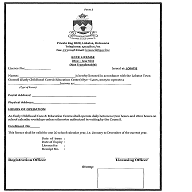
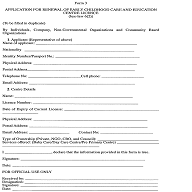
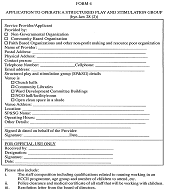
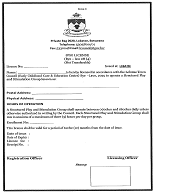
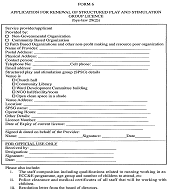
SCHEDULE 2
FEE SCHEDULE
(Bye-laws 5(1), 6(3), 7, 28(4), 29(2), 30)
|
DESCRIPTION |
AMOUNT (BWP) |
|
Duplicate licence (EC) |
250.00 |
|
Licence (ECCE and SPSG) |
500.00 |
|
Renewal of licence (ECCE and SPSG) |
500.00 |
|
Duplicate licence (SPSG) |
250.00 |